week 11
 Call Kai
 Learn
Learn Practice Test
 Spaced Repetition
 Match
Match Flashcards
 Knowt Play
1/8

There's no tags or description
Looks like no tags are added yet.
Name | Mastery | Learn | Test | Matching | Spaced | Call with Kai |
|---|
No analytics yet
Send a link to your students to track their progress
9 Terms
read if not needed delete
attached
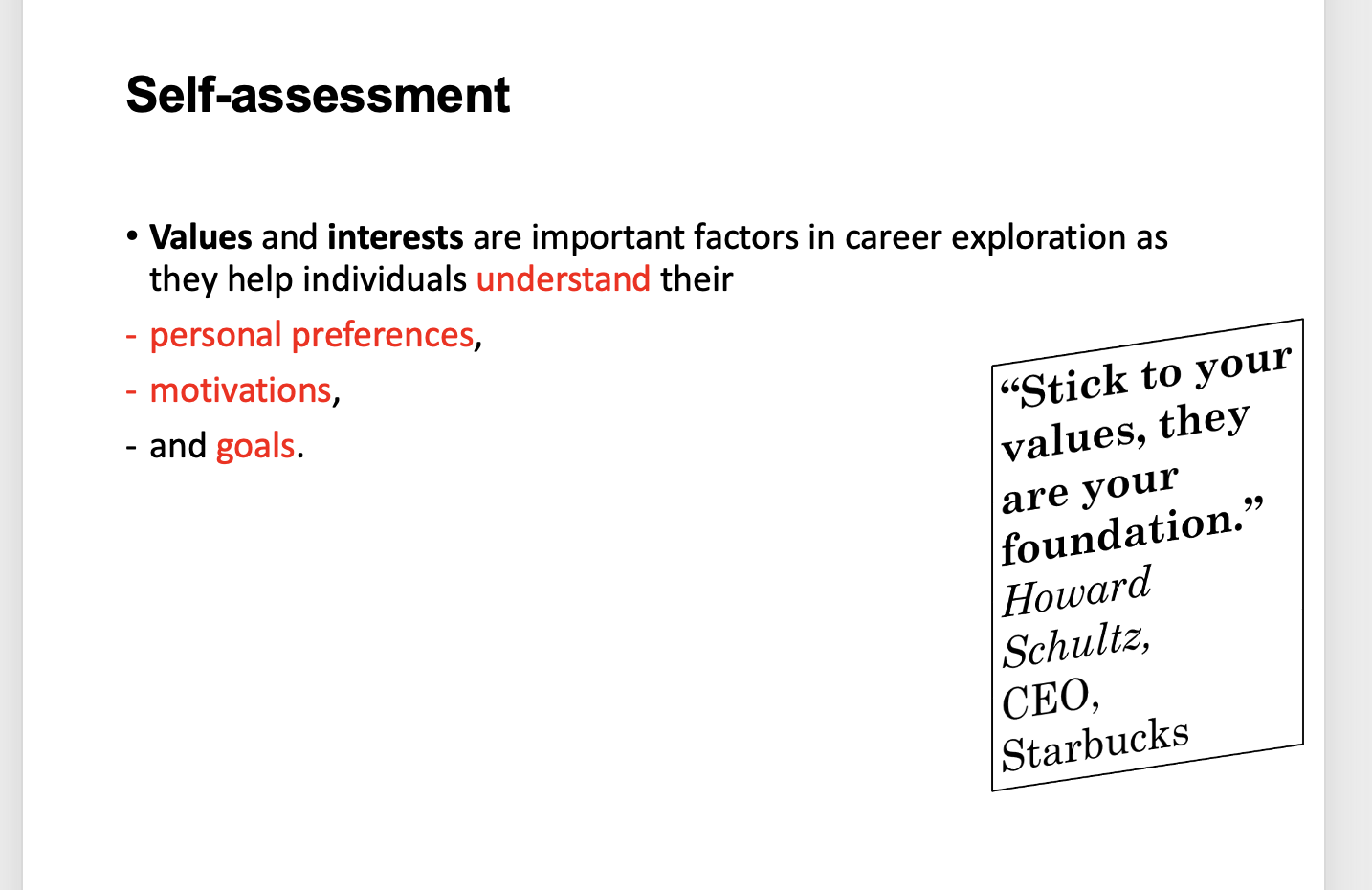
Self-assessment read if imp keep
•Values: Principles that Guide Our Career Choices
•Values represent our fundamental beliefs and ideals.
•They guide our behavior and decision-making.
•Values are personal and can vary from person to person.
•Examples of values include honesty, integrity, creativity, teamwork, and making a difference.
•Aligning your values with your career brings fulfillment, purpose, and satisfaction.
•Interests: Interests refer to the activities, subjects, or topics that capture your attention and engage you.
•They are the things you enjoy doing, learning about, or spending time on.
•Interests can span various areas such as art, technology, sports, science, writing, social issues, or entrepreneurship.
•Exploring careers that align with your interests can lead to greater enthusiasm, enjoyment, and motivation in your work.
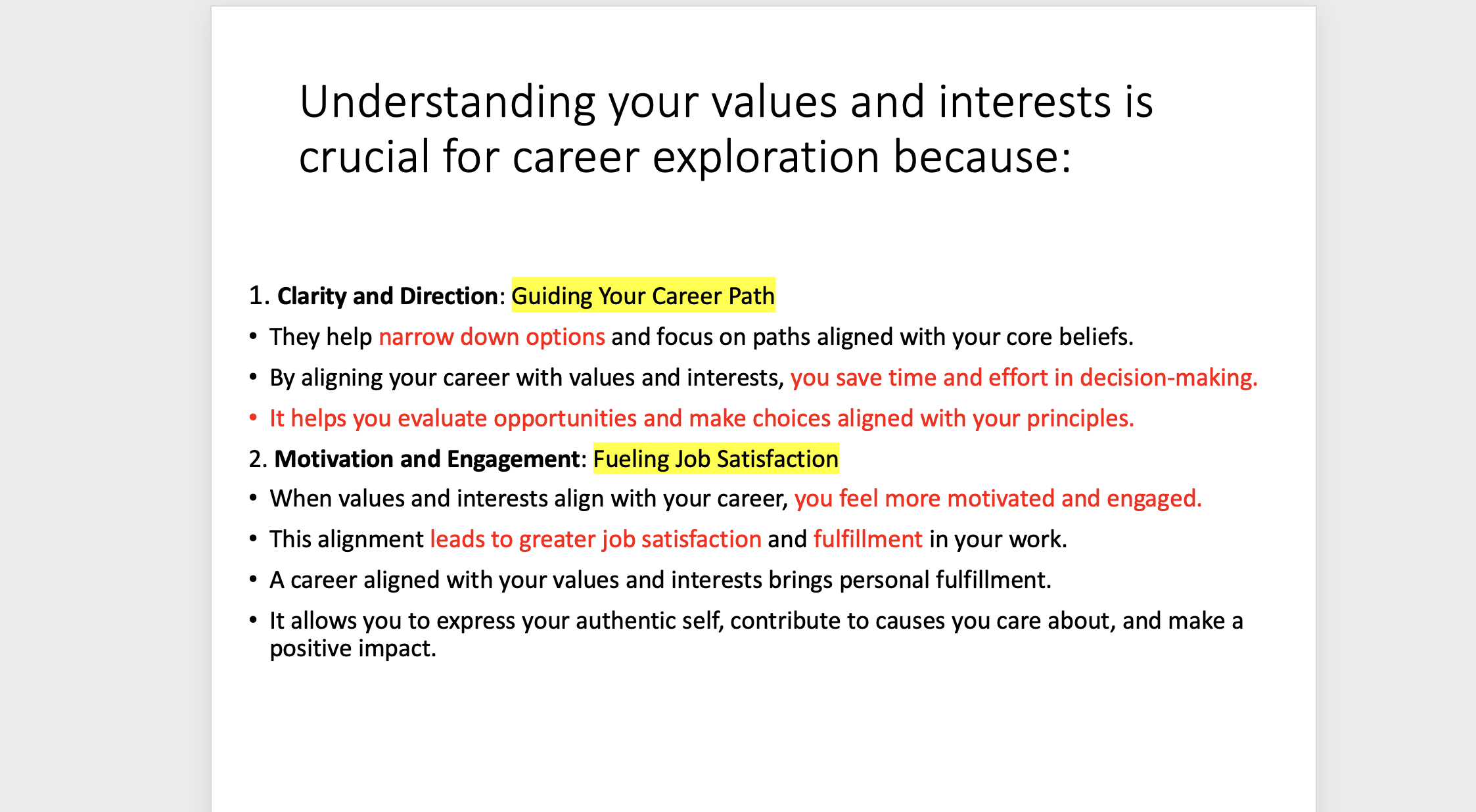
Understanding your values and interests is crucial for career exploration because:
1. Clarity and Direction: Guiding Your Career Path
•They help narrow down options and focus on paths aligned with your core beliefs.
•By aligning your career with values and interests, you save time and effort in decision-making.
•It helps you evaluate opportunities and make choices aligned with your principles.
2. Motivation and Engagement: Fueling Job Satisfaction
•When values and interests align with your career, you feel more motivated and engaged.
•This alignment leads to greater job satisfaction and fulfillment in your work.
•A career aligned with your values and interests brings personal fulfillment.
•It allows you to express your authentic self, contribute to causes you care about, and make a positive impact.
•
Balancing Interests and Skills: Key Factors for Career Success
To obtain these skills, there are several approaches you can take:
•While interests play a significant role in career exploration, they are not the sole determining factor for success.
•It is crucial to develop skills and competencies that align with your interests to achieve long-term career goals.
•Employers expect basic workplace skills, which not only help you perform your job effectively but also make you stand out for future opportunities.
•Abilities are innate, while skills are acquired through training and experience.
•Finding the right balance between interests and skills is essential for a successful career journey.
2…
•Education and Training: Seek formal education, degree programs, online courses, and certifications tailored to the specific skills needed.
•Professional Development: Engage in continuous learning through seminars, webinars, conferences, and workshops to stay updated with industry trends.
•Practical Experience: Gain hands-on experience through internships, part-time jobs, volunteer work, or personal projects to build practical expertise.
•Networking and Mentoring: Connect with professionals in your desired field for guidance and mentorship through networking events, industry associations, and online communities.
•Self-Study and Practice: Take initiative to learn independently through self-study, online resources, books, and practice exercises, fostering a habit of continuous learning.
Networking is a vital tool for career exploration, offering valuable benefits. Networking Benefits for Career Exploration:
Networking is a vital tool for career exploration, offering valuable benefits. Networking Benefits for Career Exploration:
1.Job Referrals: Discover unadvertised job openings through networking, gaining a competitive advantage (beating the competition)
2.Mentoring Relationships: Network with experienced professionals who can offer tailored career advice and guidance and advice on developing skills.
3.Industry Insights: Engage with experts to stay updated on industry trends, advancements, and challenges. This knowledge gives youi a competitive edge and enable you to stay ahead in the field.
4.Collaboration and Partnerships: Networking opens doors to collaborative projects and partnerships. You can form collaborative teams and initiate projects
●
§
●
●
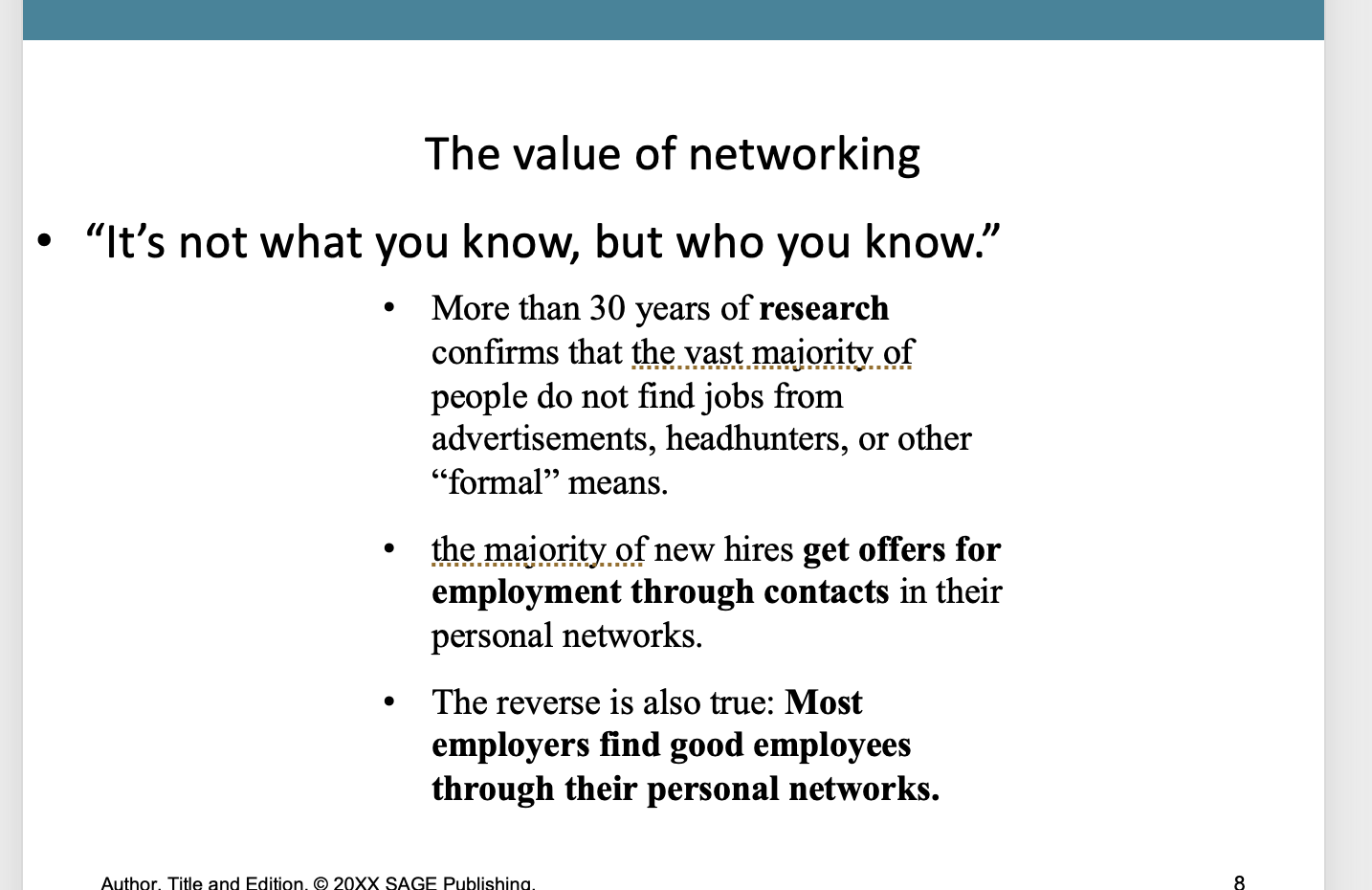
Building Networks
Learning How to Network
Learning How to Network
•Networking is two-way game.
•Networking events.
•The give and take of networking.
Learning How to Network
•Networking is two-way game:
vNetworking is not just about collecting contact information, stack of business cards or LinkedIn invitations but with no meaningful relationships or connections forged.
vYou need to have rich conversations to start a relationship and provide value in a way that makes you memorable.
v- a targeted search guided by a philosophy of contributing, giving value, sharing/exchanging information, and interacting with people.
Learning How to Network:
Good News: Networking Is Learnable—and It Improves with Practice
•Networking events:
vDo your research before attending a networking event: who might be there and decide whom you would like to meet
vRead the room: Is there a focal point or an activity taking place that could be a conversation starter?
vLook for potential groups to join: Who is open to talking? Who is busy or not interested?
vCommit fully to the discussion: Don’t look over the shoulder of the person you’re talking to as if you’re hoping someone more interesting will show up.
vBe careful not to dominate the conversation: Networking is a conversation, not a speech. Good networkers often listen more than they talk
vKeep questions brief. “Hi, I’m Ahmed, a business student. I’m interested in digital startups—how did you get started? I’m exploring this field for my career.”
vDisengage gracefully: Look them in the eye, shake hands, and say their name, followed by “It’s been good talking with you” or words to that effect.
vThank people for advice: Follow up with a short note or email within 24 hours and consider connecting on LinkedIn or other professional networking sites.
Learning How to Network
•The give and take of networking:
The idea behind it is to first identify something your contact needs and then offer something of value.
strategy is often used to initiate a business relationship.
vDiscover what you can do for someone else.
vAsk good questions.
vUnveil your passions.
vFollow up with a short but personal note within 24 hours.
•
Networking to Find Mentors
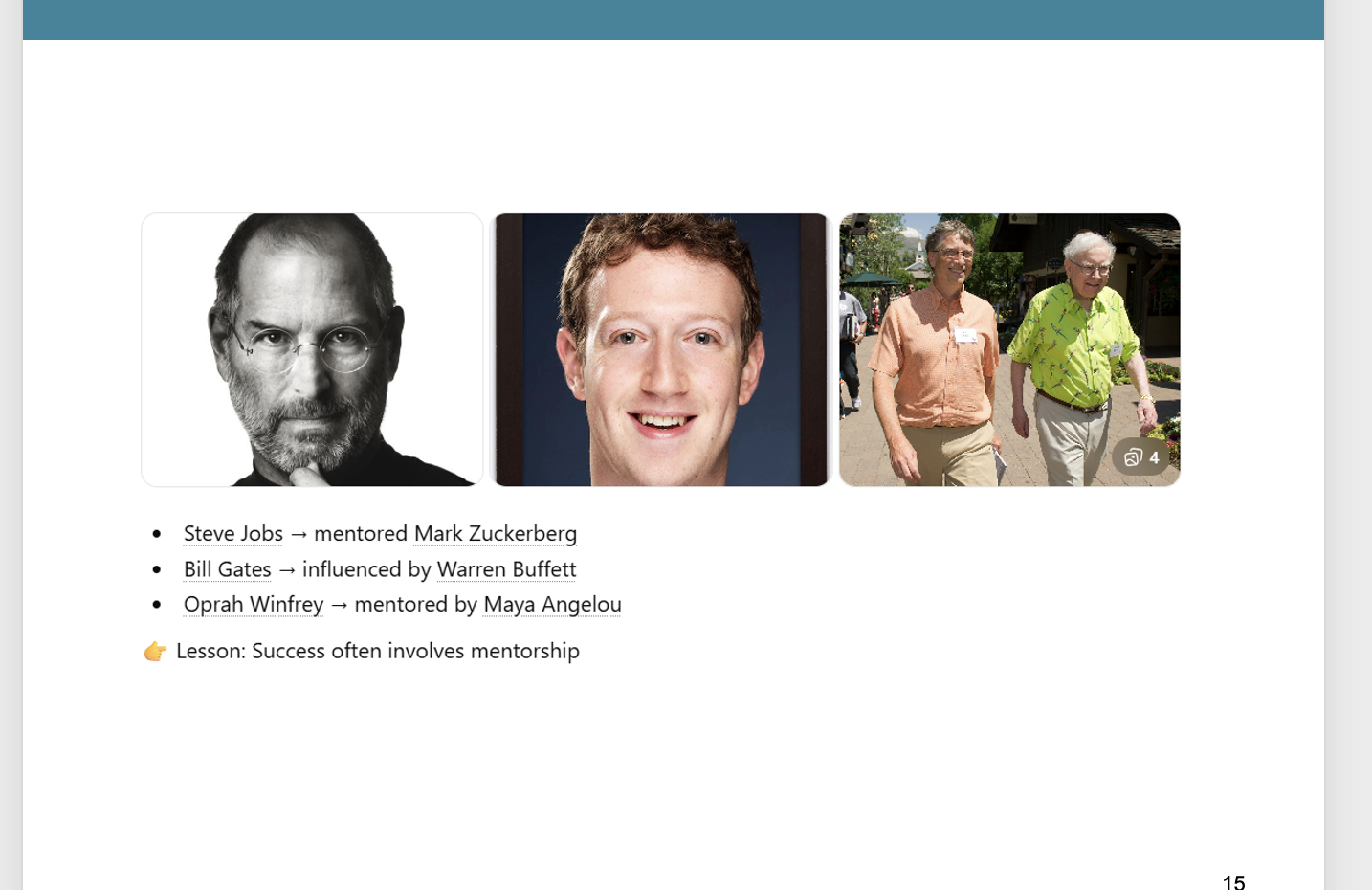
•Mentors of entrepreneurs act as role models and provide emotional support, knowledge development, business expertise, guidance, and valuable connections and industry contacts.
•Most well-known professionals credit their mentors for their success.
•Professionals typically build up a network of mentors over time, which can be useful when you are seeking different perspectives or guidance during particular stages of their career.
The Career Research Interview
•
•The career research interview is a special type of informational interview in which you meet with someone who can provide information that will help you define and achieve your career goals.
You use this type of interviews for the following purposes:
•To learn about the field
To learn more about the field and specific organizations that interest you.
•To stay on employer’s radar
To be remembered by making contacts who will
-recall you at an appropriate time and
-either offer you a position, inform you of employment opportunities,
- or suggest you to a potential employer.
•Contacting future employers
These referrals can easily lead to meetings with more useful contacts, all of whom might mention you to their friends and associates.
next fc
Contacting Future Employers
Why the important person you have targeted for a career research interview would be willing to meet with you?
–First, your subject will probably see you as a courtesy to your mutual acquaintance.
–Second, interviewees might be willing to meet with you for ego gratification.
–A third reason is simple altruism (giving back).
–Finally, you may get an interview because the person recognizes you as ambitious—someone who might have something to offer his or her organization.
–
How: Contacting Future Employers
•Make your first contact via email or in writing
•A telephone call runs the risk of not getting through;
•Your first message, like the example next slide, should:
-introduce you,
-explain your reason for the interview (stressing that you are not seeking employment),
-state your availability for a meeting, and promise a follow-up telephone call,
-
–
•Giving your interviewee an advance list of topic areas and questions you hope to cover will:
-distinguish you as a serious person, worth the interviewee’s time and effort.
-Supplying this list will also give your interviewee a chance to think about the areas you want to discuss and ideally come to your meeting well prepared to help you.
- the example next slide illustrates a confirming e-mail with a list of questions.
CHECK THE DIFFERENCE OF THE PICTURES IN SLIDE 20 AND 22 VERY IMPORTANT PLS ITS FOR UR MARKSSS AND GPA
Follow up
•Write an email, letter, or hand written notecard
- express appreciation for the interviewee’s time and mention how helpful the information was
• This follow up message will serve different purposes:
-Courtesy
-a tangible reminder of you
-provides a record of your name and address that will useful if the interviewee wants to contact you in the future.
•Of course, all correspondence should be composed with impeccable format, spelling, and grammar.
-
–
skip ts
ATTACHED
CHECK NB
NOTES