Effects of feed processing and carbohydrases on fibre degradatoin in pigs and poultry
 Call Kai
 Learn
Learn Practice Test
 Spaced Repetition
 Match
Match Flashcards
 Knowt Play
1/31

There's no tags or description
Looks like no tags are added yet.
Name | Mastery | Learn | Test | Matching | Spaced | Call with Kai |
|---|
No analytics yet
Send a link to your students to track their progress
32 Terms
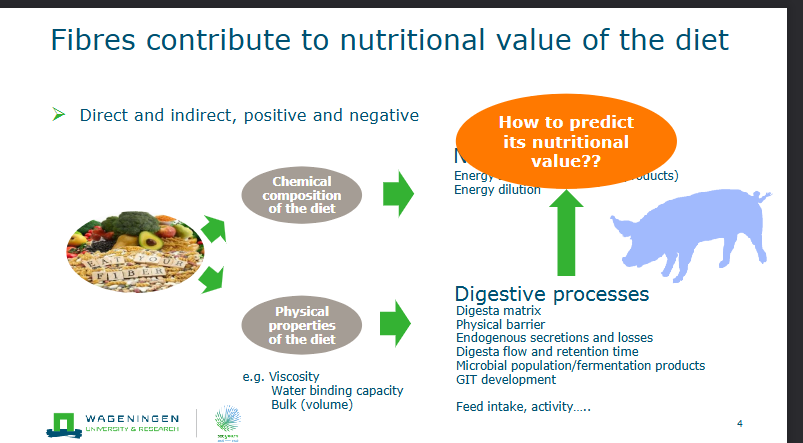
Fibres contribute to nutritonal value of the diet
Direct and indirect, positive and negative
What is fibre
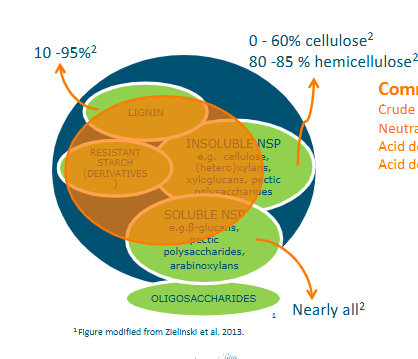
Non-digestible fraction of plant material
resistant starch RS, non-starch polysaccharides NSP, lignin
partly fermented by microbiota in the gastrointestinal tract
fibre is not fibre
diverse group of polymers
non-starch polysaccharides
pectic polysaccharides
hemicellulose
cellulose
resistant starch
lignin
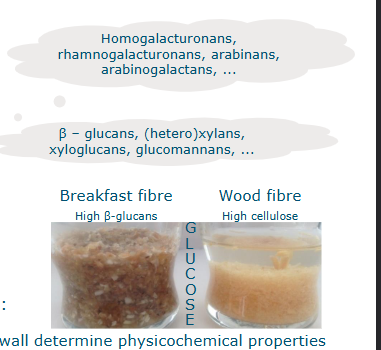
chemical composition doesn’t tell it all
structural arrangements int he cell wall determine physicochemical properties
What fraction to consider in feed formulation
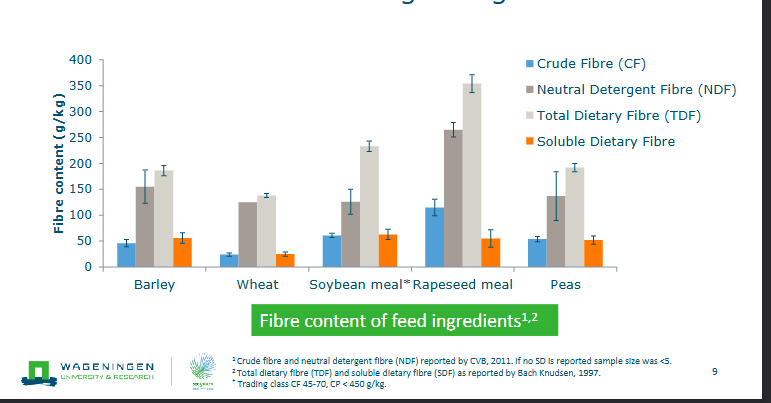
Commonly used gravimetric fibre analyses
crude fibre - weende analyses
neutral detergent fibre
acid detergent fibre
acid detergent ligning
→ van soest method
part of the fibre fraction not measured, depending on material
depeinding on physicochemical properties of the material
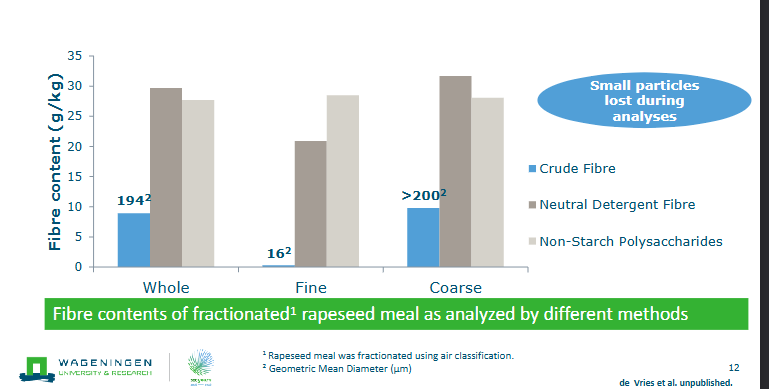
method determines ranking of ingredients
Particle size interferes with CF and NDF
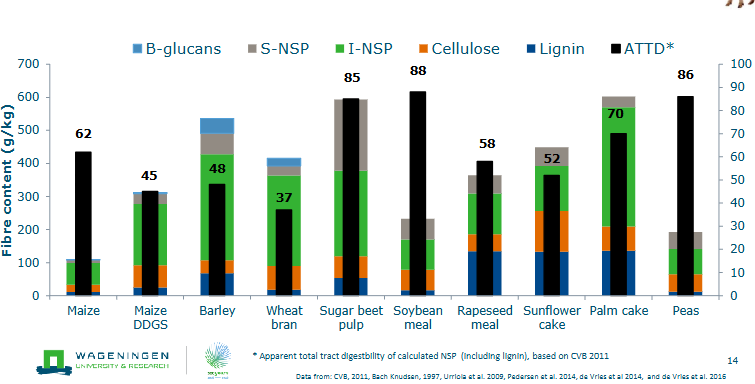
Variation in fibre degradation
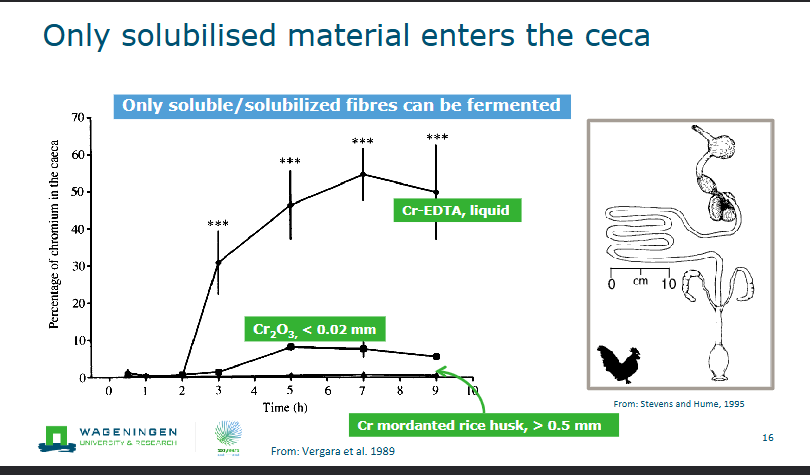
Chickens - soluble material
In chickens, NSP degradation generally low
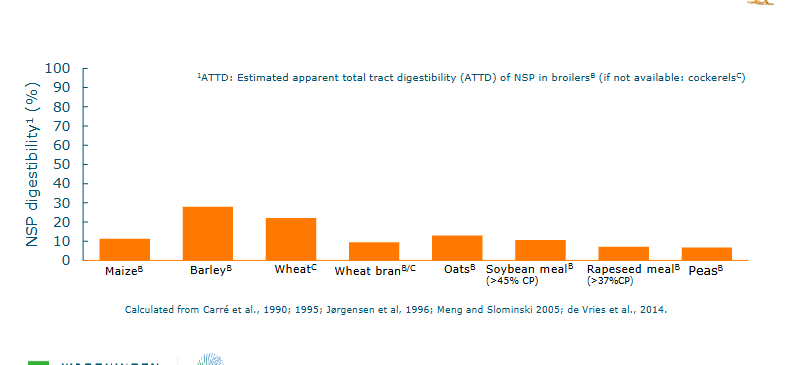
Cell wall architecture limits nutrient degradation
Fibre degradability
in pigs considerable
In chickens generally low
minor role in energy supply
cell way may hamper digestibility of other nutrients
10 procent of total nitrogen (N) in common broiler diets contained NDF, 5%-29% lupins to sorghum
Fibre
Antinutritional effects
beneficial effects
Anti-nutritional effects
increased digesta viscosity → reduced fat, starch, protien digestion
beneficial effects
e.g. gastrointestinal tract development and function, gut microbiome, faeces/litter consistency, satiety
structure required for gizzard development and function
coarse diet
thick muscular wall
low ph
fine diet
reduced size, weight, thickness of muscular wall
impaired ph barrier, dilation of proventriculus, reduced retetion time, reduced grinding activity
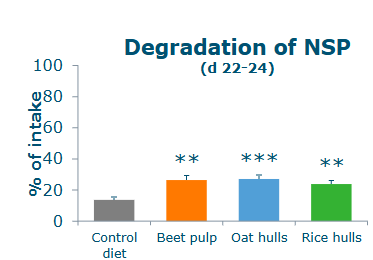
Digesta matrix affects digestive processes
e..g transit behaviour, nutrient accesibility by enzymes, enzyme secretions, intestinal mucus secretions, epitheial cell proliferation, bacterial colonization and fermentation → digestibility and nutritional value
why modifying fibres using processing and enzyme technologie
improve fermentability of recalcitrant fibres
release nutrients encapsulated in cell wall
reduce anti-nutritioanl effects
exploit beneficial effects
mode of action of modifying fibres
processing technoloiges
disruption cell wall matrix, depolymerization, breaking crosslinks
chaning physicochemical properties: e.g. particle size, solubilituy, rheologicla properties, hydration properties
cell wall degrading enzymes
specifically cleave polymers: depolymerization, remove side-chains
mechanical, thermal, chemical treatments
processing and enzymes to disrupt cell wall matrix
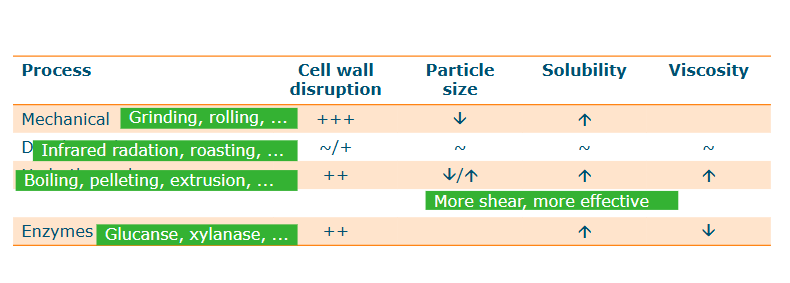
Can NSP fermentability be improved
Processing technologies
common tehcnologies effective for easy NSP: +4-16 units
not sufficient for more reclacitrant NSP as often present in agricultural by-products
hydrothermal processes increase viscosity of cereals with high soluble NSP contents
enzymes
mainly optimized for viscous cereal fibres, + 6-18% units
contradictory results: mismatching enzyme activities, side-activities, concentration
modifying fibre degradation suing enzymes
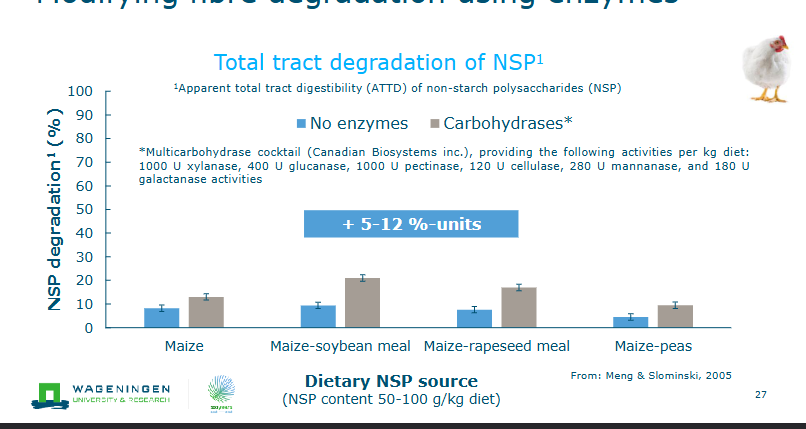
Best of both?
processing opens cell wall matrix, thus better accesibility by enzymes
processing may increase viscotiy, enzymes can counteract
enzymes after processing?
viscosity: 3-4 fold decrease
ATTD NSP: effect 2-6 times greater in processed diets
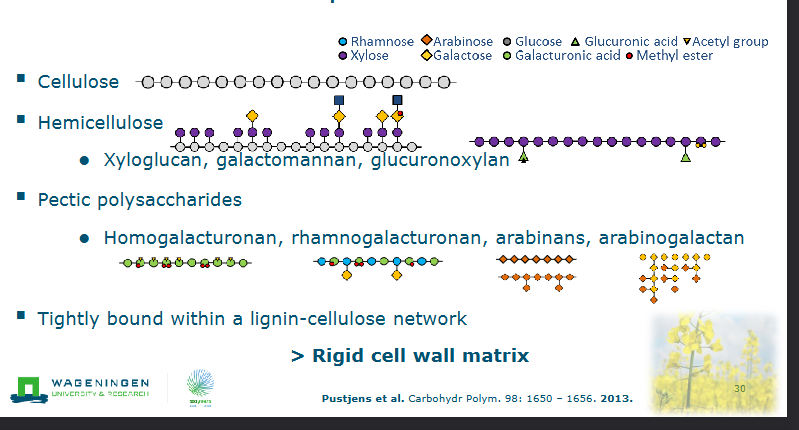
Fiber structrers in rapeseed meal
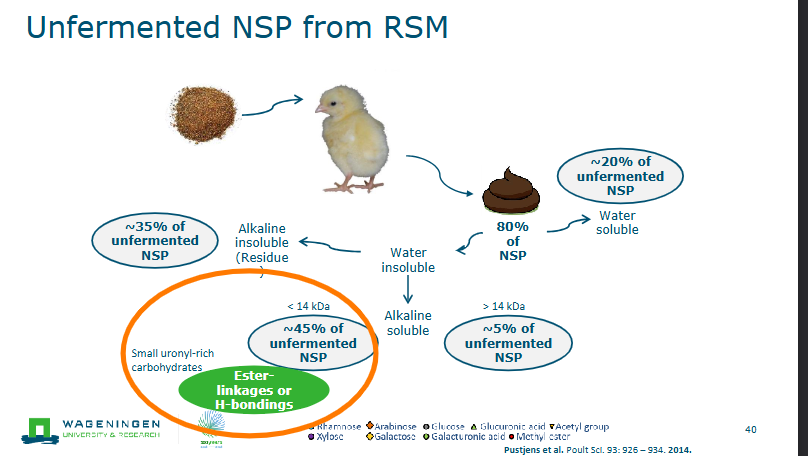
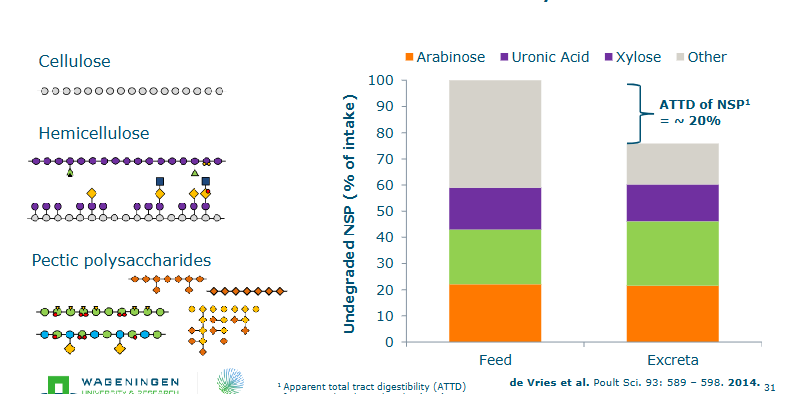
Fermentation of NSP from RSM by broilers
Processing and enzyme technologies
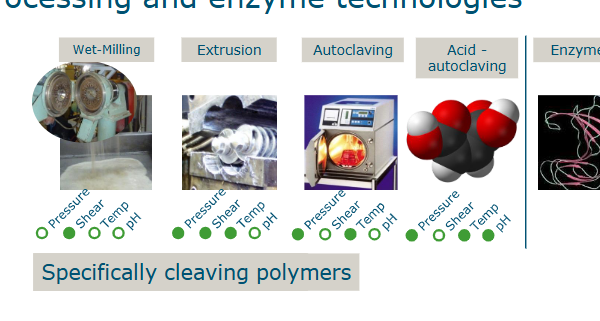
How to modify NSP from rapeseed meal
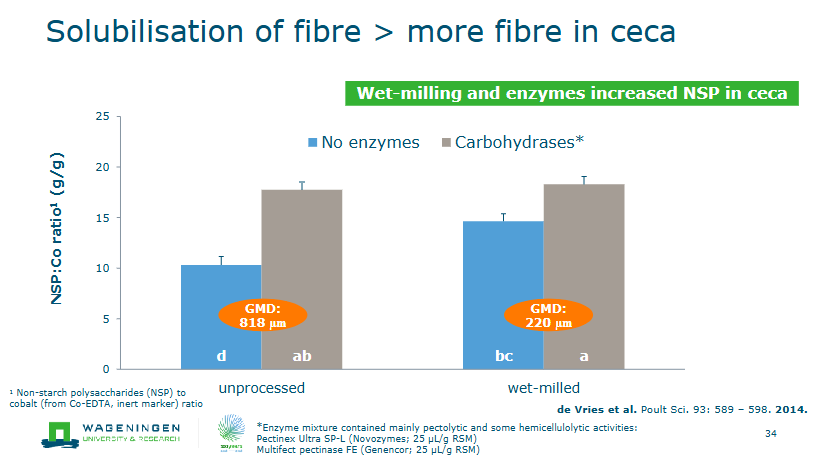
enzymes increased NSP solubilisation
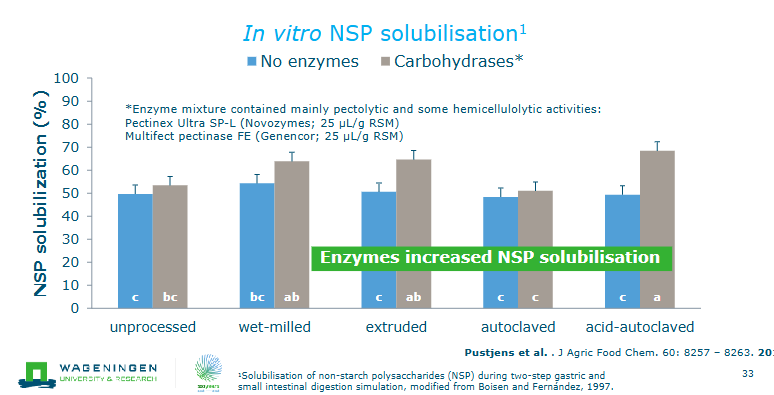
Solubilisation of fibre -. more fibre in ceca
wet-milling and enzymes increased NSP in ceca
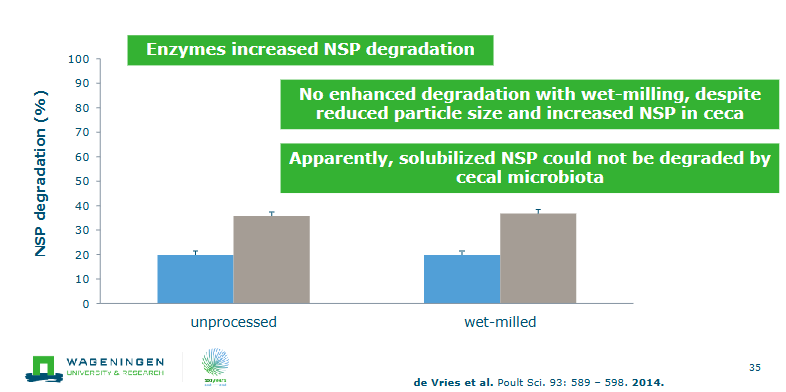
But solibilzed does not mean degraded
enzymes increased NSP degradation
no enhanced degradation with wet-milling, despite reduced particle size and increased NSP in ceca
Apparently, solubilized NSP could not be degraded by cecal microbiota
Fibre doest not equal fibre, fermentation depends on
chemical composition, e.g. chain lenght, linkages b/w sugar molecules
strucutral arrangements in cell wall: crosslinks b/w polysaccharides, protein and lignin. Related to solubility
considerable in pigs, limited in chickens
unfavourable and beneficial effects of fibre
fibres contribute to physicochemical and rheologicla properties of feed/digesta, affecting e.g. digesta transit behaviour, nutrient accesibility, GIT development and function
solubilisation/particle size reduciont during processing complicate analyses
fibre before does not equal after
common processing technologies
effectiv for easy NSP
not sufficnet for more recalcitrant NSP, e.g. RSM > relatively unexplored
can fibres modify solubilisation
but solubilisation does not equal degradation in vivo
in RSM: rigid matrix of ester-linked or H-bound pectins linked to cellulose/ligning seem to be involved in reclacitrance of NSP
alkaline treatments, ferulic acid esterases, ligninolytic enzymes (fungi)
unfermented NSP from RSM