Science
 Call Kai
 Learn
Learn Practice Test
 Spaced Repetition
 Match
Match Flashcards
 Knowt Play
1/73

There's no tags or description
Looks like no tags are added yet.
Name | Mastery | Learn | Test | Matching | Spaced | Call with Kai |
|---|
No analytics yet
Send a link to your students to track their progress
74 Terms
Card 1 Front: Diagrams of Animal, Plant, and Bacterial cells.
Animal: Nucleus, Cytoplasm, Membrane, Mitochondria, Ribosomes.
Plant: (Animal parts) + Cell Wall, Vacuole, Chloroplasts.
Bacteria: Cell Wall, Membrane, DNA Loop, Plasmids, Ribosomes, Cytoplasm
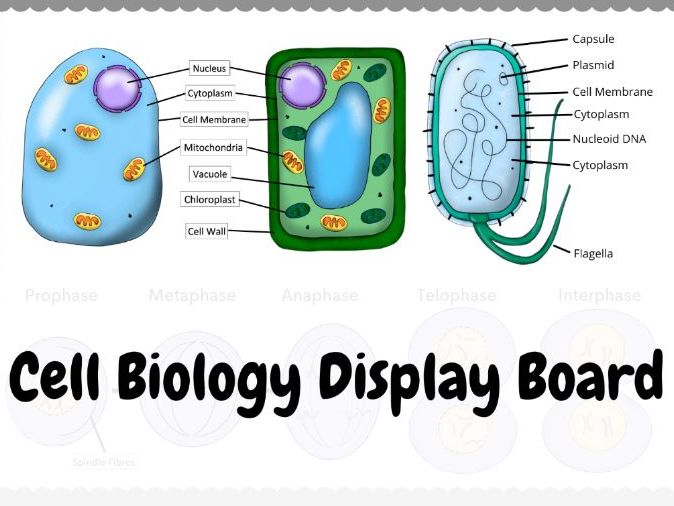
Back: * Nucleus: Controls cell / stores DNA. Mitochondria: Releases energy (Respiration). Ribosomes: Makes proteins. Membrane: Controls entry / exit. Cytoplasm: Where reactions happen. Chloroplasts: Absorbs light (Photosynthesis). Cell Wall: Supports / strengthens cell. Vacuole: Keeps cell firm. Plasmids: Extra DNA rings.
Card 3 Front: The 5 Kingdoms + Viruses.
Back:
Animals: Multi-cellular; eat food.
Plants: Multi-cellular; photosynthesis.
Fungi: Absorb dead matter (Saprotrophic).
Protoctists: Single-celled.
Bacteria: Single-celled; no nucleus.
Viruses: Non-living; reproduce inside cells.
* Labels:
* Eyepiece: Look through this.
* Objective Lens: Magnifies image.
* Stage: Holds slide.
* Focus Knobs: Sharpens image.
Path of Light:
Light source → Object (on slide) → Objective lens → Eyepiece → Eye.
Card 5 Front: Mitosis vs. Meiosis & The Cell Cycle.
Back:
Mitosis: For growth/repair. Makes 2 identical cells.
Meiosis: For gametes (sex cells). Makes 4 different cells.
The 3 Stages (Mitosis Cycle):
Growth: Cell grows and doubles organelles (ribosomes/mitochondria).
DNA Replication: DNA copies to form two of each chromosome.
Division: Chromosomes pulled to ends; nucleus, then cytoplasm divide.
* Definition: Cells that aren't specialized yet but can become other types.
Embryonic: Can become any cell type.
Adult: Found in bone marrow; only become a few types like blood cells.
Meristem: Found in plant roots/shoots; can become any plant cell.
Uses: Treat diabetes and paralysis; clone plants.
Therapeutic Cloning Steps:
1. DNA taken from patient.
2. DNA put into an empty egg cell to make an embryo.
3. Stem cells taken from the embryo.
4. These cells are not rejected because they have the patient's DNA.
Risks: Viral transfer; ethical/religious objections.
* Diffusion: Particles move High to Low concentration. No energy needed.
Osmosis: Water moves High to Low concentration through a partially permeable membrane.
Active Transport: Particles move Low to High concentration. Needs energy.
Speeding up Diffusion:
Only Diffusion is affected by a bigger concentration gap, higher temperature, or larger surface area.
Exchange Surface Tips:
For any question on Villi, Alveoli, or Gills, always mention:
Large surface area: To move more substances at once.
Thin walls: One cell thick for a short diffusion path.
Permeable surface: Allows substances to pass through.
Card 8 Front: Surface Area to Volume Ratio (SA:V).
Back:
As an object gets bigger, its surface area to volume ratio gets smaller.
Example:
A small cube (1cm): Has a ratio of 6:1.
A large cube (3cm): Has a ratio of 2:1.
* Organelle: Part of a cell.
Cell: Basic building block.
Tissue: Group of similar cells.
Organ: Group of different tissues.
Organ System: Group of organs.
Organism: A whole living thing.
Order: Organelle → Cell → Tissue → Organ → Organ System → Organism.
Card 10 Front: Carbohydrates, Lipids, and Proteins (Digestion & Enzymes).
Back:
Carbohydrates:
Use: Main source of energy.
Broken down by: Amylase → Maltase
Made in: Salivary glands, Pancreas, Small intestine.
Into: Sugars.
Proteins:
Use: Growth and repair of tissues.
Broken down by: Protease.
Made in: Stomach, Pancreas, Small intestine.
Into: Amino acids.
Lipids (Fats):
Use: Energy storage and insulation.
Broken down by: Lipase.
Made in: Pancreas, Small intestine.
Into: Fatty acids and Glycerol.
Card 11 Front: The Digestive System Pathway & Definitions.
Back:
Pathway: Mouth → Oesophagus → Stomach → Small Intestine → Large Intestine → Rectum → Anus.
Simple Definitions:
Mouth: Chews food and adds Amylase.
Oesophagus: Tube to the stomach.
Stomach: Churns food with Acid and Protease.
Liver: Makes Bile.
Gallbladder: Stores Bile.
Pancreas: Makes all three enzymes.
Small Intestine: Absorbs nutrients into blood.
Large Intestine: Absorbs water.
Anus: Where waste leaves.
* Made in: Liver.
Stored in: Gallbladder.
Role 1 (Neutralisation):
It is alkaline, so it neutralises stomach acid so enzymes can work in the small intestine.
Role 2 (Emulsification):
It breaks large fat droplets into tiny ones to give lipase a bigger surface area to work on.
Arteries: Carry blood away from heart. * Thick, elastic walls for high pressure.
Veins: Carry blood to the heart. Thinner walls and have valves to stop backflow.
Capillaries: Tiny vessels for exchange. One cell thick walls for fast diffusion.
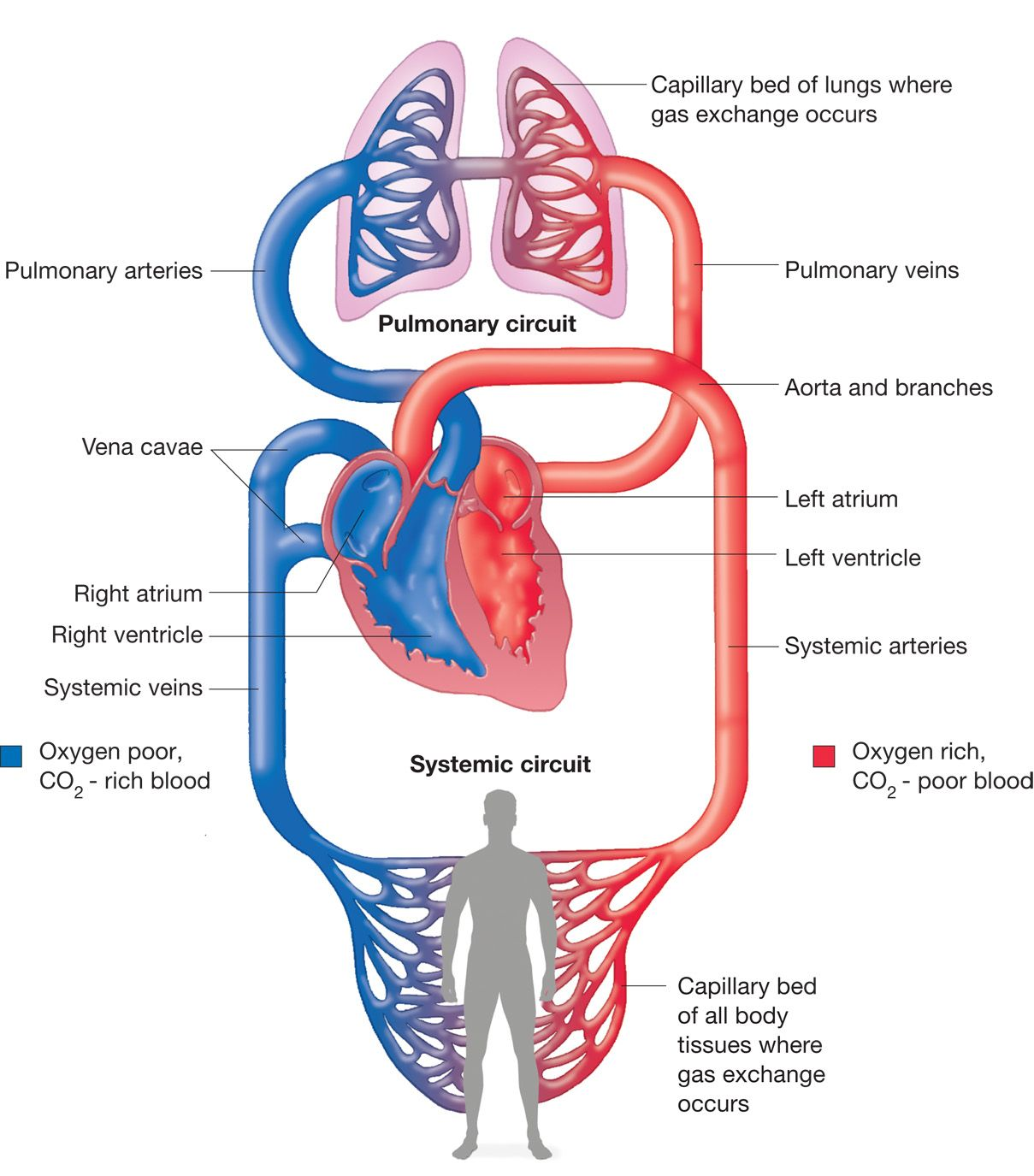
Lung System (Pulmonary)
Pulmonary Artery: Heart → Lungs
Pulmonary Vein: Lungs → Heart
Rest of Body System (Systemic)
Aorta: Heart → Body
Vena Cava: Body → Heart
Tip: If it’s coming from the lungs or going to the body, it’s oxygenated. If it’s coming from the body or going to the lungs, it’s deoxygenated.
Card 14 Front: Components of Blood.
Back:
Red Blood Cells: Carry oxygen (No nucleus, disk shape).
White Blood Cells: Fight infection/pathogens.
Platelets: Help clot blood.
Plasma: Liquid that carries everything (CO 2, glucose, hormones).
Card 15 Front: Coronary Heart Disease (CHD).
Back:
Problem: Fatty materials build up inside coronary arteries, making them narrow.
Effect: Reduces blood flow, so less oxygen reaches the heart muscle.
Result: Can lead to chest pain (angina) or a heart attack.
Treatments:
Statins: Drugs that lower cholesterol to slow down fatty build-up.
Stents: Wire mesh tubes inserted into arteries to keep them open.
Bypass Surgery: Using a healthy blood vessel to go around a blockage.
Card 16 Front: Benign vs Malignant Tumours.
Back:
Benign Tumours:
Growth of abnormal cells contained in one area.
Usually surrounded by a membrane.
Does not invade other parts of the body.
Malignant Tumours:
These are cancerous.
Invade neighbouring tissues.
Spread to different parts of the body in the blood to form secondary tumours.
Card 17 Front: Leaf Structure (Top to Bottom).
Back:
Waxy Cuticle: Reduces water loss.
Upper Epidermis: Transparent to let light through.
Palisade Mesophyll: Packed with chloroplasts for photosynthesis.
Spongy Mesophyll: Air spaces for gas exchange.
Lower Epidermis: Contains guard cells and stomata.
Guard Cells: Open and close the stomata.
Stomata: Holes that let CO 2in and O 2out.
Card 18 Front: Transpiration vs Translocation.
Back:
Transpiration:
What: Movement of water and mineral ions.
Vessel: Xylem.
Direction: One way (up from roots to leaves).
Process: Water evaporates from leaves, pulling more water up.
Translocation:
What: Movement of dissolved sugars (food).
Vessel: Phloem.
Direction: Two ways (up and down to where it's needed).
Process: moves food from the leaves to growing parts or storage parts
Bacterial:
Salmonella:
Transmission: Undercooked food.
Effect: Fever, vomiting.
Prevention: Cook food thoroughly.
Gonorrhoea:
Transmission: Sexual contact.
Effect: Yellow discharge; pain urinating.
Prevention/Treatment: Condoms; Antibiotics.
Viral:
Measles:
Transmission: Sneeze/cough droplets.
Effect: Fever; red rash.
Prevention: Vaccination.
HIV:
Transmission: Body fluids.
Effect: Damages immune system.
Prevention/Treatment: Condoms; Antiviral drugs.
TMV (Plants):
Transmission: Contact.
Effect: Mosaic leaf pattern.
Prevention: Remove infected plants.
Fungal:
Rose Black Spot:
Transmission: Water/wind.
Effect: Black spots; leaves fall off.
Treatment: Fungicides.
Protist:
Malaria:
Transmission: Mosquitoes (vectors).
Effect: Repeating fever.
Prevention/Treatment: Nets; Antimalarial drugs
Aerobic Respiration:
Oxygen: Required.
Equation: Glucose+Oxygen→Carbon Dioxide+Water
Energy: Large amount released.
Anaerobic Respiration (Humans):
Oxygen: Not required.
Equation: Glucose→Lactic Acid
Energy: Small amount released.
Fact: Causes muscle fatigue.
Anaerobic Respiration (Yeast):
Equation: Glucose→Ethanol+Carbon Dioxide
Fact: Used in bread and beer making (Fermentation).
Stages (In Order):
FSH: Matures the egg in the ovary.
Oestrogen: Thickens uterus lining; stops FSH; starts LH.
LH: Ovulation (egg release at day 14).
Progesterone: Maintains uterus lining; stops LH and FSH.
IVF Step-by-Step:
Female is given FSH and LH to mature several eggs.
Eggs are collected from the female.
Sperm is collected from the male.
In a Lab: Sperm is injected into the egg.
In a Lab: Fertilised eggs develop into embryos.
Embryos are inserted into the female's uterus.
Cuttings:
Method: Cut a piece of stem and plant it.
Pros: Quick, cheap, and simple.
Result: Identical clones.
Tissue Culture:
Method: Small groups of cells placed in a lab growth medium with hormones.
Pros: Produces thousands of plants from one piece; saves rare species.
Condition: Must be sterile (in a lab) to prevent disease.
Card 24 Front: Classification Hierarchy (Linnaean System).
Back: The Groups (In Order):
Domain
Kingdom
Phylum
Class
Order
Family
Genus
Species
Binomial Naming:
Organisms are named by their Genus and Species.
Example: Humans are Homo (Genus) sapiens (Species).
Mnemonic to remember:
Dear Kate, Please Come Over For Great Snacks.
Abiotic Factors (Non-Living):
Definition: Physical or chemical parts of the environment.
Examples:
Light intensity.
Temperature.
Water/Moisture levels.
Soil pH and mineral content.
Wind intensity/direction.
Carbon dioxide (plants) or Oxygen (fish) levels.
Biotic Factors (Living):
Definition: Living parts of an ecosystem that affect other organisms.
Examples:
Availability of food.
New predators arriving.
New pathogens (diseases).
Competition (one species outcompeting another).
The Order:
Producer: A plant that makes its own food.
Primary Consumer: An animal that eats plants.
Secondary Consumer: An animal that eats the plant-eater.
Tertiary Consumer: An animal that eats the animal-eater.
Energy Flow:
The arrows show the direction of energy.
Energy is lost at each stage.
Required Practical: Osmosis.
Method:
Cut equal potato cylinders.
Weigh initial mass.
Put in different sugar concentrations.
Wait, dry, and re-weigh.
Key Math:
Calculate percentage change in mass.
Conclusion:
Water moves into potato in low-sugar solutions (mass gain).
Note: Need to be understood not memorised.
Required Practical: Enzymes & pH.
Method:
Mix amylase, starch, and pH buffer.
Add one drop to iodine every 30 seconds.
Stop when iodine stays orange (no starch left).
Repeat with different pH levels.
Conclusion:
The fastest time = optimum pH.
Note: Need to be understood not memorised.
Required Practical: Microscopy.
Method:
Put thin onion skin on a slide.
Add iodine (stain).
Use lowest power lens first.
Use coarse focus then fine focus.
Key Math:
Total Magnification=Eyepiece×Objective.
Note: Need to be understood not memorised.
Required Practical: Reaction Time.
Method:
Hold metre ruler between subject's finger and thumb.
Drop without warning; subject catches it.
Record distance at the top of the thumb.
Repeat and calculate a mean.
Note: Need to be understood not memorised.
Required Practical: Photosynthesis.
Method:
Put pondweed in water.
Move a light source to different distances.
Count bubbles per minute (the rate).
Result:
More light = more bubbles.
Note: Need to be understood not memorised.
Required Practical: Field Investigations.
Quadrat (Population):
Place randomly.
Count organisms and find mean.
Mean×Total Area=Estimate.
Transect (Distribution):
Lay tape measure across an area.
Place quadrats at regular intervals.
Note: Need to be understood not memorised.
The Particles:
Particle | Relative Mass | Relative Charge | Location
Proton | 1 | +1 (Positive) | Nucleus
Neutron | 1 | 0 (Neutral) | Nucleus
Electron | Very small | -1 (Negative) | Shells
Key Facts:
The Nucleus is in the middle and contains protons and neutrons.
Electrons orbit the nucleus in shells.
Atoms have no overall charge because the number of protons equals the number of electrons.
The Development:
Plum Pudding (Thomson): A ball of positive charge with negative electrons inside.
Alpha Scattering (Rutherford): Fired alpha particles at gold foil.
Observation: Most went through (Atom is empty space).
Observation: Some bounced back (Nucleus is positive and has most of the mass).
Bohr Model: Electrons orbit in fixed shells.
Chadwick: Discovered neutrons in the nucleus.
The Main Groups:
Group Name | Key Properties | Reactivity Trend
Group 1 | Alkali Metals, Soft, low density | Increase going down
Group 7 | Halogens, Non-metals, diatomic (Cl 2) | Decrease going down
Group 0 | Noble Gases, Inert (unreactive), colorless | Stable (unreactive)
Essential Exam Facts:
Group 1: React with water to make hydrogen and alkaline solutions.
Group 7: Melting and boiling points increase going down.
Group 0: Unreactive because they have a full outer shell.
The Essentials:
Type | Bonding Description | Elements | Example
Ionic | Transfer of electrons | Metal + Non-metal | NaCl
Covalent | Shared pairs of electrons | Non-metal + Non-metal | H 2O
Metallic | Sea of delocalised electrons | Metals only | Iron (Fe)
Key "Why" Facts:
Ionic: Attraction between opposite charges (+ and −).
Covalent: Nuclei attracted to the shared pair of electrons.
Metallic: Positive ions attracted to free-moving electrons.
Note: You must be able to draw the dot-and-cross diagrams for Ionic and Covalent, and the lattice for Metallic.
Card 38 Front: Acids, Alkalis, and the pH Scale.
Back: Acids: Produce H + ions in water. (pH 0–6).
Alkalis: A soluble base that produces OH − ions in water. (pH 8–14).
Neutral: pH 7 (Pure water).
The pH Scale:
Indicators:
Universal Indicator: Changes color based on pH (Red = Acid, Purple = Alkali).
Litmus Paper: Red in Acid, Blue in Alkali. , purple in water (neutral )
Card 39 Front: Neutralisation and Salts.
Back: The Equation:
Acid+Base→Salt+Water
The ionic equation for neutralisation is always:
H + (aq)+OH − (aq)→H2O(l)
Naming Salts:
Hydrochloric Acid makes Chlorides.
Sulfuric Acid makes Sulfates.
Nitric Acid makes Nitrates.
Card 40 Front: Strong vs. Weak Acids.
Back: The Difference:
Strong Acids: 100% ionise in water. Every molecule breaks into H + ions.
Examples: hydrochloric acid , sulfuric acid , nitric acid
Weak Acids: Partially ionise in water. Only a few molecules release H + ions; most stay as they are.
Examples: Ethanoic (vinegar), Citric, Carbonic acids.
The pH Rule (Math):
As pH decreases by 1 unit, the concentration of H + ions increases by a factor of 10.
Example: pH 1 has 10x more H + ions than pH 2.
Example: pH 1 has 100x more H + ions than pH 3.
Key Definition:
Concentrated: Lots of acid particles in a small volume of water.
Strong: All those particles have split into H + ions.
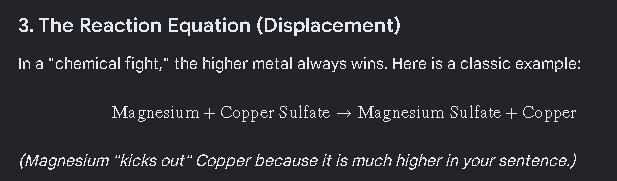
Card 41 Front: The Reactivity Series of Metals.
Back: The Order (High to Low):
Please: Potassium
Stop: Sodium
Liking: Lithium
Cats: Calcium
My: Magnesium
Amazing: Aluminium
Cool: Carbon
Zebra: Zinc
Is: Iron
Having: Hydrogen
Cold: Copper
Sad: Silver
Grief: Gold
The 2 Key Points:
The Scale: The Top (Potassium) has the highest reactivity, while the Bottom (Copper) has the lowest.
The Non-Metals: Most are metals, but only 2 are non-metals (Carbon and Hydrogen).
Metals above Carbon are extracted using electricity (electrolysis).
Metals below Carbon are extracted by heating with carbon (reduction).
Card 44 Front: Electrolysis Basics.
Back: Definition: Splitting an ionic compound using electricity.
The Setup:
Anode (+): Attracts negative ions.
Cathode (-): Attracts positive ions.
Mnemonic: PANIC (Positive Anode, Negative Is Cathode).
Aqueous Rules:
At the Anode (+)
Halide present - You get the Halogen gas (Chlorine, Bromine, or Iodine).
No Halide - You get Oxygen gas.
At the Cathode (-)
Highly Reactive Metal - You get Hydrogen gas.
Low Reactive Metal - You get the Metal itself (usually just Copper, Silver, or Gold)
To know you look at the reactivity series above or under hydrogen
Card 45 Front: Aluminium & OIL RIG.
Extracting Aluminium
Electricity: Used because aluminium is too reactive for carbon to handle.
Cryolite: Added to the ore to lower the melting temperature and save energy costs.
Anodes: These carbon rods react with oxygen and burn away as , so they must be replaced.
OIL RIG (The Secret Code)
OIL RIG is used in electrolysis to track where electrons are lost and gained
Oxidation Is Loss of electrons (at the positive rod).
Reduction Is Gain of electrons (at the negative rod).
The Half Equations
These show where the electrons e- go:
At the Cathode (Negative):
Al3+ + 3e- → Al
(Aluminium gains 3 electrons to become pure metal).
At the Anode (Positive):
2O-2 → O2 +4e-
(Oxygen loses electrons to become gas).
Card 46 Front: Predicting Electrolysis Products.
The Rules (How to figure it out)
At the Anode (+): You get the Halogen gas . If there’s no Halogen, you always get Oxygen
At the Cathode (-): You get the least reactive thing. Usually, this is Hydrogen gas unless Copper or Silver are present.
Example:
Molten PbBr2 → Cathode: Lead (Pb), Anode: Bromine (Br2)
Aqueous NaCl → Cathode: Hydrogen (H2), Anode: Chlorine (Cl2)
Aqueous CuSO4 → Cathode: Copper (Cu), Anode: Oxygen (O2)
Card 47 Front: Collision Theory & Rates of Reaction.
Back: Collision Theory:
Particles must collide with correct orientation and enough energy.
Rate = number of successful collisions per second.
Factors:
Temperature ↑ → faster collisions
Concentration/Pressure ↑ → more collisions
Surface Area ↑ → more collisions
Catalyst → lowers activation energy
Activation Energy:
Minimum energy needed for a reaction to occur.
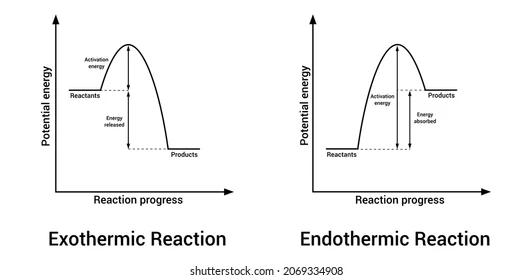
Reaction Profiles
Activation Energy : Vertical arrow from the Reactant line to the top of the hill.
Catalyst ( If asked): Draw a second, lower hill. It must start and end at the exact same lines as the original.
Energy Change : Arrow showing the gap between the Reactant and Product lines.
Exothermic Reactions
Energy released: Products are lower than reactants.
Endothermic Reactions
Energy absorbed: Products are higher than reactants.
Card 49 Front: Hydrocarbons & Alkanes.
Back: Hydrocarbon: Carbon + Hydrogen only.
Crude Oil: Mixture of hydrocarbons.
Alkanes: Saturated hydrocarbons (single bonds only).
Formula: CnH2n+2
First 4:
Methane CH4
Ethane C2H6
Propane C3H8
Butane C4H10
Trends:
Chain length ↑ → viscosity ↑, boiling point ↑
Process:
Crude oil is heated and vaporised.
Vapours rise in a fractionating column.
Column is hot bottom, cool top.
Fractions condense at different heights.
Top: short molecules → gases/petrol (low boiling point)
Bottom: long molecules → bitumen/heavy fuel (high boiling point)
Cracking:
Break long hydrocarbons into smaller ones.
Thermal: High temperature + steam
Catalytic: Catalyst used
Equation:
Long Alkane → Short Alkane + Alkene
Alkenes:
Unsaturated hydrocarbons with C=C bond.
Formula: CnH2n
Test: Bromine water turns orange → colourless.
Card 52 Front: Atmospheric Pollution & Carbon Footprint.
Greenhouse Effect:
CO2, Methane (CH4 ), H2O trap infrared radiation → warms Earth.
Carbon Footprint:
Total greenhouse gas released from a product/life cycle.
Pollutant:
Carbon Dioxide → Global warming
Carbon Monoxide → Toxic gas
Carbon Particulates → Breathing issues + Global dimming
Sulfur Dioxide → Acid rain
Nitrogen Oxides → Acid rain + Breathing issues
Card 53 Front: The Earth’s Atmosphere
The Early Atmosphere
Mainly CO2 (from volcanoes).
No Oxygen.
Small amounts of Nitrogen, Methane, and Ammonia.Why it Changed
CO2 decreased: It dissolved into the oceans and was used by plants for photosynthesis.
Oxygen increased: Plants and algae produced it via photosynthesis.
Making soluble salt required practical
The Process (Insoluble Base + Acid):
Heat: Warm a fixed volume of acid (e.g., Sulfuric acid) in a beaker.
Add Base: Add the insoluble base (e.g., Copper Oxide) in excess (until no more dissolves). This ensures all acid is used up.
Filter: Filter the mixture to remove the leftover (excess) unreacted base.
Evaporate: Heat the solution in an evaporating basin over a water bath until crystals start to form.
Crystallise: Leave the rest to cool and evaporate naturally.
Soluble Salt: The product (e.g., Copper Sulfate). Insoluble Base: The starting solid (e.g., Copper Oxide or Copper Carbonate).
1. Purpose:
To separate mixtures of soluble substances (like inks, dyes, or food colourings).
2. How it works:
Stationary Phase: The paper (doesn't move).
Mobile Phase: The solvent (water or ethanol) that moves up the paper.
3. The Rules:
Start Line: Must be drawn in pencil (ink would dissolve and ruin the results).
Solvent Level: Must be below the start line (so the spots don't wash away).
Pure vs Mixture: A pure substance produces one spot. A mixture produces multiple spots.
4. Rf Values (Calculation):
Rf = Distance moved by substance ÷ Distance moved by solvent
Note: Rf is always less than 1.
Card 61 Front: Energy Basics
Back: Energy Stores:
Kinetic, Thermal, Chemical, Gravitational, Elastic, Electrostatic, Magnetic, Nuclear (8)
Energy Transfers:
Mechanical, Electrical, Heating, Radiation (4)
Card 62 Front: SHC vs. SLH
SHC: Changes temperature (state stays same)
energy required to raise the temperature of 1 kg of a substance by 1°C.
SLH: Changes state (temperature stays same)
The amount of energy required to change the state of 1 kilogram (kg)
SLH Types:
Fusion (melting/freezing)
Vaporisation (boiling/condensing)
Non-Renewable: coal, oil, gas, nuclear (finite, polluting)
Renewable: solar, wind, hydro, geothermal (replenished)
Comparison:
Renewable = cleaner but less reliable
Non-renewable = reliable but polluting
Card 64 Front: Series vs. Parallel Circuits
Series:
Current same
Voltage splits
Resistance adds
Parallel:
Current splits
Voltage same
Resistance decreases
Step-up transformer: increases voltage, decreases current
Step-down transformer: decreases voltage to 230V
High voltage reduces energy loss
Live: brown, 230V, dangerous
Neutral: blue, 0V
Earth: green/yellow, safety wire
Fuse melts if current too high
Card 69 Front: Alpha, Beta, and Gamma Radiation
Alpha: helium nucleus, +2, low penetration, high ionising
Beta: electron, -1, medium penetration
Gamma: electromagnetic wave, 0 charge, high penetration
Alpha most dangerous inside body
Card 70 Front: Nuclear Decay Equations
Alpha: mass -4, atomic number -2
Beta: mass same, atomic number +1
Gamma: no change
Check totals balance both sides
Card 71 Front: Half-Life & Hard Calculations
Final amount = Starting amount × 0.5n
.
n = Number of half-lives
1. Scalar Quantities
Definition: These have magnitude (size) only. They do not have a direction.
Examples:
Distance
Speed
Mass
Energy
Temperature
Time
2. Vector Quantities
Definition: These have both magnitude (size) AND a specific direction.
Examples:
Displacement (Distance in a straight line)
Velocity (Speed in a given direction)
Acceleration
Force
Weight
Momentum
The "Direct Comparison" Table
Scalar (Magnitude only) → Vector (Magnitude + Direction)
Distance (e.g., 50 metres) → Displacement (e.g., 50 metres North)
Speed (e.g., 20 m/s) → Velocity (e.g., 20 m/s Right)
Note: In diagrams, vectors are usually shown as arrows. The length of the arrow represents the magnitude, and the way it points represents the direction.
1. Free Body Diagrams
A diagram that shows all the forces acting on a single object.
The Object: Represented by a dot or a simple box.
The Forces: Represented by arrows.
Direction shows force direction.
Length shows magnitude.
2. Resultant Force
Single overall force after combining all forces.
Same direction: Add
Opposite direction: Subtract
Equilibrium: Resultant force = 0 → balanced or constant speed.
Example:
2000 N - 500 N = 1500 N forward
1. Elastic Deformation
Returns to original shape after force removed.
2. Inelastic (Plastic) Deformation
Does NOT return to original shape.
Happens after elastic limit is exceeded.
1st Law: If resultant force = 0 → stays still or constant velocity.
2nd Law: F = m × a
3rd Law: Every action has an equal and opposite reaction.
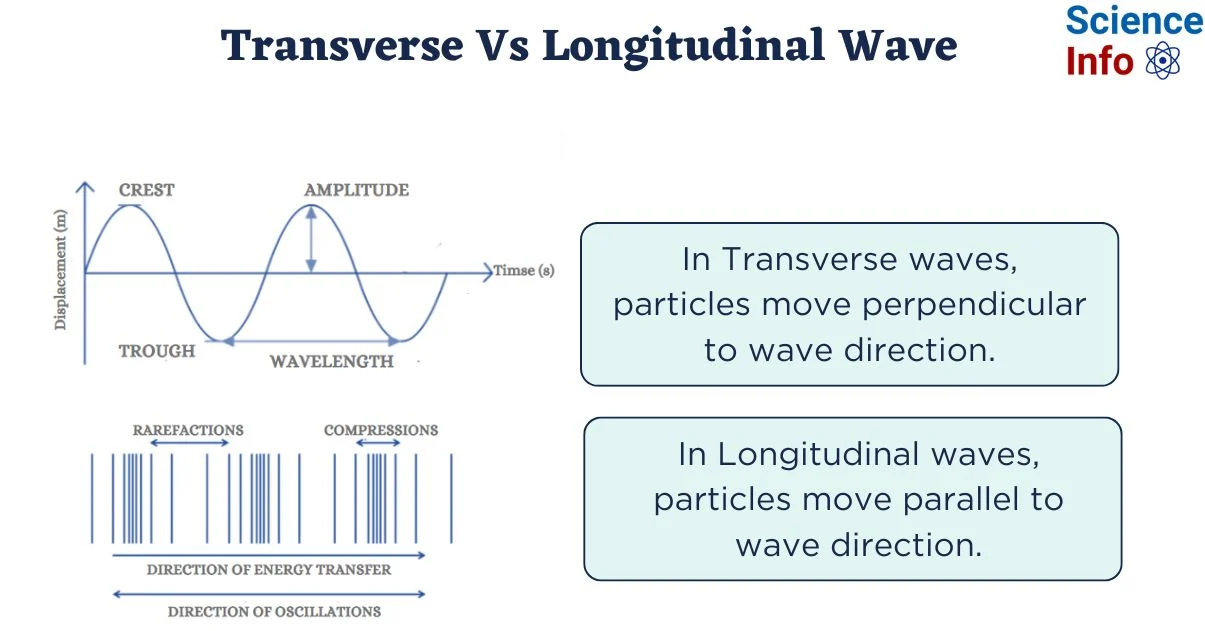
Card 76 Front: Longitudinal vs. Transverse Waves
Back:
Transverse Waves:
Oscillation perpendicular to direction of energy.
Crests and troughs.
Longitudinal Waves:
Oscillation parallel to direction of energy.
Compressions and rarefactions.
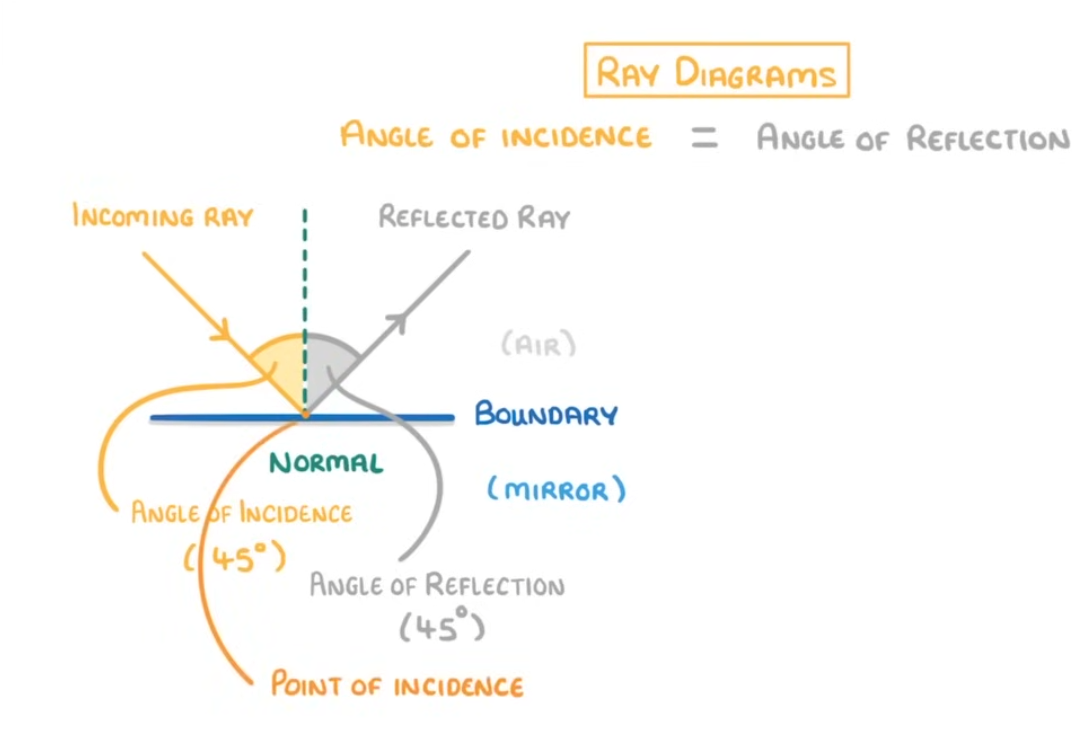
Card 77 Front: Reflection and Refraction
Reflection:
Angle of incidence = angle of reflection.
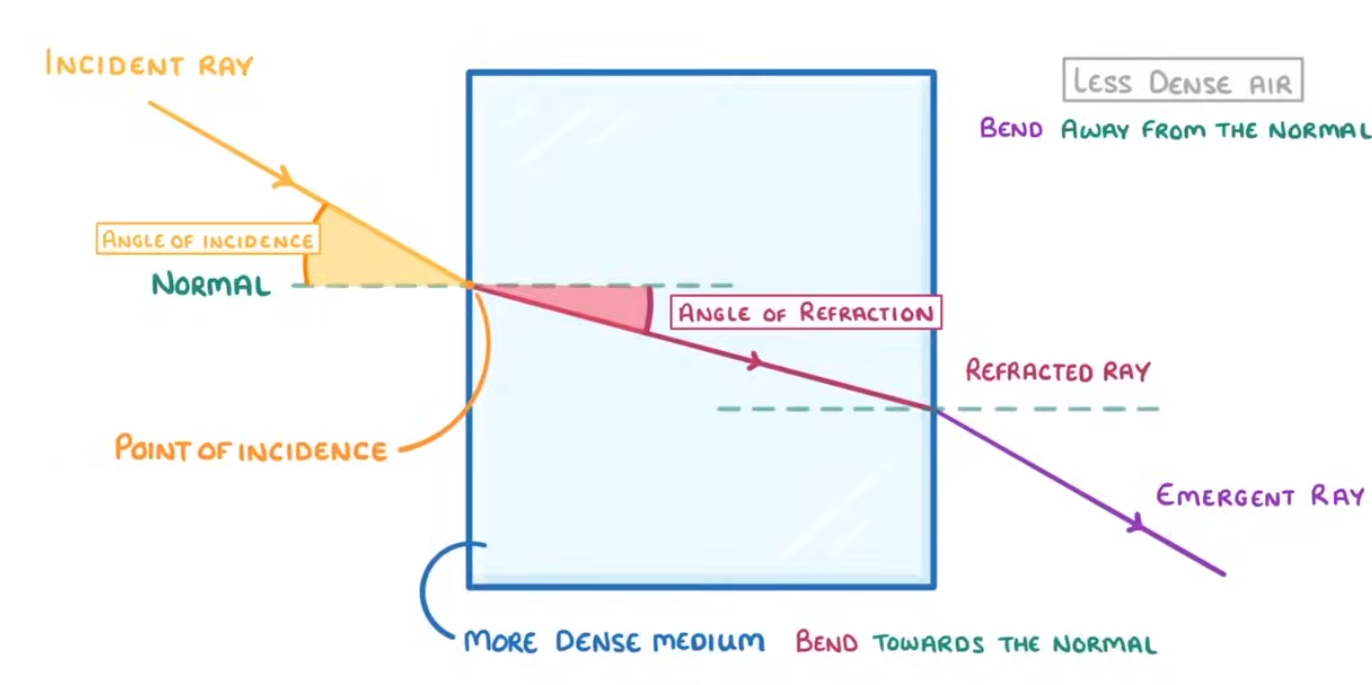
Refraction:
Light changes speed when entering new medium.
FAST rule: Faster → Away, Slower → Towards normal.
Note: The Refracted line can be anywhere between normal and the incident ray
Card 78 Front: The Electromagnetic Spectrum
Order:
Radio → Microwaves → Infrared → Visible light → UV → X-ray → Gamma
All are transverse waves and travel at 3×10⁸ m/s in vacuum.
Energy increases and wavelength decreases across spectrum.
Rich (Radio)
Men (Microwave)
In (Infrared)
Vegas (Visible light)
Use (Ultraviolet)
X-ray (X-ray)
Glasses (Gamma)
Magnetism & Electromagnetism
Magnets
Permanent: Always magnetic.
Induced: Only magnetic when in a field.
Materials: Iron, Steel, Nickel, Cobalt.
Magnetic Fields
Flow: North → South.
Strength: Strongest at the poles.
Electromagnetism
How: Current through a wire makes a magnet.
Strength Up: Add more current, more loops, or an iron core.
Best Part: Can be turned on and off.
The Motor Effect
The Motor Effect
Max Force: Wire at 90°.
Zero Force: Wire parallel (0°).
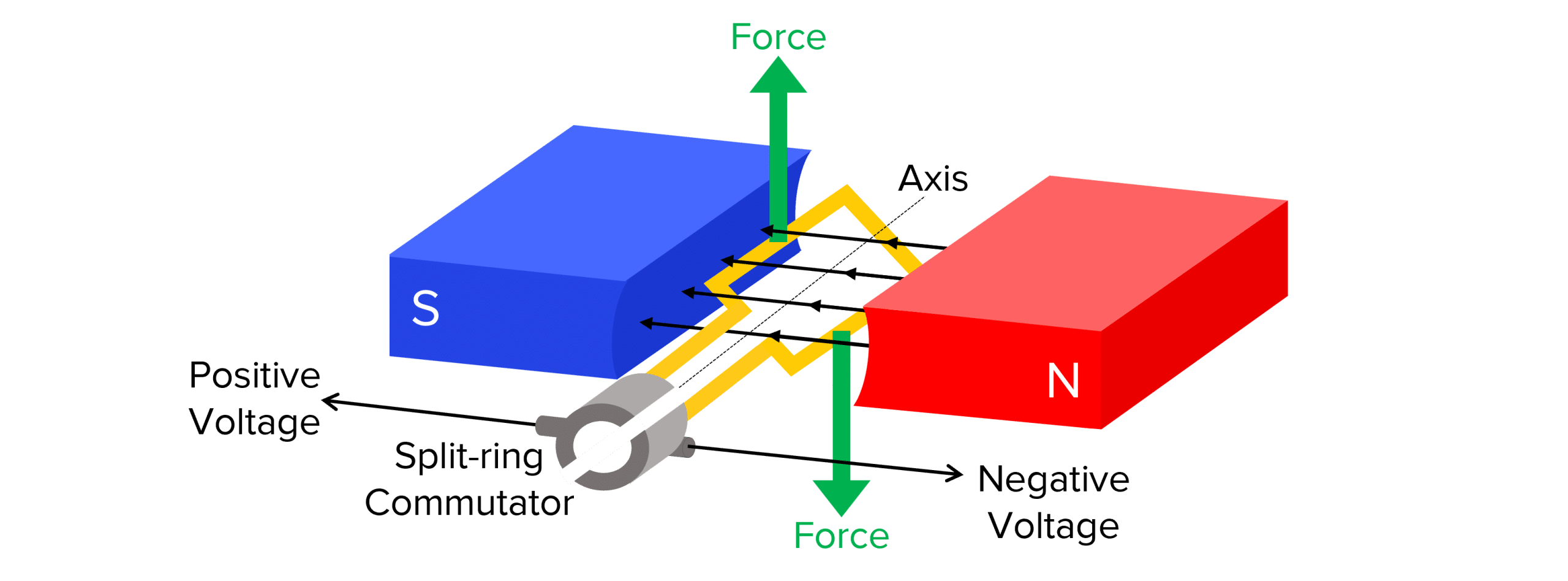
How an Electric Motor Works
Process: Current makes the coil magnetic. Magnetic fields from the wire and magnet push each other.
It pushes one side up and the other down to make it spin.
Split-Ring Commutator: Swaps the current every half-turn to keep it spinning the right direction.
The Equation: F = B I L
F = Force (Newtons), B = Flux Density (Tesla), I = Current (Amps), L = Length (Metres).
Note: Given on exam sheet. Just remember B = Tesla.
Required Practical – Resistance of a Wire
1. The Idea
Think of the wire as a narrow tube filled with bouncing balls (atoms). Electrons are like people trying to run through.
Short wire: Fewer obstacles to hit.
Long wire: More obstacles = harder to get through (Higher Resistance).
2. The Method
Clip a wire to a ruler.
Move the second clip to make the wire longer or shorter.
Read the meters, then switch off.
Why? If the wire gets hot, the "balls" (atoms) shake more, making it even harder to get through.
3. The Rule
Double the length = Double the resistance.
It's a straight-line relationship.
Note: Don't stress about memorizing the exact equipment list. Just remember: Longer wire = More bumps = More Resistance.
Required Practical – I-V Characteristics
1. The Circuit Setup
Battery/Power Pack
Variable Resistor: change current and voltage
Ammeter: in series (Current, I)
Voltmeter: in parallel (Potential Difference, V)
2. The Method
Move variable resistor to change V and I.
Record readings.
Repeat 6–10 times.
Reverse battery to get negative values.
Plot I vs V graph.
3. Graphs:
Fixed Resistor: straight line through origin
Filament Lamp: curve (resistance increases when hot)
Diode: current only one direction after threshold
Note: Switch off between readings to avoid heating effects.
Absorption and Emission of Radiation
1. Absorption: object takes in thermal radiation → temperature increases
2. Emission: object gives out thermal radiation → temperature decreases
Surface Type:
Matte Black: best absorber and emitter
Shiny Silver: worst absorber and emitter
Examples:
Solar panels = black to absorb heat
Survival blankets = shiny to reflect heat
Atomic Level:
Absorption: electron jumps to higher energy level
Emission: electron falls to lower energy level and releases radiation
Note: Objects constantly absorb and emit radiation.
The "Cheat Sheet" for Motion Graphs
Distance-Time Graph:
Gradient = Speed
Curve = changing speed (use tangent)
Flat = stopped
Velocity-Time Graph:
Gradient = Acceleration
Area = Distance travelled
Flat line = constant speed
Fleming’s Left-Hand Rule ( Motors )
Used to find the direction of force/motion on a current-carrying wire in a magnetic field.
Left hand:
Thumb → Force
First finger → Magnetic Field (N → S)
Second finger → Current
Remember:
The direction of current will be shown with arrows
The direction of Magnetic field always goes from (N → S)
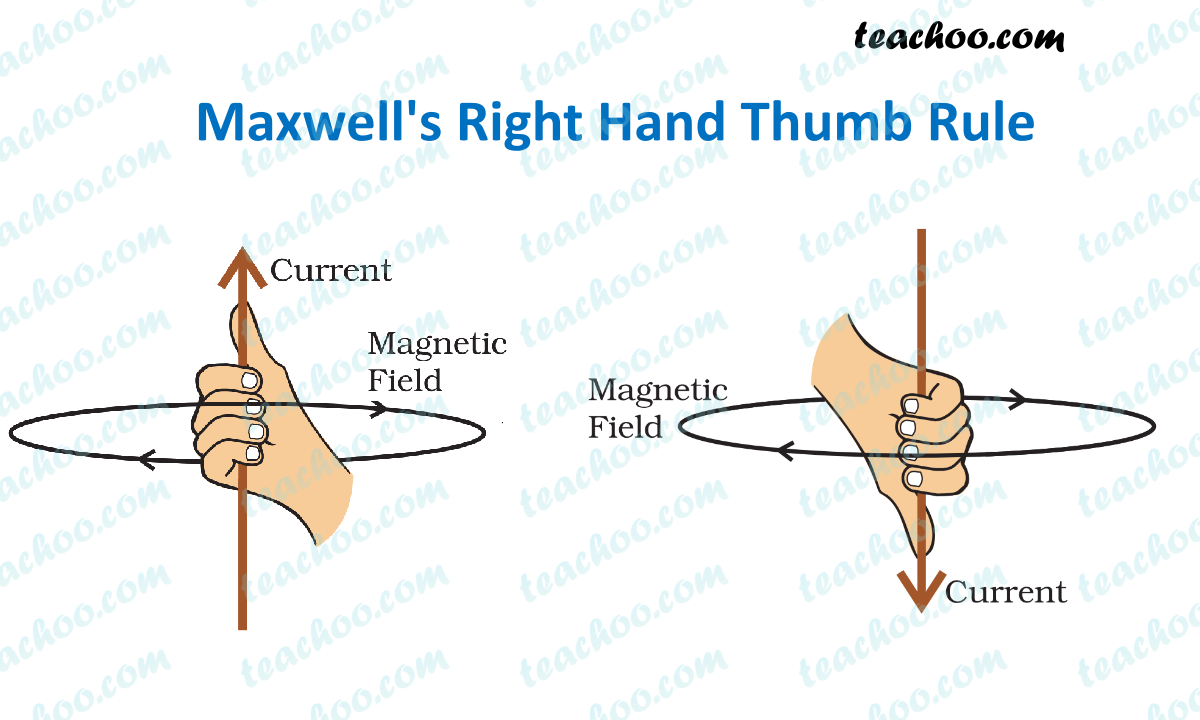
The Right-Hand Thumb Rule.
The Right-Hand Thumb Rule
Hand: Use your Right Hand.
Thumb: Points with the Current.
Fingers: Curl with the Magnetic Field.
How to use it:
If you know the current, it tells you the field.
If you know the field, it tells you the current.