Neurons & Neural Firing
 View linked note
 Call Kai
 Learn
Learn Practice Test
 Spaced Repetition
 Match
Match Flashcards
 Knowt Play
1/59

There's no tags or description
Looks like no tags are added yet.
Name | Mastery | Learn | Test | Matching | Spaced | Call with Kai |
|---|
No analytics yet
Send a link to your students to track their progress
60 Terms
Neurons
The building blocks of the nervous system. Send, receive, and process messages throughout the body, and release neurotransmitters
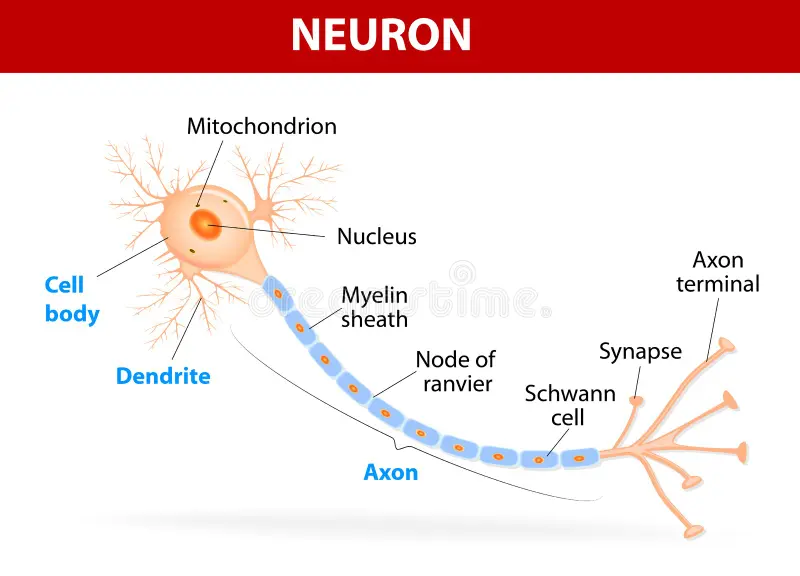
Cell Body (Soma)
is made up of a nucleus that determines when the neuron has reached the threshold to fire. Also carries out basic metabolic functions of the neuron
Dendrites
receive messages from other neurons and send them to the neuron
Axon
The “tail” of the neuron where electrical signals are conducted and carried out to communicate with the brain
Myelin Sheath
white fatty substance an axon is wrapped in. Insulates axon and increases speed of action potential = faster communication
Synapse
gap between terminal buttons of presynaptic (sending) neuron and dendrites of postsynaptic (receiving) neuron
Glial Cells
support cells that hold together the message-sending neurons and support their functioning. Some supply nutrients, myelin, or function as immune cells in the brain
Reflex arc
neural pathways that controls a reflex. acts on an impulse before it reaches the brain
sensory neurons
contain afferent nerve fibers in axon which carry messages from sensory organs (eyes, skin, etc.) toward brain/spinal cord (CNS). Interneurons then connect with motor neurons to send messages to muscles/glands resulting in a reflex
motor neurons
transmit signals from brain to muscles/glands allowing us to talk, move, etc.
Interneurons
Connects sensory and motor neurons in CNS
Psychoactive drugs
Drugs such as depressants like alcohol, opioids like heroin, hallucinogens like marijuana, or stimulants like caffeine or cocaine
substance use disorder
a mental disorder that affects ones behavior and brain due the inability to control the use of certain substances. There are many symptoms such as cognitive, behavioral, and physiological symptoms.
antagonist
a drug that inhibits/slows down the action of a neurotransmitter
Stimulants
a type of psychoactive drug that increases the levels of the neurotransmitters dopamine and norepinephrine. Ex) Caffeine & cocaine
caffeine
A type of stimulant that increases the levels of dopamine and norepinephrine (agonist). It is the most commonly consumed psychoactive substance in the world.
Side Effects: restlessness, shakiness, fast heart rate, dizziness
cocaine
A type of stimulant that increases the levels of dopamine (agonist).
Side Effects: increased blood pressure/heart rate, hallucinations, seizures, violent behavior
methamphetamines
a type of stimulant that increases the levels of dopamine. Can be used to treat ADHD.
Side effects: decreased appetite, nausea, increased body temp.
ecstasy
a type of stimulant that increases the levels of serotonin, dopamine, and norepinephrine
Side effects: sweating, nausea, memory problems, decreased appetite, blurry vision
opiods
a type of psychoactive drug that blocks pain receptors by increasing endorphins (painkiller). Ex) heroin
Heroin
A type of opioid that increases the levels of dopamine and increases endorphins
Side effects: euphoria, vomitting, pain relief, small pupils
action potential
the message/electrical impulse moving down the axon and the neuron fires
all or nothing principle
a neuron either fires or it doesn’t. fires at threshold of -55 mv
depolarization
after the neuron fires, the message travels down the axon and positive ions (sodium) flows in through the axon before moving onto the next
reuptake
when a neuron reabsorbs a neurotransmitter after it has already been released
multiple sclerosis
A neurotransmitter disorder where there is too much glutamate and not enough GABA. Too much glutamate causes excitotoxicity, killing neurons leading to a communication block between brain and body. GABA usually stops neurons from firing but since there isnt enough, more neurons are firing.
Side Effects: vision loss in one eye, weak leg muscles (trouble walking), dizziness, colors look dull
neurotransmitters
they are released from terminal buttons to synapse and allow neurons to communicate with each other. Ex) dopamine, serotonin, glutamate, etc.
excitatory neurotransmitters
tells the neurons to fire
inhibotory neurotransmitters
prevents neurons from firing
dopamine
a type of neurotransmitter (excitory & inhibitory)
Function: pleasure, muscular control, learning, attention
When too high: aggression, poor decision making,
Too low: lack of motivation, poor concentration, moody
disorders: high-schizophrenia low-depression, anxiety, parkinsons disease
norepinephrine
excititory neurotransmitter
function: alertness, arousal (fight or flight)
too high: high blood pressure, anxiety, sweating
too low: low excitement, poor concentration, depressed
disorders: high-insomnia, PTSD low-Parkinsons disease
GABA
inhibitory neurotransmitter (prevents neurons from firing)
too high: seizures, oversleeping, lack of energy
too low: poor impulse control, seizures in the brain
Disorders: high-hypersomnia low-bipolar, mania
substance p
excititory neurotransmitter (carries pain signals)
too high: high levels of pain sensitivity, anxiety
too low: reduced pain sensitivity, mood changes, unstable bones
disorders: high-migranes, anxiety, eczema, arthritis, chronic pain low-depression, asthma, migranes, eczema
serotonin
inhibitory neurostansmitter
function: appetite, sleep, mood
too high: agitation, restlessness
too low: sadness, fatigue, suicidal thoughts
disorders: high-serotonin syndrome (hallucinations, confusion, restlessness) low-anxiety
glutamate
excitatory neurotransmitters (helps neurons fire)
too high: excitotoxicity (neurons are killed), stroke
too low: poor concentration, death, mental exhaustion
disorders: high-alzheimers, epilepsy low-psychosis, insomnia
acetylcholine
excitatory neurotransmitter
function: voluntary muscle movements, memory, learning
too high: increased salivation, blurred vision
too low: weak muscles, paralysis, learning impairments, memory impairments
disorders: low-dementia, alzheimers
hormones
chemical messangers that help help regulate biological processes in the body
leptin
a type of hormone that helps regulate body weight and energy
melatonin
a type of hormone that helps regulate sleep and wake cycles in circadian rhythms. Increases at night and is almost non existent in the morning
refractory period
positively charged ions leave the axon and the neuron can’t be fired until it reaches resting potential
resting potential
where the axon is more negative on the inside and more positive on the outside. (at -70 mv)
threshold
the bare minimum a neuron will fire (-55mv)
myasthenia gravis
an autoimmune disease that causes muscle weakness
endorphins
hormones produced in the brain that act as natural pain killers and can improve mood
addiction
feeling like you keep needing more of something. not being able to control ones self
agonist
drugs that enhance or amplify the action of a certain neurotransmitter
reuptake inhibiter
drug that prevents the reuptake of a neurotransmitter
depressants
a drug that slows down brain activity cause muscles to relax and provide a calming feeling
barbiturates
a type of depressant that is used for sedatives
alcohol
a type of depressant that increases GABA and dopamine (agonist)
hallucinogens
provides an increase of serotonin and alters perspective
near death experience
a vivid/life changing experience that when someone has begun the process of dying
marijuana
a type of hallucinogen that increases serotonin and dopamine (agonist)
LSD
a drug used to treat alcoholism
tolerance
the ability to tolerate a certain substance. When you have increased amounts of a certain substance you can increase a tolerance for that substance
withdrawl
when you take something away and they want it back so badly. When you take away a drug it can lead to certain symptoms as the neurotransmitters are being produced by the body
endocrine system
network of glands to produce hormones into bloodstream to regulate organ and cell functions
adrenaline
a hormone that helps one react to stressful/dangerous situation.
ghrelin
a hormone that increases appetite
oxytocin
hormone that plays role in human behavior and reproduction