Educ 181 Final Exam
 Call Kai
 Learn
Learn Practice Test
 Spaced Repetition
 Match
Match Flashcards
 Knowt Play
1/142

Earn XP
Description and Tags
Intro to HDFS
Name | Mastery | Learn | Test | Matching | Spaced | Call with Kai |
|---|
No analytics yet
Send a link to your students to track their progress
143 Terms
Families in the United States today
childness structurally mediated
smaller families
delayed parenthood
40% preganancies unintended
shifts that affect US families
education
career
fertility
economy
culture
What factors contribute to delayed parenthood?
cost, education, carrers (gender equity)
Why has the perceived cost of parenthood increased in recent decades?
emotion + financial aspect
time intensive
Why are children increasingly vied as a “capstone” of adulthood rather than its foundation?
People go to college —> job —> house —> career —> and then have children
geminal
0-2 weeks
embryonic
3-8 weeks
fetal
9 weeks-birth
parenthood’s affect on relationship satisfaction
child early years (0-5) mild decrease
How can advanced parental age influence transition to parenthood?
more difficult to conceive —> increases in ART (assistive reproductive technology)
Parenting Happiness Gap
non parents are happier than parents
How does the parenting happiness gap differ btw US and European parents?
parents happier in Europe
bc of
access to resources
health care
paid leave
Factors that contribute to stress + rlnship satisfaction during early years of life (0-5)
renegotiation of roles
advanced parenthood eases transition
identity
responsibilities
Factors that contribute to higher rates of maternal and infant mortality for Black mothers and infants
minority/complex stress
access to prenatal care
bias in assessment of pain
research bias/medical eduction
Identify factors that influence infant mortality + health
inadequate prenatal care
maternal smoking/substance use poor nutrition
chronic infections
Low birth weight
< 5.5 lbs @ higher risk for illness, devo probs, death
preterm infant
>3 weeks
small for gestational age (SGA)
weight, length, or head circumference below the 10th percentile for their gestational age and sex
AGAR stands for
Activity
Grimace
Appearance
Responsivity
AGAR
rapid assessment conducted 1 and 5 minutes after birth to evaluate a newborn’s health based on heart rate, respiration, muscle tone, reflexes, and skin color
NBO stands for
Newborn behavior observation
NBO
physical assessment of newborn health
Gross Motor Skills
influenced by environment
use large muscles in the body for strength, coordination, reaction time
Fina Motor Skills
influenced by practice
small muscles in the body for precision + high degree of control
Children devo
perception, attention, memory, language, brain devo
Primary Circular Reactions
(1-4) months, being to repeat pleasurable actions (ex. sucking thumb)
secondary circular reactions
(4-8 months), intentionally repeat actions to trigger a response (ex. shaking a rattle)
Tertiary Circular Reactions
(12-18 months), trial and error experimentation
Major Domains of Intellectual Development in Infancy
sensorimotor
object permanence
symbolic thought
object permanence
in first 6 months/year; objects, people, and places continue to exist even when they are not currently perceived
Baby communicate through
crying, distinct cries
6 months communicate thru
babbling
1st word
by 1
Symbolic thought
by toddlerhood, coincides w language, he cognitive ability to use words, images, and objects to represent other concepts, allowing humans to think about things not immediately present
When a baby babbles it is good if
you respond conversationally bc it improves lang devo
Pruning
the brain's natural "use it or lose it" process, which removes weak or unused neural connections while strengthening frequently used ones
What factors support the formation and maintenance of synapses?
novel stimuli
responsive caregiving
routine
interactive play
language exposure
nutrition
Corpus callosum
rapidly myelinates + helps hemisphere specialize + coordinate
internal working model of attachment
mental representations of the self and others, formed early in life based on caregiver interactions
how you view yourself
temperament
mostly innate, biologically based individual differences in emotional reactivity, activity level, and self-regulation
key dimensions of temperaments
activity, distractibility, withdrawal, adaptability, attention span, intensity, responsiveness, mood
parental self-efficacy
parent's belief in their ability to successfully perform parenting roles, manage tasks, and influence their child's development positively
self concept
cognitive andideas/images we hold about ourselves
theory of mind
understand others’ thoughts and feel differ from mine
self-conscious emotions
pride, shame, embarrassment, guilt
Parenting behaviors on children’s eating habits + weight
parental weight + modeling
feeding practices
meal routines
family stability
sleep routine
prenatal environ
Overarching characteristics in Middle Childhood
industry v inferiority (can I make it in the world?)
focus on mastering social + academic skills
increase self-sufficiency, independence, responsibility
expand activities + rlnships
make skill commitments
put on “tracks” in school
girls height peak @
12
boys height peak @
14/15
Girls 8-17
breast budding (8-13)
pubic hair growth (8-14)
growth spurt (9.5-14.5)
1st period (menarche) (10-16.5)
underarm hair growth (10-16)
change in body shape (11-16)
adult breast size reach (12.5-16.5)
men (10-18)
testes and scrotum growth
voice change
penis growth
pubic hair growth
first sperm production (12-14)
growth spurt
change in body shape
underarm and facial hair growth
obesity in BMI
>= 95th percentile
Cohort factors that contrib to increasing weight
processed foods
sedentary habits
reduced sleep
increased stress
endocrine disruptors
Piaget’s Stages of Cognitive Devo
sensorimotor
birth - 2 yrs old
preoperational
2 - 7 yrs old
concrete operational
7 - 11 yrs old
formal operational
12 and up
Concrete Operational
increased logic
ability to conserve
decreased egocentrism
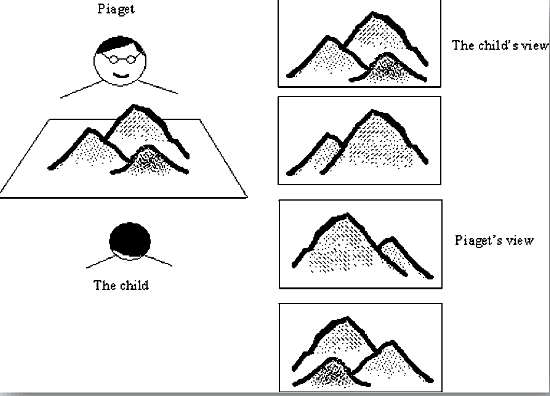
Three Mountain Task
indicator that thinking has moved to concrete stage + children no longer egocentric
pragmatics
children learn to use long effective + appropriately in social context
learning disabilities often diagnosed during the school years
dyslexia
dyscalculia
ADHD
__ % children diagnosed; ~ __ adulthood
5-10; ½
Why do adults have remission of learning disabilities?
brain maturation
compensatory strategies
environment fit
diagnostic thresholds
Immordino-Yang 2019 - optimal learning
brain must switch switch btw default mode network (DMN) + executive control network (ECN)
DMC active during
reflection, day dreaming, + perspective-taking
ECN active during
focused tasks, problem-solving, analytical
optimal learning requires (Immordino-Yang, 2019)
emotional investment
psychological safety
without safety, salience network dominates, blocking shift
tracking
more gains for “high performance” students
no significant diff for avg or “low performance” students
self-esteem from early childhood to middle childhood
decreases
self-esteem decrease
begin more social comparison
beliefs abt abilities + limitations become more realistic thru comparison + feedback
pubertal and social changes
self-esteem in middle childhood correlated w __ and __
mastery-oriented attributions; process praise
mastery-oriented - reason for success
ability
mastery-oriented — reason for failure
controllable factors, such as insufficient effort
seek information on how best to increase their ability thru effort
learned-helpless — reason for success
external factors
learned - helpless — reasons for failure
ability cannot be changed by effort
seek positive and avoid negative evals
ability no longer predictive of performance
What does it mean that adolescence “begins in biology and end in culture”?
biological makers
pubertal onset
growth spurt
sex characteristics
cortical maturation
dopamine and oxytocin sensitivity
cultural markers
rites of passage
legal milestones
educational transitions
social roles
culture expectations
Mood fluctuations greatest in ___
early-mid puberty (9-15)
sex hormones __ neurotransmitters
modulate (how much is released, how sensitive receptors are, how long signals last)
mood instability interacts with
social stressors
cognitive changes
environmental factors
hormonal changes —>
increased sex drive
desire
arousal
blood flow
genital sensitivity
lubrication
masturbation ___, more directed goal-directed
increases
when do people have their first sexual experience?
many have during adolescent
delayed sexual activity correlated with
strong family connection
discussions of sex + abstinence w family
comp sex ed
declines in sexual activity
“slow life-history strategy”
smartphones/Internet
more recreational/extracurricular activites
“slow life-history strategy”
human devo will be slower when families are smaller, ppl live longer, education takes longer to complete
smartphones
communicate without leaving home, less engagement in social activities, more online sexual content/contact
more recreation/extracurricular activities
less unstructured free
less risk-taking behavior
more positive peer groups
What is associated with delayed initiation of sexual activity + fewer sexual partners?
comprehensive sex ed
Formal operational stage
gains in abstract, hypothetical, relativistic, metacognitive thinking
limbic system
matures before prefrontal cortex, increasing risk taking
Normative increases in family conflict reflect cognitive changes
identity + autonomy
challenging parents’ rules + reasoning
developing own opinions
identifying hypocrisy
identity formation major task:
identity v role confusion
identity v role confusion
organizing principle that makes up subjective experience of self
provides continuity
frame of differentiation
healthy identity development involved questioning
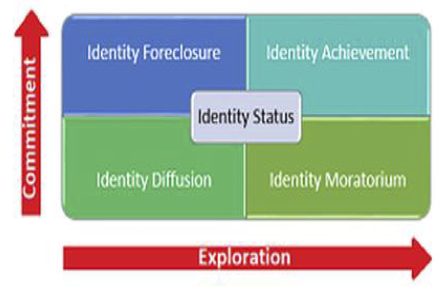
Marcia’s identity statuses
diffusion
foreclosure
moratorium
achievement
diffusion
not yet experienced crisis or made commitments
foreclosure
made commitment but not experienced crisis
moratorium
in midst of crisis but commitments are absent or vague
achievement
undergone crisis + made a commitment
MAMA cycles
strong identity thruout life shifts through
authoritative —>
achievement
permissive —>
moratorium
authoritarian —>
foreclosure
neglectful —>
diffusion