Science of Happiness Final
 Call Kai
 Learn
Learn Practice Test
 Spaced Repetition
 Match
Match Flashcards
 Knowt Play
1/79

There's no tags or description
Looks like no tags are added yet.
Name | Mastery | Learn | Test | Matching | Spaced | Call with Kai |
|---|
No analytics yet
Send a link to your students to track their progress
80 Terms
What is hedonism?
a perspective where pain and pleasure are the only motivators for human behavior. It is inherently dopamine-driven and operates on the principle that "what goes up must come down," as no dopaminergic response is permanent.
What is dopamine, and when is it released?
the neurochemical driver behind hedonistic pursuits. It is released during aerobic exercise, when eating (including "comfort foods"), and during various positive experiences. However, consistent use leads to dopamine spikes followed by withdrawal.
What is the hedonic treadmill/hedonic adaptation?
the human tendency to always return to a stable, baseline level of happiness (a "happiness resting point") regardless of temporary spikes of euphoria or dips into misery.
What is PERMA?
Martin Seligman’s matrix for well-being, consisting of five elements: Positive emotions, Engagement (engrossment in activity), Relationships (positive ones), Meaning (connection to something larger), and Accomplishments (short and long-term).
What is well-being set point theory?
well-being is a relatively stable construct that returns to a "set point" over time, even after significant life events.
What are ways to challenge negativity bias?
rewiring the brain through optimism, gratitude, building relationships, focusing on positive experiences, empathy, and kindness.
What is the “Broaden and Build” theory?
involves sharing positive experiences, which can make subsequent positive experiences feel even better and expand one's resources
What is the “Narrow and Constrict” theory?
refers to the tendency to withdraw from the world when experiencing sadness
When does oxytocin surge?
during pregnancy, parents bonding with young, for couples, and for individuals who enjoy social relationships. It increases trust and encourages generosity.
What is the Ainsworth study?
Known as the "Strange Situation" study, it identified three attachment styles: Securely attached (trusting/relying on others), Avoidant (uncomfortable with closeness), and Ambivalent (constant worry about abandonment).
What is the Harlow study?
involved infant monkeys who chose comfort (a cloth "mother") over tangible sustenance (a wire "mother" with food), demonstrating the importance of attachment and warmth.
What is equity theory within the context of relationships?
suggests that relationships have a higher chance of success when both parties perceive the other as bringing as much to the table as they do.
What are signature strengths?
a person's top 5 VIA Character Strengths that they can own, celebrate, and frequently exercise.
What does exercising signature strengths lead to?
leads to increased personal initiative, motivation to learn, higher performance, harmonious passion, and a greater likelihood of engaging in passionate work and flow.
What is the switch cost effect?
the cognitive cost incurred when mentally transitioning from one topic to another. It involves two stages: Goal Shifting and Rule Activation, and results in more errors and decreased memory, creativity, and retention.
How do you get more willpower?
conserving it (skipping temptation, "out of sight out of mind"), planning ahead (using "if x then y" techniques), and getting help or logging results for specific goals.
What are the benefits of willpower?
better academics, better emotional responses, lower divorce rates, less substance abuse, and more effective stress management.
How is willpower depleted?
when individuals tell themselves they "can't" do something rather than they "don't" do it.
What is mild-impact procrastination?
when non-urgent and non-important things in life are put off.
What is fallback procrastination?
a pattern of habitually falling behind, followed by a state of panic and a flurry of activity to compensate
What is the deadline procrastination pattern?
an individual loses sight of priorities and focuses on "little things" instead of the main task.
What is choice paralysis?
over-thinking a decision to the point that no choice is made, often caused by being overwhelmed by options and fearing a "wrong" move
Define opportunity cost
the cost of the alternatives given up when a choice is made.
Define maximizers and list pros and cons.
individuals who seek and accept only the absolute best options regarding price, quality, and fit.
pros: they obtain high-quality results
cons: include experiencing more regret, spending excessive time on product comparisons, and feeling less positive about their final purchasing decisions.
Define satisficers and list pros and cons.
individuals who settle for options that are "good enough" or "merely excellent" once their specific criteria are met.
pros: spending less time on decisions and experiencing significantly less regret
cons: they do not prioritize obtaining the absolute best price or quality available like maximizers do.
What are the 5 therapeutic tasks?
Secure base: Developing rapport. 2. Exploration: Looking at past/current life. 3. The relationship with the therapist. 4. Connecting past to present. 5. Imagining alternatives.
What are pathological, immature, neurotic, and mature defenses?
Pathological: Denial, splitting.
Immature: Fantasy, projection.
Neurotic: Regression, repression, hypochondriasis.
Mature: Altruism, anticipation, humor, sublimation, identification.
Draw the chart for the stages of change?
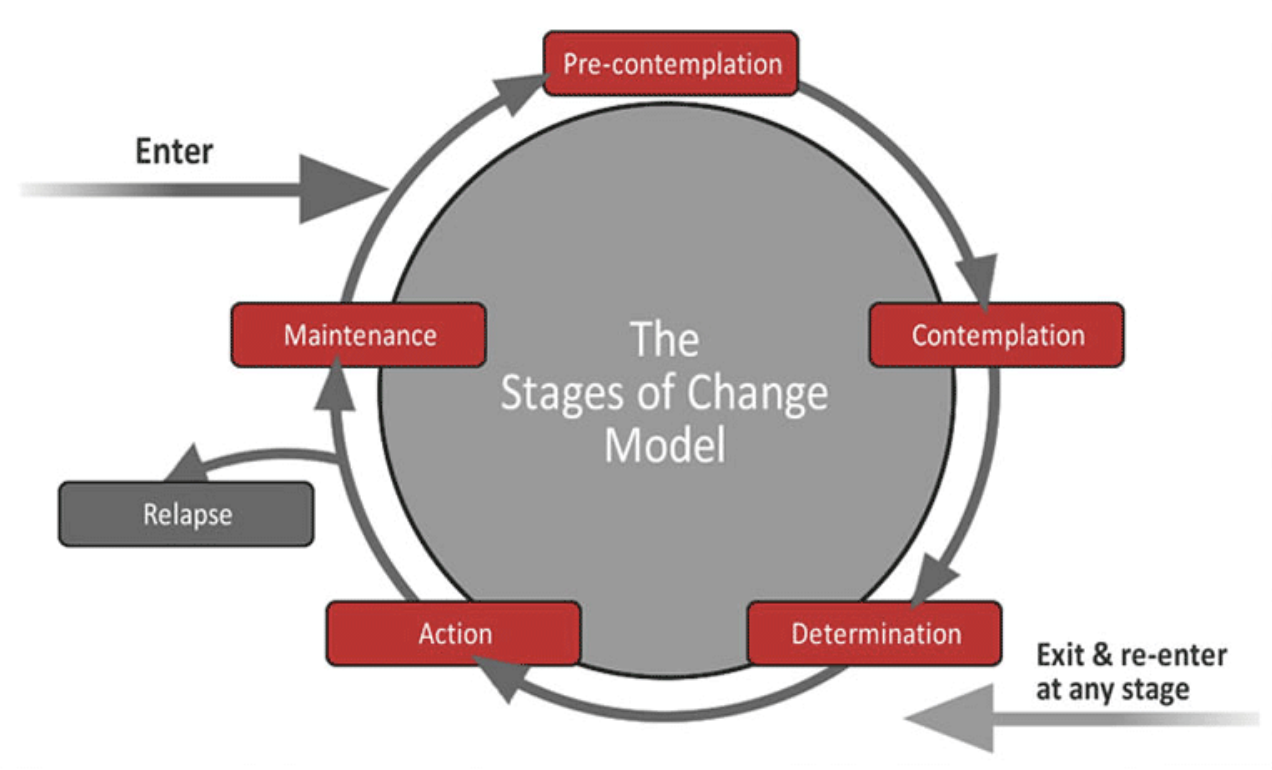
What are the stages of change?
Precontemplation (not intending to act) -> Contemplation (intending to act in 6 months) -> Preparation (intending to act in 1 month) -> Action (modifying lifestyle) -> Maintenance (preventing relapse) -> Termination (zero temptation). Relapse can occur, returning the person to an earlier stage.
Define operant conditioning and give examples
associates a non-natural behavior with a consequence.
Positive reinforcement (adding something good to increase a behavior)
Example: A student gets praise or a reward for completing homework, so they keep doing it.Negative reinforcement (removing something unpleasant to increase a behavior)
Example: Buckling a seatbelt stops the annoying beeping sound, so the person buckles up right away in the future.Positive punishment (adding something unpleasant to decrease a behavior)
Example: A child is scolded for drawing on the wall, making them less likely to repeat it.Negative punishment (taking something away to decrease a behavior)
Example: A teenager loses phone privileges after breaking curfew, reducing the chance they’ll do it again.
What are the core features of CBT?
focuses on how Thoughts, Behaviors, and Feelings interact. It addresses schemata (basic processing rules), intermediate beliefs (if-then statements), and automatic thoughts (rapid, often distorted streams of thought).
What is cognitive restructuring?
a tool used to cultivate realistic optimism and is a component of therapy.
What is learned helplessness?
an expectation of future helplessness based on past experiences where one had no control, exemplified by Seligman's dog experiments.
What are the different explanatory styles?
Optimistic: External (circumstantial), Unstable (temporary), and Specific (limited impact).
Pessimistic: Internal (personal flaw), Stable (permanent), and Global (affects everything).
What is Brain Derived Neurotrophic Factor (BDNF)?
released during aerobic exercise. It supports existing neurons, encourages neurogenesis and plasticity, and increases long-term memory.
What does it mean to be mindful?
Being situated in the present, sensitive to context, and experiencing active engagement and novelty.
What does it mean to be mindless?
Being trapped in a single perspective, insensitive to context, and governed by rules and routines.
What are the benefits of meditation?
leads to state changes (deep calm, cessation of internal dialogue) and trait changes (improved concentration and self-regulation).
Define the speaker-listener technique
A tool where the Speaker speaks for themselves and stops for paraphrasing, and the Listener paraphrases without rebutting. The goal is for both to feel understood, not necessarily to agree.
What is the challenge response?
occurs when a person perceives a threat but believes they have the necessary resources to handle it
What is stress?
a perceived threat to well-being. It is often defined as a "loss of control" in the West and an "absence of inner peace" in the East.
What is fear?
a response to a known external danger.
What is anxiety?
a generalized response to stress/worry.
Can money buy happiness?
High incomes don't bring happiness, but they bring a life you think is better, often by removing "drudgery". Happiness is more effectively "bought" by spending on experiences, free time, and helping others.
What quote is William James well-known for in the field of positive psychology?
“My experience is what I agree to attend to”
What is a Growth Mindset vs. a Fixed Mindset?
Growth: Intelligence is malleable and developed through effort.
Fixed: Intelligence is a fixed trait that cannot be developed.
What most impacts a person’s ability to change in therapy?
The therapeutic tasks, specifically the secure base and the rapport/relationship with the therapist.
Give 3 examples of thinking errors and how you could reframe them
Mind reading, Catastrophizing, and All-or-nothing thinking. Reframing is done through cognitive restructuring and reality corrections which involves interpreting events as circumstantial and temporary rather than global or permanent flaws.
Draw the Yerkes-Dodson Law (graph)
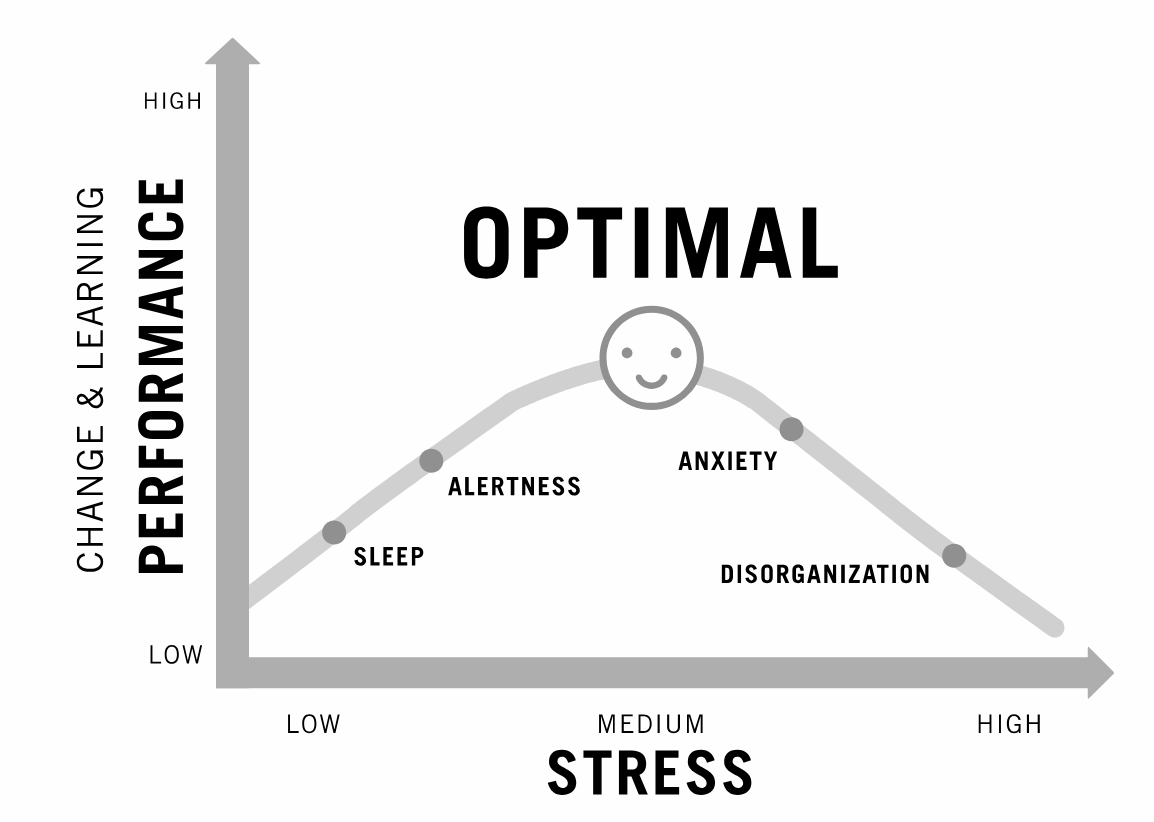
What are the Communication Danger Signs?
Escalation. 2. Invalidation. 3. Negative Interpretations. 4. Avoidance and Withdrawal.
What is the Fight or Flight Response?
a built-in physiological reaction to perceived threat that prepares the body to either confront or escape danger
What are the benefits of exercise?
the release of dopamine and serotonin, serving as a distraction, inducing flow, and providing a sense of mastery or control.
What is the Platinum Rule?
"Do unto others as they would have done unto themselves"
What is Gottman’s ratio for relationships?
at least 5 positive interactions to 1 negative interaction is needed for relationship stability.
What is the difference between forgiveness and reconciliation?
Reconciliation is defined as Forgiveness plus Trust.
What is forgiveness?
"giving up debt,"
What isn’t forgiveness?
Not forgetting, not reconciliation, not trust, not pretending unacceptable behavioris acceptable, not forgetting pain, not giving, not no consequences
What percentage of people are estimated to experience a mental health disorder in their lifetime?
estimate is 80%
What is the best cookie?
Alan says its oatmeal raisin with walnuts but I disagree
What is the Mismatch Theory (aka: Evolutionary Hangover)?
the idea that we have evolved stress mechanisms for past stressors that are now maladaptive for the stressors of the present day.
What is the difference between the challenge and the threat response?
A threat becomes a challenge if the individual believes they have the necessary resources to meet it
What is a negativity bias?
When a person has a predisposition to view things negatively
What is the Nun Study?
led by David Snowdon that followed a group of Catholic nuns over decades to examine aging, Alzheimer’s disease, and well-being. It found that nuns who expressed more positive emotions in early-life writings tended to live longer and had better cognitive health, highlighting how optimism and emotional outlook can support long-term flourishing.
What is social baseline theory?
idea that humans are neurologically wired to assume the presence and support of others as the “default,” which makes social connection a key factor in reducing perceived stress and conserving emotional and cognitive resources.
What is the sympathetic nervous system?
activates the body’s “fight-or-flight” response by increasing alertness, heart rate, and energy availability during stress or perceived threat
What is the parasympathetic nervous system?
responsible for “rest and digest” functions, helping the body calm down after stress. It supports recovery, relaxation, and emotional regulation
What is behavioral activation?
a therapeutic approach that encourages individuals to engage in meaningful and rewarding activities to improve mood and counteract avoidance and withdrawal. By increasing positive, goal-directed behavior, it helps break cycles of depression and build well-being.
What are the negative effects of sleep deprivation?
negatively affects emotional regulation, makes people more irritable, anxious, and less able to cope with stress. It also impairs cognitive functioning and reduces overall well-being, resilience, and the capacity to experience positive emotions.
What are the benefits of high-quality sleep?
supports emotional regulation, cognitive functioning, and resilience, helping people manage stress more effectively and maintain positive mood. It also strengthens physical health and overall well-being
Define deliberate practice
a structured, goal-oriented form of practice that involves focused effort, feedback, and repetition to improve performance in a specific skill
Define passion
a strong, sustained interest or enthusiasm for an activity or domain that motivates continued engagement and growth over time.
Why is meaning a “life preserver”?
it helps people stay psychologically afloat during stress, trauma, or adversity by giving suffering a sense of purpose and coherence. When people feel their lives have meaning, they are more likely to endure hardship and maintain hope and resilience.
Define flourishing
a state of optimal well-being in which individuals experience positive emotions, meaningful engagement, strong relationships, a sense of purpose, and accomplishment
What is the “I will, I won’t, I want” model?
a self-regulation tool that helps people set priorities by identifying what they must do (“I will”), what distractions or negative habits they will avoid (“I won’t”), and what meaningful goals or values they are working toward (“I want”). It is used to strengthen focus, intentional behavior, and alignment with personal well-being.
What is the relationship between desirability and feasibility in goal setting?
desirability refers to how attractive or meaningful a goal is, while feasibility refers to how realistically achievable it is given one’s resources and constraints. Effective goal setting involves balancing both. High desirability sustains motivation, but sufficient feasibility ensures the goal is attainable and supports long-term well-being.
What are the characteristics and outcomes of Harmonious Passion?
when a person engages in an activity they love in a balanced and flexible way that fits well with other parts of their life. outcomes are greater well-being, enjoyment, flow, and persistence without causing much stress or conflict.
What are the characteristics and outcomes of the Obsessive Passion?
a rigid, uncontrollable urge to engage in an activity that dominates a person’s identity and feels internally pressured rather than freely chosen. outcomes are stress, conflict with other life areas, and reduced well-being.
What is the key breathing technique that seems to activate the parasympathetic nervous system?
slow, deep diaphragmatic breathing, (belly breathing, box breathing)
What are the two most wasted words in the English language? And why?
“what if”because they focus attention on imagined negative futures instead of present action or problem-solving. This kind of thinking can increase anxiety without actually helping a person change the situation.
What are the reasons that we sleep 2 hours less than we did 100 years ago?
modern technology, artificial light, and constant access to entertainment and work. Increased stress, busier schedules, and 24/7 social and economic demands also reduce the time we spend sleeping.