SLHS 303 - Exam 4
 Call Kai
 Learn
Learn Practice Test
 Spaced Repetition
 Match
Match Flashcards
 Knowt Play
1/257

There's no tags or description
Looks like no tags are added yet.
Name | Mastery | Learn | Test | Matching | Spaced | Call with Kai |
|---|
No analytics yet
Send a link to your students to track their progress
258 Terms
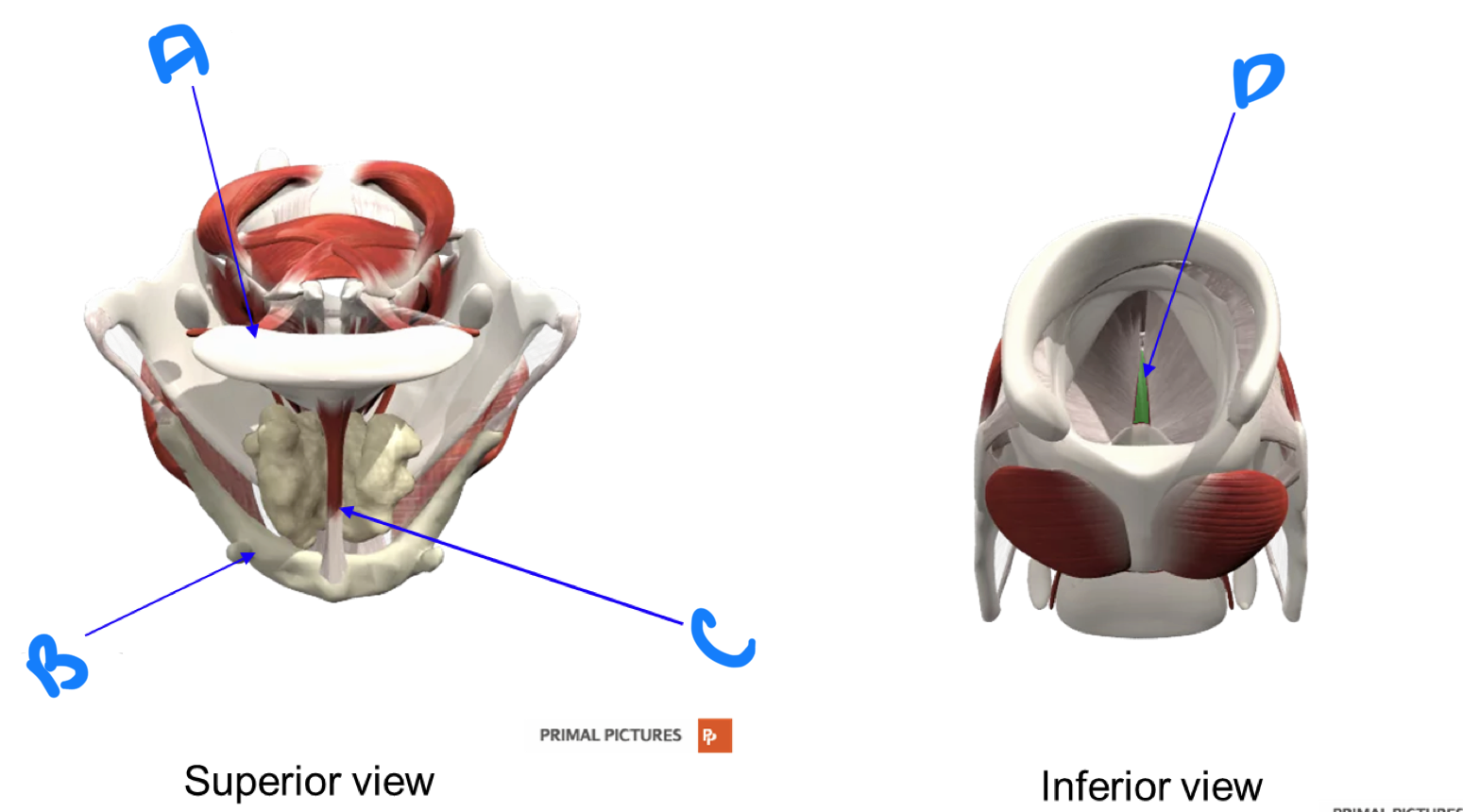
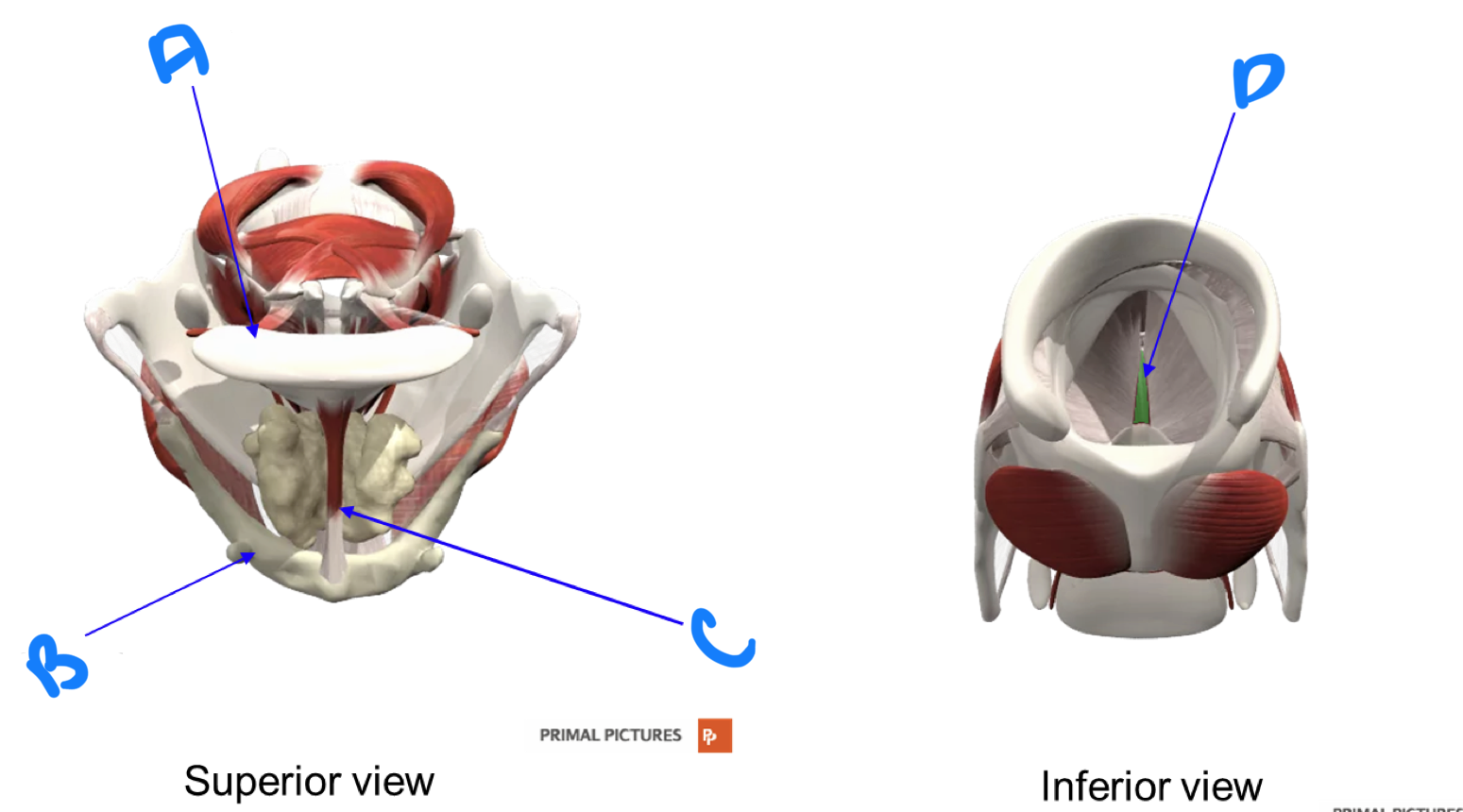
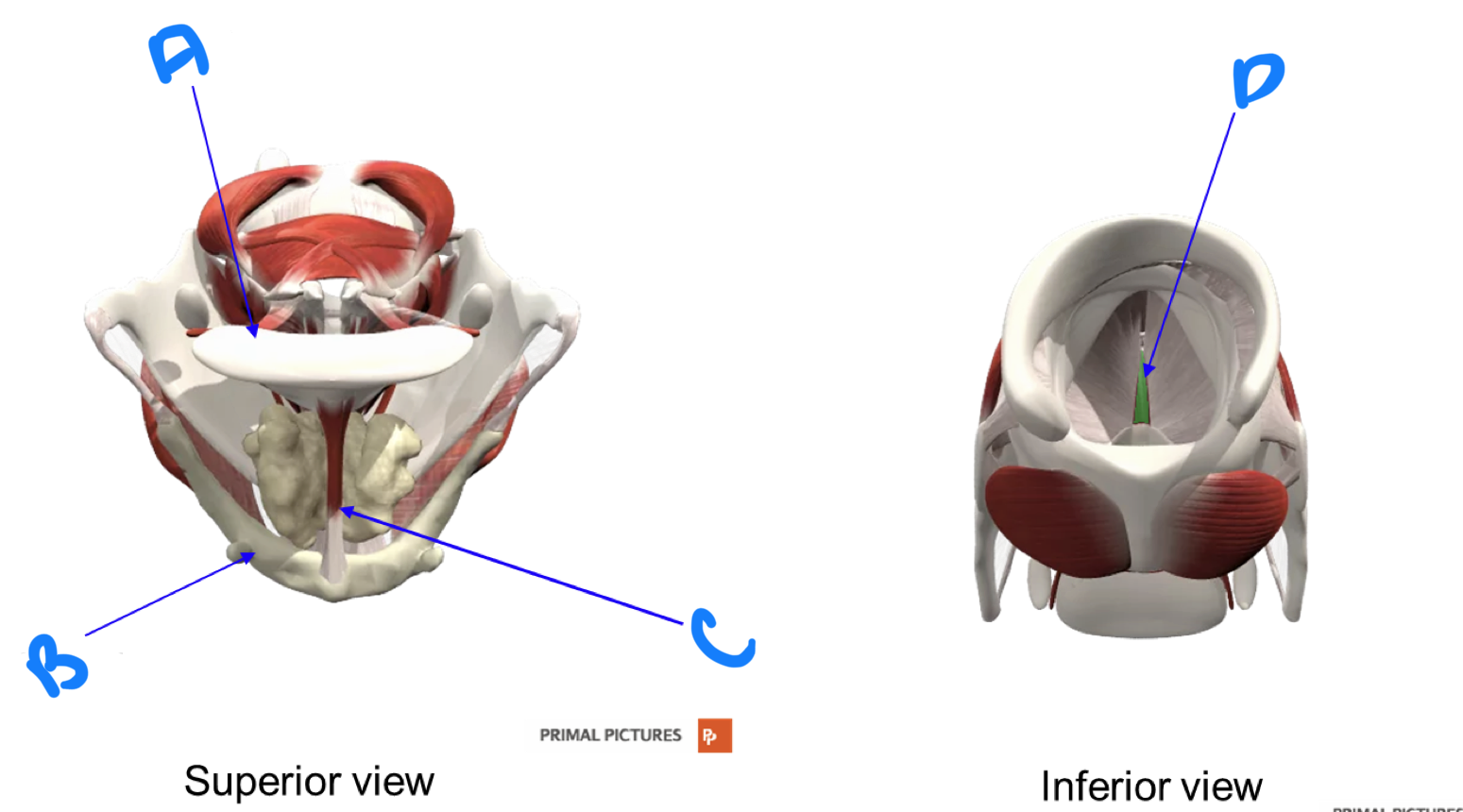
what is the larynx?
cartilaginous structure that serves as an organ for sound production; provides passage for air; protects the airway; phonation or voice production
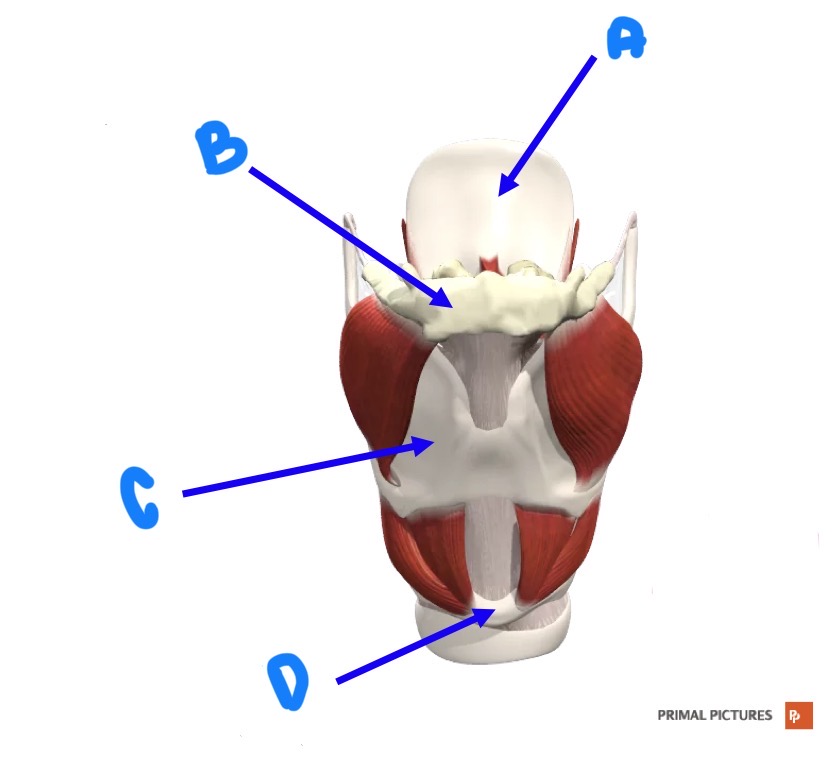
what view of the larnyx?
frontal (ventral) view
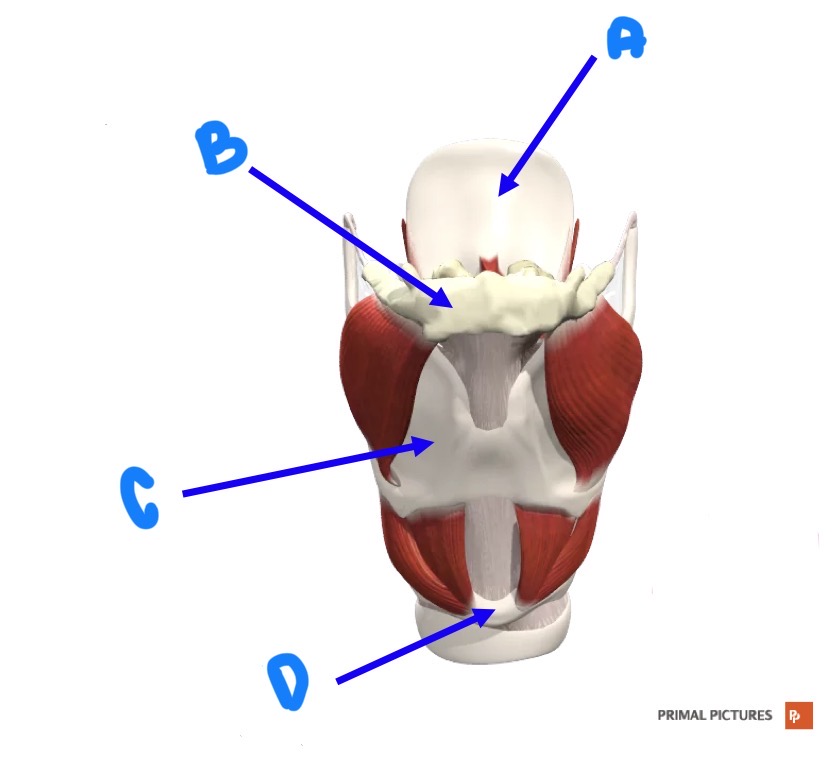
A
epiglottis
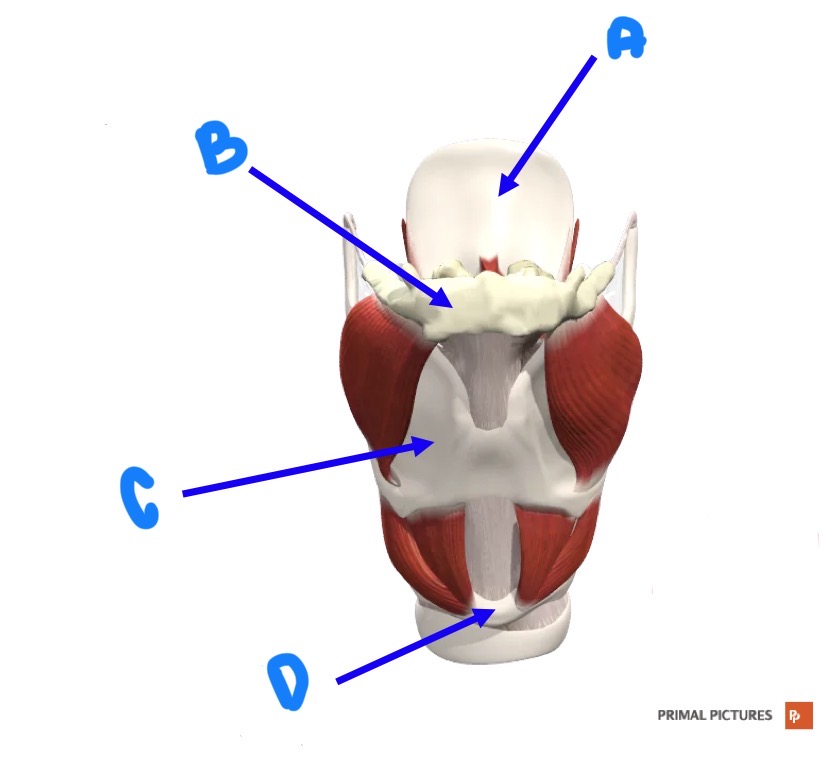
B
hyoid bone
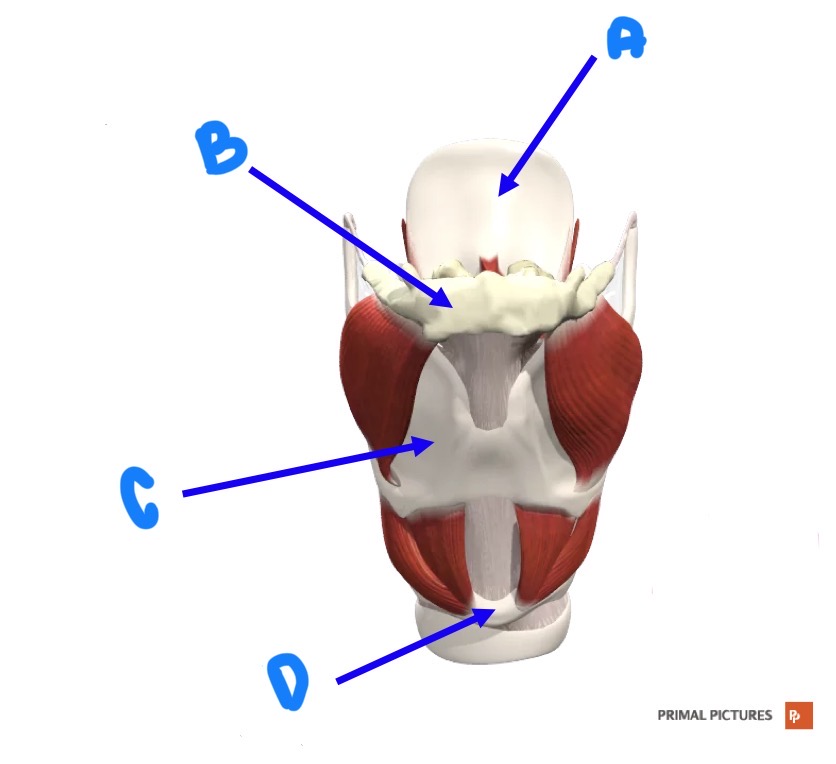
C
thyroid cartilage
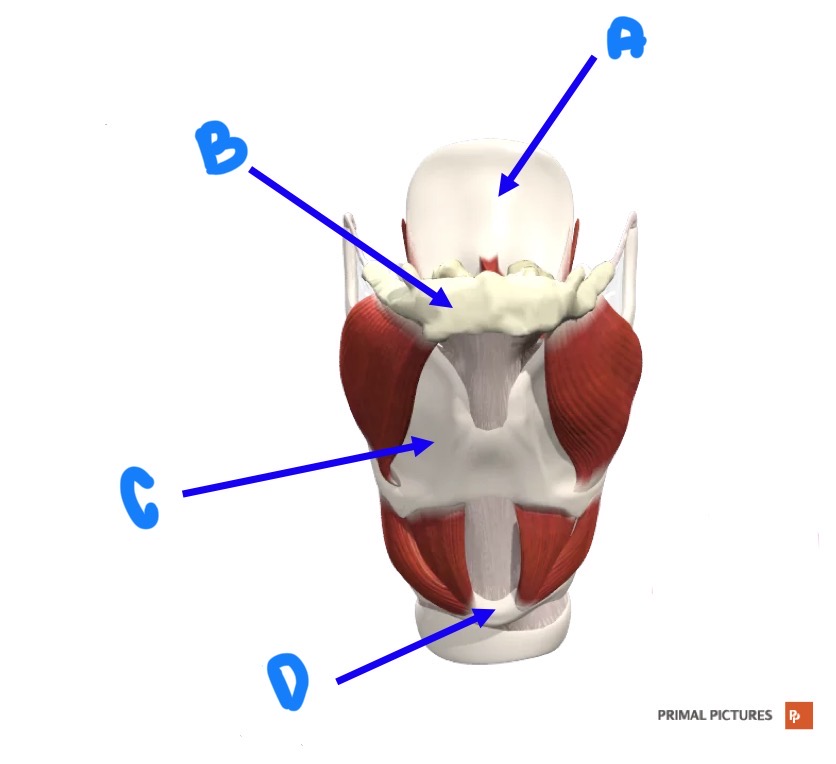
D
cricoid cartilage
where is the larnyx located?
below the hyoid bone and above the trachea
what is the frame of the larynx made of?
cartilage
what is the interior of the larynx made of?
soft tissue (epithelium)
true vocal folds
soft (bilateral) folds of tissue located inside the larynx that are involved in airway protection and vibration (osscilation) for speech production; aka vocal folds
false vocal folds
bilateral fatty tissue located inside the larynx and above the true vocal folds that do not vibrate during speech
what are the true vocal fold configurations?
open (abduction) and closed (adduction)
open
abduction
closed
adduction
when are the vocal folds abducted?
during respiration
when are vocal folds adducted?
to protect airway from food and water or during heavy lifting
hyoid bone
the superior border or the larynx; suspended in the neck and held in place with muscles; consists of a body, greater cornu (horn) and lesser cornu; horseshoe-shaped
trachea
inferior border of the larynx; cartilaginous structure made of c-shaped rings; anterior to the esophagus
laryngeal cartilages
9 principle cartilages of the larynx; 3 single (epiglottis, thyroid, cricoid) and 3 paired (arytenoid, cuneiform, corniculate)
epiglottis
single cartilage that is thin and leaf-shaped; anterior to the laryngeal inlet (opening of the larynx); attached to the thyroid cartilage via the thyroepiglottic ligament and attached to the hyoid bone via the hyoepiglottic ligament
thyroid cartilage
single cartilage; largest of the laryngeal cartilage; attached to the hyoid bone by the thyrohyid membrane
cricoid cartilage
single cartilage that is shaped like a signet ring; attached to the trachea via cricotracheal ligament
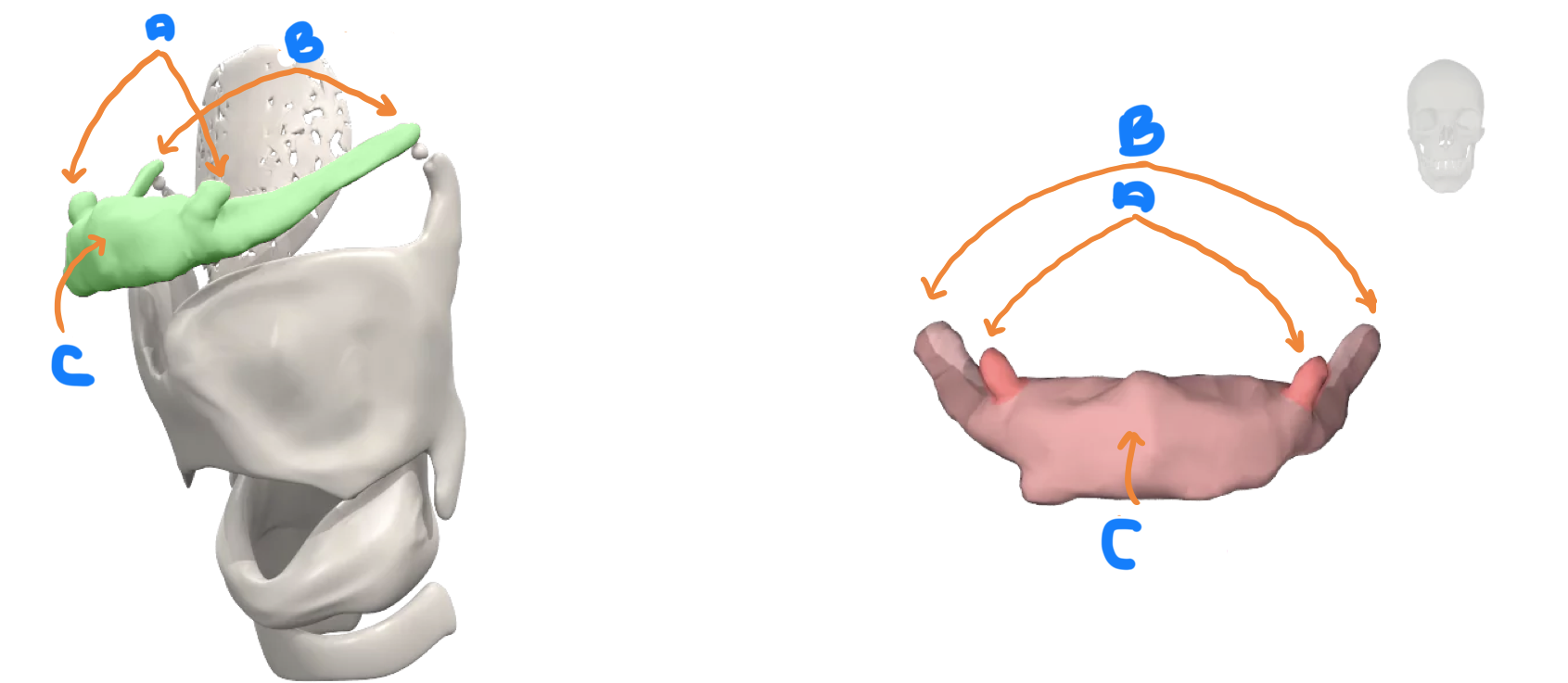
A
lesser cornu
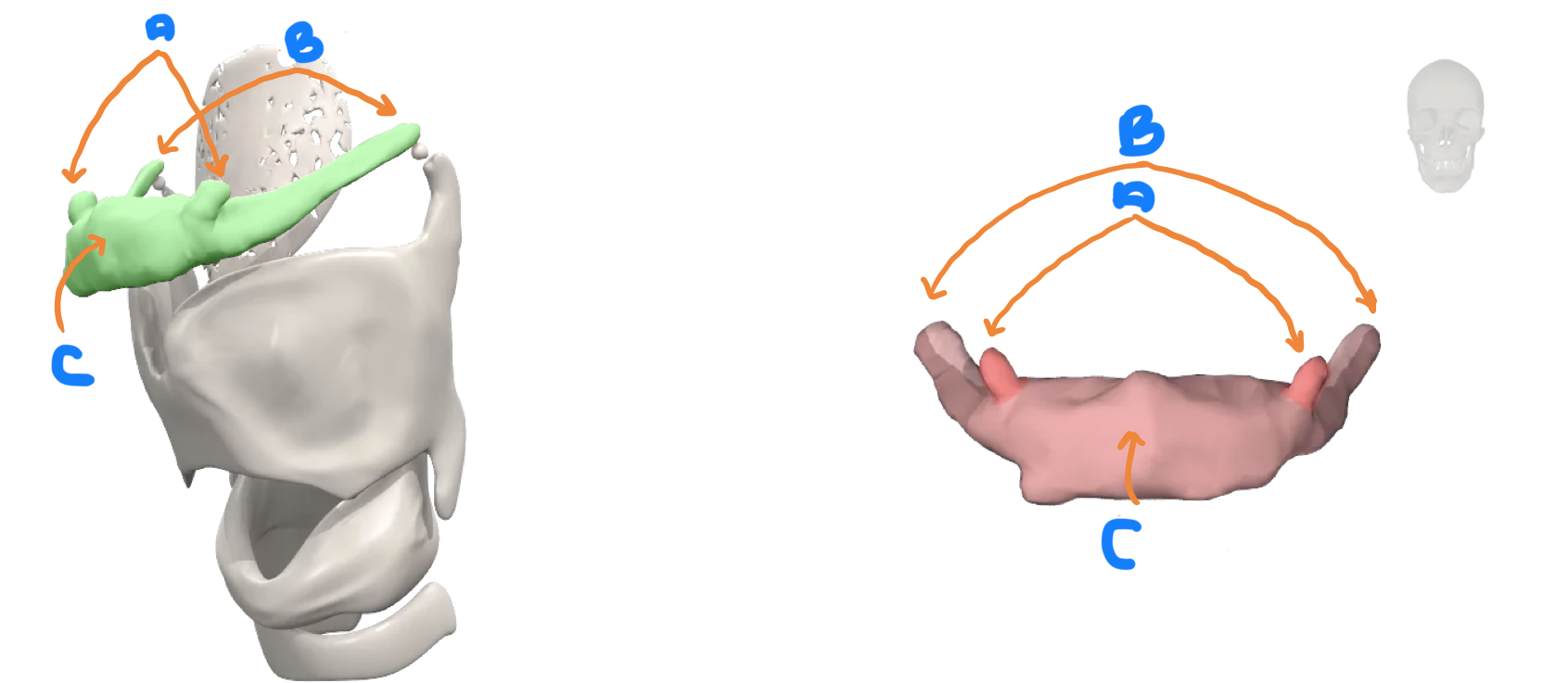
B
greater cornu (horn)
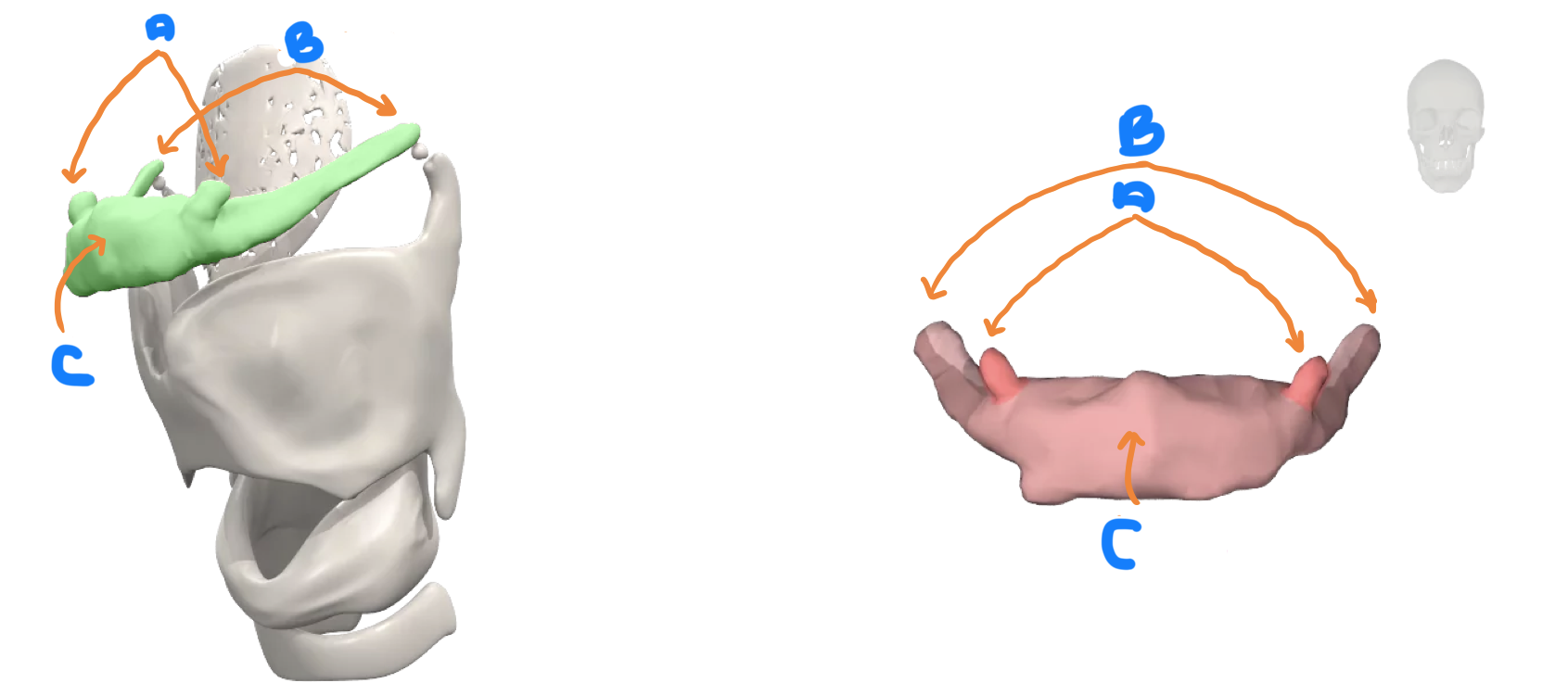
C
body
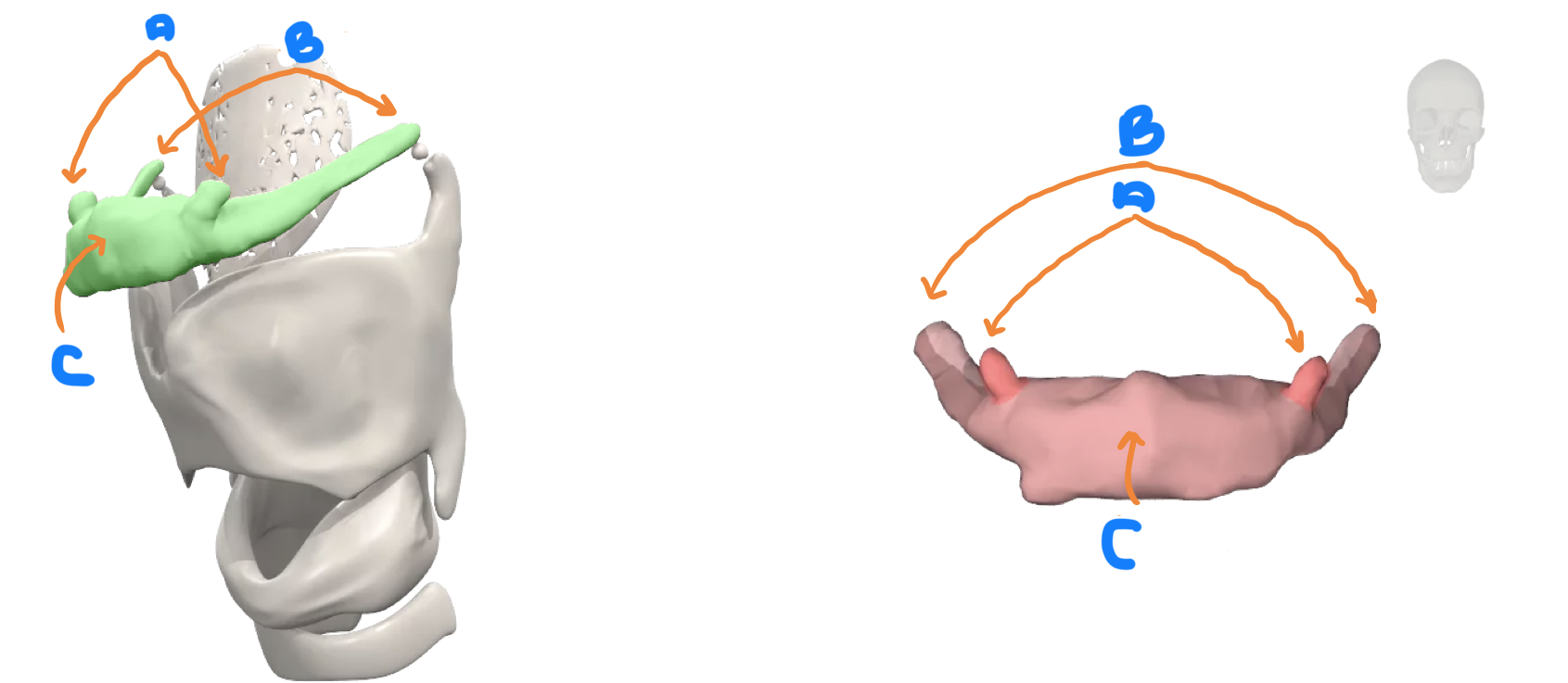
what part of the larnyx is this?
hyoid bone
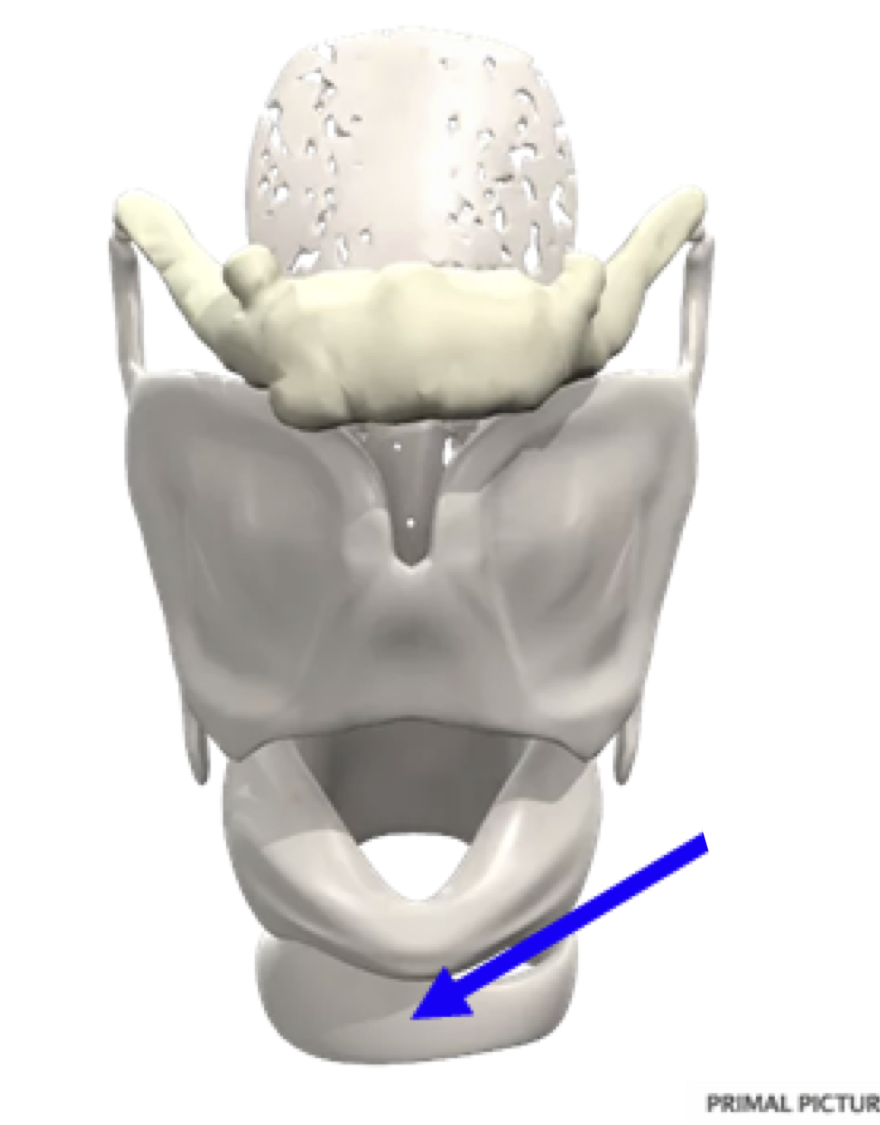
what is this?
the first tracheal ring
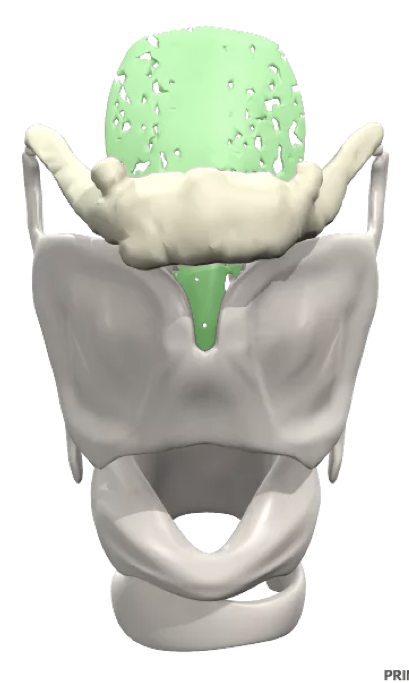
what is this?
epiglottis
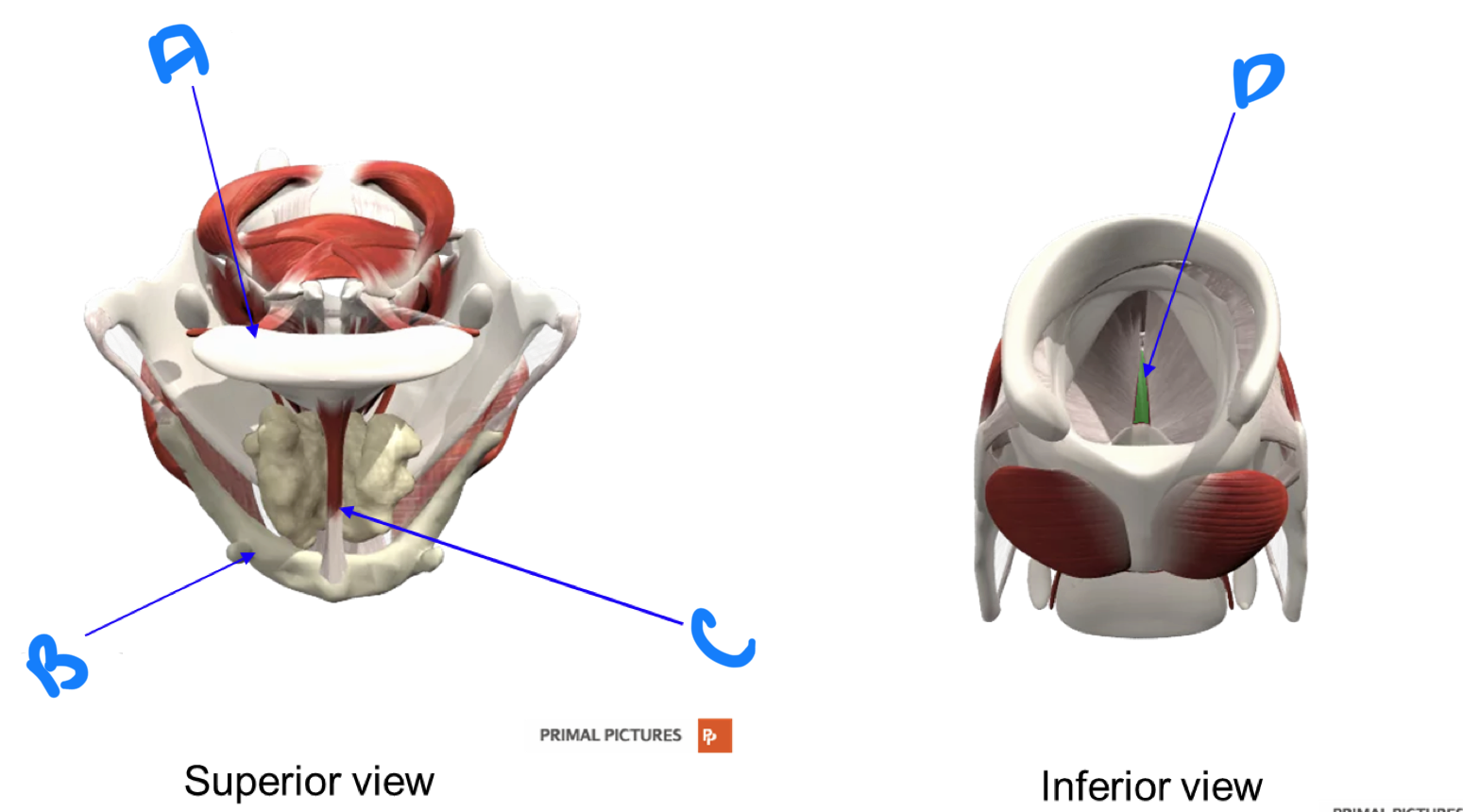
A
epiglottis
B
hyoid
C
hyoepiglottic ligament
D
thyroepiglottic ligament
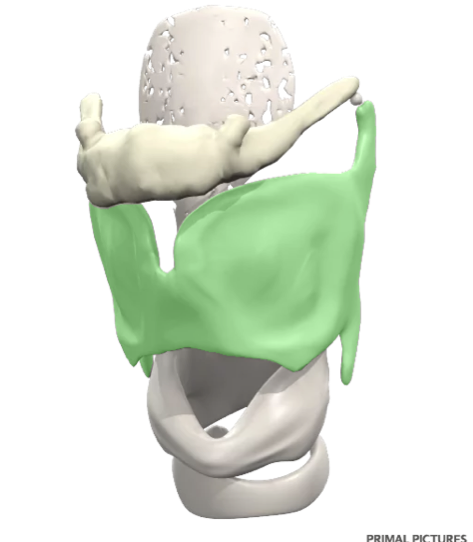
what is this?
thyroid cartilage
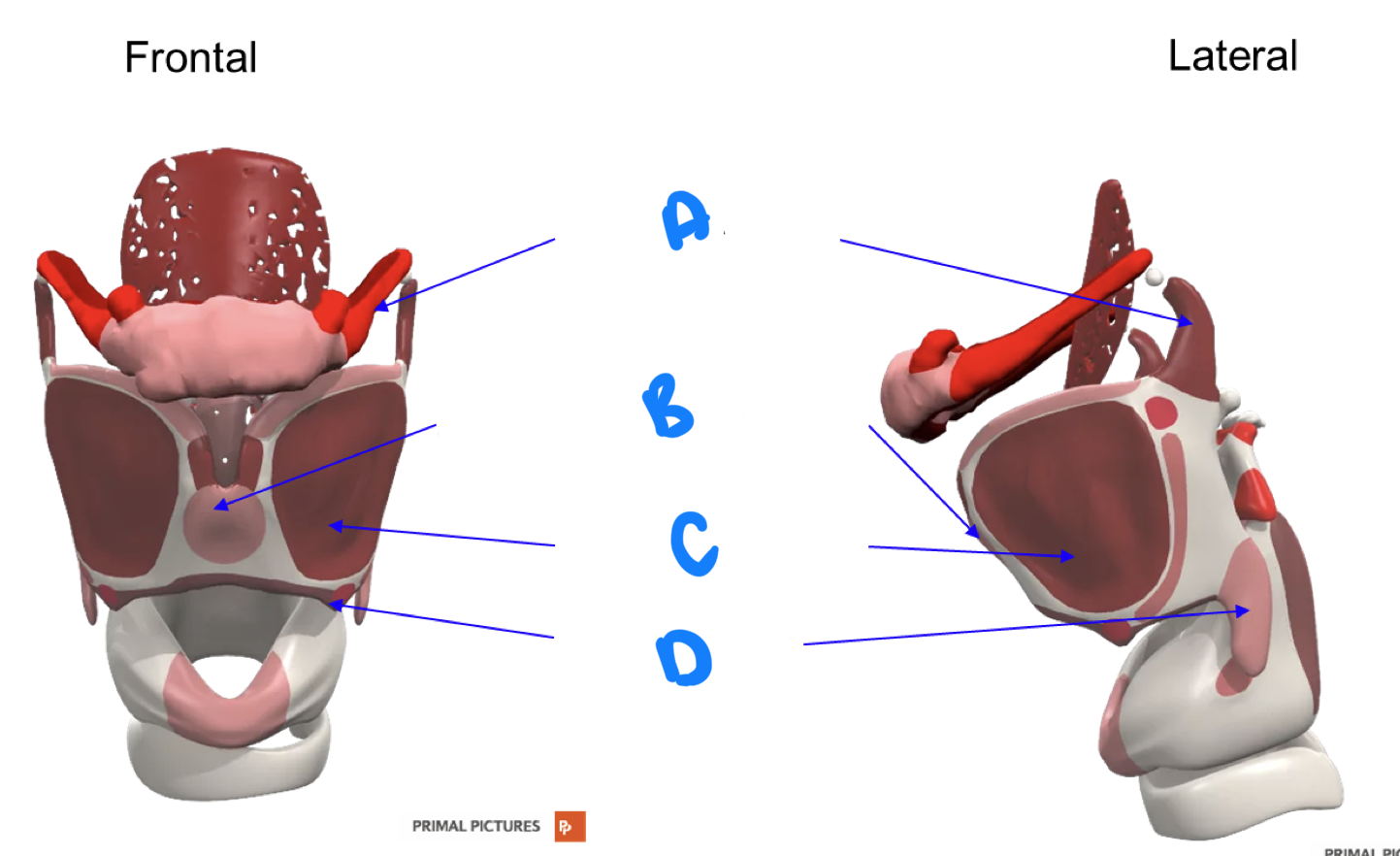
A
superior horn
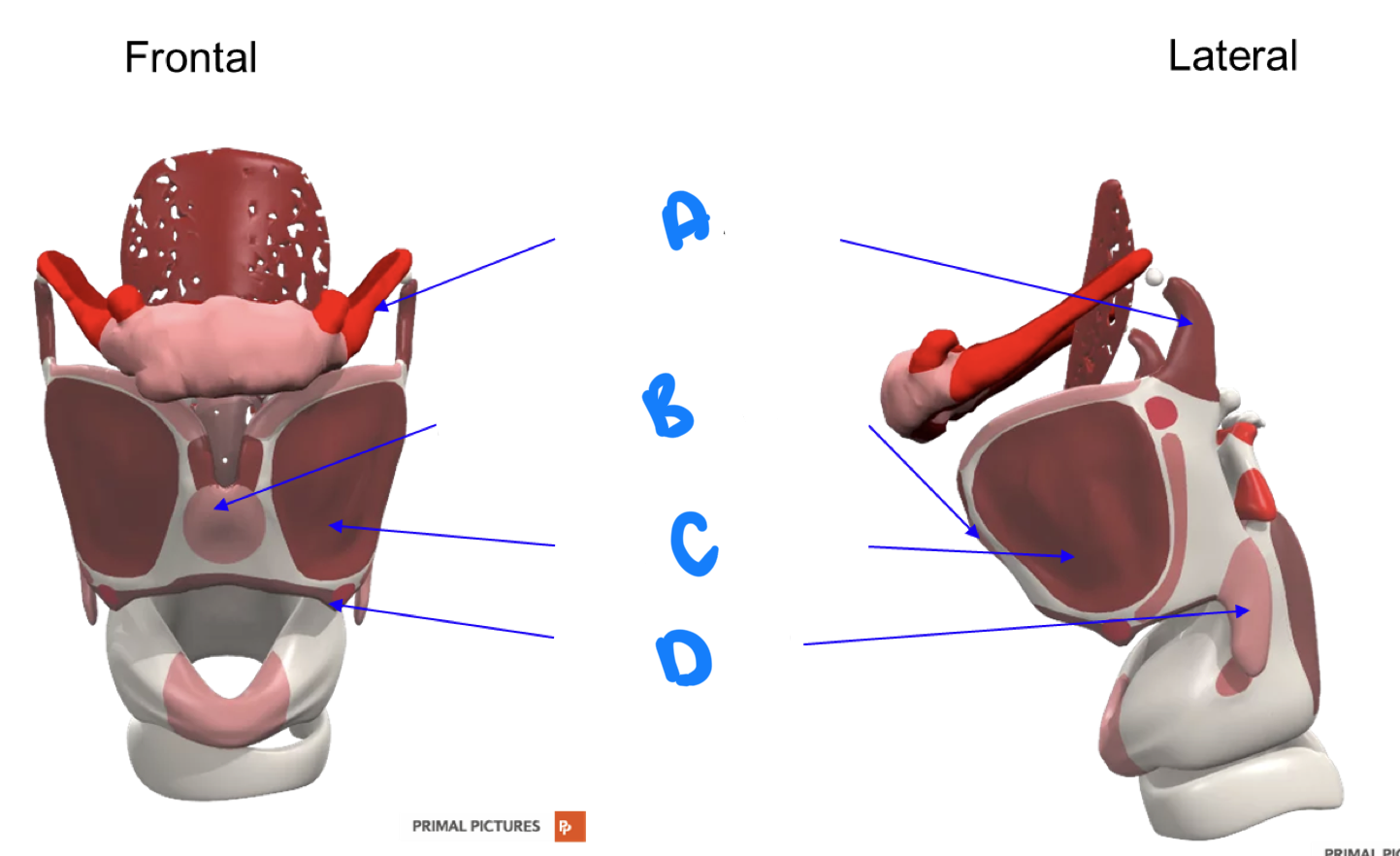
B
laryngeal prominence
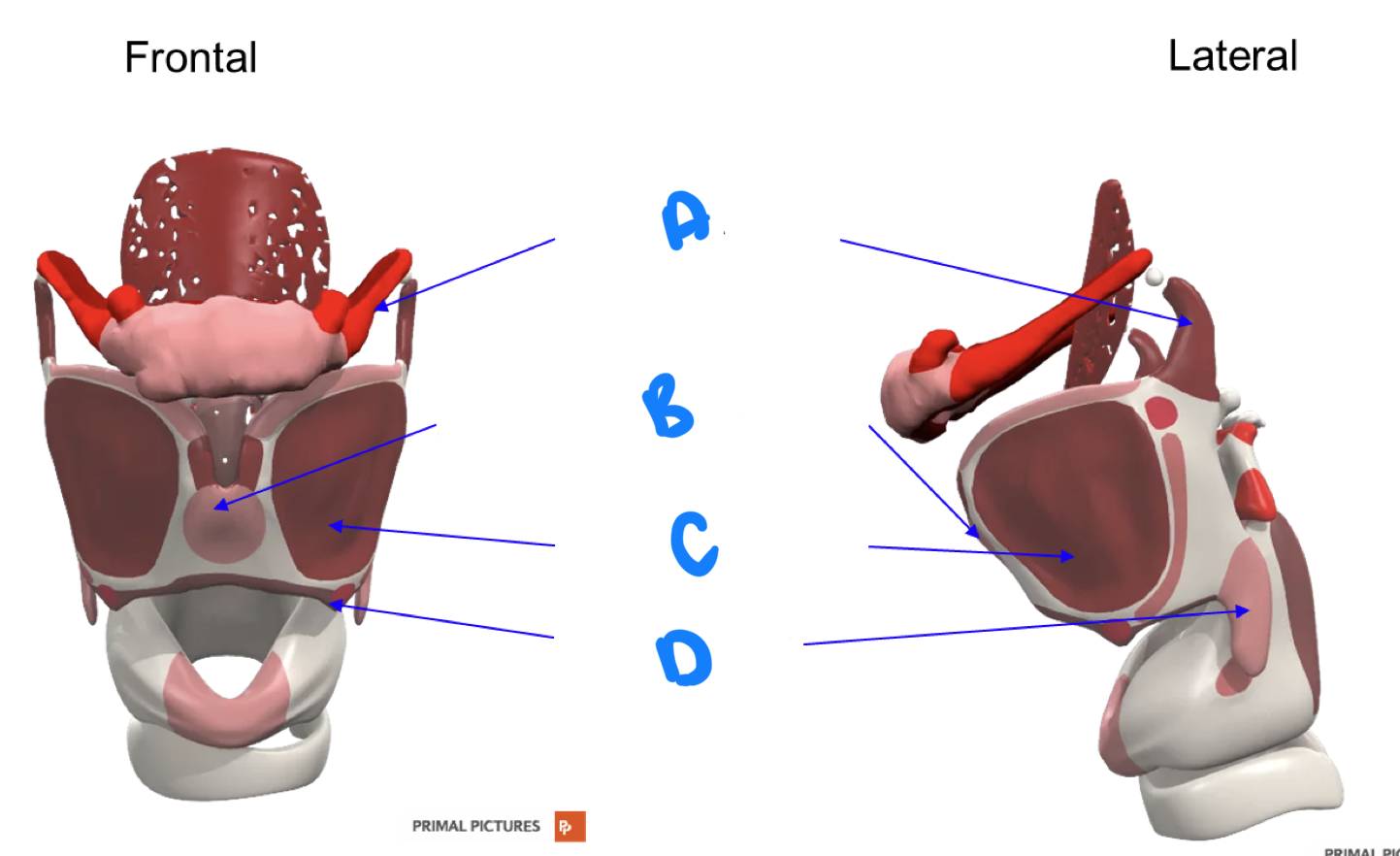
C
thyroid lamina
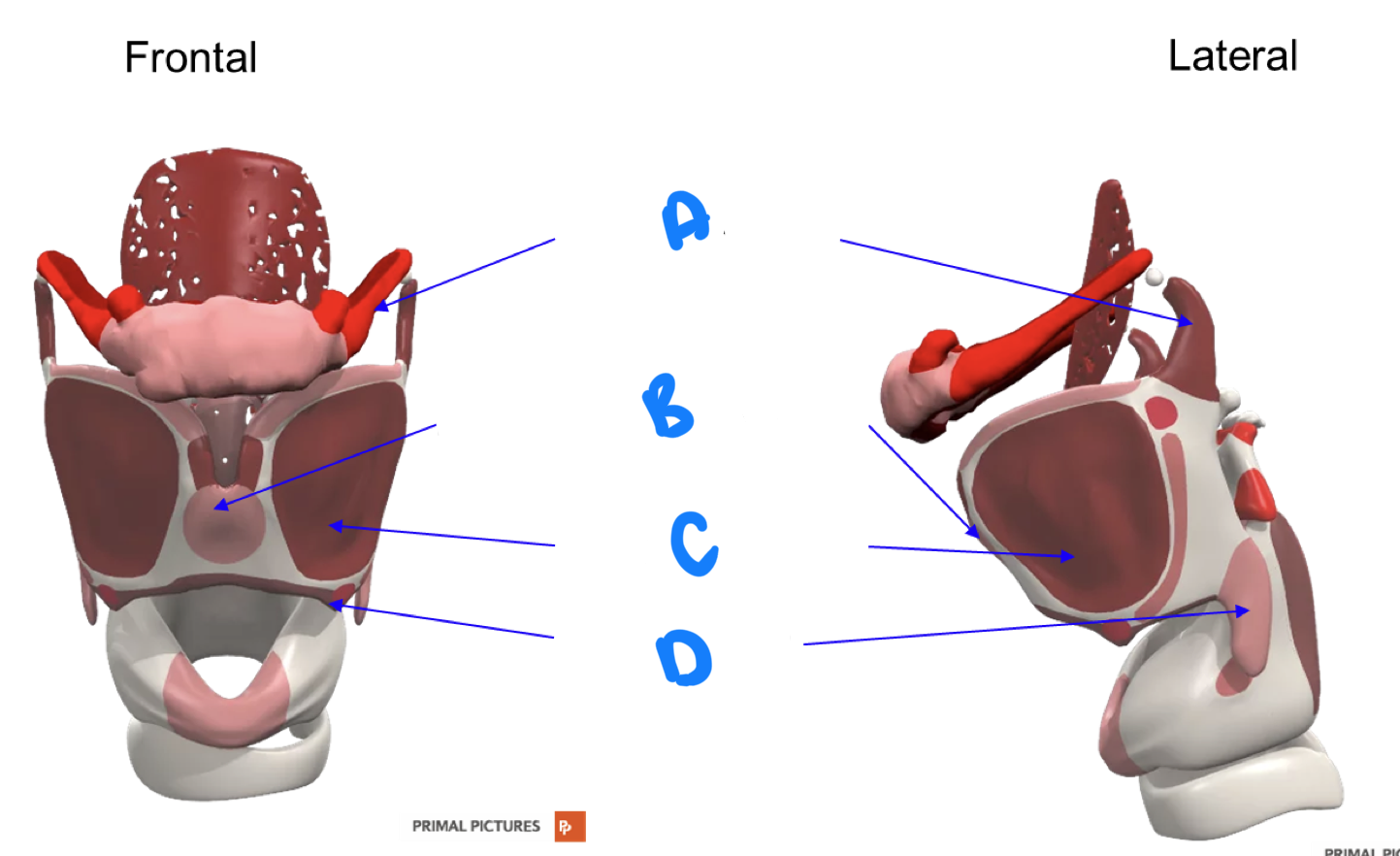
D
inferior horn
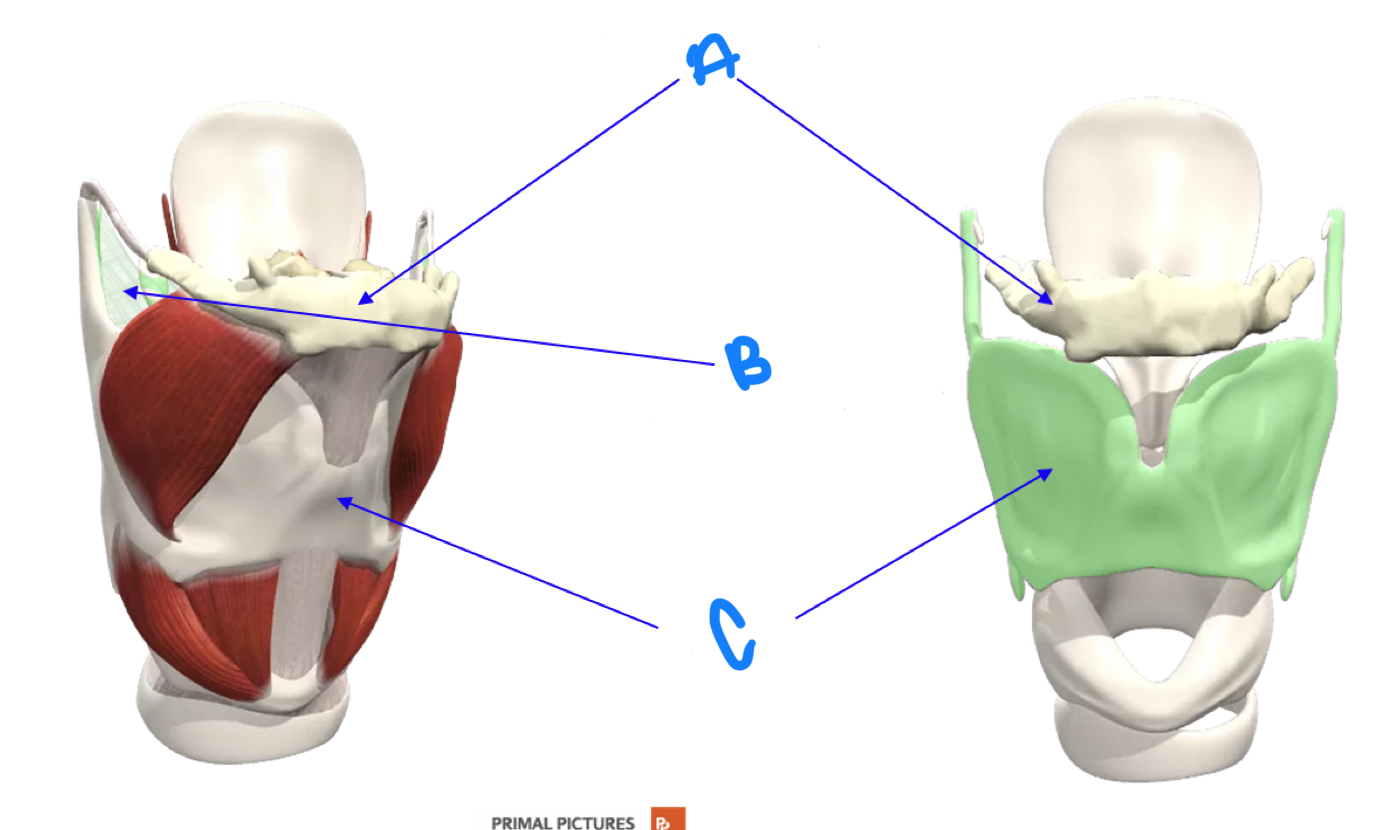
A
hyoid bone
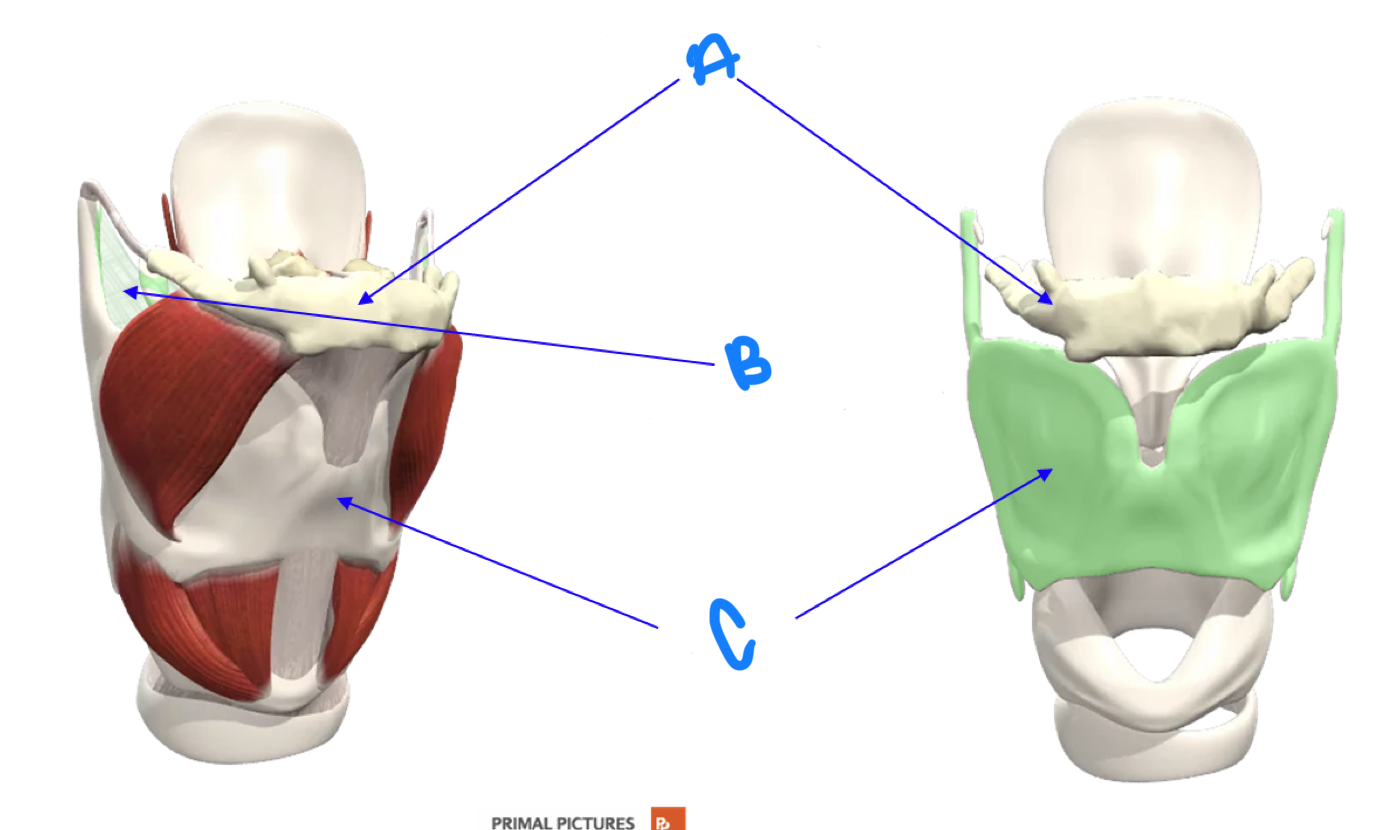
B
thyrohyoid membrane
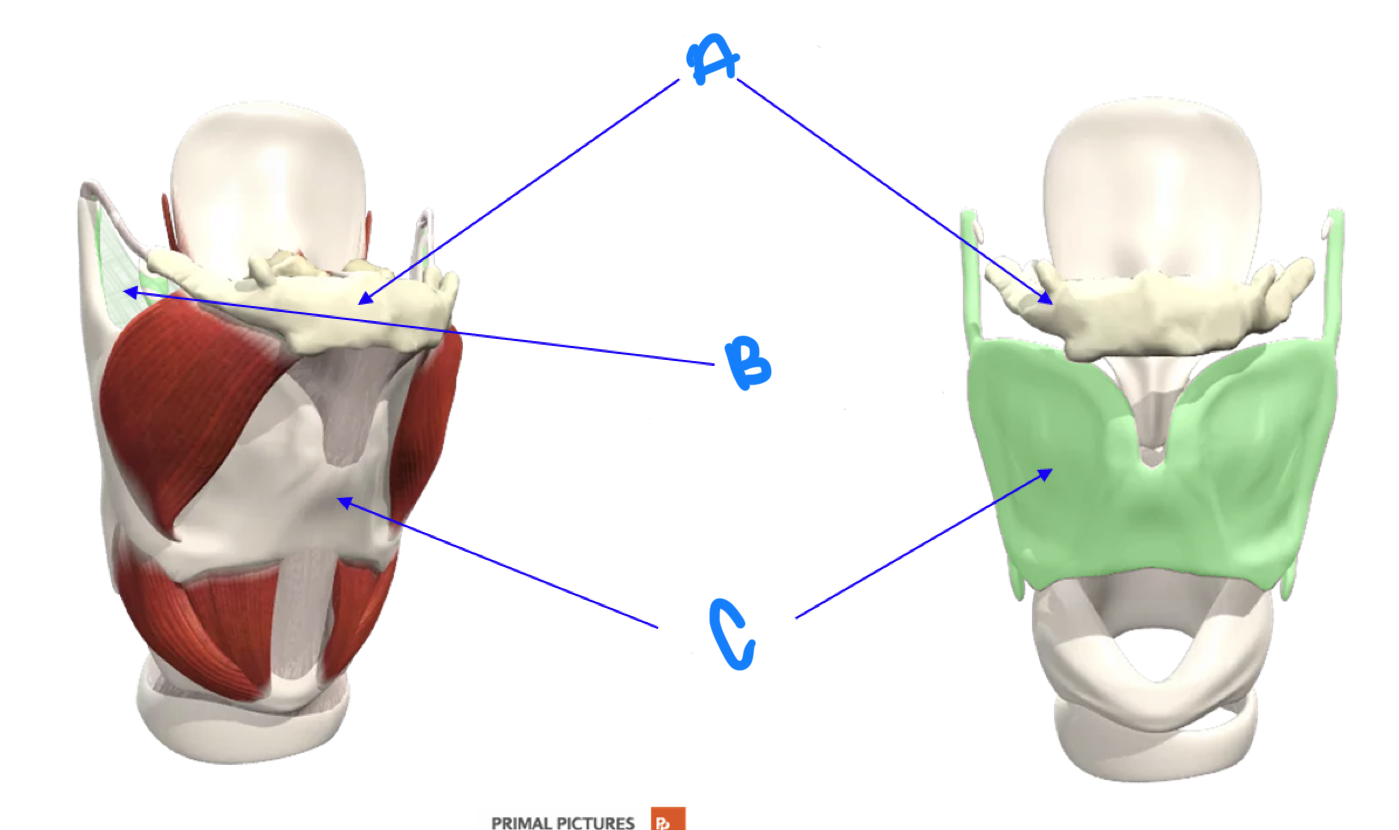
C
thyroid cartilage
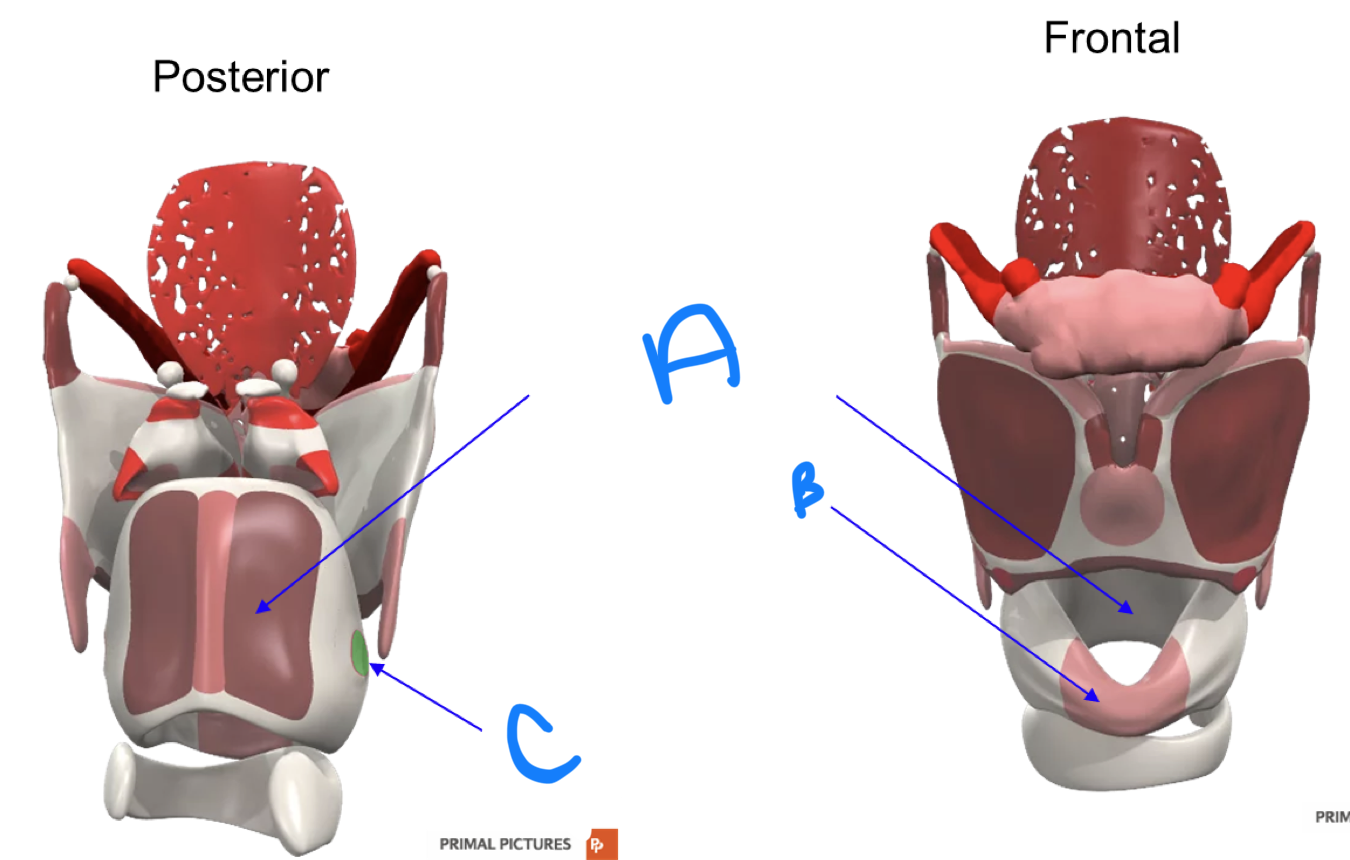
A
cricoid lamina
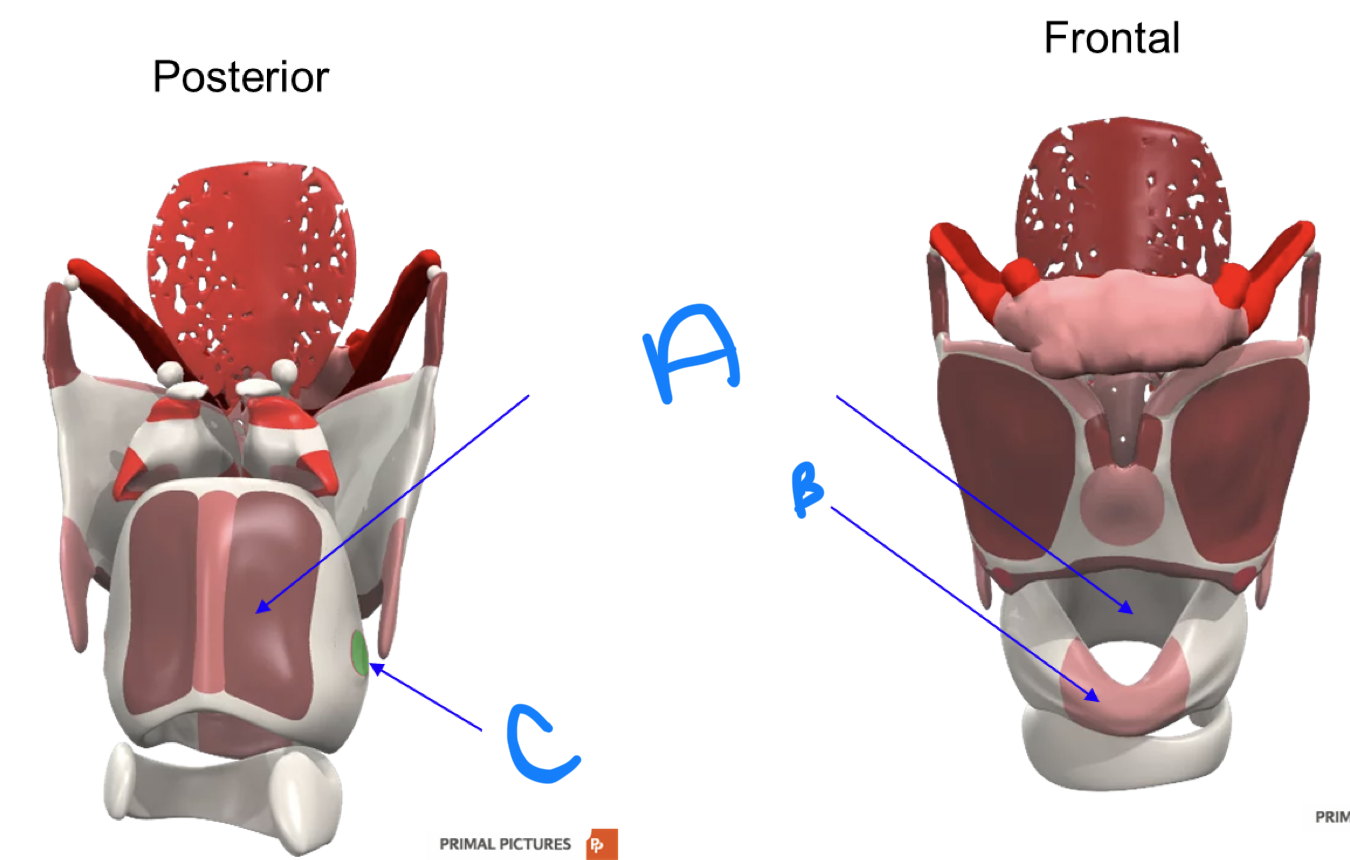
B
cricoid arch
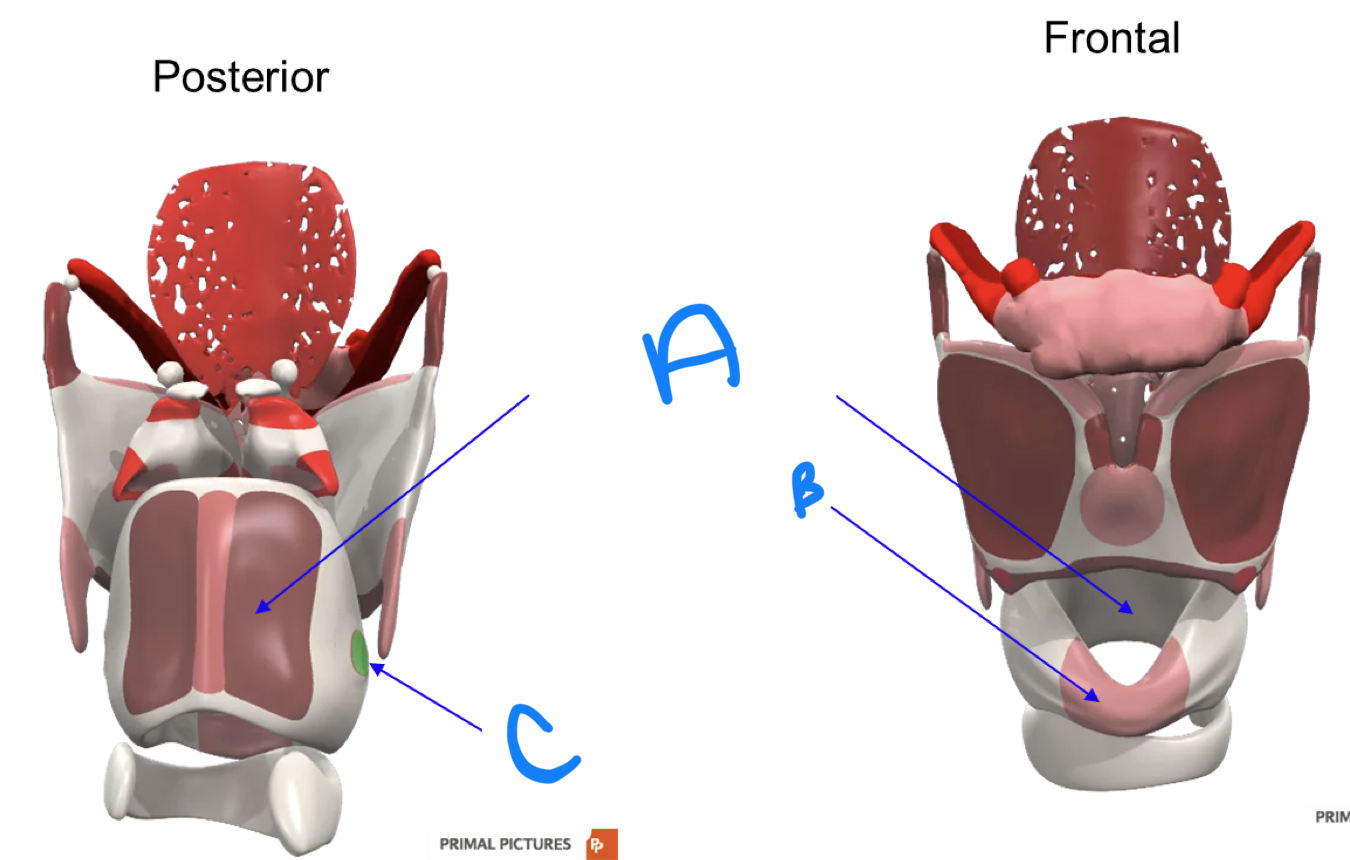
C
Inferior horn of thyroid attaches here to form cricothyroid joint
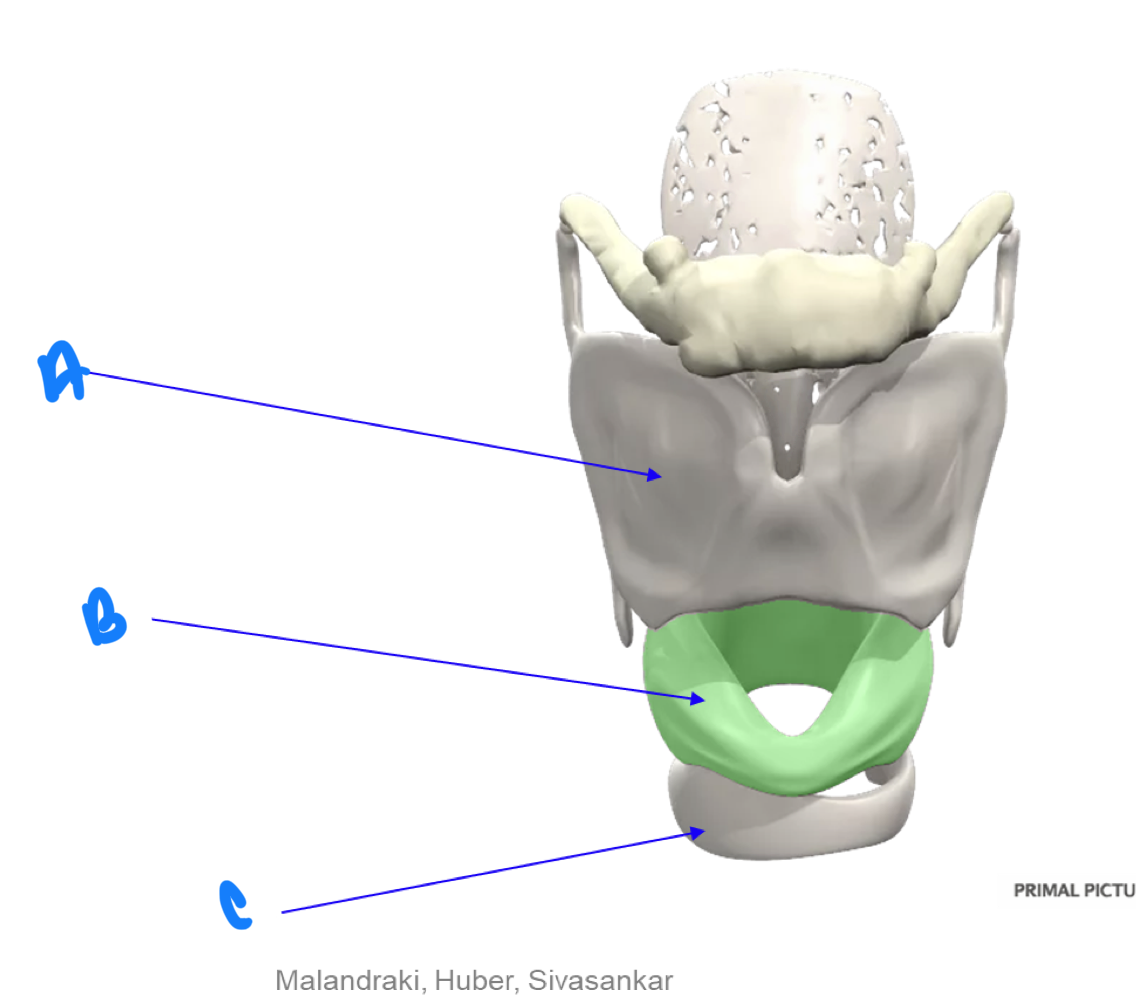
A
thyroid cartilage
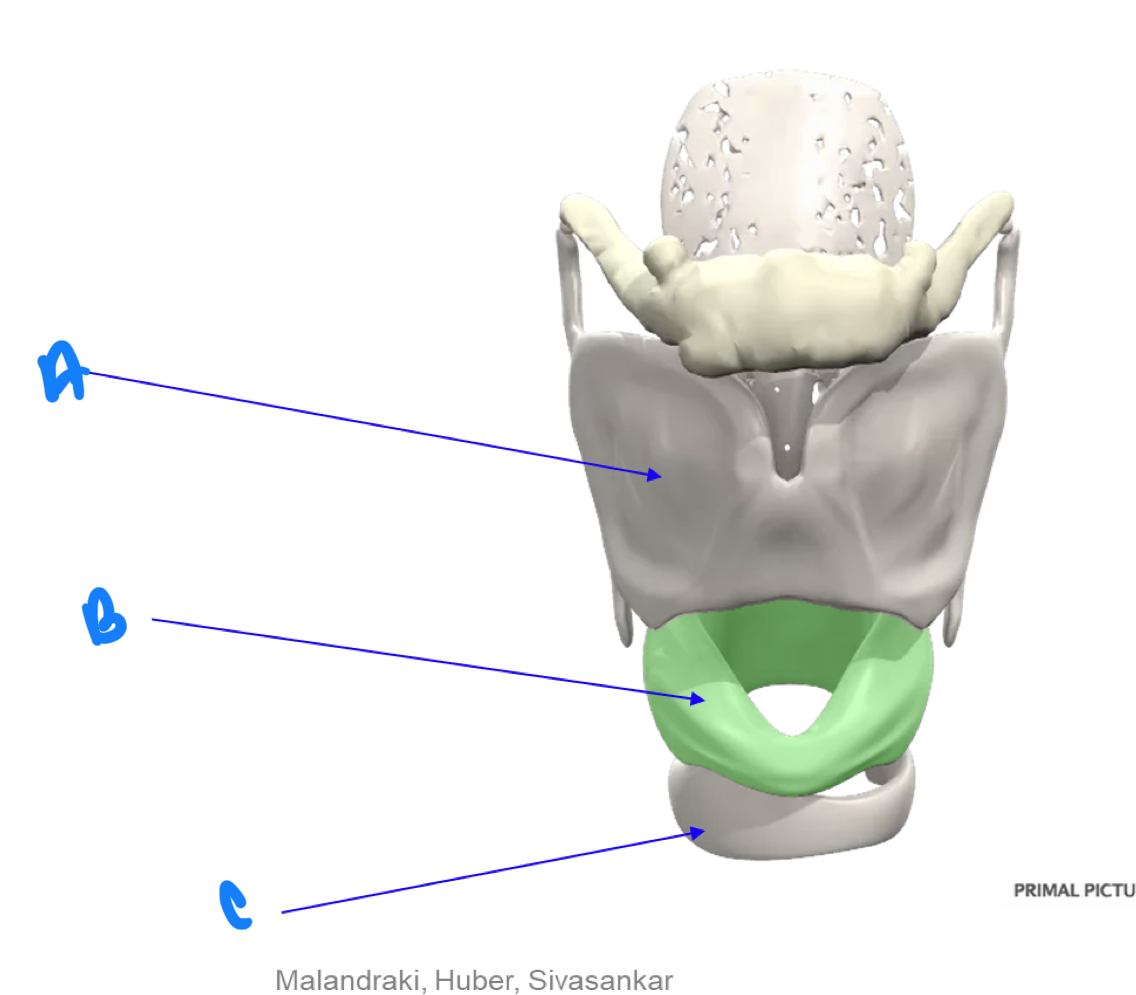
B
cricoid cartilage
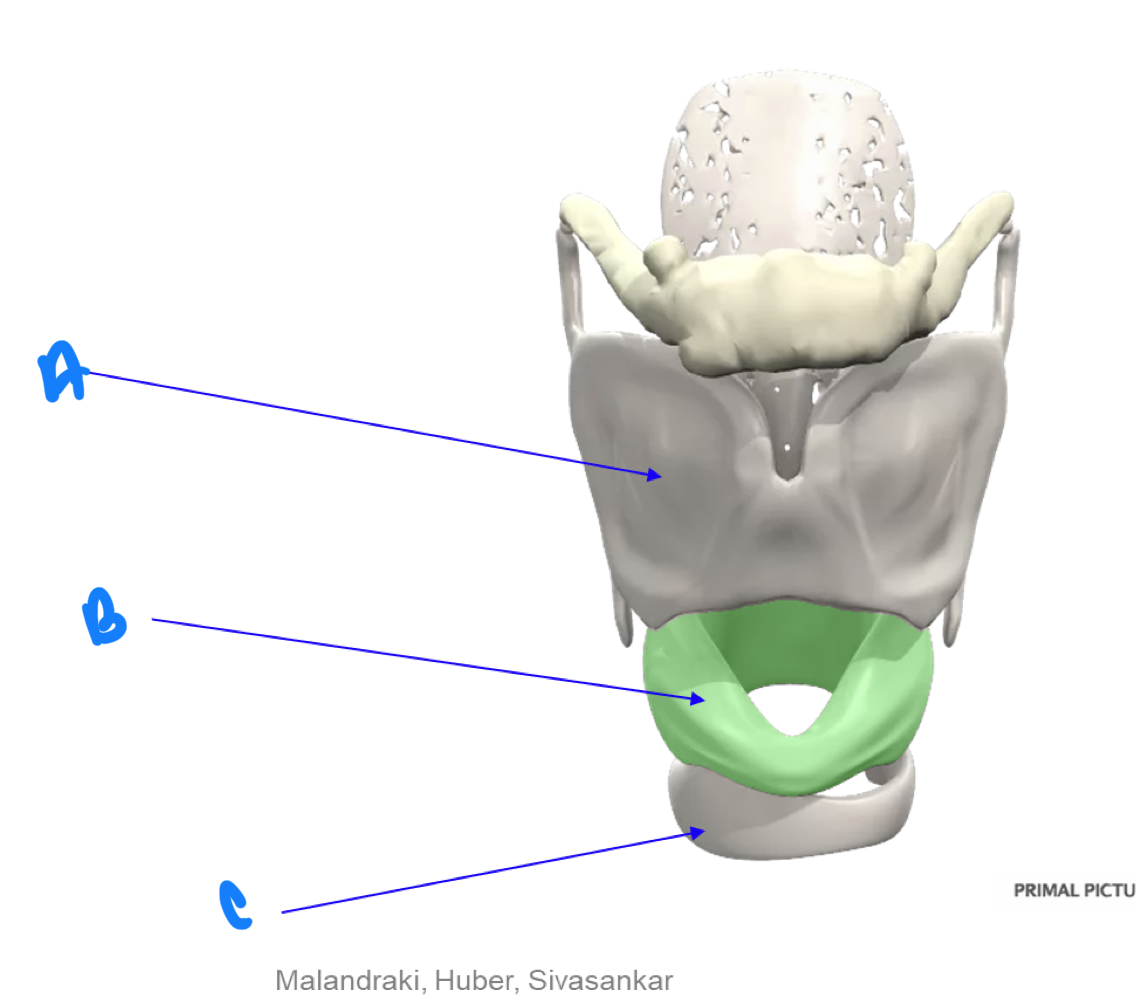
C
tracheal cartilage
single (unpaired) cartilages
epiglottis, thyroid, cricoid
paired carilages
arytenoid, cuneiform, corniculate
arytenoid cartilages
paired, shaped like pyramids; features include apex, base and 2 processes (vocal and muscular)
corniculate cartilages
located at apex of arytenoid cartilages; described as cone-shaped; function: structural support
cuneiform cartilages
smallest laryngeal cartilage; found lateral to the corniculate cartilages; function: unknown, likely also provide structural support
cricothyroid
joint between cricoid and thyroid cartilages; the inferior thyroid horns articulate with facets on the cricoid arch; cricothyroid ligament holds the joint together
cricoarytenoid
joint between cricoid and arytenoid cartilages; the base of the arytenoids articulate with facets on the cricoid lamina; cricoarytenoid ligament holds the joint together
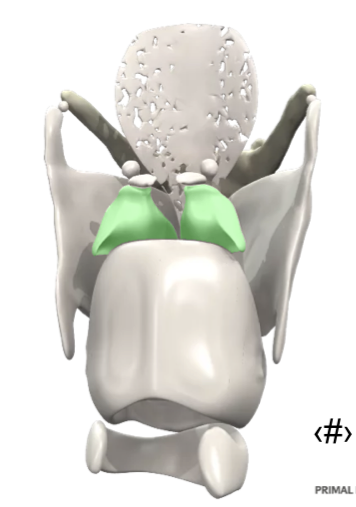
what cartilage is this?
arytenoid cartilages
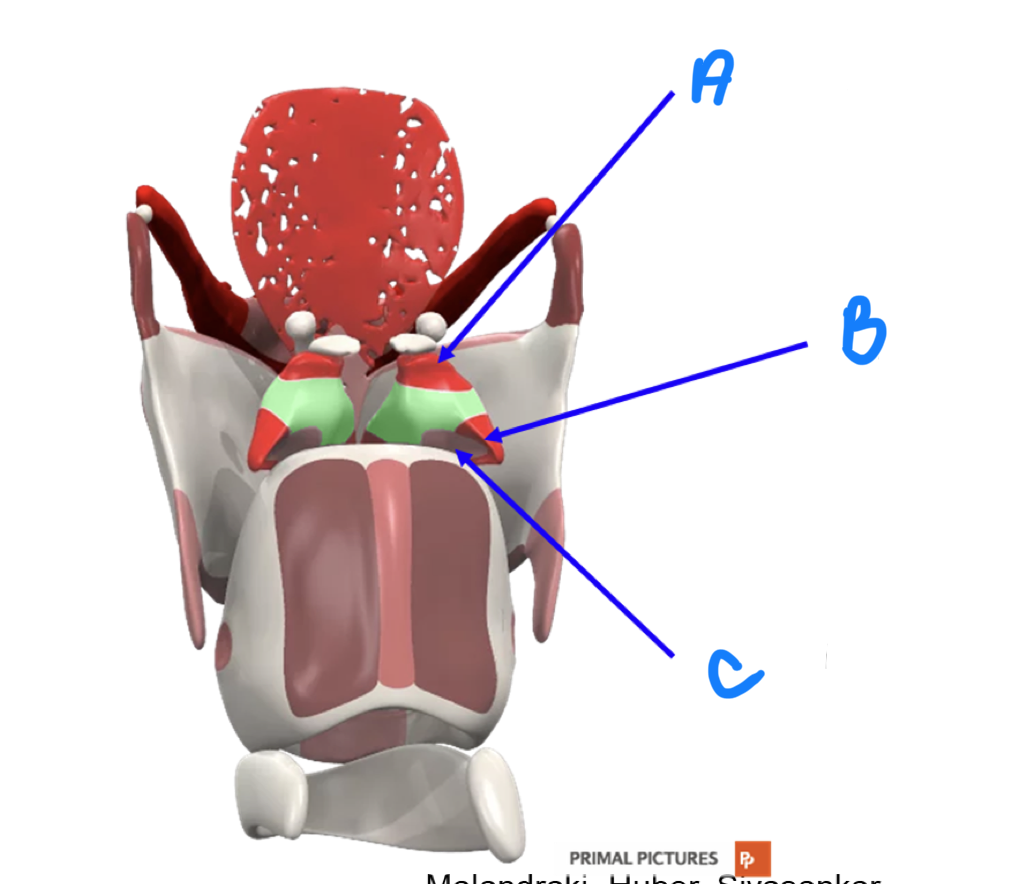
A
apex of arytenoid cartilage
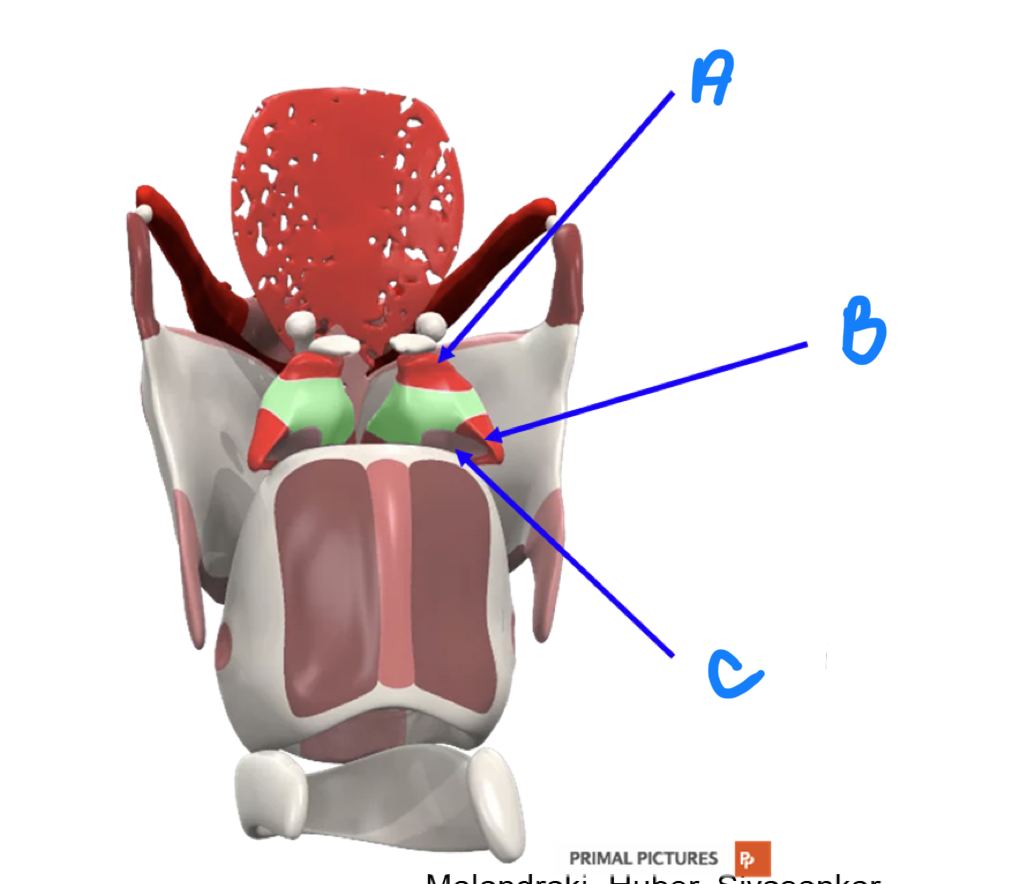
B
muscular process
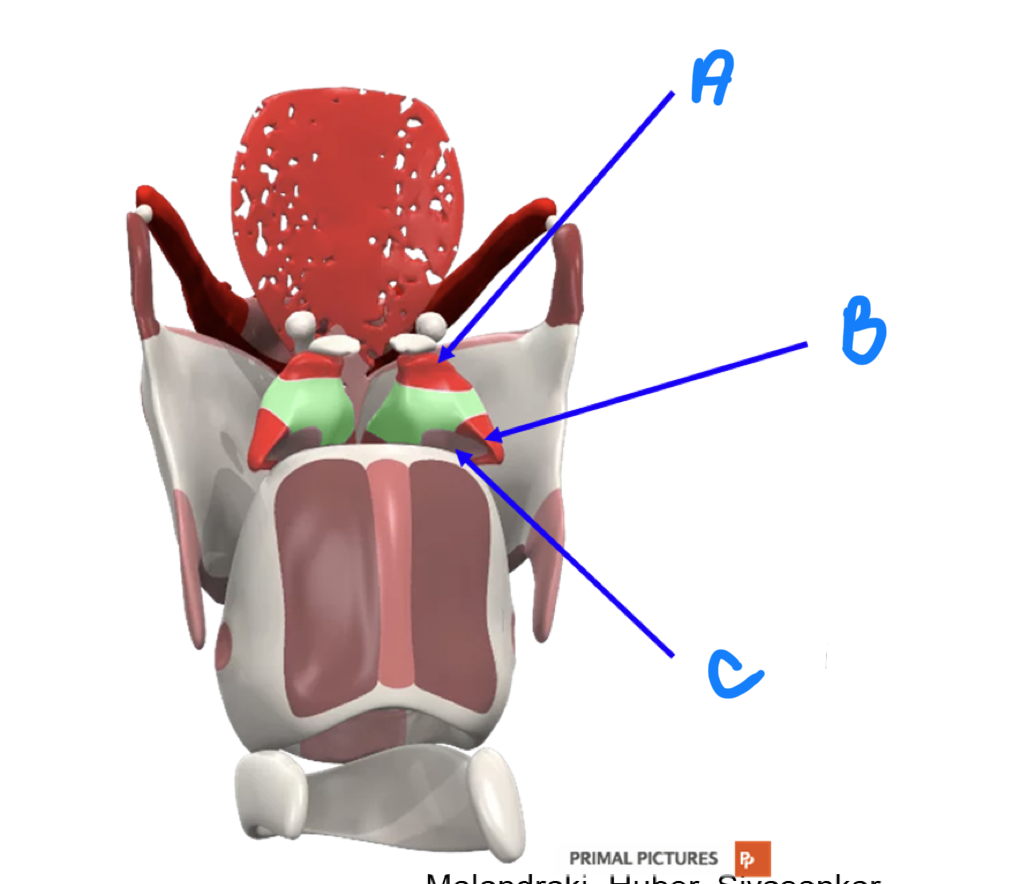
C
base of arytenoid cartilage
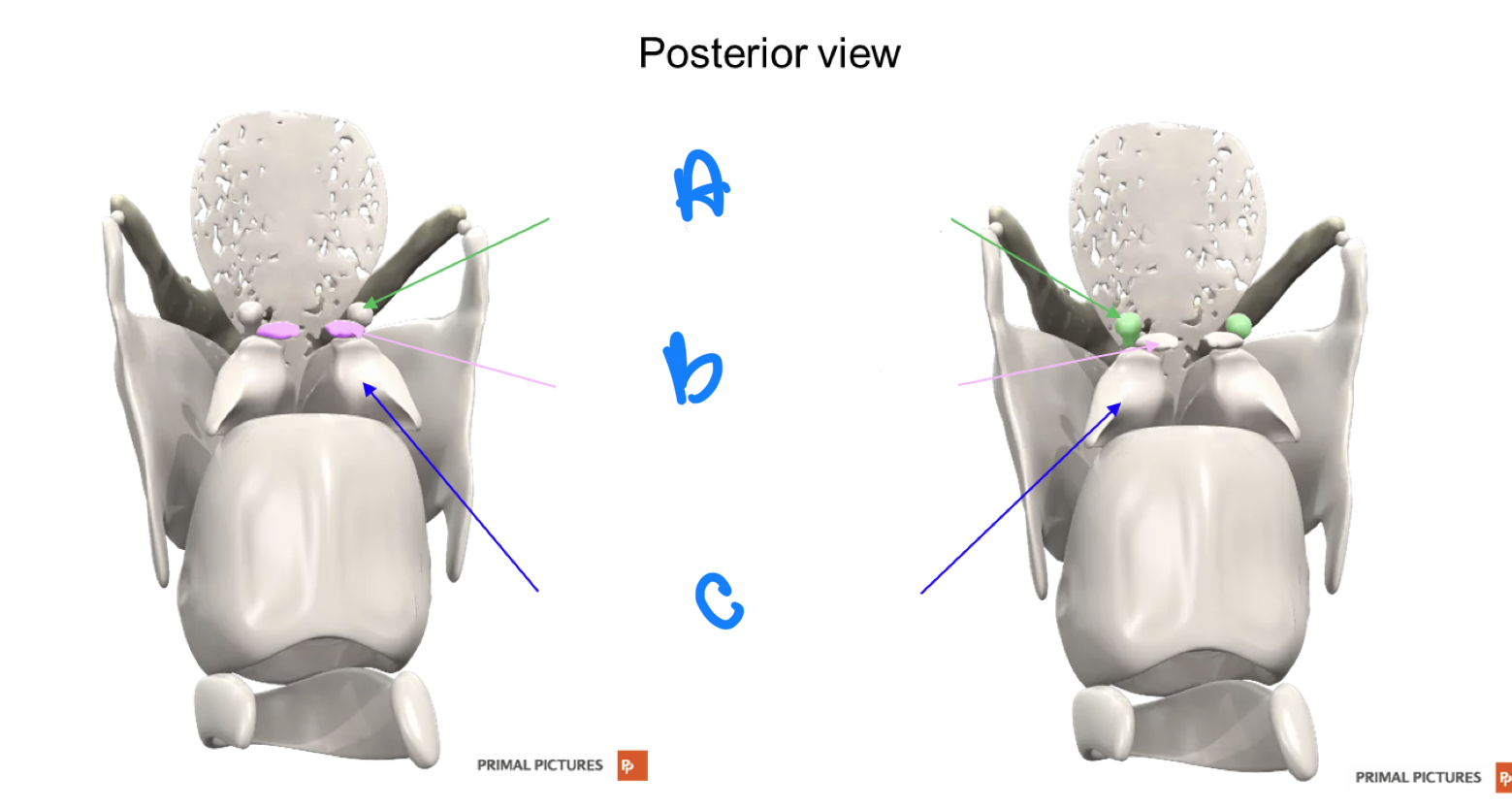
A
cuneiform cartilage
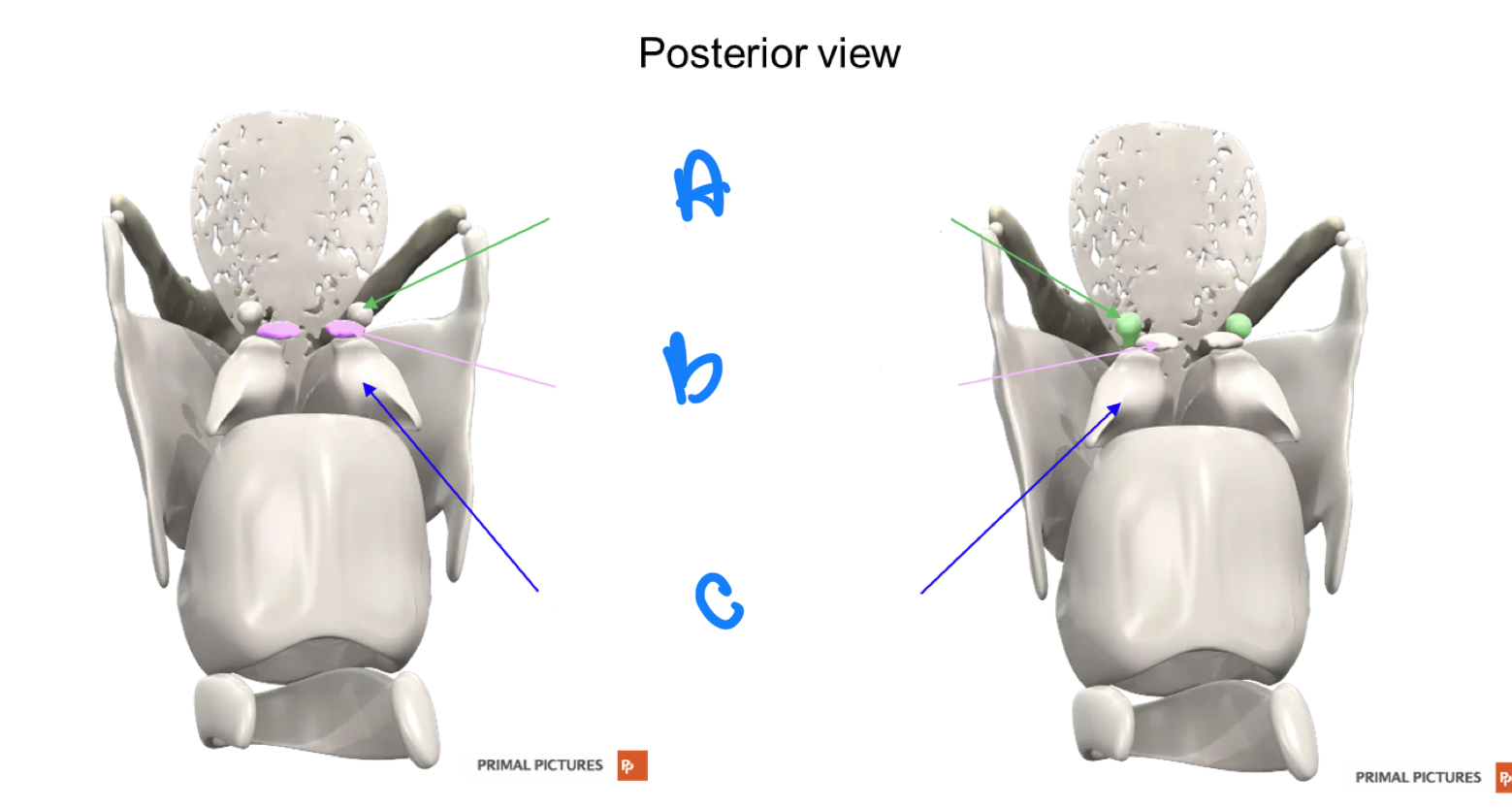
B
corniculate cartilage
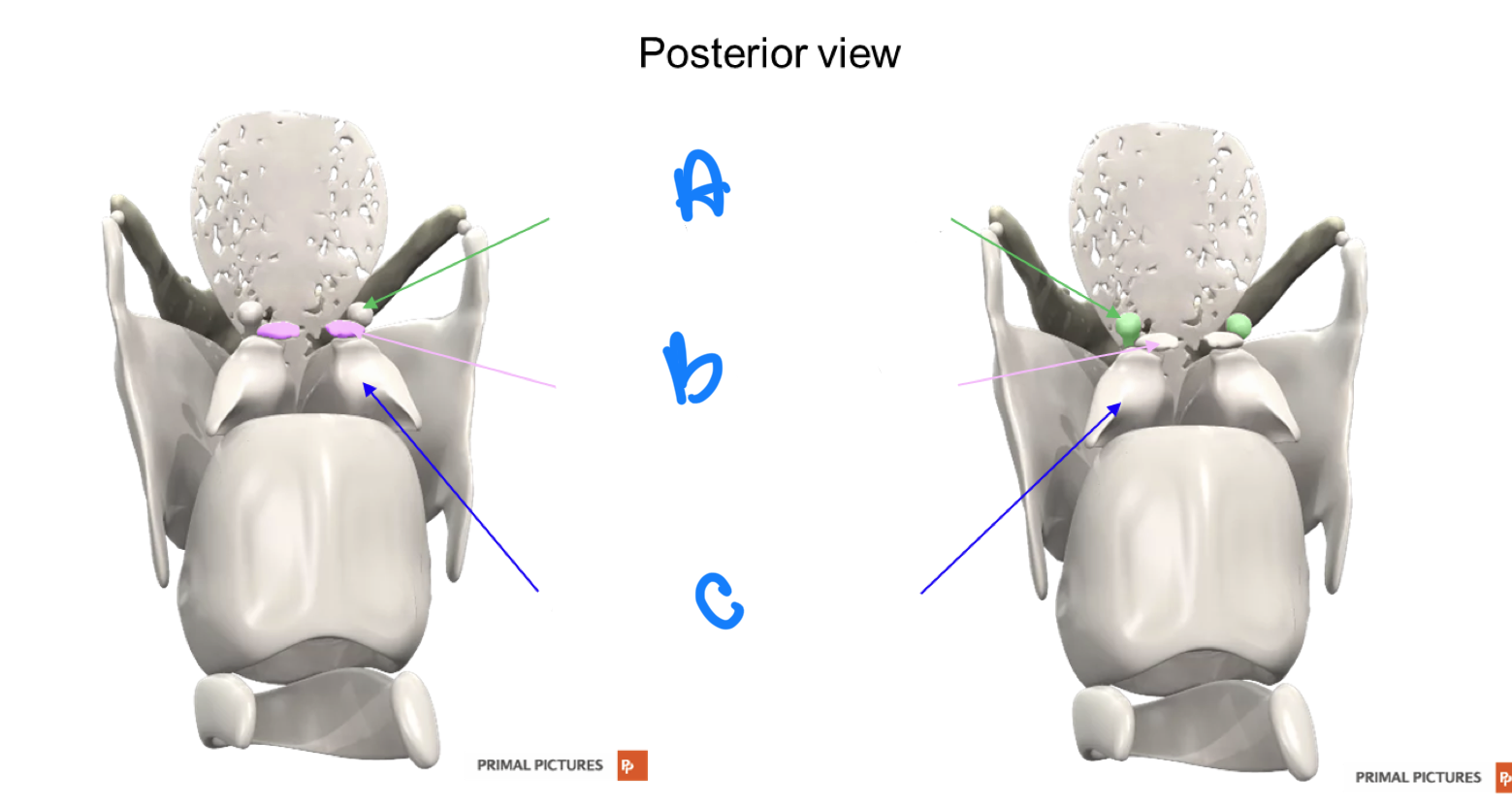
C
arytenoid cartilage
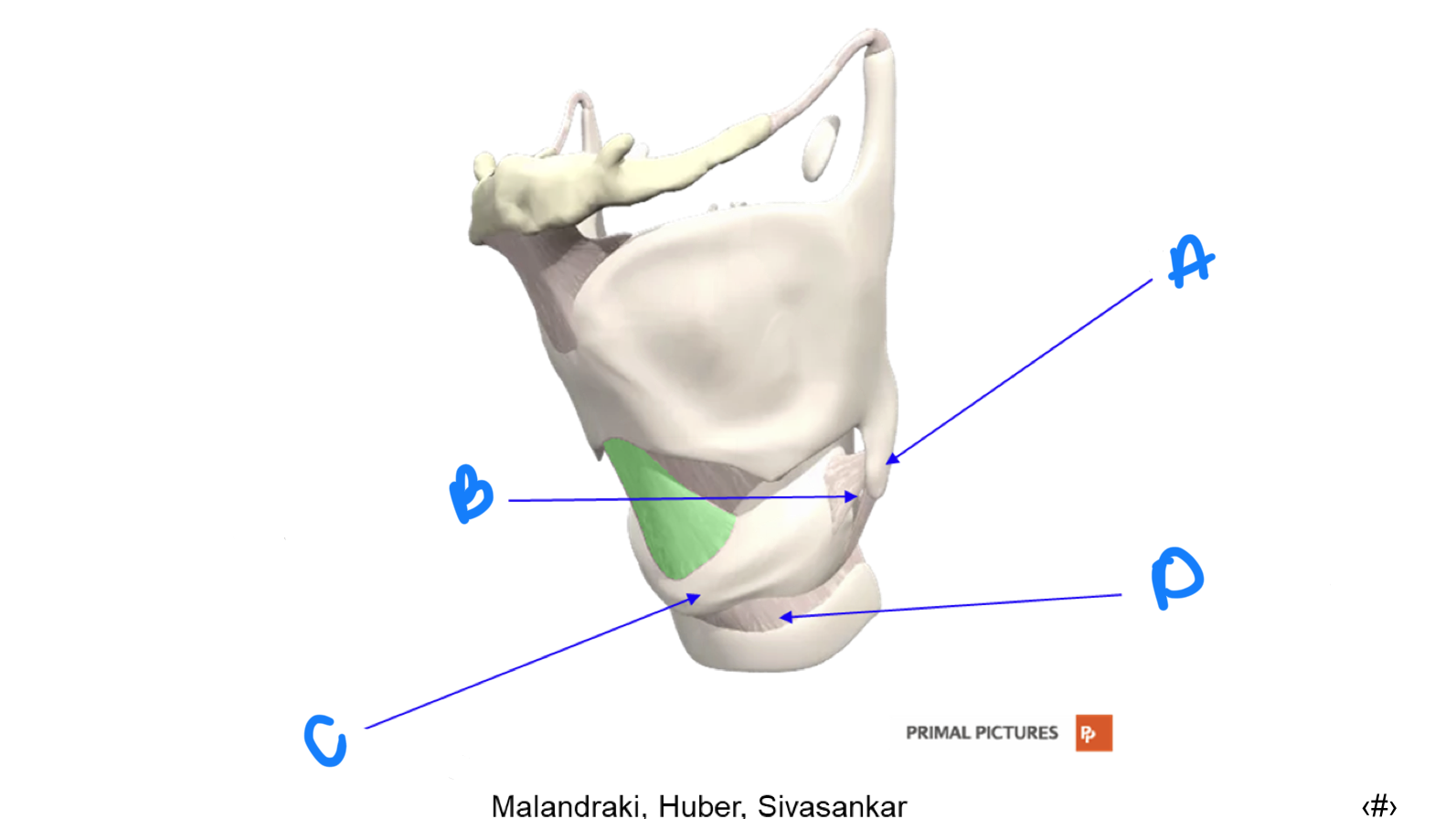
A
inferior horn of thyroid cartilage
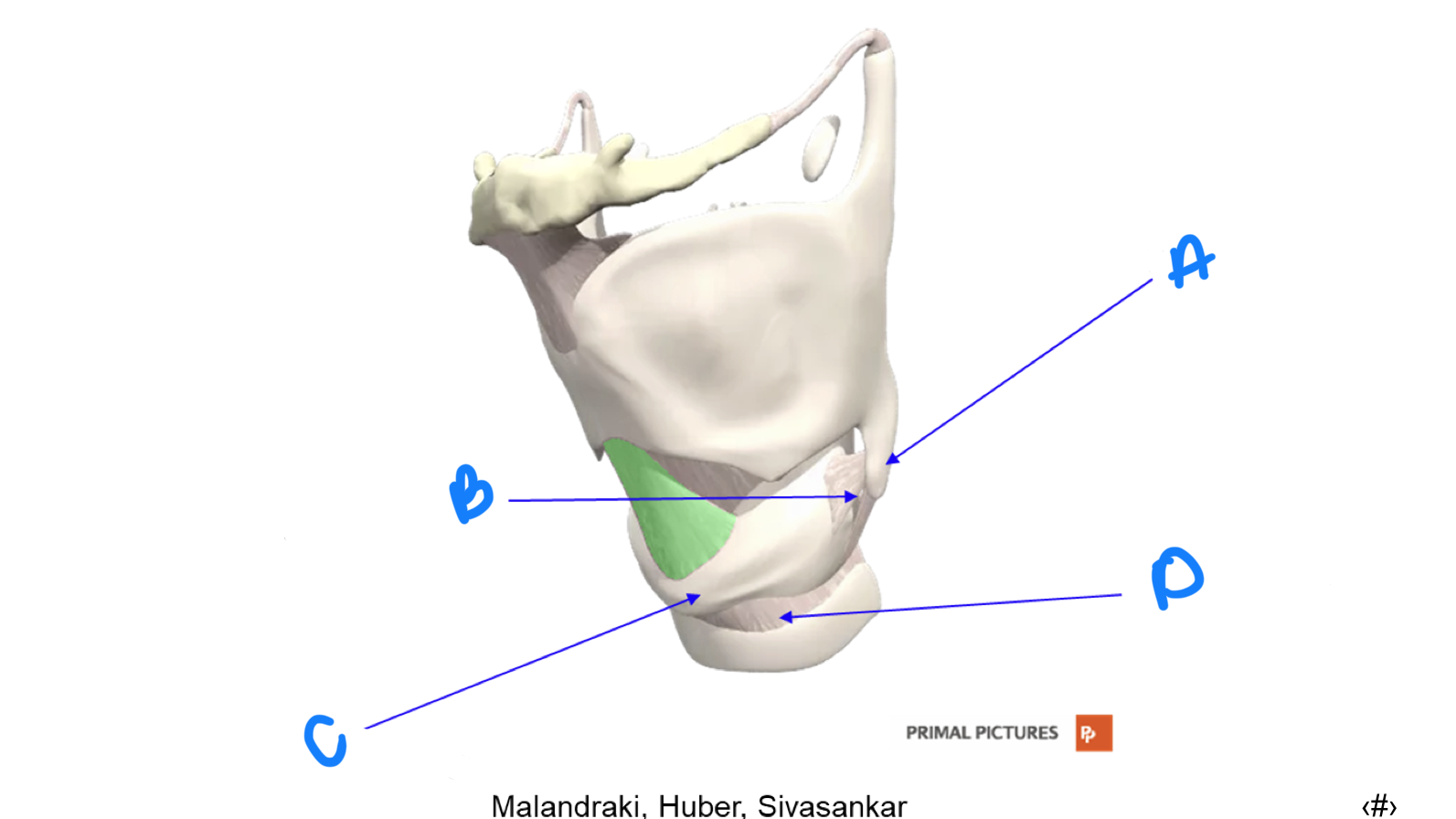
B
cricothyroid ligament at the cricothyroid joint
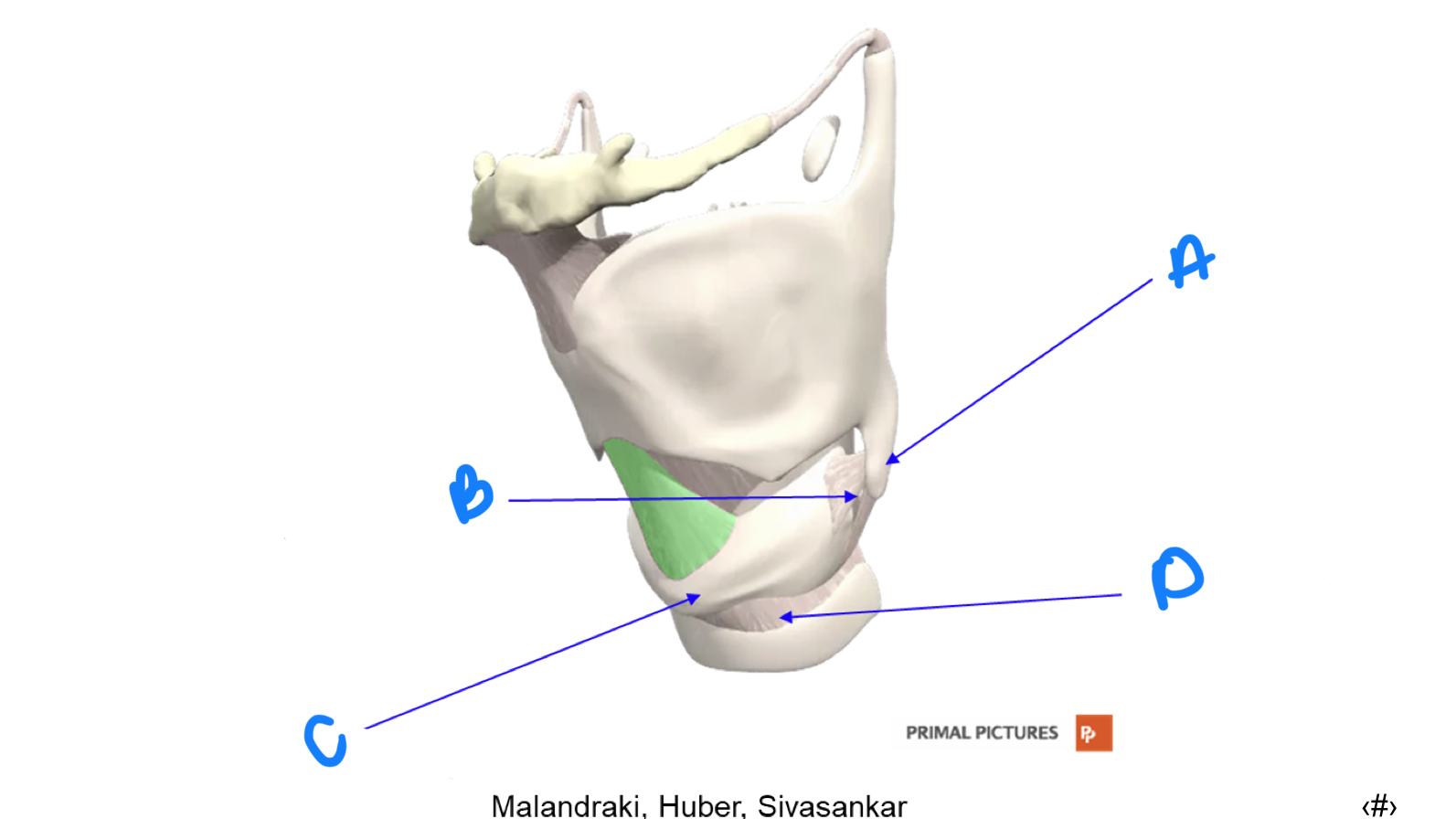
C
cricoid cartilage
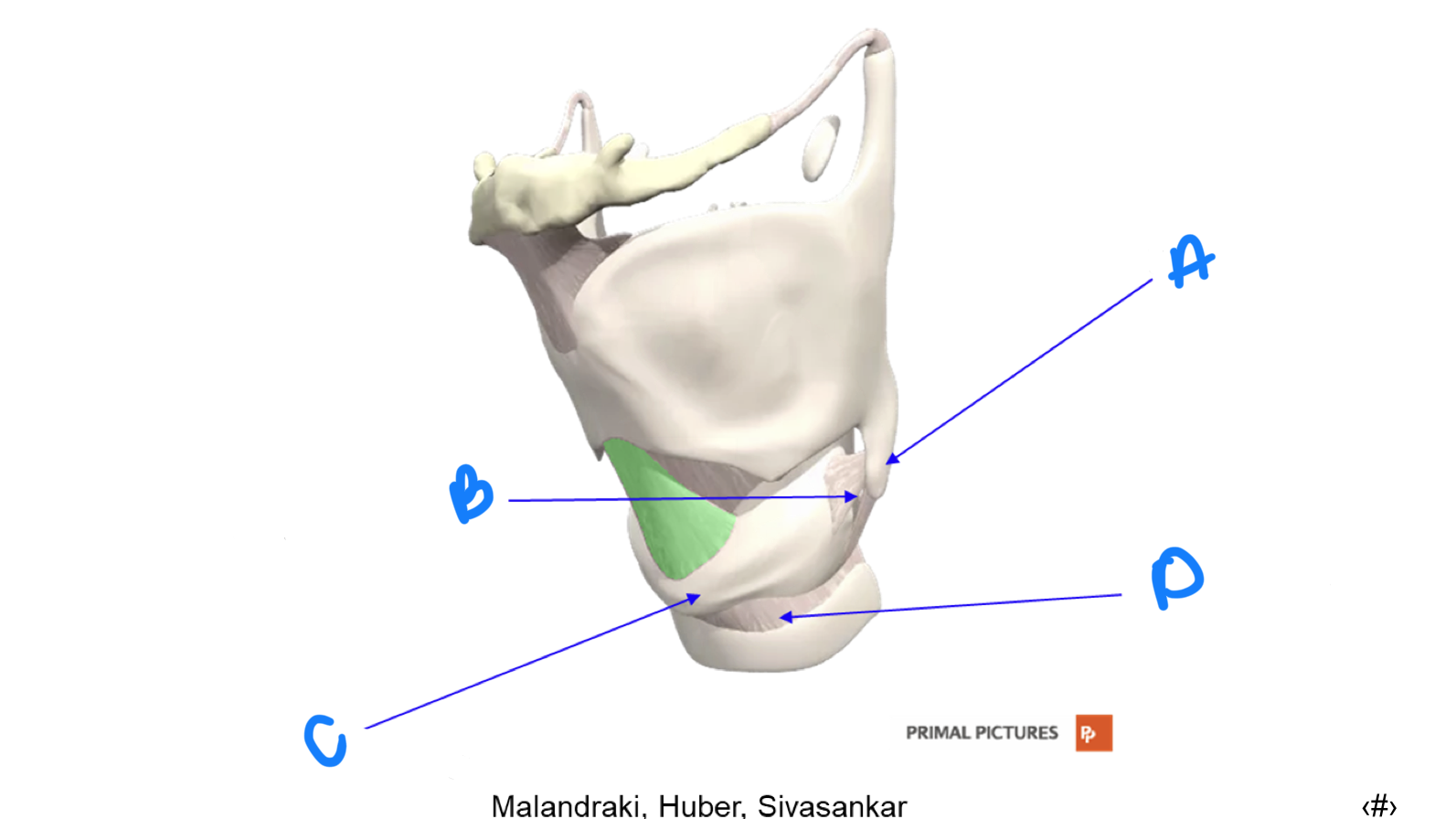
D
cricotracheal ligament
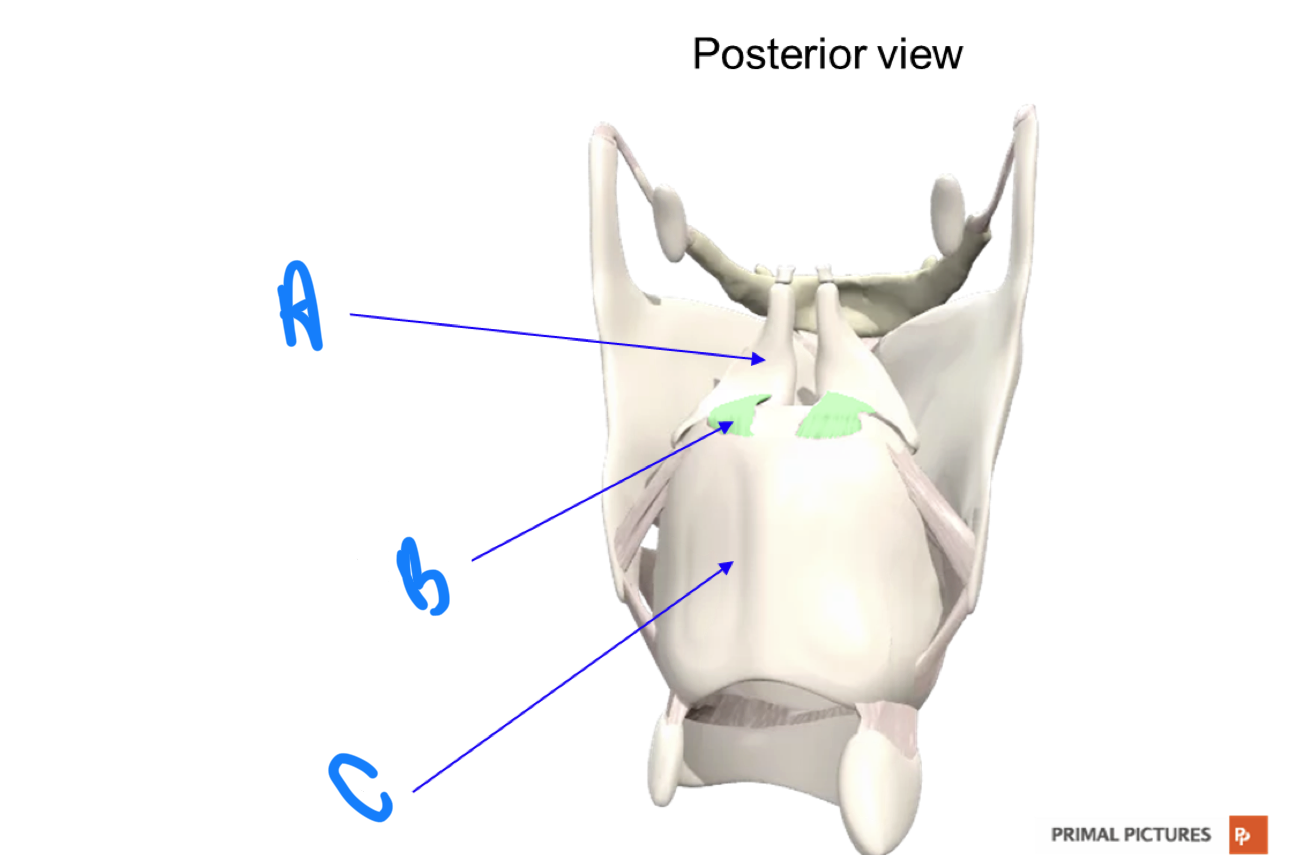
A
arytenoid cartilage
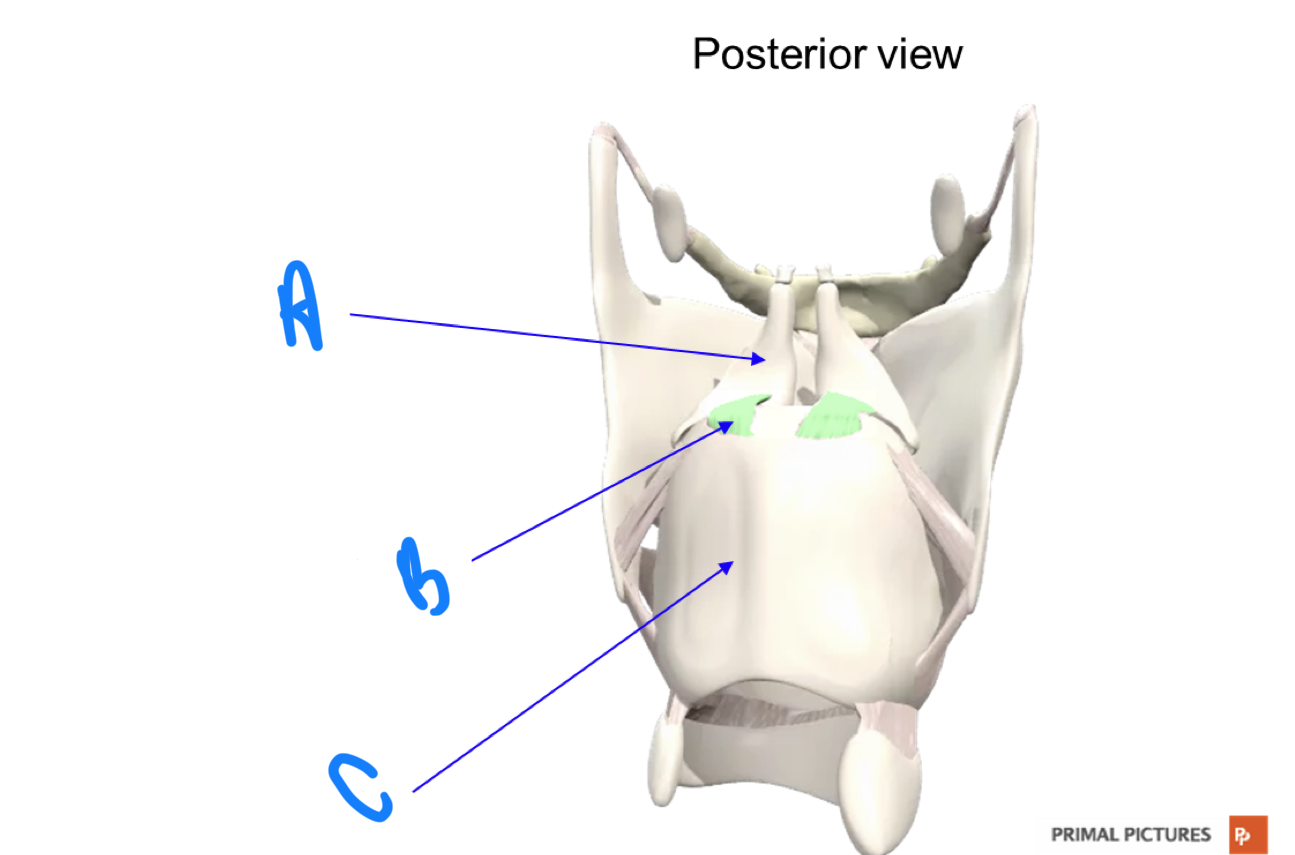
B
cricoarytenoid ligament
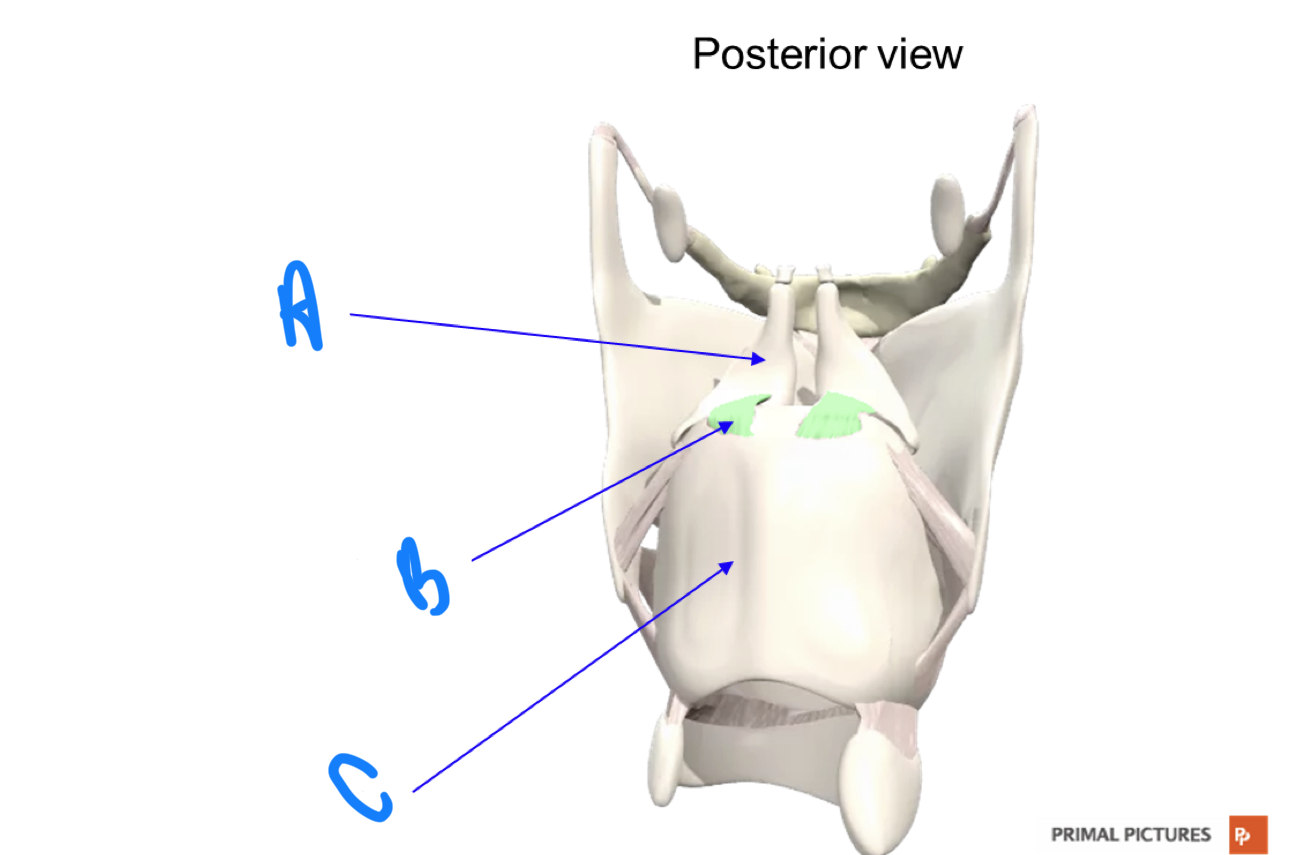
C
cricoid cartilage
innervation
nerve supply
laryngeal innervation
Cranial Nerve X (Vagus)
where are the cell bodies for motor neurons of the Vagus located?
in the nucleus ambigous
what two branches of the Vagus are important to vocal fold physiology
superior laryngeal nerve and recurrent laryngeal nerve
external branch of superior laryngeal nerve
motor branch that innervates the cricothyroid muscle; when the muscle contracts, the vocal fold gets tense and pitch increases
internal branch of superior laryngeal nerve
sensory branch brings back sensations from the area rostral to the true vocal folds
recurrent laryngeal nerve
provides both motor and sensory innervation to the larynx; sensory information from region below the true vocal folds; motor branch innervates all intrinsic muscles (except the cricothyroid); longer on the left side of the body
other cranial nerves that innervate muscles of the larnyx
CN V (trigeminal), CN VII (facial), CN XII (hypoglossal)
extrinsic laryngeal muscles
muscles which have one point of attachment in the larynx and the other outside of the larynx; work to move larynx up or down
suprahyoid muscles
move the larynx up (elevators)
infrahyoid muscles
move the larynx down (depressors)
suprahyoid muscles
aka laryngeal elevators; above the hyoid bone; important role in swallowing; may help with increasing singing pitch, but role not understood completely
digastric muscle
two bellies: anterior digastric and posterior digastric
anterior digastric
origin: mandible (jaw bone); insertion: hyoid bone; innervation: CN V
posterior digastric
origin: mastoid process on temporal bone; insertion: hyoid bone; innervation: CN 7
functions of digastric muscle
elevate hyoid bone (and larynx) (both bellies) & move hyoid bone (and larynx) forward (anterior belly)
stylohyoid muscle
origin: styloid process of temporal bone; insertion: body of hyoid bone; innervation: CN 7
stylohyoid muscle function
elevates and retracts the hyoid bone (and larynx)
mylohyoid muscle
a thin sheet of muscle which forms the floor of the mouth; origin: inside edges or the mandible; insertion: midline raphe, hyoid bone, and tongue; innervation: CN V
function of mylohyoid muscle
moves hyoid bone (and larynx) anterosuperiorly
geniohyoid muscle
located superior to the mylohyoid (closer to tongue); origin: center of mandible, insertion: hyoid bone; innervation: CN I
geniohyoid muscle function
moves hyoid bone (and larynx) anterosuperiorly
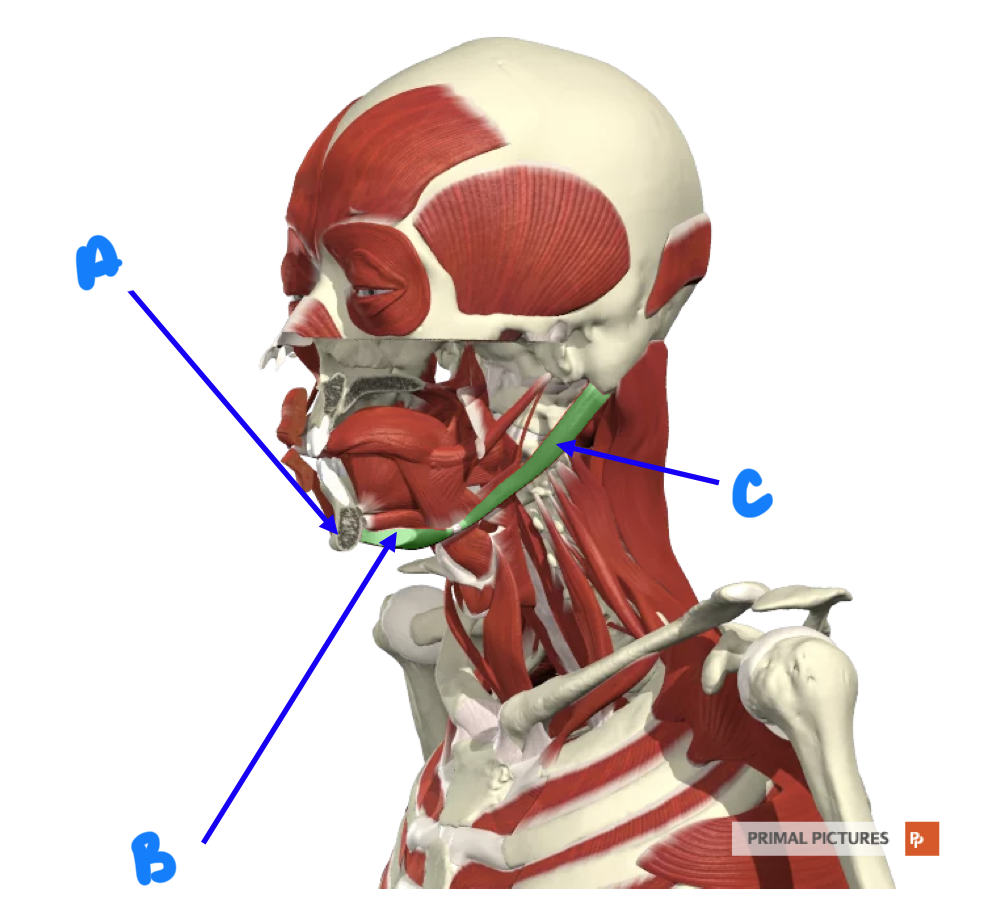
A
mandible (jaw bone)
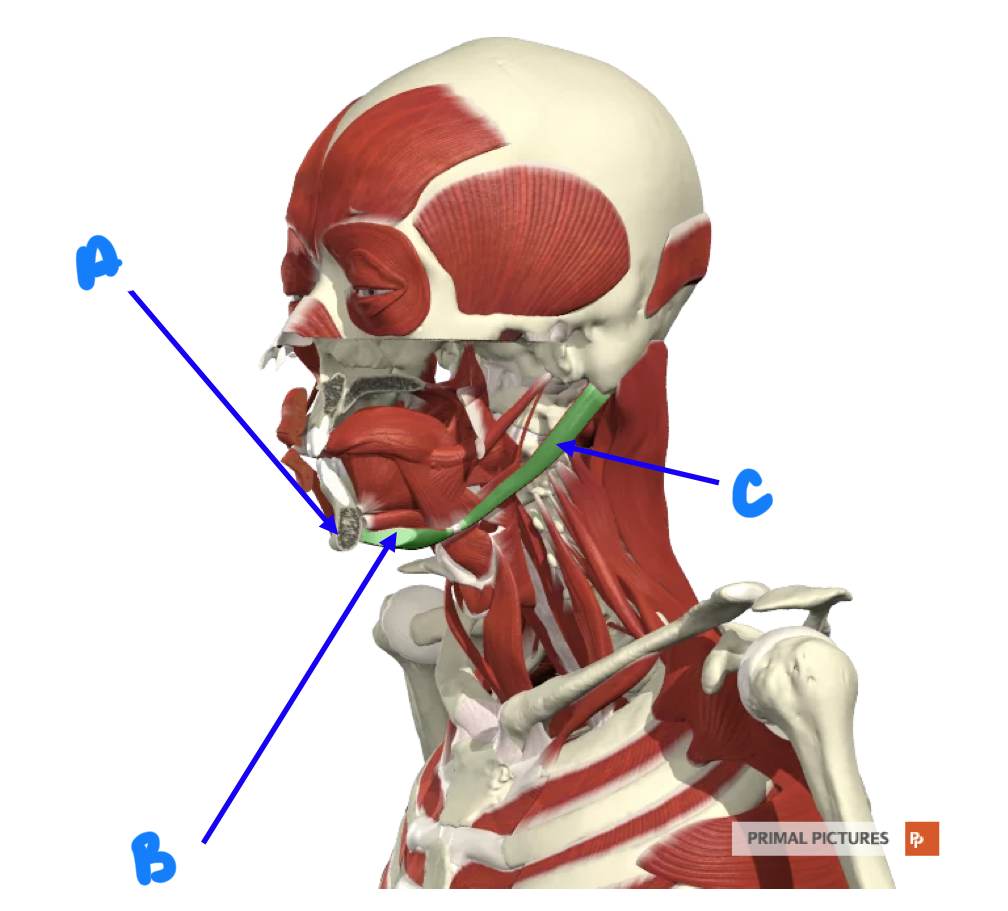
B
anterior digastric belly
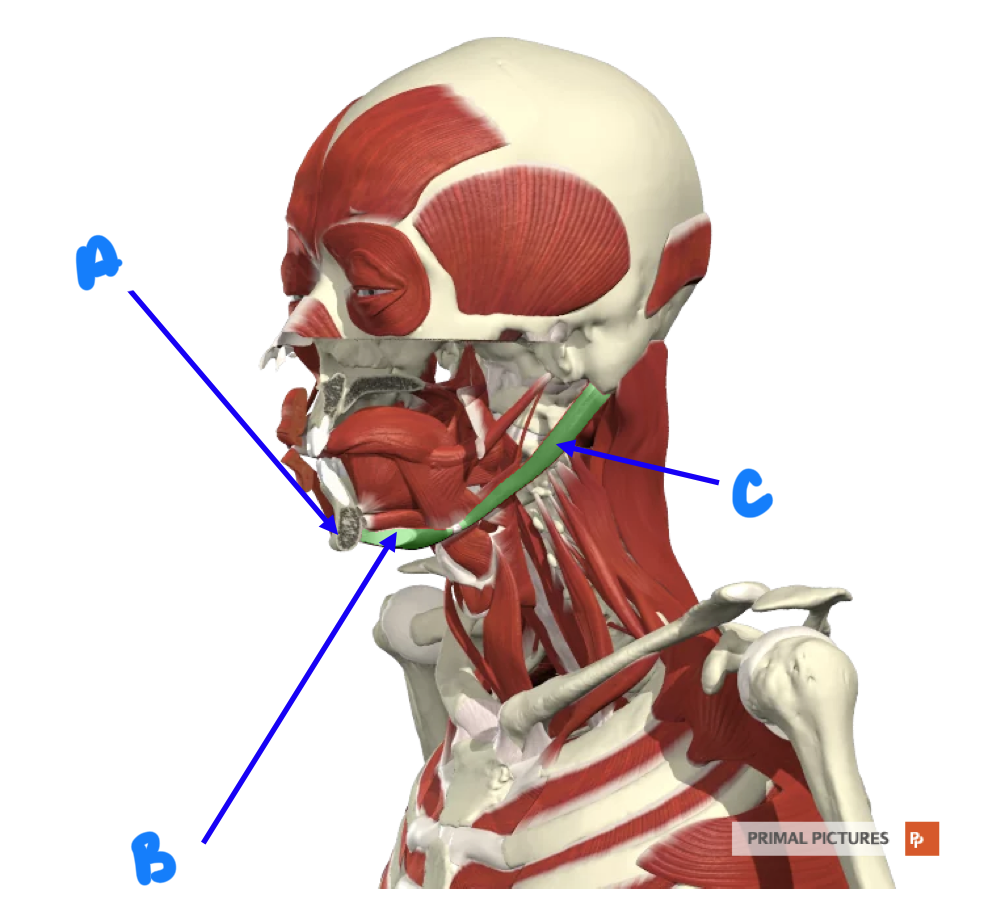
C
posterior digastric belly
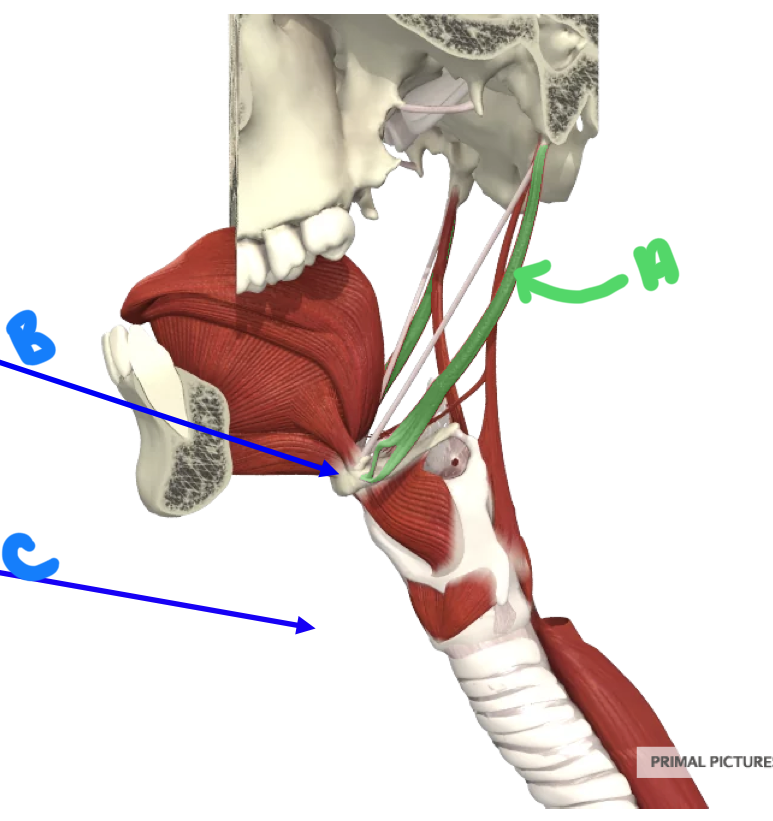
A
stylohyoid muscle
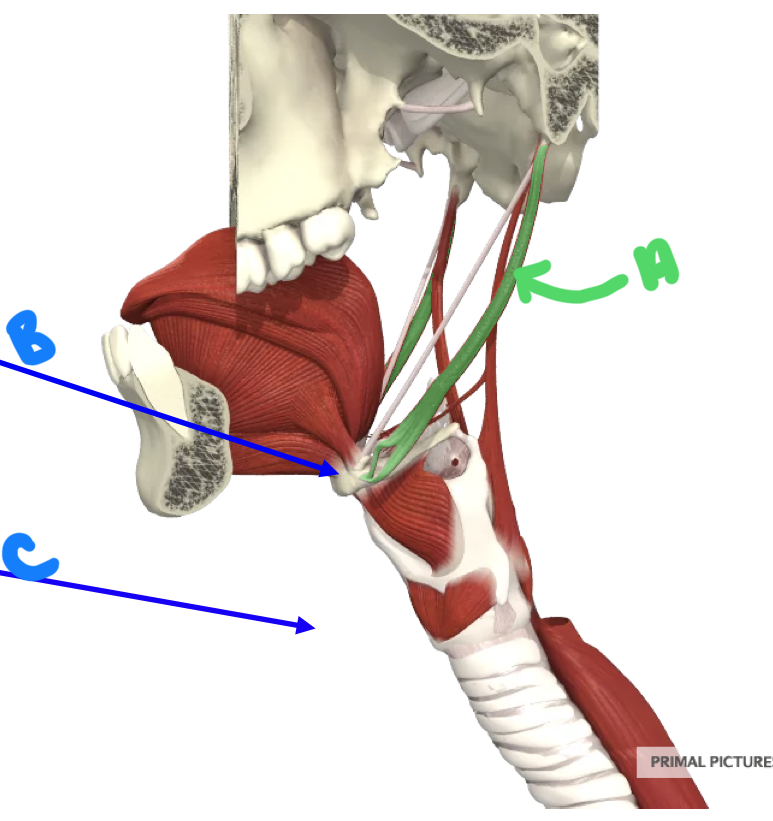
B
body of hyoid bone
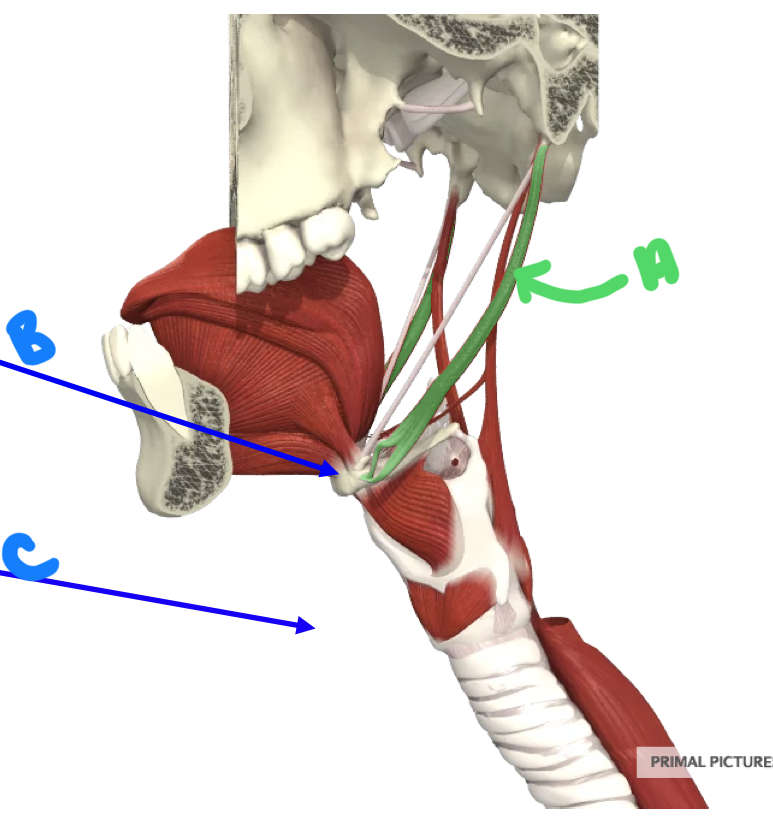
C
larynx
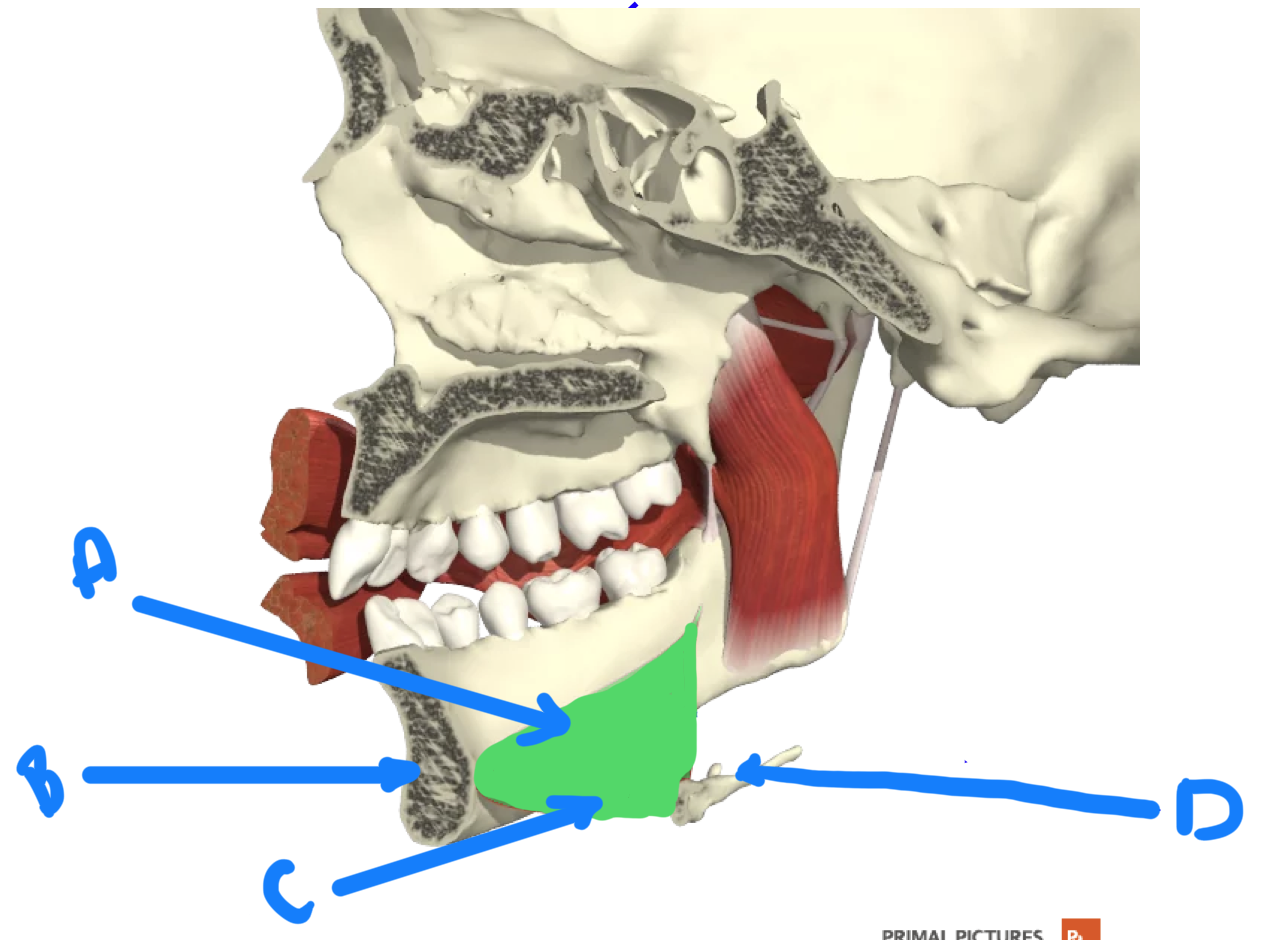
A
mylohyoid muscle
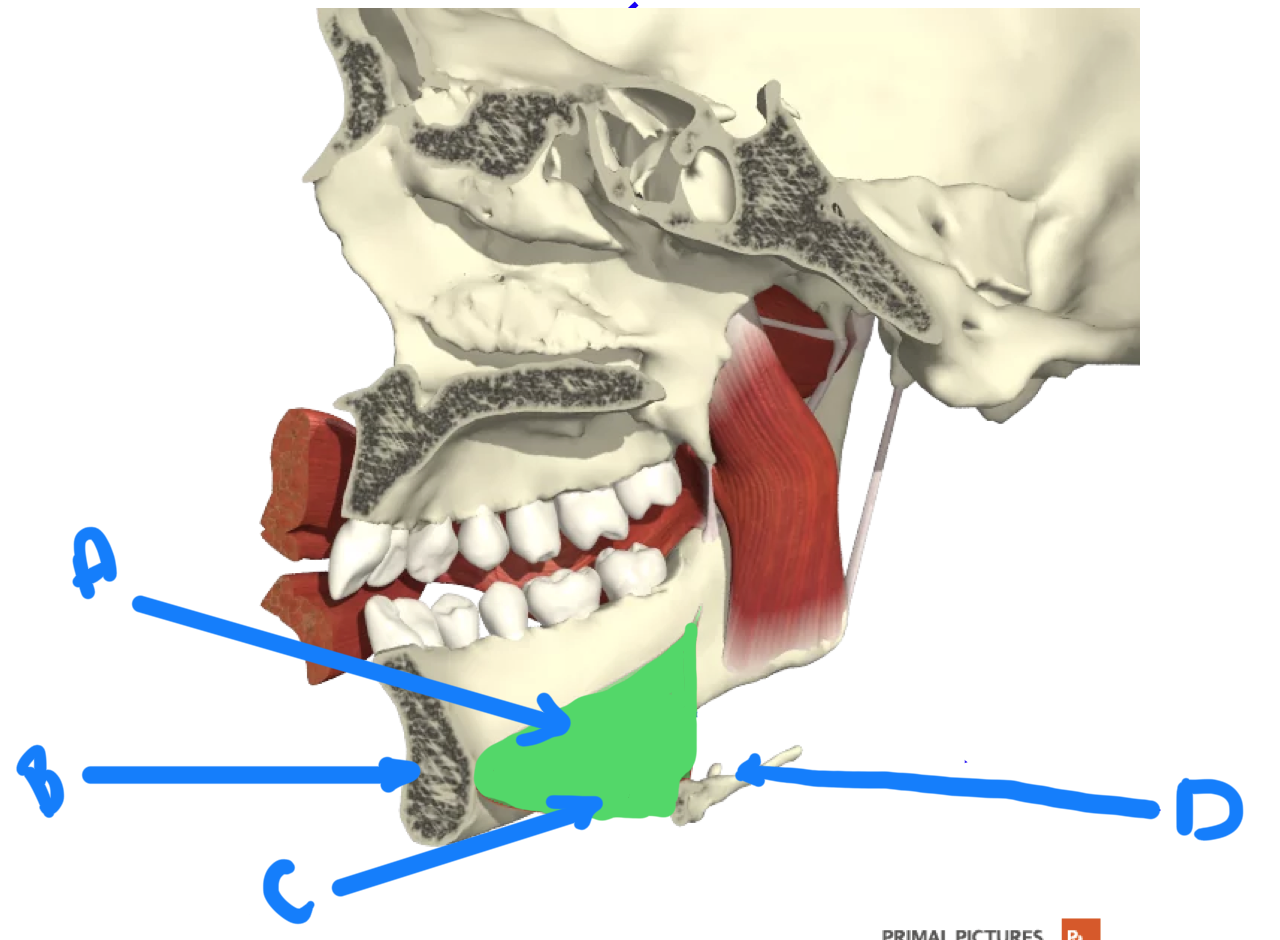
B
mandible
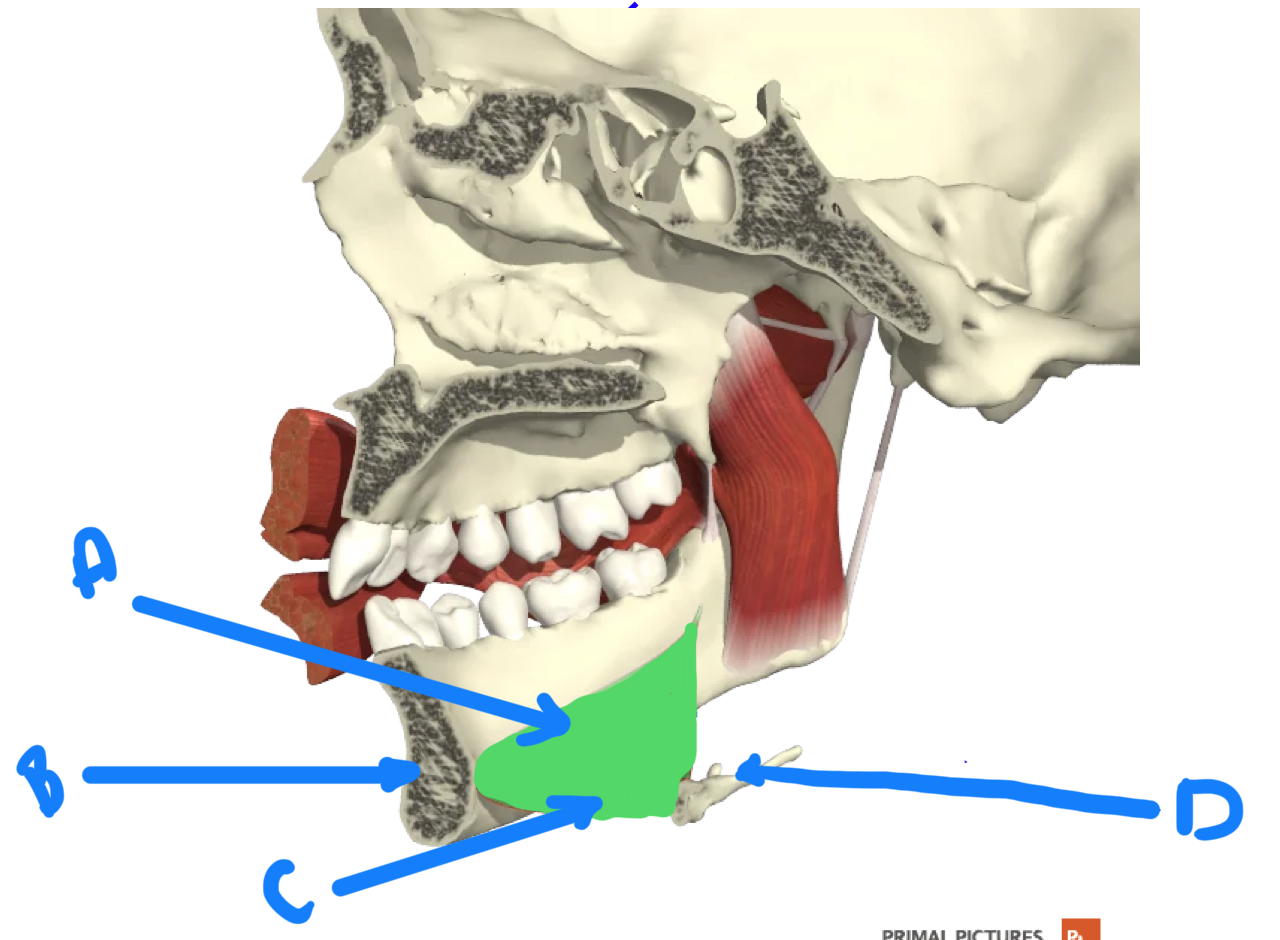
C
midline raphe
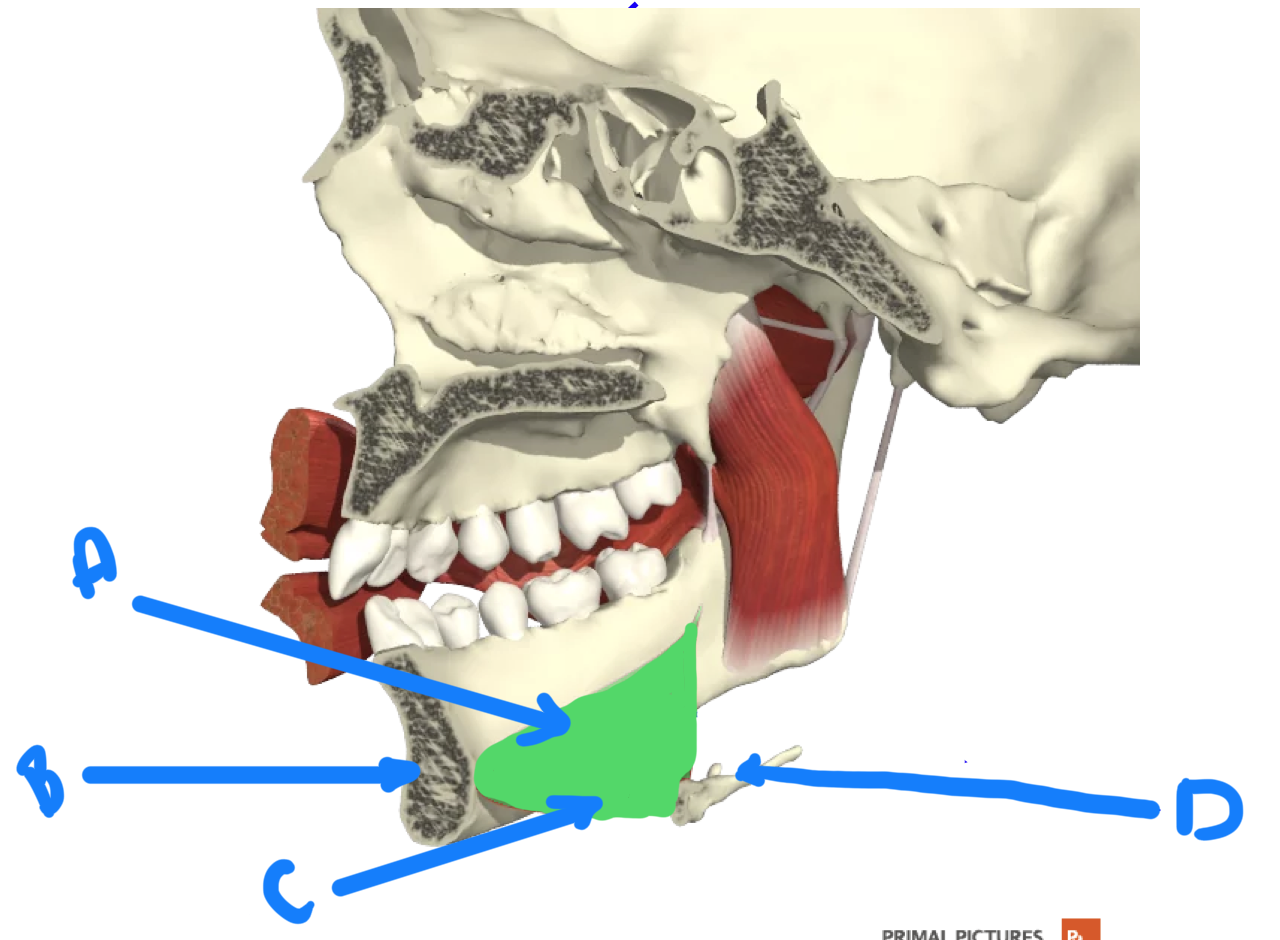
D
hyoid bone
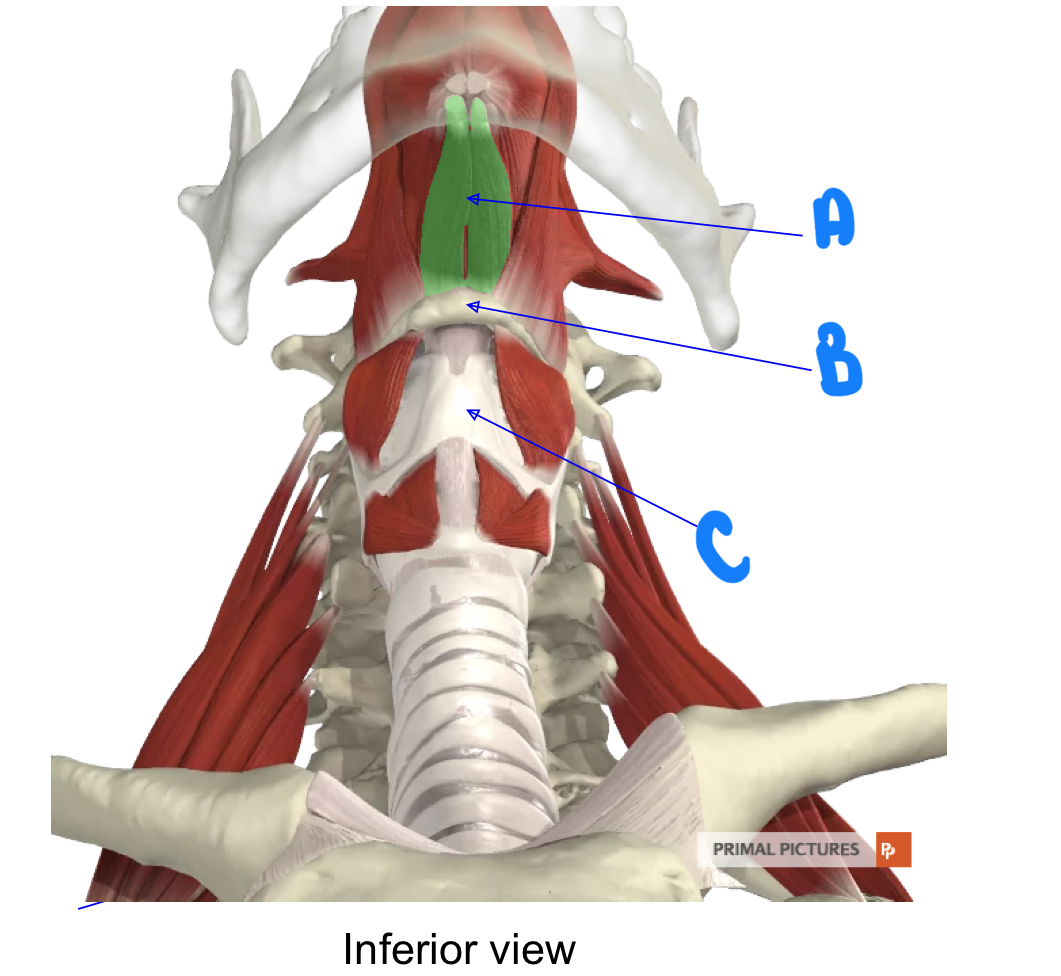
A
geniohyoid muscle