Hearing Science: Sound Waves, Ear Anatomy, and Audiology Testing
 Call Kai
 Learn
Learn Practice Test
 Spaced Repetition
 Match
Match Flashcards
 Knowt Play
1/23

There's no tags or description
Looks like no tags are added yet.
Name | Mastery | Learn | Test | Matching | Spaced | Call with Kai |
|---|
No analytics yet
Send a link to your students to track their progress
24 Terms
What is sound?
Sound is the vibration of particles created by a source.
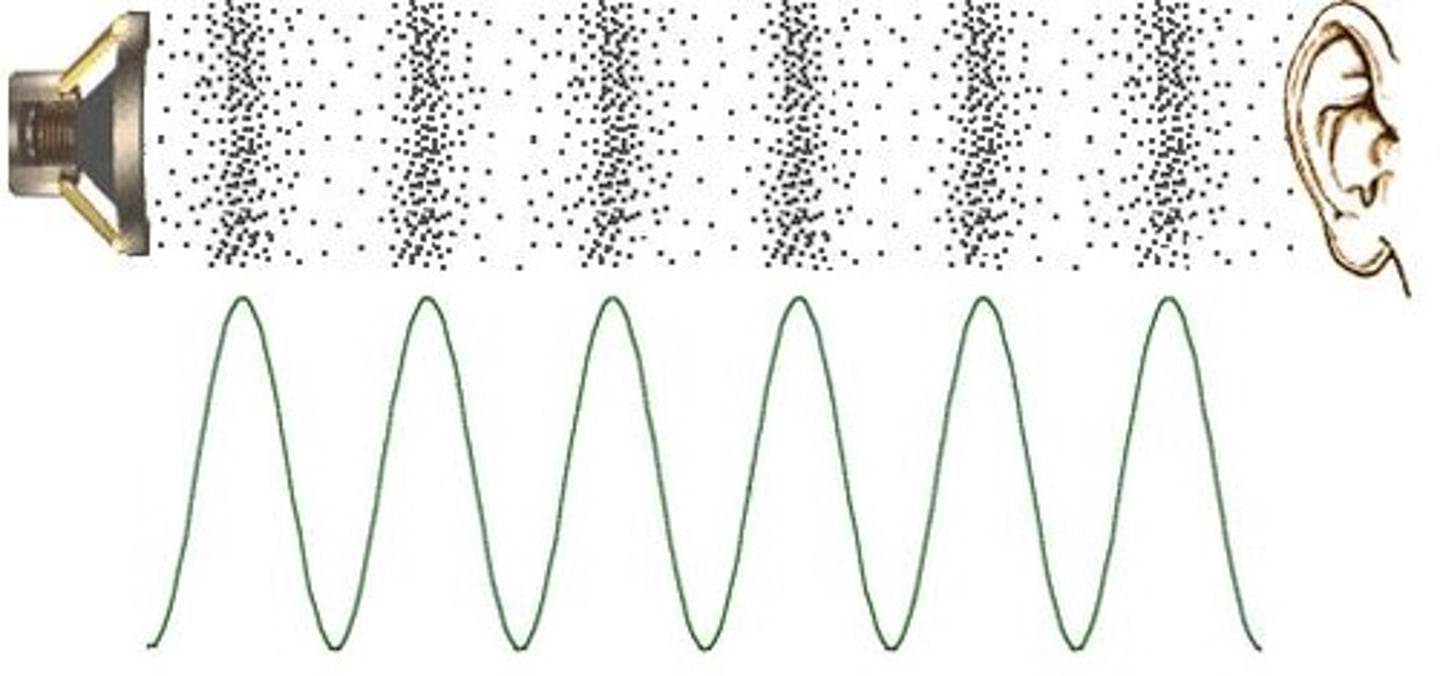
What are the two main components of sound waves?
Compression and rarefaction.
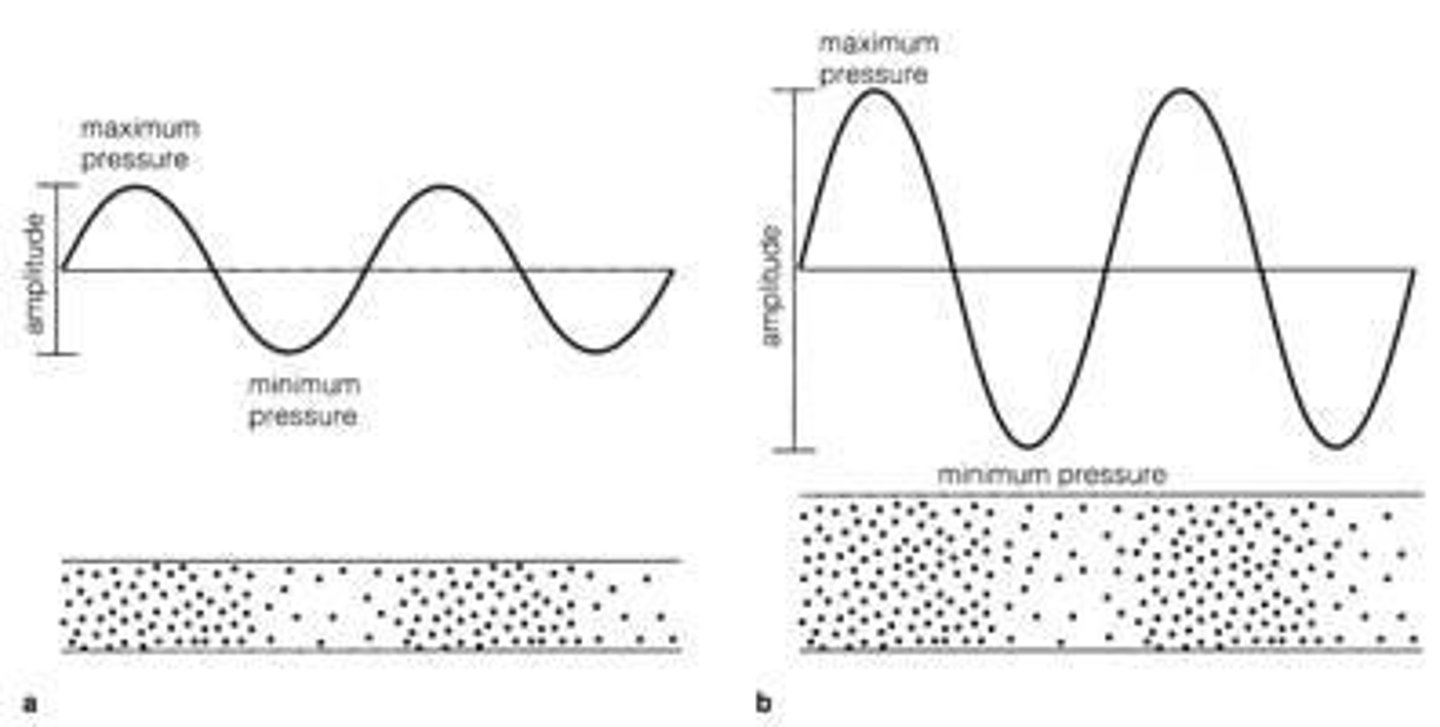
What is frequency in the context of sound?
Frequency is the number of cycles (vibrations) per second, perceived as pitch.
What unit is used to measure frequency?
Hertz (Hz).
What is the human hearing range in terms of frequency?
20 Hz to 20,000 Hz.
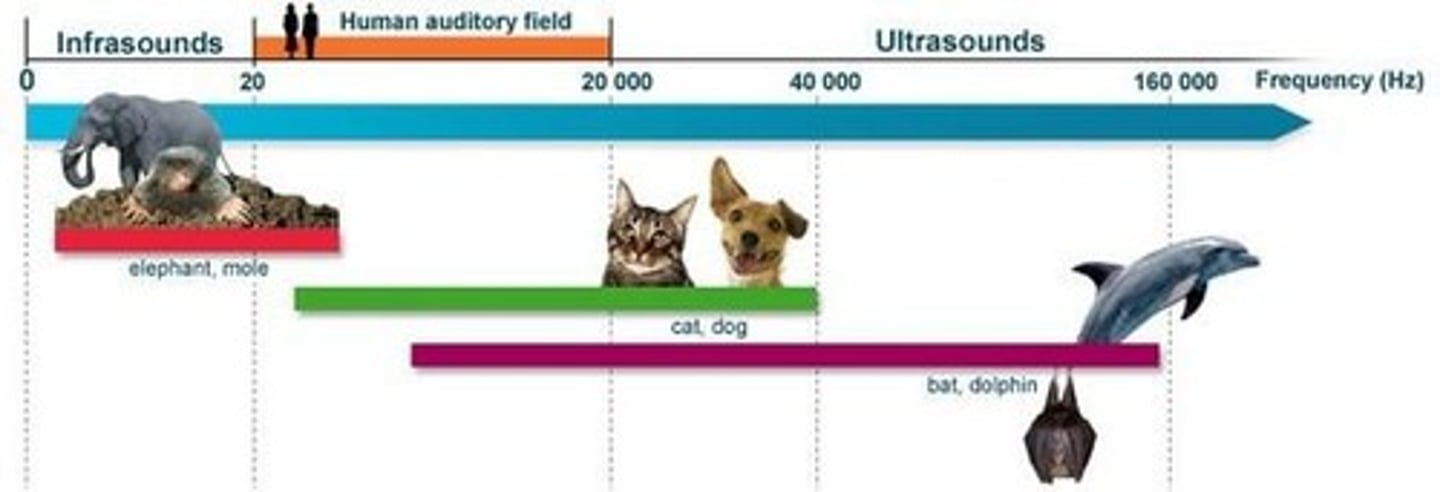
What are the most important speech frequencies?
From 250 Hz to 8,000 Hz.
What is amplitude in sound measurement?
Amplitude is the maximum displacement in the positive and negative direction, perceived as loudness.
What unit is used to measure amplitude?
Decibel (dB).
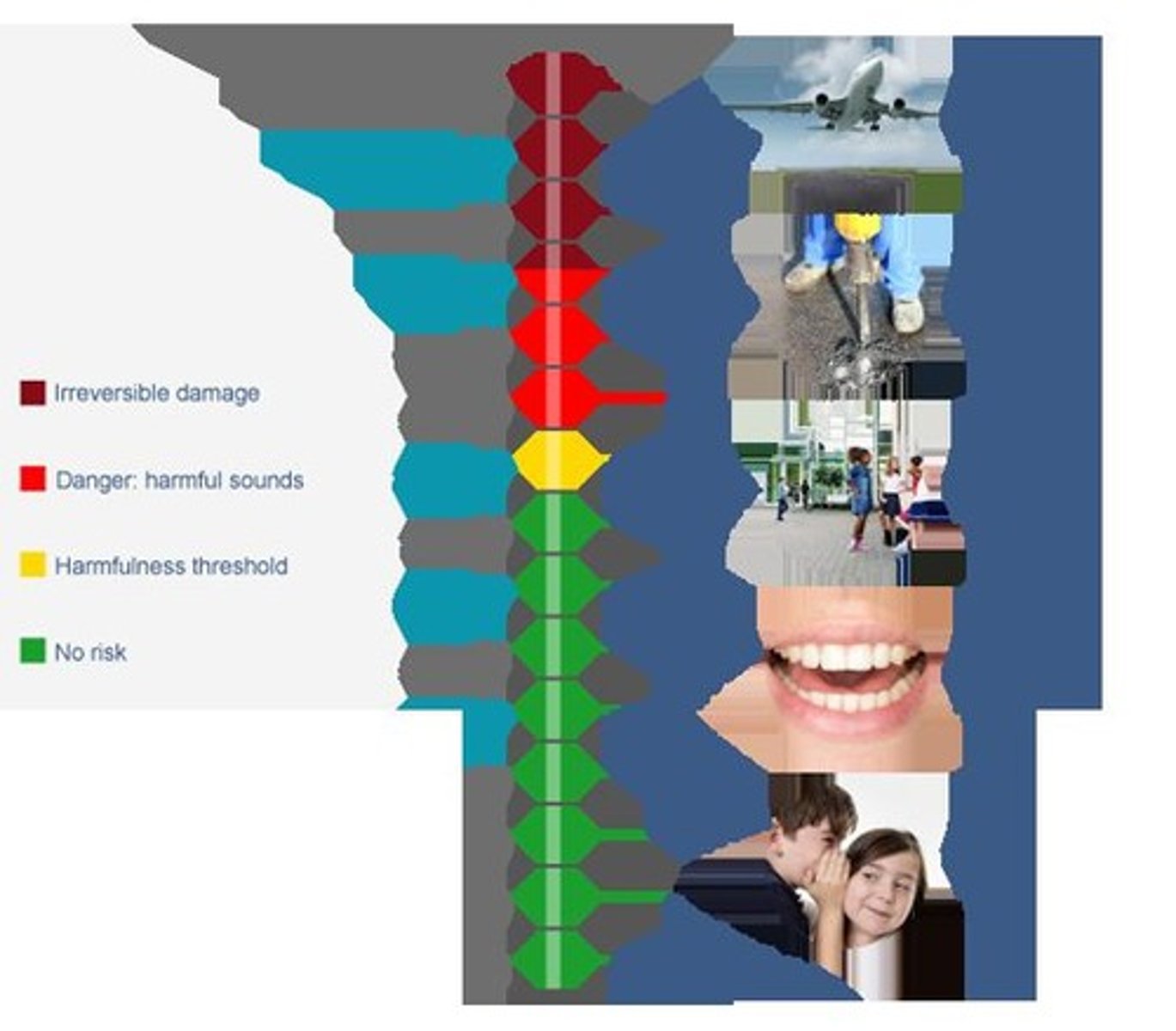
At what noise level does sound become painful?
140 decibels.
What is the average decibel level of a conversation?
60 decibels.
What is the difference between simple and complex sounds?
Simple sounds vibrate at a single frequency, while complex sounds contain two or more frequencies.
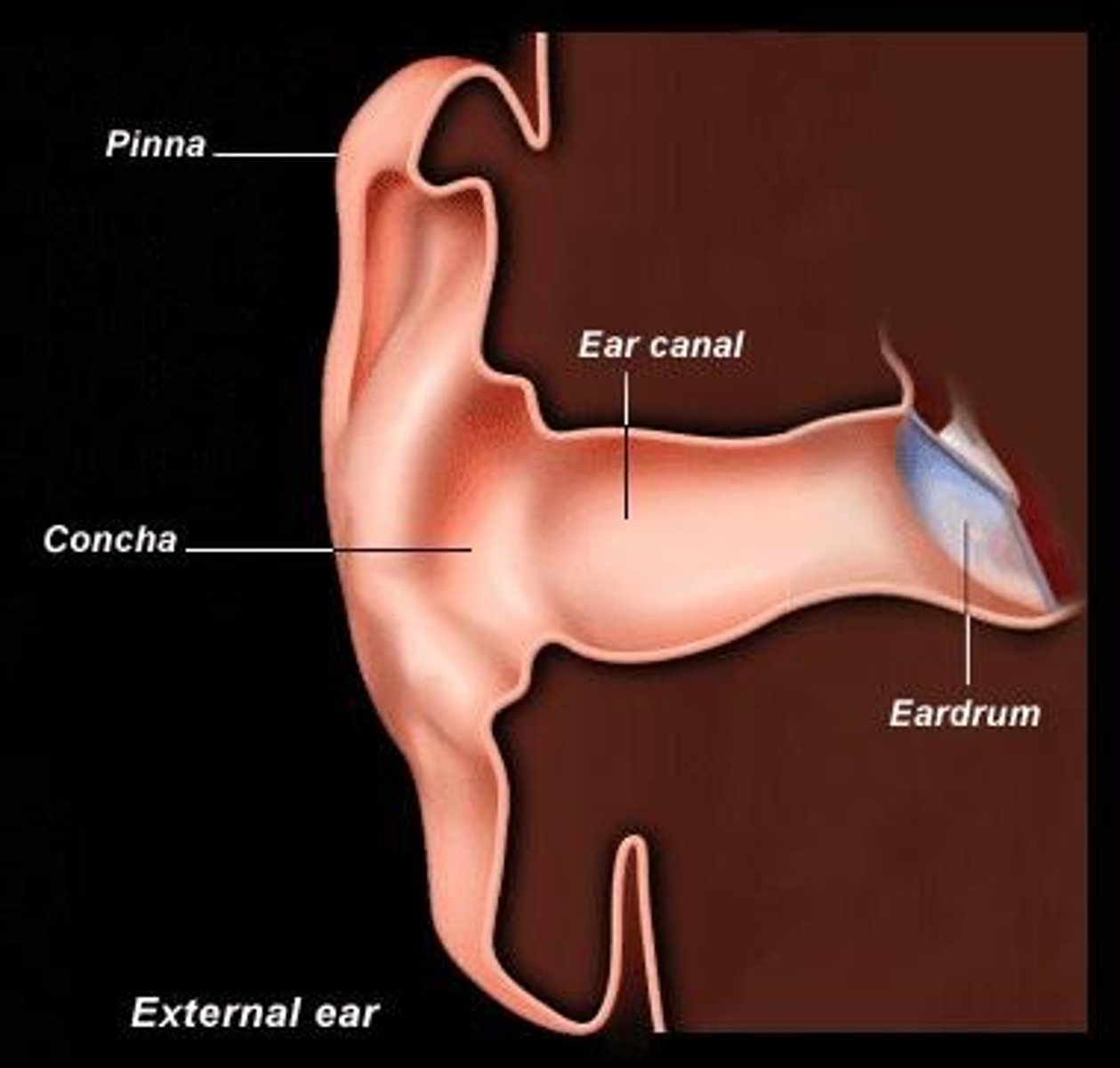
What structures make up the outer ear?
Pinna (auricle) and ear canal (external auditory canal).
What is the function of the tympanic membrane?
It separates the outer ear from the middle ear and vibrates to transmit sound to the ossicles.
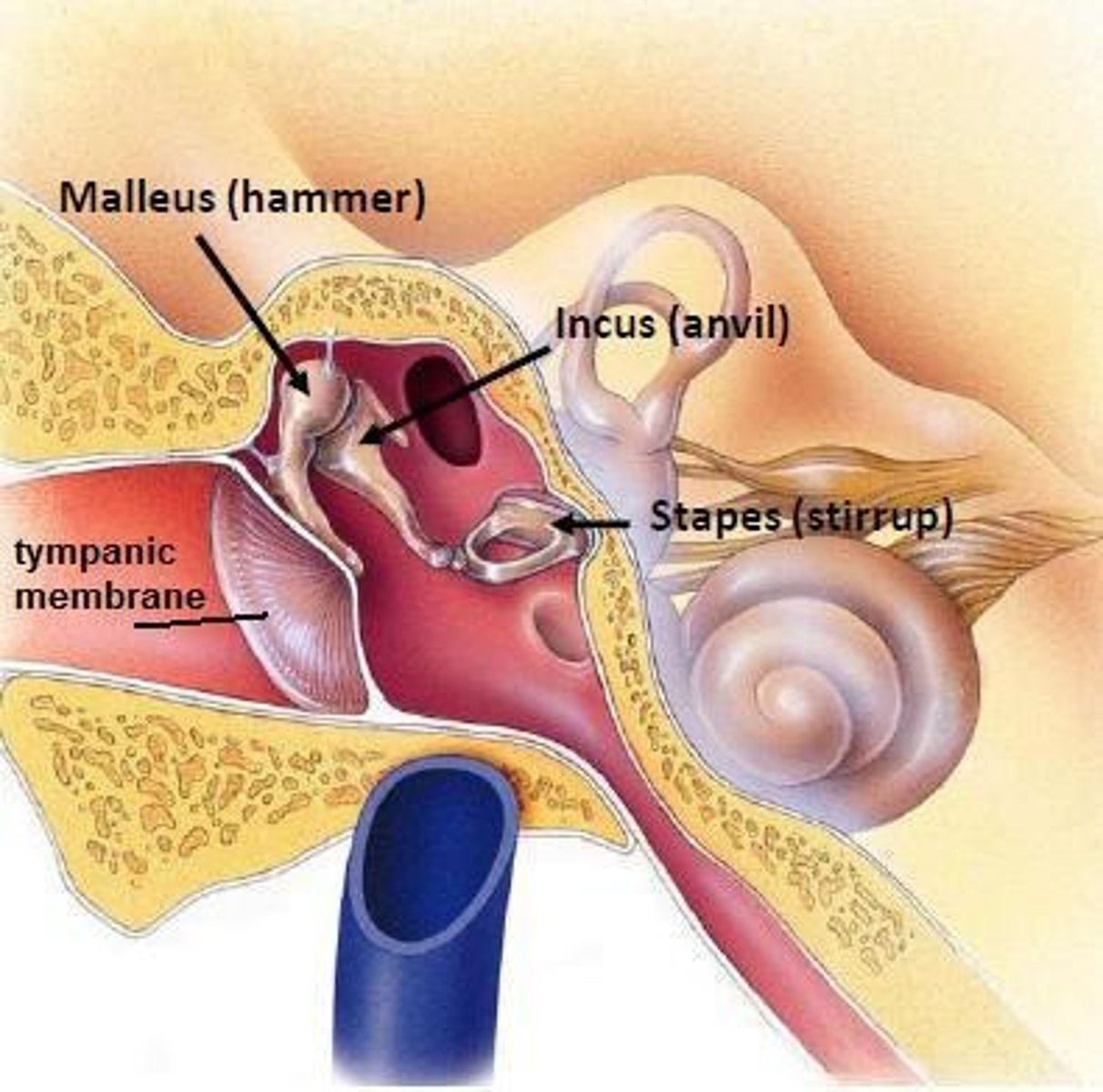
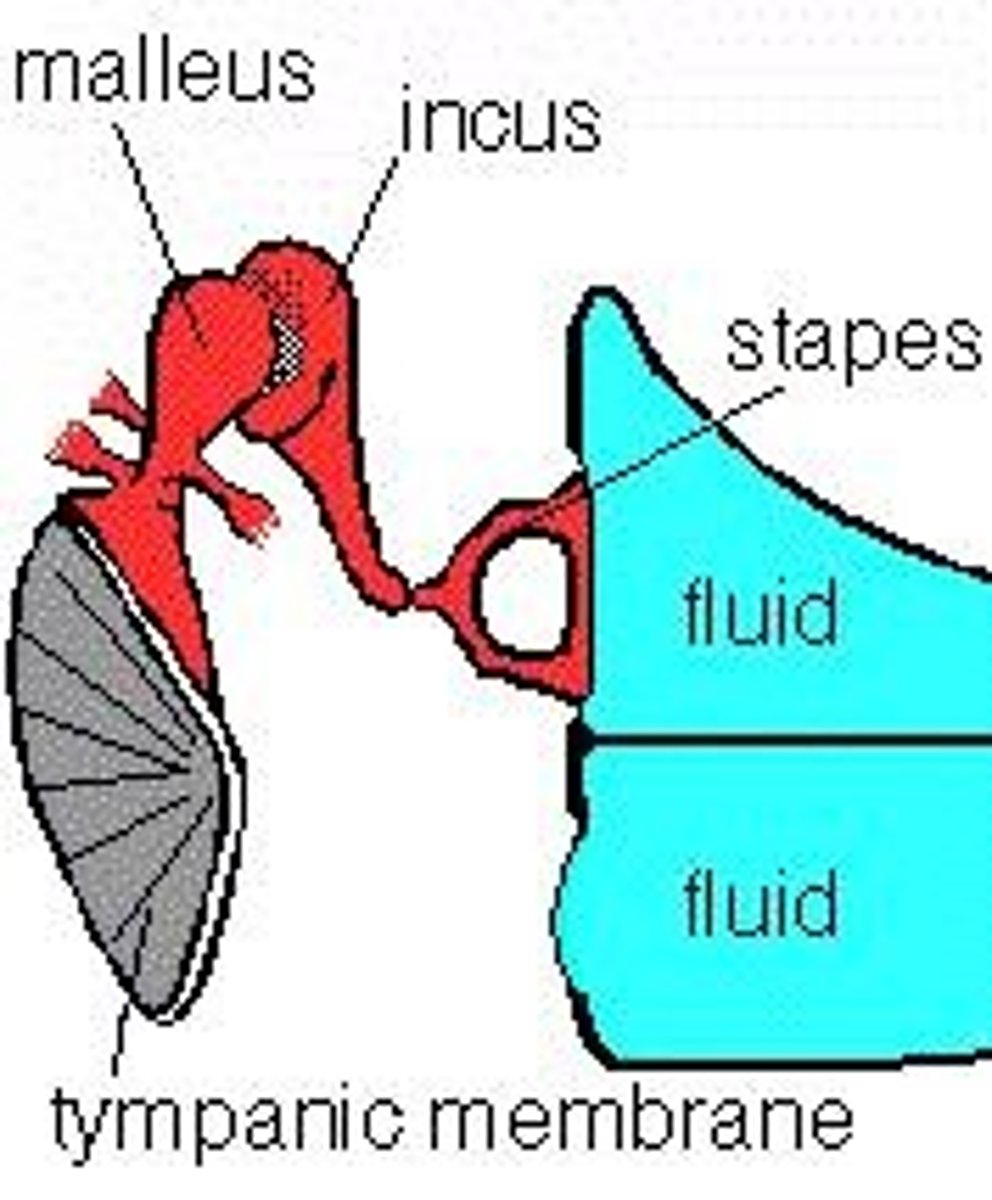
What are the ossicles?
Three tiny bones in the middle ear: malleus, incus, and stapes that transmit vibrations to the inner ear.
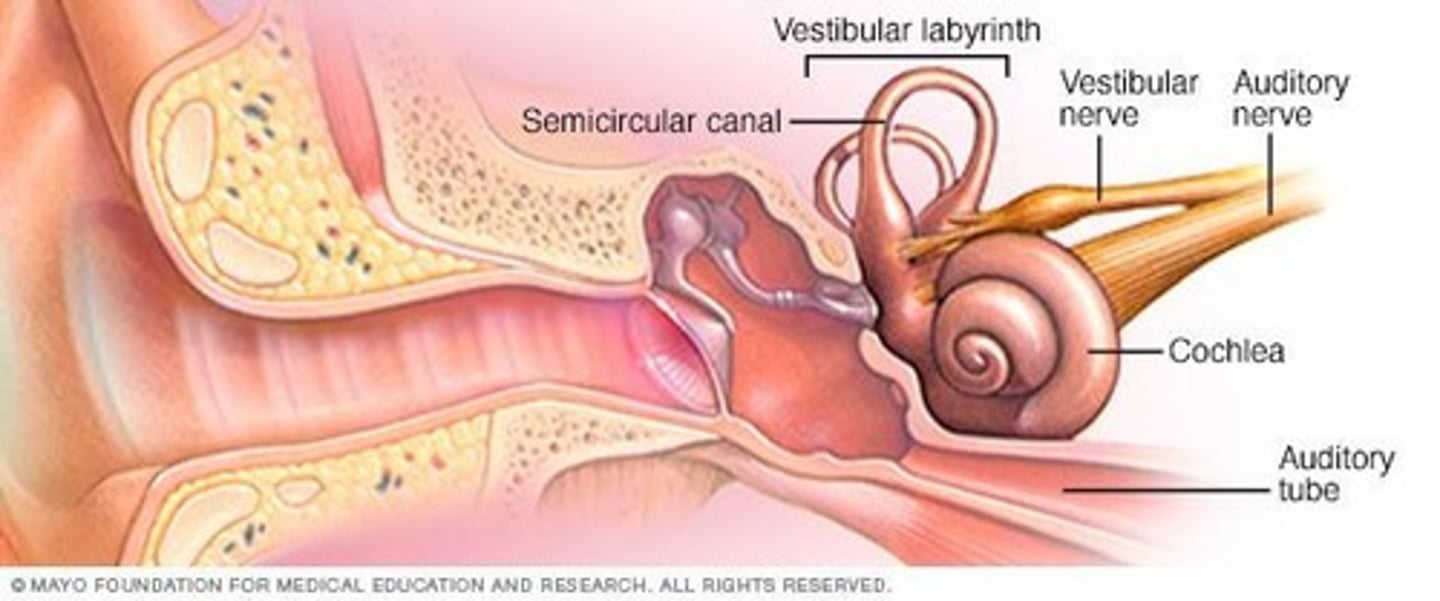
What is the cochlea?
The cochlea is the sensory organ for hearing, shaped like a spiral and containing fluid-filled chambers.
What role do hair cells play in hearing?
Hair cells pick up fluid vibrations in the cochlea and cause impulses in the auditory nerve.
What is the function of the 8th cranial nerve?
It transmits impulses from the inner ear to the brainstem.
What are the two mechanisms of hearing?
Air conduction and bone conduction.
How does air conduction work?
Sound waves travel through air and pass through the outer ear, middle ear, and inner ear.
What is bone conduction?
Vibrations are sent through the skull to directly stimulate the inner ear.
What is the role of the auditory cortex?
It perceives signals transmitted from the brainstem as sound.

What is cerumen and its function?
Cerumen (earwax) is produced by glands in the ear canal to protect and clean the ear.
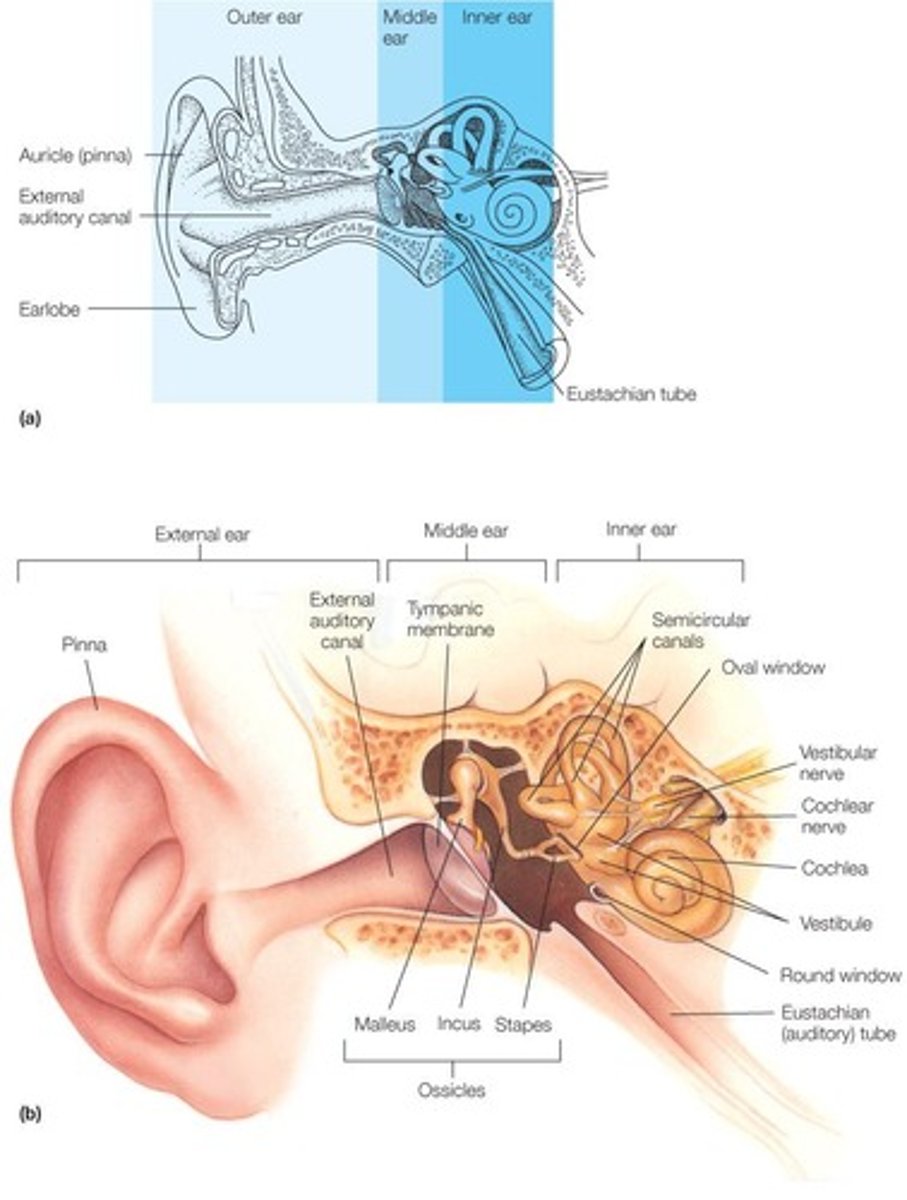
What happens to sound waves in the ear canal?
The ear canal amplifies sound waves, particularly from 2,000 to 5,000 Hz.
What is the significance of the basilar membrane?
It moves in response to fluid movement in the cochlea, allowing hair cells to detect sound.