Lecture Exam 3 - plants and fungi
 Call Kai
 Learn
Learn Practice Test
 Spaced Repetition
 Match
Match Flashcards
 Knowt Play
1/320

There's no tags or description
Looks like no tags are added yet.
Name | Mastery | Learn | Test | Matching | Spaced | Call with Kai |
|---|
No analytics yet
Send a link to your students to track their progress
321 Terms
After fertilization
When do ovules become seeds
Embryo (sporophyte) and stored food
What does the seed contain
Seed coat
The protective layer around the seed made up of integuments
True
T/F - seeds are completely desiccated and can be dormant, yet alive, for many years
Cones
In seedless plants its strobili, in gymnosperms its _________
Sporophylls
Structure that bears sporangia which is where spores are produced
protection, store food, able to stay dormant
benefits of seeds
Heterosporus
Are seed plants homo or heterosporous
Wind and animals
2 main ways in which sperm gets to the egg in gymnosperms
Cones
Where are spores produced in gymnosperms
In the seed which are formed on teh scales of the ovulate cones
Where are embryos formed in gymnosperms
Within the ovule
Where do megaspores form in gymnosperms
Megaspore
A spore from a heterosporous plant species that develops into a female gametophyte.
Megasporangia (2n) - megaspore (n) - megagametophyte (n)
what does megasporangia ultimately develop (include ploidy)
Pollen
What do microspores produce
Microsporangia (2n) - microspore (n) - microgametophyte (n)
what does microsporangia ultimately develop (include ploidy)
False
T/F - Pollen is a fully developed gametophyte
Doesn't require water and can be transferred passively
What is the benefit of pollen i
Formation of the pollen tube that delivers the sperm to the egg
What happens when pollen is considered the fully developed gametophyte
nucellus
The megasporangium in seed plants
Seed
What does the ovule develop into after fertilization
Micropyle
A pore in the integuments of an ovule where pollen grains enter for fertilzation
1
How many integuments do gymnosperms have surrounding the nucellus
2
How many integuments do angiosperms have surrounding the nucellus
Micropyle
1
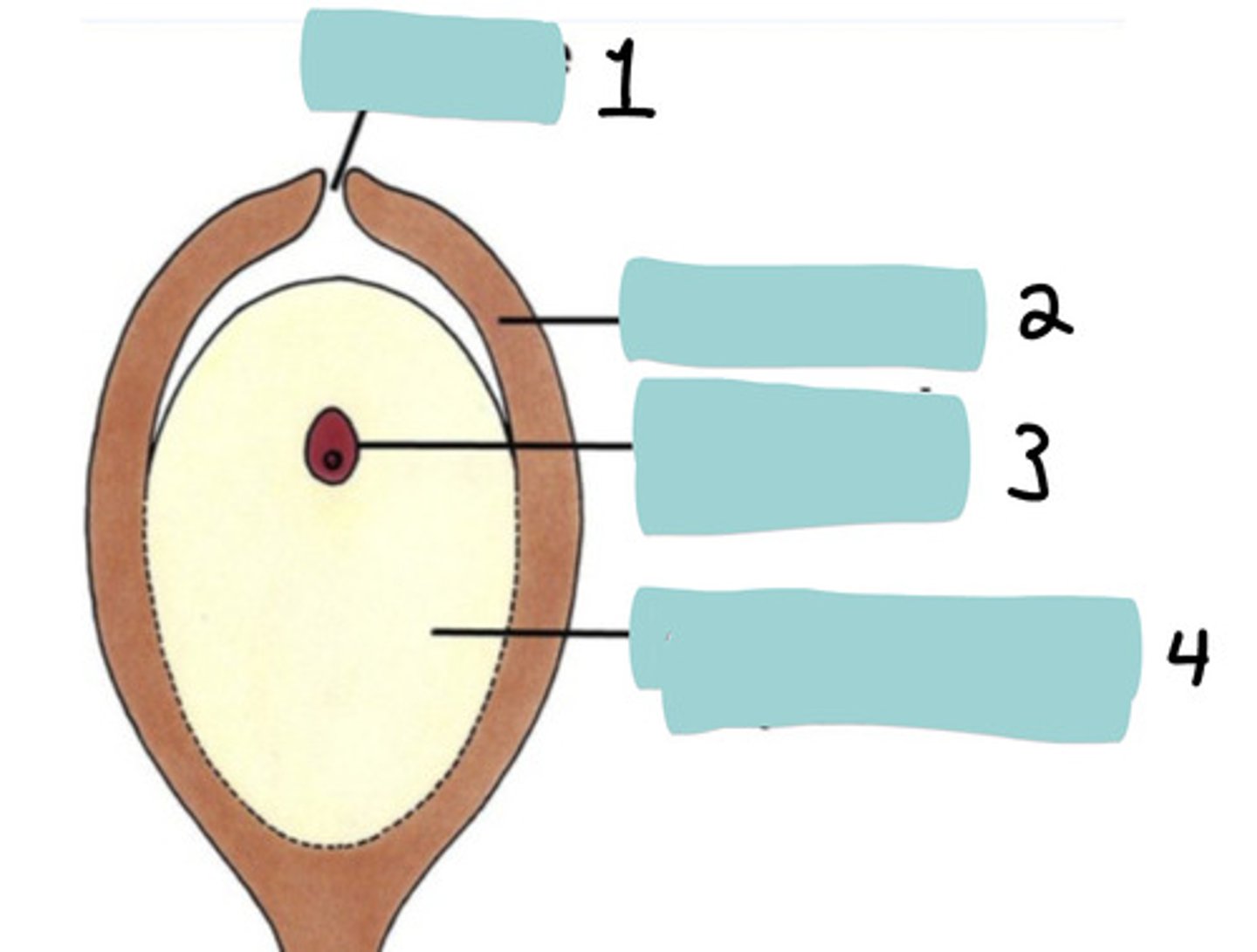
Integument
2
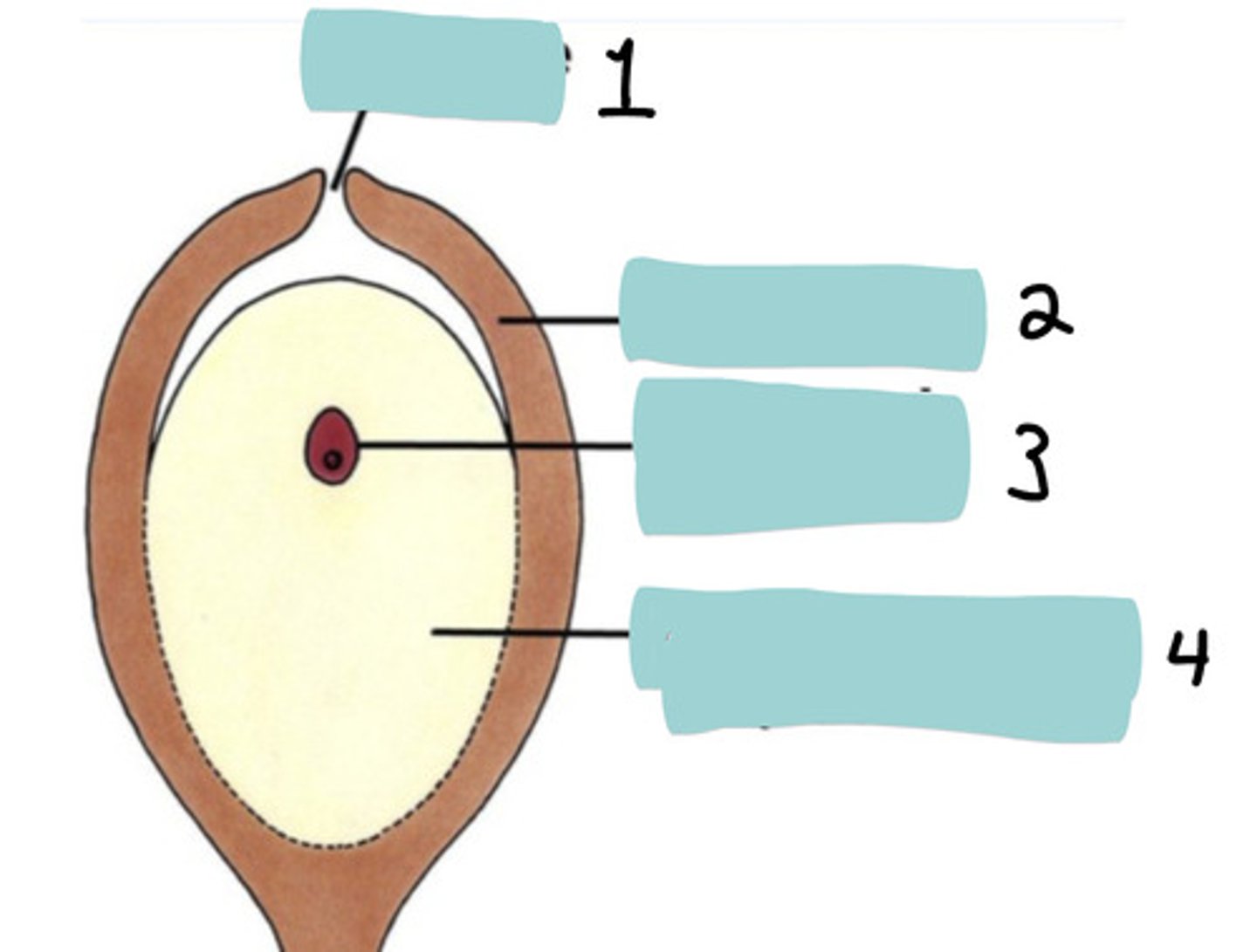
Megaspore
3
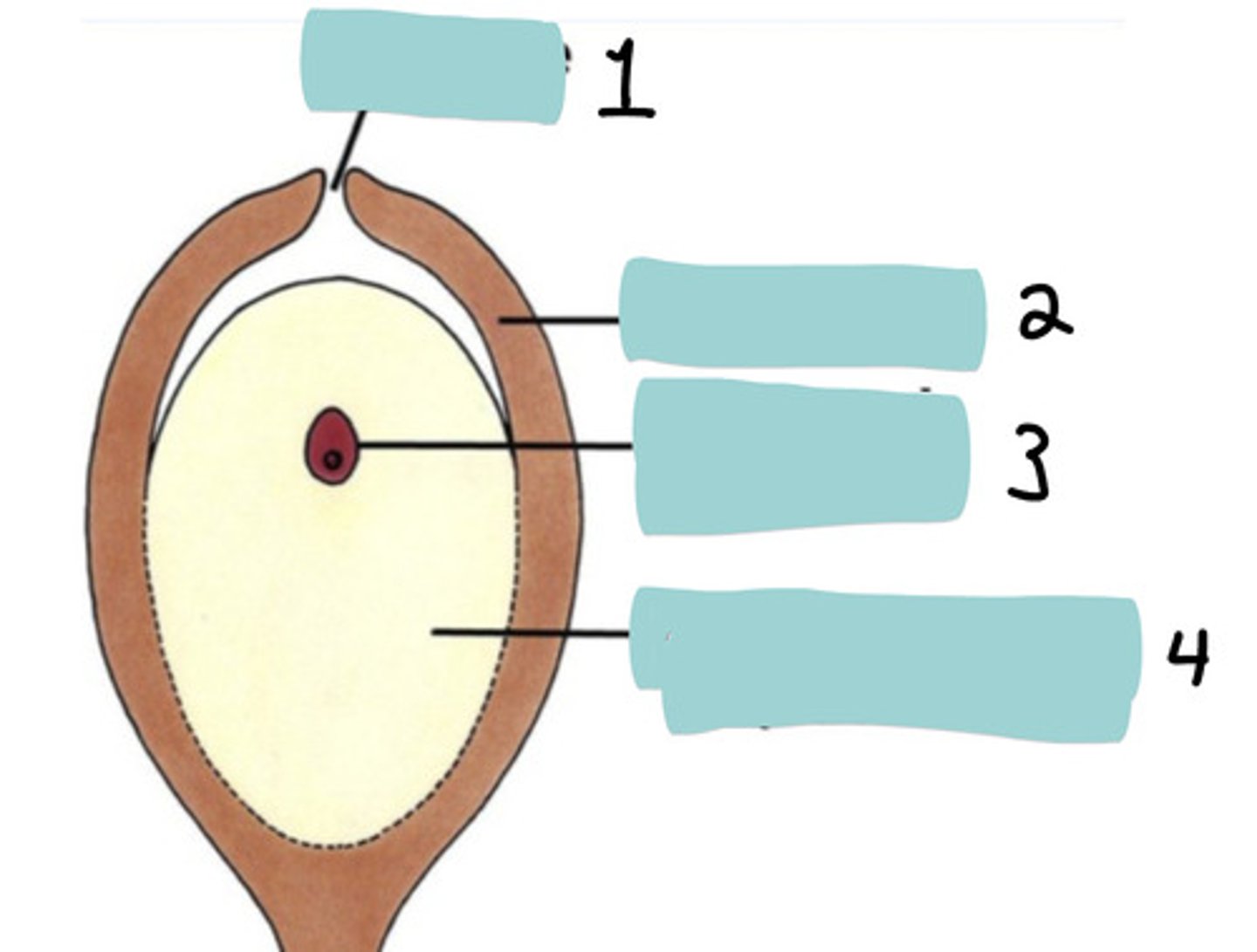
Megasporangium/nucellus
4
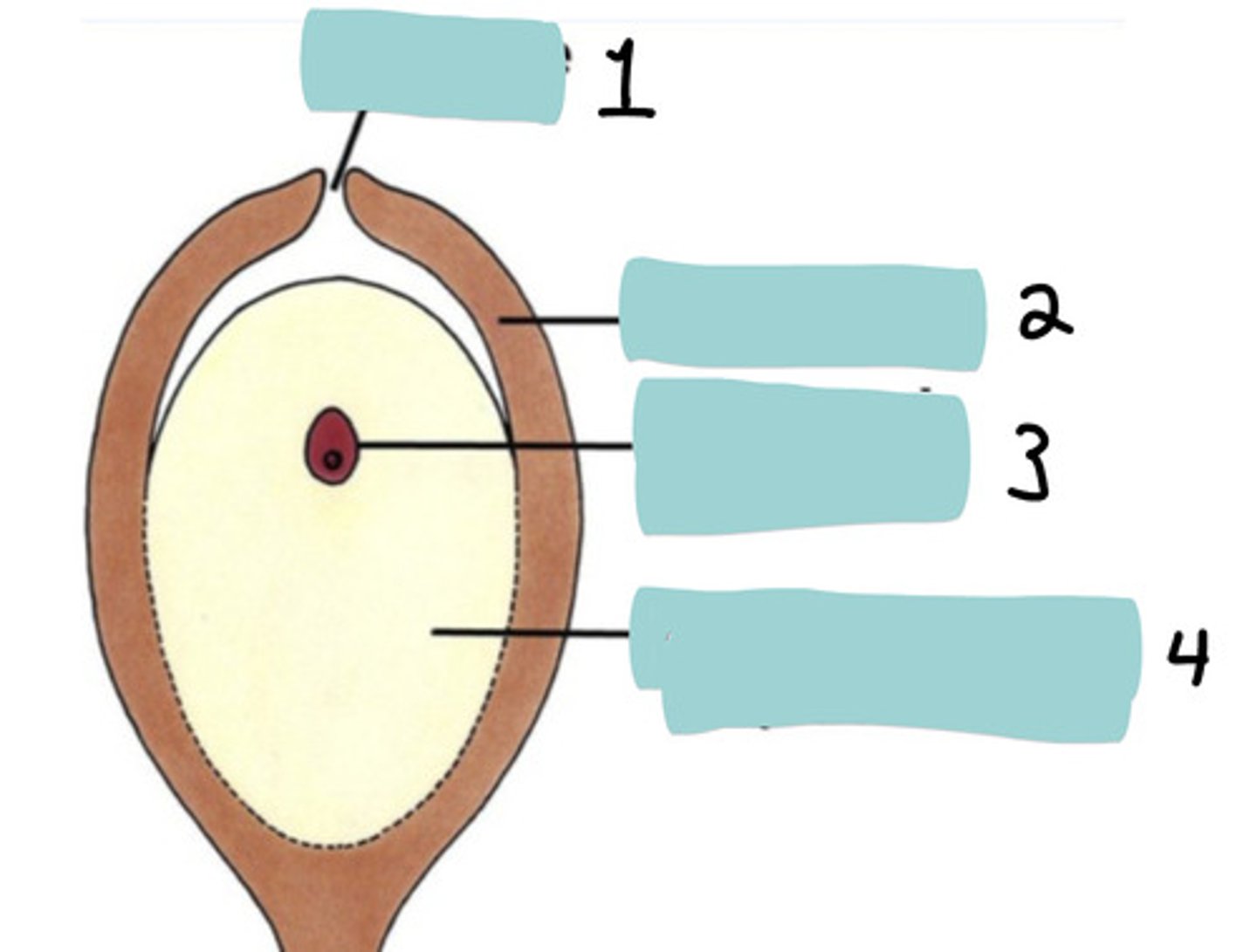
Retention of the megaspore
During the evolution of the ovule, what formed the nucellus
1
How many megaspore mother cells (2n) per megasporangium in gymnosperms
1
In gymnosperms, how many megaspores per sporangia survive
inside the megaspore
In gymnosperms, where does the female gametophyte form
Endosporic development
the gametophytes develop within the spore wall
In the female gametophyte within the maternal sporophyte
Where does the embryo develop
Fusion of integumentary lobes
What is the very general trend that caused the evolution of seeds
Progymnosperms
extinct fossilized remnants of the ancestors of gymnosperms
Progymnosperms
First woody plants, reproduced by spores, first evidence of eustele
Bifacial vascular cambium
What type of vascular cambium did progymnosperms have that allowed them to produce wood
True
T/F - all gymnosperms and angiosperms are able to undergo secondary growth
Paraphyletic group
What type of phylogenetic relationship do gymnosperms, progymnosperms, pteridophytes, and bryophytes have
Naked seed
What does gymnosperm literally mean
During the dinosaurs
When did gymnosperms dominate the earth
Coniferophyta, Cycadophyta, Ginkgophyta, Gnetophyta
4 extant phyla of gymnosperms
Cycads
Palm like plants found in the tropics, have seperate ovulate and staminate cones, most evoltuionary ancient
Gingko
Have fan shaped decidious leaves, preserved in temple grounds in asia, seperate male and female plants, pollen tube can grow to be parasitic
Gnetophytes
Similar to angiosperms but still considered gymnosperms, have strobili similar to inflorescences, contain vessels, and double fertilzation
Coniferophyta
The most numerous, widespread, and ecologically important gymnosperm phyla
Fascicles
Bundles of pine needles that take about 2 years of growth
Determinate meristem
What type of meristems do pines have in their fasicles
Damage
When does the determinate meristem of a pine needle become indeterminate again
Small surface area on leaves, prevention of accumulation of snow, thick cuticle
What are some adaptations that pines have that allow them to live in cold or dry environments
Soft wood
What type of wood do conifers have that differ from angiosperms
xylem only has tracheids and phloem only have sieve elements
What differs with xylem and phloem of pines compared to angiosperms
Resin ducts
In pines, found in the ground or vascular tissue and contains a sticky phenolic compound to deter herbivores
Monoecious
having male and female reproductive organs in the same plant
Megasporangia and microsporangia are found on seperate cones but the same tree
What makes pines monoecious
To encourage outcrossing
Why are male cones typically on lower branches while female cones are on lower branches
Microsporangiate cones
Where are microsporangia?
Microspore mother cell
What does each microsporangium contain
4 haploid microspores
What does the microspore mother cell produce via meiosis
Winged pollen grain
What does each microspore develop into
2 prothallial cells, a generative cell, and a tube cell
The cells of a winged pollen grain
Remnants of gametophyte generation
Prothallial cell
Divides to make sperm
Generative cell
Forms pollen tube during fertilization
Tube cell
modified determinate branches called seed-scale complexes
If ovuliferous scales are not just simple megasporophylls, what are they?
Ovule on the top and sterile bract below
What is the structure of a pine scale
4 megaspores (3 will degenerate)
What does the megaspore mother cell (megasporocyte) produce after meiosis
endosporically
How does the megaspore mother cell develop into the megagametophyte in pines
The sporophyte tissue of nucellus and integument
What will surround the megaspore of a pine
Within the archegonia at the micropylar end
Where do the eggs/ova form
Far apart
In what orientation are ovulate scales to ensure they are open to accept pollen and exude pollen drops
Pollen drops
In pines, after pollen grains settle on a scale, this helps carry the pollen grain through the micropyle in contact with the nucellus
the pollen grain germinates to form the pollen tube
What happens after the pollen grain gets to the nucellus
One month
At what point in the pine timeline are megaspores produced in the pine
2 or 3 archegonia differentiate at the micropylar end
After about 15 months after pollination, what happens in pines
The generative cell divides to to give rise to a sterile cell and a spermatogenous cell which makes sperm
After one year, what happens that makes the microgametophyte mature
15 months
About how many months after pollination does fertilization occur in pines by rupturing the pollen tube and releasing sperm
True
T/F - its possible for there to be 2-3 archegonia and polyembryony in pines
2 sporophyte generations and a gametophyte generation (sporophyte in gametophyte in sporophyte)
What generations are present in the conifer seeds and in what order
Gametophyte tissues
What serves are a food reserve for the developing embryo in conifer seeds
Wollemi pine
What is the rarest plant in the world that happens to be a conifer
Seqouias and fire reproduction
What is a cool example of an adaptation that conifers have for reproduction
Redwoods
Example of a huge conifer
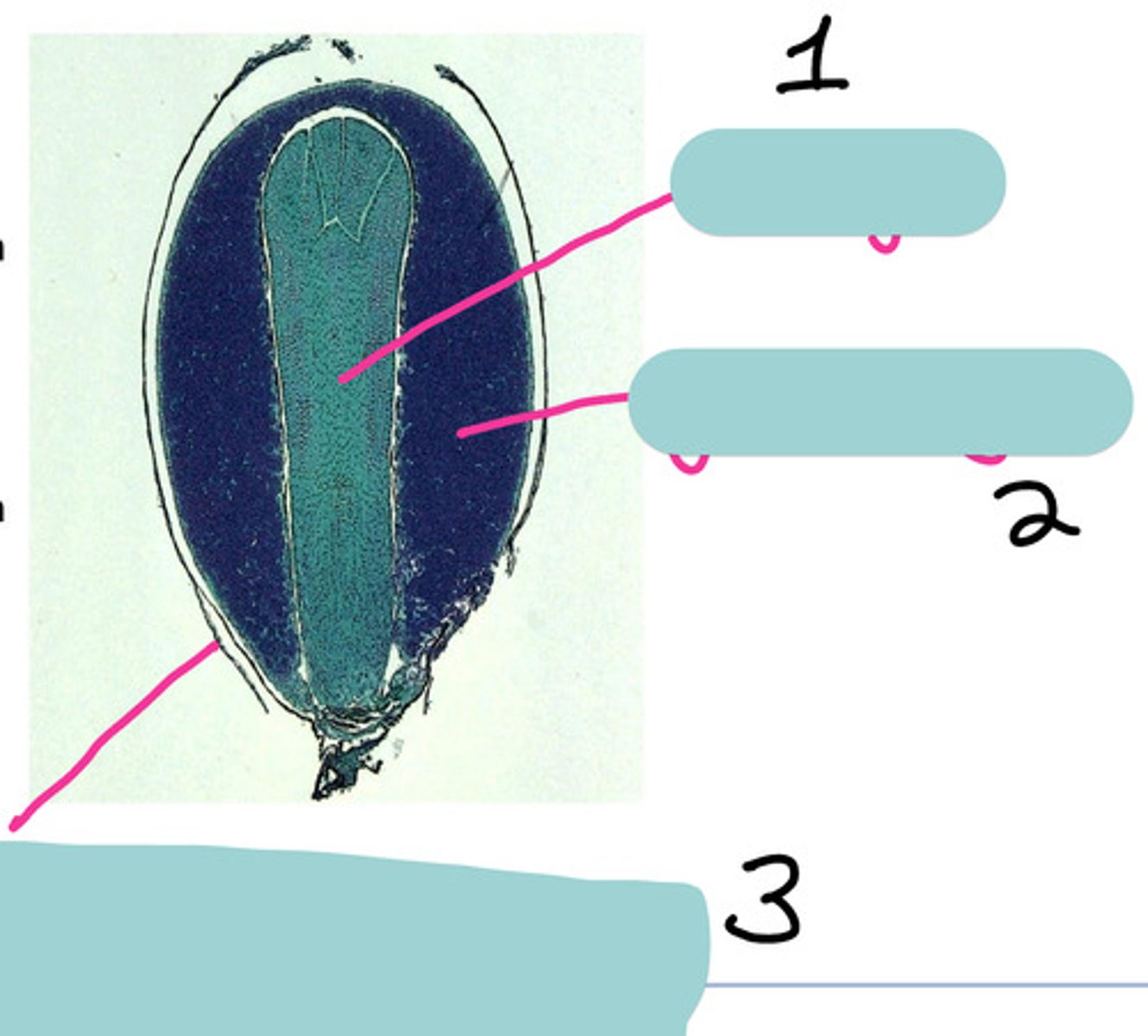
Embryo
1 - Identify the parts of the gymnosperm seed
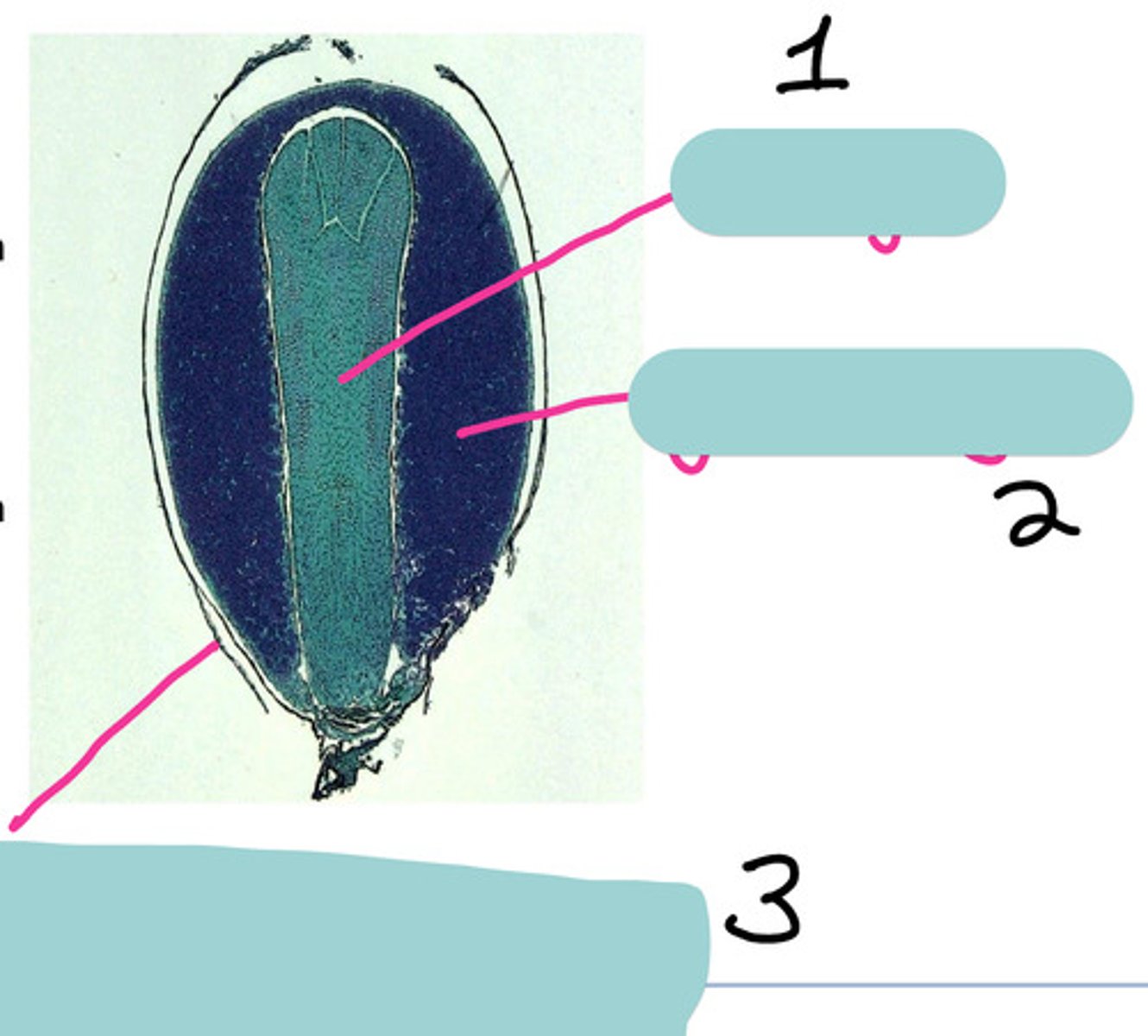
Gametophyte
2- Identify the parts of the gymnosperm seed
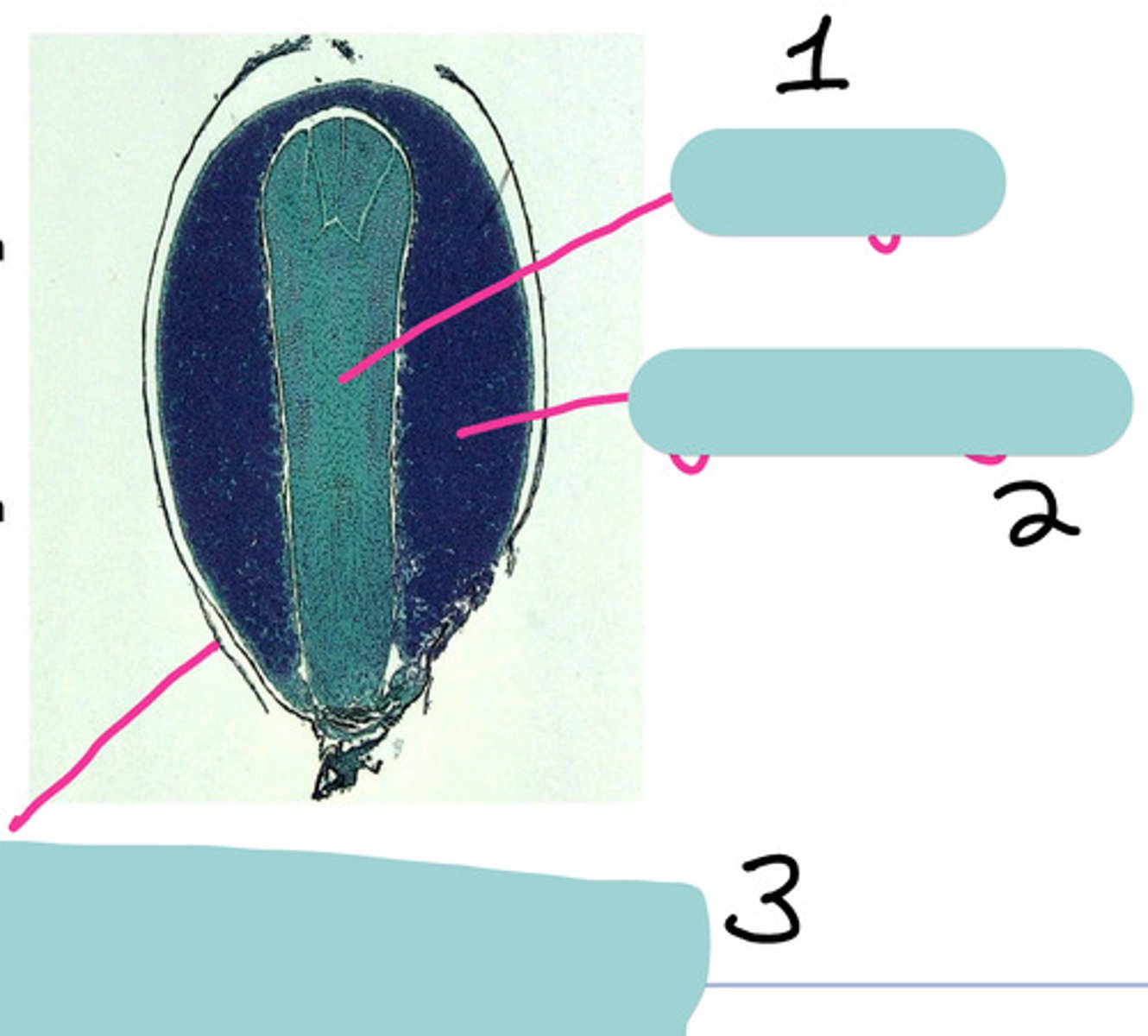
Previous sporophyte generation
3 - Identify the parts of the gymnosperm seed
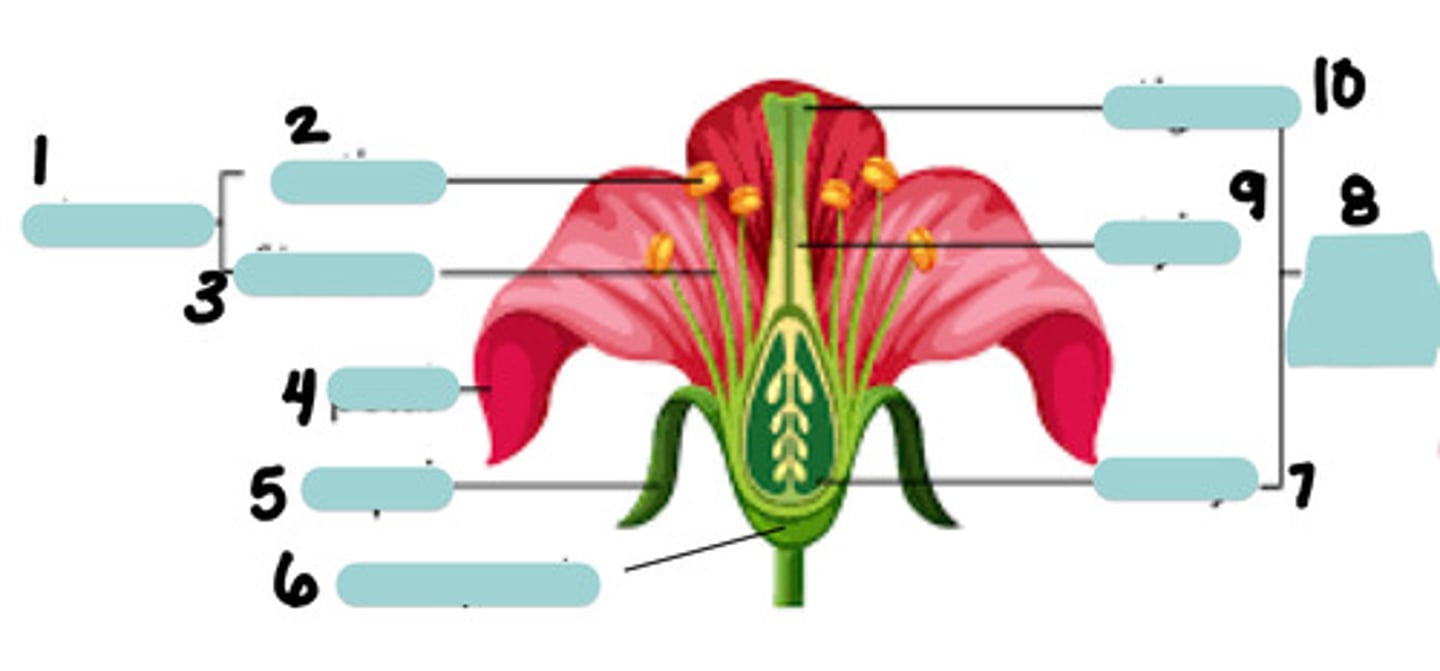
Stamen
1
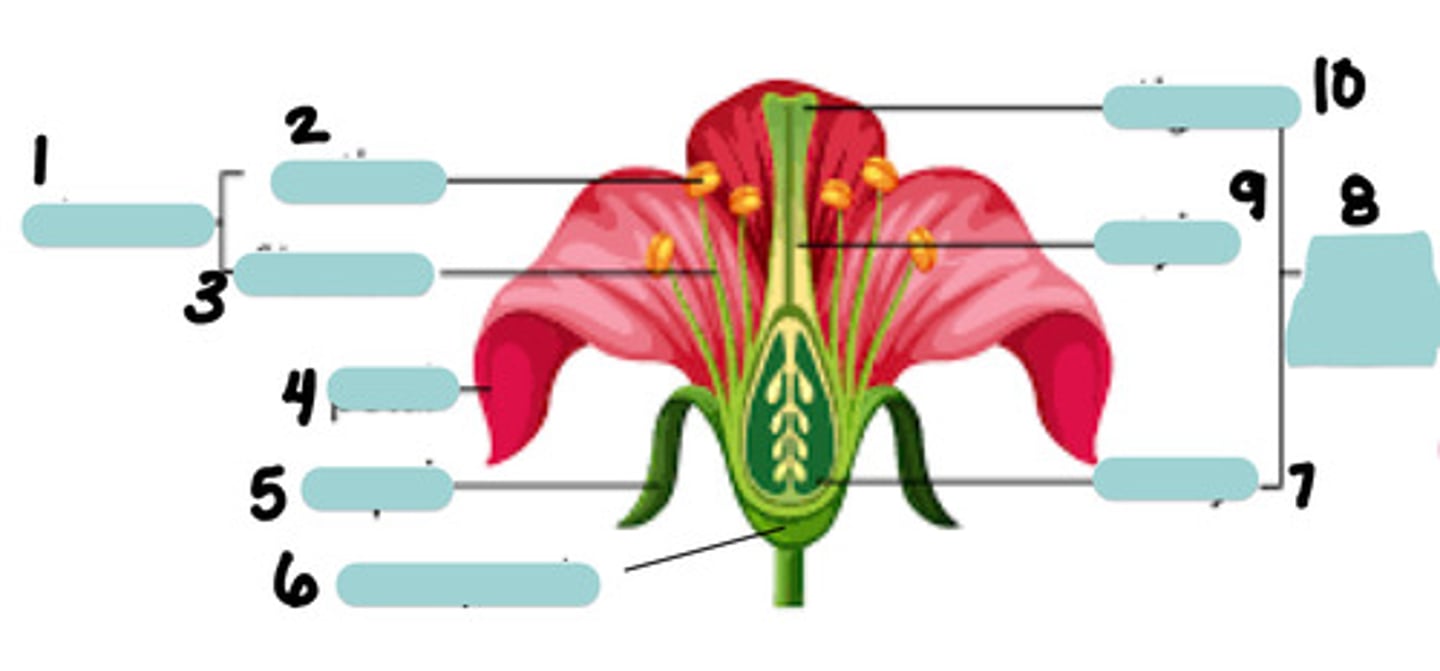
Anther
2
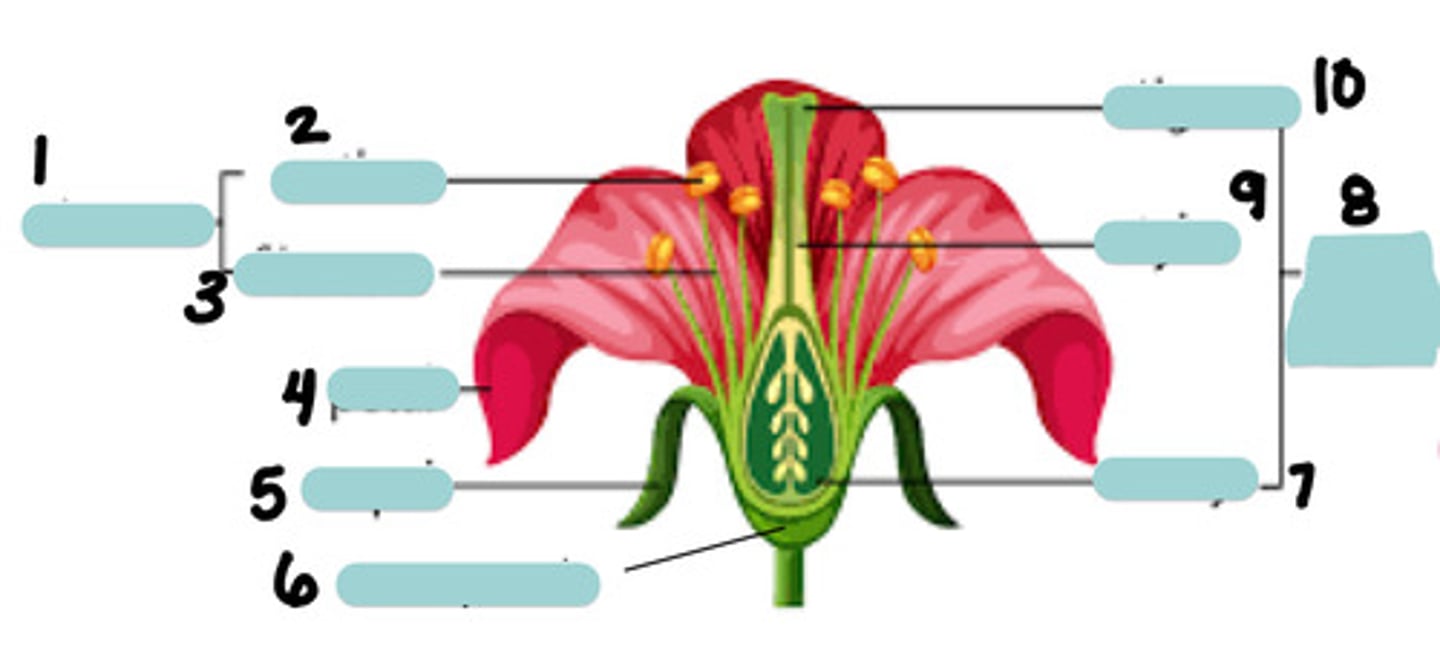
Filament
3
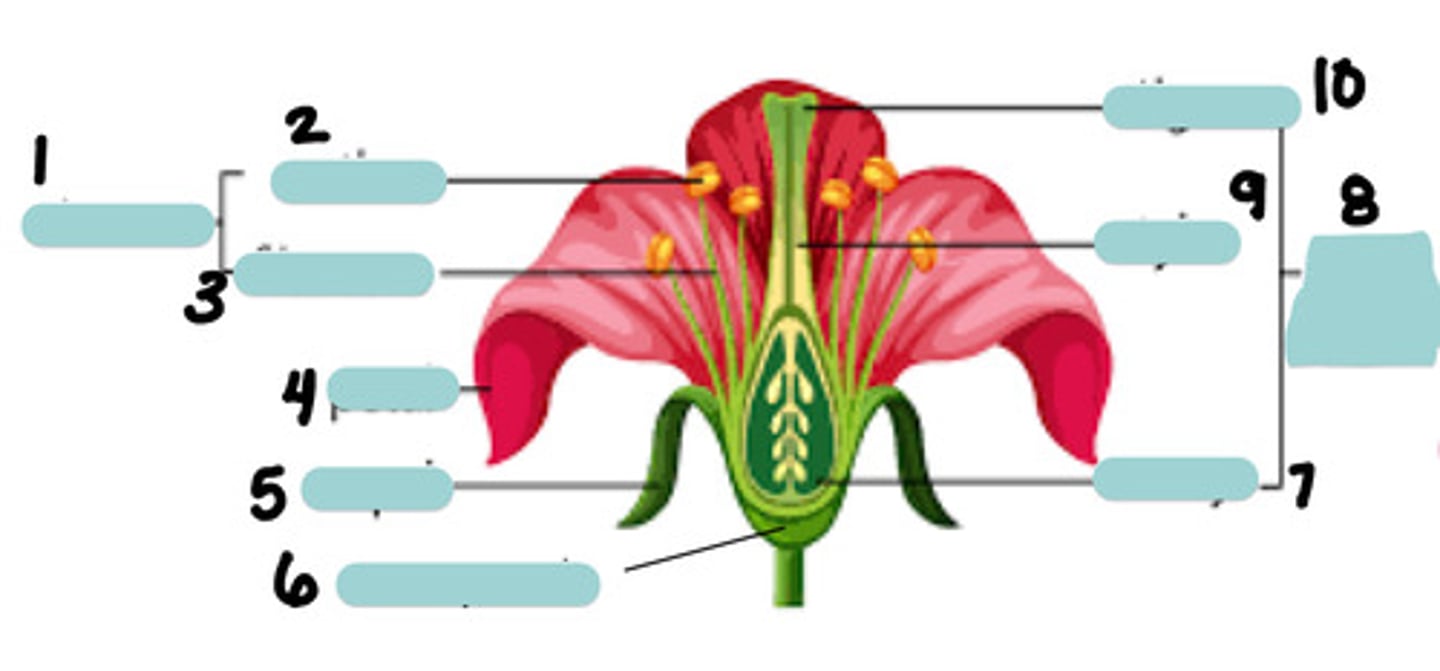
Petal
4
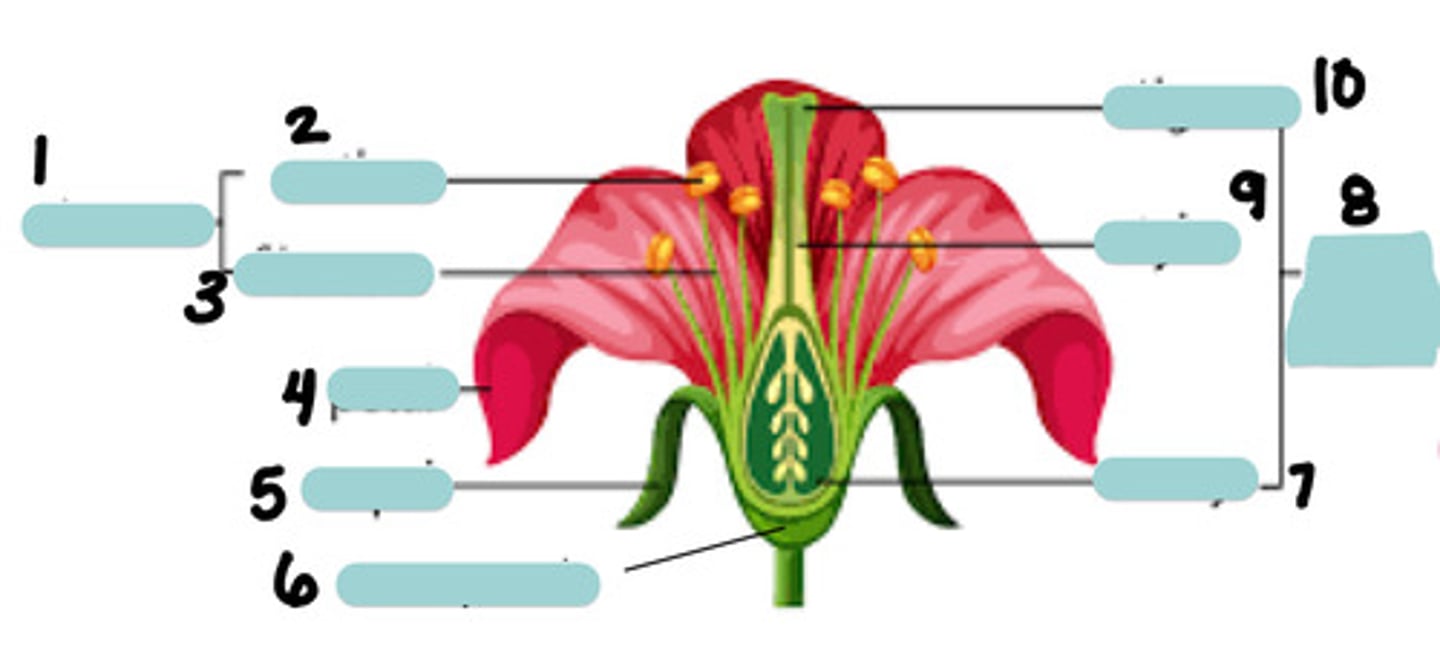
Sepal
5
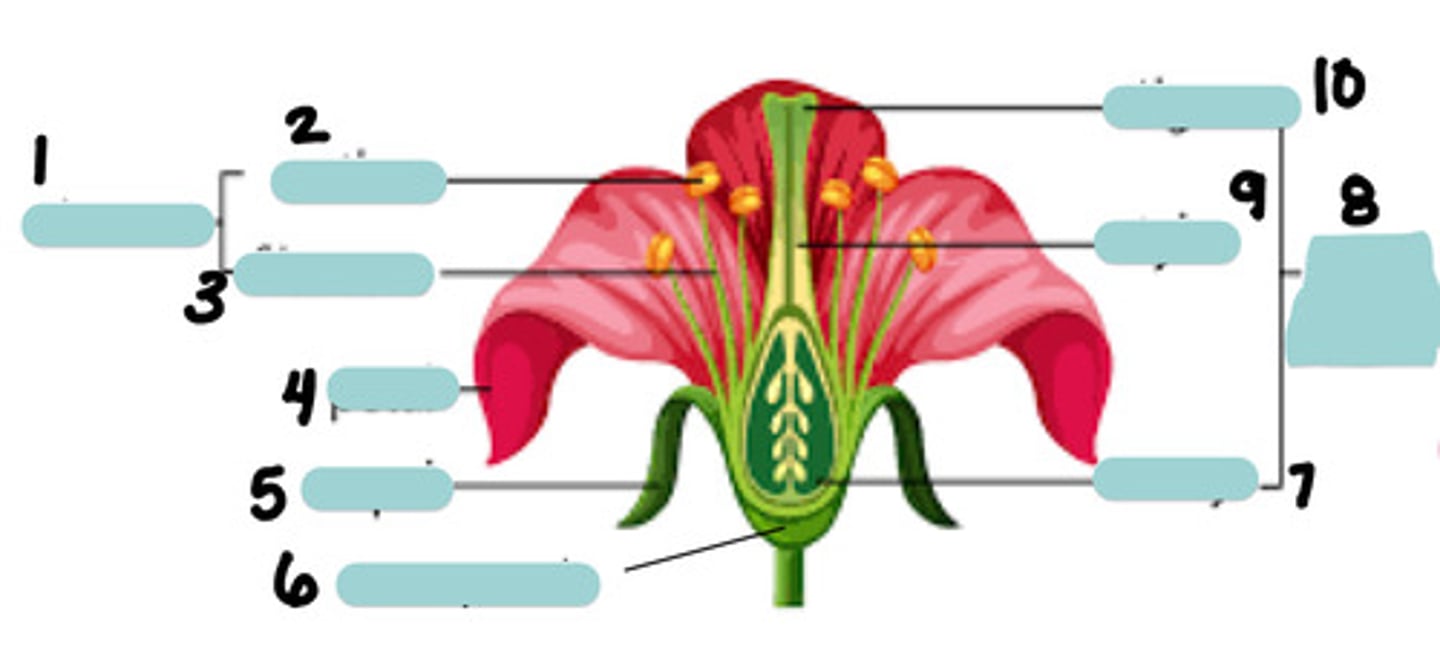
Receptacle
6
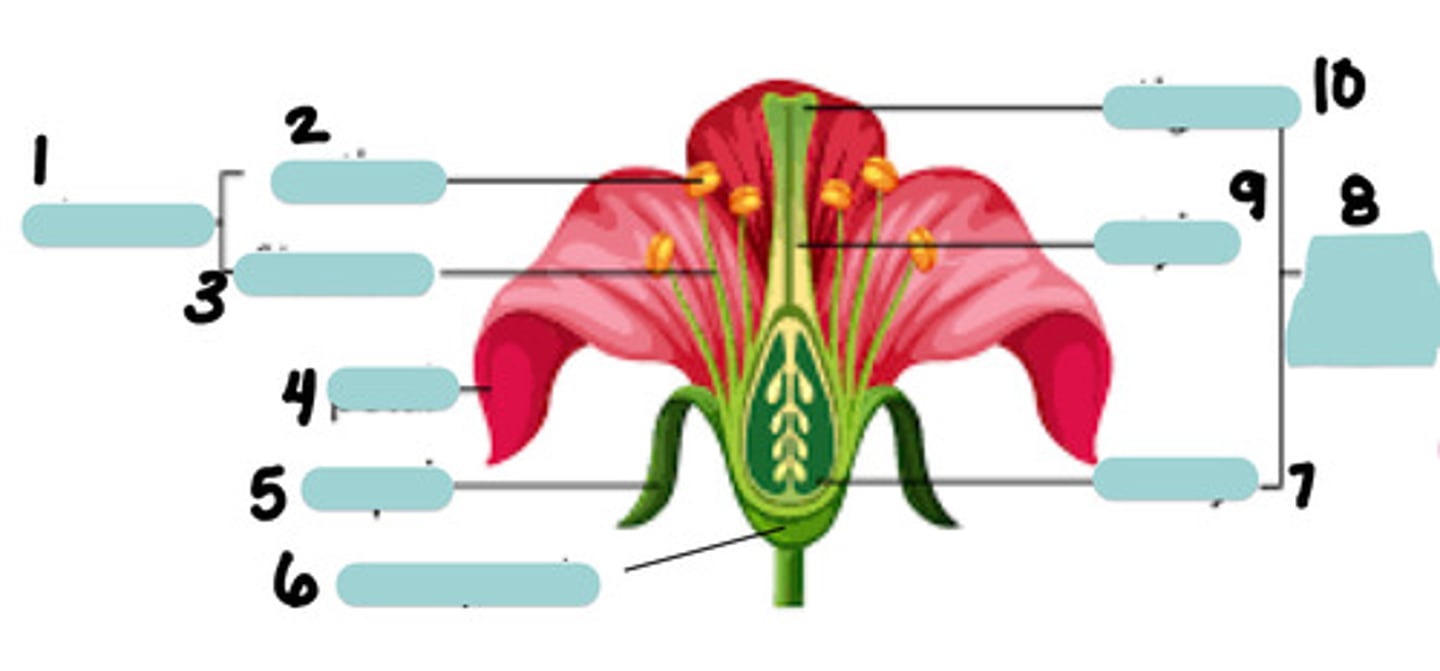
Ovary
7
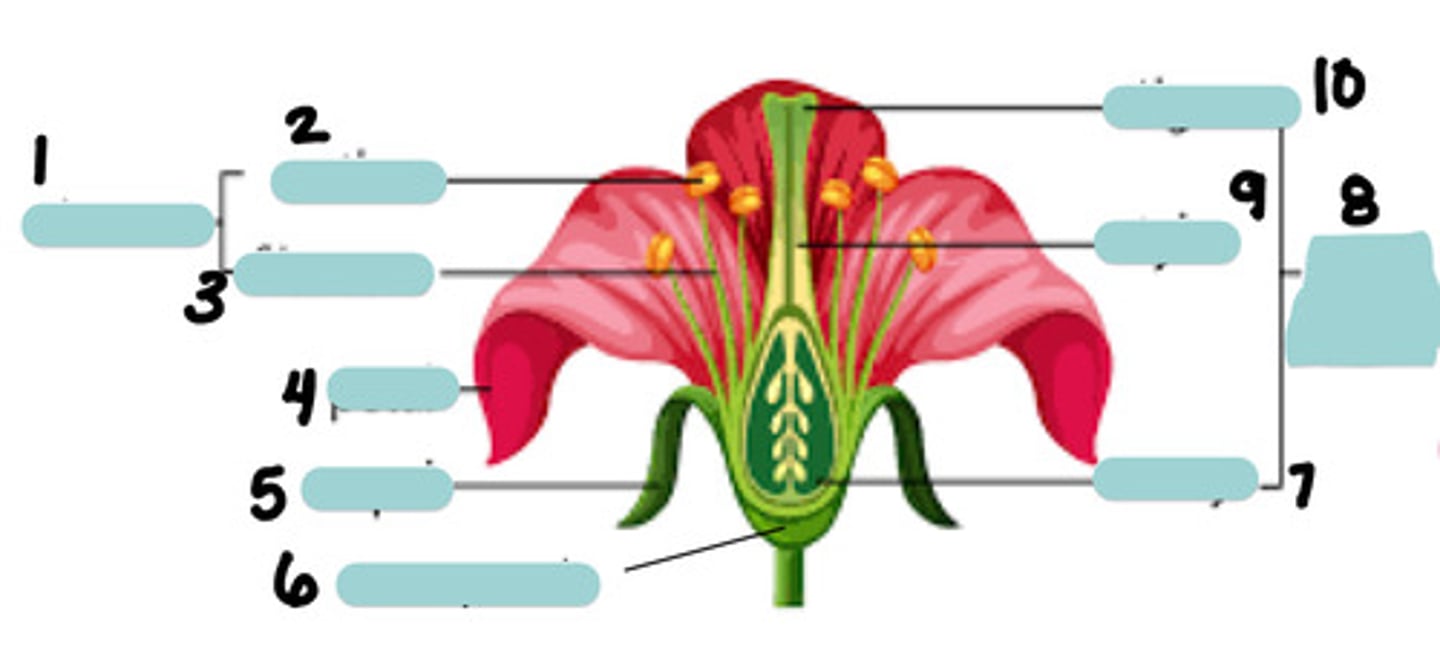
Pistil/carpel
8
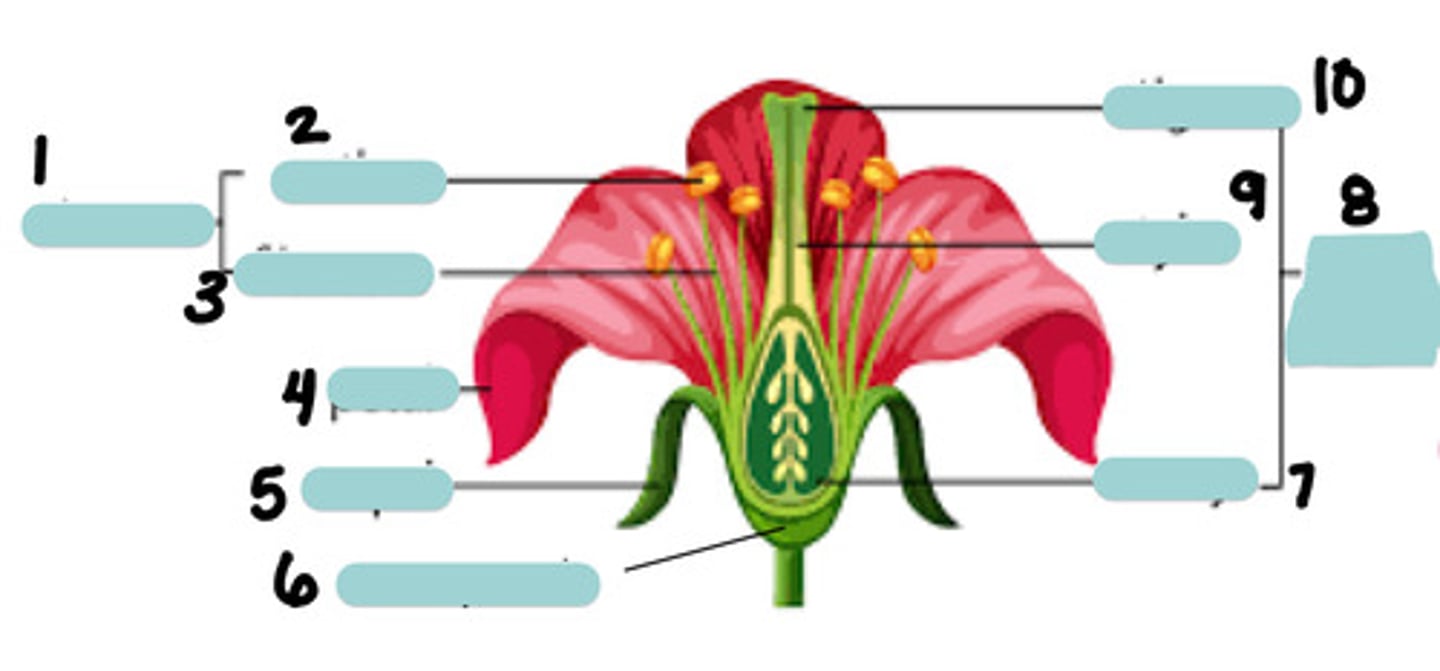
Style
9
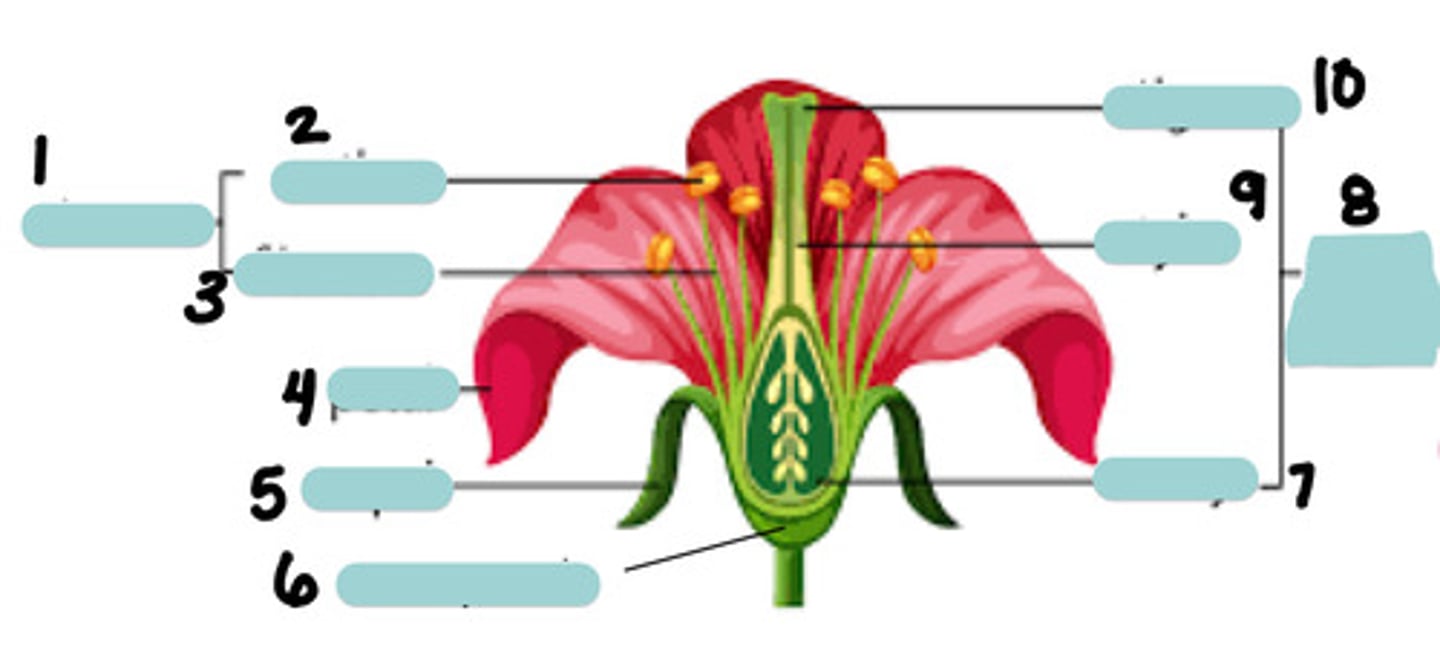
Stigma
10
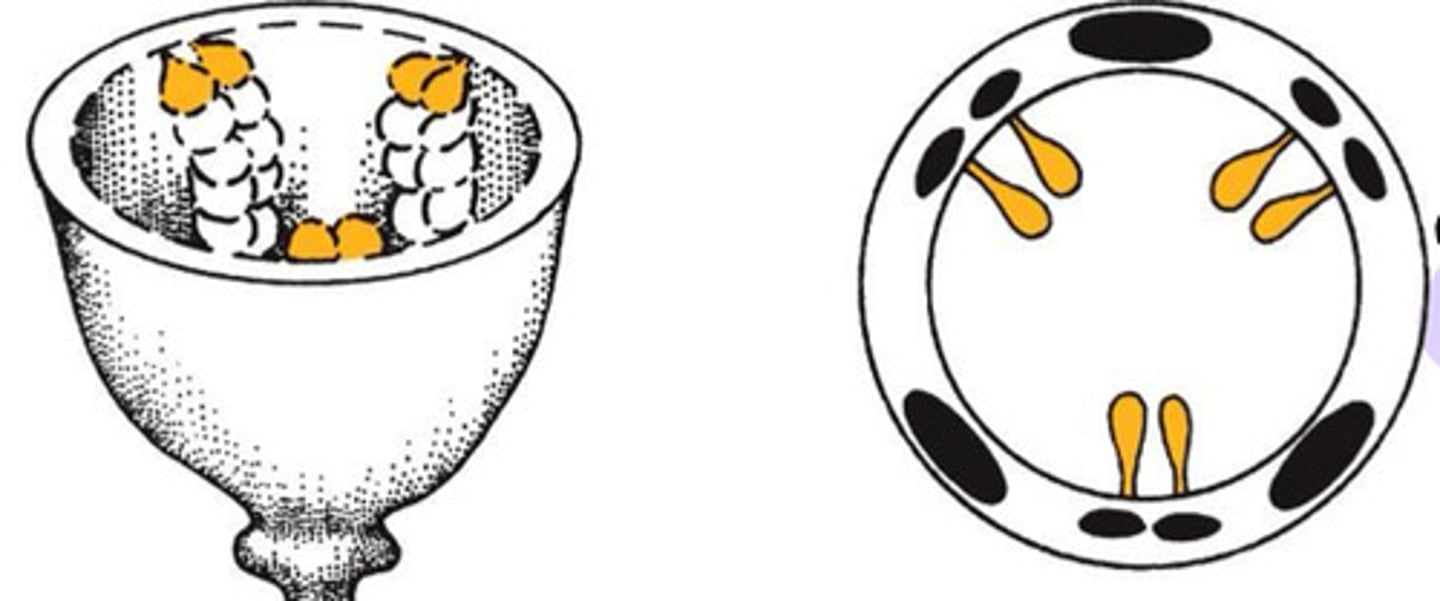
Parietal
Placentation type
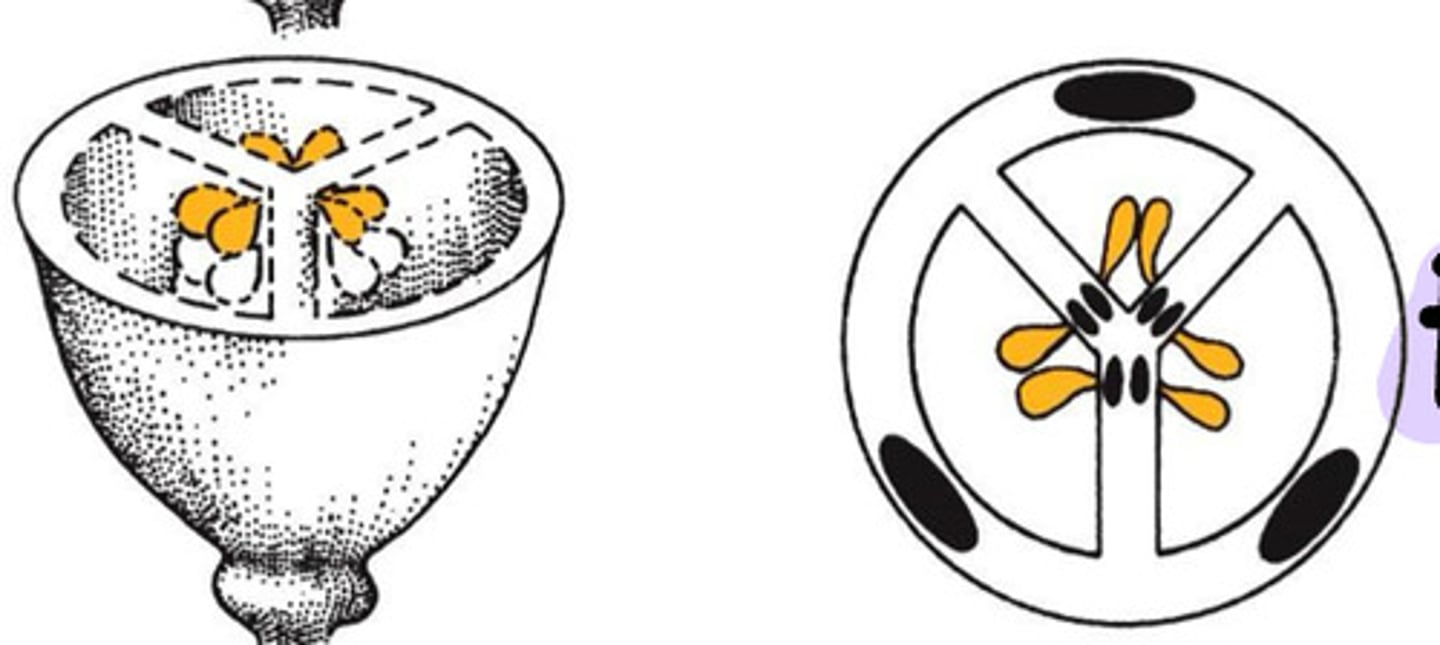
Axile
Placentation type
Free central
Placentation type