Working memory
 Call Kai
 Learn
Learn Practice Test
 Spaced Repetition
 Match
Match Flashcards
 Knowt Play
1/54

Earn XP
Description and Tags
learn new cards weekly, all MCAT FL, UWorld, AAMC Qs corrections
Name | Mastery | Learn | Test | Matching | Spaced | Call with Kai |
|---|
No analytics yet
Send a link to your students to track their progress
55 Terms
Mechanical Advantage (MA)
Fout/Fin = di/do
ducts
some secretory cells form hollow tubes ducts for their secretions to flow into.
exocrine glands
glands whose secretions release onto exterio body surface ex skin or inner lung surface
ex. tears secreted on eyes surface from lacrimal glands
bile secreted from liver [exocrine gland] into bile duct → released into duodenum [dig tract communicate w exterior of body]
![<p>glands whose secretions release onto exterio body surface ex skin or inner lung surface</p><p>ex. tears secreted on eyes surface from lacrimal glands</p><p>bile secreted from liver [exocrine gland] into bile duct → released into duodenum [dig tract communicate w exterior of body]</p>](https://assets.knowt.com/user-attachments/5023a560-2e17-4616-8643-2eb2ef9271d8.png)
fermentatoni
lactate DH catalyze pyruvate→[H]→lactate
electrons needed provided by [O] of NADH→ NAD+
occurs in absence of mitochondria
![<p>lactate DH catalyze pyruvate→[H]→lactate</p><p>electrons needed provided by [O] of NADH→ NAD+</p><p>occurs in absence of mitochondria</p>](https://assets.knowt.com/user-attachments/e8cddb43-92e6-413a-9cef-834fee1b601d.png)
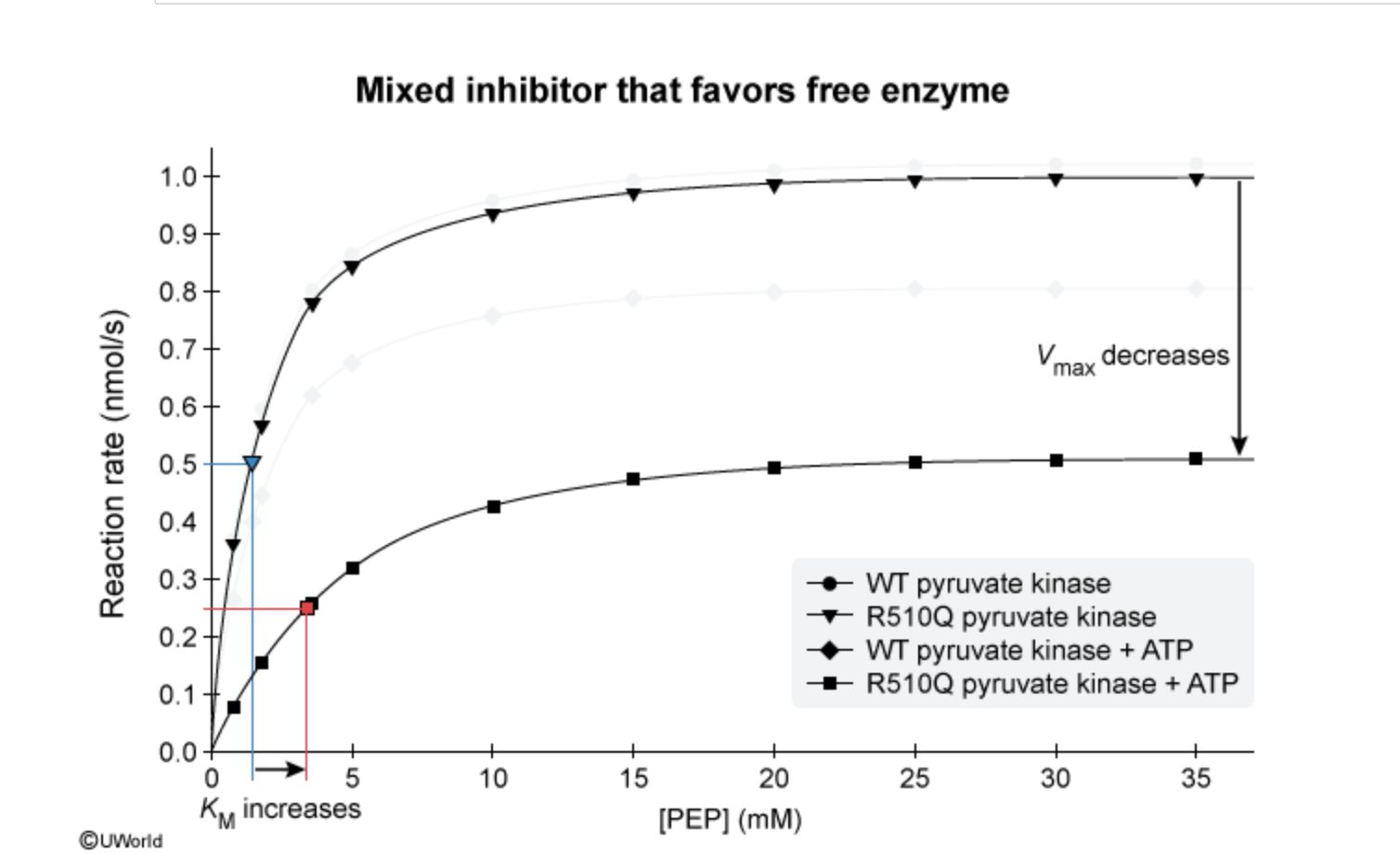
mixed inhibitors
bind free enzymes AND ES complex → decrease Vmax
effects on Km dep on affinity for free enzymes or ES complexes:
greater than affinity free enzymes: like comp inhibitors → increase Km
greater affinity for ES complex: like uncomp inhibitors → Km
=affinity: noncomp inhibition and no effect Km
At high substrate concentrations ([S] >> KM), the active sites of enzymes are completely saturated with substrate, and adding more substrate does not increase the reaction rate. Adding more enzyme increases the number of active sites, and therefore increases the reaction velocity. The maximum velocity at any enzyme concentration is calculated as Vmax = kcat × [Etot].
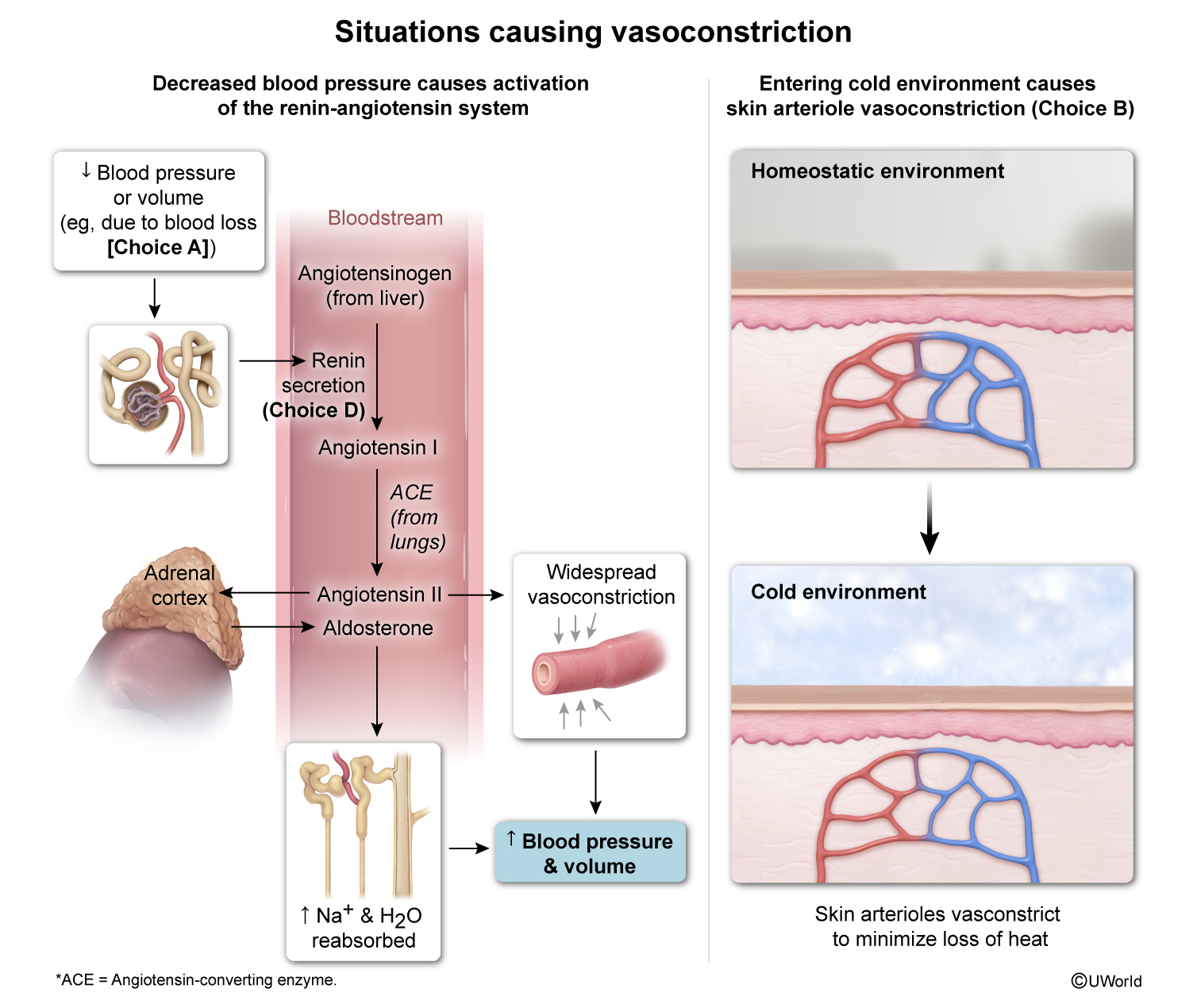
When blood pressure is low, vasoconstriction reduces blood vessel diameter, causing an increase in blood pressure to restore homeostasis.
Pressure =
Force/Area = N/m2
sociology major theoretical approaches
macro-soc: F, CT
micro-soc: SC, SI, SE
macro- or micro-soc: Feminist
functionalism
structures of society work together to maintain order + stability (ie societal balance)
macrosoc
conflict theory
macrosoc
tension arises due to unequal distribution of resources (wealth, power)
symbolic interactionism
societies make ideas + interpret meaning of reality based on social exchange
microsoc
social constructionism
social interactions establish "reality" through the creation of social constructs (eg, race), which have meaning only because individuals in society have agreed on that meaning.
microsoc
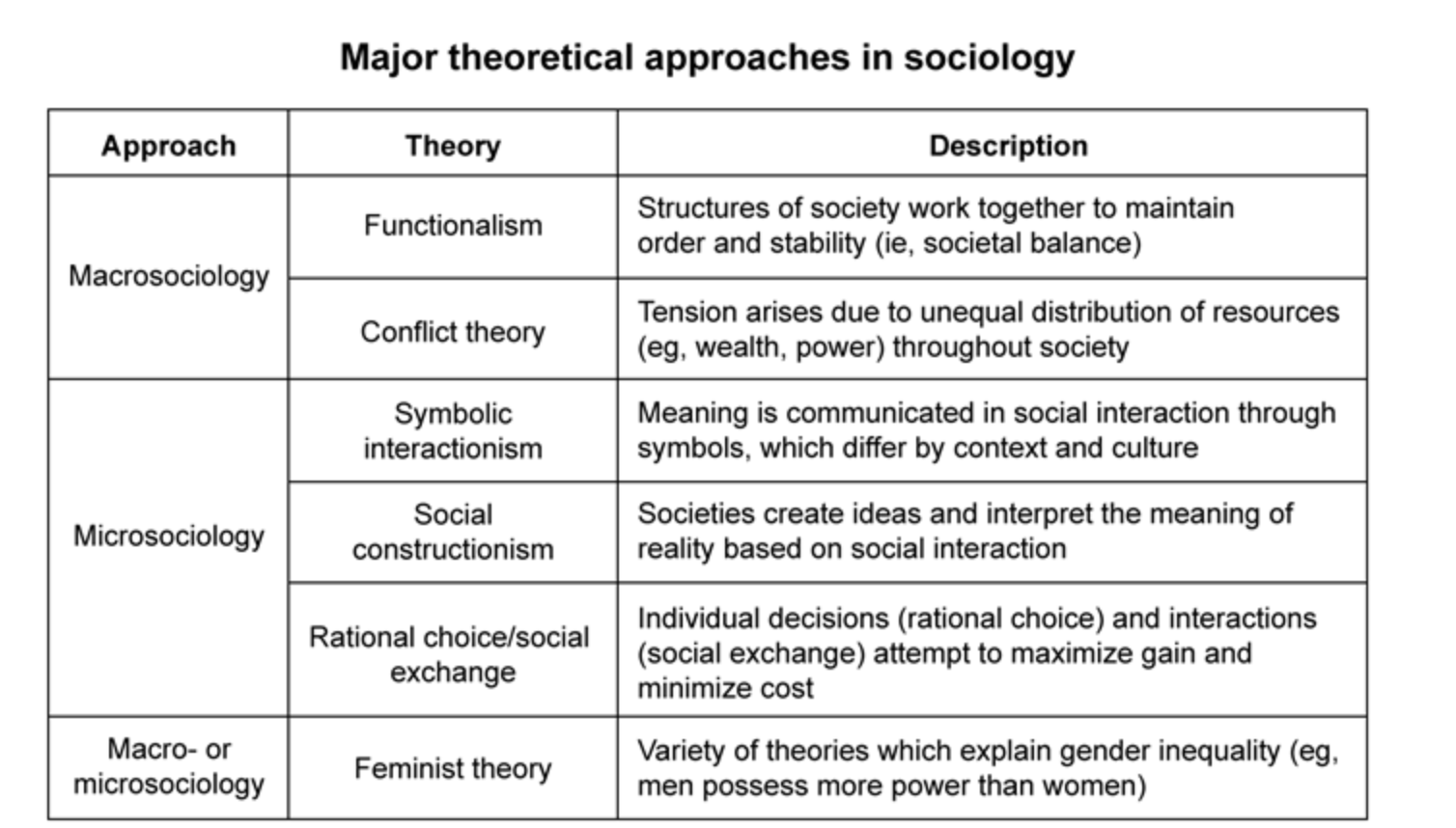
rational choice/social exchange
indiv decisions (rational choice) + interactions (social exchange) attempt to maximize gain + minimize cost
microsoc
feminist theory
variety of theories explain gender inequality (ex men possess more power than women)
macro- or micro-soc
Schizophrenia
+ symptoms (excess) hallucinations, delusions, disorganized speech/ehavior
- symptoms (apathy, emotional flattening, social withdrawal, lack speech, anhedonia(no feel pleasure)
neuroleptic or atypical antipsychotics → generally effective in ↓+symptoms
neuroleptics risk side effects (sedation, psychomotor disturbances).
specific phobia
excessive irrational fear of specific situations ex flying or animal/objects ex spiders
personality disorders
deviations from expected behaviors → distress, impaired fxn
stable over time and across environments and cause significant distress or impairment of functioning.
cluster A
odd/eccentric
paranoid
schizoid
schizotypical
Parkinson disease
Dopamine- movement, reward, pleasure, motivation, emotion regulation.
loss of dopaminergic neurons in substantia nigra → motor symptoms ex resting tremors (shaky hands), muscle rigidity, and shuffling gait.
cluster B personality disorders
BHAND
borderline
histrionic
antisocial
narcissistic
dramatic/errational
cluster C (aaliyan’s cluster)
AADO
anxious
avoidant
dependent
obsessive-compulsive
genetic code is a degen
1+ codon code for same amino acid bc 3rd position of mRNA codon and tRNA anticodon undergo nontraditional base pairingc→ 1 tRNA mol bind different codons.
Kinases
catalyze transfer of phosphate groups from ATP or GTP to proteins
phosphatases
catalyze removal of phosphate groups via hydrolysis.
Eukaryotes
80S ribosomes = 60S large subunit and 40S small subunit.
Prokaryotes .
70S ribosomes = 50S large subunit and 30S small subunit
lymph node
lymph filtration
pathogen destruction by phagocytic cells
immune re by lymphocytes
thymus
t cell maturation site
spleen
blood filtration
destroys pathogen and damaged RBCs by phagocytic cells
immune re by lymphocytes
loosely packed euchromatin
high histone acetylation
low DNA methylation
more accesible to transcription machinery → gene expression
heterochromatin
highly condensed/packed DNA
high DNA methylation
low histone acetylation
odds ratio
OR = 1: no difference between groups.
OR > 1: the event is more likely in the first group.
OR < 1: the event is less likely in the first group. narrower CI means a more precise estimate; a wider CI means less precision.
Confidence Intervals
95% CI includes 1.0→ not statistically significant for odds ratio
1.0 = “no effect”
CI does not include 1.0→ statistically significant
MHC I
expressed on all nucleated cells
present normal “self” antigens
cells infected by intracellular pathogens present foreign antigens on MHC I → marks infected cell for destruction
MHC II
expressed only on surface of antigen-presenting cells (macrophage, dendritic cells, B cells)
antigen presentation w MHC II needed to active T cells
epitope
part of antigen mol that antibody attaches to
MHC
collection genes coding for glycoproteins expressed on surface of all nucleated cells.
CTLs or cytotoxic T lymphocytes bind
foreign antigens presented by cell surface antigen-presenting proteins called MHC proteins. upon binding foreign antigens → CTLs release cytotoxins that induce apoptosis in infected cells.
clonal selection
process where B or T cell clones responsive to antigen are stimulated to replicate and greatly increase in number in contrast to non-responsive B or T cells, which do not increase number.
clonal selection requires
A variety of B and T cell clones, each consisting of one or a few cells with the same genotype but with slight variations in antigen receptors. This variation increases the likelihood that one or more of the clones will be able to respond to a specific pathogen.
Antigen receptors for a specific pathogen. At least one of the B or T cells must possess a receptor that recognizes (ie, binds) an antigen from the pathogen.
Replication of antigen-responsive clones. Antigen recognition stimulates replication of the responsive clone(s). Because these responsive clones are stimulated to replicate but clones unresponsive to the pathogen are not, the responsive clones represent a much greater proportion of the total B or T cell population.
triacylglycerols
lipid class = energy storage lipids.
catabolized to make ATP power many cellular processes.
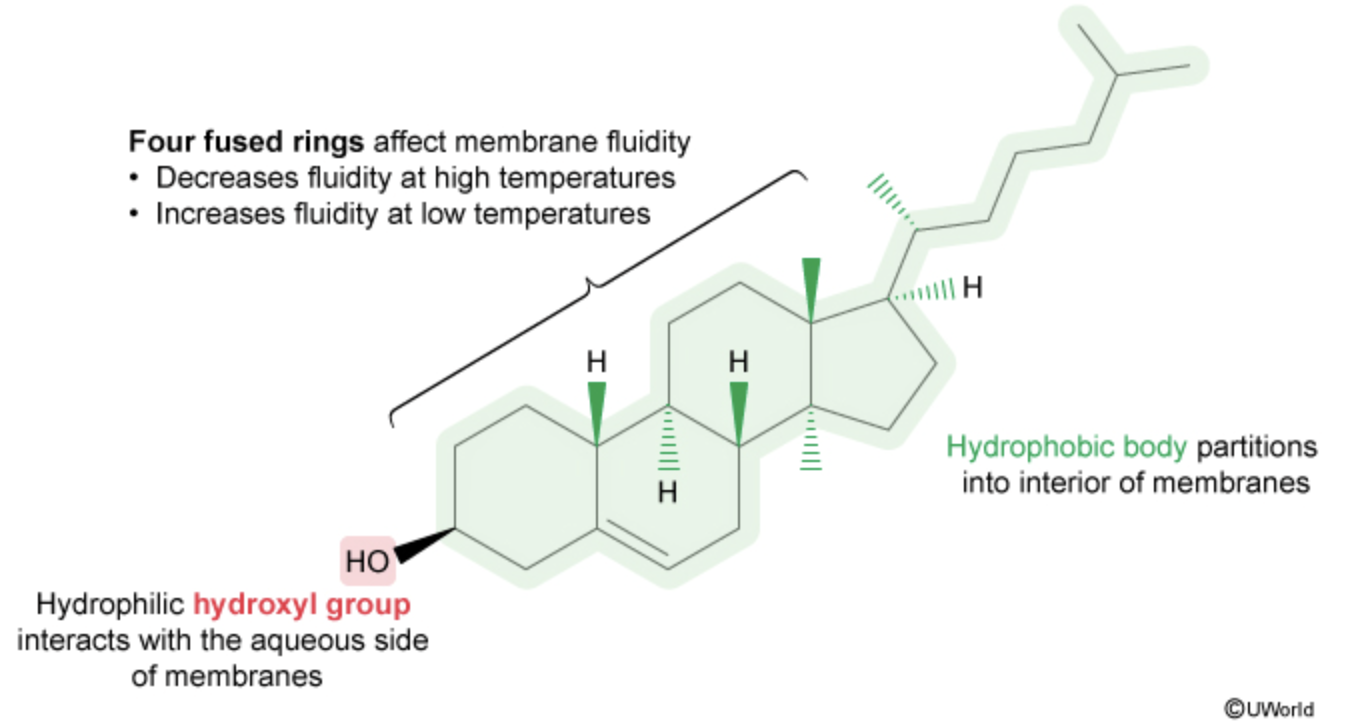
cholesterol
hydrophilic hydroxyl grp attached to 4 fused rings
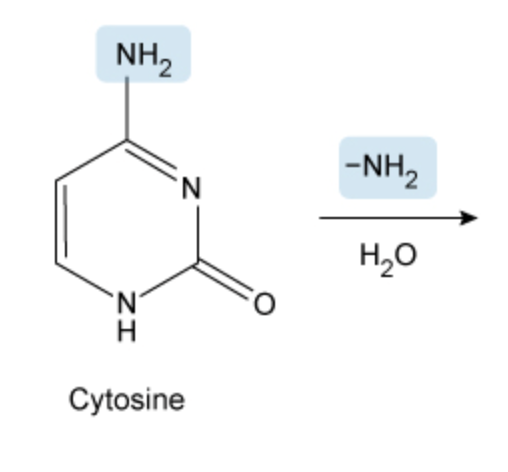
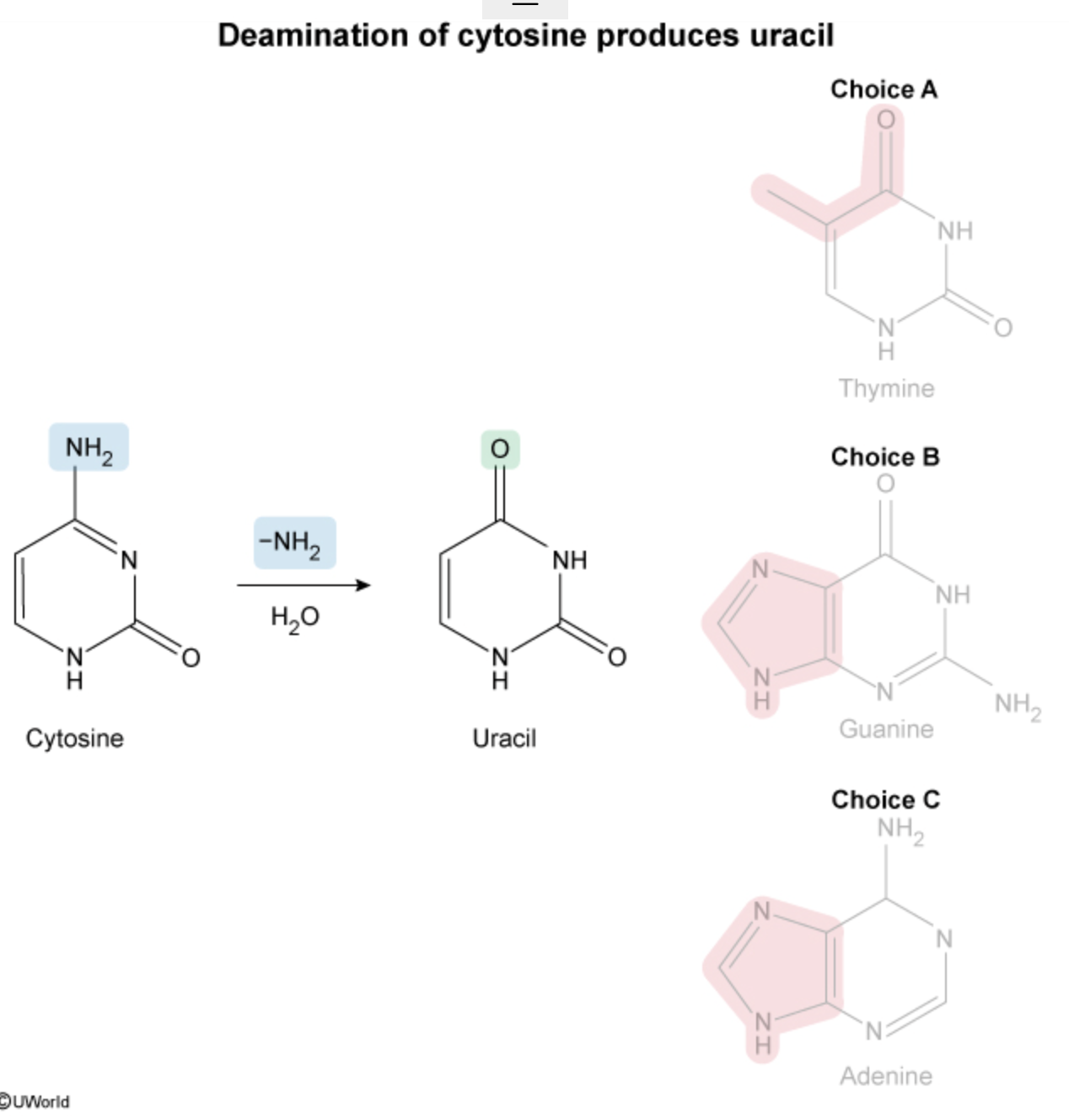
deamination of cytosine produces ….
Uracil (carbonyl)
esterification of cholesterol
removes hydrophilic -OH group and replaces it with hydrophobic acyl tail.
amphipathic cholesterol → hydrophobic cholesteryl ester → movement of ester from membrane surface to hydrophobic core of lipoprotein particle.
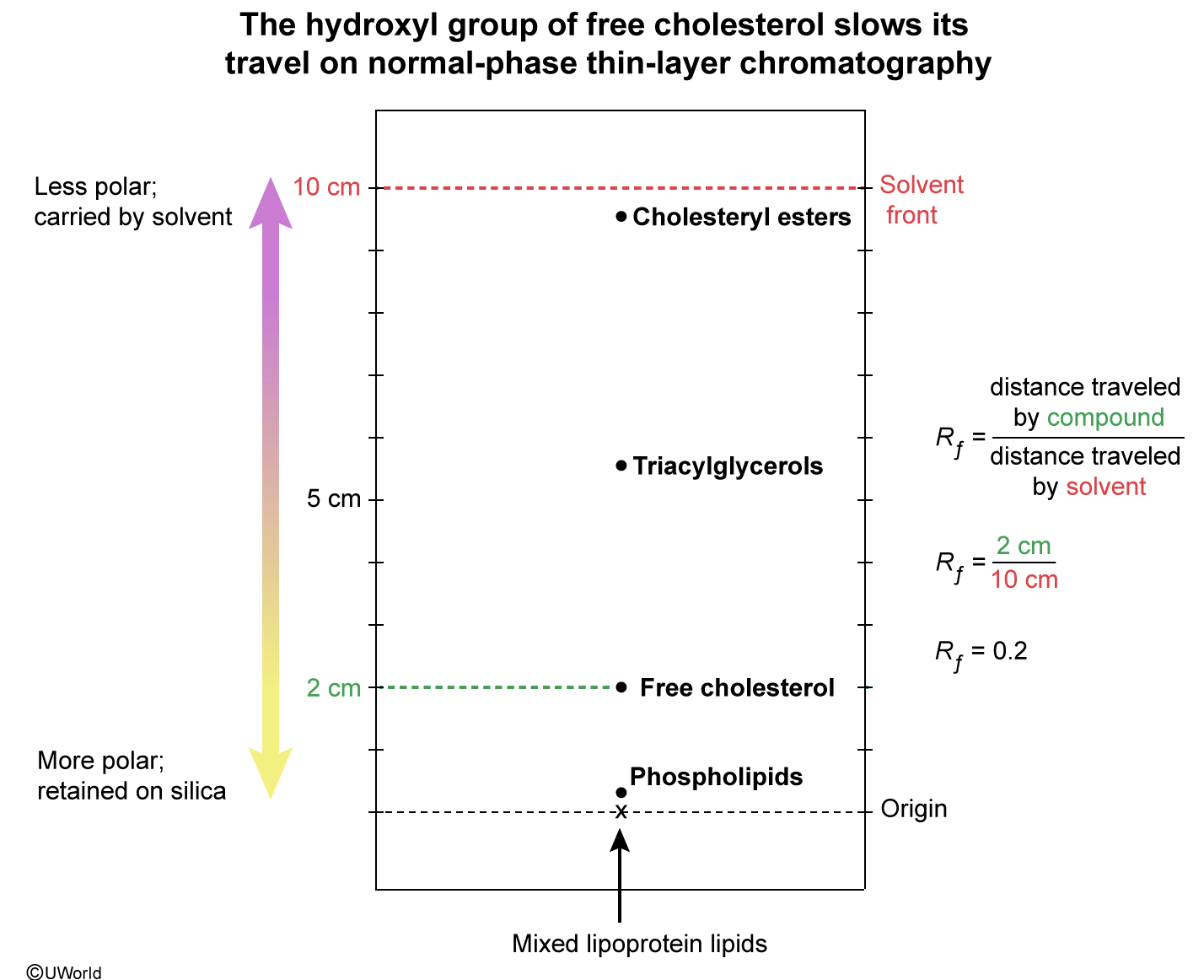
Normal-phase thin-layer chromatography
separates molecules based on polarity.
Rf = distance compound/distance solvent
sationary = polar ex silica
mobile phase = mostly nonpolar ex hexanes, ethyl acetate
Base excision repair (BER)
DNA damage that does not distort the double helix.
Examples: Base oxidation, deamination, or alkylation.
Nucleotide excision repair (NER)
DNA damage that is extensive or bulky.
Example: Thymine dimers
The mismatch repair system (MMR) can be activated at any point during the cell cycle. (True or False)
False. The mismatch repair system can be activated only when a base pair mismatch is detected immediately after DNA replication.
DNA mismatch repair (MMR) enzymes must have [endonuclease/exonuclease] activity. (Choose one option)
DNA mismatch repair (MMR) enzymes must have endonuclease activity.

Only endonucleases can cleave phosphodiester bonds within an existing DNA strand.
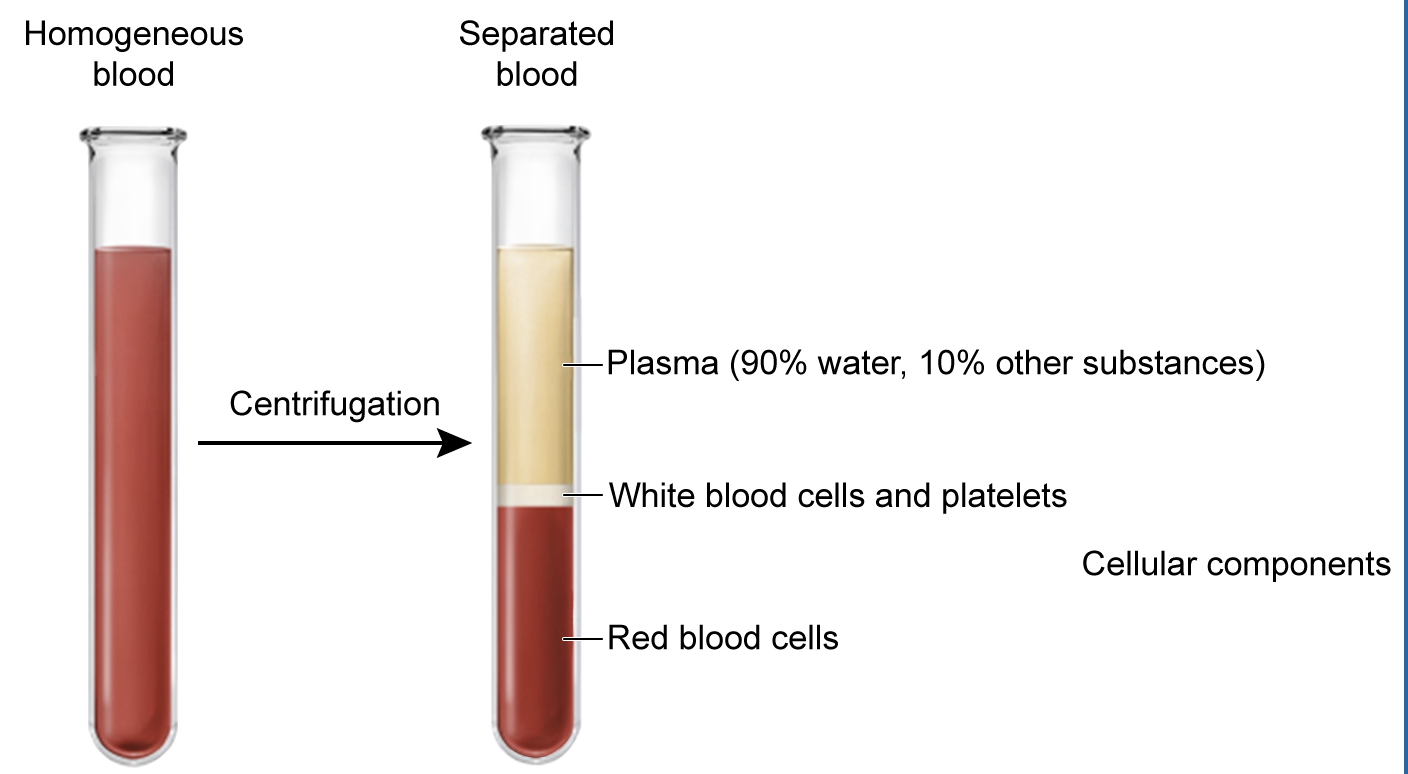
Plasma
is the liquid portion of blood. It is made up of water, electrolytes, gases, hormones, nutrients, metabolic waste, and PROTEINS.