Lecture 8: Developmental Psychology
 Call Kai
 Learn
Learn Practice Test
 Spaced Repetition
 Match
Match Flashcards
 Knowt Play
1/48

There's no tags or description
Looks like no tags are added yet.
Name | Mastery | Learn | Test | Matching | Spaced | Call with Kai |
|---|
No analytics yet
Send a link to your students to track their progress
49 Terms
What is the trajectory?
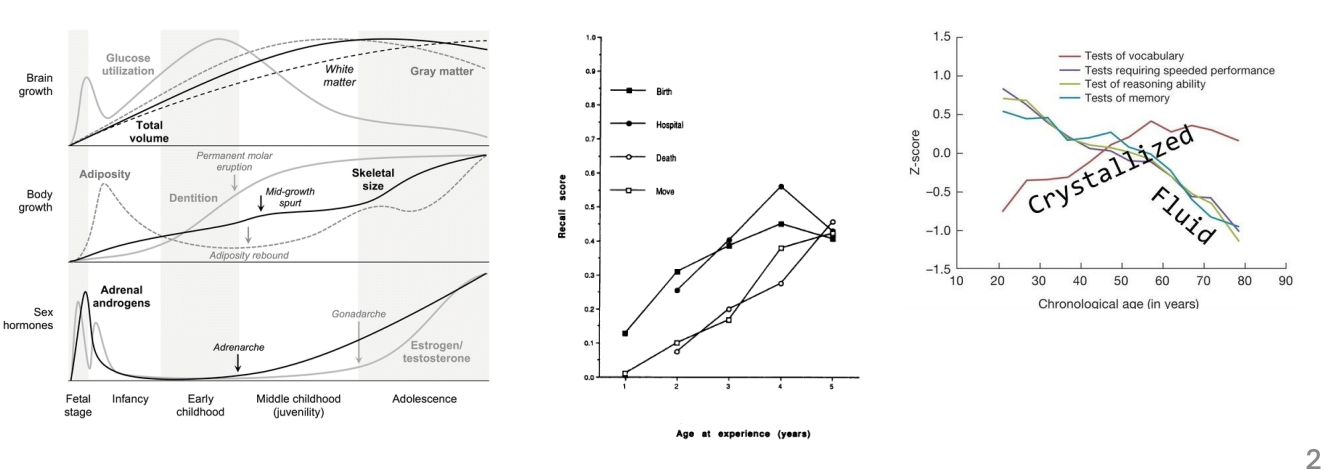
In members of the same species, traits tend to emerge or change (i.e. develop) in a characteristic way over time (i.e. a trajectory)
What are the stages?
three main stages
Childhood (~1 – 10 years): Between infancy and puberty
Adolescence (~11 – 17 years): Onset of puberty, prior to adulthood
Adulthood (18 years and beyond): Several substages
Early adulthood (18 – 40), Middle (40 – 65) and Late (65+)
To compare different groups, we have two main study designs
Design 1 – Cross-sectional
what is it
What is an issue with this design?
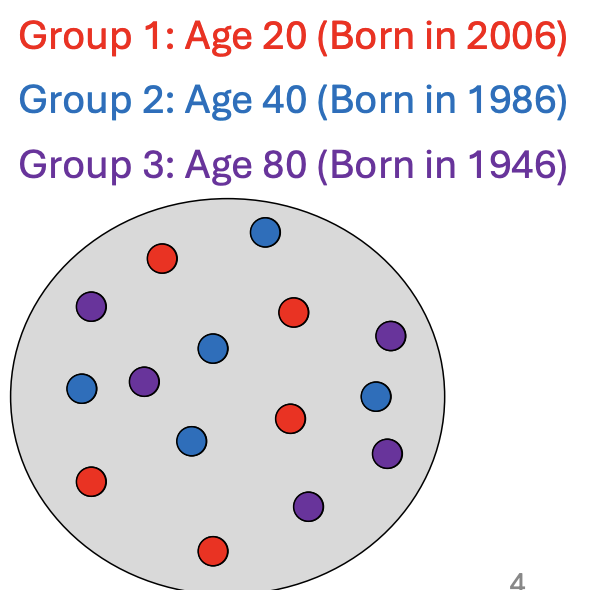
Observe individuals of different ages at the same time (i.e. 2026)
Concerns of cohort effects (is it age or cohort)
80yo person born in 1946 might have issues w/email
80yo person born in 1986 (same age, different generation) would have not
Issues with era (different people)
not an age thing for not understanding computer and making emails
Design 2 – Longitudinal
what is it
Two issues
What are they called?
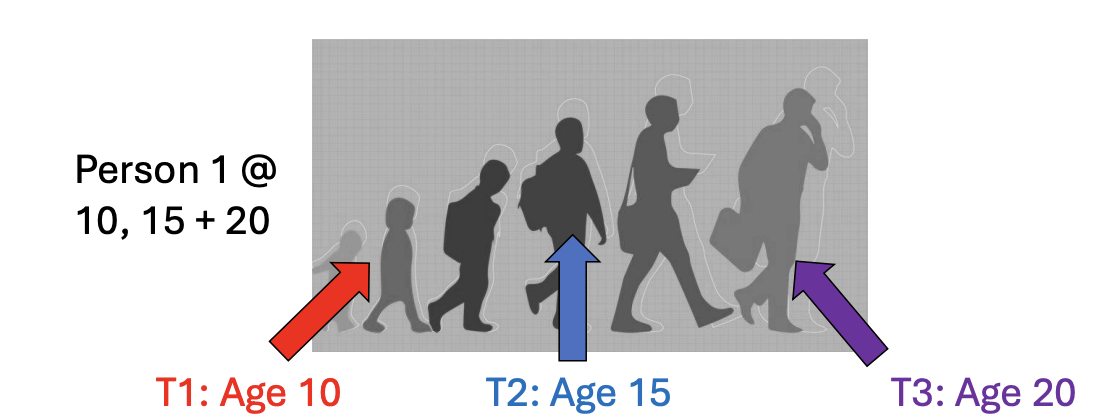
Observe the same people at different ages
Time-intensive with risk of attrition, often impractical
People are being lost during the experiment
Practice effects possible (tests @ T2 differ from T1)
e.g. similar tests = easier, not because the cognitive improvement
Be cautious of conclusions
In developmental psychology…
what relationships are we observing
Type of study
What can we not infer?
What is a risk of these studies
We are often observing relationships between behavior (variable 1), age (variable 2) and the environment (variable 3)
Most studies are correlational (as we cannot randomly assign age or environment)
This means we often cannot conclusively infer cause
e.g. bad childhood = bad parenting (correlational)
Studies should be interpreted with care
High risk of the post-hoc fallacy
Early developmental events
is it common events for all children?
Events are not always planned and may be random/accidental (e.g. illness, stress, injury)
you get some traits before you were born
Prenatal events
what does maternal cortisol cause in the woman
What does maternal immune activation increase what risks
What does Valproic acid exposure associated with
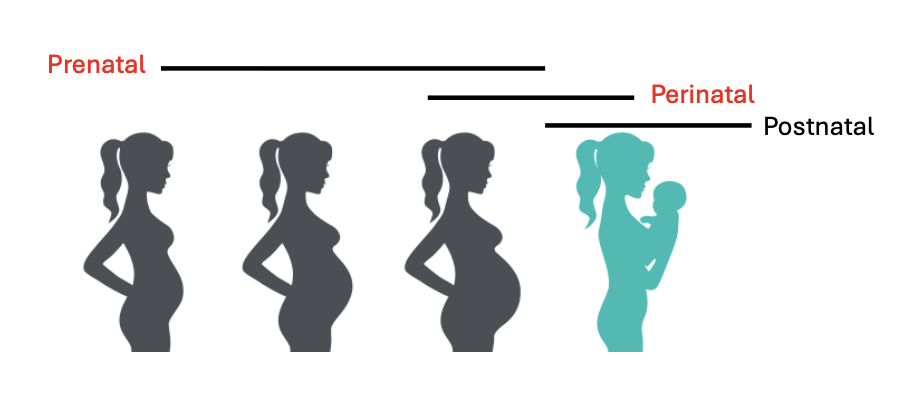
Maternal cortisol levels are associated with altered cognition, emotion and structure of the brain
Maternal immune activation (i.e. w/illness) is associated with higher risk for schizophrenia and autism
Valproic acid exposure is associated with autism
This is used for migrations (but bad if you are pregnant)
Teratogens (alcohol and fetal alcohol syndrome)
Postnatal events
type of events (list some)
what is being focused in these events
What two factors affect traits
Many types: Maternal care, environmental enrichment (play, social interaction, schooling, marital stability) and nutrition all matter
Majority of developmental psychology focuses on postnatal events
Both biological and environmental factors will determine the development of traits
Self-concept
what is it
What is people aware of at…
Age 2
Age 4
Age 6
Collective knowledge an individual has of their characteristics, (e.g. personality traits, physical features, abilities, values, goals and role)
By 2, awareness of sex and gender begins
By 4, awareness of physical features (height, weight, looks)
By 6, identification with attributes (“I am a nice person”) (start of social comparison)
Development of Memory
when do we start having memories
Before this age, what is those not memories called
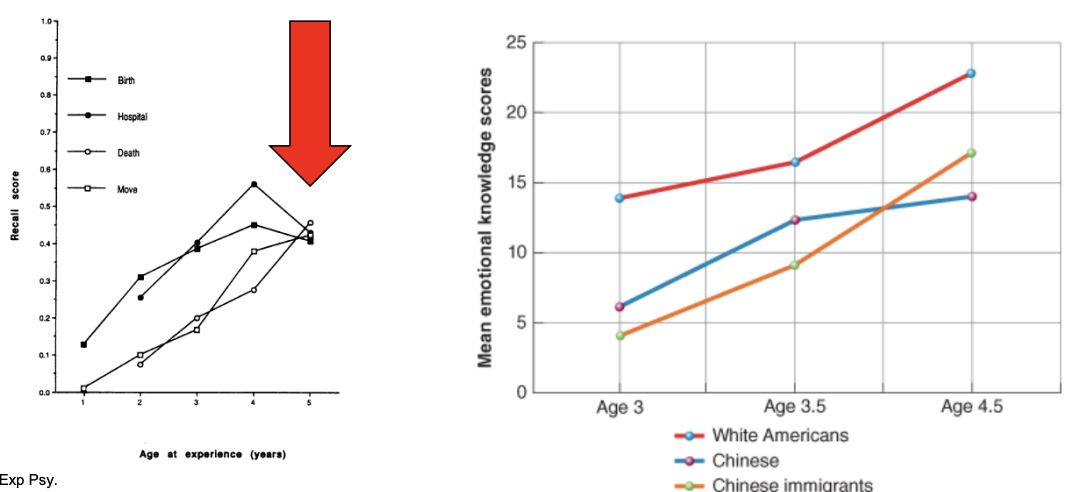
Rare to have memories before 3 – 5 years of age (childhood amnesia), evidence of interaction w/culture
Not experimental, no causal conclusions
Childhood Amnesia – Theories
two main theories
Development of language
Language may reinforce memory encoding
Language proficiency at ~3 years (later in some disorders)
Cultural differences in verbal interactions with children may explain cultural differences in memory (environmental effect)
Development of the brain
Prefrontal cortex (~25 years)
Hippocampus (might generate new cells; cell turnover may be too high for memory storage when young)
hippocampus more stable
Theories of Child Development
three main theories
Piaget’s Stages of Cognitive Development
Vygotsky’s Sociocultural Theory
Erikson’s Stages of Psychosocial Development
Kohlberg’s Theory of Morality Development
Piaget’s Stages of Development
four stages
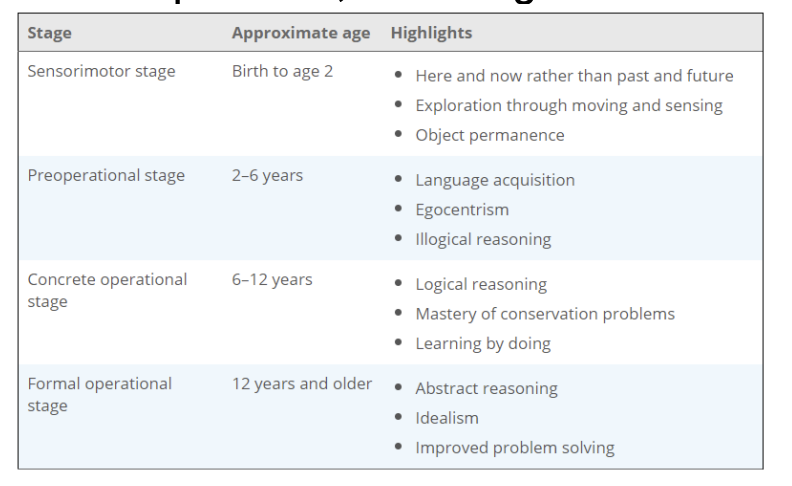
Discrete stages; unidirectional progress is made through independent exploration; domain-general
focus on cognition
Stages
Sensorimotor stage
Proportional stage
Concrete operational stage
Formal operational stage
SM stage
the sensorimotor stage
age
what are they focused on
What can they think about
What cannot they think about
From birth until 2 years
Concentration on the “here and now”
Can only process physical objects that are present, cannot represent objects which are not present (i.e. cannot form mental representations)
Children originally thought to lack object permanence, but more recent evidence suggests confound of motor demands
They don’t know where to perceive where it might be
Peak a boo
PO Stage
Proportional stage
age
What can they do now
What do they fail to understand
What do they appreciate in others
2 to 6 years
Can create mental representations, but lack the ability to do mental operations/transformations on them
e.g. an imagine a ball not present, but cannot imagine that ball doing anything special
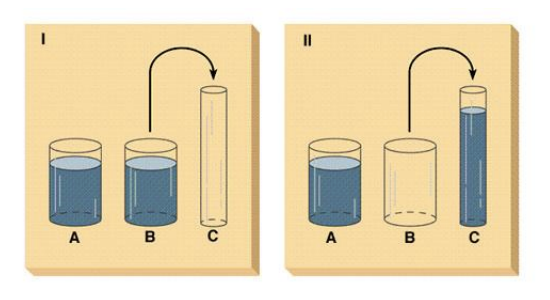
Children at this stage fail to understand the principles of conservation
Children begin to appreciate the mental states of others (Theory of mind)
PO stage – Conservation Failure
during SM stage
During PO stage
Children in the PO stage often incorrectly assume that water in C > water in A or water in B
Children in subsequent stages often correctly understand that water in C = water in A = water in B
They see the movement of water between the containers
Theory of Mind (ToM)
what is it
what does it play a role in our lives?
When does it start (which stage)
Testing ToM in children with what test?
The ability to take on other people’s perspectives
Plays a role in our social interactions and moral judgments
Evident in the PO stage but continues to develop throughout life
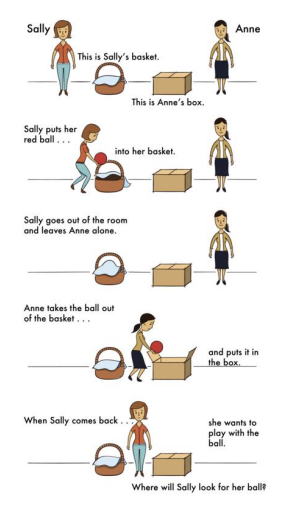
One way of testing for a ToM in children is the Sally-Anne Test
ToM and the Sally-Anne Test
What is false belief
Who (what type of people; what disorder) will have issues understanding this if they already passed the PO stage?
What are some concerns about this test
Solving this problem involves understanding Sally’s perspective (she holds a false belief)
Children with disabilities – such as autism – may perform poorly
Poor social interactions
However, there are concerns that language processing contributes to test performance
ToM in Adults
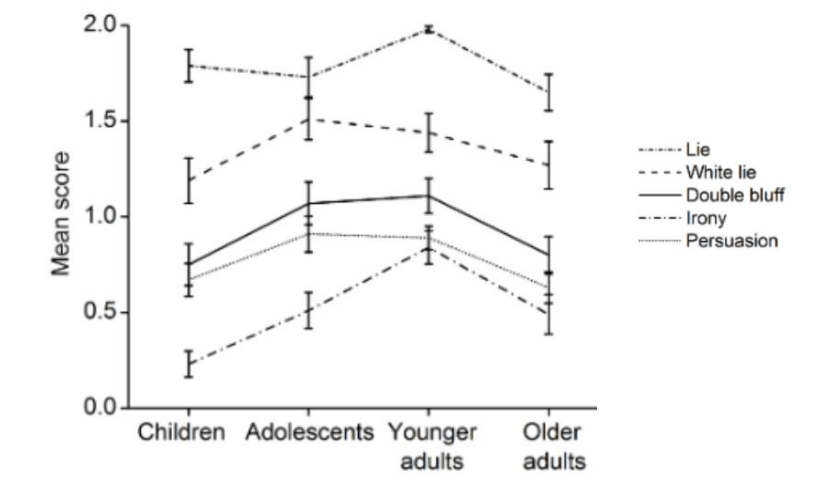
Most laboratory measures* peak in young adulthood, with some declining in late adulthood (linked to problems in cognitive function)
ability to detect lies
Better as you get older or with more experience
Could suffer at more later ages as well
CO Stage
Concrete operational stage
Age of this stage
what can they do?
What can they not do?
E.g. in maths
6 to 12 years
Can create mental representations of physical objects and perform transformations/operations on them
e.g. Imagine a ball rolling off a table
Cannot work with abstract things (e.g. algebra is hard)
However, mastery of conservation problems is evident
FO stage
Formal operational stage
age
what can they do (similar to Co stage)
What can they do now (that CO stage couldn’t do)
12 years of age and beyond (you’re in this stage now)
Can create mental representations of physical objects and abstract concepts and perform transformations/operations on these things
Can work with hypotheticals
Critiques of Piaget’s Theory
Development does not occur in discrete stages
Continuous and bidirectional, reversion possible (e.g. stress)
Development is not domain-general
Abilities emerge at different times
One at a time, instead of five at a time
Did not address culture or socioeconomic status
Studies focused on European children of high SES
Methodological limitations of question method
Limited questions so we may be missing out
Children are smarter than originally expected
e.g. knowing its there but cannot figure out where
Contrast: Vygotsky
Greater emphasis on environment, culture and language (rather than just independent exploration)
Zone of proximal development
Performance impossible, but possible with support
Support gradually reduced over time, skill becomes independent
Support but then support declines
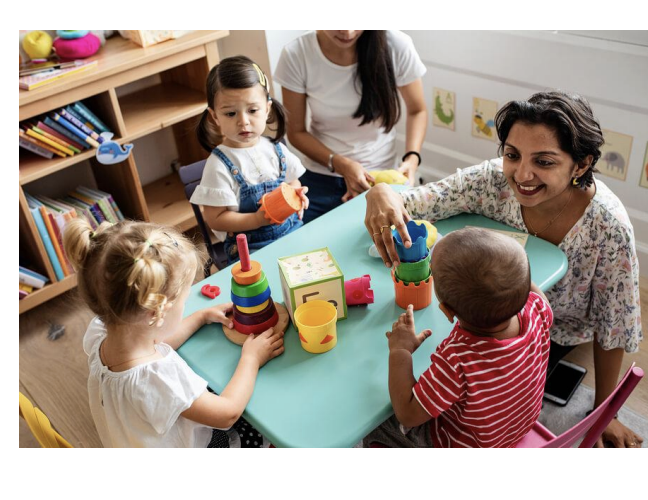
Erikson’s Theory of Development
number of stages
What does each stage show (what are the differences)
What happens if each stage is complete (what is this called)
Age, stage, outcome
Focus is not cognition but instead identity and social relationships
Eight stages at different ages extending from infancy into late adulthood (birth to 65+ years)
Each stage is characterized by different challenges and relationships
The completion of each stage would result in specific life changes (resolution)
Social Comparison
What age does this begin
Is this good or bad?
How does social comparison increase?
Two things
One about yourself
one about the world
Starting at ~6 years, children compare themselves to others
Comparisons continue through life, but decline w/age
Not necessarily bad; depends upon frequency + type
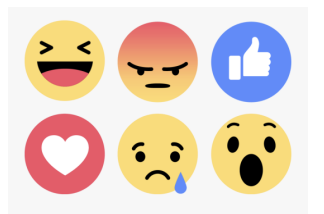
Upward social comparison (to people perceived as greater) is linked w/social media use (e.g. Instagram, facebook) and low self-esteem
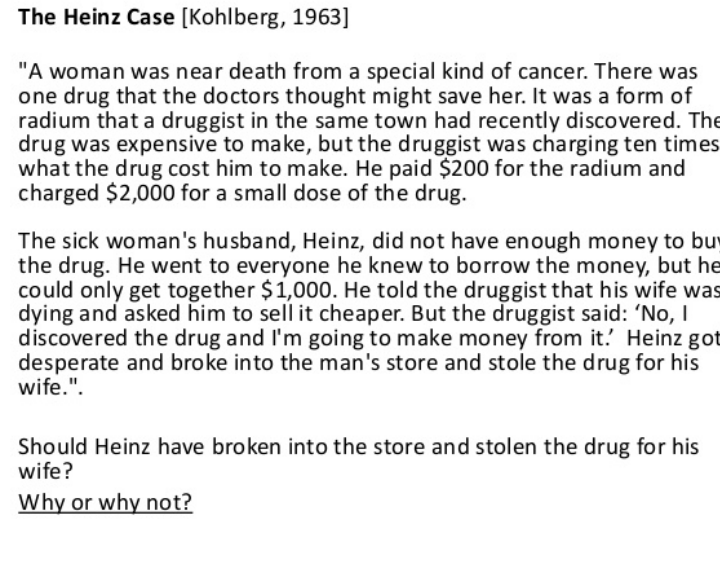
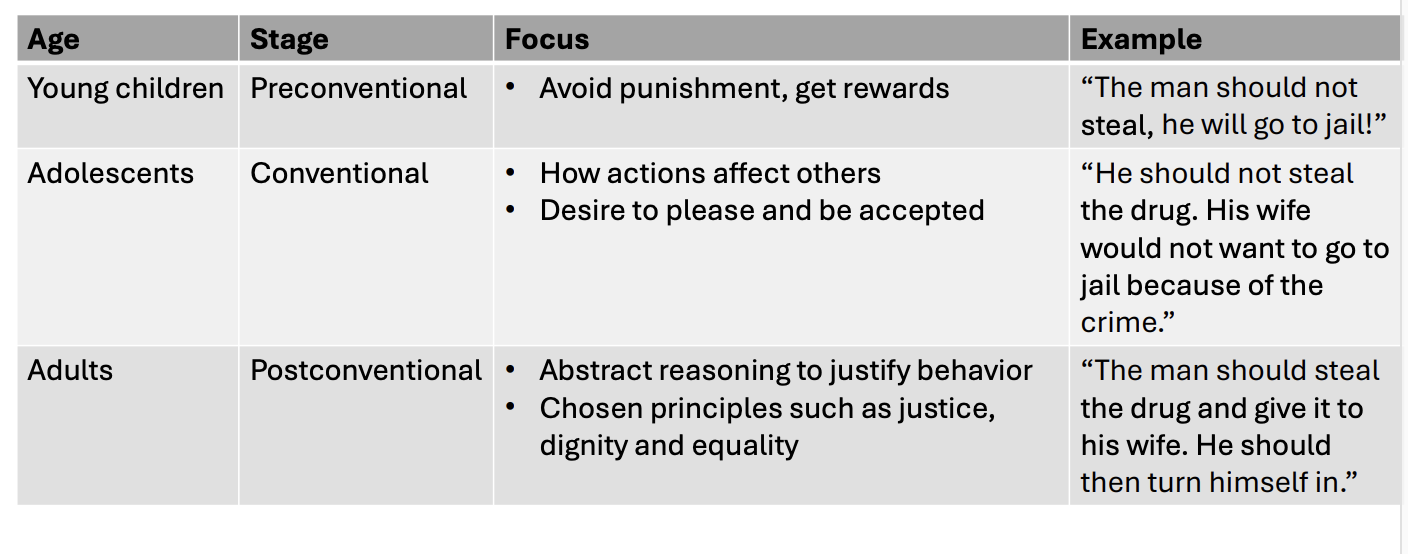
Morality and the Heinz Dilemma
explain it
Kohlberg’s Stages of Morality
three stages
Preconventional: Staying out of trouble (punishment; not justice or anything)
Conventional: social embarrassment
Postconventional: can identify the moral judgement (but won’t actual do it)
rational might change
Critique of Kohlberg’s Theory
what does it not address
What is a confound
Poor correlation with what
Does not address cultural or sex differences
Young boys tend to value principles of justice and rights, whereas young girls tend to value caring and helping
Best models the morality seen in individualistic cultures
Confound of verbal intelligence
Wording matters
Poor correlation with moral behavior
Just because someone understands morality does not mean they are moral; construct validity concern
Predicting life outcomes
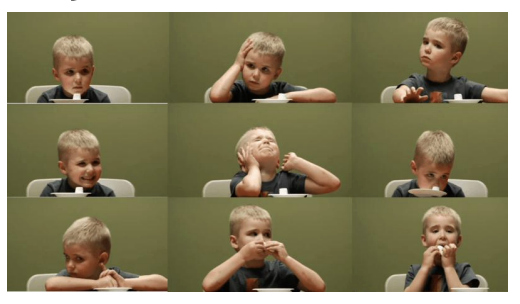
Famous “Mischel Marshmallow test” assesses the ability to delay gratification (one now vs. two later)
Test performance is linked to test scores, social success and stress reactivity
Also related to family background, cognitive ability and home environment
Replications find weaker effects
Attachment Theory
Emotional + physical attachment to the primary caregiver is critical
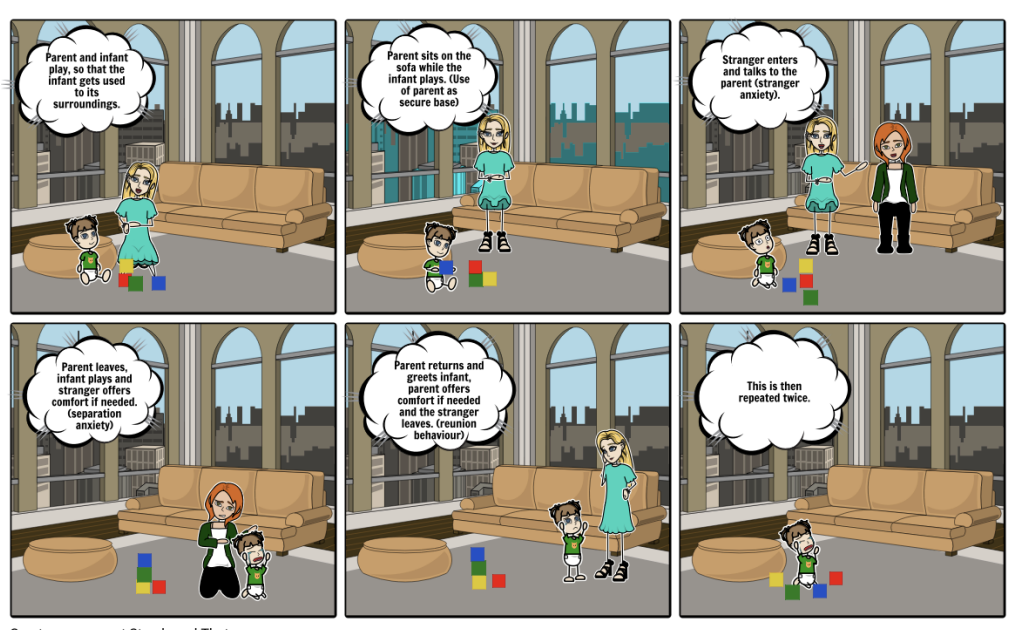
Psychologists have studied attachment theory using several clever approaches, including The Strange Situation (devised by Ainsworth)
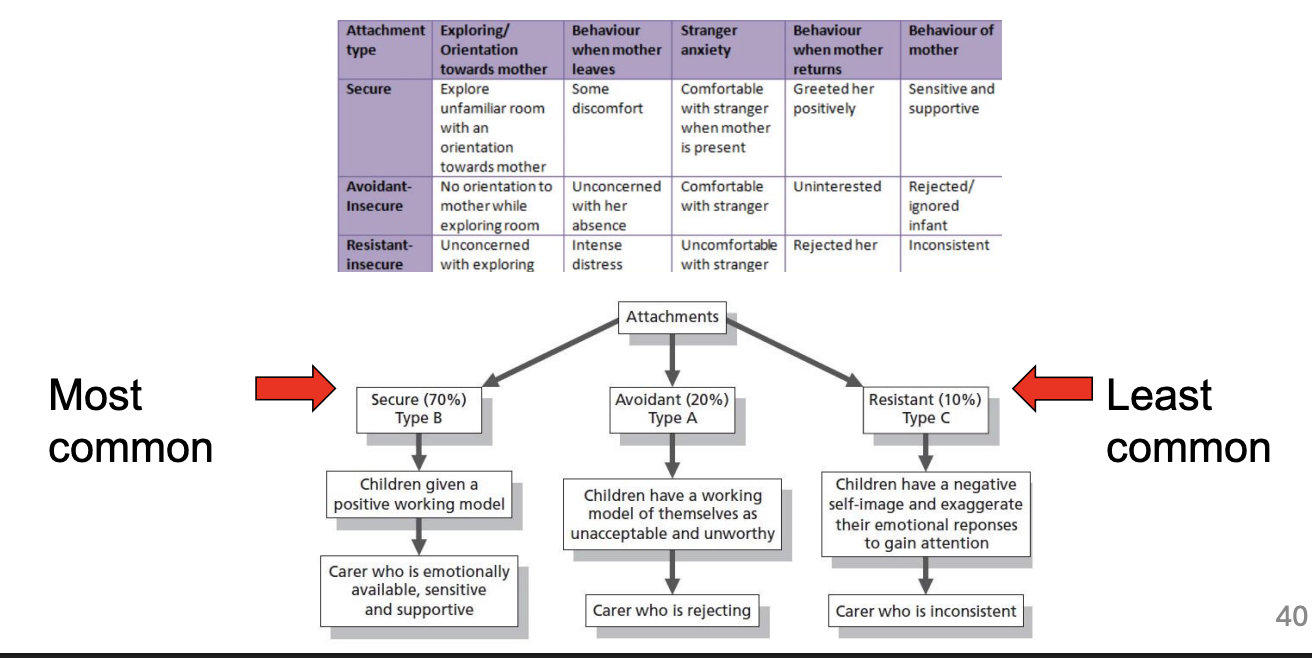
Three main types of attachment suggested*:
Secure
Insecure – avoidant
Insecure – resistant (aka insecure – anxious/ambivalent)
A fourth type (disorganized) has also been proposed by others.
Situation
playing
Stranger comes in but the mother is still there
with stranger alone - distress occurs and upset when the mother leaves
The mother comes back - reunion behaviour
The Strange Situation
Attachment Theory
what type of attachment is the best
Secure attachment correlated with better outcomes
Style can vary (e.g. with parent job changes, culture)
Children can have different attachments w/parents (in 40% of heterosexual couples, father-child + mother-child are different)
Association with outcomes in adulthood (e.g. relationships)
Happy when they come back
Doesn’t care
reject thems
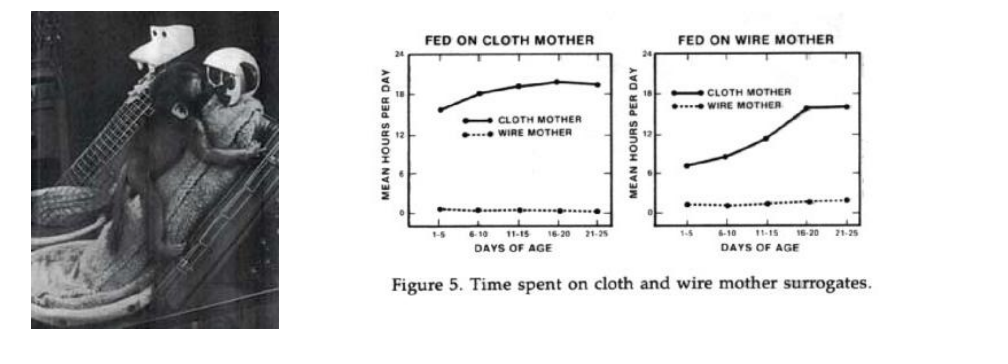
Physical comfort is important
explain using Harlow’s monkey experiment
Harlow’s Monkeys were deprived of their mothers and given one of two surrogates: wire or cloth
Monkeys strongly preferred the cloth mother (even w/o food)
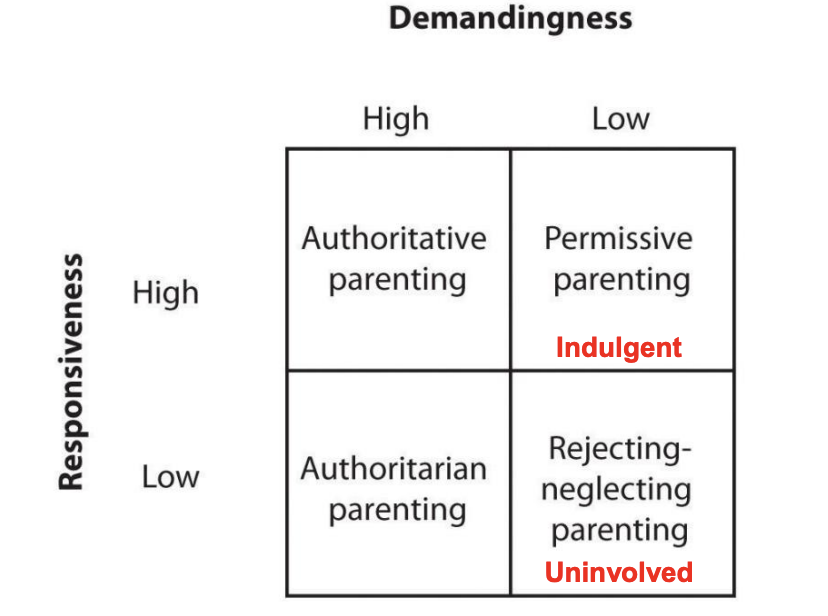
Parenting Styles + Culture
Which is the best
What is the worst
What can affect the type of parenting
Place = more common type of parenting
Authoritative is slightly favored (higher achievement + esteem, fewer behavioral problems)
Uninvolved is universally recognized as the worst
Culture matters
Certain styles may be more common and/or effective
Some cultures have complex parenting styles that do not fit into it at all
Other things about parenting
mother vs father parenting style
Types of study poorly studied
divorce effects on the child
Same sex parenthood effects
Fathers differ from mothers
Less attentive/affectionate, more time in physical play with kids (“playmates”)
Single parenthood poorly studied
Most children survive divorce without major damage
No negative effects of same-sex parenthood
Other approaches (inductive discipline, power assertive, love withdrawal)
Love withdrawal: you did something bad, im going to to ignore you
Power assertive: you did something, im going to do better than you
Inductive discipline: explain why we punish
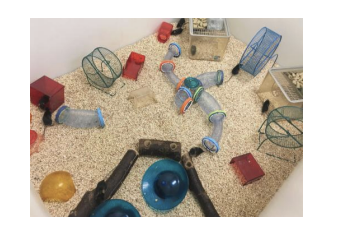
Environmental enrichment
Environments which exceed normal quality (e.g. more intellectual stimulation, better food, less stress);
Flynn effect (see L06) relevant
More stuff in the environment
Controversy over extent of benefits, diminishing returns
As experimental studies in humans are challenging and therefore rare, animal work is often a focus (generalization issue)
Studies are about animals but not about humans (so different environments)
Bad environments have severe effects
example of harlow’s monkey experiment
What can greatly affected by the child
Six months of bad parenting
Two affects
Early effects
later effects
Harlow’s monkeys (deprived of their mothers), for example, showed cognitive impairments
Children in low quality orphanages without reliable caretakers showed developmental delays*
Children adopted after 6 months may show autism-like traits (e.g. language impairment) - only observed - not experiment
Other effects may persist into adulthood (lower brain volume, impaired cognition, high risk for mental health disorders
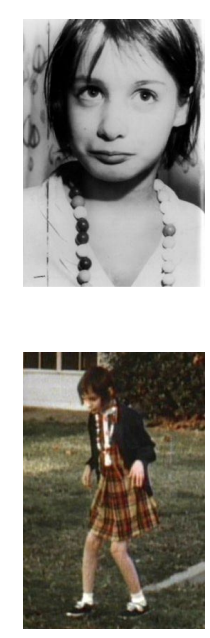
The ‘Feral’ Child: Genie
what happened
What was affected in her life
Could it be fixed?
What did it tell us about development
Severely isolated and physically abused
At the time she was discovered (age 13), she could not use language
very rare
Even with training, Genie never fully acquired a first language (could acquire vocabulary, but had difficulty learning grammar/syntax)
Important time for learning
Tragedy informed views of developmental windows
Developmental periods
critical period
sensitive period
Period known to be as what in development
How can be study this
Two things that can be studied and with what
Critical period: Experience required for proper development
Sensitive period: Experience has a stronger effect on development
Development still possible, but may be more difficult
Thought to be periods of high neuroplasticity
We can identify potential developmental periods with deprivation and enrichment studies in animals
Periods in humans suggested by correlational data*
Comparison
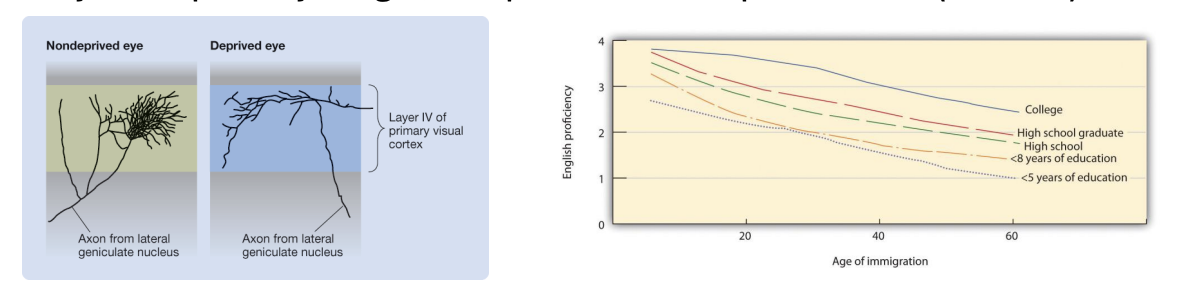
Critical periods for the visual system suggested by deprivation studies
If you do not get the necessary input early, you never get the right development
Sensitive periods are more common and exist for many psychological functions, including language
Easy to acquire if younger, still possible to acquire if older (see L06)
Adolescent Development
what is developed during young age
What do they do or think at this age
What do they do to improve this
What does this create in their self?
Emergence of egocentricity
Reference to me state, everyone is watching me
Teenagers are often self-conscious and under the impression that everyone is watching them
Fear of embarrassment is common
During adolescence, teenagers seek out role models and peers on which to model their behavior
Your typical adolescent will try out many identities
This is all part of developing a positive sense of self
Adolescence and the Brain
Adolescence is regarded as a sensitive period for brain development
The prefrontal cortex matures substantially, with synaptic pruning (removal of synapses) continuing throughout the period
The PFC is important for planning, organization and inhibition of behavior – skills an adolescent is still developing
Maturation of the brain may continue until age 25
Change in risk evaluation
in what age is more risk-taking common
Is there is reason for this (do they have brain damage?)
Main reasons for risk-taking in these individuals
Adolescents engage in some risk-taking behaviors more frequently than adults
Risk-taking occurs despite awareness of risk (not an information gap)
Sometimes good
not because of an information gap (we still won’t stop if you tell us)
Many possible explanations:
Incomplete frontal lobe development
Altered pleasure responses - feels good
Emotional development - more happy
Age-specific environmental settings
Neurodevelopmental disorders (NDDs)
Where is the damage
What are the effects
What are they noticable
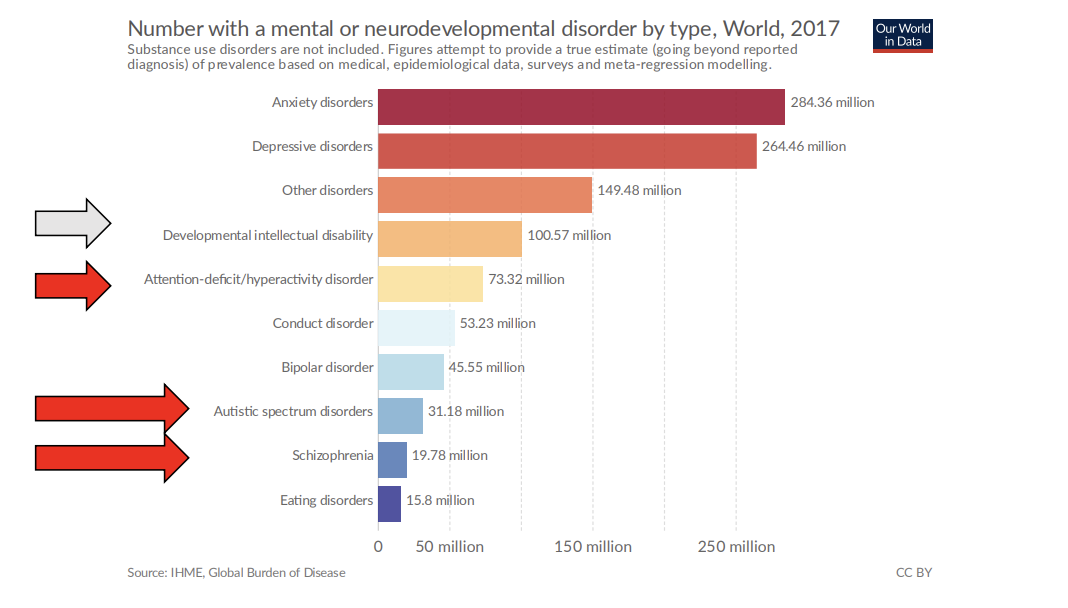
Disorders wherein there is abnormal development of the nervous system, leading to abnormal cognition and behavior
It’s who they are (part of them)
NDDs often emerge early in life (e.g. autism, ADHD, intellectual disabilities and language disabilities)*
High heritability, strong role of genetic factors
NDDs are considered distinct from acquired disorders, which usually emerge in adulthood and are the result of brain changes (e.g. injuries) in adulthood
Traumatic Brain Injury, Alzheimer’s Disease, Multiple Sclerosis and more
Different from depression and anxiety (can be developed, or induced)
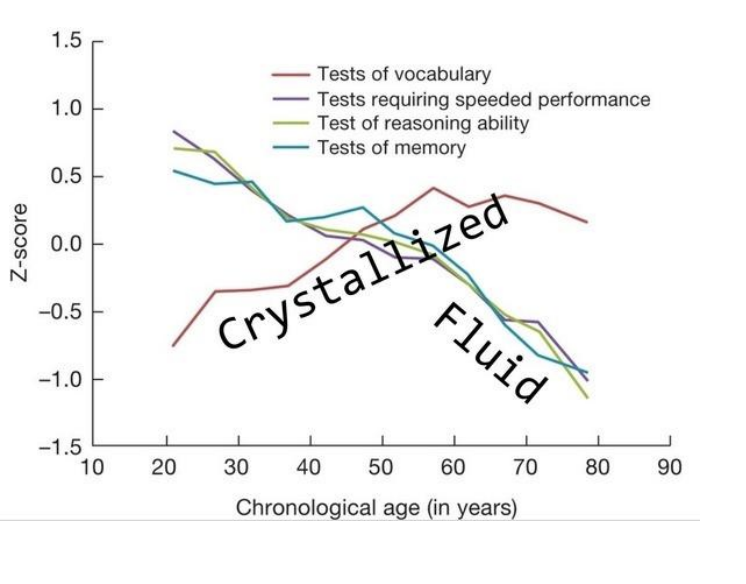
Intelligence w/aging (L06)
expected
Change in memories with aging
what do they have trouble with
What do they not have trouble with
How do they view things
Free recall (i.e. w/no help) declines noticeably, but cued recall (i.e. w/hints) and recognition (e.g. like multiple choice) remains good
Views also change: we look back on our own past positively (“Back in my day”) and imagine more positive futures (positivity bias)
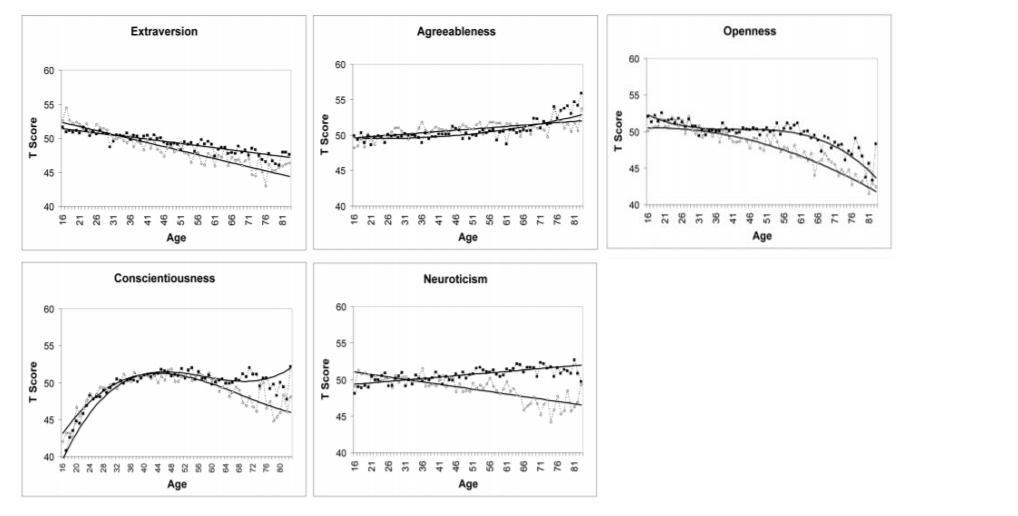
Personality w/aging (L07)
recalls which traits decreases, which traits increases
With aging (16 to 60 years) there are increases in A + C, decreases in E + O
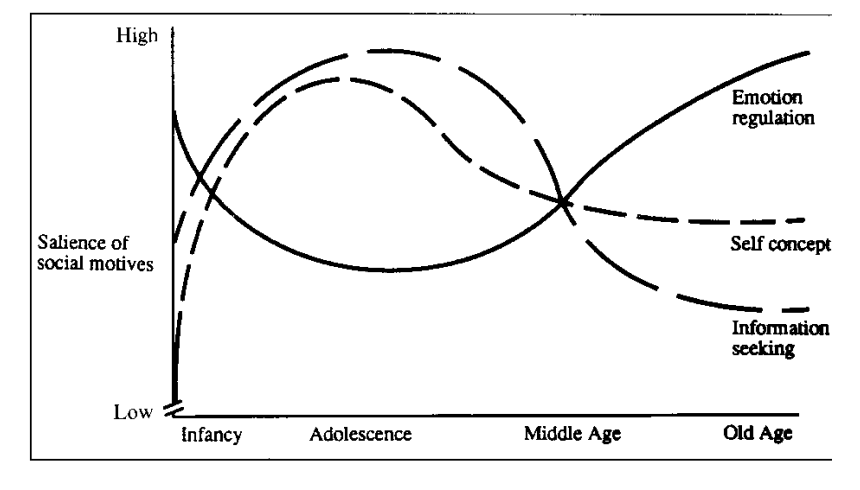
Socioemotional selectivity theory
Older adults have fewer relationships, based on different motives
change in the number and motive for relationship
Well-being and aging
Older adults who stay active tend to be as happy as when young
Larger/stronger social networks (friends/family) are key
Job satisfaction follows a U-shaped curve, peaking early when you get the job and later when you leave it
Happy, womp, happy about the job
The mid-life crisis and empty nest syndrome are likely exaggeration
If you lack a career or hobbies and interact extensively with your children, their absence will be more significant to you