chemistry final
 Call Kai
 Learn
Learn Practice Test
 Spaced Repetition
 Match
Match Flashcards
 Knowt Play
1/153

There's no tags or description
Looks like no tags are added yet.
Name | Mastery | Learn | Test | Matching | Spaced | Call with Kai |
|---|
No analytics yet
Send a link to your students to track their progress
154 Terms
fundamental building blocks of life are called (t1)
atoms
dalton’s model
all elements = invisible/indestructible
basic unit of mater =atom
Compounds are formed from combinations of atoms.
use solid sphere cannon model
JJ Thomson model
used the cathode ray to show one of the smaller units that make up an atom.
Cathode ray: beam particles deflected by electric/magnetic fields, particles= neg charge
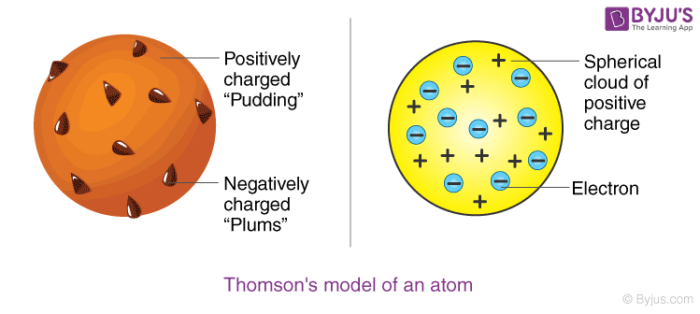
Plum Pudding: atoms = sphere of (+) charge, electrons = (-) scattered like raisin in pudding
rutherfords
Directed alpha particles (+) @ gold foil
Passed through atoms = empty space, electrons orbit nucleus
Deflected bk = small dense (+) center nucleus b/c protons
gold foil experiment
Bohrs
Planetary model: electrons move circular orbits (energy lvl) around nucleus (1st lvl = less energy, 2nd lvl = more energy)
wave mechanical (modern day)
Electrons = particles/waves
Position of electron = ?
Electron space = orbitals, energy lvls, sub lvls
subatomic parts
Name | Charge | Mass | Location | Calculate Mass |
Proton | Postivite + | 1 amu | Inside the nucleus | Always equal to the atomic number |
Electrons | Negative - | n/a | Orbital | If neutral then # = # of protons |
Neutrons | Neutral charge | 1 amu | In nucleus | MAN = mass- atomic number = neutrons
|
positive charge
electrons lost
negative charge
electrons gained
Calculating atomic mass-
Abundance will be a percent
C-12 97%
C-14 2.7%
C-15 .3%
(must make it into a decimal- move two times to the left)
Mass x % =
C-12 .97
C-14 .027
C-15 .003
Add all 3 answers up to get the atomic mass
It must be between the lowest and highest (between 12 and 15
Ground state
lowest energy lvl
look at the periodic table
ground to excited = absorbing energy
excited state
same # of electrons as ground state b/c the electrons dont change
excited to ground = releasing energy
EX- Magnesium = 2-8-2 (if it goes into the excited state the electron will jump) 2-7-3
bright line sepectrum
comes from excited —> ground b/c it releases energy in the form of light
make sure the lines match up
mater
broken up into pure substances and mixtures
pure substances
all elements
compounds
made of 2+ atoms, combined chemically, fixed ratio (not changing),
must be homogenous ex h2o
homogenous
same, uniform, singluar appearance
can be both pure susbstances + mixtures
mixtures
2+ pure substances combined physically
composition varies
both homo and heter
homo: salt water, air
hetero: oil and water (seperates)
heterogenuous
diff parts, varies, between samples, ONLY mixtures
pure substances (elements and compounds) + mixtures diagrams

Diatomics
H O N F Ci Br I
HONFCi = Gas
Br = liquid
I = solid
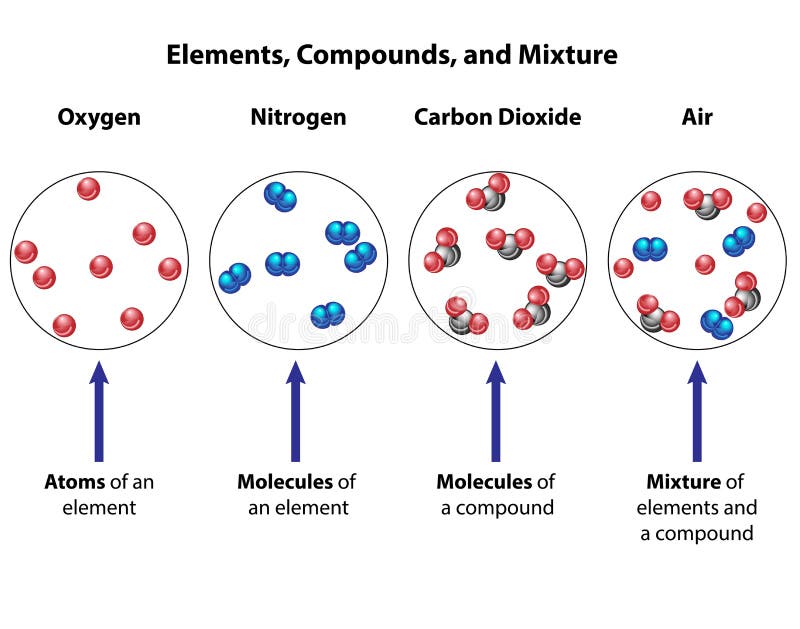
nitrogen ex of diatomic
filtration
will separate an undissolved solid from a liquid (based on size)
use to sep sand from water
evaporation
will separate an undissolved solid from a liquid (based on diff boling points)
use to sep salt from salt war
distillation
how dissolved liquids sep/ sep 2 miscible(mixable) liquids
happens b/c diff boiling points
chromotography
sep colors and pigments (based on diff forces (strength of attraction)
speratory funnel
sep 2 immiscible (not mix)
like oil and water
souable
does it dissolve
Nuclear chem Nucleus (t12)
(+) protons + (n/a) neutrons = nucleus is always (+)
dense b/c protons = 1amu + neutrons = 1amu
small center of atom
nuclear chage = # protons = atomic #
carbon 14
nuclear chemistry dating
uranium 238
rock dating
Iodine 131 (radioactive)
help treat thyroid
colbat 60
treat cancers
isotopes
atoms of the same elements w/ diff mass # b/c diff # of neutrons
same # of protons always
ions
has charge b/c of the gain or loss of electrons
meltdown
when nucleus gets unstable
radioisotopes occur
unstable b/c proton:neutron ratio, moving it out of the belt of stability
Too many neutrons → unstable
Too few neutrons / too many protons → unstable
Stable atoms are inside the belt of stability
radioisotope 2 decay products
unstable nucleus —> stable
an atom with an unstable nucleus that decays and releases radiation to become more stable.
emission: table 0, radioactive, # on top = mass, # on bottom = charge
flow chart for understanding
Unstable nucleus → radioactive decay → alpha/beta/gamma radiation → more stable nucleus
Example:
Carbon-14 → Nitrogen-14 + beta particle
gamma radition
has the best penetrating pwr bc no weight/charge
natural transmutations
Alpha decay: atomic number goes down 2
Beta decay (β⁻): atomic number goes up 1
Positron emission (β⁺): atomic number goes down 1
artifical transmutations
fission: reaction split heavy nuclei, highly radioactive
fusion: combine light nuclei
lots of fission and fusion on the sun
e=mc²
small amts of mass release large amts of energy
nucleus > chemical reaction
half life ( table N)
amt of time it takes for exactly ½ of a radioisotop to decay
never reach 0, can’t get rid of it
shoter ½ life = less stable isotope
express life of a isotope
Start with 100 g of a radioisotope.
After 1 half-life → 50 g left
After 2 half-lives → 25 g left
After 3 half-lives → 12.5 g left
how to calculate half life/chart
total time passed ÷ half-life length = # of half-lives
EX
Half-life = 6 days
Time window = 24 days
24 ÷ 6 = 4 half-lives
Then cut the sample in half 4 times:
100 g → 50 g → 25 g → 12.5 g → 6.25 g
So after 24 days, 6.25 g remains.
Matter Solids(T4)
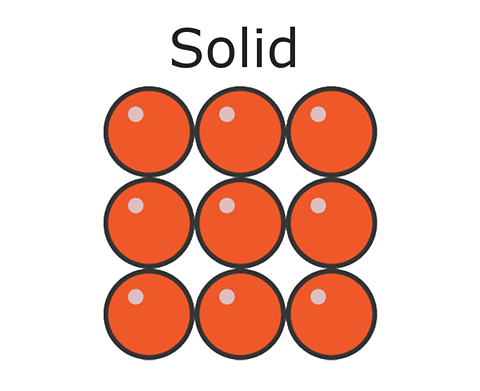
shape = definite doesn’t change
volume = definite
hardly move, vibrating
must be touching the bottom in the diagram
liquid
shape: takes container, not definite
volume: definite
particles roll like fluid, not as closely
must be touching the bottom in the diagram
gas
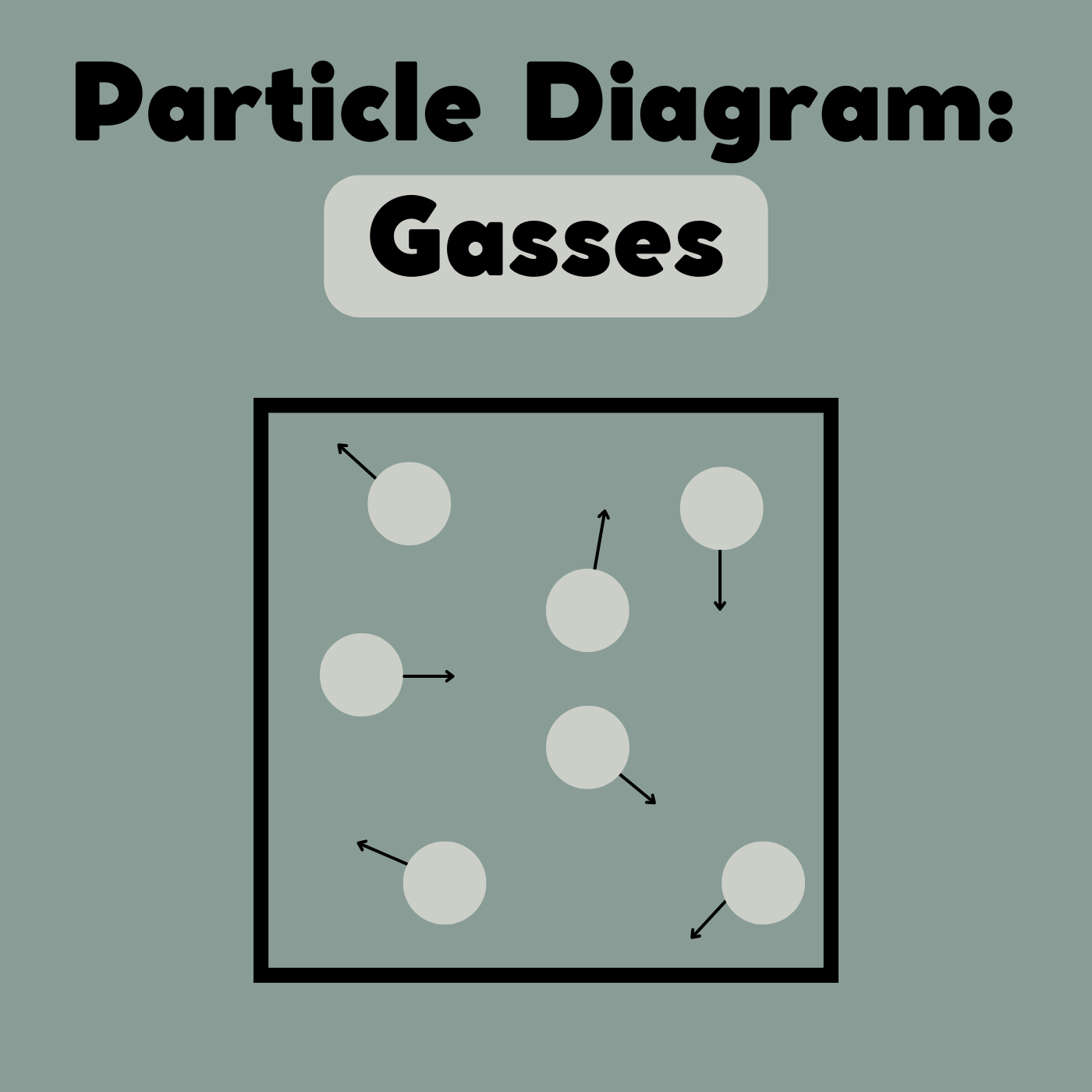
shape: not definite
volume: not definite
fills its container, spread out
kinetic energy
movement of particles
temp is the measure of avg kinetic energy
potential energy
stored energy b/c of its position
heating curve
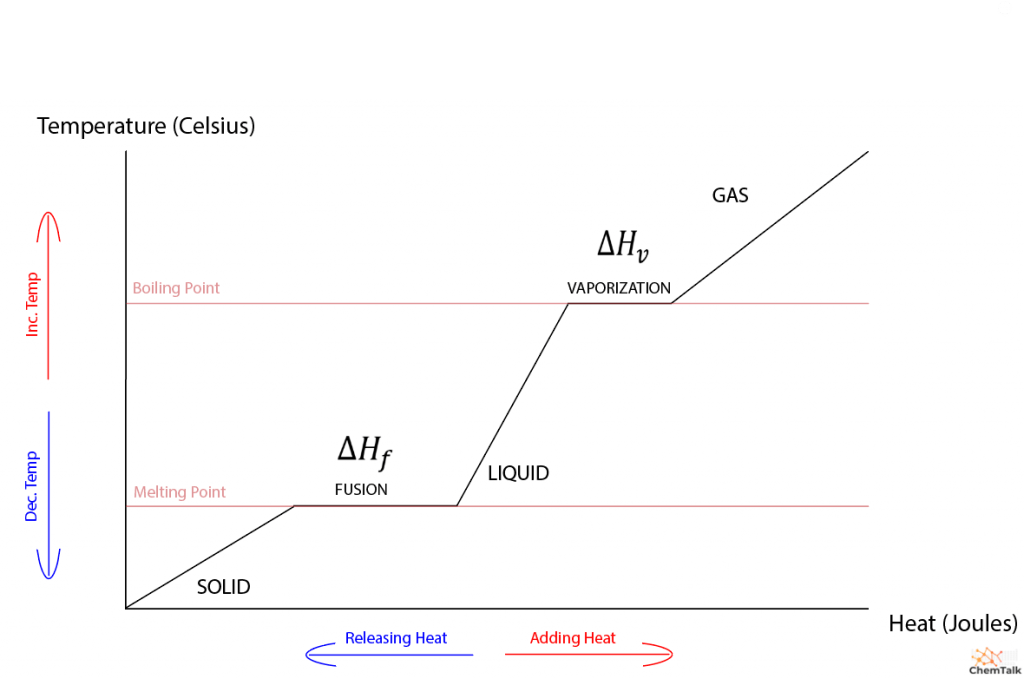
melting point = 0, heating point = 100
upward slope = increase of kinetic energy
constant slope = no change in kinetic energy, increase of potential, equalibrium phase,
sublimation
solid —> gas
cooling curve

downward slope = decrease of kinetic energy
constant slope = no change in kinetic, decrease of potential, equilibrium
desposition
gas —> solid
exothermic
releases/exits heat/energy
ex: freezing condensation, combustion
endothermic
absorbs heat/energy
melting, evaporation, boiling
kelvin
on table t
MUST conver to kelvin when comparing with a celcius temp
Table T
Know how to do heat equations,
MUST CONVERT TO CORRECT LABEL
ex: 3275J = 3.275KJ
Kinetic Molecular Theory
behaviors of an ideal gas
constant random straight line motion, high energy
why gas particles don’t attract because of that motion
collision are perfectly elastic: energy never gets lost, but can transfer
gas particles sep by great distances, allowing it to occupy the space fully
how to control gas/make gas to ideal
low pressure: gas particles are far apart, so they barely attract each other
high temps = particles move fast so attraction matter less
indireact relationship
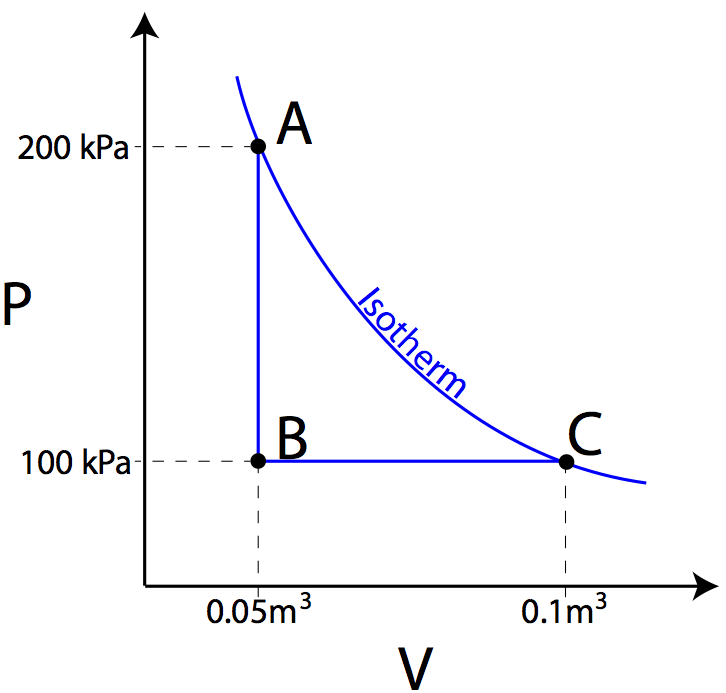
relationship with temp and volume
direct
increase of temp is also increase of volume (vice versa for decrease
relationship of temp and pressure
direct
increase of temp is also increase of preassure (vice versa for decrease
preasure
atm/kPA
know how to use table gas laws (given)

Formulas/Equations Diatomic are (T2)
2 identical molecules
quantitative
a #
ex: 2 hydrogens
qualitative
cannot be measured
ex: compound
molecular formula
the exact #
ex: C2H2
empirical formula
smallest whole number ratio
ex: C2H2 —> CH
gained electron
F-
lose electron
Na+
Coefficent
number of moles, infront of the compound
hydrates
ionic(salts) compounds containing water
ex: CuSO4 —> CuSO4 × 5H2O
Protons = Electrons
atom is neutral
Electron # change
it is an ion
Densitiy
doesnt change @ table S, no mater how small or big it is
physical change
no composition change b/c no chemical change
chemical change
need chemical reaction —> new product
2 sides: reactants —> products
if heat is on the reactant side
endothermic
if heat is on the product side
exothermic
Type of reactants: Synthesis
A+B —> AB
Decomposition
AB —> A+B
Single replacement
A+BC —> AB +C
Double replacement
AB +CD —> AD +CB
Positive Ions always goes first
three things conserved
mass, energy, and charge
know how to balance equations
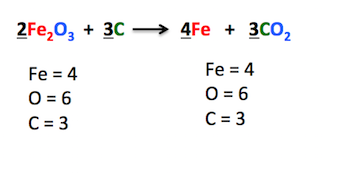
Gram formula Mass (molecular mass) t3
inventory = how many
count atoms (subscript)
look up mass, periodic table and round to the nearest whole number
multiply
add
ex: H2O
H: 2×1 = 2
O = 1 ×16 = 16
18 mass of H2o
avogadro number
6.02 × 10²3 = 1 ole

to find # moles
give mass/GFM (table t)
- know how to do mole:mole ratios, percent composititon, etc
periodic table t5
arranged by increase of atomic number
elements in the same group have similar chemical properties
group 1
alkali metals, hydrogen is exceptions
extremely active
Fr is most active #87
1 valence electron
group 2
alkali earth metals
2 valance electrons
Group 3-12
transition metals
formed colored ions in solution
multiple oxidation states
group 13-16
B, Si, As, Ge, Te, Sb
metalloids
semi metals depends on what its combined with
group 17
halogens
most active non metals
flourine = most active non metal (g)
F and Ci = G
Br = liquid
I = solid
semi metals b/c they gain/lose to reach octect
Group 18
noble gas
inert, dormit, sleep
8 valanced electrons
octect
elements in the same pd
similar energy levels
Metals
solids at room temp (mercury is the exceptions)
maulable (changing shape), ductile (pull into a wire) , luster (shiny)
good conducter b/c mobile valence elctrons
low electric negativity/ionization
lose elctrons to form (+) ions
radius = smaller
Bromine
only liquid non metal
brittle and not mauable/ductile
poor conductors of heat/electricity
form (-) ion
Allotropes
diff forms of the same element that have diff structures, diff physical/chemical properties
exL Carbon- Diamond, graphite, fullerenes
Oxygen: O2 and O3 ozone
Octect
easier to loose, to achieve octet
- atoms want 8 valence electrons b/c stability for atom
ionzation
energy required to remove one valence electron from an atom.
-High ionization energy = hard to remove/steal electron
Low ionization energy = easy to remove/steal electron
electron affinity
attraction for electrons