Neuroscience: Brain Functions, Structures, and Cranial Nerves
 Call Kai
 Learn
Learn Practice Test
 Spaced Repetition
 Match
Match Flashcards
 Knowt Play
1/22

There's no tags or description
Looks like no tags are added yet.
Name | Mastery | Learn | Test | Matching | Spaced | Call with Kai |
|---|
No analytics yet
Send a link to your students to track their progress
23 Terms
What are the main functions of the brain?
Recognizing and integrating sensations, making decisions, initiating actions, and controlling behavior and emotions.
What is the role of the spinal cord in relation to the brain?
It transmits information from the spinal cord and its associated spinal nerves into the brain stem.
What is the Circle of Willis?
A ring of blood vessels on the inferior surface of the brain that supplies arterial blood rich in oxygen and nutrients.
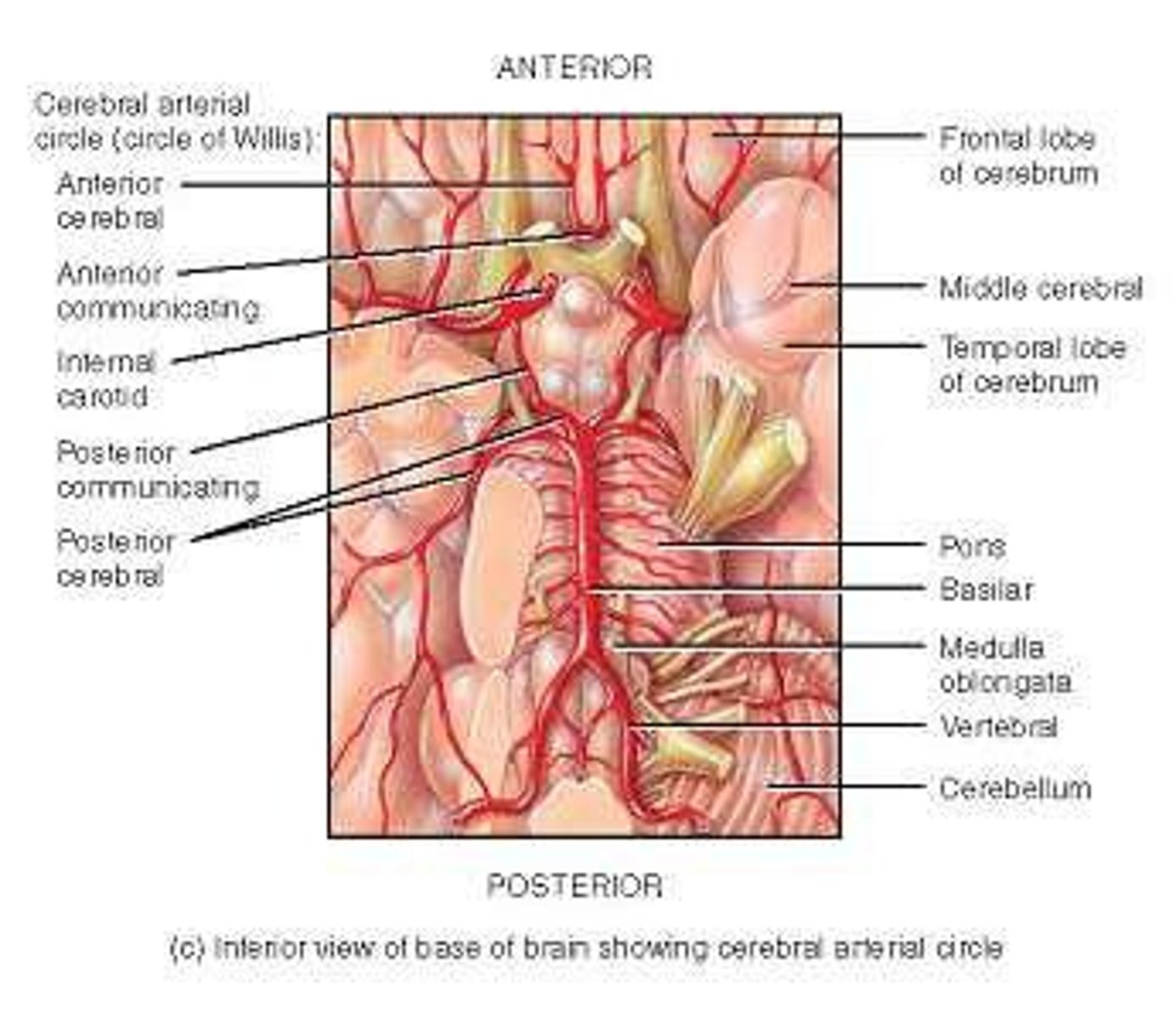
What happens to neurons after 4 minutes without oxygen?
Lysosomes release enzymes, leading to cell death; neurons cannot be replaced.
What is the Blood Brain Barrier (BBB)?
A selective barrier that prevents many substances in the blood from entering brain tissues, protecting brain cells from pathogens.
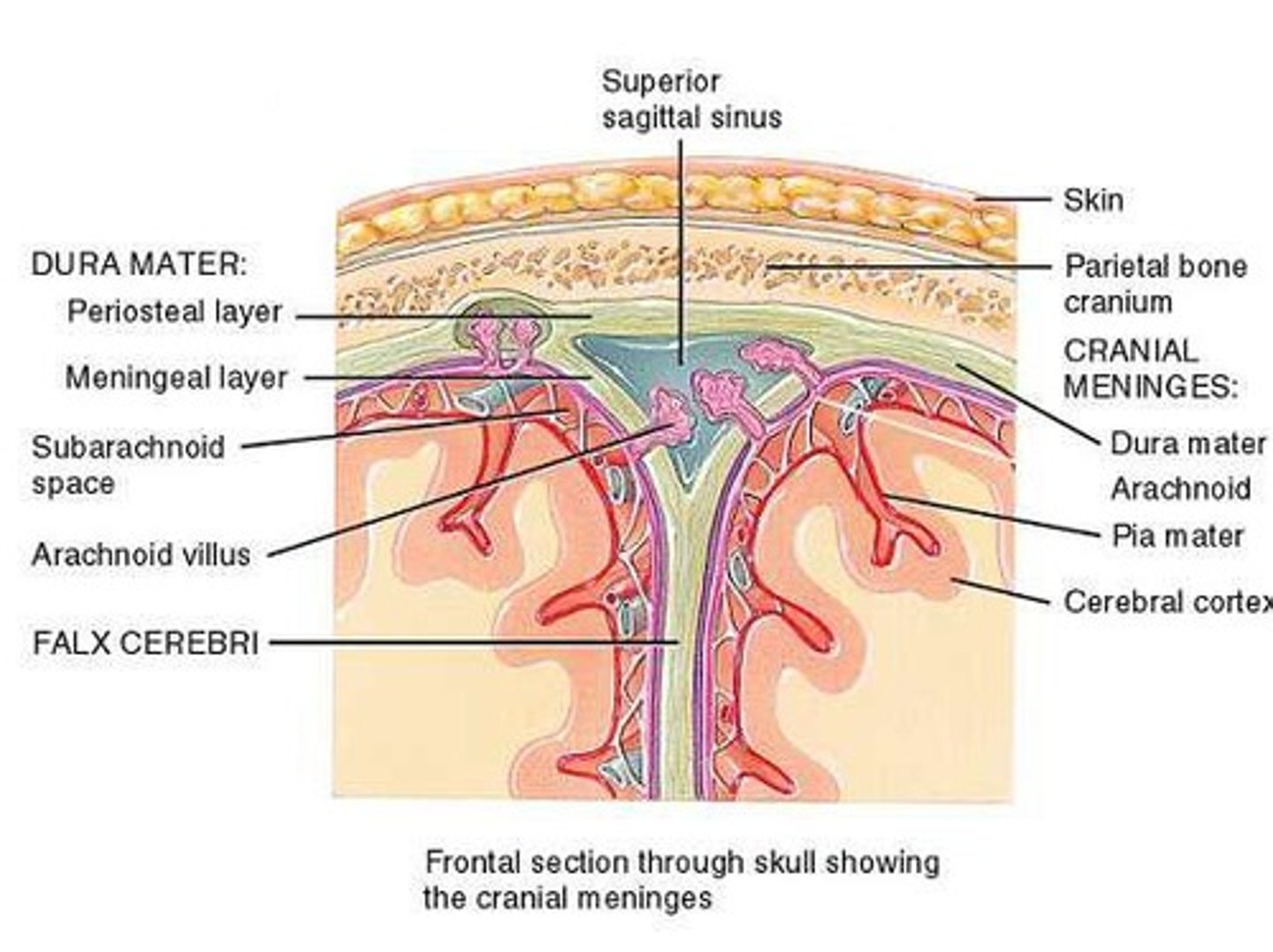
What are the three layers of the meninges?
Dura mater, arachnoid, and pia mater.
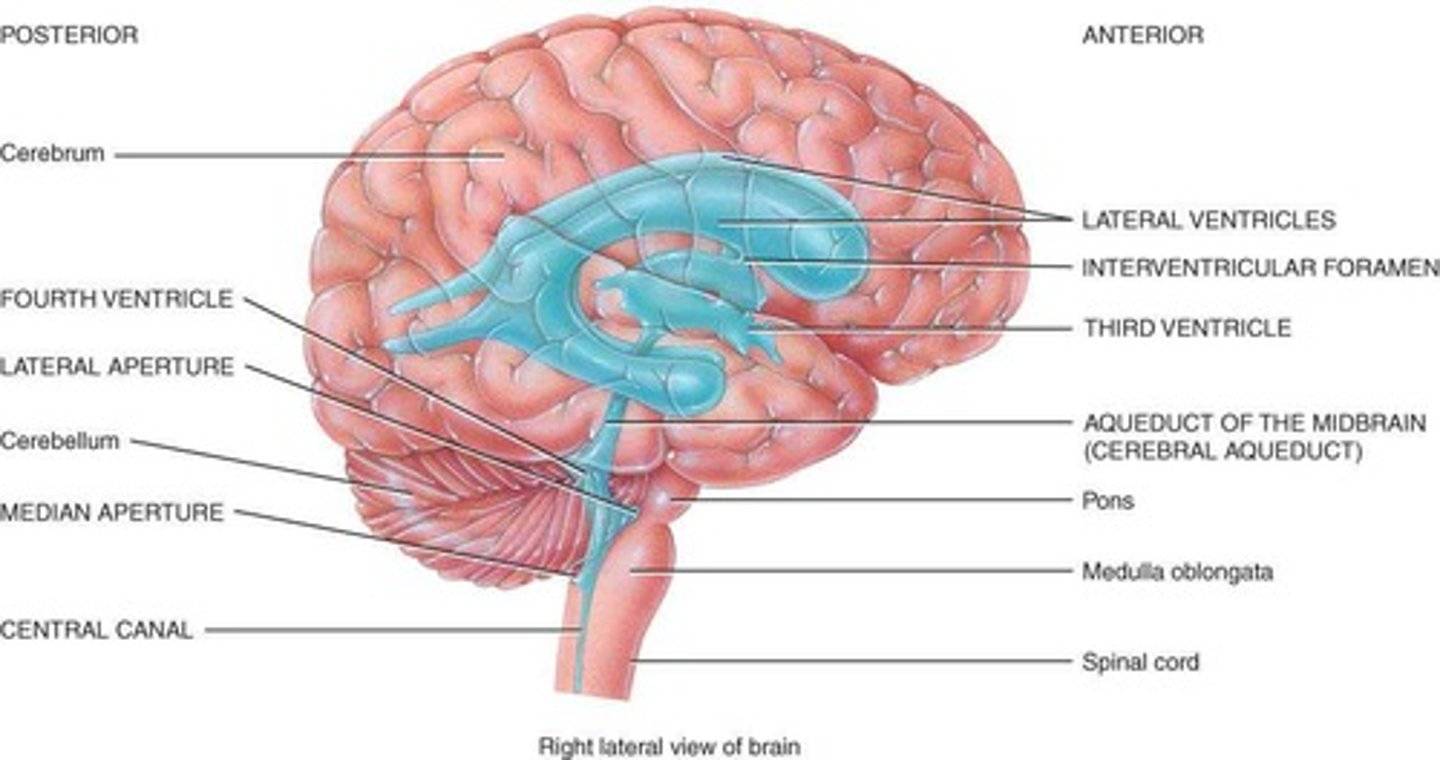
What are the ventricles of the brain?
Four CSF-filled cavities connected by channels, including two lateral ventricles, a third ventricle, and a fourth ventricle.
What is the function of the choroid plexi?
To manufacture cerebrospinal fluid (CSF) from arterial plasma.
How does cerebrospinal fluid (CSF) flow through the brain?
From lateral ventricles to third ventricle via interventricular foramina, then to fourth ventricle via cerebral aqueduct.
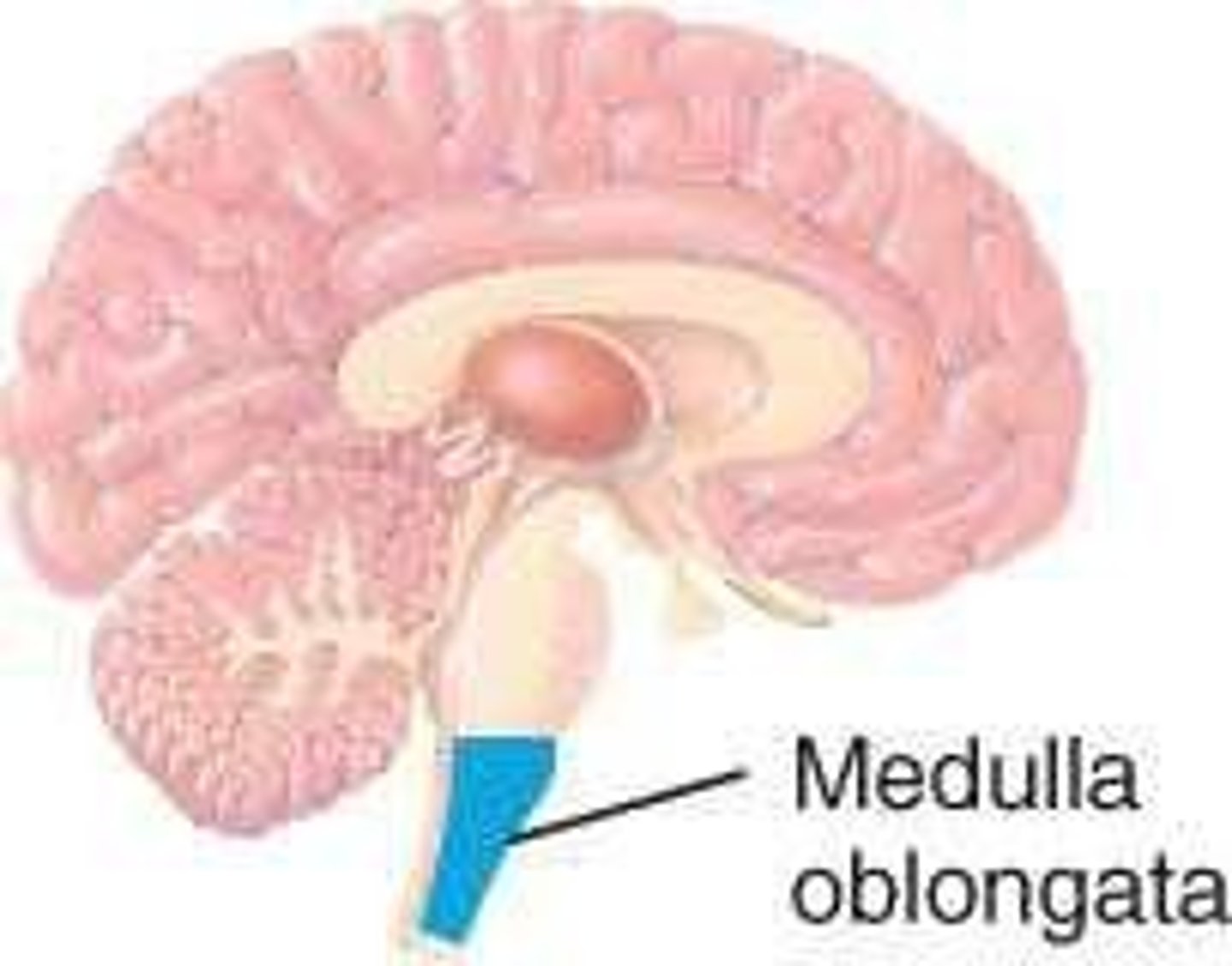
What is the function of the medulla oblongata?
Controls cardiovascular and respiratory functions and conveys information to and from the cerebellum.
What is the role of the pyramids in the medulla oblongata?
They are motor tracts where decussation occurs, meaning the left cerebral cortex controls the right side of the body and vice versa.
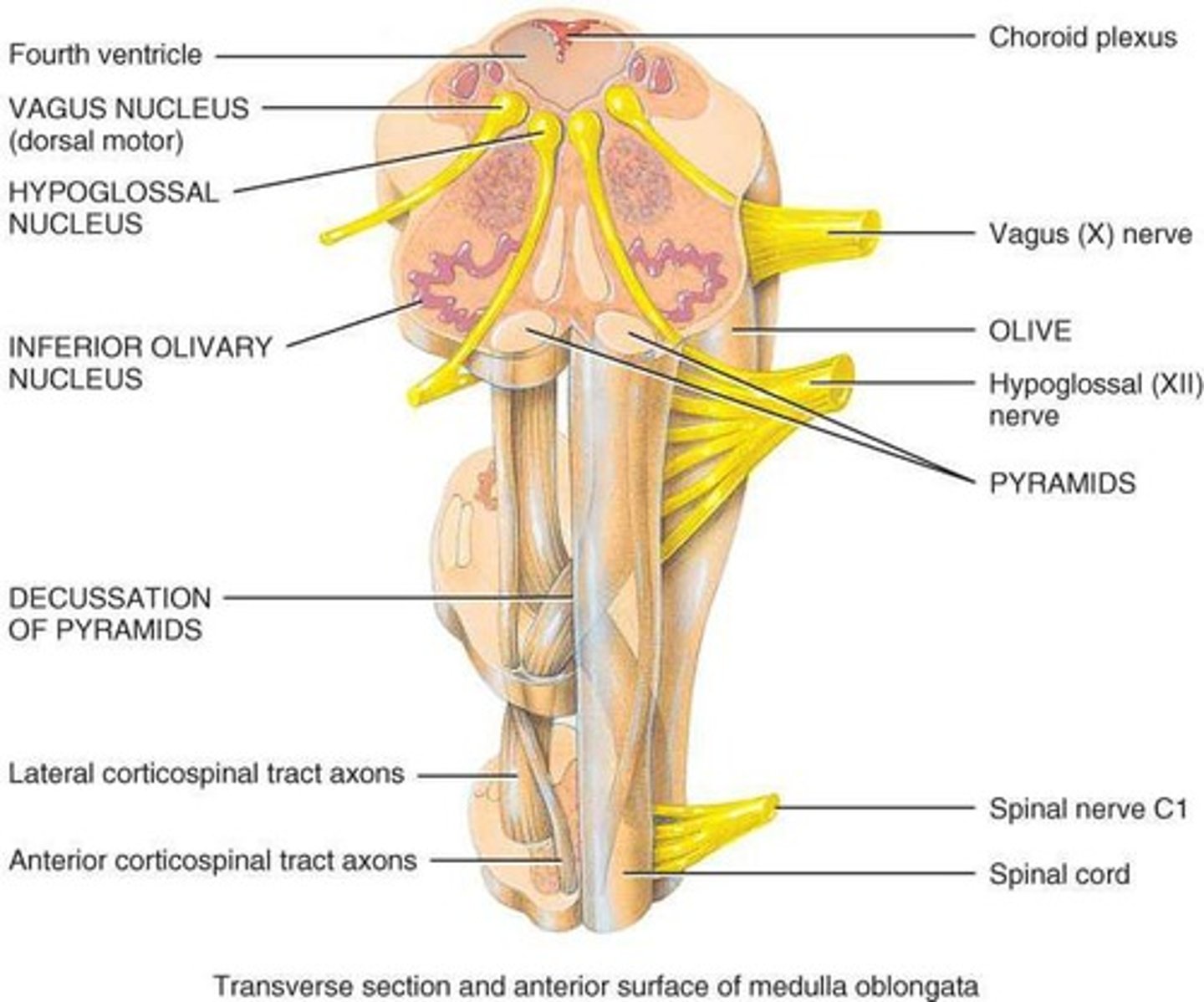
Which cranial nerves arise from the medulla oblongata?
Cranial nerves VIII (Vestibulocochlear), IX (Glossopharyngeal), X (Vagus), XI (Accessory), and XII (Hypoglossal).
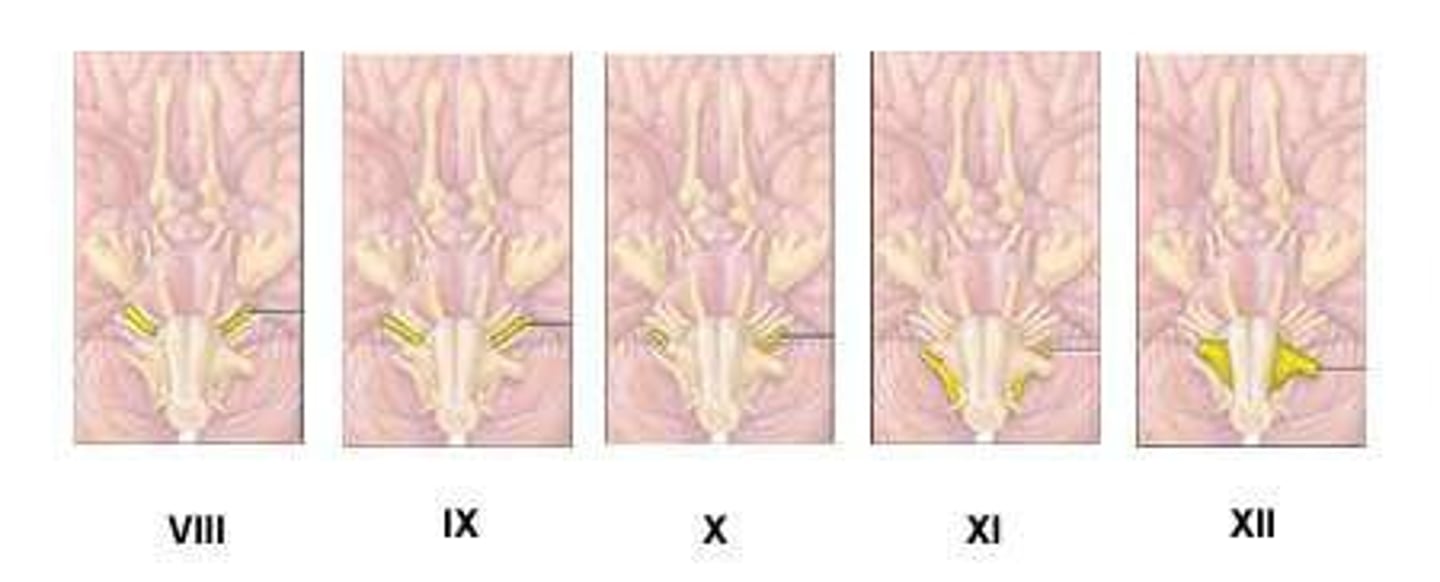
What is the function of the vestibulocochlear nerve (Cranial Nerve VIII)?
Carries impulses concerning hearing and balance; damage can cause tinnitus or vertigo.
What are the sensory functions of the glossopharyngeal nerve (Cranial Nerve IX)?
Involves taste from the tongue, sensory receptors from the pharynx, and chemoreceptors in the carotid body.
What is the primary function of the vagus nerve (Cranial Nerve X)?
To provide sensory and motor functions to the throat, neck, and many organs in the thorax and abdomen.
What muscles does the accessory nerve (Cranial Nerve XI) control?
Muscles of the pharynx, larynx, soft palate, sternocleidomastoid, and trapezius.
What is the main function of the hypoglossal nerve (Cranial Nerve XII)?
Controls the muscles of the tongue; damage can lead to difficulty in chewing, speaking, and swallowing.
What is the role of the pons in the brainstem?
Relays impulses from the cerebral cortex to the cerebellum and helps control breathing patterns.
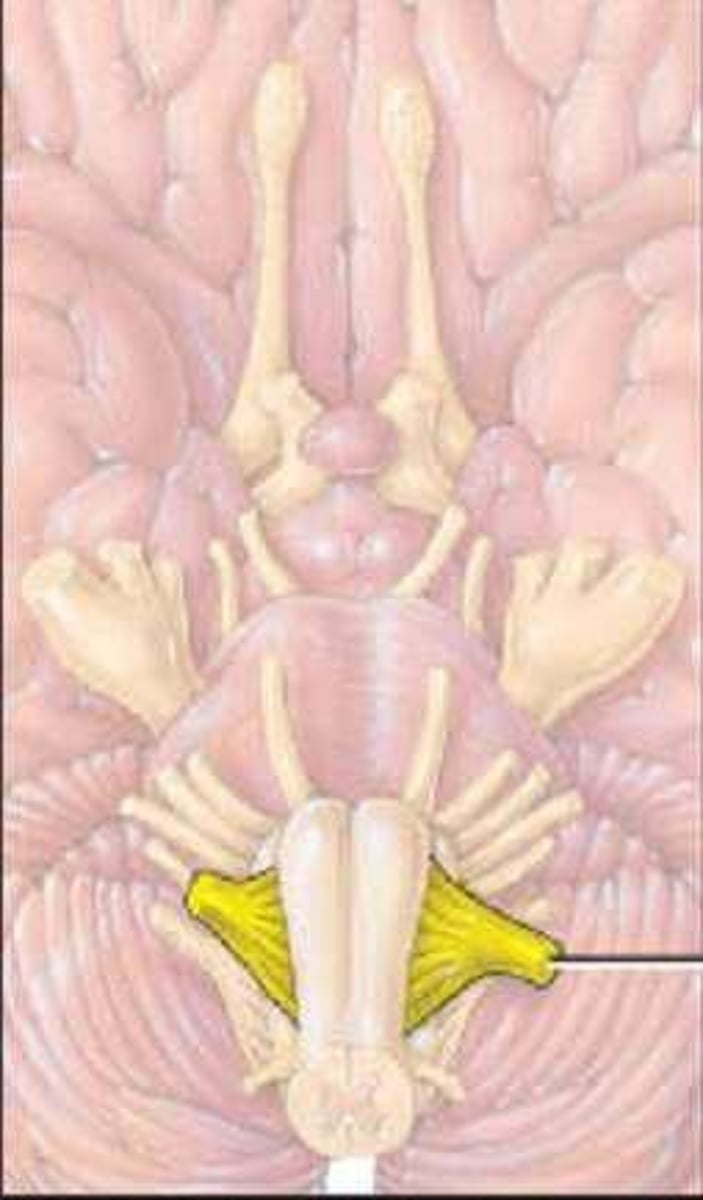
What are the three branches of the trigeminal nerve (Cranial Nerve V)?
Ophthalmic, maxillary, and mandibular nerves.
What happens if the abducens nerve (Cranial Nerve VI) is damaged?
The affected eyeball cannot move laterally, causing it to direct medially.
What symptoms are associated with damage to the facial nerve (Cranial Nerve VII)?
Bell's palsy, loss of taste, decreased salivation, and inability to close eyes.
What is the function of the oculomotor nerve (Cranial Nerve III)?
Controls most of the eye's movements, including the levator palpebrae superioris and parasympathetic functions.
What is the role of the trochlear nerve (Cranial Nerve IV)?
Controls the superior oblique muscle of the eyeball; damage can cause double vision.