Chapter 9 - DNA DETERMINES THE STRUCTURE AND FUNCTION OF CELLS
 Call Kai
 Learn
Learn Practice Test
 Spaced Repetition
 Match
Match Flashcards
 Knowt Play
1/14

There's no tags or description
Looks like no tags are added yet.
Name | Mastery | Learn | Test | Matching | Spaced | Call with Kai |
|---|
No analytics yet
Send a link to your students to track their progress
15 Terms
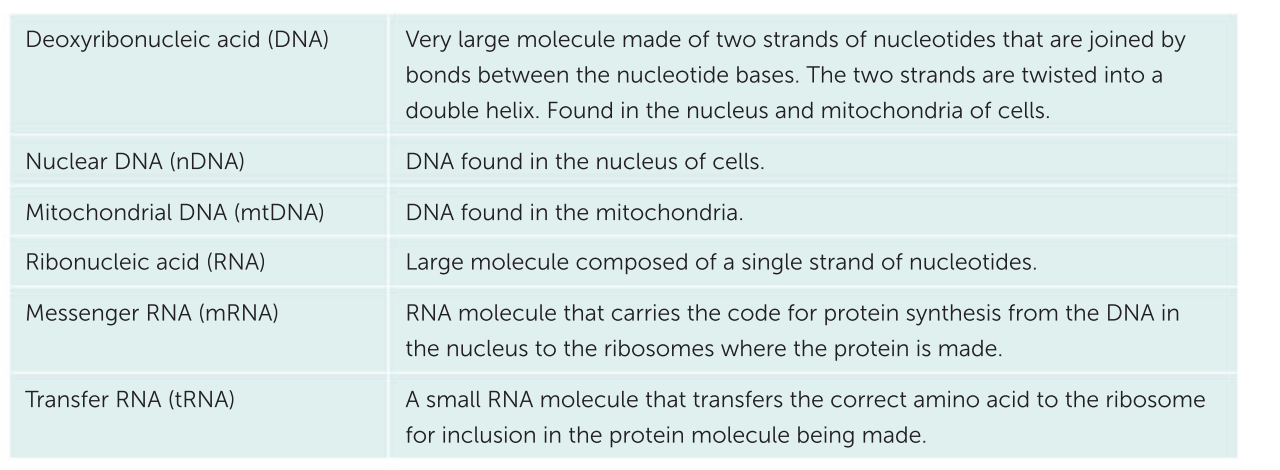
Messenger RNA (mRNA)
is made in the nucleus and takes the genetic code into the cytoplasm allowing the genetic code to be ‘read’ by ribosomes
Ribosomal RNA (rRNA)
makes up approximately 60% of the mass of ribosomes, with the other 40% being protein. The rRNA ensures the correct alignment of mRNA, tRNA and ribosome. It also has an enzymatic role in the formation of peptide bonds between amino acids.
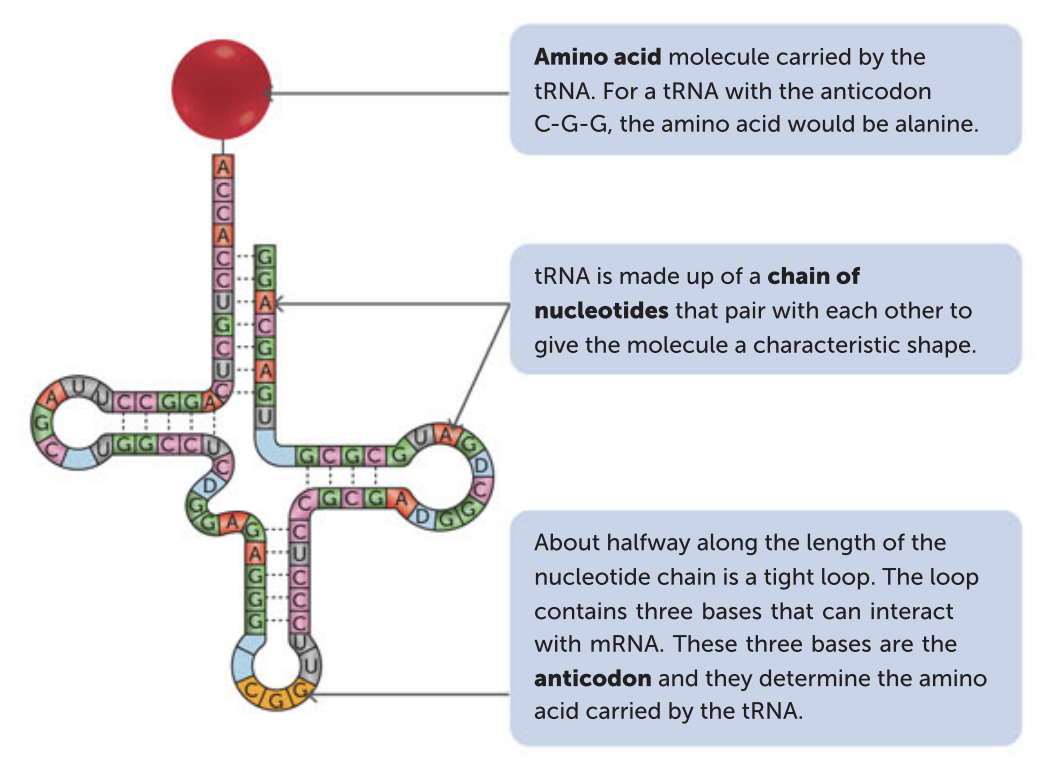
Transfer RNA (tRNA)
is a small molecule of RNA, containing only 70–90 nucleotides. Each tRNA molecule is able to carry a specific amino acid and therefore plays a vital role in protein synthesis.
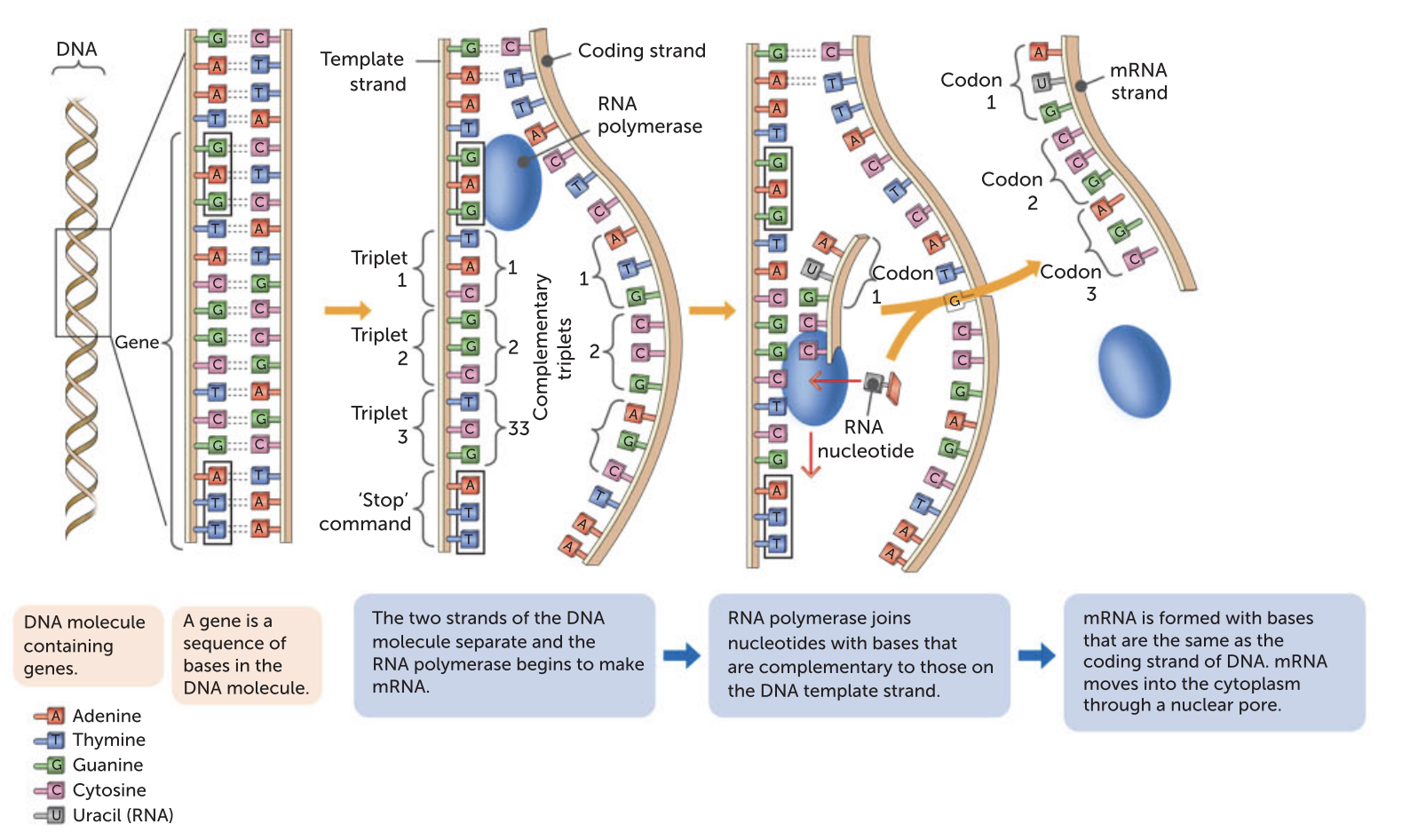
Transcription
Transcription is the process by which the genetic instructions are copied (or transcribed) from the DNA to the mRNA molecule. The transcription is triggered by chemical messengers that enter the nucleus from the cytosol and bind to the DNA at the relevant gene. This causes an enzyme called RNA polymerase to begin the process of making mRNA
Translation
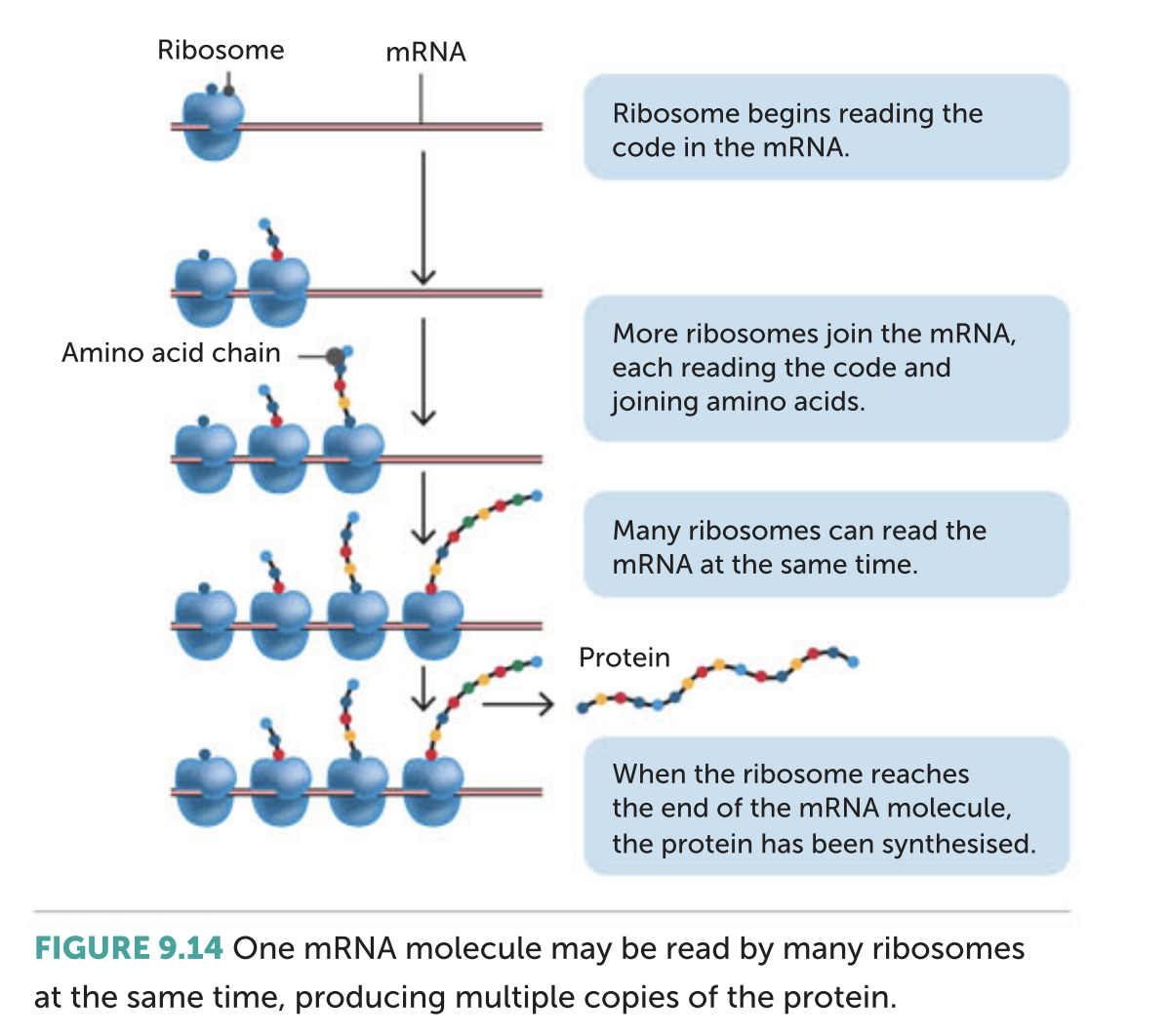
Translation is the production of a protein using the information that is coded in the mRNA molecule. In the cytosol, a ribosome attaches to one end of the mRNA molecule at a particular sequence of bases (adenine, uracil, guanine) called the start codon. This ensures that the ribosome attaches to the correct end of the mRNA
Codon
Each group of three bases is called a codon and corresponds to a specific amino acid.
Gene Expression
The process of copying information from DNA on to messenger RNA (mRNA) and then translating the message into a series of amino acids to form a protein
Types of nucleic acids
EPIGENETICS
Some of the factors that make genes more or less likely to be expressed may be inherited
epigenome
epigenome is the sum of all the factors that determine when, where and which genes are ‘switched on’ or expressed. The epigenome helps to control which genes are active in a particular cell and therefore which proteins will be produced. Thus, epigenetic factors tell muscle cells to behave like muscle cells, nerve cells to act as nerve cells, and so on. If the epigenome is abnormal, certain cells may be abnormal and disease may result. One way in which genes are regulated epigenetically is through changes in chromatin.
Environment and the epigenome
A person’s epigenome can be changed by exposure to certain environmental stimuli. Examples of environmental agents that may cause epigenetic changes are severe stress, nutritional factors, and toxins or drugs that may enter cells. Such agents do not change the DNA, but they interfere with the transcription and translation processes involved in protein production. The mechanism by which the epigenome affects gene regulation is still under investigation, but it is known that epigenetic factors can influence any step in gene expression – any step in the pathway from gene to protein.
Epigenetics
Epigenetics is the study of variations that occur due to factors that switch genes on and off. This process includes modifying the shape of histone proteins, acetylation and methylation.