ISTQB CT-AI Tester chapter 1
 Call Kai
 Learn
Learn Practice Test
 Spaced Repetition
 Match
Match Flashcards
 Knowt Play
1/32

There's no tags or description
Looks like no tags are added yet.
Name | Mastery | Learn | Test | Matching | Spaced | Call with Kai |
|---|
No analytics yet
Send a link to your students to track their progress
33 Terms
What is AI?
the capability of a system to perform tasks that normally require human intelligence, like learning, reasoning, and problem-solving.
What is the AI Effect?
a task previously considered AI becomes seen as "normal computing" once it's achieved. Example: chess programs were once considered AI, now not.
Name the main types of AI.
1. Narrow AI - performs specific tasks (e.g., image recognition);
2. General AI - can perform any intellectual task a human can;
3. Super AI - hypothetical like human + unlimited memory => wiser then human.
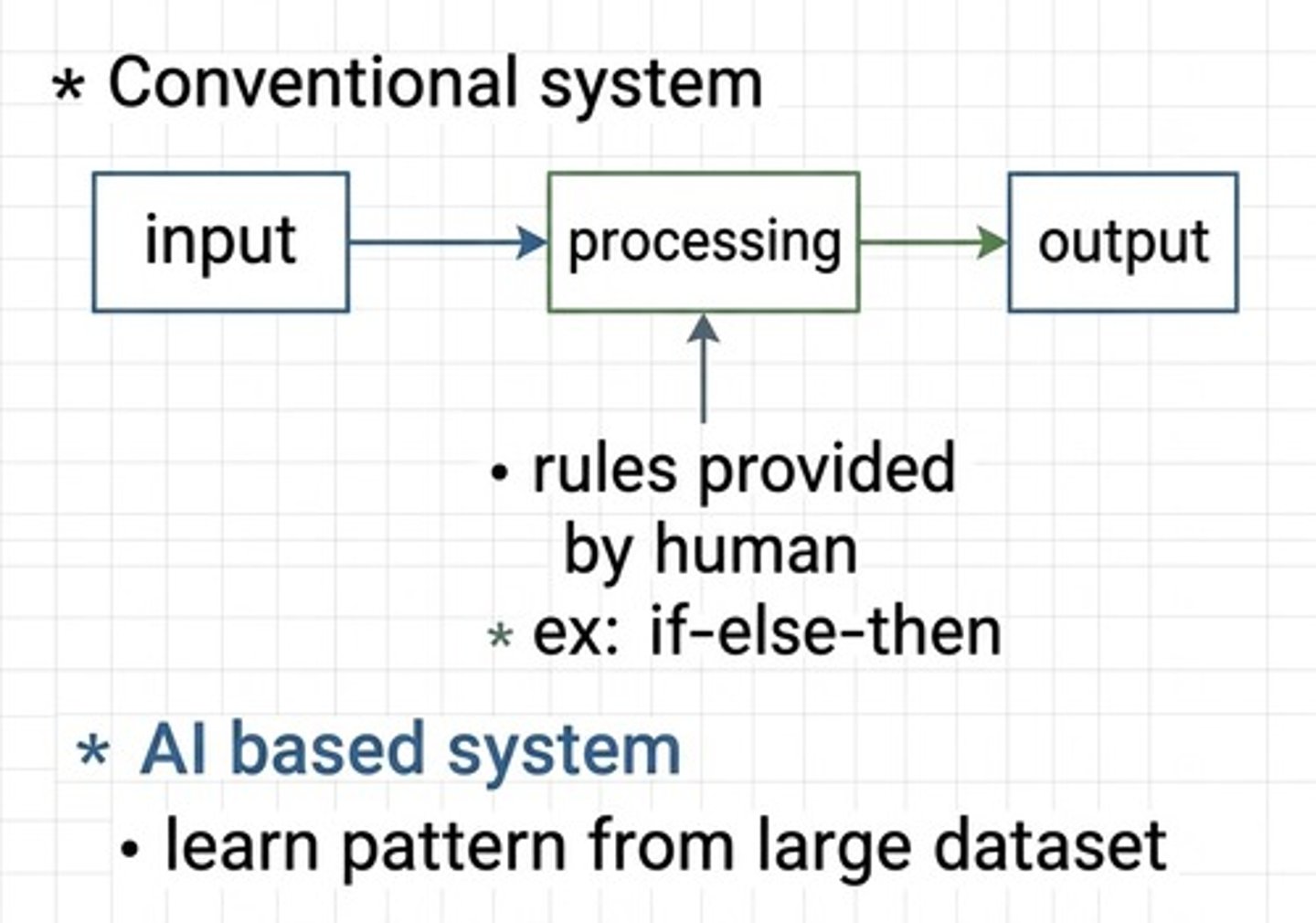
What is the difference between AI-based systems and conventional systems?
- AI systems can learn and adapt from data
-Conventional systems follow fixed programmed rules.
List group AI technologies.
1. Fuzzy logic
2. Search algorithms
3. Reasoning techniques
4. Machine learning
What is the purpose of AI standards and regulations?
To ensure ethical, safe, transparent, and accountable use of AI technologies.
Transfer Learning.
using a model trained on one task and adapting it to a related task, saving time and data.
Give examples of AI applications in daily life.
Voice assistants (Siri, Alexa), Image recognition (Google Photos), Recommendation systems (Netflix, Amazon), Self-driving cars.
Why is AI testing different from conventional software testing?
AI systems are non-deterministic; outputs may vary, requiring data quality checks, model validation, and ethical considerations.
Key challenges in AI systems?
Bias in training data,
Lack of explainability,
Data privacy concerns,
Hardware and scalability limitations.
search algorithm
In AI, SEARCHING = look for the best path to a goal. Ex: Game AI: Searching for the best move in Chess.
fuzzy logic
A type of logic based on the concept of partial truth represented by certainty factors between 0 and 1
rule engine
A set of rules that determine which actions should occur when certain conditions are satisfied
Deductive Classifiers
A type of Reasoning. Lí luận theo kiểu bắt cầu Ex:
1. General Rule: All mammals breathe air.
2. Specific Case: A whale is a mammal.
3. Deduction: Therefore, a whale breathes air
Case-Based Reasoning
A type of Reasoning, based on the solutions of similar past problems
Procedural Reasoning
A type of Reasoning, dynamically understand and execute step-by-step "how-to" processes to achieve specific goals in real-time . Ex:
- use GPS to go to airport, follow route left => right => left. If not turning right, AI can reason again to make sure still get to airport
Neural networks (Machine learning)
A type of ML, like human brain, includes layers (input/hiden/output layer) connected each other through weighted connections
Decision trees (Machine learning)
A type of ML, models representing decisions and their possible consequences as a tree structure of conditional logic (if-else-then)
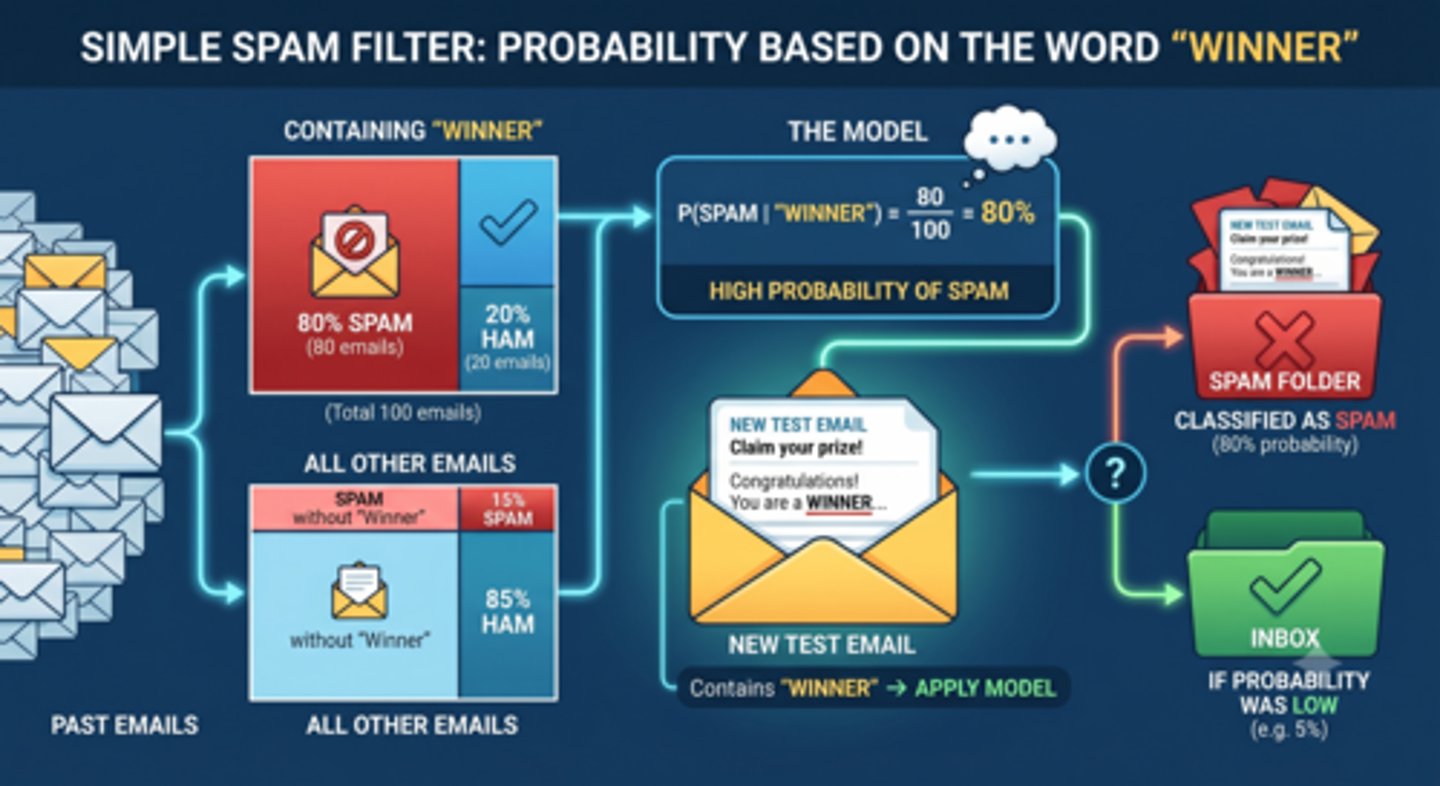
Bayesian models (Machine learning)
A type of ML, probabilistic machine learning model, calculate and continuously update the probability of a hypothesis when having new data
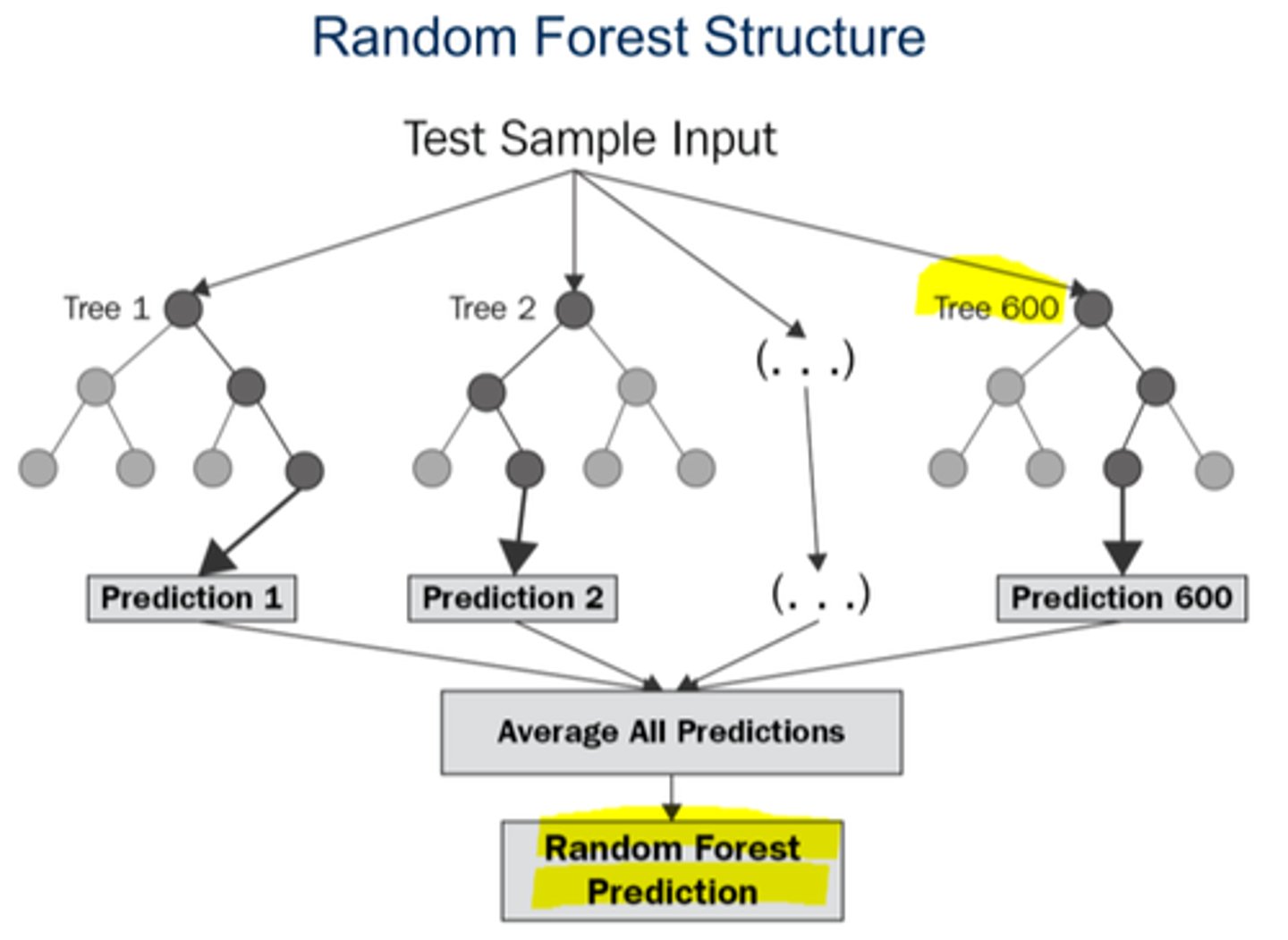
Random forest (Machine Learning)
A type of ML, uses many decision trees to make better predictions
Linear Regression
A type of ML, learns a straight-line relationship between inputs (x) and outputs (y) so it can predict numeric values. (a,b)
Logistic Regression
A type of ML, Predicts the probability that an input belongs to a specific class.
Clustering algorithms (unsupervised ML)
A type of ML, techniques used to group unlabeled data points together based on their similarities
Genetic algorithms
A type of ML
Improve solutions by selecting the best ones and modifying them through combination (crossover) and small random changes (mutation).
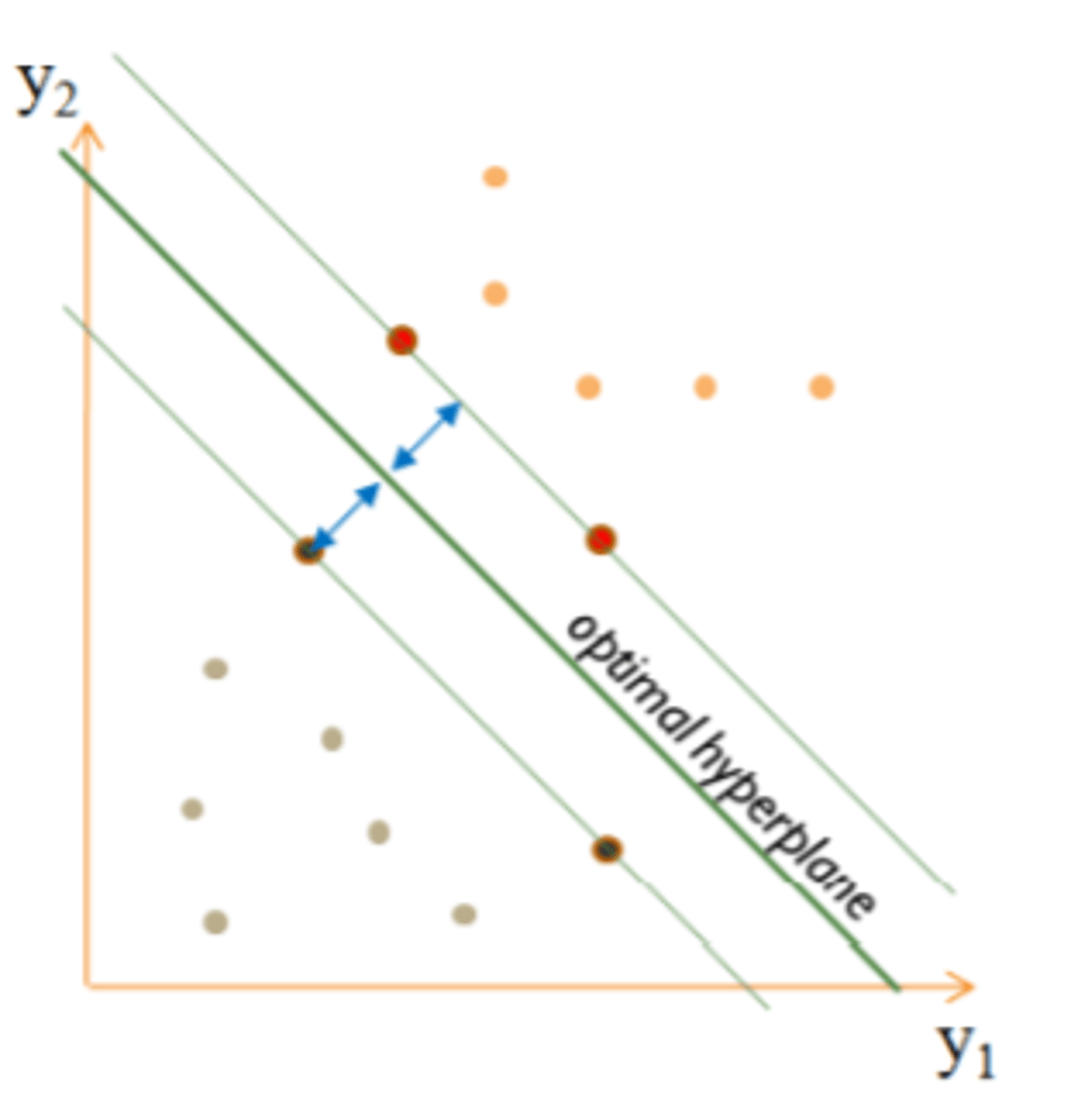
Support Vector Machine (SVM)
A type of ML, Look for the best boundary ( hyperplane ) that separates different classes in the data
What's included in AI Development frameworks
data preparation
algorithm selection
compilations of models to run on various processors
Popular AI development frameworks (Avril 2024)
Apache MxNet (open source used by Amazon),
Microsoft CNTK,
IBM Watson Studio,
Keras
PyTorch (operated by Fb),
Scikit-learn,
TensorFlow
Why are hardware considerations important in AI?
AI often requires high-performance GPUs or TPUs for training and inference; conventional CPUs may be too slow.
which hardwares to train ML model & model implementation?
CPUs, GPU, ASICs (Application-Specific Integrated Circuits), SoC (System on a Chip)
CPUs đặc điểm
- have few "cores"
- less efficient for training & running ML models
- have faster clock speeds
GPUs đặc điểm
- have 1000 cores
- perform massively parallel
ASICs & SoC đặc điểm
- multiple cores
- special data mgmt
- ability to perform in-memory processing (GPU và CPU phải mất công truyền dữ liệu)
AI as a Service (AIaaS)
- ready to use AI capabilities
- provide via the cloud
- eliminates need to build, train, maintain model