Intro
 Call Kai
 Learn
Learn Practice Test
 Spaced Repetition
 Match
Match Flashcards
 Knowt Play
1/17

There's no tags or description
Looks like no tags are added yet.
Name | Mastery | Learn | Test | Matching | Spaced | Call with Kai |
|---|
No analytics yet
Send a link to your students to track their progress
18 Terms
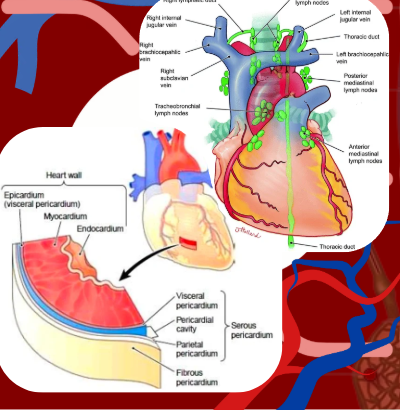
pericardium
endocardium
myocardium
arteries
veins
lymphatic vessels
PORTALS OF ENTRY in cvs
1. Hematogenous dissemination
2. Foreign body penetration
3. Direct extension from pleural cavity or mediastinum
List the 3 pathways/portals of entry through which pathogens or insults reach the pericardium:
1. Hematogenous dissemination
2. Parasitic migration
3. Long-term intravenous and intracardiac catheters
4. Uremia-induced vascular damage and secondary endocardial ulceration
List the 4 distinct portals of entry or predisposing insults targeting the endocardium:
In the dog; targets the left atrium.
Uremia-induced vascular damage and secondary endocardial ulceration is a classic presentation in which species and targets which specific chamber structure?
Embolic spread of infective material from vegetative endocarditis lesions to coronary arteries.
Pathogens can reach the myocardium via hematogenous dissemination or direct extension from the endocardium/pericardium. What is the third specific mechanical pathway detailed on the slide?
1. Hematogenous dissemination
2. Local extension of suppurative and necrotizing inflammatory processes
3. Immune-mediated arterial injury
4. Parasitic migration
List the 4 core portals of entry or mechanisms of insult affecting arteries:
1. Hematogenous dissemination
2. Local extension of severe inflammation
3. Intravenous injections and catheters
4. Parasitic migration
5. Immune-mediated venous injury
List the 5 portals of entry or mechanical/iatrogenic insults that target veins:
1. Hematogenous dissemination
2. Local extension of severe inflammatory processes
3. Parasitic migration
List the 3 pathways through which pathogens enter or affect lymphatic vessels:
Hematogenous dissemination
Which single mechanism of pathogen entry is completely universal, appearing in the bulleted text for every single cardiac layer and vascular structure on this slide?
1. constant blood flow
2. innate responses
3. phagocytosis
4. humoral response
5. cell mediated response
CIPHC
List the 5 core cardiovascular defense mechanisms
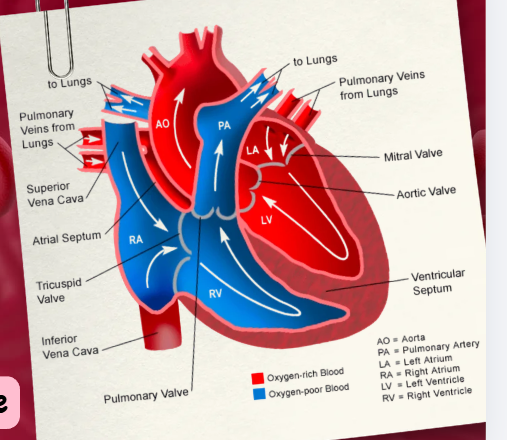
constant blood flow
Which simple physical/mechanical defense prevents the localized stagnation and colonization of blood-borne pathogens within healthy vessel walls?
Bradycardia: A reduction in heart rate
Tachycardia: An elevation in heart rate
Define Bradycardia and Tachycardia based on heart rate alterations:
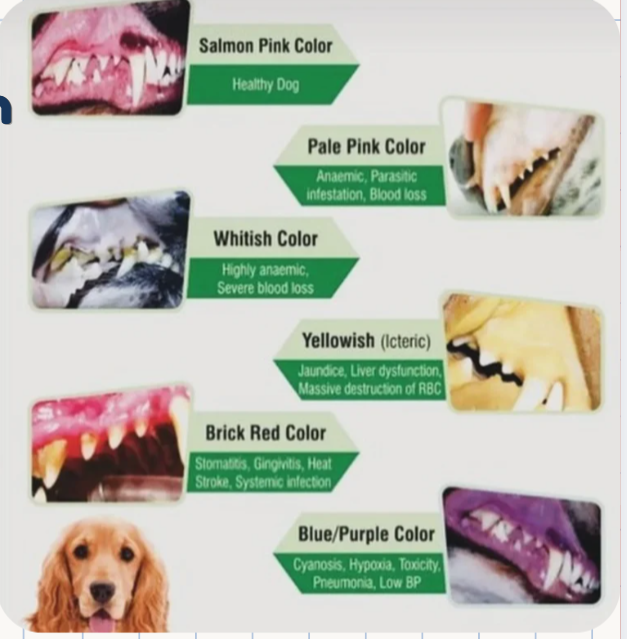
Cyanosis
A bluish discoloration of the skin resulting from circulatory disturbances.
1. Significant decline in the body's vital processes
2. Rapid yet shallow breathing
3. Reduced blood volume
4. Lowered blood pressure
List the 4 key indicators/clinical signs that characterize Shock:
Shunt
An irregular pattern of blood flow.
Stenosis
Abnormal narrowing of a passageway in the body.
Congestive Heart Failure (CHF)
Overcirculation of the lungs and dilatation of the cardiac chambers that are required to pump or carry the shunted blood.
Chronic cardiac dilatation which leads to myocardial failure.
Over time, what two sequential chronic stages or failures lead directly to the clinical development of congestive heart failure?