invert arthropoda and echinodermata
 Call Kai
 Learn
Learn Practice Test
 Spaced Repetition
 Match
Match Flashcards
 Knowt Play
1/106

There's no tags or description
Looks like no tags are added yet.
Name | Mastery | Learn | Test | Matching | Spaced | Call with Kai |
|---|
No analytics yet
Send a link to your students to track their progress
107 Terms
arthropoda clade
panarthropoda
what is under panarthropoda?
Onychopora, tardigrada, arthropoda
Characteristics of arthropods
external jointed skeleton
Trachea
compound eyes
Malpighian tubules (Execratory organ)
mandibles
heart with ostia
tardigrades and onychophorans have what?
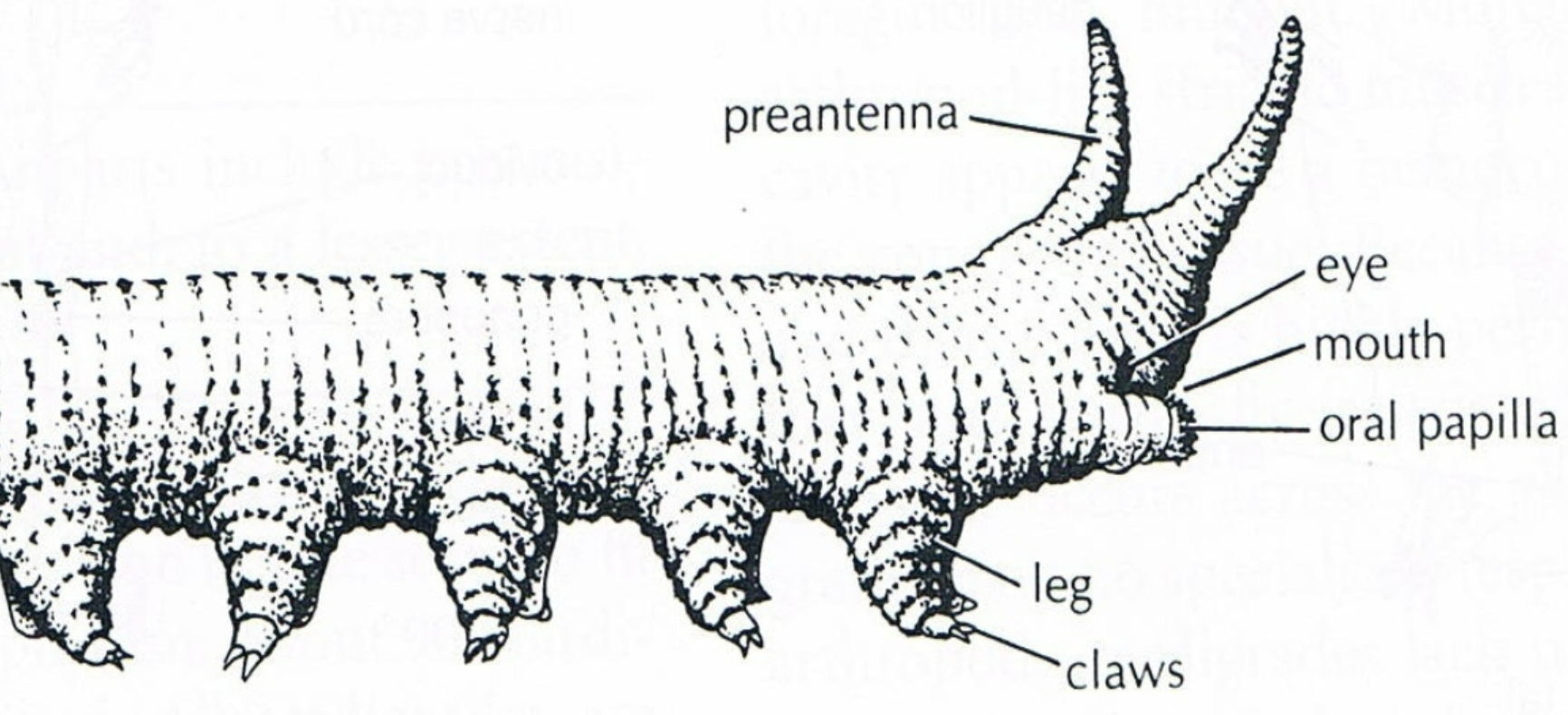
lobopods - unjointed walking legs ( terminate in claws)
Phylum Tardigrada
“water bears”
-900 species
-4 pair of clawed appendages
-no larval stage
-apendages segmented, not jointed
-undergo cryptobiosis
cryptobiosis
can dehydrate and lower metabolic rate to survive harsh conditions
Phyum Onychophora
less than 100 species
free living
terrestrial
second pair of appendages (oral papilla) form jaw
have preantenna
Phylum Arthropoda
coelomate
protostome complete digestive
Arthropoda bauplan
jointed appendages
chitinous exoskeleton
exoskeleton molt
Arthropoda is the ______ and ______ of all the animal phylum
abundant and diverse
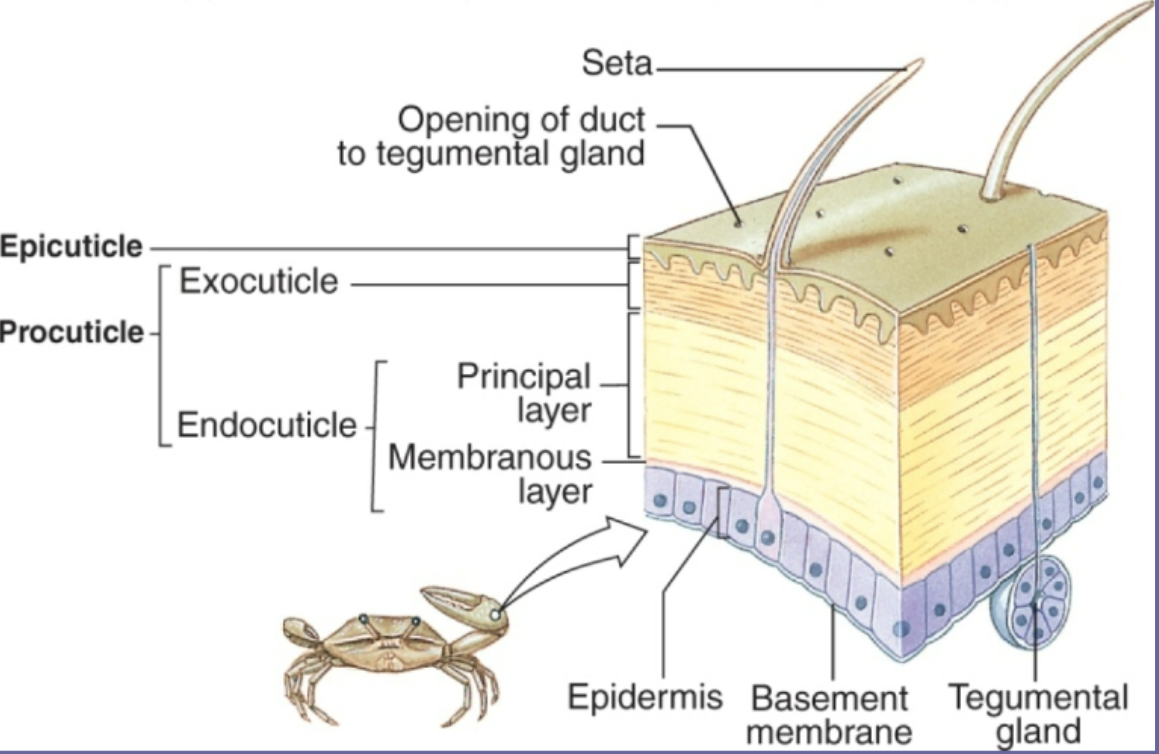
arthropod cuticle
versatile exoskeleton with multiple layers secreted by epidermal cells
protects body without sacrificing mobility
thin at joints
epidermal cells
epicuticle- proteins and lipids
procuticle- polysaccharide chiton and proteins
sclerotization
formation of bonds between proteins
hardens cuticle
in crustaceans the cuticle is further hardened by
CaCO3
Muscle attachments ____the exoskeleton
inside
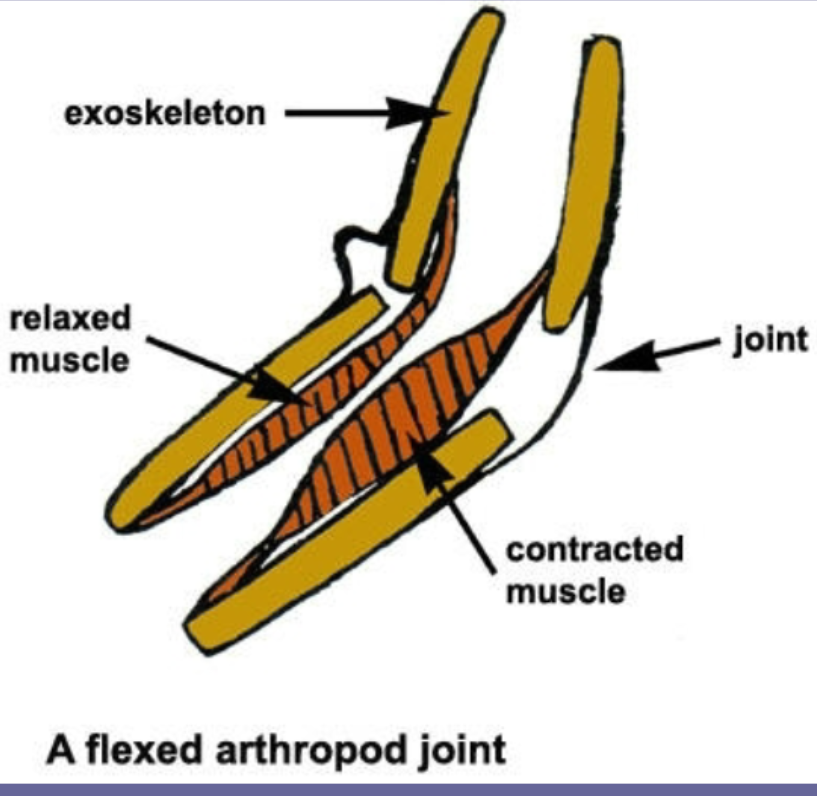
Segmented body & jointed appendages allow for
more
efficient locomotion
Each segment typically has a
pair of appendages
Segments & appendages
adapted to various tasks
Segmentation and Appendages
Phylum Arthropoda
such as
sensing, feeding,
walking, swimming, flying,
copulating,
Segments may be fused or
combined into functional groups
called
tagmata
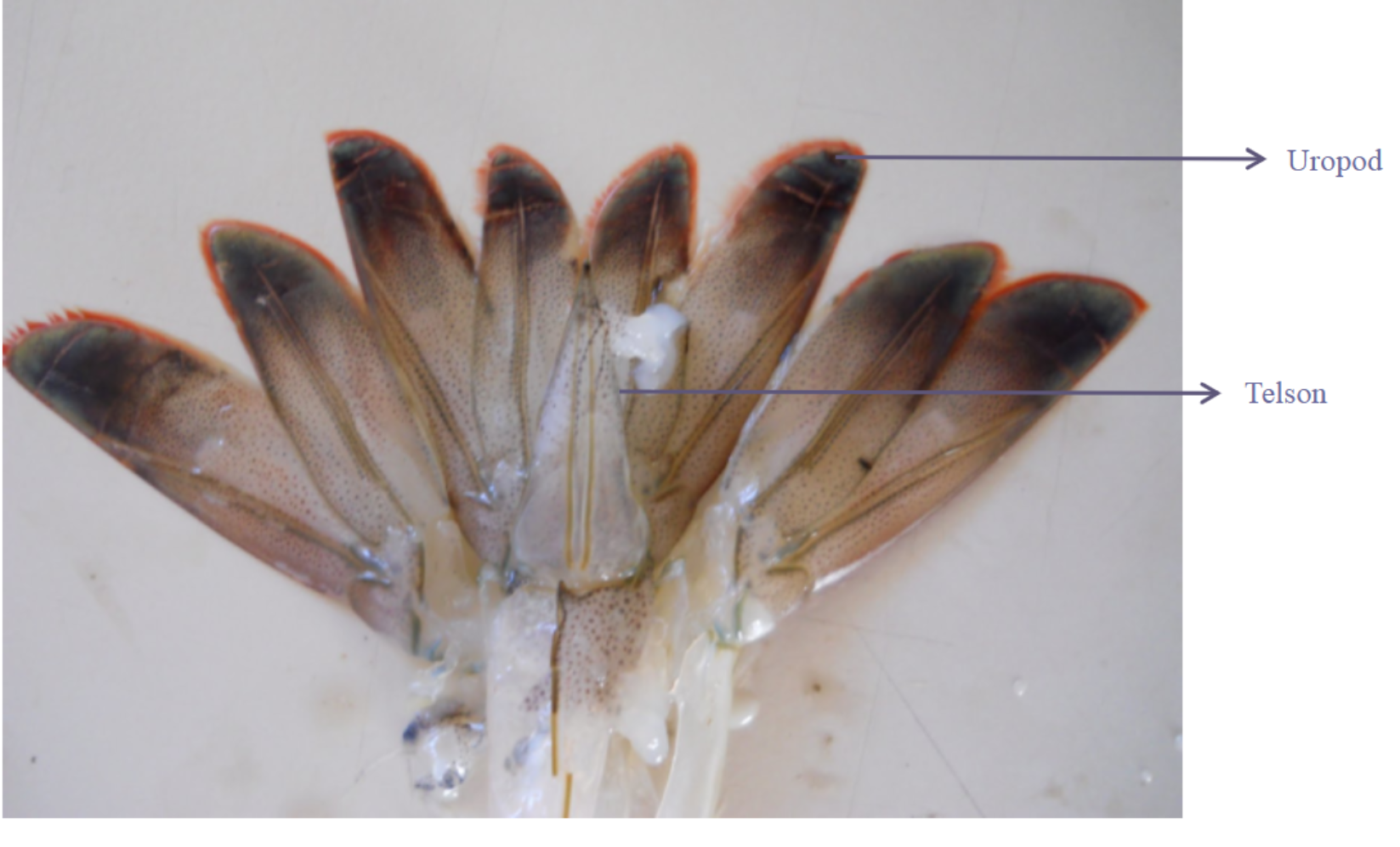
uropod and telson
chela and cheliped
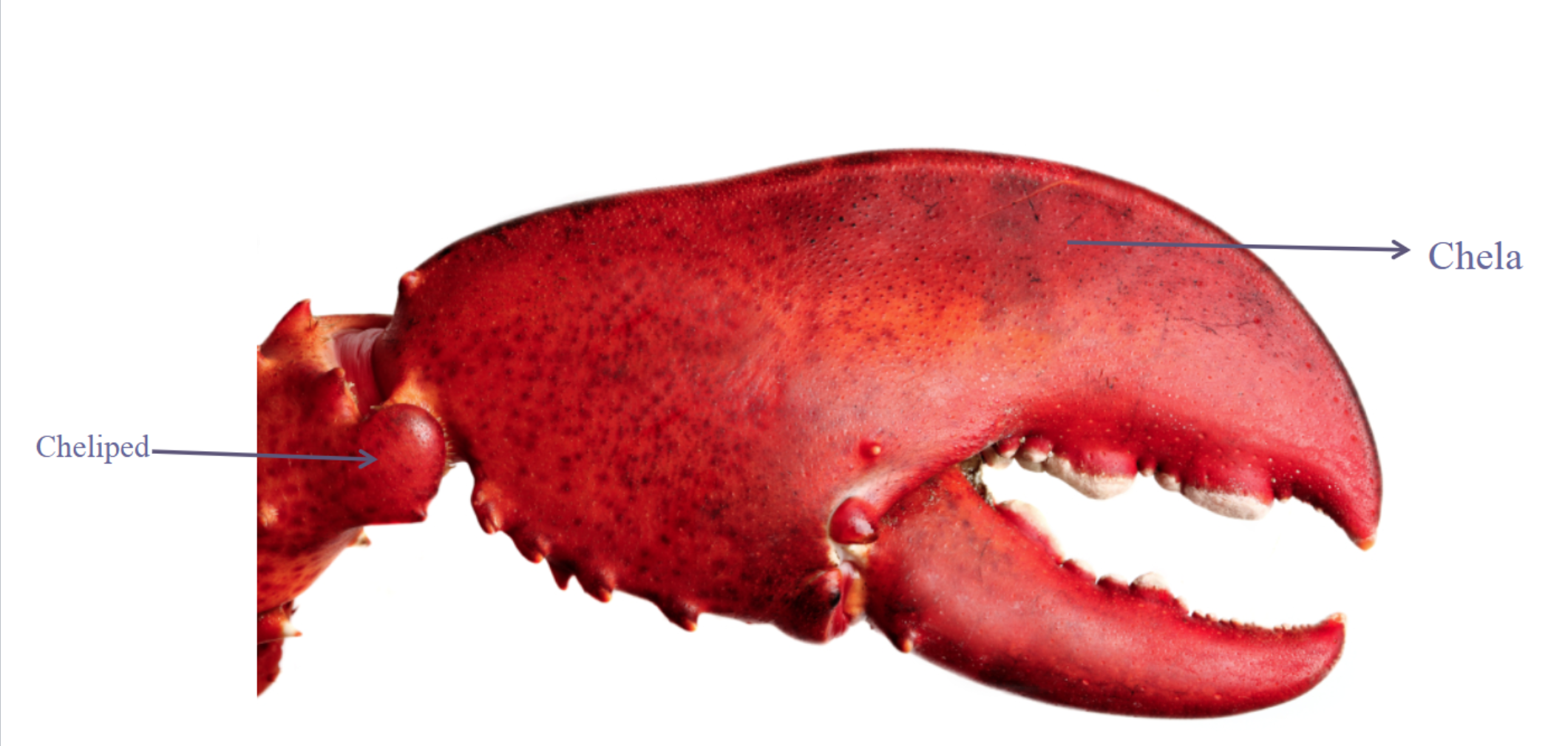
Polychaetes have some tagmatization (the
head region), but most arthropod groups have
more
Arthropod classes are defined largely by patterns of
tagmatization and the number and arrangement of limbs
In most groups, appendages on the head have been modified
into
antennae and various feeding devices
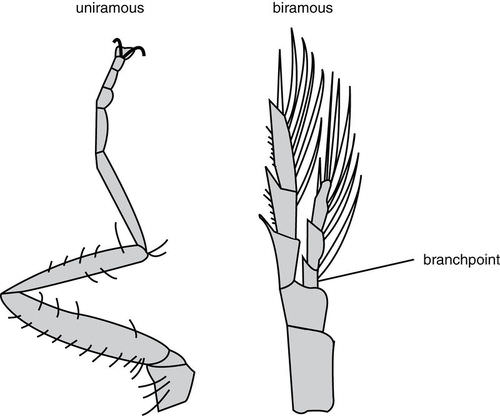
Appendages may be
uniramous
or biramous
Tracheal System
in most terrestrial
Network of finely branched
air tubes
delivers oxygen directly to cells
Tracheae open via
spiracles
Nervous system
• Brain, ventral nerve cord are well developed
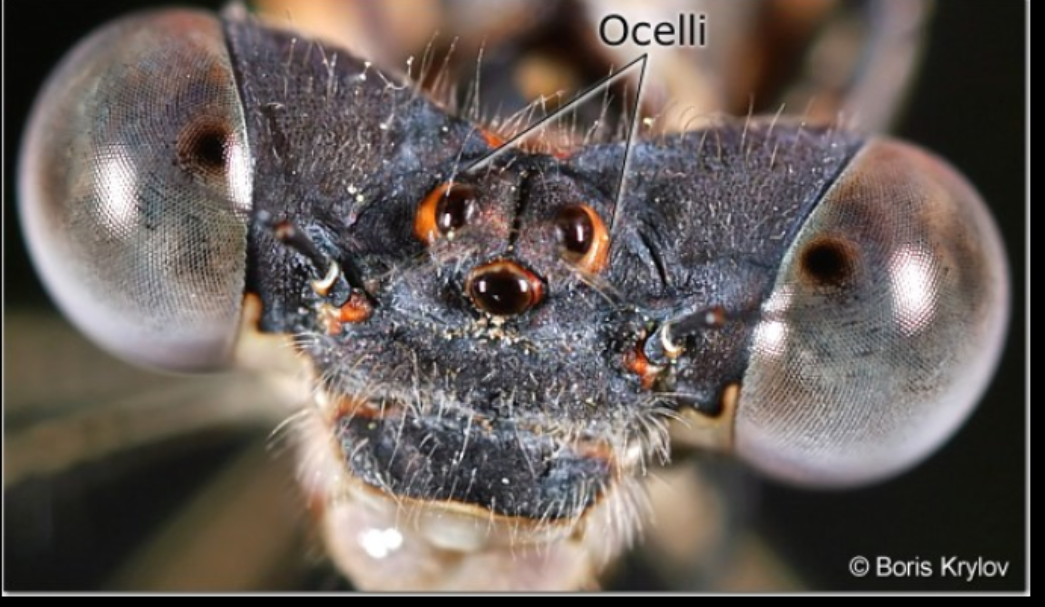
• Simple eyes (ocelli), compound eyes often present
Many arthropods undergo
metamorphosis
-greatly increases their trophic breadth
subphylum trilobita
Trilobites (extinct)
Subphylum Chelicerata
Merostomata- horshoe crab, (eurypterids (extinct))
Pycnogonida- sea spider
Arachnida- spider, scorpion, mites, tics
subphylum Myriapoda
centipedes, millipedes
Subphylum Crustacea
obsters, crabs, many otl
Subphylum Hexapoda:
insects & a few others
Subphylum Trilobita
abundant during the Cambrian & Ordovician periods
bottom dweller
Died out in Permian mass extinction
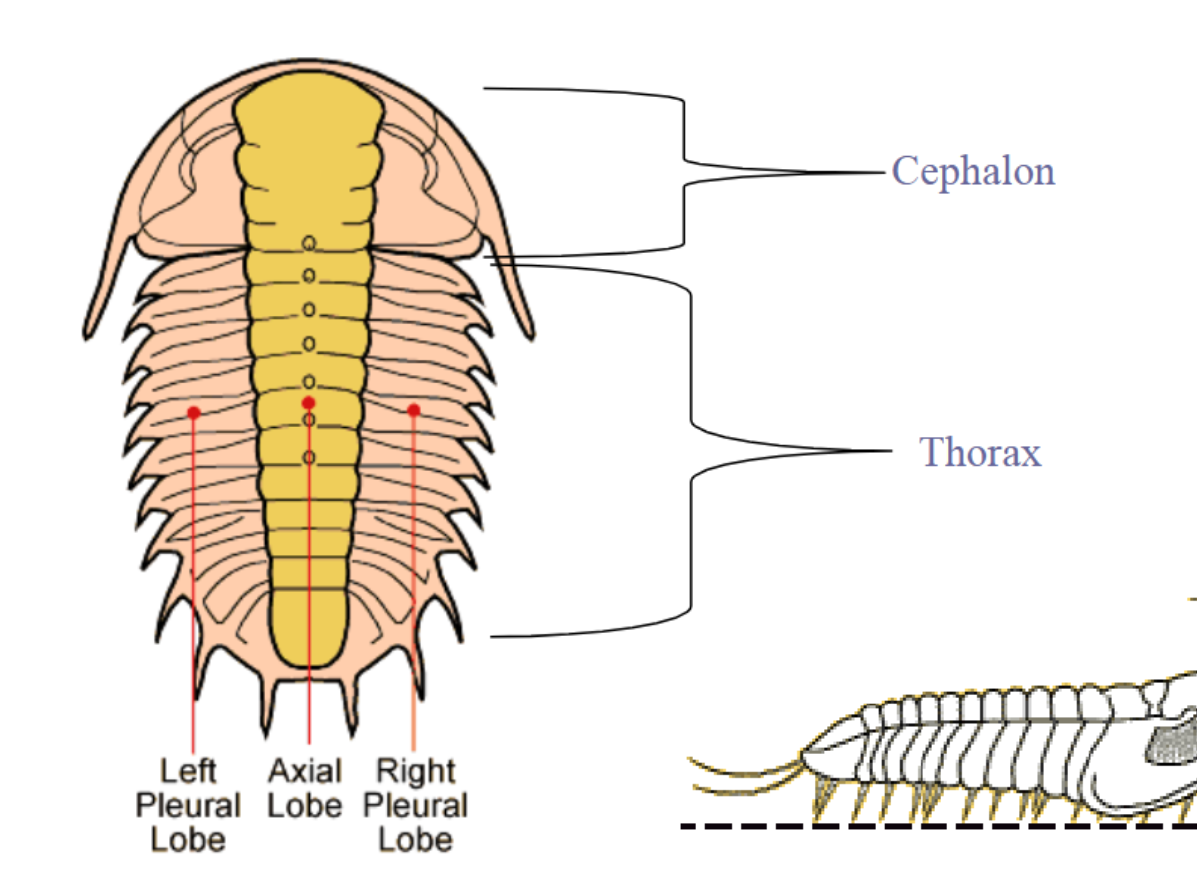
Trilobita Body divided into
3 longitudinal regions
chepalon and thorax
-legs biramous
Subphylum Chelicerata Two tagmata:
prosoma and opisthosoma
Subphylum Chelicerata have no
antennae or mandibles
Subphylum Chelicerata Six pairs of appendages on prosoma:
- 1st pair = chelicerae, used for feeding
- 2nd pair = pedipalps, variously adapted
- Four pairs of walking legs
Class Merostomata
Xiphosurids or horseshoe crabs
• Oldest fossils Ordovocian
Prosoma has dorsal
carapace
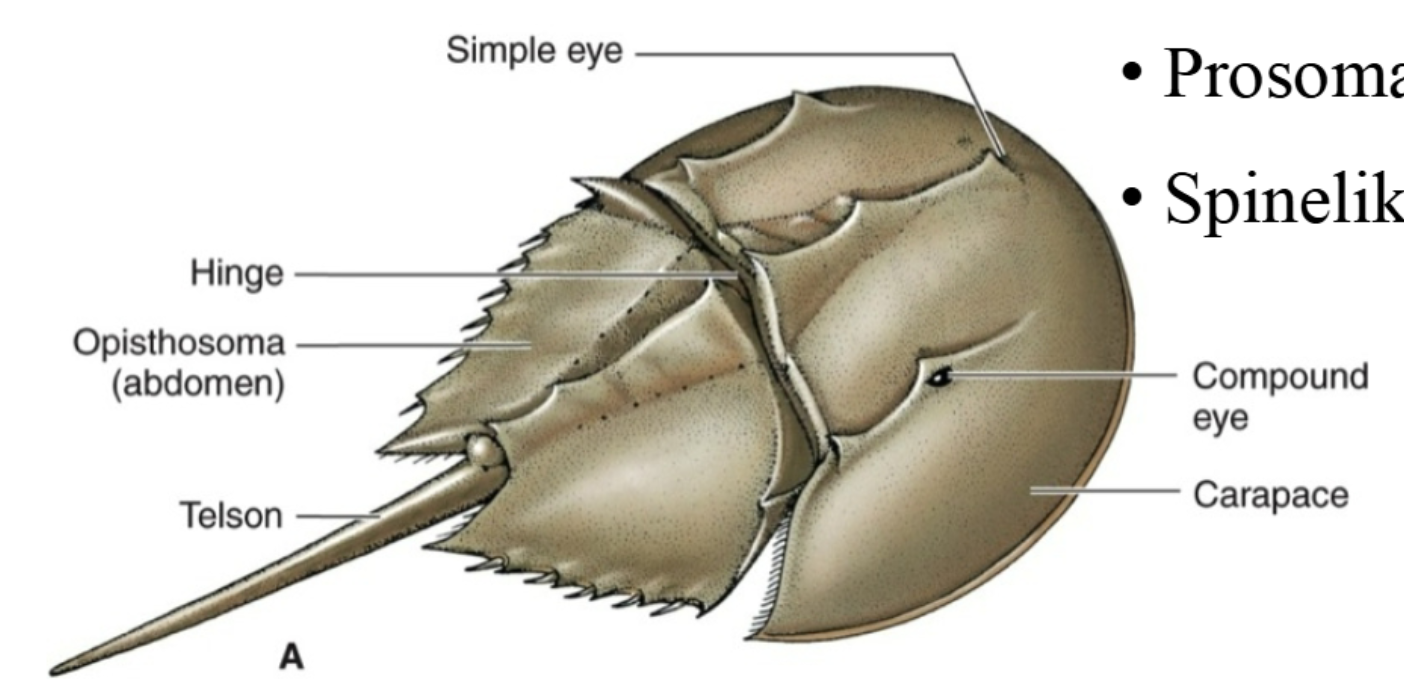
Spinelike ______on opisthosoma
telson
grind food, pass
it to the mouth
Gnathobases
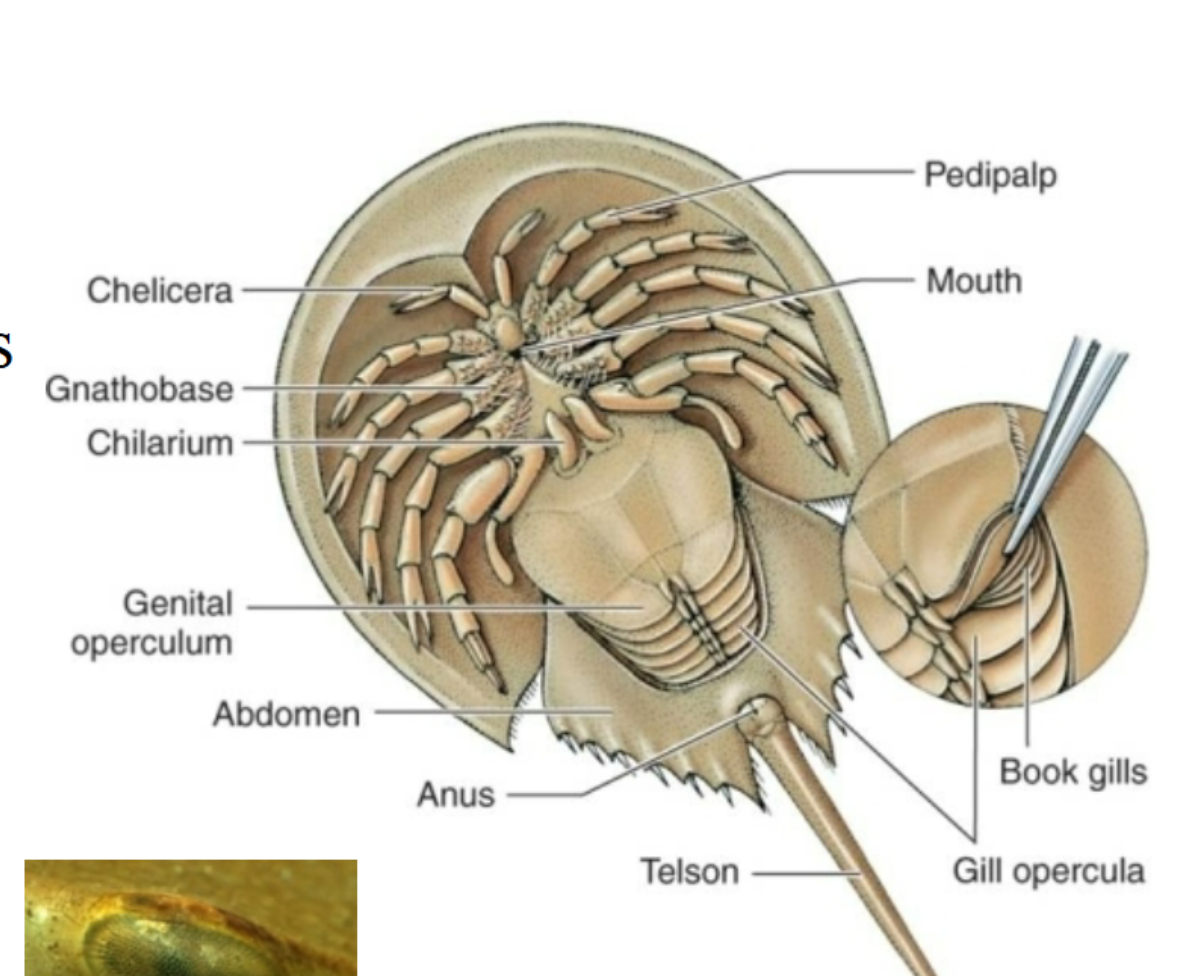
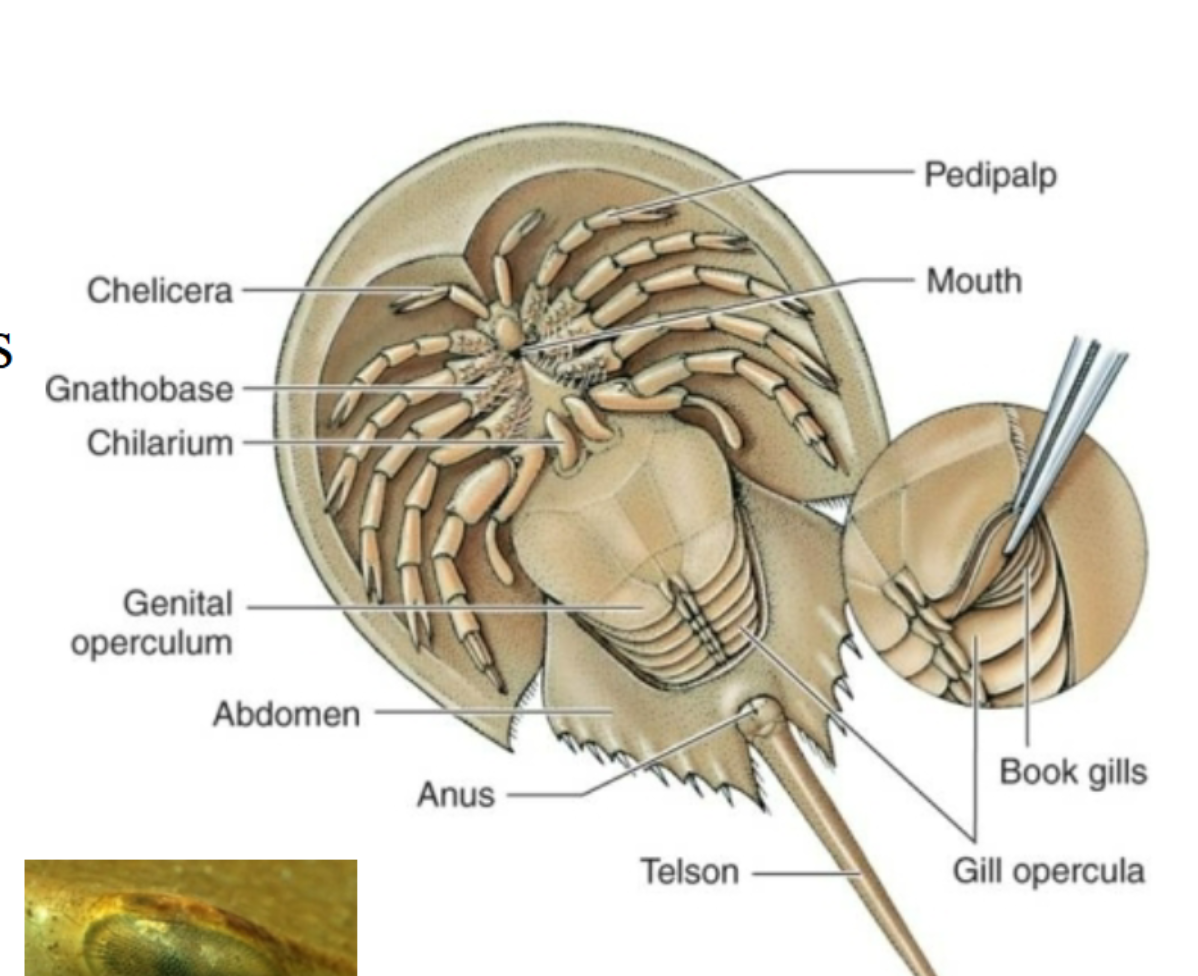
flat, leaflike
appendages on opisthosoma
that function as gills
book gills
Eurypterids
-sea scorpions
-Reached length of 3 m Largest arthropods of all
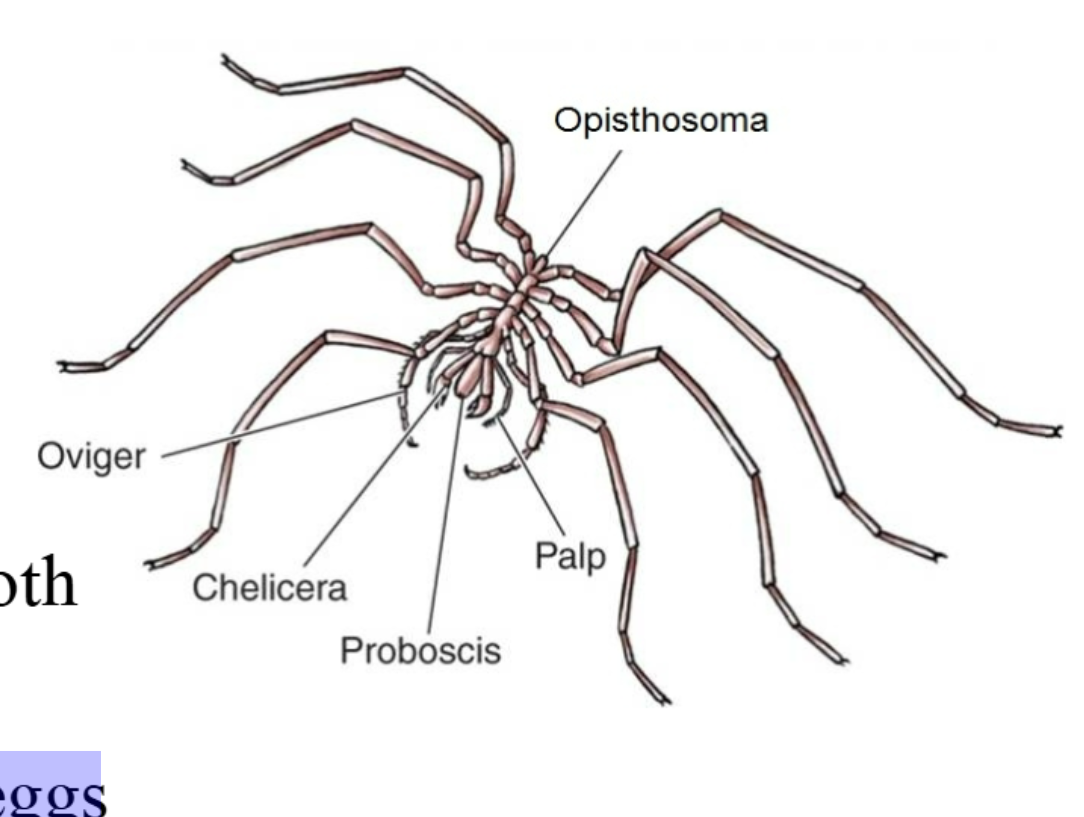
Class Pycnogonida
Sea spiders
Body is mostly prosoma, opisthosoma just a stump
Mouth at tip of prominent suctorial proboscis
Suck juices from soft-bodied, sessile animals
appendages used by both sexes for grooming
Ovigers
• Males use ovigers for carrying eggs
Class Arachnida orders
Order Araneae: spiders
Order Scorpionida: scorpions
Order Solpugida: camel spiders
Order Opiliones: harvestmen
Order Acari: ticks & mites
spider order
Araneae
Chelicerae function as fangs, bear ducts from venom glands
Prosoma aka in spider
cephalothorax
opisthosoma aka in spider
abdomen
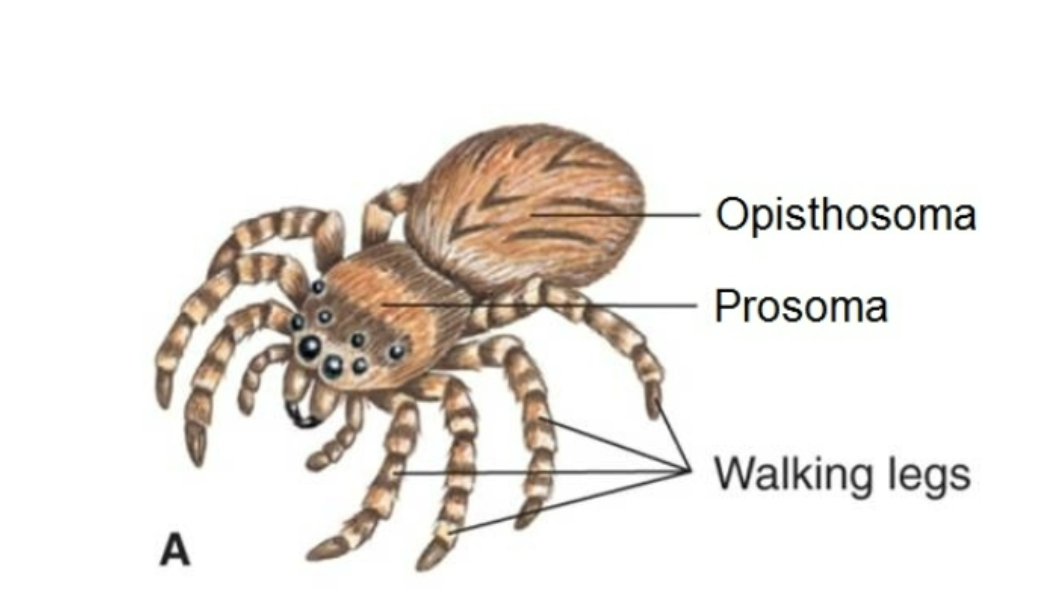
Araneae breath via
tracheae or book lungs or both
Silk from
silk glands spun into threads by spinnerets
Araneae reproduction
Male pedipalp holds a silk-wrapped sperm package
• Inserted into female genital opening after courtship ritual
female lay eggs in silk bag
scorpion order
Scorpionida
Scorpionida Opisthosoma
long and segmented, prosoma shorter
Pedipalps bearing
chelae (pincers)
Scorpionida reproduction
-male place sperm package on ground
-dances with female while holding pedipalps
Camel Spiders
Order Solpugida
Harvestmen
Order Opiliones
Mites & Ticks
Order Acari
Acari Mouthparts on
capitulum,
modified for sucking
Phylum Arthropoda: Subphylum Myriapoda tagmata
Two tagmata: head and trunk
Mouthparts:
mandibles
& two pairs of maxillae
Centipedes Maxillipeds:
Appendages modified as venom claws
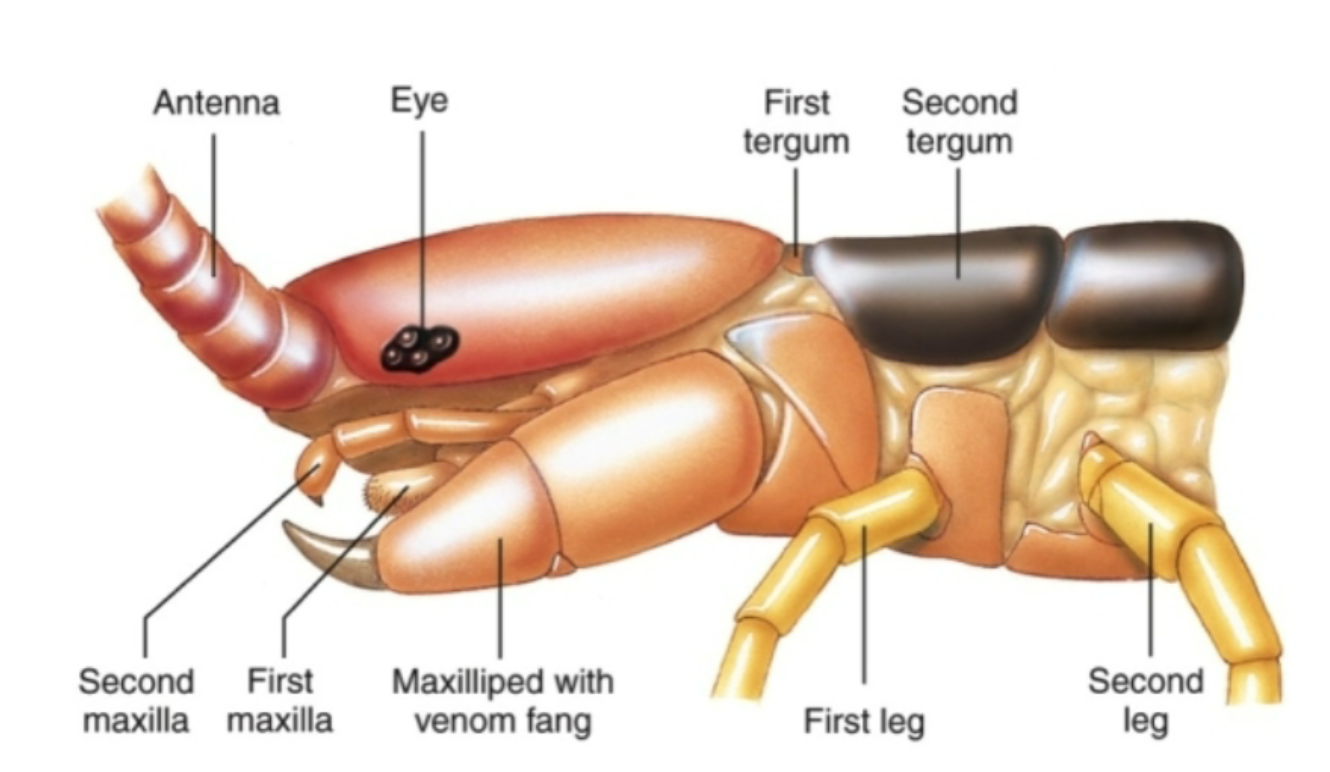
Centipedes
One pair of legs on most segments
Millipedes
Two pairs of legs per segment, 25 to 100 segments
Defensive glands secrete foul-smelling or toxic
substances
Subphylum Crustacea
More than 67,000 species
tagmata vary
primarily aquatic
Subphylum Crustacea
2 pairs of antennae
Mouthparts: mandibles &
two pairs of maxillae
Paired appendages
on most segments,
often with gills
biramous
The ancestral larva
of crustaceans
is the
nauplius
Class Malacostraca
Crabs, lobsters, shrimp,
crayfishes, pillbugs
Largest crustacean class
Malacostraca Tagmata
head, thorax, & abdomen
Head & thorax often fused as
cephalothorax, usually
covered with a carapace
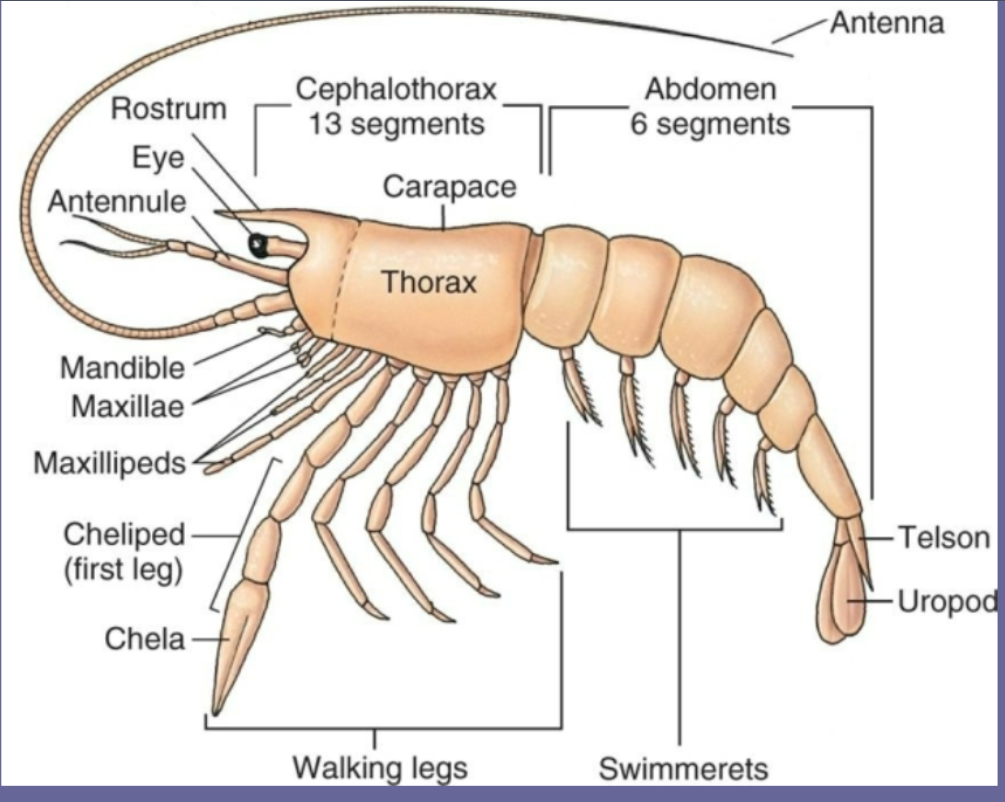
Maxillipeds:
first 3 pairs
of thoracic appendages,
for handling food
Walking legs:
5 pairs,
some chelate
Overlapping carapace protects the
branchial chambers
Class Branchiopoda
An important component
of freshwater zooplankton
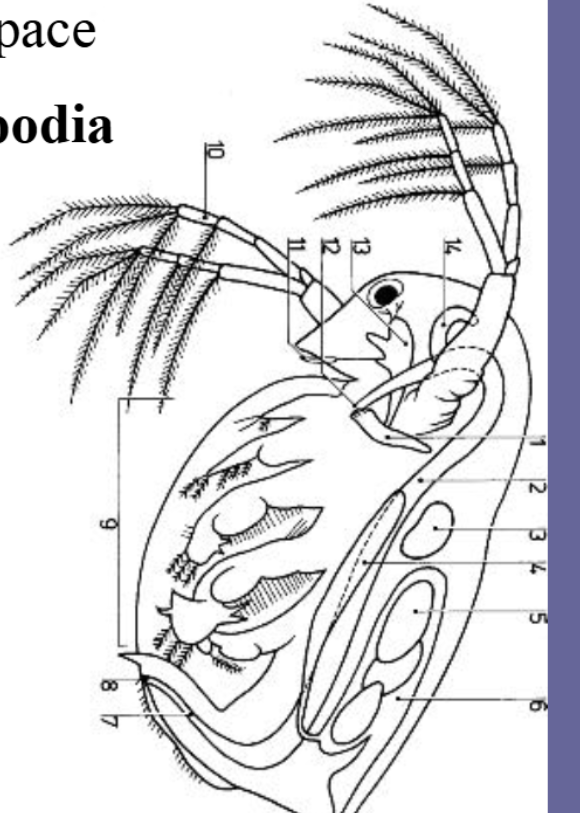
Class Branchiopoda The flattened, leaf-like legs or
phyllopodia
are the chief respiratory organs
Class Maxillopoda
Copepods, Barnacles
Copepods
small, marine, freshwater, terrestrial
single eye
major part of marine zooplankton
Barnacles
Head reduced, 2nd pair of antennae absent
Protective shell of calcium carbonate
Filter-feed using modified thoracic legs
hermaphroditic
Phylum Arthropoda: Subphylum Hexapoda tagmata
Three tagmata: head,
thorax, & abdomen
Three pairs of uniramous
legs on the thorax
Class Insecta
Insects are the dominant form of animal life on Earth
in terms of:
- Number of species
- Number of individuals
- Biomass
Class Insecta lives and eats
anything and anywhere
The classification of insects is
based in part
on modifications
of the appendages:
Mouthparts
- Legs
- Wings
& in part on type of development:
- Ametabolous
- Hemimetabolous
- Holometabolous
Ametabolous
wingless,
incomplete metamorphosis
Hemimetabolous
winged, incomplete
metamorphosis
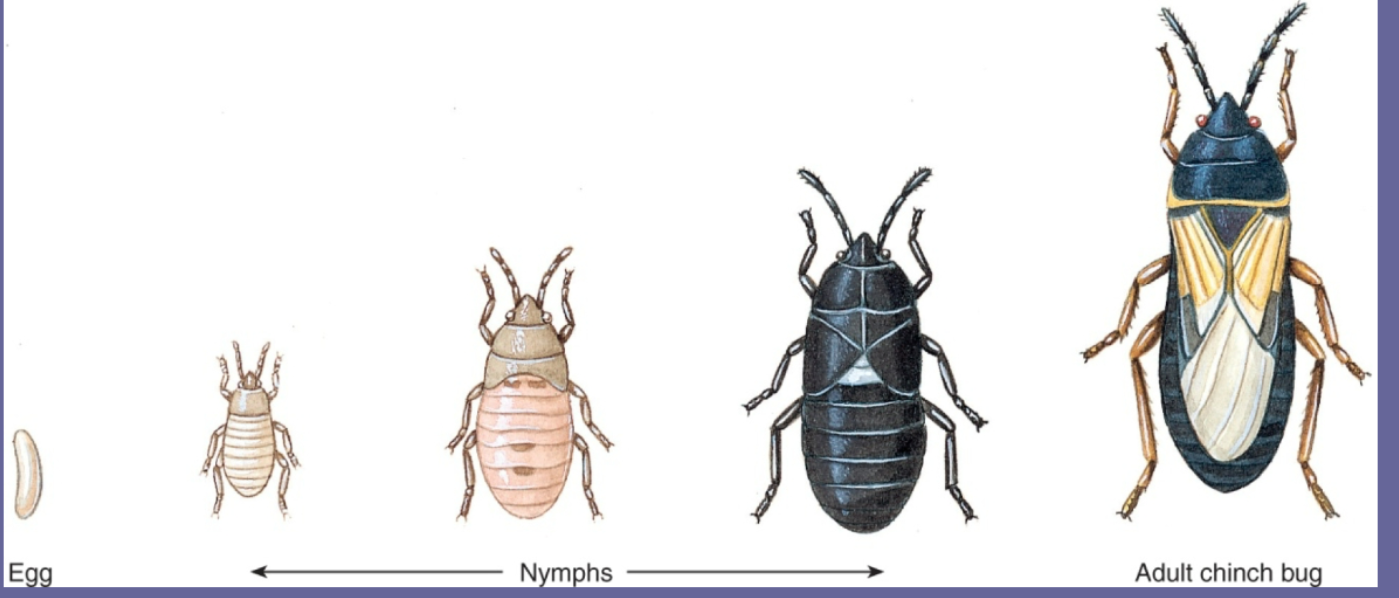
Holometabolous
winged, complete
metamorphosis
88% of insects
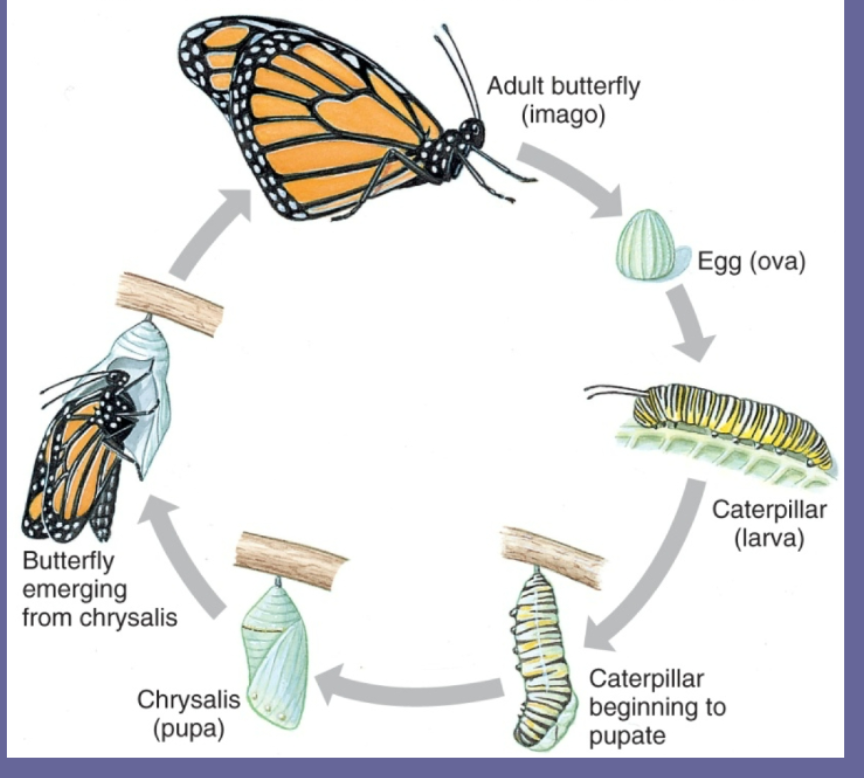
Each stage between molts
is called an
instar
Hemimetabolous orders
Ephemeroptera: mayflies
Orthoptera: grasshoppers & crickets
Odonata: dragonflies & damselflies
Blattodea: cockroaches
Holometabolous orders
Coleoptera: beetles
Diptera: flies, mosquitoes, & gnats
Lepidoptera: butterflies & moths
Hymenoptera: bees, ants, & wasps
NEXT CHAPTER
Two subgroups originally identified
by molecular characters:
Lophotrochozoa (16 phyla)
Extremely diverse group, no
common morphological character
- Ecdysozoa (8 phyla):
Animals that molt their cuticles
Phylum Echinodermata
-deuterostome
Sea stars, sea urchins, sand dollars,
sea cucumbers, sea lilies
All species marine
Lack ability to osmoregulate
Body plan:
- Calcareous, spiny endoskeleton
- Pentaradial symmetry
- Larvae have bilateral symmetry,
suggesting common ancestry
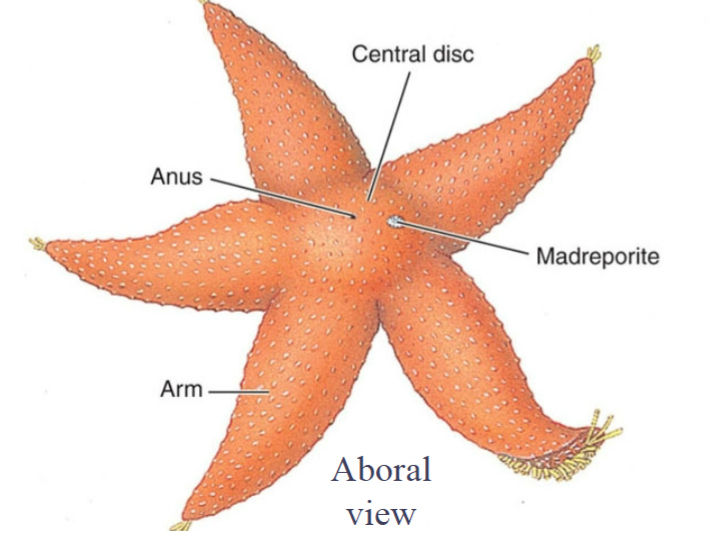
Class Asteroidea Anus and madreporite are located on the
aboral surface
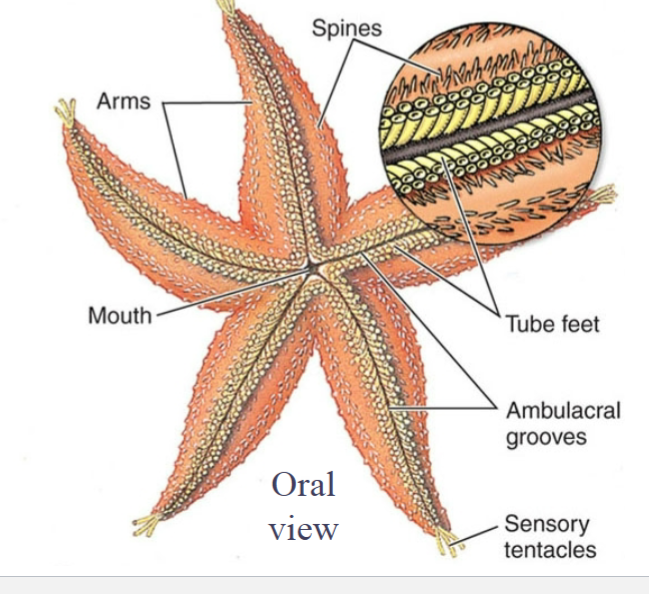
An ambulacrum bearing rows of
tube feet (podia) and
moveable spines
An endoskeleton of small calcareous
ossicles
Spines and ___project from ossicles to surface
tubercles