Science- Enzymes
 Call Kai
 Learn
Learn Practice Test
 Spaced Repetition
 Match
Match Flashcards
 Knowt Play
1/29

There's no tags or description
Looks like no tags are added yet.
Name | Mastery | Learn | Test | Matching | Spaced | Call with Kai |
|---|
No analytics yet
Send a link to your students to track their progress
30 Terms
catalyst
a substance that increases the rate of a chemical reaction and is not changed by the reaction
enzyme
special proteins that act as biological catalysts
digestive enzymes
focusing on substrate and breaking it down into smaller molecules
5 properties of enzymes
all proteins
all can be reused again
all are affected by ph
all are affected by temperature
each enzyme catalyses one reaction only
middle thing in between enzyme and substrate
active site
enzyme + substrate → enzymatic reaction → ?
enzyme + substrate → enzymatic reaction → Enzyme-substrate complex
optimum pH for enzymes
7-8
optimum temperature for enzymes
room temperature, 37C
is the active sites shape the same as the substrates shape
no, are described as complimentary
enzyme functions
break down larger molecules
build up smaller molecules into larger ones
convert smaller molecules into other molecules
what liquid is needed to break down biological molecules, and is part of the result of building larger molecules
water
denatured enzyme why?
too hot / wrong pH
note: too cold does not denature, it just makes it inactive
denature is irreversible?
YES
on structure, so the enzyme cannot catalyse a reaction
explain denature impact on enzyme functionality
wrong ph / too hot → enzyme structure decays → substrate unable to bind to new enzyme structure, active site messed up → cannot catalyse a reaction
factors that affects enzyme’
Temperature
pH
Substrate concentration
Enzyme concentration
IV is on Bottom or Right
Bottom
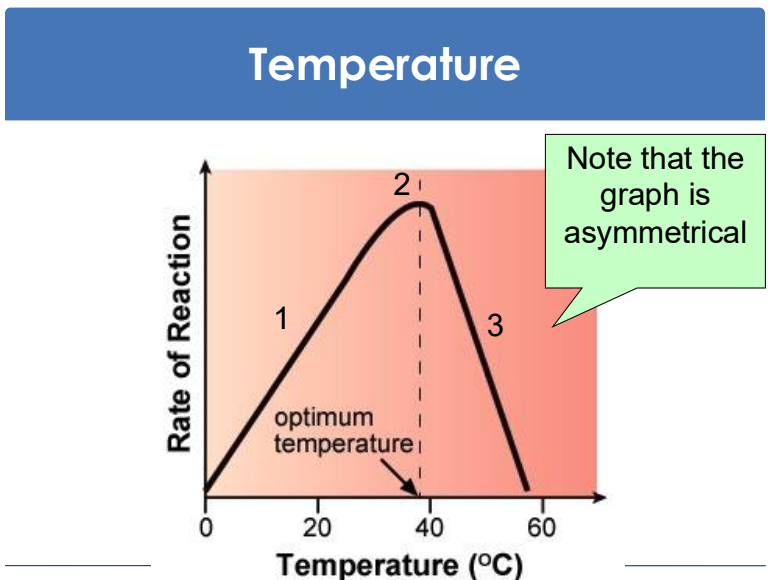
temperature graph explanation
Stage 1, temperature increases, enzyme activity increases
particles gain more kinetic energy as temperature increases
more likely to collide and form enzyme-substrate complex
Stage 2- at optimum temperature
enzyme works best
stage 3- temperature too high
enzyme lost its shape and denatures. it can no longer catalyse the reaction
do all enzymes have the same optimum pH
no
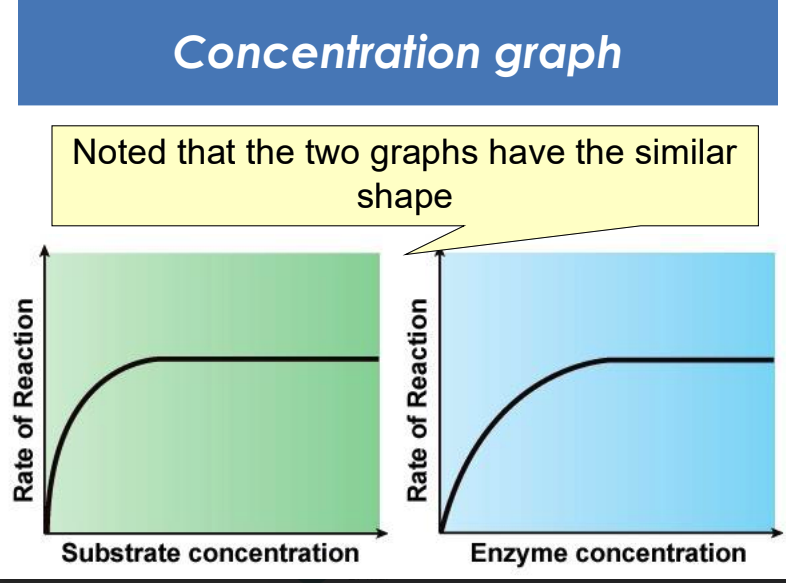
whats the level off called
plateau
lactose intolerance causes (explain)
people have a lactase deficiency, so the galactose does not get broken down, instead travelling down into the large intestine, where bacteria spread
Benedicts Test how
blue → green → orange → red/brick-red (red = a lot of reducing sugars)
Starch Test how?
iodine solution + mixture into dimple tile, positive = Blue-black/purple, negative = orange/brown