PSYCHOLOGY
 Call Kai
 Learn
Learn Practice Test
 Spaced Repetition
 Match
Match Flashcards
 Knowt Play
1/360

There's no tags or description
Looks like no tags are added yet.
Name | Mastery | Learn | Test | Matching | Spaced | Call with Kai |
|---|
No analytics yet
Send a link to your students to track their progress
361 Terms
Psychodynamic
behavior comes from unconscious conflicts (Freud ideas)
Behavioral
behavior is learned through rewards/punishment
Humanistic
focus on free will and personal growth
Cognitive
how we think, remember, and process information
Biological
brain, genes, hormones affect behavior
Evolutionary
behavior helps survival and reproduction
Sociocultural
culture and society influence behavior
Biopsychosocial
combines biological + psychological + social factors
Confirmation bias
only notice info that supports your belief
Hindsight bias
“I knew it all along” after something happens
Overconfidence
thinking you are more correct than you really are
Empirical evidence
data from observation or experiment
Scientific method
steps to test ideas
Falsifiable
can be proven wrong
Replication
repeating study to see if results match
Reliability
results are consistent
Validity
measures what it should measure
American Psychological Association (APA)
the scientific study of the mind and behavior.
methodology
plan of how study is done
Quantitative data
numbers (scores, percentages)
Qualitative data
descriptions (words, opinions)
Structured interviews
same questions for everyone
Survey technique
collecting primary data from a representative sample using questionnaires or interviews to measure attitudes, behaviors, or opinions
Naturalistic observation
observation of subjects in their natural environments, without manipulating variables
Wording effect
question phrasing changes answers
Social desirability
people give “good-looking” answers
Case study
deep study of one person/group
Correlational research
a non-experimental, quantitative method that measures the statistical relationship between two or more variables without manipulating them
Third variable problem
hidden factor affects both variables
Positive correlation
a statistical relationship where two variables move in the same direction
Negative correlation
one goes up, other goes down
Experimental method
tests cause and effect (manipulate variables)
Confounding variable
unwanted variable affects result
Operational definition
clear definition of variables
Placebo effect
fake treatment still causes effect
Experimenter bias
researchers unintentionally influence study results to match their expectations through biased data collection, participant interaction, or interpretation
Single-blind:
where the participant does not know if they are receiving the treatment or a placebo, but researchers do
Double-blind
neither the participants nor the researchers know who is receiving a particular treatment or a placebo
Representative sample
a small, accurately selected subset of a larger population that reflects the key characteristics (e.g., age, income, gender) of the whole group
Sample bias
ystematic error occurring when certain members of a target population are more likely to be selected for a study than others, resulting in a non-representative sample
Generalizability
can apply results to larger group
Descriptive statistics
summarize and organize the main features of a dataset, providing simple numerical or graphical summaries about the sample and measures
Inferential statistics
a branch of statistics that uses data analyzed from a sample to make generalizations, predictions, or inferences about a larger population.
Measure of central tendency
mean, median, mode
normal curve
a symmetrical, bell-shaped graph representing the frequency distribution of data where most scores cluster around the mean.
Regression to the mean
a statistical phenomenon where extreme, unusual, or lucky performances are likely to be followed by scores closer to the average
Percentile rank
a measure indicating the percentage of scores in a distribution that fall at or below a specific score
Meta-analysis
a quantitative, statistical research method that combines data from multiple independent studies to identify patterns, disagreements, or overall effects
Effect size
how much impact an independent variable has on a dependent variable
Institutional Review Boards (IRB):
an independent committee designated to approve, monitor, and review research involving human subjects to protect their rights, safety, and welfare
Confidentiality
the ethical or legal obligation to protect private information, ensuring it is only accessible to authorized individuals
Deception
intentionally hiding the truth, often used in research to ensure participants act naturally, or in social settings for personal gain or to avoid conflict.
Confederates
an actor working with researchers who poses as a participant to manipulate social context or influence behavior
Debriefing
explain study after it ends
Evolutionary perspective
behavior helps survival
Natural selection
Organisms that are more adapted to their environment are more likely to survive and pass on the genes that aided their success.
Nature
genes
nurture
environment
Twin studies
compare identical vs fraternal twins (Identical (monozygotic) twins form when one fertilized egg splits into two, sharing nearly 100% of the same DNA and the same sex. Fraternal (dizygotic) twins form from two separate eggs fertilized by two different sperm, sharing about 50% of their DNA, similar to regular siblings)
Adoption studies
compare adopted child to biological vs adoptive parents
Family studies
look at traits in families
Heredity
passing traits through genes
Genetic predisposition
an increased likelihood of developing a specific disease due to inherited genetic variants.
Eugenics
idea of improving humans by controlling breeding (managed by humans to select for specific, desirable traits. It involves controlling reproduction to improve genetic lines, maintain species, or enhance agricultural performance)
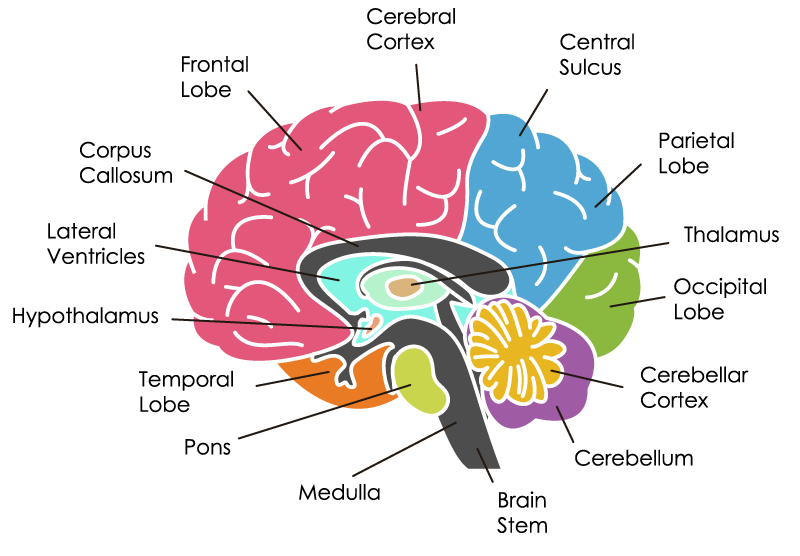
Cerebral cortex:
responsible for high-level functions like thought, memory, language, and voluntary movement
frontal lobes
the largest part of the human brain, located directly behind the forehead, These lobes manage complex behaviors, including planning, decision-making, emotional control, and impulse inhibition.
Prefrontal cortex
ront-most part of the frontal lobe responsible for complex behaviors, including planning, decision-making, personality expression, and moderating social behavior
executive functioning
a set of high-level cognitive processes—centered in the prefrontal cortex—that enable self-regulation, planning, organization, and goal-directed behavior.
Motor cortex
a region in the frontal lobe of the brain, specifically located in the precentral gyrus, essential for planning, controlling, and executing voluntary muscle movements
Parietal lobes
key brain regions located behind the frontal lobes, responsible for integrating sensory information, spatial awareness, and navigation (touch)
Somatosensory cortex
located in the brain's parietal lobe, processes sensory information from the body like touch, temperature, pain, and proprioception (body sensation)
Occipital lobes
primary visual processing centers of the mammalian brain, located at the back of the skull (vision)
Temporal lobes
key brain structures located on both sides of the head behind the ears, critical for auditory processing, language comprehension (Wernicke’s area), and memory encoding (hippocampus).
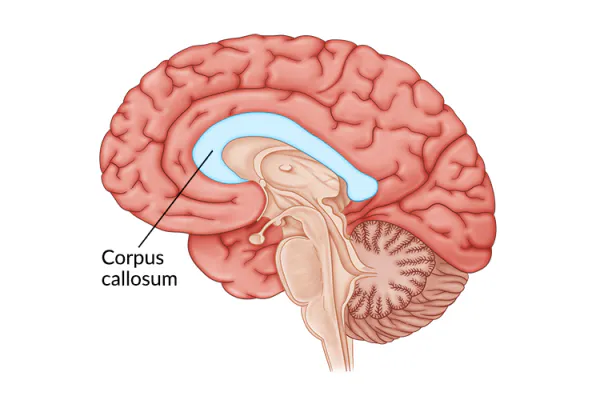
Corpus callosum
a thick band of over 300 million nerve fibers, or axons, that connects the left and right cerebral hemispheres, facilitating vital communication between them. It acts as a bridge for transmitting motor, sensory, and cognitive information, enabling integrated brain function
Brainstem
The brainstem, comprising the midbrain, pons, and medulla, is the oldest part of the brain, vital for survival by controlling autonomic functions like breathing, heart rate, and sleep.-plays a key role in alertness and arousal via the reticular formation and contributes to emotional processing and motor control
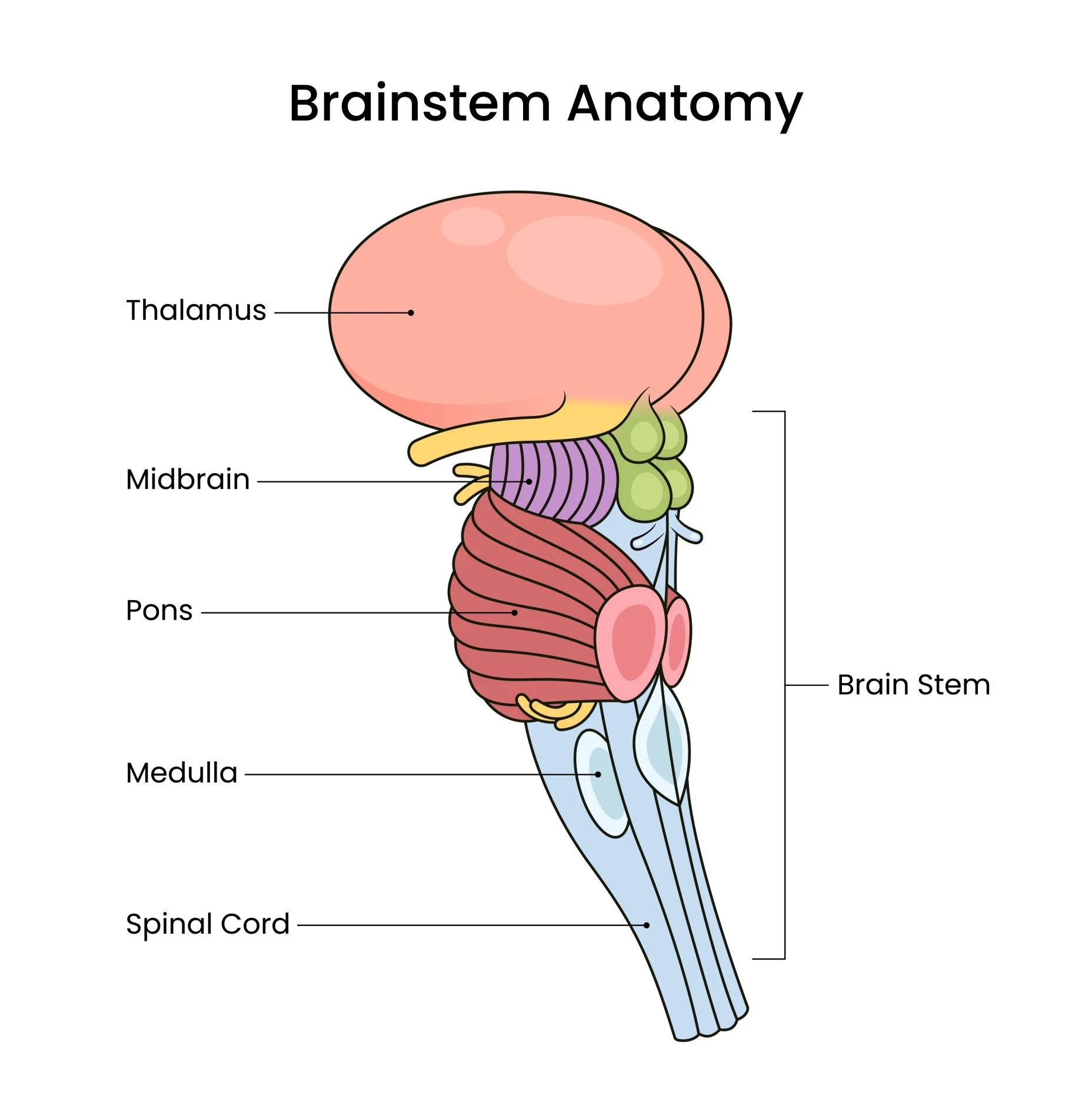
Medulla
the lowest part of the brainstem, essential for survival by controlling autonomic, involuntary functions such as breathing, hear
Reticular activating system (RAS)
a network of neurons in the brainstem (located in the reticular formation) that acts as the brain's filtering and arousal system(complex network of brain regions and neurotransmitters that regulates wakefulness, alertness, and conscious perception), regulating wakefulness, sleep-wake cycles, and attention.
Cerebellum
"little brain," is a vital structure at the back of the skull, beneath the cerebrum, that acts as the brain's coordinator for movement, balance, and posture
Thalamus
a pair of large, oval, grey matter structures located in the center of the brain above the brainstem, serving as the main relay station for sensory and motor information traveling to the cerebral cortex
Hypothalamus
Location: below thalamus
Function:
hunger
thirst
body temperature
controls hormones
Pituitary Gland
Location: below hypothalamus
Function: controls other glands (called “master gland”)
regulates essential bodily functions—including growth, metabolism, and reproduction—by releasing hormones into the bloodstream
Hippocampus
Location: near center (temporal lobe area)
Function: plays a critical role in forming, organizing, and storing new long-term memories, as well as spatial navigation.
Amygdala
Location: near hippocampus
Function: fear, aggression, emotional reactions
Reward Center
Location: limbic system pathways
Function: releases dopamine → pleasure, motivation
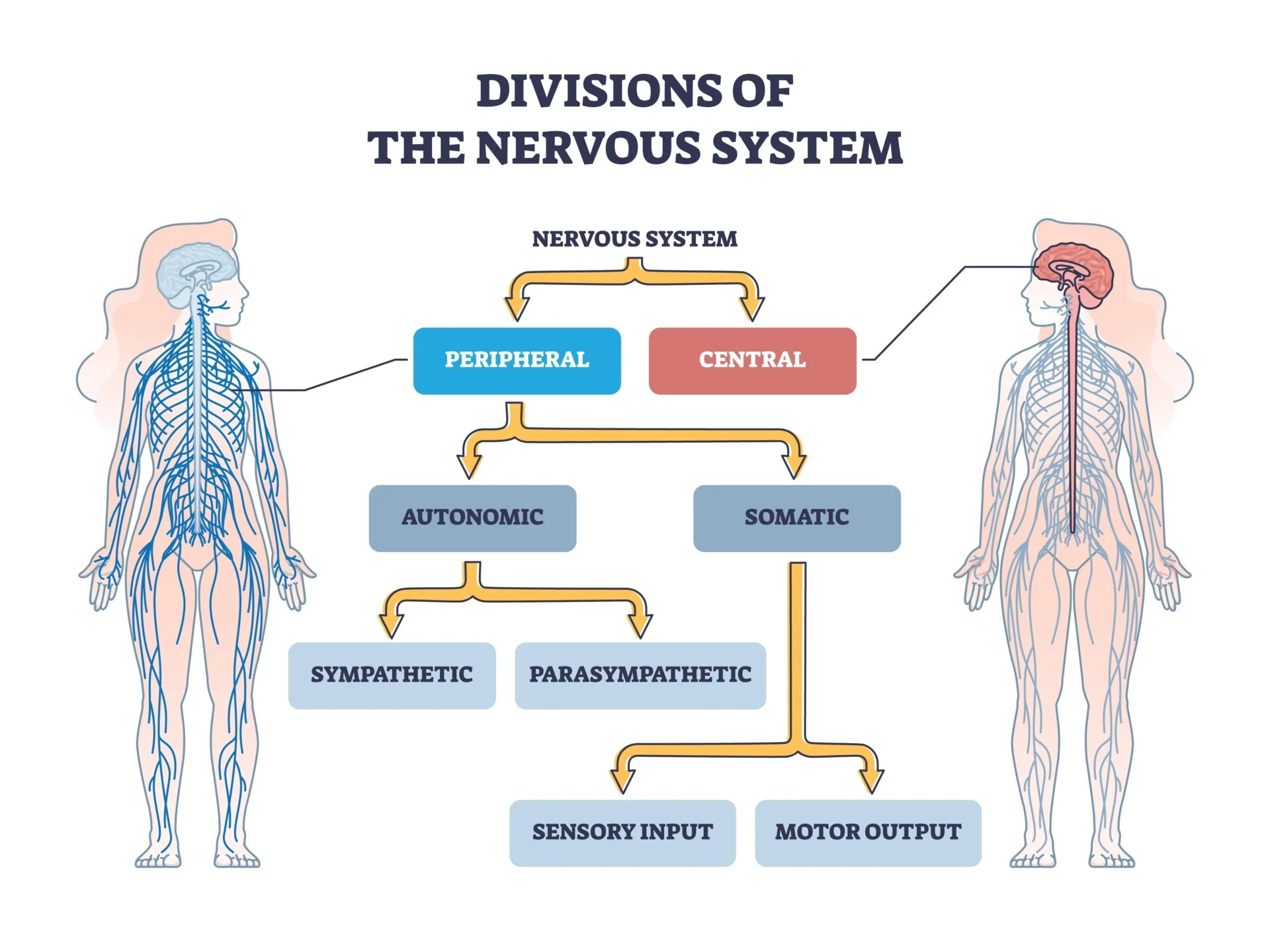
Central Nervous System (CNS)
consists of the brain and spinal cord, acting as the primary control center for the body. It processes sensory information, regulates body functions, and controls thoughts, emotions, and movements.
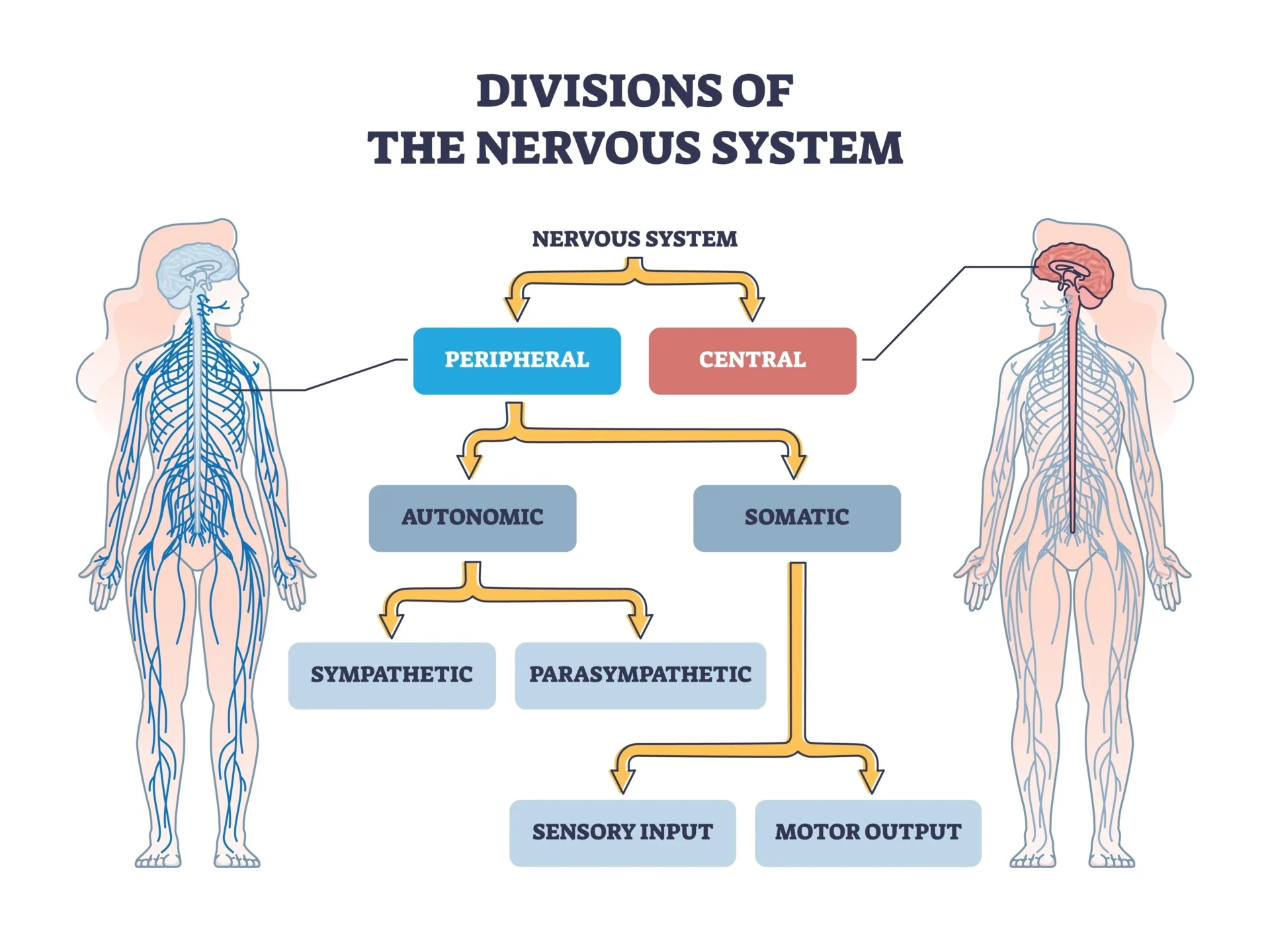
Peripheral Nervous System (PNS)
Location: nerves outside CNS
Function: connects body to CNS
Somatic Nervous System
a division of the peripheral nervous system that enables voluntary control of body movements via skeletal muscles and transmits sensory information to the central nervous system (CNS)
Autonomic Nervous System
controls involuntary functions
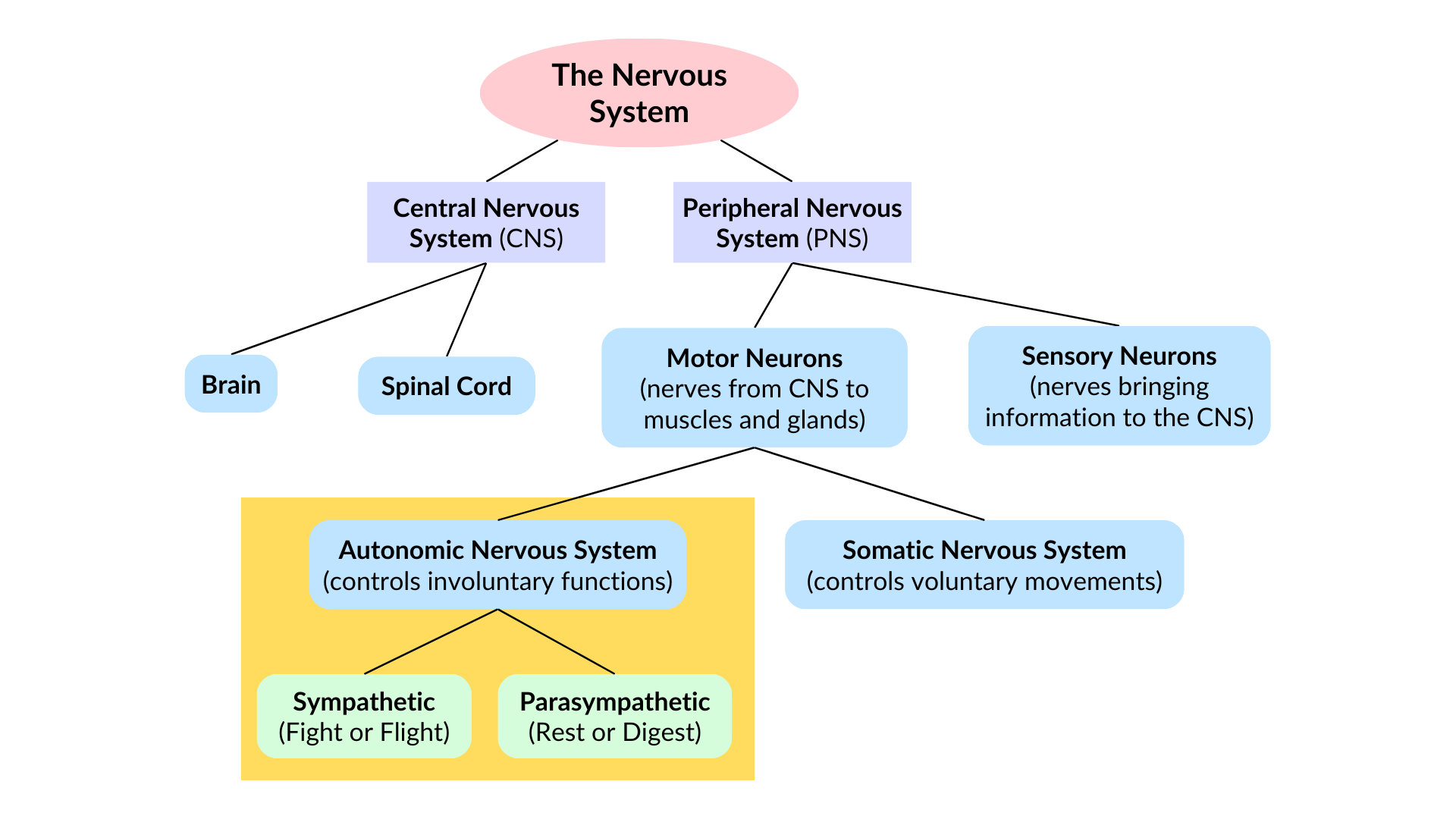
Sympathetic
Function: fight-or-flight
Effects: ↑ heart rate, ↑ breathing
Parasympathetic
Function: rest-and-digest
Effects: ↓ heart rate, calm body
Neuron
Location: throughout nervous system
Function: send electrical signals
exp.
Motor neurons: brain → muscles
Interneurons: connect neurons (in brain/spinal cord)
Sensory neurons: body → brain
Reflex arc: automatic response
Resting potential
the stable, negative electrical charge difference across a neuron or muscle cell membrane when it is not actively signaling
Threshold
the minimum intensity or change in a stimulus required to trigger a conscious sensation, perception, or neural response
Action potential
electric polarization across a neuron or muscle cell membrane, acting as a fundamental signal in the nervous system
All-or-nothing principle
a neuron or muscle fiber will fire completely or not at all, with a consistent maximum response, regardless of the intensity of the stimulus, provided the threshold is met.
A neuron gets signals
It checks: “Is this strong enough?” (threshold)
✅ If YES →
⚡ it sends a full electrical signal (action potential)❌ If NO →
🚫 nothing happens
Depolarization
cellular process where the internal charge of a cell becomes less negative (more positive) - essential for nerve impulse transmission and muscle contraction, typically triggered when a stimulus raises the membrane potential above a certain threshold.
Refractory period
neuron resets
NEUROTRANSMITTERS
hemical messengers released by neurons to transmit signals across a synapse to other neurons, muscle cells, or glands
glutamate
the most abundant excitatory neurotransmitter in the vertebrate nervous system, playing a critical role in brain function, learning, and memory. (act as chemical messenger, simulating nerve cells)
-excitatory → MORE firing
GABA
pushes the neuron away from the threshold
harder to fire
slower activity
less signaling
-inhibitory → LESS firing