AP Precalc. Formulas
 Call Kai
 Learn
Learn Practice Test
 Spaced Repetition
 Match
Match Flashcards
 Knowt Play
1/48

There's no tags or description
Looks like no tags are added yet.
Name | Mastery | Learn | Test | Matching | Spaced | Call with Kai |
|---|
No analytics yet
Send a link to your students to track their progress
49 Terms
Geometric sequences WITHOUT first term
gn = gk(r)n-k
Geometric sequences WITH first term
gn = g0(r)n
cos2x + sin2x = ?
1
tan2x + 1 = ?
sec2x
cot2x + 1 = ?
csc2x
sin(a - B)
sin(a)cos(B) + sin(B)cos(a)
sin(a - B)
sin(a)cos(B) - sin(B)cos(a)
cos(a + B)
cos(a)cos(B) - sin(a)sin(B)
cos(a - B)
cos(a)cos(B) + sin(a)sin(B)
sin(2a)
2sin(a)cos(a)
cos(2a)
1 - 2sin2x OR 2cos2x - 1
arithmetic sequences WITH first term
an = a0 + dn
arithmetic sequences WITHOUT first term
an = ak + d(n - k)
distance formula
d = √(x2 - x1)2 + (y2 - y1)2
vertex form
y = a(x - h)2 + k
midpoint formula
( (x1 + x2) / 2, (y1 + y2) / 2 )
(a + b)2
a2 + 2ab + b2
(a - b)2
a2 - 2ab + b2
compound interest
A = P(1 + r/n)nt
continuous growth/decay
y = aekt
sin(x)
cos(90º - x)
arc length formula
s = rθ
sector area formula
A = (1/2)r2θ
tangent functions
left to right POSITIVE
VA at x = π/2 + πn, where n is any integer
cotangent functions
left to right NEGATIVE
VA at x = πn, where n is any integer
find period for sin/cos
period = 2π/b
find period for tangent
period = π/b
convert polar to rectangular coordinates
(rcosθ, rsinθ)
convert rectangular to polar coordinates where 0 ≤ θ ≤ 2π
(r, θ)
r = √(x2 + y2) and θ = tan-1(y/x)
convert rectangular complex numbers to polar form for z = a + bi
r = √(a2 + b2) and θ = tan-1(b/a)
rcosθ + risinθ
convert polar complex numbers to rectangular form
rcosθ + risinθ
r = a ± bcosθ
a = b
cardioid
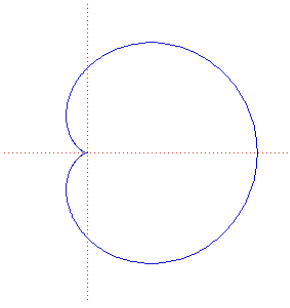
r = a ± bcosθ
a > b
dimpled cardioid
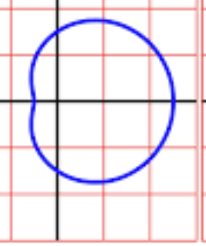
r = a ± bcosθ
a < b
inner loop limacon
inner loop size = b - a
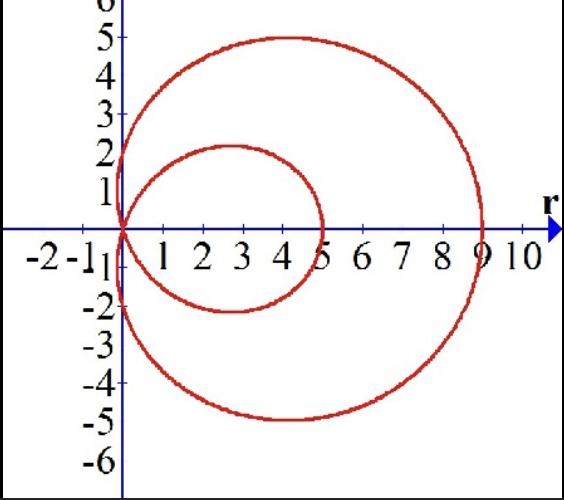
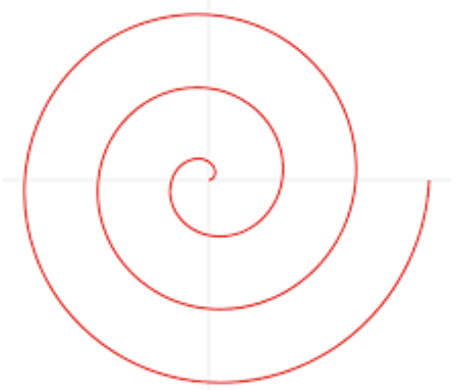
Archimedes’s spiral
r = θ
f(x) = polynomial/polynomial
top degree < bottom degree
HA: y = 0
f(x) = polynomial/polynomial
top degree = bottom degree
HA: y = ratio of leading coefficients
f(x) = polynomial/polynomial
top degree > bottom degree
NO HA; only SA
find SA through long division
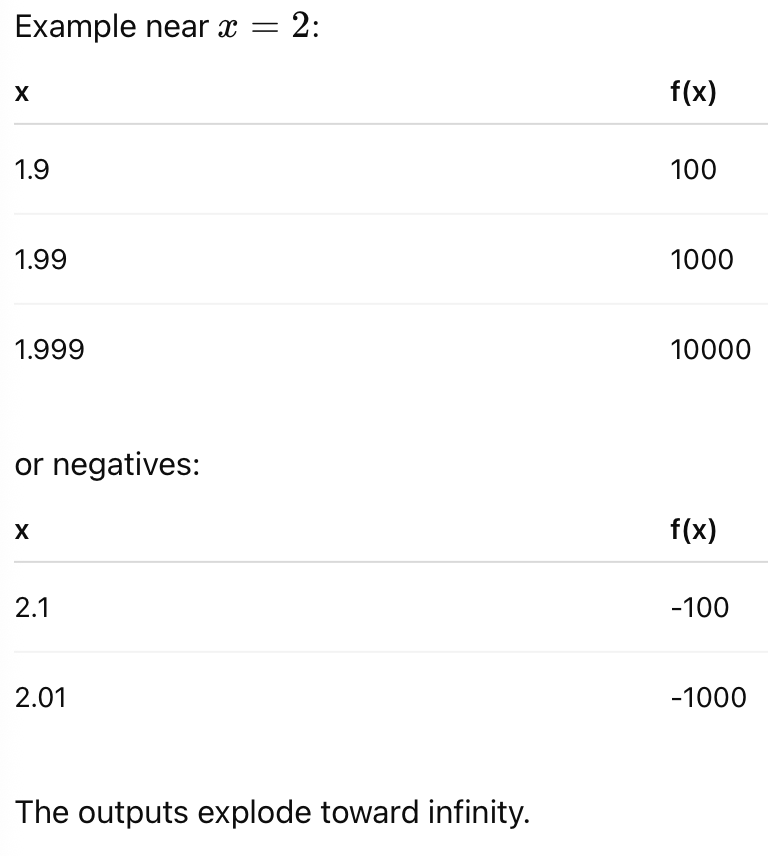
on a table of values, if input is approaching a number and output is HUGE
a vertical asymptote is present.
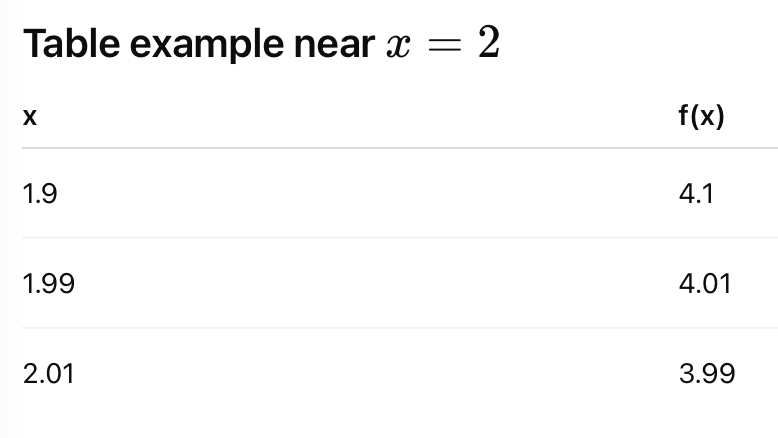
if input gets close to a particular value but the output is also getting close to a finite number…
a hole is present
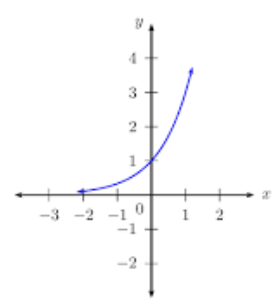
y = abx
a > 0 & b > 1
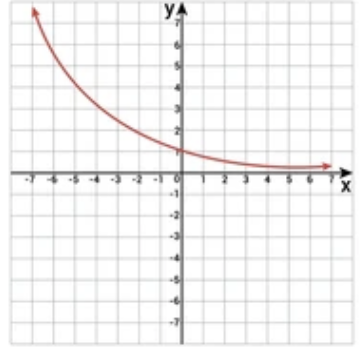
y = abx
a > 0 & 0 < b < 1
y = abx
a < 0 & b > 1
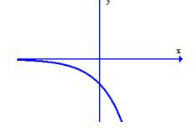
y = abx
a < 0 & 0 < b < 1
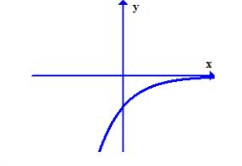
residual
actual - predicted
a3 - b3
(a - b)(a2 + ab + b2)
a3 + b3
(a + b)(a2 - ab + b2)
secant or sec functions
VA at x = π/2 + πn, where n is any integer
cosecant or csc functions
VA at x = πn, where n is any integer