anesthesia final (machine and some other stuff from 1st unit)
 Call Kai
 Learn
Learn Practice Test
 Spaced Repetition
 Match
Match Flashcards
 Knowt Play
1/41

There's no tags or description
Looks like no tags are added yet.
Name | Mastery | Learn | Test | Matching | Spaced | Call with Kai |
|---|
No analytics yet
Send a link to your students to track their progress
42 Terms
empty e tank is
500 PSI
what color are vet med oxygen tanks in the US? what color are vet med oxygen tanks in canada?
USA: green
Canada: white, think canada=snow=white
350 mL=___PSI
1 PSI
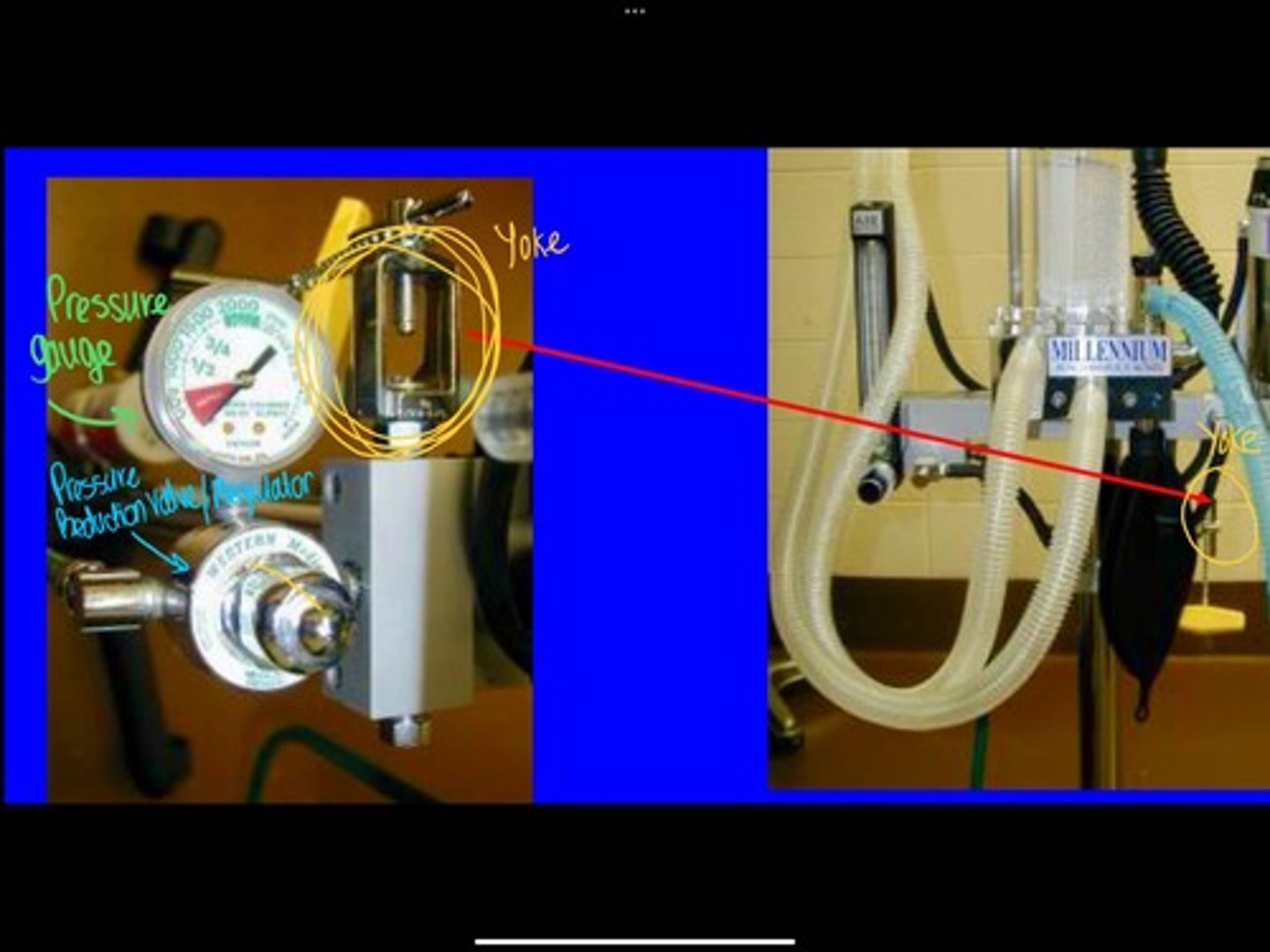
yoke
-purpose of the yoke is to secure the oxygen tank to the anesthesia machine, O rings between oxygen tank and yoke,
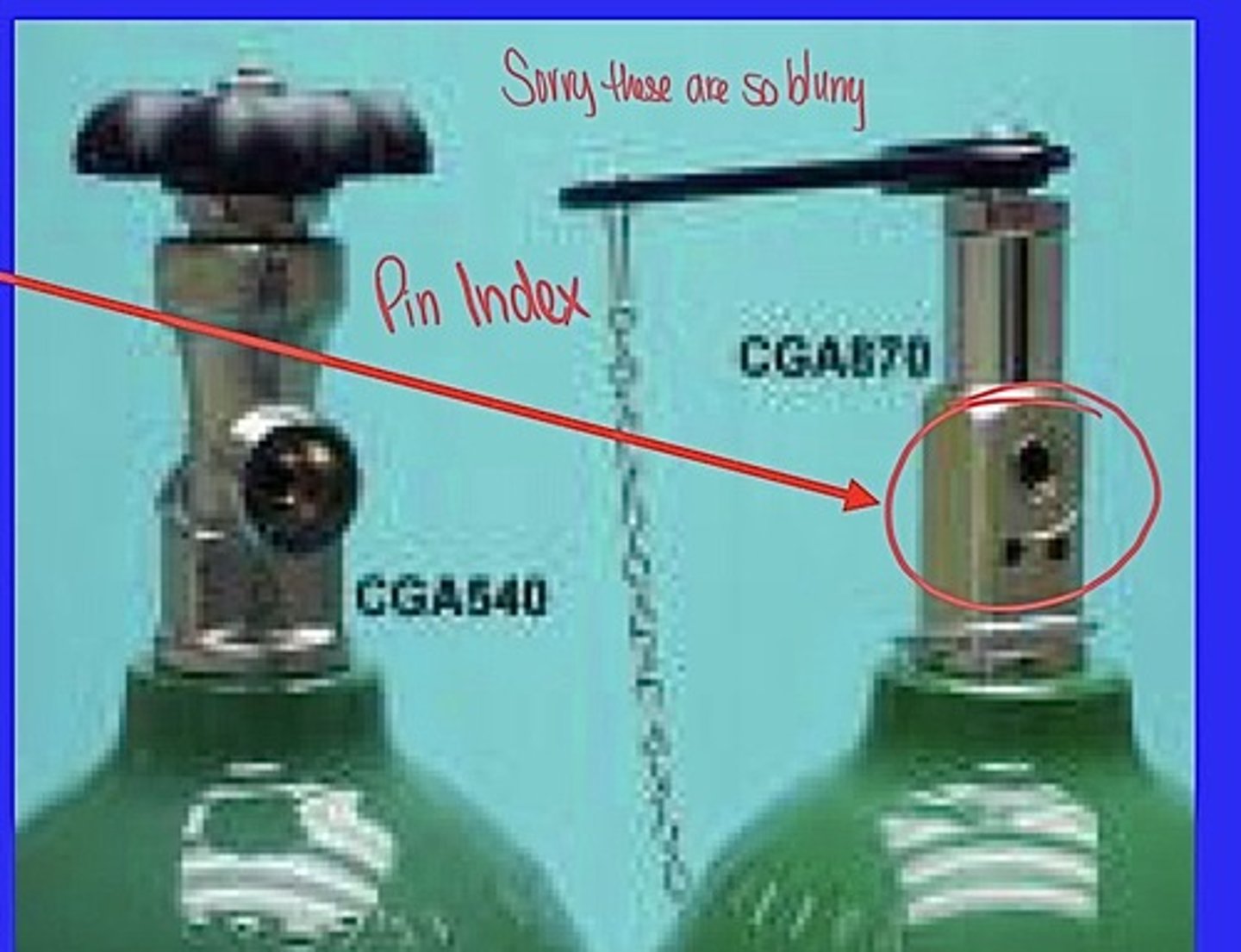
pin index
this is the 2-3 little holes near the yoke that make it so you can only attach oxygen to machine
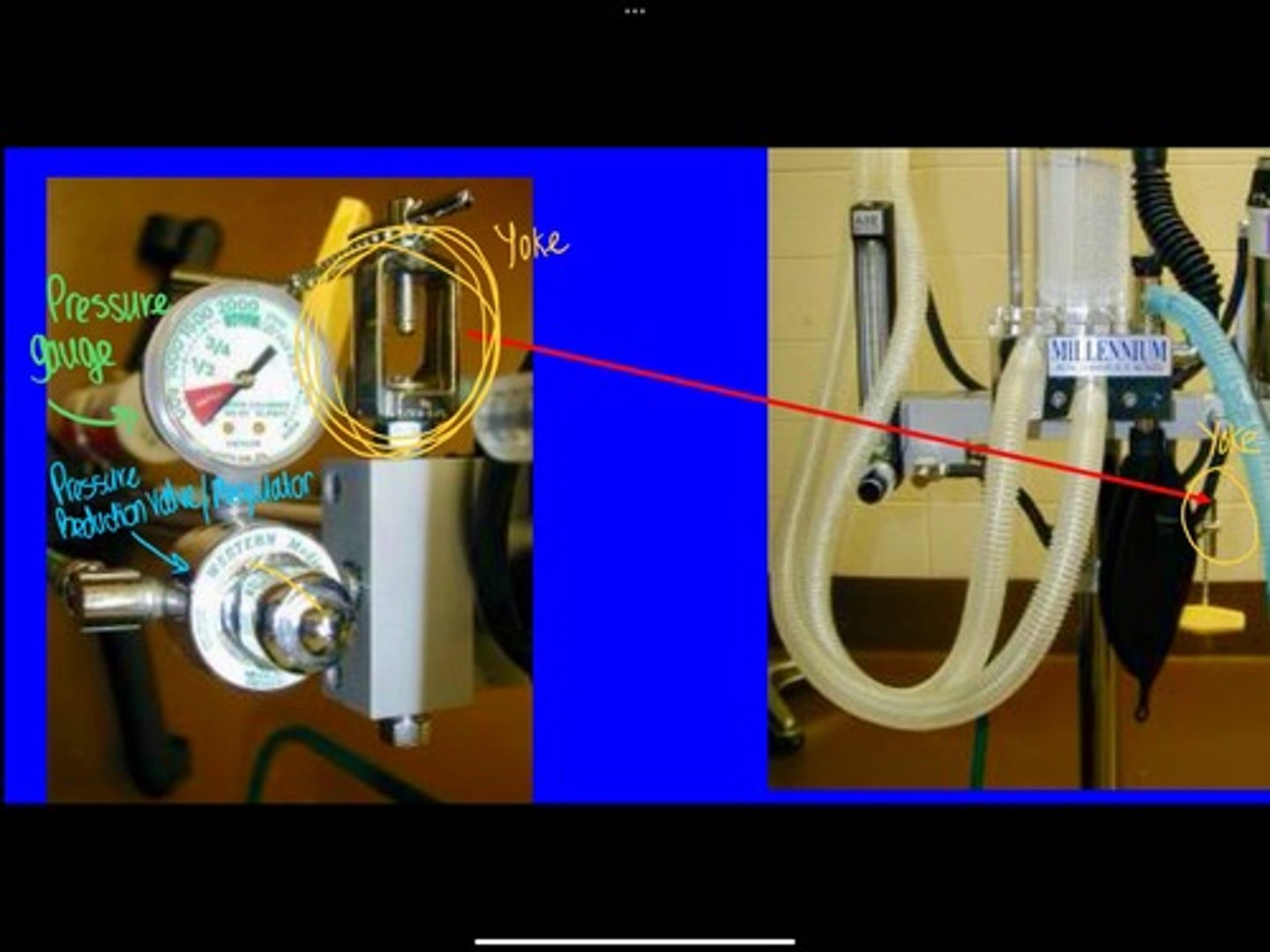
pressure reduction valve/pressure regulator
-takes the high pressure down to 40-50 PSI
-this is still not safe for the patient =!!
what is anesthesia
A state of unconsciousness produced by controlled, reversible intoxication of the central nervous system
what are the two required things for anesthesia according to mrs ashley?
-anesthesia machine to convert gasses
-intubation
November 1846: **on VTNE via mrs ashley
Dr. Oliver Holmes suggested adoption of the word anesthesia in human medicine
PSI of standard E tank: (NOT the big H tank)
1900-2200 PSI
2200 is brand new
common gas outlet
where anesthetic gas mixture (with O2) exits the anesthetic machine and enters the breathing system
oxygen flow meter
-controls amt of oxygen to the patient
-takes pressure down to 13-15 PSI
-this is safe for patient
-oxygen consumption = 2ml/#/min (idk what that part means but its on ppt)
-respiratory rate determines how much oxygen to give patient recall the smaller the animal the faster it breathes
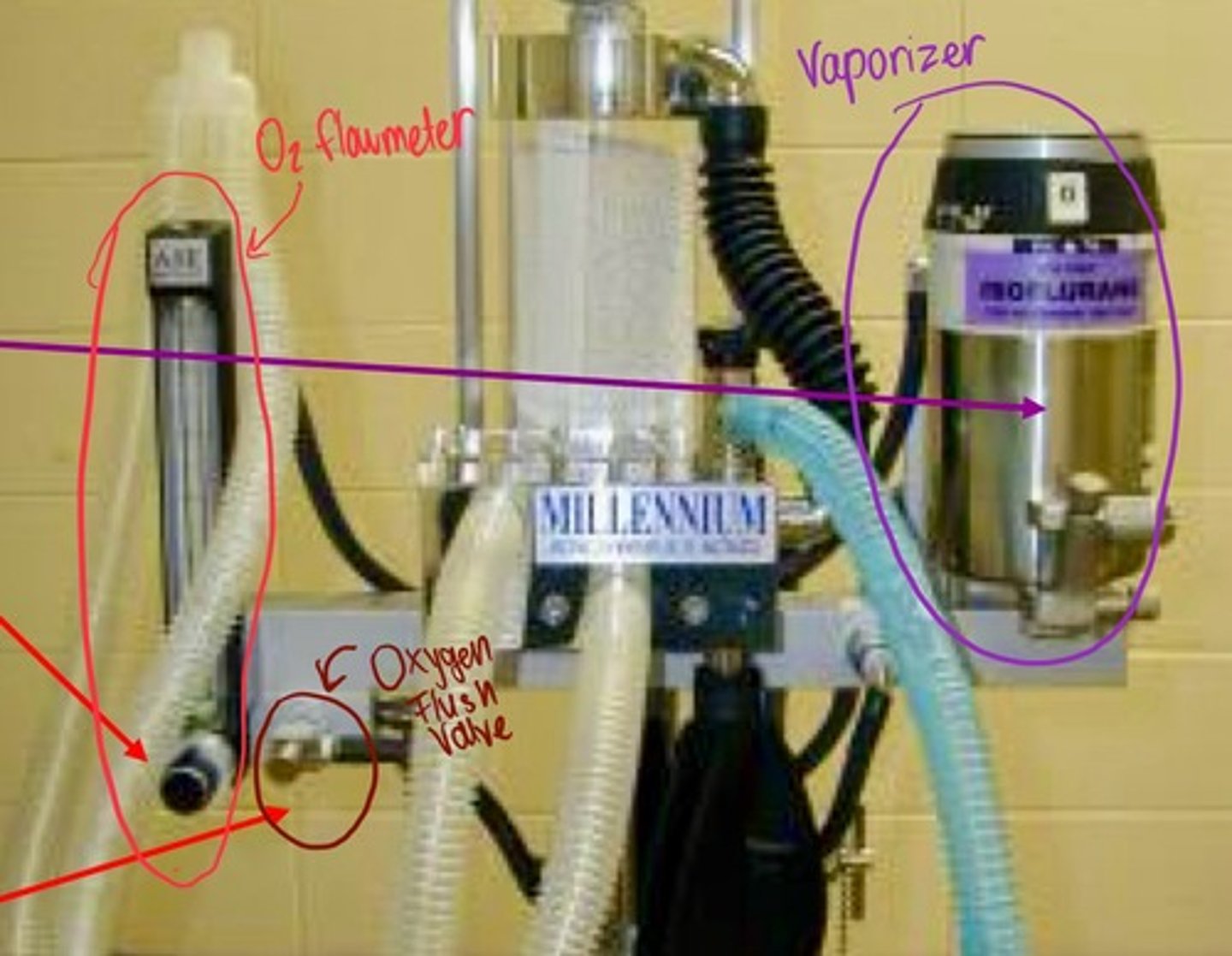
fresh gas inlet
y piece
-connects the inhalation and exhalation breathing tubes together and has a connector to attach them to the endotracheal tube
-attach capnometer to this
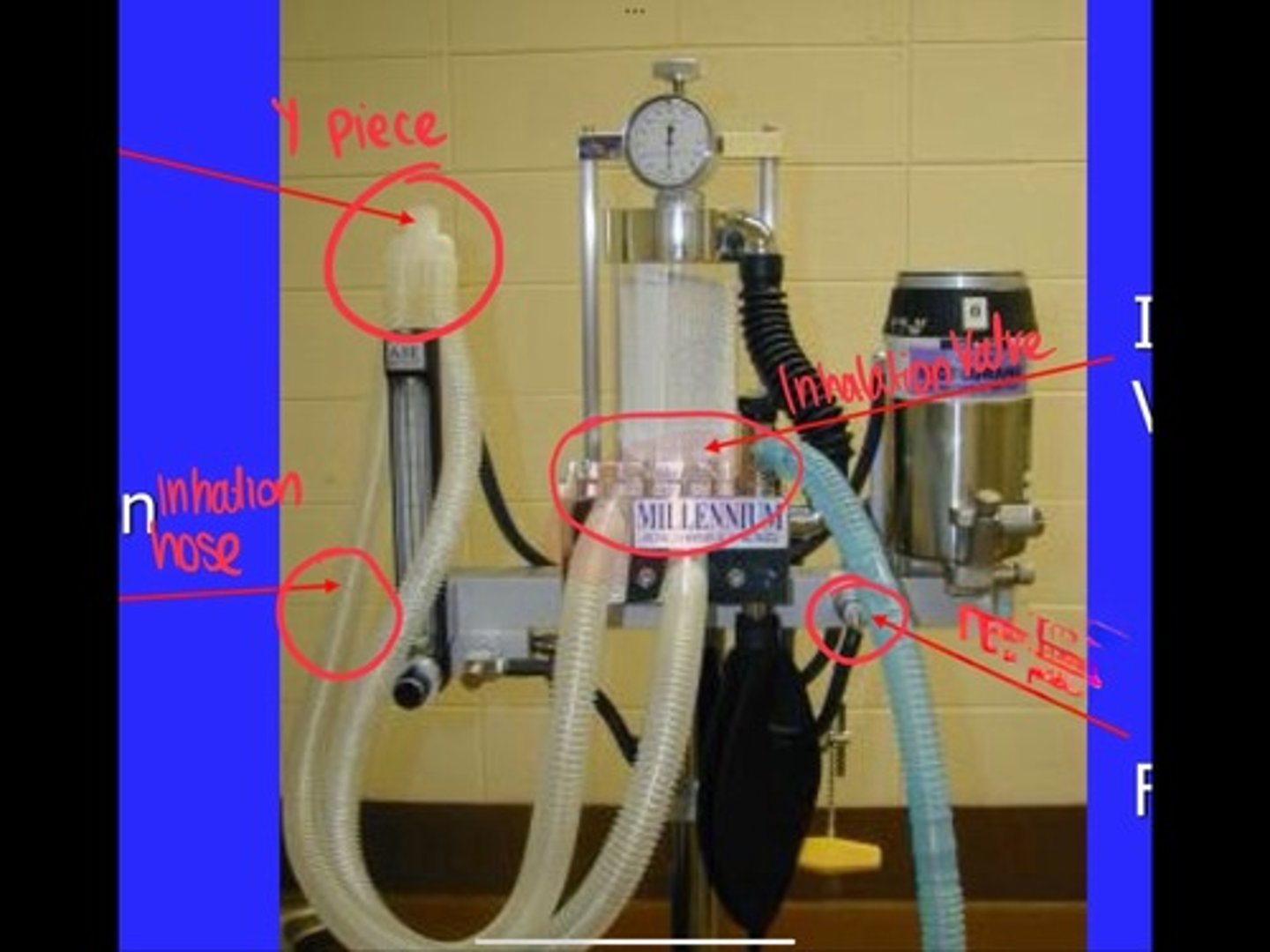
inhalation hose
delivers gas to the patient
attatched to Y piece
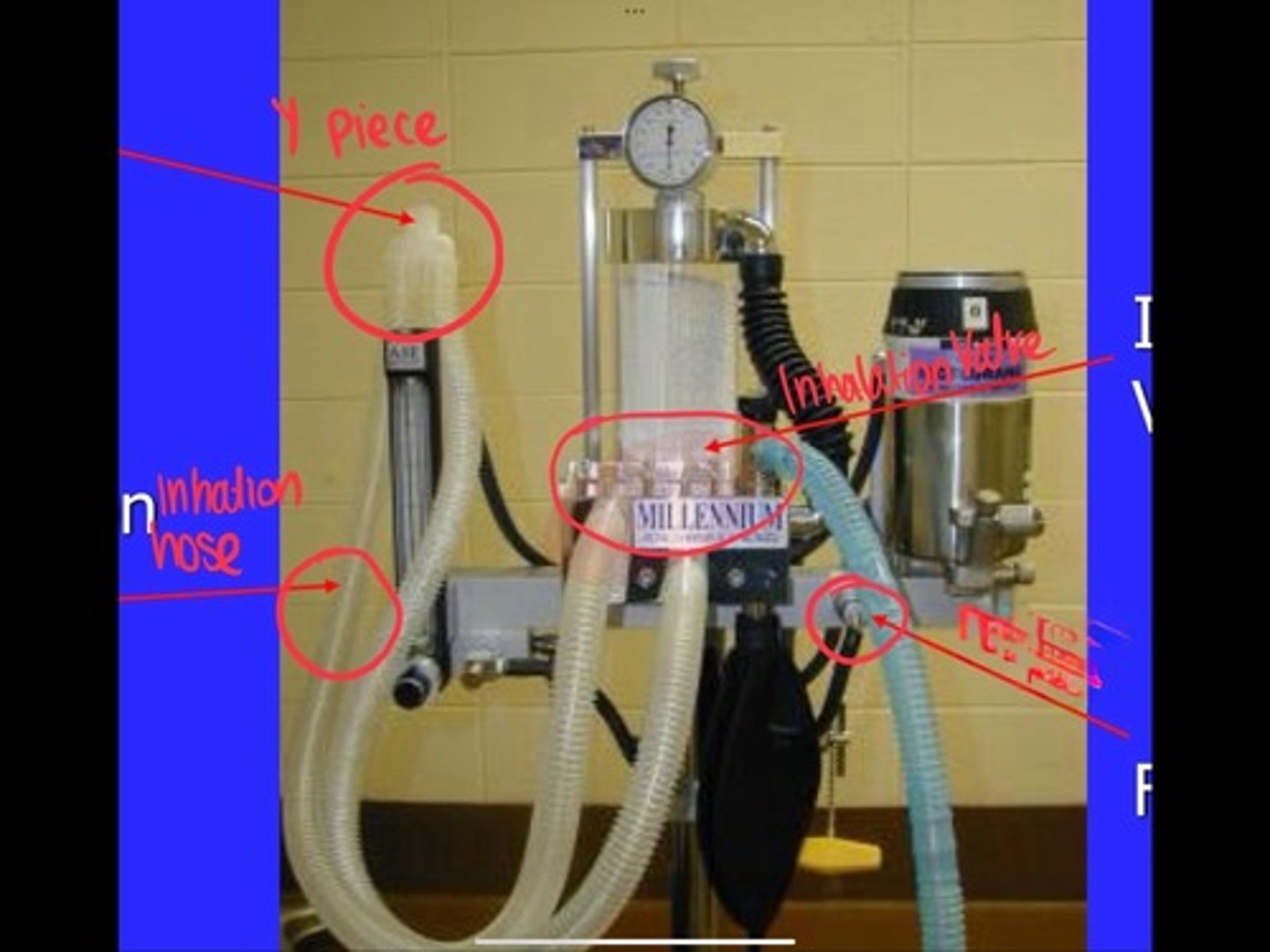
inhalation valve/flutter valve
one way! unidirectional so pt doesnt breathe CO2 back in
it opens during inspiration
It allows fresh gas + CO₂-scrubbed gas to flow from the circuit → into the patient's lungs
It closes during expiration
This prevents exhaled CO₂ gas from flowing backward into patient
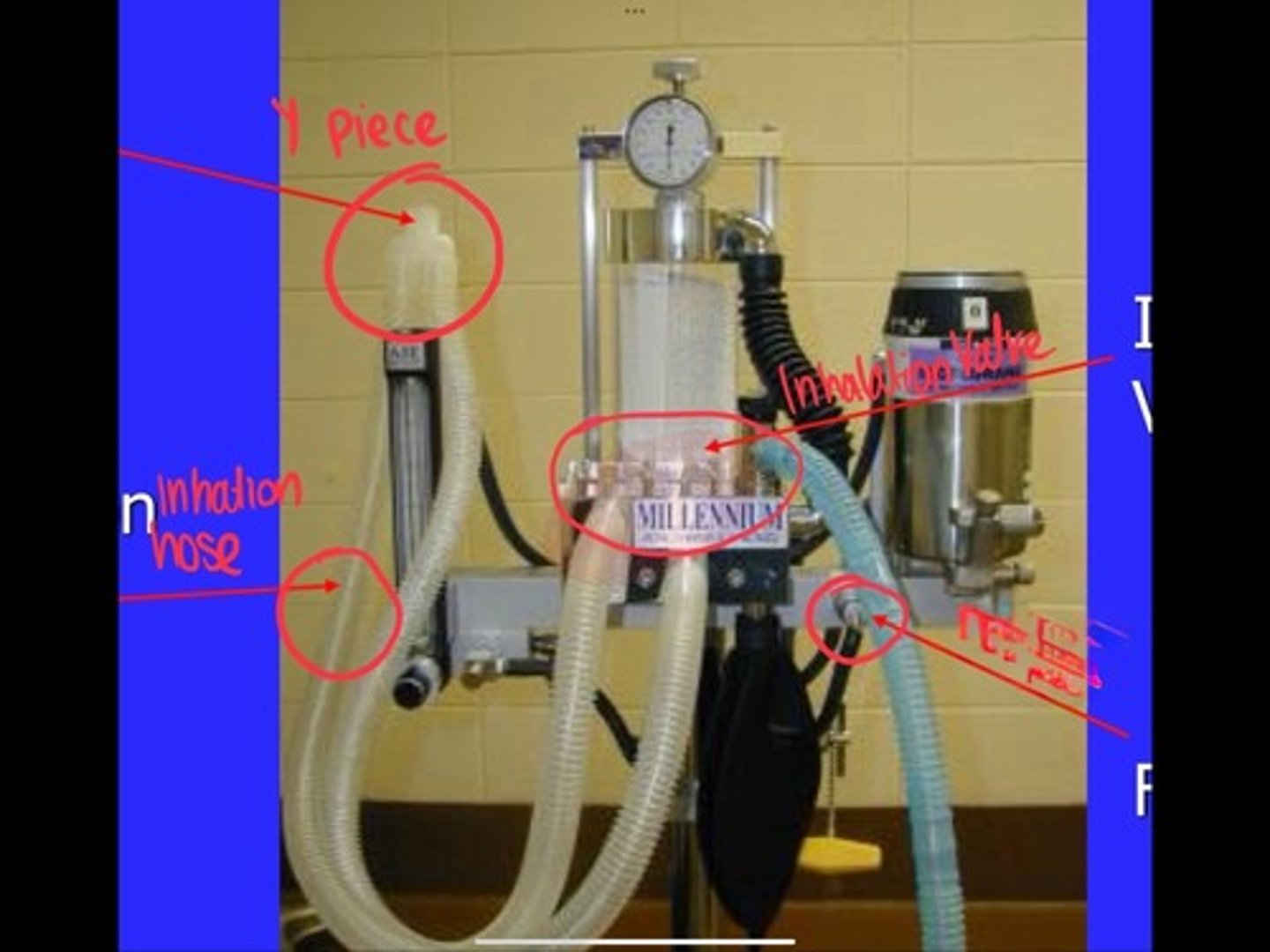
vaporizer
turns the liquid iso or sevo from liquid to gas, be careful when you are filling it to the line so that you don't put everyone to sleep,
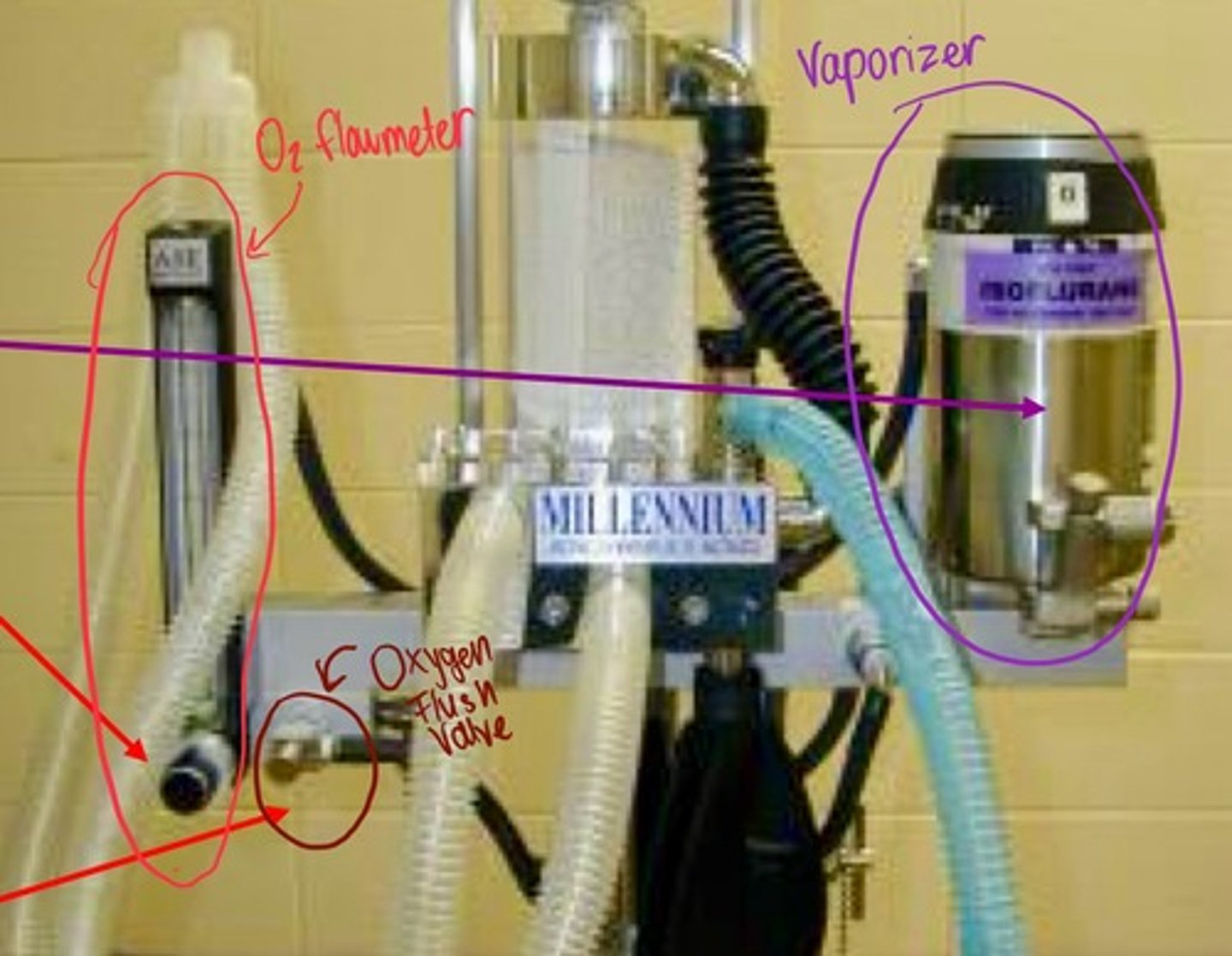
oxygen flush valve
-never use oxygen flush valve with non rebreathing system!
-allows for the rapid delivery of pure, 100% oxygen directly to the breathing circuit, bypassing the flowmeters and vaporizer, flows at high rates quickly fill rebreathing bag or purge anesthetic gas
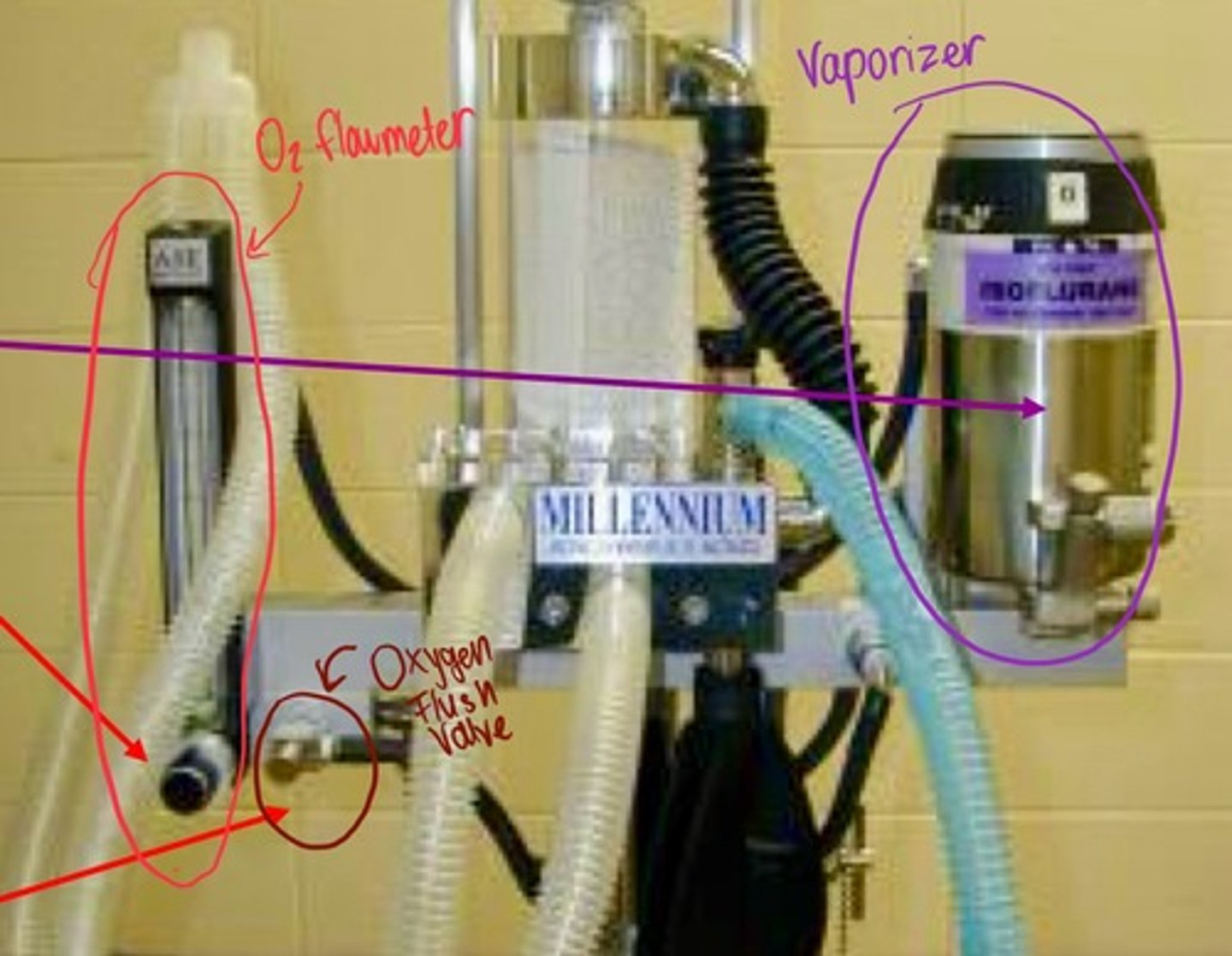
common gas outlet
rebreathing system
know what this is remember fart in car
fresh gas inlet
think nonrebreathing system know what this is
pop off valve
-always keep it open or you will explode patient!
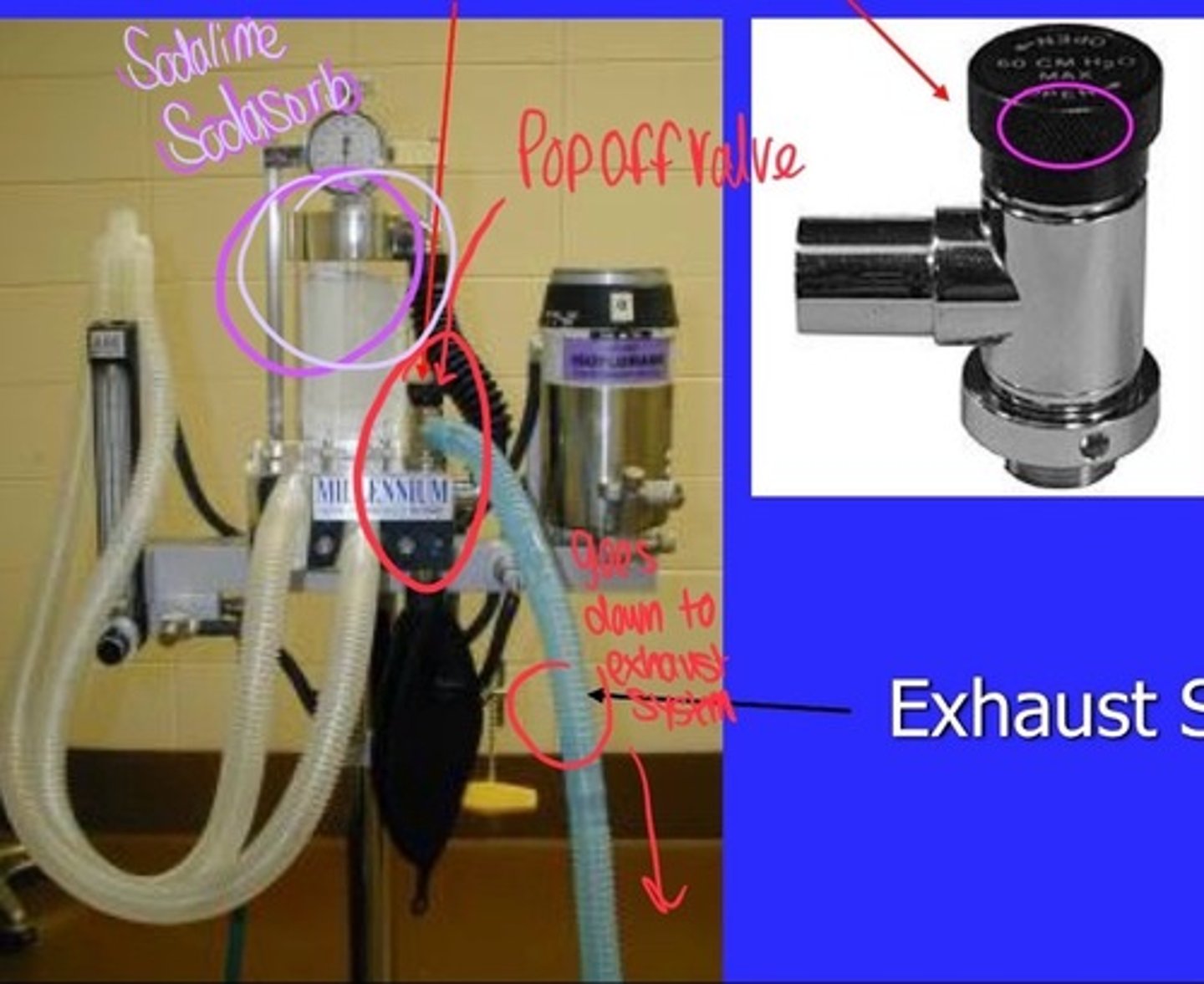
soda lime/sodasorb
-removes C02 from the rebreathing circuit so patient doesn't breathe it back in
-HAVE TO HAVE THIS IN REBREATHING SYSTEM
resourvoir/rebreathing bag
-used to give sigh (done to prevent the collapse of alveoli or if they are holding their breath)
-sizes are in the term after this**
-important that it is the right size, if too small patient may be unable to fill its lungs completely or can become overinflated, if too big you wont be able to monitor its breathing by viewing the bag as well and this can build up pressure,
what would we use for an animal under 10lbs?
non rebreathing system
what would we use for animal that is 11-15 lbs
1L
16-30 lbs
2L
31-39lbs
3L
40+ lbs
4L
what type of scavenging system is FAir
mobile scavenging system
passive scavenging system
relies on the pressure generated by the patient's exhalation (or the machine's fresh gas flow) to push gas through a hose to a charcoal canister or outside vent
active scavenging system
utilize a vacuum pump, blower, or central suction to draw gas away, offering high efficiency
think vacuum
reasons for intubation
-maintains patent airway
-provides way to administer oxygen
-provides a way to administer gas anesthetic
-prevents aspiration pneumonia again important that cuff is inflated (also cuff inflation ensures naur leakage of gas)
-controls ventilation
what are the most common conventional ET tubes, and which one is MOST common?
Murphy and Magill, Murphy is most common
alternative ET tubes?
-SGAD supraglottic airway device (doesn't go all the way in trachea, can be used on rabbits and cats but it is stupid to use on cats via ashley)
-cole (bird thing naur cuff required)
-safe seal
how to get proper ET tube SIZE:
-patient in normal head posture
-softly palpate below larynx
-measure external diameter of trachea
-select 3 sizes ex: if you need 7.5 get 7.5, 7.0, 8.0,
how to get proper ET tube length:
-patient in normal head posture
-MEASURE FROM CANINE TOOTH TO THORACIC INLET
-tie gauze thing at canine tooth
what do we push the glottis down with accordingly to Mrs Ashley
can gently push down with the ET tube, NOT WITH LARYNGSCOPE!!!!!!!!!
materials required for intubation at TCTC
-3 clean ET tubes
-non sterile lubricant
-laryngscope
-gauze tie/cut tubing
-air syringe
-(stylet for cats)
what position should patient be in when being intubated
sternal
what's another use of anesthesia besides the obvious one (surgery/pain reduction, upsetting procedures etc)
can help control convulsions or other nervous disorders!
general anesthesia can be used to help epilepsy "reset"
or can be used in EPM in horses to help "reset" and prevent episodes for a few weeks
anesthetic depth
depth is the degree to which the patient is unaware of it's surroundings, nonreactive to surgical or painful stimuli and is relaxed