pract. 9 - operations of the thorax (sem 2)

0.0(0)
Studied by 0 people
call kaiCall Kai
learnLearn
examPractice Test
spaced repetitionSpaced Repetition
heart puzzleMatch
flashcardsFlashcards
GameKnowt Play
Card Sorting

1/21

encourage image

There's no tags or description

Looks like no tags are added yet.

Last updated 3:33 PM on 5/22/26
Name
Mastery
Learn
Test
Matching
Spaced
Call with Kai

No analytics yet

Send a link to your students to track their progress

22 Terms

1
New cards

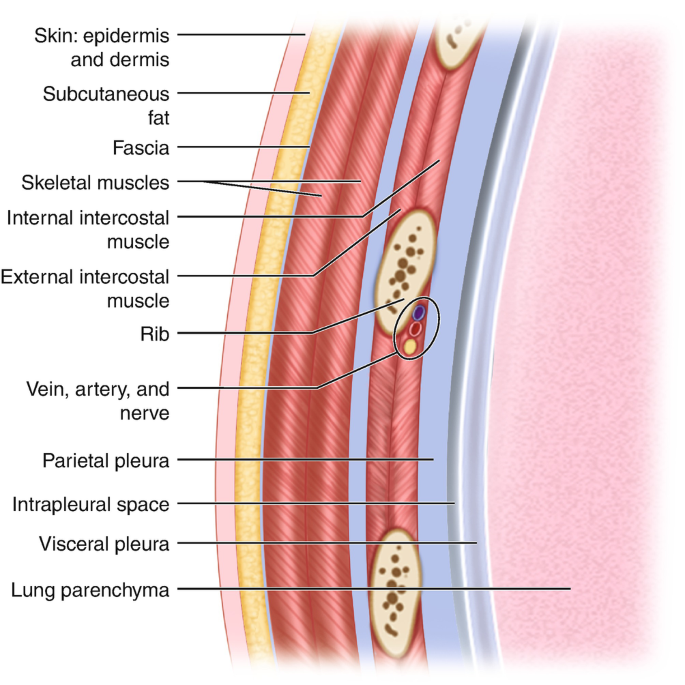
Layers of the Thorax

  • Skin

  • Subcutaneous fat

  • Superficial fascia

  • Deep fascia

  • Extrinsic muscles

  • Intrinsic muscles

  • Endothoracic fascia

  • Parietal pleura

  • Visceral pleura

  • Lung

<ul><li><p class=""><strong>Skin</strong></p></li><li><p class=""><strong>Subcutaneous fat</strong></p></li><li><p class=""><strong>Superficial fascia</strong></p></li><li><p class=""><strong>Deep fascia</strong></p></li><li><p class=""><strong>Extrinsic muscles</strong></p></li><li><p class=""><strong>Intrinsic muscles</strong></p></li><li><p class=""><strong>Endothoracic fascia</strong></p></li><li><p class=""><strong>Parietal pleura</strong></p></li><li><p class=""><strong>Visceral pleura</strong></p></li><li><p class=""><strong>Lung</strong></p></li></ul><p></p>
2
New cards

Types of Thoracic Injuries

  • Crush injuries: lung, pleura, ribs

    • external pressure

  • Single rib fracture

  • Multiple rib fractures

  • Steering wheel injury: bilateral rib fractures, flail chest, sternal fracture

  • Stove-in chest / Flail chest

    • a section of the rib cage becomes detached from the rest of the chest wall

    • due to fractures in multiple ribs

  • Traumatic (open) pneumothorax

  • Hemothorax / Hemopneumothorax (commonly with fractured ribs)

  • Tension pneumothorax (most dangerous)

  • Pericardial or cardiac rupture, bronchial rupture

  • Associated injuries: liver, spleen, diaphragm, major vessels

3
New cards

Trauma Classification

  • Penetrating: parietal pleura is breached

  • Non-penetrating: parietal pleura remains intact

4
New cards

Thoracic Surgeries

  • Lobectomy

    • Surgical removal of a lobe of the lung

  • Pneumonectomy

    • Removal of an entire lung

  • Segmentectomy

    • Removal of a specific segment of a lung lobe

  • Wedge resection

    • Removal of a small, wedge-shaped portion of the lung that includes the lesion and a margin of healthy tissue.

  • ICD insertion

    • (Intercostal Drain / Chest Tube Insertion)

    • Insertion of a tube into the pleural space to remove:

      • Air (pneumothorax)

      • Blood (hemothorax)

      • Pus (empyema)

      • Fluid (pleural effusion)

5
New cards

thoracic incisions

  • Median sternotomy

  • Posterolateral thoracotomy

  • Anterolateral thoracotomy

  • Clamshell incision

6
New cards

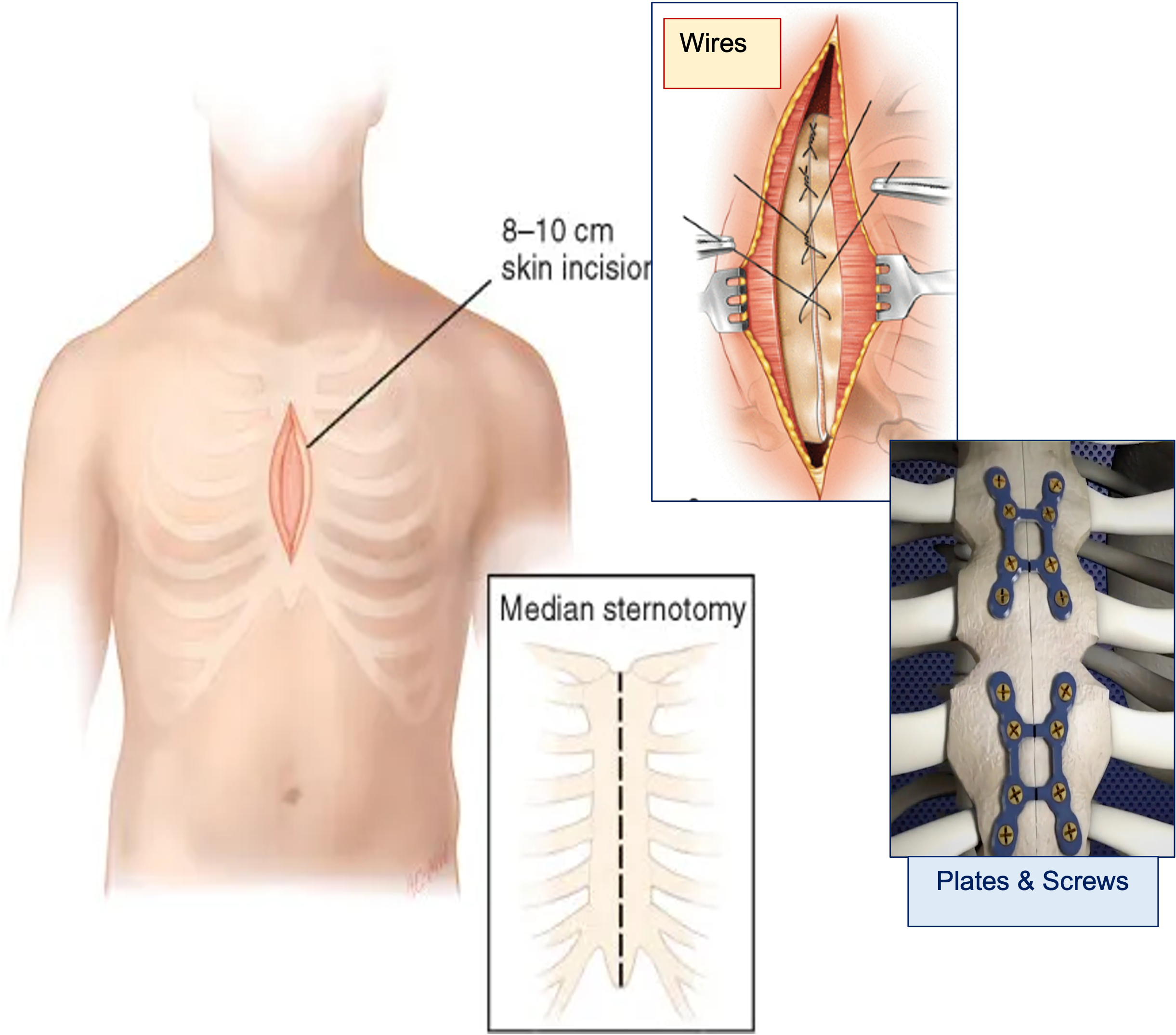
Median Sternotomy

  • Incision:

    • Vertical cut through the sternum

    • just below the neck to below the sternum

  • Access: Both lungs, heart and mediastinum

  • Commonly used for:

    • Cardiac surgeries

    • (e.g., CABG, valve replacement)

    • Bilateral lung procedures

<ul><li><p class=""><strong>Incision:</strong> </p><ul><li><p class="">Vertical cut through the <strong>sternum</strong> </p></li><li><p class="">just below the neck to below the sternum</p></li></ul></li><li><p class=""><strong>Access:</strong> Both lungs, heart and mediastinum</p></li><li><p class=""><strong>Commonly used for:</strong></p><ul><li><p class="">Cardiac surgeries </p></li><li><p class="">(e.g., CABG, valve replacement)</p></li><li><p class="">Bilateral lung procedures</p></li></ul></li></ul><p></p>
7
New cards

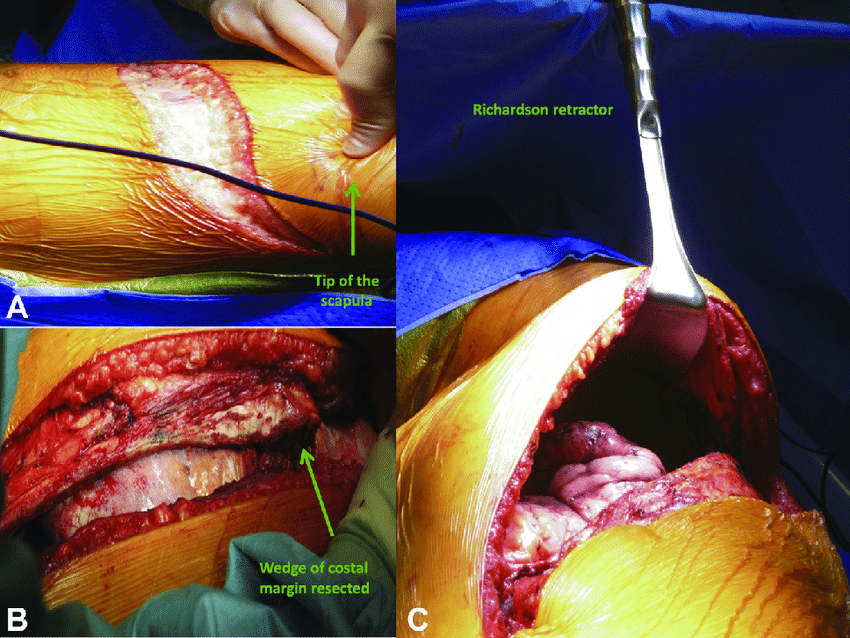
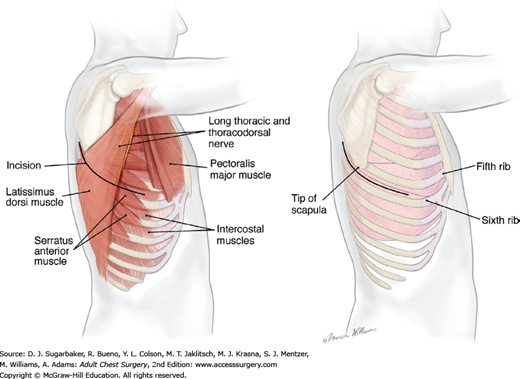
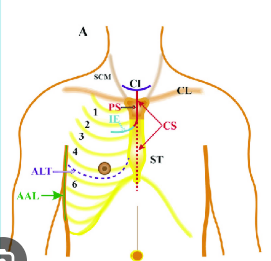
Posterolateral Thoracotomy

  • Incision: From back (posterior axillary line),

    • around to the front of the chest

  • Involves cutting through the latissimus dorsi and intercostal muscles

  • Access: One side of the thoracic cavity (excellent view of lung, oesophagus, aorta)

  • Used for:

    • Lobectomy

    • Pneumonectomy

    • Esophageal surgery

knowt flashcard image

<ul><li><p class=""><strong>Incision:</strong> From back (posterior axillary line),</p><ul><li><p class="">around to the front of the chest</p></li></ul></li><li><p class="">Involves cutting through the <strong>latissimus dorsi</strong> and <strong>intercostal muscles</strong></p></li><li><p class=""><strong>Access:</strong> One side of the thoracic cavity (excellent view of <strong>lung, oesophagus, aorta</strong>)</p></li><li><p class=""><strong>Used for:</strong></p><ul><li><p class=""><strong>Lobectomy</strong></p></li><li><p class="">Pneumonectomy</p></li><li><p class="">Esophageal surgery</p></li></ul></li></ul><img src="https://knowt-user-attachments.s3.amazonaws.com/0a1786ee-c747-4088-8ef8-310612e5fb6b.png" data-width="50%" data-align="center" alt="knowt flashcard image"><p></p>
8
New cards

Anterolateral Thoracotomy

  • Incision: Along the anterior chest wall

    • (4th–6th intercostal space)

    • more toward the front

  • Access: Heart, anterior lungs, chest wall

  • Used for:

    • Emergency thoracotomies (e.g., trauma)

      • relieve the pressure- cardiac tamponade

      • clamp the blood vessel (aorta)- haemorrhage

    • Some cardiac procedures

<ul><li><p class=""><strong>Incision:</strong> Along the <strong>anterior chest wall</strong></p><ul><li><p class="">(4th–6th intercostal space)</p></li><li><p class="">more toward the front</p></li></ul></li><li><p class=""><strong>Access:</strong> <strong>Heart, anterior lungs</strong>, chest wall</p></li><li><p class=""><strong>Used for:</strong></p><ul><li><p class="">Emergency thoracotomies (e.g., trauma)</p><ul><li><p class="">relieve the pressure- cardiac tamponade </p></li><li><p class="">clamp the blood vessel (aorta)- haemorrhage </p></li></ul></li><li><p class="">Some cardiac procedures</p></li></ul></li></ul><p></p>
9
New cards

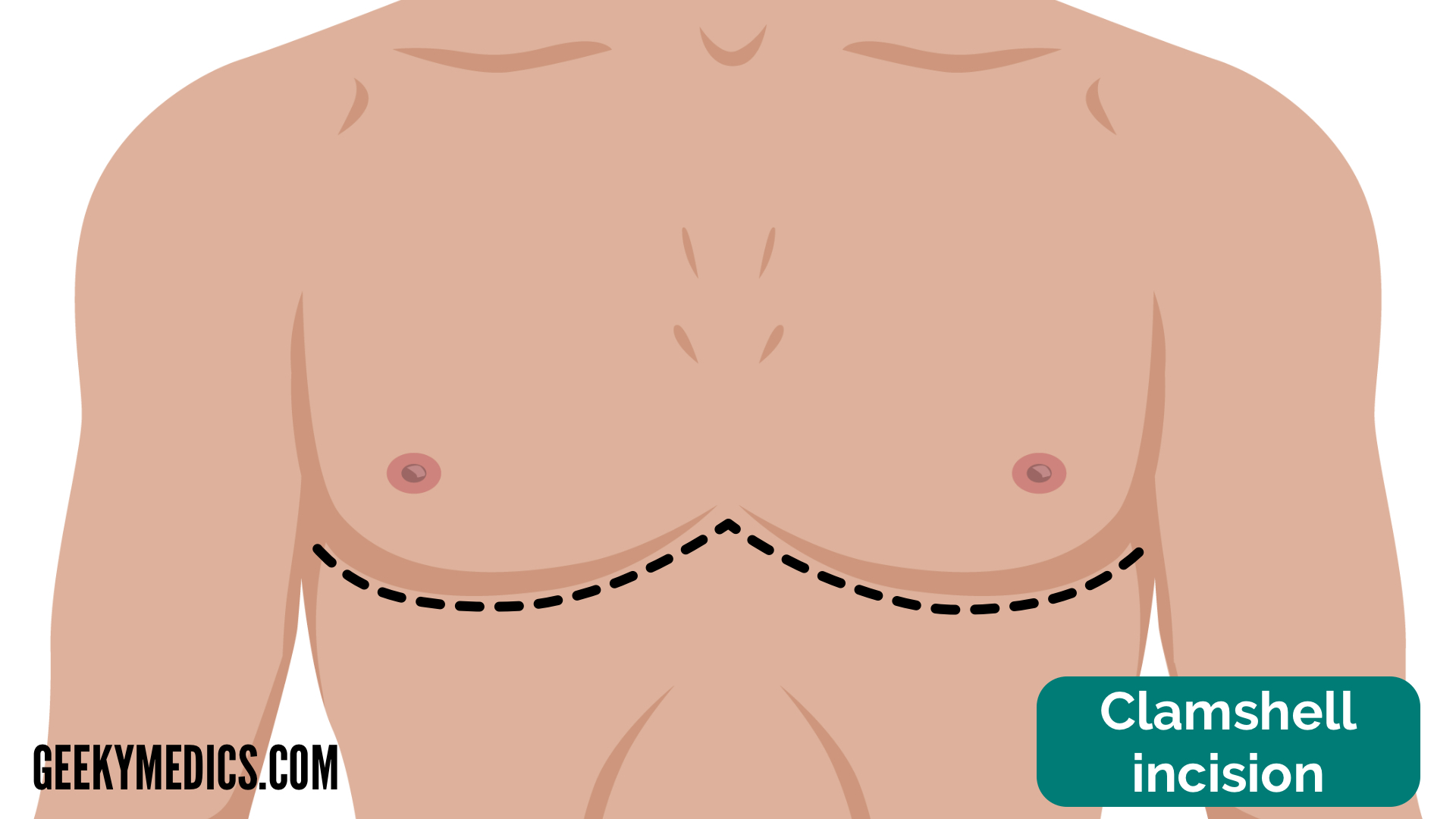
Clamshell Incision

  • Incision:

    • Bilateral transverse thoracotomy

    • across the chest (under the breasts),

    • joining both sides

    • → opens chest like a clamshell

  • Access: Both lungs, entire mediastinum, heart, great vessels

  • Used for:

    • Bilateral lung transplantation

    • Extensive trauma

    • Mediastinal tumors

<ul><li><p class=""><strong>Incision:</strong> </p><ul><li><p class="">Bilateral <strong>transverse thoracotomy</strong> </p></li><li><p class="">across the chest (under the breasts), </p></li><li><p class="">joining both sides </p></li><li><p class="">→ opens chest like a clamshell</p></li></ul></li><li><p class=""><strong>Access:</strong> Both lungs, entire mediastinum, heart, great vessels</p></li><li><p class=""><strong>Used for:</strong></p><ul><li><p class=""><strong>Bilateral lung transplantation</strong></p></li><li><p class="">Extensive trauma</p></li><li><p class="">Mediastinal tumors</p></li></ul></li></ul><p></p>
10
New cards

pathological effects of chest injuries

Immediate effects

  • Hypoxia

  • Hypercapnia

  • Acidosis

  • Hypovolemic Shock

    • Due to internal bleeding

  • Cardiac Arrhythmias

  • Bronchospasm

    • Reflex airway narrowing

    • In response to trauma or pain

    • → worsens hypoxia

Late Effects

  • Empyema

    • Collection of pus in the pleural cavity

  • Fibrothorax

    • Thickening and fibrosis of the pleural space

  • Lung Abscess

  • Mediastinitis

    • Severe infection of the mediastinum

11
New cards

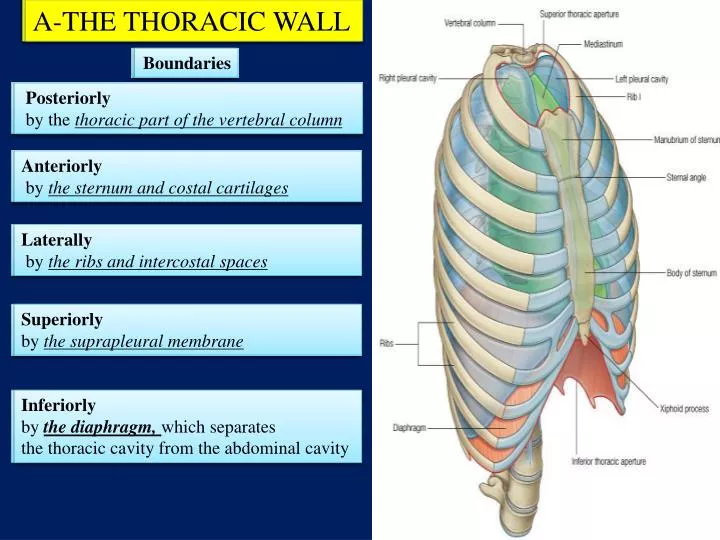
Thorax Boundaries (According to Stef)

  • Superior: suprapleural membranes

  • Posterior: vertebral bodies

  • Lateral: ribs & intercostal muscles

  • Anterior: sternum & costal cartilages

  • Inferior (floor): diaphragm

<ul><li><p class=""><strong>Superior</strong>: suprapleural membranes</p></li><li><p class=""><strong>Posterior</strong>: vertebral bodies</p></li><li><p class=""><strong>Lateral</strong>: ribs &amp; intercostal muscles</p></li><li><p class=""><strong>Anterior</strong>: sternum &amp; costal cartilages</p></li><li><p class=""><strong>Inferior (floor)</strong>: diaphragm</p></li></ul><p></p>
12
New cards

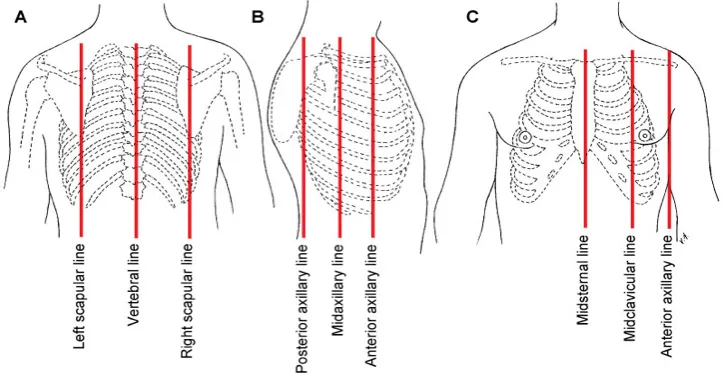
Anatomical lines

knowt flashcard image

<img src="https://knowt-user-attachments.s3.amazonaws.com/7ebc2e03-03a7-41f1-80c1-127e03060e85.png" data-width="100%" data-align="center" alt="knowt flashcard image"><p></p>
13
New cards

What are the 4 manipulations of the thorax? (stef question)

Puncture

Thoracocentesis

  • controlled puncture of the pleural space

  • using a needle or cannula.

  • To remove fluid or air from the pleural cavity.

VATS (video assisted thoracoscopic surgery)

  • using a thoracoscope (camera) and small incisions.

  • Purpose:

    • Lung biopsy

    • Pleural biopsy

    • Lobectomy or wedge resection

    • Decortication for empyema

Thoracotomy (incision)

  • A major open surgical incision into the thoracic cavity.

  • Purpose: Direct access to lungs, heart, oesophagus, and major vessels.

14
New cards

Operations- names only

  • Thoracocentesis

  • Pneumothorax

  • Pericardiocentesis

  • Rib resection

  • Pleurodesis

  • Empyema

  • Decortication

15
New cards

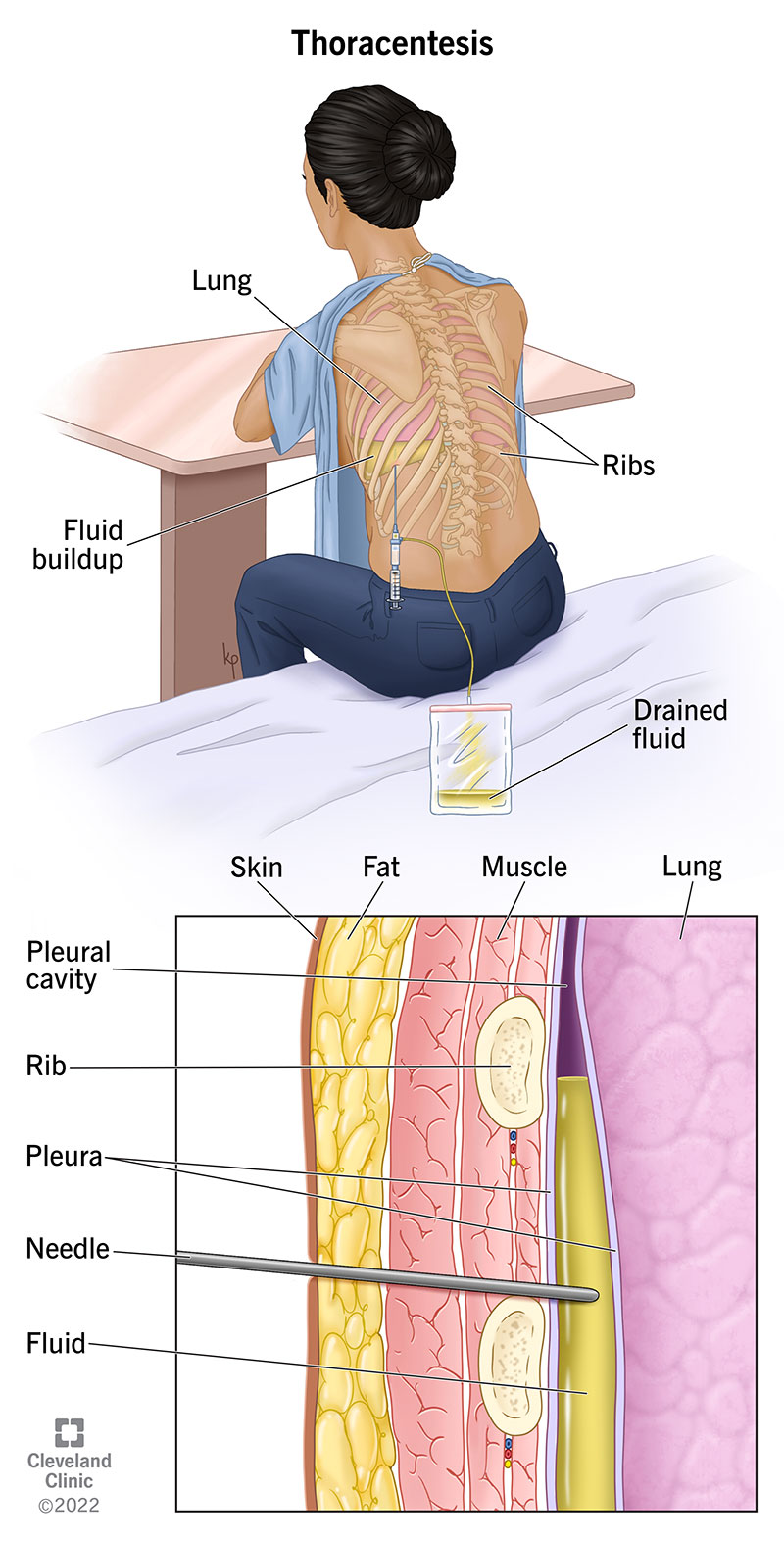
Thoracocentesis

(Pleural Puncture)

  • Purpose: Diagnostic or therapeutic aspiration of pleural fluid.

  • Position: Patient seated, leaning forward.

  • Site: 8th–9th intercostal space

    • mid/posterior axillary line.

  • Technique:

    • Local anesthesia (1%)

    • Needle inserted above upper border of rib below (to avoid neurovascular bundle)

    • Antibiotic instillation post-aspiration
<p>(Pleural Puncture)</p><ul><li><p class=""><strong>Purpose</strong>: Diagnostic or therapeutic aspiration of pleural fluid.</p></li><li><p class=""><strong>Position</strong>: Patient seated, leaning forward.</p></li><li><p class=""><strong>Site</strong>: 8th–9th intercostal space</p><ul><li><p class="">mid/posterior axillary line.</p></li></ul></li><li><p class=""><strong>Technique</strong>:</p><ul><li><p class="">Local anesthesia (1%)</p></li><li><p class="">Needle inserted <strong>above upper border of rib below</strong> (to avoid neurovascular bundle)</p></li><li><p class="">Antibiotic instillation post-aspiration</p></li></ul></li></ul><p></p>
16
New cards

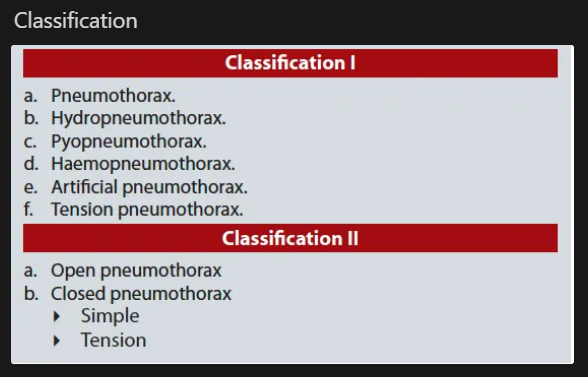
Pneumothorax

  • Definition: Entry of air into pleural cavity, collapsing lung.

  • Types:

    • Spontaneous

    • Traumatic

    • TensionMost dangerous

      • Mechanism: Air enters during inspiration but can't exit

        → pressure ↑

        → mediastinal shift

        → ↓ venous return

        heart failure

      • Emergency: Needs needle decompression

        • 2nd ICS

        • midclavicular line

        • or chest tube

<ul><li><p class=""><strong>Definition</strong>: Entry of air into pleural cavity, collapsing lung.</p></li><li><p class=""><strong>Types</strong>:</p><ul><li><p class=""><strong><u>Spontaneous</u></strong></p></li><li><p class=""><strong><u>Traumatic</u></strong></p></li><li><p class=""><strong><u>Tension</u></strong> → <strong>Most dangerous</strong></p><ul><li><p class=""><strong>Mechanism</strong>: Air enters during inspiration but can't exit </p><p class="">→ pressure ↑</p><p class="">→ mediastinal shift </p><p class="">→ ↓ venous return </p><p class="">→ <strong>heart failure</strong></p></li><li><p class=""><strong>Emergency</strong>: Needs <strong>needle decompression</strong> </p><ul><li><p class="">2nd ICS</p></li><li><p class="">midclavicular line</p></li><li><p class=""> or chest tube</p></li></ul></li></ul></li></ul></li></ul><p></p>
17
New cards

Pericardiocentesis

  • Purpose: Aspiration of fluid/blood from pericardial sac

  • Indication: Cardiac tamponade

  • Approach: Insert needle just below xiphoid,

    • angle 45°

    • directed upwards and leftwards

  • Needle: 16 or 18G

18
New cards

Rib Resection

Surgical removal of a rib

Purpose:

  • Access to thoracic organs

  • Rib tumour excision

19
New cards

Pleurodesis

  • part of the pleural space is artificially obliterated.

  • It involves the adhesion of the visceral and the costal pleura.

  • stick visceral to costal pleura

    • The mediastinal pleura is spared

20
New cards

Empyema

  • Definition: Pus in the pleural cavity

  • Caused by:

    • Lung abscess rupture

    • Pneumonia complications

    • Surgery, trauma

  • Phases:

    1. Exudative: Thin pus

      Fibropurulent: Thick, fibrinous

    2. Organising: Fibroblast rind forms

  • Tx: Thoracocentesis + antibiotics ± surgery

21
New cards

Decortication

  • Removal of restrictive layer of fibrous tissue over the lung

  • Helps the lung tissue to re-expand

22
New cards

Terminology (stef question)

  • Pneumothorax- presence of atmospheric air in the thorax

  • Hemothorax- presence of blood in the thorax

  • Pyothorax- presence of pus in the thorax

  • Chylothorax- presence of lymphatic fluid in the thorax

  • Hydropneumothorax- presence of liquid and air in the thorax

  • Lobectomy- removal of a lung lobe

  • Pneumonectomy/ pulmonectomy- removal of the whole lung

  • Pneumonothorax- presence of pus and blood in the thorax