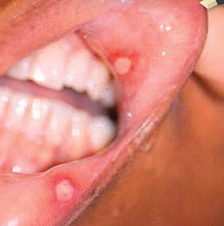
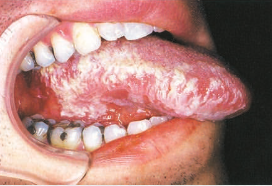
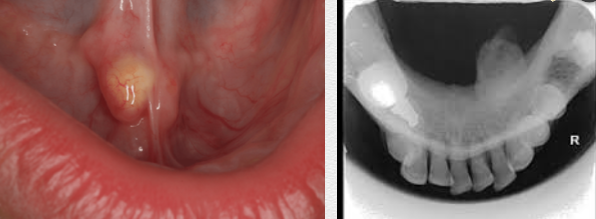
INTRAORAL DIAGNOSIS

0.0(0)
Studied by 3 people
call kaiCall Kai
learnLearn
examPractice Test
spaced repetitionSpaced Repetition
heart puzzleMatch
flashcardsFlashcards
GameKnowt Play
Card Sorting

1/84

encourage image

There's no tags or description

Looks like no tags are added yet.

Last updated 9:32 AM on 5/17/26
Name
Mastery
Learn
Test
Matching
Spaced
Call with Kai

No analytics yet

Send a link to your students to track their progress

85 Terms

1
New cards

developmental lesions

cleft palate

hairy tongue

ankyloglossia

varix or varicosity

torus or exostosis

2
New cards

ankyloglossia

aka: tongue-tie

a condition in which the lingual frenum is attached too far anteriorly toward the tip of the tongue

prevents the tip of the tongue from reaching the hard palate when the mouth is open

  • effects:

    • aberration in speech

    • depending on the severity of the condition

  • management:

    • surgical correction when causes speech, swallowing, or other functional problems
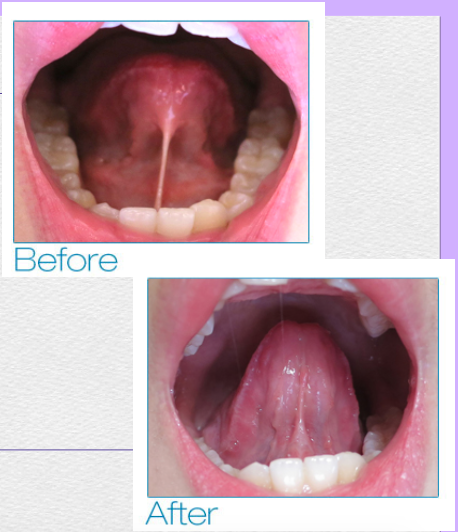
<p><strong>aka:</strong> tongue-tie</p><p>a condition in which the<span style="color: red;"><span> lingual frenum is attached too far anteriorly</span></span> toward the tip of the tongue</p><p><span style="color: red;">prevents the tip of the tongue from reaching the hard palate</span> when the mouth is open</p><ul><li><p><strong>effects:</strong></p><ul><li><p><span style="color: red;"><span>aberration</span></span> in speech</p></li><li><p>depending on the severity of the condition</p></li></ul></li></ul><ul><li><p><strong>management:</strong></p><ul><li><p>s<span style="color: red;"><span>urgical correction</span></span> when causes speech, swallowing, or other functional problems</p></li></ul></li></ul><p></p>
3
New cards

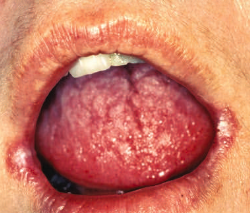
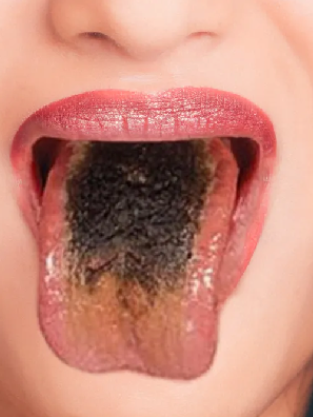
hairy tongue

a condition in which the filiform papillae become markedly long, resulting in an appearance like a long-tufted carpet

  • causes of discoloration

    • the long filiform papillae may trap chromogenic bacteria, fungi, and food pigmentations

    • this can give the tongue various colors: white, brown, or black

  • management:

    • brushing the tongue with a toothbrush or using a tongue scraper will usually eliminate the discoloration
<p>a condition in which the<span style="color: red;"><span> filiform papillae</span></span> become markedly long, resulting in an appearance like a<span style="color: red;"><span> long-tufted carpet</span></span></p><ul><li><p><strong>causes of discoloration</strong></p><ul><li><p>the<span style="color: red;"><span> long filiform papillae may trap chromogenic bacteria</span></span>, fungi, and<span style="color: red;"><span> food pigmentations</span></span></p></li><li><p>this can give the tongue various colors: white, brown, or black</p></li></ul></li><li><p><strong>management:</strong></p><ul><li><p><span style="color: red;">brushing the tongue</span> with a toothbrush or using a <span style="color: red;">tongue scraper</span> will usually eliminate the discoloration </p></li></ul></li></ul><p></p>
4
New cards

various colors of hairy tongue

white, brown, black

5
New cards

appearance of hairy tongue

long-tufted carpet

6
New cards

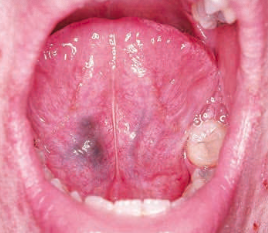
varix / varicosity

refers to dilation of a vein

  • treatment (TX)

    • no treatment is required

    • clinician must be able to differentiate this from other vascular or pigmented lesions found in the oral cavity
<p><span>refers to </span><span style="color: rgb(204, 0, 0);"><span>dilation of a vein</span></span></p><ul><li><p><strong>treatment (TX)</strong></p><ul><li><p>no treatment is required</p></li><li><p>clinician must be able to differentiate this from other vascular or pigmented lesions found in the oral cavity</p></li></ul></li></ul><p></p>
7
New cards

clinical appearance of varicosity

blanch with pressure

purple or blue papules

nodules or tortuous dilated veins

8
New cards

common locations of varicosity

lower lip in older adults

ventral surface of the tongue

9
New cards

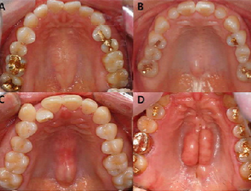
torus or exostosis

an exostosis that occurs in one of two locations intra-orally

benign protuberances of bone that may arise on the cortical surface of the jaws

  • treatment:

    • surgical removal may be required if removable prostheses are planned
<p>an exostosis that <span style="color: red;">occurs in one of two locations</span> intra-orally</p><p><span style="color: red;">benign protuberances of bone</span><span style="color: rgb(204, 0, 0);"> </span>that may arise on the cortical surface of the jaws</p><ul><li><p><strong>treatment:</strong></p><ul><li><p><span style="color: red;">surgical removal </span>may be required if removable prostheses are planned</p></li></ul></li></ul><p></p>
10
New cards

clinical appearance of exostosis

can be solitary or multiple

nodular masses on the buccal alveolar process

sometimes become confluent, forming a shelflike protuberance

11
New cards

torus mandibularis

may be unilateral or bilateral

appears on the lingual surface of the mandible near the canines and premolars

12
New cards

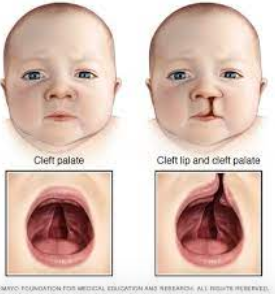
cleft palate

can occur with or without cleft lip
<p><span>can occur with or without cleft lip</span></p>
13
New cards

traumatic and reactive lesions

fibroma

linea alba

mucocele

hematoma

hyperkeratosis

amalgam tattoo

traumatic ulcers

nicotine stomatitis

pyogenic granuloma

chewing / biting of mucosa

14
New cards

chewing or biting of mucosa

lesions caused by chronic chewing of the mucosa

usually habit or stress induced, occur in children or adults

  • clinical considerations

    • problematic for CD patients

    • causes problems in vertical dimension

<p>lesions caused by chronic chewing of the mucosa</p><p>usually <span style="color: red;">habit or stress induced</span>, occur in children or adults</p><ul><li><p><strong>clinical considerations</strong></p><ul><li><p>problematic for CD patients</p></li><li><p>causes problems in vertical dimension</p></li></ul></li></ul><p></p>
15
New cards

linea alba

similar to reticular papilla (Striae of Wickham)

a linear thickening of the buccal mucosa (hyperkeratosis) that occurs along the occlusal plane

  • clinical consideration

    • biopsy may be warranted in the presence of persistent trauma or unresolving ulceration
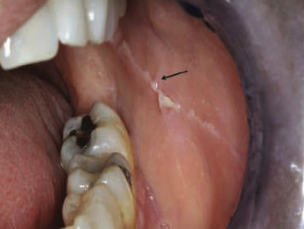
<p>similar to<span style="color: red;"><span> reticular papilla (Striae of Wickham)</span></span></p><p><span>a </span><span style="color: red;"><span>linear thickening of the buccal mucosa</span></span><span> (hyperkeratosis) that occurs along the occlusal plane</span></p><ul><li><p><strong>clinical consideration</strong></p><ul><li><p><span style="color: red;">biopsy</span> may be warranted in the presence of persistent trauma or unresolving ulceration</p></li></ul></li></ul><p></p>
16
New cards

clinical appearance of linea alba

scalloping shape, representing occlusal indentations

17
New cards

traumatic ulcers

usually heal in 1 or 2 weeks

a lesion characterized by focal loss of epithelium

result from a cut, abrasion, or irritation of the mucosa
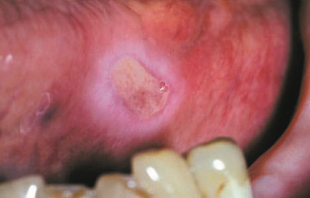
<p>usually heal in <span style="color: red;">1 or 2 weeks</span></p><p><span>a lesion characterized by</span><span style="color: red;"><span> focal loss of epithelium</span></span></p><p><span>result from a </span><span style="color: rgb(204, 0, 0);"><span>cut, abrasion, or irritation </span></span><span>of the mucosa</span></p>
18
New cards

clinical appearance of traumatic ulcers

vary in size and shape

red borders caused by inflammation

19
New cards

hyperkeratosis

used clinically to refer to white areas on oral mucosa without annotation as to the cause of the condition

a term referring to a microscopic layer of thickened parakeratin and/or orthokeratin of the mucosal epithelium

  • treatment:

    • these lesions must be monitored

    • biopsy may be appropriate if changes in lesion color, shape, borders, or surface texture are observed
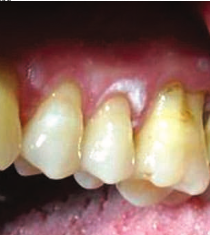
<p><span>used clinically to refer to </span><span style="color: rgb(204, 0, 0);"><em><span>white areas </span></em></span><span>on oral mucosa </span><span style="color: red;"><span>without annotation as to the cause </span></span><span>of the condition</span></p><p><span>a term referring to a microscopic layer of</span><span style="color: red;"><span> </span><mark data-color="yellow" style="background-color: yellow; color: inherit;"><span>t</span></mark><span>hickened parakeratin </span></span>and/or <span style="color: red;"><span>orthokeratin of the mucosal epithelium</span></span></p><ul><li><p><strong>treatment:</strong></p><ul><li><p>these lesions must be monitored</p></li><li><p><span style="color: red;"><span>biopsy </span></span>may be appropriate if changes in lesion color, shape, borders, or surface texture are observed</p></li></ul></li></ul><p></p>
20
New cards

most common cause of hyperkeratosis

chronic irritation or frictional keratosis

21
New cards

clinical appearance of hyperkeratosis

whitish appearance in the moist environment of the oral cavity because of the thickened keratin layer

22
New cards

amalgam tattoo

usually an incidental finding

amalgam in the gingiva, alveolar process, palate, or buccal mucosa may produce a tattoo

  • clinical consideration:

    • dental team must be able to conclusively differentiate an amalgam tattoo from other types of intraoral pigmented lesions
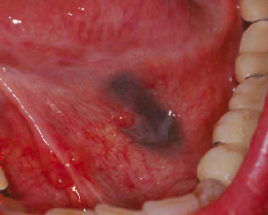
<p><span>usually </span><span style="color: red;"><span>an incidental finding</span></span></p><p><span>amalgam </span><span style="color: red;"><span>in the gingiva, alveolar process, palate, or buccal mucosa </span></span><span>may produce a tattoo</span></p><ul><li><p><strong>clinical consideration:</strong></p><ul><li><p>dental team must be able to conclusively differentiate an amalgam tattoo from other types of intraoral pigmented lesions</p></li></ul></li></ul><p></p>
23
New cards

appearance of amalgam tattoo

dark blue or black discoloration

ranging in size from a few millimeters to 1cm

  • radiograph:

    • radiopaque granules consistent with metal fragments

24
New cards

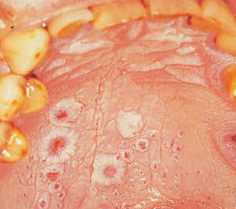
nicotine stomatitis

occurs on the posterior hard palate and anterior soft palate of smokers, especially pipe smokers

  • cause:

    • caused by heat on the mucosa

    • not actually by the nicotine itself!

  • treatment:

    • encourage the patient to STOP SMOKING

<p>occurs on the <span style="color: red;">posterior hard palate </span>and <span style="color: red;">anterior soft palate</span> of smokers, especially<span style="color: red;"> pipe smokers</span></p><ul><li><p><strong>cause:</strong></p><ul><li><p>caused by <span style="color: red;">heat on the mucosa</span> </p></li><li><p><span style="color: red;">not </span>actually by the nicotine itself!</p></li></ul></li><li><p><strong>treatment:</strong></p><ul><li><p><span>encourage the patient to </span><span style="color: red;"><span>STOP SMOKING</span></span></p></li></ul></li></ul><p></p>
25
New cards

clinical appearance of nicotine stomatitis

sakura-like

the whiteness represents hyperkeratosis and the red spots

papules with an opaque white surface and a red dot in the center

26
New cards

pyogenic granuloma

an example of a tumescence

can occur anywhere in the oral mucosa or on the skin

an overgrowth of young, highly vascular granulation tissue

  • cause:

    • reaction to chronic irritation or dental plaque

    • pregnancy or puberty, hormonal changes may cause exaggerated tissue reactions

  • management:

    • dentist must identify and resolve the underlying cause (ex: iatrogenic restoration, foreign body, or dental infection)

[ note: misnomer – does not produce pus and is not a true granuloma ]

<p>an example of a<span style="color: red;"> tumescence</span></p><p>can occur<span style="color: red;"> </span>anywhere in the oral mucosa or on the skin</p><p>an <span style="color: red;">overgrowth of young, highly vascular granulation tissue</span></p><ul><li><p><strong>cause:</strong></p><ul><li><p>reaction to <span style="color: red;">chronic irritation or dental plaque</span></p></li><li><p>pregnancy or puberty, <span style="color: red;">hormonal changes</span> may cause exaggerated tissue reactions</p></li></ul></li></ul><ul><li><p><strong>management:</strong></p><ul><li><p>dentist must identify and <span style="color: red;">resolve the underlying cause</span> (ex: iatrogenic restoration, foreign body, or dental infection)</p></li></ul></li></ul><p></p><p><em>[ note: misnomer – does not produce pus and is not a true granuloma ]</em></p>
27
New cards

clinical appearance of pyogenic granuloma

lesion bleeds easily

bright red enlargement due to vascularity of granulation tissue and frequent loss of epithelium over the lesion

28
New cards

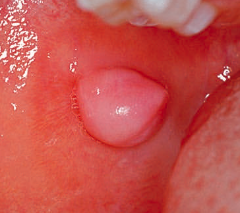
fibroma

refers to a reactive overgrowth of fibrous tissue and is not a true neoplasm

  • cause / history:

    • patients usually report a history of trauma in the area

    • in such cases, the term "traumatic fibroma" is widely used

  • management:

    • excisional biopsy should be considered if the lesion is unsightly, repeatedly traumatized, or habitually manipulated by the patient

    • excisional biopsy is more recommended than incisional biopsy
<p><span>refers to a </span><span style="color: red;"><span>reactive overgrowth of fibrous tissue</span></span><span> and is </span><span style="color: red;"><span>not</span></span><span> a true neoplasm</span></p><ul><li><p><strong>cause / history:</strong></p><ul><li><p>patients usually report a history of trauma in the area</p></li><li><p>in such cases, the term <span style="color: red;"><span>"traumatic fibroma" </span></span>is widely used</p></li></ul></li></ul><ul><li><p><strong>management:</strong></p><ul><li><p><span style="color: red;">excisional biopsy</span> should be considered if the lesion is unsightly, repeatedly traumatized, or habitually manipulated by the patient</p></li><li><p>excisional biopsy is <span style="color: red;">more recommended</span> than incisional biopsy</p></li></ul></li></ul><p></p>
29
New cards

clinical appearance of fibroma

usually less than 1cm in dimension

well-circumscribed firm swelling on the lip or buccal mucosa

30
New cards

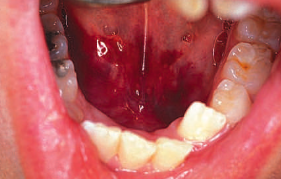
hematoma

consists of extravasated blood pooling under the epithelium or deep in the connective tissue or muscle, usually because of blunt trauma

  • cause:

    • usually due to blunt trauma

    • occurs more often in individuals with bleeding disorders

    • occasionally administration of an inferior alveolar nerve block

  • treatment:

    • can be expected to resolve spontaneously
<p><span>consists of</span> extravasated <span style="color: red;">blood pooling under the epithelium</span> or deep in the connective tissue or <span>muscle, usually because of blunt trauma</span></p><ul><li><p><strong>cause:</strong></p><ul><li><p>usually due to <span style="color: red;">blunt trauma</span></p></li><li><p>occurs more often in individuals<span style="color: red;"> with bleeding disorders</span></p></li><li><p>occasionally administration of an<span style="color: red;"> inferior alveolar nerve block</span> </p></li></ul></li></ul><ul><li><p><strong>treatment:</strong></p><ul><li><p>can be expected to <span style="color: red;">resolve spontaneously</span></p></li></ul></li></ul><p></p>
31
New cards

clinical appearance of hematoma

a dark red papule or nodule that ruptures easily

32
New cards

infections or inflammations

parulis

candidiasis

herpes infection

angular cheilitis

verruca vulgaris

patent sinus tract

33
New cards

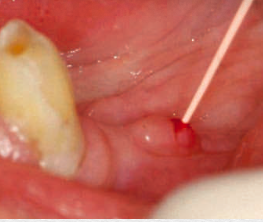
parulis

aka: gumboil

a small abscess on the gingiva, originating from an apical or periodontal abscess

  • treatment:

    • will resolve if the source of infection is eliminated
<p><strong>aka: </strong>gumboil</p><p><span>a </span><span style="color: red;"><span>small abscess</span></span><span> on the gingiva, originating from an </span><span style="color: red;"><span>apical or periodontal abscess</span></span></p><ul><li><p><strong>treatment:</strong></p><ul><li><p>will resolve if the<span style="color: red;"> source of infection is eliminated</span></p></li></ul></li></ul><p></p>
34
New cards

clinical appearance of parulis

localized and often acute swelling on the gingiva with fluctuation

a yellow point appears at the center of the swelling before spontaneous drainage

35
New cards

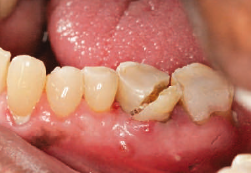
patent sinus tract

results in continuous drainage of pus through the formed sinus tract

can develop following drainage of a parulis if the source of infection (commonly a necrotic pulp) is not removed

  • treatment:

    • the papule may persist as a fibroma

    • the sinus tract will close when the source of infection is eliminated
<p>results in <span style="color: red;">continuous drainage of pus</span> through the formed sinus tract</p><p>can develop following drainage of a parulis if the source of infection (commonly a necrotic pulp) is not removed</p><ul><li><p><strong>treatment:</strong></p><ul><li><p>the papule <span style="color: red;">may persist as a fibroma</span></p></li><li><p>the sinus tract will close when the <span style="color: red;">source of infection is eliminated</span></p></li></ul></li></ul><p></p>
36
New cards

appearance of patent sinus tract

this papule represents the opening of a fistula or sinus tract

asymptomatic papule of granulation tissue forms on the gingiva in response to chronic irritation from the drainage

37
New cards

herpes infection

generalized gingivitis may occur

primary infection is often subclinical

lesions usually resolve in 10-14 days without a trace

oral lesions are widespread with small vesicles forming anywhere on the lips and mucosa

  • triggers:

    • stress, strong sunlight exposure, or immune suppression

  • recurrent infection

    • recurring painful intraoral episodes may require antiviral medication

    • vesicles are short-lived; ulcers are discrete and typically smaller than 2mm

    • usually less severe; lesions occur only on keratinized tissue (perioral skin, gingiva, hard palate)
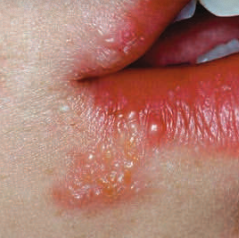
<p>generalized gingivitis may occur</p><p>primary infection is often <span style="color: red;">subclinical</span></p><p>lesions usually <span style="color: red;">resolve in 10-14 days</span> without a trace</p><p>oral lesions are widespread with <span style="color: red;">small vesicles</span> forming <span style="color: red;">anywhere on the lips and mucosa</span></p><ul><li><p><strong>triggers:</strong></p><ul><li><p>stress, strong sunlight exposure, or immune suppression</p></li></ul></li></ul><ul><li><p><strong>recurrent infection</strong></p><ul><li><p>recurring painful intraoral episodes may require <span style="color: red;">antiviral medication</span></p></li><li><p>vesicles are short-lived; <span style="color: red;">ulcers are discrete </span>and typically <span style="color: red;"><span>smaller than 2mm</span></span></p></li><li><p>usually<span style="color: red;"> less severe</span>; lesions occur <span style="color: red;">only on keratinized tissue</span> (perioral skin, gingiva, hard palate)</p></li></ul></li></ul><p></p>
38
New cards

clinical appearance of herpes infection

vesicles coalesce and rupture

will then form widespread ulcers known as primary herpetic gingivostomatitis

39
New cards

pathophysiology of herpes infection

these viruses target epithelial cells, causing skin and mucosal lesions

after infecting epithelial cells → viruses replicate, enter neurons, and travel to nerve ganglia, where they remain latent until reactivated

upon reactivation, viruses travel back to skin or mucosa, causing lesions

[ both HSV-1 & HSV-2 → infect perioral skin and oral mucosa ]

40
New cards

subtle systemic symptoms of herpes infection

mild fever

pharyngitis

general malaise

41
New cards

treatment for herpes infection

acyclovir

42
New cards

types of herpes viruses that infect humans

varicella zoster virus (VZV)

herpes simplex virus type 1 (HSV-1)

herpes simplex virus type 2 (HSV-2)

43
New cards

candidiasis

an opportunistic infection of candida albicans

  • treatment:

    • antifungal agents with persistent candidiasis
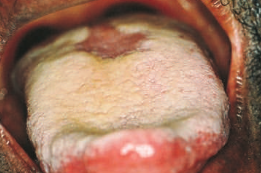
<p><span>an opportunistic infection of </span><em><span>candida albicans</span></em></p><ul><li><p><strong>treatment:</strong></p><ul><li><p><span style="color: red;">antifungal agents</span> with persistent candidiasis</p></li></ul></li></ul><p></p>
44
New cards

clinical forms of candidiasis

erythematous

pseudomembranous

chronic hyperplastic candidiasis

candida-associated angular cheilitis

central papillary atrophy (median rhomboid glossitis)

denture stomatitis – often included, though may be a reactive lesion rather than true infection

45
New cards

predisposing factors of candidiasis

HIV/AIDS

birth control pills

cancer, aging, pregnancy

diabetes mellitus, smoking

hyposalivation, chemotherapy

extended course of antibiotics

systemic or inhaled corticosteroids

46
New cards

pathophysiology of candidiasis

most healthy individuals have candida-specific innate immunity

infection occurs when innate defense mechanisms are defective, candida alters its virulence, or environmental factors favor growth

47
New cards

candida organisms are commensal in:

human gastrointestinal (GI) tract

lower female reproductive tract

48
New cards

angular cheilitis

presents as an inflammation at the corner of the mouth

occurs mostly in aged individuals with deep labial folds after loss of occlusal height (decreased VDO)

habitual licking of the corner of the mouth may also lead to development even without deep labial folds

  • treatment:

    • topical antifungal agents

<p><span>presents as an </span><span style="color: rgb(255, 0, 0);"><span>inflammation at the corner of the mouth</span></span></p><p>occurs mostly in <span style="color: red;">aged individuals with deep labial folds</span> after loss of occlusal height (decreased VDO)</p><p><span style="color: red;">habitual licking of the corner of the mouth</span> may also lead to development even without deep labial folds</p><ul><li><p><strong>treatment:</strong></p><ul><li><p><span style="color: red;">topical antifungal</span> agents</p></li></ul></li></ul><p></p>
49
New cards

predisposing factors of angular cheilitis

deficiencies of vitamin B, iron or folic acid

50
New cards

causes of angular cheilitis

Candida albicans

Staphylococcus aureus

Beta-hemolytic streptococcus

habitual licking of the corner of the mouth may also lead to development even without deep labial folds

51
New cards

clinical appearance of angular cheilitis

deep labial folds become red, sore, and fissured due to constant saliva exposure

52
New cards

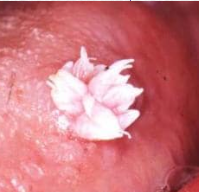
verruca vulgaris

latin for "common wart"

a benign epithelial lesion of the skin and mucous membrane

  • cause:

    • human papillomavirus (HPV) types 1, 2, 4

  • management:

    • similar to that for a fibroma

    • excisional biopsy

<p>latin for "common wart"</p><p>a <span style="color: rgb(255, 0, 0);">benign epithelial lesion </span>of the skin and mucous membrane</p><ul><li><p><strong>cause:</strong></p><ul><li><p><span style="color: red;">human papillomavirus (HPV) types 1, 2, 4</span></p></li></ul></li></ul><ul><li><p><strong>management:</strong></p><ul><li><p>similar to that for a fibroma</p></li><li><p>excisional biopsy</p></li></ul></li></ul><p></p>
53
New cards

appearance of verruca vulgaris

a pedunculated or sessile papule with a whitish-pink cauliflower-like surface

can occur anywhere on the oral mucosa

54
New cards

autoimmune diseases

lichen planus

aphthous ulcers

atrophic glossitis

lichenoid reaction

55
New cards

aphthous ulcers

common oral mucosal disease

ulcerations with no known cause and a wide spectrum of severity and frequency of recurrence

  • triggers:

    • represent an autoimmune reaction

    • precipitated by stress or hormonal changes

    • associated with systemic conditions such as vitamin deficiencies, iron deficiency, and inflammatory bowel diseases.

  • treatment:

    • topical steroids for recurrent cases

<p><span style="color: red;"><span>common</span></span><span> oral mucosal disease</span></p><p><span>ulcerations with </span><span style="color: red;"><span>no known cause </span></span><span>and a wide spectrum of severity and </span><span style="color: red;"><span>frequency of recurrence</span></span></p><ul><li><p><strong>triggers:</strong></p><ul><li><p>represent an<span style="color: red;"> autoimmune reaction</span></p></li><li><p>precipitated by <span style="color: red;">stress or hormonal changes</span></p></li><li><p>associated with systemic conditions such as <span style="color: red;">vitamin deficiencies, iron deficiency</span>, and inflammatory bowel diseases.</p></li></ul></li></ul><ul><li><p><strong>treatment:</strong></p><ul><li><p><span style="color: red;">topical steroids</span> for recurrent cases</p></li></ul></li></ul><p></p>
56
New cards

appearance of aphthous ulcers

solitary or multiple nonspecific ulcers

usually on nonkeratinized oral mucosa

57
New cards

other names of aphthous ulcers

canker sores

aphthous stomatitis

recurrent aphthous ulcers

recurrent aphthous stomatitis

58
New cards

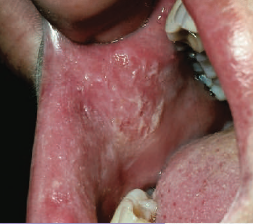
lichen planus

a chronic inflammatory skin disorder, can persist for months or years

believed to be a cell-mediated immune response, but exact cause is unknown

the oral component (OLP) may occur before, concurrent with, or after skin lesions

  • management

    • topical or short-term systemic steroids for erosive form
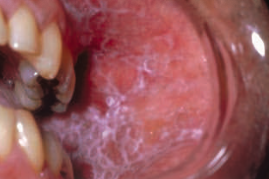
<p><span>a </span><span style="color: rgb(255, 0, 0);"><span>chronic inflammatory skin disorder, </span></span><span>can persist </span><span style="color: red;"><span>for months or years</span></span></p><p><span>believed to be a </span><span style="color: rgb(255, 0, 0);"><span>cell-mediated immune response, </span></span>but exact <span style="color: red;">cause is unknown</span></p><p><span>the oral component (OLP) may occur before, concurrent with, or after skin lesions</span></p><ul><li><p><strong>management</strong></p><ul><li><p><span style="color: red;">topical or short-term systemic steroids</span> for erosive form</p></li></ul></li></ul><p></p>
59
New cards

clinical appearance of lichen planus

plaque, erosion, or ulceration of the oral mucosa

pruritic, purple eruptions with white streaks (Wickham striae) on the surface

bandlike, subepithelial lymphocytic infiltration and basement membrane degeneration, cause is unknown

60
New cards

lichenoid reaction

an oral mucosal condition that is clinically and histologically indistinguishable from OLP except for identifiable causes

when the cause (such as amalgam or an offending medication) is removed the lesion will resolve with time
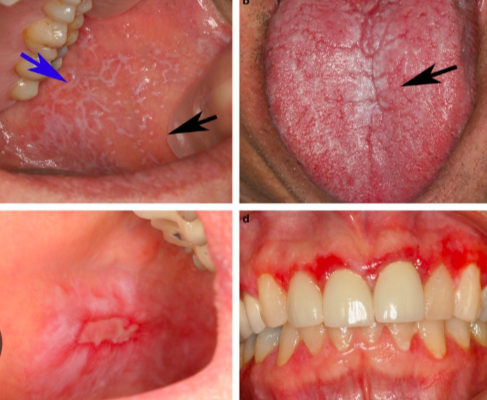
<p><span>an oral mucosal condition that is </span><span style="color: red;"><span>clinically and histologically indistinguishable from OLP</span></span><span> except for identifiable causes</span></p><p><span>when the </span><span style="color: red;"><span>cause</span></span><span> (such as amalgam or an offending medication) </span><span style="color: red;"><span>is removed</span></span><span> the</span><span style="color: red;"><span> lesion will resolve with time</span></span></p>
61
New cards

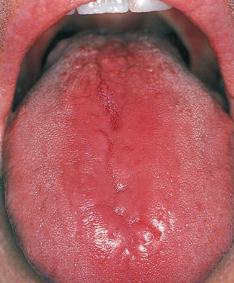
atrophic glossitis

refers to papillary atrophy of the tongue

characterized by an absence of filiform and fungiform papillae

  • treatment:

    • treatment varies depending on the underlying cause of the condition
<p>refers to papillary atrophy of the tongue</p><p>characterized by an absence of <span style="color: red;">filiform and fungiform papillae</span></p><ul><li><p><strong>treatment:</strong></p><ul><li><p>treatment <span style="color: red;">varies depending on the underlying cause</span> of the condition</p></li></ul></li></ul><p></p>
62
New cards

associated conditions of atrophic glossitis

anemia

avitaminosis

sjögren syndrome

vitamin B deficiency

graft versus host disease

63
New cards

appearance of atrophic glossitis

fiery red, edematous, painful

hence the term "burning tongue”

64
New cards

cysts, tumors and neoplasms

leukoplakia

erythroplakia

squamous cell carcinoma

developmental odontogenic cysts

erythroleukoplakia (speckled erythroplakia)

65
New cards

developmental odontogenic cysts

a pathologic cavity lined with epithelium

contains fluid or semi-solid material in the lumen

arise from the epithelium of the tooth-forming apparatus

not inflammatory in nature, and thus are to be distinguished from periapical (radicular) cysts

66
New cards

types of developmental odontogenic cysts

dentigerous cysts

odontogenic keratocysts

lateral periodontal cysts

67
New cards

leukoplakia

derived from Greek, meaning "white patch"

a clinical diagnosis with no specific histologic implication

refers to a clinically evident white plaque or patch with malignant potential

  • considered a diagnosis of exclusion after ruling out other white lesions such as:

    • frictional keratosis

    • smoker's keratosis

    • hyperplastic candidiasis

  • treatment:

    • biopsy should be performed regardless of lesion location to rule out:

      • dysplasia (precancerous)

      • invasive cancer (malignancy)

      • carcinoma in situ (early malignancy)

<p>derived from Greek, meaning <span style="color: red;"><span>"white patch"</span></span></p><p>a clinical diagnosis with <span style="color: red;"><span>no specific histologic implication</span></span></p><p>refers to a <span style="color: red;"><span>clinically evident white plaque</span></span> or patch with <span style="color: red;"><strong><span>malignant potential</span></strong></span></p><ul><li><p>considered a <strong>diagnosis of exclusion after ruling out other white lesions</strong> such as:</p><ul><li><p><span style="color: red;"><span>frictional keratosis</span></span></p></li><li><p><span style="color: red;"><span>smoker's keratosis</span></span></p></li><li><p><span style="color: red;"><span>hyperplastic candidiasis</span></span></p></li></ul></li></ul><ul><li><p><strong>treatment:</strong></p><ul><li><p><span style="color: red;"><span>biopsy</span></span> should be performed regardless of lesion location <strong>to rule out:</strong></p><ul><li><p><span style="color: red;"><span>dysplasia (precancerous)</span></span></p></li><li><p><span style="color: red;"><span>invasive cancer (malignancy)</span></span></p></li><li><p><span style="color: red;"><span>carcinoma in situ (early malignancy)</span></span></p></li></ul></li></ul></li></ul><p></p>
68
New cards

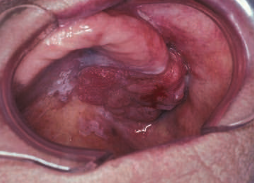
erythroplakia

term used as a clinical diagnosis, not a histologic one, similar to oral leukoplakia

bright red, velvety plaques which cannot be characterized clinically or pathologically as being due to any other condition as per WHO (1978)

  • clinical significance

    • studies show that 90% of lesions clinically diagnosed as erythroplakia are either premalignant or malignant

  • treatment:

    • biopsies to confirm or rule out the presence of premalignancy or malignancy
<p>term used as a <span style="color: red;">clinical diagnosis</span>,<span style="color: red;"> not</span> a histologic one, similar to oral leukoplakia</p><p><span style="color: red;">bright red, velvety plaques</span> which cannot be characterized clinically or pathologically as being due to any other condition as per WHO (1978)</p><ul><li><p><strong>clinical significance</strong></p><ul><li><p>studies show that <strong>90% of lesions</strong> clinically diagnosed as erythroplakia are either premalignant or malignant</p></li></ul></li><li><p><strong>treatment:</strong></p><ul><li><p><span style="color: red;">biopsies</span> to confirm or rule out the presence of premalignancy or malignancy</p></li></ul></li></ul><p></p>
69
New cards

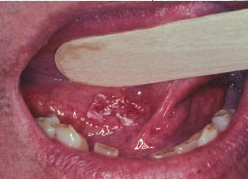
erythroleukoplakia (speckled erythroplakia)

risk of premalignancy or malignancy is higher than for homogenous leukoplakia

  • a clinical diagnosis describing:

    • oral leukoplakia → a red component, or

    • oral erythroplakia → intermingled with white plaque

  • clinical studies show:

    • 14% of lesions are invasive carcinoma

    • 51% are epithelial dysplasia

  • treatment:

    • biopsy is essential

    • sample should include the red area for accurate diagnosis
<p>risk of <span style="color: red;">premalignancy or malignancy</span> is higher than for homogenous leukoplakia</p><ul><li><p>a clinical diagnosis describing:</p><ul><li><p><strong>oral leukoplakia </strong>→ a <span style="color: red;"><span>red component</span></span>, or</p></li><li><p><strong>oral erythroplakia </strong>→ intermingled with<span style="color: red;"><span> white plaque</span></span></p></li></ul></li></ul><ul><li><p><strong>clinical studies show:</strong></p><ul><li><p>14% of lesions are invasive carcinoma</p></li><li><p>51% are epithelial dysplasia</p></li></ul></li></ul><ul><li><p><strong>treatment:</strong></p><ul><li><p>biopsy is essential</p></li><li><p>sample should include the red area for accurate diagnosis</p></li></ul></li></ul><p></p>
70
New cards

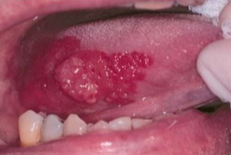
squamous cell carcinoma

the most common oral malignancy

differentiating this from benign lesions with similar features can be challenging

  • clinical considerations:

    • early detection and treatment is the key for survival

    • oral healthcare providers are best qualified to examine oral tissues and identify suspicious lesion

    • any suspicious lesion, especially in patients with common risk factors, must be biopsied due to the morbidity and mortality associated with SCC
<p><span>the </span><span style="color: red;"><span>most common</span></span> oral malignancy</p><p>differentiating this from benign lesions with similar features can be challenging</p><ul><li><p><strong>clinical considerations:</strong></p><ul><li><p>early detection and treatment is the key for survival</p></li><li><p>oral healthcare providers are best qualified to examine oral tissues and identify suspicious lesion</p></li><li><p>any suspicious lesion, especially in patients with common risk factors,<span style="color: red;"> must be biopsied </span>due to the <span style="color: red;">morbidity and mortality</span> associated with SCC</p></li></ul></li></ul><p></p>
71
New cards

most common contributing factors of squamous cell carcinoma

tobacco and alcohol consumption

72
New cards

clinical appearance of squamous cell carcinoma

white or red plaque

ulceration, papule or nodule

lesion with mixed white and red components

73
New cards

common sites of squamous cell carcinoma

oropharynx

floor of the mouth

lateral border of the tongue

74
New cards

non-neoplastic salivary gland abnormalities

xerostomia

sialolithiasis

hyposalivation

sjogren syndrome

ranula & mucocele

75
New cards

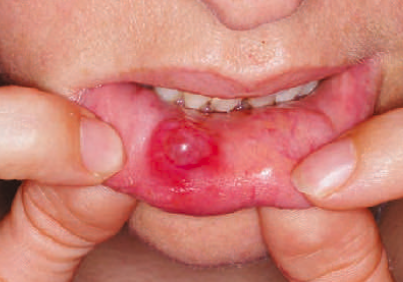
mucocele

found on the lower lip

the common clinical term for mucous extravasation phenomenon

occurs when saliva is retained inside the duct, gland, or surrounding tissue spaces
<p>found on the lower lip</p><p>the common clinical term for mucous extravasation phenomenon</p><p>occurs when <span style="color: red;"><span>saliva is retained inside the duct</span></span>, gland, or surrounding tissue spaces</p>
76
New cards

extravasation phenomenon

the term used if saliva has escaped the duct

77
New cards

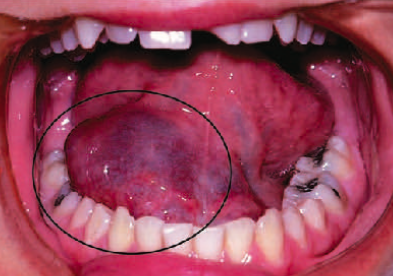
ranula

located in the floor of the mouth

essentially a type of mucocele in this specific location

a mucous extravasation phenomenon associated with the submandibular or sublingual glands
<p>located in the <span style="color: red;">floor of the mouth</span></p><p>essentially a type of mucocele in this specific location</p><p>a <span style="color: red;">mucous extravasation phenomenon</span> associated with the <span style="color: red;">submandibular or sublingual glands</span></p>
78
New cards

sialolithiasis

presence of salivary stones in the salivary glands

  • rarely in:

    • sublingual glands

  • less frequently in:

    • parotid gland

  • most commonly found in:

    • submandibular gland

<p>presence of<span style="color: red;"><span> salivary stones</span></span> in the salivary glands</p><ul><li><p><strong>rarely in:</strong></p><ul><li><p><span style="color: red;"><span>sublingual glands</span></span></p></li></ul></li><li><p><strong>less frequently in:</strong></p><ul><li><p><span style="color: red;"><span>parotid gland</span></span></p></li></ul></li><li><p><strong>most commonly found in:</strong></p><ul><li><p><span style="color: red;"><span>submandibular gland</span></span></p></li></ul></li></ul><p></p>
79
New cards

hyposalivation

aka: hypoptyalism

defined as a diminished secretion of saliva

80
New cards

xerostomia

aka: dry mouth

dryness of the oral cavity due to reduced or absent saliva

  • causes:

    • primary → degenerative or autoimmune diseases affecting the salivary glands

    • secondary → conditions that inhibit salivary secretion, frequently as a side effect of:

      • medications

      • dehydration

      • hormonal imbalances

sialometry → used to measure salivary flow

81
New cards

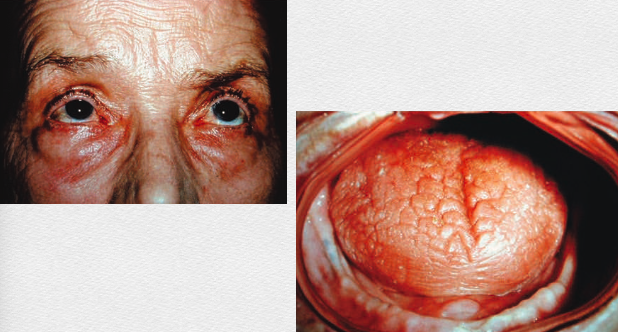
sjogren syndrome

an autoimmune disorder affecting exocrine glands

specifically the lacrimal and salivary glands, causing dry eyes and dry mouth
<p>an autoimmune disorder affecting <span style="color: red;">exocrine glands</span></p><p>specifically the <span style="color: red;">lacrimal </span>and<span style="color: red;"> salivary glands</span>, causing dry eyes and dry mouth</p>
82
New cards

primary sjögren syndrome

may also involve vaginal or nasal dryness

can be associated with chronic bronchitis

83
New cards

secondary sjögren syndrome

associated with other autoimmune diseases, such as:

  • lupus

  • sarcoidosis

  • scleroderma

  • rheumatoid arthritis

84
New cards

neoplastic salivary gland abnormalities

pleomorphic adenoma

85
New cards

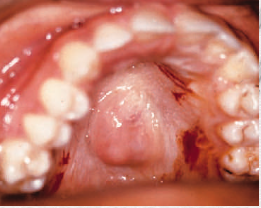
pleomorphic adenoma

referred as benign mixed tumor

presents initially as a dome shaped mass without ulceration or symptoms
<p>referred as <span style="color: red;">benign mixed tumor</span></p><p>presents initially as a <span style="color: red;">dome shaped mass without </span><span style="color: red;">ulceration</span> or symptoms</p>