California Permit Test 2026
 Call Kai
 Learn
Learn Practice Test
 Spaced Repetition
 Match
Match Flashcards
 Knowt Play
1/113

There's no tags or description
Looks like no tags are added yet.
Name | Mastery | Learn | Test | Matching | Spaced | Call with Kai |
|---|
No analytics yet
Send a link to your students to track their progress
114 Terms
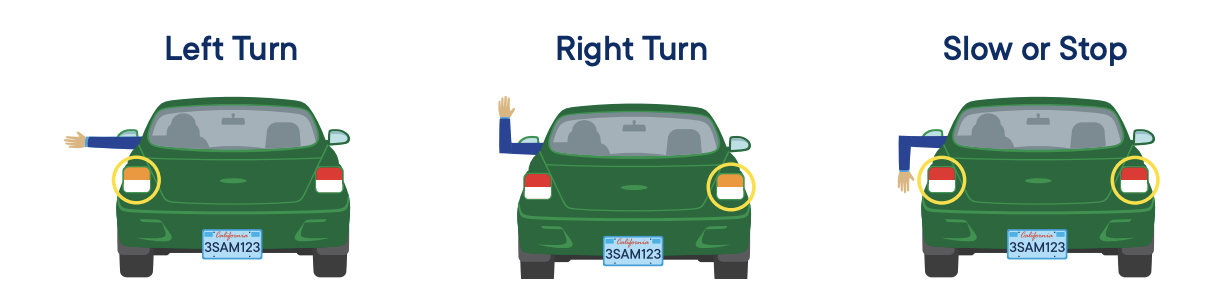
How do you signal left turn, right turn, and slow/stop in hand signals?
Left turn: Arm straight out
Right turn: Arm bent upwards
Slow or stop: Arm bent downwards
When should you signal?
At least every 100 feet before you turn, before lane changes, pulling next to or away from a curb, and when you plan to turn shortly after crossing an intersection
When should you signal before you turn?
100 feet before you turn
What is the purpose of horns?
To avoid collisions and alert oncoming traffic on narrow mountain roads where you cannot see at least 200 feet ahead
When is it legal to drive using only parking lights?
Never
What times of day should you use your headlights?
Half an hour before sunrise or after sunset
During fogs, what setting should you turn your headlights to?
Turn them on to low-beams
In what other situations should you have your headlights on?
When it is too dark to see from 1000 feet away, on mountain roads and tunnels, and when the sun is low on the horizon
If you see a collision or hazard ahead, what should you do to warn other drivers?
Turn on emergency flashers, and use hand signals when slowing and stopping
What should you do if you need to stop because of vehicle trouble?
Turn on emergency flashers, pull off the road to the right (if not possible then stop where people can see you and your vehicle from behind), and call roadside assistance
What kind of lane markings are there?
Single/double solid yellow line, broken yellow line, single/double solid white line, broken white lines, end of lane markings, and yield line
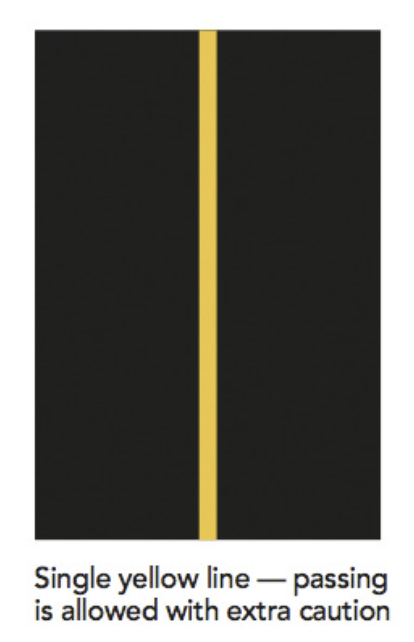
What does a single solid yellow line entail?
It marks the center of a road with two-way traffic — separates two directions of traffic
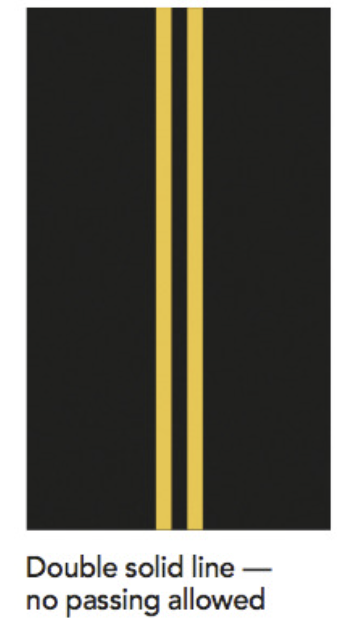
What do double solid yellow lines entail?
Should be treated as a wall — do not pass over the line unless you are instructed by construction, in a carpool lane with a designated entrance, etc
Should be treated as a barrier or wall
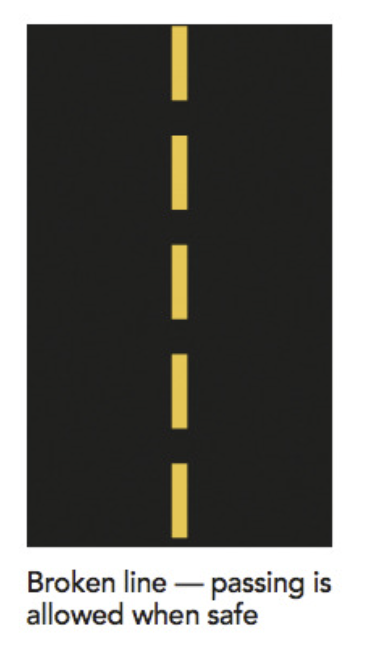
What does a broken yellow line entail?
You may pass if it is next to your driving lane, and if it is safe to do so
This may also sometimes be paired with a solid line side by side — if your lane has a broken line, then you are able to pass
What does a single solid white line entail?
It marks two lanes of traffic going in the same direction
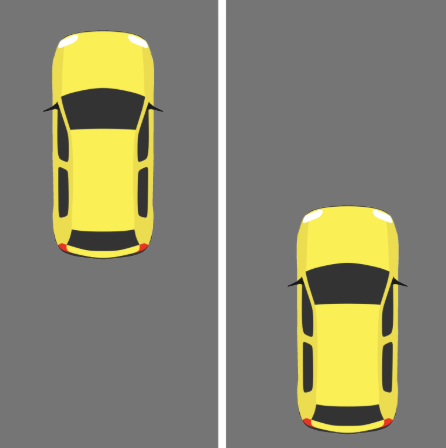
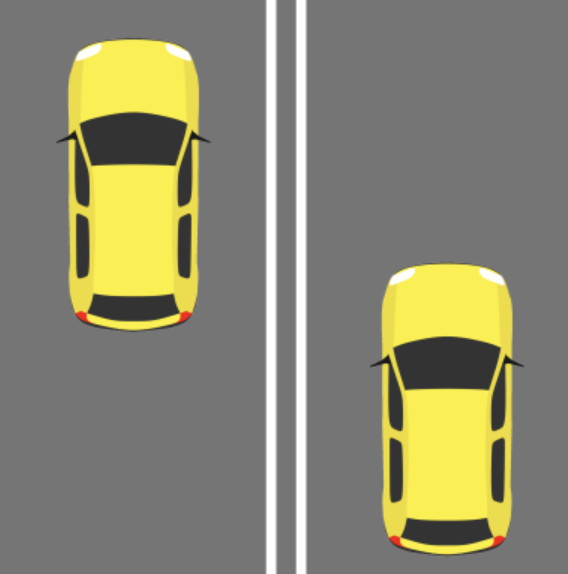
What do double solid white lines entail?
A lane barrier before a regular use and a preferential use lane (toll lanes and HOV lanes). Crossing is not permitted, but traffic still goes in the same direction
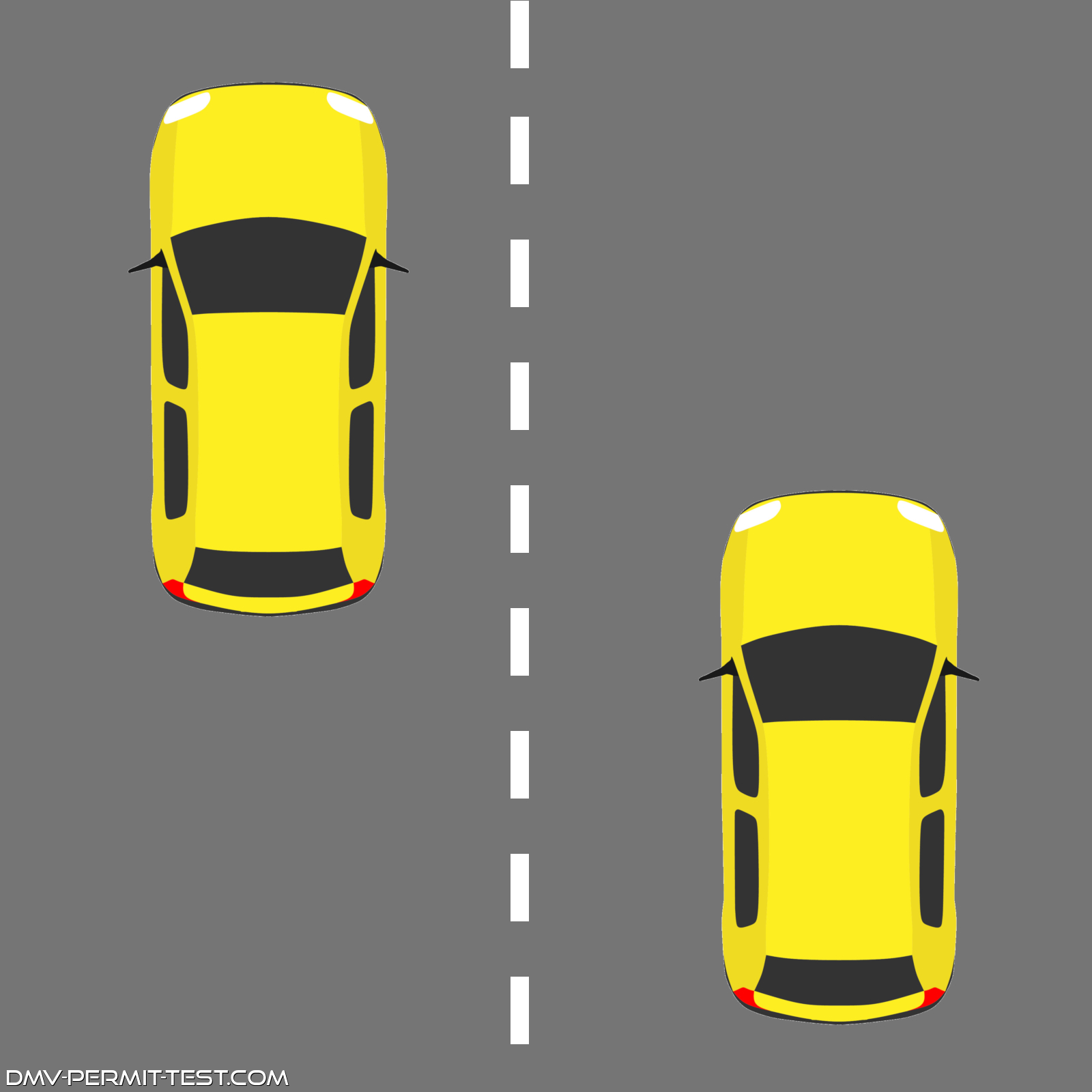
What does a broken white line entail?
They separate traffic lanes on roads with two or more lanes in the same direction. Crossing is permitted
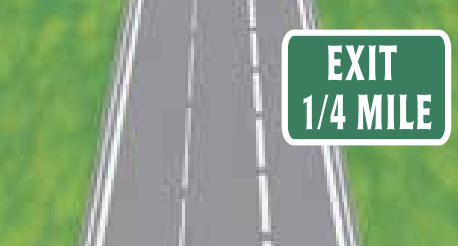
What do end of lane markings look like?
Large, broken white lines. When you see these lines, be prepared to exit the freeway or for the lane to end — There should also be a sign that tells you to exit or merge
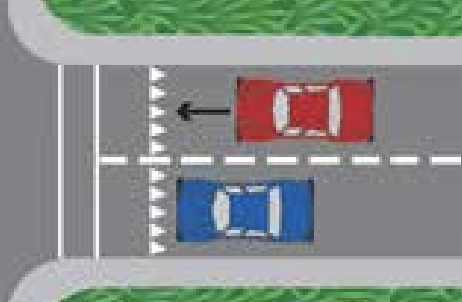
What is a yield line?
A line of solid white triangles that shows approaching cars where to yield or stop. Triangles point towards approaching vehicles.
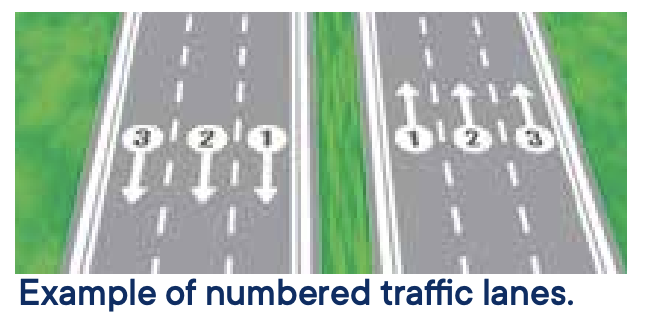
What is the order in which traffic lanes are numbered?
One on the left, two in the middle, third, so on.
What types of lanes are there?
Passing lanes, carpool (HOV) lanes, centr left turn lanes, turnout lanes, and bicycle lanes
What is a passing lane?
The most left lane that is closest to the centre divider, and is used to pass other vehicles.
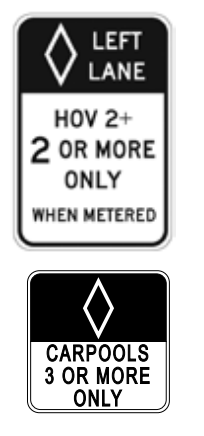
What is a HOV lane?
A special lane reserved for carpools, buses, and motorcycles. It is a black sign marked with a diamond symbol
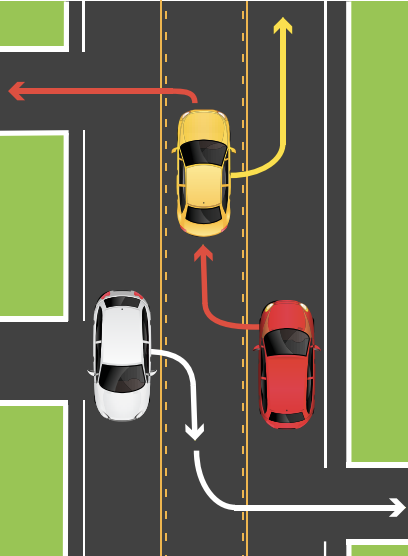
What are centre left turn lanes?
Located in the middle of a two-way street, it is marked on both sides with broken lines. It is strictly for turning left and must only be driven for 200 feet before a turn is made
What are bicycle lanes?
They are lanes reserved for cyclists that run along vehicle traffic. Usually marked by a signal solid white line, and often bright green
When is it illegal to drive in a bicycle lane?
All times, unless you are:
Parking
Entering or leaving the road
Turning within 200 feet of an intersection
How far of a distance must be maintained between the car and cyclist on a shared lane?
3 feet
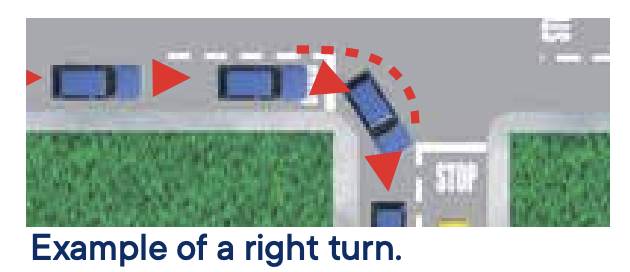
When making a right turn, you should:
Drive close to the right edge of the road, watch for pedestrians, and look over your shoulder and reduce your speed
When should you start signalling for a turn?
100 feet before the turn.
Are you allowed to turn against a red light?
Yes, unless there is a NO TURN ON RED sign. Yield to pedestrian, other vehicles, or bicyclists who have a green light
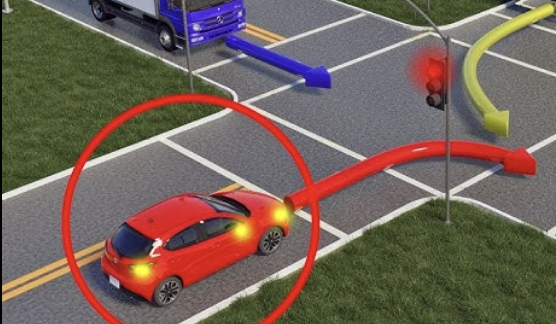
Are you allowed to turn against a red arrow?
No. Wait until the light changes to green
When is it legal to drive on a public transit bus lane?
Is it never legal, unless you are only crossing to make a right turn.
When can you turn right onto a road with a dedicated lane?
You can make your turn anytime, but must still obey a traffic light or sign if present.
When you turn left, you should:
Drive close to the centre divider, enter a designated left turn lane, and enter a two-way centre left turn lane within 200 feet of the turn
When waiting to turn, what directions should your wheel be pointed?
Straight ahead
Where should you stop before a turn?
The limit line. If there is no limit line, stop before the crosswalk. If there is no crosswalk, stop before you enter the intersection
When is it legal to make a U-turn?
Across a double yellow line
On an intersection with a green traffic light or arrow (unless explicitly stated by a NO U-TURN sign)
On a divided highway if there is a center divider opening
In a residential district if no vehicles are approaching you within 200 feet
When is it legal to make a U-turn in a residential district?
When no vehicles are approaching you within 200 feet
When is it legal to make U-turns in business districts?
At an intersection, or on a divided highway where an opening has been provided
Are you able to make U-turns in front of a fire station?
No
Are you able to make U-turns at or on a railroad crossing?
No
Are you able to make a U-turn on a one-way street?
No
On a left turn from a two-way street, which lane should you turn into?
The left lane closest to the middle, going in your vehicle’s direction
On a right turn, which lane should you turn into?
The lane closest to the right pavement of the road.
On a left turn from a two-way street to a one-way street, which lane should you drive into?
Starting in a far-left lane, end your turn in any lane that is open
On a left turn from a one-way street to a two-way street, which lane should you drive into?
Starting from the far-left lane, turn into the left lane closest to the middle of th street going in your vehicle’s direction
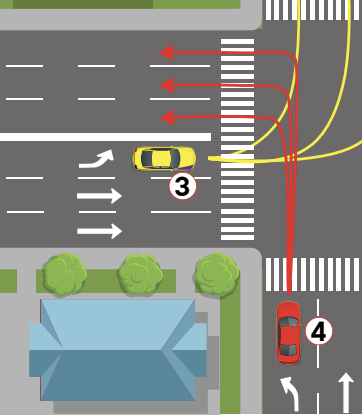
In a T intersection, what traffic has the right of way?
Traffic going straight through the intersection
How many seconds of space should you leave between you and the vehicle in front of you?
Three seconds
Before exiting a highway, when should you signal?
About 5 seconds (400 feet) before you exit
If there are pedestrians or vehicles blocking the intersection, should you still go on a green light?pedestrians
No. Wait until the intersection is cleared
How far must a hill, curve, intersection, or road obstruction be ahead before someone is able to pass?
A third of a mile ahead
Should you drive off the paved or main road to pass?
No
How should you parallel park?
Find a space at least three feet longer than your vehicle, pull up along the vehicle in front of the space, and stop once your rear bumper is aligned with the front of the parking space. Then, begin backing up at about a 45 degrees angle, and straighten out when your rear wheel is within 18 inches of the curb
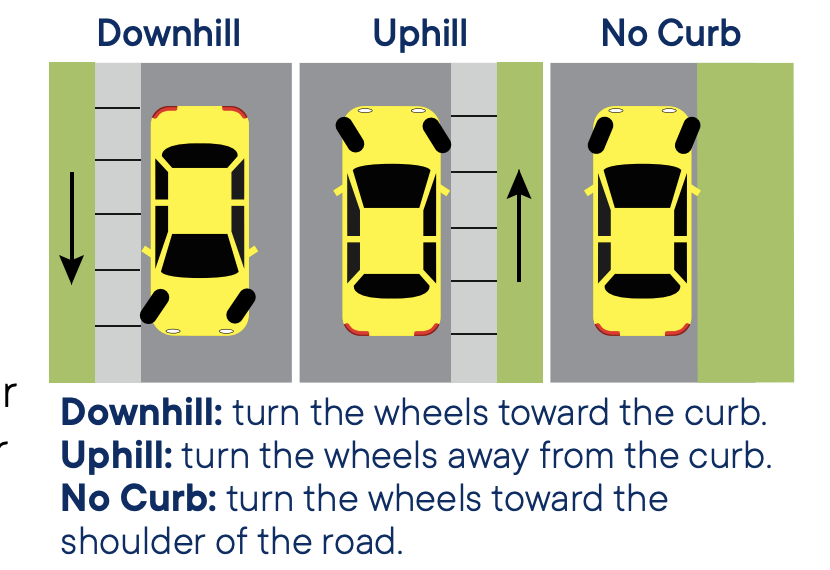
When parking on a hill, what direction should you turn your wheels?
Downhill: Towards the curb
Uphill: Turn wheels away from the curb
No curb: Turn wheels to the right
What does a white curb mean?
Only park enough to pick up or drop off passengers
What does a green curb mean?
Parking for limited time — time permitted is usually on signs or on the curb
What does a yellow curb mean?
Load and unload passengers and freight (cargo)
What does a red curb mean?
No stopping, standing, or parking
What does a blue curb mean?
Curb specifically for parking for a disabled person or driver
Is it ever legal to park on a crosshatched area?
No, it is never legal
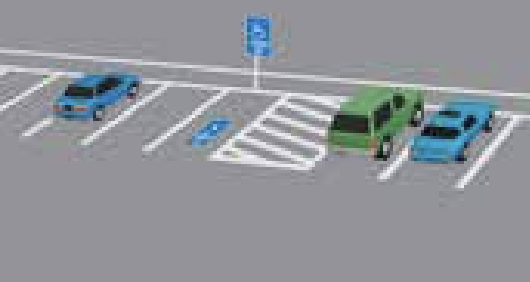
What should you do if you have to stop on a freeway?
Park completely off the pavement and stay in your vehicle with the doors locked until help arrives.
What must the driver produce when stopped by law enforcement?
Driver’s license, proof of insurance, and vehicle registration
What does a flashing red light mean (traffic signal)?
STOP. After stopping, you may go when it is safe.
What does a solid yellow light mean (traffic signal)?
Caution — The light is about to turn red, stop if you can do so safely. If you cannot, cautiously cross the intersection.
What does a flashing yellow light mean (traffic signal)?
Proceed with caution, slow don and be alert, but you do not ned to stop.
What does a flashing yellow arrow mean (traffic signal)?
You can turn, but your turn is not protected from other traffic (you must yield to other oncoming traffic).
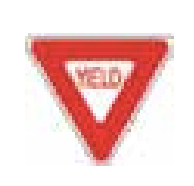
What does this sign mean?
Yield — Slow down and be ready to stop to let any vehicle, bicyclist, or pedestrian pass
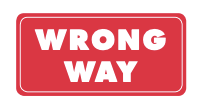
What does this sign mean?
When it is safe, back out and turn around
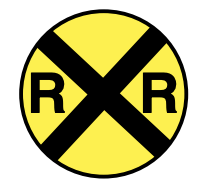
What does this sign mean?
You are approaching a railroad crossing. Look, listen, slow down, and prepare to stop. Let any trains pass before you proceed.
What do five sided signs mean?
You are near a school — drive slowly and stop for children.
What do diamond-shaped signs mean?
Warns you of dangers and road conditions
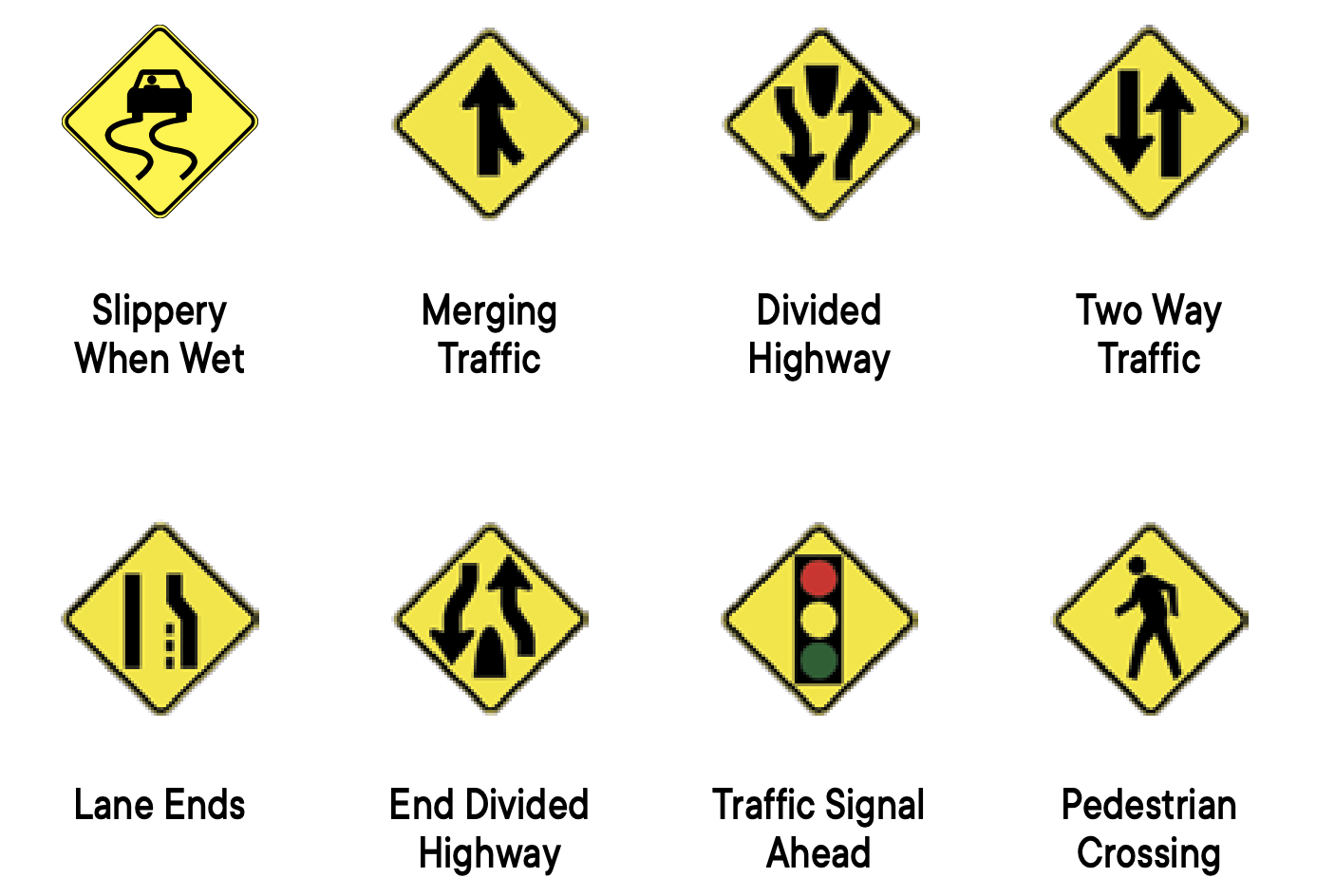
At an intersection without STOP or YIELD signs, who has the right of way?
Pedestrians, then the car that approaches/arrives at the intersection first.
In a roundabout, what direction do you travel in?
Counterclockwise
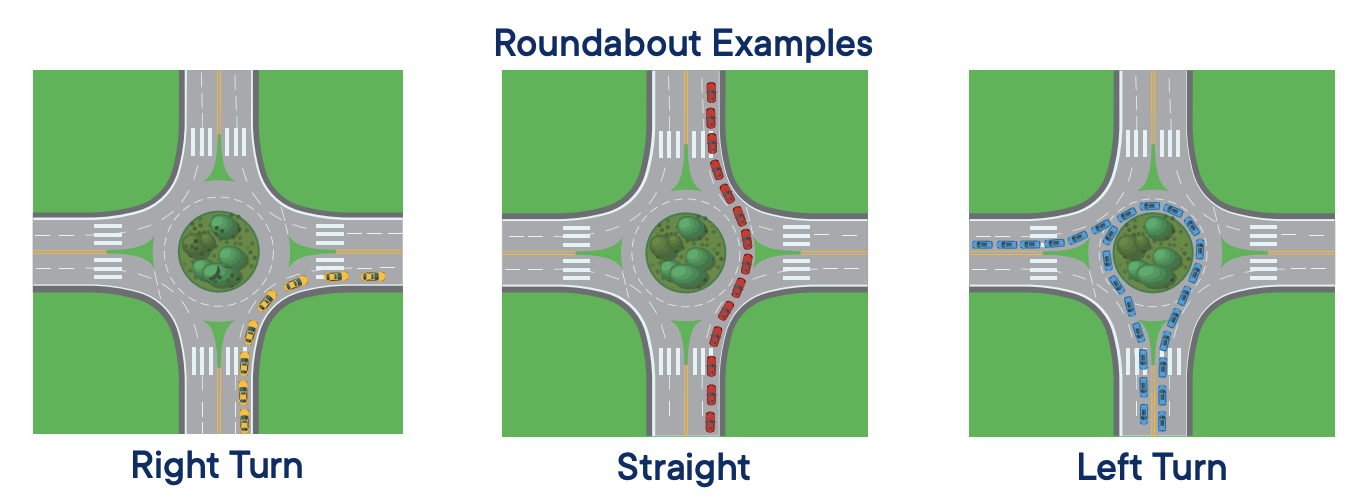
If two vehicles meet on a steep narrow road, and neither vehicle can pass, which vehicle has the right of way?
The vehicle facing uphill, since the other vehicle has more control when backing up
What is the difference between large vehicles and truck drivers with regular cars?
They have larger blind spots (no-zones), but have better views in front and bigger mirrors. They also must swing ider to complete a turn
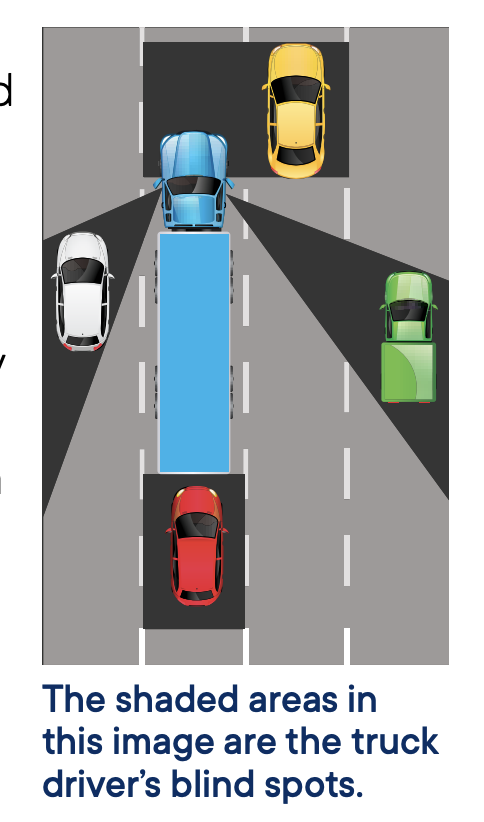
If a vehicle travelling at 55 mph suddenly stops, how many feet does it take to stop?
300 feet. For larger vehicles, it may take up to 400.
How do you yield to emergency vehicles?
Drive to the right edge of the road and stop until the emergency vehicle has passed
What should you do when approaching a stationary emergency vehicle with flashing signal lights?
Move over and slow down
What should you do when you see an emergency vehicle at an intersection?
Continue through the intersection, and drive to the right as soon as it is safe to do so.
How far must you stay away from fire engines when their lights are on?
At least 300 feet
What is the symbol for a slow-moving vehicle?
An orange triangle with red outlines
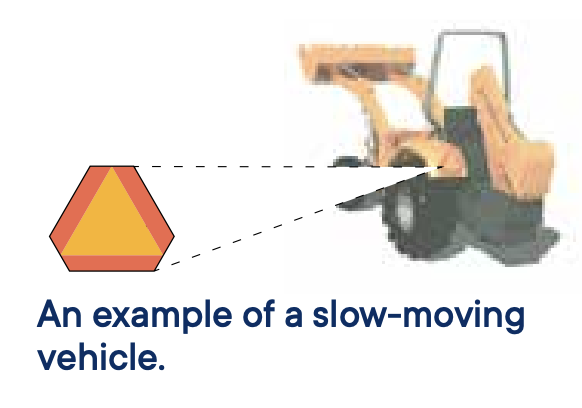
What must you do when you enter a work zone?
Slow down, allow extra space between vehicles, expect sudden slowing or stopping, and watch for drivers changing lanes
What vehicles must stop before crossing railroad tracks?
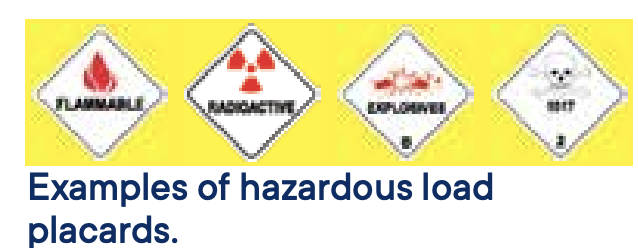
Trucks with hazardous loads
What is the speed limit within 500 feet of a school?
25mph. Some may go down to 15mph.
When a school bus flashes yellow, what does this mean?
Slow down and prepare to stop, as the bus is preparing to stop to let children off the bus
When a school bus flashes red, what does this mean?
Stop until the children are safely across the street. If you fil to stop, you may be fined up to 1,000 dollars, and driving suspended for one year
What is a blind intersection?
An intersection is considered blind if it has no stop signs at any corner. The speed limit is 15mph
What is the speed limit within 100 feet of a railroad crossing?
15mph
When is it safe to drive across a railroad crossing?
If you cannot see the tracks for 400 feet in both directions
In residential or business zones, what is the speed limit?
25 mph.
Are you allowed to smoke in a vehicle if a minor is in the car?
No, you can be fined.
What is the penalty for dumping or abandoning animals on a highway?
A fine up to $1,000, and six months in jail.
If you flee or evade law enforcement in a motor vehicle, what is the penalty?
Up to one year of imprisonment in county jail.
What is the penalty for an individual convicted of causing serious bodily injury /manslaughter during evasion of law enforcement?
Injury