Intro to Physical Therapy
 Call Kai
 Learn
Learn Practice Test
 Spaced Repetition
 Match
Match Flashcards
 Knowt Play
1/118

There's no tags or description
Looks like no tags are added yet.
Name | Mastery | Learn | Test | Matching | Spaced | Call with Kai |
|---|
No analytics yet
Send a link to your students to track their progress
119 Terms
When was the organization named APTA? When did they become accredited?
1962; 1977
What are some traumatic injuries (musculoskeletal)?
ligament sprain, fracture
What are some medical conditions (musculoskeletal)?
obesity, cancer
What are vestibular disorders? What kind of condition is it?
disorders that affect the body's balance system; neuromuscular
What is ischemia?
lack of blood flow
What is congestive heart failure? What kind of condition is it?
a weakness of the heart that leads to a buildup of fluid in the lungs and surrounding body tissues; cardiac muscle
What is chronic obstructive pulmonary disease? What kind of condition is it?
blocked airflow during respiration; lung
What is vascular insufficiency? What kind of condition is it?
blood begins to flow backwards; integumentary
What is trauma (integumentary condition)?
inflicted wounds or injury
What is torticollis? What kind of condition is it?
head is in a sustained contraction to one side; orthopedic
What is rheumatoid arthritis? What kind of condition is it?
inflammation of joint due to attack on synovial components by the immune system; geriatric
What is a hip fracture? What kind of condition is it?
fracture of the femoral neck; geriatric
What does the CAPTE do?
grants specialized accreditation to education programs for PTs and PTAs
What does FSBTA do?
create the national board exam
What does the ArPTB do?
fight for the rights of PT and PTAs in Arkansas
Why is a good PT/PTA relationship important?
it improves the care for patients
What is an amy attitude? Is it acceptable employment behavior?
negative attitude; no
What is the purpose of being prepare to interact with a patient?
preparing in any one area can positively affect the other areas
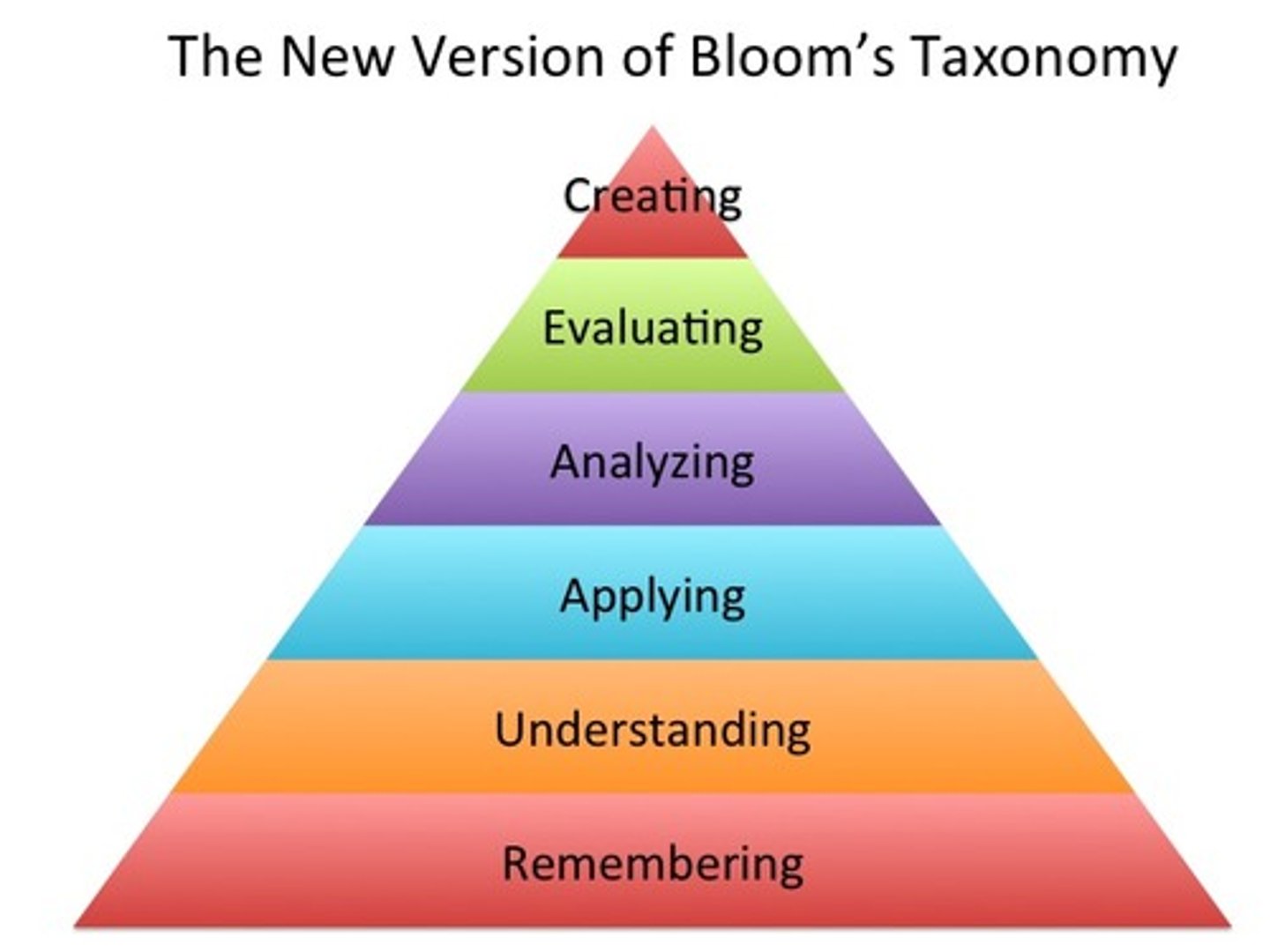
What is bloom's taxonomy?
six levels of comprehension including: remember, understand, apply, analyze, evaluate, and create
What is a patient?
someone who has disorders that require interventions to improve their function
What historical event occurred second which significantly increased the need for PT?
World War I
What were physical therapists called at first?
reconstruction aides
What historical event occurred third which resulted in an increased need for physical therapy?
World War II and another polio outbreak
When was the first national meeting for physical therapists? What was created there?
Jan 15, 1921; The American Women's Physical Therapeutic Association
When were PTAs and PT aides created? Why?
1960s; there was an increase in demand for physical therapists
When did the first PTA program begin? Where?
1967; Florida and Minnesota
What is general supervision for a PTA?
the PT is not required to be on-site but must be able to contact
What is direct supervision for a PTA?
the PT must be physically present and immediately available
What kind of supervision do PTAs in Arkansas have?
general supervision
What does APP stand for?
Advanced Proficiency Pathways for the PTA
What is the purpose of APP?
increase the PTAs knowledge and skill in a chosen area of PT
Once accepted, how many years do candidates have to complete and submit the program portfolio requirements for APP?
5 years
What are the program portfolio requirements for APP?
-60 contact hours of selected education coursework through APTA
-mentored clinical work experience with knowledge & skill assessments
-2,000 clinical hours of experience in the content area
-final portfolio review fee
-renew every 10 years
What are the general characteristics of traditionalists?
-born before 1946
-patriotic
-loyal
-conservative
-faith in institutions
-satisfaction in job well done
What are the general characteristics of baby boomers?
-born 1946 to 1964
-competitive
-question authority
-want to put their own stamp on things
-satisfaction in money, title, and recognition
What are the general characteristics of ger X?
-born 1965 to 1981
-resourceful
-self reliant
-distrustful of institutions
-very adaptive
-skeptical
-satisfaction in freedom
What are the general characteristics of millennials?
-born 1982 to 2000
-globally connected
-integrated
-cyber literate
-media savvy
-realistic
-environmentally conscious
-satisfaction in work that is meaningful
What are some overuse injuries (musculoskeletal)?
tennis elbow, rotator cuff
What are some surgical conditions (musculoskeletal)?
amputations, total joint replacement
What is a cerebrovascular accident? What kind of condition is it?
death of nervous system tissue due to blocked blood flow; neuromuscular
What is a traumatic brain injury? What kind of condition is it?
brain damage due to impact of external forces; neuromuscular
What is a spinal cord injury? What kind of condition is it?
injury to the spinal cord that creates weakness or numbness in the extremities connected to it; neuromuscular
What is Parkinson's disease? What kind of condition is it?
disorder of the central nervous system that affects movement, often including tremors; neuromuscular
What is multiple sclerosis? What kind of condition is it?
disorder that results in uncoordinated muscle movement; neuromuscular
What is arteriosclerosis? What kind of condition is it?
hardening or thickening of the arterial walls; ischemia
What is myocardial infarction? What kind of condition is it?
blood stops flowing properly causing a heart attach; cardiac muscle
What is arterial insufficiency? What kind of condition is it?
a lack of enough blood flow through the arteries; integumentary
What are pressure ulcers? What kind of condition is it?
injury to skin as a result of pressure over a bony prominence; integumentary
What is autism? What kind of condition is it?
repetitive movements, lack of verbal skills & bonding, sx since birth; developmental
What is developmental delay? What kind of condition is it?
when a child performs like a younger child; developmental
What is scoliosis? What kind of condition is it?
lateral curvature of the spine; othopedic
What is cerebral palsy? What kind of condition is it?
a condition caused by injury to the parts of the brain that control our ability to use our muscles and bodies; neuromuscular
What is down's syndrome? What kind of condition is it?
a condition that can lead to many complications; genetic
What is osteoarthritis? What kind of condition is it?
degenerative joint disease; geriatric
What is osteoporosis? What kind of condition is it?
decrease in bone density; geriatric
What does APTA stand for?
American Physical Therapy Association
What does the APTA do?
national organization for PTs, PTAs, and students to ensure those working in the physical therapy field follow standards for practice and education
What does CAPTE stand for?
Commission on Accreditation for Physical Therapy Education
What does FSBTA stand for?
Federation of State Boards of Physical Therapy Association
What does ASPTA stand for?
Arkansas State Physical Therapy Association
What does the ASPTA do?
advocate for PTs, PTAs, and students within the state of Arkansas
What does ArPTB stand for?
Arkansas State Board of Physical Therapy
What is the role of a PTA?
manage and provide PT treatment (intervention) services under licensed PT supervision
What should a PT/PTA relationship demonstrate?
trust, respect, communication, and integrity
What are the domains of learning?
cognitive, affective, psychomotor
What is an antagonist? Is it acceptable employment behavior?
rude/unpleasant to co-workers, staff, patients, and family; no
What is a blameless person? Is it acceptable employment behavior?
always has an excuse; no
What is a whiner? Is it acceptable employment behavior?
complains no matter what; no
What is a thumb twiddler? Is it acceptable employment behavior?
lacs motivation/initiative; no
What is an insubordinate? Is it acceptable employment behavior?
challenges you in front of others; no
What is a tortoise? Is it acceptable employment behavior?
shows up late or not at all
What is a hand holder? Is it acceptable employment behavior?
needs constant supervision; no
What is a worrywart? Is it acceptable employment behavior?
always expresses anxiousness; no
What is a clock-watcher? Is it acceptable employment behavior?
keeps constant eye on the clock; no
What is a preoccupied person? Is it acceptable employment behavior?
focuses on something other than what they should; no
What is committing to learning? Is it acceptable employment behavior?
identifying needs and sources of learning to seek new knowledge and understanding; yes
What are interpersonal skills? Is it acceptable employment behavior?
dealing effectively with cultural & ethical diversity issues; yes
What are communication skills? Is it acceptable employment behavior?
communicating effectively with speaking, body language, reading, writing, and varied audiences; yes
what is responsibility? Is it acceptable employment behavior?
fulfilling commitments and accountable for actions/outcomes; yes
What is is professional? Is it acceptable employment behavior?
representing the profession effectively; yes
What is good use of constructive feedback? Is it acceptable employment behavior?
seeking out feedback and effectively applies it to improving; yes
What is a problem-solver? Is it acceptable employment behavior?
someone who recognizes, defines, analyzes and solves problems then evaluates outcomes; yes
What is a critical thinker? Is it acceptable employment behavior?
logically evaluating and recognizing different facts, illusions, and assumptions to distinguish what is relevant; yes
What is stress management? Is it acceptable employment behavior?
ability to identify sources of stress and develop effective coping behaviors; yes
What is effective use of time and resources? Is it acceptable employment behavior?
obtaining the maximum benefit from a minimum investment of time and resources; yes
What is the game plan for success?
- the power of attitude
-tackle adversity
-have a sense of purpose
-make sacrifice your ally
-adapt or die
-chase your dreams
-nurture your self-image
-foster trust
-commit to excellence
-handle with care
How do you prepare for a treatment plan with a patient?
-be aware of your own values
-be mindful
-communicate effectively
-collaborate with patient on goal-setting
How do you prepare for a task with a patient?
-know the objective
-use mechanics to your favor
How do you prepare for the environment your patient is in?
-know the enviornment
-assess how the environment affects their mobility
How do you prepare for the patient-client interaction?
-form a therapeutic alliance
-use mechanics of the body
-create special enviornments
What is a therapeutic alliance?
a bond of trust and mutual understanding between a therapist and client, who work together to overcome the client's problem
How do you progress mobility?
-maximize patient mobility
-modify mobility approaches to meet the patient's needs
-foster independence
-move toward meaningful goals
What is always the focus of care?
the patient's well-being
What comes with power?
resposibility
How should you treat every patient?
with equal respect despite any differences
What are 8 professional values?
-accountability
-compassion & caring
-altruism (putting others before yourself)
-excellence
-inclusion
-integrity (doing what right when no one is looking)
-profession duty
-social responsibility
How do you develop expertise?
-focus on function movement
-respect patient knowledge
-problem solve together
-develop clinical reasoning
-use best available advise
-practice compassion
How do you practice mindfully?
-stay attentive
-maintain mental focus
-listen fully
What is AMAP?
as much as possible
What is ANAP?
as normal as possible