Chapter 10: America Claims an Empire
0.0(0)
Studied by 0 people Call Kai
 Learn
Learn Practice Test
 Spaced Repetition
 Match
Match Flashcards
 Knowt Play
Card Sorting
1/46

Earn XP
Description and Tags
Last updated 10:14 AM on 11/9/22
Name | Mastery | Learn | Test | Matching | Spaced | Call with Kai | Chat |
|---|
No analytics yet
Send a link to your students to track their progress
47 Terms
1
New cards
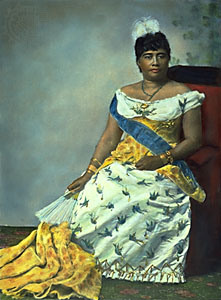
Queen Liliuokalani
the Hawaiian queen who was forced out of power by a revolution started by American business interests
2
New cards
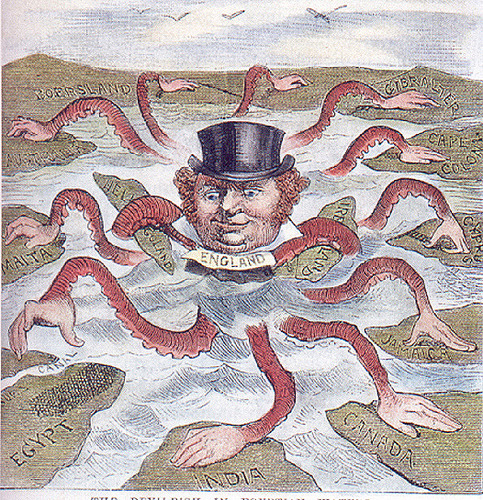
Imperialism
The practice of strong countries taking economic, political, and military power over weaker countries
3
New cards
Alfred T. Mahan
American imperialist and admiral who urged the United States to build up its navy and take colonies overseas
4
New cards
William Seward
Secretary of State under Presidents Lincoln and Andrew Johnson
5
New cards
Pearl Harbor
Navy port in Hawaii
6
New cards
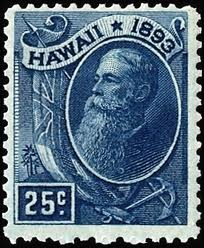
Sanford B. Dole
American businessman who became president of the new government of Hawaii after the queen was pushed out
7
New cards
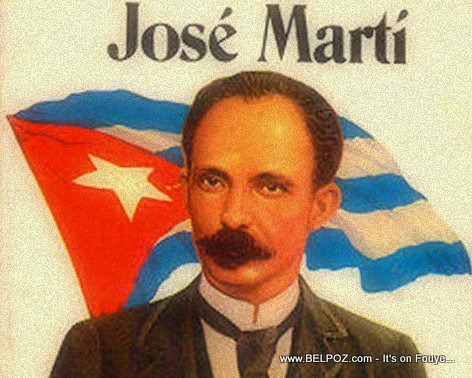
José Martí
Cuban poet and journalist who launched a revolution against Spain that would later be crushed by Valeriano Weyler
8
New cards
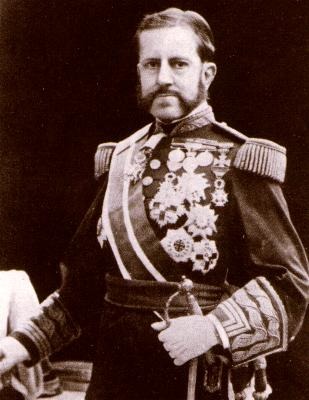
Valeriano Weyler
General sent from Spain to Cuba to restore order in 1896, known for his use of concentration camps
9
New cards
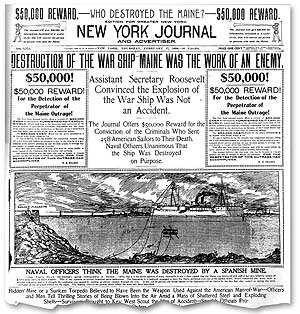
Yellow Journalism
Reporting in newspapers and magazines that exaggerates the news in order to make it more exciting
10
New cards
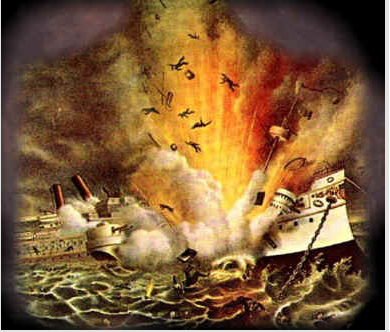
U.S.S. Maine
U.S. warship that exploded in a Cuban harbor in 1898
11
New cards
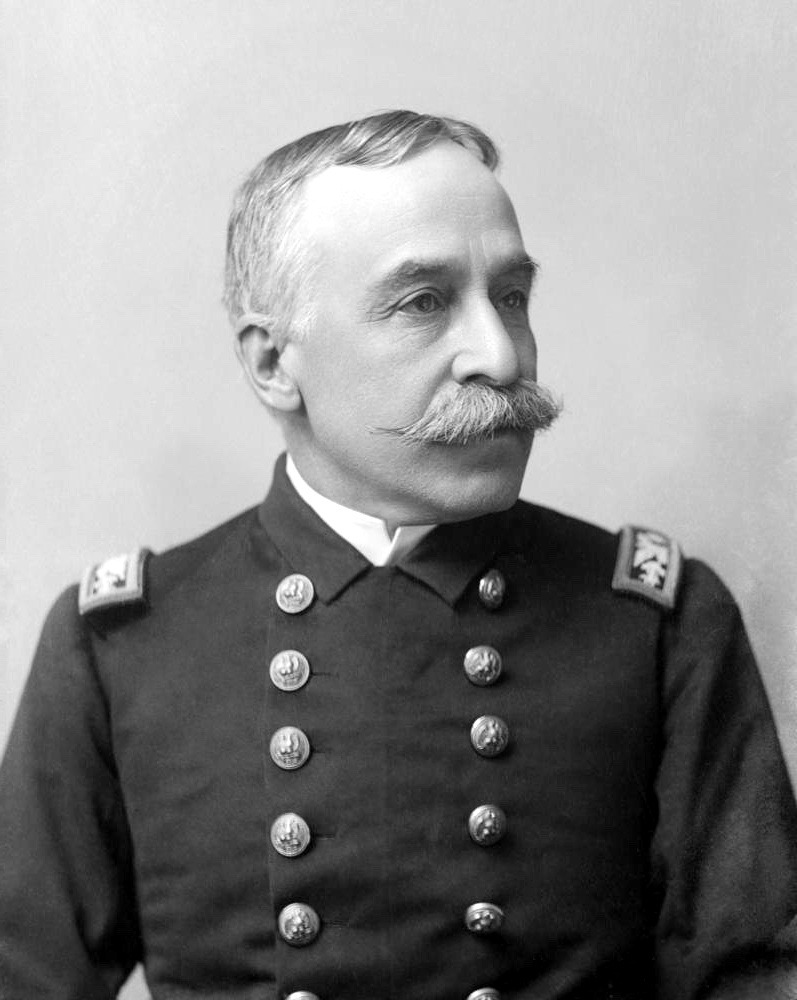
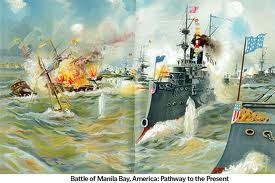
George Dewey
U.S. naval commander who first opened fire against the Spanish in the Manila, the capital of the Philippines, leading the American attack there
12
New cards
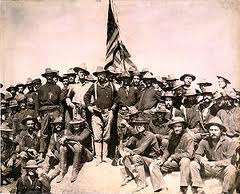
Rough Riders
Fighting unit led by Theodore Roosevelt in Cuba
13
New cards
San Juan Hill
Where the Rough Riders charged uphill along other cavalry units, winning the battle and making Roosevelt a war hero though he played only a minor role
14
New cards
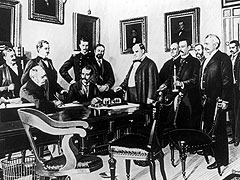
Treaty of Paris
The treaty that ended the Spanish-American War
15
New cards
Foraker Act
gave the US direct control over and power to set up a civil government in Puerto Rico
16
New cards
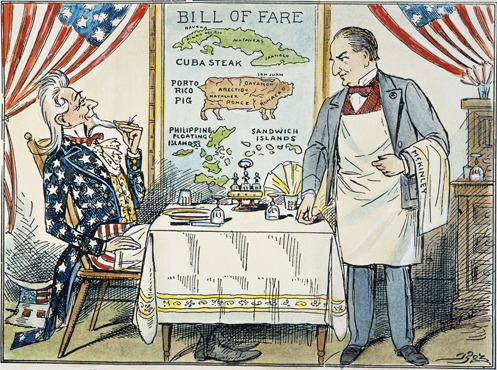
Platt Amendment
Provisions in the Cuban constitution that gave the United States broad rights in that country
17
New cards
Protectorate
A country that is partly controlled by another, stronger country-- (i.e Cuba after the Platt provisions)
18
New cards
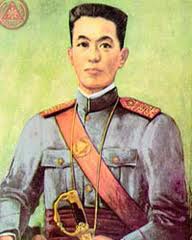
Emilio Aguinaldo
Filipino rebel leader who organized a rebellion against the U.S.
19
New cards
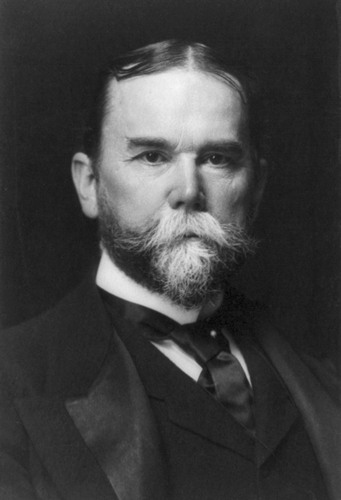
John Hay
U.S. Secretary of State that called the Spanish-American war a "splendid little war", and issued the open door notes that suggested other countries share their trading rights with the U.S. so that no one country had a monopoly on trade with China
20
New cards
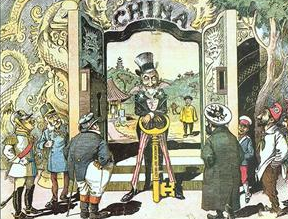
Open Door Notes
Message sent by John Hay to other countries to protect U.S. trading rights in China
21
New cards
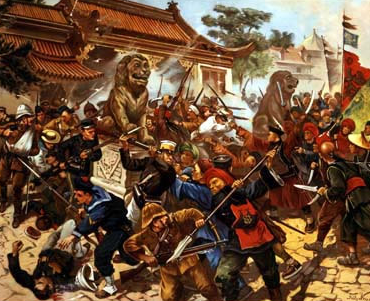
Boxer Rebellion
Chinese rebellion against Western influence, 1900
22
New cards
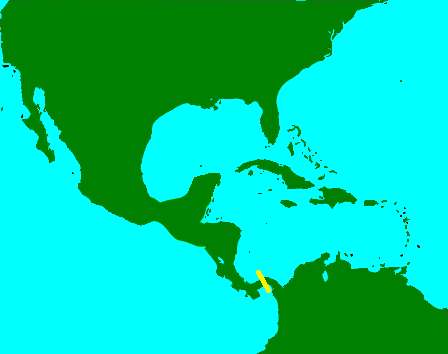
Panama Canal
A channel across Central America, between the Atlantic and Pacific Oceans, opened in 1914
23
New cards
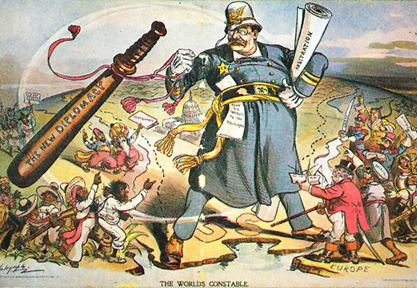
Roosevelt Corollary
Roosevelt's 1904 extension of the Monroe Doctrine, stating that the United States has the right to protect its economic interests in South And Central America by using military force, formed out of fear that European countries would try to intervene as latin-American countries defaulted on their loans
24
New cards
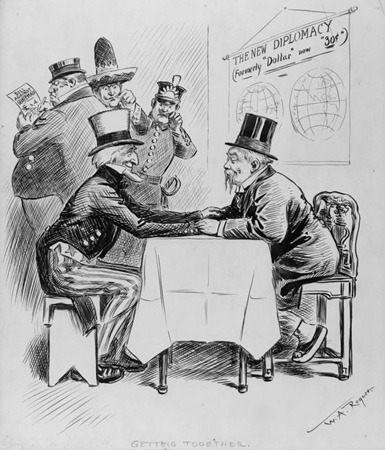
Dollar Diplomacy
The policy of intervening in other countries to protect U.S. business interests
25
New cards
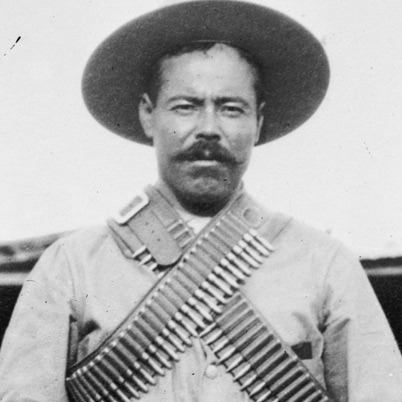
Francisco "Pancho" Villa
Mexican revolutionary who was outraged at recognition of Carranza's government of Mexico who was hunted by John J Pershing and 15,000 soldiers for killing multipleAmericans
26
New cards
Puerto Rico
_______ _____was strategically important to the United States as a way to assert its presence in the Caribbean and as a base for protecting a possible canal through the Isthmus of Panama.
27
New cards
Boxers
What group staged a revolt to expel foreigners from China. In August 1900, troops from Britain, France, Germany, Japan, and the United States marched on the Chinese capital. The international force put an end to the rebellion.
28
New cards
Three key beliefs, open door policy
________-_______ _______ about America's industrial capitalist economy reflected in the _____ ____ _______: U.S. economy's dependence on exports to ensure growth; U.S. right to intervene abroad to keep foreign markets open; closing an area to American products threatened U.S. survival (seperated by commas)
29
New cards
Teddy Roosevelt
Walk softly and carry a big stick - ________'s foreign policy
30
New cards
Taft
Dollar diplomacy - ____'s foreign policy
31
New cards
Woodrow Wilson
Moral Missionary Diplomacy - ______'s foreign policy
32
New cards
Teller Amendment
The U.S. cannot lay claim to Cuba
33
New cards
Platt Amendment
Provision that allows the U.S. to control many aspects of Cuba
34
New cards
cuban
The American people sympathized with the _____ people because their cries for freedom were not unlike ours
35
New cards
Yellow Journalism
The press used ______ to sway the public opinion on Cuban independance
36
New cards
De Lome Letter
A letter leaked by a Spanish rebel from a Spanish minister that called president McKinley weak, angering Americans
37
New cards
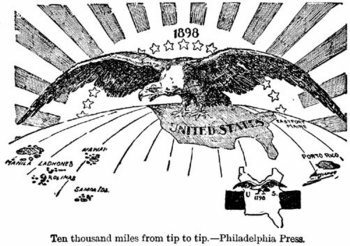
Guam, Puerto Rico, and the Philippines
Territories gained from the Treaty of Paris
38
New cards
Reasons for the Spanish-American War
American support for the Cuban and Filipino people's independence
The explosion of the U.S.S Maine
The explosion of the U.S.S Maine
39
New cards
Why Puerto Rico was important to the U.S.
Allowed the U.S. to maintain presence in the Caribbean
Protected a future canal leaders planned to build in the Panama
Protected a future canal leaders planned to build in the Panama
40
New cards
Platt Amendment Rules
Cuba could not:
Make treaties
stop American intervention
Go into debt
refuse American ownership of land for their Navy
Make treaties
stop American intervention
Go into debt
refuse American ownership of land for their Navy
41
New cards
Aftermath
______ of the Philippine War: 20,000 Filipino, 4,000 American deaths. Cost $400 million, 20 times the cost to purchase the territories. America placed Filipinos in concentration camps much like Spain during the Spanish-American War.
42
New cards
Why the U.S. annexed Hawaii
After Queen Liliuokalani wrote the new constitution, it declared Hawaii a state and meant that Hawaii was no longer a tax haven for sugar cane plantation owners. These business owners called for the U.S. to annex Hawaii, and the U.S. recognized Hawaii was an important trade partner
43
New cards
Citizens and business owners
_________ supported and didn't support Cuban independence, respectively
44
New cards
How Roosevelt won a Nobel Peace Prize
Theodore Roosevelt was asked to mediate peace negotiations for Russia and Japan over Korea.
45
New cards
How we gained the right to build the Panama Canal
As Colombians refused to allow the U.S. to build the Panama canal, Roosevelt knew Panamas wished for independence so he backed up a rebellion there in exchange for the plot where the canal could be built
46
New cards
Missionary Diplomacy
Wilson refused to recognize the Huerta government of Mexico because of it's violent killing of the last president
47
New cards
Treaty of Portsmith
Negotiated by Roosevelt during the war between Japan and Russia for Korea