Cell Division: Mitosis, Cell Cycle, and Human Karyotype
 Call Kai
 Learn
Learn Practice Test
 Spaced Repetition
 Match
Match Flashcards
 Knowt Play
1/22

There's no tags or description
Looks like no tags are added yet.
Name | Mastery | Learn | Test | Matching | Spaced | Call with Kai |
|---|
No analytics yet
Send a link to your students to track their progress
23 Terms
What is the primary purpose of cell division?
Growth, cell replacement, healing, and reproduction.
What are the two main types of cell division?
Mitosis (in eukaryotes) and binary fission (in prokaryotes).
What is the difference between eukaryotic and prokaryotic genomes?
Eukaryotic genomes are large and linear, while prokaryotic genomes are small and circular.
Where is DNA located in eukaryotic cells?
In the nucleus.
Where is DNA located in prokaryotic cells?
In the cytoplasm.
What are the two distinct phases of the eukaryotic cell cycle?
M phase and Interphase.
What occurs during the M phase of the cell cycle?
The parent cell divides into two daughter cells.
What are the four stages of Interphase?
G1 phase, S phase, G2 phase, and G0 phase.
What happens during the G1 phase of Interphase?
Cell growth and expression of regulatory proteins.
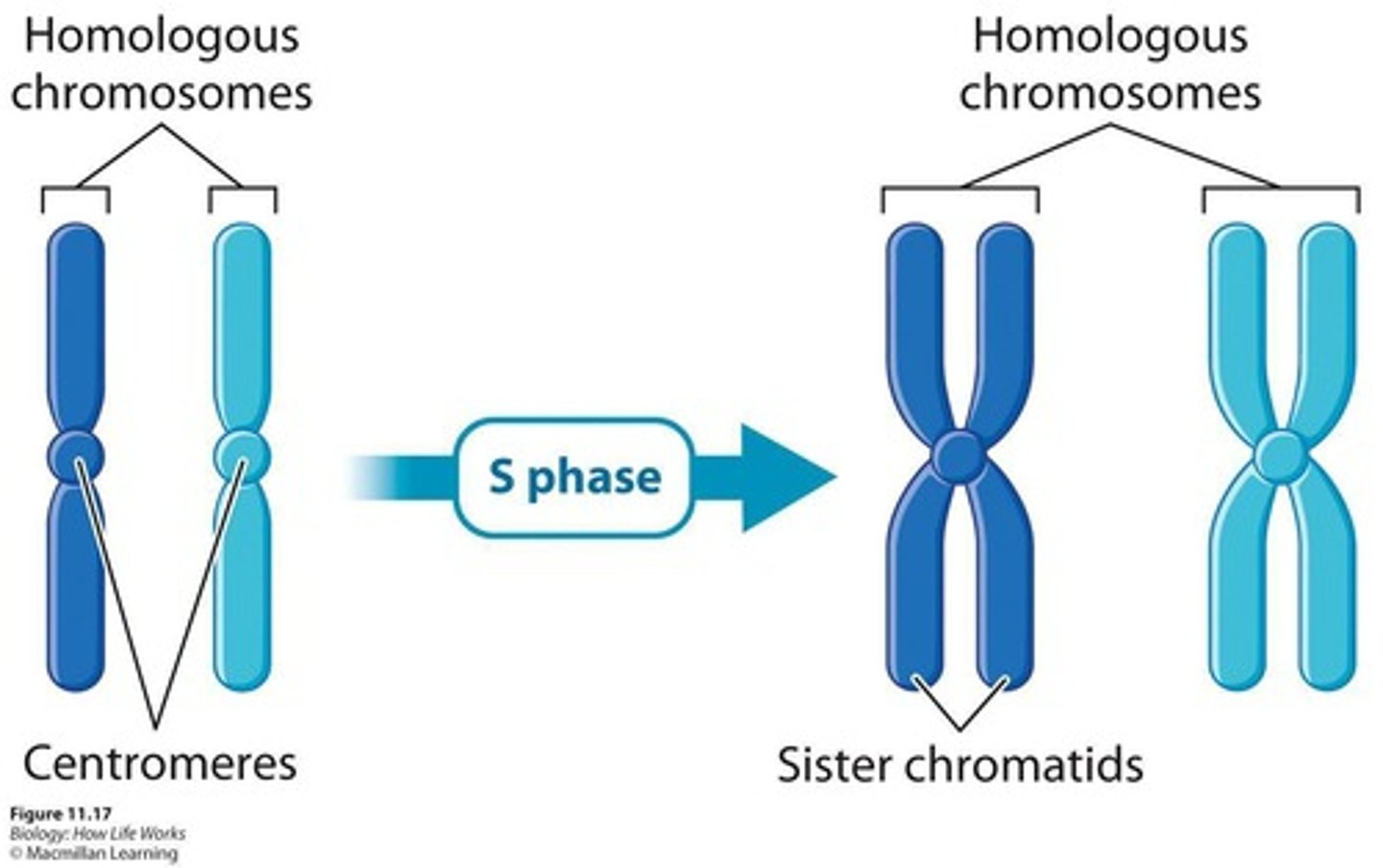
What occurs during the S phase of Interphase?
DNA replication (chromosome duplication).
What is the G0 phase?
A state where cells are not actively dividing and may exit the cell cycle.
What is the human karyotype?
Most human cells have 46 chromosomes (23 pairs), including 22 pairs of homologous chromosomes and 1 pair of sex chromosomes.
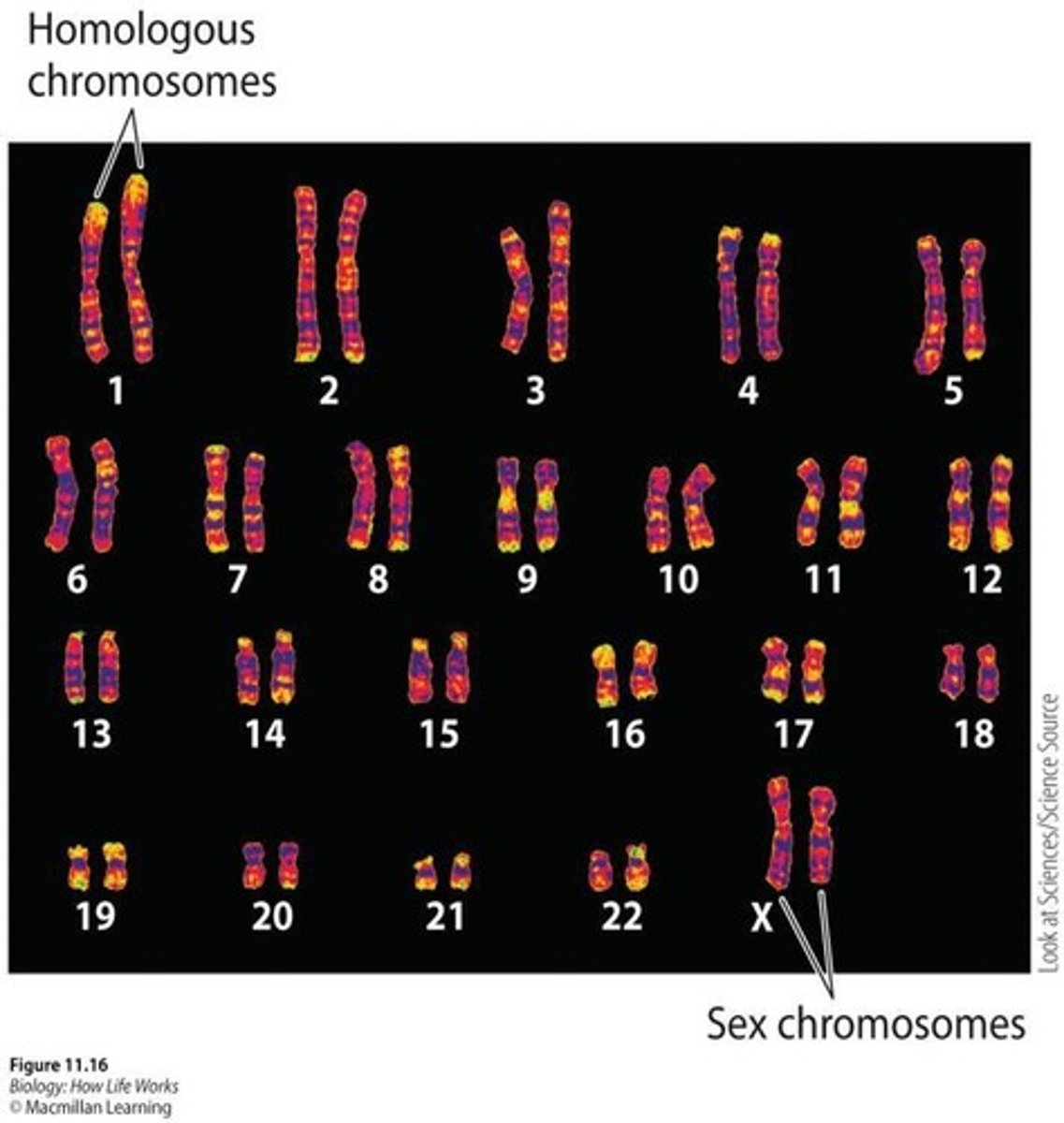
What are homologous chromosomes?
Chromosomes that carry the same set of genes, one from the mother and one from the father.
What determines the sex of an individual in humans?
The presence of sex chromosomes: two X chromosomes for female and one X and one Y chromosome for male.
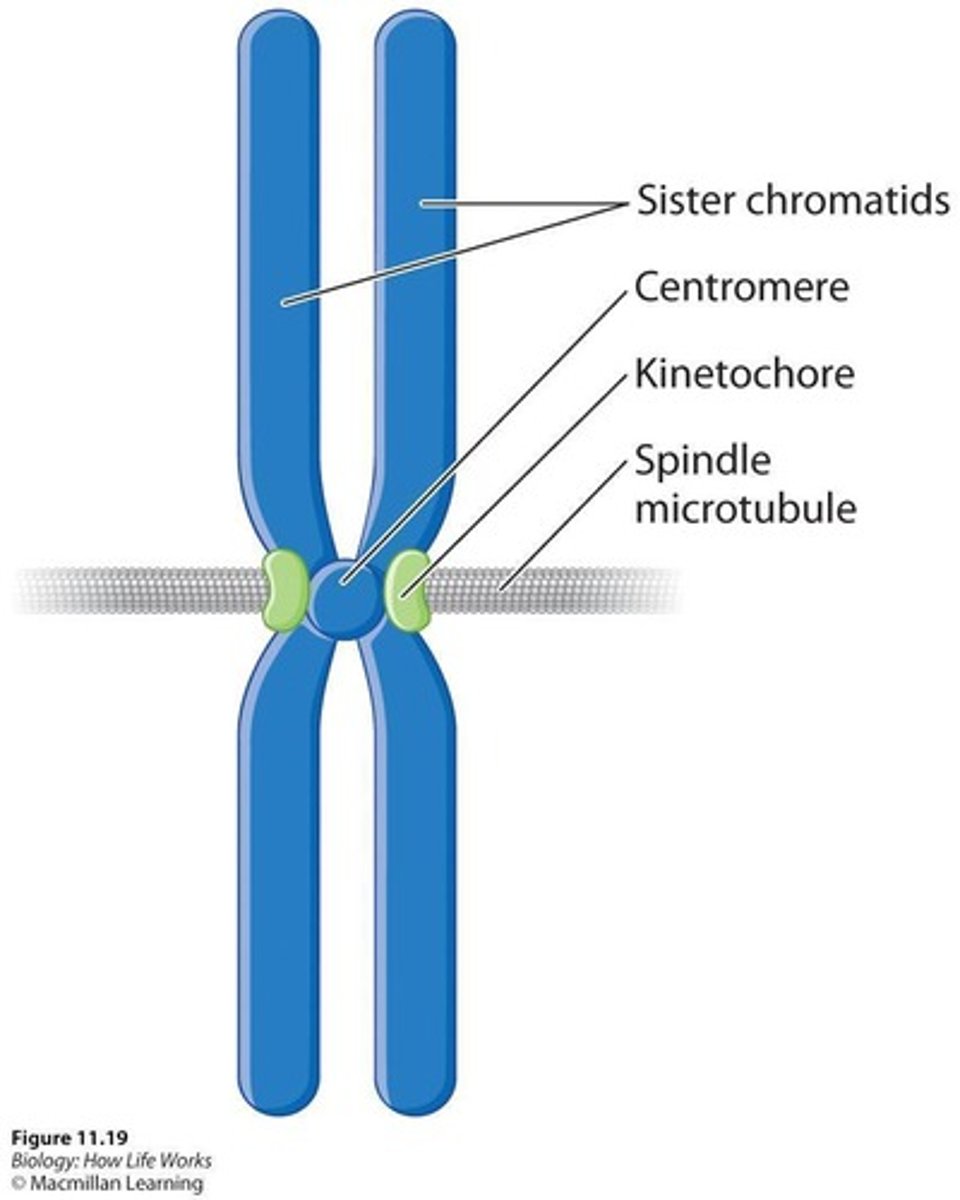
What are sister chromatids?
Identical copies of a chromosome that are made after DNA replication.
What are the five phases of mitosis?
Prophase, Prometaphase, Metaphase, Anaphase, and Telophase.
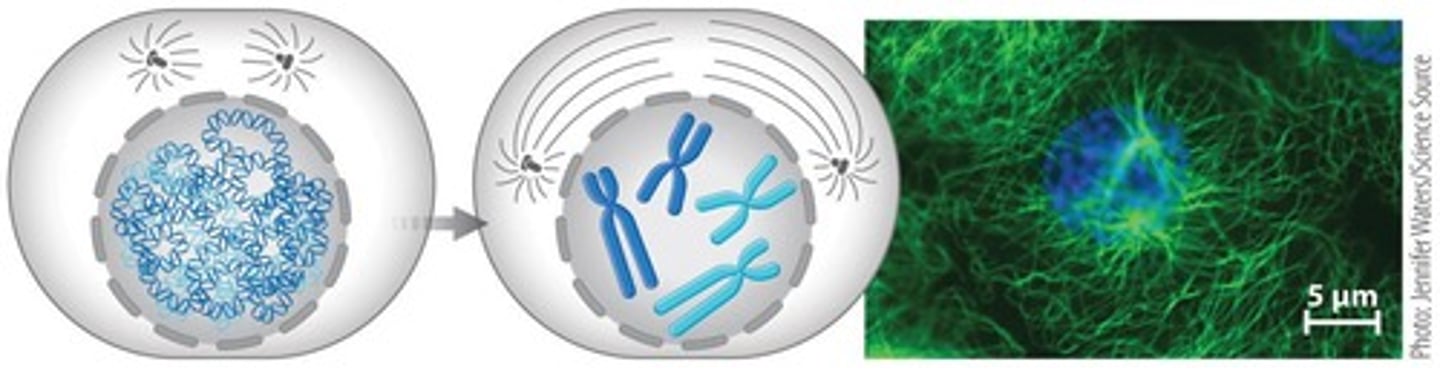
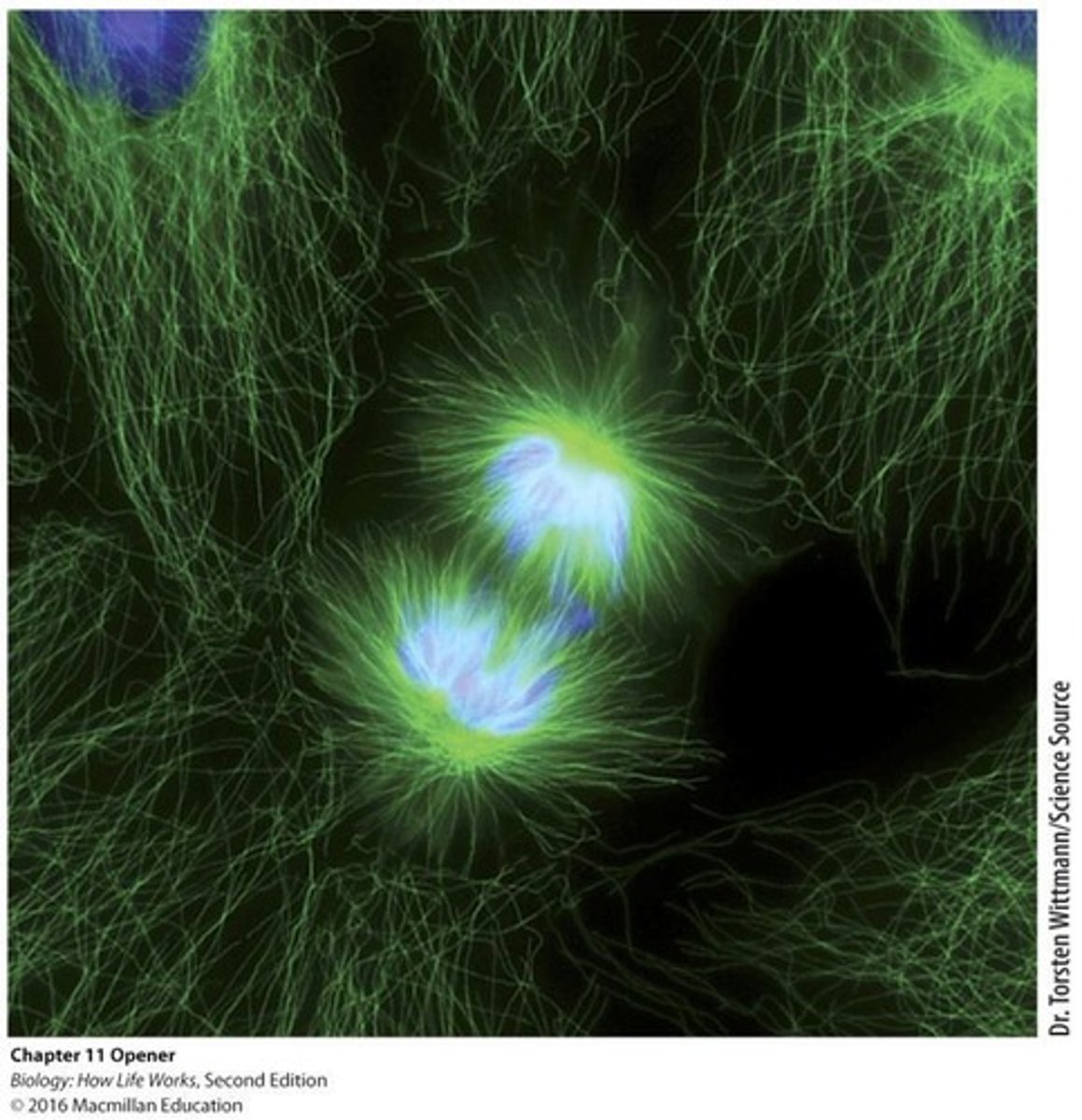
What happens during Prophase?
Chromosomes condense, and centrosomes radiate microtubules, migrating to opposite poles.
What occurs during Prometaphase?
Microtubules attach to chromosomes at the centromere.
What is the role of kinetochores in cell division?
Kinetochores are attachment sites for microtubules that ensure sister chromatids are pulled to opposite poles.
What happens during Metaphase?
Chromosomes align along a single plane in the middle of the dividing cell.
What occurs during Anaphase?
The centromere divides, and sister chromatids are pulled apart toward opposite poles.
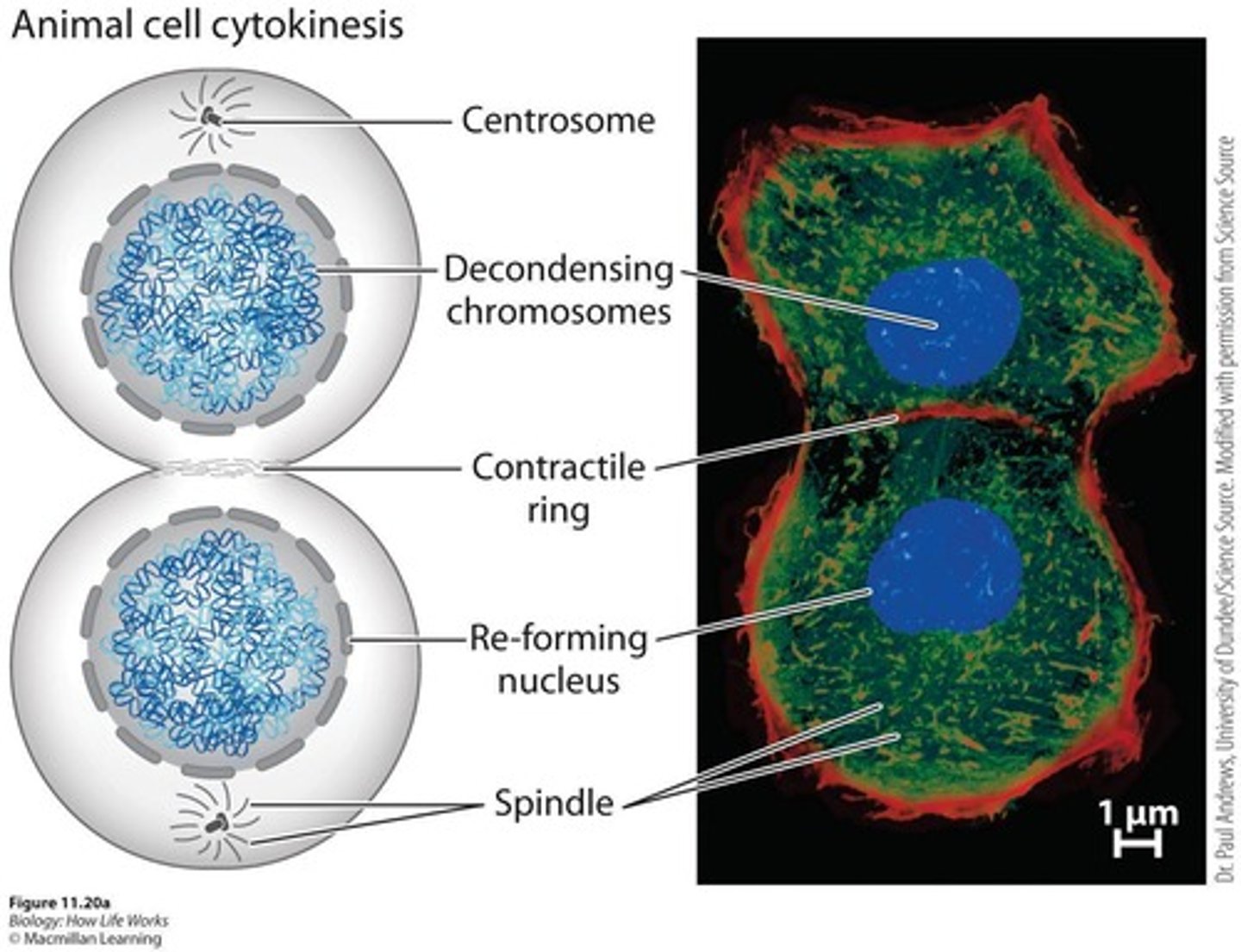
What happens during Telophase?
A complete set of chromosomes reaches each pole, the nuclear envelope re-forms, and chromosomes decondense.
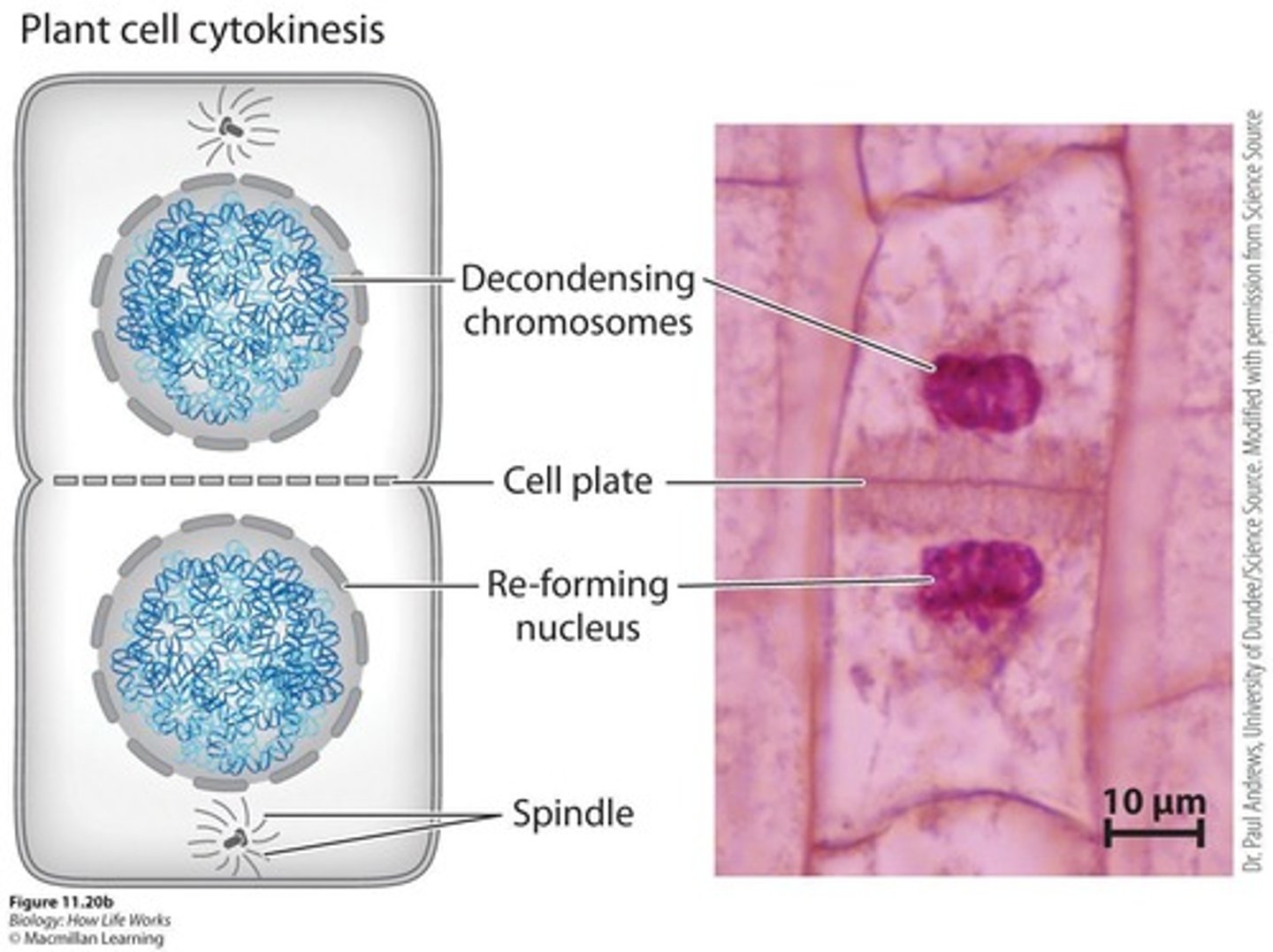
How does cytokinesis differ in animal and plant cells?
In animal cells, the cell membrane pinches inwards, while in plant cells, a cell plate forms in the middle.