Mitosis and Meiosis
 View linked note
 Call Kai
 Learn
Learn Practice Test
 Spaced Repetition
 Match
Match Flashcards
 Knowt Play
1/43

There's no tags or description
Looks like no tags are added yet.
Name | Mastery | Learn | Test | Matching | Spaced | Call with Kai |
|---|
No analytics yet
Send a link to your students to track their progress
44 Terms
Cell Cycle
A series of events that cells go through as they grow and divide.
Interphase
The phase of the cell cycle in which a typical cell spends most of its life, where the cell obtains nutrients, grows, replicates its DNA, and conducts other "normal" cell functions.
S phase
The phase of the cell cycle where DNA replication occurs, making DNA easier to move and replicate.
G1 phase
The phase of the cell cycle where cells receive a signal and enter a stage of growth, preparing for DNA replication.
G2 phase
The phase of the cell cycle where cells prepare for mitosis and continue to grow.
Mitosis
The stage of the cell cycle where the cell divides, starting with one diploid cell and ending with two diploid cells. It is essential for growth, development, and repair.
Homologous Chromosomes
Chromosomes that look alike and carry genes for the same traits, having the same size, shape, and organization.
Centromere
A structure in a chromosome that holds together the two chromatids.
Asexual reproduction
A mode of reproduction involving one parent, producing genetically identical offspring.
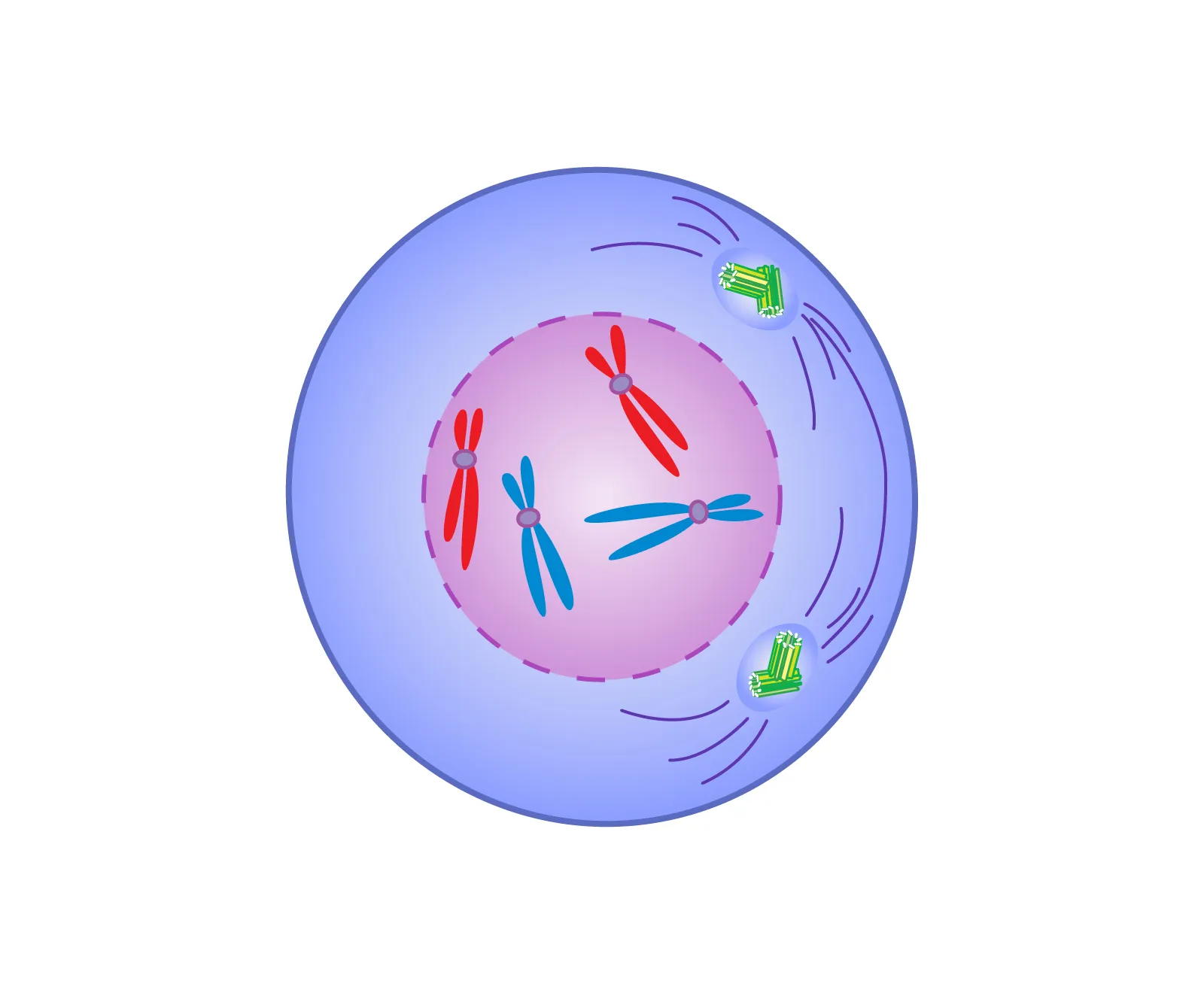
Prophase
The stage of mitosis where chromosomes become visible, spindle fibers appear, and the nuclear membrane disappears.
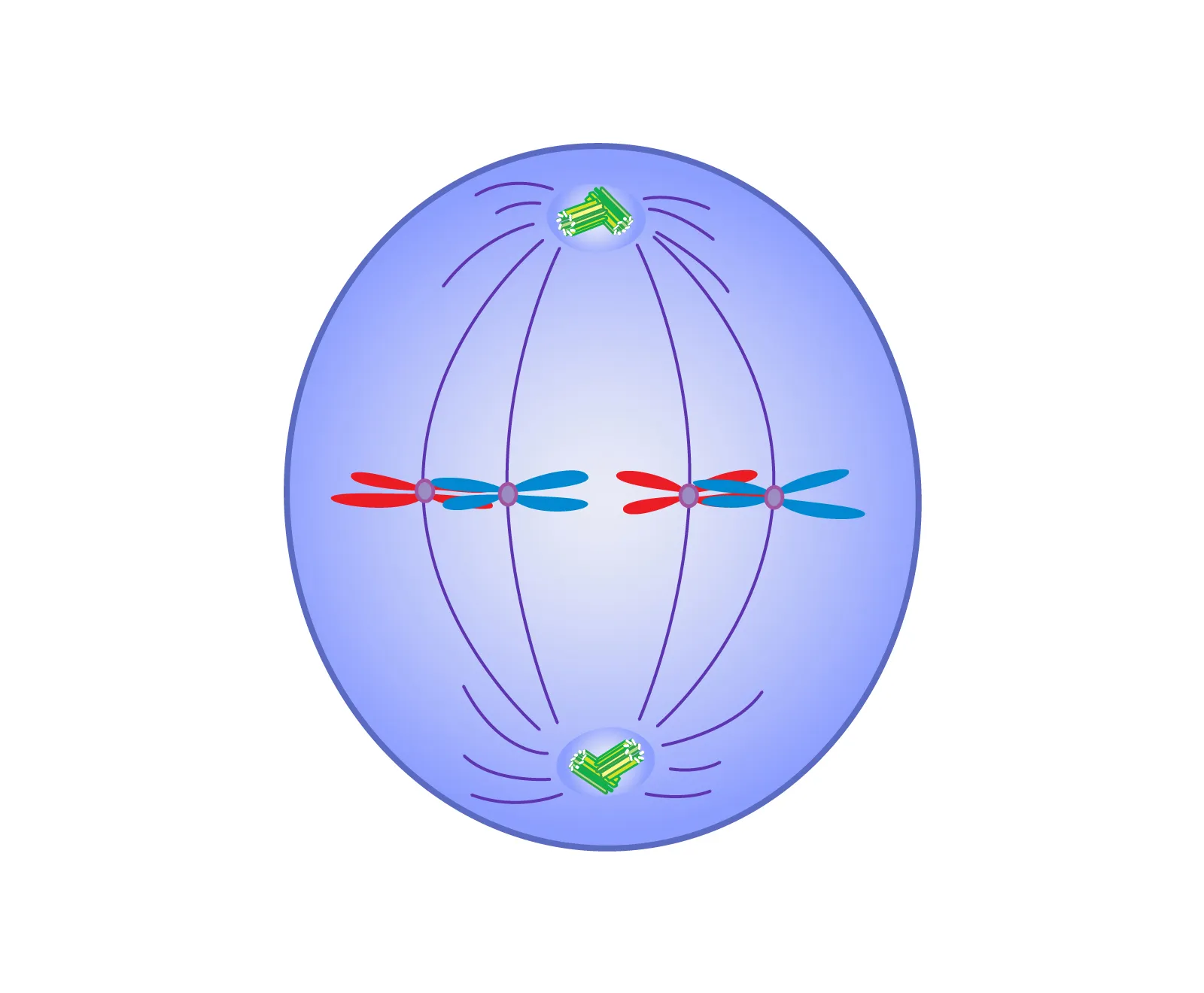
Metaphase
The stage of mitosis where chromosomes line up in the middle of the cell (metaphase plate) after spindle fibers have attached to them.
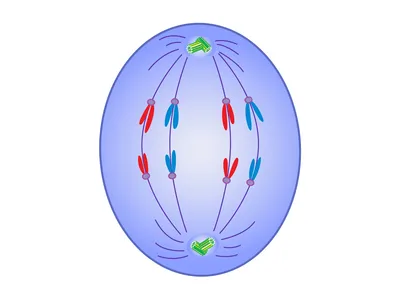
Anaphase
The stage of mitosis where sister chromosomes are separated and pulled to opposite ends of the cell, making the cell longer.
Telophase
The stage of mitosis where the mitotic spindle disappears, two new nuclei form, and the chromosomes start to "decondense."
Cytokinesis
The division of the cytoplasm, overlapping with the final stages of replication (anaphase and telophase).
Tumor
A disease caused by cells dividing uncontrollably and spreading into surrounding tissues.
Tumor suppressor gene
Normal genes that slow down cell division or tell cells to die at the right time, preventing uncontrolled growth.
Proto-oncogene
A group of genes that cause normal cells to become cancerous when they are mutated.
G0 phase
The resting state of a cell, outside of the cell cycle. Neurons are in a permanent state of this phase.
Sexual reproduction
The production of new organisms by combining genetic information from two individuals of different sexes, resulting in genetically unique offspring.
Gametes
Reproductive cells, such as sperm and egg cells.
Meiosis
The process of making sperm and egg cells, reducing the number of chromosomes in the parent cell by half and producing four gamete cells.
Fertilization
The union of two gametes, resulting in the formation of a new cell.
Crossing over
The exchange of DNA between paired homologous chromosomes during the development of egg and sperm cells, increasing genetic diversity.
Somatic cells
All nonreproductive cells in an organism, including tissue cells, nerve cells, and blood cells.
Binary Fission
The process by which bacteria cells divide and reproduce, a form of asexual reproduction involving parent cell duplication and cytoplasm division to form two daughter cells.
Pros of sexual reproduction
Increased genetic variability, Increased ability to survive
Cons of sexual reproduction
Takes longer, Need to find a mate
Pros of asexual reproduction
Quick process (saves time and energy), No mate is needed, Population can be rapidly increased
Cons of asexual reproduction
Low genetic variability, Difficult to evolve/adapt to environment, Slows down evolution
Diploid cell
a cell with two sets of chromosomes (2n). In humans, this is 23 pairs for a total of 46. Ex. Human body (somatic) cells. Two copies of each chromosome
Haploid cell
a cell with one set of chromosomes (n). In humans, this would be 23. Ex. human sex cells (gametes). One copy of each chromosome
Goal of mitosis
To make body cells for growth and repair. Starts with one diploid cell. Ends with 2 diploid cells
Goal of meiosis
make gametes (sperm and egg cells). Starts with one diploid cell. Ends with 4 genetically diverse/different haploid cells
How many chromosomes does a sperm cell have?
23 chromosomes
How many chromosomes does an egg have?
23 chromosomes
How many chromosomes does a fertilized egg cell have?
46 chromosomes
Order of phases in the mitosis process
Prophase→ Metaphase→ Anaphase→ Telophase
Chromosome
Tightly packed DNA and histone proteins in a stick shape or an X shape. Condensed of these can be duplicated or unduplicated. One set of these come from each parent
Centrimeter
holds the sister chromatids together.
What does prophase look like?
What does metaphase look like?
What does anaphase look like?
What does telophase look like?
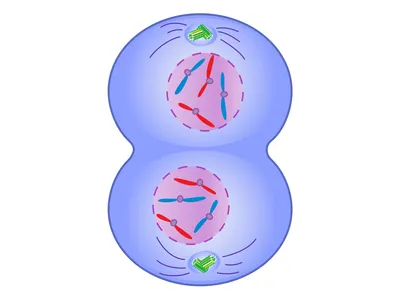
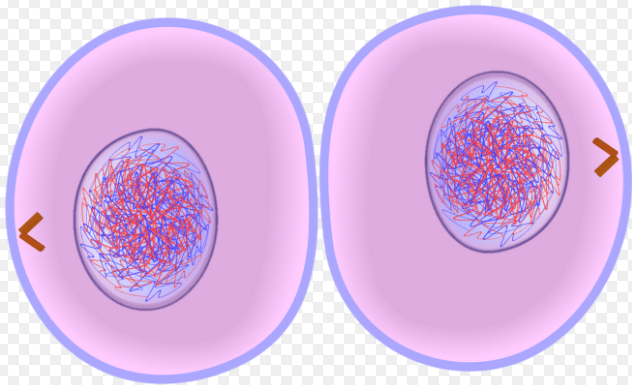
What does cytokinesis look like?