ANS 402 Final Exam
 Call Kai
 Learn
Learn Practice Test
 Spaced Repetition
 Match
Match Flashcards
 Knowt Play
1/28

There's no tags or description
Looks like no tags are added yet.
Name | Mastery | Learn | Test | Matching | Spaced | Call with Kai |
|---|
No analytics yet
Send a link to your students to track their progress
29 Terms
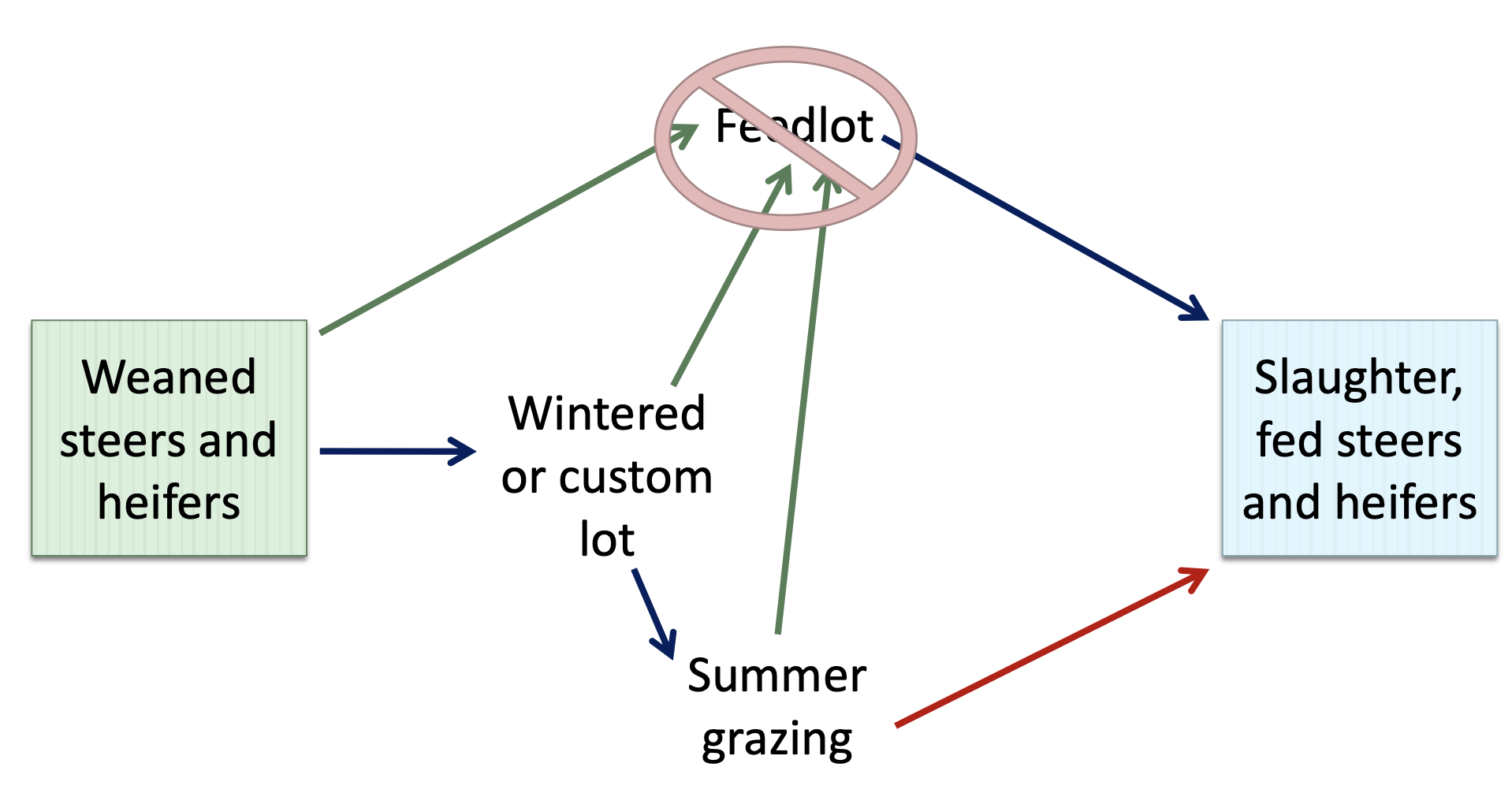
Alternative production pathways for weaned calves (figure)
Weaned steer and heifered go to wintered or custom lot then go to summer grazing and finally become slaughter, fed steers and heifers
forage finishing is an alternate market in the US but is the base of the industry for other countries
How does alternative finishing programs rate compare to conventional?
96% of beef is conventionally produced
4% of beef is natural/organically produced (certified organic), not easy to track, some producers do forage based but processors dont know
How does the beef industry review these alternative systems?
Embrace the opportunity
Take advantage of resources
Cautious about consumer perceptions
Consumer education (pros and cons of products)
How does the beef industry review these alternative systems?
USDA does not have approved label for alternative management except for Certified Organic
USDA voluntary label guidelines have been discontinued
Pasture raised, grass-fed, natural
Many private “certifying” labels
American Grass Fed, First-hand Foods, American Welfare Approved, etc.
Human nutrition and health perceptions (forage finished)
Pasture-fed cattle have 1/2- 2/3 amount of total fat (depends on finishing goals)
last year certified organic had more fat than choice. need to look at labels.
typically are leaner
Pasture-fed cattle have 3-5 x’s more CLA/g of fat
0.07 vs. 0.18 g/3 oz serving
2.4-6 g daily for human health benefit
Need 13.5 servings of pasture-fed beef/day
Pasture-fed cattle have 2-3 x’s more omega-3/g of fat
35 vs. 45 mg/100 g
30 mg/100g can be labeled as source of omega-3 (both meet this need)
*cant eat enough beef in a day to make a difference
*CLA= conjugated linoleic acids. compounds found within fat. more conc. in fat of pasture raised cattle
Human nutrition and health perceptions. Vit and Mineral (forage finished)
Vitamins
Fat soluble vitamins (A, D, E)
1.5-4x’s more concentrated in fat of grass-fed beef
dark green pasture = more Vit A and E (causing grass fed beef to have yellow fat)
more concentrated but less total fat may lead to no difference
Minerals
Selenium (antioxidant)
Regional (NC is Se deficient)
Prolonged resistance to oxidation
Who purchases these products? (forage finished)
Households with > $90,000 annual income
1-2 adults, 0 children
Direct to customers
Home deliver, Farmer’s markets, Direct sales
Health conscious markets (claiming health benefits)
Specialty restaurants
Health care institutions (hospitals)
Corporate gifting
Financial considerations for forage finished beef
Profitability driven by…
Cost of grass (land, fertilizer, price, inputs)
Cost of cattle (often cow-calf and raise to slaughter, can be muckier bc cattle may or may not be sold)
Death loss (similar across all industries)
Buy – sell margin
Merchandizing of product
can’t just drop off at stocker yard. need to invest in getting product in correct consumer or slaughter companies hands to get the premium.
Systems Approach to Cattle Management
Not all cattle fit all systems
need cattle that are proven efficient on forage. finish slaughter, convert grass to fat (not all lean)
Start with the end in mind
Expected Slaughter Weight (1000-1300 lbs)
580-780 lbs carcass weight (avg. 1050 in commercial)
Expected or Desired Carcass Composition
YG2, Low Choice
YG 2 or lower (YG1 too lean)
moved from select to low choice
What type of cattle work best for forage finishing?
What works?
Small-moderate frame
Forage efficient
High marbling potential
Early maturing
Angus, Gelbvieh, Hereford, Shorthorn, Devon, Dexter, Red Angus, Murray Grey
lot of brisiths breeds and heritage breeds, generally older style angus genetics not same on feedlot feed efficiency, some of these have no selective pressure to do well on grai
Where do you find these genetics?
Sire directories
Fellow grass-fed beef producers (often word of mouth)
Management Examples
Forage-finished production timeline of Bos taurus cattle
Weaned calf is 7 mo old at 400-600 lbs
330- 650 days grown at 1.5-2.5 lbs/day on grass or harvested forage until 1000-1300 lbs
May have up to 1% BW of grain for many programs (high roughage, low starch byproducts)
*high quality grass. have to expand pasture or reduce cattle #. they will be growing for 2 years. eating a LOT
Average age at slaughter is 18-30 months (want under 2.5 yrs)
Land and Feedstuff Situations
What is the farm capable of providing?
Year round grazing?
Grazing + hay?
Grazing + grain?
Grazing + hay + grain?
“The less heavy metal the better!”
Intensive grazing management is vital for grass- finished success
Need 1.7 lbs ADG to finish at 1300 lbs by 24 months
need positive ADG (combinations of every type of forage to always have forages growing)
Cost of grass
Pasture value depend on several factors
NC pasture rental price average $27/acre
double this for crop land
pasture only has lower nutrient profiles and challenges (slope, water, etc)
Cost of ownership
Demand
Farm programs
Land productivity
Rental agreement
input responsibility
Forage species present
Climate
Fencing present
Rotational grazing management inputs
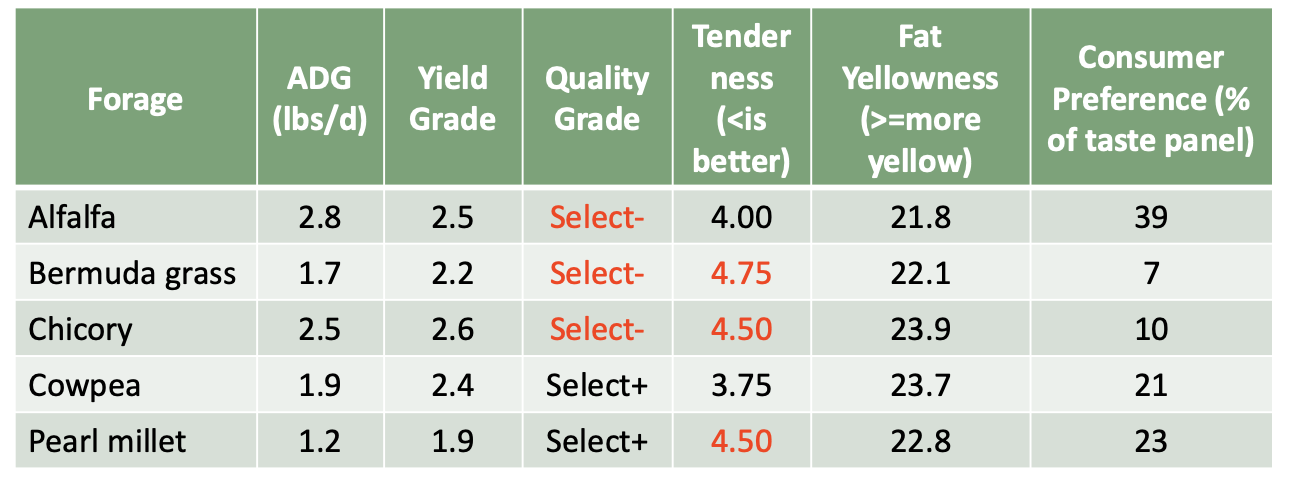
Forage effects on finished “fat” cattle
benefit of mixing different types of forages
Example of an NC Program
Firsthand Foods- Pasture Raised Beef
Animals must be identified
Cattle must be slaughtered at <30 months of age
No hormone implants, no sub-therapeutic ab’s, ionophores only for control of coccidia
Anthlementics, vaccinations, and therapeutic ab’s okay
Must follow all BQA guidelines
Must be on pasture with at least 75% forage plant cover
Pasture or harvested forages for all stages of production
Vitamin/mineral supplements approved
No creep feeding nursing calves
Target gain of 1.5-3 lbs/day for growing and finishing
Emergency supplemental feeds approved
1% BW of fiber feeds, 0.5% BW of starch containing feeds
Finished weight of 1100-1200 lbs at BCS of 6.5 minimum
Why is there a market for alternatives to feedlot finished cattle?
consumer preferences: based on marketing, what they hear from other people on what is good v bad
in reality, there are pros and cons to each
Six major factors of feedlot finishing
1. Cattle
2. Environment
3. Health
4. Feed
5. Efficiency
6. Marketplace
Management Examples (feedlot finishing)
Conventional production timeline of Bos taurus cattle
Weaned calf is 7 mo old at 400-600 lbs
60-120 days grown at 1.5-2.0 lbs/day on grass or harvested forage until 700-800 lbs (stocker phase)
90-150 days grown at 3.0-4.0 lbs/day on grain and harvested forage to slaughter weight of 1200-1400 lbs
this is the part that differs from grass finished. in feedlot, finish on combination of grass and grain, increase amt of grain to finish efficiently
Average age at slaughter is 14-16 months
*southern coast may utilize bos indicus for high heats
Feedlot finishing: What cattle are in the feedlot?
All steers
calf feds (european breeds, dairy breeds)
yearlings (british breeds)
75% of heifers (genetics, attitude, etc)
Cull cows and bulls
small portion, only in feedlots specializing in mature animals. BCS <5 = put more weight on before slaughter. big feedlots won’t buy
Feedlot finishing: Cattle (animal performance)
averages based on feedlot genetics
ADG: 2.9 to 4.0 lbs/day (3.45 ave)
F/G: 5.50 to 8.00 (6.33 ave)
feed to gain. how many lbs of feed to get 1 lb gain on animal?
% Choice: ~ 80-83%
high quality, well-marbled beef
Days on feed: 90-300 days (185 ave)
huge range based on many factors
Carcass weight: 850-1050 lbs (950 ave)
Ribeye: 12 to 14 inches²
Death loss: 1-2%
Cost of gain: $65-155/cwt ($135/cwt ave)
Is mounting behavior a problem in feedlot finishing?
YES. heifers worth less than steers and bulls. moutning behavior causes..
bruising
hip injurys and other issues
energy expenditure = burn calories = less gain
Problems with feedlot heifers
35-40% of feedlot animals are heifers
going up because we need more beef
Approximately 2-15% of all feedlot heifers are pregnant
don’t want. often too small to have calf. not good genetics. other issues that cow-calf producer didn’t want
Increased energy requirements
Pregnancy is costly
Mental toll if late term pregnancy at slaughterhouse (euthanize calf)
Common Practices for Heifers in feedlots
Stocker Heifers
Spaying
INC. Costs ($15-20)
INC. Morbidity
INC. Mortality
some seedstock producers do this to prevent bad genetics
Guarantee open
Feedlot Heifers
MGA Costs ($10-15)
inc. cost ($10-15)
only feed additive to prevent cyclicity (mimics P4)
has to be fed every day, withdrawal time
Pregnancy Exam & Abortion
ince. cost ($10-15)
inc. morbidity
inc. mortality
challenges: if too late to abort, can sell her (high risk situation)
Sell pregnant heifers
Feedlot finishing: Environment
dry, low wind, moderate, stable temperature
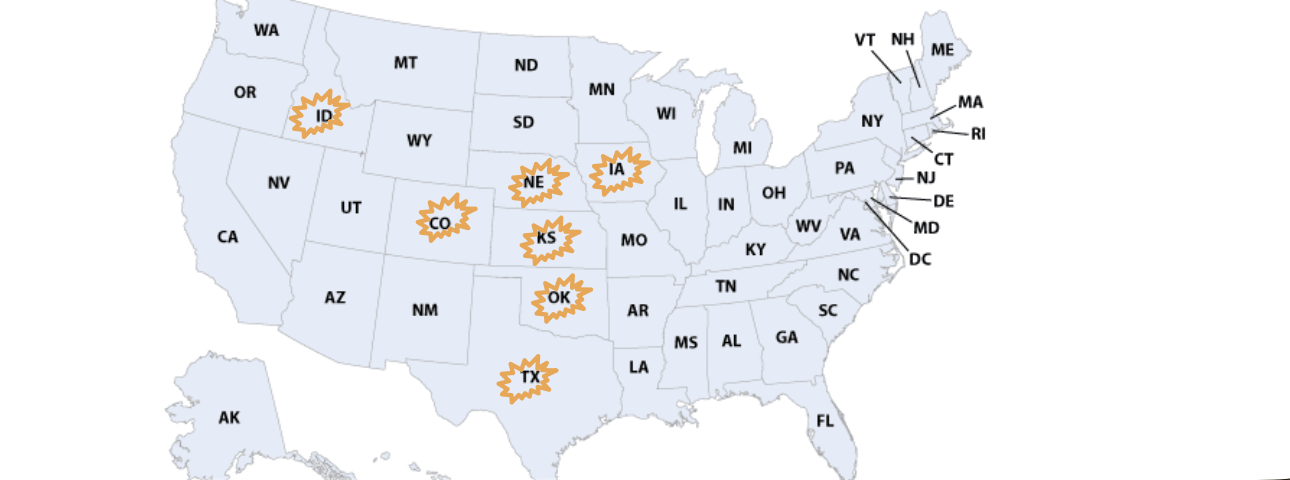
Feedlot finishing location
85% of the cattle are fed in 10 states
< 2,000 feedlots feed 85% of the cattle
2 Major Categories of Feeding Operations (feedlot finisher)
Farmer Feeder
<1000 head one time
capacity
Uses homegrown feeds
Owns cattle inventory
Uses labor from other
enterprises
Flexible – only finishes
cattle when it’s
profitable
1 group/year
Throughout U.S.
Commercial Feeder
>1000 head one time
capacity
Obtain and analyze
more information
Will own cattle and
custom feed
Utilize more expertise
Keep feedlots full of
cattle
2-2.25 groups/year
Central U.S.
Responds to management
Slope
Manure management
Shade
Exposure
Soil
Bunk placement
Pen cleanliness
Water quality
Location, Location, Location!