Music
 Call Kai
 Learn
Learn Practice Test
 Spaced Repetition
 Match
Match Flashcards
 Knowt Play
1/56

There's no tags or description
Looks like no tags are added yet.
Name | Mastery | Learn | Test | Matching | Spaced | Call with Kai |
|---|
No analytics yet
Send a link to your students to track their progress
57 Terms
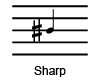
Sharp
Playing or singing above pitch
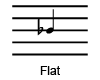
Flat
Playing or singing below pitch
Opera
A musical drama that is entirely or mostly sung
Plucked Instruments
Players produce different pitches by changing the position of their fingers on a fretboard. For many-stringed instruments such as the harp or lute, players provide different pitches by plucking different strings that are tuned to produce specific pitches. Examples: guitar, banjo, harp
Tenor
Highest vocal range for men
Pitched Instruments
Percussion instrument that can produce differently pitched sounds and can be used to play melodies. Examples: xylophone, glockenspiel, marimba, vibraphone, and timpani
Crescendo (cresc)
To continuously increase volume when playing or singing for music dynamics
Game Song
Songs that include actions or coordinated activities (patty cake)
Beamed Notes
For ease of reading, beams can join eighth and sixteen notes together.

Kodaly Concept
Holistic, experience-based approach that emphasizes the pleasure of music and the importance of the human voice. Named after Zoltán Kodály, a Hungarian music teacher and composer, who believed that singing is the best way to develop a feel for music and that it should precede instrumental instruction. Uses: do, re, mi, fa, sol, la, ti, and do to represent each tone in the major scale
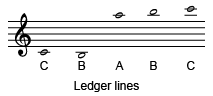
Ledger Line
Notate the pitches that occur above or below the staff
Improvisation
Spontaneous creation or alteration of melodies, rhythms, or harmonies
Call-and-response format
A song in which a leader sings a line and a group responds, common in spirituals
Mezzo-Soprano
middle vocal range for women
Forte-Piano (fp)
To play or sing moderately loudly then immediately softly for music dynamics
Percussion Instruments
are shaken or hit to produce sound. Maracas
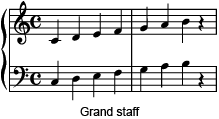
Grand Staff
Two staffs joined by a brace. Generally, the great staff joins the bass and treble clefs; middle C is located on a ledger line between the two.
Dynamics
volume for singing or playing; pianissimo, piano, mezzo-piano, mezzo-forte, forte, fortissimo
Melody
a sequence of notes that are perceived as a single, cohesive unit; typically the most recognizable part of a piece
Brass Instruments
Brass instruments consist of a series of tubes. Players produce sound by vibrating their lips into a mouthpiece, which causes the instrument to vibrate and produce sound. (Trumpet)
Contralto
The lowest vocal range for women.
Bass
lowest vocal range for men
Pitch
the sound of notes that can be perceived as high or low
Meter (music)
musical time features patterns of strong beats and weak beats; some syllables receive stronger emphasis than others
Timbre
the quality of a tone, generally used to describe differences in sounds played or sung at the same pitch and loudness, but by different instruments or voices; depending on the instrument, terms like bright, dark, warm, and harsh might describe tone quality
Spirituals
music style that was developed by enslaved people of African descent who were brought to America; combines Christian hymns with the patterns of traditional African folk songs
Work Songs
songs connected to manual labor, such as agricultural work or railroad work, and were used to help workers stay in unison as they completed their tasks, particularly popular among enslaved people of African descent. Ex: “Pick a Bale of Cotton”
Non-Pitched Instruments
Percussion instrument that is used to provide rhythm. Ex: drums (snare, bass), triangles, gongs, castanets, rattles, cowbells, woodblocks, tambourines, maracas, claves, and whistles.
Key Signature
the set of sharp or flat symbols at the beginning of the staff in a piece of music; indicates the key the piece is in
Beat
the pulse. A rhythmic unit of time. Ex: In 4/4 time, a whole note lasts four beats
Staff
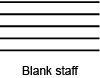
set of five lines and four spaces. Each line and space represents a specific musical pitch.
Forte (f)
to play or sing loudly for music dynamics
Stringed Instruments
Use strings to produce sounds. Ex: Violins
Jingles
catchy songs used in advertisements
Time Signature
notation at the beginning of the piece indicating the number of beats in a measure and the value of the beat
Clef
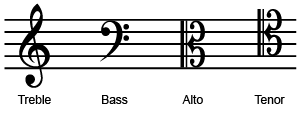
the French word for “key”, indicates the pitch of the notes written on the staff. Ex: Treble clef
Mezzo-Forte (mf)
to play or sing moderately loudly for music dynamics
Diminuendo (dim)
To continuously decrease volume when playing or singing for music dynamics
Sight Sing
to sing a piece of music without having heard it before
Intonation
the degree to which a pitch is played in tune
Form (in Music)
the structure of music, many forms - binary, ternary, theme and variation, etc. Ex: binary, ternary, theme
Woodwind Instruments
Tubular instruments with a series of holes that can be opened and closed to change the pitch. Ex: flute
Lullaby
Lullabies are soft, gentle songs, often sung by parents to their children. Lullabies not only help establish emotional bonds between adults and children, but they also convey important information about human relationships and cultural traditions.
Mezzo-Piano (mp)
to play or sing moderately softly for music dynamics
Intervals
the difference between two pitches
Rhythm
pattern of sounds and silences over time; gives structure to music by organizing beats into patterns
Baritone
middle vocal range for men
Piano (p)
To play or sing softly for music dynamics
Tempo
the speed or pace that a piece of music is played at
Measure (in music)
notes grouped together
Soprano
highest vocal range for women
Bowed Instruments
Produce sound when a bow is moved across the strings. Players produce different pitches by changing the position of their fingers on a fingerboard. Ex: violins, violas, cellos, and string basses
Solfege
system for singing notes; uses: do, re, mi, fa, sol, la, ti
Rote Learning
learning songs by ear
Keyboard Instruments
Use keys or buttons to produce different pitches, but depending on how sound is produced, keyboard instruments may also be included among the other families of instruments. Ex: piano