Athletic Training 2 Exam 2
 Call Kai
 Learn
Learn Practice Test
 Spaced Repetition
 Match
Match Flashcards
 Knowt Play
1/57

There's no tags or description
Looks like no tags are added yet.
Name | Mastery | Learn | Test | Matching | Spaced | Call with Kai |
|---|
No analytics yet
Send a link to your students to track their progress
58 Terms
medial larger lower leg bone (shin bone) & weight bearing
Tibia
lateral lower leg bone and only 15% weight bearing; muscle attachments
Fibula
What is your heel bone called?
Calcaneus bone
superior to calcaneus & forms joint between tibia and fibula
Talus bone
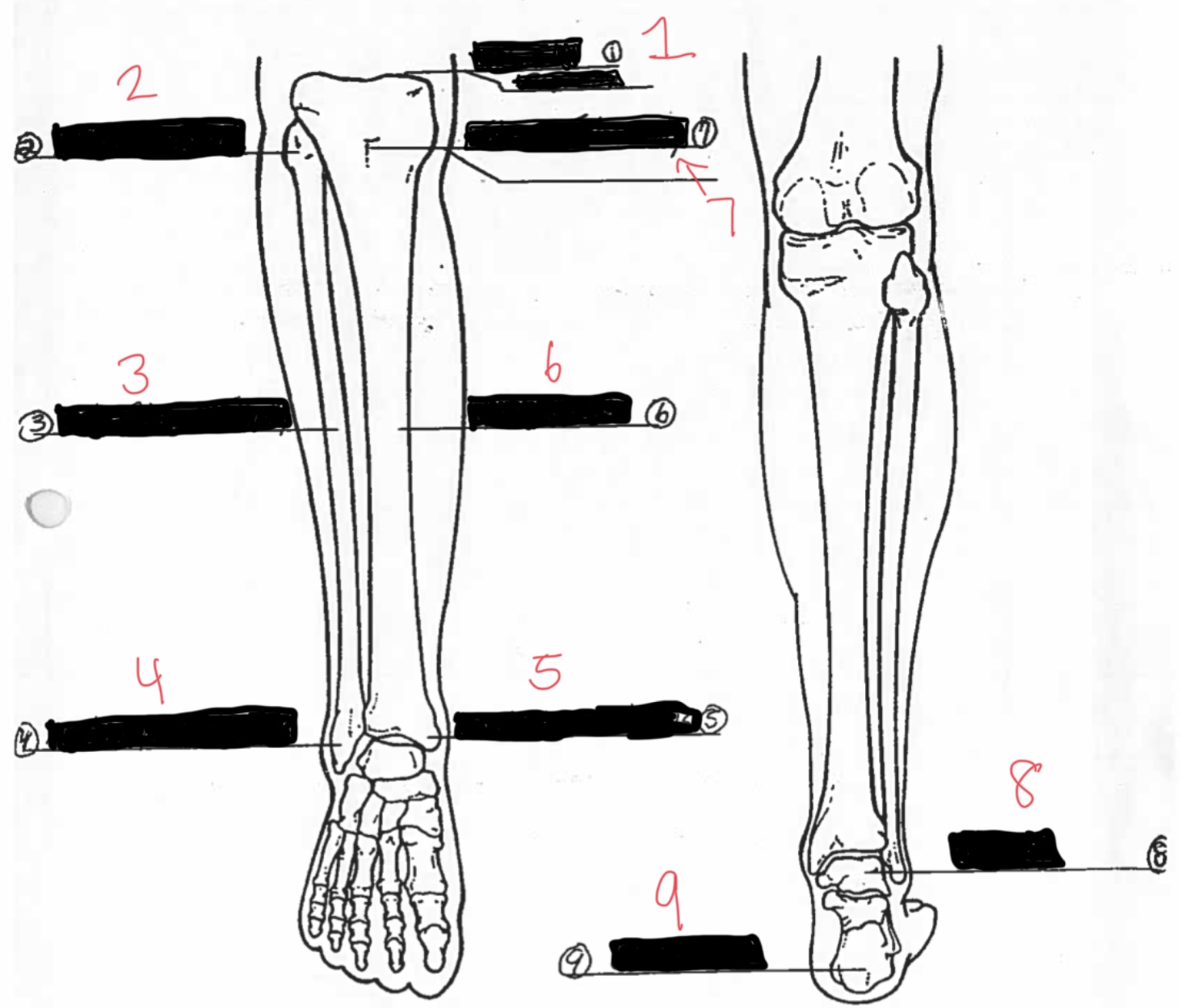
Label These properly
Tibial Plateau
Fibula Heads
Shaft of Fibula
Lateral Malleolus
Medial Malleolus
Tibial Shaft
Tibial Tuberosity
Talus
Calcaneus
What are the two reasons why a eversion ankle sprain is rare?
Because of the bony block of the lateral mallelus and the deltoid strength
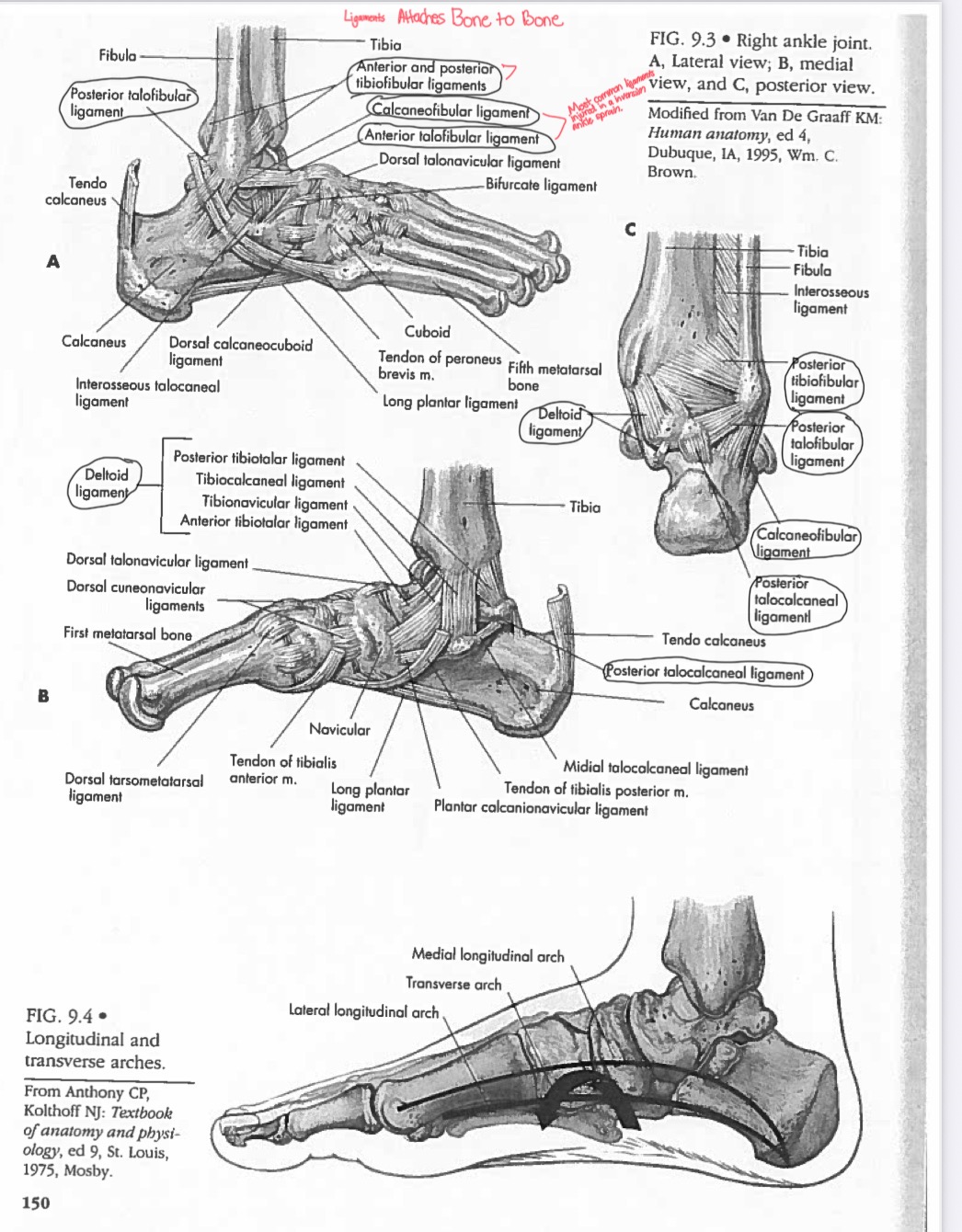
What do ligaments do?
Attach bone to bone
What are the two most common ligaments injured for an inversion ankle sprain are what?
The anterior the anterior talofibular ligament (ATFL) and the calcaneofibular ligament (CFL)
What is the most injured ligament when it comes to a eversion ankle sprain
Deltoid ligament
What are the most powerful foot everters in the lower leg?
The Peroneals
What is the main purpose of the fibula
Muscle attachment
What are sins ways to prevent injuries in the lower extremities?
a. Achilles’ tendon stretching (straight leg and bent knee); wall, Prostretch, towel
b. Lower leg/ankle strengthening (Gastrocnemius, Soleus, etc.)
c. Neuromuscular training (balance); BAPS board, Balance pad, Trampoline
d. Proper footwear (proper size, type); High top shoe more support
e. Orthotics (if necessary)
f. Taping/Bracing (if necessary); MUST DO REHAB IF GET TAPED OR WEAR BRACES
What is an Open Kinetic Chain Exercise?
Occurs when the foot or hand is off if the ground (main in the early stage of rehab) ex ankle ABCs,
What is a Closed Kinetic Chain exercise?
An exercise where your foot or hand is fixed to the ground or a platform. This includes having a band attached to your foot.
Ex leg press, squat
Match these pain sensations with the tissue involved.
Sharp, burning pain
Localized, piercing pain
Achy, generalized pain
Dull, achy, or referred pain
Options include ( vascular, bone, nerve, muscle)
Sharp, burning pain= Nerve
Localized, piercing pain= Bone
Achy, generalized pain= Vascular
Dull, achy, or referred pain= Muscle
What three things do you need to immediately rule out?
Dislocation, subluxation, and fractures
Blood clots
Circulatory issues
Nerve issues
What are Five (5) questions you would ask an athlete with an injured lower leg, ankle, or foot during a Secondary Survey?
What is your pain on the scale of 0 to 10, 0 being no pain and 10 being the worse pain you’ve ever felt.
How did it happen
Have you injured the area before
Did you hear any snap, crackle, or pop when it happened?
what did you feel when it occured
What are the normal values for foot inversion and eversion and ankle plantar flexion and dorsiflexion?
Inversion – 40°
ii. Eversion – 20°
iii. Plantarflexion – 45°
iv. Dorsiflexion – 20°
What are the five (5) Cardinal Signs of Inflammation?
Redness, Swelling, loss of function, pain, heat
What are some types of shock?
Hypovolemic
Cardiogenic
Neurogenic
Anaphylactic
Septic
What are some of the early signs of shock
Low Bp, Rapid or weak pulse, drowsiness, nausea, shallow or rapid breathing, cool, pale,a nd clammy skin, or thirsty
What are the late signs of shock
Person is Unconscious, Unresponsive, Vacant (blank) expression, and Mottled skin (blotchy skin)
WHat are the ways to manage shock?
A. Maintain body temperature
b. Elevate legs above the heart
c. Loosen all clothing possible
d. Reassurance
During a Neurological Exam what two (2) Deep tendon/Muscular reflex tests have to be performed?
L4(Patella) and S1(Achilles)
What does Rices stand for and why do we do it?
R-Rest to allow time for healing
I-ice to decrease swelling
C- compression to help with the swelling
E- elevate to help return the blood to the heart
S- support to provide comfort and prevent further injury
What three (3) things must be considered when determining if an athlete can return to practice or competition? (Can be done with tape or brace)
full pain free ROM, 90% strength compared to the uninjured side, and passing a functional exam
What are ABC’s (Acronym) and how do you identify each (TECHNIQUE)?
Airway- look
breathing- listen
circulation- feel
What is referred pain?
when the pain occurs away from the site of injury
What are the Vitals or 9 major response areas?
Pulse, Respiration, blood pressure, temperature, skin color, pupils, state of consciousness, movement, and abnormal nerve responses
What consists of the Primary Survey in the patient assessment pyramid?
The ABCs(airway, breathing, and circulation) and any life- threatening conditions like severe bleeding or fractures. We must look, feel, and listen
What consists of the Secondary Survey in the patient assessment pyramid?
This is where you do SOAP notes and a more detailed patient eval like doing vital signs, skin color, bp, etc. this is when u take a history
When checking someone’s level of Consciousness, what are the AVPU?
are they Awake and alert, are they Responsive to verbal cues, are they Responsive to pain, are they Unresponsive
What is a hemorrhage?
an abnormal discharge of blood; either internal or external
How do we control bleeding?
Put direct pressure on the wound with gauze
Elevate the wound above the heart
What does PERRLA stand for?
Pupils Equal Round React to Light and Accommodate
What is the normal bp for adults
120/80 for men and 110/70 women
Irregular/GaspIng Breathing usually indicates what?
Indicates cardiac involvement
what is normal pulse
60-80 for adults
_______ is cause by either disease, infection, hot environment (heat stroke)
Hot dry skin
_______is caused by either trauma, shock, heat exhaustion
Cool clammy skin
_____ is caused by overexposure to cold
Cool, dry skin
_____ is caused by a heat stroke, increased BP, CO poisoning
Red Skin
_______ is caused by decreased circulation, shock, fright, hemorrhage, heat exhaustion, insulin shock
Pale ashen skin
______ is caused by a lack of O2 from airway obstruction or respiratory insufficiencies; mainly in lips and fingernails
Blue skin (cyanosis
What are the signs of a nerve injury?
Numbness or tingling in the area severe pain or no pulse.
inability to move all four limbs
Paralysis from injury site down
Quadriplegia
inability to move one side of body. Caused be Stroke or head injury
Hemiplegia
inability to move legs
1. Injury below the cervical region
Pressure on the spinal cord = limited use of limbs
Paraplegia
What does SOAP or HOPS stand for
S- subjective what they tell u
O- objective what you see
A- assessment
P- plan what plan of action you will take (treatment)
what should you do if a athlete is unconciouss
monitor their abcs and call 911
Give Five (5) examples of rehabilitation exercises that you would have an athlete perform if they have an injured lower leg, ankle, or foot
What are the Six (6) components of a Functional test?
Balance
Strength
Agility
Coordination
Sport-specific movement
Confidence
The Talar tilt special test tests the stability of what ligament on inversion stress? What ligament on eversion stress?
Inversion → Calcaneofibular Ligament
Eversion → Deltoid ligament
The Anterior Drawer special test tests the stability of what ligament?
ACL for the knee and Anterior talofibular ligament
High BP=
and
Low BP=
High= hypertension
Low= possible shock
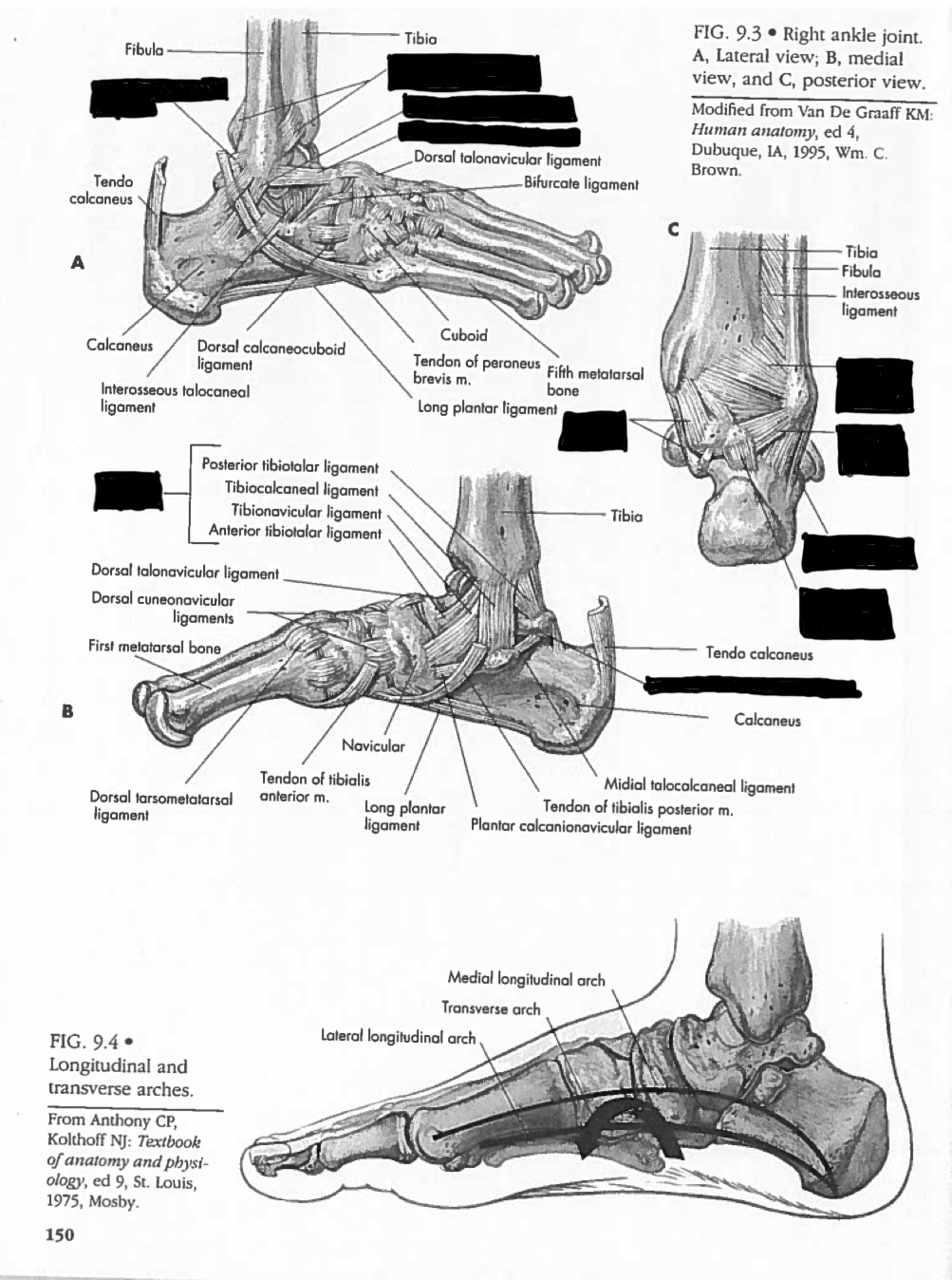
Label these ligaments properly
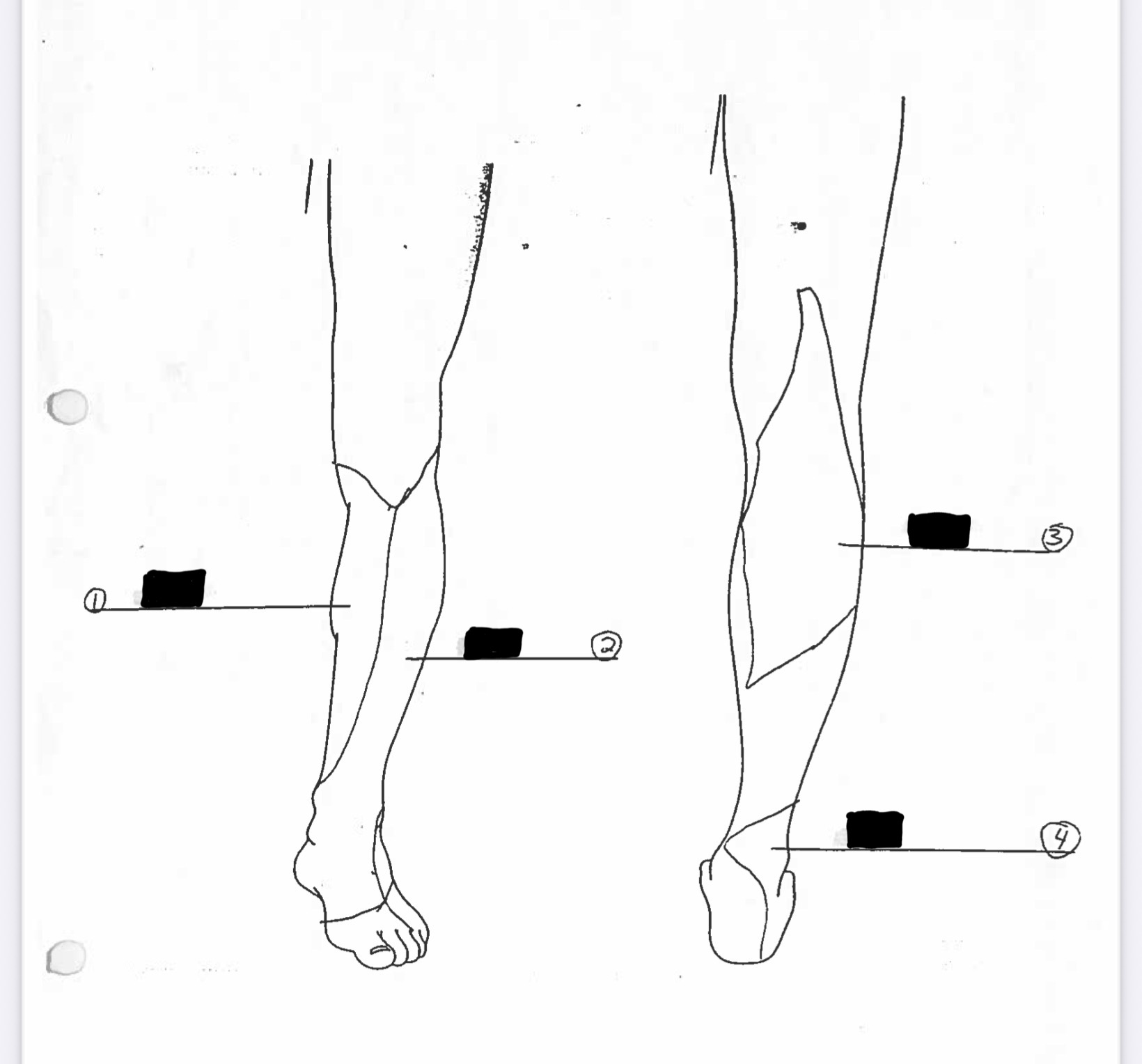
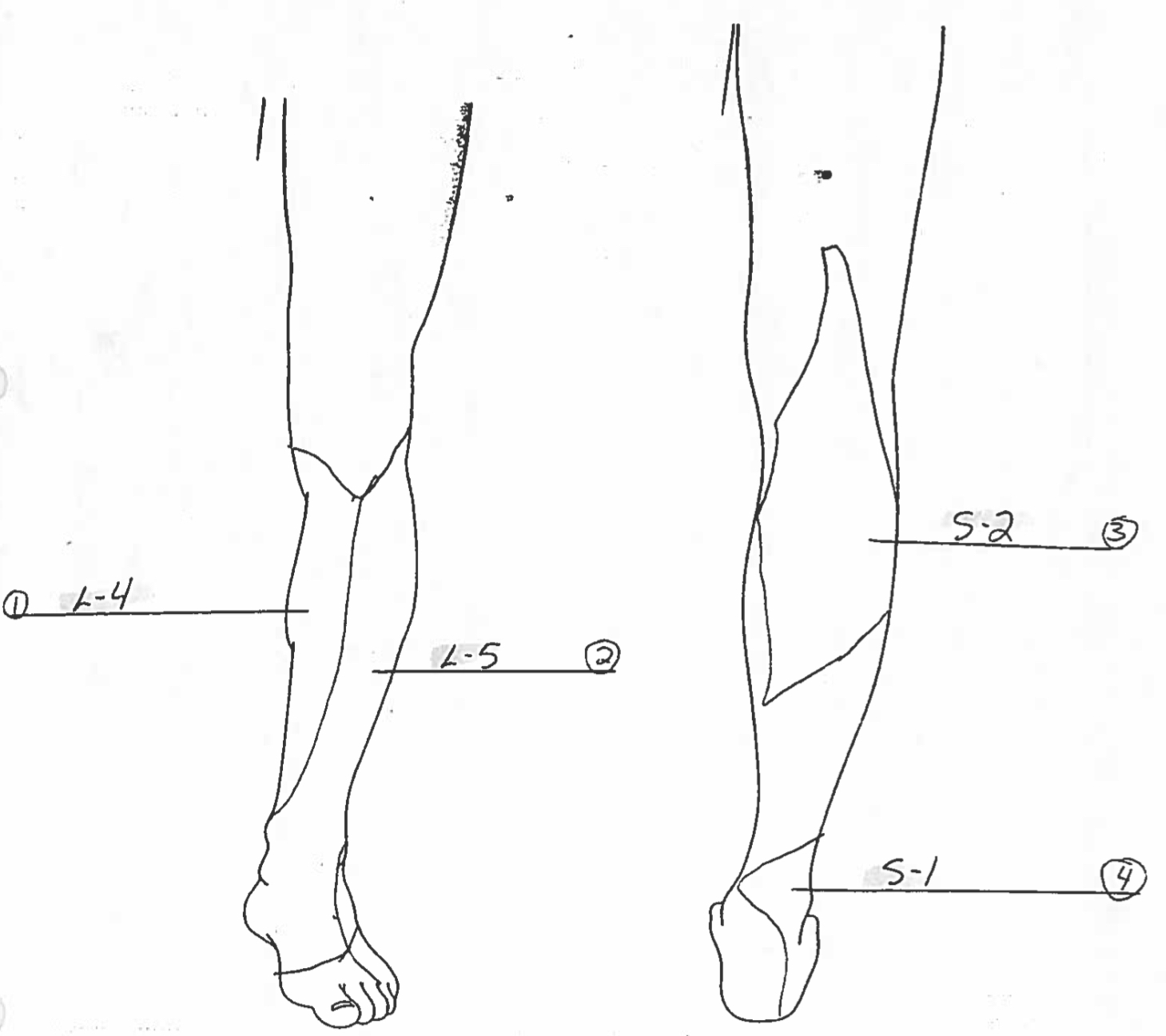
Label the dermatomes properly
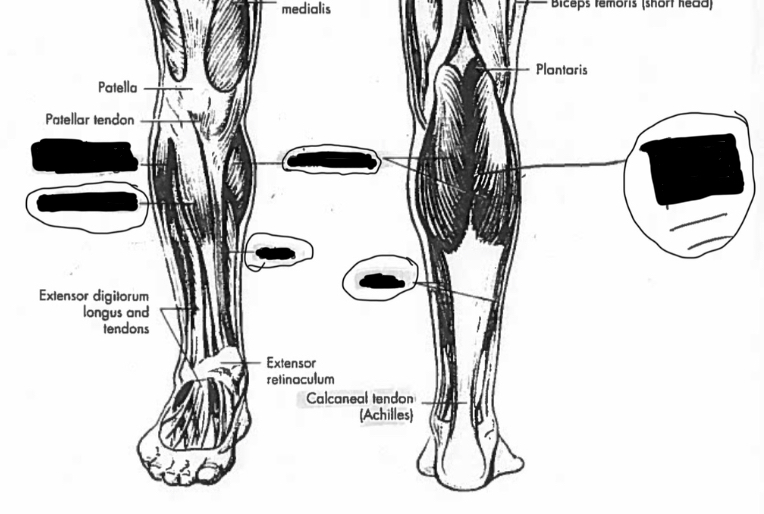
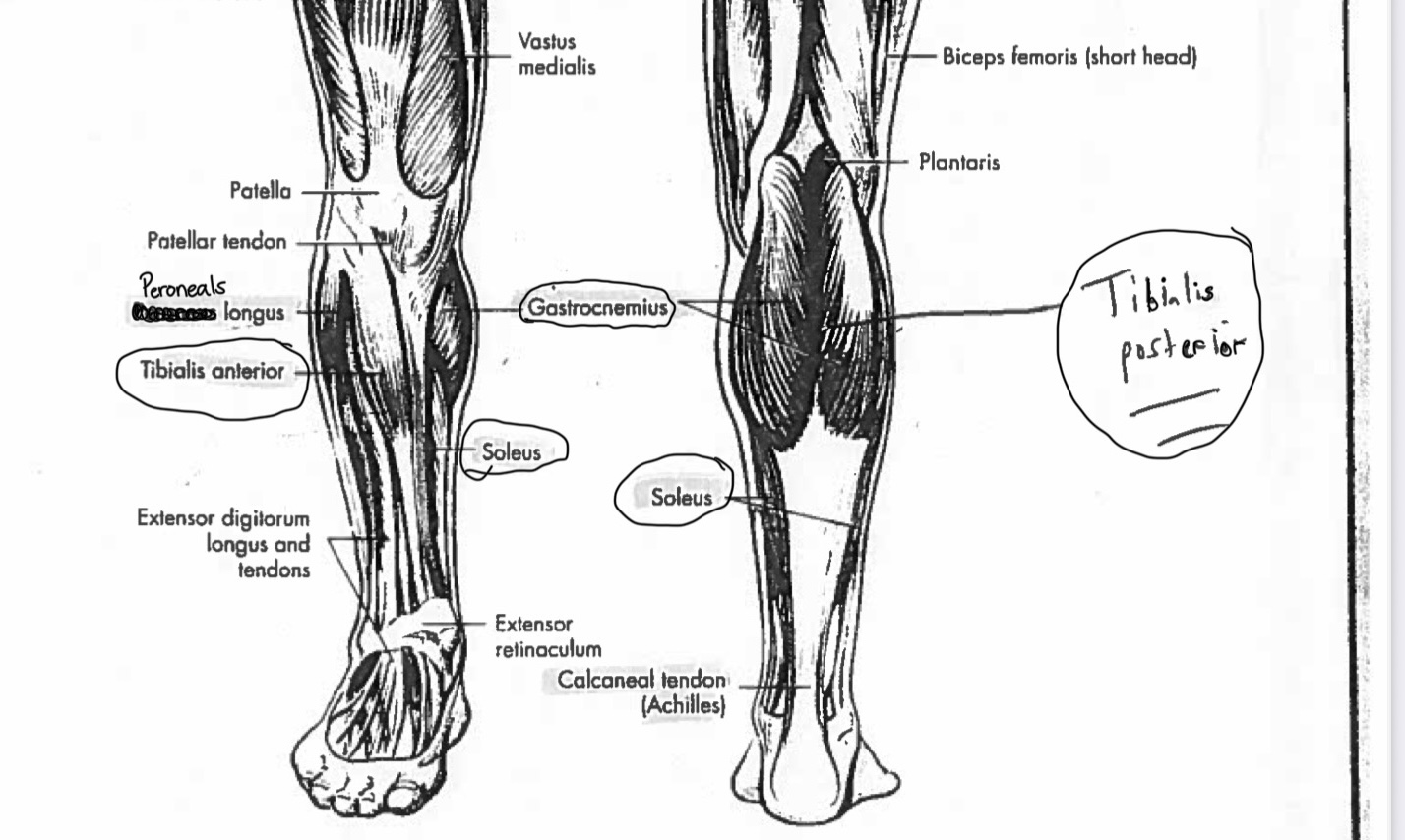
Label these muscles in the lower leg