topic 18c organic synthesis chem (grignard)
 Call Kai
 Learn
Learn Practice Test
 Spaced Repetition
 Match
Match Flashcards
 Knowt Play
1/16

There's no tags or description
Looks like no tags are added yet.
Name | Mastery | Learn | Test | Matching | Spaced | Call with Kai |
|---|
No analytics yet
Send a link to your students to track their progress
17 Terms
what are Grignard reagents?
- can be used to increase the length of a carbon chain
- organometallic compounds with a C-M bond
- general formula of RMX, where R is an alkyl or aryl group, M is a metal and X is a halogen atom
describe how Grignard reagents are prepared
- add halogenoalkane to small pieces of magnesium in a flask containing dry ether
- dry ether is required because the compound is volatile and reacts with water (produce alkanes which is undesired)
write an equation for the reaction between Grignard reagents and water

what is the product when Grignard reagents react with water?
alkane
the solvent used for Gringard reagents has to be completely dry.
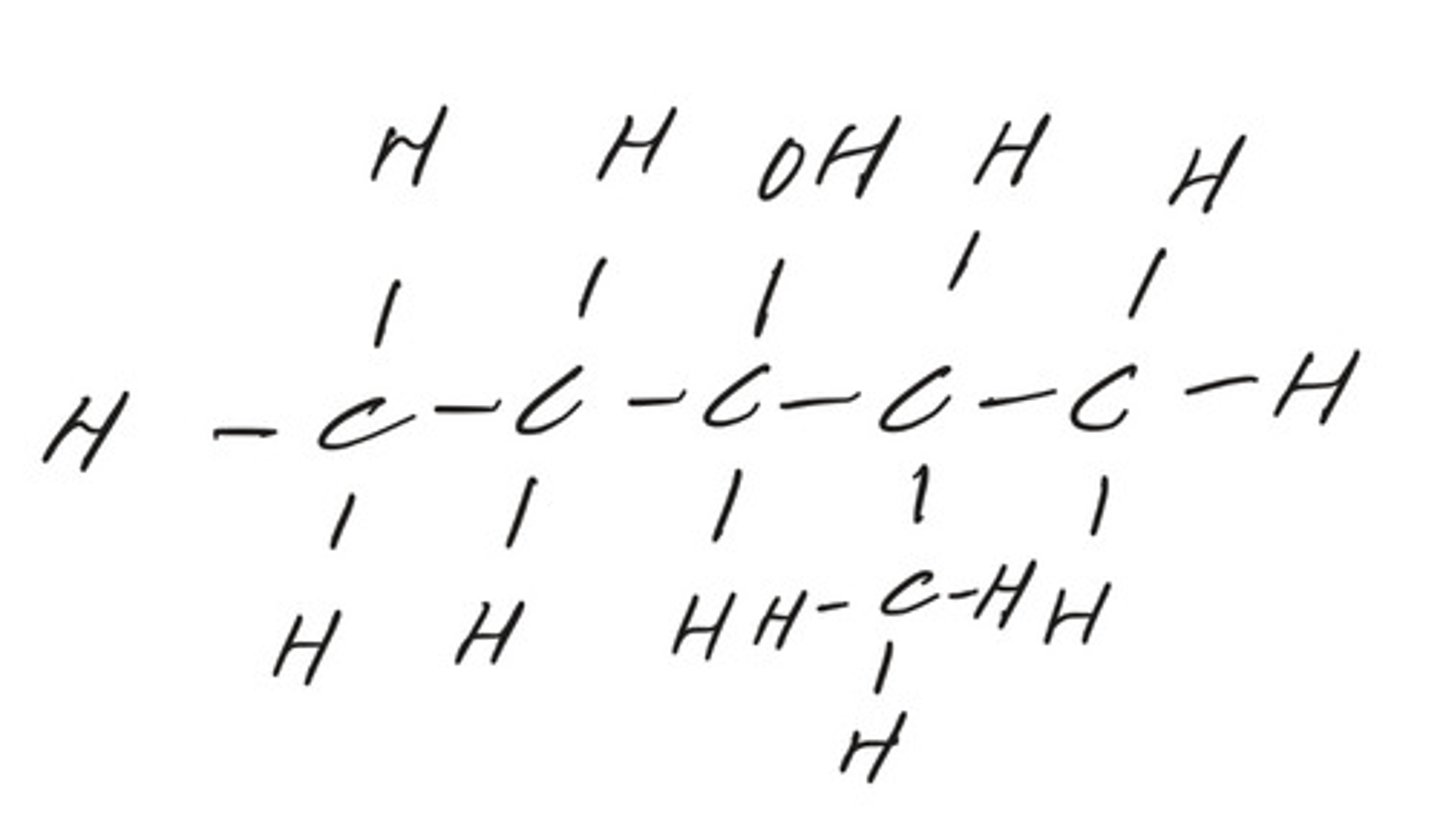
by considering the dipole on the O-H bond, predict the identity of the organic product that forms if water is added to a Gringard compound. (1)
describe the 2 step process in the reaction between Grignard reagents and carbon dioxide
1. addition of Grignard reagents to dry carbon dioxide below 0˚C in dry ether
2. product is hydrolysed in the presence of dilute sulphuric or hydrochloric acid
3. carboxylic acid is produced with 1 more carbon than original Grignard reagent (carbon length extended)
write 2 separate equations for the reaction between Grignard reagents and carbon dioxide
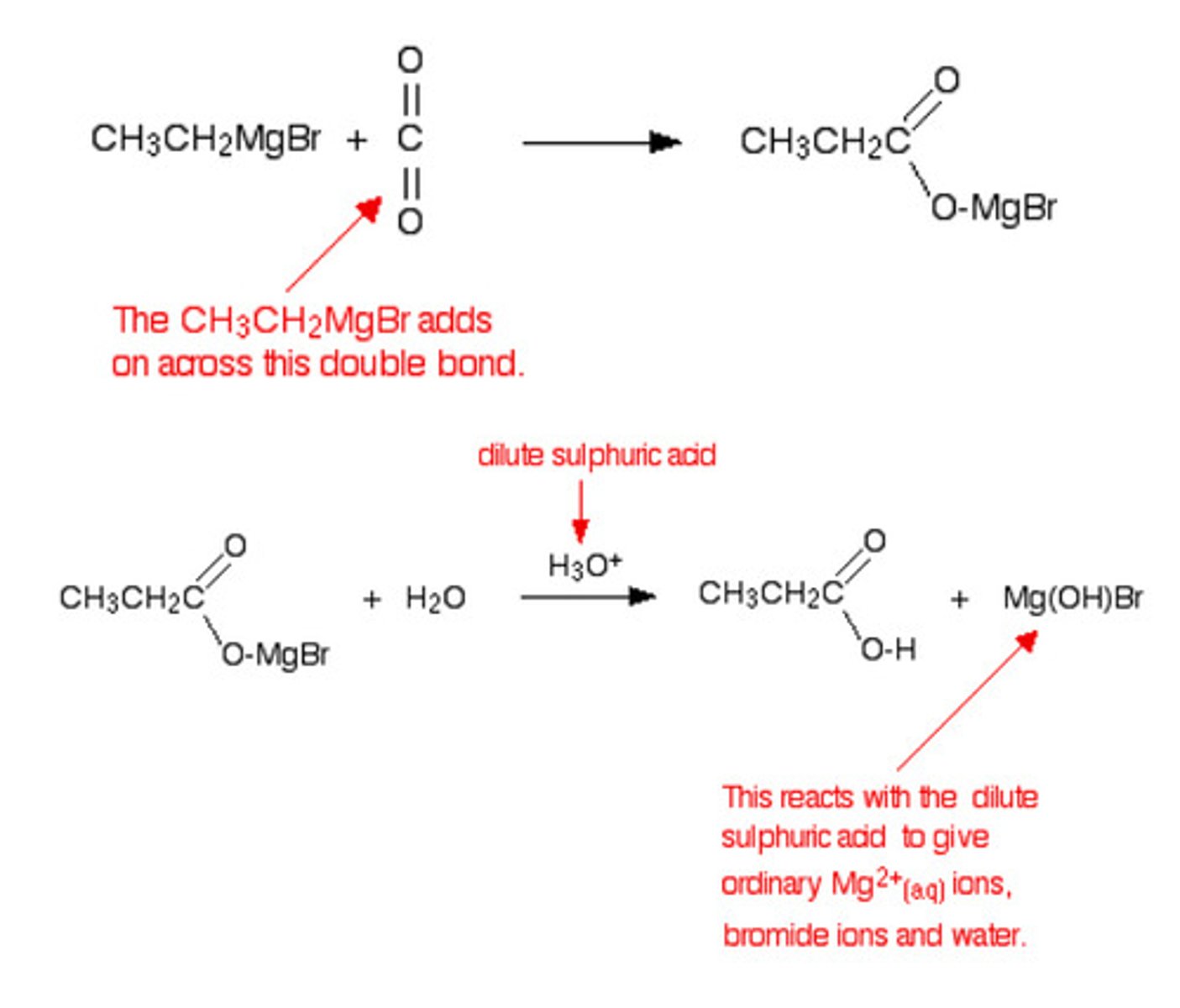
what is the product when Grignard reagents react with carbon dioxide?
carboxylic acid
describe the 2 step process in the reaction between Grignard reagents and carbonyl compounds
1. the Grignard reagent adds across the carbon-oxygen double bond
2. dilute acid is added to hydrolyse the product
3. a primary/secondary/tertiary alcohol is produced with 1 more carbon than original Grignard reagent (carbon length extended)
write 2 separate equations for the reaction between Grignard reagents and carbonyl compounds
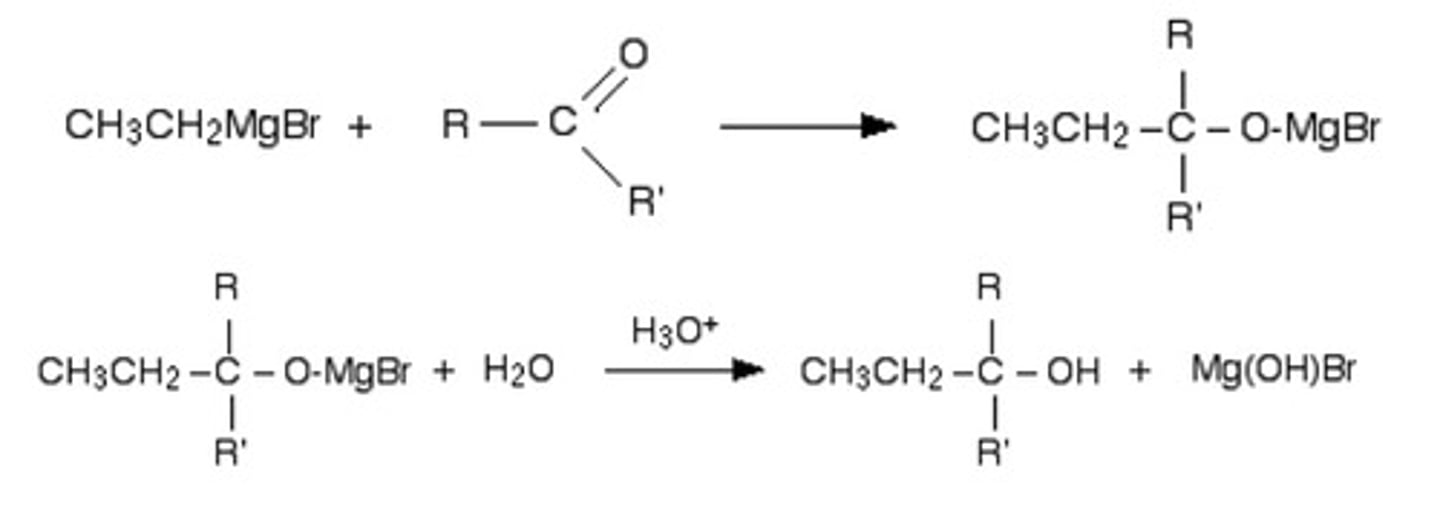
what is the product when Grignard reagents react with methanal?
primary OH
what is the product when Grignard reagents react with aldehyde (except methanal)?
secondary OH
what is the product when Grignard reagents react with ketone?
tertiary OH
explain why a Gringard reagent is classified as a reducing agent.
turning the carbonyl compound back into an alcohol (reduction)
Gringard reagents are used in organic synthesis as a way to increase the length of the carbon chain in a molecule.
draw the permanent dipole involving the central carbon atom in the Gringard reagent formed by the reaction between 2-bromiopropane and magnesium. (1)
- the central carbon atom is delta negative
- we can deduce this since Br is always electronegative so Mg must be delta positive
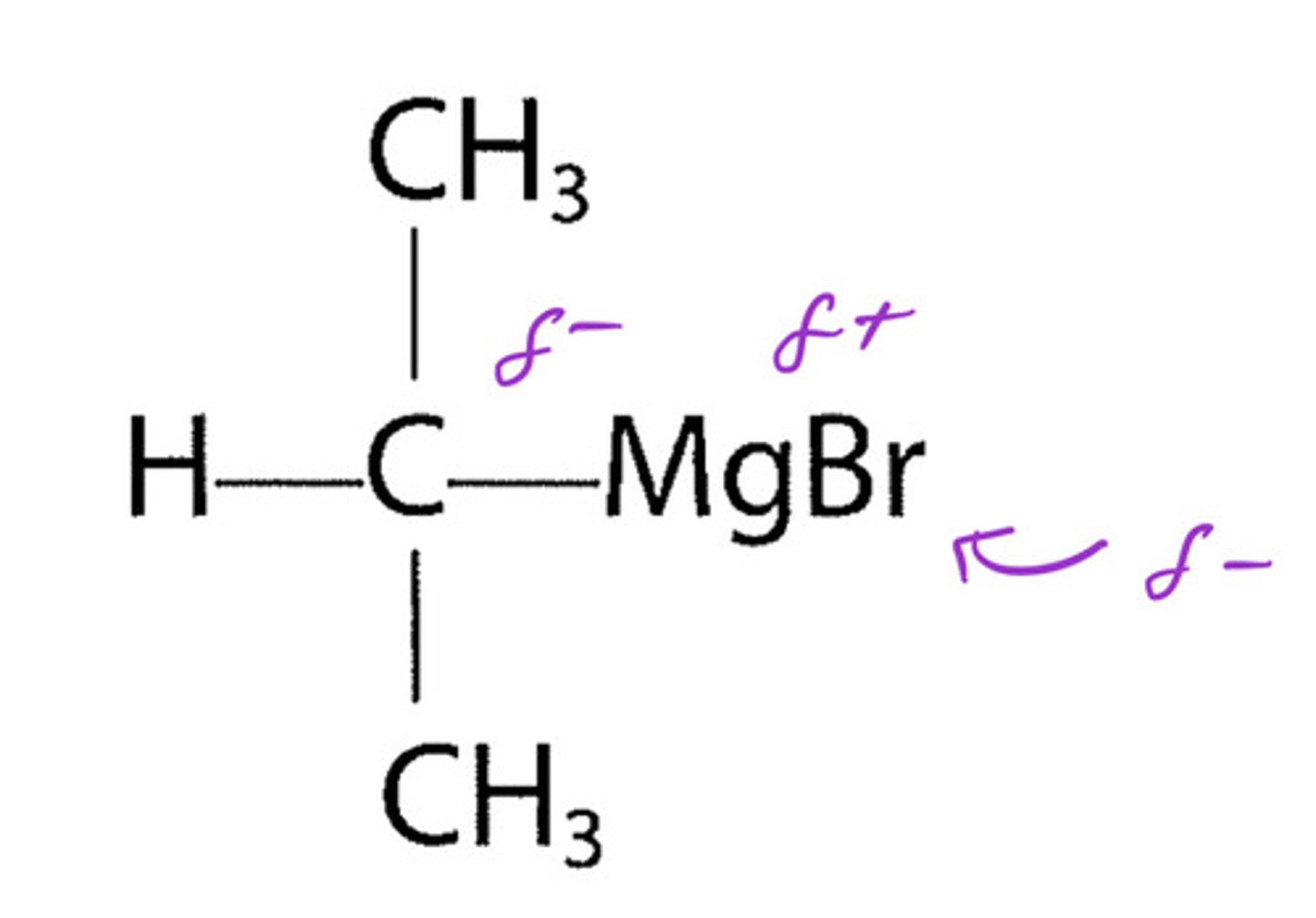
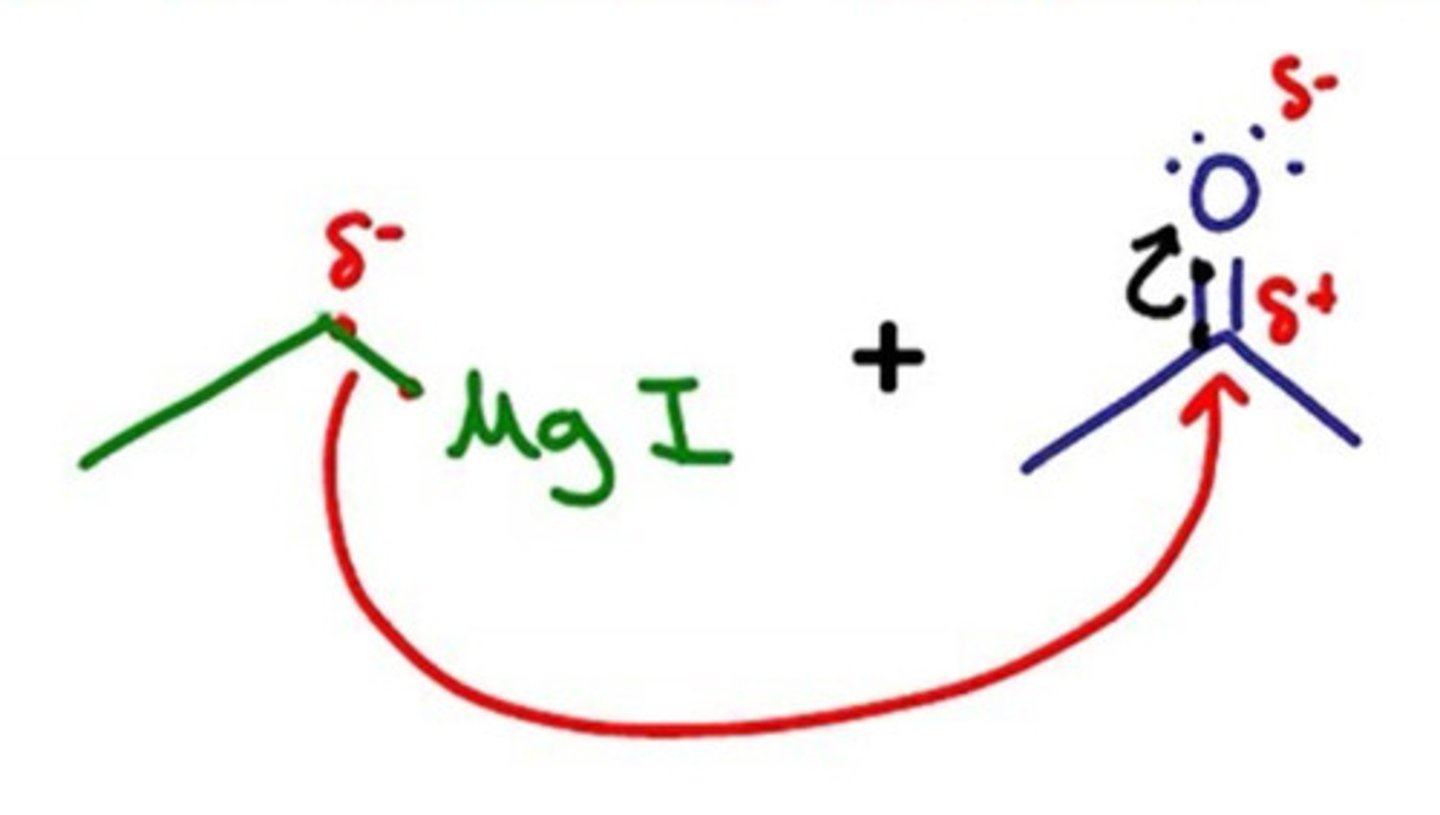
explain why a Gringard reagent is classified as a nucleophile.
the delta-negative central carbon atom on the Gringard reagent is attacking the delta-positive carbon atom that is bonded to an electronegative oxygen
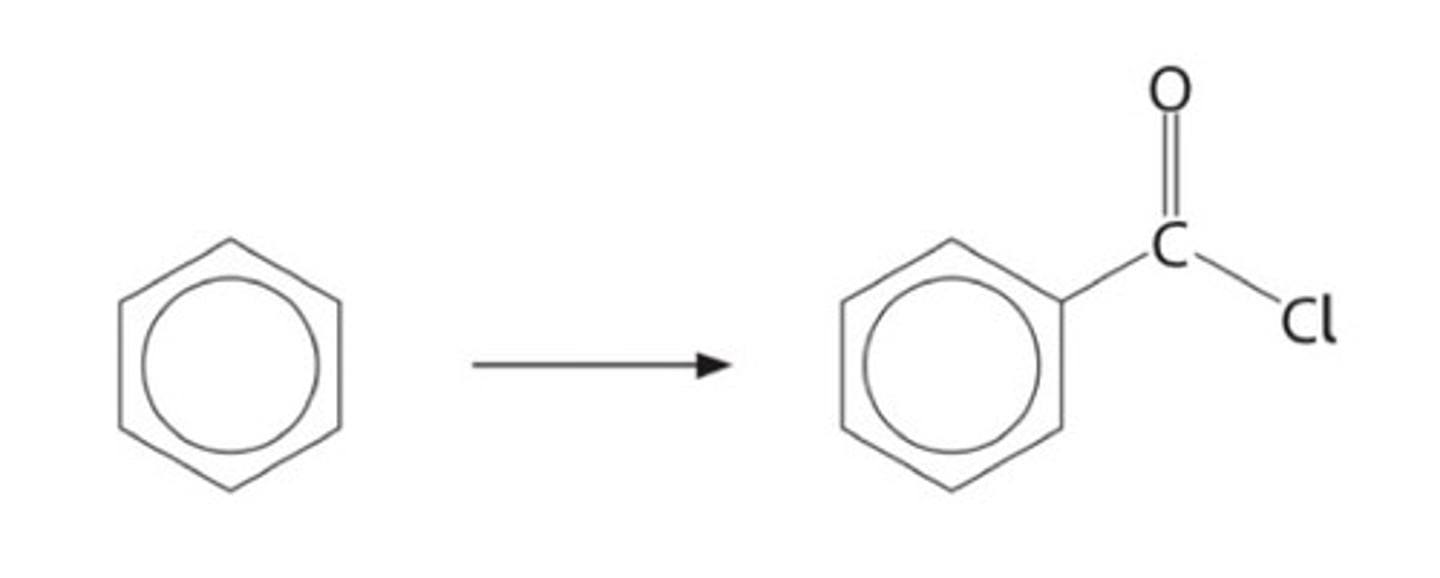
devise a 4 step synthesis, involving the use of a Grignard reagent, to convert benzene into benzoyl chloride. include reagents and conditions for each step in the synthesis. (7)
1. benzene → bromobenzene
bromine, FeBr₃ catalyst
2. bromobenzene → phenylmagnesium bromide
Mg, dry ether
3. phenylmagnesium bromide → benzoic acid
CO₂ and dilute HCl
4. benzoic acid → benzoyl chloride
PCl₅