geo final
 Call Kai
 Learn
Learn Practice Test
 Spaced Repetition
 Match
Match Flashcards
 Knowt Play
1/70

There's no tags or description
Looks like no tags are added yet.
Name | Mastery | Learn | Test | Matching | Spaced | Call with Kai |
|---|
No analytics yet
Send a link to your students to track their progress
71 Terms
makes up 75 percent of planets volcanoes. Pacific ocean
ring of fire
Types of volcanoes: 4
Shield, Lava domes, composite volcanoes, Cinder Cones
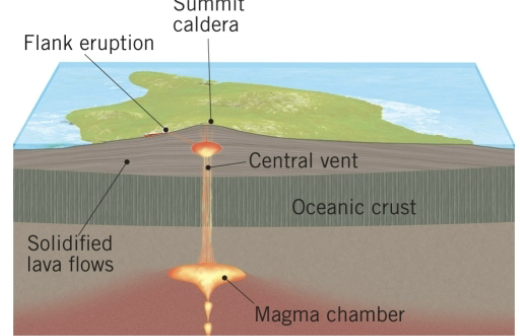
Basaltic lava flows easily over surface,
forming a broad, low-lying shield
volcanoes, built layer upon layer with
little pyroclastic material.
Some ____ are massive, very high,
and never steep.
shield
Emit intermediate lavas, tend to erupt
explosively, develop into symmetrical, steep-
sided composite volcanoes or
stratovolcanoes.
These mountains build up steep sides by
layers of explosive eruptions of pyroclastics
(ash and cinders) alternating with lava flows
of nonexplosive eruptions
Pyroclastics produce steep slopes, and lava
flows solidify all together
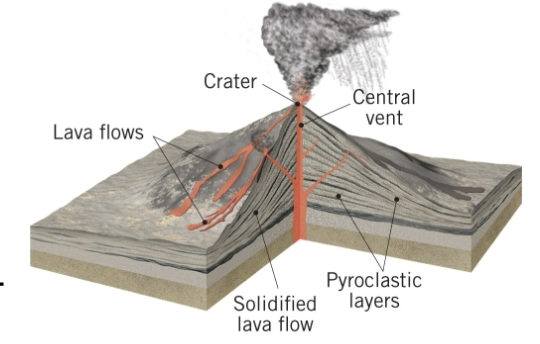
composite
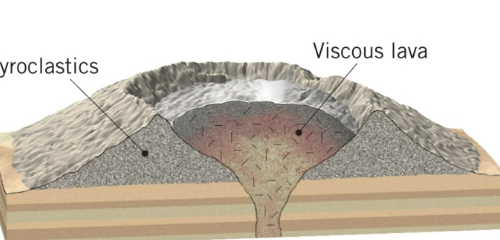
lava domes
lava ___, have masses of
very viscous lava, too thick to flow far
Lava bulges up from the vent, a ____grows
by expansion from below and within
Usually small.
may also develop within craters of composite
volcanoes as viscous lava moves up into vent
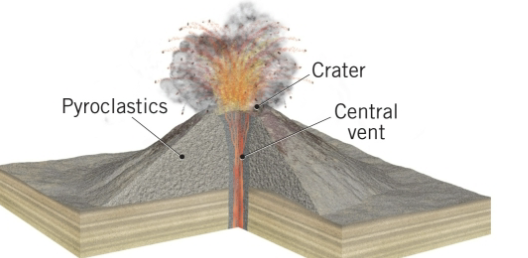
smallest of volcanic peaks
magma chemistry varies, but basaltic magma
is most common
____-shaped peaks built by unconsolidated
pyroclastics ejected from volcanic vent
size of ejected particles determines
steepness of slope
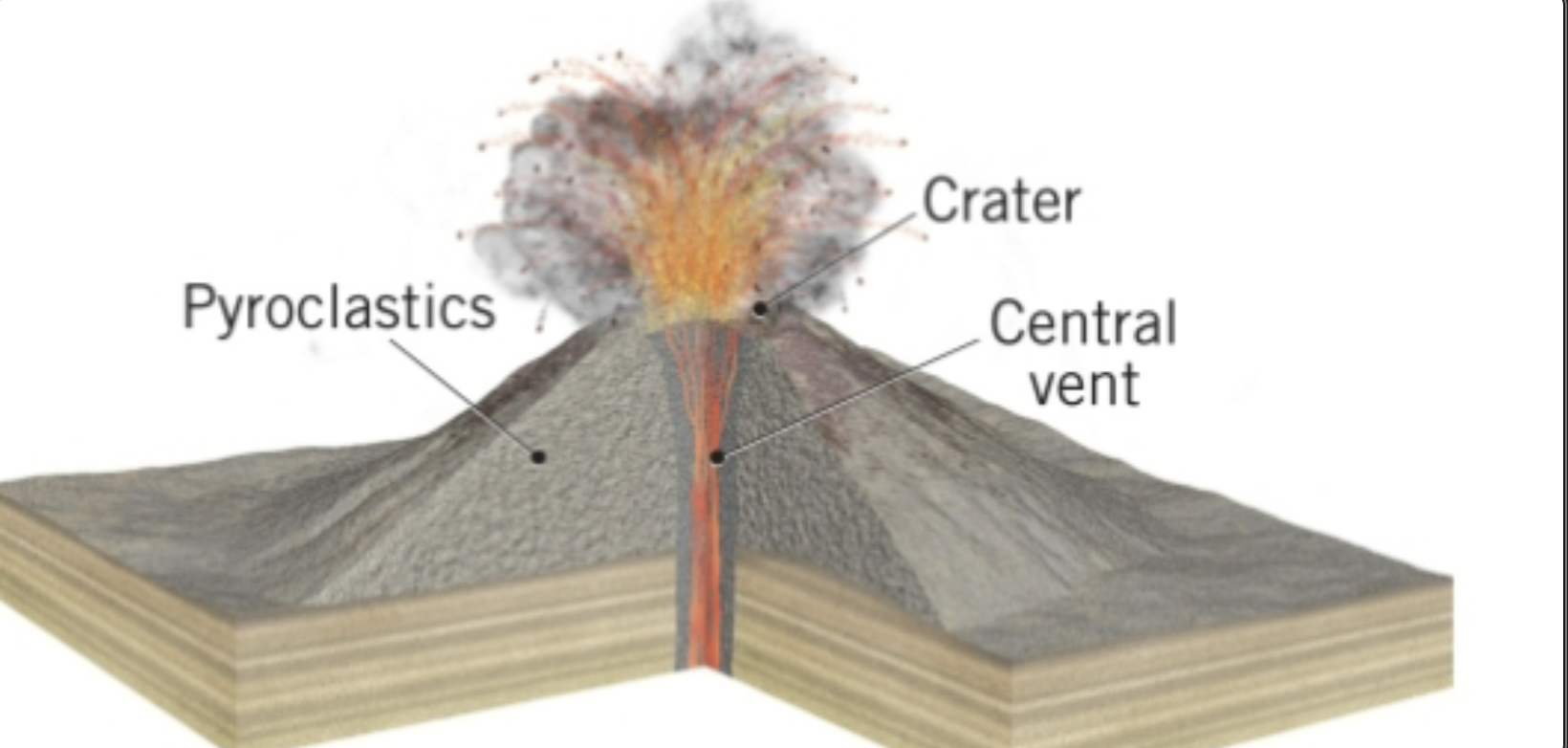
cinder cone
Volcanic Hazards
All materials ejected from a volcano -
pyroclastic materials.
(Ash, Acid Rain, Lava flows, Volcanic gases)
Intrusive Igneous Features
Batholiths
Volcanic Necks
Laccoliths
Sills
Dikes
Veins
subterranean igneous body of
enormous size may be made of
dozens of plutons.
Uplifted and exposed_____
form core of many mountain
ranges
batholiths
Remnants of the pipe of old
volcano filled with solidified lava
volcanic nexk
Develop when viscous magma is
forced between horizontal layers of
preexisting rock, forming
mushroom-shaped mass that
domes overlying strata.
laccoliths
Long, thin, and intrusive body forms
when magma cools between strata,
results in horizontal igneous sheet
between sedimentary layers
sills
a widespread form, ____ form from
intrusion of vertical and near-vertical
sheet of magma in preexisting rock
very narrow and usually quite resistant
to erosion
dikes
Commonly form
when hydrothermal
fluids are forced into
small fractures in
preexisting rocks.
veins
is a one-sided fold,
mono cline
A simple symmetrical upfold is
an
anticline
and simple
downfold is a
syncline
overfold
if upfold pushed greatly, may
become an
Upfolded anticlines create
ridges
and
downfolded synclines form
valleys
Tension cracks can quicken
erosion
where
________ can increase resistance
Compression
When a rock structure is broken
and one side is forcibly displaced
relative to other, the action is
faulting
displacement can be vertical,
horizontal, or
both
____ faults result from tension
stress or pulling apart in crust and
produces steeply inclined fault zone
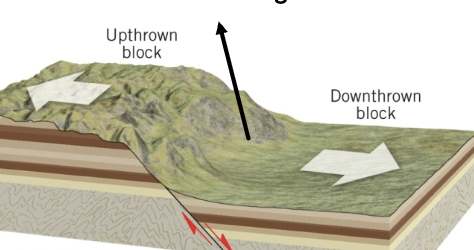
normal faults
____ faults result from
compression stress, one block
slides up fault plane
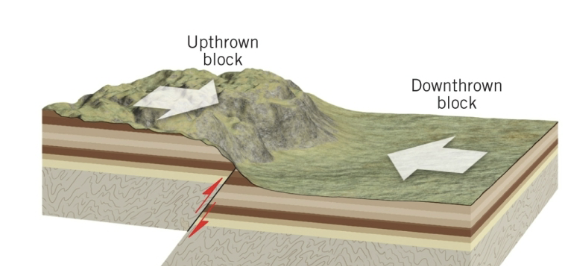
reverse faults
______faults or _____thrust faults
related to reverse faults and
compression forces upthrown block
at a relatively low angle
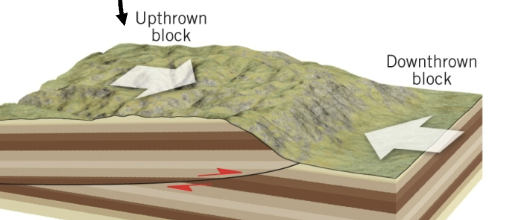
thrust faults or overthrust faults
faults
movement is horizontal,
nearby blocks displaced
laterally, result from
shear stresses
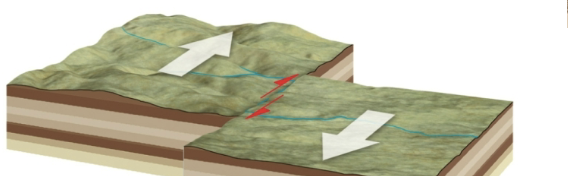
strike slip faults
Ground Shaking: ___of the damage from an earthquake is a
direct or an indirect consequence of ground
shaking.
most
Liquefaction,
loose or water-saturated
sediment moves as fluid
Denudation
is the processes that wear-down the
landscape. It is accomplished by Interaction of
three types of activities
Weathering
is breaking-down of rock into
smaller pieces
involves relatively short-distance
downslope movement of broken rock material
under influence of gravity
mass wasting
erosion
is removal, transport, and deposition of
fragmented rock material over wider areas and
often greater distances
are cracks that result from stress,
rocks do not show noticeable displacement
along breaks but are among most important
of all in facilitating weathering
Rock opening: Joints
are breaks in bedrock along which
there has been forced displacement of the
rock structure
faults
are holes of various
sizes that develop in cooling lava when
gas is unable to escape as it solidifies
lava vesicles
are holes formed in
carbonate rocks as soluble minerals are
dissolved, carried away by percolating
water
solution cavities
Salt Wedging
Saline solutions enter the cracks in a
rock and evaporate, leaving behind
salt crystals
Curved layers peel off of bedrock.
when the cracks develop parallel to
the land surface
reduction in pressure takes place
during uplift and erosion.
Exfoliation
___ is a form of chemical weathering,
specifically an oxidation process.
Rusting
Simplest form is ____, or___, ____
pieces of rock downslope
Talus, pieces of unsorted, angular rock which
accumulates at the base of steep slopes
Particles are roughly sorted by size.
however, the dislodged rocks collect in
sloping, cone-shaped piles called talus
cones
fall
A land____ is any type of slope failure
involving instantaneous collapse of a
slope, movement along generally flat
sliding plane
Not need fluid flow
Could be activated from added weight
of rainfall or earthquakes
Slide
When a slope becomes
unstable as it absorbs water,
material flows downhill
range from rapid to gradual
and impelled by gravity
most common flow is an
earth____ where a portion of a
water-saturated slope moves a
limited distance downhill
Flow
___ erosion, the collision of raindrops
with the ground is strong enough to blast fine soil
particles upward and outward.
splash
____ erosion, water flows across the
surface as a thin s_____, transporting material
already loosened by ____ erosion.
sheet
rill or gully erosion:
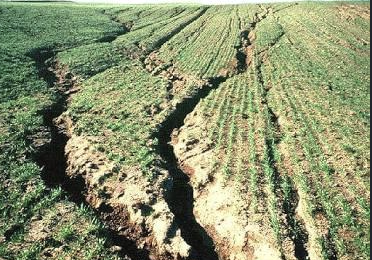
rill erosion
Rill or gully erosion:
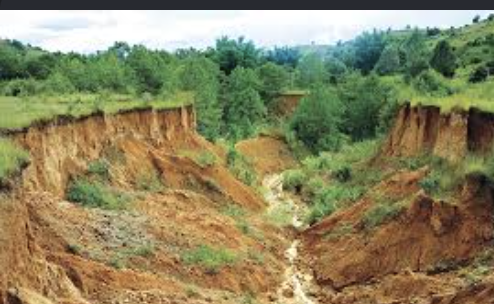
gully erosion
what is 3 and 4
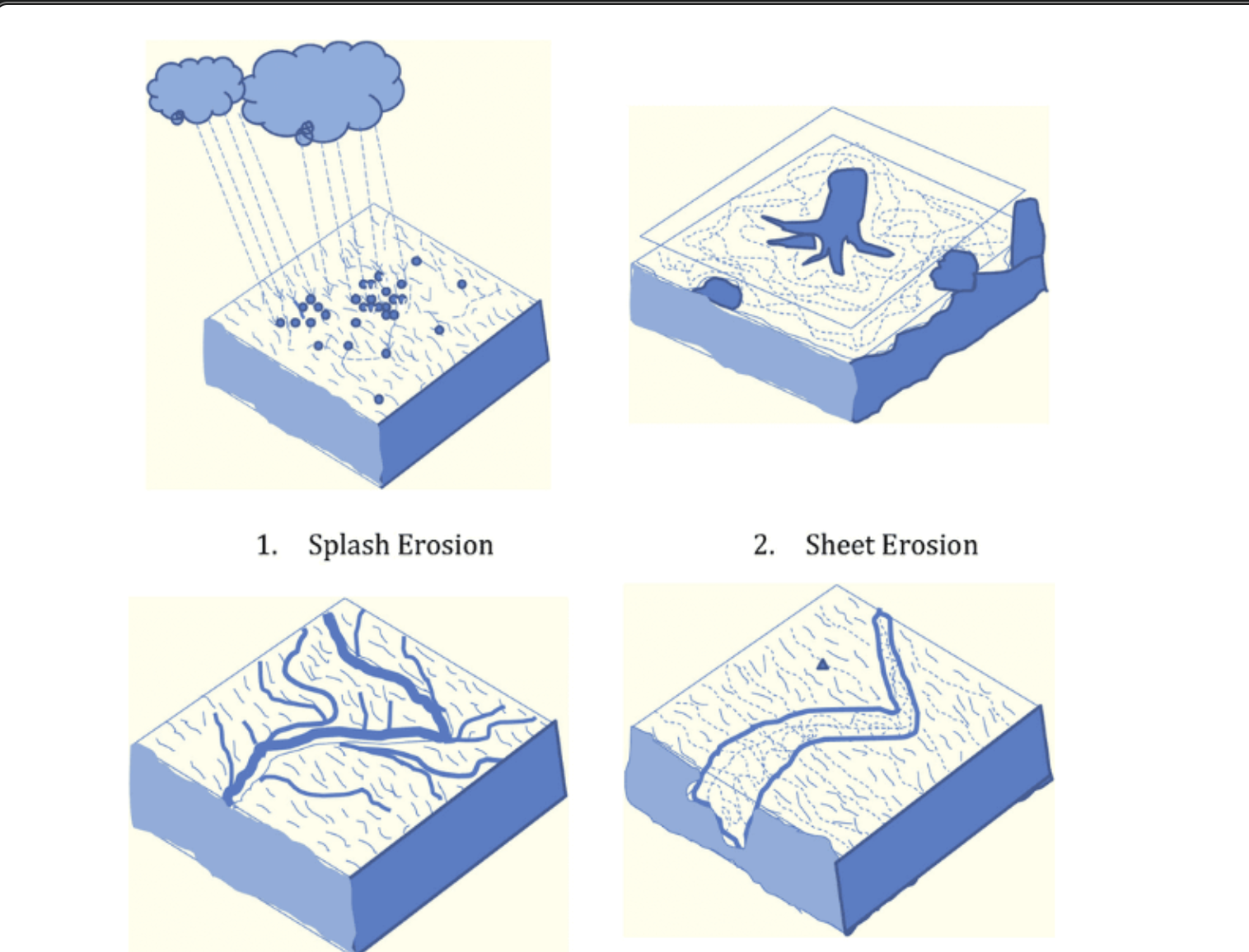
rill and gully
what is the top channel?
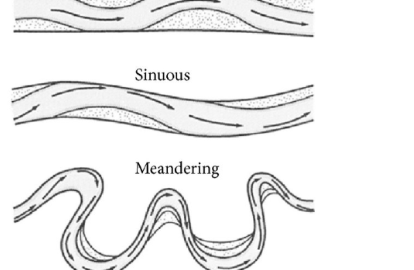
straight
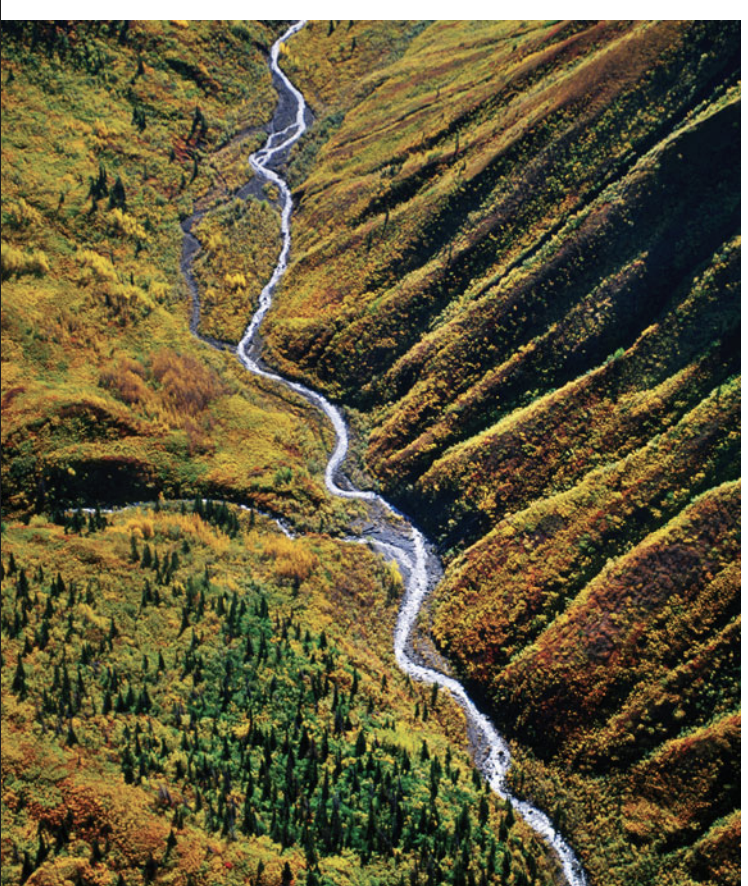
have winding
curvatures that are gentle and irregular.
sinuous
exhibit intricate
pattern of smooth curves
meandering
consist of multiple
interwoven channels separated by low
bars or islands of sand, gravel, or other
loose debris.
Generally near mountain fronts
braided chanels
Consequent stream: follows or disobeys initial slope of land?
follows initial slope.
Subsequent stream: follows or disobeys initial slope of land?
disobeys and exploits zones of structural weakness.
superimposed stream:
initial structure
controlling the drainage has been
eroded, no resemblance to current
surface structure.
which drainage pattern
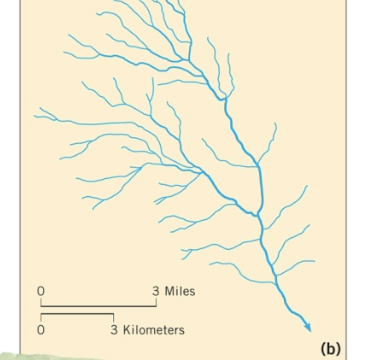
dendritic
which drainage pattern
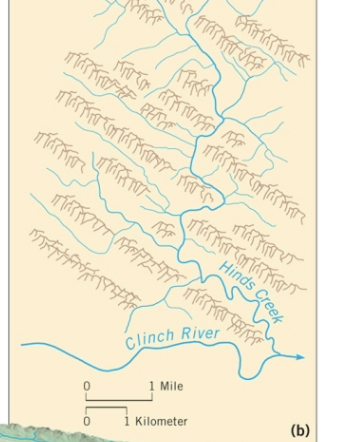
trellis
which drainage pattern:
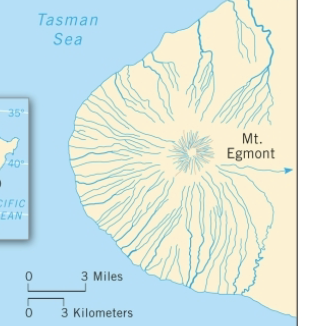
radial
which drainage pattern:
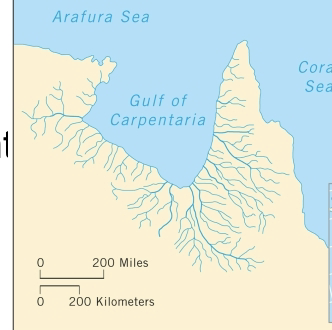
centripetal
which drainage pattern:
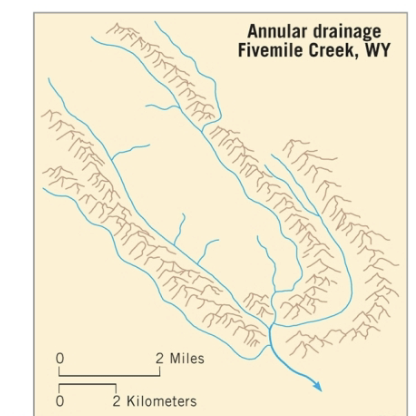
annular
a U-shaped or crescent-shaped body of water that forms when a wide meander (curve) from a river is cut off and isolated, typically in low-lying plains
oxbow lake
a natural fluvial process where a river shortens its course by breaching the narrow neck of a horseshoe-shaped bend ), creating a new, direct channel
cutoff meander
a steep, nearly vertical bank formed by erosion on the outside bend of a meandering stream, where water flows fastestc
cutbanks
As a wave reaches shallow water it becomes a wave of ____,
with significant horizontal movement of surface water
frictional slows waves, which bunch together, wavelength decreases,
wave height increases.
As the wave gets higher and steeper, it tilts forward, then breaks as
white water surf, a breaker, or no crest at all.
translation
Stream Outflow
Streams are source of most sediment
deposited on shorelines
Coastal Sediment Transport
nearly all transport of sediment
along coastlines occurs by wave
action and local currents
longshore currents
beach drifting
-______ affect coastal topography the
most, as water and sediment move roughly
parallel to shoreline
typically reflects local wind direction
prominent transporters of sand
longshore currents
_____shifting of sand directly onshore
by breaking and retreating waves
short distance
____ movement of sediment with wave action,
as waves break onshore at an angle
zigzag
_____flattish, wave-deposited
sediment platforms
Berm