quiz 1: chapter 3 - adolescent development
 Call Kai
 Learn
Learn Practice Test
 Spaced Repetition
 Match
Match Flashcards
 Knowt Play
1/13

There's no tags or description
Looks like no tags are added yet.
Name | Mastery | Learn | Test | Matching | Spaced | Call with Kai |
|---|
No analytics yet
Send a link to your students to track their progress
14 Terms
A New Burst of Growth
By age __, the brain is already 95% of its adult size.
↪ However, when it comes to brain development, __ is not everything.
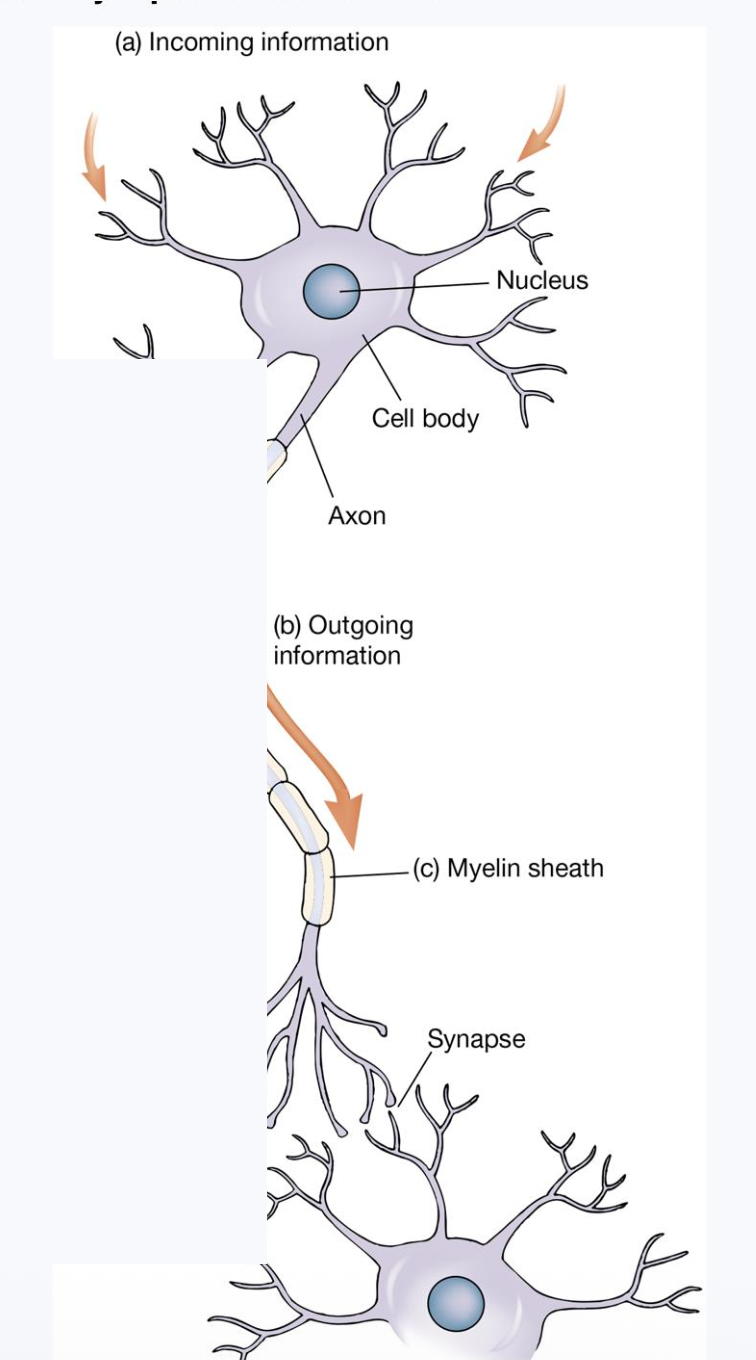
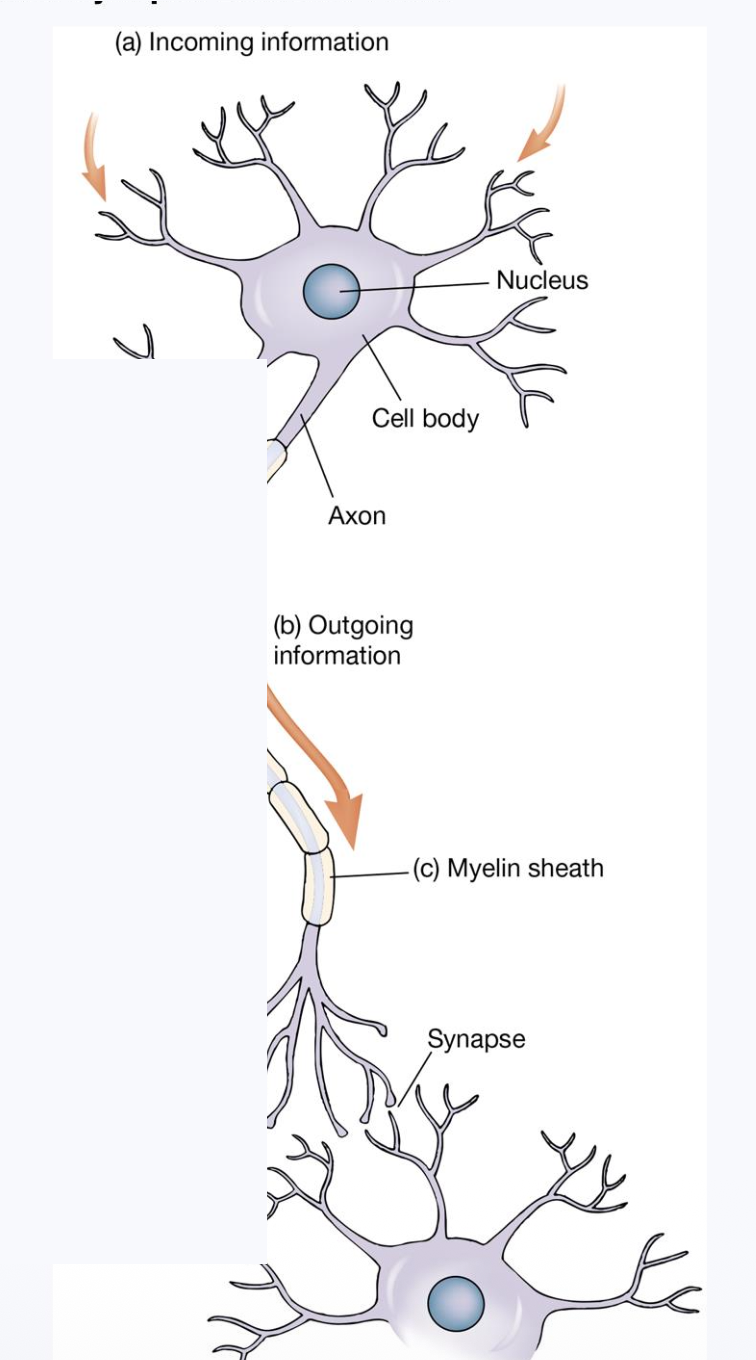
Equally if not more important are the connections or ? between the neurons (brain cells). See Figure.
Overproduction or exuberance: a considerable __ that occurs around the time puberty begins, ages 10–12.
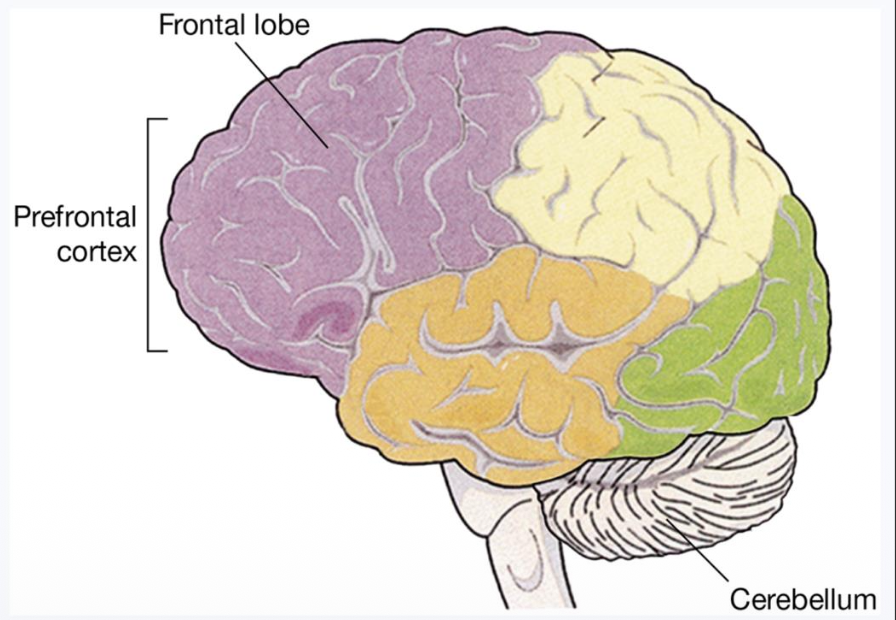
Overproduction of synaptic connections occurs in many parts of the __, its ?, but is especially concentrated in the ?, the part of the brain right behind your forehead.
↪ The __ lobes are involved in most of the higher functions of the brain, such as ?, solving ?, and making ? judgments.
6.
size.
synapses.
thickening of synaptic connections.
brain’s gray matter, outer layer, frontal lobes.
frontal. planning ahead, problems, moral.
A New Burst of Growth
Overproduction peaks at about age ? or ?, but obviously that is not when our cognitive abilities peak.
In the years that follow, a massive amount of __ takes place, in which the overproduction of synapses is whittled down considerably.
↪ Between the ages of 12 and 20, the average brain loses __ through ?.
↪ “? it or lose it!”
Synaptic pruning allows the brain to work more efficiently, as __ become more ?.
11 or 12.
synaptic pruning.
7% to 10% of its gray matter. synaptic pruning.
Use.
brain pathways. specialized.
Further Myelination and New Growth in the Cerebellum
__ leads to better executive functioning over the course of adolescence.
Executive functioning: the ability to solve __ without becoming distracted and to adjust one’s ? as the nature of a problem changes.
↪ Executive functioning rises/declines steadily in the course of adolescence and peaks in __.
? continues to grow through adolescence and well into emerging adulthood.
It is the last structure of the brain to stop growing, not completing its phase of overproduction and pruning until the __, even after the frontal lobes.
Myelination.
cognitive problems. strategy.
rises. emerging adulthood.
Cerebellum.
mid-20s.
Changes in Gray and White Matter in Emerging Adulthood
__ adulthood is a time of changes in brain development.
Gray matter: composed of ?
White matter: consists of ? and ?.
Studies analyzing brain content have found that gray/white matter decreases and gray/white matter increases through the 20s and into the 30s.
These changes in the balance of gray matter and white matter are reflected in greater processing speed, timing, and efficiency of __ during the emerging adult years.
Emerging.
brain cells.
myelinated axons and other connections between brain cells.
gray. white.
brain functioning.
Changes in Gray and White Matter in Emerging Adulthood
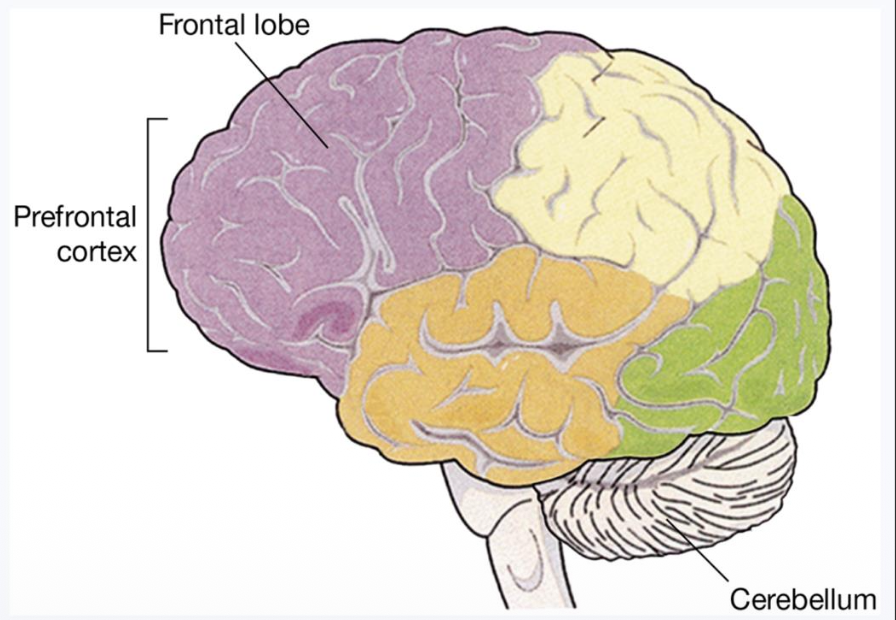
There are crucial new connections created between ? and ?.
These new connections indicate __ during emerging adulthood.
There are also new connections between different parts of the cortex, and these connections promote the ability to __ in support of reasoning, planning, and decision making.
Changes in brain development during emerging adulthood mostly seem to indicate the continued __, making possible the development of more advanced ?.
a part of the frontal lobe called the prefrontal cortex and parts of the lower brain that are involved in emotion and motivation.
growing emotional self-control.
integrate multiple sources of information.
maturation of the brain. cognitive functioning.
Changes in Gray and White Matter in Emerging Adulthood
There is growing evidence that __ during emerging adulthood is implicated in the development of schizophrenia, anxiety, and depression.
There may be an interaction with the ?, in the sense that too-rapid synaptic pruning may heighten sensitivity to __ and make the individual vulnerable to ?.
__: the interaction between the maturation of the brain and the environment.
↪ Brain development is also impacted by the ?.
This will be an important area of research to watch in years to come because it holds the potential to identify the emergence of these ? and perhaps prevent their development!
unusually rapid synaptic pruning of the gray matter.
environment. stress. mental disorders.
Neurodevelopmental plasticity.
environment.
mental health disorders.
Basic Principles of Piaget’s Theory
Hallmark of Piaget’s theory is that __.
Cognitive development proceeds in distinct ? and each stage involves a different way of __.
Cognitive stages means that each person’s cognitive abilities are __; a person who thinks within a particular stage in one aspect of life should think within that stage in all ? as well because all thinking is part of the same mental structure.
Because Piaget focused on how ?, his approach is known as the __.
The driving force behind development from one stage to the next is ?.
cognitive development is not about how much you know, but the way you think.
stages. thinking about the world.
organized into a coherent mental structure. other aspects of life.
cognition changes with age. cognitive-developmental approach.
maturation.