Jay Martin Theology Final
 Call Kai
 Learn
Learn Practice Test
 Spaced Repetition
 Match
Match Flashcards
 Knowt Play
1/45

There's no tags or description
Looks like no tags are added yet.
Name | Mastery | Learn | Test | Matching | Spaced | Call with Kai |
|---|
No analytics yet
Send a link to your students to track their progress
46 Terms
Four-Source Hypothesis
Literary-Historical criticism and redaction criticism
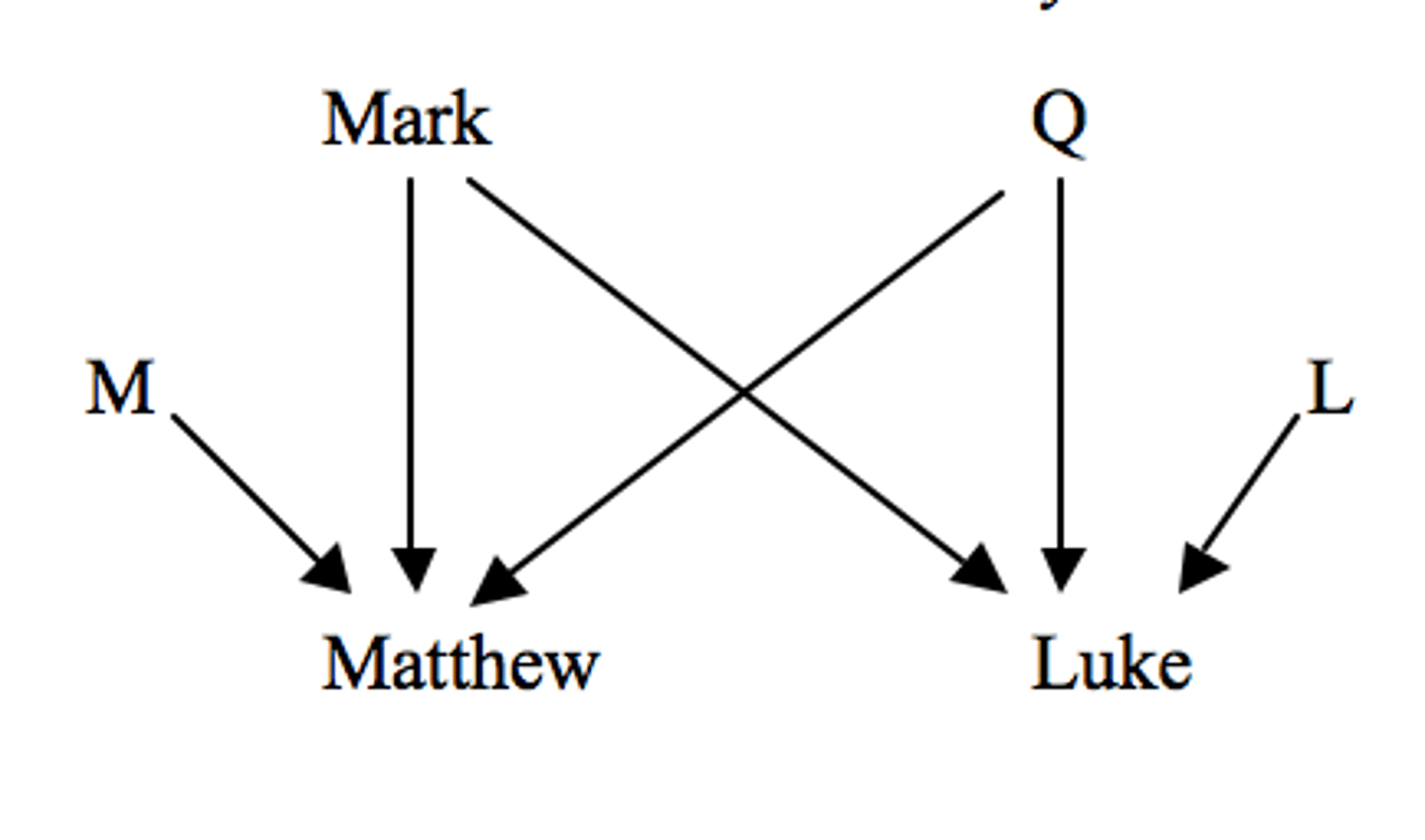
Four-Source Hypothesis (Arguments for Markan Priority)
1. Patterns of agreement
2. The Sequence of Narrative
3. Characteristics of the Changes
4. The Q source
5. The M and L Sources
The Methodological Significance of the Four-Source Hypothesis
from the insights gained by literary-historical and redaction criticism, we can understand how the synoptic gospel writers altered their source material; "we can assume that his changes tell us something about his own theology or interests" (Ehrman)
The Synoptic Problem
"The problem of how to explain the wide-ranging agreements and disagreements among these three Gospels" (Ehrman)
Synoptic v. Johannine Gospels
...
Meaning of Synoptic
synoptic - "seen together"
Arguments for Markan Priority
-
Mysteries of the Rosary
Joyful
Luminous
Sorrowful
Glorious
Joyful Mysteries
Annunciation
Visitation of Mary
Nativity
Presentation of Jesus at the Temple
Finding Jesus at the Temple
Main Outline of the Life of Jesus (according to Mark)
1. Prologue: Events preceding the ministry of Jesus
2. The early stages of the Galilean ministry.
3. The later stages of the Galilean ministry.
4. The ministry outside Galilee.
5. The journey to Jerusalem.
6. The ministry in Jerusalem.
7. The death of Christ.
8. The resurrection.
9. Epilogue: The disputed ending.
Characteristic of Early Stages of Galilean ministry
Jesus healing many people, etc.
Characteristic of Later Stages of Galilean ministry.
problems with the religious leaders, the use of parables, etc.
Characteristic of Ministry outside Galilee
Jesus walks on water, etc.
Characteristic of Journey to Jerusalem
Jesus foretells his death (3 times)
Characteristic of Ministry in Jerusalem
Jesus is questioned, etc.
Characteristics of the Death of Christ
Last Supper, Peter's denial, Jesus' arrest, Crucifixion, Burial
Resurrection
...
Gospel of John --> date of composition
Gospel of John --> purpose of book
Gospel of John --> Johannine anonymity
Gospel of John --> Relation to synoptic gospels & exclusively Johannine material
Gospel of John --> prologue: 'word/logos'
Gospel of John --> Wedding at Cana
Gospel of John- "I AM" Statements (and OT references)
Gospel of John --> John on the Holy Spirit
The passion of the Lord
The Acts of the Apostles --> motto of the congregation of Holy Cross
Ave Crux, Spes Unica
The Acts of the Apostles --> title and authorship
Title: The Acts of the Apostles
Author: Luke
The Acts of the Apostles --> "Doing and teaching"
The range of Jesus's life and ministry
Luke, importance of Christ teaching, acting, and secondarily his identity which continues in apostolic ministry and community of the church in Acts
The Acts of the Apostles -->
....
St. Paul & the Epistles --> Identity, background of Paul
Born in Tarsus around AD 10 as a Roman citizen, originally named "Saul" prior to his conversion
Well-educated
Used to be Pharisee and a strictly observant Jewish party
Conversion around AD 34
Wrote some of earliest texts in the New Testament
Vital for developing Christian theology and vocab
St. Paul & the Epistles --> Status of Jews in the Roman Empire
Rome as religion haven, of a sort; religion pluralism in the service of the empire and subjugation to the civic cult
At least as early as Julius Caesar, Jews in Rome were granted certain protections and rights, especially judicial rights
The status of slavery
Claudius enacted a series of expulsions of Jews and Christians from Rome due to disorderly conduct likely resulting from clashes with Christians
Edict of claudius (extended jews rights)
Paul's assertion of citizenship
St. Paul & the Epistles --> audience
To these Jews and Christians that Paul is writing
St. Paul & the Epistles --> Theological themes of Romans
Human guilt
God's righteousness
Justification through Christ in faith
The hope of resurrection
St. Paul & the Epistles --> Theological themes of Philippians 2
Same mind as Christ Jesus
Kenosis: self-emptying
St. Paul & the Epistles -->
...
The Letter to the Hebrews
Genre: apocalyptic (revelation)
Date of composition: don't know when it was written
-Written between 81 & 96 CE - reign of Domitian or earlier
-OR 54-68 CE - persecutions of Christians by Nero
Authorship: text of revelation give the name of author as: "John"
John a prophet
The Letter to the Hebrews --> The retrieval and use of Melchizedek
Textual characteristics
The Letter to the Hebrews -->
...
"Revelation" v "Revelations"
FALSE
Book of Revelation Authorship
John the Evangelist
Reasons to think it's not him
-John identifies himself
Main editor: disciple of John
-People believe
Book of Revelation date and historical context of composition
81-96 CE(reign of Domitian) or possibly earlier, during the persecution of Christianity by Nero (54-68 CE)
Book of Revelation --> Apocalyptic as genre, resistance literature
Genre of revelatory literature with a narrative framework in which a revelation is mediated by an otherworldly being to human recipient, disclosing a transcendent reality which is both temporal, insofar as it... supernatural world
First century audience
Coded type of writing
Book of Revelation --> Logic and economy of imagery/symbols
Imagery:
secret/hidden books
Dualism in good/dark and evil/light
Presence of heavenly interpreter/angel
Drawn from Canaanite and Babylonian culture
History and its end (themes)
Book of Revelation --> Use of Hebrew prophets
Summary, synthesis, recapitulation of the whole of God's prophetic word
Book of Revelation --> ...