Cell Division
 Call Kai
 Learn
Learn Practice Test
 Spaced Repetition
 Match
Match Flashcards
 Knowt Play
1/96

There's no tags or description
Looks like no tags are added yet.
Name | Mastery | Learn | Test | Matching | Spaced | Call with Kai |
|---|
No analytics yet
Send a link to your students to track their progress
97 Terms
What are the two general steps in cell division?
1. karyokinesis (nuclear division)
2. cytokinesis
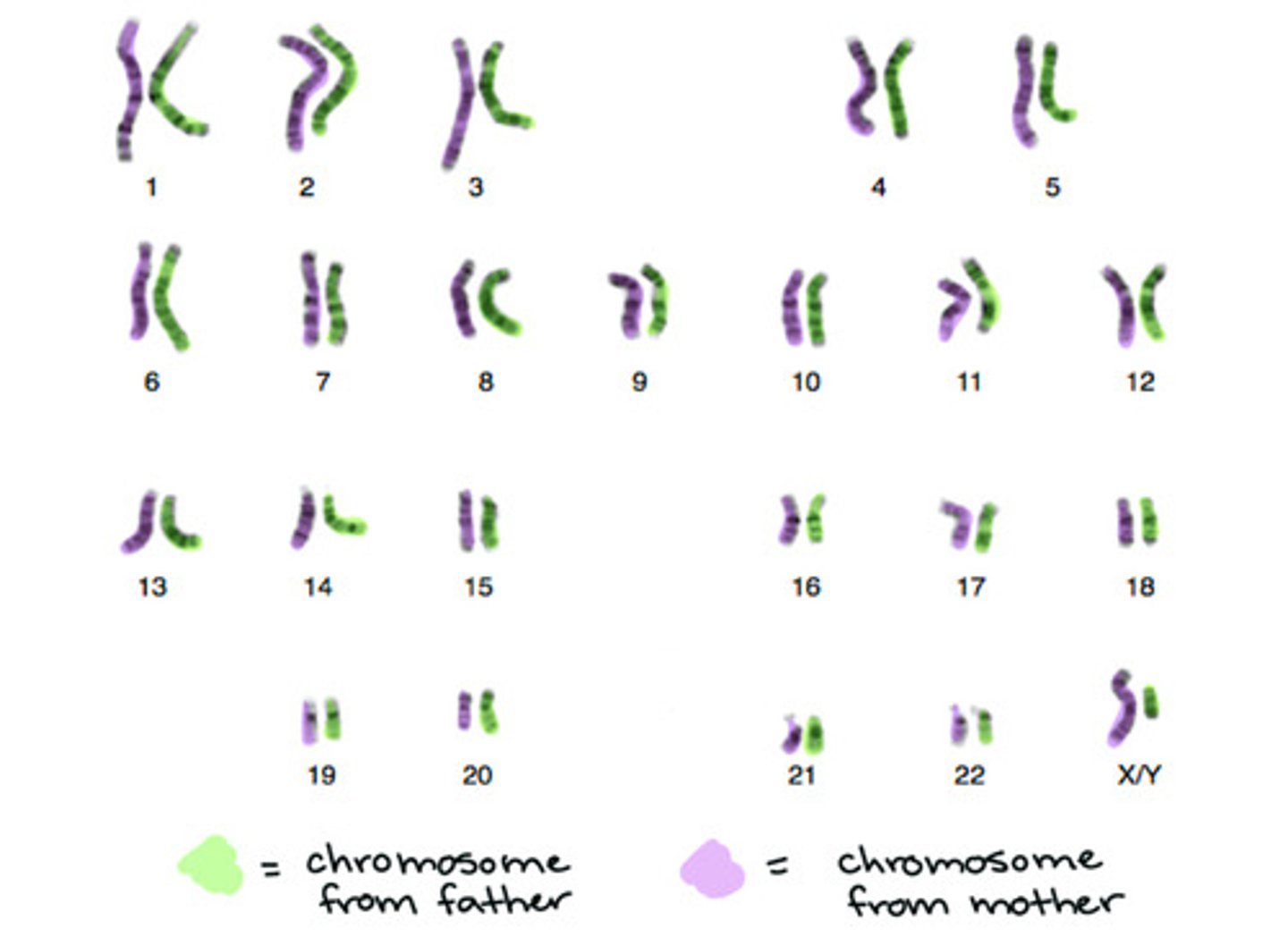
How many copies of each chromosome are there in diploid cells?
2
(Note: pairs of
homologous chromosomes)
How many total chromosomes do humans possess in somatic cells?
46
(Note: 23 homologous pairs)
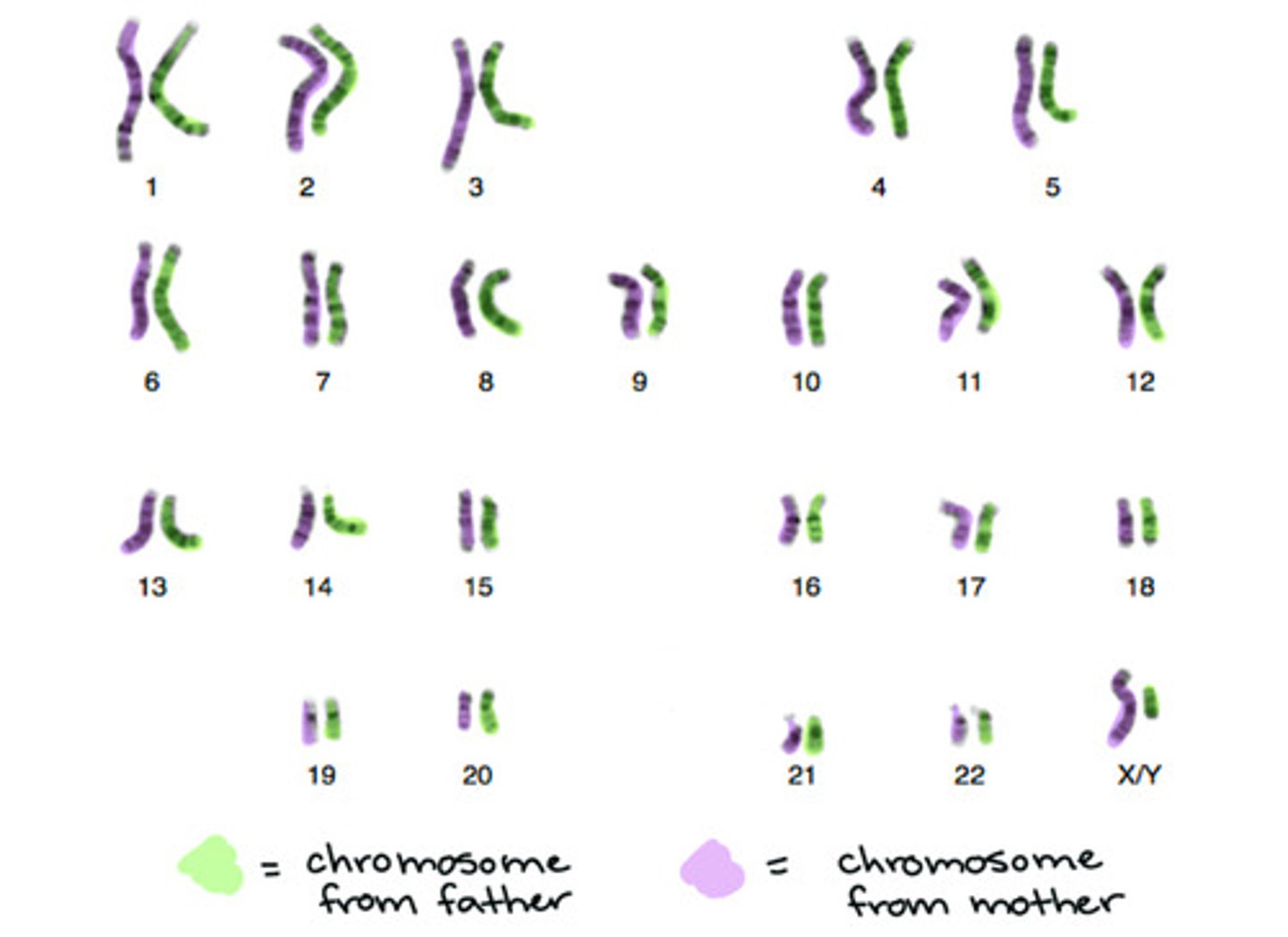
How many homologous pairs do humans possess?
23
How many chromatids do humans possess?
92
(Note: total chromosomes x 2)
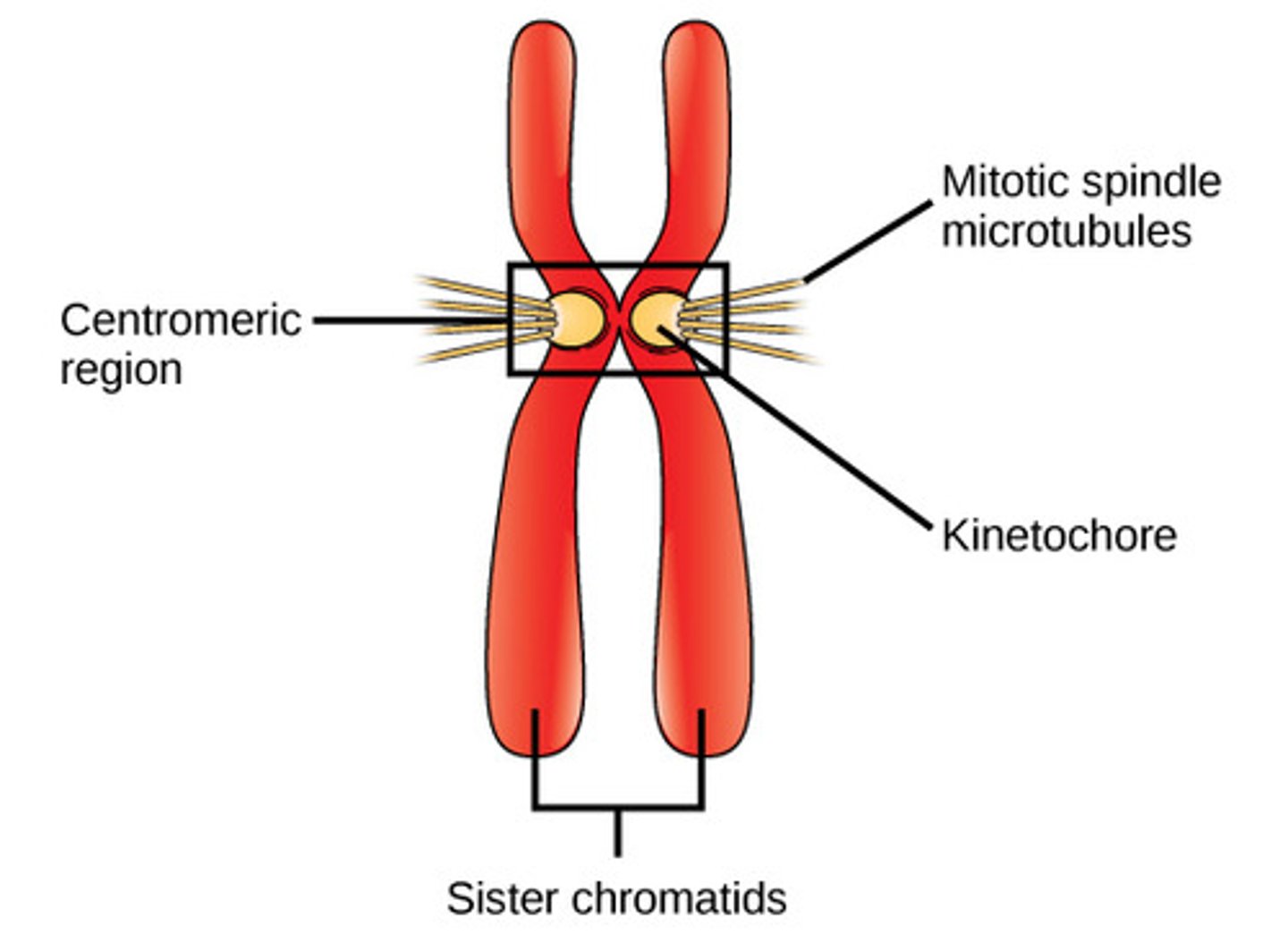
What cell division do all body cells, or somatic cells undergo?
mitosis
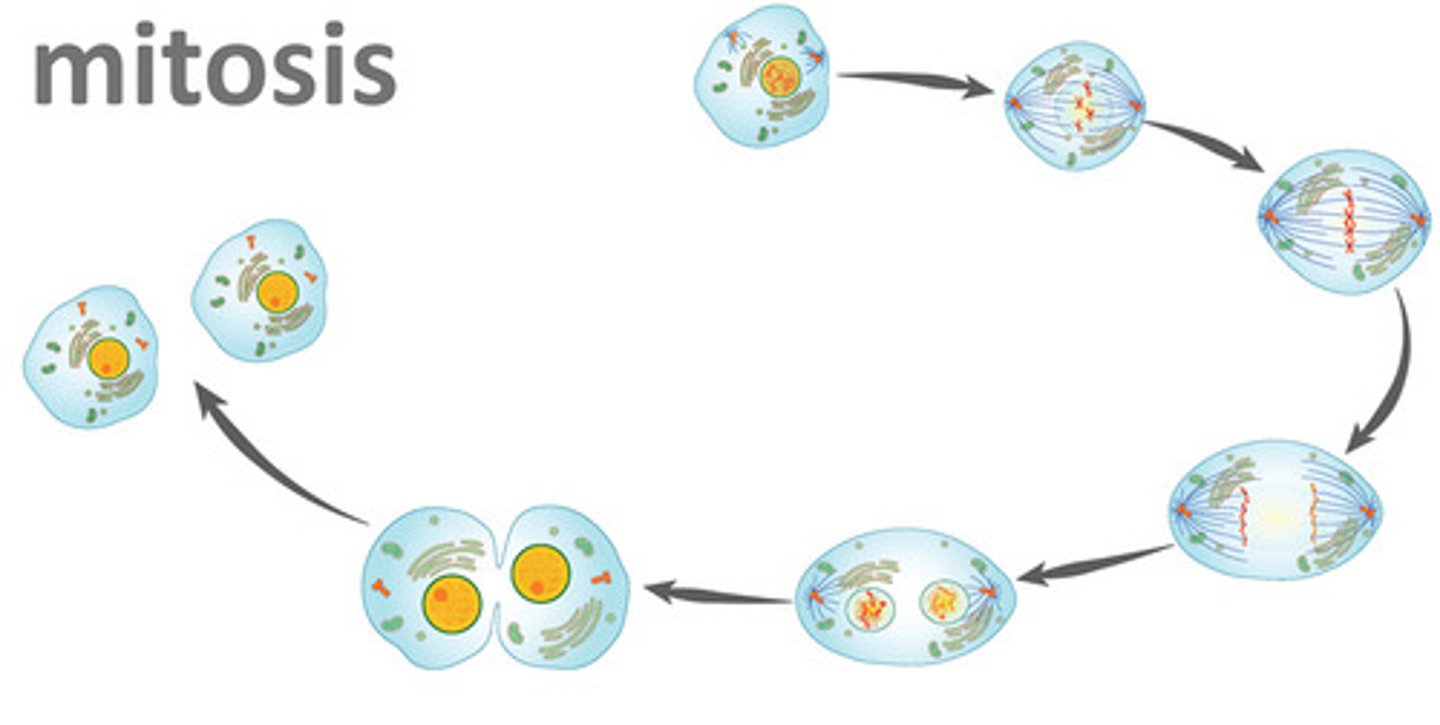
Which structures play a large part in cell division by orienting genetic material?
microtubule organizing
centers (MTOCs)
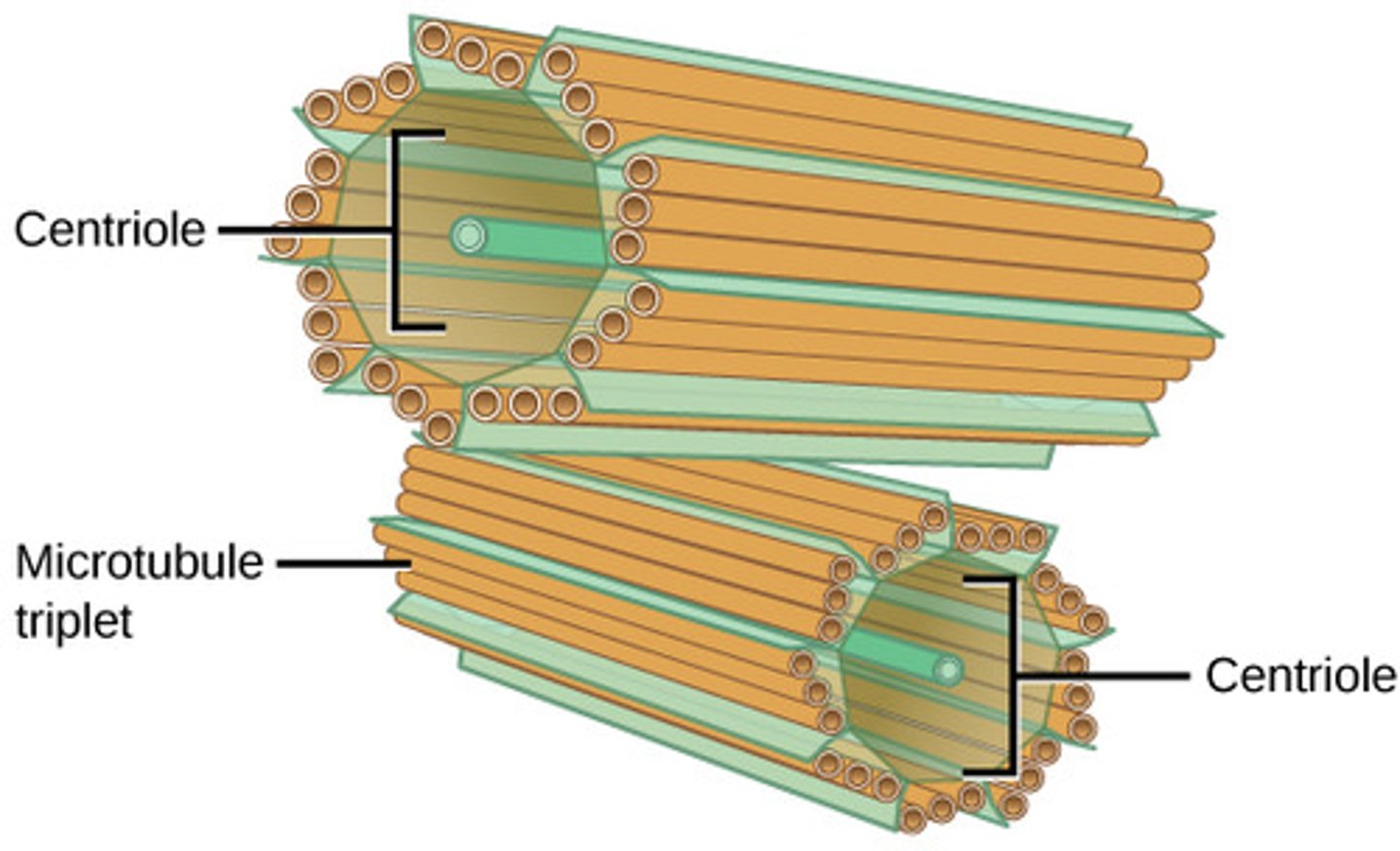
Each MTOC contains a pair of ____________.
centrioles
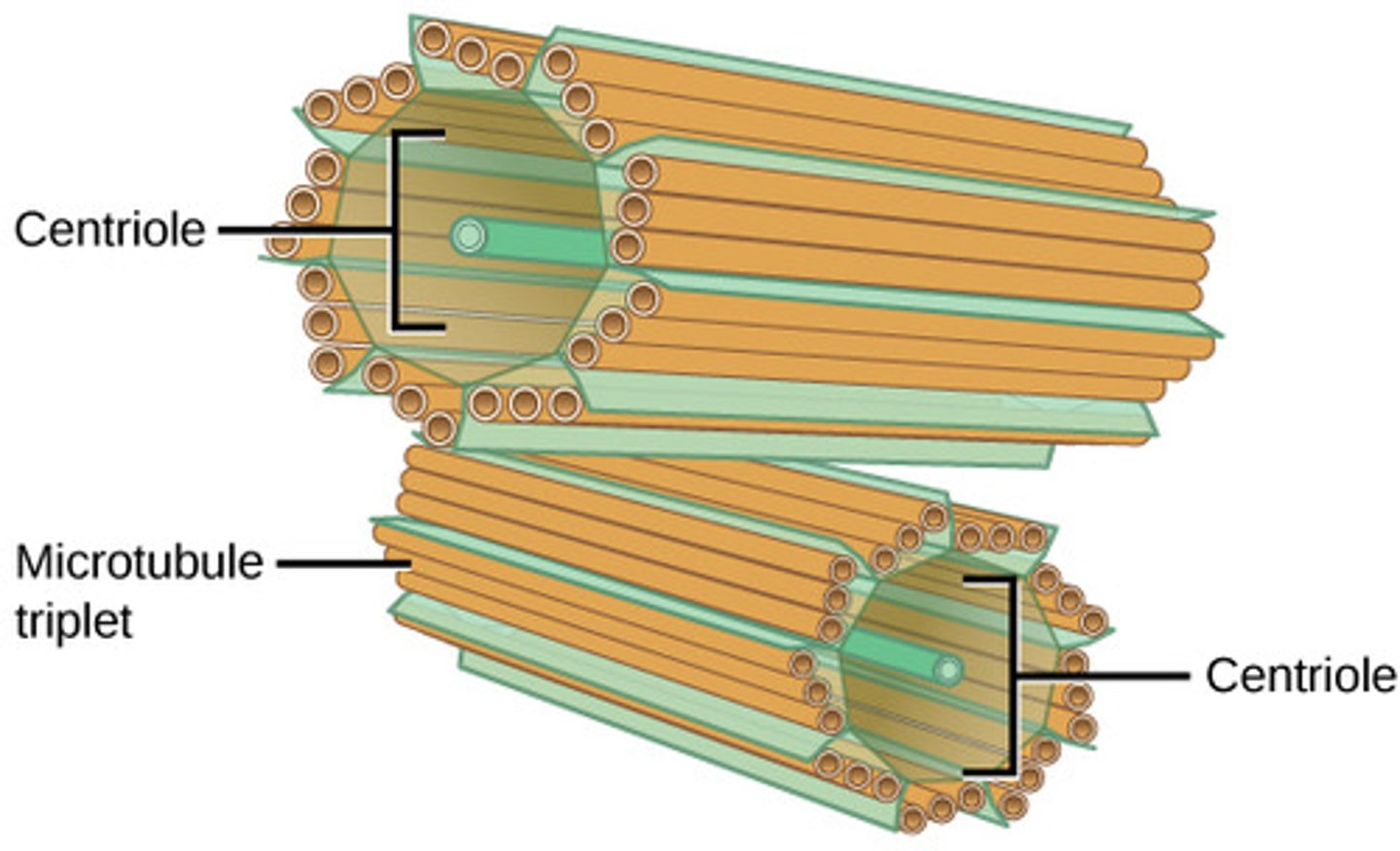
What are the characteristic steps of mitosis?
1. prophase
2. metaphase
3. anaphase
4. telophase
5. cytokinesis
(mnemonic: P-MAT-C)
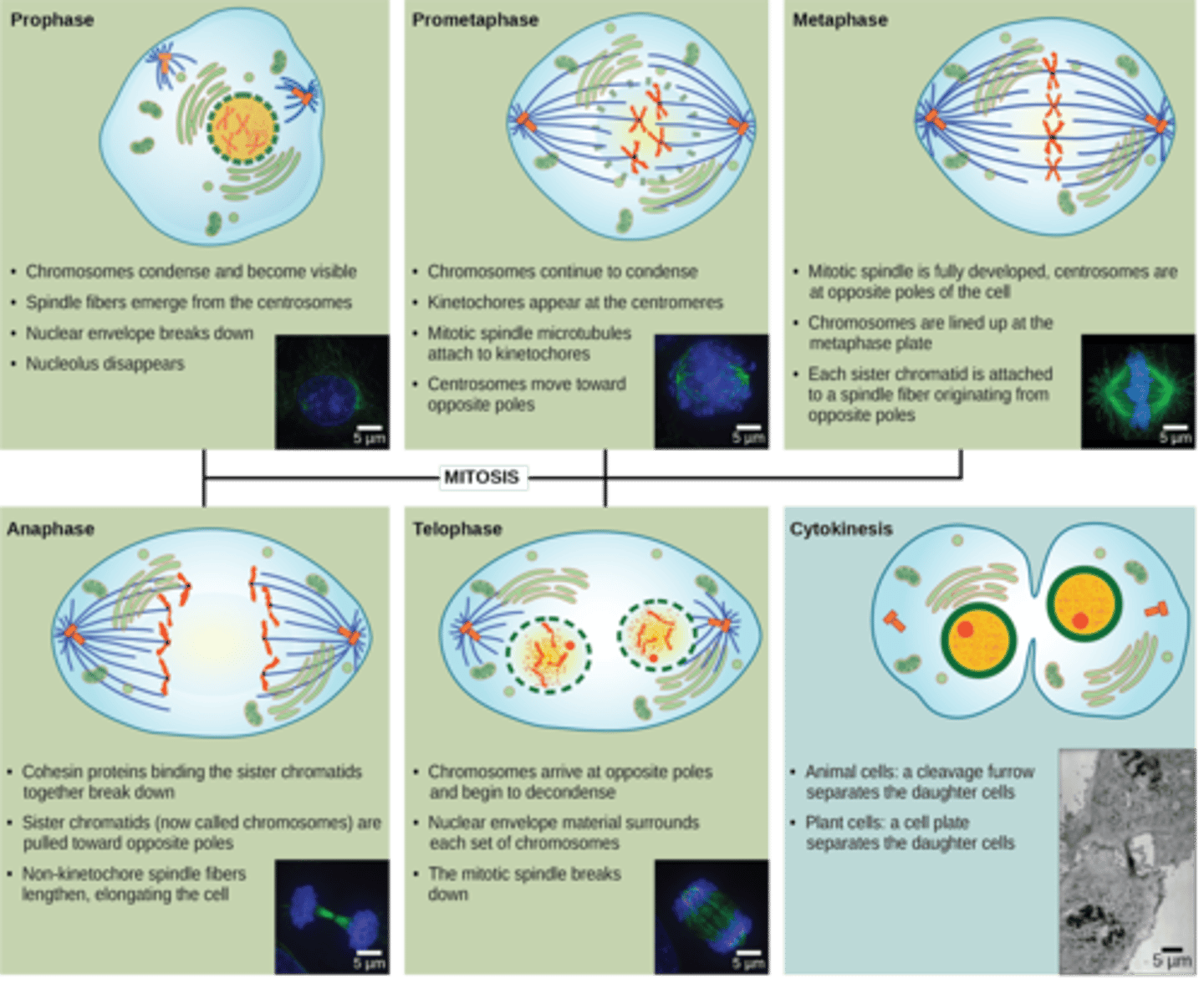
During prophase, what occurs in the nucleus?
disassembles
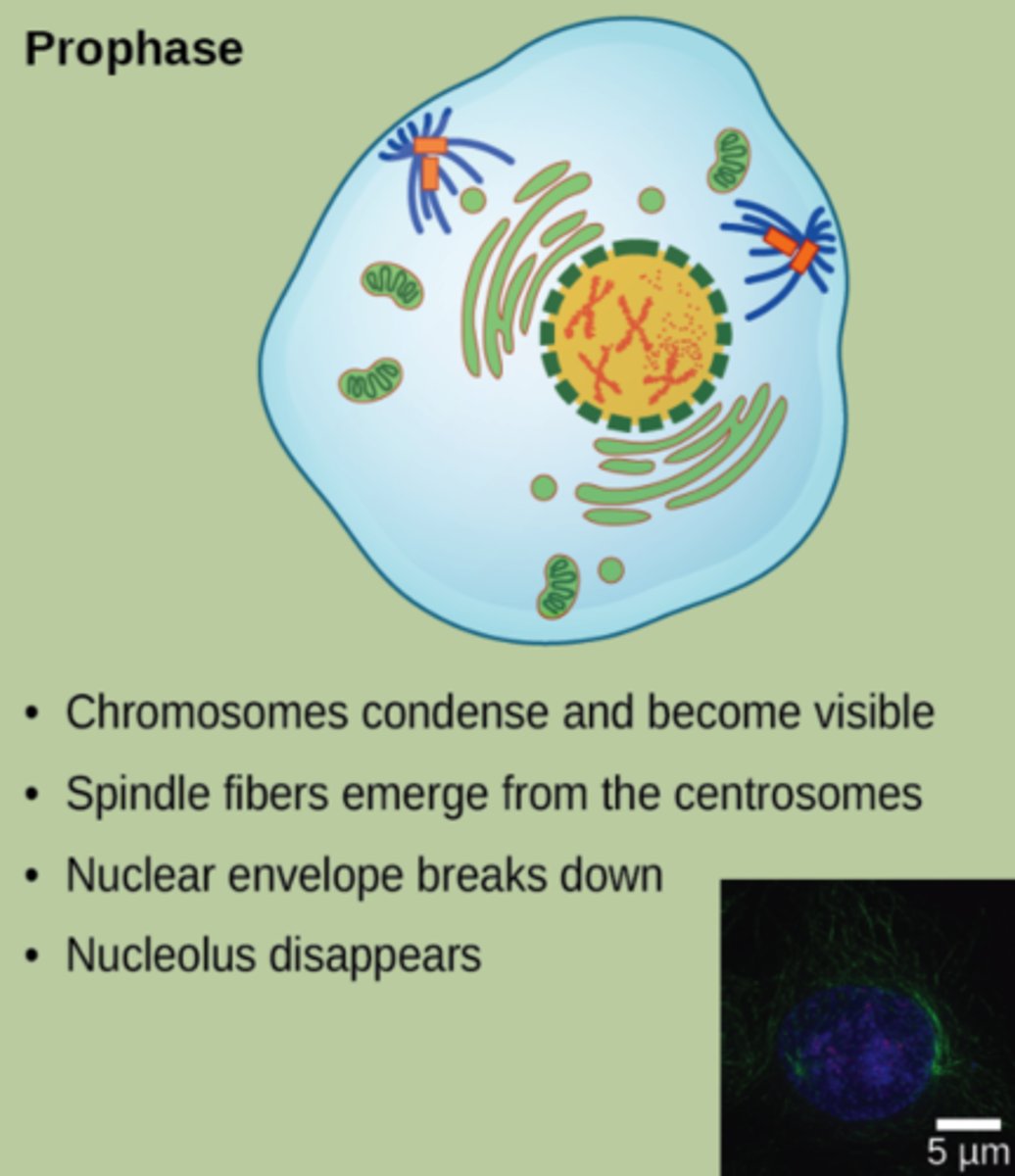
During prophase, what occurs in the nucleolus?
disappears
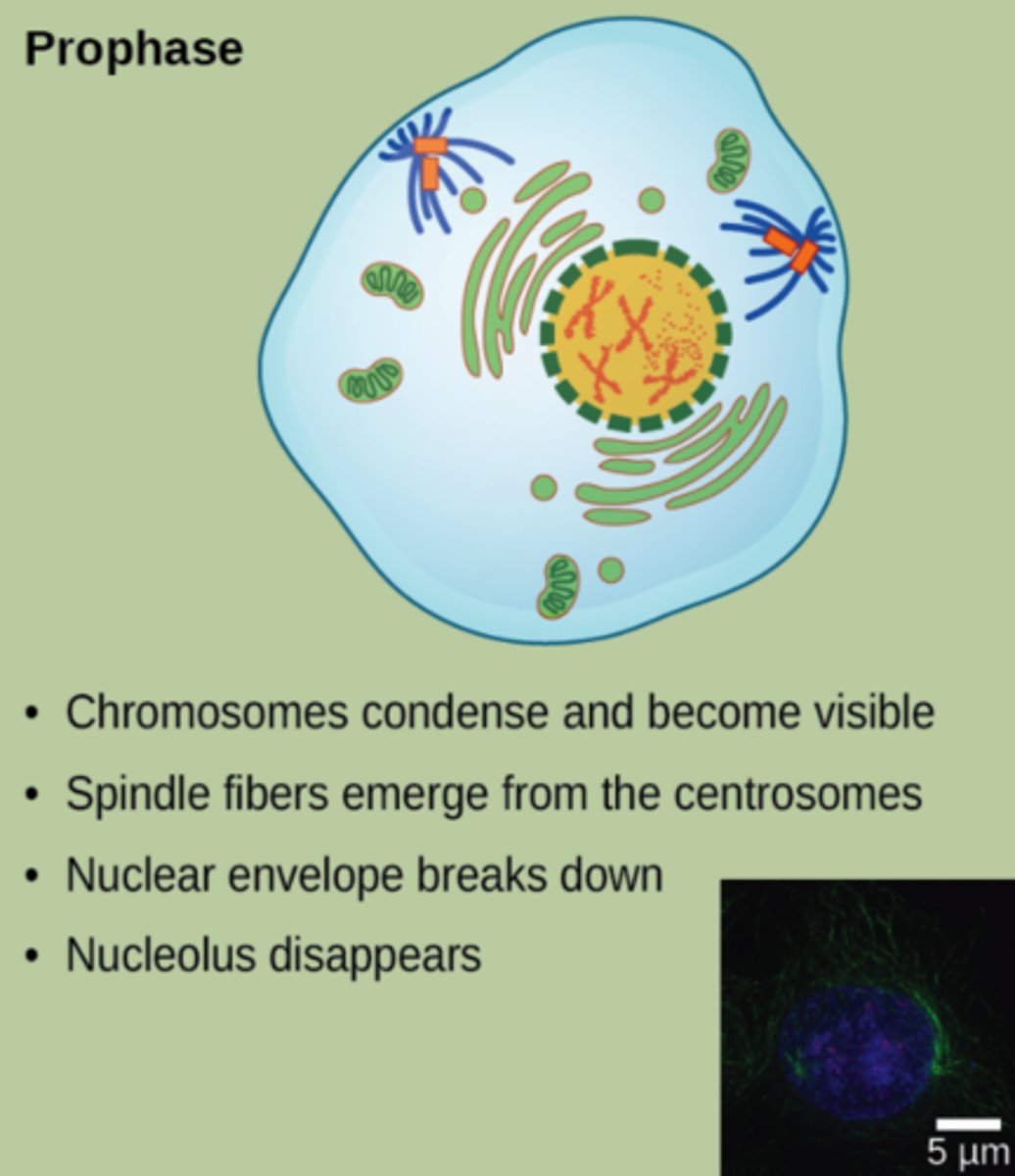
During prophase, what occurs in the chromatin?
condenses into chromosomes
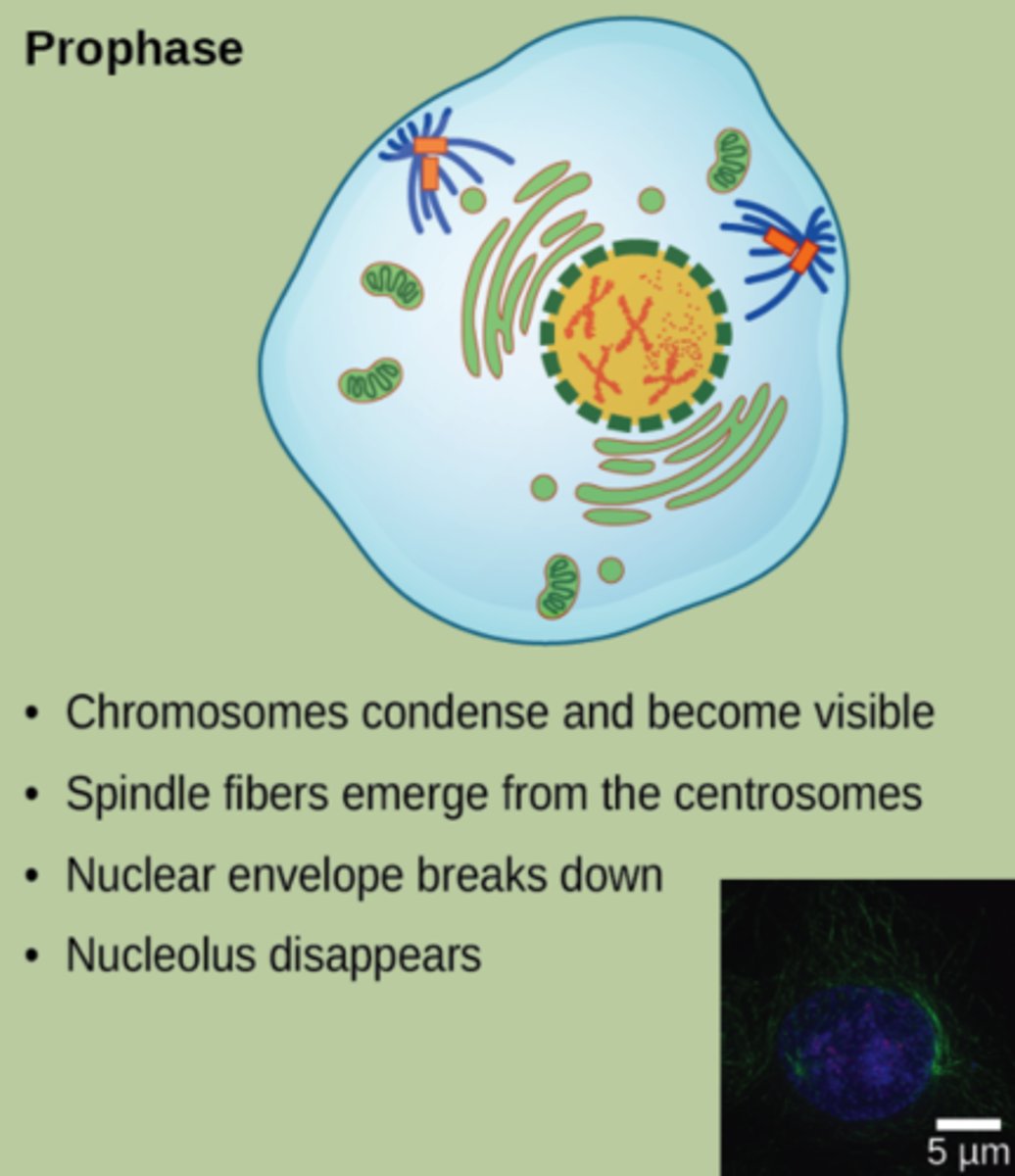
During prophase, what occurs in the nuclear envelope?
breaks down
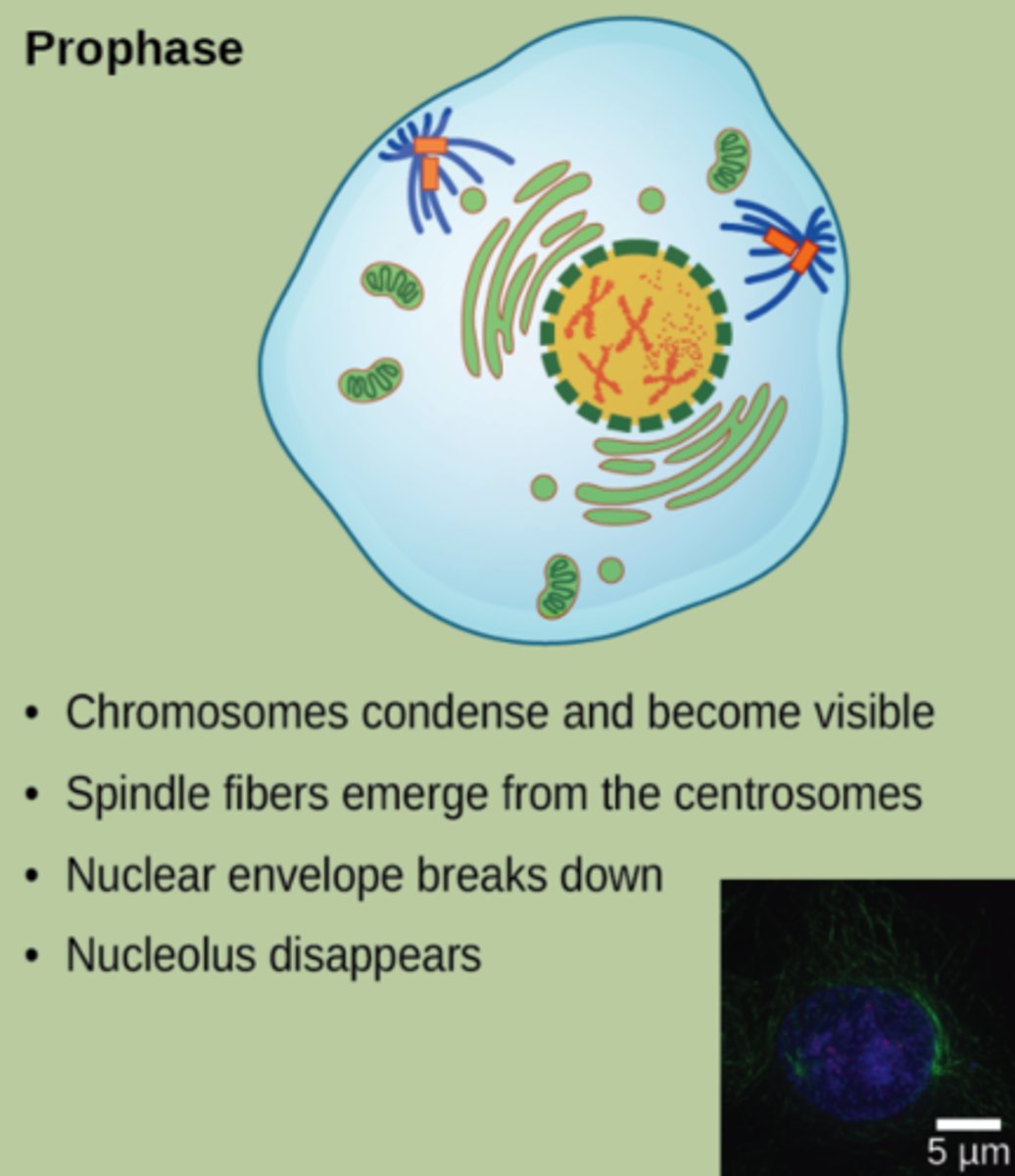
What organizing apparatus forms during prophase?
mitotic spindle
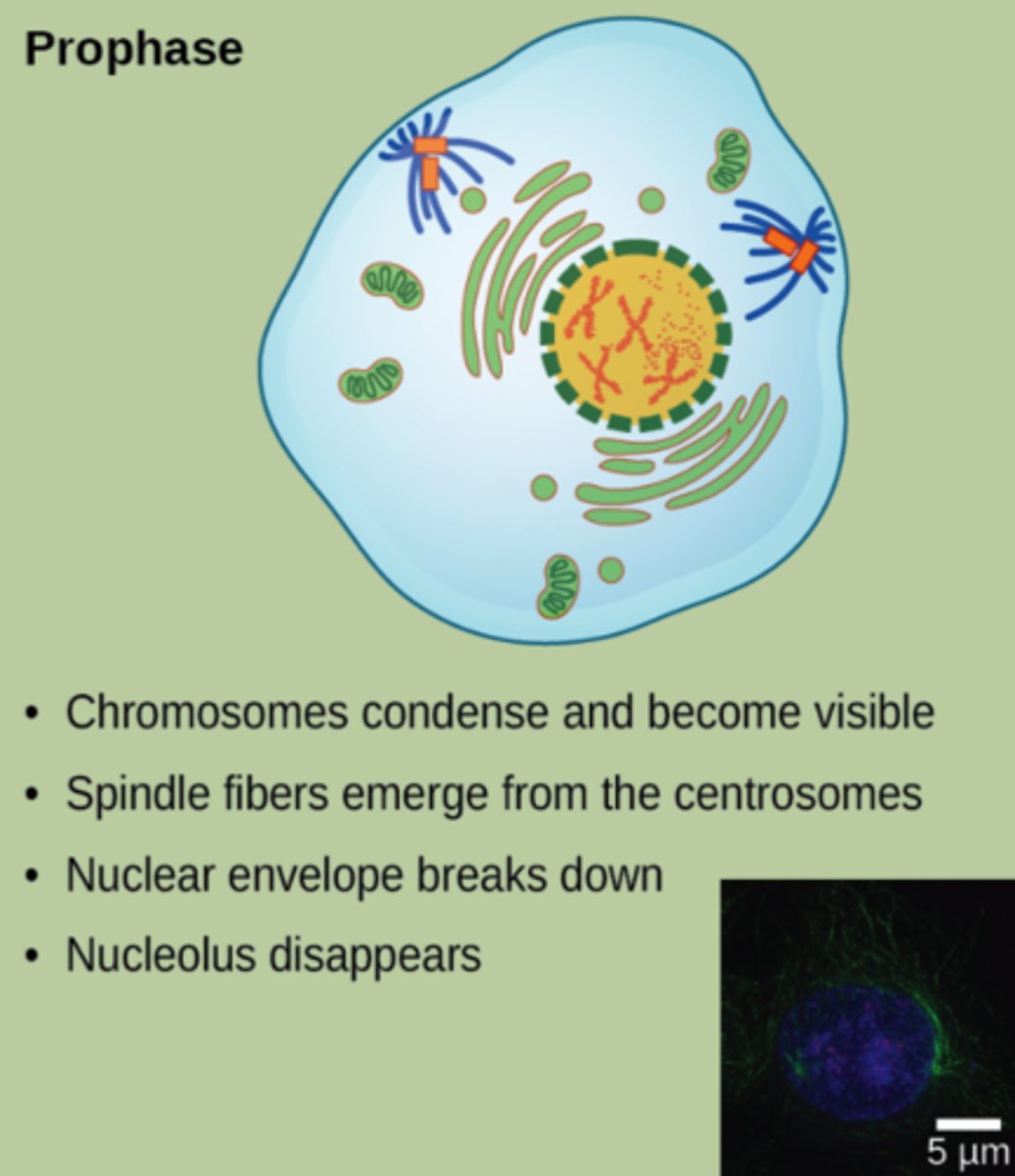
During prophase, microtubules begin connecting to which structures?
kinetochores
During metaphase, where do chromosomes line up?
equator
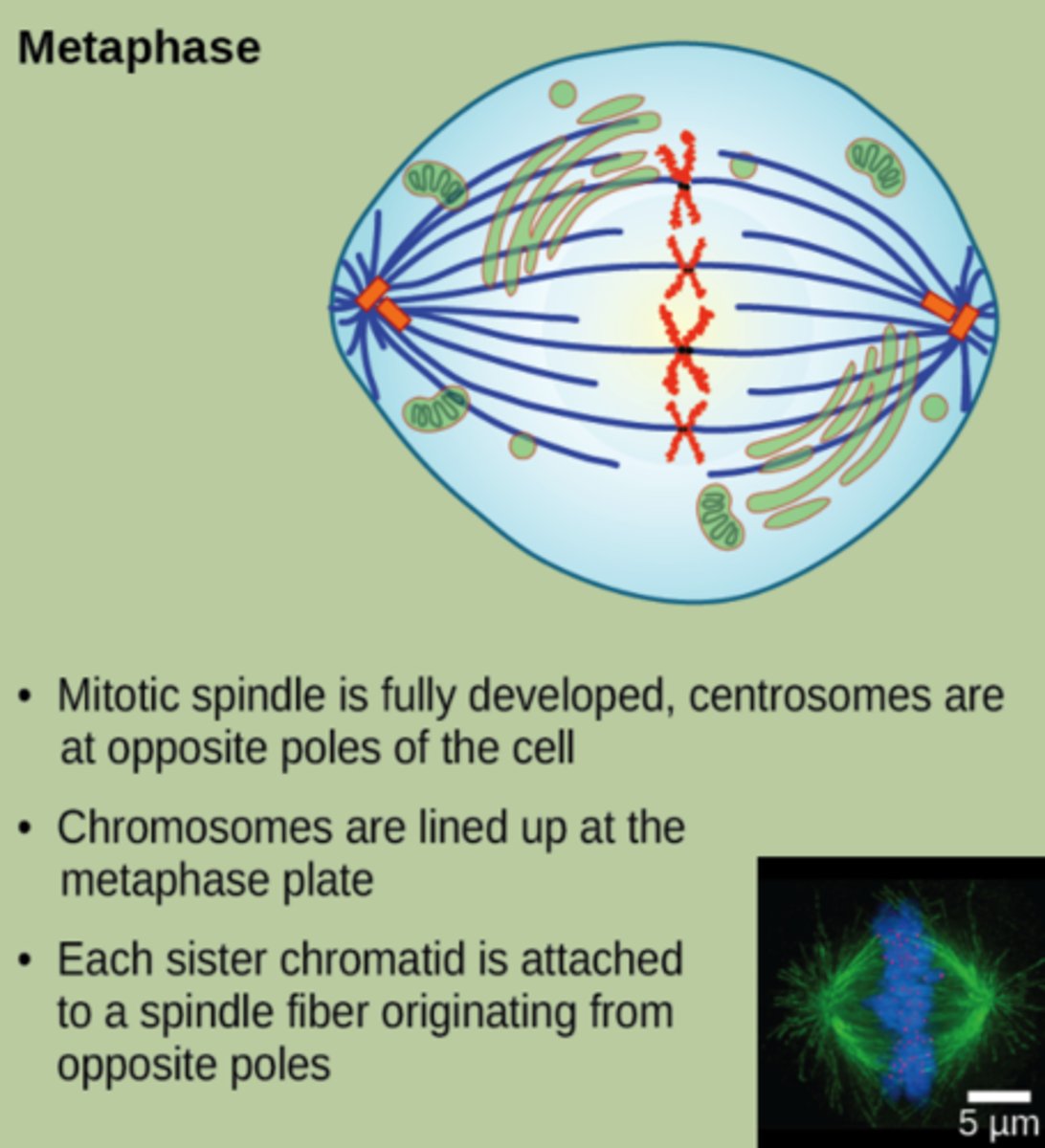
During metaphase, where are centrosomes located?
opposite poles
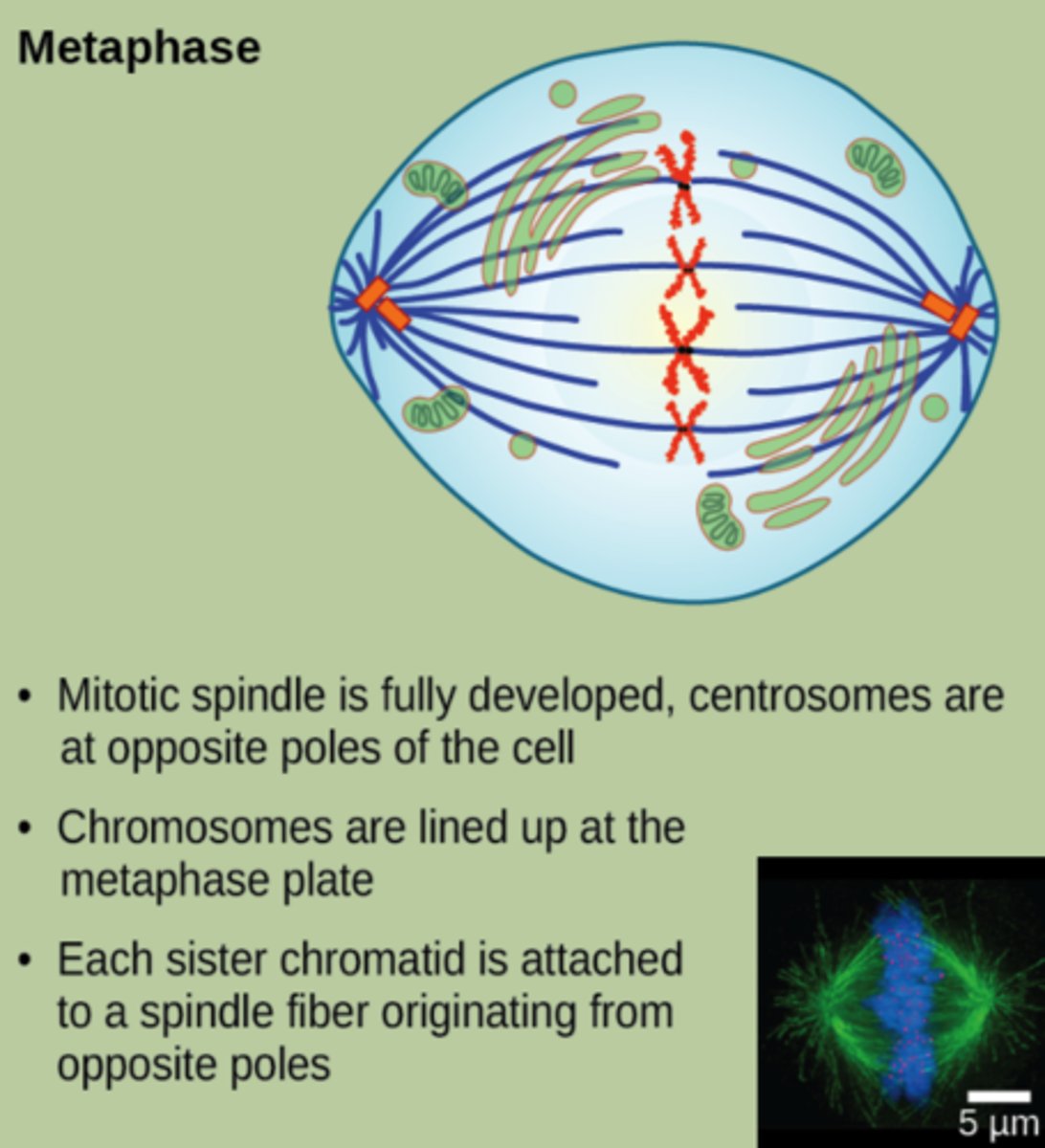
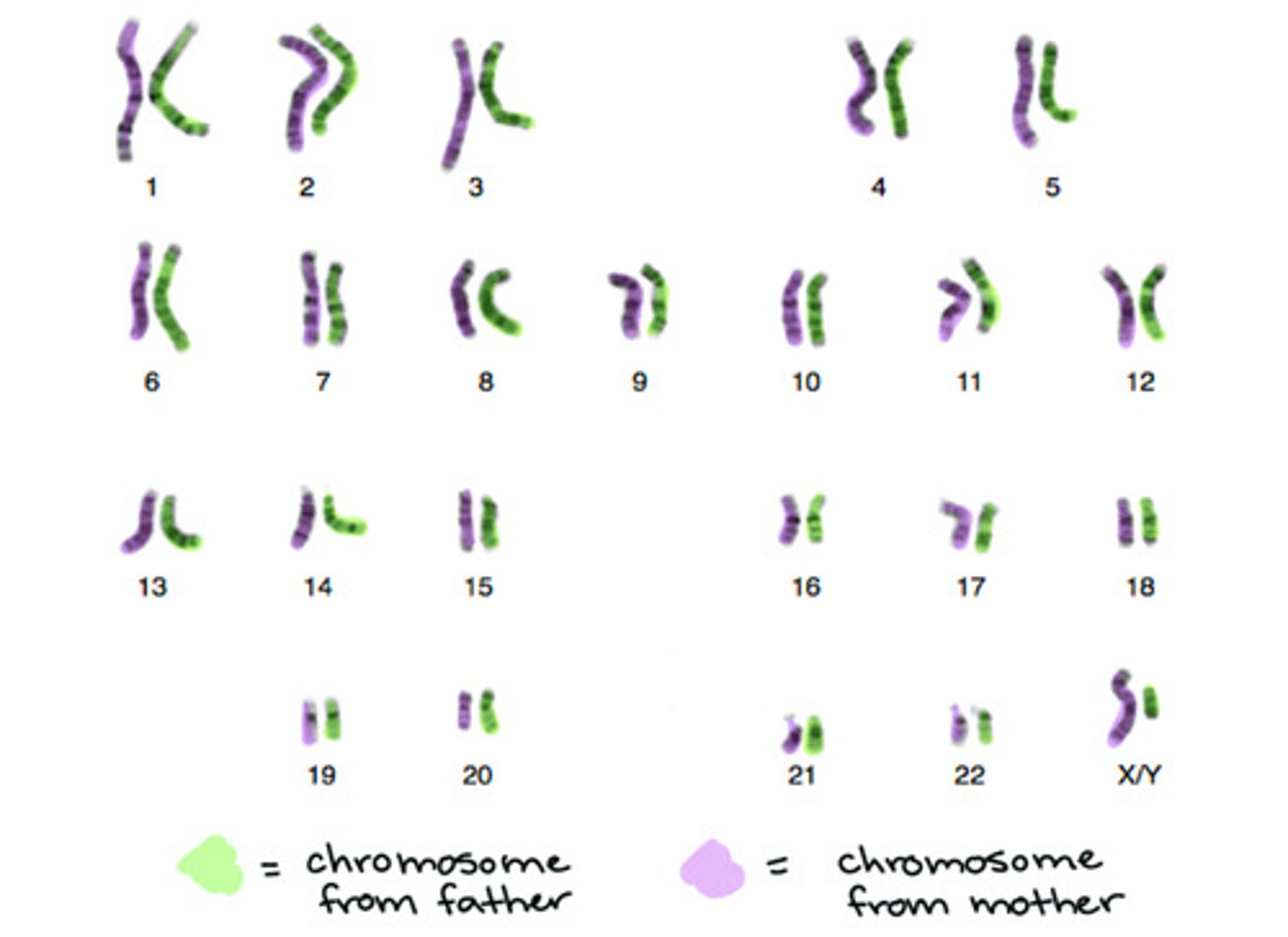
In which step of mitosis is karyotyping performed?
metaphase
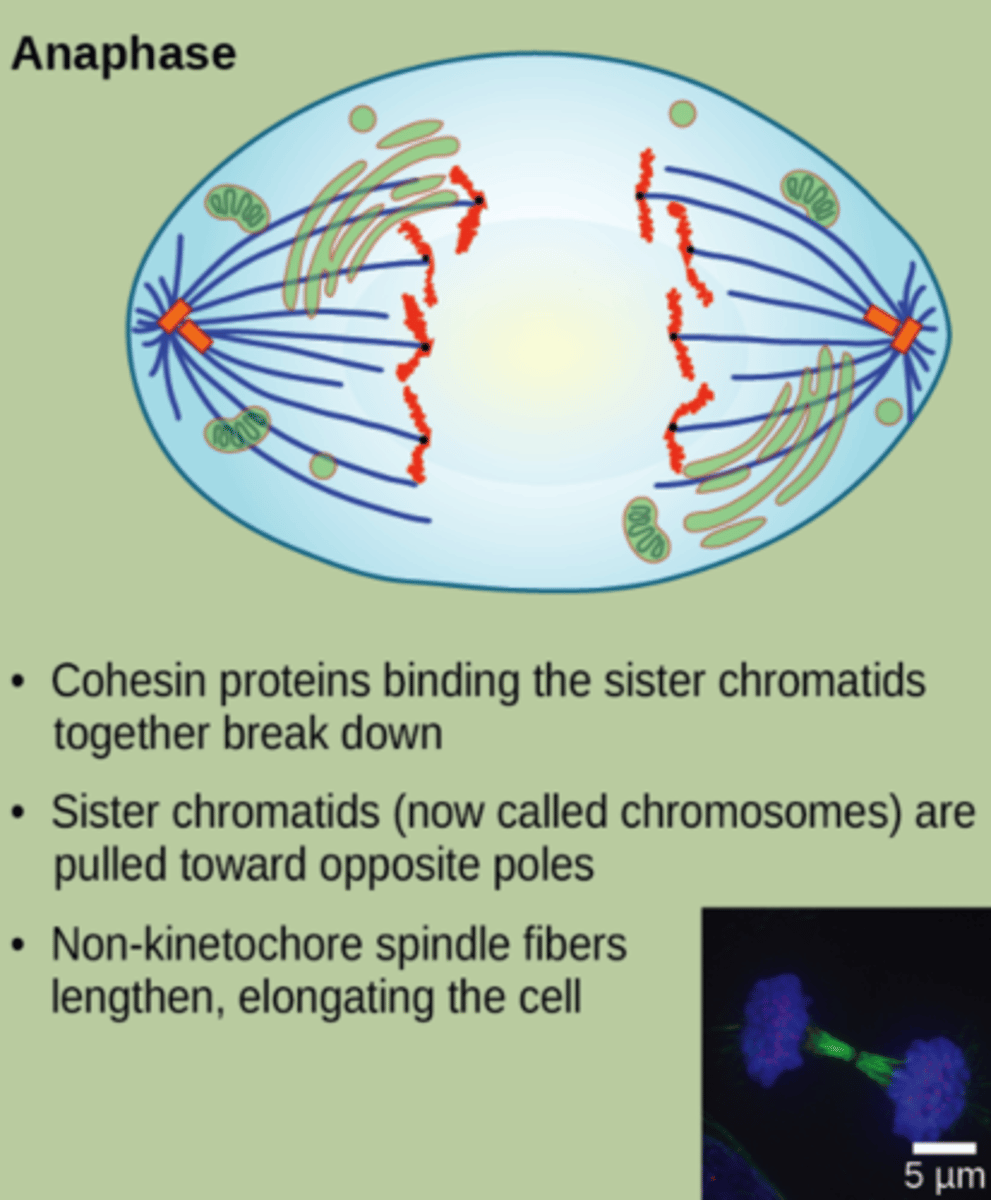
Sister chromatids separate during which step of mitosis?
anaphase
(Note: VERY IMPORTANT -
chromosome number
doubles during anaphase)
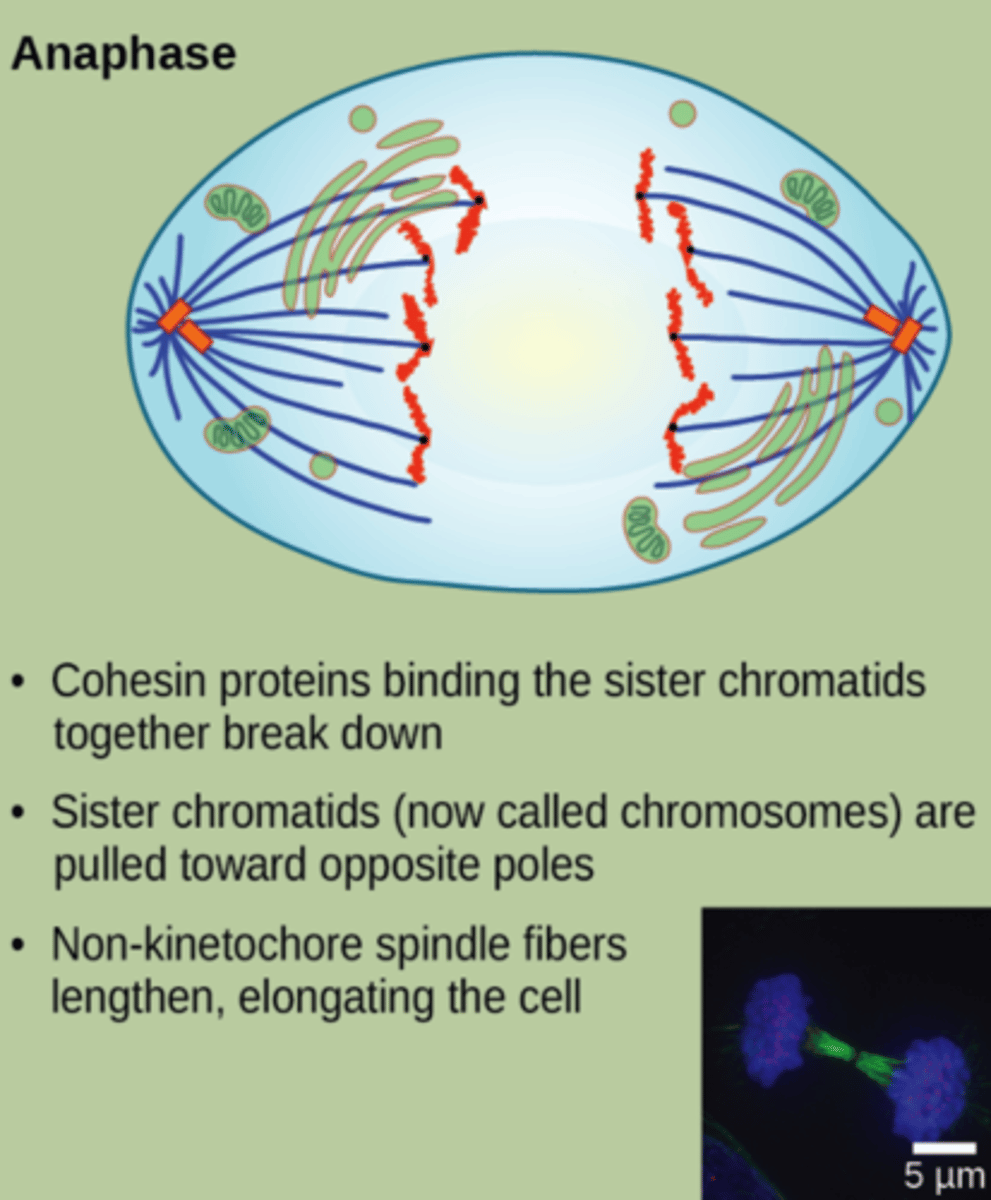
During anaphase, what happens to microtubules?
shorten
TERM
Sister chromatids
DEFINITION
chromosomes
(Note: new chromosomes
are technically halves of
the chromosomes found in
metaphase)
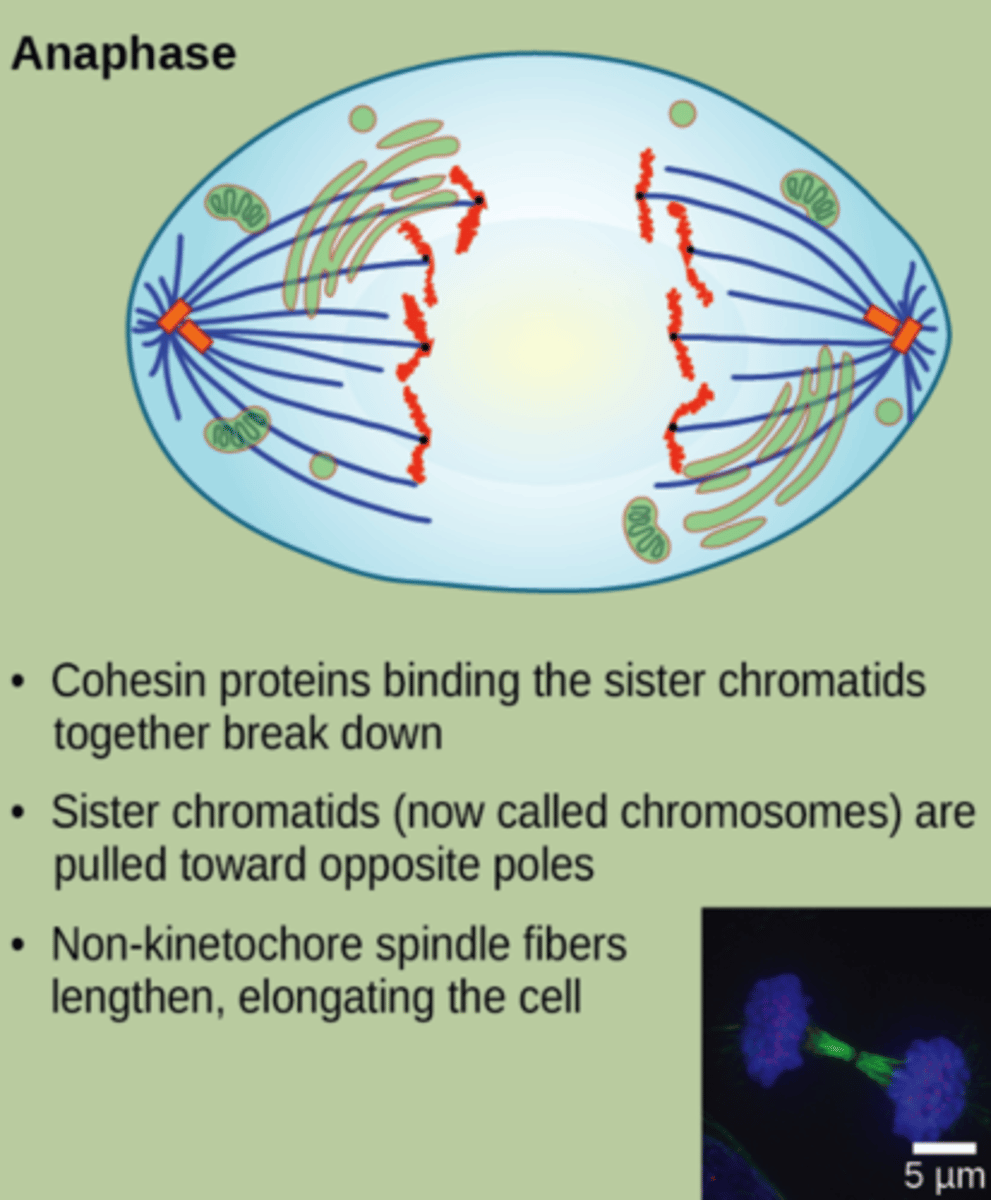
After anaphase, What is the total chromosome number in the somatic cell?
92
What is the process called when microtubules pull the chromosomes to opposite poles of the cell during anaphase?
disjunction
In which step of mitosis does nuclear division occur?
telophase
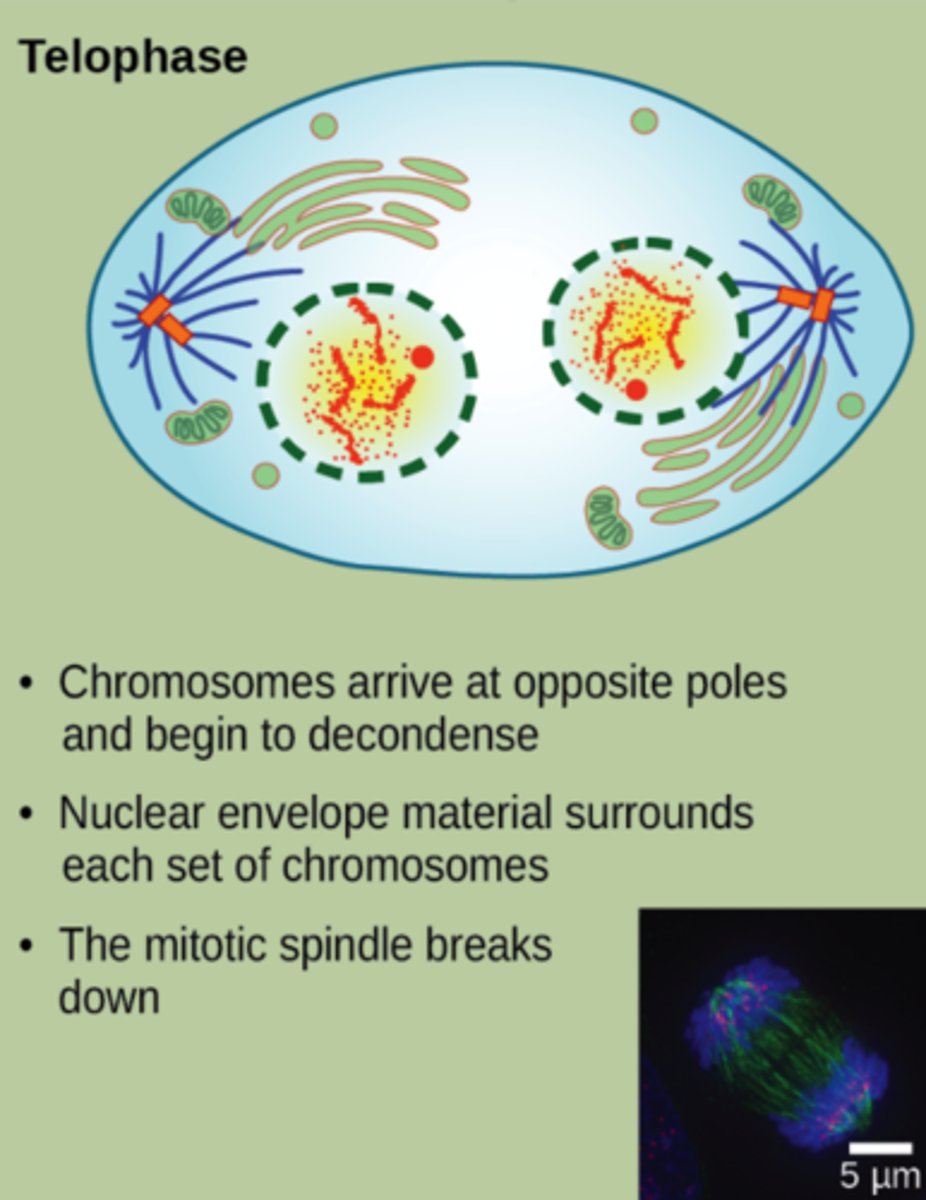
During telophase, what structure forms around the groups of separated chromosomes?
nuclear envelope
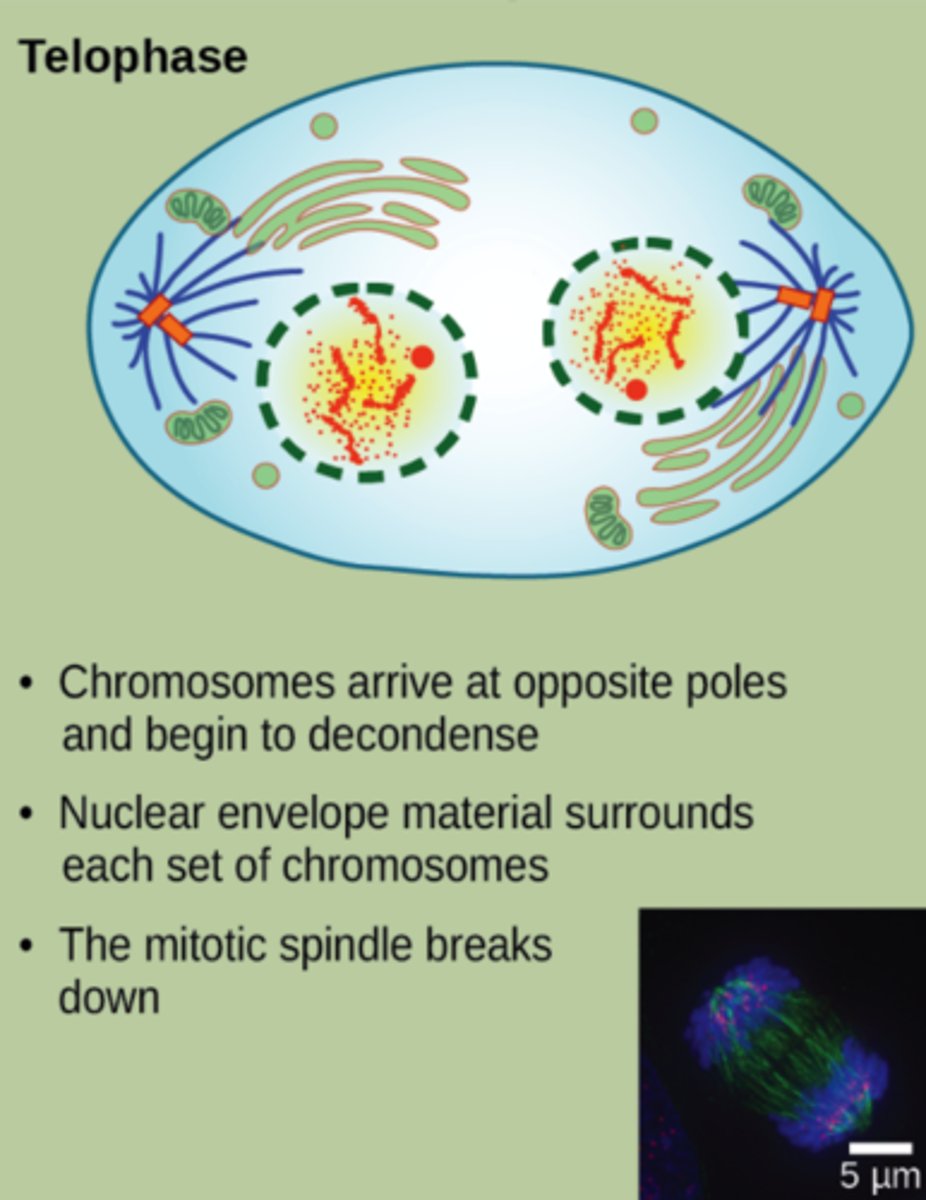
During telophase, what occurs in the chromosomes?
they unravel
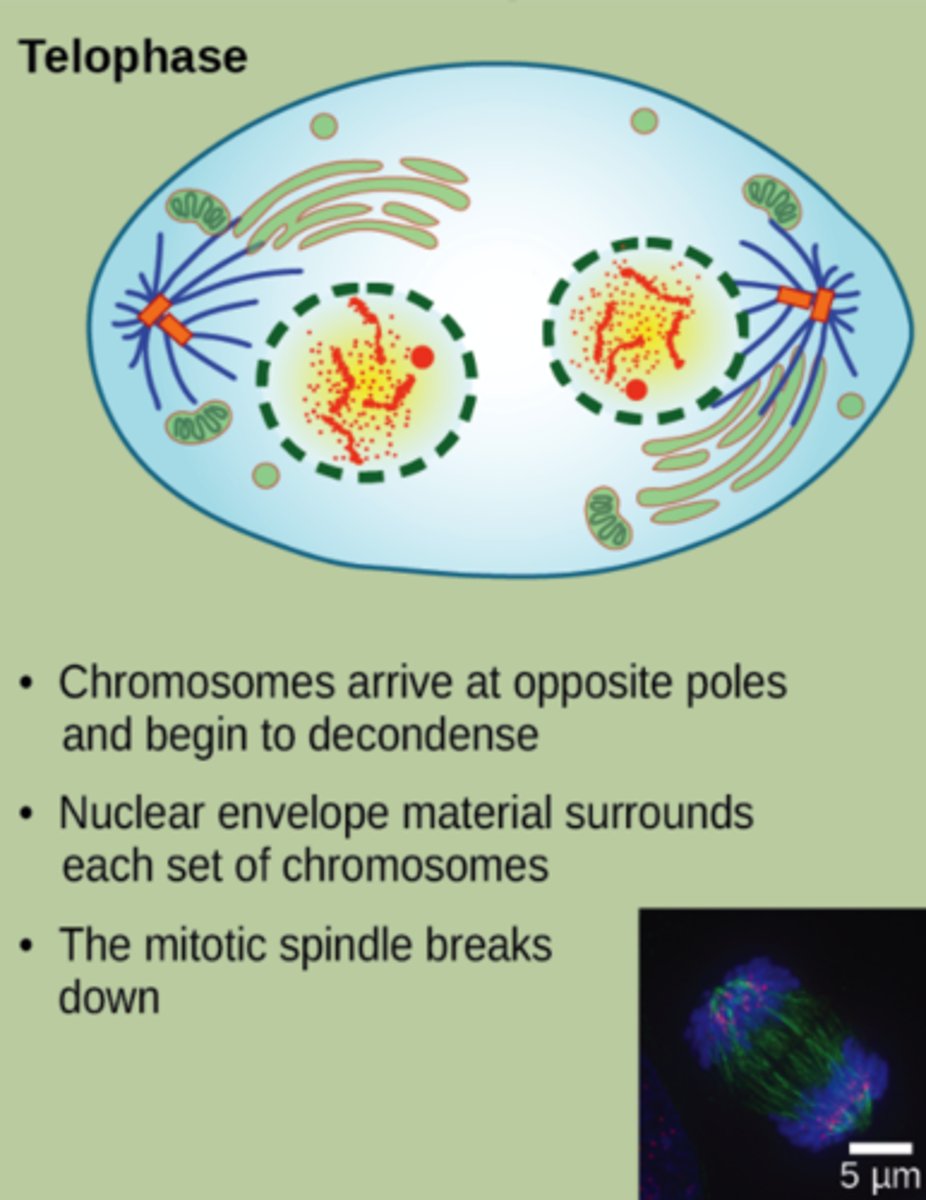
Which stage in mitosis involves the division of cytoplasm to form two cells?
cytokinesis
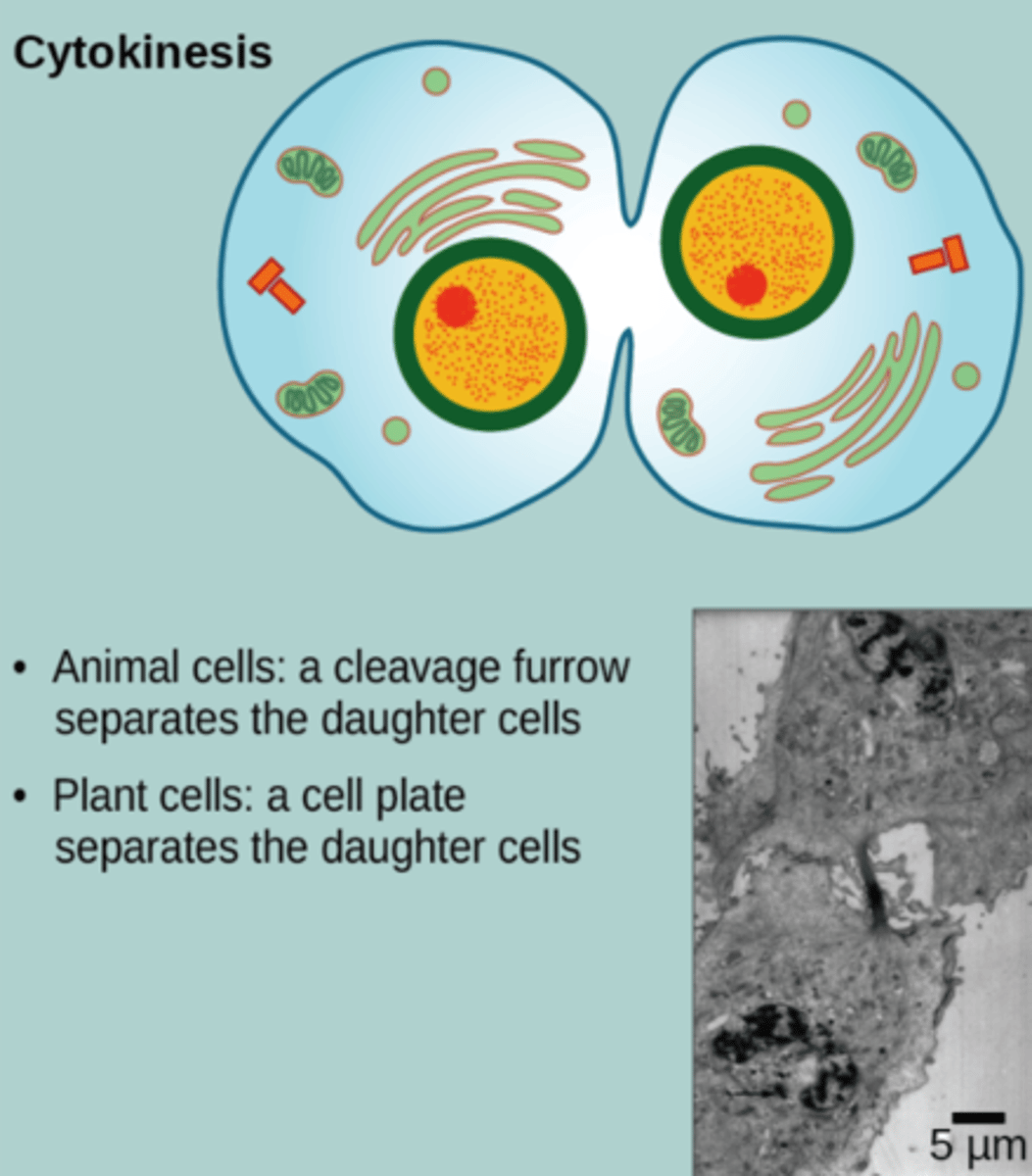
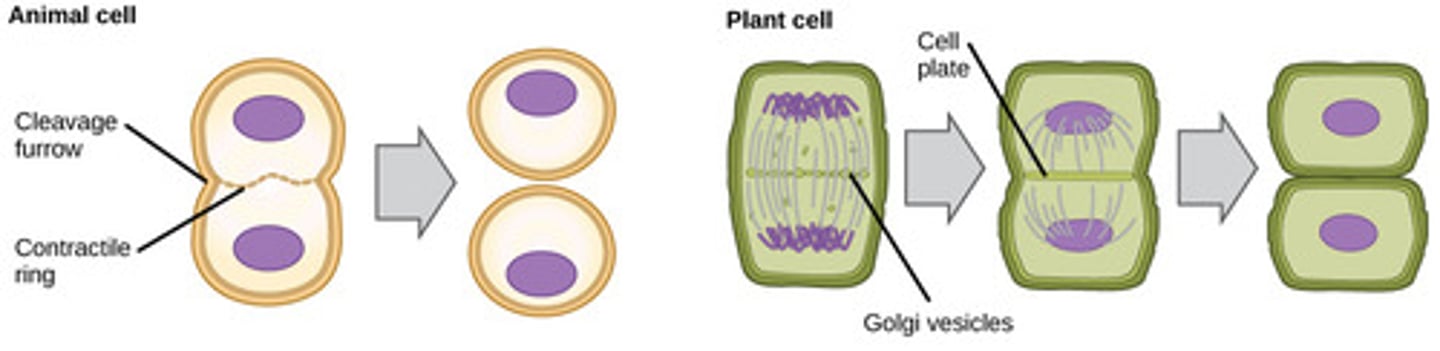
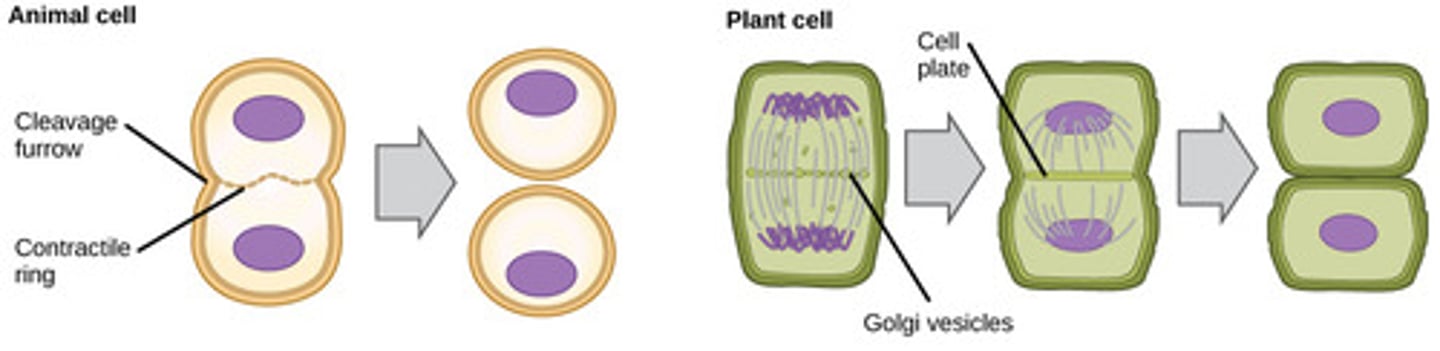
During the cytokinesis step in animal cells, what is the name for the invagination that forms?
cleavage furrow
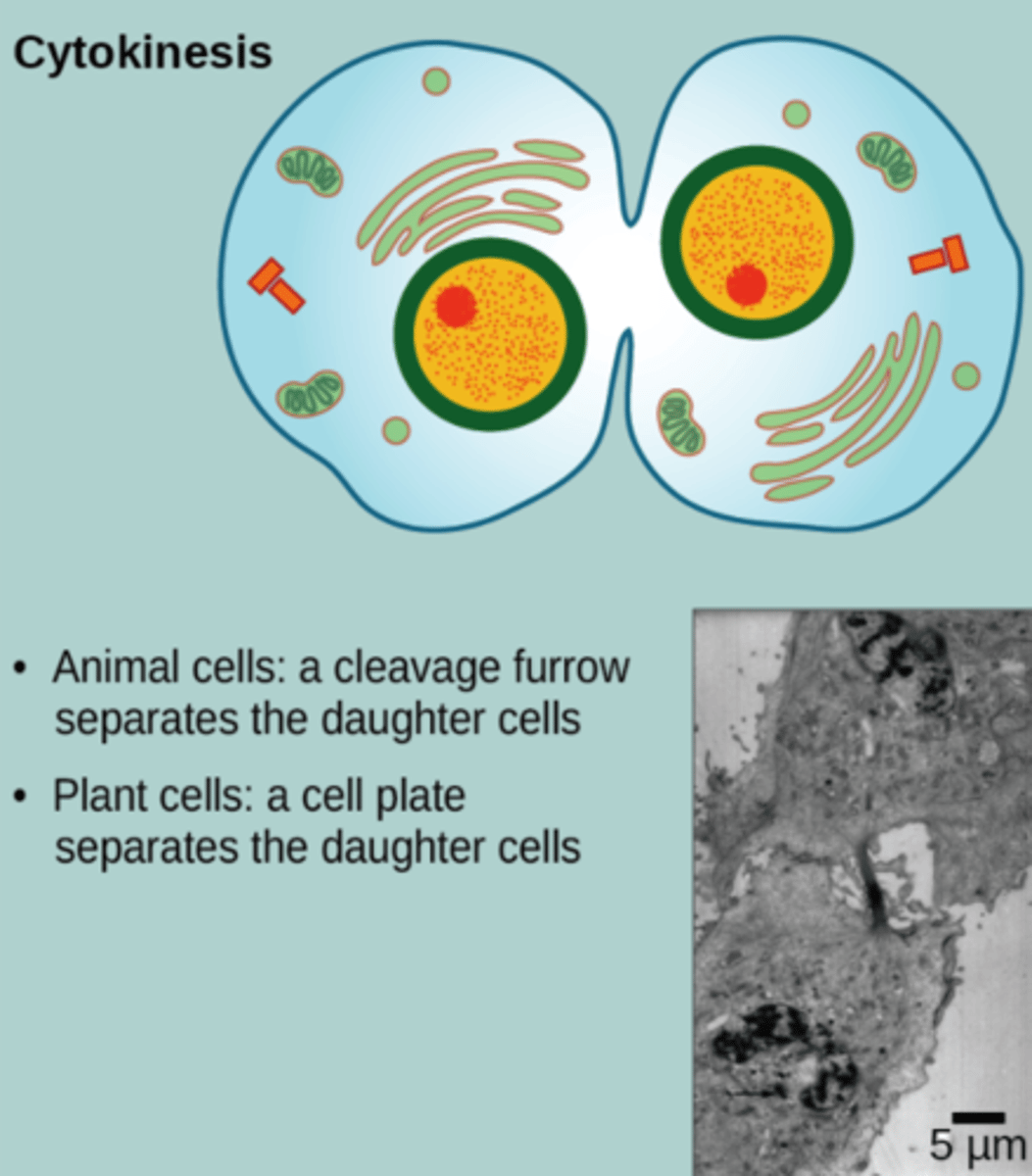
How is the cleavage furrow formed?
shortening of actin and
myosin microfilaments
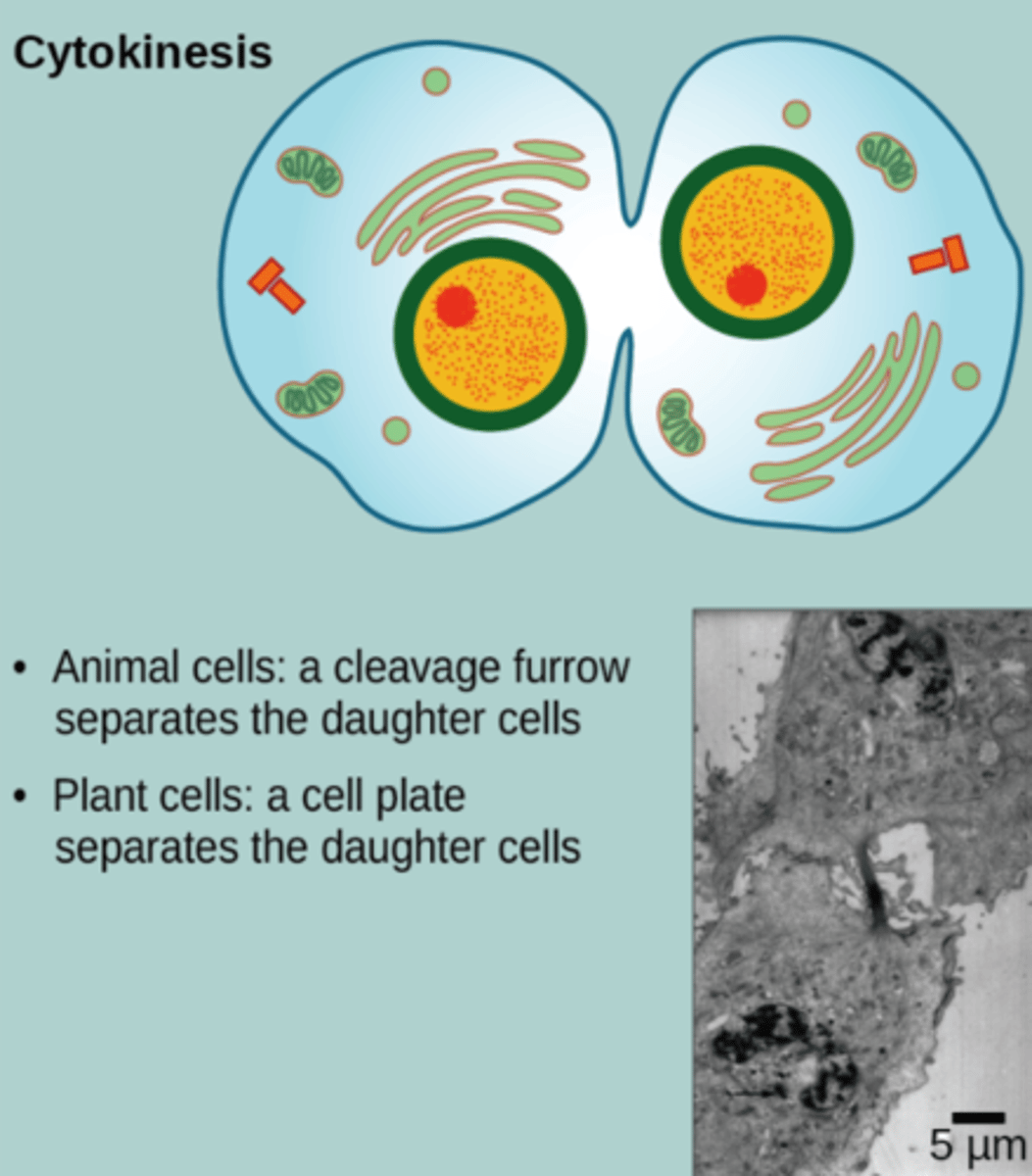
During the cytokinesis step in plant cells, what divider forms?
cell plate
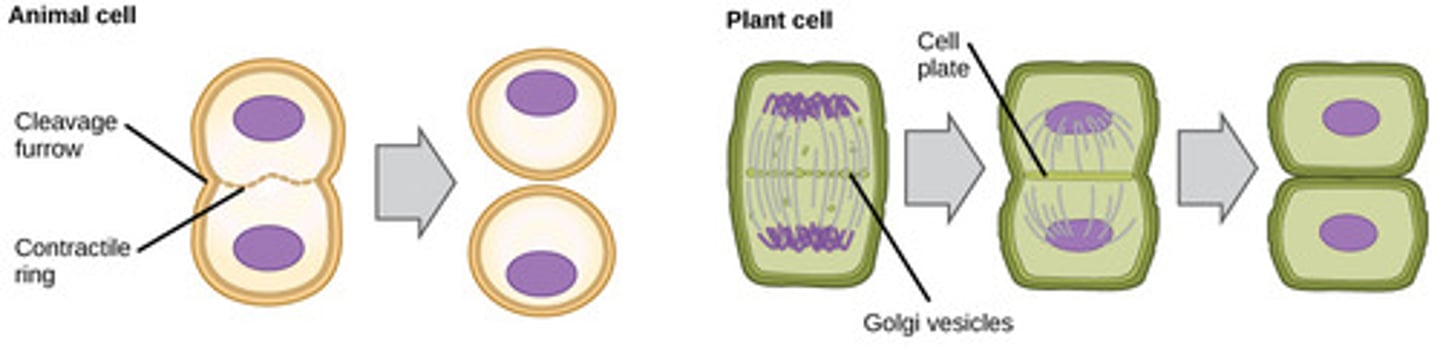
what structures migrate and fuse to form the cell plate in plant cell mitosis?
vesicles from Golgi bodies
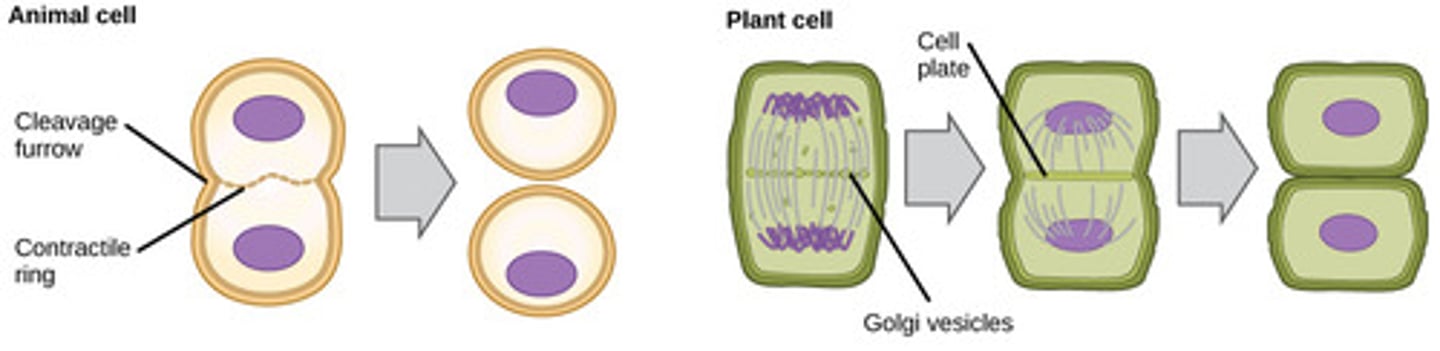
As the cell plate grows, what structure does it merge with?
plasma membrane
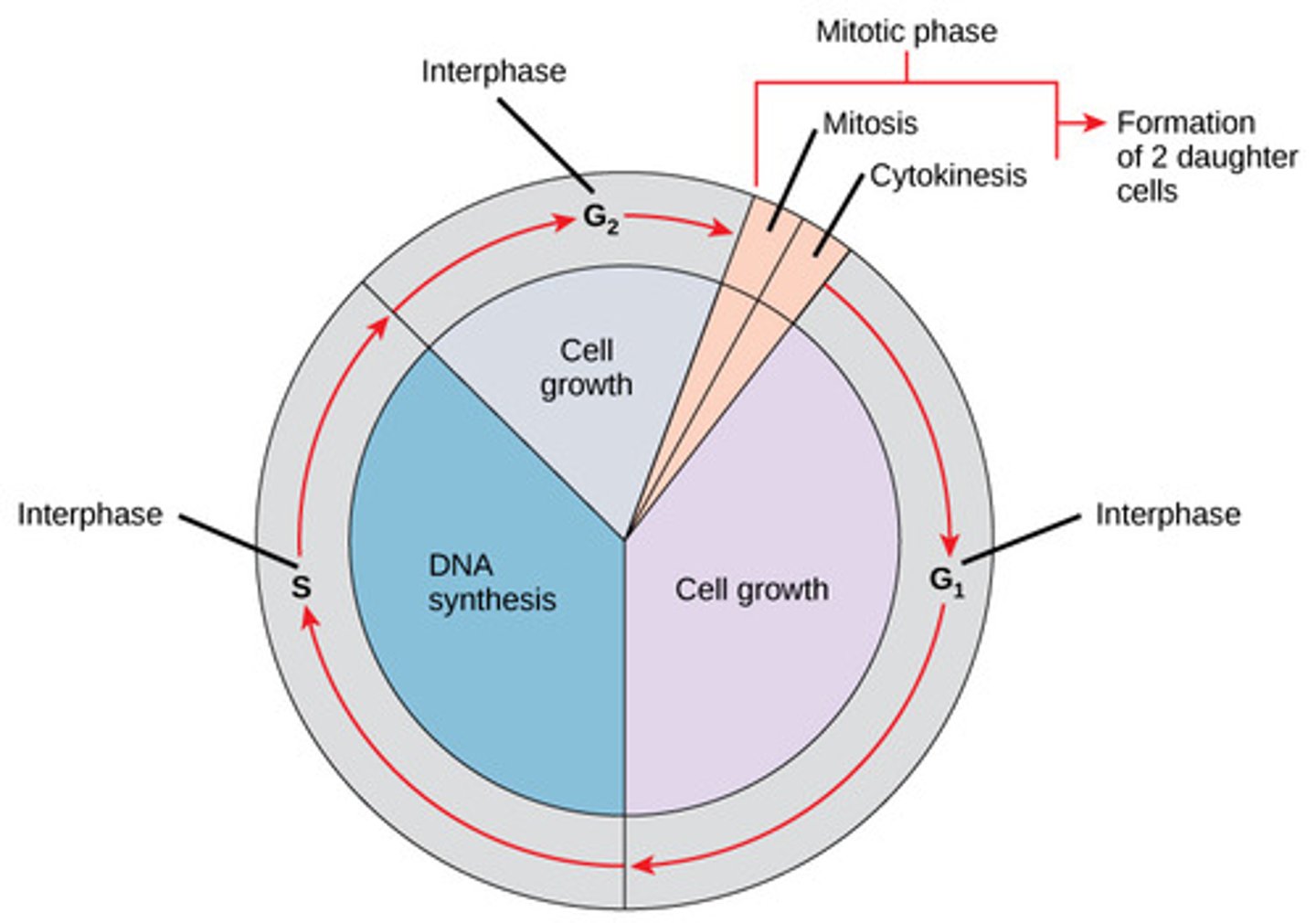
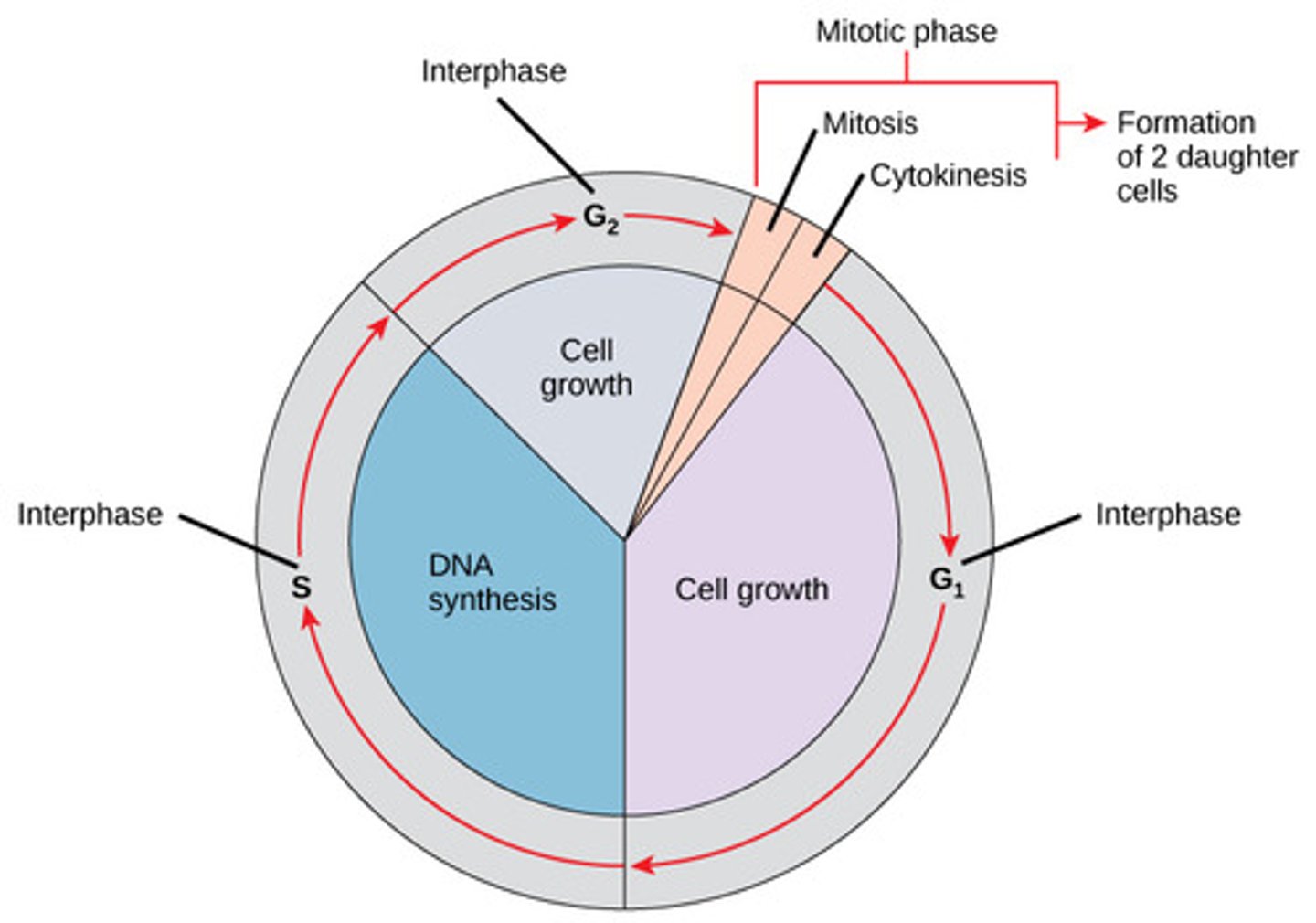
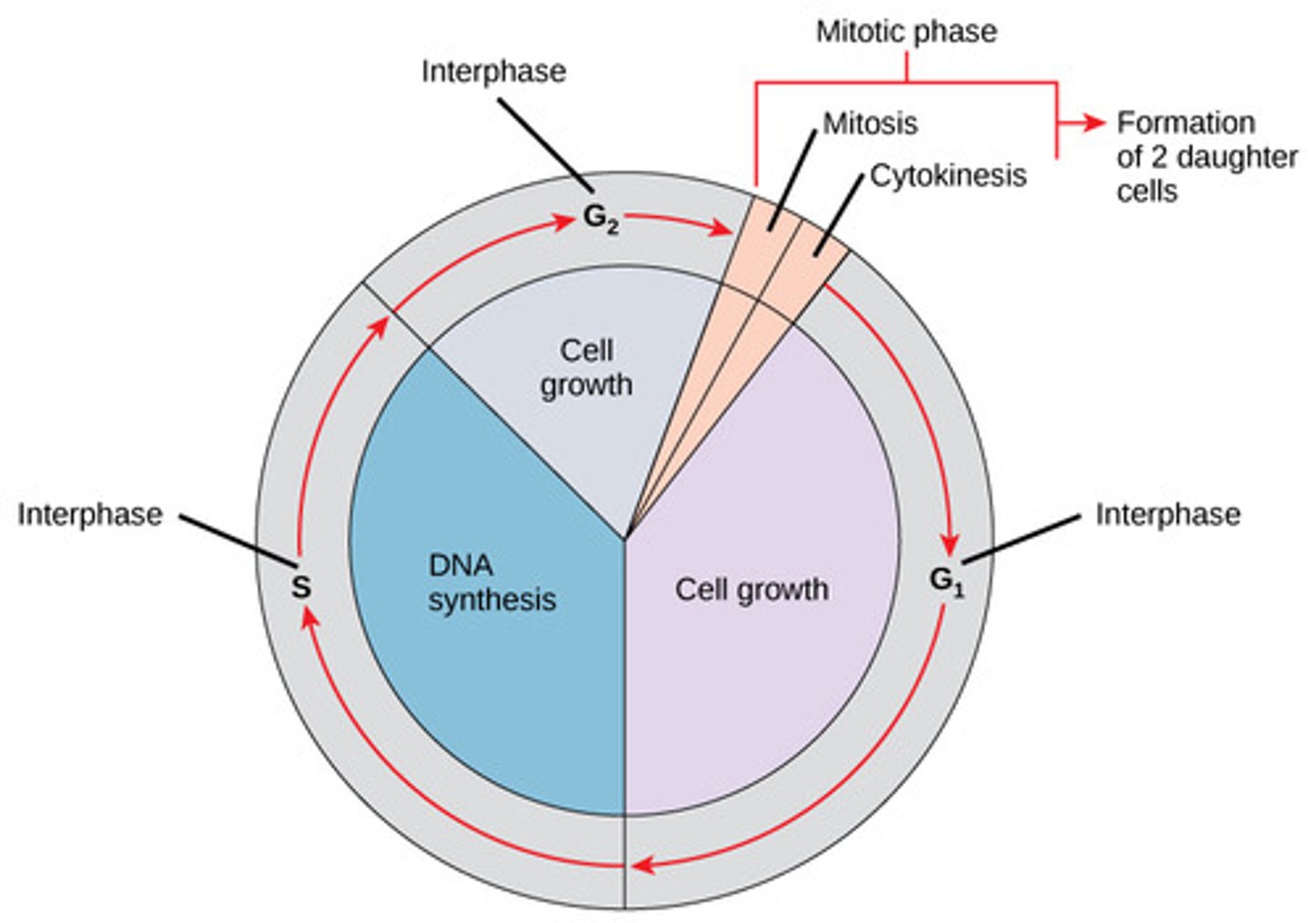
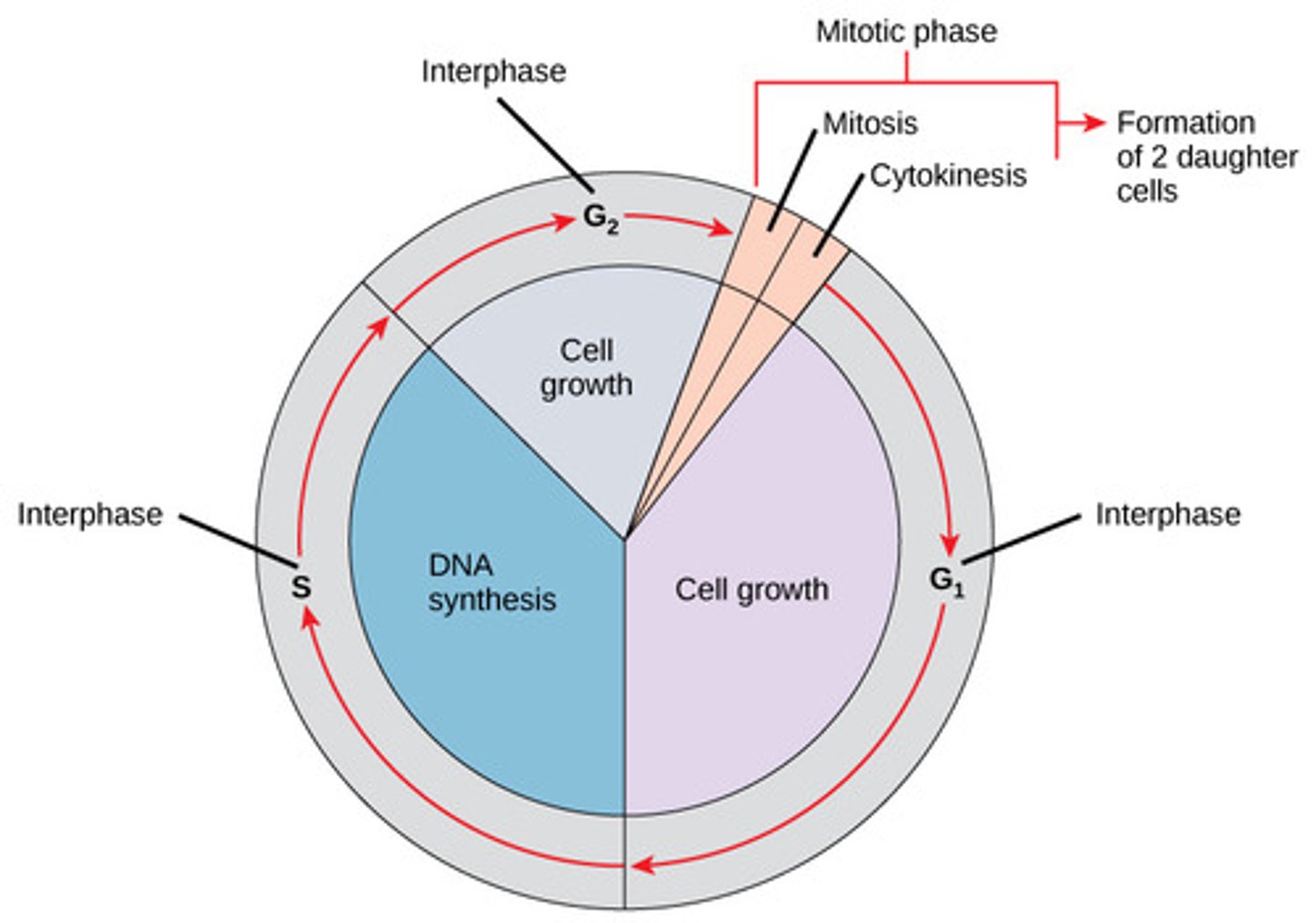
What are the phases of the cell cycle?
1. G1 (growth)
2. S (DNA synthesis)
3. G2 (growth)
4. M (mitosis)
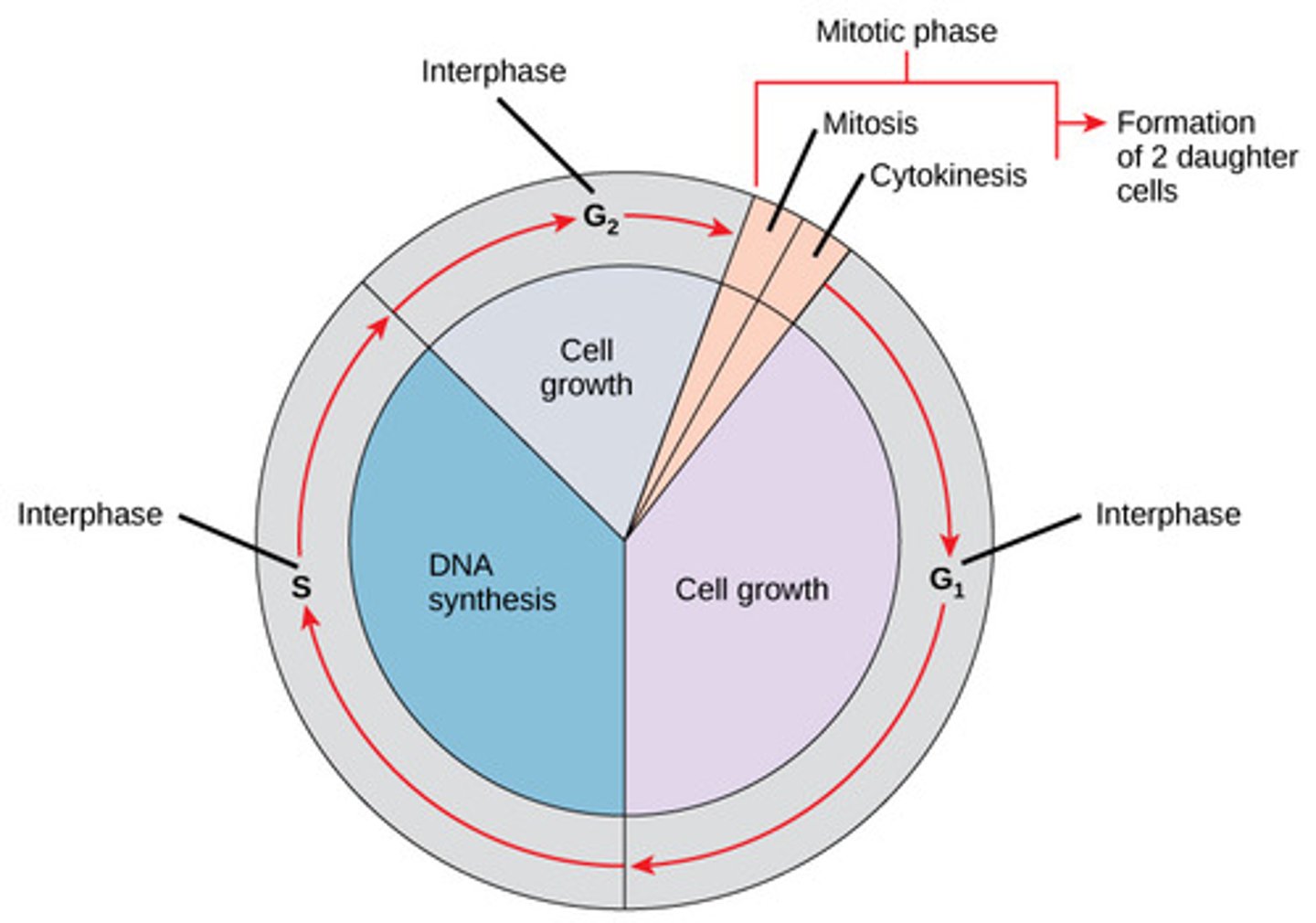
During G1, how does the size of the cell change?
it increases
What structures are synthesized in large quantities during G1?
proteins and ribosomes
What step ensures that everything is ready for DNA synthesis during the cell cycle?
G1 checkpoint
Which phase of the cell cycle is the most variable in length of all the phases depending on the cell type?
G1
In which phase of the cell cycle is DNA replicated?
S
(Note: provides sister chromatids)
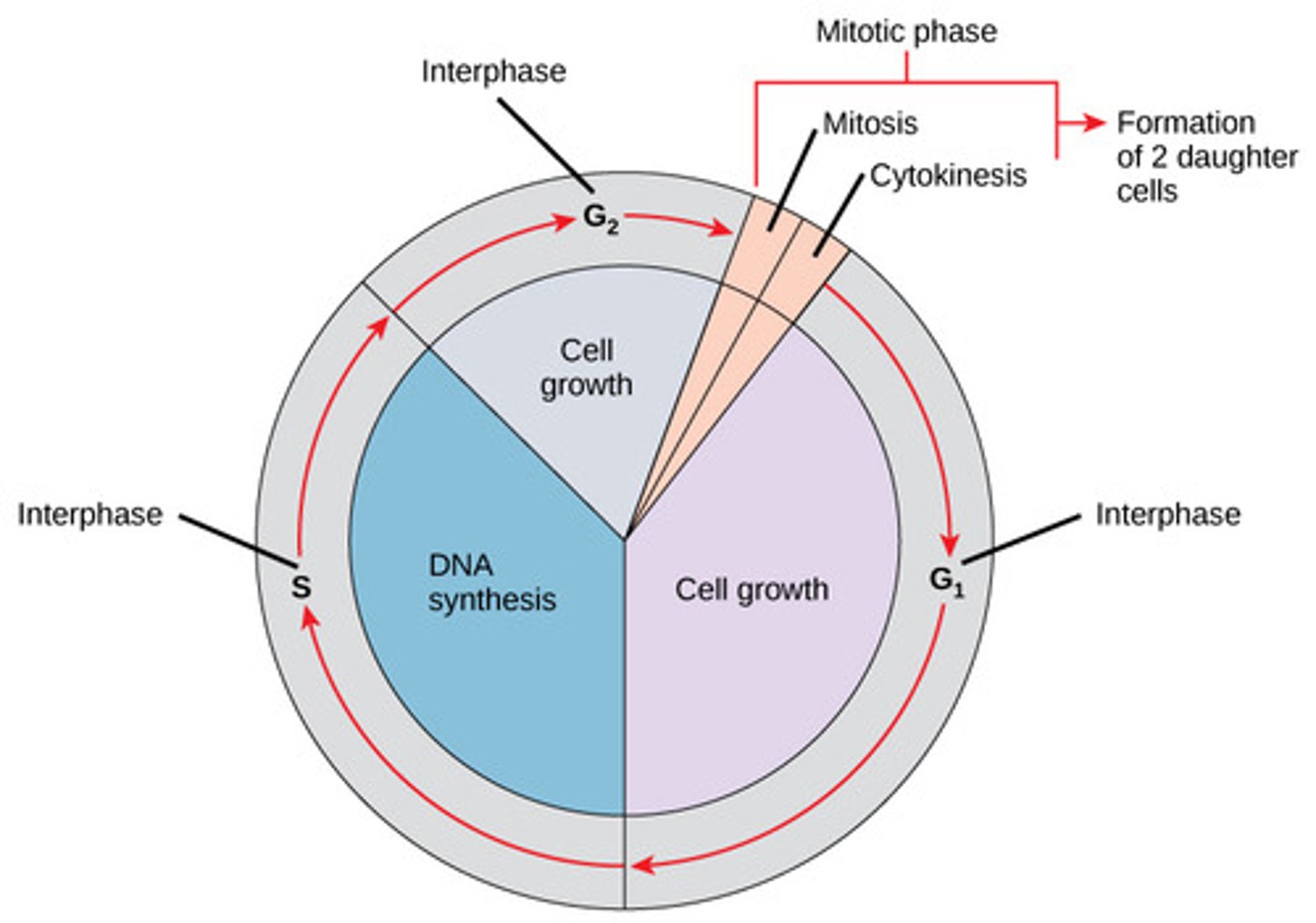
In which phase of the cell cycle does rapid cell growth occur, organelles are replicated, and genetic material prepares for cell growth?
G2
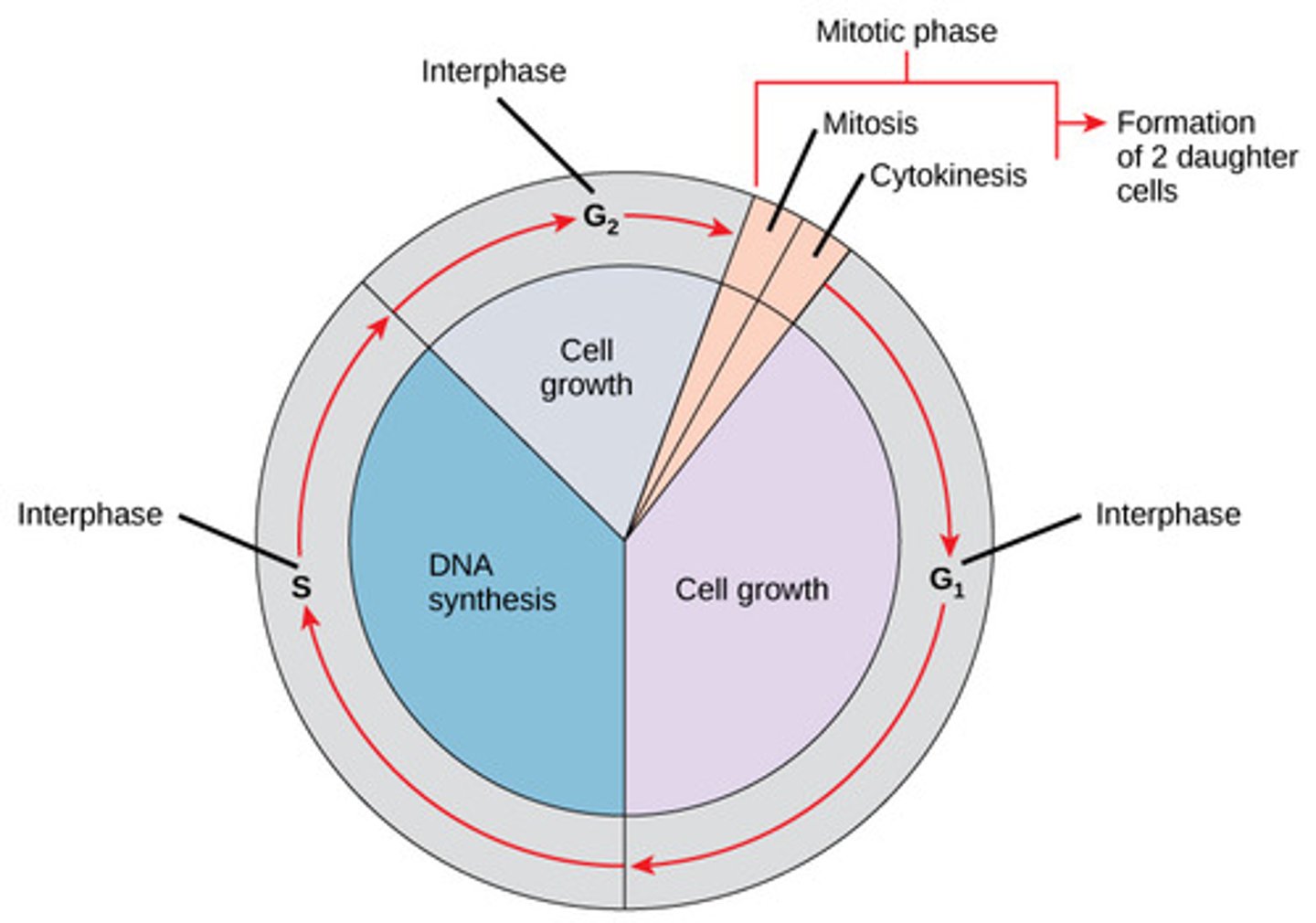
Which phases of the cell cycle constitute interphase?
G1, S, and G2
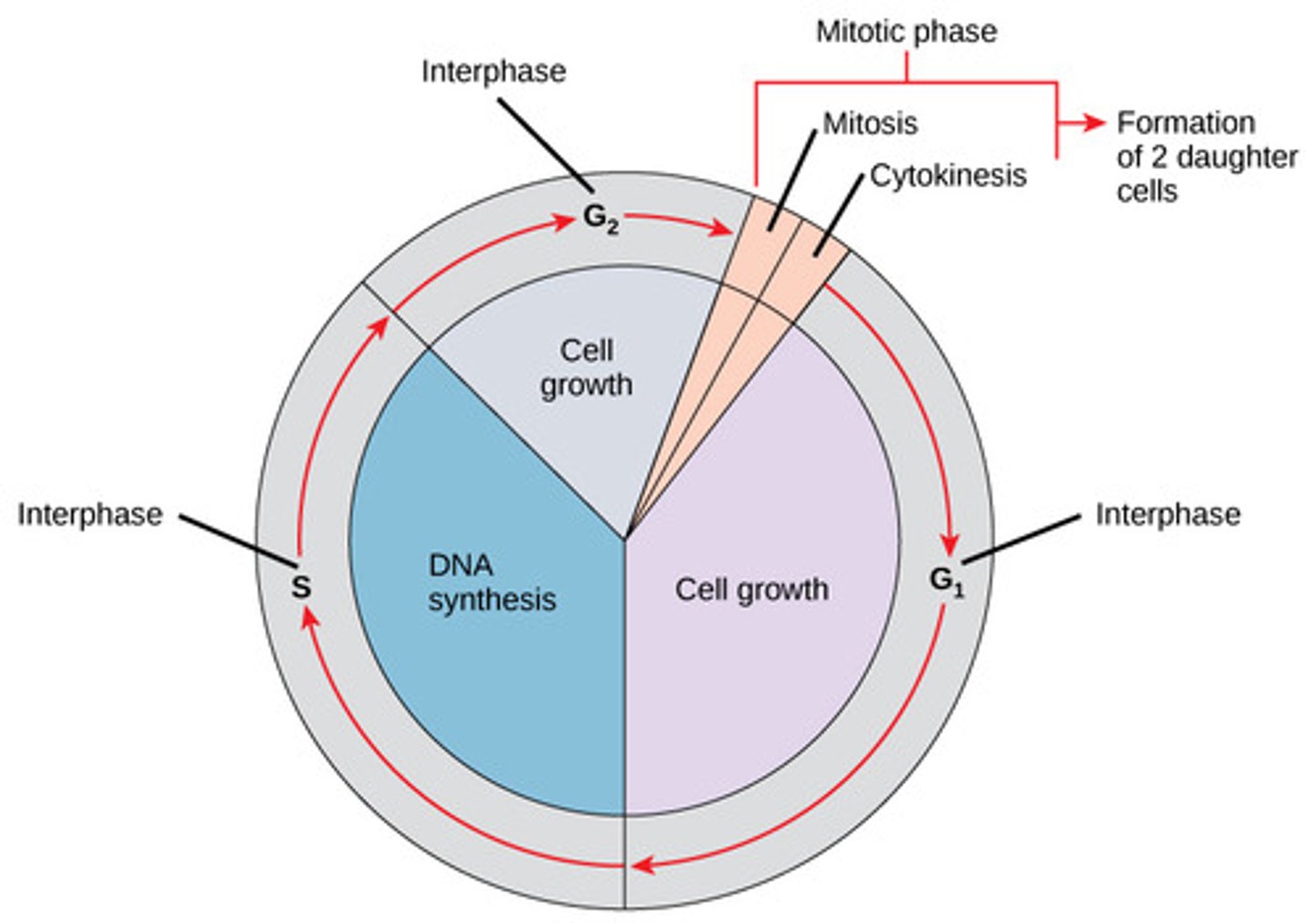
What percentage of the cell cycle is interphase?
90%
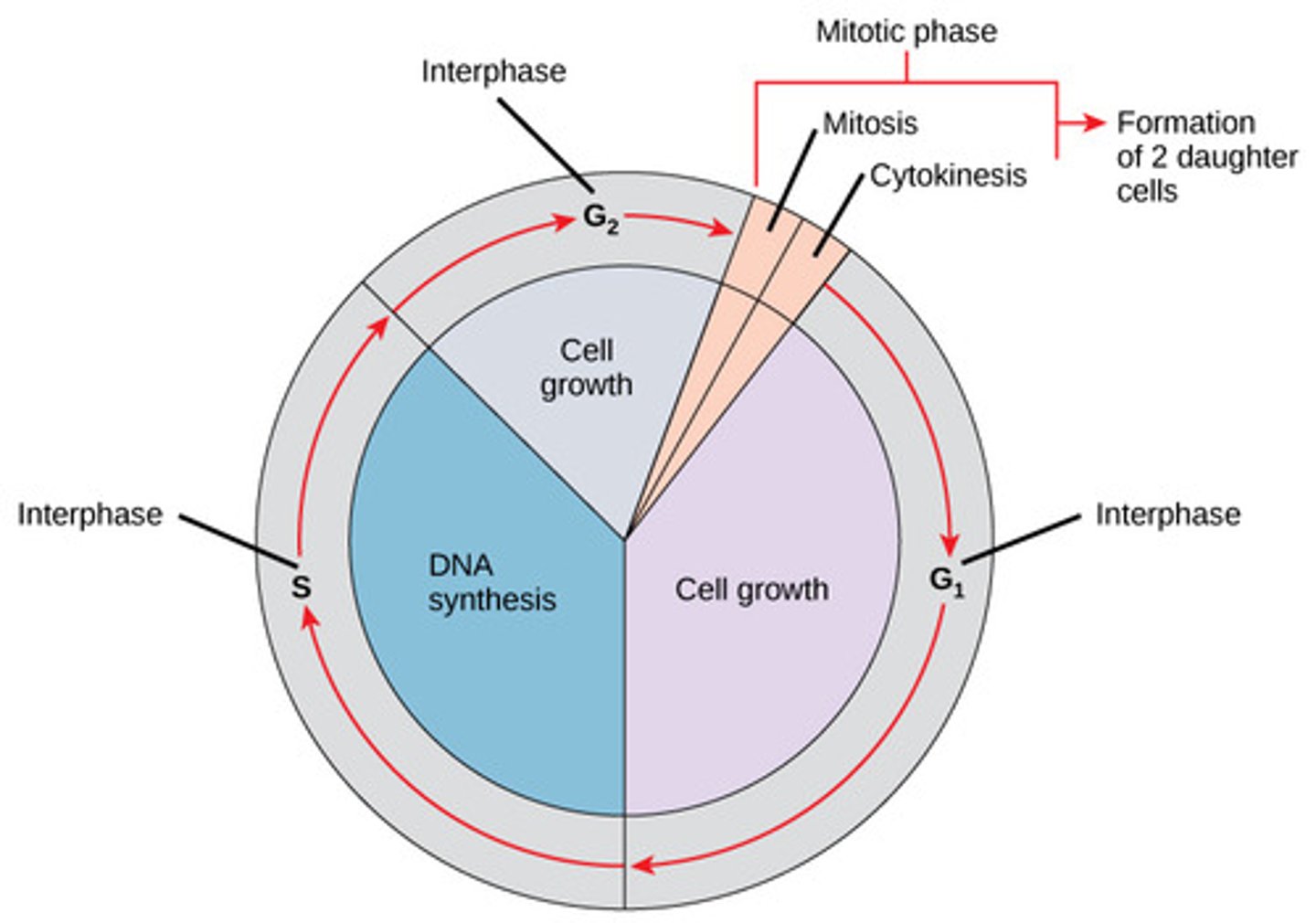
Growth occurs during which cell cycle phases?
all interphase phases
(Note: not just G phases)
What steps occur to ensure that every cell cycle phase is occurring smoothly and as planned?
checkpoints
What is the first and most important checkpoint in the cell cycle?
G1 checkpoint
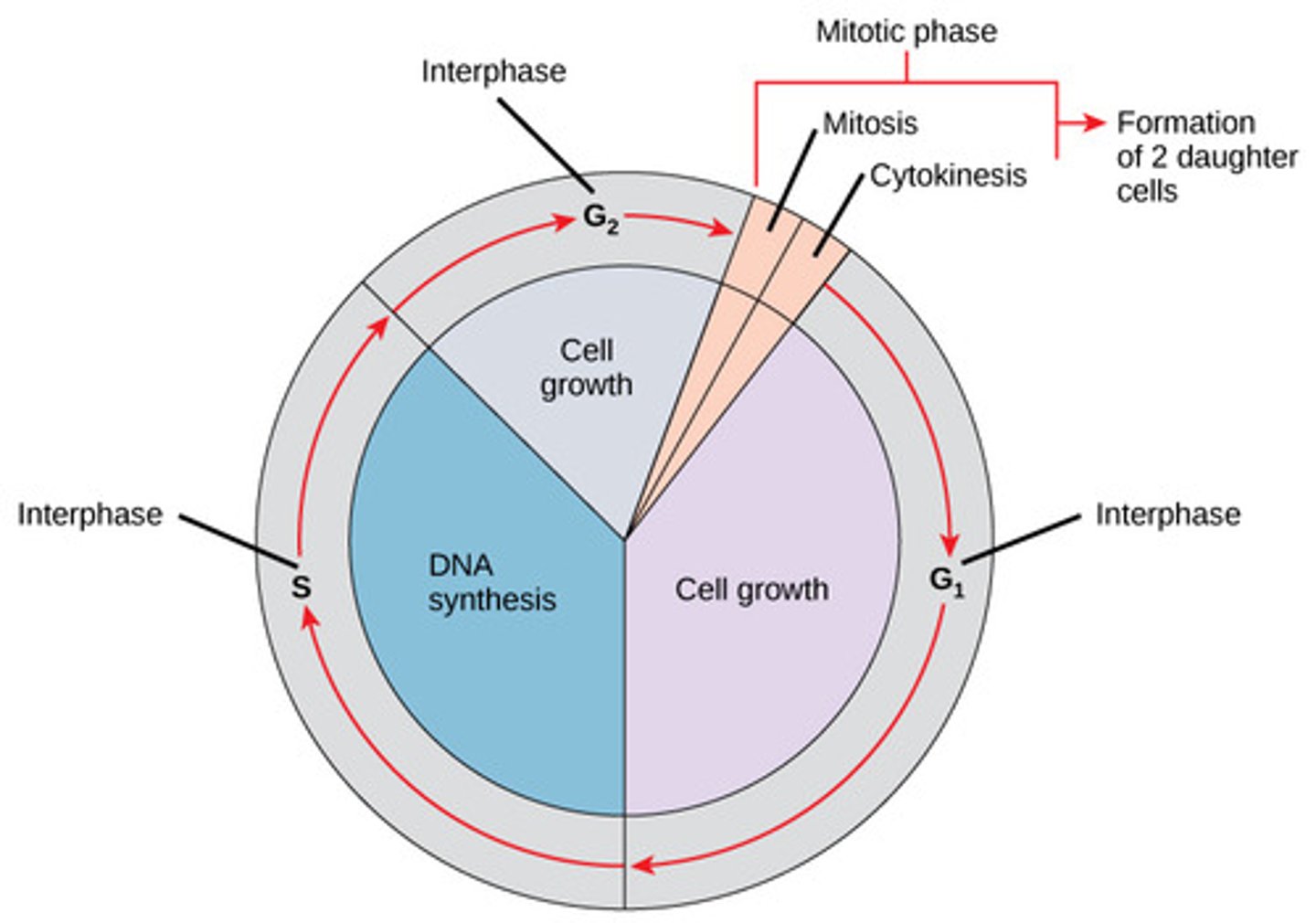
If the G1 checkpoint fails, the cell enters what state?
G0
What type of state is G0?
non-dividing
Which cells can be induced out of G0?
1. liver
2. kidney
Which cells permanently reside in G0 if they enter the phase?
nerve and muscle cells
Which checkpoint of the cell cycle ensures there is sufficient mitosis promoting factor (MPF) levels to proceed to mitosis ?
G2
The accuracy of which process is checked at the G2 checkpoint?
DNA replication
Which checkpoint of the cell cycle determines if all chromosomes are attached to kinetochores?
M
(Note: before G1 during mitosis)
What enzymes activate proteins that regulate the cell cycle via phosphorylation?
cyclin-dependent kinases (CDKs)
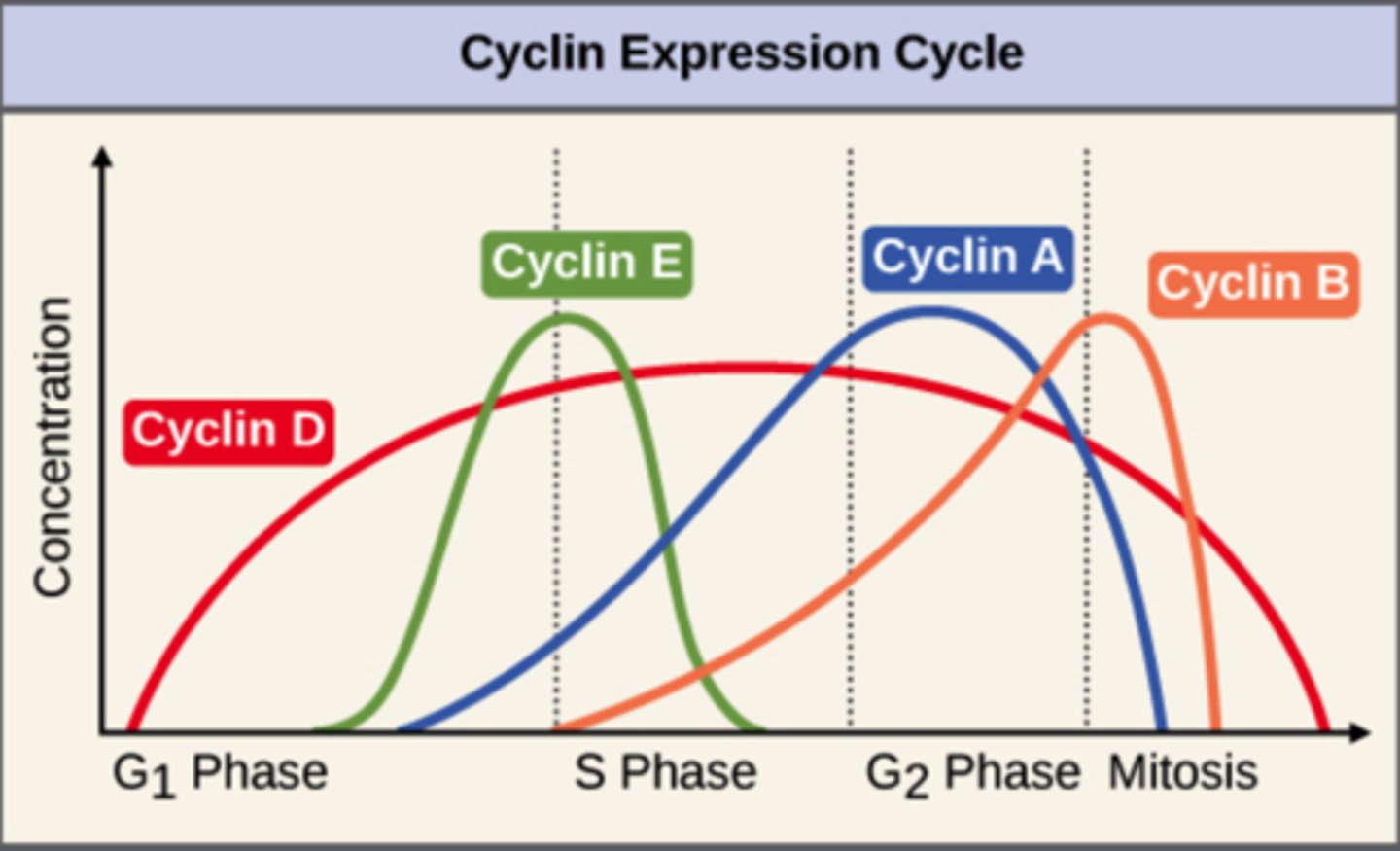
CDKs are activated by what molecules?
protein cyclins
(Note: vary in type and concentration throughout each phase of the cell cycle)
The plasma membrane contains receptors for which regulator that stimulates cell division?
growth factor
What process stops cells from dividing when the surrounding cell density reaches a maximum?
density-dependent inhibition
What is the phenomenon that most cells only divide when they are attached to an external surface?
anchorage dependence
Which cells defy CDKs, growth factors, density-dependent inhibition, and anchorage dependence?
cancer cells
What are the steps of meiosis?
meiosis I and meiosis II
(Note: each have similar
steps to mitosis)
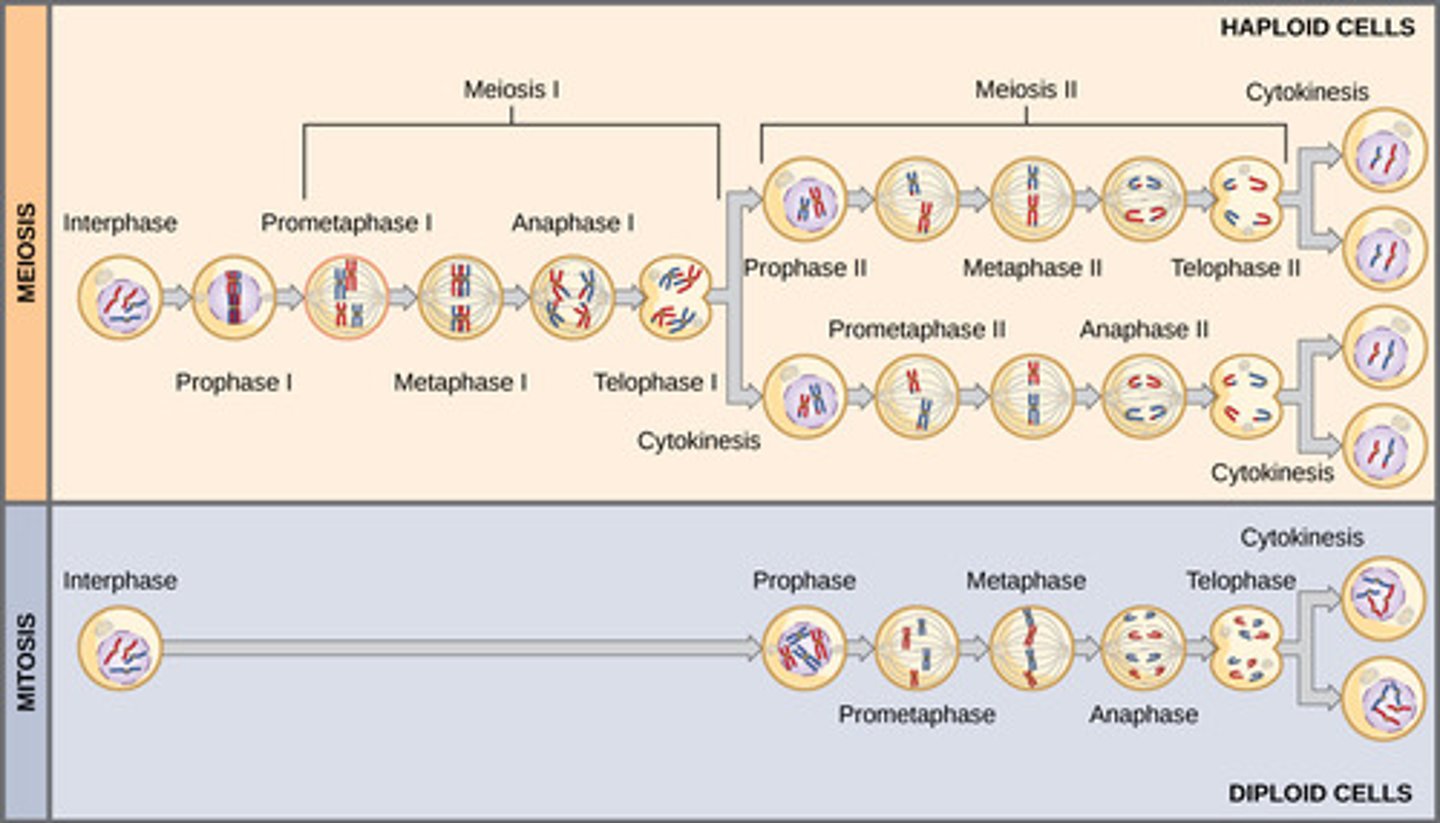
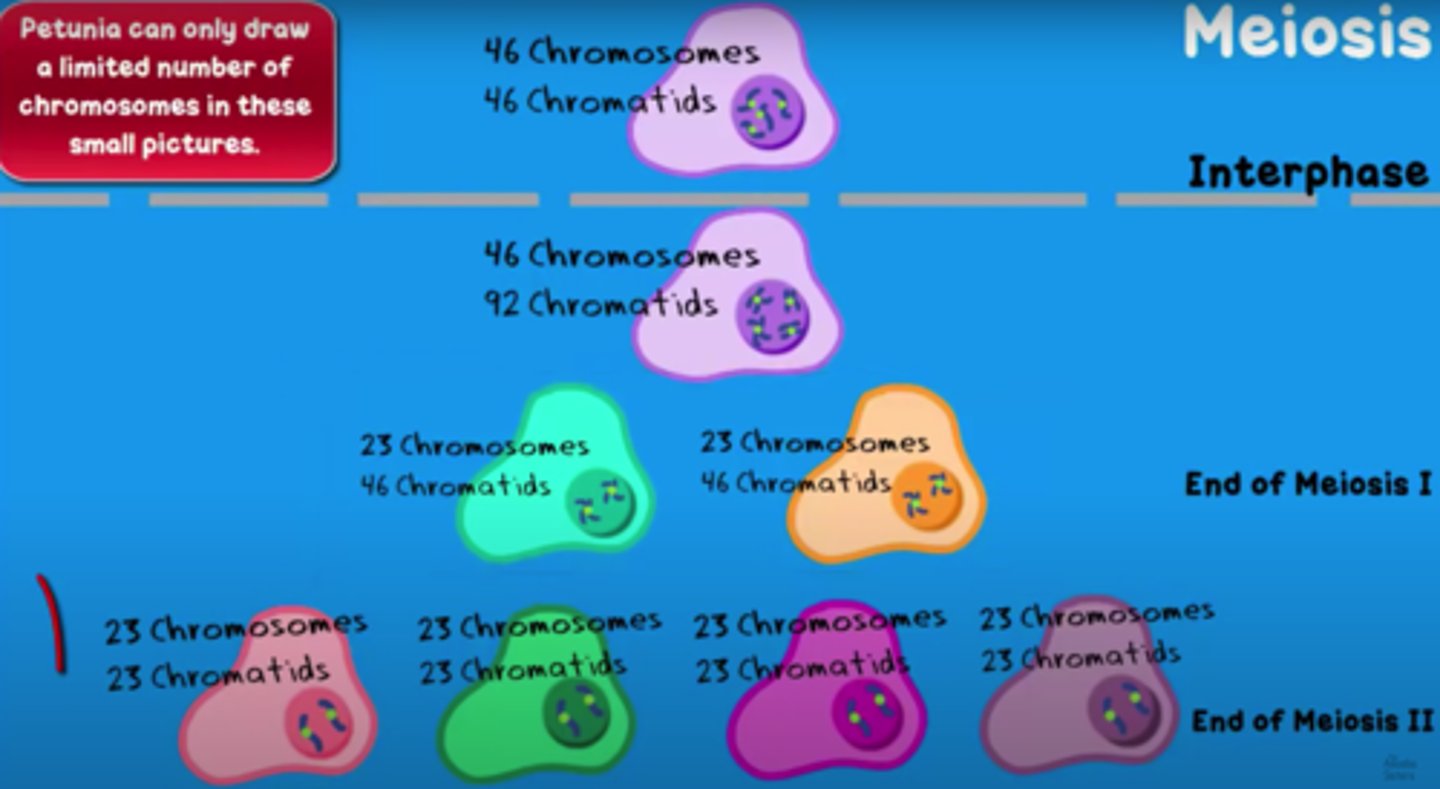
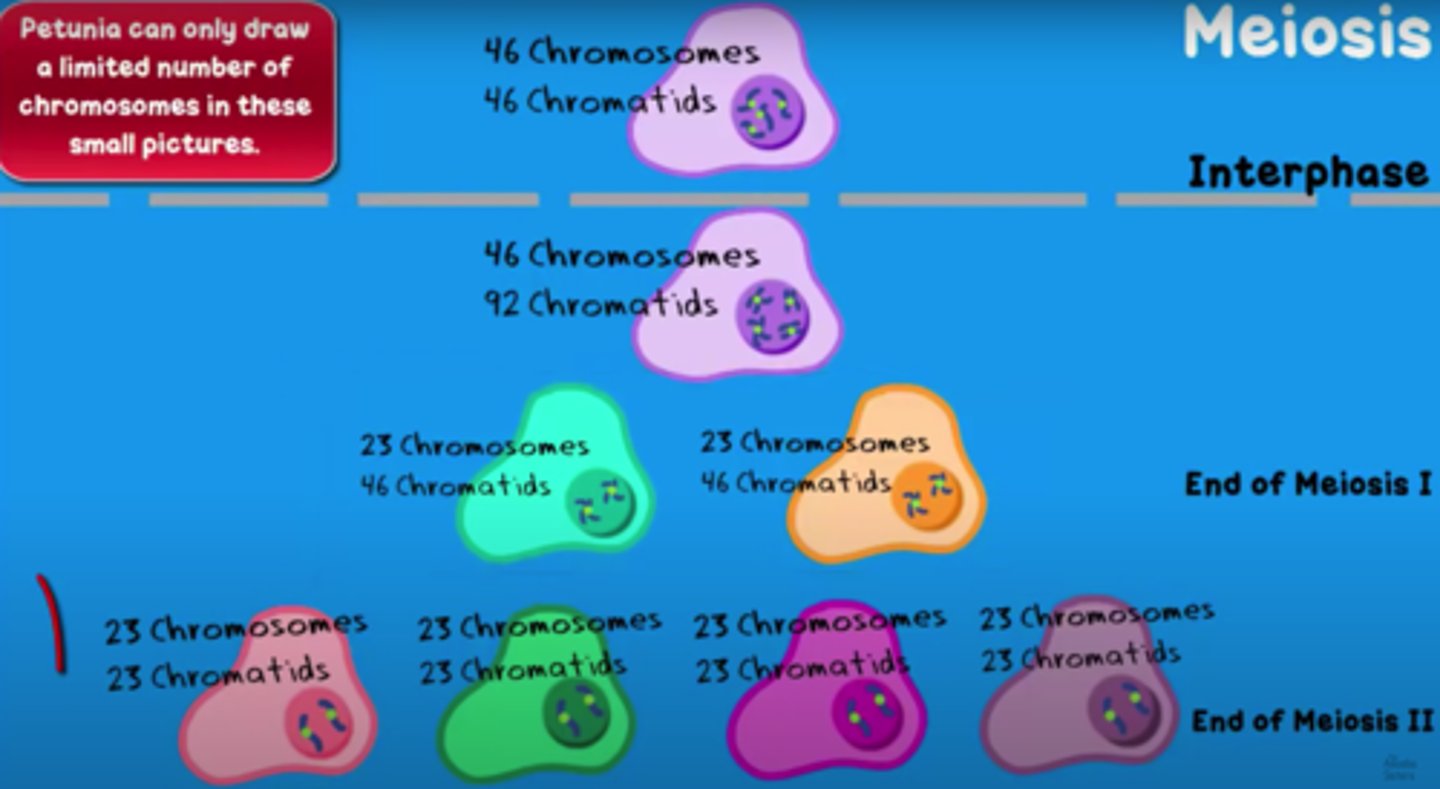
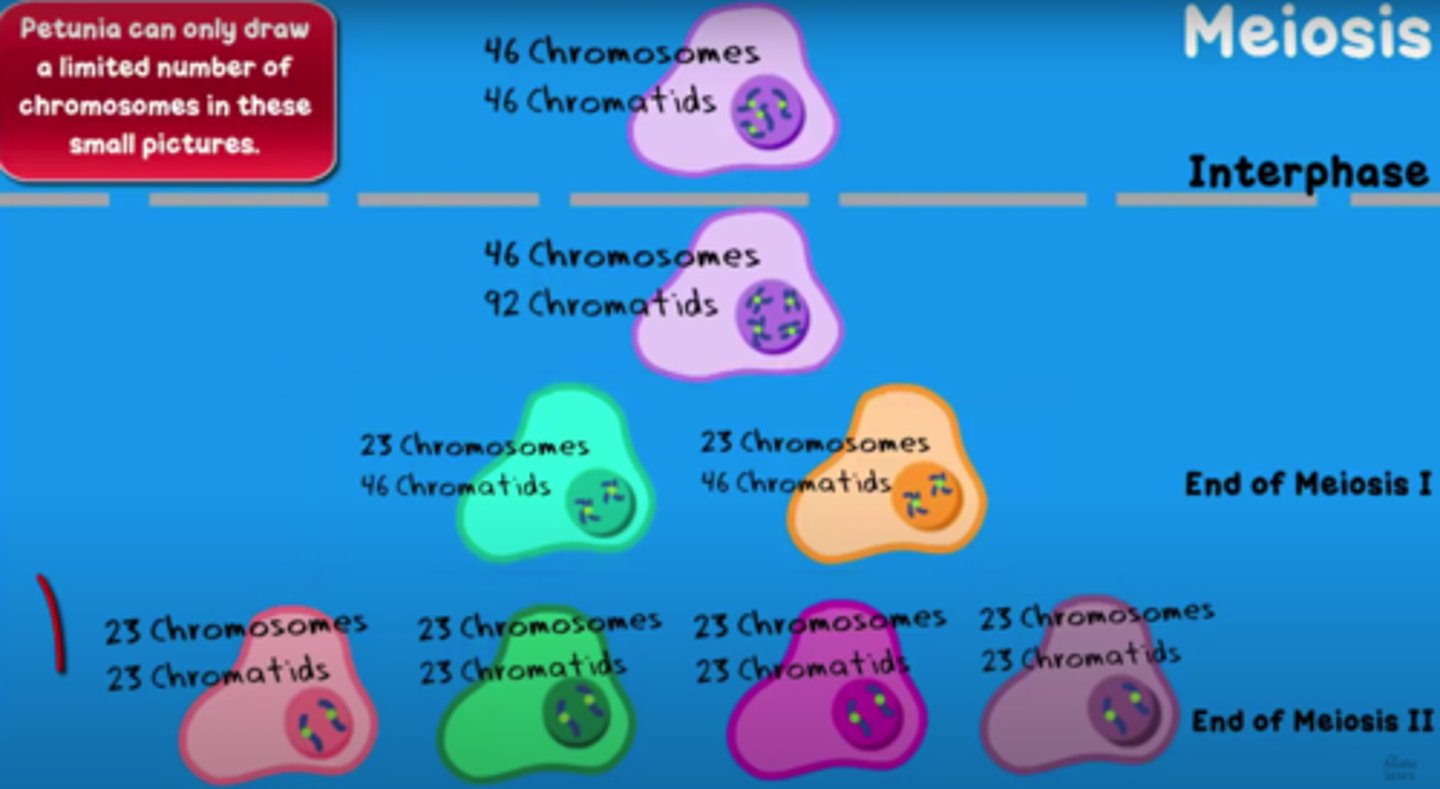
How many chromosomes/chromatids are present after interphase before meiosis I begins?
46 chromosomes
92 chromatids
Which step in meiosis I involves nuclear material breaking down, chromatin condensing, and the mitotic spindle development?
prophase I
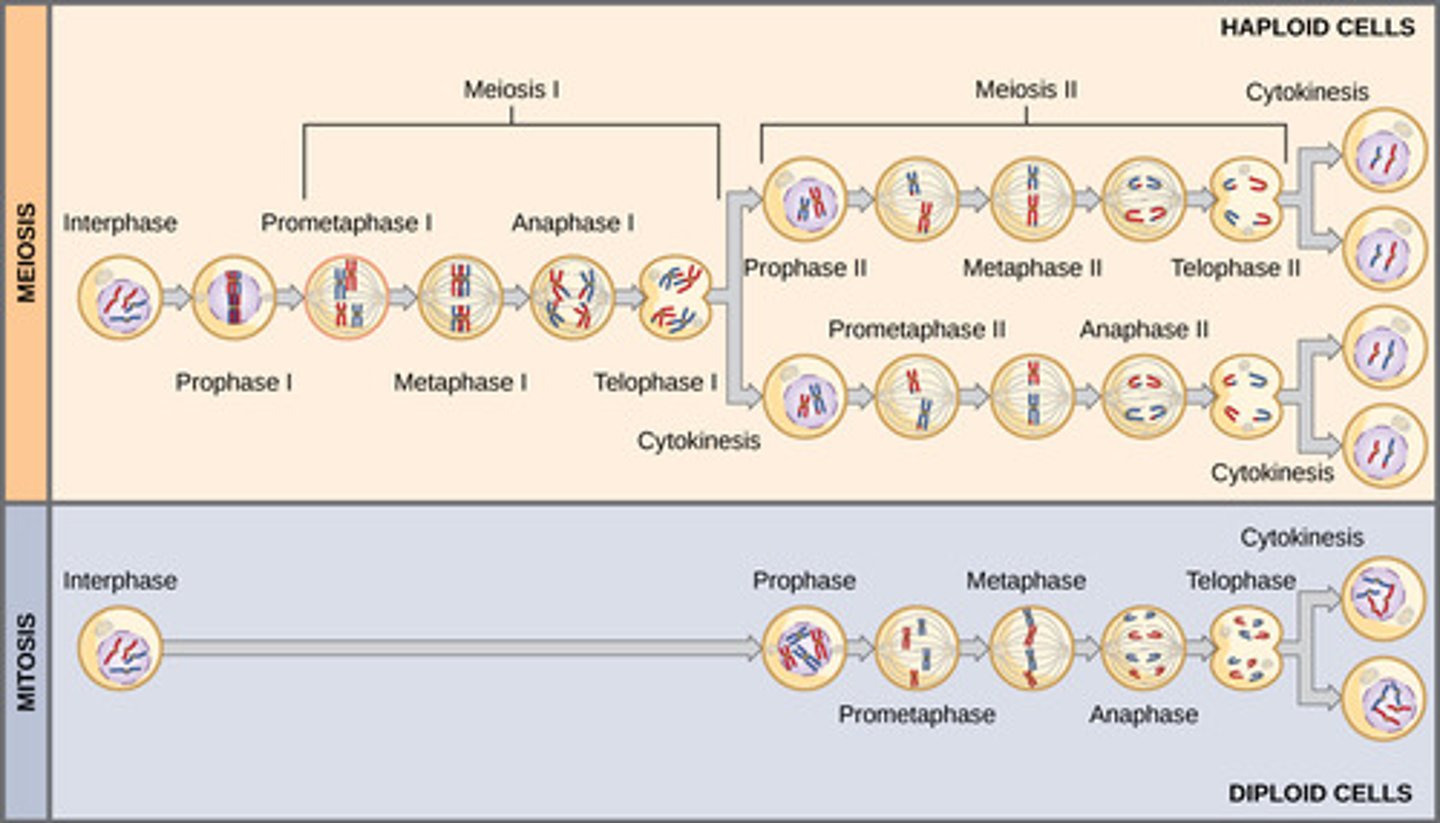
What action do the microtubules perform in prophase I?
attach to kinetochores
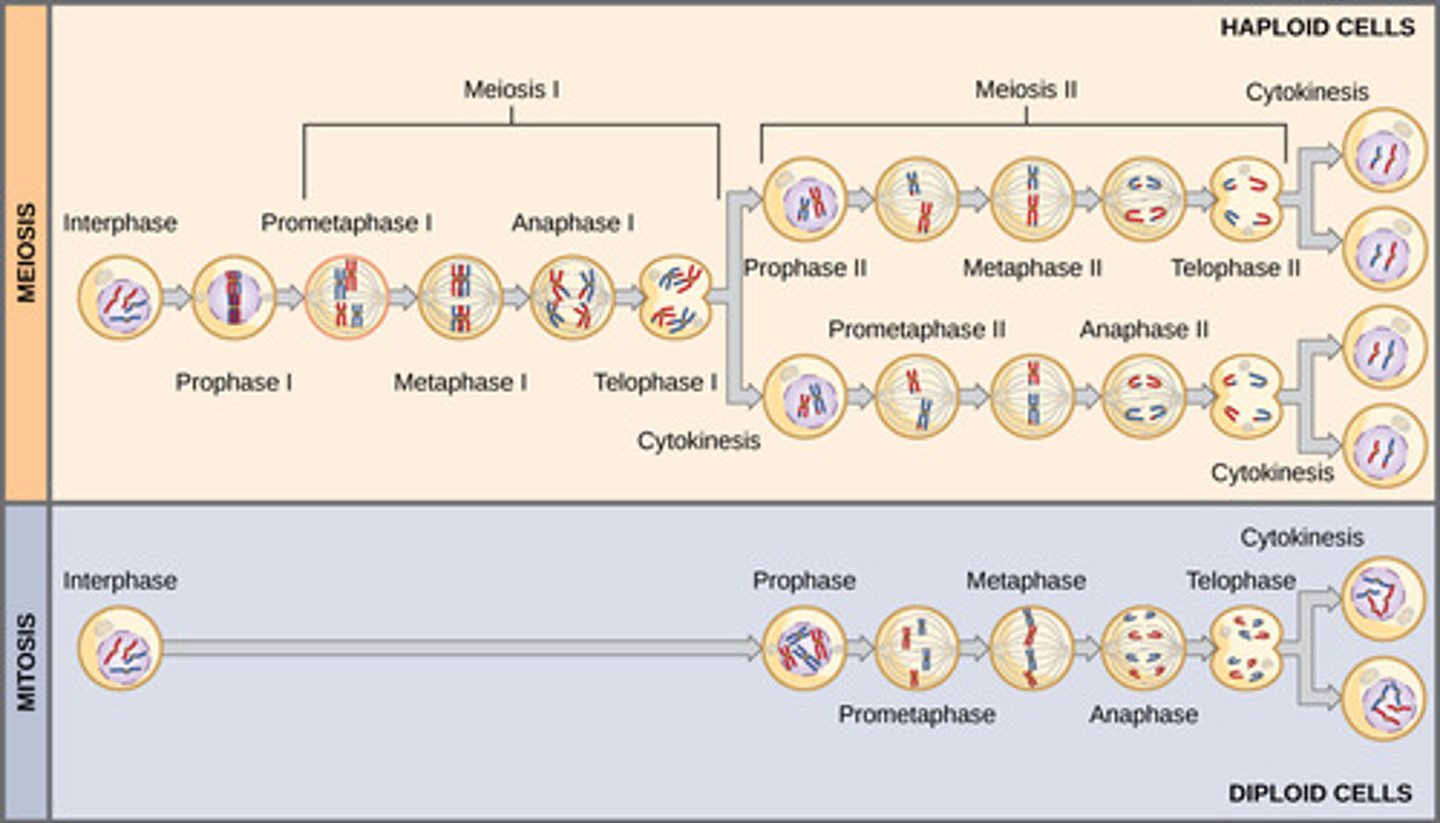
What is the process that involves homologous chromosomes pairing up, forming a tetrad (two bivalents)?
synapsis
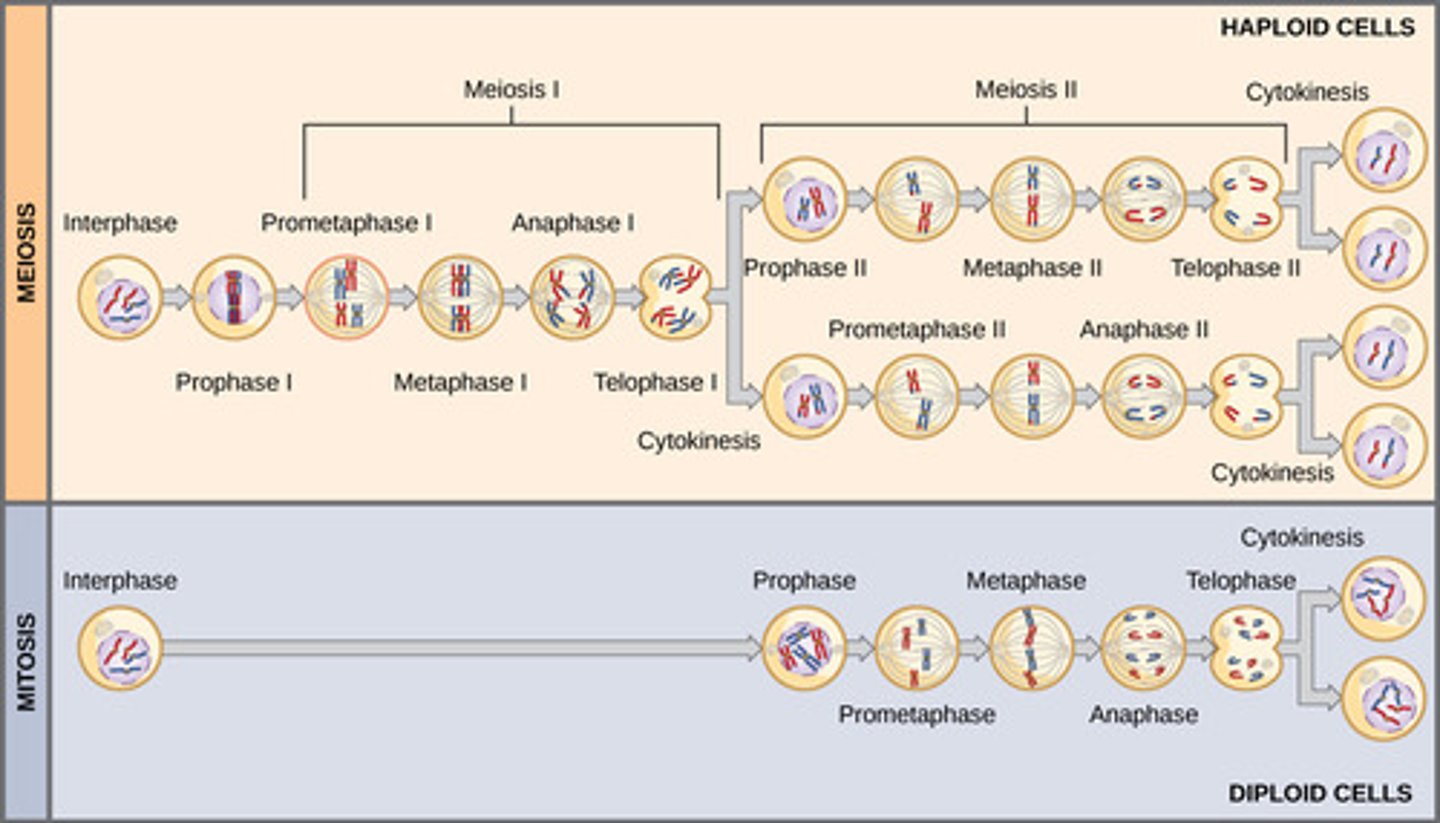
What is a tetrad?
group of 4 chromatids
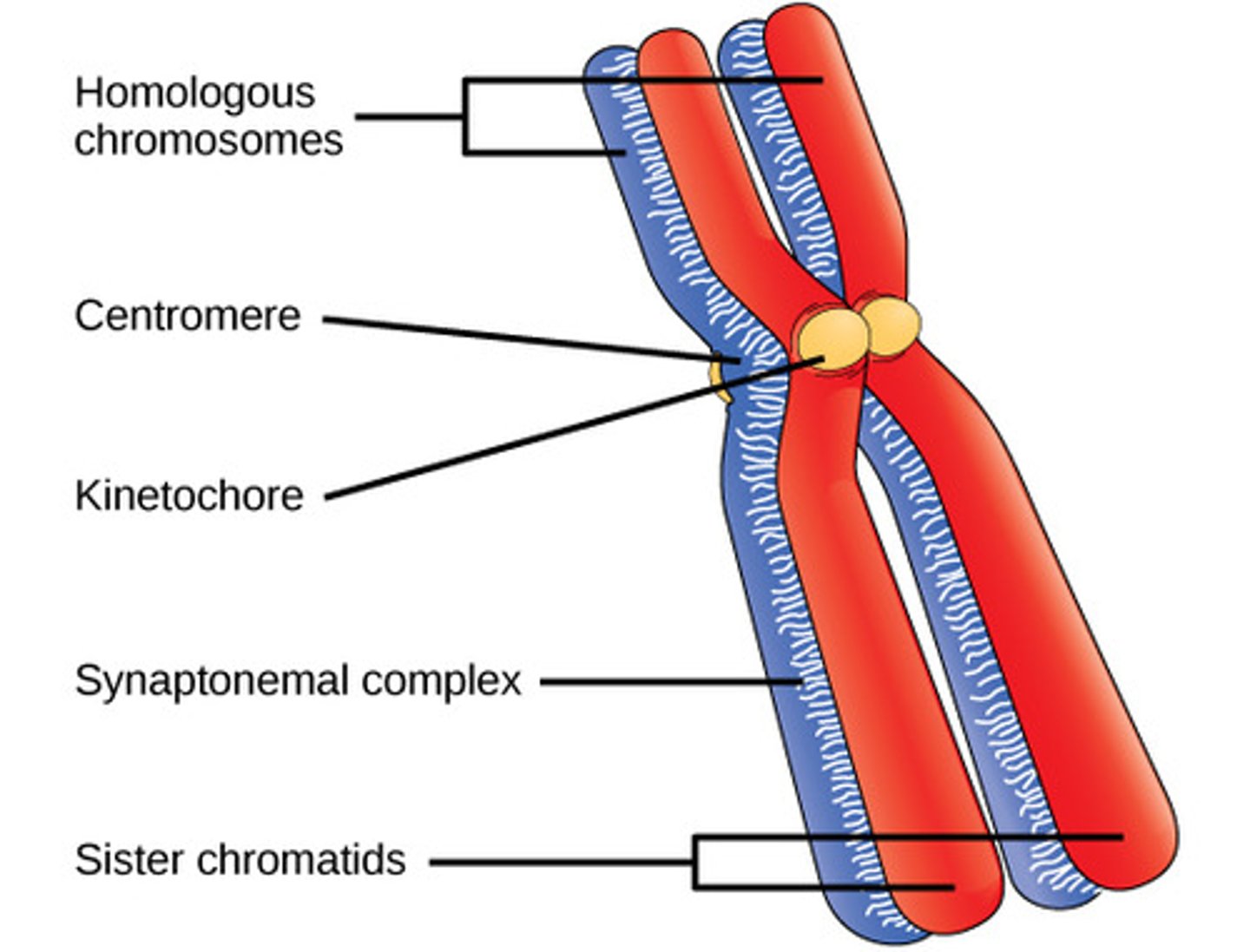
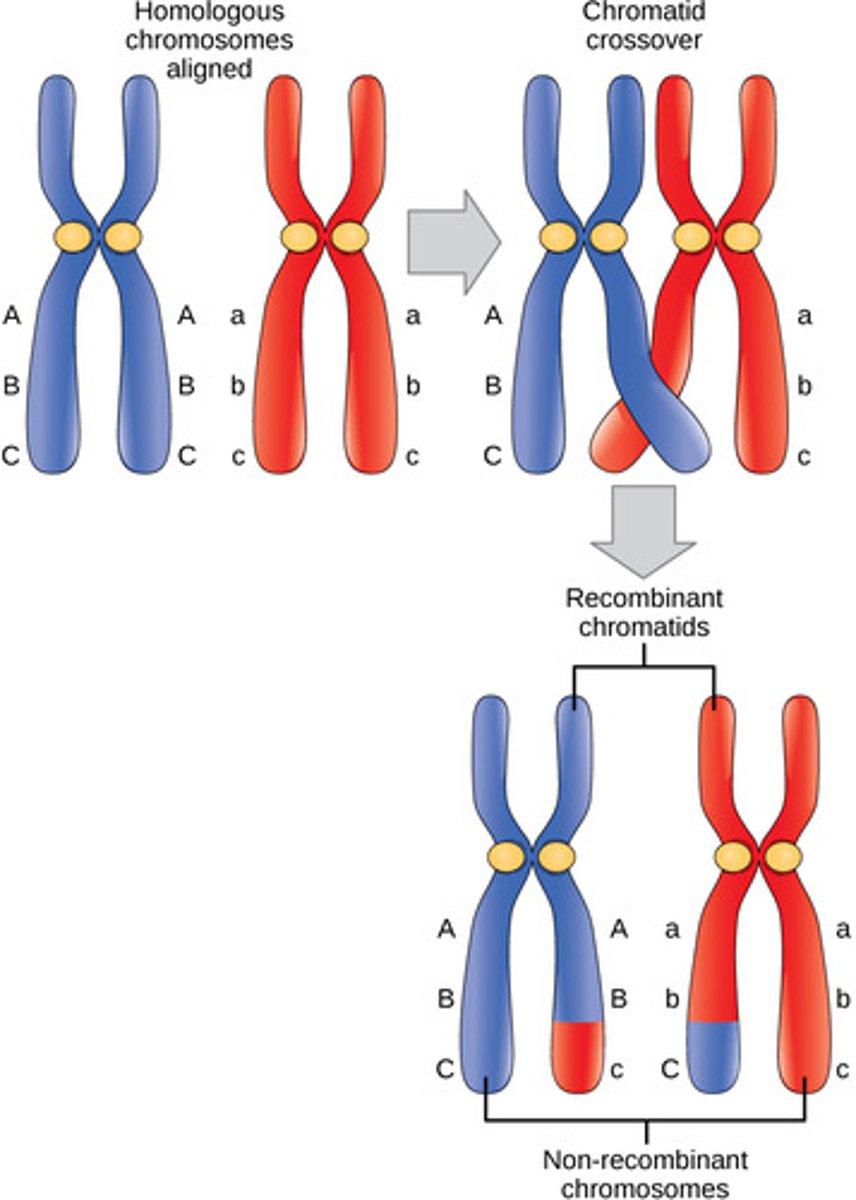
What process allows genetic recombination to occur in prophase I?
crossing over
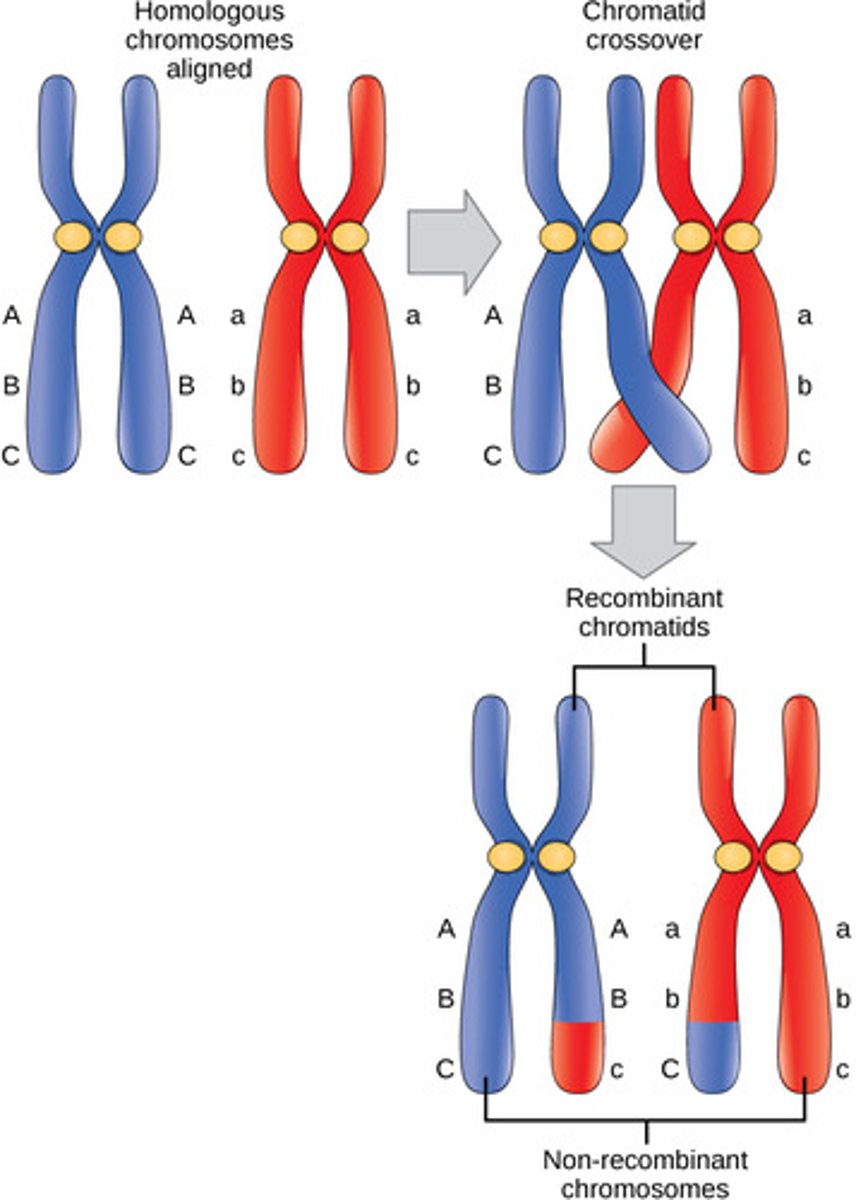
What is the region where crossing over of non-sister chromatids occurs?
chiasmata
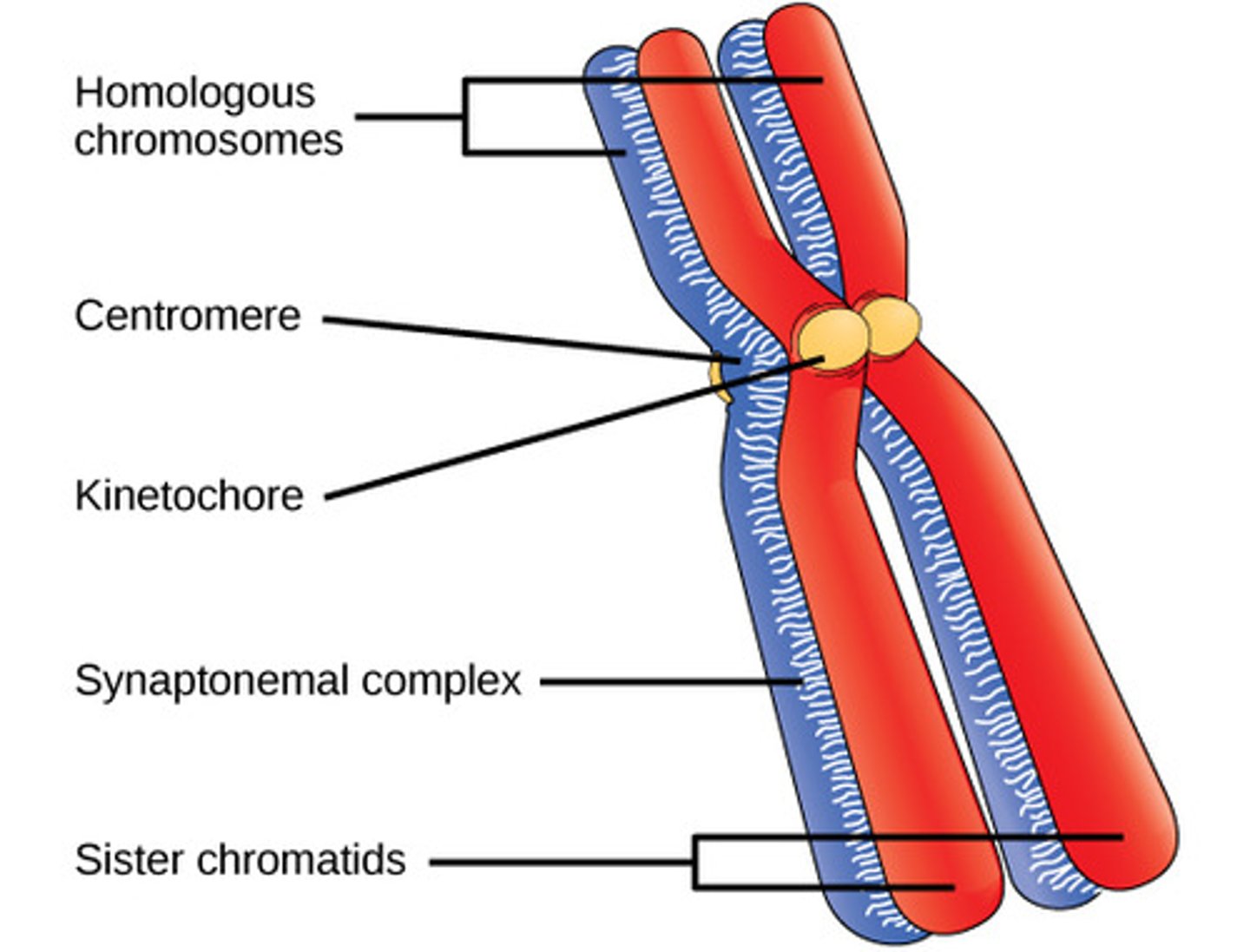
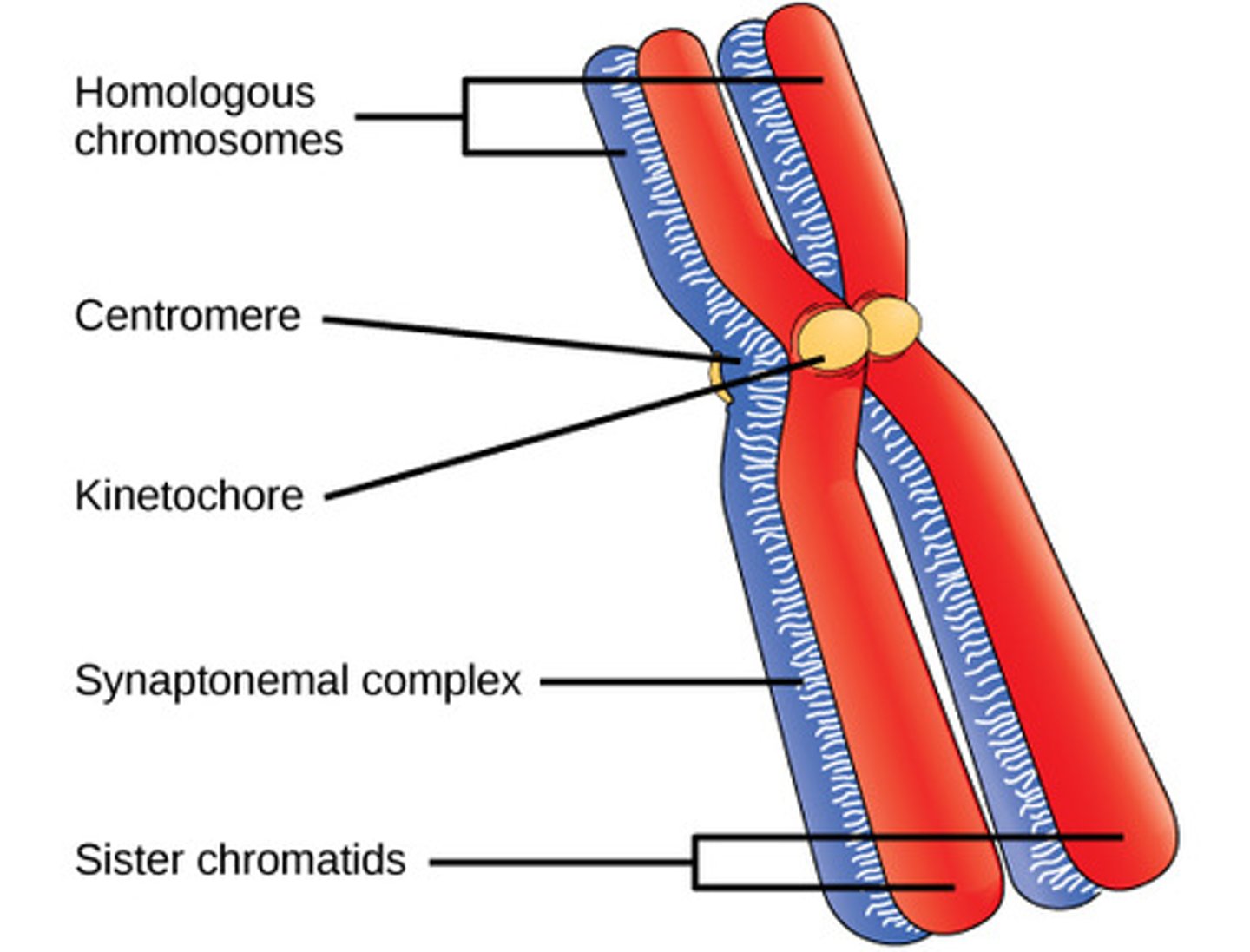
What is the protein structure that temporarily forms between homologous chromosomes during prophase I?
synaptonemal complex
(Note: gives rise to tetrad
with chiasmata and crossing over)
What are the 5 stages of prophase I?
1. leptotene
2. zygotene
3. pachytene
4. diplotene
5. diakinesis
Which stage of prophase I involves chromosomes condensing?
leptotene
Which stage of prophase I involves synapsis beginning and the synaptonemal complex forming?
zygotene
Which stage of prophase I involves completed synapsis and crossing over?
pachytene
Which stage of prophase I involves the synaptonemal complex disappearing, but chiasma is still present?
diplotene
Which stage of prophase I involves nuclear envelope fragmenting and completed chromosome condensing?
diakinesis
Which step of meiosis I includes microtubules attaching to kinetochores of each homologous pair?
prophase
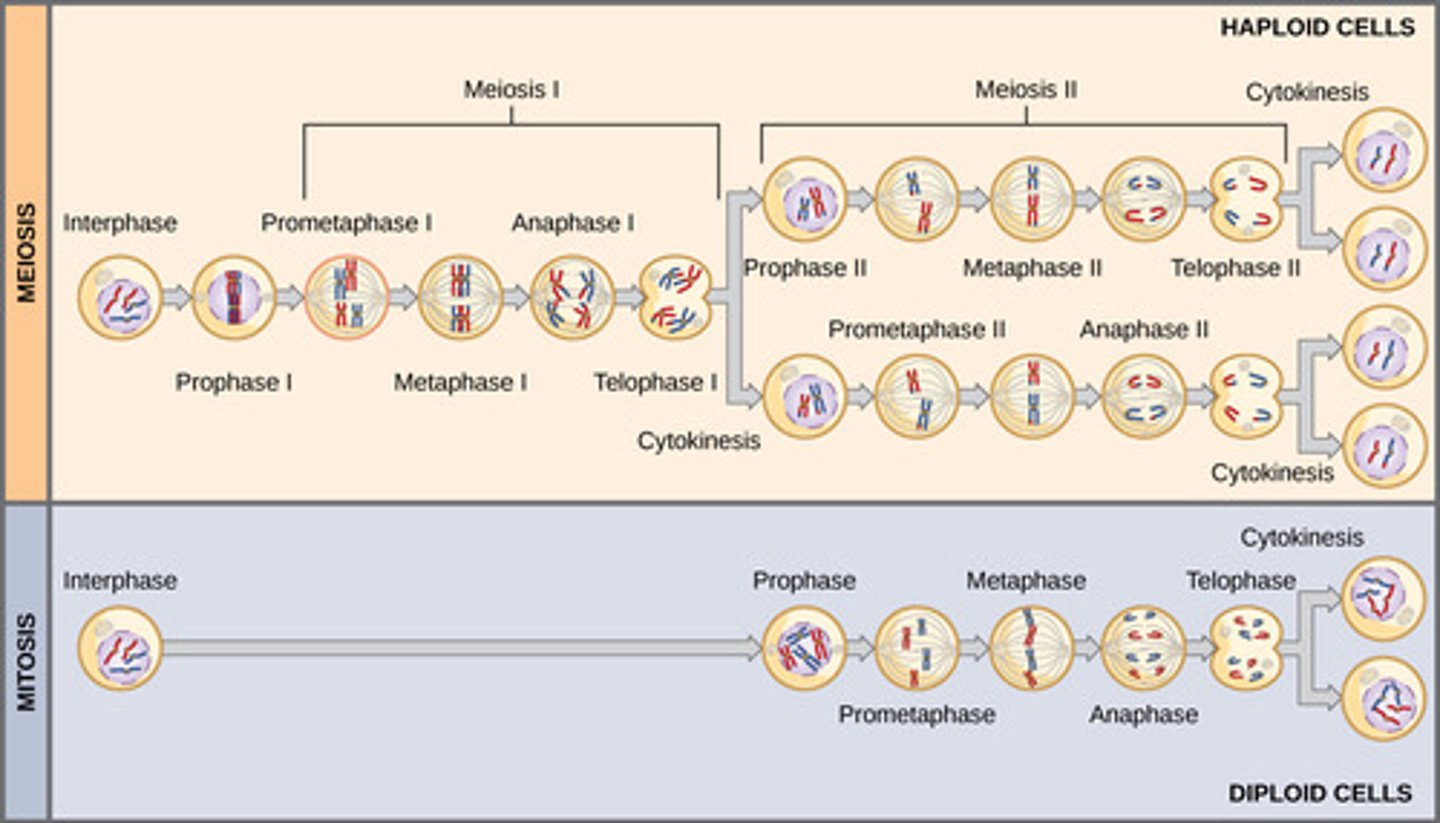
Which step of meiosis I includes homologous pairs pulling to opposite sides (disjunction)?
anaphase I
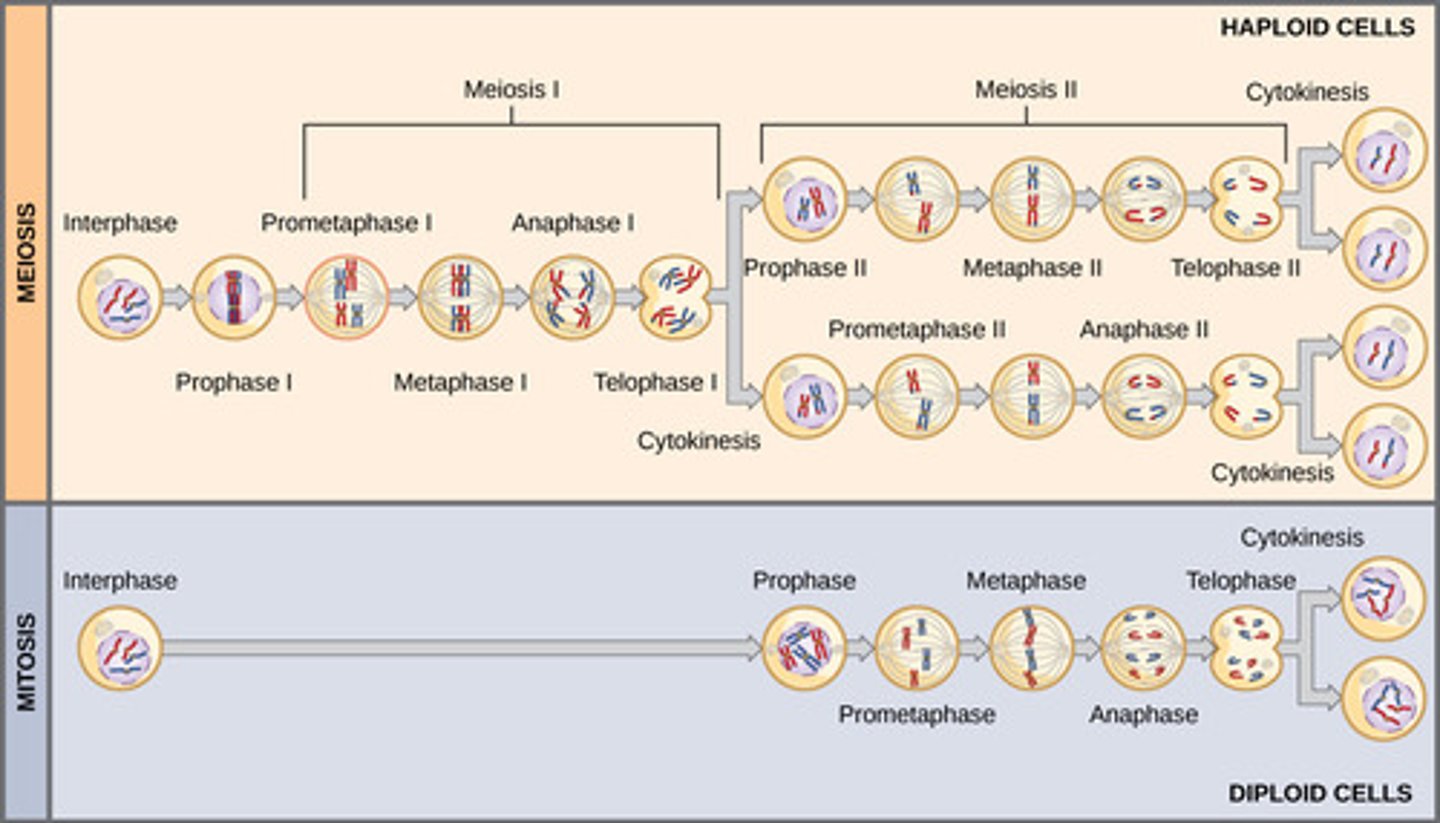
Which step of meiosis I has nuclear membrane develops and each pole forms a new nucleus with half the number of chromosomes?
telophase I
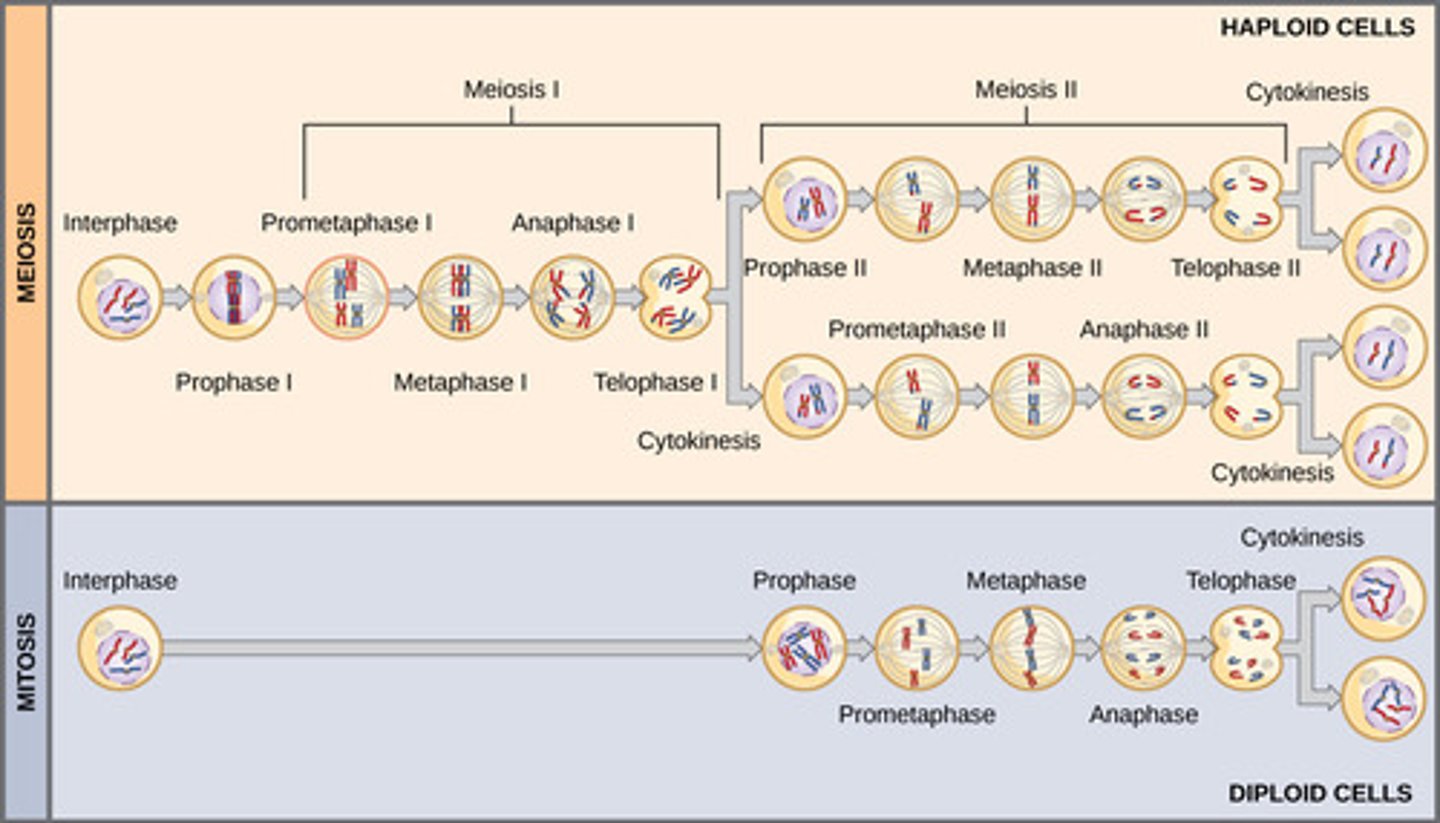
how many chromosomes/chromatids are present after meiosis I?
23 chromosomes
46 chromatids
(Note: 2 cells with these numbers)
What step of meiosis II has the nuclear envelope disappear and the spindle develop?
prophase II
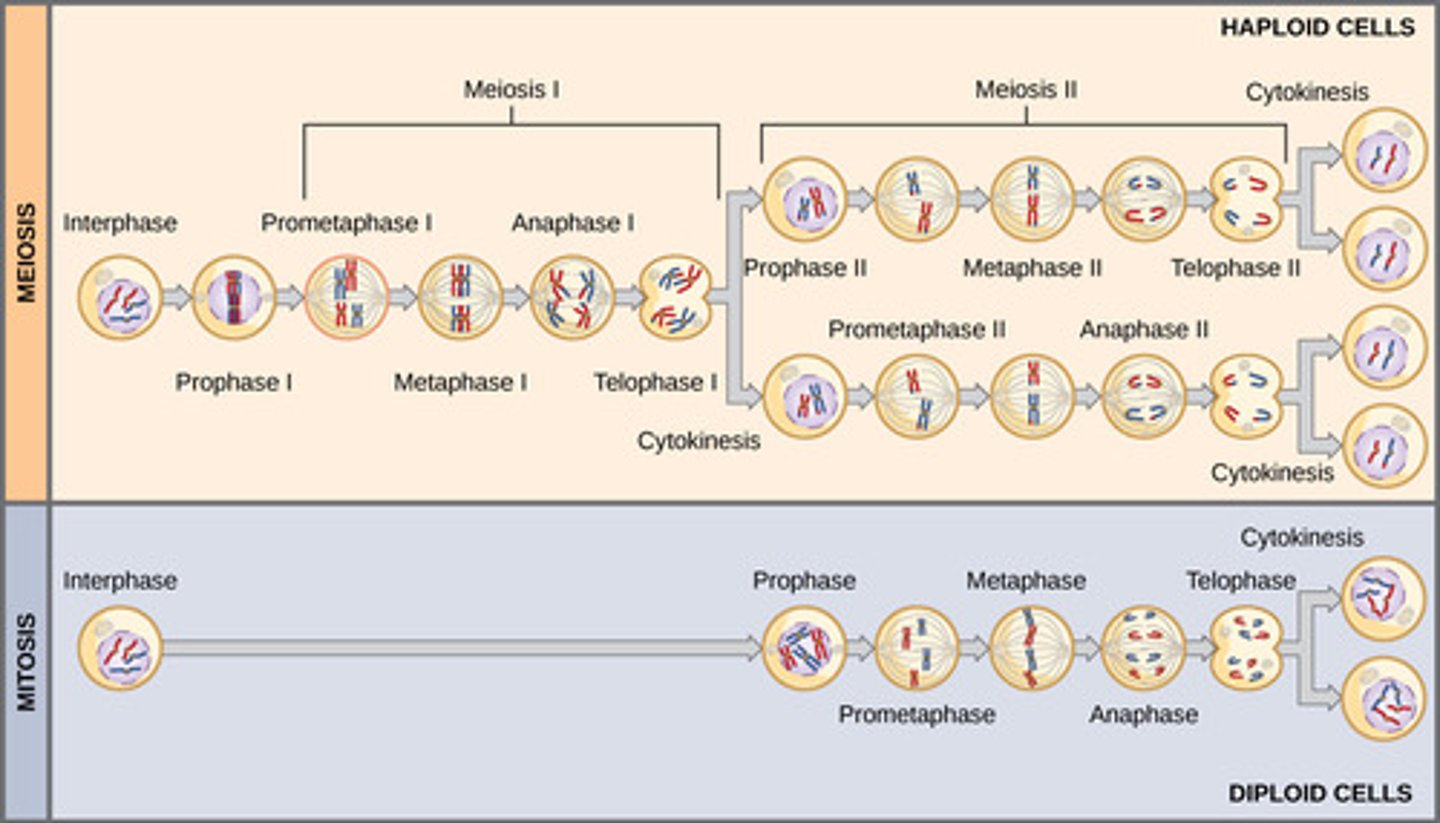
What is the major difference between prophase II and prophase I
no crossing over in prophase II
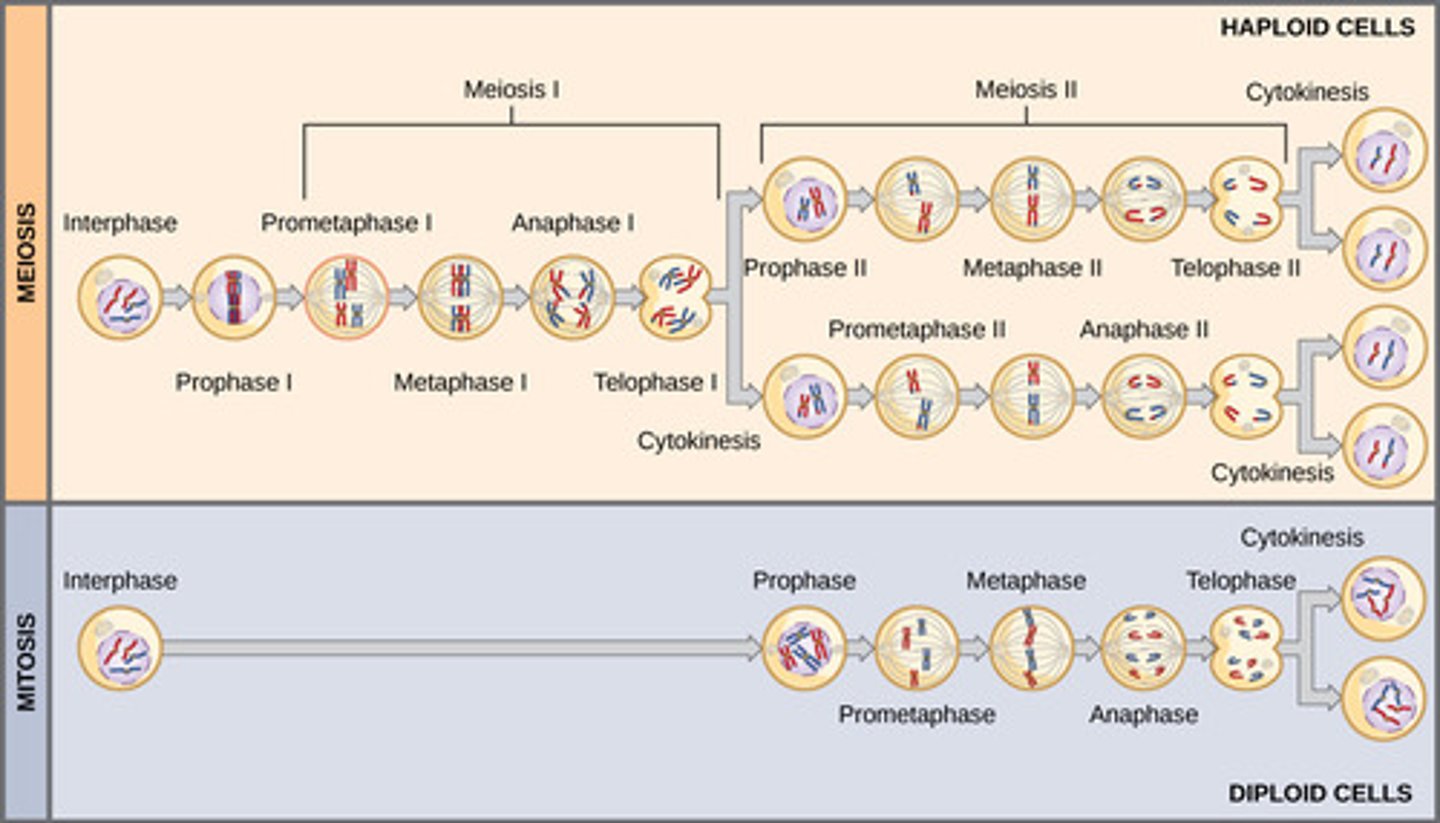
Which step of meiosis II has the chromosomes lining up across the equator of each cell?
metaphase II
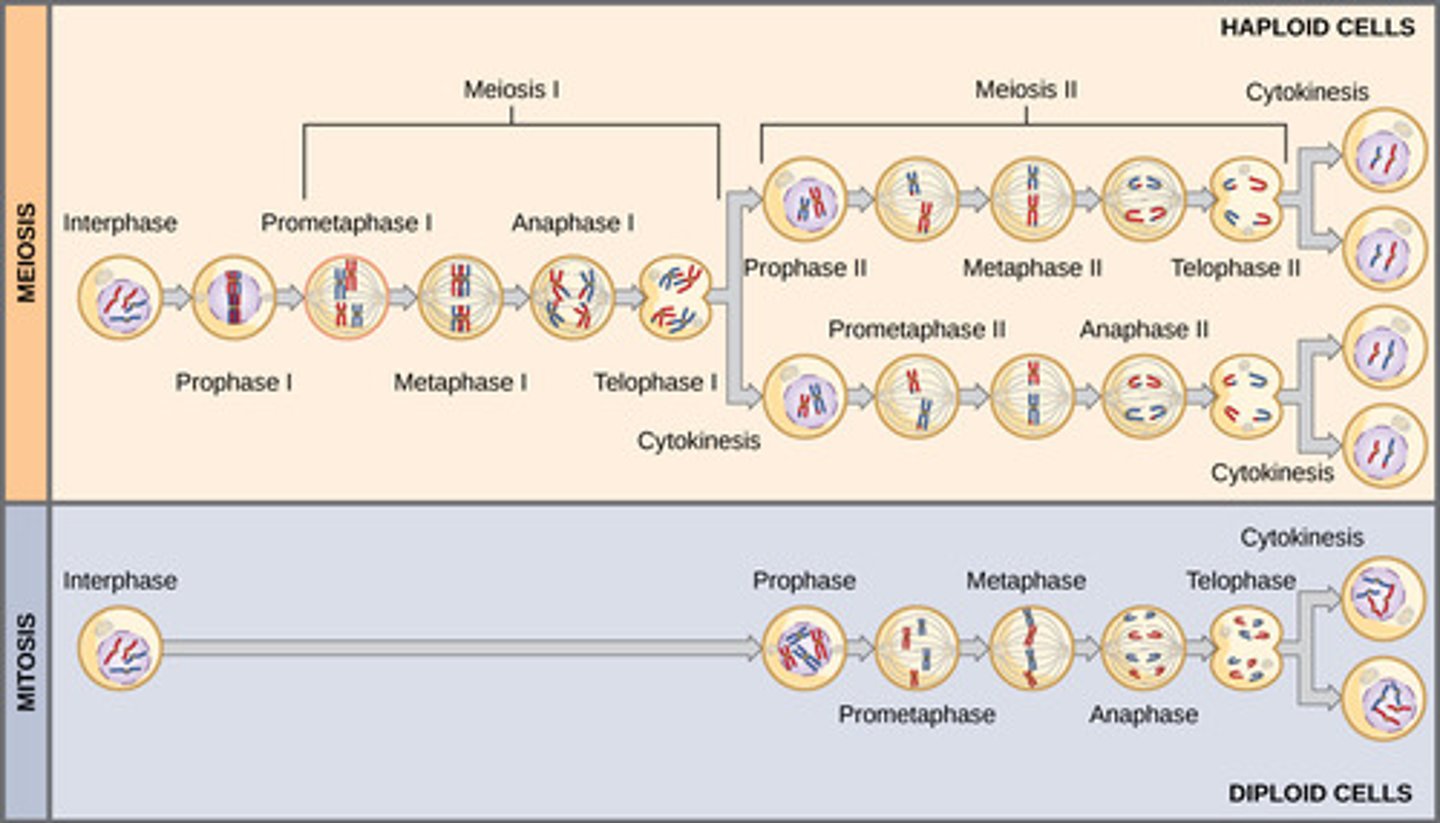
Which step of meiosis II has each chromosome pulled into 2 separate chromatids and migrate to opposite poles of the cell?
anaphase II
(Note: still same number
of chromosomes in each
cell, just half the chromatids)
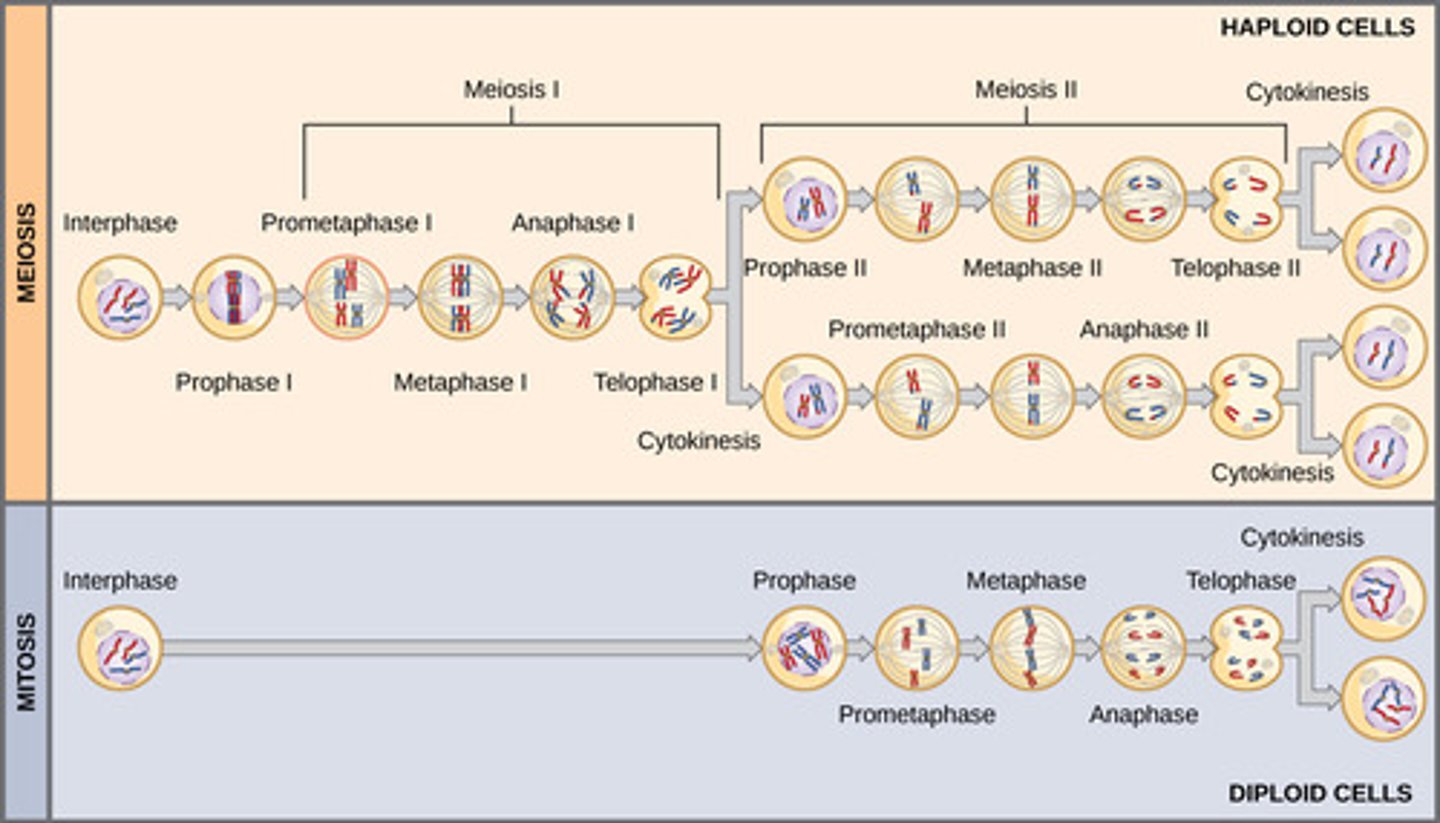
Which step of meiosis II has the nuclear envelope reappearing and cytokinesis occurring?
telophase II
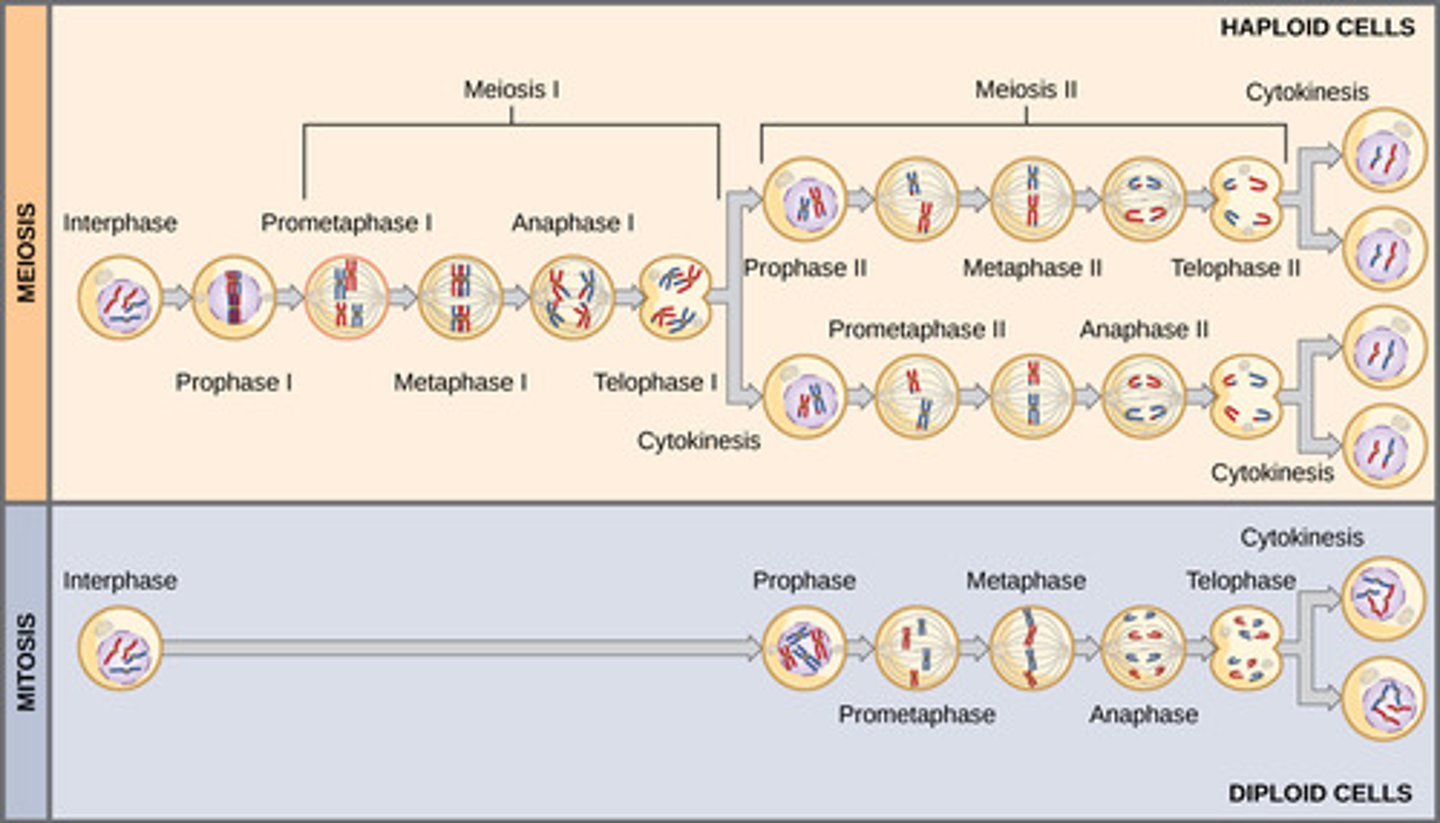
how many chromosomes/chromatids are present after meiosis II?
23 chromosomes
23 chromatids
(Note: 4 haploid cells
with these numbers)
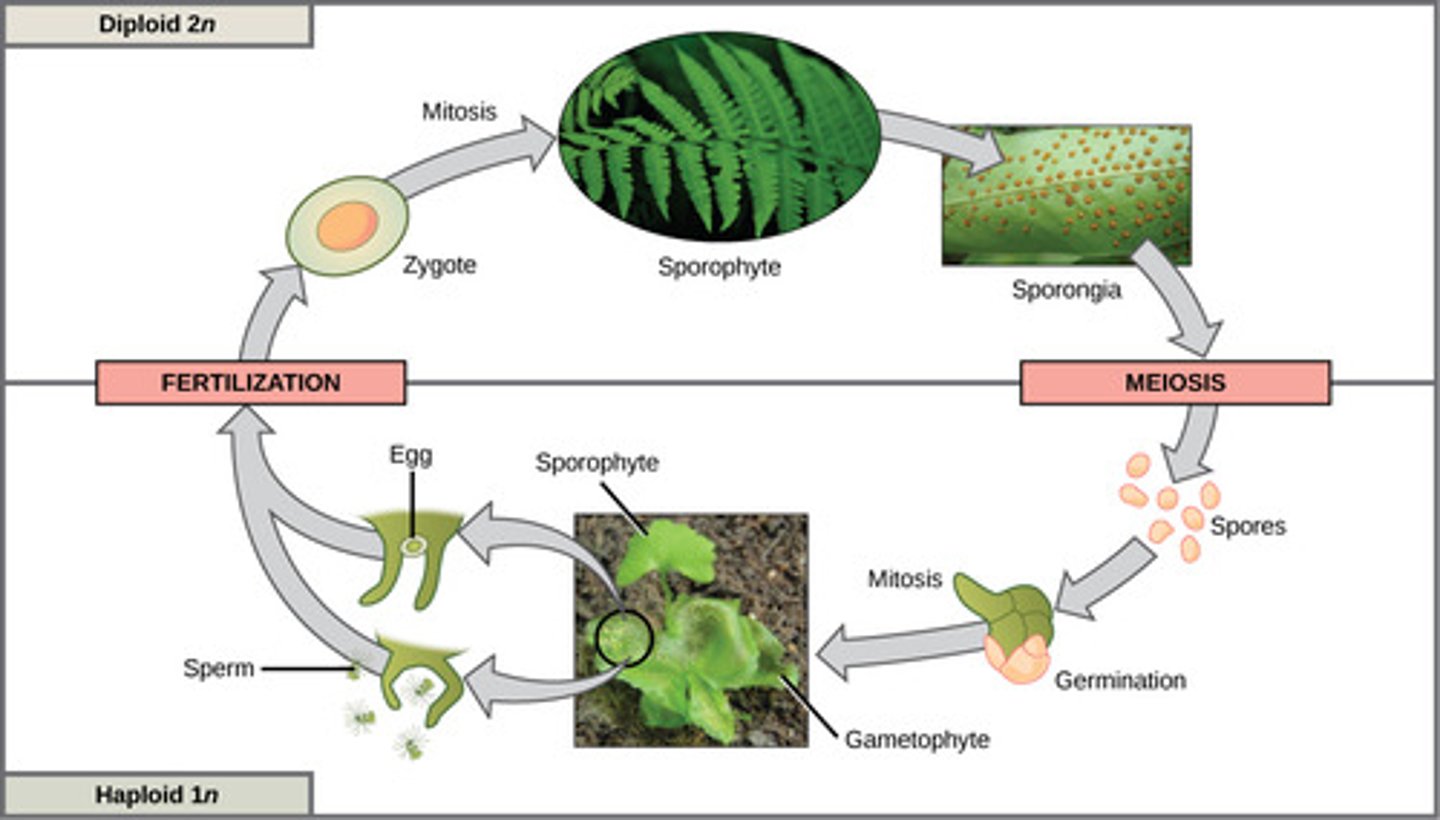
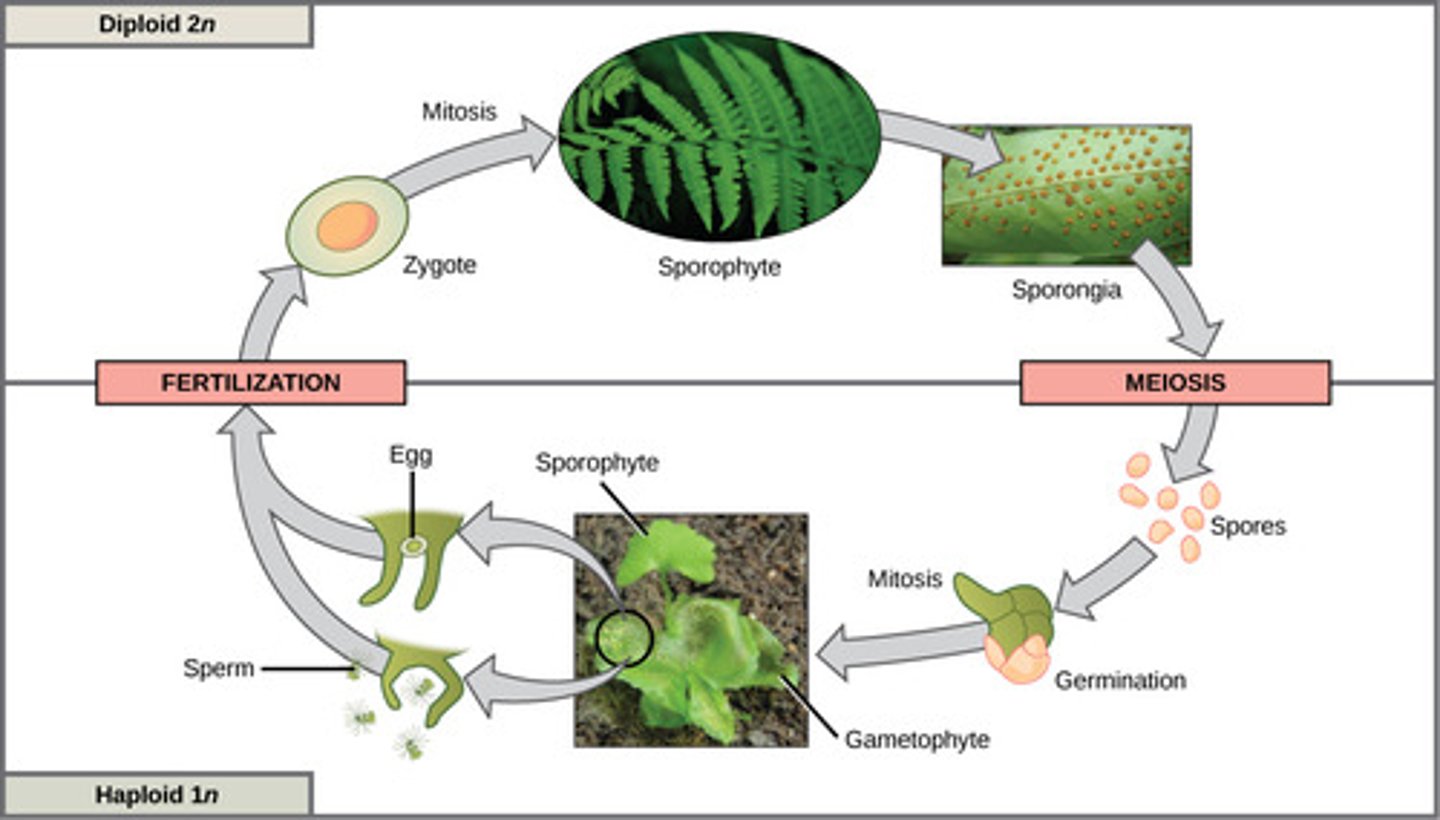
In plants, meiosis in sporangia produces what reproductive unit?
spores
(Note: haploid)
What process do haploid spores undergo to become multicellular haploid gametophytes?
mitosis
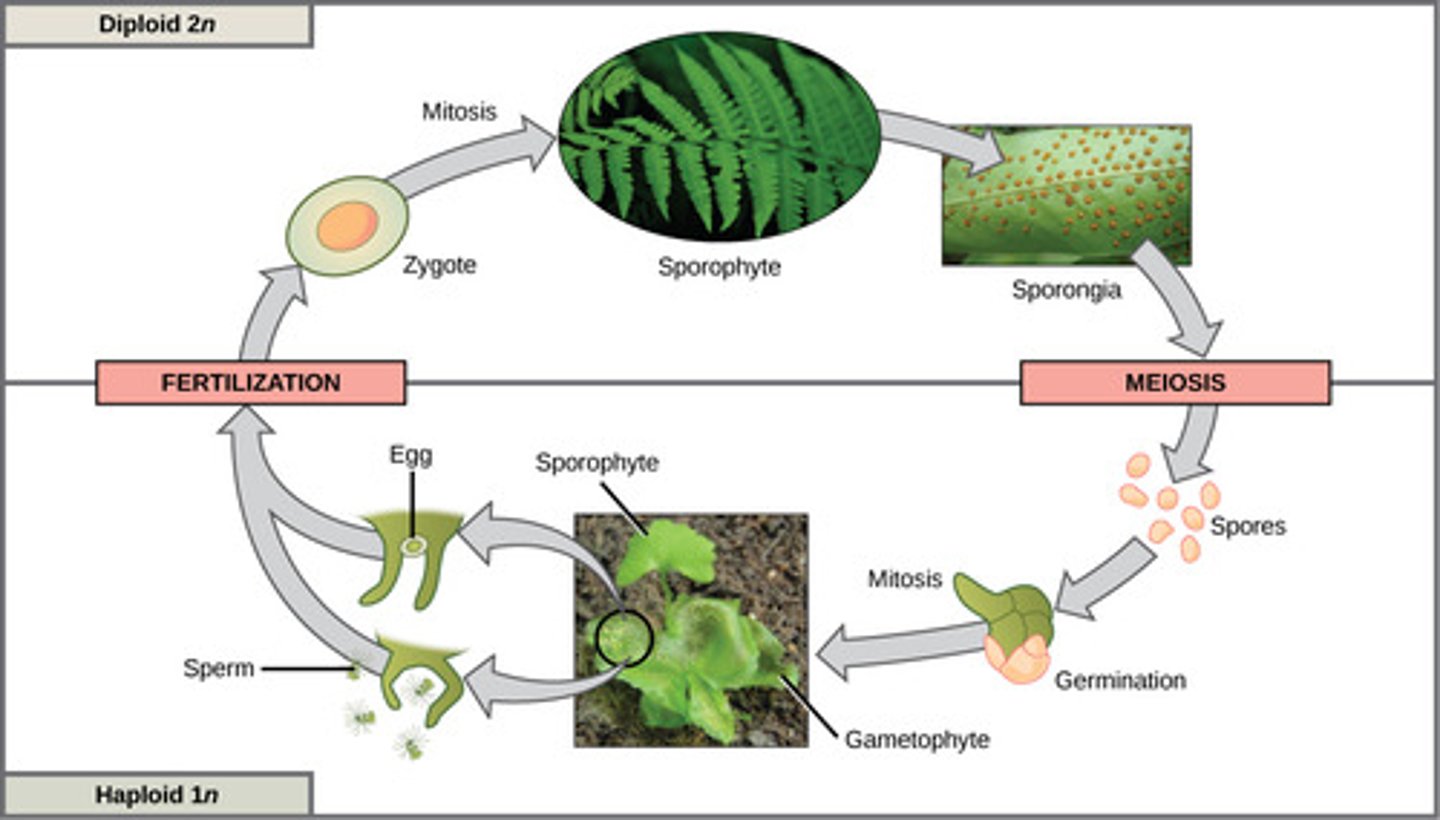
A plant's multicellular haploid gametophytes fuse together to form what reproductive unit?
diploid zygote
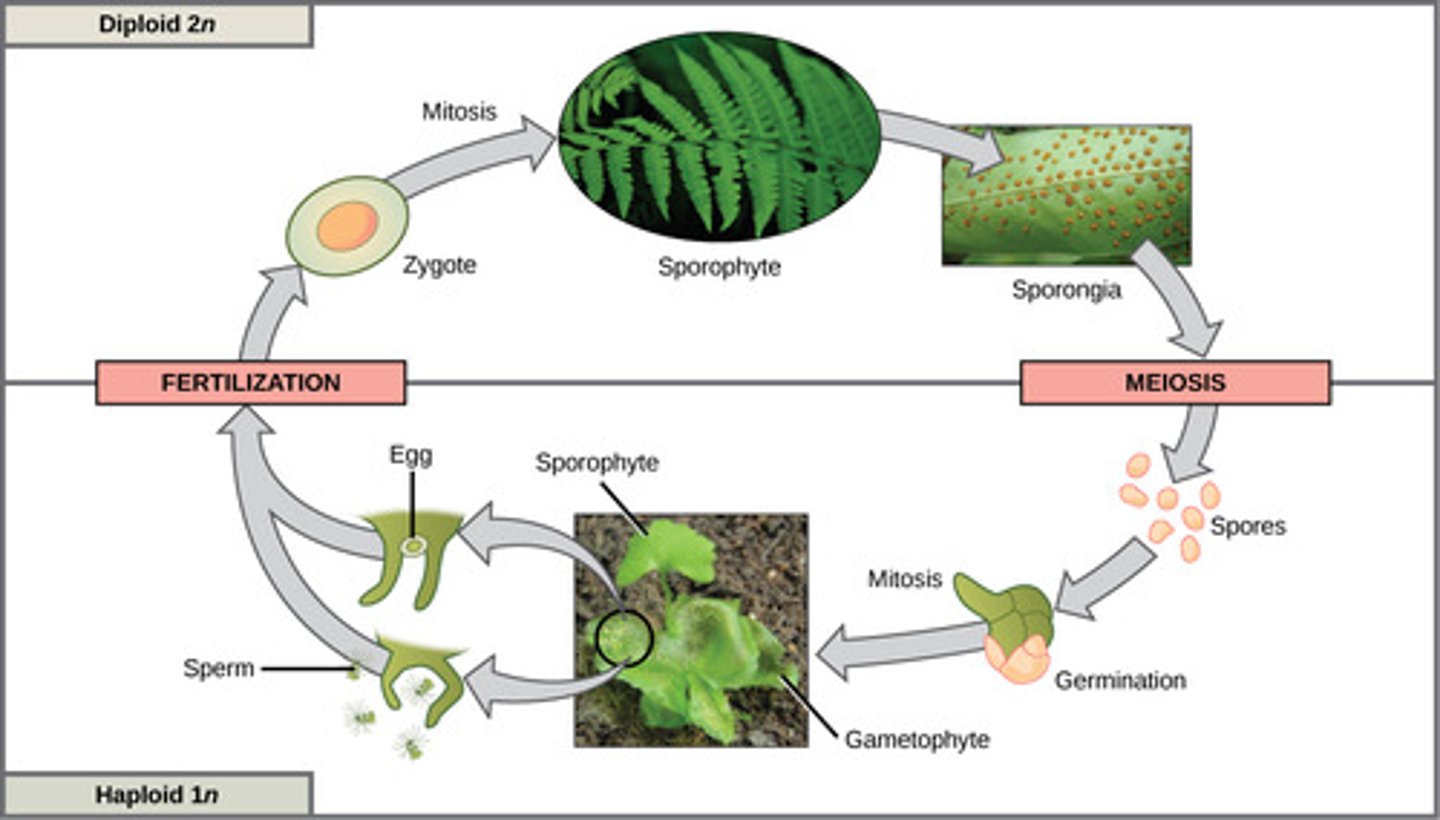
How does a plant's diploid zygote transition to a sporophyte?
mitosis
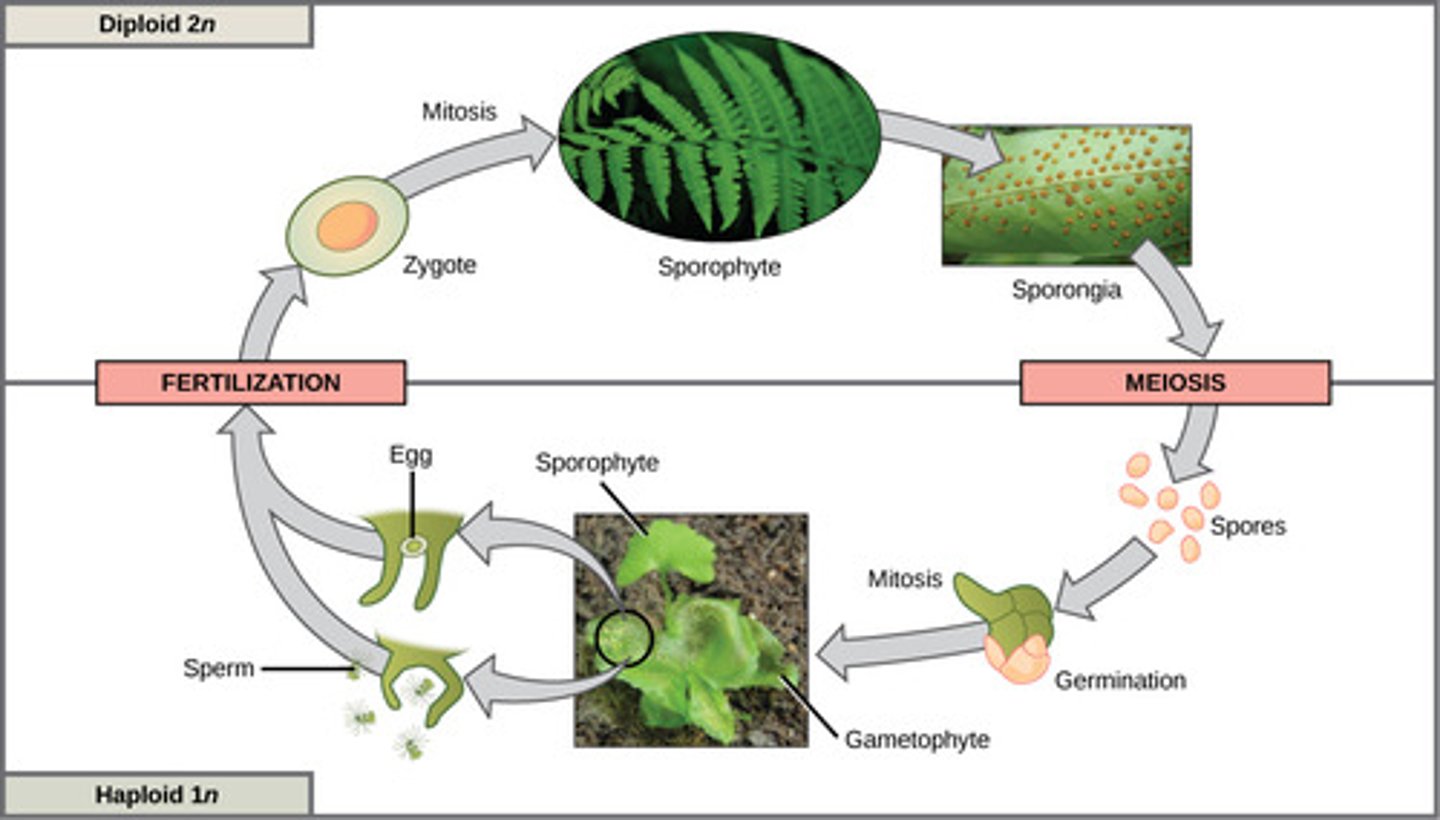
Cells in plants' sporophyte (sporangia) undergo what process to produce haploid spores that germinate and repeat the life cycle?
meiosis
(Note: known as
alteration of generations)
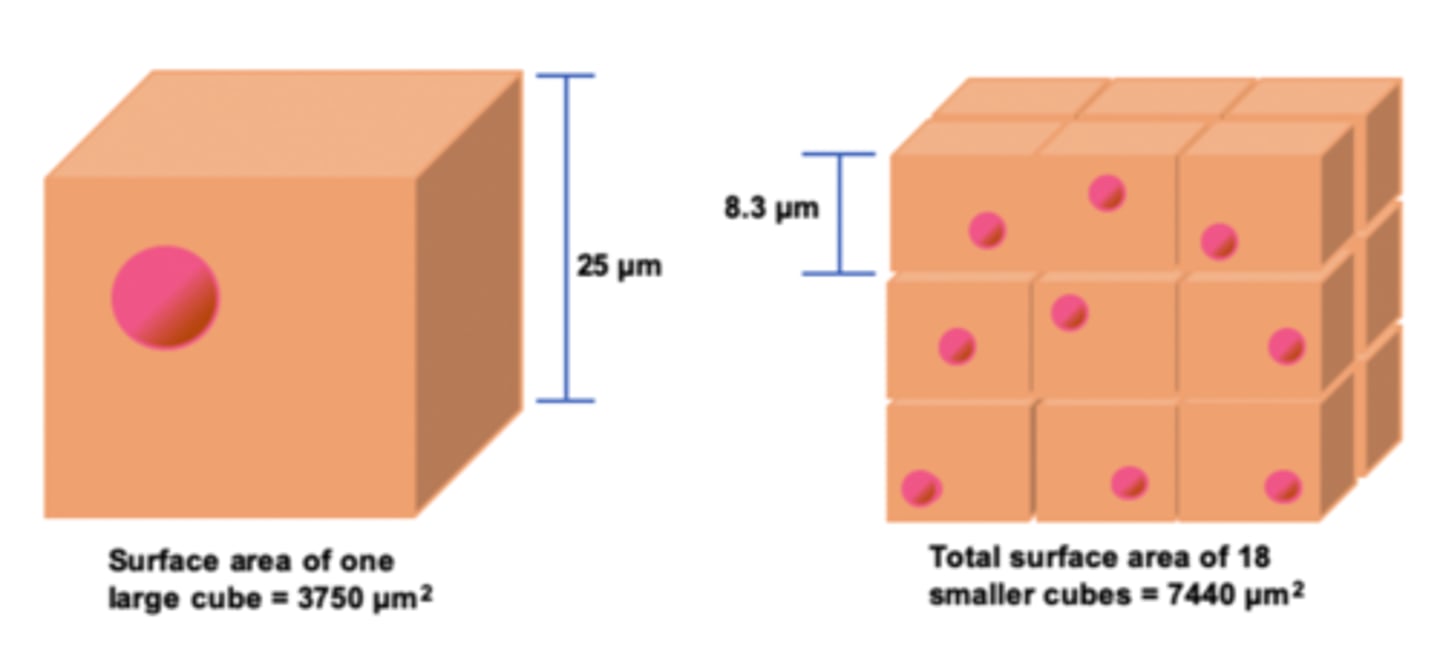
What are the 2 main ratios that dictate if a cell will divide
1. surface to volume ratio
2. genome to volume ratio
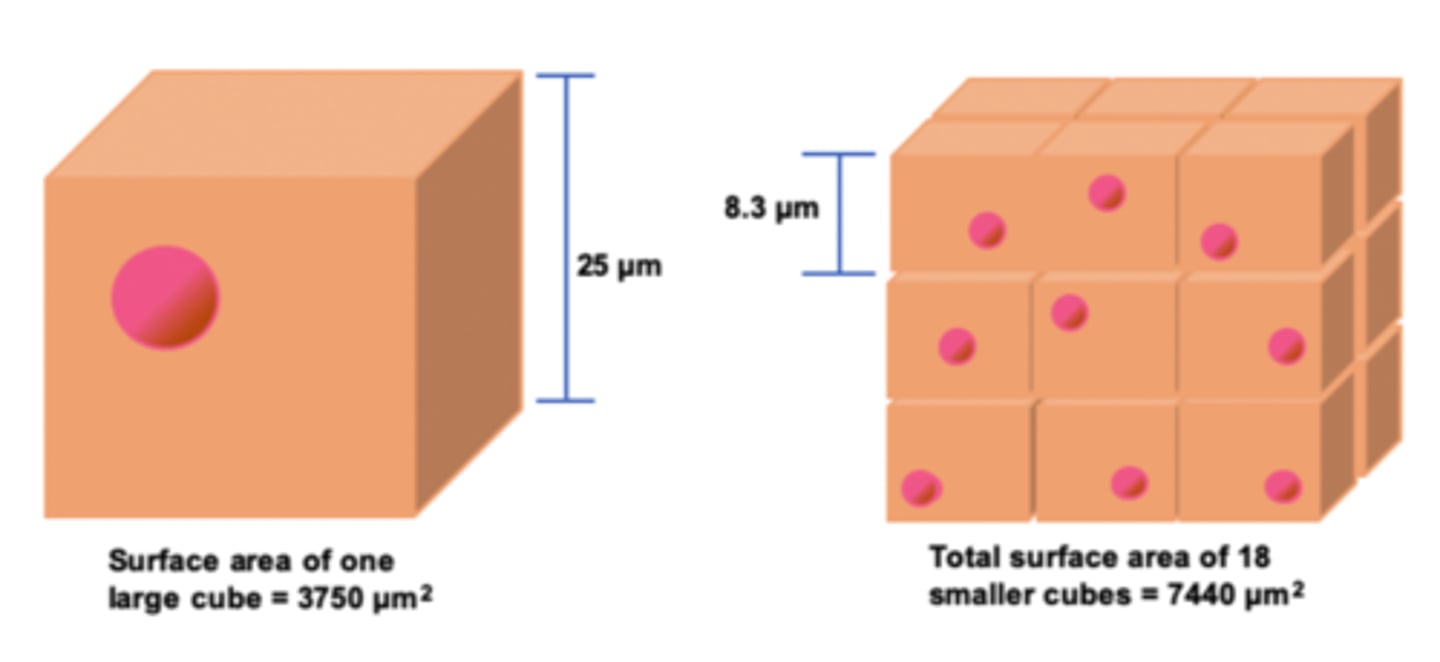
What surface to volume ratio is favorable for cell division?
small SA:V
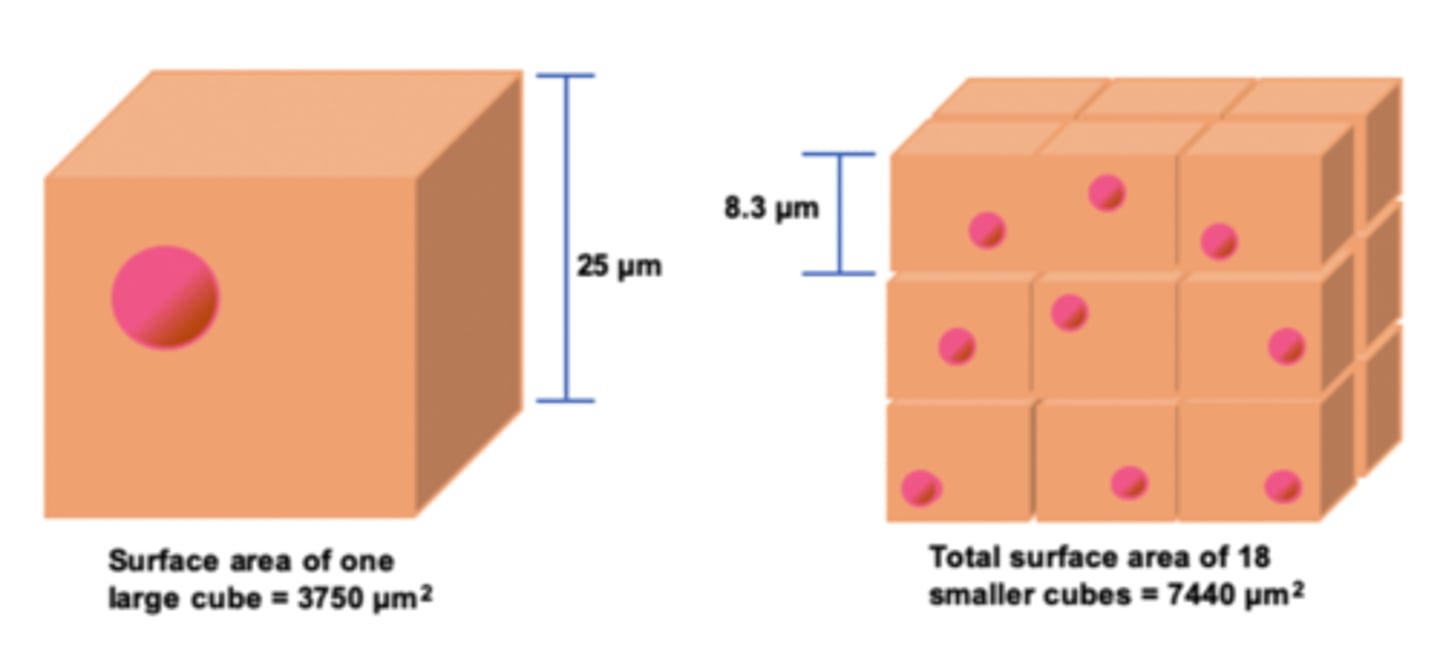
Why would a cell not want to divide if SA:V is high?
exchange across cell is easy
(Note: no need to divide)
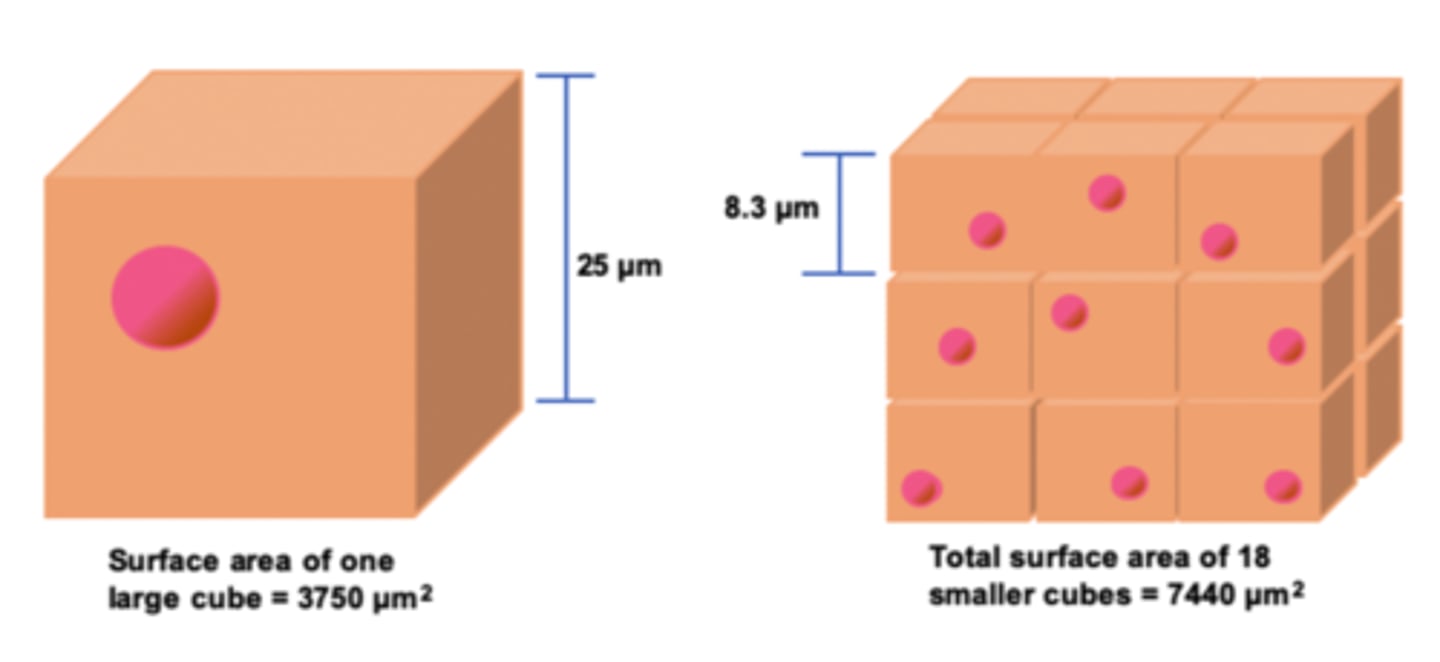
What genome to volume ratio is favorable for cell division?
small G:V
Why would a cell need to divide if G:V is small?
the genome cannot regulate cell activities
(Note: some cells are multinucleate to deal with this)
Which version of cell division results in genetic variety?
only meiosis
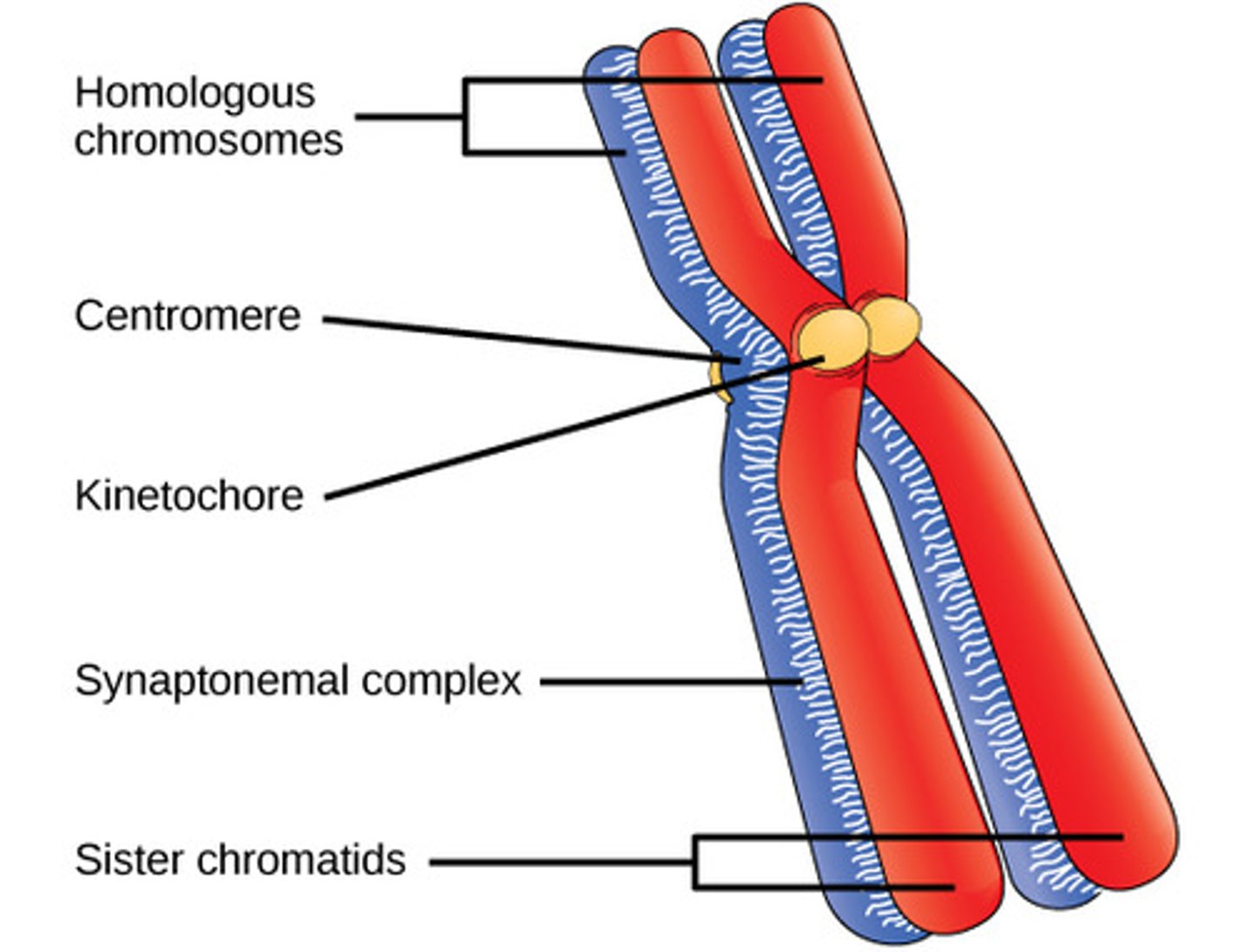
TERM
homologous chromosomes
LOCATION
TERM
centromere
LOCATION
TERM
kinetochore
LOCATION
TERM
synaptonemal complex
LOCATION