multistore model of memory (MSM)
 Call Kai
 Learn
Learn Practice Test
 Spaced Repetition
 Match
Match Flashcards
 Knowt Play
1/19

There's no tags or description
Looks like no tags are added yet.
Name | Mastery | Learn | Test | Matching | Spaced | Call with Kai |
|---|
No analytics yet
Send a link to your students to track their progress
20 Terms
what is the multistore model and who proposed it
ATKINSON and SHIFFRIN
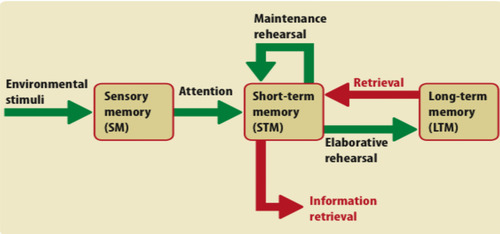
-representation of how information flows through the memory system, made up of: sensory register, short term memory and long term memory
what is coding
format in which information is stored in
what is capacity
the amount of information that can be held in the memory store at any one time
what is duration
the length of time information can be held in the memory store at any one time
what is the environmental stimuli
when sensory information: a sound, visual, smell, touch, taste is detected
what is the sensory register
contains a sub-store for each of the 5 senses so when an environmental stimuli (sensory information) is detected it will be coded in that specific store:
echoic - auditory
iconic - visual
olfactory - smell
haptic - touch
gustatory - taste
what is the coding, capacity and duration of sensory register
coding = depends on the environmental stimuli:
visual (iconic), auditory (echoic), smell (olfactory), taste (gustatory), touch (haptic)
capacity = unlimited
duration = less than half a second
outline research for duration of sensory register
SPERLING
procedure: tested iconic sensory register (visual) pps were shown a grid with digits and letters for 0.05 seconds
findings: when asked to recall the whole grid recall was poorer VS recall of one row suggesting information decays quickly in sensory register
when does sensory information pass from sensory register to STM
only if we pay attention to the information
what is the coding, capacity, duration in short term memory
coding = acoustically
capacity = 7+/-2 items and chunking
duration = 18-30seconds
outline research for coding STM
BADDELEY
procedure: lab experiment, pps split into 4 groups each shown a different list of 10 words:
acoustically similar - (words that sound same)
acoustically dissimilar - (words that sound different)
semantically similar - (words with same meaning)
semantically dissimilar - (words with unrelated meaning)
findings: immediate recall was worst from list 1 VS list 2 = stm codes info acoustically - its difficult to recall similar sounding words because the sounds interfere with each other
outline research for capacity STM
MILLER
-he found that every day things are usually grouped in 7s, e.g. 7 days of the week so concluded stm the capacity of information 7+/-2 items
-he also realised 5 words could be as easily recalled as 5 letters due to chunking
> chunking - grouping items/ letters into units improves recall because the overall amount of items is reduced
outline research for duration STM
PETERSON and PETERSON
procedure: pps shown 3 letter trigrams, HRK no vowels included and then counted backwards to prevent maintenance rehearsal
findings: after 18seconds recall was less than 3% suggesting information only lasts in stm for 18-30seconds
when does information pass from STM to LTM
when information is rehearsed (consciously repeated inside the mind) it will pass from stm to ltm, the rest of information will be lost/ forgotten
maintenance rehearsal - keeps info in stm, and may eventually move into ltm
elaborative rehearsal - when info is coded semantically (info is given a meaning) it will pass straight into ltm
what is the coding, capacity, duration in long term memory
coding = semantically
capacity = unlimited
duration = unlimited
outline research for coding LTM
BADDELEY
procedure: lab experiment, pps split into 4 groups each shown a list of 10 different words
acoustically similar - words sound similar
acoustically different - words sound different
semantically similar - words similar meaning
semantically different - words different meaning
findings: after 20minutes recall was worse from list 3 VS list 4 - suggests information coded semantically in ltm because brain gets confused when retrieving words with similar meaning
outline research for capacity LTM
WAGNAR
procedure: kept a diary over 6 years where he recorded 2,400 events, he then tested himself on the events
findings: 75% recall after 1year and 45% recall after 5years
outline research for duration LTM
BAHRICK
procedure: pps of different ages were shown images of students from their graduating class and asked to recall their names
findings: for pps 48years since graduating face recognition 70% and name recall 30% suggesting duration of ltm may be unlimited
how is information remembered
by retrieval where information is passed back into the stm and passes through the maintenance loop
strength strength weakness weakness
:) BADDELEY identified clear difference between how information is coded in stm (acoustically) and ltm (semantically) provided foundational knowledge on these memory stores - they must be separate stores led to development of msm
:( BADDELEY and PETERSON+PETERSON artificial tasks - research lacks mundane realism, semantically similar words had no actual meaning to pps and the trigrams, consonant syllables are not the type of information we learn in everyday life therefore lacks generaliseability as the stimuli used in both studies does not reflect everyday memory activities e.g. memorising for exams
:) BAHRICKS realistic research he used meaningful stimuli by investigating accuracy of photo recognition and name recall to assess memory and when researchers carried out similar research using meaningless pictures recall rates were significantly lower hence results can be generalised as face recognition and name recall are things we do everyday
:( msm is oversimplified there is evidence stm and ltm are more complex: SHALLICE and WARRINGTON researched patient KF and discovered he had good memory for digits when he read by himself but poor memory when digits were read to him + TULVING ltm can be split into procedural, episodic, semantic not not full explanation of how humans store memory