DAT Chemistry 6 - Chemcal equilibrium
 Call Kai
 Learn
Learn Practice Test
 Spaced Repetition
 Match
Match Flashcards
 Knowt Play
1/33

There's no tags or description
Looks like no tags are added yet.
Name | Mastery | Learn | Test | Matching | Spaced | Call with Kai | Chat |
|---|
No analytics yet
Send a link to your students to track their progress
34 Terms
Dyanmic equilibrium
When the rate at which products are being connverted into reactants and the rate that reactants are being converted into reactants are the same
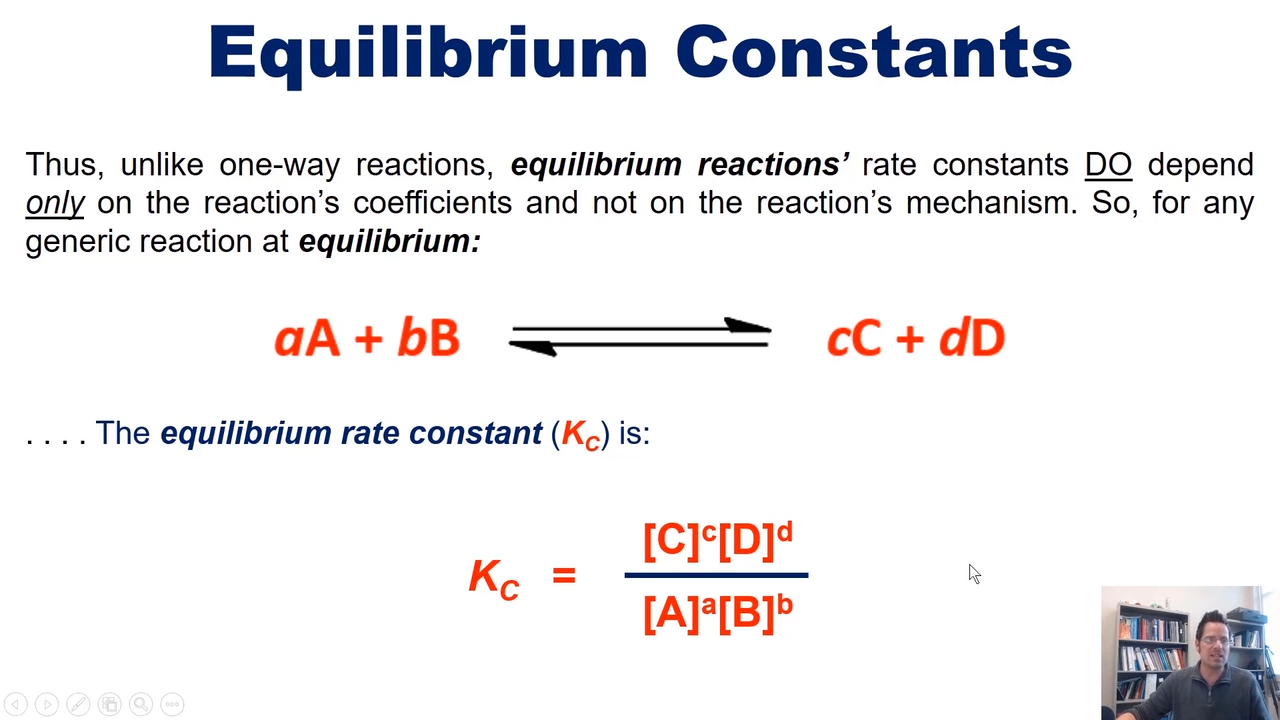
equilibrium constant
Kc = Kforward / Kreverse
Kc = rate
Kc = [B]^m/[A]^n
![<p>Kc = Kforward / Kreverse</p><p></p><p>Kc = rate </p><p></p><p>Kc = [B]^m/[A]^n</p>](https://assets.knowt.com/user-attachments/1ad50dbe-c669-4772-a29d-f7dd96e8431c.png)
Do solids and liquids apear in Kc
no
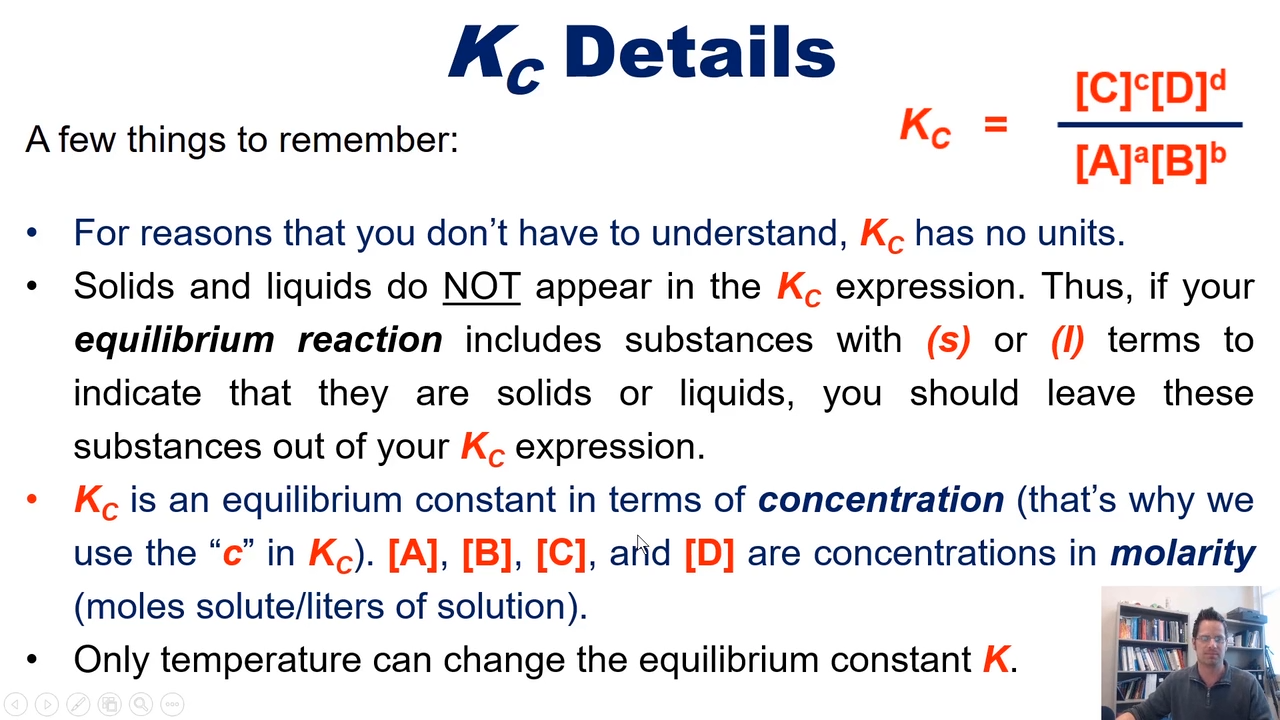
What can change the equilibrium constant
temperature
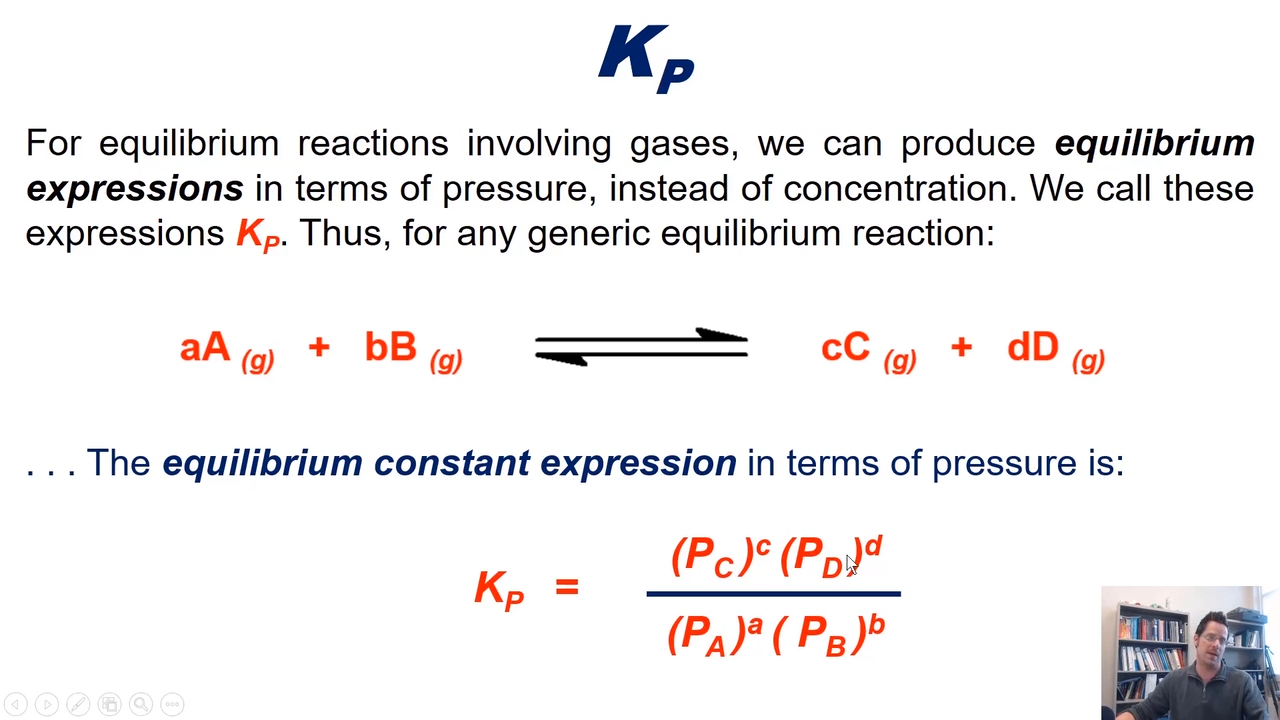
Kp
equilibrium constant in terms of pressure
ONLY GASSES
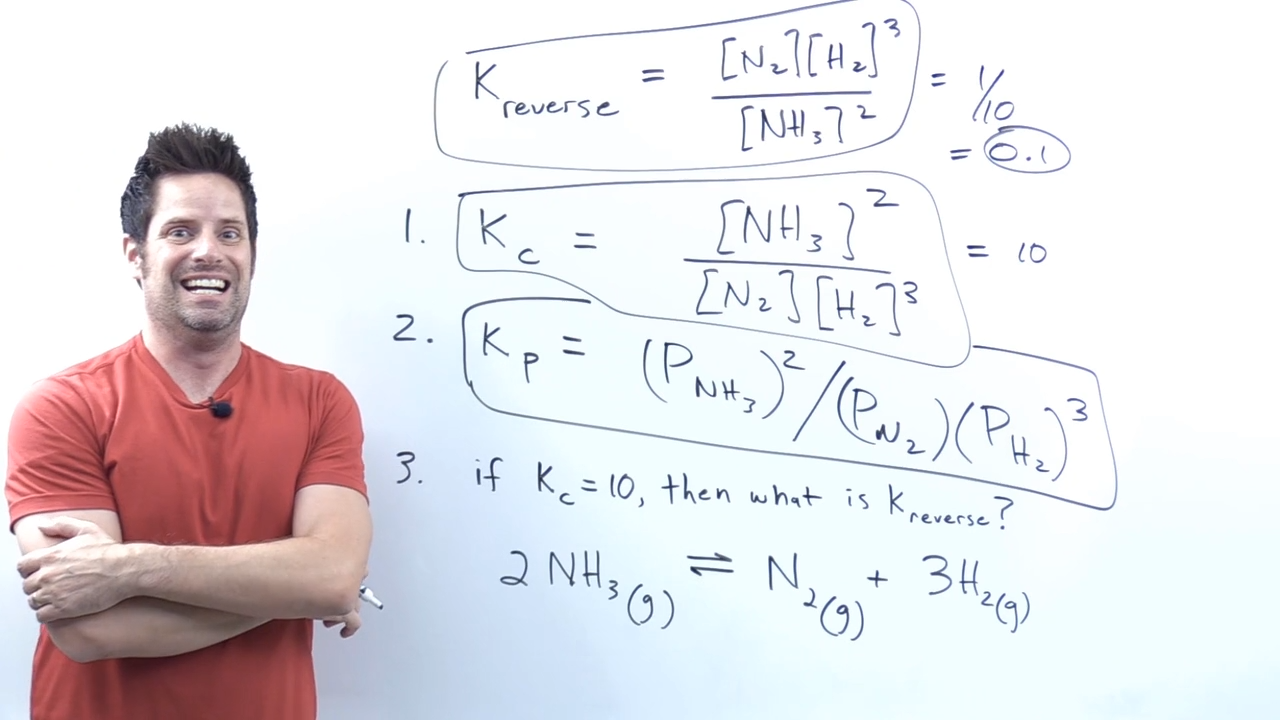
what relationship do opposite and forward reactions have to each other
they are reciprocals
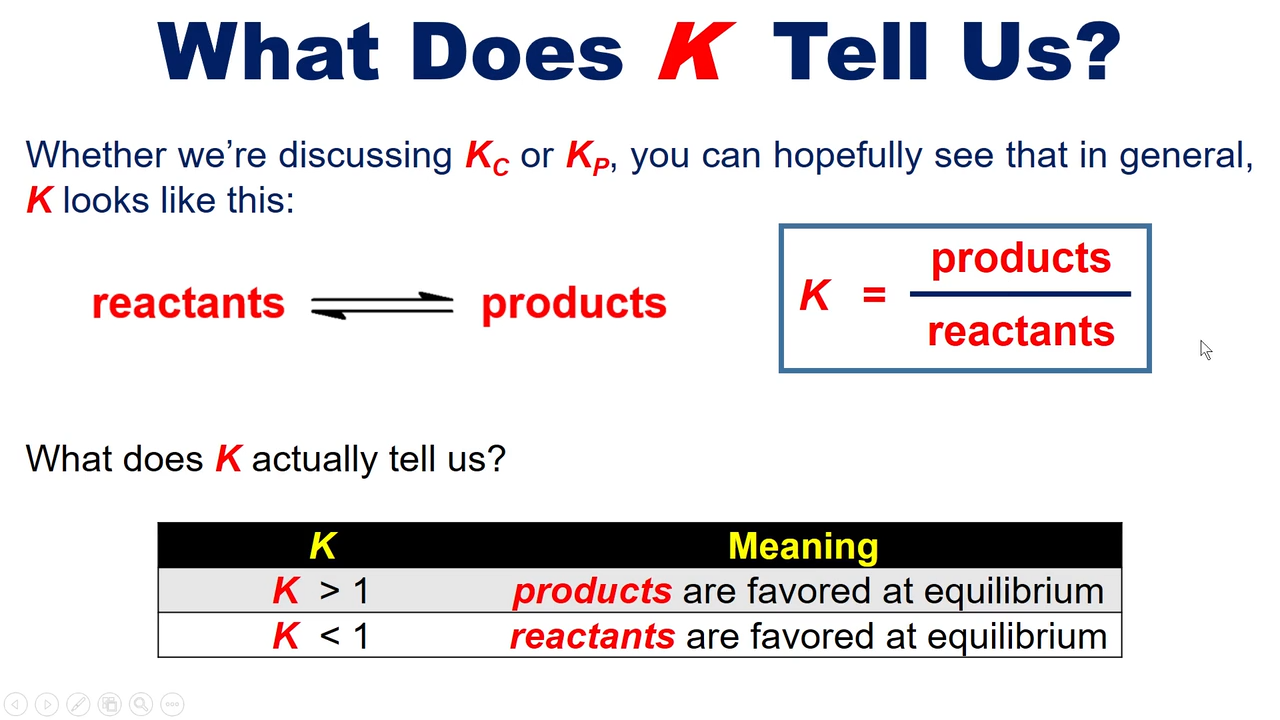
what does k >1 mean
the products are favored at equilibrium
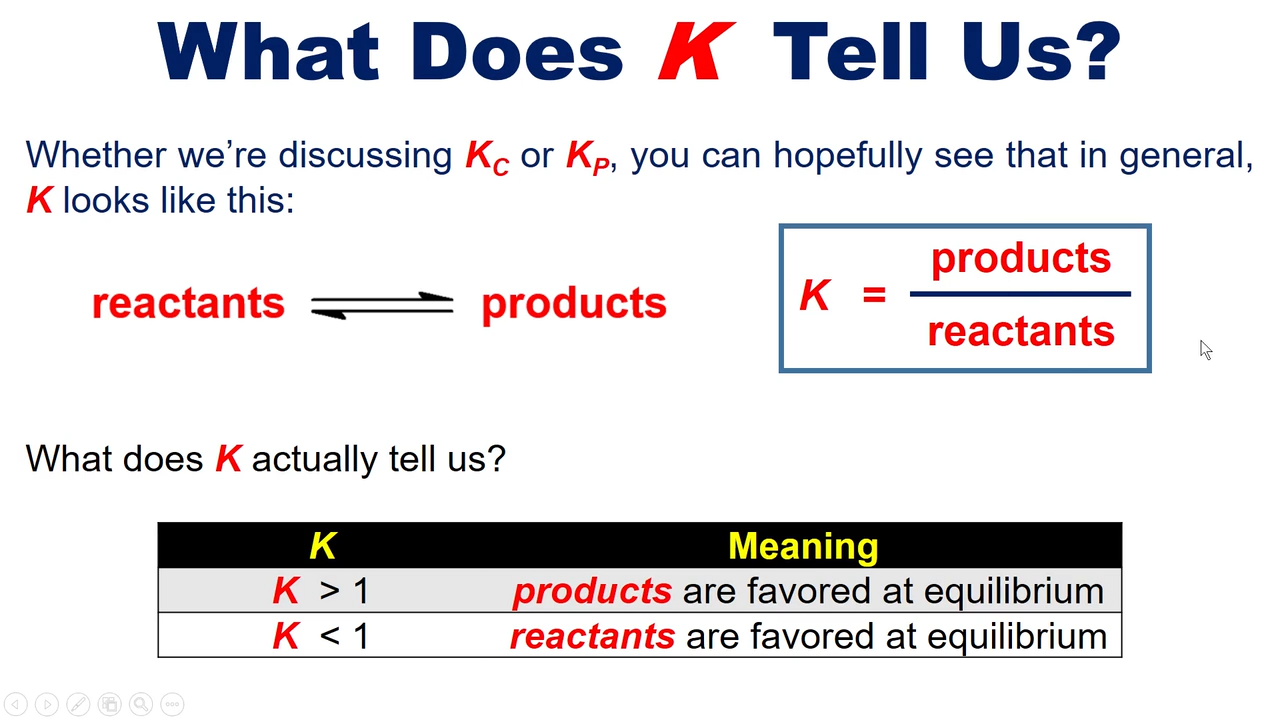
what does k < 1 mean
reactants are favored at equilibrium
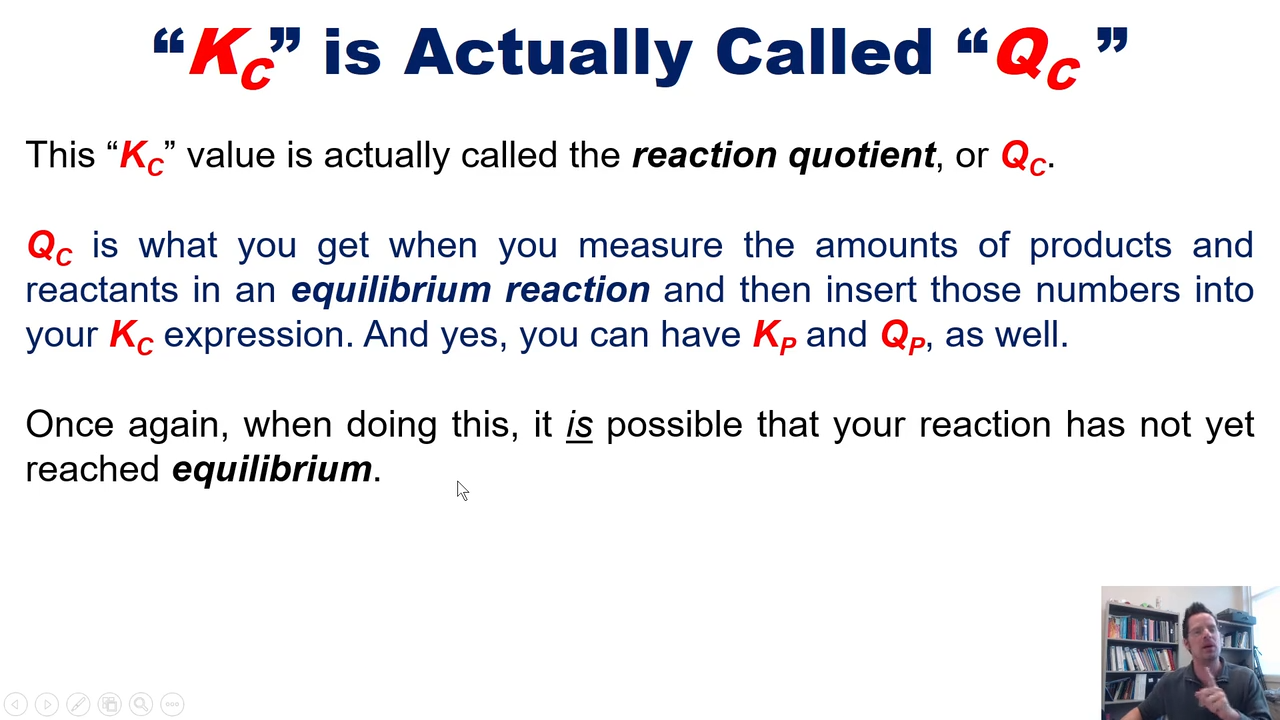
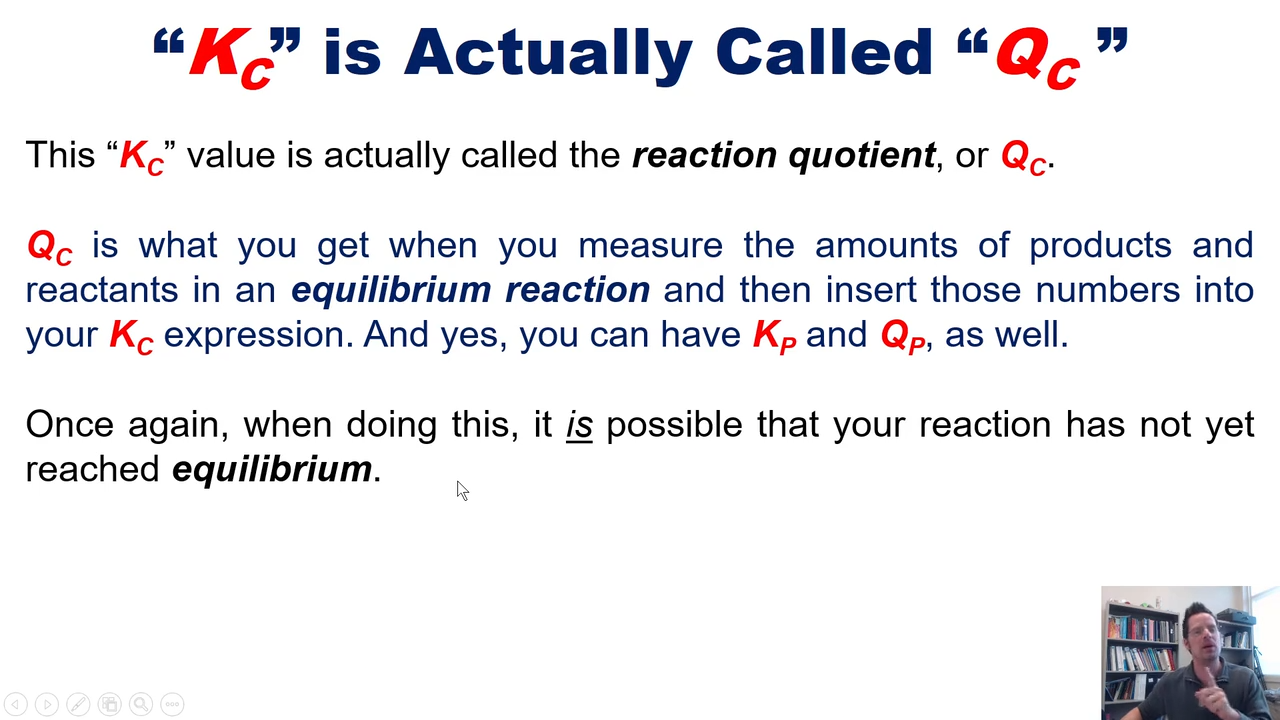
What is the “Kc” of a system not equilibrium
Qc
Qc
concentration values in the Kc equation not yet in equilibrium
Qp
pressure values in the Kc equation not yet in equilibrium
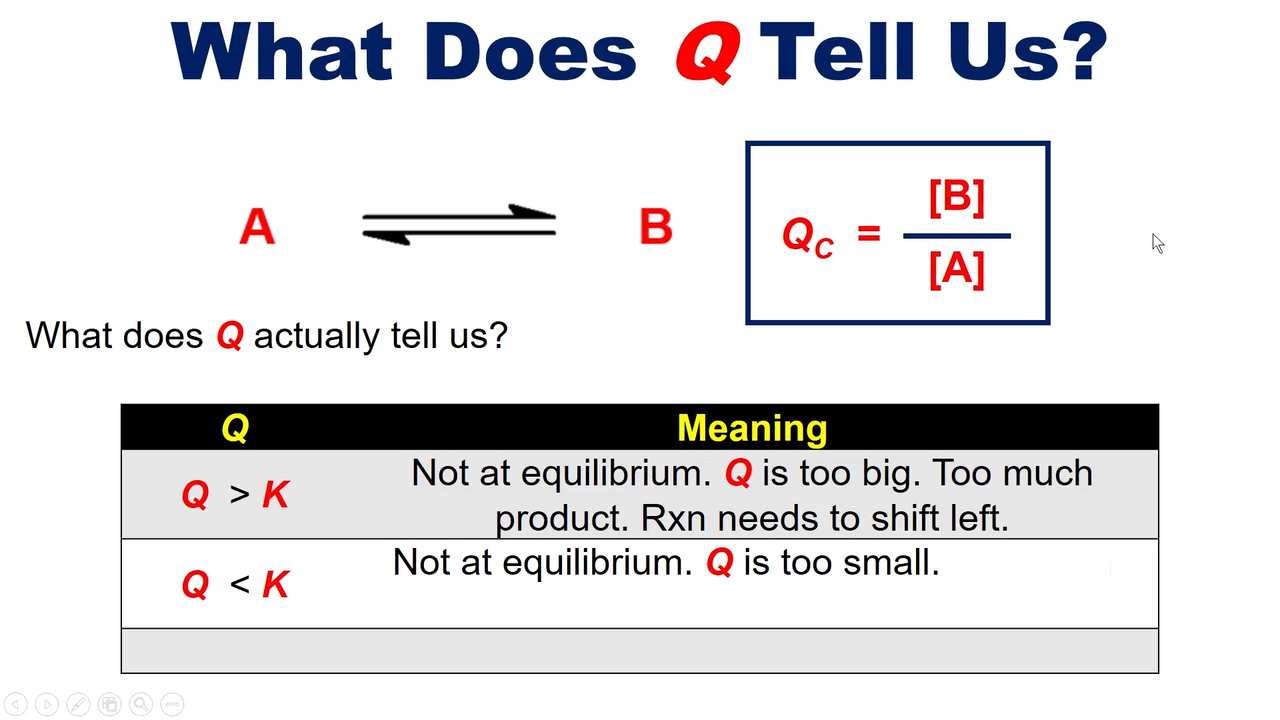
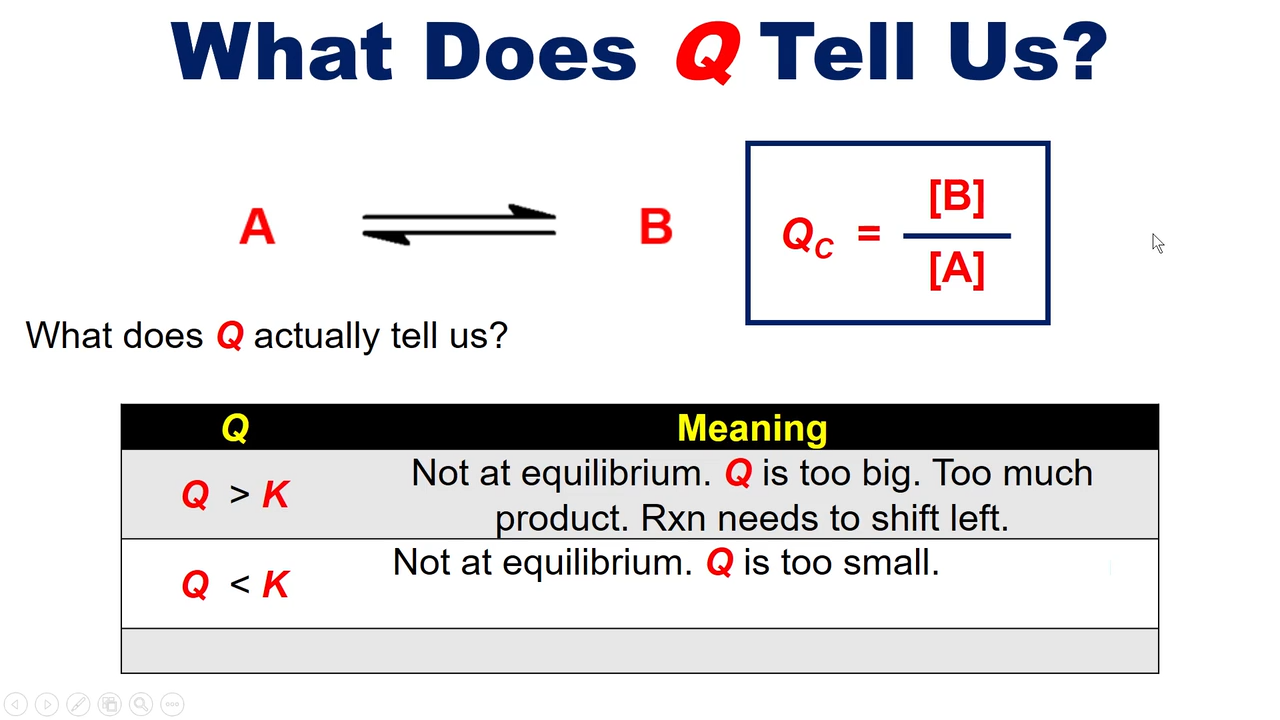
What if Q > K
it needs to favor the reactants side
What if Q < K
it needs to favor the products side
What if Q = K
the system has reached equilibrium
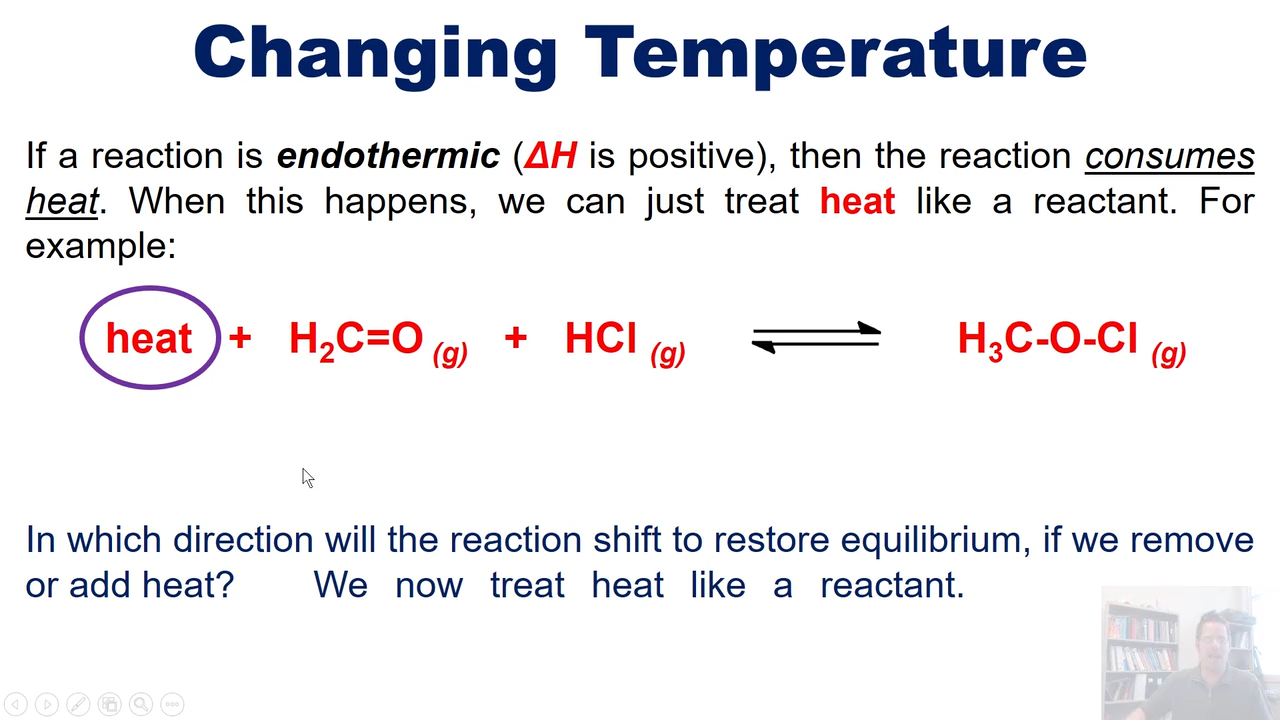
how does a system react to adding heat
If its endothermic, it shifts towards the product
If its exothermic, it shifts towards the reactant
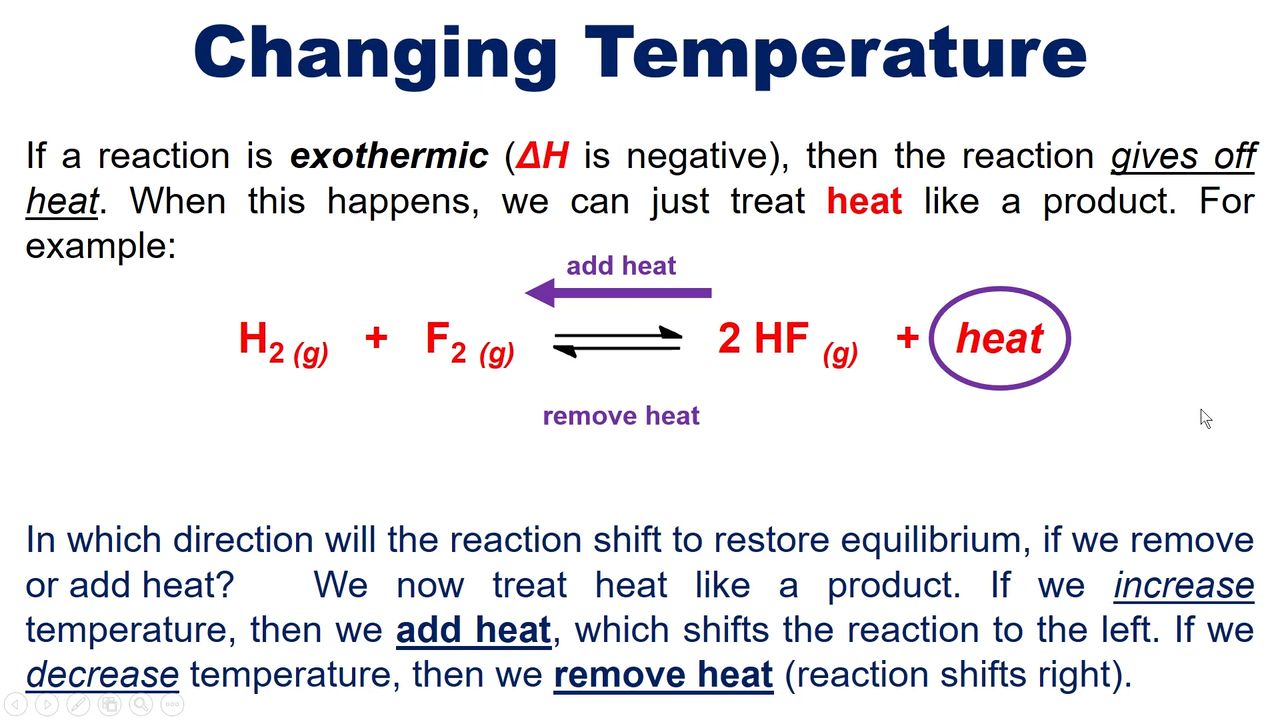
how does a system react to taking away heat
If its endothermic, it shifts towards the reactant
If its exothermic, it shifts towards the product
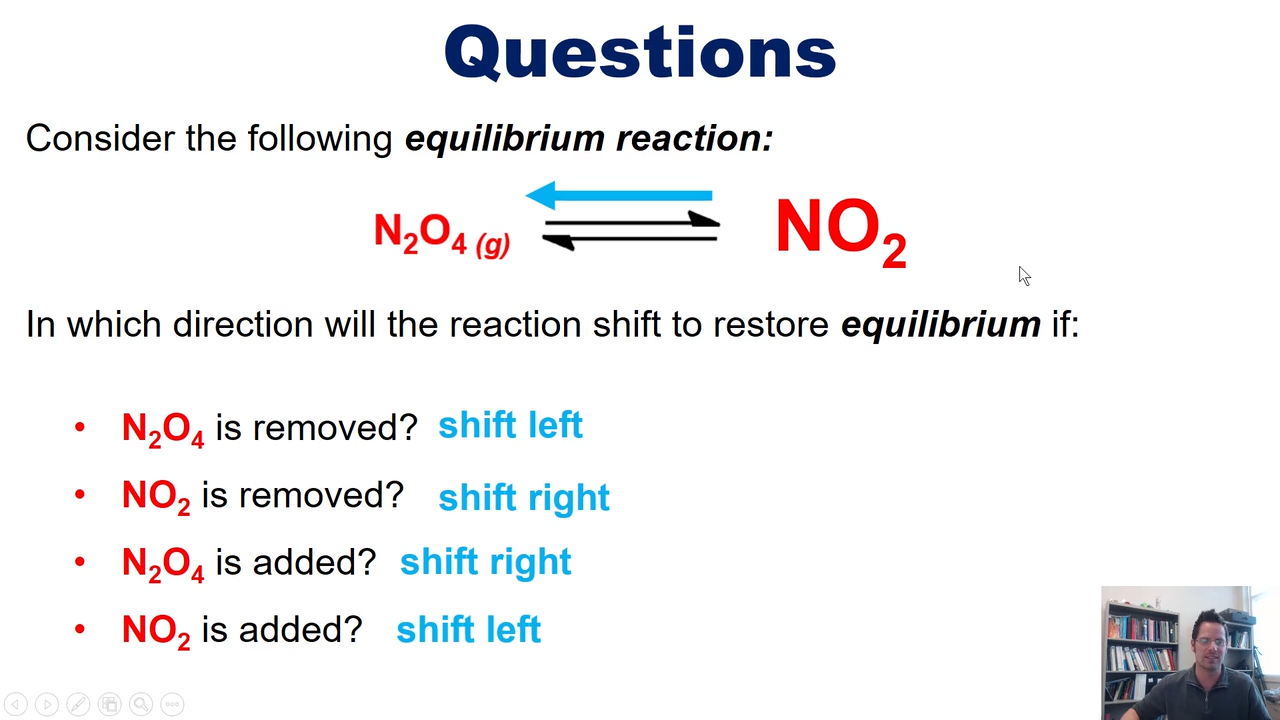
how does a system react to adding substances
it shifts toward the oppisite side
how does a system react to adding inert gasses
no change
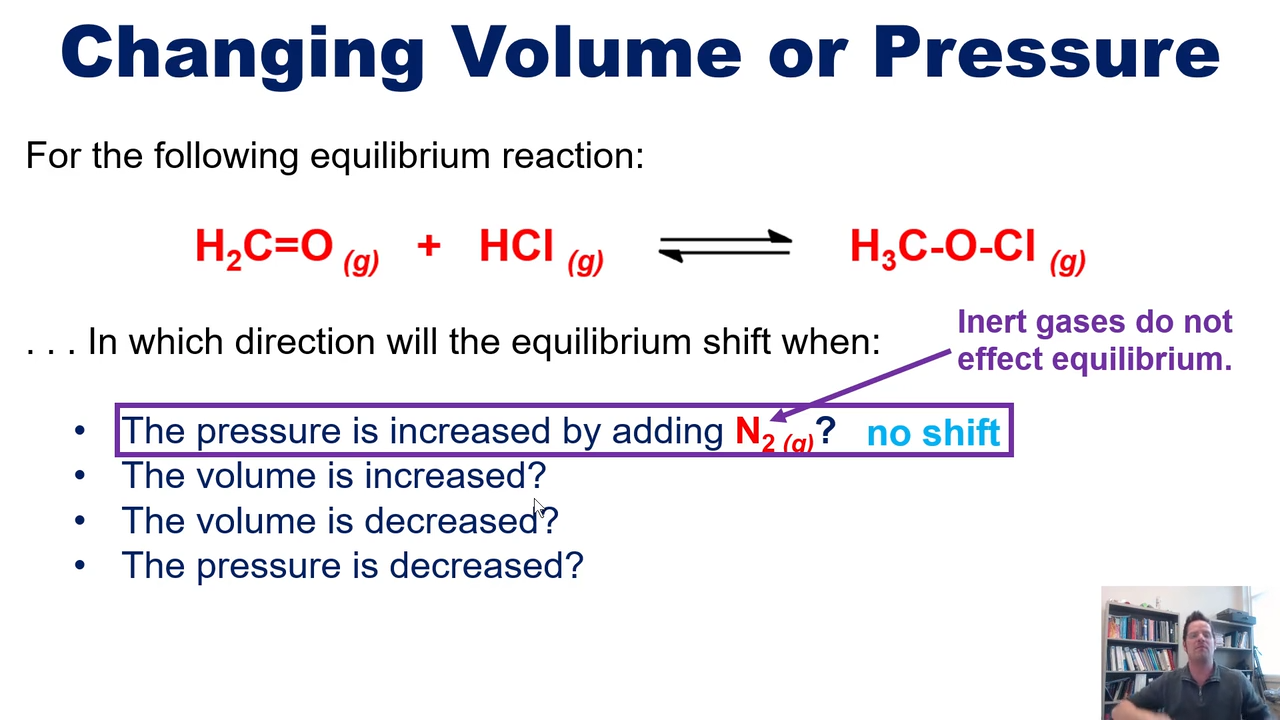
how does a system react to adding pressure
shifting to the side with the least molecules
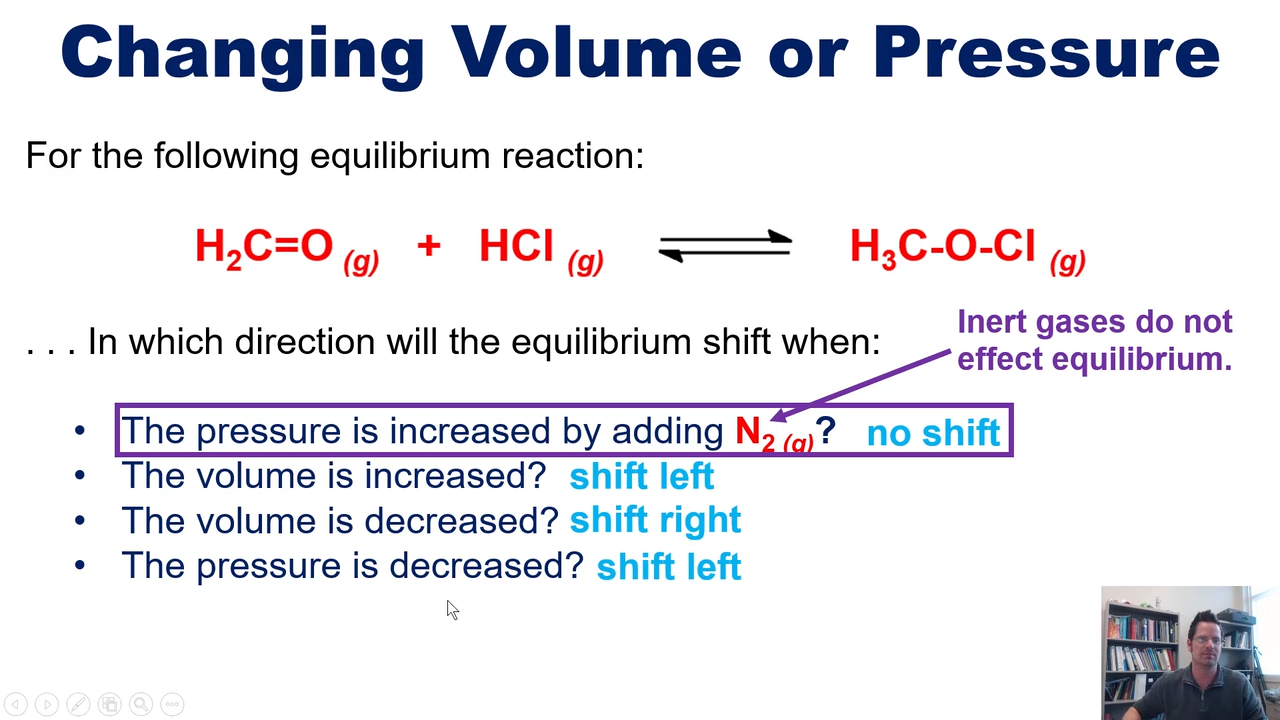
how does a system react to decreasing pressure
shifting to the side with the most molecules
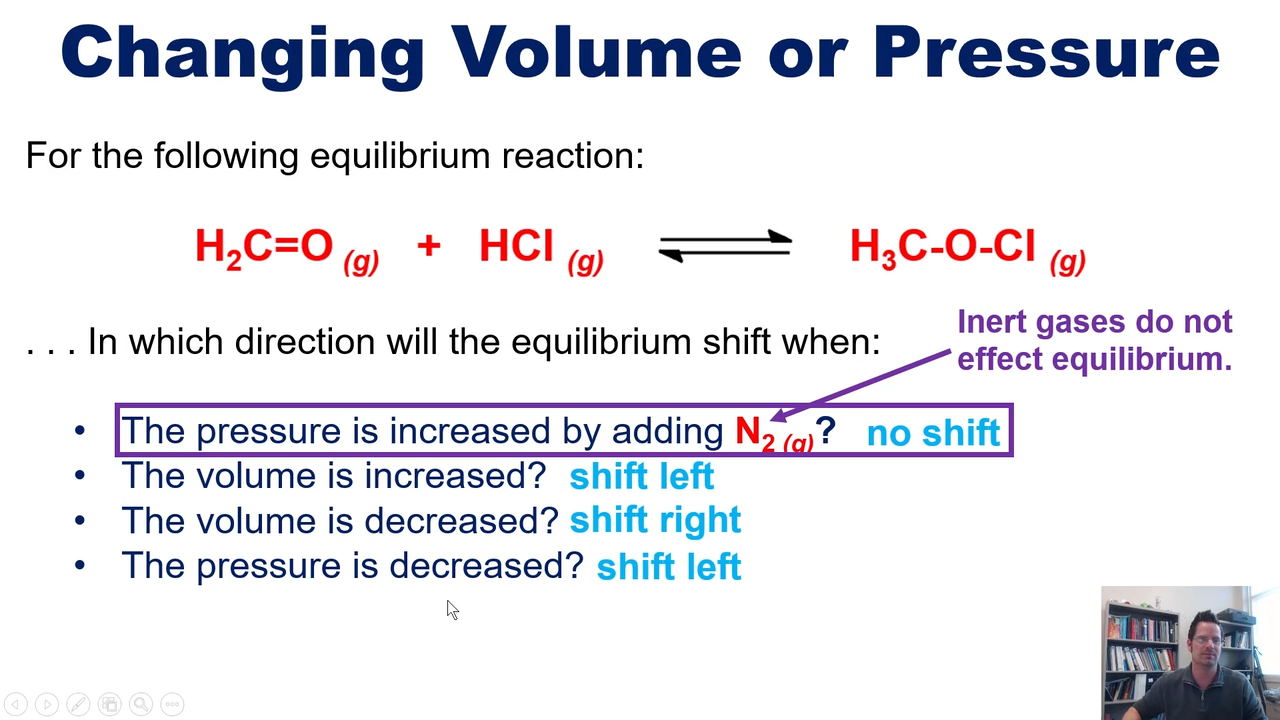
how does a system react to increasing volume
shifting to the side with the most molecules
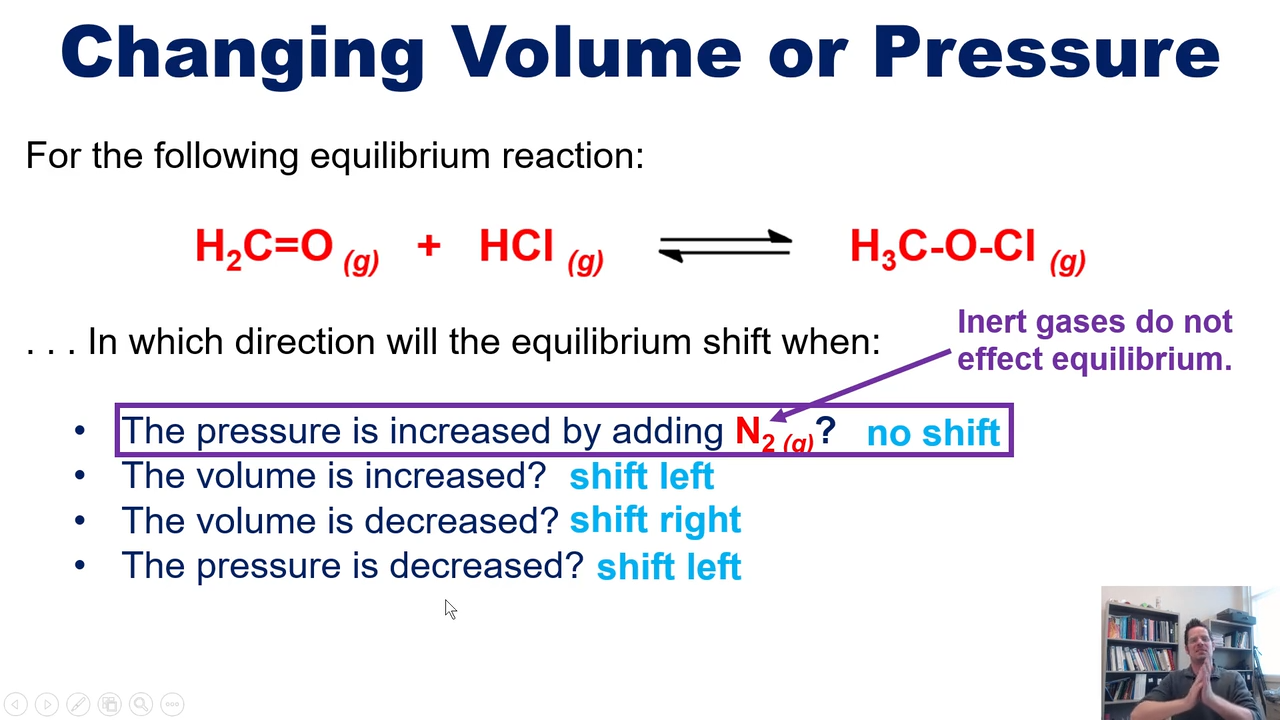
how does a system react to decreasing volume
shifting to the side with the leasr molecules
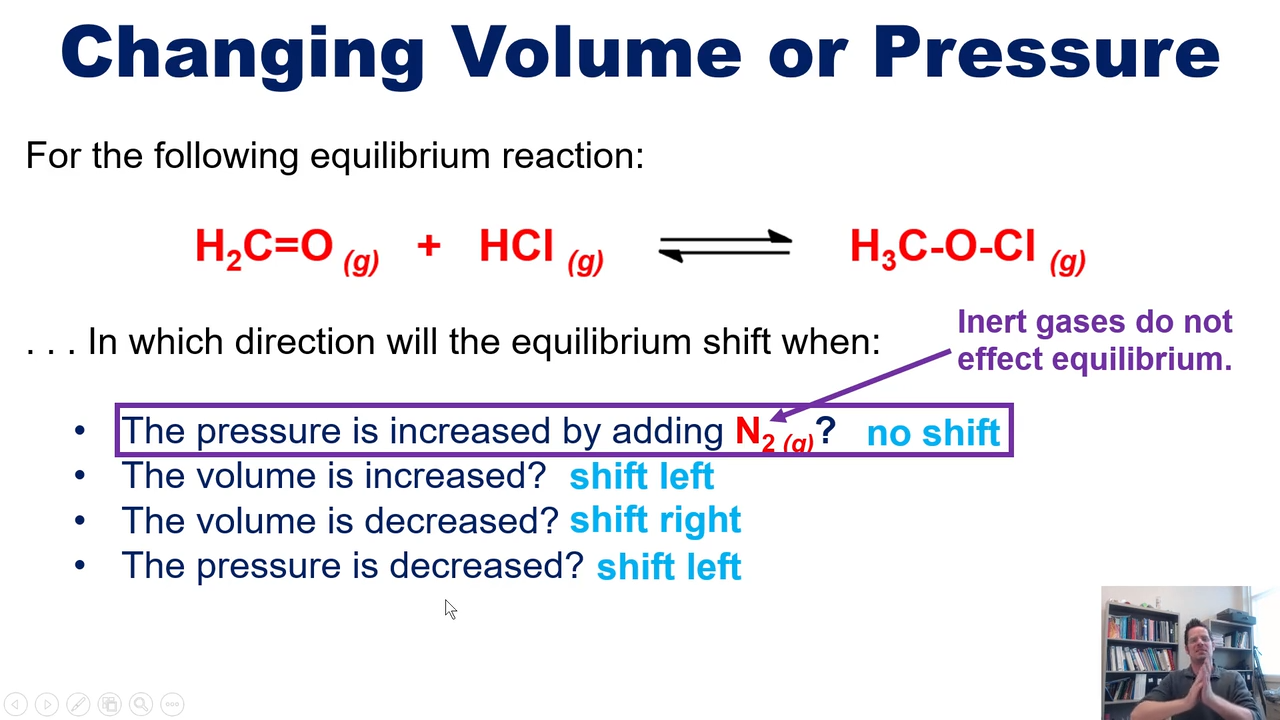
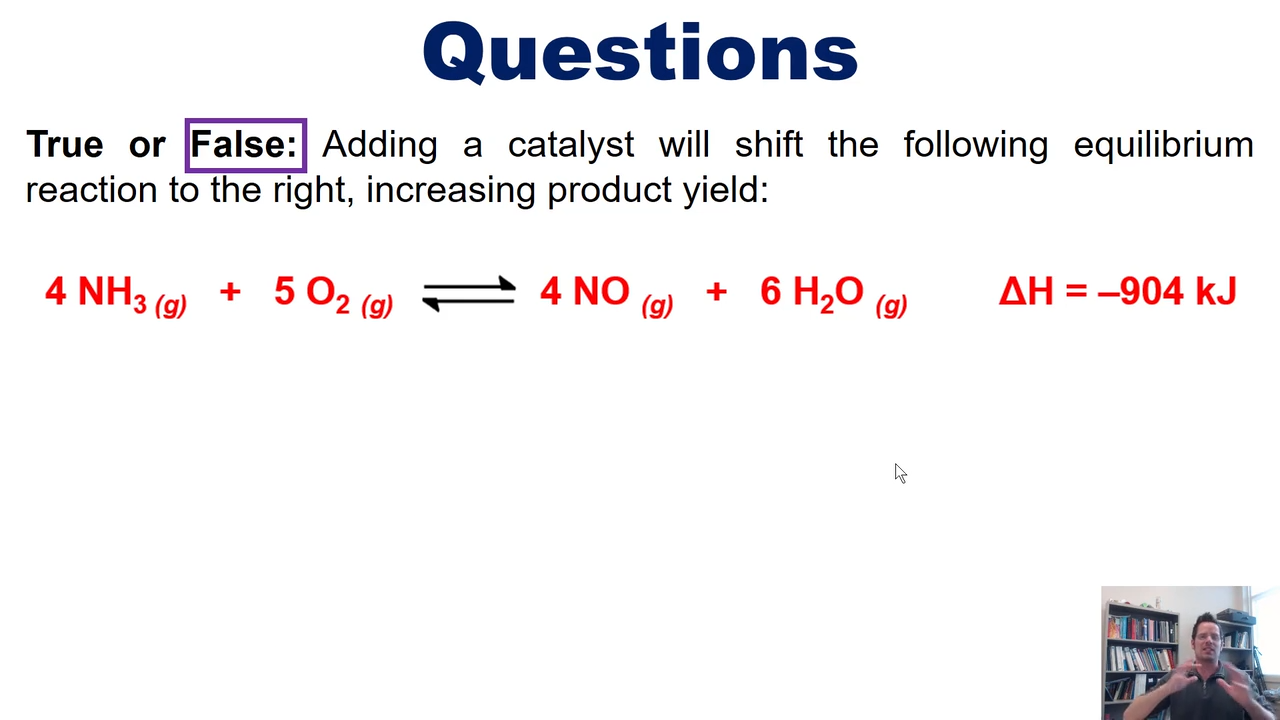
Do catalysts shift equilibrium
no
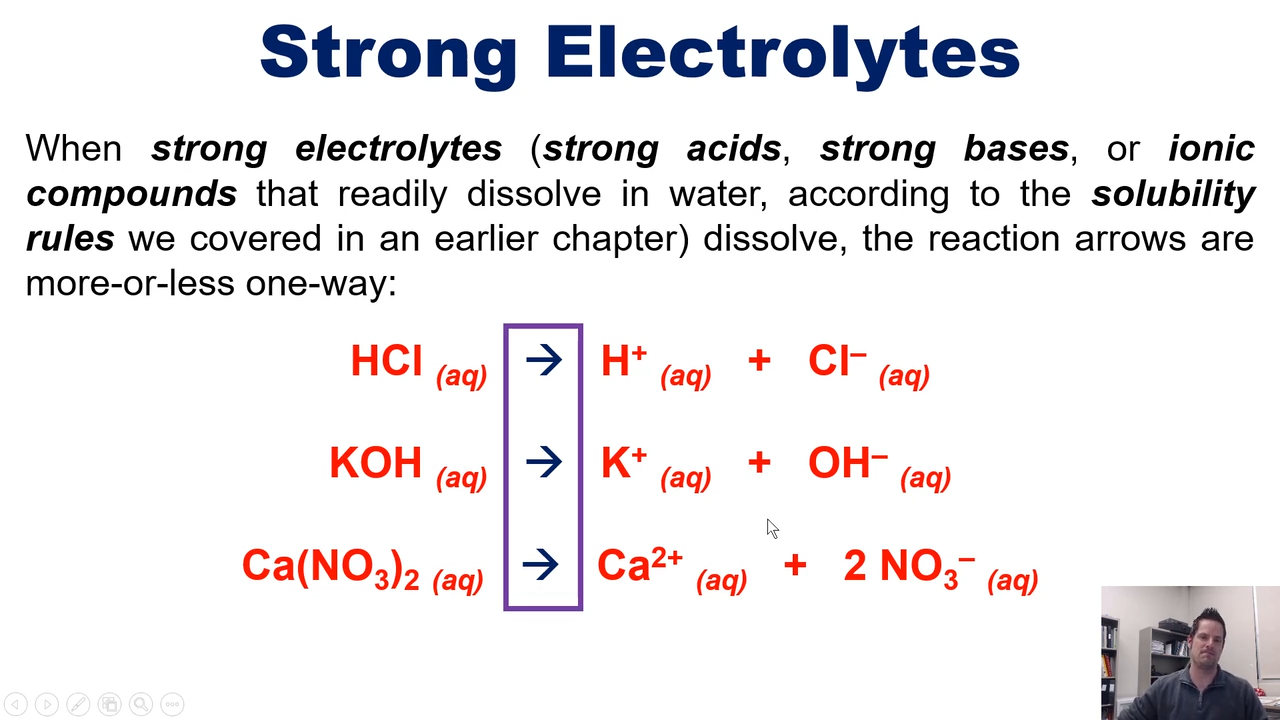
Strong electrolytes
Strong acids, bases, or ionic compounds that readily dissolve in water
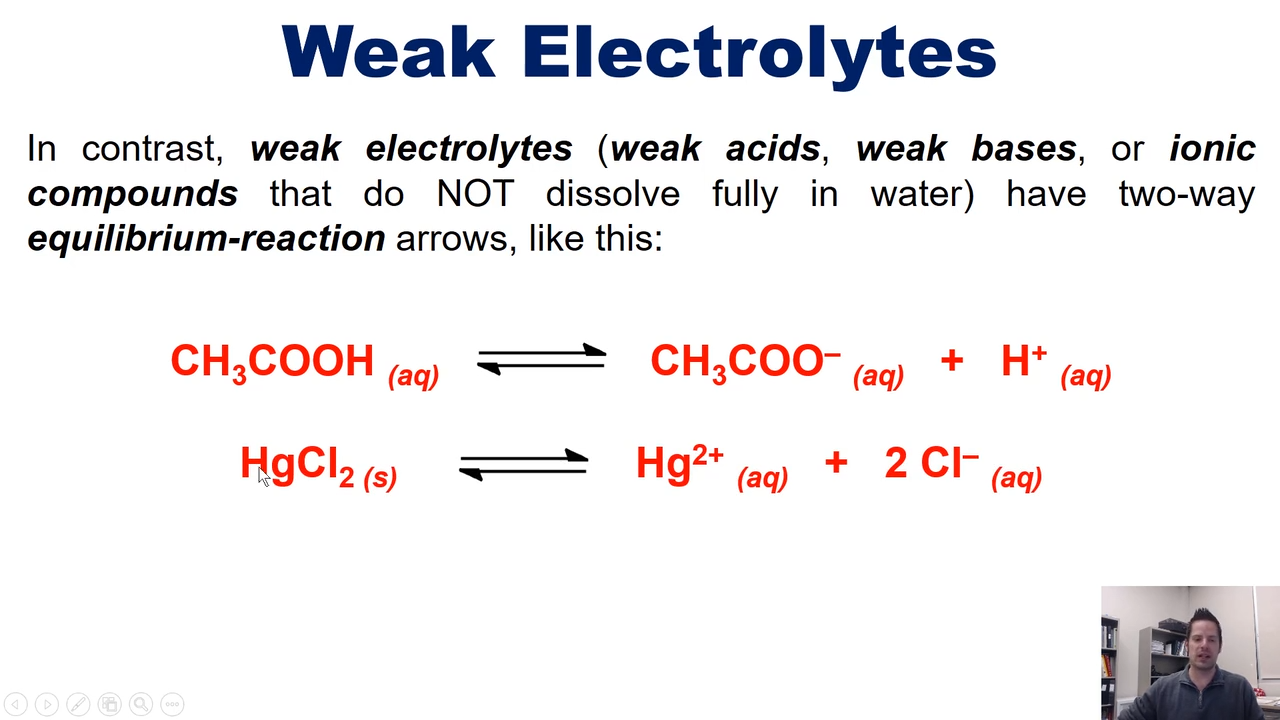
weak electrolytes
weak acids, bases, or ionic compounds that do not readily dissolve in water
Product heavily favored
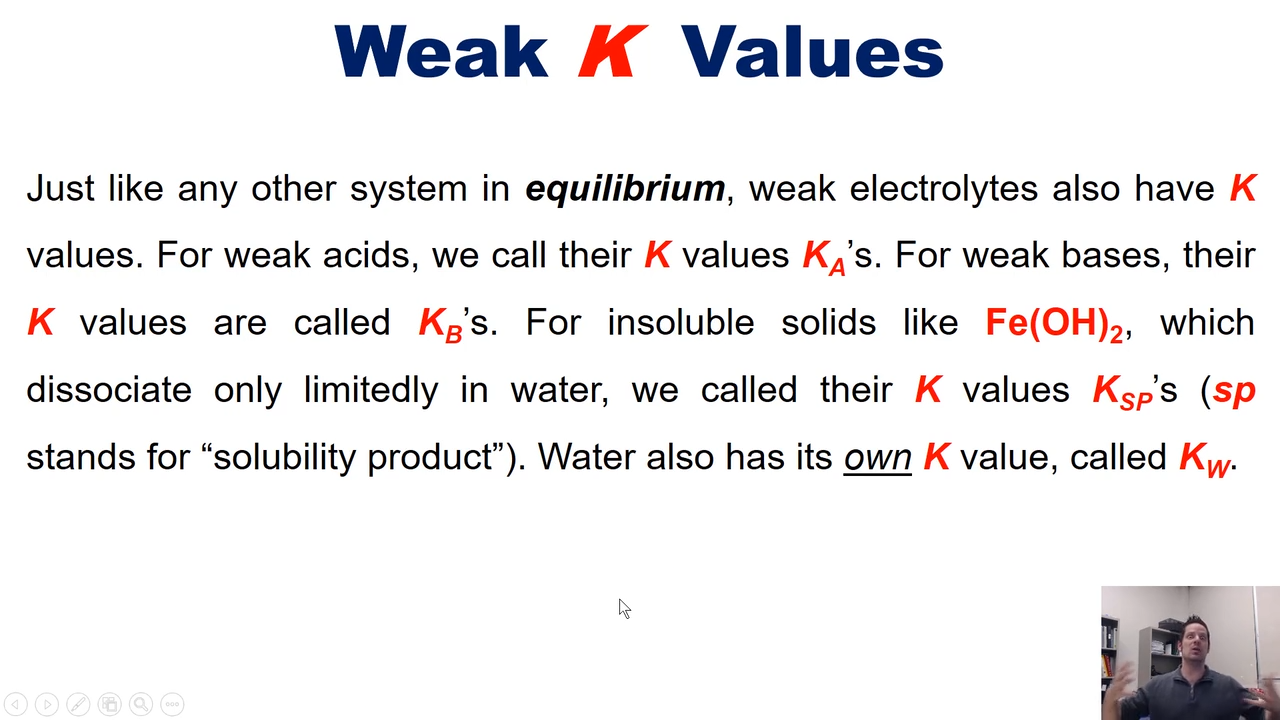
K value for weak bases
Kb
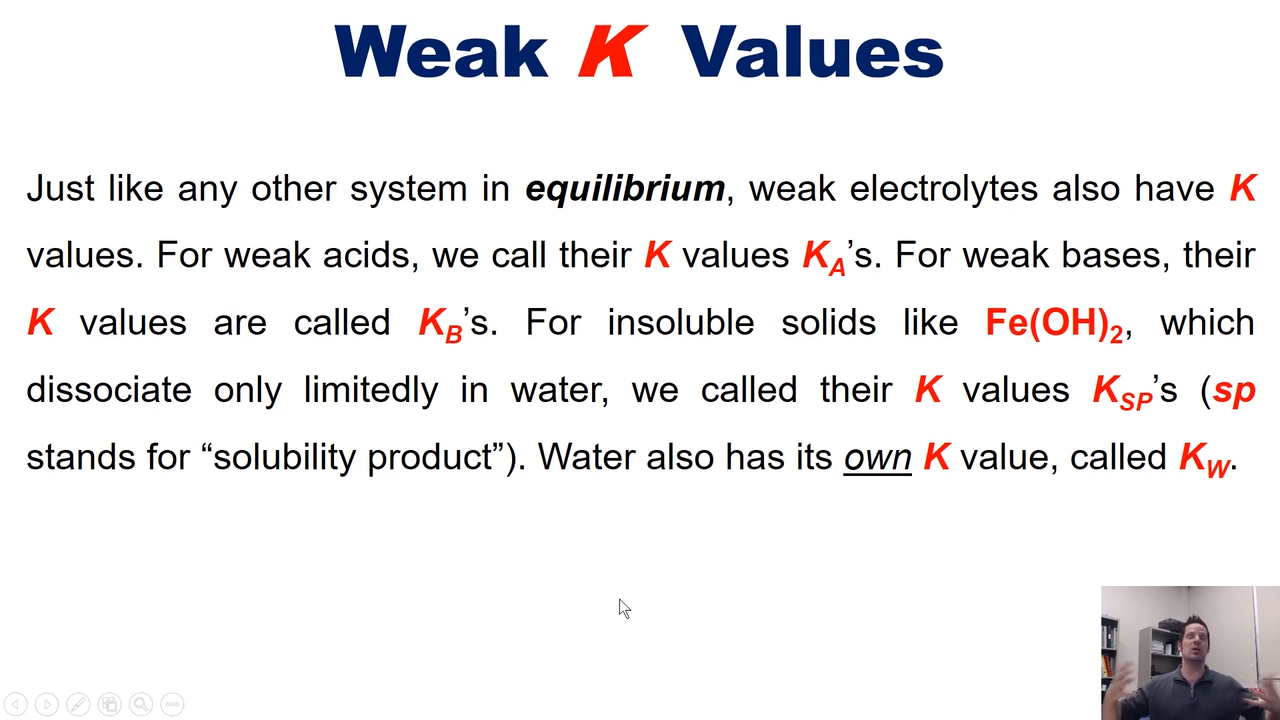
k value for weak acids
ka
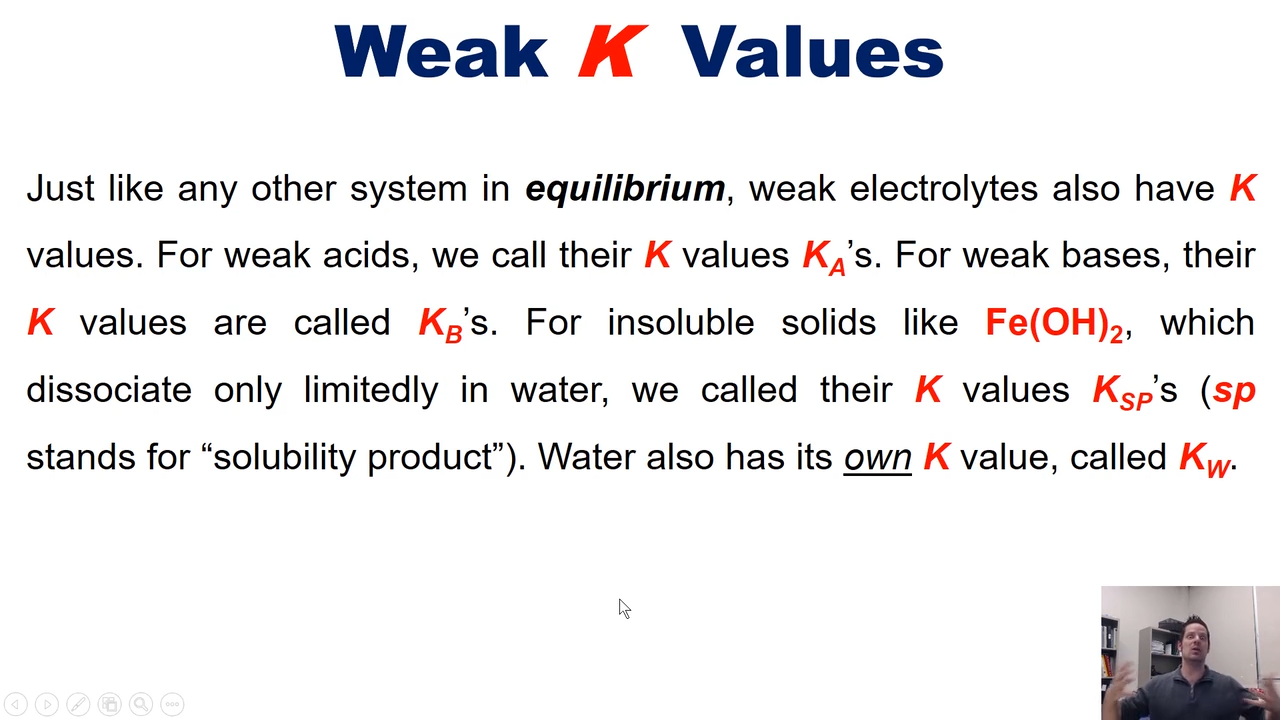
k values for insoluble solids
Ksp
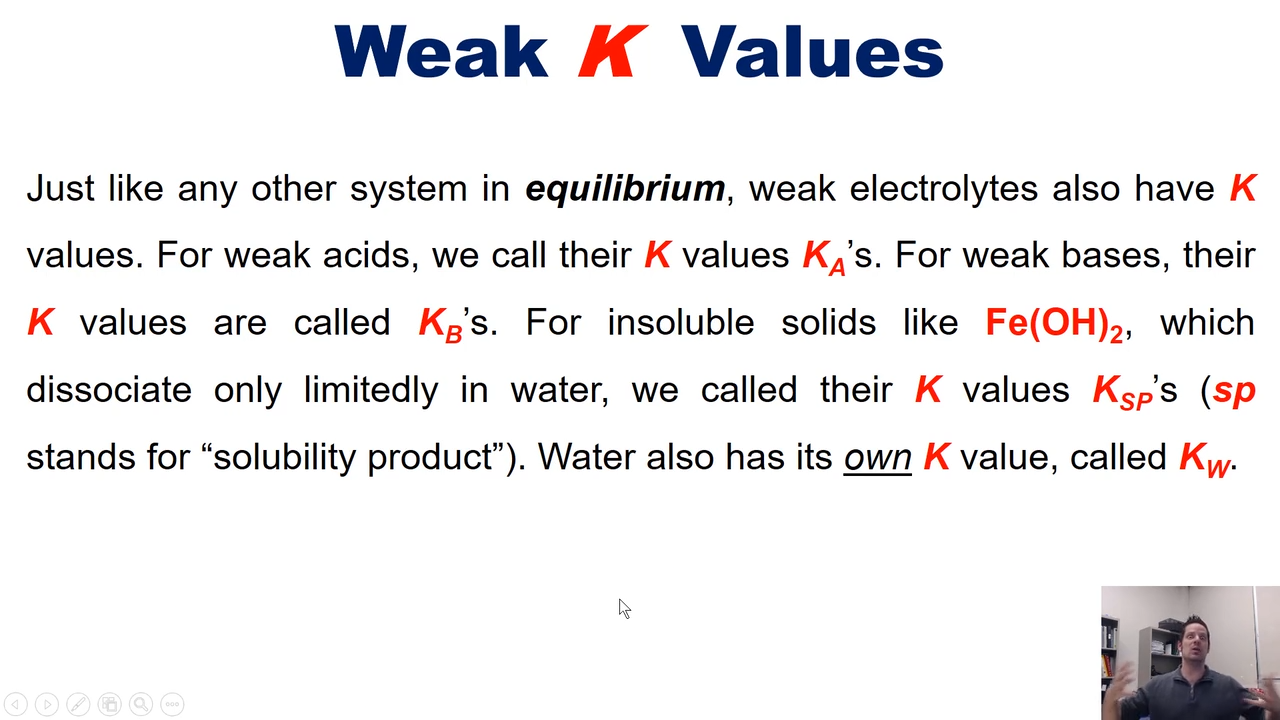
k value for water
kw
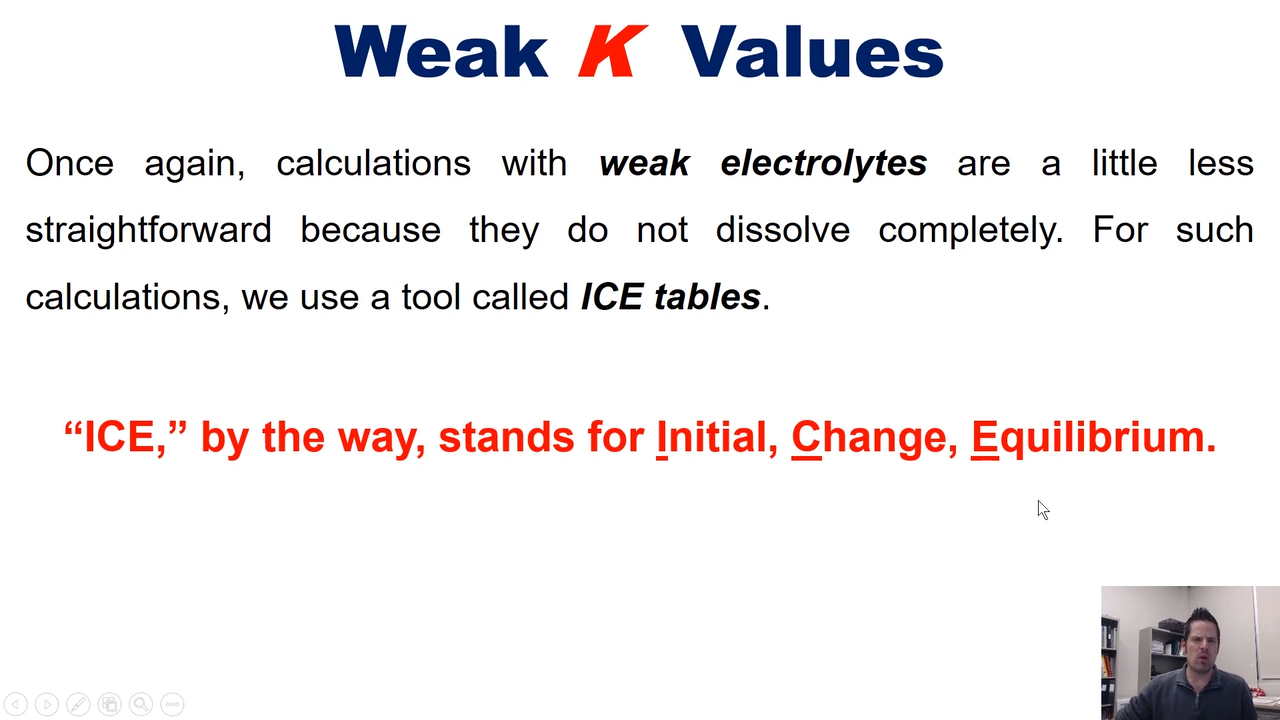
What does ICE stand for
Initial, change, equilibrium
when do you remove x
when kc < 10^-3
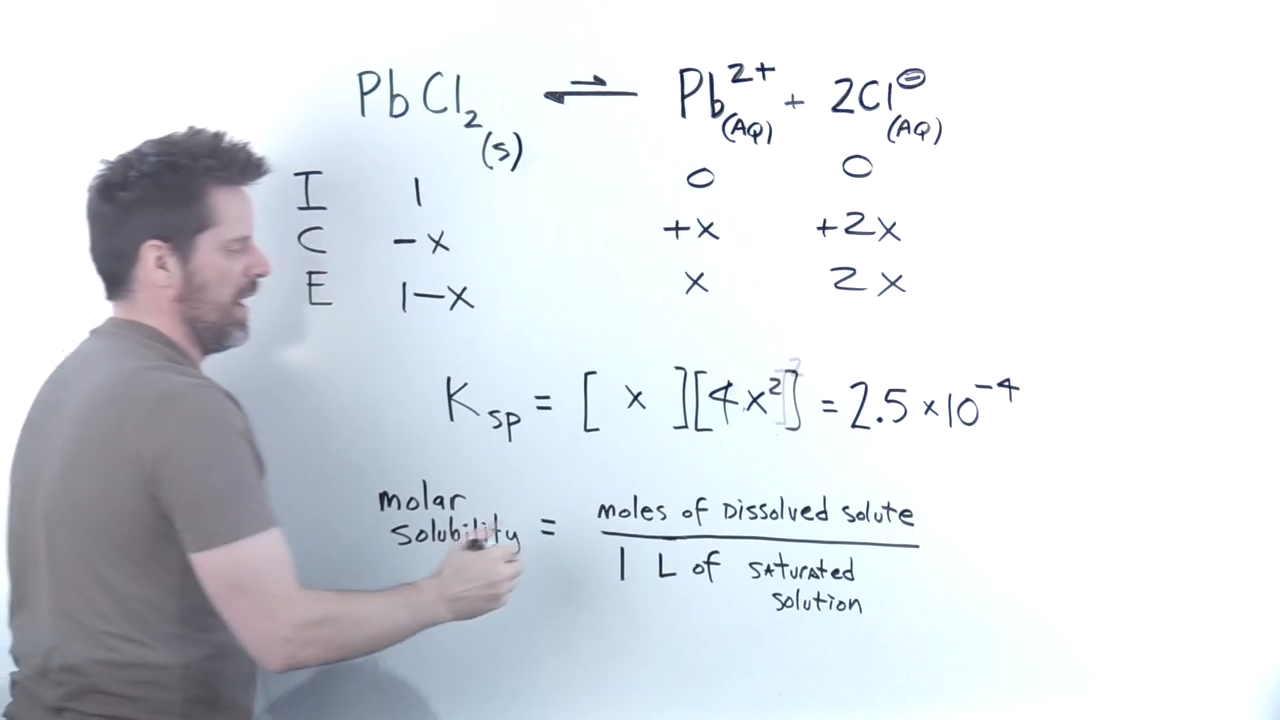
How to find molar solubility
Do Ice table and find X
remember, molar solubility is mols of dissolved solute/1L of saturated solution
Common ion effect
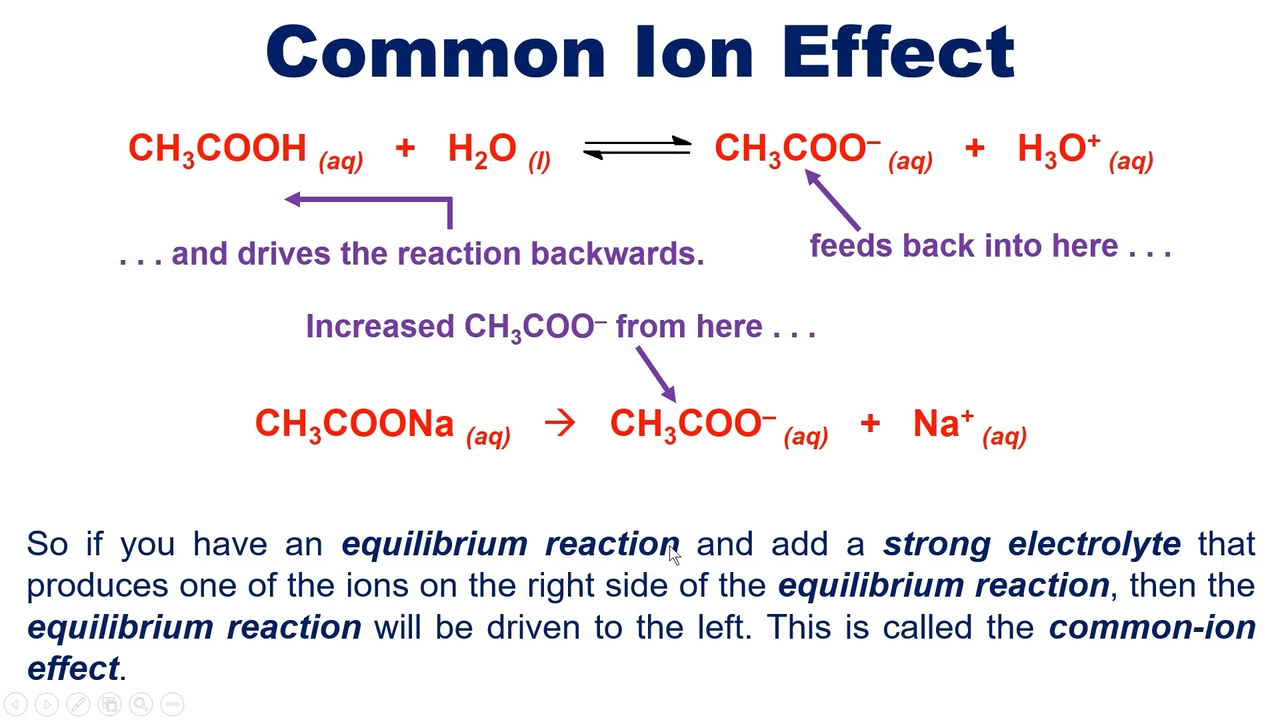
If you have an equilinrium reaction and add a strong electrolyte that produces one of the ions on the right side of the reaction,
How to determine if there is precipitation
if Q>Ksp, precipitiation
if Q<Ksp, no precipitiation
IE, if more products, preciptation