Biomolecules, Cell Communication Importance, Organ Systems MCAT, MCAT Tech and Methods to Know, Psych/Soc MCAT
 Call Kai
 Learn
Learn Practice Test
 Spaced Repetition
 Match
Match Flashcards
 Knowt Play
1/243

There's no tags or description
Looks like no tags are added yet.
Name | Mastery | Learn | Test | Matching | Spaced | Call with Kai |
|---|
No analytics yet
Send a link to your students to track their progress
244 Terms
Protein Conformation Stability:
What structures of protein does temperature,pH,chemicals, and enzymes break? (For Structure, think Primary,secondary, tertiary,quarternary)
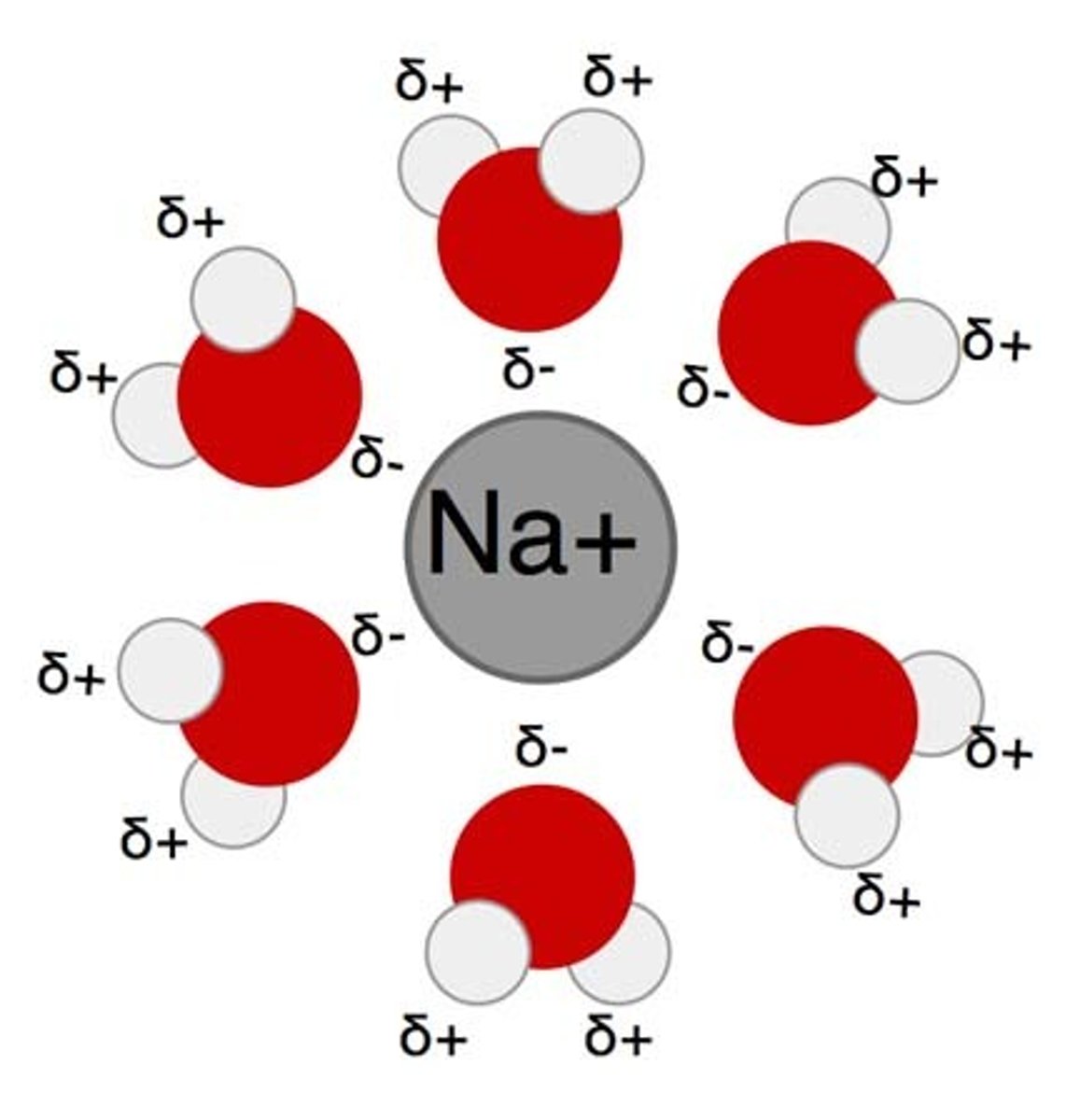
Solvation Shell: Layer of solvent around protein. The negative charge on water surrounds the positive charge in middle
Temp: secondary,tertiary,quarternary
pH: tertiary and quarternary (Doesn't break hydrogen bonds)
Chemicals:secondary,tertiary,quarternary
Enzymes: Break down everything
Enzyme Strategies: Remember that covalent is electron transfer
1.Acid Base Catalysts: Enzyme acts as an acid or base, basically a proton donor or acceptor
2.Covalent Catalysts: Electrons transfers
Some enzymes speed up reactions by bringing reactants closer together
How do enzymes speed up reactions?
1.Lower activation energy
2. Stabilize transition state
Not used up in the energy equation
What is the active site on an enzyme?
-The active site on the enzyme is where the reaction occurs with the substrate (What the enzyme acts on)
- Enzymes are highly specific to the substrate
What is the sequence of binding?
1. Initital binding: The strength is strong but not perfect, between the enzyme bonds
2. The enzyme and substrate will both mold to fit into each other. Not like puzzle pieces but like molding clay (Induced Fit)
3. Some change occurs: The substrate becomes modified in some way, and is released, while the enzyme stays unaffected
How does enzyme specificity work?
Enzymes only catalyze one type of reaction, but may have sites where they can bind more than one type of substrate. Technically we say that enzymes are specific
When is the enzyme substrate complex most stable?
During the induced fit, the transition state is most stabilized
What are the 6 types of enzymes?
-ase: usually used to indicate an enzyme (Ex: DNA Polymerase-> Makes DNA into polymers)
1. Transferase: Some functional group moved from one molecule to another (Ex: Peptidyl transferase in tRNA)
2. Ligase: Combines two (Ex: DNA ligase: combines broken DNA)
3. Oxioreductase: Redox Reactions (CATALYZE THE FORWARD AND REVERSE REACTION) Ex: The hydrogen from NADH being transferred to pyruvate to make Lactic acid and NAD+ (dehydrogenase- basically remove a hydrogen AKA a pair of electrons)
4. Isomerase: Convert something to an isomer (Ex: Glucose 6 phosphate to Fructose 6 Phosphate)
5. Hydrolase: Uses water to cleave into two new products (Ex: Protease breaks peptide bond-Remember enzymes can break the primary structure
6. Lyase: Breaks down into new products without water or redox reactions (Either generate a double bond or ring structure)
What are Some examples of the types of enzymes?
Kinase: a transferase because it transfers a phosphate from ATP to use it on another molecule
Phosphatase: Removes a phosphate group by using water, so it's a hydrolase
What is a Coenzyme?
Basically assists the enzyme in its activity. Ex: NADH is the coenzyme and helps the dehydrogenase transfer the hydrogen from pyruvate to lactic acid
What is a Cofactor?
The cofactor defers from the coenzyme in that it directly participates in the catalysis. For example, in the above reaction, if a factor was needed to specifically help out the dehydrogenase attach, it would be a cofactor
What's the difference between a coenzyme and a cofactor?
The coenzyme is basically a carrier (Ex: Coenzyme A-> Carries Acyl groups)
Cofactor: Participates in the catalysis, by for example; Magnesium helps stabilize the negative charge on DNA so polymerase can work
What is ATP in relation to Kinase?
ATP is the cofactor to kinase. Because it is an organic carrier for phosphate, that kinase uses to transfer a phosphate group
What Are Vitamins and Minerals?
Vitamins: Are organic (We eat vitamins in organic vegetables)
Minerals: Inorganic Cofactors (Inorganic because rocks are minerals)
How do pH and Temperature affect enzymes?
pH: There is an optimal pH for enzymes. At the wrong pH amino acids may get protonated or deprotonated, which can affect function
Temperature: High temps can denature the folded structure
What is the Enzyme Equation for Rate?
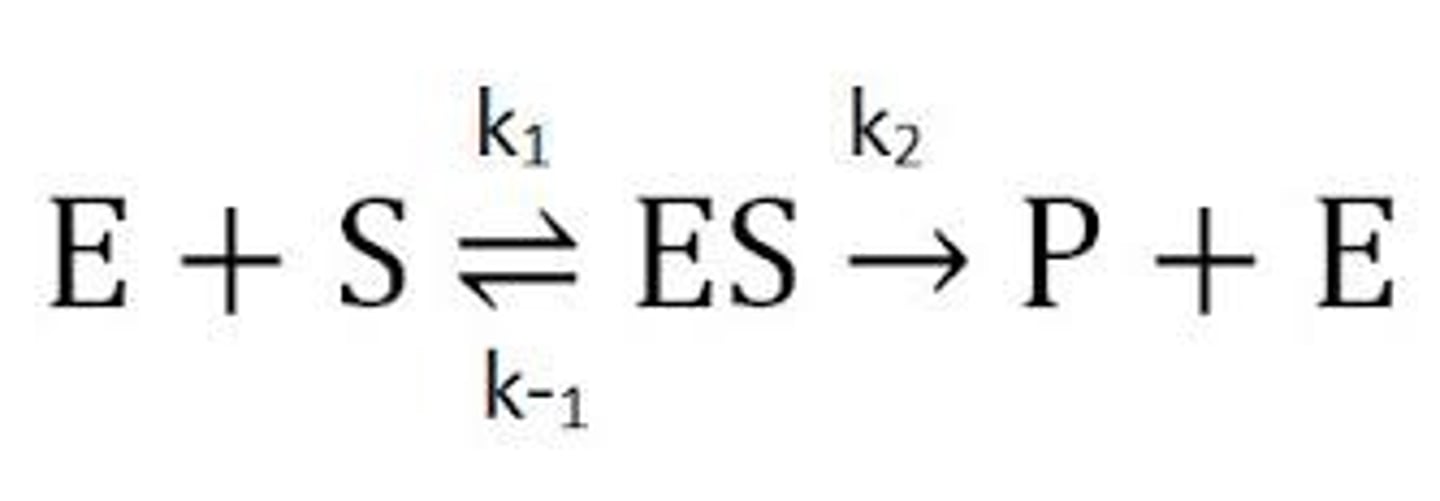
What would be the Rate equation for the enzyme reaction shown?
*Remember Rate is shown by the Reactants
Rate 1=k1 [E][S]
Rate 2=k2 [ES]
![<p>*Remember Rate is shown by the Reactants</p><p>Rate 1=k1 [E][S]</p><p>Rate 2=k2 [ES]</p>](https://knowt-user-attachments.s3.amazonaws.com/048c5d52-0ca8-4b10-addd-3a8d757242f6.jpg)
What is Vmax?
Vmax is the max rate at which the reaction can occur. It's where the reaction is saturated, and all the substrate is matched to enzymes.
What's the formula to find kcat?
kcat=Vmax/Total Enzyme
Obtained from Vmax=kcat*Enzyme
What's the formula for total Enzyme Present?
Etotal(Et)= E+ES. That is Total enzyme=Free enzyme plus substrate complex
What is Kcat called?
The turnover number. Shown as rate. The higher the kcat the more efficient the enzyme
What is the Michaelis Menten Equation?
Vo=(Vmax(S))/(Km+S)
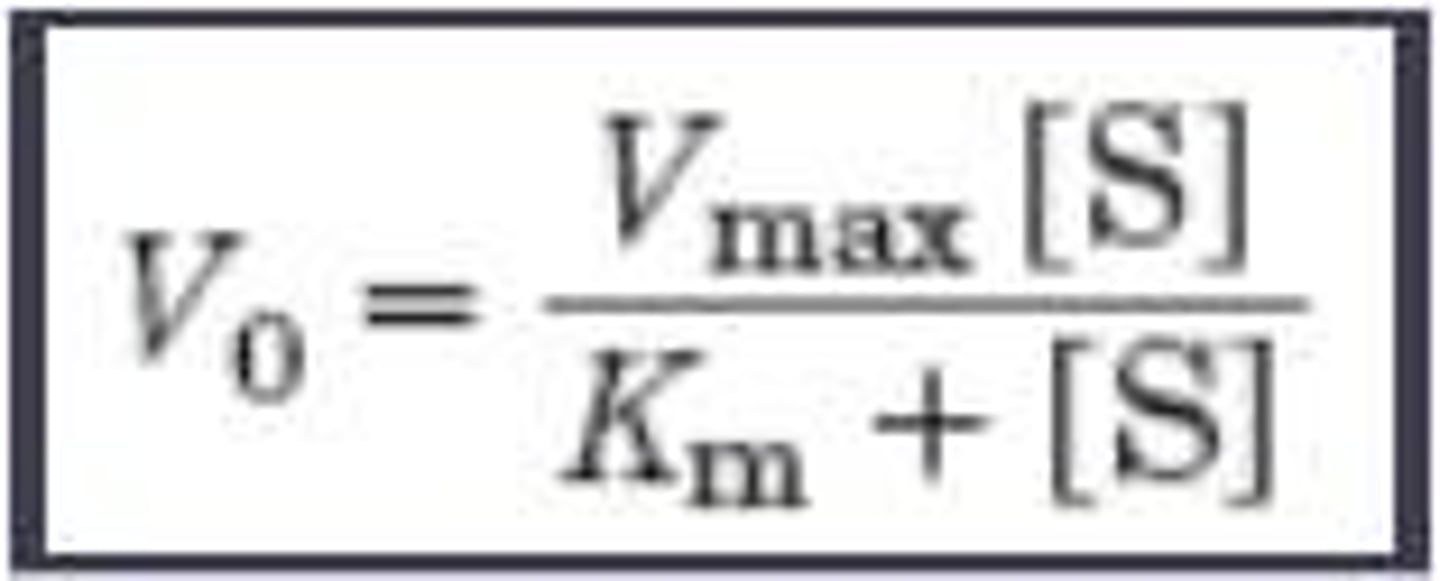
What is Catalytic Efficiency, and its formula?
Catalytic Eff.=kcat/km. so catalytic efficiency is higher if kcat increases or km decreases.
Remember kCat does not change for the amount of enzyme used. It is constant for a particular enzyme
If the enzyme-catalyzed reaction E + S ⇋ ES ⇋ E + P is proceeding at or near the V_{max}
what can be deduced about the relative concentrations of S and ES?
It means that all the enzyme available is matched up to substrate,so ES is at its highest. But there's still a lot of S left so it's still abundant
What are the three types of inhibitors?
1. Competitive
2. Uncompetitive
3. Noncompetitive
What is a competitive Inhibitor and how does it affect vmax and km?
The inhibitor competes for space on the enzyme, with the substrate
Binds to free E to form EI
Vmax remains unchanged, but km increases
What is an uncompetitive Inhibitor and how does it affect vmax and km?
Binds to the enzyme substrate complex. So basically binds to ES to form ESI. This prevents the enzyme from turning substrate into product E+P
Vmax decreases but km also decreases
What is a noncompetitive Inhibitor and how does it affect vmax and km?
Either works like the competitive or uncompetitive by binding to the E or ES respectively. Either way it binds, the product can't be formed
Vmax decreases but km stays the same
What are the two types of cooperativity in enzymes and give an example of each
Positive cooperativity is when the binding increases affinity. For example in hemoglobin the more oxygen there is, the more oxygen binds
In non cooperative, it just levels off once it's reached it's max.
Sigmoidal vs hyperbolic curves respectively
What are the two types of allosteric effects, and how do they work
They can either be positive or negative. They are reversible, and non covalent bonds (A covalent bond is pretty permanent)
An activiator can work by either increasing Vmax, or decreasing km, and the inhibitor would work in the opposite way
Where are the best control points in feed back loops?
In feedback loops the best control points are "highly committed steps" with very negative Delta G values
How do covalent bonds function in enzymes?
Zymogens can be activated through covalent bonds
We can see post translational modification like methylation, acetylation, glycosylation, etc..
What is the difference between DNA and RNA on the 2'group?
The DNA has a hydrogen on the 2 ' group of the sugar group, while RNA has a hydroxyl group
What is the significance of the hydroxyl group on RNA?
The hydroxyl group gives more stability. So RNA is more stable than DNA
What gives DNA its acidity?
The phosphate group attached to the 5' carbon
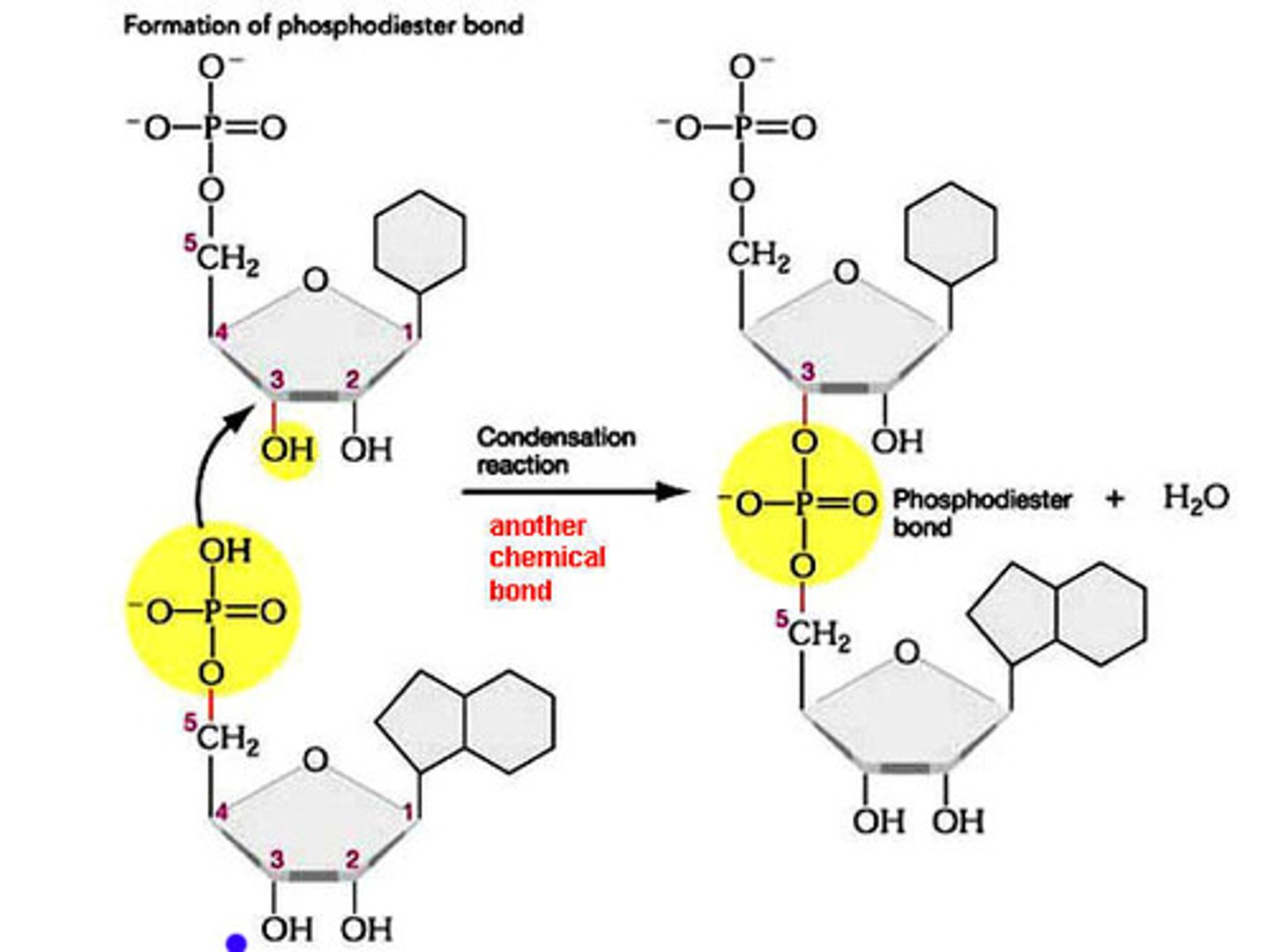
How does a phosphodiester bond work?
The 3' hydroxyl group, and the 5' phosphate group link up together
It's a covalent bond that releases water
What is the difference between the nucleoside and the nucleotide?
The nucleoside is just the base and the sugar. The nucleotide includes the phosphate group. Remember that s comes before the t so it's a pre req
The adjacent nucelotides are linked by what?
What about the opposite nucleotides?
The adjacent nucleotides are linked by phosphodiester bonds, while the opposite nucleotides are linked by the hydrogen bonds on the bases.
Which ones are the Pyrimidines and which are the purines?
Purine: Adenine and Guanine
Pyrimidine: Thymine and Cytosine, Uracil is a pyrimidine derivative
What does a pyrimidine look like?
One ring structure
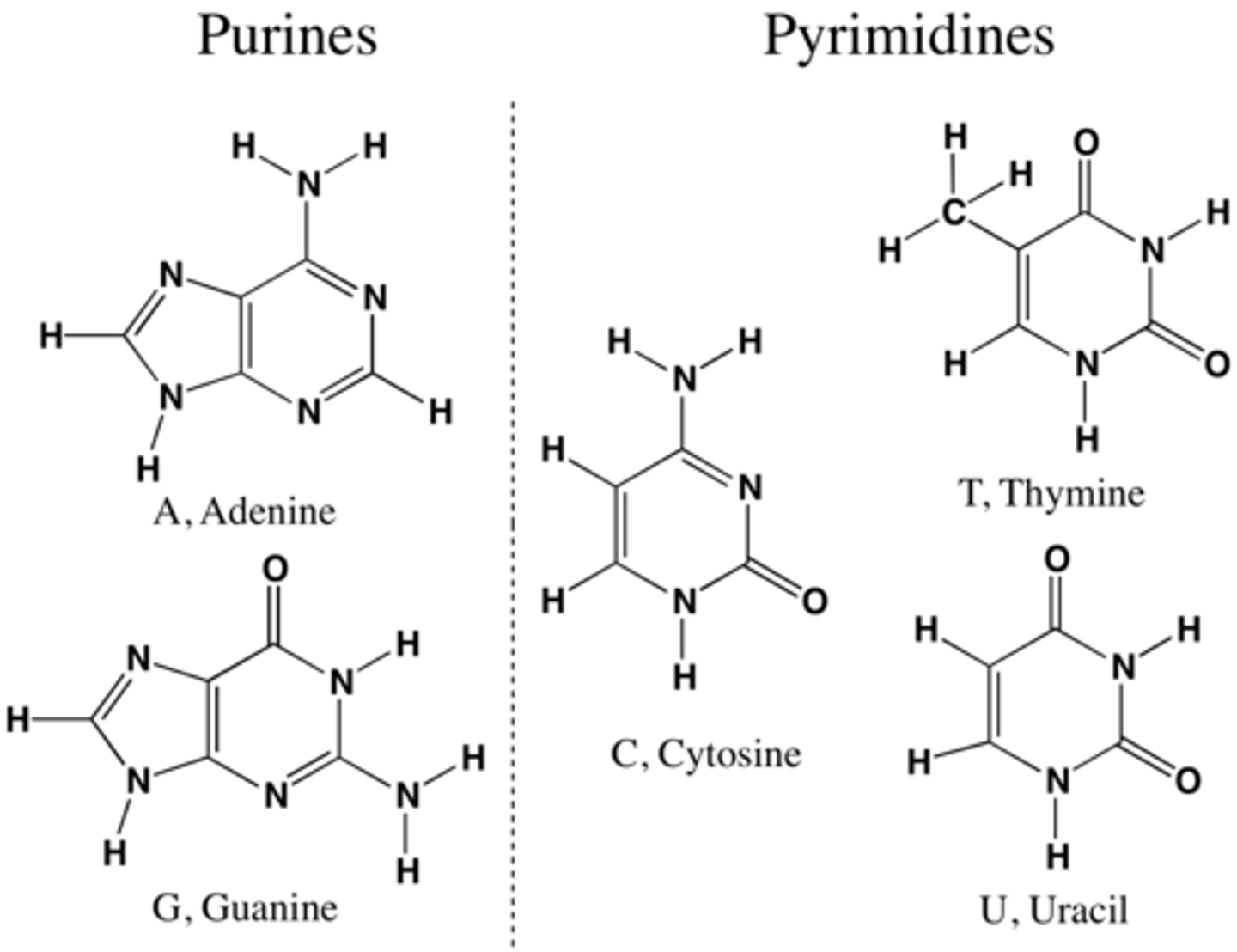
Purines have what type of structure?
They have the double ring structure
What's good way to remember the structure of A,T,C,G?
The guanine has a double bond O so it's GO
The Adenine obviously won't have the Double bond O
The Thymine has TO also TWO because there are TWO Double Bond O groups (methyl group, while the Uracil has a hydrogen group)
The Cytosine only has one Double Bond O group
DNA Polymerase moves in which direction?
Moves from 3' to 5'
Explain DNA Replication very basically
1. DNA gets unwound by helicase, and topoisomerase keeps it from tangling
2. It's bidirectional
3. Leading and lagging strands
For replication what functional group needs to be free at the 3' end
There needs to be a free 3' hydroxyl group
What is the function of Primase?
Places an RNA primer for DNA replication to start
DNA polymerase III?
adding bases to the new DNA chain; proofreading the chain for mistakes
Parts of the Membrane
1. Phospholipids
2. Cholestrol
3. Proteins
The cholestrol is a regulator of membrane fluidity. It allows for the membrane to be more fluid whenever it's cold and rigid, and to be more solid whenever it's hot and too fluidic. Also when fatty Acids are saturated they're all single bonds and they 're satisfied and orderly. Unsaturated have double bonds and kinks, and are unruly.
Proteins have integral that span the whole membrane and peripheral that are just in one part
What gets through the membrane?
1. Small non polar is the easiest (ex:O2 and CO2 can just diffuse through)
2.Small polar molecules like water can get through but it takes longer and is harder
3. Large non polar, like carbon rings can get through also but very slowly
These 3 can get through without some sort of transport or active transport.
What doesn't get through the membrane without help?
Large Polar molecules like sugars, and ions (Ex: glucose)
Membrane Dynamics
Phospholipids are fluid and move around
-Uncatalzyed movement:
-Bilayer diffusion AKA "Flip Flop"; super slow
and the phospholipids just flip
-Lateral Movement: The phospholipids move
side to side rapidly and often
-Catalyzed Movement:
- Flippase: outer leaflet to inner (Think flip
flop starts from outer)
- Floppase: Inner leaflet to outer
- Scramblase: Moves inner to outer and outer
to inner
Flippase and Floppase use ATP but scramblase does not
Ways Cells Interact with Each other and how they're connected
Couple of ways cells can interact with the environment:
Exocytosis: get rid of waste
Endocytosis: Take in stuff
Phagocytosis: Specific and engulfs non
soluble
Pinocytosis: How the cell drinks: Takes in liquid
and soluble stuff, not that specific
Receptor Mediated: Highly specific, only takes
in when something binds
Types of Connections:
1. Gap junctions: Basically tubes that connect cells, and spread things like water and ions. Also spread action potentials in things like the heart and the neurons
2. Tight Junctions: Cells squished together and don't let anything in or out. Bladder, kidneys,etc
3. Desomosomes: Cells connected by threads. Offers decent support, but also flexibility. Ex: Skin
Types of Transport
Diffusion: Small non polar
Facilitated Diffusion: Larger or polar. Helped along by a membrane transport protein. Ex: GLUT 4 is placed in membranes by insulin and allows glucose into cells. The more sugar we eat, the more goes into the cells down the concentration gradient because it's passive transport. People with type 2 diabetes have not optimal GLUT 4 placement
Active Transport: Against concentration gradient
Secondary Active Transport: First gradient established using ATP, then another molecule goes along for the ride.
Membrane Potential is influenced by the ion with the highest permeability. Example with the Sodium Potassium Pump, Potassium has higher permeability which is why the membrane potential is more negative. Because sodium can't get in easily even down the concentration gradient.
Eukaryotic Cells
The Eukaryotic Cell is Distinct for having Membrane bound organelles
-Nucleus: Where the DNA is stored, where the replication and transcription process happen before the RNA leaves through nuclear pores.
-Nucleolus: Makes ribosomes (Is not membrane bound)
-Mitochondrion: The energy powerhouse of the cell
*Both the nucleus and the mitochondrion have a double bilipid membrane
- SER: Detox and lipid production (Liver has huge amounts)
-RER: Makes proteins and sends them to the Golgi Apparatus for packing. The way this works is when a ribosome comes in contact with a sequence of RNA, the sequence directs it to go the to RER and embed
-GA: Sends proteins off for leaving the cell or to different parts of the cell, or to lysosome
-Peroxisome: Breaks down lipids. Peroxisomes also protect from free radicals and oxidative species
-Lysosome: Breaks down Proteins. Only works in acidic environment, so even if the lysosyme broke the acidic interior wouldn't do any damage
* Both peroxisomes and lysosomes recycle
Cytoskeleton
"Skeleton of Cell"
Microtubules: Cilia,flagella,mitotic spindle, transport substances inside cell
Intermediate Filaments: Structural support for cell, and resist mechanical stress. Permanent, the other two are dynamic
Microfilaments: Cell division; Amoeba pseudopods. Made of Actin. Gross movement of cell. Dynamic. Involved in the process that causes conformational change that lets phagocytosis happen. If you see immune cells, think microfilaments. Muscle movement because actin
Bacteria and Binary Fission
The cell has a circular singular chromosome. Has an origin of replication, and the DNA replicates there. The thing splits, and a divide called a SEPTUM forms down the middle, and splits into two bacterial cells.
Gram Staining
Gram Positive has thick peptidoglycan
Gram negative has two layers and in between in a periplasmic space (THINK: PERIPLASMA= harder to treat)
Positive=purple Negative=pink
Viruses
Non living use host machinery
Lysogenic: Stay in host and replicate embeds in host genome, Lytic kills host
Retrovirus: Has an enzyme called REVERSE TRANSCRIPTASE that makes DNA out of RNA and can integrate with the host genome. AKA lysogenic cycle. Retrovirus can also just have straight up double stranded DNA
Cell Division
The cell cycle is like seasons in a year. They are either growing or dividing. The growth phase is called interphase and the dividing phase is called mitosis
The interphase is split into a couple of parts:
G1: When most organelles are made in the cell. It spends most of its life here. Next it can either proceed to G0 or S phase.
G0: The cell doesn't divide only grows if needed, this would be cells like neurons
S: The synthesis phase. This is where the DNA divides from 23 pairs of chromosomes to 46 pairs of chromosomes. Once the S phase is complete, the cell moves on to G2
G2 Phase: Where the cell prepares itself for division by getting more specialized, like making microtubules for division and stuff
Cell Cycle Control: How does cancer work?
The cell cycle is controlled by CDK (Cyclin Dependent Kinases, and Cyclin). The CDKs are default in an inactive form, and activated by Cyclins. When activated they phosphorylate the proteins. The phosphorylation will activate some stages, and some it will inhibit proteins that were blocking transcription. Example: Rb blocks DNA transcription, but when phosphorylated by CDK, it's inactivated and transcription is allowed to continue.
In addition to Rb there is a protein called P53 which is often termed as the "guardian of the genome." P53 binds to DNA genome directly to produce proteins like P21 that block the progression of the cell cycle, by inhibiting CDK. So P53 and Rb would be considered Tumor suppressor genes. When these genes have loss of funtion and can't produce P53 or Rb that's when cancer occurs.
Explain the overall fertilization process in terms of haploid,diploid, zygote,
The sperm has 23 chromosomes, and the egg has 23 chromosomes. They're both haploid. When they come together they form the zygote which is diploid. So we get 46 total chromosomes or 23 pairs of homolgous chromosomes. Homologous chromosomes code for the same thing, but the allele which we get from the mom and dad can shape what we get. For example there could be a gene on a pair of homologous chromosomes that codes for eye color, mom's could be black and dad's blue.
Also, the 23 chromosome is the sex chromosome. X from mom and if dad gives Y then it's a male and female for a double X.
In humans n=23 (haploid) and 2n=46 (diploid)
What is the process of the production of Germ and Somatic Cells?
The somatic cells are the non sex cells. They come about through mitosis. So the zygote keeps dividing over and over through mitosis and all the cells get the diploid number of 23 pairs of chromosomes. These cells differentiate into brain cells skin cells etc
The germ cells are the sex cells and they differentiate into the ova and testes. They have the haploid number, their process is meiosis. Anything here gets passed down to kids, such as mutation.
Interphase
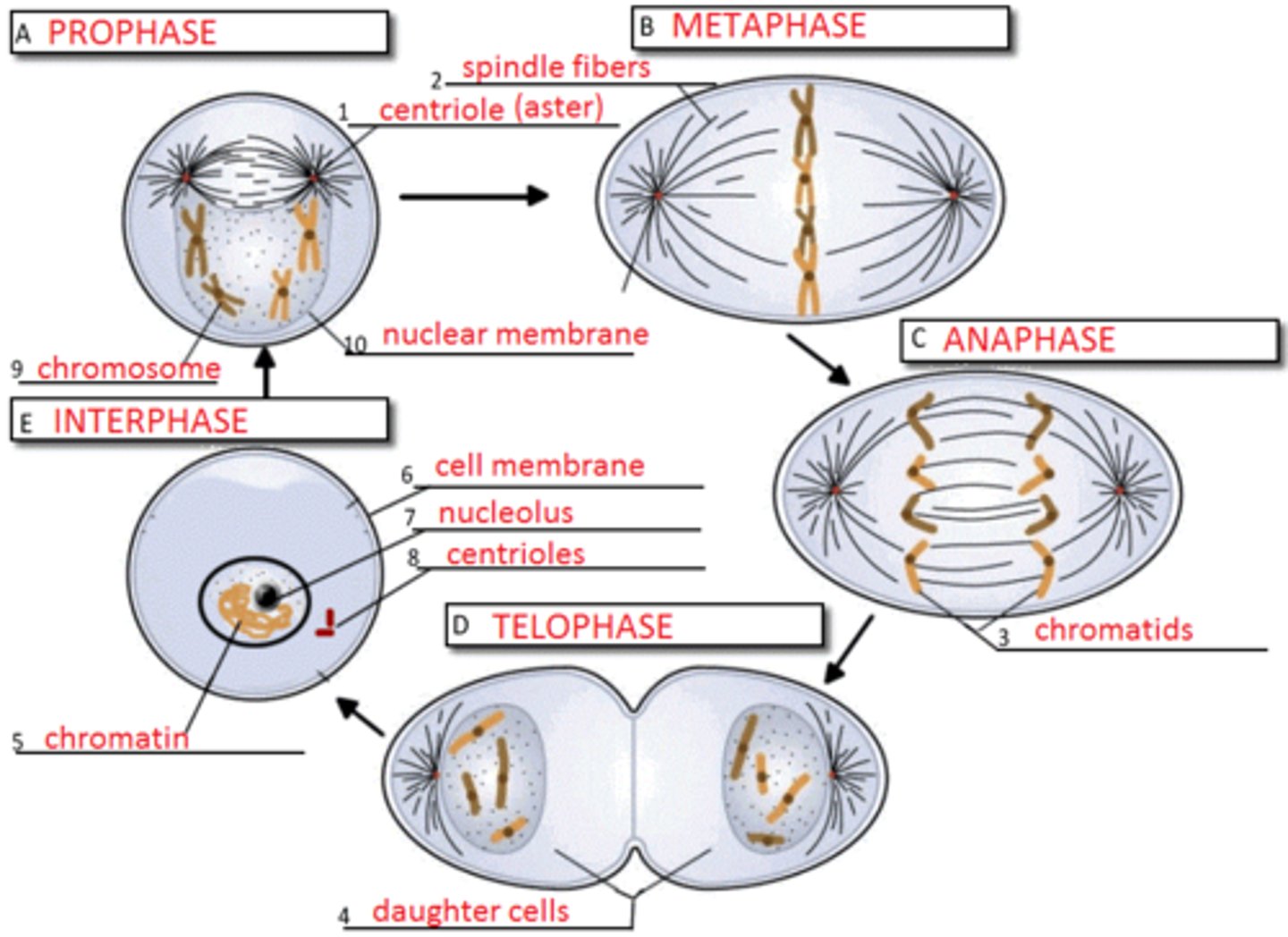
In interphase at the start, the chromatin in the nucleus is unwound and just floating around. In the G1 phase it starts growing. In the S phase the chromosome replicates itself to make still another chromosome, but two sister chromatids which are connected by a centromere. This is the more traditional form of the chromosome that you see
Mitosis
prophase: The nuclear membrane starts to dissolve, and centrosomes start to move to opposite ends
metaphase: The chromosomes line up in the middle, and microtubules from the centrosomes connect to the kinetochore of the chromosomes so they can be pulled apart
anaphase: The cell is elongating and the sister chromatids are pulled apart
telophase: The chromatin decondenses a little and the nucleus re forms.
Basically at the end you get the same number of chromosomes and in the same form it was in before the S phase. At the start of mitosis though because it was in interphase already there are two sister chromatids but after mitosis the chromosome number is the same but not the number of chromatids.
Meiosis
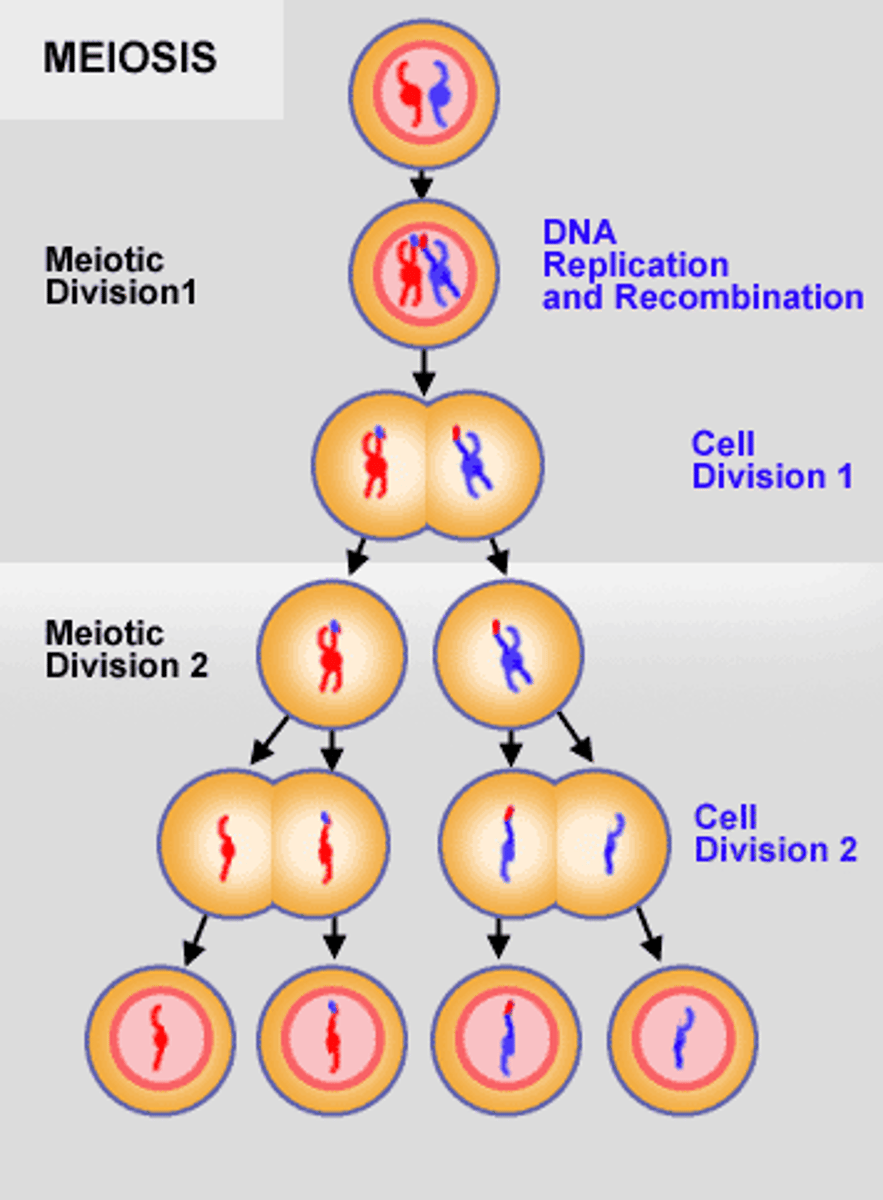
Germ cells can undergo mitosis to make more diploid sex cells or meiosis to get the gametes. Females will only have one functional egg while the rest become polar bodies.
The genetic recombination occurs in meiosis 1, and then the homologous chromosomes are pulled apart. So it goes from 2n with 23 pairs of homologous chromosomes to 23 homologous chromosomes in each. Then meiosis 2 is basically like mitosis and the sister chromatids are pulled apart, to still get 23 chromosomes in each but half the number of chromatids
Cell Development
Stem Cells: Must be able to divide repeatedly and able to specialize. The zygote during mitosis keeps dividing into a Blastocyst, and inside the blastocyst is an inner cell mass which has EMBRYONIC STEM CELLS. They can differentiate into the different cells. SOMATIC STEM CELLS are repairing for cells. Example when skin cells are shed, somatic stem cells make more
Apoptosis
Apoptosis can happen in response to several things
1. Reactive oxidation species like hydrogen peroxide
2.Damaged DNA
3.Development, such as destroying the webbing in hands, so we get fingers
4. Viruses and stress
The mitochondrion plays a big part in Apoptosis. There are proteins that regulate the permeability of the mitochondrial membrane. So when apoptosis is not triggered these proteins are in the ANTI conformation, so the membrane is not permeable. However, when apoptosis is triggered they're in the pro permeability configuration. So cytochrome C usually a part of the mitochondrion detaches and goes out into the cytoplasm to trigger CASPASE. ASE is enzyme, ASP means it cleaves on the aspartate residue, and it uses Cysteine. These CASPASES function like a cascade, and cause overall cell death.
Cell differentiation
The cells all differentiate from the same common stem cells. The way they do this, is that each cell has the same genetic information (23 pairs of homologous chromosomes), but they read from different genes and code for different proteins
The transcription factors are asymmetrically distributed which means certain cells will develop with the ability to differentiate into certain cells, while others will not
Telomeres and Senescense
On the end of DNA is something called a telomere. With each replication of DNA the telomere shortens, till it reaches a point where it's so small that if replication were to happen again the cell would take DNA damage. So the cell releases signals that cause it to go into a SENESCENT state, so that it no longer divides
Senescence can happen because of telomere shortening or DNA damage. Because the mature heart and neuron cells don't divided, the main reason they might become senescent is from DNA damage
Some stem cells can keep on dividing because they have TELOMERASE that adds to the telomeres, so the cells don't really hit senescence. However, sometimes a mutation occurs that causes somatic stem cells to also develop a telomerase, and that's where cancer may occur because the cells just continue to divide.
The number of replications a cell can do is called the HAYFLICK LIMIT.
Cell Movement
Some cells use flagella. For example sperm use microtubules in flagella along with DYENIN proteins to move.
Neutrophils move along blood stream till they come across a signal, then they crawl.
Cells can move by either just adding actin filaments to the front of my using endocytosis and adding sticky feet to the front of the protein.
Embryology
The two processes are basically gastrulation and neurulation
Gastrulation is when our 3 germ layers form, and neurulation is where the notochord and neural crest are formed, become the spinal cord and brain
When the zygote is first formed it immediately goes through CLEAVAGE, which is rapid division. At the 32 cell mark it is called a MORULA. At this point the cells begin to differentiate. It becomes a BLASTOCYST. The outer layer of cells is called the TROPHOBLAST, and then there is a grouping inside called the INNER CELL MASS. There is a liquid surrounding it called the BLASTOCOEL. The INNER CELL MASS divides into two layers EPIBLAST, and HYPOBLAST. An AMNIOTIC CAVITY forms close to the EPIBLAST, where the embryo comes from. The Hypoblast separates the Epiblast from the newly formed yolk sac.
Then Gastrulation happens and 3 layers happen
1. Ectoderm: Skin, hair, nails, CNS (Brain and Spinal cord), and PNS
2. Mesoderm: Muscle, bone, connective tissue, notochord, kidney, gonads, circulatory system
3. Endoderm: Epithelial lining of the digestive tract; Stomach, colon, liver, pancreas, bladder, lung (THINK: RESPENDO)
What are the two parts of the Nervous System
CNS:Brain and spinal Cord
PNS: The branching nerves
What are the 3 main parts of the Brain?
1.Cerebrum
2.Cerebellum
3.Brainstem
What is the Brain Stem?
Connects the brain and spinal cord
Divided into 3 parts:
1.Midbrain
2.Pons
3.Medulla
What are the 3 parts of the developing nervous system, and what do they become?
Forebrain=becomes the Cerebrum
The Midbrain=Midbrain portion of brainstem
Hindbrain=everything else (pons,medulla,cerebellum)
What are the two Parts of the Peripheral Nervous System?
1. Nerves
2. Ganglions: the body where nerves attach to
What two types of Nerves come from the Peripheral Nervous System?
1. Cranial
2.Spinal
Becomes smaller the more disital (Further way) they moves from the center of the body
Explain the Motor Unit and some of the abnormalities are associated with it
The motor unit is made up of the lower motor neurons and the muscles they synapse with. The Lower motor neuron somas are mainly found in the spine and the brainstem
Large MUs are for large parts of the body, and small MUs for more specific movement
Some abnormalities of LMNs include:
1.Atrophy:decrease muscle tone
2.Fasciculations: Twitches
3.Hypotonia: Not much resistance when trying to move
4.Hyporefelxia: Not really any reflex reaction
Explain the muscle stretch reflex, and it's counter excitatory and inhibitory effect in terms of efferent and afferent nerves
There's the afferent component which brings the stimulus in, and the efferent component which causes the action
It's all unconscious
The efferent may be excitatory for one group of muscle but inhibitory for another, so it's like contrasting action
Autonomic Nervous System: describe length of pre and post ganglions. What muscles does it affect? Glands? Where does the sympathetic root in the spine?
The Sympathetic side: Has a short pre ganglion and long post ganglion for general response
-Increases things like sweat glands, heart rate, increases blood glucose for the body to use
Parasympathetic: The opposite of the above
Both affect
Gland,smooth muscle, and cardiac muscle
The Sympathetic has its roots mostly in the center of the spine, while parasympathetic has it in either the top or bottom of the spinal cord
Upper Motor Neurons: where are they located, and what's the difference between the cortico bulbar and spinal? What do they control? What are some signs of problems in the UMN?
They control the Lower Motor Neurons.
They Are located in the cerebrum upper area.
For the lower motor neurons that control the head and neck, the path of the UMN is corticobulbar. It synapses on the same and opposite sides of the head or neck
For the LMNs that control the body, the UMN path is the corticospinal tract, and synapses on the opposite side of the body
The signs of UMN problems are basically the opposite of of LMN problems
1.Hyperreflexia
2.Clonus (Rapid rhythymic movements)
3.Increase in muscle tone (resistance)
4. Extensive Plantar Response: Foot moves away when being scratched
Somatosensory Tracts
They link to the opposite side. So if the left side of the brain was damaged, the right side would feel the effect
Cerebellum: what are the 3 functions it has? How does it tell what to do, how the action is going, and end result? (Think pre action, during action, and post action)
3 Functions:
1.Motor Plan: Tells the part in the cortex what to do, how hard to fire signals, etc..
2.Position Sense: The info from the afferent neurons goes to the spinal cord and brainstem and tells the cerebellum how the action is going
3.Feedback: The cerebellum tells the part of the cerebral cortex whether the action was appropriate or correct
Brainstem: the 3 parts and their functions?
The Three parts are:
1.Midbrain: Motor movement and auditory and visual processing
2.Pons: is involved in the control of breathing, communication between different parts of the brain, and sensations such as hearing, taste, and balance.
3.Medulla: Controls the autonomic function like heart rate and stuff
Cerebral Cortex: where is grey located and where is white located? Where are attention and language focused?
"The layer of grey matter on the outside of the cerebrum"
For most people language is localized on the left side, and attention is localized on the right side
Association functions: Lead to taking input and making it into higher order things
Primary: Just the basics such as movement
Neurotransmitters: what does glutamate do, and where? What are the two inhibitors and where do they act. Dopamine comes from where and is associated with what? Serotonin is found in which nuclei. What nuceli are acetyl choline found in?
Glutamate is excitatory (Reticular Activating). Think attention like how eyes require attention
GABA and glycine: are inhibitory (In Brain and Spine respectively)
Dopamine:(VTA and substania Nigra)
Serotonin: Raphe
Acetylcholine: Basal and septal nuclei
Neural Cells: what are the two types (hint: N and G)
neurons and neuroglia
Glia AKA neuroglia: what are the 4 types and what do they do?
Astrocytes: Nourish neurons by linking them to blood vessels
Ependymal cells: Epithelial cells that form the blood brain barrier, protects brain from injury
Microglia: Phagocytes in the CNS, remove waste and fight foreign bodies
Oligodendrocytes and Schwann cells: coat axons in CNS and PNS with mylien. Note that oligodendrocytes secrete myelin, so they myelinate many neurons at once. Schwann cells physically wrap around axons, so a Schwann cell can only wrap around one PNS axon.
Neuron Resting Potential: what are the outside and inside charges inititally. What two forces guide ions? Which ions are in higher concentration outside and inside? Explain the role of leak channels and the sodium potassium pump and sodium's permeability compared to the potassium.
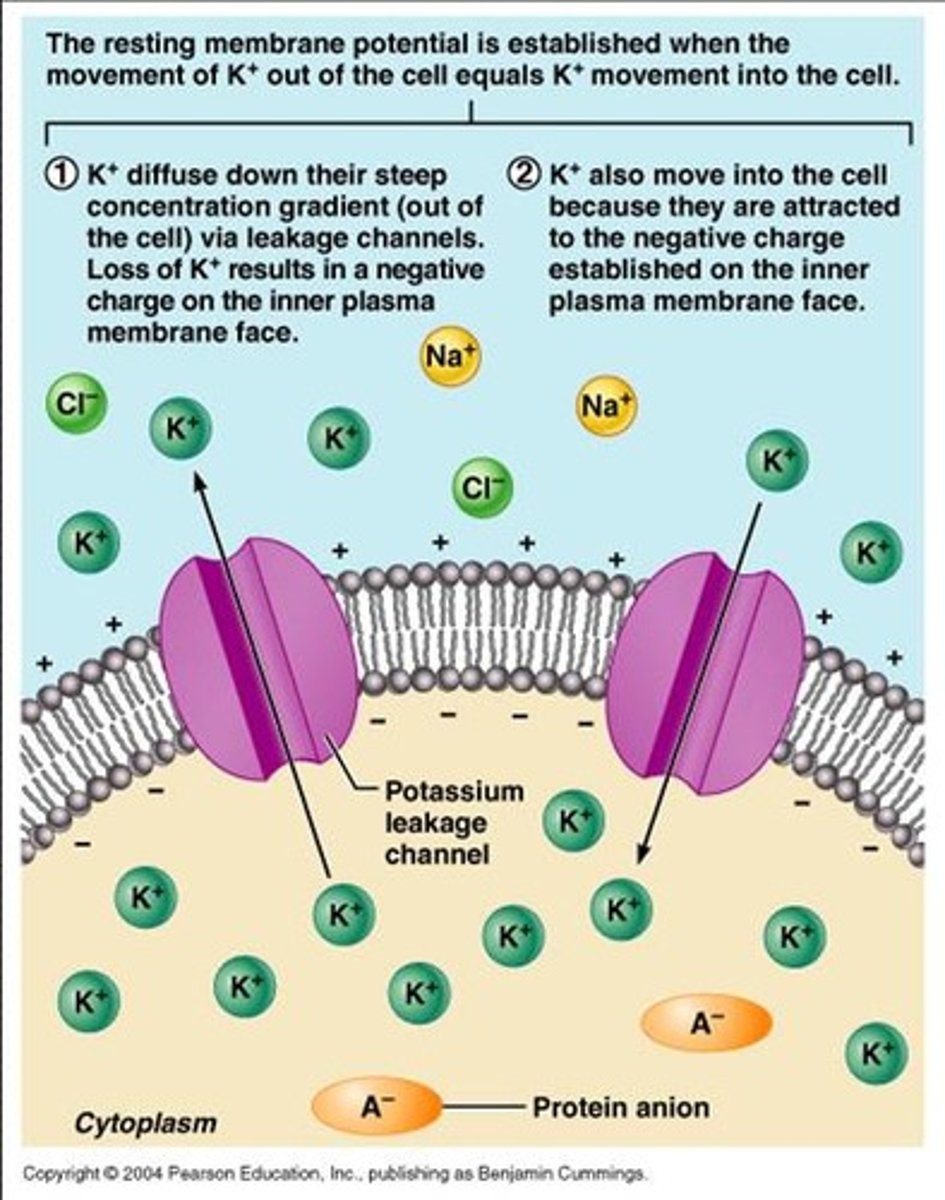
The Neuron body has a charge outside and a charge inside. The outside is positively charged, and the inside is negatively charged in what's called the resting membrane potential (around -60mV)
There are two forces that act on the ions. The electrostatic force that attracts the ions, and the concentration gradient that moves from higher conc. to lower
The Na,Cl, and Ca are in higher concentration outside the neuron, while the K, and Organic Anions are located inside higher. The potassium wants to leave the neuron based on the concentration gradient, but charge wise is attracted to the negative interior. Sodium is attracted inside by both concentration gradient and attraction to charge. Just do the same thing for the rest. Look at charge and look at concentration
The Membrane potential is maintained by the Sodium Potassium Pump and Leak channels. The leak channels allow the resting membrane potential to be achieved by maintaining a constant flow of potassium in and out, because of the counterbalancing concentration and electrostatic force. While the leak channels allow sodium in because it's attracted by both the electrostatic and concentration forces. But because the membrane is not as permeable to sodium less comes in otherwise the resting potential would be VERY positive. The Sodium potassium pump uses ATP to pump 3 sodiums out and two potassiums in thus putting a net negative charge on the inside at around -60mV
Overview of Neuron Graded Potential. What happens to action potentials over time and distance? How do you maximize the chance of an action potential firing?
So for an action potential to fire, there must be depolarization past the threshold.
Synapses that occur at the dendrite may fire graded potentials which decrease with time and distance as the move close to the axon.
To maximize change of getting to the axon region where action potential happens from either synapse needs to be close to axon, or multiple excitatory action potentials need to happen together
Overview of Action Potentials: explain saltatory conduction. Explain how voltage gates sodium and potassium channels are used.
The difference between the graded potential and the action potential is that the action potential occurs along the axon, and due to the myelin sheath, it can continue on without decreasing or seeing some change in value
Saltatory Conduction: The action potential goes faster through the myelin sheath
Mechanism: The Use of Voltage Gated Ion Channels. When enough graded potentials build up and get the membrane potential to a certain point, voltage gated sodium channels open up at the action point, causing sodium to rush in due to the charge and concentration, but once the action potential fires and the potential inside the neuron becomes a certain positive potential, sodium channels close and the potassium voltage channels open, so the potassium leaves rapidly due to the positive charge on the inside now, as well as going down the concentration gradient, so that's hypperpolarization and it takes the potential beyond the initial resting potential.
The period is called the refractory period after the potential fires. The absolute refractory means that no membrane potential change can trigger an action potential, while the relative refractory means, that a huge amount of positive stimulation would be needed.
The effect of diameter and myelin in action potential speed
The larger the diameter, the more easily the ions flow so faster it goes.
The myelin sheath makes it thicker, and so it's like a capacitor, you spread out the like charges, make it easier to flow
Synapse Structure: how do the calcium voltage gated channels work?
the area where the axon of one neurons connects with the dendrite of another. They can release the neurotransmitters through synaptic vessicles that will bud from the the pre synpatic membrane and then attach to highly specific regions on the post synaptic membrane
When the action potential reaches the pre synapse, it opens voltage gates calcium channels, which allows calcium to flow in, following the concentration gradient. This pushes the vessicles and allows them to release the neurotransmitter. The stronger and more frequent the action potential, the more calcium is released, and the more neurotransmitter is released
Types of Neurotransmitters: what are the 3 types? Remember they all have some sort of amine or amino or peptide classification (hint hint)
1. Amino Acids:
-Glutamate=Excitatory
-Glycine and GABA= inhibitory
2. Monoamines
serotonin,histamine,dopamine,epinephrine,norepinerphrine
3. Peptides: Opioids (Ex:Endorphin)
Types of Neurotransmitter Receptors: what are the two types and how do they work?
Neurotransmitters can have either an excitatory or inhibitory effect depending on the receptor they bind to.
The two main receptors are Ionotropic and Metabotropic. Ionotropic are ion gated channels. So there can either be an excitatory effect if the gated channels are for sodium or calcium ,because they come into the neuron and make the potential more positive, or inhibitory if they open for potassium or chloride. Potassium would leave the neuron and the negatively charged Cl would come in. In metabotropic the neurotransmitter activates a secondary messenger system, which doesn't fire as fast, but can affect more in the body.
Removal of Neurotransmitters: Explain some of the ways this is regulated
The neurotransmitter can be removed in a couple of key ways
1.Diffuse out
2.Enzymes break it down
3.Reuptake pumps, bring them back into the presynaptic cleft
4.The astrocytes will take them up
What is Neuroplasticity?
The more strong we make the connection, the more receptors for the neurotransmitter will form on the post synaptic membrane
Membrane Receptors: explain ligand gated, gcouple, and enzyme
The integral membrane receptors are embedded in the membrane. A ligand (a hormone, ion, or something) will attach to the integral membrane, and cause some sort of effect. VERY SPECIFIC. Called Signal Transduction
The 3 kinds are
1.Ligand gated ion: Usually found in very quickly reactions cells like neurons. It's allosteric binding, and doesn't bind near the opening. Lets certain ions in
2.G protein coupled: Ligand binds and the GPCR undergoes a conformational change, and the Alpha subunit regulates target proteins. GDP, becomes GTP. Only found in eukaryotes
3.Enzyme linked receptors: Extracellular binding causes an intracelluar enzyme activity. Example binding of a ligand activates an intracellular enzyme activity such as kinase, which can then phosphorylate and activate some kind of secondary messenger and do activity.
Endocrine Overview: is the endocrine system specific? Is the pancreas linked to pituitary? Explain autocrine endocrine and paracrine
-The hypothalamus is the control center also releases ADH and Oxytocin
-The Hypothalamus passes info to the pituitary which is the master gland, and relays hormones and info from the hypothalamus
-The thyroid controls metabolism with T3 and T4
-The parathyroid controls calcium levels with PTH
-The Adrenal glands :
-Coretx: Steroids (Cortisol and aldosterone)
-Medulla: Catecholamines (Epi and Norepi)
-Gonads: Sex
-Pancreas: Blood sugar through insulin and glucagon
THE PANCREAS IS NOT LINKED TO PITUITARY
Hormone is extremely specific for receptor
Autocrine: Cell signals itself like in T cells
Paracrine: Regional signalling Ex: hypothalamus to pituitary
Endocrine:Far signalling Ex: Pituitary to adrenal glands
Concentration and Feedback
Hormones are tightly controlled. For example: Hypothalamus makes Thyroid releasing hormone TRH, the pituitary picks up on the TRH and makes Thyroid stimulating hormone TRH. This causes the thyroid to release T3 and T4. When there's enough T3 and T4 they make their way to the receptors on the hypothalamus and Pituitary, and this signals them to stop making it.
Also broken down by the liver and kidneys and excreted