Life of Pi quiz
 Call Kai
 Learn
Learn Practice Test
 Spaced Repetition
 Match
Match Flashcards
 Knowt Play
1/13

There's no tags or description
Looks like no tags are added yet.
Name | Mastery | Learn | Test | Matching | Spaced | Call with Kai |
|---|
No analytics yet
Send a link to your students to track their progress
14 Terms
In developing his state of nature, what key conclusion doe Hobbes come to about Human nature?
Even decent people may act brutally when theres no enforceable authority, because fear and insecurity make it rational
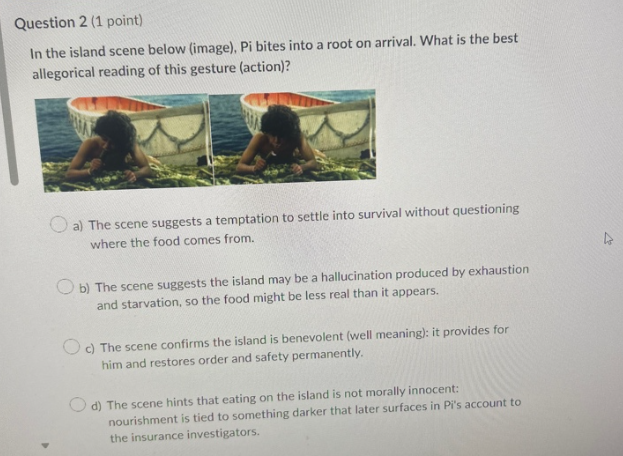
In the island scene below (image), Pi bites into a root on arrival. What is the best allegorical reading of this gesture (action)?
The scene hints that eating on the island is not morally innocent: nourishment is tied to something darker that later surfaces in Pi's account to the insurance investigators.
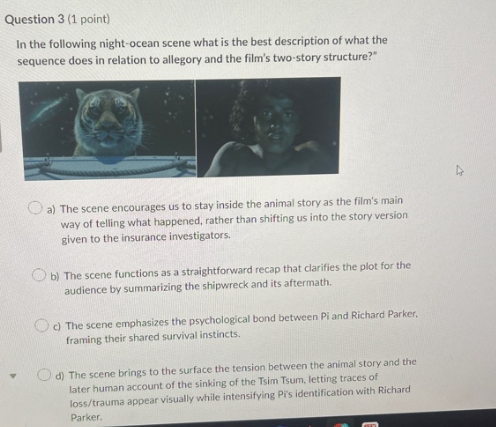
In the following night-ocean scene what is the best description of what the sequence does in relation to allegory and the films two-story structure
The scene brings to the surface the tension between the animal story and the later human account of the sinking of the Tsim Tsum, letting traces of loss/trauma appear visually while intensifying Pi's identification with Richard Parker.
In Christopher Nolans film Oppenheimer (2023) and the victory speech scene, Robert Oppenheimer delivers a relatively confident spoken speech in the beginning, while the camera holds on his face. Gradually the shot of his face registers discomfort/strain. Which is the best formal-analysis claim (below) of what is occurring in this scene
All of the above: the scenes tension emerges from how performance + cinematography + sound/editing work together, sometimes in contradiction
How does Hobbes ideas about morality in a state of nature connect to the following scene from Life of Pi (analyzing film through Hobbesian lens)
Hobbes argues fear and insecurity make violence rational; Pi's actions here show that striking first is the only workable path.
In the film Life of Pi (2012) dir by Ang Lee if the first story that Pi tells the winter and the insurance investigators is the true story of what happened to him at sea, then what political message is relayed to the audience
In times of crisis, its our nature to cooperate and work towards the benefit of everyone, and not only oneself, since this guarantees the survival of civilization
After the cook is ejected from the lifeboat what sequence best completes the animal story an an allegorical mirror of the human story
The hyena mauls the zebra -> the zebra dies -> the hyena kills Orange Juice -> Richard Parker emerges and kills the hyena, leaving only Pi and the tiger.
In the following scene what order of events sets the animal allegory story in motion
d) Pi is urged into the lifeboat by the sailor/crew. The sailor points up toward the zebra on the upper deck. The zebra leaps down into the lifeboat, and the force causes the lifeboat to drop; in the chaos, the cook is ejected.
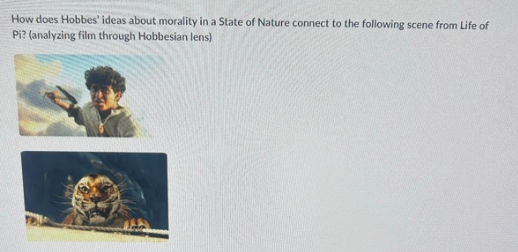
How does Hobbes ideas about morality in a state of nature connect to the following scene from life of pi (analyzing film through hobbesian lens)
Hobbes argues fear and insecurity make violence rational; Pis actions here show that striking first is the only workable path
For Thomas Hobbes the state of nature is a situation where
People live in insecurity because there is no enforceable common authority leading to conflict and distrust
In the island scene , Pi bites into a root on arrival what is the best allegorical reading of this gesture
The scene hints that eating on the island is not morally innocent, nourishment is tied to something darker that later surfaces in Pi’s account to the insurance investigators
In the life of Pi, the animal story works as a magical realist allegory that can hold/contain what the later human account reveals. In what structure what is the tarps main function as a story telling device (not just a prop)?
In the magical realist story, the tarp regulates what the viewer is allowed to see, so the animal allegory can remain safe, until Pi’s later human account to the insurance investigators reframes it
In the film Life of Pi (2012) dir. by Ang Lee, which story did the japanese insurance investigators present to their company
The story with Pi and the animals, because the story was about hope
“ For castaways who must share a lifeboat with large carnivores, its good to establish a territory as your own… try this method.. choose a day when waves are moderate but regular. Step 2, with the lifeboat blow your whistle soothingly… Turn the lifeboat sideways to the waves accompanies by harsh aggressive whistle … “
The dialague reflect Pi framing his actions as comfort and the routine but in reality, using control/disciplining tactics to weaken and manage the tiger in a state of nature situation