Male reproduction system
 Call Kai
 Learn
Learn Practice Test
 Spaced Repetition
 Match
Match Flashcards
 Knowt Play
1/22

There's no tags or description
Looks like no tags are added yet.
Name | Mastery | Learn | Test | Matching | Spaced | Call with Kai |
|---|
No analytics yet
Send a link to your students to track their progress
23 Terms
The parietal perineum forms __ pouch(es) between neighbouring pelvic viscera. Name it/them.
1, recto-vesical pouch
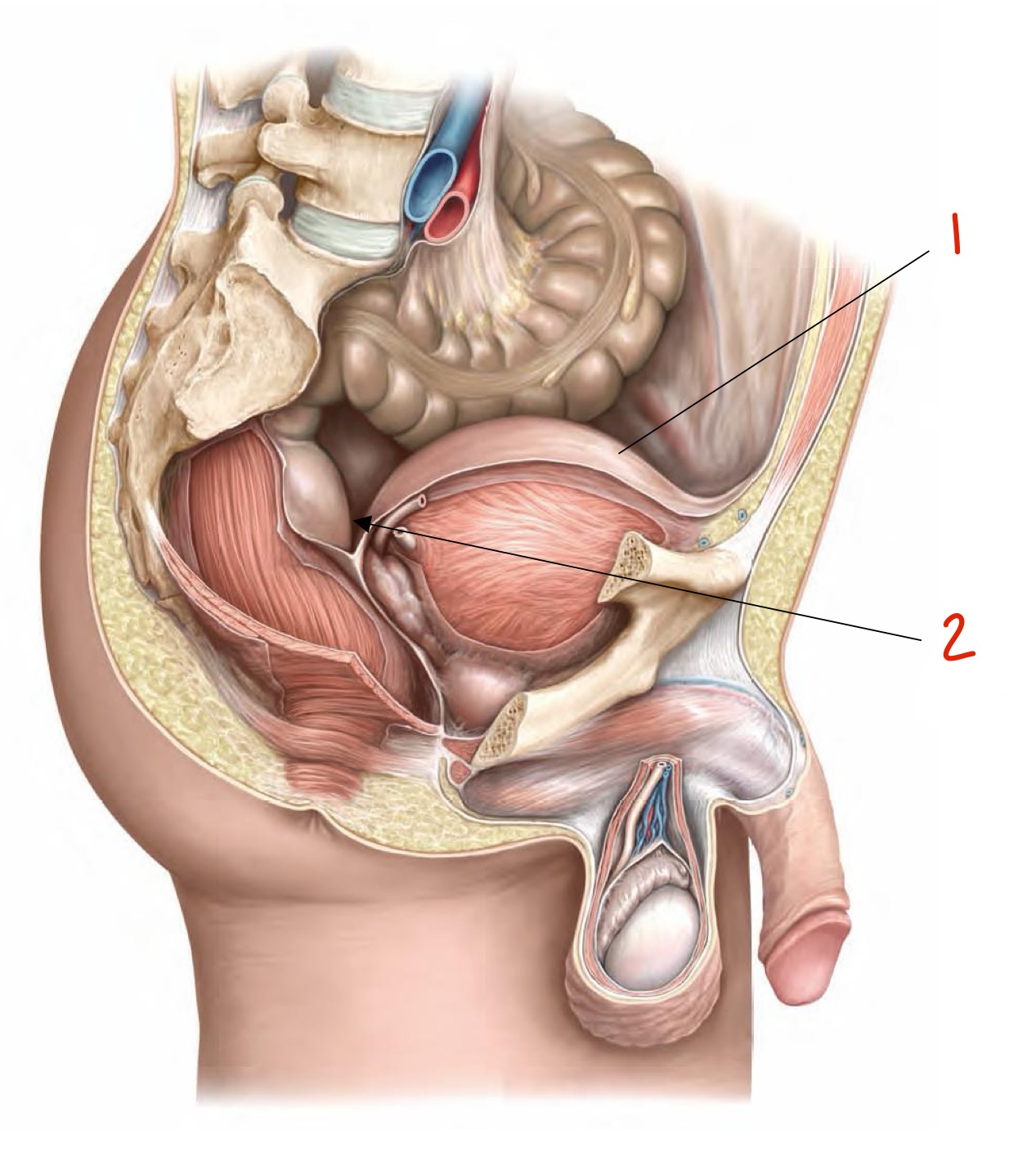
Identify
Parietal peritoneum
Recto-vesical pouch
The male reproductive system consists of which organs?
Scrotum
Testes
Epididymis
Penis
Ductus deferens
Urethra
Urinary bladder
Seminal vesicles
Prostate
Bulbourethral gland
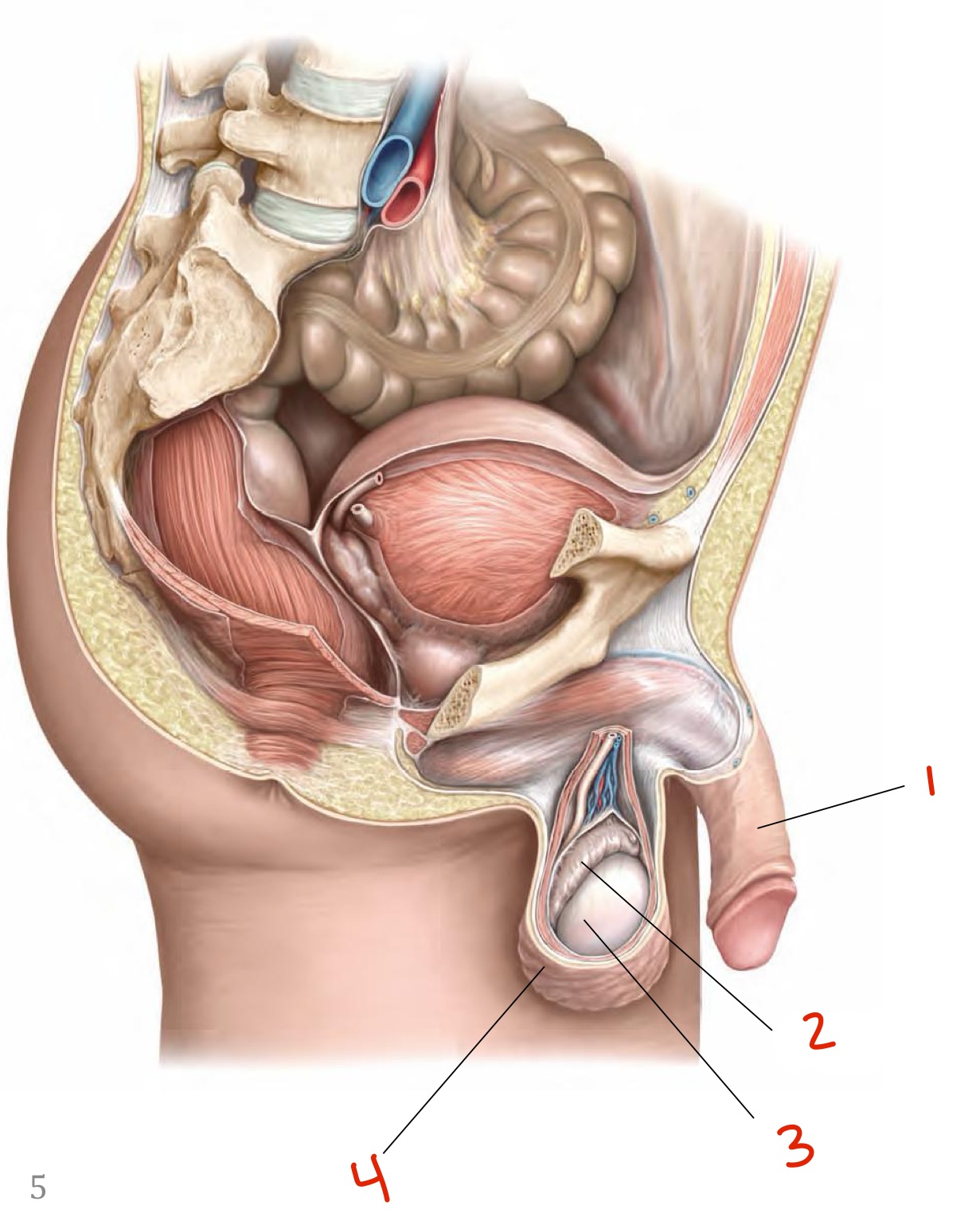
Identify
Penis
epididymis
Testis
Scrotum
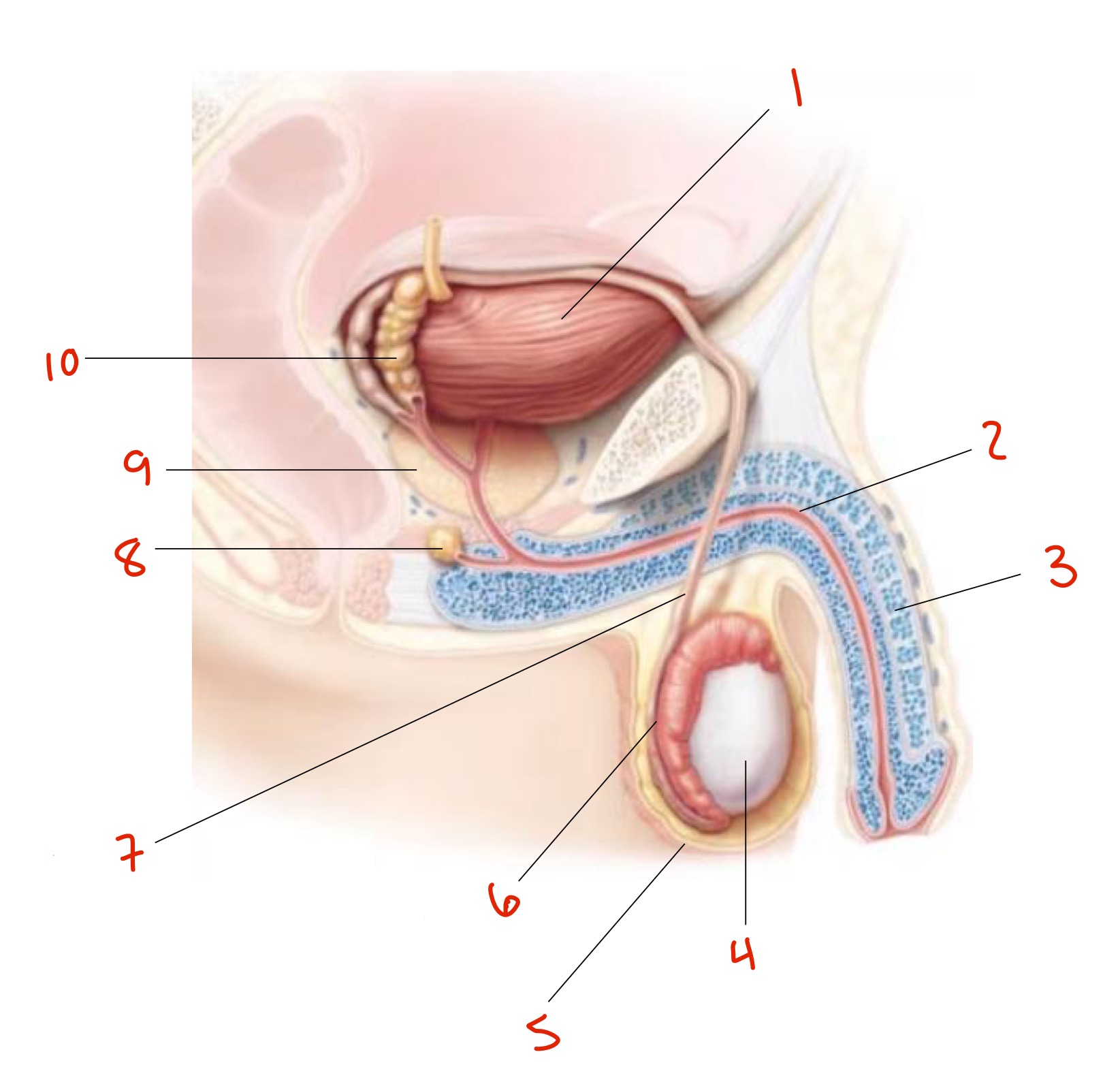
identify
Urinary bladder
Urethra
Penis
Testis
Scrotum
Epididymis
Ductus deferens
Bulbourethral gland
Prostate
Seminal vesicles
What is the function of the testes?
Sperm production → undifferentiated male germ cells that undergo spermatogenesis to produce mature sperm
More specifically, within the testes, it is then________ that produce the sperm. The ___________, from the testicular vein, serves as a countercurrent heat exchange mechanism. The epididymis is where ___________
Seminiferous tubules, pampiniform plexus, sperm is matured and stored
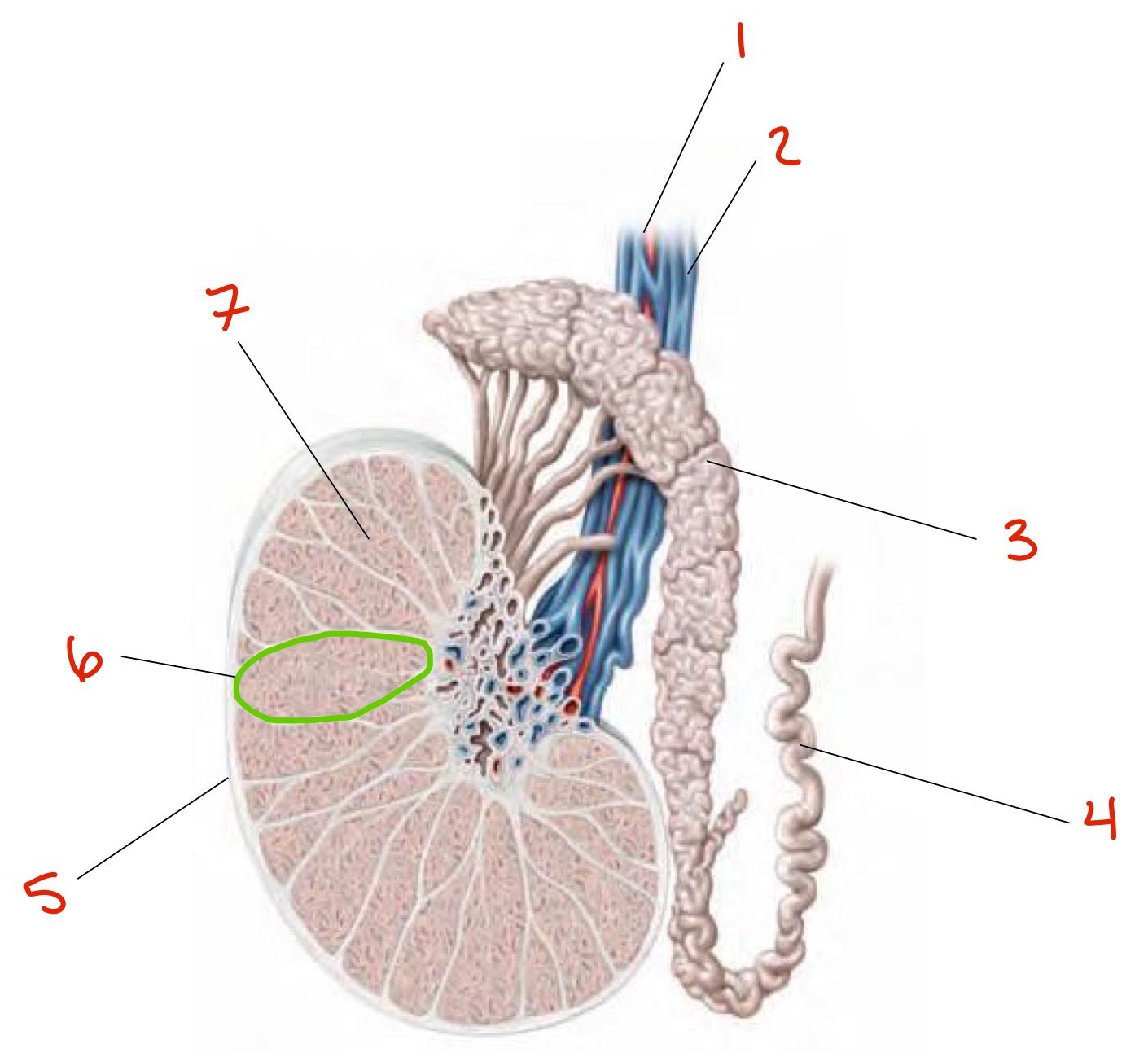
Identify
Testicular artery
Pampiniform plexus
Epididymis
Ductus deferens
Tunica albuginea
Lobule
Seminiferous tubules
Give the function and other characteristics of the ductus deferens
It is a duct that transports sperm from epididymis to the seminal vesicle
originally named vas deferens
Give the function and other characteristics of the seminal vesicles
They are paired glands, posters-lateral to the bladder
Function: produce seminal fluid (a viscous secretion) → seminal fluid contributes to semen, provides nutrient to sperm and helps buffer the acidity of the vaginal canal
Give the function and other characteristics of the ejaculatory duct
It is a duct formed by the union of the seminal vesicles and ductus deferens in the prostate
sends seminal vesicle secretion and sperm (from ductus deferens) to urethra
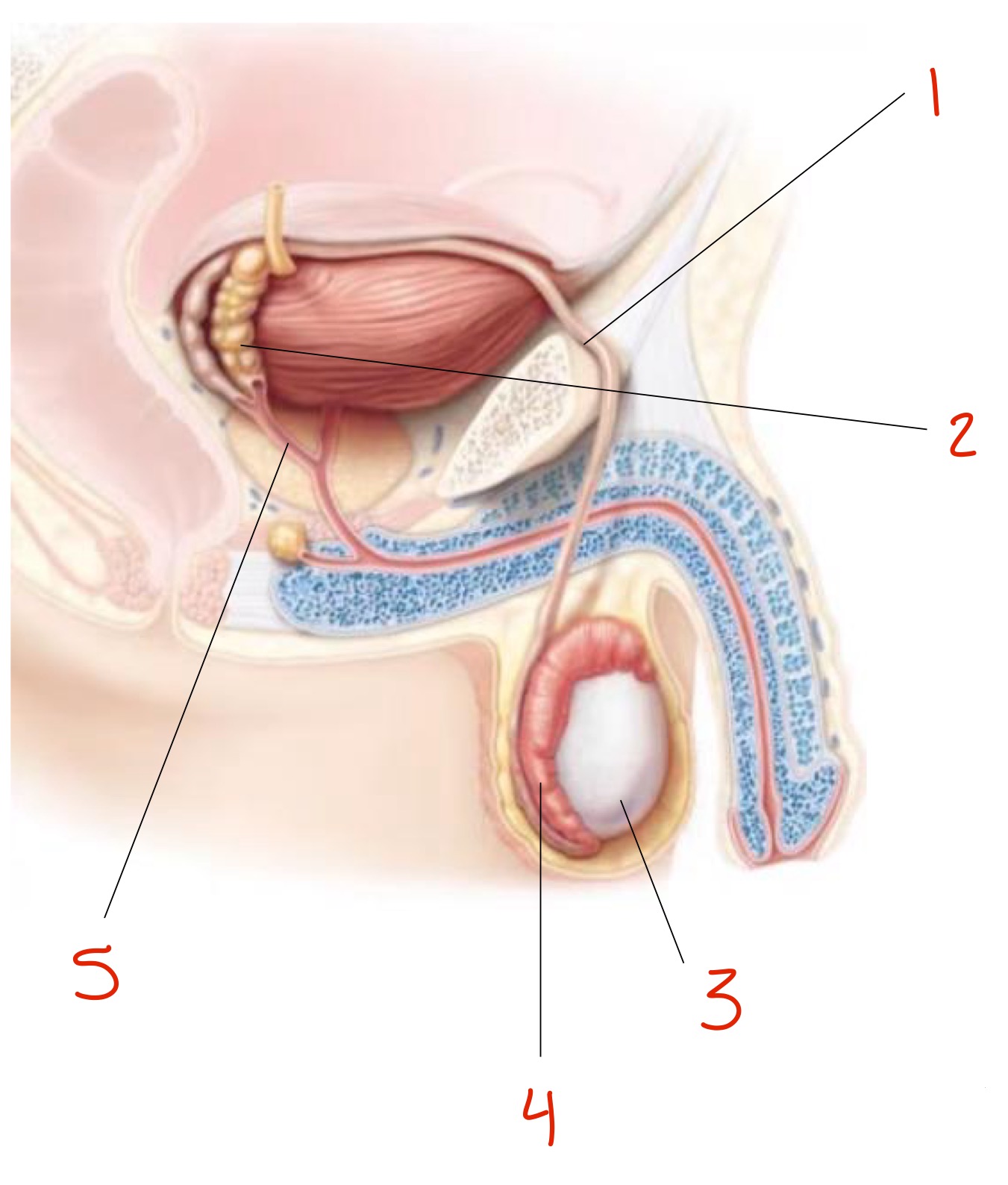
identify
Ductus deferens
Seminal vesicles
Testis
Epididymis
Ejaculatory duct
What are the functions and parts of the urethra?
Functions:
Void the bladder for urine
Pathway for semen
Parts:
Pre-prostatic urethra
Prostatic urethra
Membranous urethra
Spongy/penile urethra (contained within the corpus spongiosum)
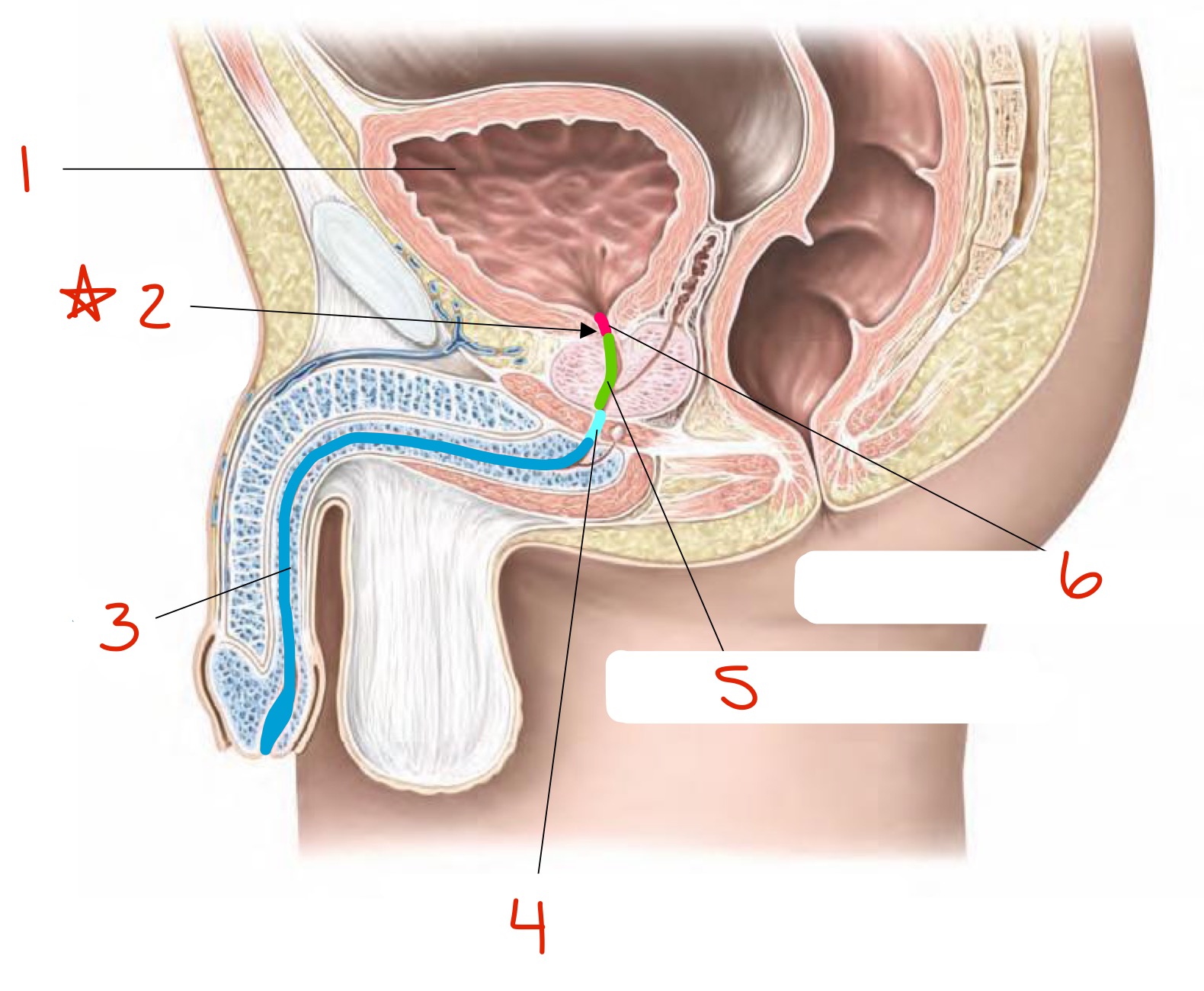
Identify (+ give function of structure 2)
Bladder
Internal urethral sphincter → closes during ejaculation to prevent semen from entering the bladder
Spongy urethra
Membranous urethra
Prostatic urethra
Pre prostatic urethra
Give the functions and characteristics of the prostate gland
It is a walnut sized gland inferior to the bladder, surrounding the urethra; covered by dense connective tissue
Function: production of a fluid that, together with sperm cells from the testicles and fluids from other glands, makes up semen (a thin milky liquid that helps sperm motility and contains other proteins and enzymes)
Prostate specific antigen is an enzyme that makes the semen thinner
Give the functions and characteristics of the bulbourethral gland
A gland found within the urogenital diaphragm
Function: secretes lubricating fluid for sperm to pass easily through the urethra during ejaculation
What are the 2 main parts of the penis ?
Glans penis - contains high concentrations of sensory receptors
Shaft: composed of three compartments of erectile tissue
Corpus cavernosa (2, paired)
Corpus spongiosum (contains the spongy urethra)
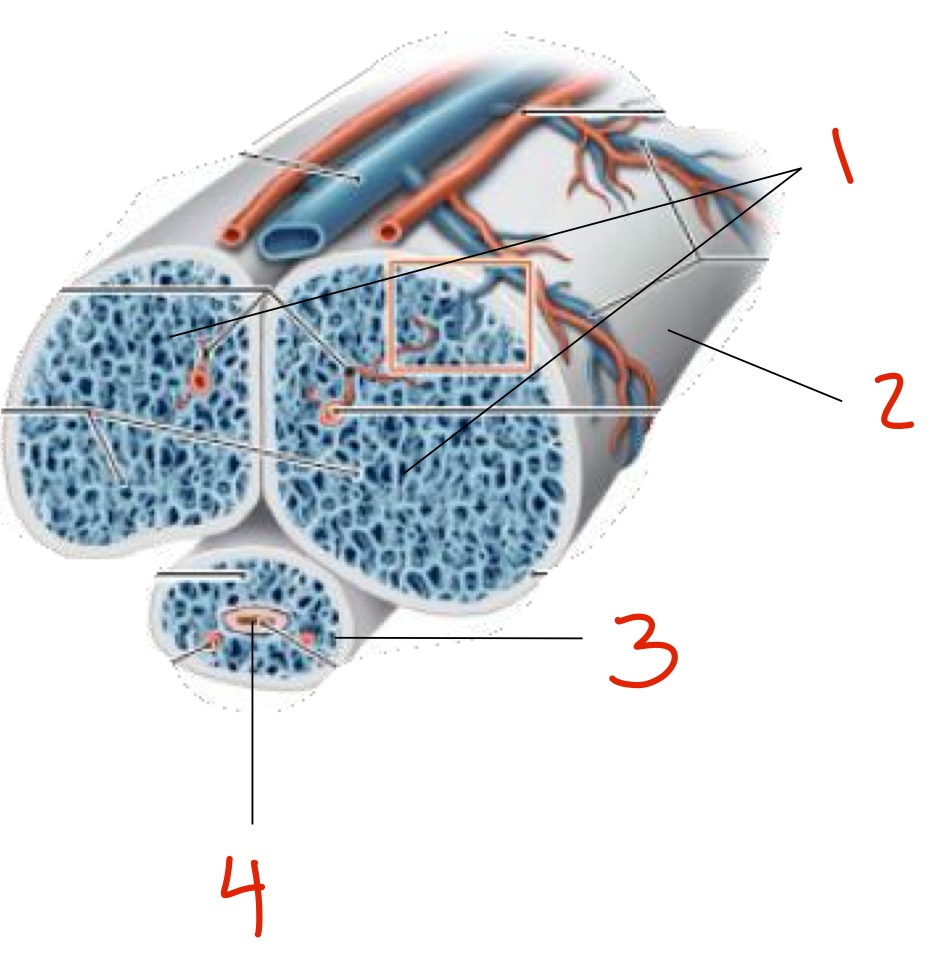
Identify
Corpus cavernosa
Tunica albuginea
Corpus spongiosum
Spongy urethra
What are the two erectile muscles?
Ischiocavernosus (paired) and bulbospongiosus (unpaired)
For ischiocavernosus: what is its action, innervation, and blood supply?
Action: helps compress the crus of the penis to maintain and stabilize the erect penis
Innervation: pudendal nerve
Blood supply: perineal artery
For bulbospongiosus: what is its action, innervation, and blood supply?
Action: acts To expel remaining urine from the urethra after the bladder has completed its emptying, also aids in the final stages of erection by compressing the veins within the bulb of the penis to maintain erection
Innervation: pudendal nerve
Blood supply: perineal artery
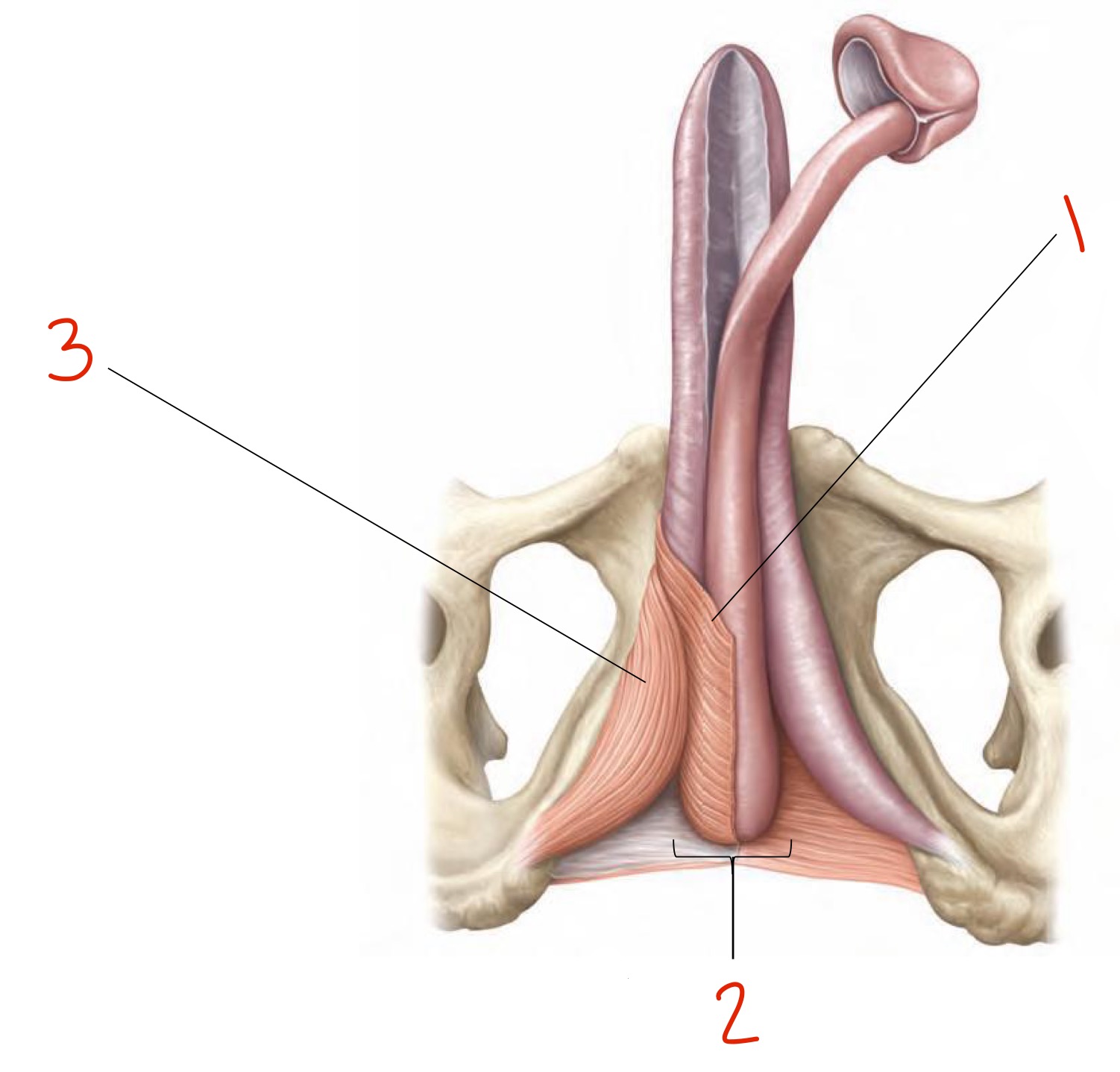
Identify
Bulbospongiosus
Bulb of penis
Ischiocavernosus
Slides 12-13