4.2.1. Biodiversity
 Call Kai
 Learn
Learn Practice Test
 Spaced Repetition
 Match
Match Flashcards
 Knowt Play
1/142

There's no tags or description
Looks like no tags are added yet.
Name | Mastery | Learn | Test | Matching | Spaced | Call with Kai |
|---|
No analytics yet
Send a link to your students to track their progress
143 Terms
define biosphere
the inhabited part of the earth
define biome
a major life-zone characterized by the dominant plant species present
define ecosystem
the sum total of biological life (biotic factor) and non-biological components (abiotic factors) within an area which are interacting and where energy flows and nutrients cycle
define habitat
the place where an organism lives within an ecosystem
define biotic factor
a living thing, such as an animal or plant, that influences or affects an ecosystem
define abiotic factor
a non-living condition or thing, such as climate or habitat, that influences or affects an ecosystem and the organisms in it
define niche
the role of an organism within an ecosystem: how an organism affects where it lives as well as what it eats/is eaten by (position in the food chain/web)- only one species can occupy a specific niche
define population
a group of individuals of the same species occupying a given space at a given time
what is the name for the role of an organism within an ecosystem
niche
define community
a group of interacting populations in a habitat/ecosystem
define endemic
any species whose range is restricted to a limited geographical area
what is the name for any species whose range is restricted to a limited geographical area
endemic
define predator
an animal that lives by killing and eating other animals
define prey
an animal hunted or seized for food, especially by a carnivorous animal
define food chain
a linear sequence of eating and being eaten
define food web
interacting food chains
define trophic level
a stage in the food chain at which organisms obtain their food in the same general manner
define keystone species
a species that has a disproportionate effect on its environment often relative to its abundance, if this species is removed the ecosystem changes dramatically and many other species numbers change
what is a species that has a disproportionate effect on its environment often relative to its abundance, if this species is removed the ecosystem changes dramatically and many other species numbers change called
a keystone species
examples of keystone species
beavers, pollinators, mangrove trees, apex predators
define biodiversity
a measure of the variability found in the living world at the ecosystem/habitat, species and genetic levels
what are the components of biodiversity
habitat biodiversity, species biodiversity, genetic biodiversity
define habitat biodiversity
the number of different habitats present in an ecosystem
what is the nature of the environment with low habitat biodiversity
stressful and extreme with relatively few ecological niches
what is the nature of the environment with high habitat biodiversity
not stressful with many ecological niches
adaptation of species to the environment with low habitat biodiversity
few species have very specific adaptations to the environment
adaptation of species to the environment with high habitat biodiversity
many species have few species adaptations to the environment
define species biodiversity
the number of different species and the relative abundance of each species in an area
what are the parts of species biodiversity
species richness, species evenness
define species richness
the number of different species
define species evenness
the relative abundance of each species within a community
define genetic biodiversity
the variety of different alleles within the population of a species in an area
why is high genetic diversity important
high ability of the population to withstand abiotic stress
an example of genetic biodiversity
different breeds within a species e.g. dogs
examples of habitats with high habitat biodiversity
meadow, sand dunes, woodland, stream
keystone species and others present in a meadow
keystone- pollinating insects, grasses, shrubs, buttercups, nettles, dandelions, thistles
keystone species and others present in sand dunes
keystone- marram grass (binds dunes), sea holly, small mammals- mice
stability of meadows
fairly established but is changing unless managed
stability of sand dunes
young dunes are not established or stable
keystone species and others in woodlands
keystone- apex predator, trees, fungi, shrubs, insects, birds, spiders, snakes, foxes
stability of woodland
very established ecosystem
keystone species and others in a stream
keystone- salmon/perch, fish, aquatic plants, invertebrates
stability of a stream
fairly stable ecosystem
define sampling
counting/collecting a number which is representative of the target population, when the whole population is too large to be counted
types of sampling
random and non-random sampling
advantage of random sampling
avoids observer bias in data
disadvantage of random sampling
may not cover all areas of a habitat equally, species with a low presence may be missed leading to underestimate of biodiversity
types of non-random sampling
opportunistic, systematic, stratified
what is opportunistic sampling
the quadrat is placed in easiest/best place to sample a species- large bias
advantage of opportunistic sampling
easier and quicker than random sampling
disadvantage of opportunistic sampling
data may be biased, presence of large or colourful species may entice the researcher to include that species, may lead to an overestimate of its importance and therefore an overestimate of biodiversity
what is systematic sampling
samples taken at regular intervals, usually used by placing a transect to study changes in distribution of organisms/environmental gradient along a line e.g. away from a pond
advantage of systematic sampling
useful when the habitat shows a clear gradient in some environmental factor
disadvantage of systematic sampling
only species on the line or within the belt can be recorded, other species may be missed, leading to underestimate of biodiversity
what types of transects are there
line and belt
what is the difference between a line and belt transect
line has no quadrat used, belt uses a quadrat
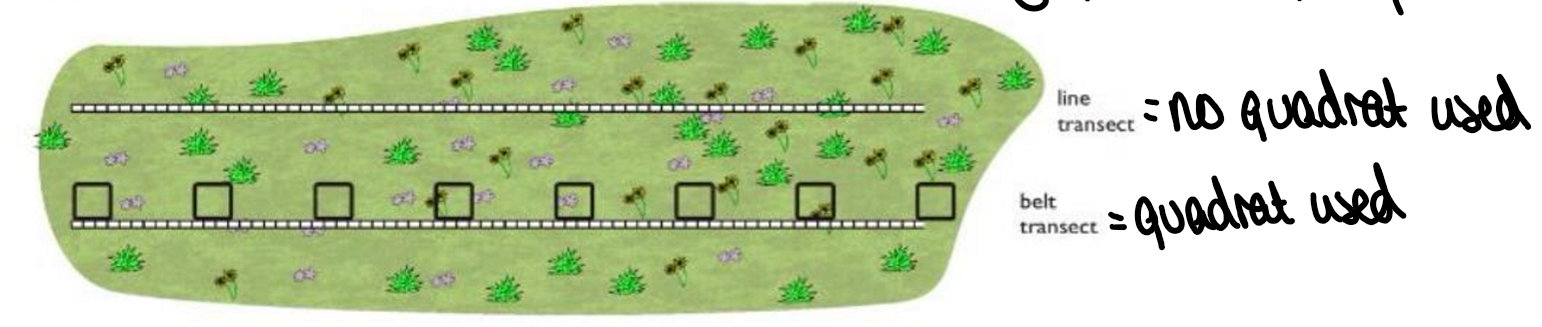
what is stratified sampling
used for an area with different sections, each area is sampled randomly, sample size in each area is proportional to the size of the area
advantage of stratified sampling
ensures all different areas of a habitat are sampled and species are not under-represented due to the possibility that random sampling misses certain areas
disadvantage of stratified sampling
there is a possibility that this may lead to over representation of some areas in the sample e.g. disproportionate number of samples taken in small areas that look different
sampling techniques for sampling plants
frame quadrat, point quadrat
type of frame quadrats
open frame or gridded
ways of using frame quadrat to estimate abundance
frequency, percentage occurrence, percentage cover, ACFORN scale
percentage occurrence method of estimating abundance
how many squares the species occurs in, multiply by percentage of quadrat each square represents
percentage cover method of estimating abundance
estimate the % area a species covers by looking at it
ACFORN scale method of estimating abundance
a scale using descriptions to indcate occurrence of plants, Abundant, Common, Frequent, Occasional, Rare, Never
advantages of ACFORN scale
quicker, wider area can be surveyed
disadvantages of ACFORN scale
subjective, misses smaller plants
what is a point quadrat
series of pins, count plants touching pins, useful for longer vegetation, can overestimate tall thin leaved plants that touch multiple pins
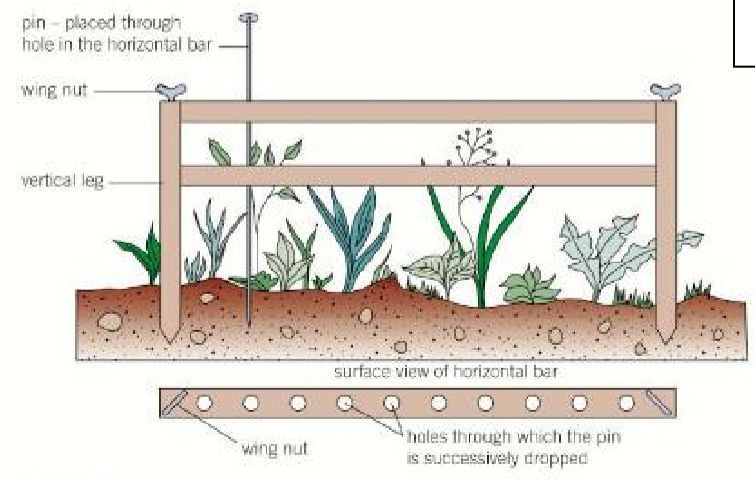
what is used to identify plant species
an identification key
what methods are there for sampling animals
pitfall traps, pooters, sweep nets, quadrat, kick sampling
what are pitfall traps used for
small invertebrates living on the ground and detritivores, sampled in leaf litter or soil
how do pitfall traps work
a hole is dug in the soil
container is placed so top is at the level of the soil
sides of container are steep and slippery preventing escape
alcohol can be placed inside to prevent invertebrates from leaving
waterproof cover stops rain filling trap or scavengers getting in
container is left overnight for nocturnal animals
what are pooters used for
invertebrates living above the ground, sampled anywhere above ground and usually on leaves that small invertebrates are visible and accessible
how do pooters work
end of one tube is pointed close to the insect, air is sucked in pulling the insect into the chamber, filter present to prevent animals from being sucked up
what are sweep nets used for
flying insects, sampled in tall grass or crops
how do sweep nets work
net is moves across the vegetation/long grass, trapping invertebrates, must use standardised methods e.g. 2 sweeps
what are quadrats used for when animal sampling
limpets, barnacles, mussels, animals fixed in one place, slow moving
how do quadrats work when animal sampling
placed over sessile animals and the frequency counted
what is kick sampling used for
freshwater invertebrates living in mud
how does kick sampling work
kick mud and hold net down stream, standardise number of kicks
what method is used to estimate population size of animals that move
capture-mark-release-recapture
what is the process of capture-mark-release-recapture
record number of individuals of a species caught, mark and release them, allow time for animals to redistribute, recapture, record number caught and how many were marked
what can be used in capture-mark-release-recapture to estimate population size
Lincoln index
Lincoln index equation
population size= no. of individuals in 1st sample x no. individuals in 2nd sample/no. recaptured marked individuals in 2nd sample
assumptions used in the Lincoln index
population of organisms must be closed, no migration
time between samples must be small compared to the life span of the organism- no births/deaths
marked organisms must redistribute completely with the rest of the population during the time between the first and second samples
every individual has an equal likelihood of being found
marking doesn’t affect animal in any way
population must be large
disadvantages of estimating animal population sizes such as using photo traps, footprints, faeces or fur
weather can wash away/distort footprints, multiple people see same animal, takes time to test faeces/fur
what is Simpson’s Index of Diversity
a measure of species diversity which takes into account both species richness and species evenness, calculated by taking a sample of a plant/animal community in an area
what is a measure of species diversity which takes into account both species richness and species evenness
Simpson’s Index of Diversity
what does n represent in Simpson’s Index of Diversity
no. of individuals in a population
what does N represent in Simpson’s Index of Diversity
total number of individuals in the community
what populations are normally used in Simpson’s Index of Diversity
populations at the same trophic level
how can alleles be described
homozygous dominant, homozygous recessive, heterozygous
define homozygous dominant/recessive
the diploid condition where both alleles are dominant/recessive
define heterozygous
the diploid condition where both the dominant and the recessive allele are present
define dominant
the allele that influences the appearance of the phenotype when present in the homozygous or heterozygous condition
define recessive
the allele that only influences the appearance of the phenotype when present in the homozygous condition
what does a greater number of different alleles cause
greater gene pool/genetic diversity, increased likelihood of individuals carrying advantageous allele when faced with a selection pressure, so they can survive and reproduce, species can adapt to changes in environment so won’t become extinct
most genes are…
monomorphic- don’t have alternative alleles, ensures basic structures of individuals remains constant
define polymorphic
gene has two or more alleles at a locus e.g. dominant/recessive
how to measure genetic diversity
proportion of polymorphic gene loci= no. of polymorphic gene loci/total no. of gene loci sampled