Quiz 1 Study Guide

0.0(0)
Studied by 0 people
call kaiCall Kai
learnLearn
examPractice Test
spaced repetitionSpaced Repetition
heart puzzleMatch
flashcardsFlashcards
GameKnowt Play
Card Sorting

1/59

flashcard set

Earn XP

Description and Tags

UT 609A - OB 1

Last updated 2:11 AM on 5/5/26
Name
Mastery
Learn
Test
Matching
Spaced
Call with Kai

No analytics yet

Send a link to your students to track their progress

60 Terms

1
New cards

Spontaneous abortion

  • Physiological termination prior to 20 weeks gestation

    • Hemorrhage of decidua basalis → inflammation and necrosis around region of implantation → detachment of conceptus → UT contractions and expulsion of intrauterine contents via dilated CVX

  • US role in spontaneous abortions: access presence and amount of retained product of conception in UT cavity 

  • Common etiology: endocrine factors, failure of corpus luteum, chromosomal causes, diabetes, PCOS, smoking, etc.

2
New cards

Complete abortion

  • Evacuation of all products of conception

  • Clinical signs:

    • Rapid decline of HCG levels

    • Vaginal bleeding w/ tissue/clots

    • Cramping 

    • Disappearance of pregnancy symptoms

    • Cessation of pain and bleeding after conceptus is passed

  • US findings:

    • Empty uterus with “clean” endometrial stripe

    • Uterine enlargement

<ul><li><p><span style="background-color: transparent;">Evacuation of all products of conception</span></p></li><li><p><span style="background-color: transparent;">Clinical signs:</span></p><ul><li><p><span style="background-color: transparent;">Rapid decline of HCG levels</span></p></li><li><p><span style="background-color: transparent;">Vaginal bleeding w/ tissue/clots</span></p></li><li><p><span style="background-color: transparent;">Cramping&nbsp;</span></p></li><li><p><span style="background-color: transparent;">Disappearance of pregnancy symptoms</span></p></li><li><p><span style="background-color: transparent;">Cessation of pain and bleeding after conceptus is passed</span></p></li></ul></li><li><p>US findings:</p><ul><li><p><span style="background-color: transparent;">Empty uterus with “clean” endometrial stripe</span></p></li><li><p><span style="background-color: transparent;">Uterine enlargement</span></p></li></ul></li></ul><p></p>
3
New cards

Incomplete abortion

  • Partial evacuation of products of conception (POC)

  • Clinical signs:

    • Slow fall or plateauing of HCG levels

    • Moderate cramping

    • Persistent, heavy bleeding

  • US findings:

    • Presence of complex collection of echoes in endometrium of retained products of conception (RPOC)

      • Air bubbles

      • Retained bony fragments

    • Hematoma 

    • Persistence of trophoblastic waveforms near EC 5 days post abortion
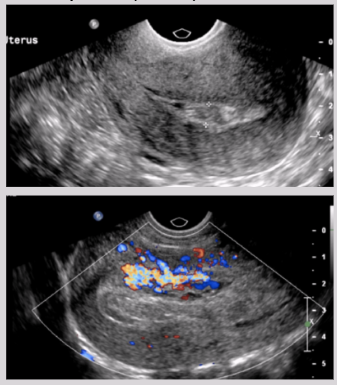
<ul><li><p><span style="background-color: transparent;">Partial evacuation of products of conception (POC)</span></p></li><li><p><span style="background-color: transparent;">Clinical signs:</span></p><ul><li><p><span style="background-color: transparent;">Slow fall or plateauing of HCG levels</span></p></li><li><p><span style="background-color: transparent;">Moderate cramping</span></p></li><li><p><span style="background-color: transparent;">Persistent, heavy bleeding</span></p></li></ul></li><li><p>US findings:</p><ul><li><p><span style="background-color: transparent;">Presence of complex collection of echoes in endometrium of retained products of conception (RPOC)</span></p><ul><li><p><span style="background-color: transparent;">Air bubbles</span></p></li><li><p><span style="background-color: transparent;">Retained bony fragments</span></p></li></ul></li><li><p><span style="background-color: transparent;">Hematoma&nbsp;</span></p></li><li><p><span style="background-color: transparent;">Persistence of trophoblastic waveforms near EC 5 days post abortion</span></p></li></ul></li></ul><p></p>
4
New cards

Anembryonic pregnancy (AKA blighted ovum)

  • Intrauterine gestational sac is empty

  • Embryonic demise or failure of embryo to develop

  • Clinical signs:

    • Uterus small for dates

    • Variable HCG levels

    • Vaginal spotting

    • Closed CVX

  • US findings:

    • No identifiable embryo in GS of >25 mm

    • Absence of “double sac sign” or “double decidual sign”
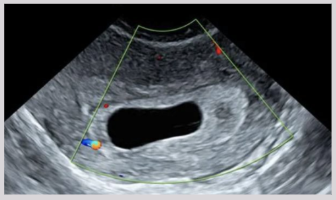
<ul><li><p><span style="background-color: transparent;">Intrauterine gestational sac is empty</span></p></li><li><p><span style="background-color: transparent;">Embryonic demise or failure of embryo to develop</span></p></li><li><p><span style="background-color: transparent;">Clinical signs:</span></p><ul><li><p><span style="background-color: transparent;">Uterus small for dates</span></p></li><li><p><span style="background-color: transparent;">Variable HCG levels</span></p></li><li><p><span style="background-color: transparent;">Vaginal spotting</span></p></li><li><p><span style="background-color: transparent;">Closed CVX</span></p></li></ul></li><li><p>US findings:</p><ul><li><p><span style="background-color: transparent;">No identifiable embryo in GS of &gt;25 mm</span></p></li><li><p><span style="background-color: transparent;">Absence of “double sac sign” or “double decidual sign”</span></p></li></ul></li></ul><p></p>
5
New cards

Threatened abortion

  • Bleeding, spotting, or cramping with a closed cervical OS

  • 50/50 odds for normal outcome or spontaneous abortion

  • Clinical signs:

    • No reliable signs

      • More clinical than sonographic

    • Vaginal bleeding < 20 weeks

    • Lower abdominal ache

<ul><li><p><span style="background-color: transparent;">Bleeding, spotting, or cramping with a closed cervical OS</span></p></li><li><p><span style="background-color: transparent;">50/50 odds for normal outcome or spontaneous abortion</span></p></li><li><p><span style="background-color: transparent;">Clinical signs:</span></p><ul><li><p><span style="background-color: transparent;">No reliable signs</span></p><ul><li><p><span style="background-color: transparent;">More clinical than sonographic</span></p></li></ul></li><li><p><span style="background-color: transparent;">Vaginal bleeding &lt; 20 weeks</span></p></li><li><p><span style="background-color: transparent;">Lower abdominal ache</span></p></li></ul></li></ul><p></p>
6
New cards

Imminent/inevitable abortion

  • Occurs when 2+ clinical signs are present

  • Clinical signs:

    • Effacement of CVX

    • Cervical dilation >3 cm

    • Rupture of membranes 

    • Bleeding for >7 days

    • Persistent cramping

  • US findings:

    • Gestational sac seen in CVX or LUS

    • Cervical dilatation

    • Sonolucent crescent around gestational sac
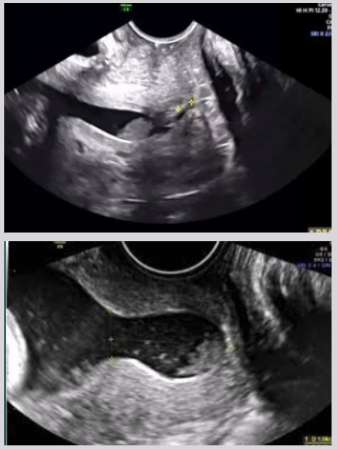
<ul><li><p><span style="background-color: transparent;">Occurs when 2+ clinical signs are present</span></p></li><li><p><span style="background-color: transparent;">Clinical signs:</span></p><ul><li><p><span style="background-color: transparent;">Effacement of CVX</span></p></li><li><p><span style="background-color: transparent;">Cervical dilation &gt;3 cm</span></p></li><li><p><span style="background-color: transparent;">Rupture of membranes&nbsp;</span></p></li><li><p><span style="background-color: transparent;">Bleeding for &gt;7 days</span></p></li><li><p><span style="background-color: transparent;">Persistent cramping</span></p></li></ul></li><li><p>US findings:</p><ul><li><p><span style="background-color: transparent;">Gestational sac seen in CVX or LUS</span></p></li><li><p><span style="background-color: transparent;">Cervical dilatation</span></p></li><li><p><span style="background-color: transparent;">Sonolucent crescent around gestational sac</span></p></li></ul></li></ul><p></p>
7
New cards

Missed abortion (AKA silent miscarriage)

  • Fetus is no longer alive but body does not recognize pregnancy loss or expels tissue

  • US findings:

    • Embryo in gestational sac w/o fetal heart tones

8
New cards

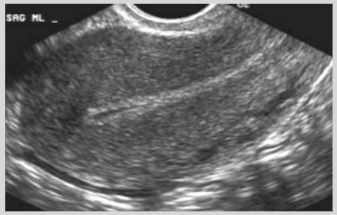
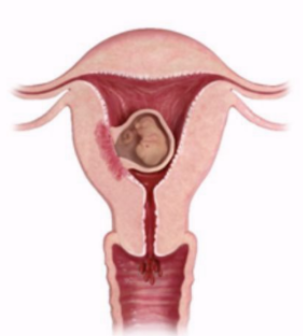
Ectopic pregnancy

  • Implantation of conceptus outside endometrial cavity 

  • Locations: 

    • Fallopian tubes (95%)

      • Ampulla (70%) - most common location in FT

    • Uterine, cervical (high morbidity and mortality), abdominal, ovary 

  • Cause - anything interfering with passage of ovum to UT cavity 

  • Leading cause of maternal mortality and morbidity

  • If HCG > 2000 + no IUP → investigate for ectopic pregnancy

  • Treatment - methotrexate (MTX) for ectopic w/o heartbeats 

    • Surgery to remove mass

9
New cards

Risk factors for ectopic pregnancy

  • Increase in frequency is most likely due to PID and ART use

    • Prior ectopic

    • PID

    • Assisted reproductive technology (ART)

    • IUDs

    • Smoking

    • Increased maternal age

10
New cards

Clinical findings of an ectopic pregnancy

  • Clinical triad: vaginal bleeding, pain, and palpable mass

  • Variable HCG levels 

  • Adnexal mass

  • Pelvic pain and bleeding

  • Leukocytosis

  • Fever

  • Pain referred to shoulder → intraperitoneal hemorrhage

11
New cards

Clinical triad of ectopic pregnancy

  • Vaginal bleeding

  • Pain

  • Palpable mass

12
New cards

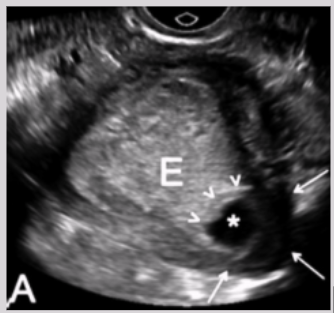
US findings of ectopic pregnancies

  • Extrauterine GS w/ yolk sac

  • Empty uterus on EV, if hCG levels are > 800-1000 mIU/mL

  • Adnexal mass, separate from ovaries

  • Free fluid in cul-de-sac, adnexa, or pericolic gutters

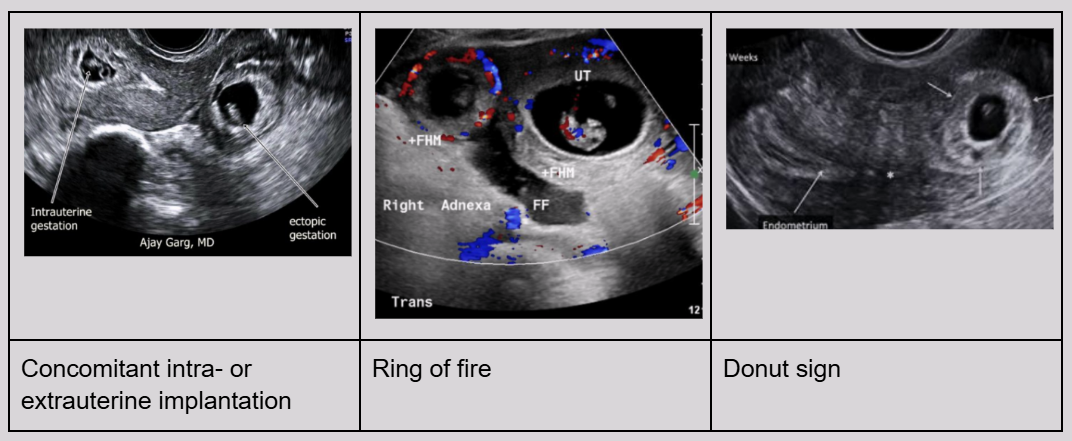
  • Concomitant intra- or extrauterine implantation

  • Ring of fire - trophoblastic tissue surrounding conceptus

  • Donut sign

<ul><li><p><span style="background-color: transparent;">Extrauterine GS w/ yolk sac</span></p></li><li><p><span style="background-color: transparent;">Empty uterus on EV, if hCG levels are &gt; 800-1000 mIU/mL</span></p></li><li><p><span style="background-color: transparent;">Adnexal mass, separate from ovaries</span></p></li><li><p><span style="background-color: transparent;">Free fluid in cul-de-sac, adnexa, or pericolic gutters</span></p></li><li><p><span style="background-color: transparent;">Concomitant intra- or extrauterine implantation</span></p></li><li><p><span style="background-color: transparent;">Ring of fire - trophoblastic tissue surrounding conceptus</span></p></li><li><p><span style="background-color: transparent;">Donut sign</span></p></li></ul><p></p>
13
New cards

Pitfalls when scanning for ectopic pregnancies

  • Pseudogestational sacs

  • Corpus luteum cyst vs. adnexal ectopic both have ring of fire appearance

    • Corpus luteum cyst - more hypoechoic

    • Adnexal ectopic - echogenic decidual donut
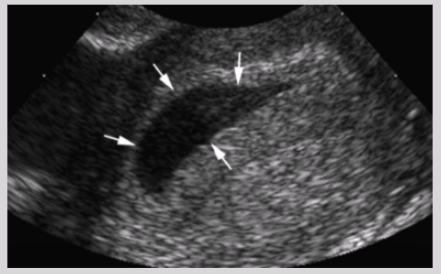
<ul><li><p><span style="background-color: transparent;">Pseudogestational sacs</span></p></li><li><p><span style="background-color: transparent;">Corpus luteum cyst vs. adnexal ectopic both have ring of fire appearance</span></p><ul><li><p><span style="background-color: transparent;">Corpus luteum cyst - more hypoechoic</span></p></li><li><p><span style="background-color: transparent;">Adnexal ectopic - echogenic decidual donut</span></p></li></ul></li></ul><p></p>
14
New cards

Heterotopic pregnancy

Presence of multiple gestations, one in UT cavity and other outside of UT 

15
New cards

Cornual ectopic pregnancy

  • Occurs in uterine horn

  • High susceptibility of rupturing 

  • Associated w/ uterine anomalies 

  • Most deadly along w/ interstitial

    • High vascularity from UT arteries

<ul><li><p>Occurs in uterine horn</p></li><li><p><span style="background-color: transparent;">High susceptibility of rupturing&nbsp;</span></p></li><li><p><span style="background-color: transparent;">Associated w/ uterine anomalies&nbsp;</span></p></li><li><p><span style="background-color: transparent;">Most deadly along w/ interstitial</span></p><ul><li><p><span style="background-color: transparent;">High vascularity from UT arteries</span></p></li></ul></li></ul><p></p>
16
New cards

Intramural ectopic pregnancy

  • Gestational sac implanted into the myometrium

  • Causes: past surgical procedures

    • Ex: myomectomy or C-section

  • On the rise due to rise of C-section usage
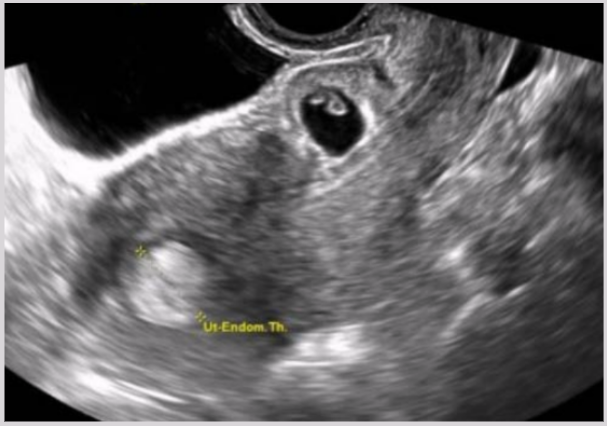
<ul><li><p>Gestational sac implanted into the myometrium</p></li><li><p><span style="background-color: transparent;">Causes: past surgical procedures</span></p><ul><li><p><span style="background-color: transparent;">Ex: myomectomy or C-section</span></p></li></ul></li><li><p><span style="background-color: transparent;">On the rise due to rise of C-section usage</span></p></li></ul><p></p>
17
New cards

Cervical ectopic pregnancy

  • Implantation in endocervical canal

  • Risk factors:

    • Previous D&C

    • Amniotic anomalies 

    • Endometriosis

    • IUD

    • IVF

18
New cards

C-section scar ectopic pregnancy

Gestational sac implants into myometrium of previous c-section scar
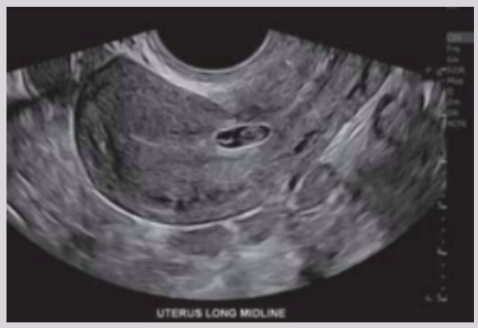
<p><span style="background-color: transparent;">Gestational sac implants into myometrium of previous c-section scar</span></p>
19
New cards

Ovarian ectopic pregnancy

  • Gestational sac implants in the ovary

  • Increasing incidence due to PID and IUD usage

    • IUD prevents implantation into UT 

  • Symptoms: low abdominal pain and bleeding
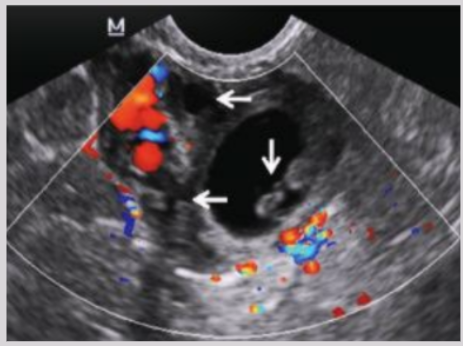
<ul><li><p>Gestational sac implants in the ovary</p></li><li><p><span style="background-color: transparent;">Increasing incidence due to PID and IUD usage</span></p><ul><li><p><span style="background-color: transparent;">IUD prevents implantation into UT&nbsp;</span></p></li></ul></li><li><p><span style="background-color: transparent;">Symptoms: low abdominal pain and bleeding</span></p></li></ul><p></p>
20
New cards

Abdominal ectopic pregnancy

  • Gestational sac implants into abdominal cavity

  • Symptoms: general malaise, nausea, vomiting, vaginal bleeding

  • Risk factors: PID, endometriosis, tubal damage

  • Possible sites: spleen, UT surface, liver, diaphragm, bowel, etc.
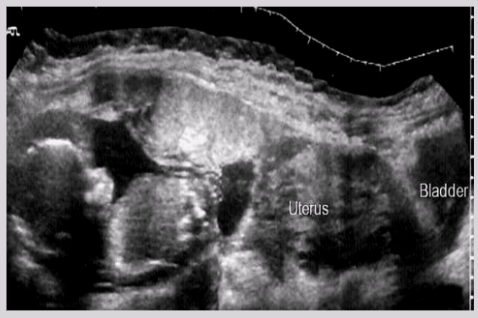
<ul><li><p>Gestational sac implants into abdominal cavity</p></li><li><p><span style="background-color: transparent;">Symptoms: general malaise, nausea, vomiting, vaginal bleeding</span></p></li><li><p><span style="background-color: transparent;">Risk factors: PID, endometriosis, tubal damage</span></p></li><li><p><span style="background-color: transparent;">Possible sites: spleen, UT surface, liver, diaphragm, bowel, etc.</span></p></li></ul><p></p>
21
New cards

Acute rupture of tubal ectopic pregnancy

Ectopic pregnancy not seen due to amount of blood and clot
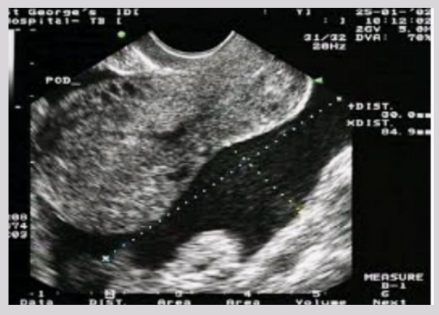
<p><span style="background-color: transparent;">Ectopic pregnancy not seen due to amount of blood and clot</span></p>
22
New cards

Gestational sac

Well-defined circle of echoes in central fundus of UT

23
New cards

The gestational sac grows ___ mm/day prior to 6 weeks

1

24
New cards

How to measure mean sac diameter (MSD)

length + width + height / 3

25
New cards

Double bleb sign

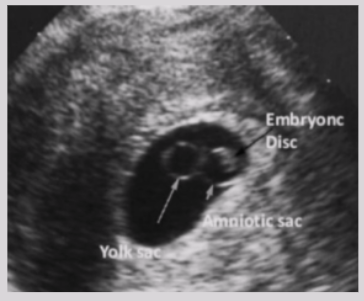
  • Sonographic feature of gestational sac containing yolk sac + adjacent amniotic sac

  • Appearance of 2 small bubbles

<ul><li><p><span style="background-color: transparent;">Sonographic feature of gestational sac containing yolk sac + adjacent amniotic sac</span></p></li><li><p><span style="background-color: transparent;">Appearance of 2 small bubbles</span></p></li></ul><p></p>
26
New cards

Trilaminar disk

Early stage in development of triploblastic organisms

27
New cards

Gastrulation

Formation of primitive streak along epiblast disc

28
New cards

Primitive streak

  • Formed from proliferation and movement of epiblast cells to the median plane of embryonic disc

  • Once it appears, can identify embryo’s craniocaudal axis
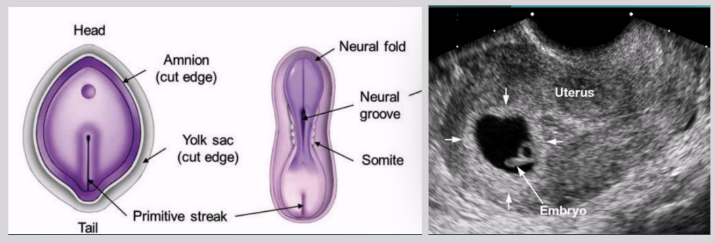
<ul><li><p><span style="background-color: transparent;">Formed from proliferation and movement of epiblast cells to the median plane of embryonic disc</span></p></li><li><p><span style="background-color: transparent;">Once it appears, can identify embryo’s craniocaudal axis</span></p></li></ul><p></p>
29
New cards

Sacrococcygeal teratoma (SCT)

  • Most common neoplasm in newborn

  • Formed from remnants of primitive streak

  • Benign tumor that has elements of incomplete differentiated germ layers

  • Mostly found in females

<ul><li><p><span style="background-color: transparent;">Most common neoplasm in newborn</span></p></li><li><p><span style="background-color: transparent;">Formed from remnants of primitive streak</span></p></li><li><p><span style="background-color: transparent;">Benign tumor that has elements of incomplete differentiated germ layers</span></p></li><li><p><span style="background-color: transparent;">Mostly found in females</span></p></li></ul><p></p>
30
New cards

Three germinal layers of the trilaminar disc

  • Ectoderm - remaining epiblast cells

    • Epidermis, nails, hair, sebaceous glands

  • Mesoderm - infiltrated epiblast cells

    • Muscles, skeleton, cartilage

  • Endoderm - remaining hypoblast cells

    • Lines GI tract, aka stomach, colon, liver, bladder
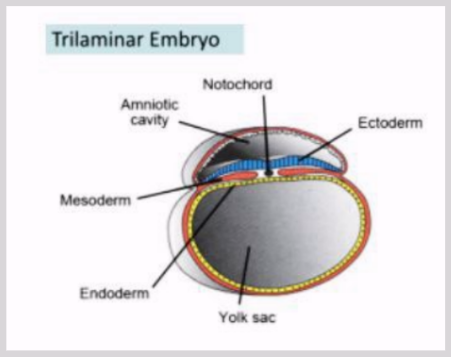
<ul><li><p><span style="background-color: transparent;">Ectoderm - remaining epiblast cells</span></p><ul><li><p><span style="background-color: transparent;">Epidermis, nails, hair, sebaceous glands</span></p></li></ul></li><li><p><span style="background-color: transparent;">Mesoderm - infiltrated epiblast cells</span></p><ul><li><p><span style="background-color: transparent;">Muscles, skeleton, cartilage</span></p></li></ul></li><li><p><span style="background-color: transparent;">Endoderm - remaining hypoblast cells</span></p><ul><li><p><span style="background-color: transparent;">Lines GI tract, aka stomach, colon, liver, bladder</span></p></li></ul></li></ul><p></p>
31
New cards

Yolk sac

  • Provides some of the first cells + circulation necessary for life

    • Produces RBCs needed for primitive circulatory system

    • Source of nutrients 

  • Connected to embryo via vitelline duct 

  • Located within chorionic cavity 

  • Emergence: first few days of gestation

  • ~ 7 weeks, role diminishes and is supplanted by placenta

  • Disappears around week 10

  • Useful in assessing amnion number in multiple gestations

  • US appearance: spherical w/ sonolucent center and clearly defined echogenic walls
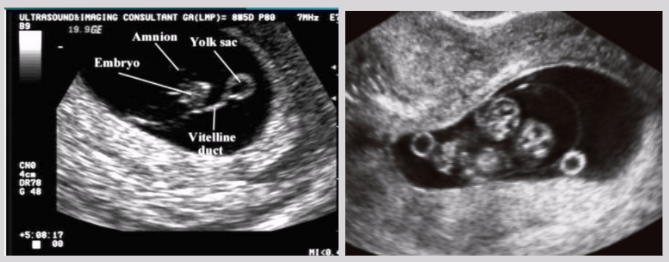
<ul><li><p><span style="background-color: transparent;">Provides some of the first cells + circulation necessary for life</span></p><ul><li><p><span style="background-color: transparent;">Produces RBCs needed for primitive circulatory system</span></p></li><li><p><span style="background-color: transparent;">Source of nutrients&nbsp;</span></p></li></ul></li><li><p><span style="background-color: transparent;">Connected to embryo via vitelline duct&nbsp;</span></p></li><li><p><span style="background-color: transparent;">Located within chorionic cavity&nbsp;</span></p></li><li><p><span style="background-color: transparent;">Emergence: first few days of gestation</span></p></li><li><p><span style="background-color: transparent;">~ 7 weeks, role diminishes and is supplanted by placenta</span></p></li><li><p><span style="background-color: transparent;">Disappears&nbsp;around week 10</span></p></li><li><p><span style="background-color: transparent;">Useful in assessing amnion number in multiple gestations</span></p></li><li><p><span style="background-color: transparent;">US appearance: spherical w/ sonolucent center and clearly defined echogenic walls</span></p></li></ul><p></p>
32
New cards

The yolk sac should always be visualized when the MSD > ___ mm (~ 5.5 weeks)

8

33
New cards

Trophoblast

Thin layer of cells that protect developing embryo, attaches it to the wall of UT, and forms part of placenta

34
New cards

Gestational trophoblastic disease (GTD)

  • Group of interrelated tumors originating from placenta 

    • Usually occurs shortly after UT implantation of fertilized ovum

  • Histological confirmation is mandatory for Dx

    • Gold standard = histological confirmation post-curettage

35
New cards

Clinical findings of GTD

  • Enlarged UT 

  • Grossly elevated hCG levels

  • Hyperemesis gravidarum - severe nausea and vomiting

  • UT bleeding in first trimester

  • Absence of FHT

  • Theca-lutein cysts (50% of time due to elevated hCG)

  • Onset of preeclampsia - HTN, proteinuria, edema, headaches

  • Hyperthyroidism

36
New cards

Molar pregnancy association w/ very early onset preeclampsia

  • Molar placentas produce more anti-angiogenic proteins → produce systemic endothelial dysfunction → HTN, proteinuria, etc. 

    • Endothelium - thin membrane lining heart and blood vessels

    • Endothelial cells - controls vascular relaxation and contraction

37
New cards

Forms of GTD

  • Complete hydatidiform mole

  • Partial mole

  • Mole w/ coexisting fetus

  • Hydroponic degeneration of placenta

  • Persistent trophoblastic neoplasia

  • Invasive mole (chorioadenoma destruens)

  • Uterine choriocarcinoma (gestational choriocarcinoma)

  • Placental site trophoblastic tumor

38
New cards

Complete hydatidiform mole

  • Most common form of GTD

  • Chorionic villi are diffusely hydropic + surrounded by trophoblasts

  • No fetal tissue identified

  • Maternal risk factors: young age or over 40 y/o

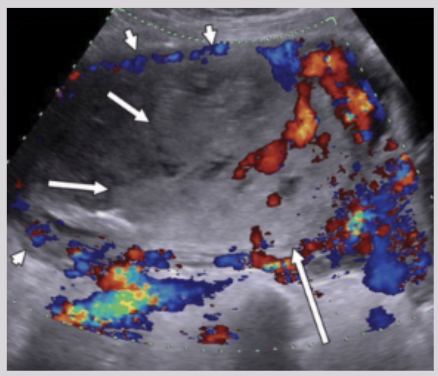
  • GTD → high hCG → theca-lutein cysts (50% of cases)

39
New cards

US findings of complete hydatidiform mole

  • Endometrial cavity filled with heterogeneous echogenic material 

  • Vesicular appearance - multiple cysts

  • Increased UT size 

  • Fluid collection around molar mass 

  • Mimics appearance of degenerating myoma
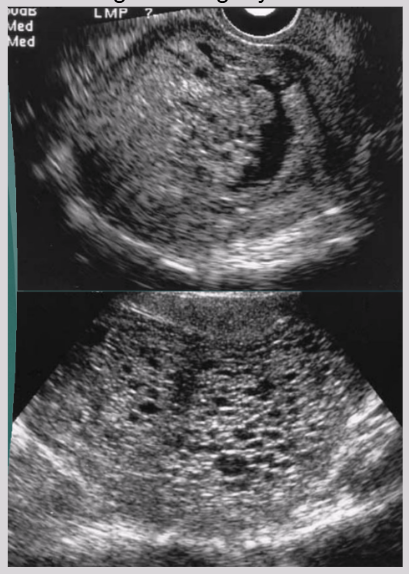
<ul><li><p><span style="background-color: transparent;">Endometrial cavity filled with heterogeneous echogenic material&nbsp;</span></p></li><li><p><span style="background-color: transparent;">Vesicular appearance - multiple cysts</span></p></li><li><p><span style="background-color: transparent;">Increased UT size&nbsp;</span></p></li><li><p><span style="background-color: transparent;">Fluid collection around molar mass&nbsp;</span></p></li><li><p><span style="background-color: transparent;">Mimics appearance of degenerating myoma</span></p></li></ul><p></p>
40
New cards

Partial mole

  • Triploidy - fetus w/ extra set of chromosomes

    • Normal 23 pairs of chromosomes, 46 total

  • Fetus is usually non-viable and triploid due to structural abnormality 

    • Will always be evacuated after diagnosis

41
New cards

US findings of partial mole

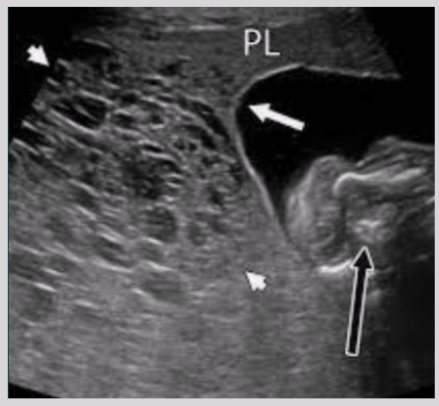
  • Molar placenta - grossly enlarged placenta + cystic areas

  • focal/diffuse areas of increased echogenicity in or around placenta 

  • Presence of fetal tissue

<ul><li><p><span style="background-color: transparent;">Molar placenta - grossly enlarged placenta + cystic areas</span></p></li><li><p><span style="background-color: transparent;">focal/diffuse areas of increased echogenicity in or around placenta&nbsp;</span></p></li><li><p><span style="background-color: transparent;">Presence of fetal tissue</span></p></li></ul><p></p>
42
New cards

Mole w/ coexisting fetus

  • Outside of realm of true GTD

  • Technically 2 conceptions

    • 1. Normal pregnancy

    • 2. Molar pregnancy

43
New cards

US findings of mole w/ coexisting fetus

Similar to partial mole but with viable and complete fetal tissue
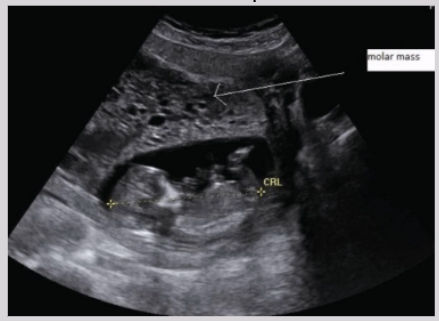
<p><span style="background-color: transparent;">Similar to partial mole but with viable and complete fetal tissue</span></p>
44
New cards

Hydroponic degeneration of placenta

  • Characterized by presence of numerous cystic areas within enlarged placenta 

  • Not considered part of GTD spectrum 

  • Associated w/ partial mole and paternal triploidy

  • Simple hydropic degeneration in first trimester → increased risk of fetal demise
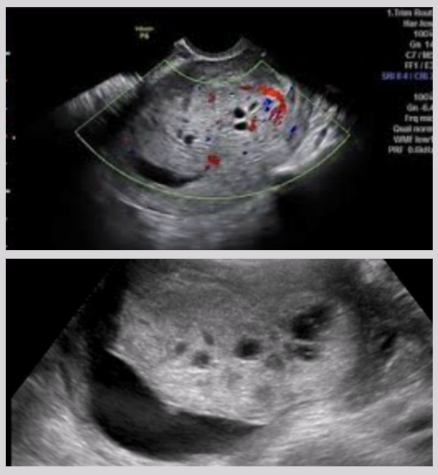
<ul><li><p><span style="background-color: transparent;">Characterized by presence of numerous cystic areas within enlarged placenta&nbsp;</span></p></li><li><p><span style="background-color: transparent;">Not considered part of GTD spectrum&nbsp;</span></p></li><li><p><span style="background-color: transparent;">Associated w/ partial mole and paternal triploidy</span></p></li><li><p><span style="background-color: transparent;">Simple hydropic degeneration in first trimester → increased risk of fetal demise</span></p></li></ul><p></p>
45
New cards

Persistent trophoblastic neoplasia

  • Pregnancy complication following GTD 

  • Treatment of molar pregnancy → molar tissue still remaining → grows into tumor

  • Just under 100% cure rate 

  • Treatment - chemotherapy 

  • Highest risk - severe histological types of initial trophoblastic proliferation

  • Lowest risk - partial molar pregnancy

46
New cards

US findings of persistent trophoblastic neoplasia

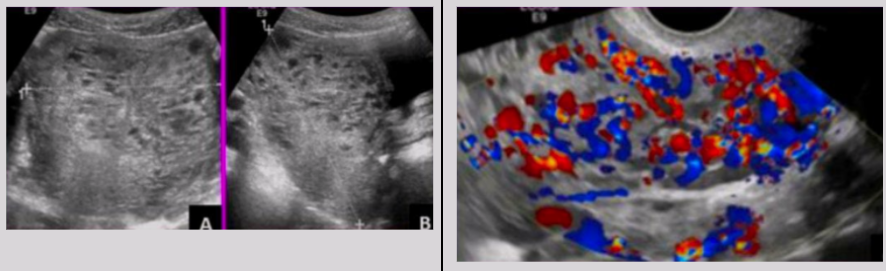
  • Heterogeneous uterine mass 

  • Multiple lacunae surrounding mass w/ high-amp low-resistance blood flow
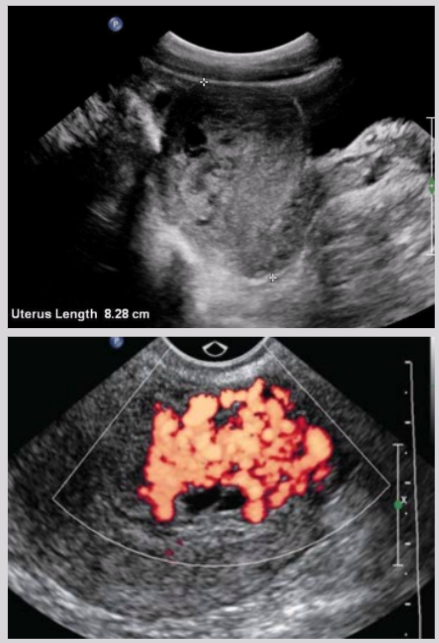
<ul><li><p><span style="background-color: transparent;">Heterogeneous uterine mass&nbsp;</span></p></li><li><p><span style="background-color: transparent;">Multiple lacunae surrounding mass w/ high-amp low-resistance blood flow</span></p></li></ul><p></p>
47
New cards

Invasive mole (AKA chorioadenoma destruens)

  • Rare molar tissue that invades myometrium and adjacent anatomic structures

  • Malignant non-metastatic form of GTD

48
New cards

US findings of invasive mole

  • Focal/diffuse echogenic material in endometrium

    • Possible extension to myometrium

  • Irregular sonolucent areas surrounding trophoblastic tissue

  • Swiss-cheese appearance 

  • Hypervascular

  • Theca-lutein cysts

<ul><li><p><span style="background-color: transparent;">Focal/diffuse echogenic material in endometrium</span></p><ul><li><p><span style="background-color: transparent;">Possible extension to myometrium</span></p></li></ul></li><li><p><span style="background-color: transparent;">Irregular sonolucent areas surrounding trophoblastic tissue</span></p></li><li><p><span style="background-color: transparent;">Swiss-cheese appearance&nbsp;</span></p></li><li><p><span style="background-color: transparent;">Hypervascular</span></p></li><li><p><span style="background-color: transparent;">Theca-lutein cysts</span></p></li></ul><p></p>
49
New cards

Uterine choriocarcinoma (AKA gestational choriocarcinoma)

  • Pure epithelial tumor

  • Implantation of trophoblast → two layers

    • Synctiotrophoblast (ST)

    • Cytotrophoblast 

  • Absence of hydropic villi

  • Appearance of sheets/foci of trophoblasts identified w/ background of hemorrhage and necrosis

  • Malignant metastatic form of GTD

50
New cards

US findings of uterine choriocarcinoma

  • Enlarged UT

  • Eccentrically situated irregular complex mass in UT 

  • Low-resistance blood flow around mass

<ul><li><p><span style="background-color: transparent;">Enlarged UT</span></p></li><li><p><span style="background-color: transparent;">Eccentrically situated irregular complex mass in UT&nbsp;</span></p></li><li><p><span style="background-color: transparent;">Low-resistance blood flow around mass</span></p></li></ul><p></p>
51
New cards

Placental site trophoblastic tumor

  • Arises from placental implantation site

  • Tumor can infiltrate myometrium and grown between smooth-muscle cells
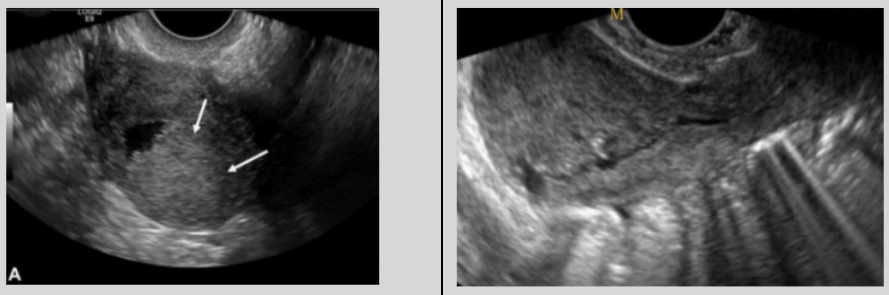
<ul><li><p><span style="background-color: transparent;">Arises from placental implantation site</span></p></li><li><p><span style="background-color: transparent;">Tumor can infiltrate myometrium and grown between smooth-muscle cells</span></p></li></ul><p></p>
52
New cards

Human chorionic gonadotropin (HCG)

  •  Glycoprotein secreted by physiologically active trophoblastic tissue

    • Presence of HCG in maternal blood = strongest indicator of presence of gestation

  • Shows ~6-8 days post conception

  • Doubles every 2 days (~ 48 hours)

  • Peaks at 10 weeks' gestation before declining and stabilizing

  • Undetectable HCG → excludes gestation from anywhere in body 

  • If HCG plateaus or falls prematurely → pregnancy may not be viable

  • Most sensitive test: quantitative serum (blood) test
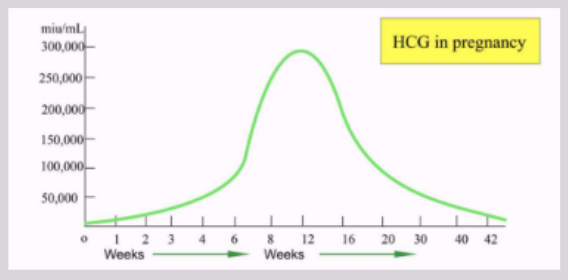
<ul><li><p><span style="background-color: transparent;">&nbsp;Glycoprotein secreted by physiologically active trophoblastic tissue</span></p><ul><li><p><span style="background-color: transparent;">Presence of HCG in maternal blood = strongest indicator of presence of gestation</span></p></li></ul></li><li><p><span style="background-color: transparent;">Shows ~6-8 days post conception</span></p></li><li><p><span style="background-color: transparent;">Doubles every 2 days (~ 48 hours)</span></p></li><li><p><span style="background-color: transparent;">Peaks at 10 weeks' gestation before declining and stabilizing</span></p></li><li><p><span style="background-color: transparent;">Undetectable HCG → excludes gestation from anywhere in body&nbsp;</span></p></li><li><p><span style="background-color: transparent;">If HCG plateaus or falls prematurely → pregnancy may not be viable</span></p></li><li><p><span style="background-color: transparent;">Most sensitive test: quantitative serum (blood) test</span></p></li></ul><p></p>
53
New cards

HCG doubles every __ days

2

54
New cards

HCG peals at __ weeks' gestation before declining and stabilizing

10

55
New cards

Discriminatory levels of HCG

  • Levels in which intrauterine pregnancy (IUP) is always going to be seen

    • Endovaginal: > 800-1000 mIU/mL 

    • Transabdominal: > 1800 mIU/mL

  • Pregnancy not seen in endometrial cavity at these levels → failed pregnancy highly suspected

56
New cards

Notochord

  • First mesodermal tissue to form

  • Formation of the primitive node and streak and the rod-shaped group of cells that define the body’s primary supporting axis

    • Forms within embryonic plate between ectoderm and endoderm

  • Source of midline signals that pattern the surrounding tissues + acts as skeletal element for developing embryo

  • Early embryo, induces development of structures

  • Late embryo, develops into nucleus pulposus of the discs of the spinal column
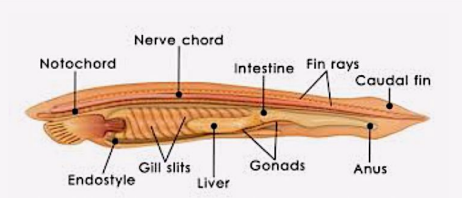
<ul><li><p><span style="background-color: transparent;">First mesodermal tissue to form</span></p></li><li><p><span style="background-color: transparent;"><u>Formation of the primitive node and streak and the rod-shaped group of cells that define the body’s primary supporting axis</u></span></p><ul><li><p><span style="background-color: transparent;">Forms within embryonic plate between ectoderm and endoderm</span></p></li></ul></li><li><p><span style="background-color: transparent;">Source of midline signals that pattern the surrounding tissues + acts as skeletal element for developing embryo</span></p></li><li><p><span style="background-color: transparent;">Early embryo, induces development of structures</span></p></li><li><p><span style="background-color: transparent;">Late embryo, develops into nucleus pulposus of the discs of the spinal column</span></p></li></ul><p></p>
57
New cards

Bradycardia

Abnormally slow heart action

58
New cards

Tachycardia

Abnormally rapid heart action

59
New cards

FHR at 5-6 weeks

100-115 bpm

60
New cards

FHR after 9 weeks