Nervous system 2 (The brain)
 Call Kai
 Learn
Learn Practice Test
 Spaced Repetition
 Match
Match Flashcards
 Knowt Play
1/36

There's no tags or description
Looks like no tags are added yet.
Name | Mastery | Learn | Test | Matching | Spaced | Call with Kai |
|---|
No analytics yet
Send a link to your students to track their progress
37 Terms
Three connective tissue layers covering brain and spinal cord:
- dura mater (outer)
.
-Arachnoid
.
-PIA Mater
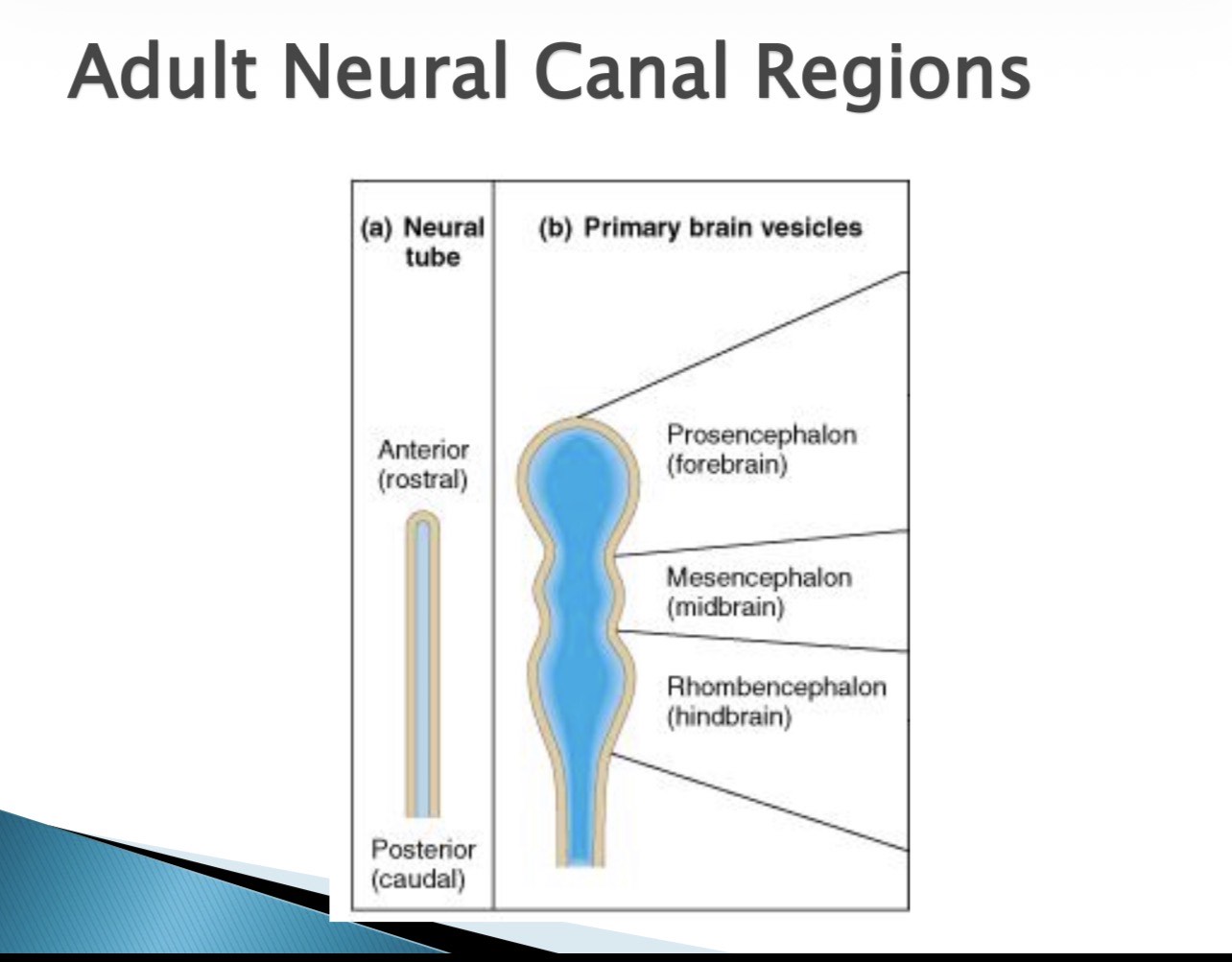
Explain how the brain forms primary vesicles (map)
Explain how the brain forms secondary vesicles (map)
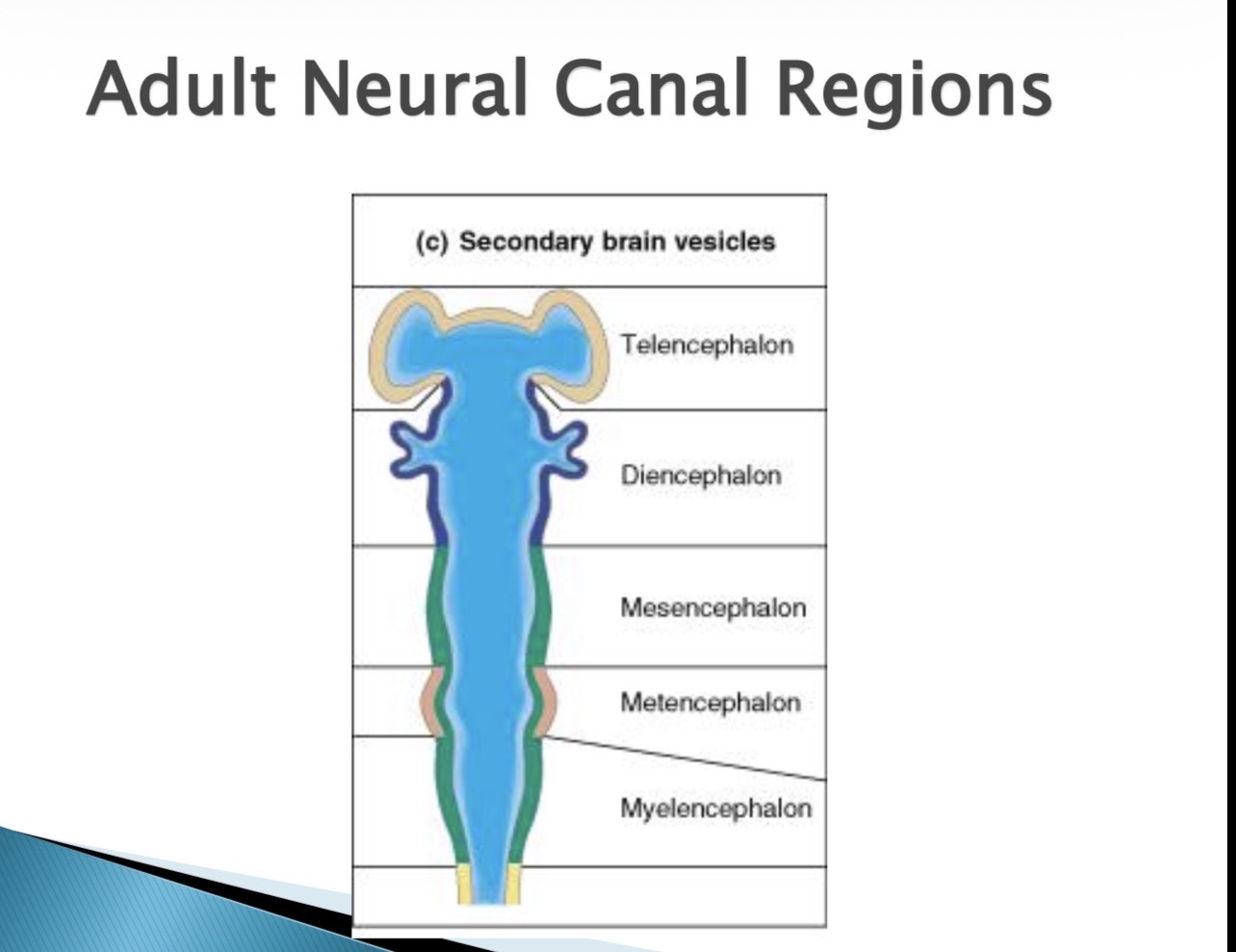
Explain how secondary vesicles develop into 4 major brain regions
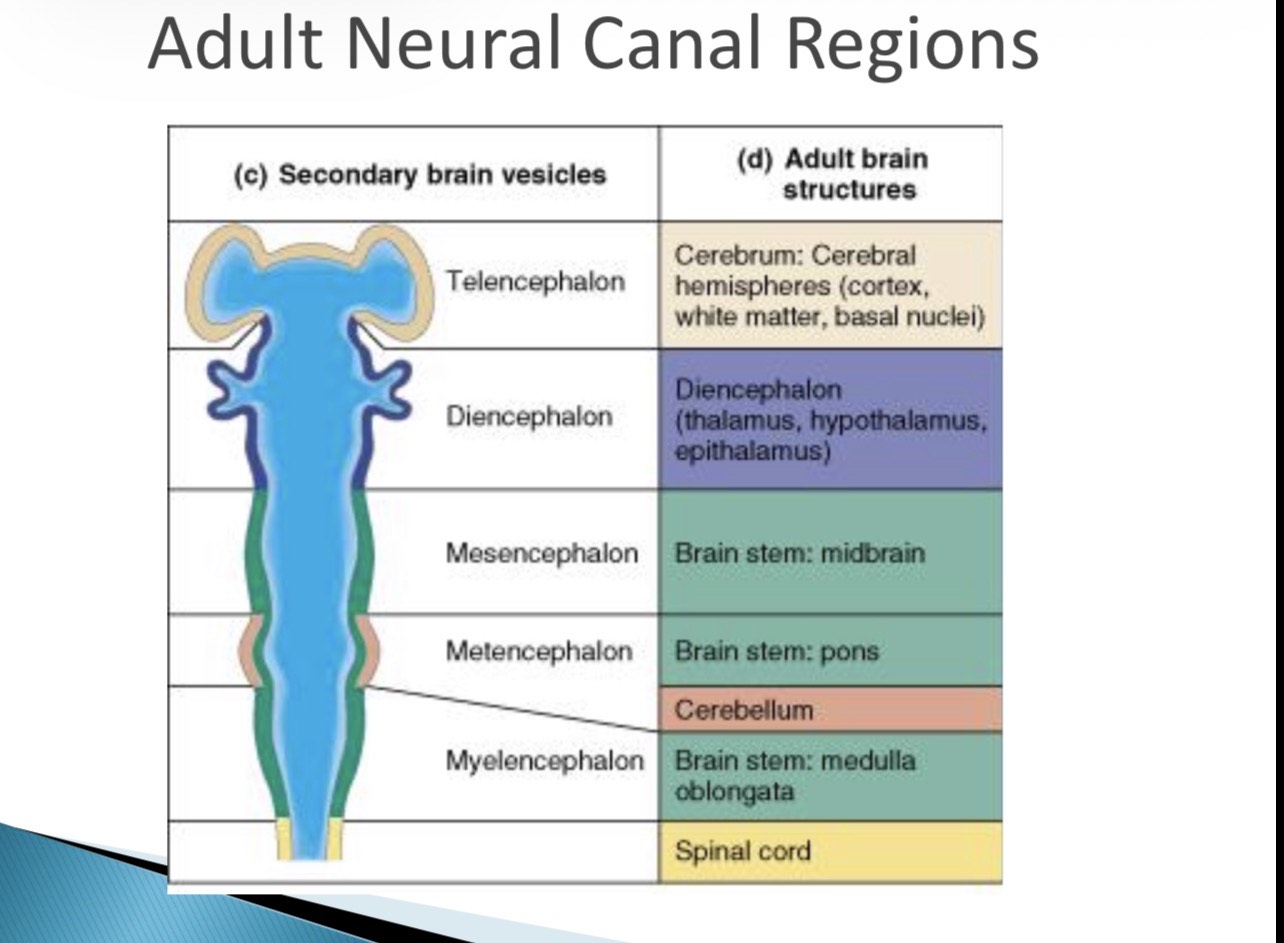
Summary
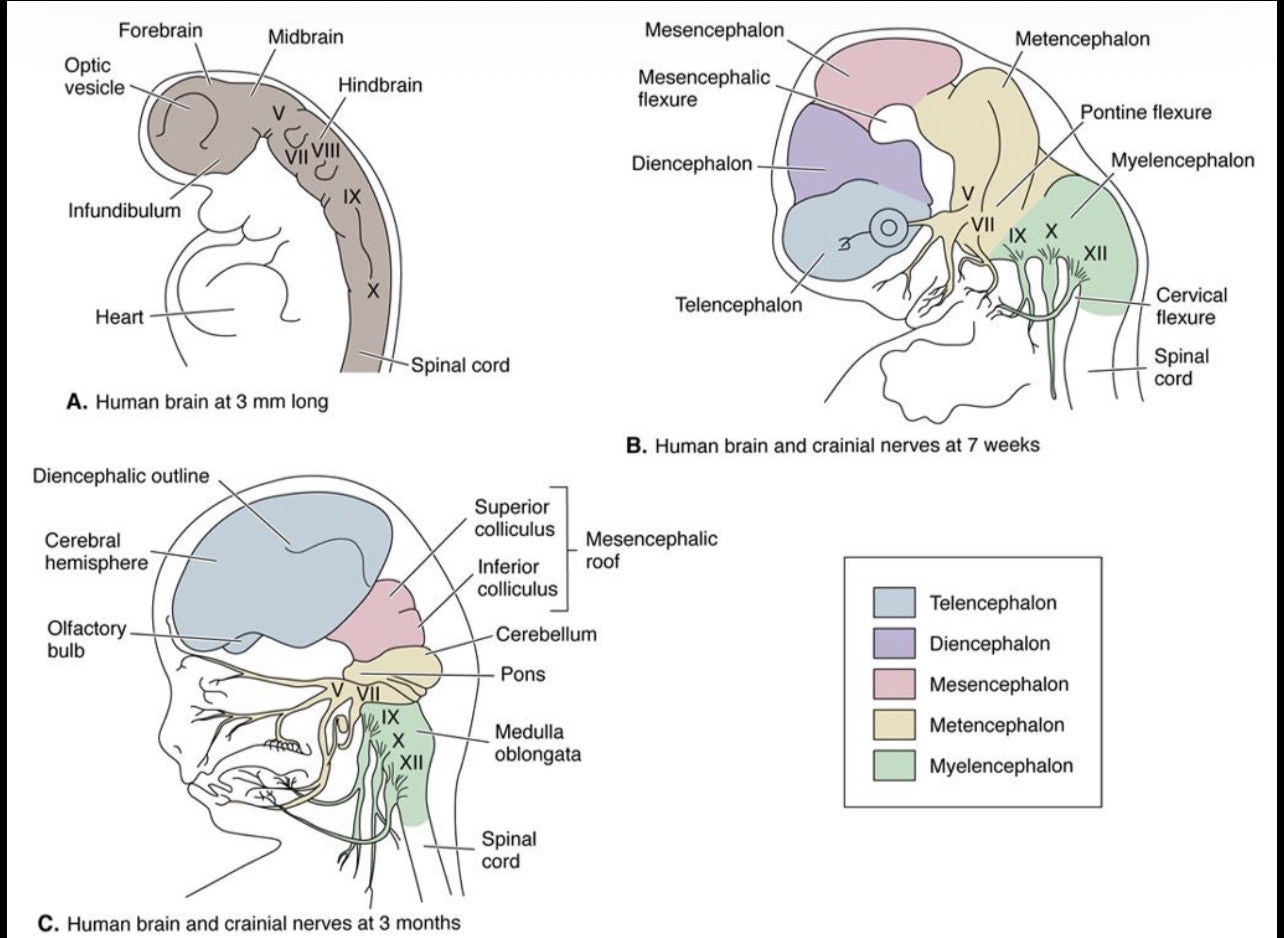
4 major regions of human brain
-cerebrum
.
- cerebellum
.
-diencephalon
.
- brainstem (Medulla oblongata, Mid-brain, Pons)
Diagram of human brain
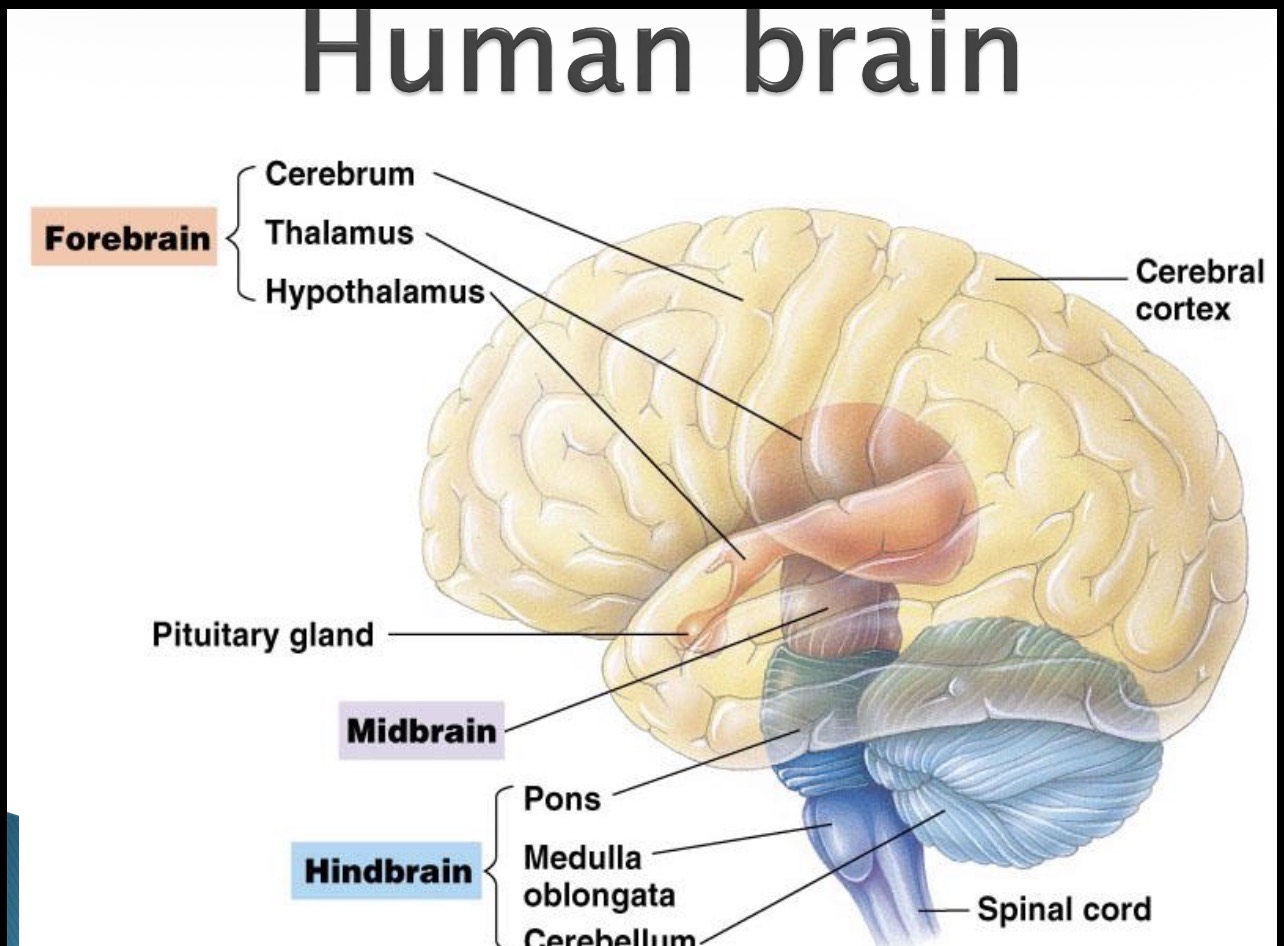
Brain stem consists of
-medulla oblongata
.
-pons
.
-midbrain
Controls basic life functions
.
-homeostasis ◦
.
-coordination of movement ◦
.
-conduction of impulses to higher brain centers
Medulla oblongata and pons
-heart & blood vessel activity ◦ breathing ◦ swallowing ◦ vomiting ◦ digestion
.
-Relays information to & from higher brain centers
cerebellum
1.The cerebellum controls balance.
,
2. The cerebellum controls posture.
Controls thinking
memory
speaking
movement
language
.
math
.
logic operations,
.
processing of serial sequences of information
.
visual & auditory details .
detailed activities required for motor control
Right
-pattern recognition
.
-spatial relationships
.
-non-verbal ideation
.
-emotional processing
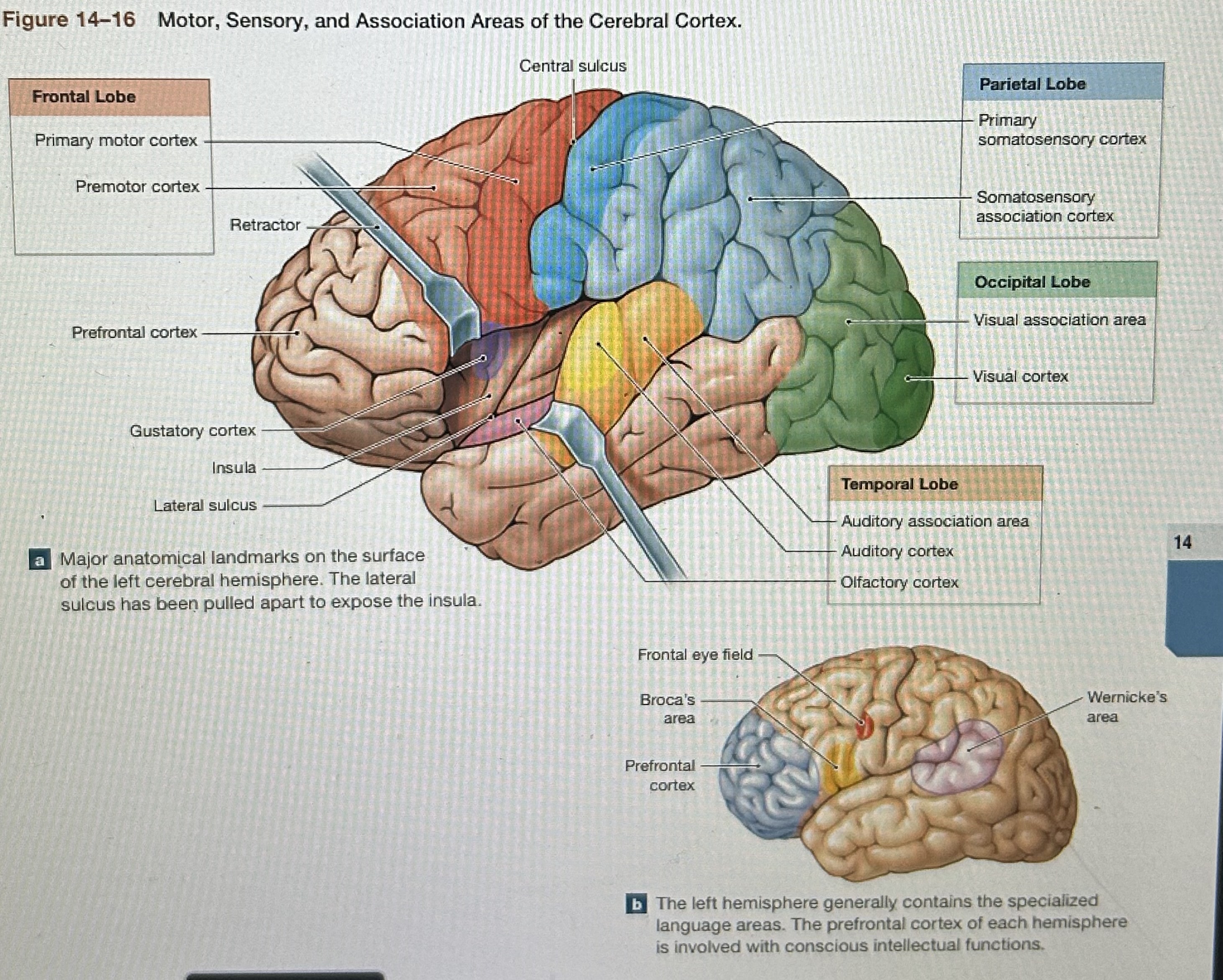
4 lobes of the brain
-Frontal
.
-Temporal
.
-Occipital
.
-Parietal
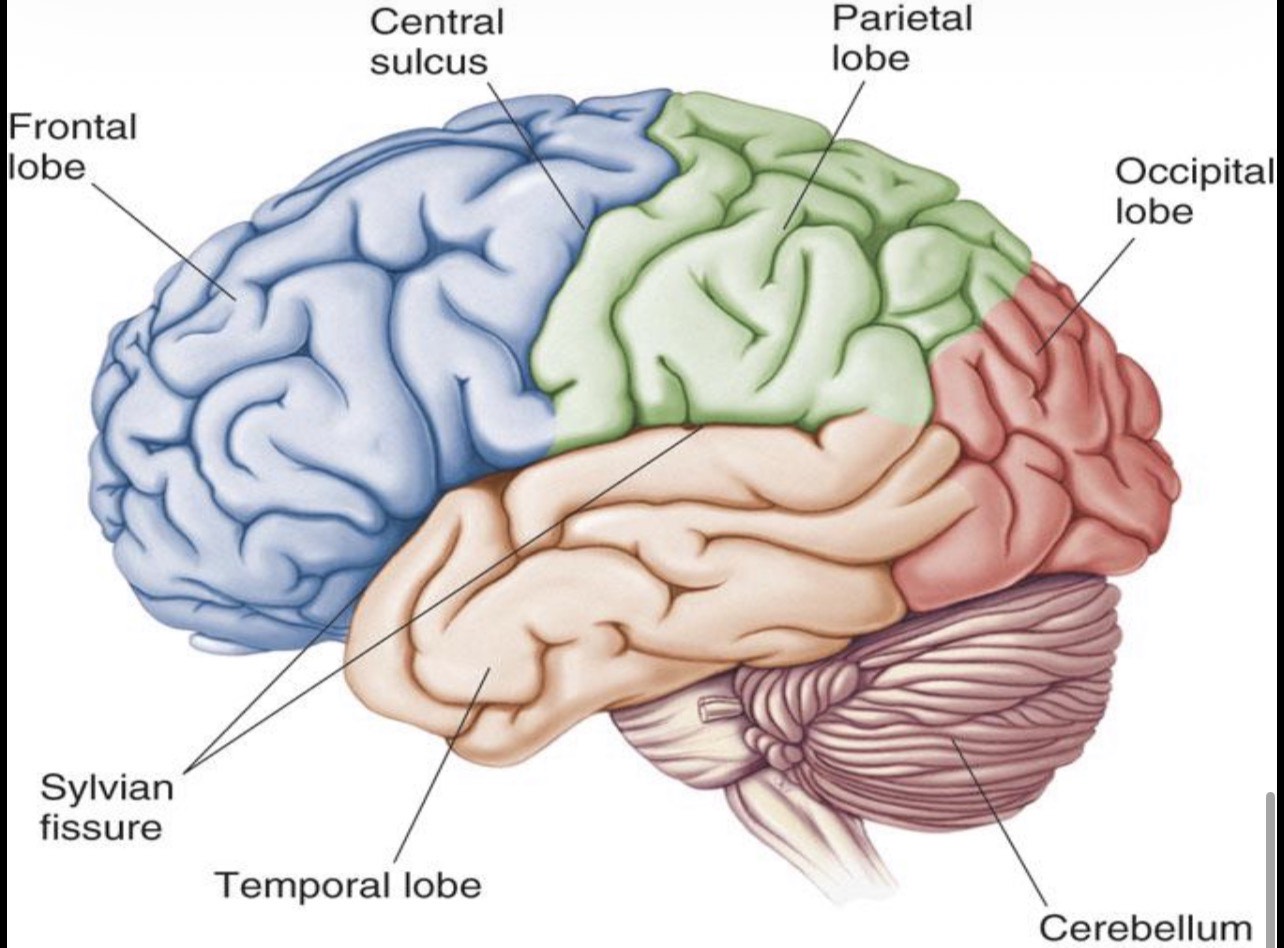
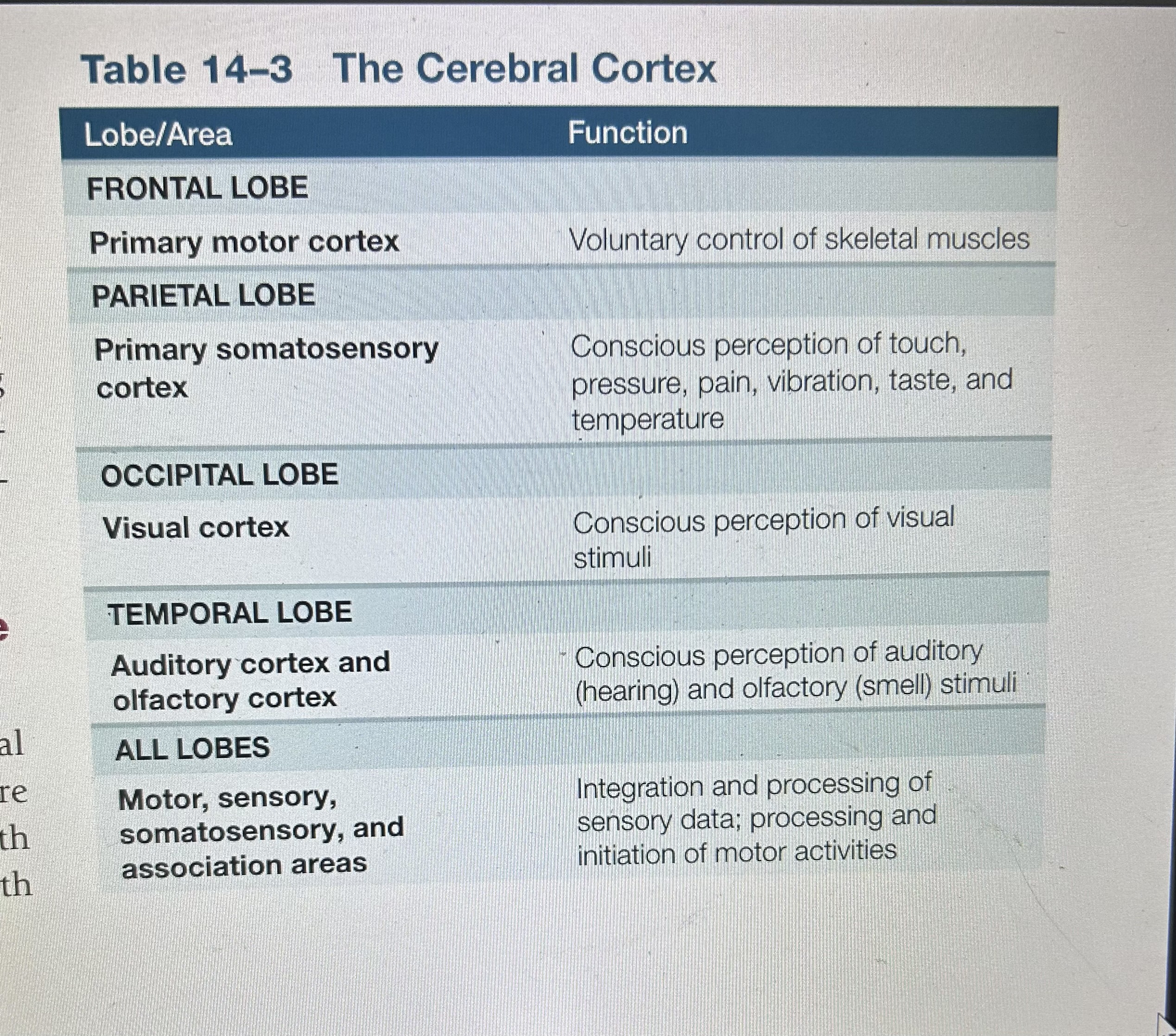
Involved in reasoning
.
-Memory Formation
- Emotions
- Decision Making/Reasoning
- Personality
Parietal Lobe
- located deep to the Parietal Bone of the skull
.
-Senses and integrates sensation(s)
,
- Spatial awareness and perception
Responsible for vision and visual processing
.
processing, integration, interpretation
-Located on the sides of the brain, deep to the Temporal Bones of the skull.
.
-Involved in hearing (Organization/Comprehension of language)
.
-Information Retrieval (Memory)
List 5 cerebral features
-Gyri
.
-Sulci (central sulcus)
.
-Fissures (longitudinal , transverse, sylvian/lateral)
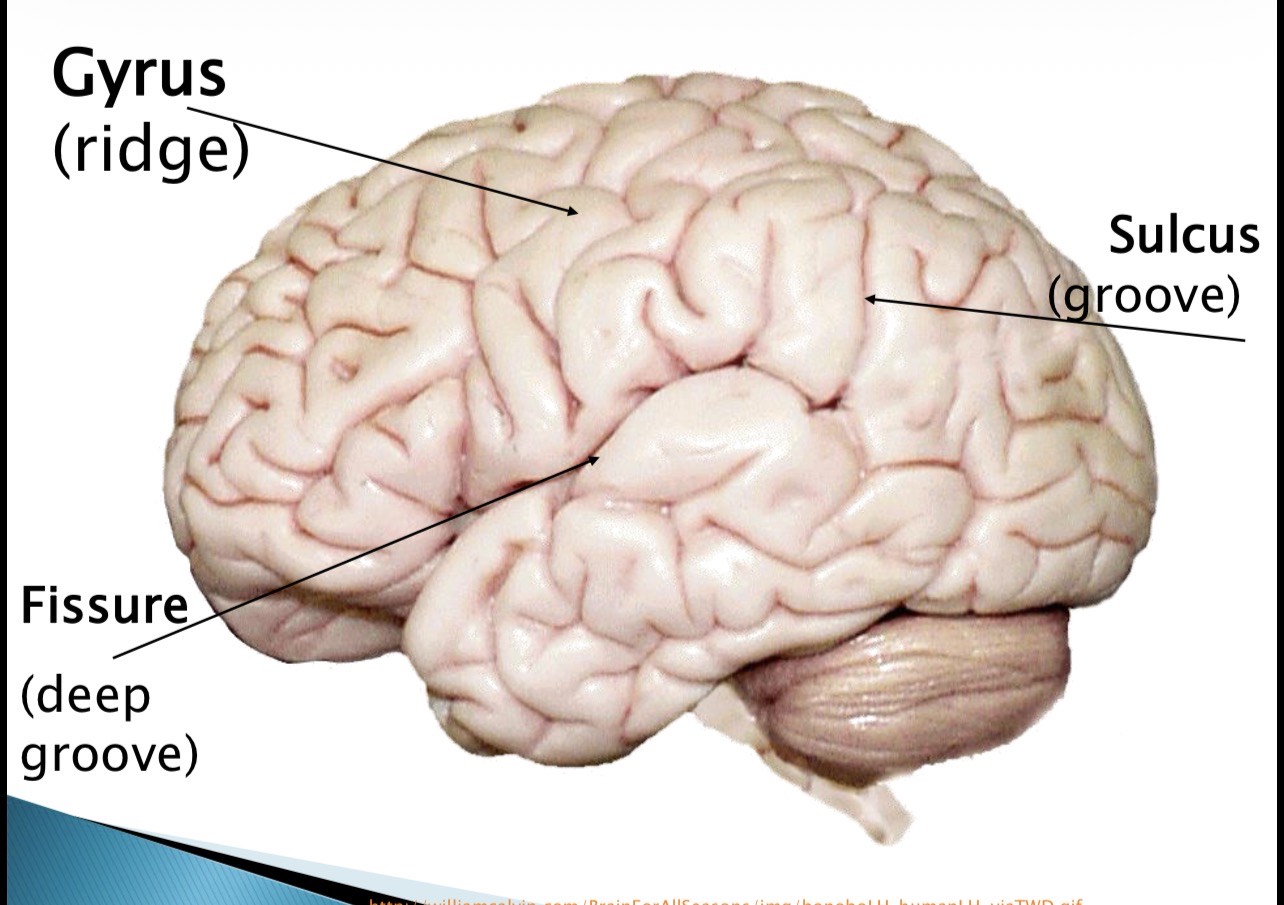
5 cerebral features of the cortical surface
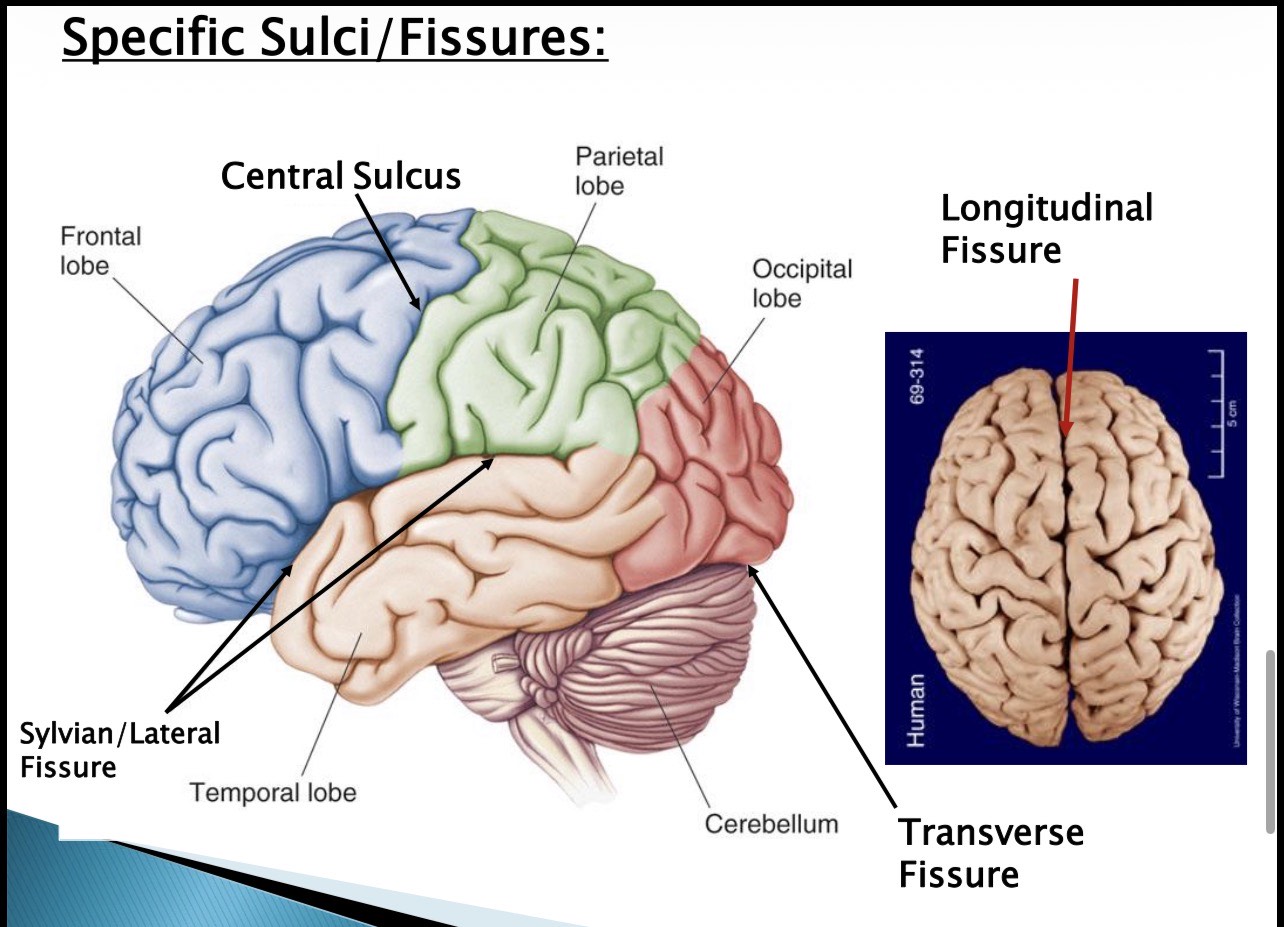
Gyri
Elevated ridges “winding” around the brain
Sulci
Small grooves dividing the gyri
.
-Central sulcus: Divides the Frontal Lobe from the Parietal Lobe
Fissures
Deep grooves, generally dividing large regions/lobes of the brain
Longitudinal Fissure
Divides the two Cerebral Hemispheres
Transverse Fissure
Separates the Cerebrum from the Cerebellum
Sylvian/Lateral Fissure
Divides the Temporal Lobe from the Frontal and Parietal Lobes
What does the cerebrum contain foe higher motor functions
-motor
.
-sensory
.
-association areas