clotting & ECGs
 Call Kai
 Learn
Learn Practice Test
 Spaced Repetition
 Match
Match Flashcards
 Knowt Play
1/18

There's no tags or description
Looks like no tags are added yet.
Name | Mastery | Learn | Test | Matching | Spaced | Call with Kai |
|---|
No analytics yet
Send a link to your students to track their progress
19 Terms
3 lead ecg
lead I: lateral view and upright waveform, shows current moving from right to left
lead II: views superior to inferior, most upright QRS and prominent P waves, current moving from SA nodes to ventricles
lead III: views superior to inferior upright waveform, looks at inferior wall
3 lead ECG
remember: white on right, smoke over fire
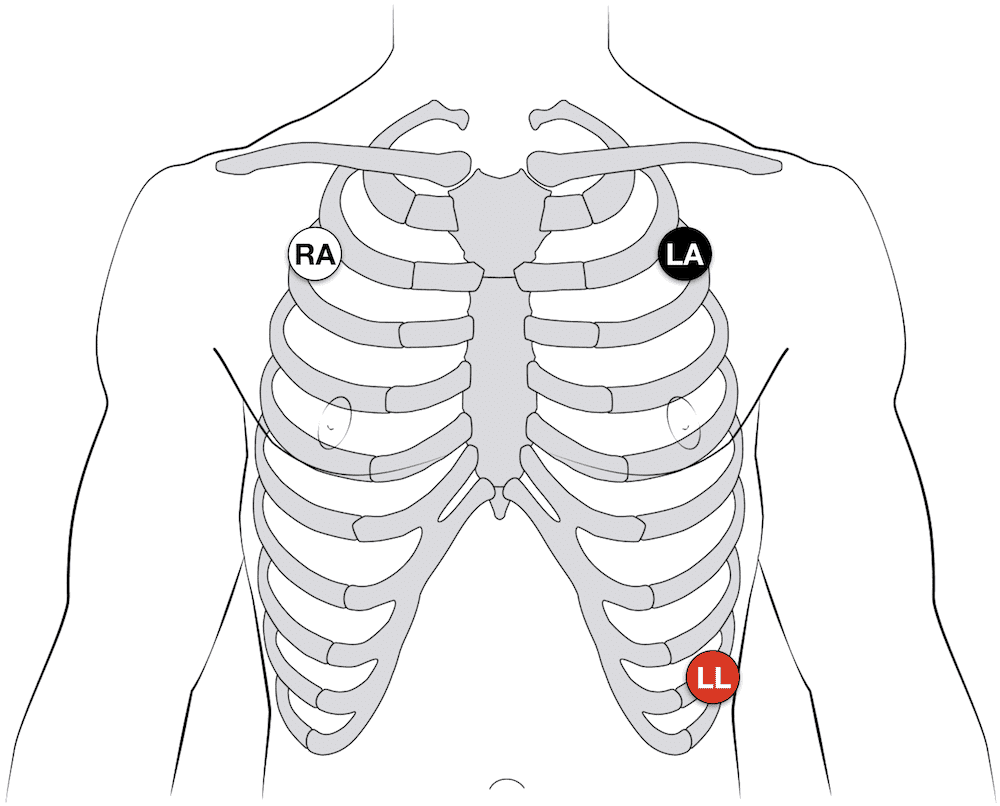
5 lead ECG
white on right, clouds over grass, smoke over fire
12 lead ECG
records 12 different views and provides a complete picture
a diagnostic test to identify pathological conditions
heart rate determination
recommended: coutning R waves over 6 seconds and multiply by 10
300 method only works for regular rhythms
normal sinus rhythm
PR: 0.16-0.2
QRS: 0.06-0.12
QT: 0.36-0.44
clotting
blood is converted from liquid to semi solid gel
usaully starts when veins and arteries are injured
may become impaired when clotting factors are not available or if blood clots forms when they are not physiologically indicated
clotting process
vasoconstriction
platelet plug(von Willebrand’s factor)
clotting factors→ clot formation
anticoagulants
heparin- antidote= protamine sulfate
LMWH→ tinzaparin, lovenox, dalteparin
direct oral anticoagulants(DOACs): dabigatran, anisidine, apixaban
warfarin/coumadin→ common s/e: prolonged bleeding, bruising
antiplatelets
ASA
clopidogrel(plavix)
fast acronym for Strokes
Face→ dropping
Arms→ weakness, can they raise their arms
Speech→ slurred, difficulty speaking
Time→ call 911 ASAP
warfarin and heparin antidotes
heparin antidote= protamine sulfate
warfarin antidotes= vitamin K
coagulation lab values
Prothrombin time(PR): 10-13.5 seconds
International normalized ratio(INR)→ 0.8-1.2 seconds(1-2) , critical= >5 seconds
aPTT or PTT(activated partial thromboplastin time)→ 24-35 seconds, critical >150 seconds, therapeutic range for heparin 65-90 seconds
anti-Xa assay→ prophylaxis= 0.1- 0.3 U/mL
therapeutic range for DVT→ 0.3-0.7 U/mL (unfractionated)
0.4-1.1 U/mL for LMWH
bleeding
40% loss: hypotension, tachypnea, cold clammy skin
50% loss: hemorrhage shock and death
pulmonary embolism
shortness of breath
chest pain
tachycardia
sweating
anxiety
coughing
myocardial infarction
chest pain
shortness of breath fatigue
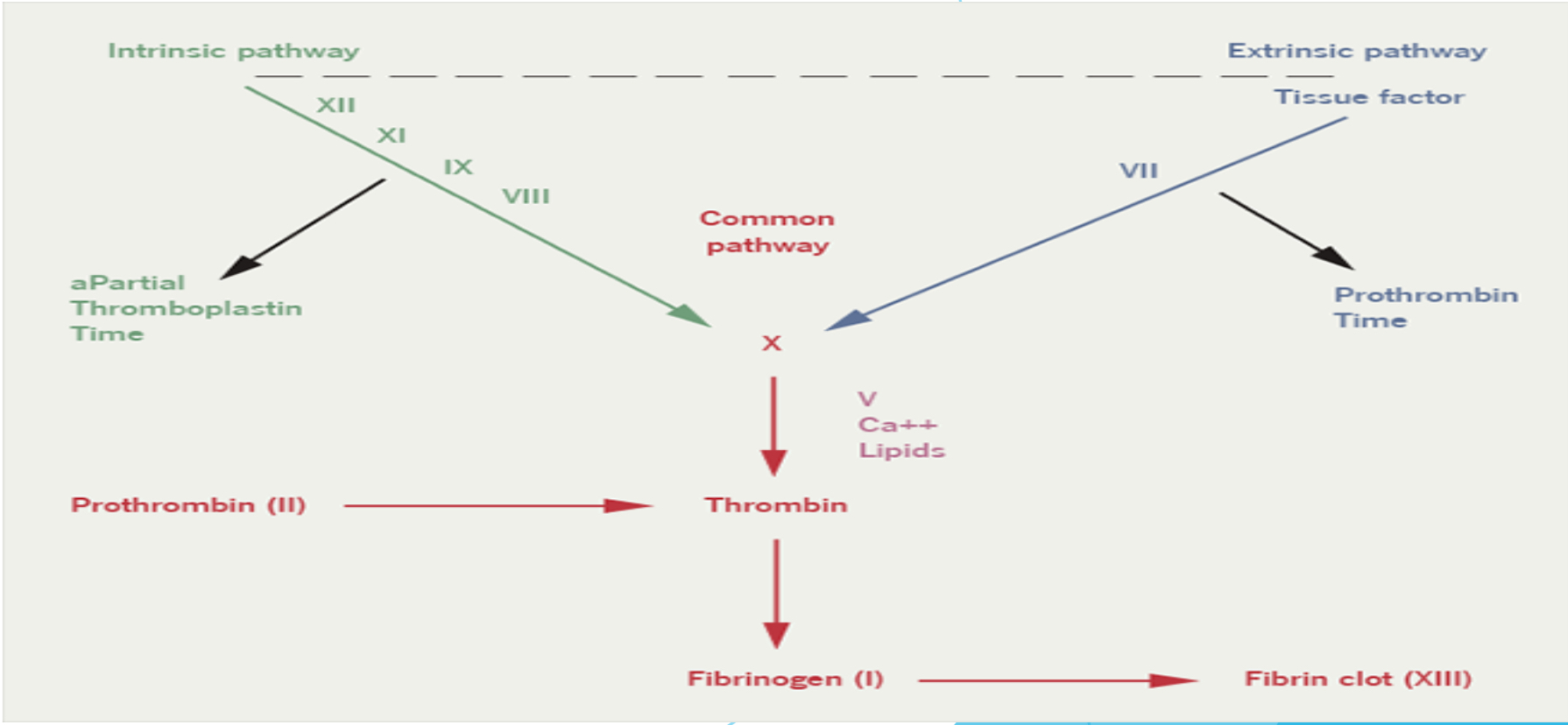
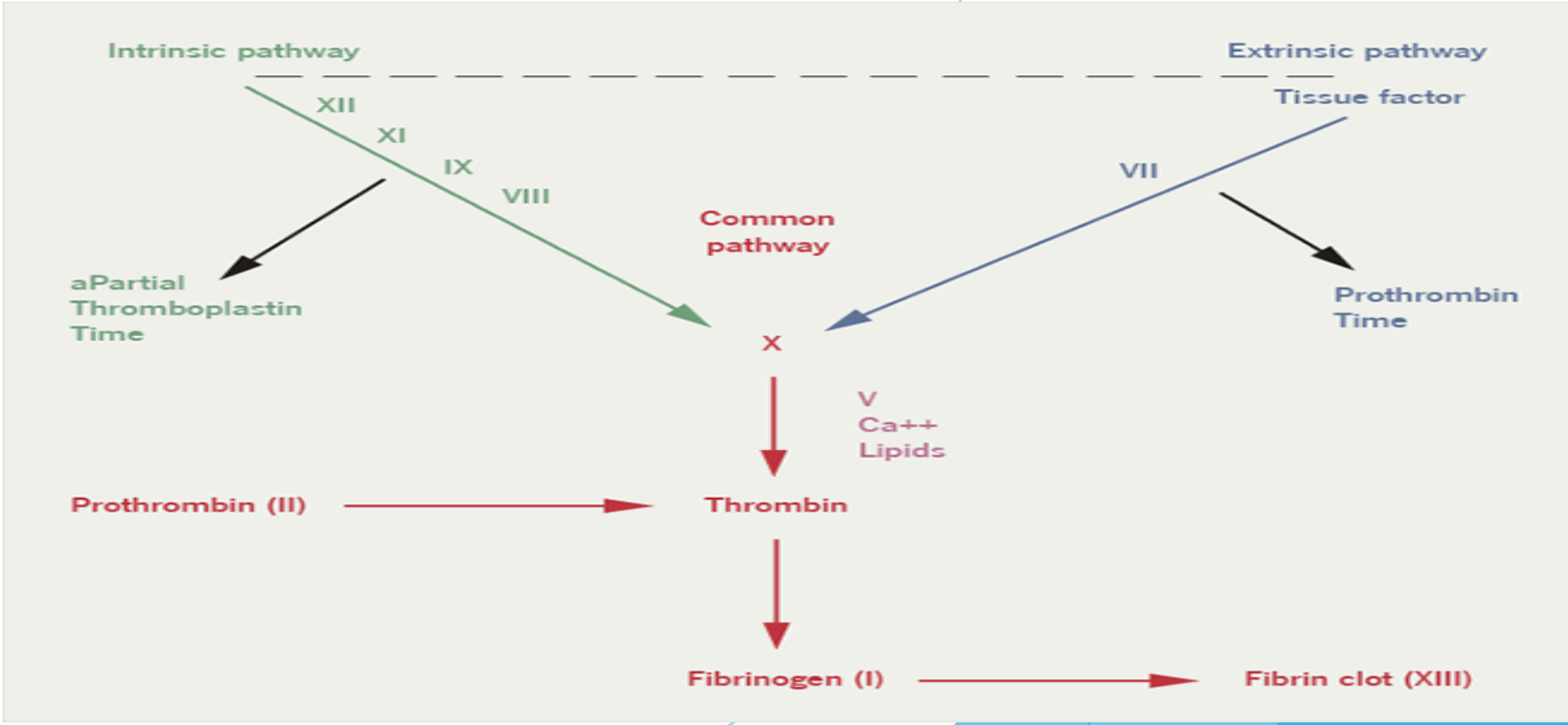
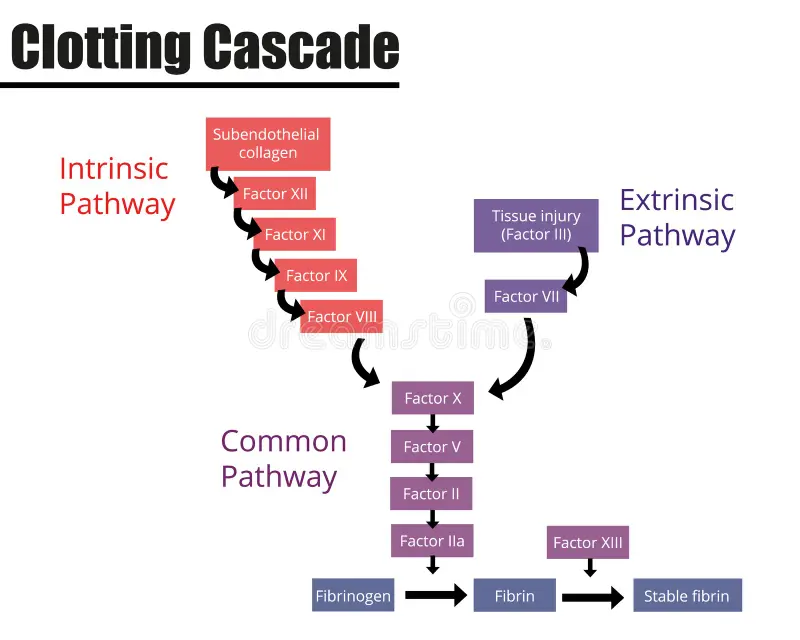
clotting cascade
PT= extrinsic pathway
aPTT=intrinsic pathway