Lecture 3 - Phylogenetic Reconstrcution
 Call Kai
 Learn
Learn Practice Test
 Spaced Repetition
 Match
Match Flashcards
 Knowt Play
1/19

There's no tags or description
Looks like no tags are added yet.
Name | Mastery | Learn | Test | Matching | Spaced | Call with Kai |
|---|
No analytics yet
Send a link to your students to track their progress
20 Terms
Common Principles of Phylogenetic Reconstruction
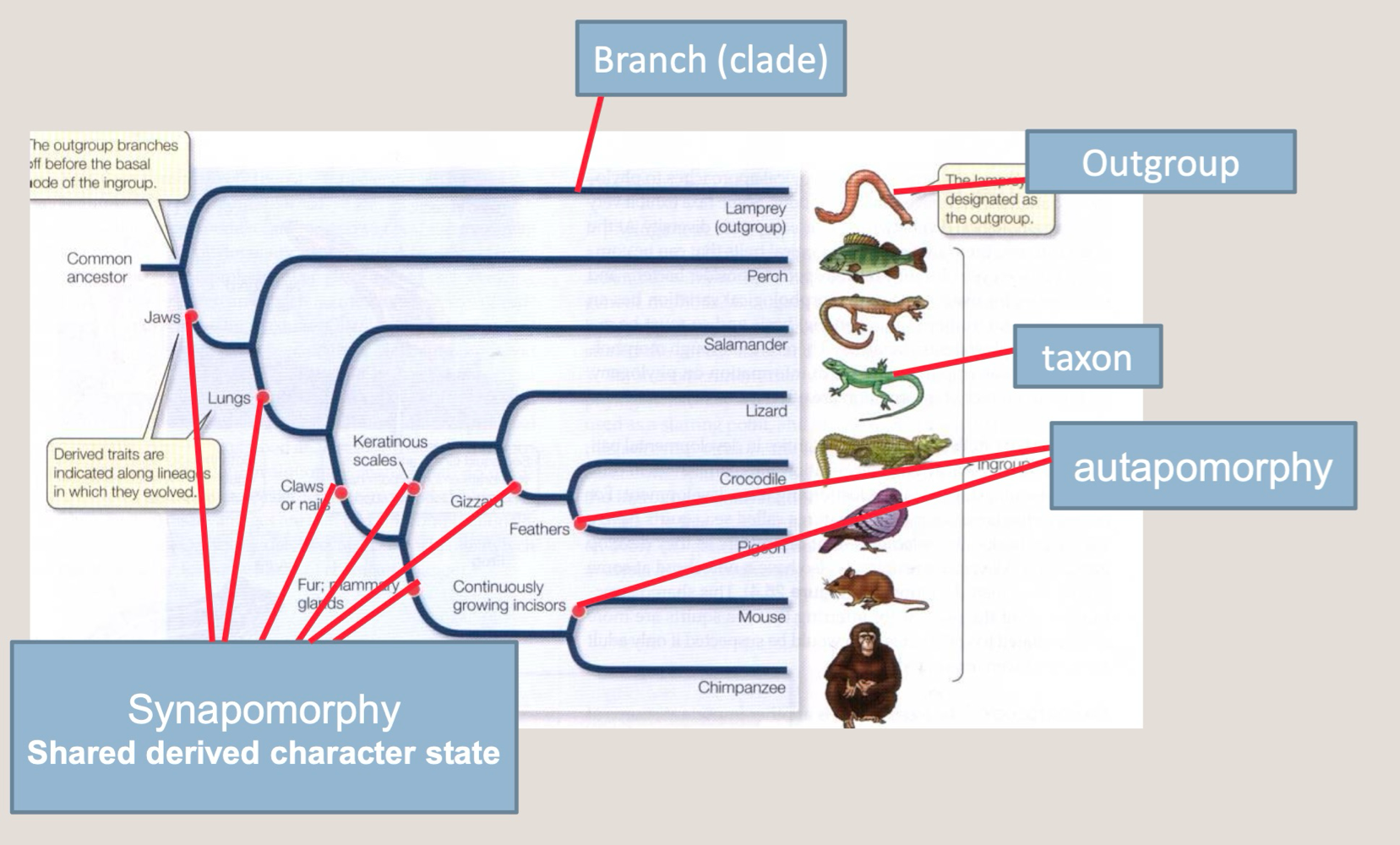
Species are product of descent from common ancestor
Length and number of branches provide information on relatedness
Morphological, biochemical and behavioural of molecular features of species or other groups can be used to construct phylogenies.
Basic Principles of Phylogenetic Reconstruction
Related groups have many characteristics in common
Taxon
Species/Population
Synapomorphy
Aquired or dervives characteristics shared among groups
Hypothesised to originate from a single common ancestor
Autapomorphy
Derived train present in a single taxon
Character States
Absent, Present, Abundantly Present (=3 character states)
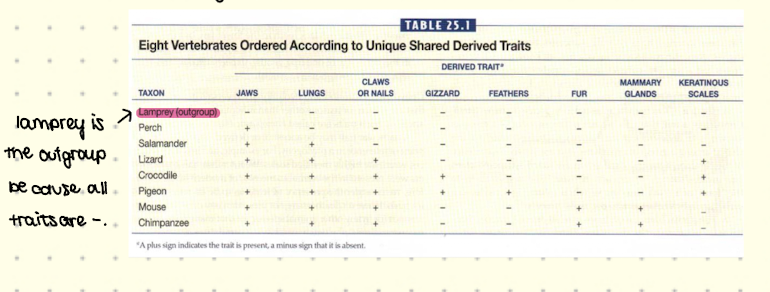
No character states means an outgroup
Outgroup
Common ancestor of all taxa under study
Phylogenetic Tree Structure
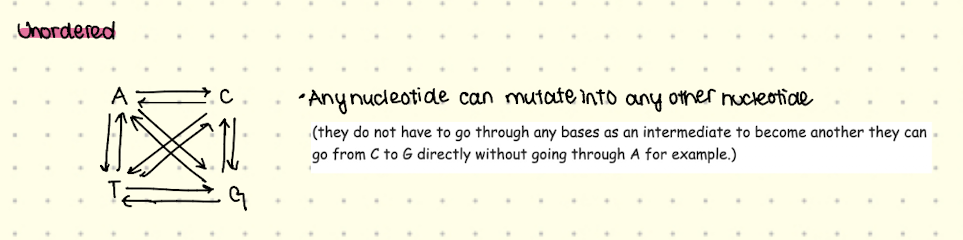
Ordered vs Unordered States
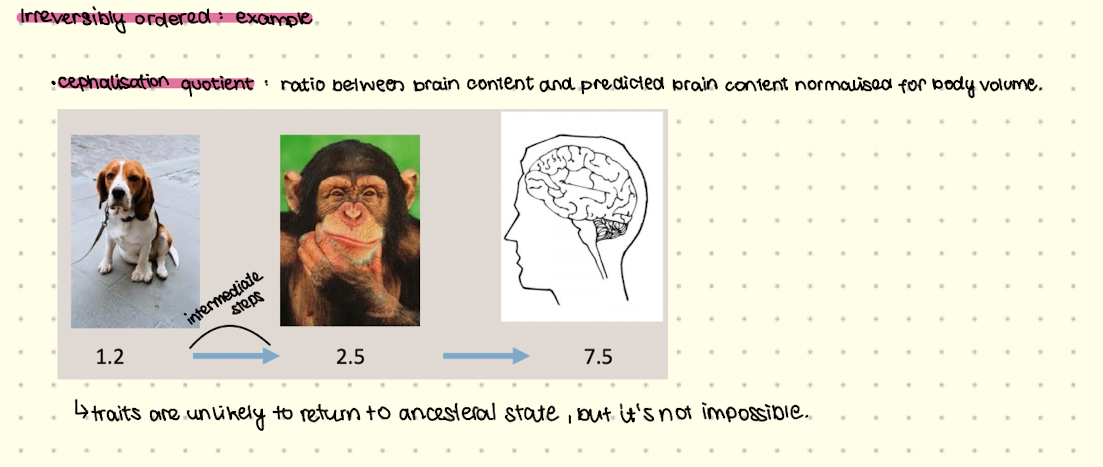
Unordered: character states can evolve into any other state (cephalisation quotient - ratio between brain content and predicted brain content normalised for body volume)
Ordered: logical sequence between character states and limits toplogy of phylogeny (diastema - space between incisors and canines)
Reversible vs Irreversible character states
Reversible states are less complex and can return back after time in evolution and Irreversible are more complex and cannot return back in evolution.
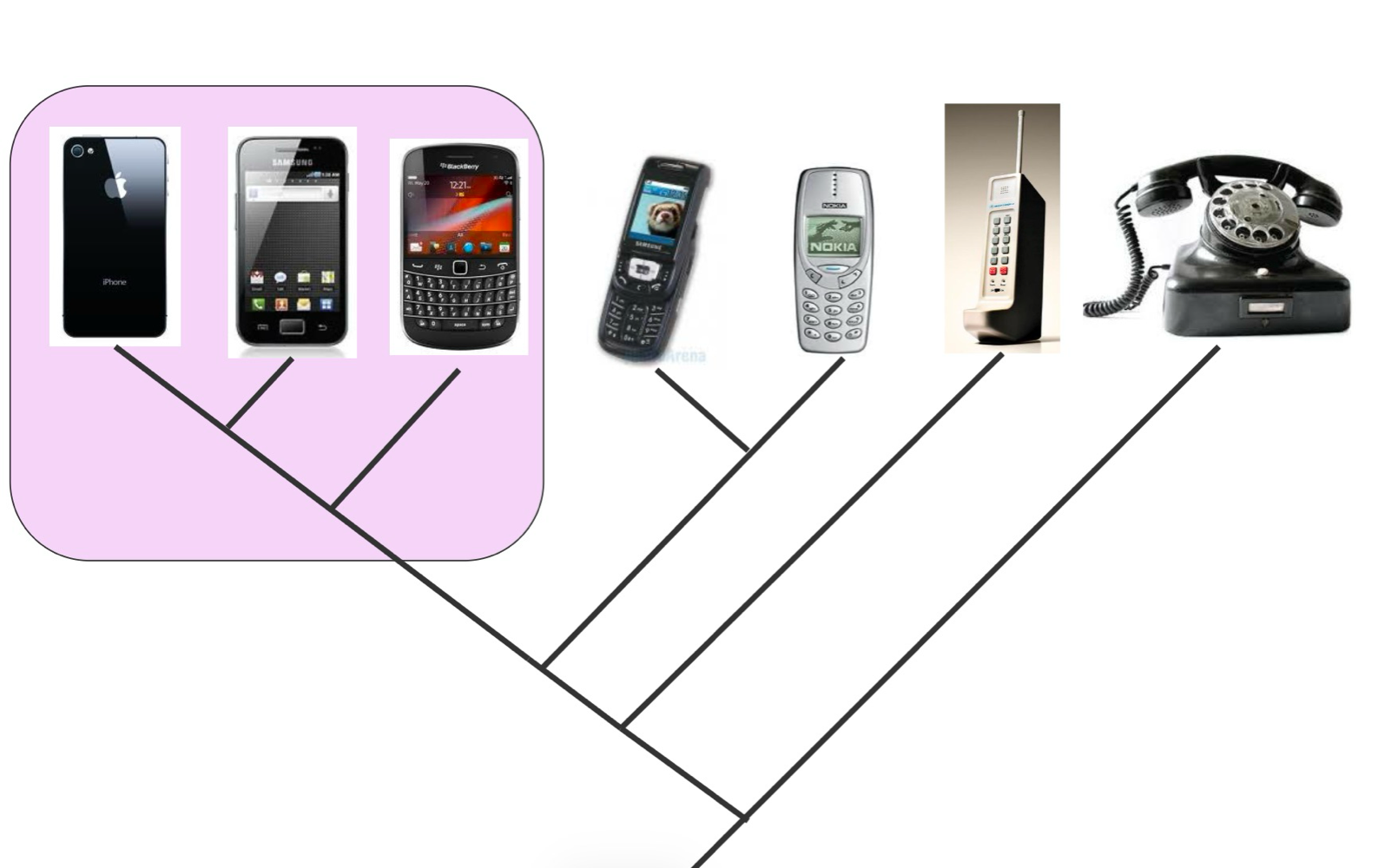
Monophyletic Trees
A group of that includes all members that share a most recent common ancestor
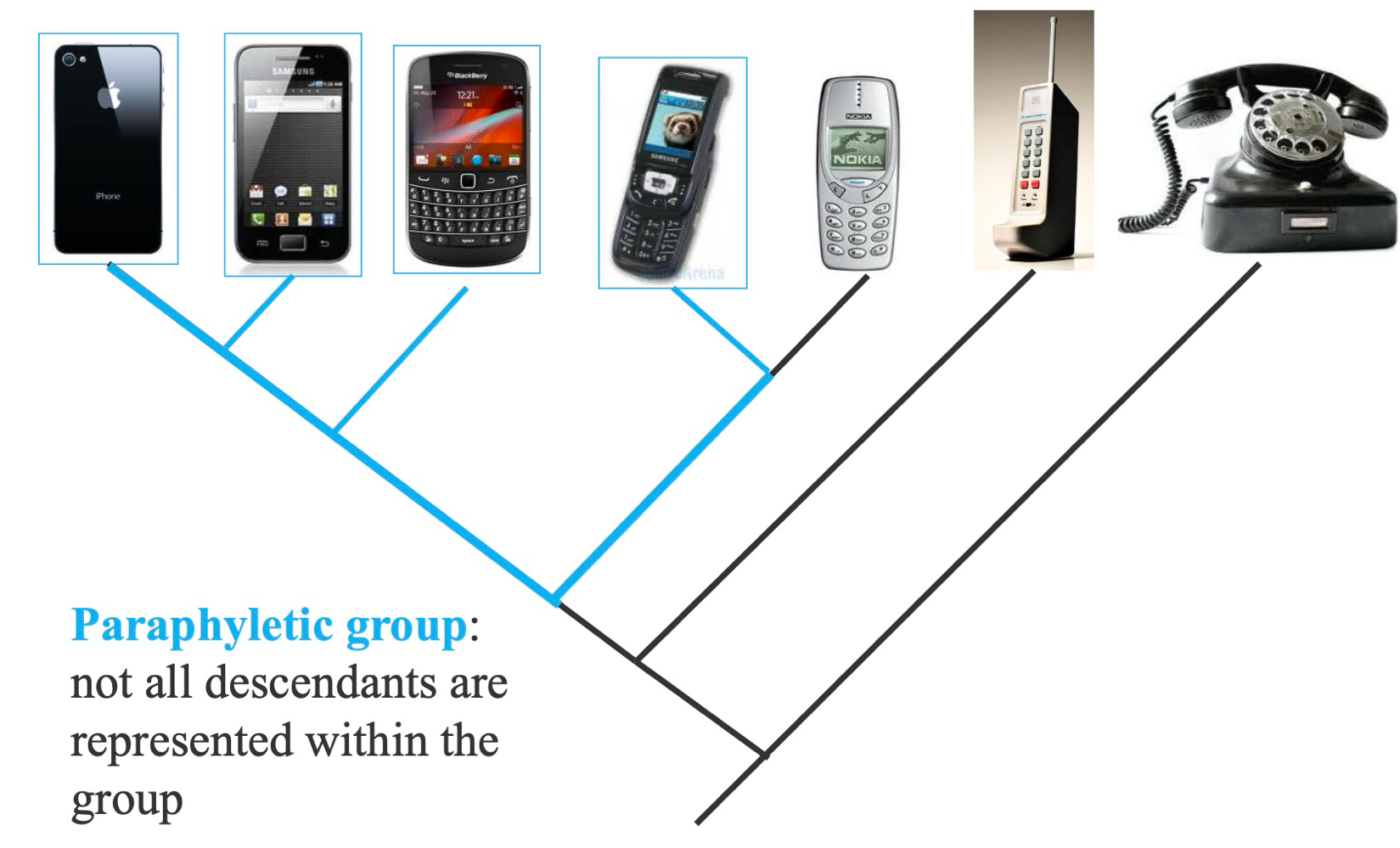
Paraphyletic Group
Not all decendants are represented within the group
Examples are reptiles.
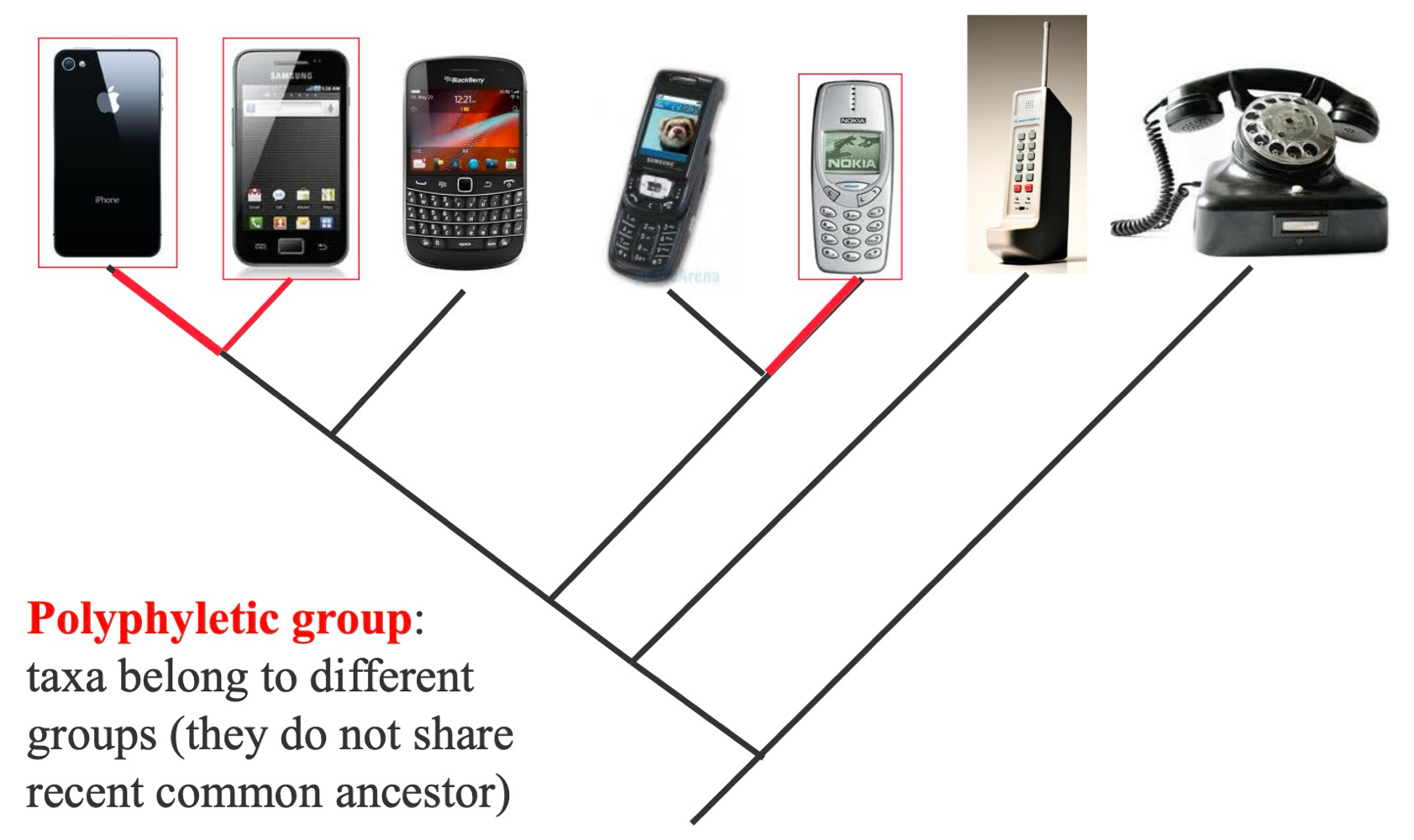
Polyphyletic
Taxa belong to different groups (do not share common ancestor)
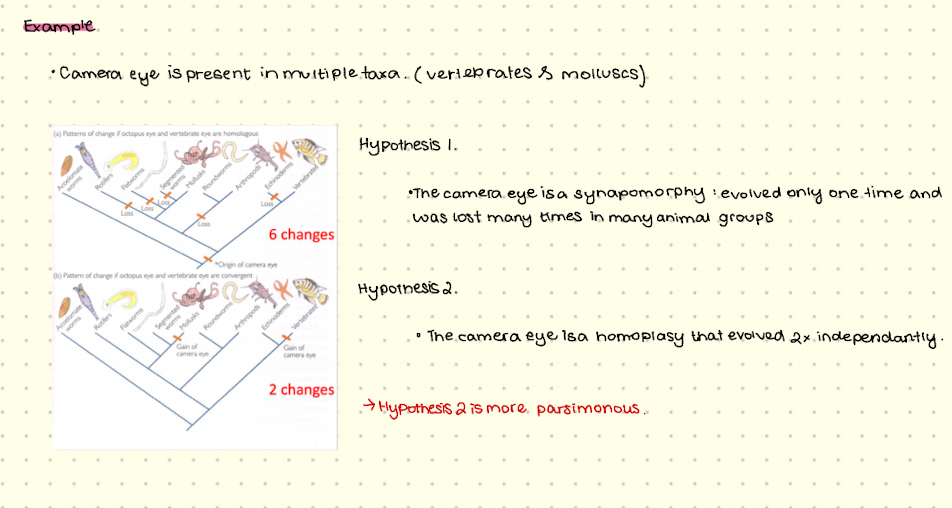
Homoplasy
Character state that has evolved at least 2x independently from different common ancestors
Reasons:
Convergent Evolution: adaptation of unrelated species to a particular environment
Reversion, Reverse Mutation.
Example: white skin alleles in Europe and Asia came from different mutations
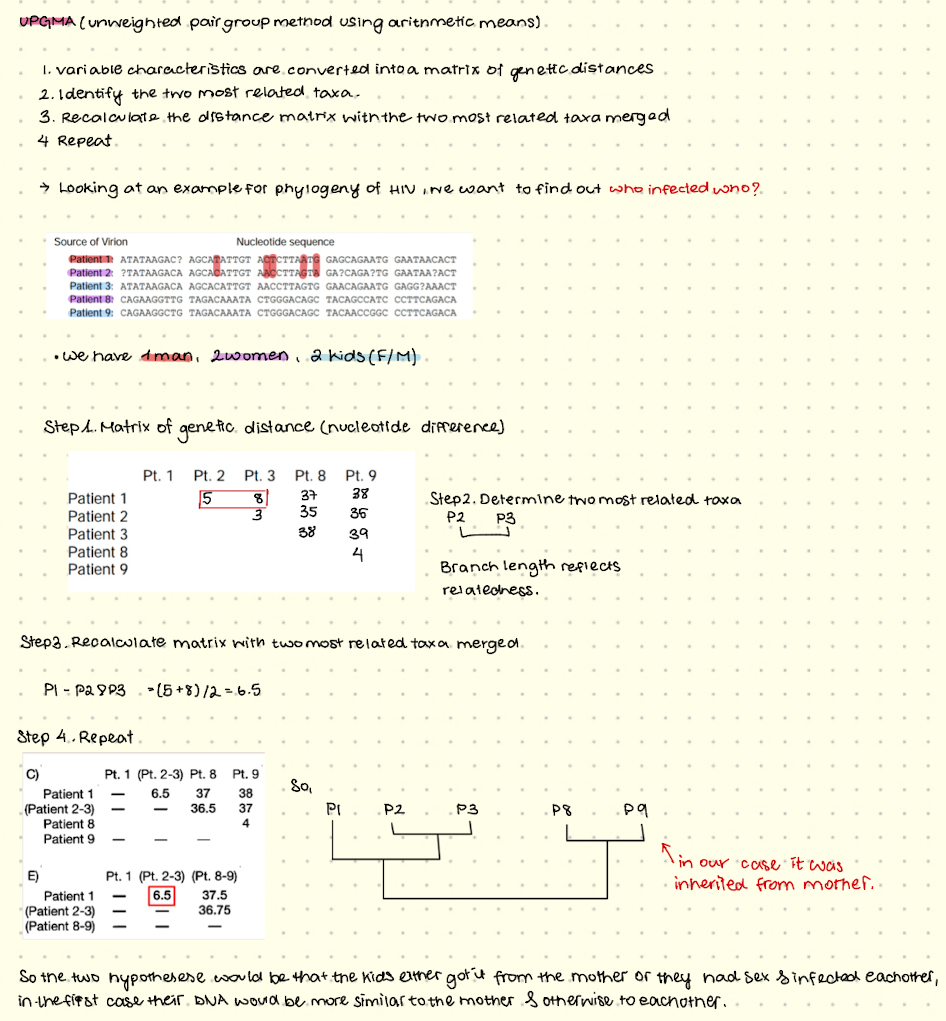
UPGMA
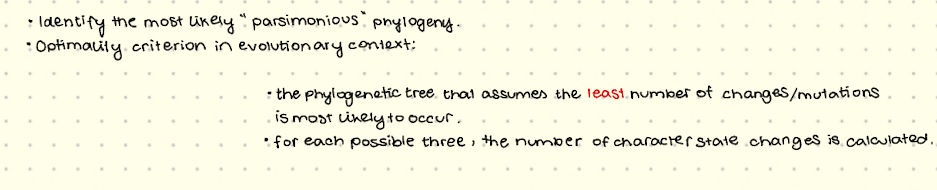
Mxiumum Parsimony
Example of Maximum Parsimony
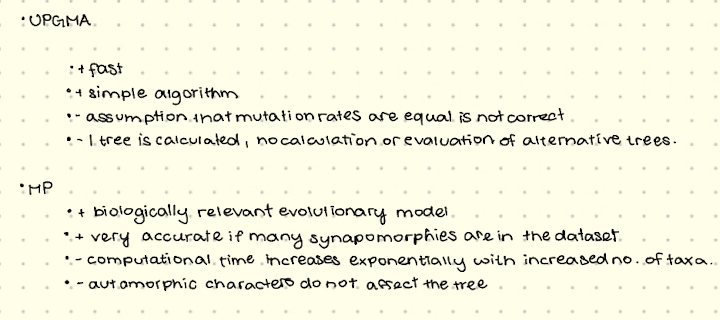
UPGMA vs Maximum Parsimony
Molecular Clock in Mammals
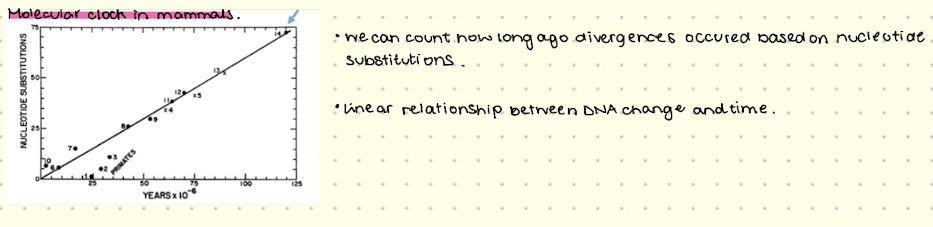
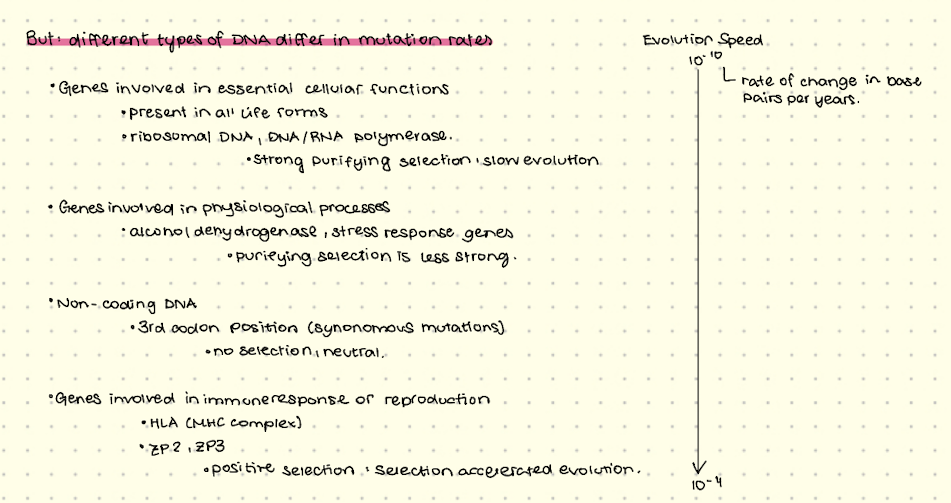
Different types of DNA differ in mutation rates