7 - fitting philosophies
 Call Kai
 Learn
Learn Practice Test
 Spaced Repetition
 Match
Match Flashcards
 Knowt Play
1/45

There's no tags or description
Looks like no tags are added yet.
Name | Mastery | Learn | Test | Matching | Spaced | Call with Kai |
|---|
No analytics yet
Send a link to your students to track their progress
46 Terms
What is considered normal lid position?
upper lid 1/3 to 1/6 over cornea (10 and 2)
lower lid at limbus
What kind of fit would you do for a normal lid position?
lid attached fit
What is considered a high lower lid?
upper lid 1/3 to 1/6 over cornea (10 and 2)
lower lid above limbus
What kind of fit would you do for a high lower lid?
lid attached fit with smaller OAD
What happens if you try and fit a high lower lid with a large OAD?
GP will ride high
What is considered a large palpebral aperture?
upper lid above upper limbus
lower lid below lower limbus
What kind of fit would you do for a large palpebral aperture?
interpalpebral fit required
what does On-K mean?
when the BCR selected is the same as the flat K value
What is a lid attached fit?
GP fits under and attached to upper lid (attached to lid wiper)
What are the advantage of a lid attached fit?
1. less movement
2. more comfortable
What are the most important aspects for a lid attached fit?
1. lid position
2. tension
What diameter do you want to use for a lid attached fit?
medium to large OAD (>9mm)
What BCR do you want to use for a lid attached fit?
slightly flat or On-K
Why do you choose a flatter BCR when doing a lid attached fit with large OAD?
increased OAD causes increases the sag depth → need to even it out to get good fit
what does flattening peripheral curves do to lid attached fit?
flatter peripheral curve → better lid attachment
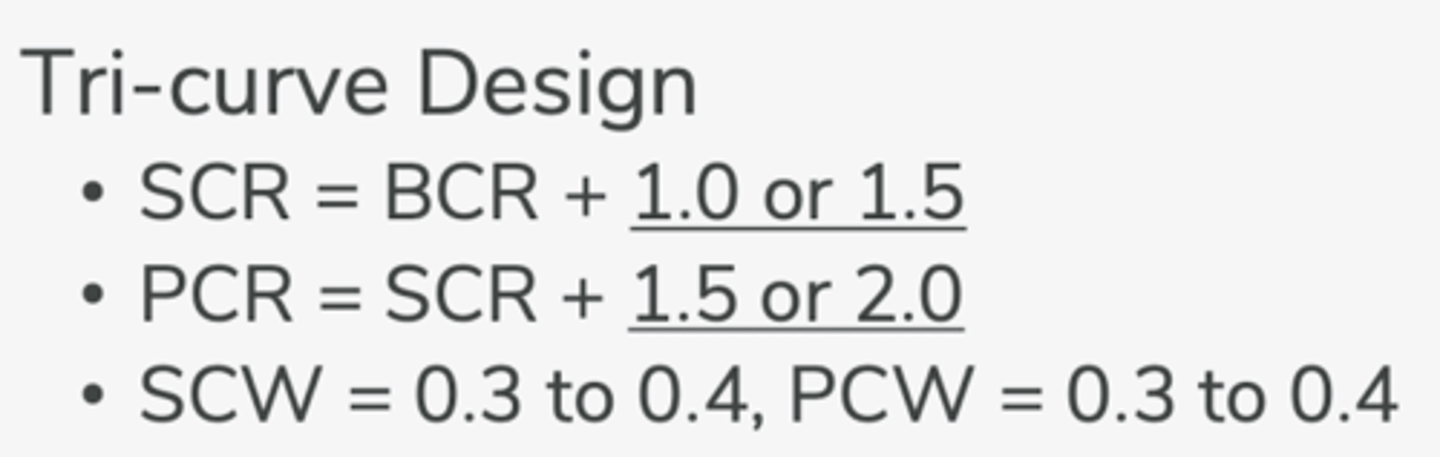
For lower plus shaped lenses or tight lids, what lenticular should you use for a lid attached fit?
regular carrier lenticular
For higher plus shaped lenses or loose lids, what lenticular should you use for a lid attached fit?
minus carrier lenticular
At what myopic power may you need a lenticular to keep a lid attached fit?
-4.00D or more myopic
If someone has loose lids and they are a -4 or -5D myope, what should you specify to the lab if you want a lid attached fit?
no lenticular
What is an interpalpebral fit?
lens that sits between lids/in aperture
What are the disadvantages of an interpalpebral fit?
1. less comfortable
2. more movement
When do you have an interpalpebral fit regardless of aperture size?
in multifocal
What OAD do you use for an interpalpebral fit?
small OAD (8-9mm)
What side (steeper or flatter) do you lean towards in an interpalpebral fit? Why?
steeper → helps with centration
compensate for smaller diameter (sagittal depth)
what is flexure?
bending of an RGP lens on the eye → issue with scleral lenses
how does lid attached fits cause flexure?
upper lid pushes down on the lens and can make it bend
How much WTR astigmatism do you need for clinically significant lens flexure to occur?
at least 1.00D of WTR cyl
Do we use lens for ATR astigmatism? why or why not?
no → lens will slide off nasally or temporally
What type of lens flexes?
lens with a mid to high Dk (low modulus) with a CT of 0.12mm
How much flexure can you expect from a lens?
about 1/3 of the amount of corneal astigmatism
how much flexure can you expect from a thin design lens?
about 1/3 of the corneal astigmatism
How can you confirm the presence of flexure of a lens?
keratometry over GP
what does it mean if a spherical lens has toric K readings?
lens is flexing on the eye
During flexure evaluation, what amount of cyl should you avoid?
when corneal cyl (keratometry readings with lens on eye) = spectacle cyl
if lens flexes on the eye it will no longer create the toric lacrimal lens you need to correct the astigmatism
essentially the lens is flexing so much that it doesn't correct any corneal astigmatism
how to avoid flexure?
use higher modulus/lower Dk (stiffer) → Dk 30-60 range
What is the initial visit and follow up schedule for a DW neophyte (brand new GP wearer)?
day 1: fitting exam
3-10 days later: dispensing
1-2 weeks later: F/U
1-3 months later: F/U
1 year later: refitting and full exam
*may do 6-month F/U if needed
What is the follow-up schedule for a new extended/continuous wear (EW/CW) patient?
day 1: F/U visit after the patient wears the GPs overnight for the first time
1-2 weeks later: F/U
6 months later: F/U
1 year: full exam
For an established DW GP wearer, what does the follow up look like?
yearly → unless making modifications
occasionally 6 months (rare)
What is important to do when educating patient on GPs?
1. set appropriate expectations
2. avoid words relating to discomfort
what should you do when presenting GPs to a patient?
use a topical anesthetic
What do we educate our GP patients on?
1. insertion, removal, decentration
2. cleaning techniques
3. reasons to reduce wear
4. minimize loss and surface damage
5. benefits of spare glasses
6. visit schedule
7. fee and refund policy
what are the do's and don'ts for cleaning GP lenses?
1. don't swim/shower
2. cosmetics
possible complications and what to do
what additional education on GP should be given to neophytes?
1. normal adaptation
2. wearing schedule
3. application/removal training
4. set reasonable expectations for success
How should you explain lens adaptation to a neophyte?
adaptions symptoms are expected during the first few days to weeks, but they will diminish with each day
What are adaptation symptoms seen in a neophyte?
1. discomfort
2. FB sensation
3. tearing
4. increased blinking
5. intermittent blurry vision
6. redness
7. light sensitivity
How should you educate your patient on the initial wearing schedule?
start day 1 only wearing for 4 hours
increase by 1 hour each day until they reach 8 hours → hold at 8 hours until follow-up visit