Final Exam Africa in IR
 Call Kai
 Learn
Learn Practice Test
 Spaced Repetition
 Match
Match Flashcards
 Knowt Play
1/86

There's no tags or description
Looks like no tags are added yet.
Name | Mastery | Learn | Test | Matching | Spaced | Call with Kai |
|---|
No analytics yet
Send a link to your students to track their progress
87 Terms
International security
-the study of the threat, use, and control of military force;
But recently, other definitions are broader and focus on international security as the study of threats
Interstate war
armed conflict between states
Civil war
armed conflict between multiple armed factions within a country; internal
Secessionist violence
one part of the country tries to split away from the rest
Insurgency
rebel forces attempt to overthrow the government
Genocide
a purposeful attempt at the eradication of a particular group
The concept of international security on the African continent
is a little less as states trying to protect their border and more about states or groups attempting to protect or threaten “People security.”
we are thinking of actors such as
State forces (or fragments thereof [Sudan army led by this general] )
Foreign armies (African or beyond)
International peacekeeping forces [also elsewhere, but a lot of them are sent to the African countries]
Private security forces (hired by politicians, or even firms)
Communal militias
Political militia; fighting on behalf of a particular politician
Ethnic militia; surrounded by an ethnic group and interest
Rebel groups: overthrow the government; restructure and revise the governmental structure
Vigilantes or mobs perform justice on specific groups
Pro-gov militia: they are a type of political militia specifically trying to protect the government, a loose association of armed citizens, “thugs,” who operate outside gov
Criminal groups; an organization and an economic system that benefits themselves, not a lot of research on it
Why does conflict look like this on the continent of Africa?
The state is often weak and does not reach everywhere in the state
Weakly institutionalized democracies often foment election violence and political militias
Enclave economies spur corruption and “bandits” which lead to resource violence
Old divisions splitting some groups and unifying others may lead to tension
Distributional conflict from not enough resources
Civil wars on the continent 2021-2022 example
The Sahel civil war; going on in Niger, Burkina Faso, Mali and 3rd party states involve USA , Italy, France; peacekeepers involves EU, Southern African Development Community Mission in Mozambique, African Union, G5 Sahel
Sahel
has held the designation of the most lethal theater of militant Islamist violence in Africa for 4 yrs in a row, accounting 4 55% percent of all non-combatants killed by militant Islamist groups in Africa are in the Sahel
(Ten African Security Trends from 2025 in Graphics)
Authoritarain regimes example
Chad, Uganda, Congo, Guinea
__ of Africa’s 54 national leaders have now come to power from coups or military actions
GROWING IMPUNITY AND ABUSES OF POWER
20
African leaders who took power via coup, in turn, are far more likely to evade term limits and perpetuate their time in power—expanding repression.
Of the 10 elections scheduled in Africa for this yr, only 3 were considred free and fair (2025)
(Ten African Security Trends from 2025 in Graphics)
Coups and Military Dominated Regimes in Africa
Africa now has more authoritarian govs than at any time since 1998;
growing # of military govs is part of the broader trend of democratic backsliding landscape.
Corruption is also more likey to thrive under authoritarian govs
(Ten African Security Trends from 2025 in Graphics)
Who might be involved in direct intervention of security challenges
Inter-governmental organization (IGOs) like the UN
Non-governmental organizations, like Save the Children
States or groups of states from within or outside Africa can send aid or forces
Protection of civilian (PoC)
“all necessary means”
integrated and coordinated mission action to prevent, deter, or respond to threats of physical violence against civilians, within capabilities and areas of deployment, up to and including deadly force
the mandates are set by the UN Security Council, need to ask them for perssion, the clear
Responsibility to Protect; R2P
states have a responsibility to protect populations from genocide, war crimes, ethnic cleansing, and crimes against humanity; the international community should assist and may take collective action through the Security Council when national authorities manifestly fail
The state is doing something horrible, need outside intervention, not on the request of the people doing the geniocde
What kind of challenges do interveners face?
Even seemingly nonpolitical interventions are political
e.g. feeding the hungry is an act of war Somali 1990s
Information, there is manipulation with info
Politics! African actor agency
Community mistrust
Access
But UN peacekeepers do have some positive impacts
More UN troops and police associated with fewer civilians targeted with violence
aid workers typically aware of how their assistance is being captured or abused, but the alternative of not providing it at all is often less desired
Local peacekeeper presence can raise political and military costs for rebel civilian targeting; constraints are stronger on rebels than on governments when access depends on government consent
UNMISS local military presence improves security (observed and perceived) and boosts consumption and subjective well-being by enabling markets and labor activity.
Humanitarian Assistance and Peace Operations textbook 8
What are some humanitarian interventions forms?
economic sanctions: can be targeted at specific leaders or broader restrictions
diplomatic punishment: rhetorical condemnation, suspension from international organization, and explosion of ambassadors
military interventions: air strikes, arms embargoes, or the deployment of peacekeeping troops
Humanitarian Assistance and Peace Operations textbook 8
Humanitarian Assistance is typically presumed…
to be neutral and above politics; any sort of external intervention is political
Humanitarian Assistance and Peace Operations textbook 8
International NGOs vs local NGOs
International NGOs such as the International Rescue Committee and Doctors Without Borders typically are more experienced and better funded, but local NGOs often win major UN relief contracts as well.
Humanitarian Assistance and Peace Operations textbook 8
why is the most basic decisions about the provision of humanitarian assistance can become quite contentious?
it is a dominant power-sharing approach
info needed to determine how much aid to send; food rations, tents to medical suppiles, docts
official may have incentives to overestimate or underestimate the # of people affected
govs officials might want to discredit a domestic rebel group by claiming it has killed or wounded more people than it has.
manipulate aid by using political instead of humanitarians considerations to determine its distribution; example Ethiopia during the mid-1980s famine did this
govs use their control over aid distribution to legitimize their approach to counterinsurgency; that is may mandate that aid be distributed only in specific areas
Humanitarian Assistance and Peace Operations textbook 8
Unlike Humanitarian Assistance, Humanitarian ___ has become common only more recently in African conflicts
interventions;
since the cold war, there has been a dramatic increase in the # of peacekeeping operations
nearly thirty UN missions have been deployed to twenty African countries since 1988
What kind incentives are provided to member states by the UN and/or the African Union to contribute troops to participate in peace operations?
Money! Countries that contribute troops to UN missoins have been reimbursed more than 1,300 k per solider per month (less for regional peace operations)
top ten troop-contributing countires in africa:
ethipohia, rwanda, Egypt, Burkina Faso, Senegal, Ghana
may have interest in outcome
prevent refugees from reaching their borders
face pressure from a domestic interest group to intervene
Humanitarian Assistance and Peace Operations textbook 8
What can happen with third-party intervention?
can also prolong conflict by applying inappropriate solutions and failing to address underlying sources of violence
expect always help
use it to generate funds to cover military budgets
Managing Mistrust
When would govs vs rebel groups allow for peacekeepers more?
a large UN force elicits cooperation when rebels are militarily weak
when facing a stronger gov, rebel groups welcome the intervention by a large mission
Managing Mistrust
when is it most and least effective sending missions?
the UN should allocate its scarce resources by sending missions to countries where rebels are weak and governments are strong
In contrast where governments are weak and rebels are strong, PKO deployment is most inefficient—in the sense that deploying more troops yields less cooperation
Managing Mistrust
The UN PKOS are a response to
commitment and mistrust problems that are prevalent in civil wars and postconflict agreements.
What is distinctive about protests in sub-Saharan Africa?
Often occurs in electoral democracies/around elections
◦ Conducted in an environment where high levels of state violence against protesters
◦ Main effects are not policy changes but changes in “popular organization, political consciousness, and political imagination
What are the three waves of political protest?
independence protests, pro-democracy protests, contemporary wave
South Africa’s FeesMustFall Protests; what happened?
“Narrow” protest in a democracy
• Triggered by University fee raise by 10 percent in Oct 2015, spread across Universities
• Student march on South Africa’s parliament on October 21
• Resulted in President Zuma establishing a commission to look into the possibility of free tertiary education; in 2018 a generation national bursary scheme for poor and working class students established
• Some success in changing policy, protests revived in 2019 and 2021 to
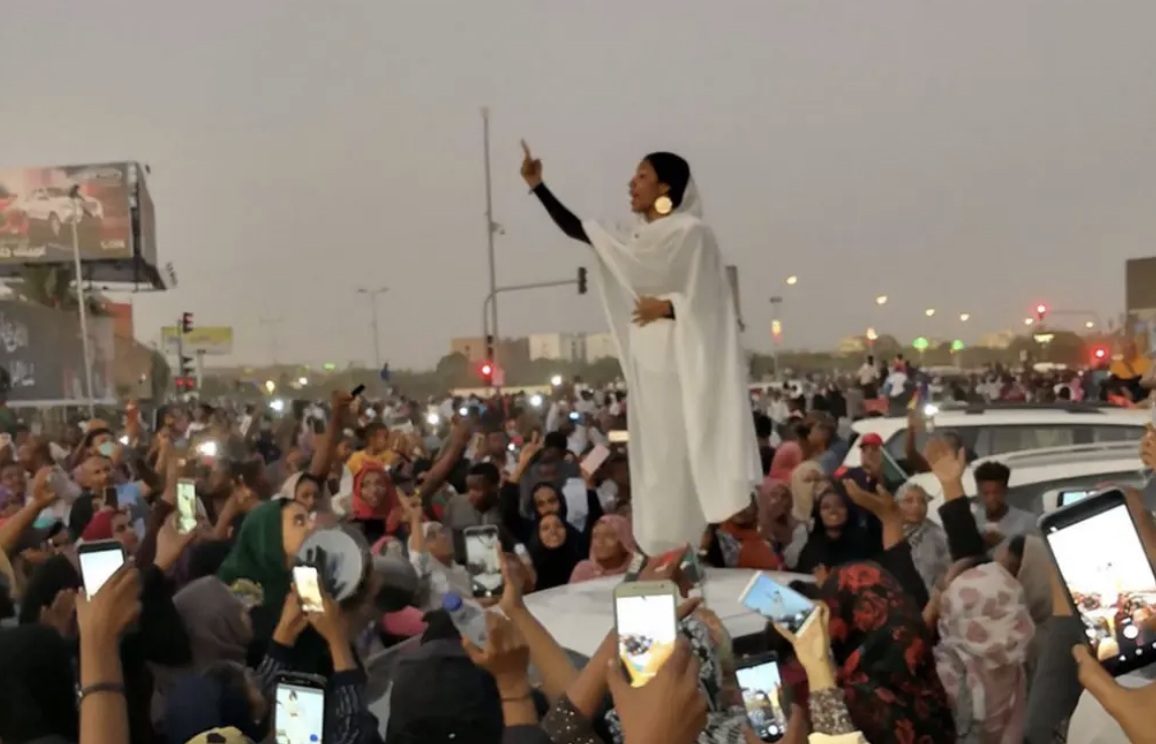
Sudan’s protest; what happened?
Countrywide protest broke out in Dec 2018 over increase in bread prices
lead to military depose of the president, Bashir
new rule replaced
power-sharing military and civilansl; but eventually miltary takes full power dissolving civilian gov 2021
leads to a civil war broke out between sudanese armed forces and rapid support forces in 2023
what are some conclusions from protests?
Most popular protests in SSA do NOT have immediate policy and political consequences
Even those protests that do have consequences may have difficulty sustaining gains if extra-institutional support is not complemented by formal political representation
What makes civil war more likely?
honestly many reasons;
many political scientists have emphasized the importance of grievances/discrimination in causing rebellion (Gurr; Horowitz)
Ethnic groups whose status is low relative to their sense of entitlement/self-worth are likey to rebel
Ethnic groups who are excluded from power are more likely to rebel (Wimmer, Cederman and Min 2009)
Conflict is rare, grievances are not! why?
Paul Collier in The Bottom Billion: “... the sad reality seems to be that grievances are pretty common. Rebels usually have something to complain about, and if they don’t they make it up. All too often the real disadvantaged are in no position to rebel; they just suffer quietly.”
Instead Collier and Hoeffler emphasizes the ability of rebels to hire soldiers on the cheap and to finance themselves as key conditions for civil conflict
Greed vs. Greivance: Can you measure one independent of the other?
can be viewed mutually exclusive explanations …
Grievances are widespread
Rebellions are the result of readily available rebel financing and a low opportunity cost of joining rebel movements
Greed argument: Conflict caused by atypical opportunities for rebels
Availability of financing
Natural resources, diaspora
Low opportunity cost of conflict (high unemployment, underemployment)
What are a more immediate threats to rulers
coups > civil war
leaders of non-co-ethnics included in governing coalitions cannot credibly commit to not organizing a coup d’etat (especially if former co-conspirators)
The cost of purging one’s former allies from the central government, however, is an increased likelihood of civil war…
the enemy within article also argues this
THE ENEMY WITHIN: Personal Rule, Coups, and Civil war in Africa Philip Roessler
what makes the coup dangerous compared with other antiregime sirgese?
the coup, as a swift, surprise strike, poses a much more immediate and unpredictable threat, coming not from those based in society but from those inside the government who have the capability to use the state apparatus, especially the military or the police, to depose the incumbent.
THE ENEMY WITHIN: Personal Rule, Coups, and Civil war Africa Philip Roessler
what is one of the most prevalent tactics rulers employ to prevent threatening centers of power from coalescing" within their regimes, especially in security services, and the police?
the frequent replacement of cabinet ministers, commanders of armed forces, party leaders, and top bureaucrats “musical chairs” since it prevents amassing too much power within their respective field
gives people a believe they can get into the position
THE ENEMY WITHIN: Personal Rule, Coups, and Civil war in Africa Philip Roessler
what is the problem with ethnic stacking or other discretionary appointments?
they can be perceived as a conspiracy on the part of the ruler and his allies to build a “shadow state”
leaves those excluded from the shadow state unable to monitor the distribution of patronage and control of coercion and increases their fears that in the future, they could be completely marginalized from power or face an even worse fate
THE ENEMY WITHIN: Personal Rule, Coups, and Civil war in Africa Philip Roessler
what can the exclusion strategy lead to?
it is a short term strategy as it does not resolve the underlying conflict over the distribution of power and wealth between competing elites and their constituencies
key downside of exclusion, especially when it is carried out along ethnic lines, is that it tends to facilitate insurgency formation, while compromising the regime's counterinsurgency capabilities
leaves regimes vulnerable to a future civil war
THE ENEMY WITHIN: Personal Rule, Coups, and Civil war in Africa Philip Roessler
overall findings:
suggests an alternative explanation as to why there has been the concentration of civil wars in the rural periphery of poor, postcolonial states:
“It argues that peripheral civil deeply connected to the center than is often recognized literature; elite bargaining and the incumbent's state survival can be as significant as drivers of large-scale political violence as are underlying structural conditions or bad neighborhoods”
Election and Civil war in Africa
TBH
Ethnic cleansing allegations in Nigeria - Farmer/ herder conflict
Historically, northern farmers went down with their cattle when there grass levels went down, it also helped the souther famers: “The violence, involving largely Muslim Fulani herders and Christian farming communities, has escalated from agricultural disputes into deadly reprisal attacks, with both sides accusing each other of ethnic targeting.”
What are some indirect interventions punishments nations can impose as punishments?
Economic measures: sanctions, embargoes, boycotts
Rhetorical measures: official condemnation, rebukes
Legal measures: international courts, bringing of motions
Which states are condemned/ punished ?
“With the end of the Cold War, [UNHCR] targeting was based less on partisan ties, power politics, and the privileges of membership, and more on those countries’ actual human rights violations, treaty commitments, and participation in cooperative endeavors such as peacekeeping.” (Lebovik 2006)
Who implemented sanctions?
UN Security Council and many individual states and provinces, cities
since 1966, the security council has established 31 sanctions with the majority being in Africa
Why did some want sanctions (or not)?
Pro: ANC and Mandela encouraged sanctions early on as a non-violent means of crippling the apartheid regime; garnering international support and pressure
Even in South Africa’s anti-apartheid movement: “Morality is cheap when someone else is paying.” ◦ Also concerns re: free trade, hypocrisy, Cold War, etc.
What were the effects of these sanctions?
Impossible to know for sure, layered response
◦ Considerable capital flight → decline in international exchange rate of South African currency → imports more expensive → inflation rises 12–15% per year
◦ Some unwanted spillover (e.g., enriched mining conglomerates who benefited from increased gold price)
IGOs?
Inter-governmental organizations like the United Nations can pass condemnations or motions, organize sanctions regimes
NGOs?
Non-governmental organizations like Save the Children can do research, make statements, alert policymakers → Firms get involved when we’re talking about economic measures
who else can implement sanctions and make statements?
states from within or outside Africa
ICC?
The International Criminal Court investigates and, where warranted, tries individuals charged with the gravest crimes of concern to the international community: genocide, war crimes, crimes against humanity and the crime of aggression.”
Pro ICC?
OAU leader at Rome conference in 1998, “Africa had a particular interest in the establishment of the court, since its peoples had been the victims of large-scale violations of human rights over the centuries (amnesty IntI)
Six out of nine African situations under ICC investigation were from requests/granted jurisdictions by African states; Two other investigations in Africa (Sudan, Libya) were referred to the court by the UNSC, and African states on the Council either approved or abstained (Coalition for the ICC)
Anti-ICC?
Out of 54 individuals indicted by the ICC, 47 are African... No Western political/military leader has been investigated/ charged by the ICC Preliminaries Nigeria
there is no legal binding to do what the ICC says
Africa and the International Criminal Court - Max du Plessis
what is the AU stands on the ICC?
A large number of African states are states parties to the ICC’s Rome Statute but the AU is very critical of the ICC and has adopted a number of resolutions reflecting this. (Yet most African states at one time strongly supported the ICC.)
Africa and the International Criminal Court - Max du Plessis
main problem of the ICC’s witness protection programme
is that it must rely on local partners to carry out protection measures.
Africa and the International Criminal Court - Max du Plessis
A fundamental aspect of the ICC statute is that the court can only
try cases where domestic courts are unable or unwilling genuinely to investigate or prosecute (the complementarity principle).
Without an army: How ICC indictments reduce atrocities - Andrew Cesare Miller
why is that they argue ICC indictments can still reduce violence against civilians?
Armed groups affiliated with indicted leaders believe that if they reduce violence, their punishment might be reduced.
Without an army: How ICC indictments reduce atrocities - Andrew Cesare Miller
Findings
Short-term effects
After indictments: Violence drops significantly (about 30–35%).
This supports the idea of initial deterrence through assurance.
Long-term effects depend on outcome If punishment is lifted (charges dropped): Violence continues to stay low.
If punishment is maintained: Violence returns to previous levels.
Getting help military ness; from whom?
Pro-government militias
Private security companies and mercenaries
Other countries
Private security what does it include
mercenaries (soldiers for hire)
private security corporations
purveyors of surveillance equipment,
etc
What is the problem with bilateral security arrangements with political militias
Loyal but unwieldy
Not large or sophisticated enough
Plausible deniability is helpful; but also principal-agent problems
History (Western) Military Cooperation
At independence
Many countries retained core ties; colonial defense forces → national armies (Gutteridge 1971)
• UK military training in Ghana, Kenya until 1970s
• France bilateral defense agreements immediately upon independence
History (Western) Military Cooperation
Post - independence
Pressures to diversify; aid from UK, France, US, Israel, USSR, China
History (Western) Military Cooperation
Post-Cold War
Disinterest, loss of clients
Post 9/11: Global war on terror (U.S. base in Djibouti)
Context: France in West Africa and the Sahel I
French troops long acted as de facto guarantors of stability in its former colonies
Operation Serval (2013–2014)
Operation Sangaris (2013–2016)
Operation Barkhane (2014–2022)
Introduction: The Privatisation and Globalisation of Security in Africa —Rita Abrahamse
what is security privatisation linked to?
broader global transformations in governance, contestations over political community, issues of state capacity, and transnational networks.
Introduction: The Privatisation and Globalisation of Security in Africa —Rita Abrahamse
what is the articles focus
the complexities security privatisation has created on the African contient compared to others; it becomes more consumer driven than human driven
Introduction: The Privatisation and Globalisation of Security in Africa —Rita Abrahamse
an issue with Privatisation of security
When previously public goods and services become commodities that can be bought and sold in a competitive marketplace, the public is also increasingly seen as consumers with the right to ‘shop around’ for the best-quality service. Security is no longer an exclusive service provided to all by the state, but instead something to be bought from a marketplace where the state is only one of many potential providers, and not necessarily the most effi cient and reliable
Introduction: The Privatisation and Globalisation of Security in Africa —Rita Abrahamse
what is responsibilization?
Garland
the acceptance that individuals are increasingly held responsible for their own security and that it is both their right and their responsibility to actively engage in its provision.
Introduction: The Privatisation and Globalisation of Security in Africa —Rita Abrahamse
Outside the military arena, the day-to-day delivery of security in Africa has also become increasingly privatised.
As the market for private security has developed, the presence of international security companies has expanded.
The neoliberal ethos has also allowed private security actors to defend their business in the face of state protectionism or allegations of threats to national security.
Security privatisation in Africa cannot therefore be understood or analysed in isolation from global discourses and practices. But at the same time there are crucial differences between private security in Africa and security governance in the North.
D. Kohnert (2022) “The impact of Russian presence in Africa."
Russia and most African leaders shared a common vision of anti-colonialism, ‗modernization‘ and nation-building, stimulated not least by the Russian interest in Africa‘s resources and markets.
D. Kohnert (2022) “The impact of Russian presence in Africa."
what was the Bandung Conference (1955)?
In April, 1955, representatives from twenty-nine governments of Asian and African nations gathered in Bandung, Indonesia to discuss peace and the role of the Third World in the Cold War, economic development, and decolonization.
D. Kohnert (2022) “The impact of Russian presence in Africa."
what did Soviet Union and Western powers puropse in helping>
the Soviet Union‘s leaning to exploit instability and conflict for its own ends did not necessarily promote peace in Africa (Barratt, 1981). Neither did the involvement of Western powers. Rather both used African independence movements to fuel proxy wars in SSA.
D. Kohnert (2022) “The impact of Russian presence in Africa."
Although African countries will suffer most under the direct and indirect consequences of the Russian war in Ukraine they have been reluctant to support Western positions concerning Russia‘s aggression for various reasons. why?
there still is a great dependency of many African states on Russian delivery of military equipment and services.
African leaders, for example from Kenya, Ghana and Uganda, repeatedly deplored political double standards of the West, lastly in the UN general assembly in early March where the votes however are not legally binding.
Moreover, many of the socialist‘ African states had additional ethical and political reservations. After all, Moscow had supported African liberation movements substantially over decade
What is Regionalization?
consists of geographic diffusion to neighboring/nearby countries, or active involvement of neighbors or other African countries, or inter-related conflicts across neighboring countries
what is Mutual intervention?
when opponents of existing regimes all receive some kind of support from governmental or other forces in neighboring countries
Regional Hegemons
means leading (usually “biggest”) country in the region; past and current possible hegemons might be South Africa (south), Kenya, Ethiopia (east), Nigeria (west), etc
Intra-Africa peacekeeping: African Union (AU) who does it rely on to fund its missions?
external actors such as the UN and the EU
in gen tho, AU not super effective; between 2021 and 2023, 93% of AU decisions weren’t implemented by member states)
Regional Economic Community (REC)
regional groupings of African states, recognized by the African Union (AU) as pillars and building blocks for continental economic integration
REC Examples
IGAD: Intergovernmental Authority on Development including eight countries in Eastern Africa
EAC: East Africa Community, including Kenya, Uganda, Tanzania, DRC, Burundi, Rwanda
SADC: South African Development Community including 16 countries in the South
The Regionalization of Conflict 7
main ideas
After the end of the Cold War, conflict in Africa did not decrease—it actually increased and became regionalized.
The main causes of conflict are internal (within African states), not external.
Weak states, economic decline, and political instability created conditions for:
Warlords and rebel groups
Cycles of violence and state failure
The Regionalization of Conflict 7
why did African conflicts become more complex after the Cold War
Internal instability combined with regional involvement
Weak governments and economic crises allowed:
Rebel groups to grow
Conflicts to spread across borders
Neighboring states often joined conflicts due to:
Fear (security threats)
Opportunity (resources, political gain)
The Regionalization of Conflict 7
Each conflict is different but follows similar patterns:
Weak states
Cross-border actors
Economic motivations
The Regionalization of Conflict 7
There is no single explanation—conflicts are caused by combinations of:
Political instability
Economic decline
Ethnic tensions
Resource competition