DH228 Oral Path M1 KC Ch 1-2 (ALL 3 Attempts) (",)
 Call Kai
 Learn
Learn Practice Test
 Spaced Repetition
 Match
Match Flashcards
 Knowt Play
1/56

There's no tags or description
Looks like no tags are added yet.
Name | Mastery | Learn | Test | Matching | Spaced | Call with Kai |
|---|
No analytics yet
Send a link to your students to track their progress
57 Terms
The gray-white opalescent film seen on the buccal mucosa of 85% of black adults is a variant of normal that requires no treatment and is termed
linea alba.
leukoedema.
leukoplakia.
white sponge nevus.
leukoedema.
Leukoedema is a diffuse opalescence most commonly seen on the buccal mucosa in black individuals.
Linea alba is a “white line” that extends anteroposteriorly on the buccal mucosa along the occlusal plane. It is most prominent in patients who have a clenching or grinding habit.
Leukoplakia is a clinical term for a white lesion, the cause of which is unknown.
White sponge nevus is a genetic (autosomal dominant) trait. Clinically, it is characterized by a soft white, folded (or corrugated) oral mucosa. A thick layer of keratin produces the whitening.
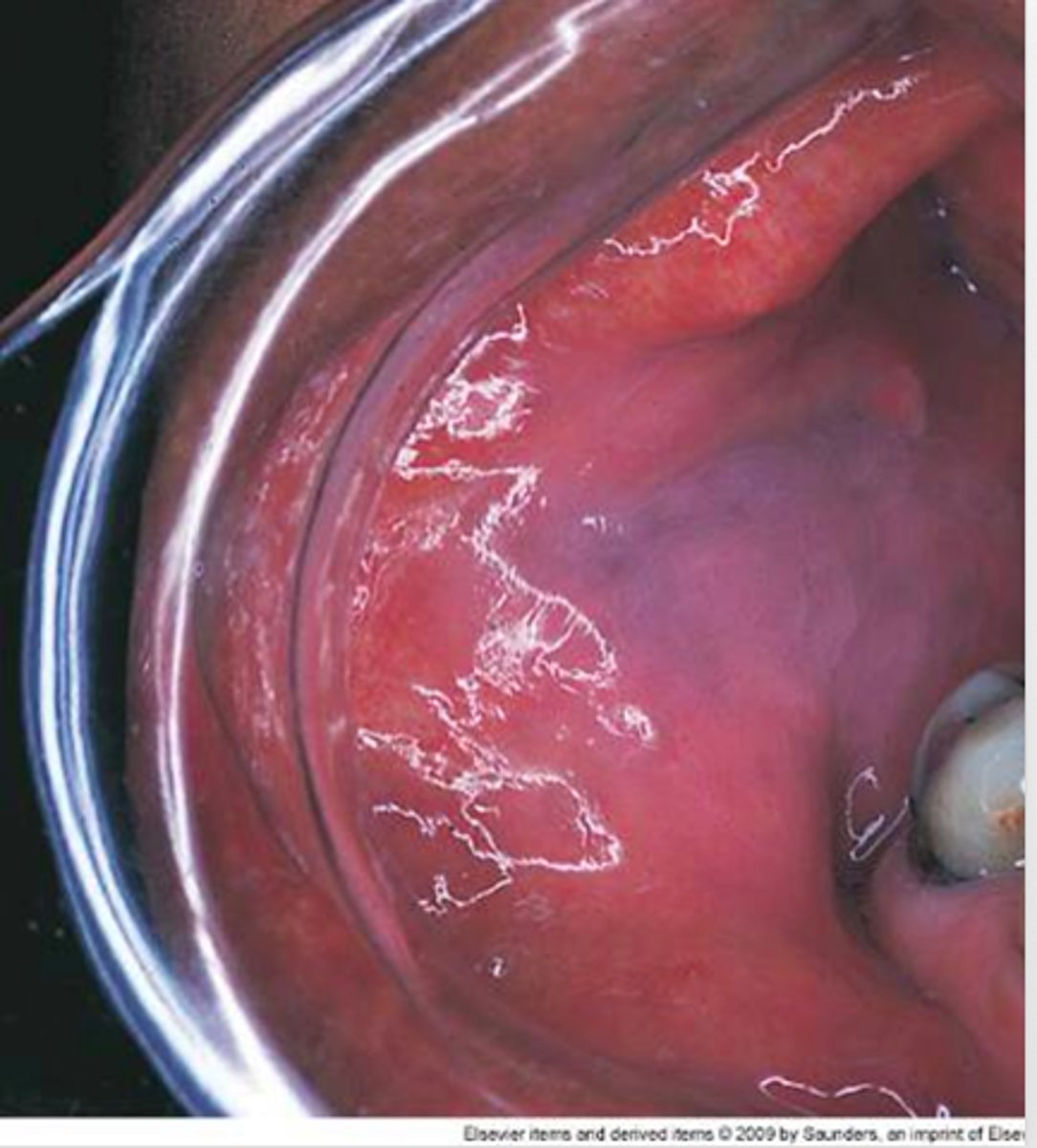
When antifungal therapy is used to treat angular cheilitis, which diagnostic process is being applied?
Microscopic
Laboratory
Surgical
Therapeutic
Therapeutic
Therapeutic diagnosis is used here in the treatment and management of angular cheilitis, which is most commonly a fungal condition. A careful patient history should be obtained to rule out a contributory nutritional deficiency.
Microscopic diagnosis requires a biopsy.
Laboratory diagnosis involves the use of clinical laboratory tests, including blood chemistries and urinalysis.
Surgical diagnosis requires surgical intervention.
A pathologic lesion found frequently in 30-year-old black women that requires a radiographic image and historical data for diagnosis is termed
verrucous vulgaris.
necrotizing ulcerative gingivitis.
periapical cemento-osseous dysplasia.
amalgam tattoo.
periapical cemento-osseous
Periapical cemento-osseous dysplasia requires a radiograph, specific patient history, and a pulp test to evaluate tooth vitality. It is frequently found in black women in the third decade of life.
Verrucous vulgaris is diagnosed on the basis of its clinical and microscopic appearance and does not require a radiograph.
Necrotizing ulcerative gingivitis (NUG) requires clinical and historical data for diagnosis and does not require a radiograph.
An amalgam tattoo relies on clinical and historical data for diagnosis and does not require a radiograph.
A radiolucency that "scallops around the roots of teeth" is often used to describe which condition?
Traumatic bone cyst
Stafne bone cyst
Lingual mandibular bone concavity
Median palatine cyst
Traumatic bone cyst
Scalloping around the roots is a term often used to describe the radiographic appearance of a traumatic bone cyst.
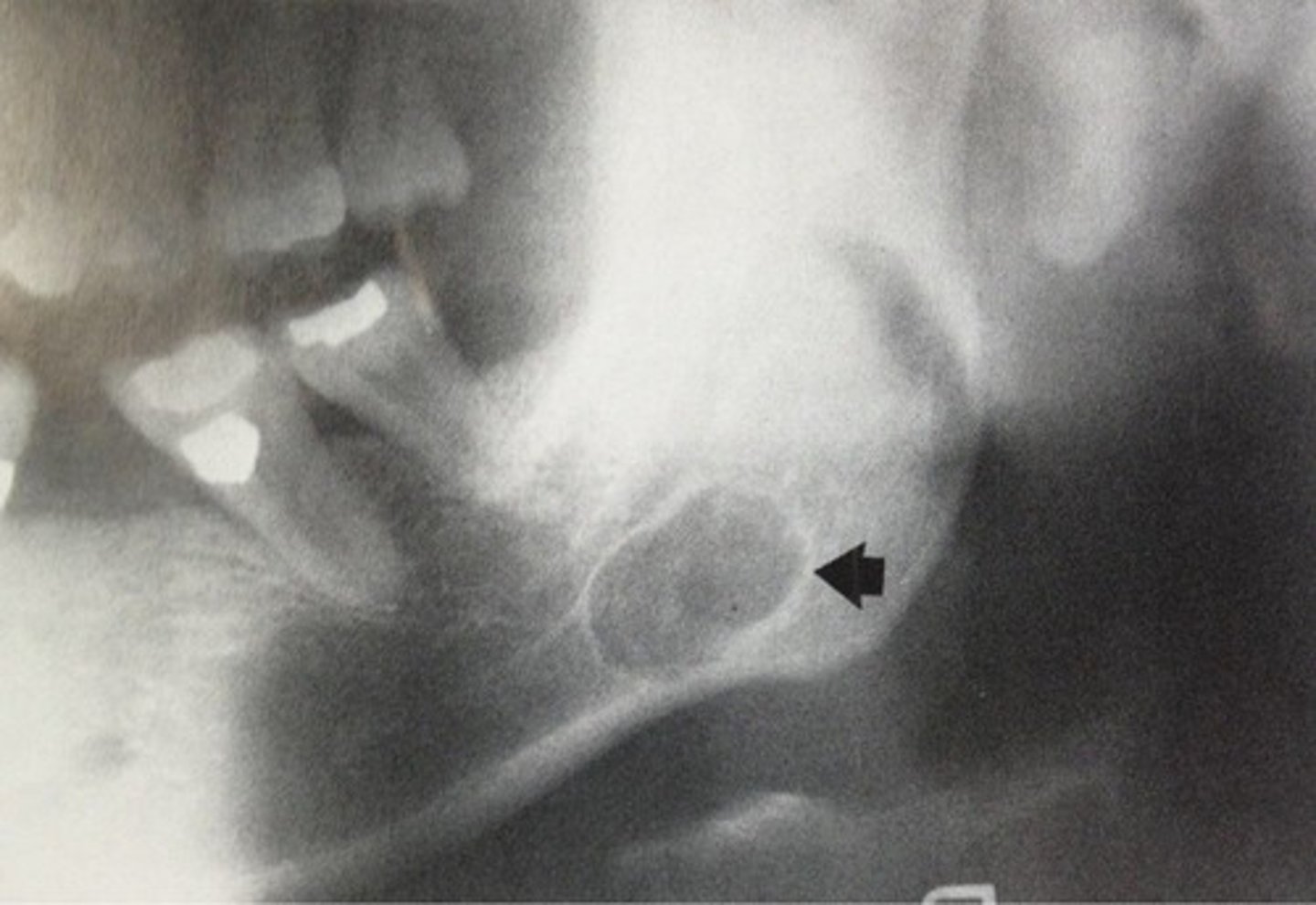
A Stafne bone cyst usually presents as an oval radiolucency anterior to the angle of the ramus and inferior to the mandibular canal.
A lingual mandibular bone concavity is the same lesion as a Stafne bone cyst.
A median palatine cyst is a developmental cyst that presents as a unilocular radiolucency found in the midline of the hard palate.
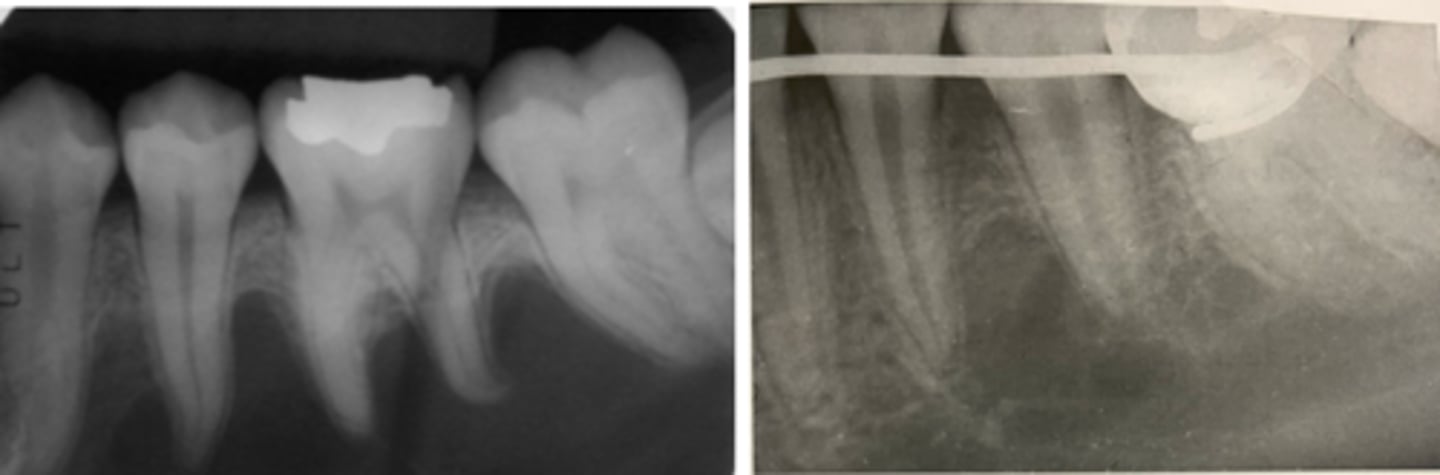
The radiographic appearance of a simple radicular cyst is best described as
coalescence.
diffuse.
multilocular.
unilocular.
unilocular.
Unilocular means having one compartment or unit that is well defined. This term is often used to describe a radicular cyst.
Coalescence refers to the process by which parts of a whole join together, or fuse, to make one.
Diffuse describes a lesion with ill-defined borders, making it impossible to detect the exact parameters of the lesion.
A multilocular lesion has also been described as “soap bubble”–like; the lobes appear to fuse together to make up the lesion.
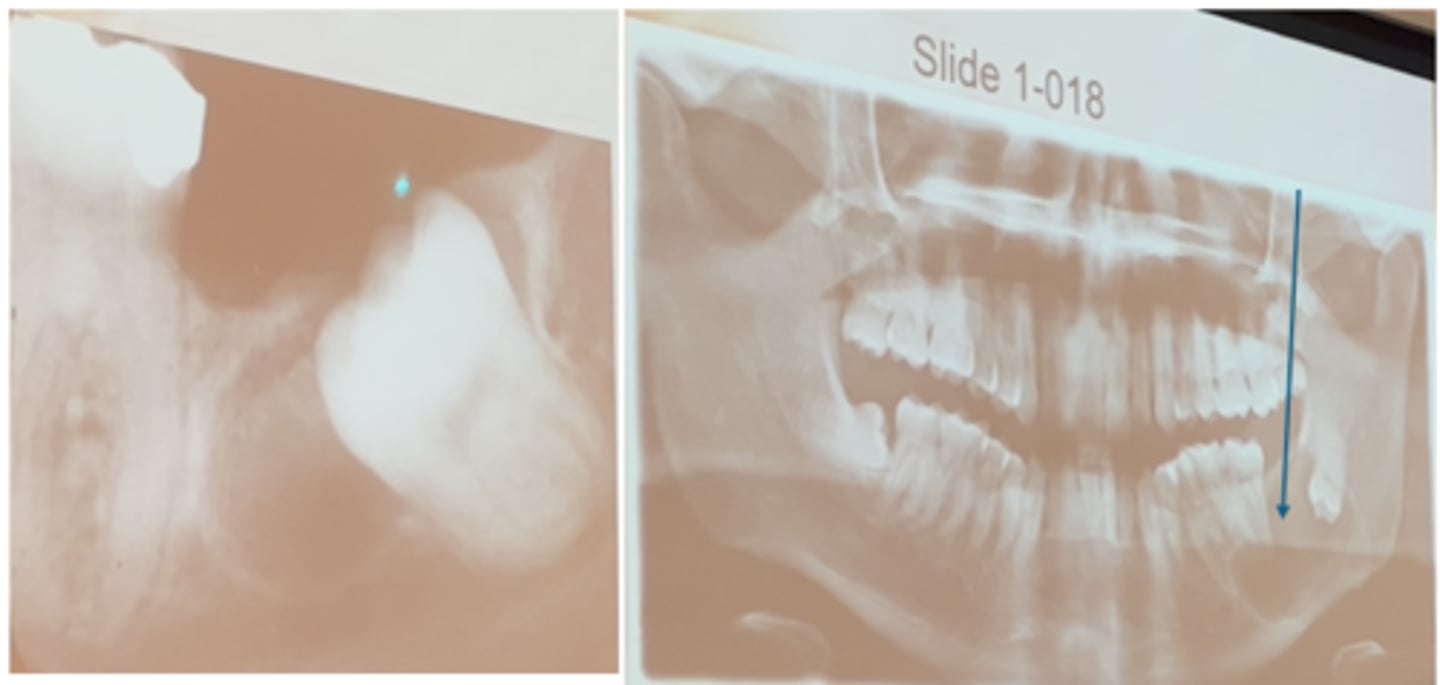
Various sizes of circumscribed elevations that contain pus are termed
vesicles.
pustules.
papules
lobules
pustules
Pustules are variously sized circumscribed elevations containing pus.
Vesicles are elevated lesions that contain serous fluid.
Papules are elevated lesions that protrude above the surface of normal surrounding tissue.
Lobules are segments or lobes that are part of the whole.
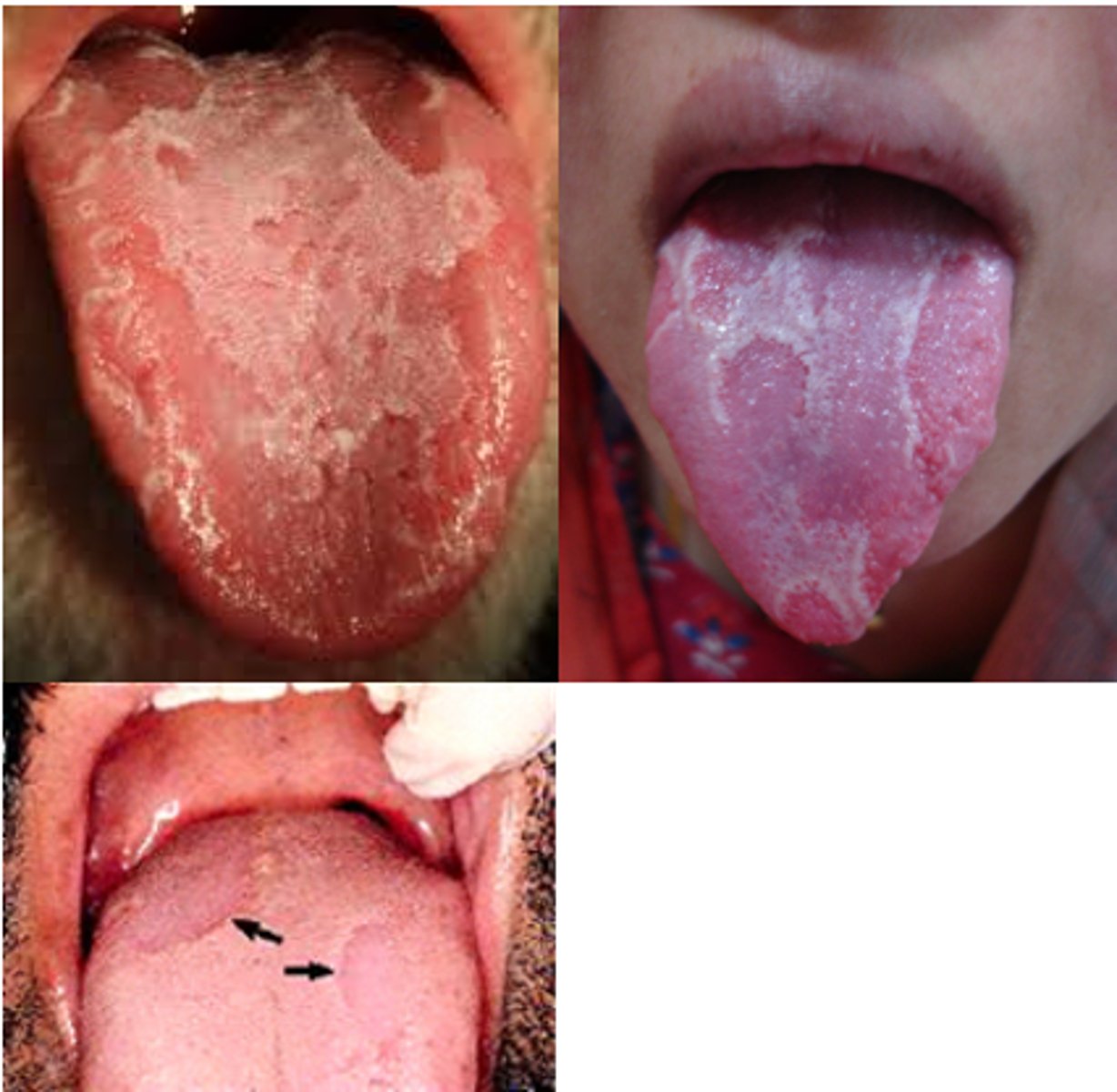
Benign migratory glossitis is a condition that does not remain static. What does this statement mean?
A variety of over-the-counter treatments are available for this condition.
Surgical intervention may be required.
Remission and changes in the surface of the tongue occur.
An intraoral habit is responsible for this condition.
Remission and changes in the surface of the tongue occur.
Benign migratory glossitis (geographic tongue) is a condition that does not stay the same over time; remission and changes in the surface of the tongue occur. A condition that does not remain static does not refer to treatment protocol.
Intraoral habits are NOT related to benign migratory glossitis.
Which term describes a lesion that displays a color different from surrounding tissue?
Bulla
Lobule
Macule
Papule
Macule
Macules are areas distinguished by a different color than the surrounding tissue.
Bullae are circumscribed, elevated lesions that usually contain serous fluid and resemble a blister.
Lobules are segments or lobes that are part of a whole.
Papules are small, circumscribed lesions that protrude above the surface.
Studies have linked the presence of a lingual thyroid in association with the following life events except one. Which is the exception?
Pregnancy
Infancy
Menopause
Puberty
Infancy
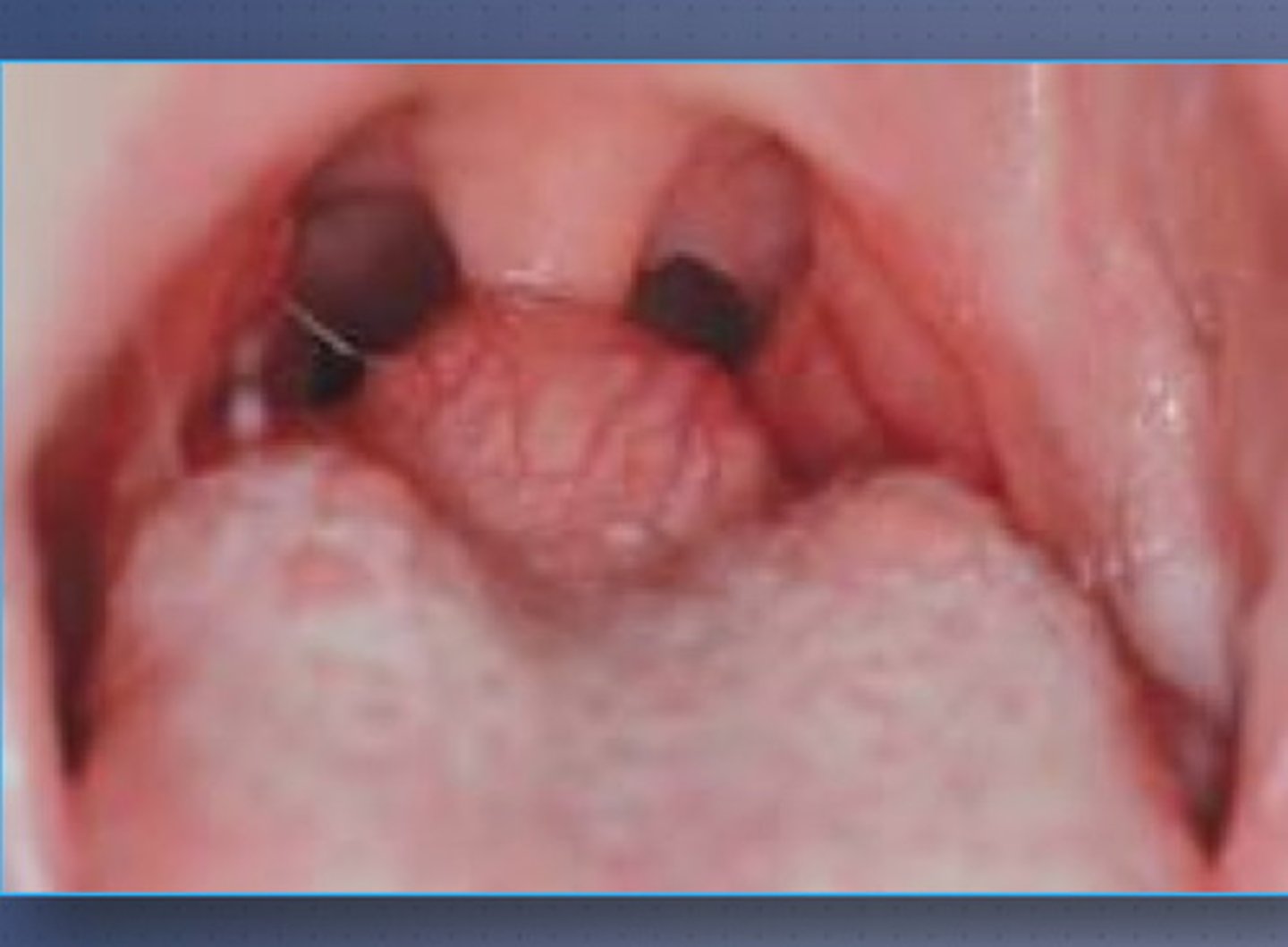
*image: Lingual Thyroid Nodule
Infancy is not associated with the presence of a lingual thyroid.
The emergence of a lingual thyroid is linked to hormonal changes, such as:
- pregnancy.
- menopause.
- puberty.
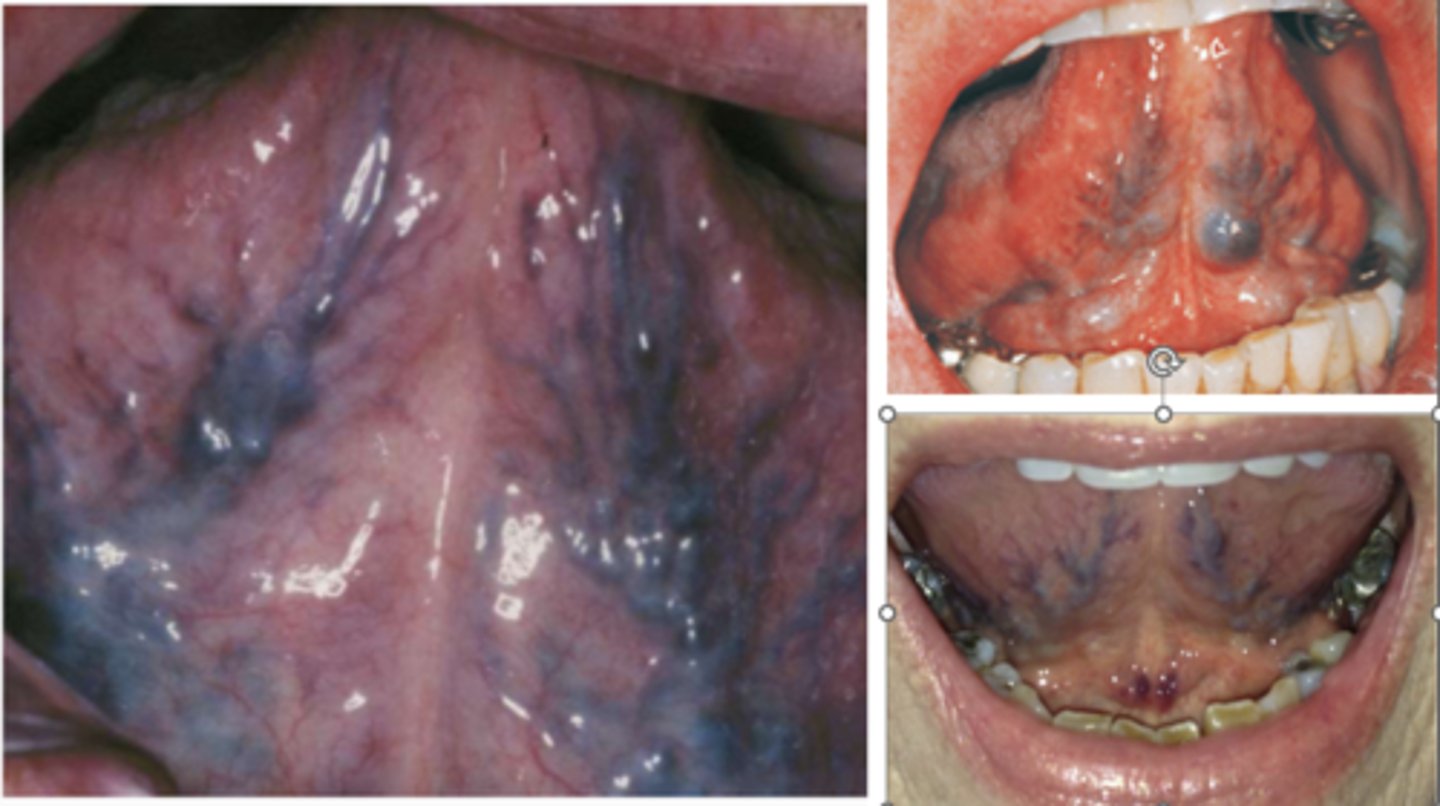
All conditions are associated with lingual varicosities EXCEPT one. Which is the EXCEPTION?
Red to purple enlarged vessels
May be associated with varicosities in the legs
Age-related condition
May swell during eating
May swell during eating
- Lingual varicosities DO NOT swell during the eating process.
- Red to purple enlarged vessels are seen with lingual varicosities.
- Lingual varicosities may be associated with varicosities in the legs.
- Lingual varicosities are considered an age-related condition, often seen in individuals over the age of 60.
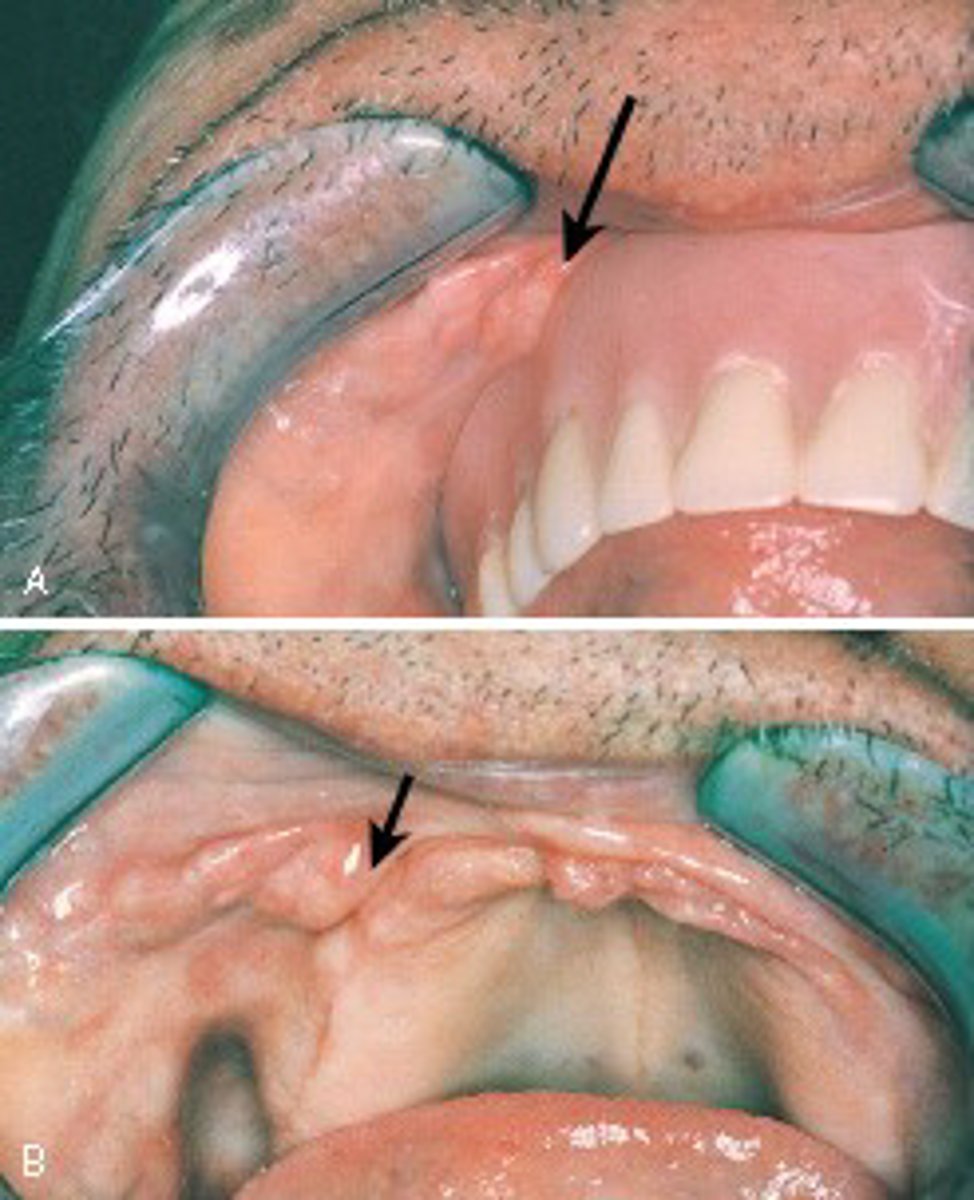
Each condition is considered a variant of normal EXCEPT one. Which is the EXCEPTION?
Melanin pigmentation
Linea alba
Geographic tongue
Retrocuspid papilla
Geographic tongue
Geographic tongue is characterized by diffuse areas devoid of filiform papillae. It is not a variant of normal. Melanin pigmentation is commonly seen in dark-skinned individuals and is considered a variant of normal. Linea alba is located on the buccal mucosa along the occlusal plane. It is most prominent in patients who have a clenching or bruxism habit. It is so common that it is considered a variant of normal. Retrocuspid papilla is a sessile nodule on the gingival margin of the lingual aspect of the mandibular cuspids and is considered a variant of normal.
Which descriptive term is described as a segment that is part of the whole?
Bulla
Vesicle
Lobule
Pustule
Lobule
Resorption of tooth structure from outside the tooth is termed
internal resorption.
external resorption.
idiopathic tooth resorption.
condensing osteitis.
external resorption.
External resorption begins outside the tooth. Internal resorption begins inside the pulpal area. Idiopathic tooth resorption can involve the crown or roots of impacted teeth, and the cause cannot be identified. Condensing osteitis is a change in the bone near the apices of teeth that is thought to be a reaction to a low-grade infection. The mandibular first molar is most commonly involved, and the area is seen radiographically as a radiopacity below the root apex of the involved tooth.
The major cause of a mucocele is
a sialolith.
salivary duct obstruction.
trauma to a minor duct.
allergic reaction.
trauma to a minor duct.
The major cause of a mucocele is trauma to a minor duct. The mucous salivary gland secretion spills into the adjacent connective tissue. A sialolith is a salivary gland stone. Dilated salivary gland ducts are believed to develop as a result of salivary duct obstruction. A mucocele is not caused by an allergic reaction.
Which medication is a steroidal anti-inflammatory drug?
Aspirin
Prednisone
Ibuprofen
Motrin
Prednisone
Prednisone is a steroidal anti-inflammatory drug. Aspirin is a nonsteroidal anti-inflammatory agent. Ibuprofen is a nonsteroidal anti-inflammatory agent. Motrin is ibuprofen, a nonsteroidal anti-inflammatory drug.
The fluid component of blood in which the blood cells are suspended and is composed mainly of water and proteins is termed
plasma.
serous fluid.
transudate.
exudate.
plasma.
Plasma is the fluid component of blood in which blood cells are suspended. Exchange of oxygen and nutrients occurs as plasma passes between the endothelium lining. Serous fluid is a secretion with a watery consistency. Transudate is the fluid component of blood that passes through the endothelial cell walls of the microcirculation. Exudate is the fluid with a high protein content that leaves the microcirculation during an inflammatory response.
Which type of inflammation occurs when the injury is minimal and brief and its source is removed from the tissue?
Acute
Chronic
Local
Systemic
Acute
Acute inflammation occurs when the injury is minimal and brief. Chronic inflammation occurs when the inflammatory response lasts for longer periods, even indefinitely. Local is a term used to describe a specific area of inflammation. Systemic factors such as fever, leukocytosis, and lymphadenopathy occur when the injury is extensive.
The inflammatory response is a dynamic process, continually changing in response to injury and repair. Repair of tissue occurs only if the persistent source of injury is removed.
Both statements are true.
Both statements are false.
The first statement is true; the second is false.
The first statement is false; the second is true.
Both statements are true.
In cases of healing, if an infected injury is left open and the edges are not surgically joined until the infection is controlled; this process is referred to as healing by _________ intention.
primary
secondary
tertiary
tertiary
Healing by tertiary intention occurs when an infected injury is left open and the edges are not surgically joined until the infection is controlled. Healing by primary intention refers to the healing of an injury in which little loss of tissue takes place. Healing by secondary intention involves injury in which tissue is lost; thus the edges of the injury cannot be joined by healing.
Which habit is not a cause of abrasion?
Pipe placement by smokers
Playing wind instruments
Holding needles or pins with the teeth
Frequent sucking of lemons
Frequent sucking of lemons
Erosion, not abrasion, can be caused by the frequent sucking of lemons. Abrasion can be caused by pipe placement by pipe smokers. Abrasion may be caused by playing wind instruments. Abrasion can be caused by needles and pins held between the teeth.
Which cell is the first to arrive at the site of injury and is the primary cell type involved in acute inflammation?
Macrophage
Neutrophil
Plasma cell
Mast cell
Neutrophil
The neutrophil is the first cell to arrive at the site of injury and is the primary cell type involved in acute inflammation. The macrophage is the second cell type to participate in the inflammatory response. The plasma cell is involved in chronic inflammation. The mast cell participates in both the inflammatory and immune responses.
What is the treatment for a patient with linea alba?
Brush the affected area; recommend good oral hygiene
Antibiotic therapy
Gentle irrigation
No treatment required
No treatment required
No treatment is indicated for linea alba. Brushing the area and oral hygiene do not affect linea alba. Antibiotic therapy is not recommended for linea alba. Gentle irrigation is not protocol for linea alba.
If the source of injury has been completely removed, the inflammation and immune responses in the tissues are completed in which time frame?
One day after removal of injury
Two days after removal of injury
Seven days after removal of injury
Two weeks after removal of injury
Seven days after removal of injury
If the source of injury has been completely removed, the inflammation and immune responses in the tissues are completed in approximately 7 days. The day after injury removal, acute inflammation takes place in the area of future repair. Two days after removal of injury, fibroplasia, angiogenesis, the formation of granulation tissue, and epithelialization occur. Two weeks after removal of injury, matured fibrous connective tissue or scar tissue occurs.
During the acute inflammatory process, the second type of white blood cell to emigrate from the blood vessel into the injured tissue is termed
macrophage.
neutrophil.
plasma cell.
lymphocyte.
macrophage.
The macrophage is the second cell to participate in the inflammatory response. The neutrophil is the first cell to arrive at the site of injury and is the primary cell involved in acute inflammation. The plasma cell is involved in chronic inflammation. The lymphocyte is involved in chronic inflammation.
These elongated folds of tissue are a result of irritation from an ill-fitting denture. The accurate diagnosis for this lesion is
palatal papillomatosis.
gingival hyperplasia.
chronic hyperplastic pulpitis.
epulis fissuratum.
epulis fissuratum.
Epulis fissuratum (denture-induced fibrous hyperplasia) consists of elongated folds of tissue as a result of irritation from an ill-fitting denture. Palatal papillomatosis is seen on the palate. Gingival hyperplasia is an enlargement of the gingiva. Chronic hyperplastic pulpitis is an excessive proliferation of chronically inflamed dental pulp tissue.
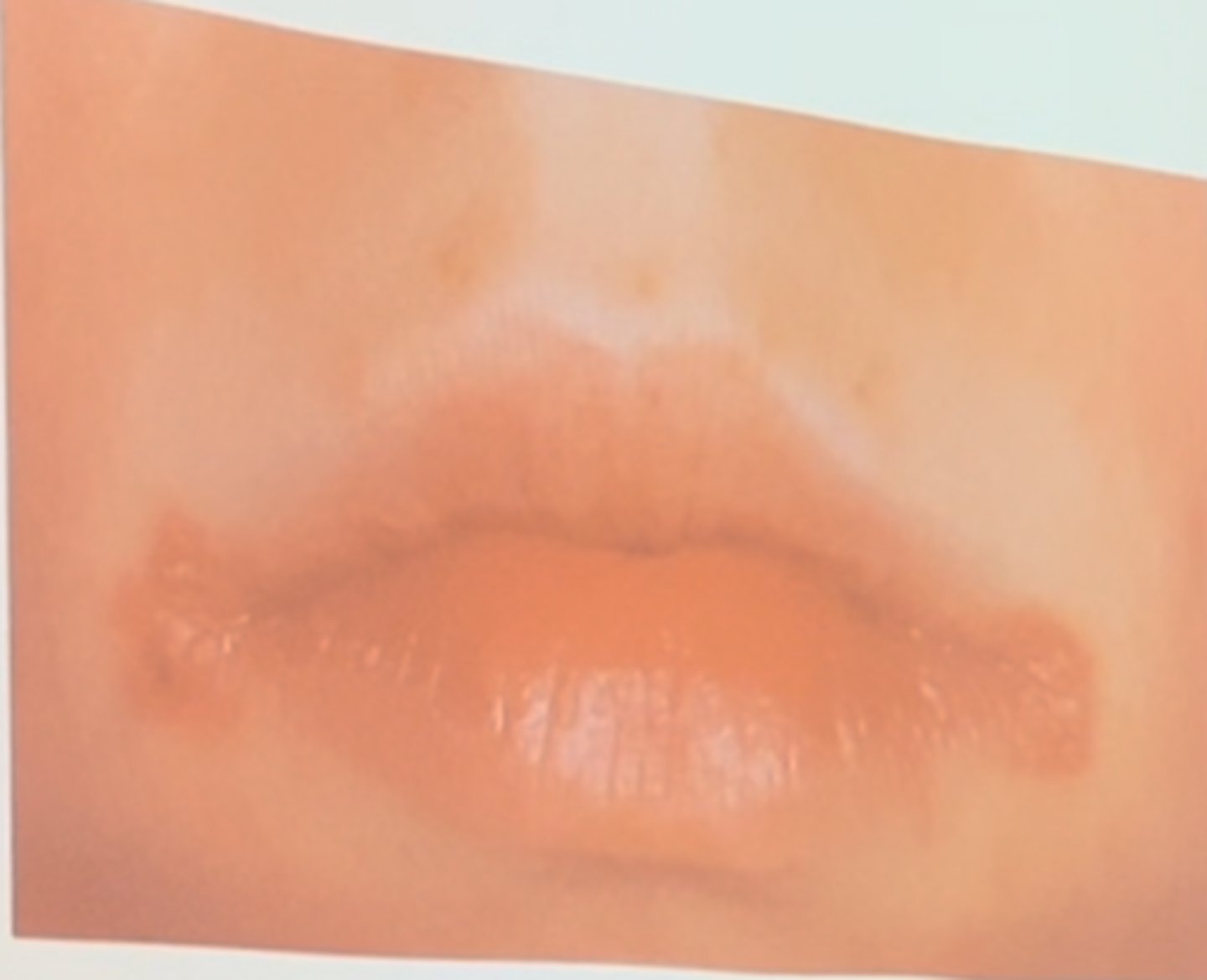
Which condition most likely responds to therapeutic diagnosis?
Angular cheilitis
Amelogenesis imperfecta
Paget disease
Stafne bone cyst
Angular cheilitis
Angular cheilitis most commonly responds to antifungal therapy once nutritional deficiencies have been ruled out. Amelogenesis imperfecta is a genetic condition associated with abnormal development of the enamel. Paget disease is a chronic metabolic bone disease. A highly elevated serum alkaline phosphatase level contributes significantly to the diagnosis. A Stafne bone cyst is determined through surgical diagnosis in which entrapped salivary gland tissue is identified.
The following conditions most likely respond to therapeutic diagnosis except one. Which one is the exception?
Angular cheilitis
Necrotizing ulcerative gingivitis
Nutritional deficiencies
Stafne bone cyst
Stafne bone cyst
what gland presses on this answer? sublingual gland is answer on midterm but it is wrong; it is actually the submandibular gland
Stafne bone cyst, in which entrapped salivary gland tissue is identified, is diagnosed through surgical examination. Angular cheilitis commonly responds to antifungal therapy once nutritional deficiencies have been ruled out. Necrotizing ulcerative gingivitis responds to hydrogen peroxide rinses. Nutritional deficiencies are common conditions diagnosed by therapeutic means.
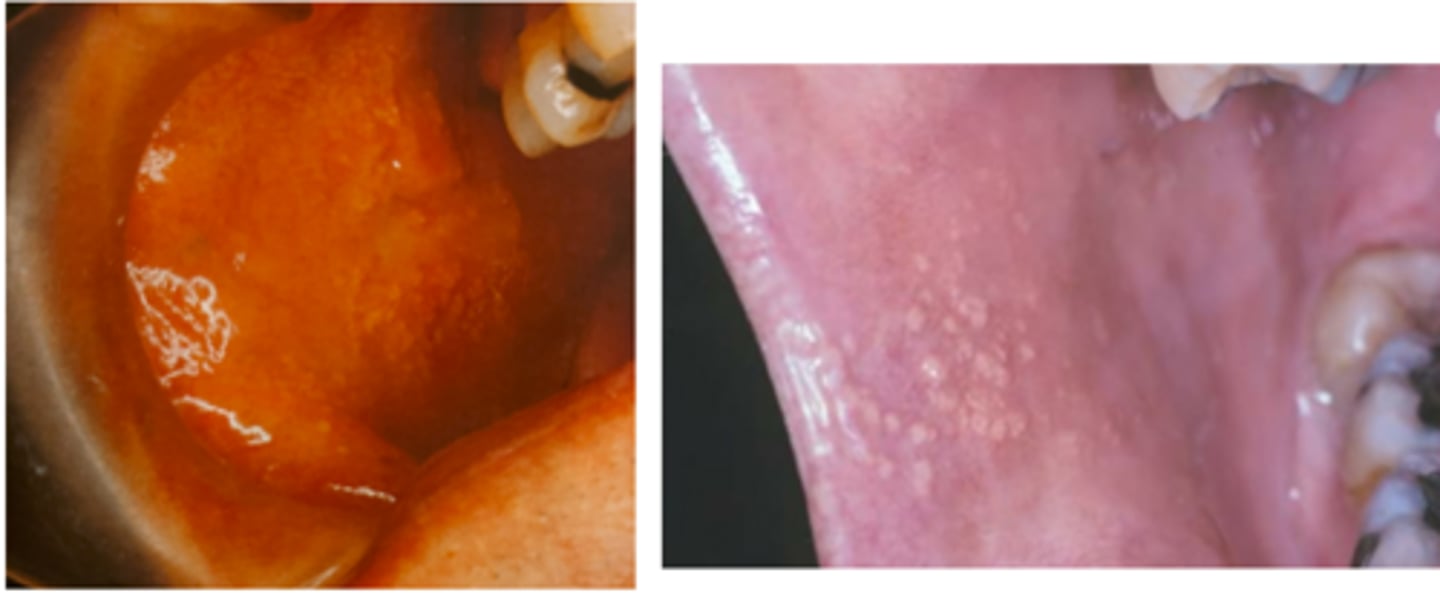
The following lesions can be identified radiographically EXCEPT one. Which one is the EXCEPTION?
Root resorption
Fordyce granules
Interproximal dental caries
Compound odontoma
Fordyce granules
Fordyce granules are yellow clusters of ectopic sebaceous glands that are diagnosed through clinical appearance. Root resorption is identified radiographically when the apex of the tooth appears shortened or blunted. Interproximal dental caries are seen as radiographic radiolucencies. A compound odontoma is initially identified radiographically as a radiopaque area in which tooth structure can be identified.
Which term describes a lesion in which parts of a whole are joined together, or fused, to make one?
Fissured
Coalescence
Diffuse
Multilocular
Coalescence
Coalescence describes the process by which parts of a whole join together, or fuse, to make one. Fissured describes a cleft or groove, normal or otherwise, showing prominent depth. Diffuse describes a lesion with borders that are not well defined. Multilocular lesions are described radiographically as “soap bubbles” (i.e., a lesion with many lobes beyond the confines of one distinct area).
Another name for geographic tongue is
median rhomboid glossitis.
benign migratory glossitis.
fissured tongue.
black hairy tongue.
benign migratory glossitis.
Benign migratory glossitis is another name for geographic tongue. Research suggests that median rhomboid glossitis is associated with a chronic fungal infection from Candida albicans. Sometimes the condition resolves with antifungal therapy. Fissured tongue is seen in 5% of the population. It is a variant of normal. Genetic factors are typically associated with the condition. Black hairy tongue is caused by a reaction to chemicals, tobacco, hydrogen peroxide, or antacids. The filiform papillae on the dorsal tongue become elongated and are dark brown to black.
A "white" hairy tongue indicates an increase in the amount of
keratin.
medications.
fluoride use.
HPV circulating in the blood.
keratin.
The increased amount of keratin on the filiform papillae gives the tongue a white appearance. Medications may affect the surface of the tongue but generally do not produce a white color. Fluoride use does not cause a "white" hairy tongue. The presence of the HPV does not cause a "white" hairy tongue.
Where is the common intraoral location for leukoedema?
Lateral borders of the tongue
Soft palate and uvula
Floor of the mouth
Buccal mucosa
Buccal mucosa
A generalized opalescence is imparted to the buccal mucosa in leukoedema. Leukoedema is not evident on the lateral borders of the tongue. The soft palate and uvula is not a location to find leukoedema. The floor of the mouth is not a location to see leukoedema.
The decrease in size and function of a cell, tissue, organ or body describes
atrophy.
hypertrophy.
hyperemia.
regeneration.
atrophy.
Atrophy is defined as the decrease in size and function of a cell, tissue, organ, or whole body. Hypertrophy is the enlargement of a tissue resulting from an increase in the size of its individual cells. Hyperemia is an excess of blood within blood vessels in a part of the body. Regeneration is the process whereby injured tissue is replaced with tissue identical to that present before the injury.
The fluid with a high protein content that leaves the microcirculation during the inflammatory process is termed
transudate.
margination.
exudate.
pavementing.
exudate.
Exudate is the fluid with a high protein content that leaves the microcirculation during an inflammatory response. Transudate is the fluid component of blood that passes through the endothelial cell walls of the microcirculation. Margination is the movement of the white blood cells to the periphery of the blood vessel. Pavementing is the adherence of white blood cells to blood vessel walls during inflammation.
A process during inflammation in which white blood cells move to the blood vessel wall is termed
chemotaxis.
margination.
leukocytosis.
transudate.
margination.
Margination is defined as a process during inflammation in which white blood cells move to the blood vessel wall. Chemotaxis is the directed movement of white blood cells to the area of injury by biochemical mediators. Leukocytosis is a temporary increase in the number of white blood cells circulating in blood. Transudate is the fluid component of blood that normally passes through the endothelial walls of the microvasculature.
Traumatic neuroma is a lesion caused by injury to which structure?
The epithelium
A peripheral nerve
A salivary gland
Striated muscle
A peripheral nerve
The traumatic neuroma is a lesion caused by injury to a peripheral nerve. The mental foramen is the most common location. The traumatic neuroma does not result from epithelial injury. The traumatic neuroma does not result from injury to a salivary gland. The traumatic neuroma does not result from injury to striated muscle.
Which system mediates inflammation by causing increased dilation of the blood vessels at the site of injury and increases the permeability of local blood vessels?
Kinin system
Clotting system
Complement system
Lysosomal enzymes
Kinin system
The kinin system mediates inflammation by causing increased dilation of the blood vessels at the site of injury and increases the permeability of local blood vessels. The clotting mechanism functions primarily in the clotting of blood. The complement system involves the production of a sequential cascade of plasma proteins that function in inflammation and immunity. Lysosomal enzymes are released from granules in the white blood cells; they act as chemotactic factors and can cause damage to connective tissues and the clot that has formed at the site of injury.
The most common site for the development of a pulp polyp is
the occlusal surface of a large open carious tooth.
the apex of the tooth.
the gingival margin of the tooth.
deep in the pulp canal.
the occlusal surface of a large open carious tooth.
The most common site for the pulp polyp is in the occlusal surface of large open carious teeth. It is seen as a red or pink nodule that fills the occlusal surface. It is an excessive proliferation of chronically inflamed dental pulp tissue. Pulp polyps are not seen at the apex of teeth. Pulp polyps are not seen on the gingival margin of teeth. Pulp polyps are not seen deep in the pulp canal.
Innate or natural defenses used to protect the body include the following EXCEPT one. Which is the EXCEPTION?
Intact skin
Components of saliva
Drainage of an abscess
Stomach acid
Drainage of an abscess
Stomach acid
Drainage of an intraoral abscess is not an innate or natural defense. Intact skin is an inborn defense that acts as a physical barrier. Components of saliva have antimicrobial activity. Stomach acid kills most of the microorganisms that are taken into the body.
The enlargement of lymph nodes is termed
atrophy.
lymphadenopathy.
hyperplasia.
leukocytosis.
lymphadenopathy.
Lymphadenopathy occurs when lymph nodes become enlarged and palpable. Atrophy is a decrease in size and function of a cell, a tissue, an organ, or the whole body. Hyperplasia is an enlargement of a tissue or an organ resulting from an increase in the number of normal cells. Leukocytosis is a temporary increase in the number of white blood cells.
Each statement regarding the atrophy of tissue cells is true EXCEPT one. Which is the EXCEPTION?
Atrophied cells are capable of returning to their normal size after stress is removed.
Atrophy can occur with changes in cellular growth, malnutrition, ischemia, or hormonal changes.
Atrophy can be present in the muscular wasting that occurs in some chronic diseases that do not allow for mobility.
Atrophy occurs in the smooth muscles of the uterus and the mammary glands in response to pregnancy.
Atrophy occurs in the smooth muscles of the uterus and the mammary glands in response to pregnancy.
Hypertrophy occurs in the smooth muscles of the uterus and the mammary glands in response to pregnancy. All other statements are true.
The wearing away of tooth structure during mastication is termed
attrition.
erosion.
abrasion.
abfraction.
attrition.
Attrition is defined as the wearing away of tooth structure during mastication. Erosion is the loss of tooth structure from chemical action. Abrasion is a pathologic wearing of tooth structure resulting from a repetitive mechanical habit. Abfraction is the result of biomechanical forces on the teeth.
When formation of exudate is excessive, a drainage tract may develop through the injured tissue. This channel is often termed
a fistula.
leukocytosis.
erythema.
emigration.
a fistula.
A fistula is the channel through which excessive exudate passes to drain to the outside. Leukocytosis is a temporary increase in white blood cells. Erythema is redness of the skin or mucosa. Emigration occurs when white blood cells pass through the endothelium and wall of the microcirculation into the injured tissue.
Radiographic features, including cotton-wool radiopacities and hypercementosis, are especially helpful in the diagnosis of
Paget disease.
dentinogenesis imperfecta.
anemia.
diabetes.
Paget disease.
Paget disease is a chronic metabolic bone disease. Radiographically, cotton-wool radiopacities and hypercementosis are characteristic features. Dentinogenesis imperfecta is a genetic condition involving a defect in the development of dentin. Anemia, a decrease in red blood cells, requires blood tests to determine the etiologic factors. Diabetes is a chronic disorder of carbohydrate metabolism characterized by abnormally high blood glucose levels.
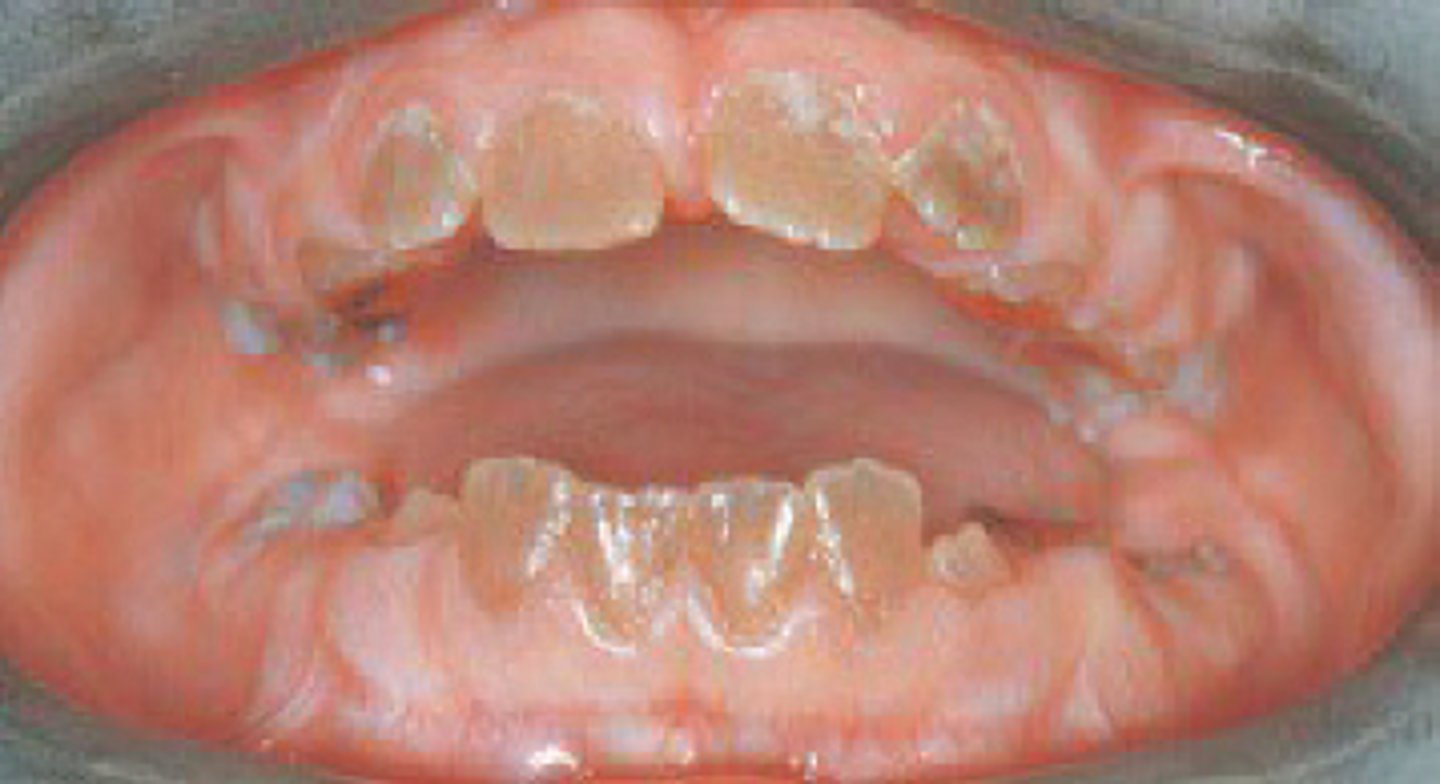
While obtaining diagnostic information from a patient, the dental hygienist learns that the appearance of this patient's teeth is familial. The correct diagnosis is
tetracycline staining.
pulpal dysplasia.
extrinsic staining.
dentinogenesis imperfecta.
dentinogenesis imperfecta.
Dentinogenesis imperfecta is a pathologic condition in which the family history plays a significant role in the diagnosis. Tetracycline staining is not a familial condition. Pulpal dysplasia is not a pathologic familial condition. Extrinsic staining is not a familial condition.
Each condition is considered benign and of unknown cause EXCEPT one. Which one is the EXCEPTION?
Hairy tongue
Amelogenesis imperfecta
Migratory glossitis
Fissured tongue
Amelogenesis imperfecta
Amelogenesis imperfecta represents a group of inherited conditions affecting the enamel of teeth. Hairy tongue is a benign condition of unknown cause. Migratory glossitis is a benign condition of unknown cause. Fissured tongue is a benign condition of unknown cause.
A lesion with a sessile base is described as
an ulcer.
stemlike.
pedunculated.
flat and broad.
flat and broad.
Sessile describes the base of a lesion that is flat and broad. An ulcer is a break in the surface epithelium. A stemlike lesion is referred to as pedunculated. A pedunculated lesion is stemlike or stalk-based (similar to a mushroom).
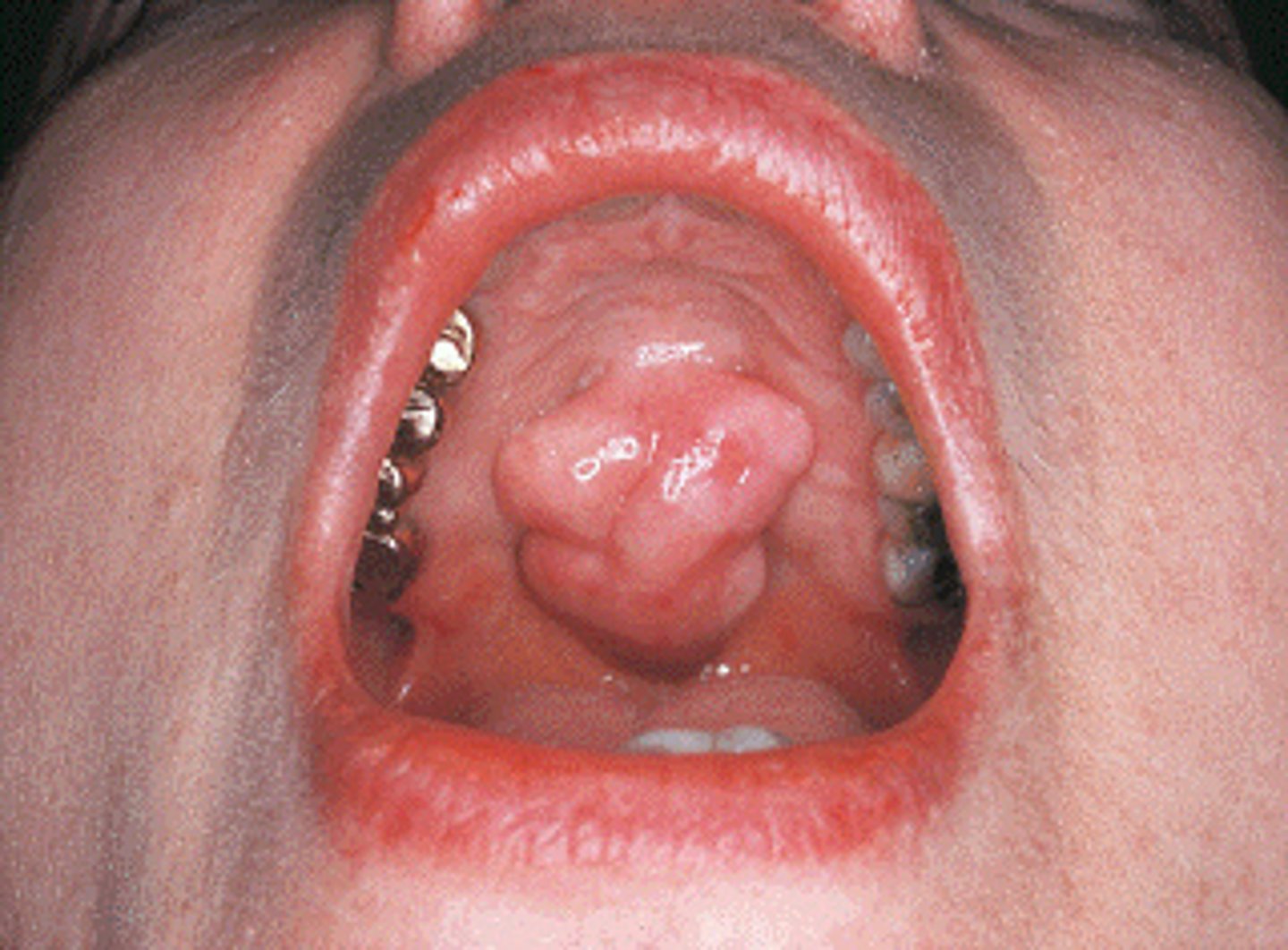
This torus palatinus is correctly described as
bullous.
papular.
lobulated.
nodular.
lobulated.
This torus palatinus is lobulated (i.e., lobes that are fused together).
Bullous lesions contain serous fluid and resemble blisters.
A papule is a soft tissue lesion that is elevated above the surface of normal surrounding tissue.
A nodule is a palpable solid lesion found in soft tissue.
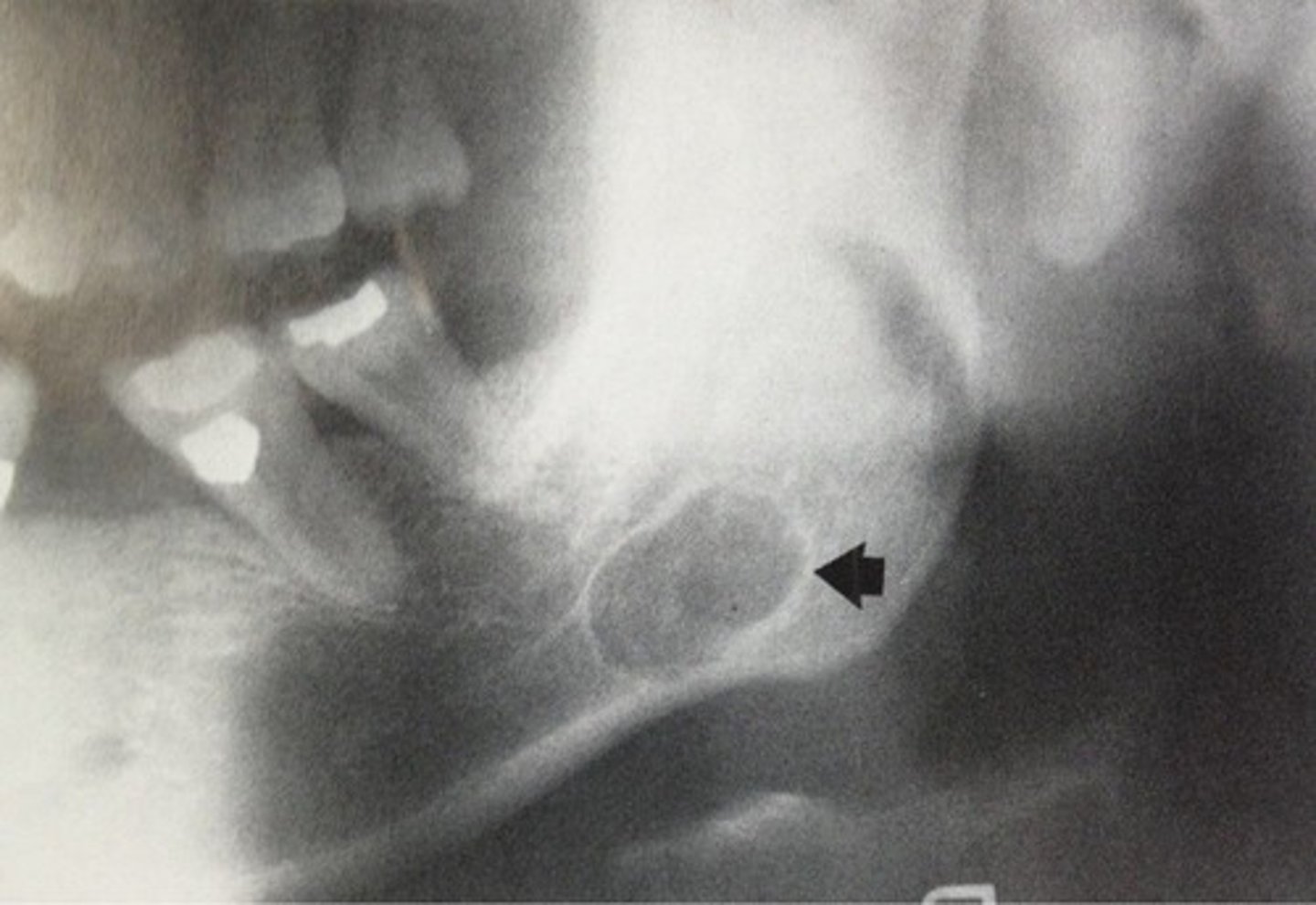
A Stafne bone cyst contains
salivary gland tissue.
an empty void.
inflammatory cells.
an epithelium-lined cyst containing serous fluid.
salivary gland tissue.
Stafne bone cyst is a developmental invagination in the lingual aspect of the mandible that is filled with salivary gland tissue.
An empty void describes the contents of a traumatic bone cyst.
A Stafne bone cyst has no inflammatory response. It is developmental and requires no treatment.
A Stafne bone cyst is not a true cyst and does not have an epithelial lining. It contains normal salivary gland tissue.
Which condition is NOT considered a variant of normal?
Fordyce granules
Leukoedema
Linea alba
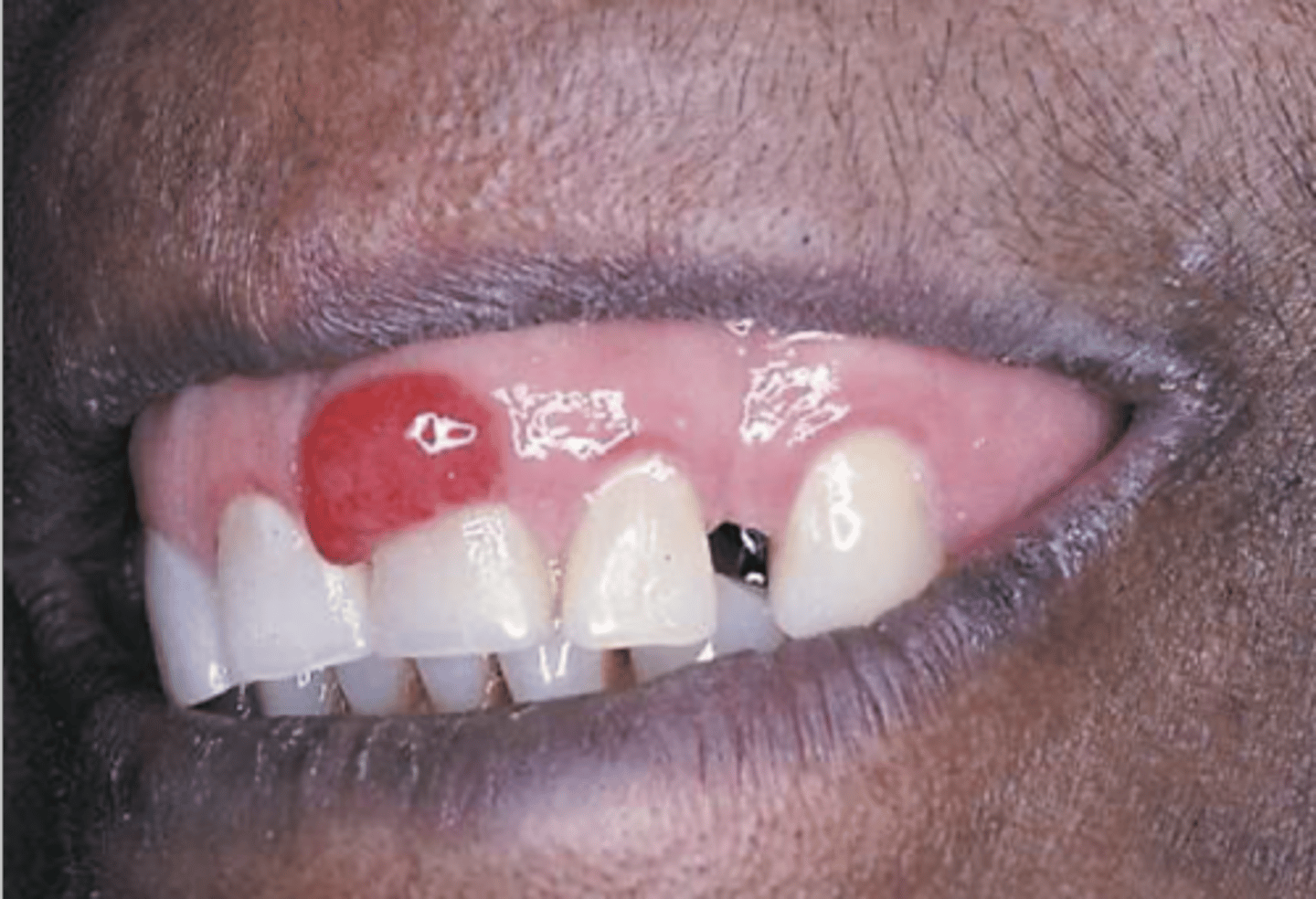
Pyogenic granuloma
Pyogenic granuloma
Pyogenic granuloma is a reactive inflammatory response to injury. It is not a variant of normal.
Fordyce granules are seen in more than 80% of adults over 20 years of age and are considered a variant of normal.
Leukoedema is observed in about 85% of black individuals and is considered a variant of normal.
Linea alba is located on the buccal mucosa along the occlusal plane of the teeth. It is most prominent in patients who have a clenching or bruxism habit. It is so common that it is considered a variant of normal.
Trying to establish the correct number of primary and permanent teeth present in a 7-year-old child may best be accomplished by which diagnostic component?
Clinical
Historical
Radiographic
Differential
Radiographic
A radiographic examination including intraoral and extraoral images would provide sufficient information to establish the correct number of teeth present.
The clinical diagnosis would be adequate to view only the erupted teeth, not the unerupted permanent teeth.
Some historical data might be helpful in this case but would not be considered the best diagnostic component.
Enough information should be present in the clinical and radiographic examinations that a differential diagnosis is not necessary.
Which does NOT cause gingival enlargement?
Hormonal changes
Calcium channel blockers
Hereditary factors
Nitroglycerin
Nitroglycerin
Nitroglycerin is prescribed for angina and does not cause gingival enlargement.
Hormonal changes do contribute to gingival enlargement.
Calcium channel blockers do cause gingival enlargement.
Certain hereditary factors do cause gingival enlargement.
An increase in blood viscosity reveals
blood moving quickly through the vessels.
decreased amounts of red blood cells.
increase in plasma fluid.
thicker blood unable to flow as normal.
thicker blood unable to flow as normal.
Viscosity is increased when the blood is thicker and cannot flow as easily.
Viscosity refers to the thickness of the blood; an increase in viscosity does not move blood quicker through the vessels.
Viscosity is not related to a decrease in red blood cells.
Viscosity is not related to an increase in plasma fluid.
Each habit is most likely to result in frictional keratosis EXCEPT one. Which is the EXCEPTION?
Chronic cheek biting
Chewing on an edentulous ridge
Cigarette smoking
Tongue chewing
Cigarette smoking
Frictional keratosis is NOT associated with cigarette smoking.
Chronic cheek biting can result in frictional keratosis. Frictional keratosis results from chronic chewing on an edentulous ridge. Tongue chewing can result in frictional keratosis.
Healing of an injury with little tissue loss, such as a surgical incision, is referred to as healing by which type of intention?
Tertiary
Keloid
Secondary
Primary
Primary
Healing by primary intention occurs when there is very little loss of tissue. The clean edges of the surgical incision are joined with sutures, and very little granulation tissue forms.
Healing by tertiary intention occurs when an infection develops at the site of a surgical incision that is healing by primary intention.
Healing by secondary intention may ensue.
Keloid formation is excessive scar tissue development that can occur in healing by secondary intention when there is a significant loss of tissue.
Healing by secondary intention occurs when the injury involves significant loss of tissue and the edges of the injury cannot be joined during healing. A large clot forms, resulting in an increase in granulation tissue.
An example of an irreversible cellular response that occurs during tissue injury is termed
atrophy.
hypertrophy.
hyperplasia.
necrosis.
necrosis.
Necrosis is the pathologic death of one or more cells or a portion of the tissue or an organ that results from irreversible damage to cells.
Atrophy, hypertrophy, and hyperplasia are examples of reversible cellular responses.
Which symptom is NOT a classic local sign of inflammation?
Redness
Swelling
Leukocytosis
Loss of normal tissue function
Leukocytosis
Leukocytosis is an increase in the number of white blood cells and is a sign of systemic inflammation.
Redness is a local clinical change at the site of injury and is one of the classic local signs of inflammation.
Swelling is a local clinical change observed at the site of injury and is one of the classic local signs of inflammation.
Loss of normal tissue function at the site of injury is a classic local sign of inflammation.