AP Art History Unit 8: Later Europe and Americas
 Call Kai
 Learn
Learn Practice Test
 Spaced Repetition
 Match
Match Flashcards
 Knowt Play
1/36

There's no tags or description
Looks like no tags are added yet.
Name | Mastery | Learn | Test | Matching | Spaced | Call with Kai |
|---|
No analytics yet
Send a link to your students to track their progress
37 Terms
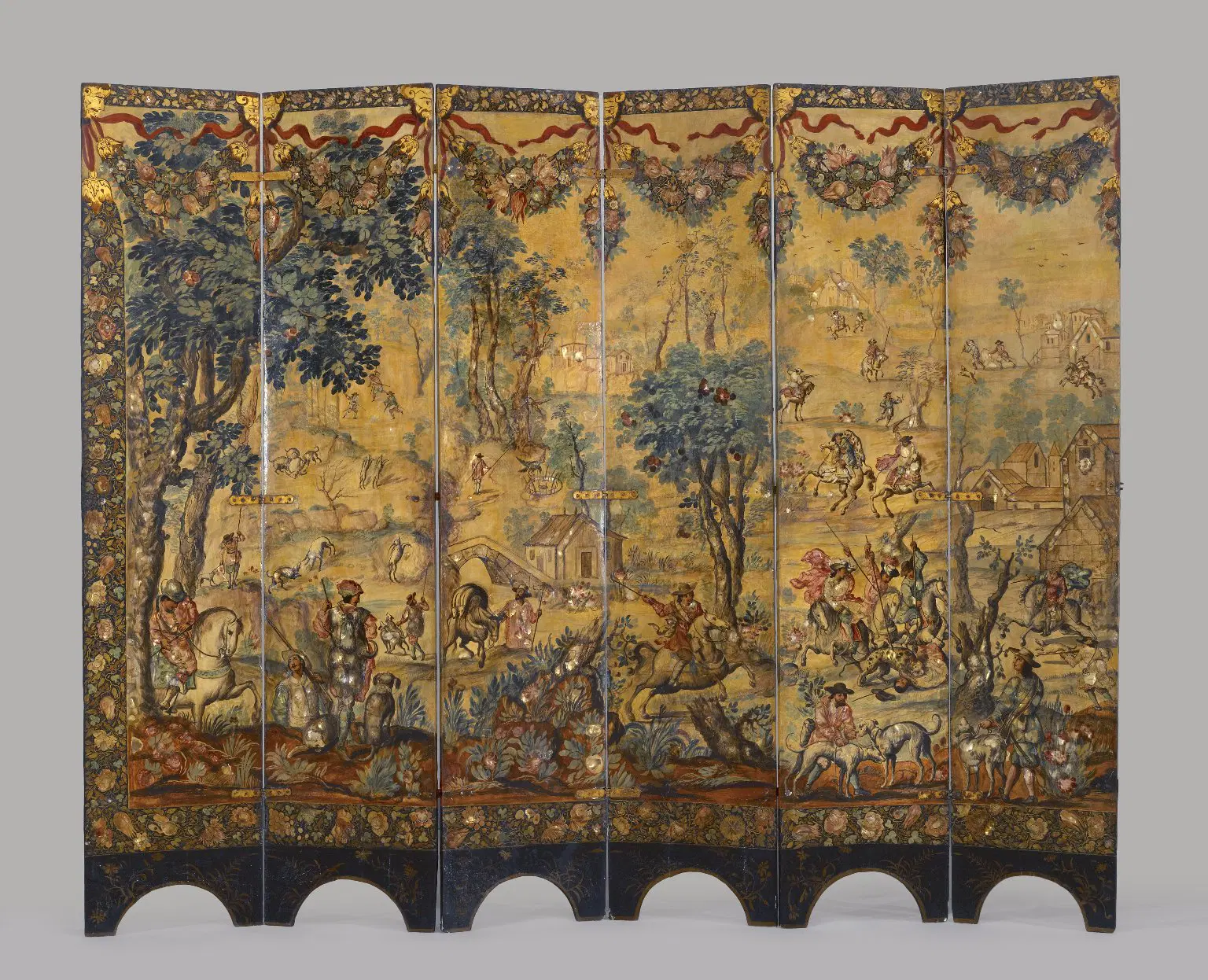
Screen with the Siege of Belgrade and Hunting Scene
1697–1701 CE
Circle of the González Family
Tempera & resin on wood, shell inlay (enconchado)
Folding screen that requires the viewer to walk around it
Combines global influences: One side depicts European battle scene (Siege of Belgrade) + the other local Mexican hunting imagery.
Siege of Belgrade: highly detailed, crowded composition, organized chaos → armies, smoke, architecture; it positions the viewer as powerful and informed, aligns the owner with European military triumph, and reinforces Catholic/Spanish dominance over enemies (Ottomans)
Hunting scene: more open, natural composition, figures spread out across landscape, emphasis on movement (dogs, riders, prey); shows elite leisure activity, implies control over nature and land, and connects owner to New World wealth/resources
Example of enconchado technique (mother-of-pearl inlay → shimmering effect).
Reflects Spanish colonial elite taste in New Spain (Mexico).
Shows cross-cultural exchange via trade (Asia → Manila Galleons → Mexico).
Function: a status object that visually communicates loyalty to the Spanish Empire, participation in a global trade network, and elite identity in colonial Mexico (New Spain)
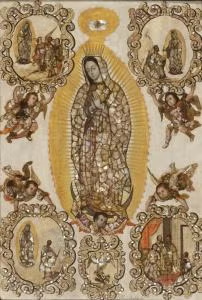
The Virgin of Guadalupe
1698 CE
Miguel González
Oil + mother-of-pearl inlay
Enconchado technique elevates sacred presence (divine shimmer)
Central, frontal Virgin → symmetrical, stable, surrounded by radiant mandorla (almond-shaped glow), floating above crescent moon, supported by angel
Asserts divine authority in New Spain + Creates a unifying religious + cultural identity
Dark skin tone → connects to Indigenous viewers
Stars + sunburst → cosmic/divine power
Moon under feet → triumph over older beliefs
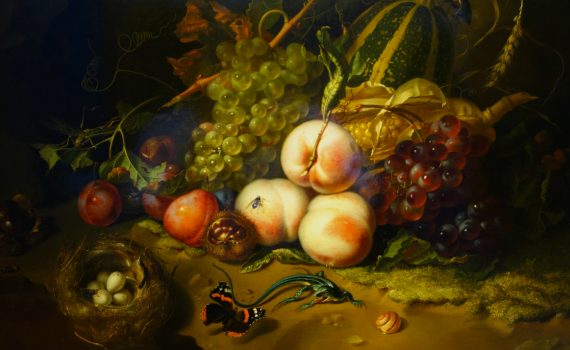
Fruits and Insects
1711 CE
Rachel Ruysch
Oil on wood
Diagonal arrangement → dynamic, not static
Dark background (tenebrism) → dramatic contrast
Hyper-detailed foreground
Vanitas: Insects/decay → inevitability of death; Blooming fruit → life at peak
Still life was popularized in Northern Baroque period
Model usage indicate understanding of color theory and shape, which were used to create imaginary (visual) balance
Beginning of scientific revolution
The artist’s father was a professor of anatomy and botany as well as an amateur painter.
Parallels Dutch interest in botany, and the growing of flowers for decorative and medicinal purposes.
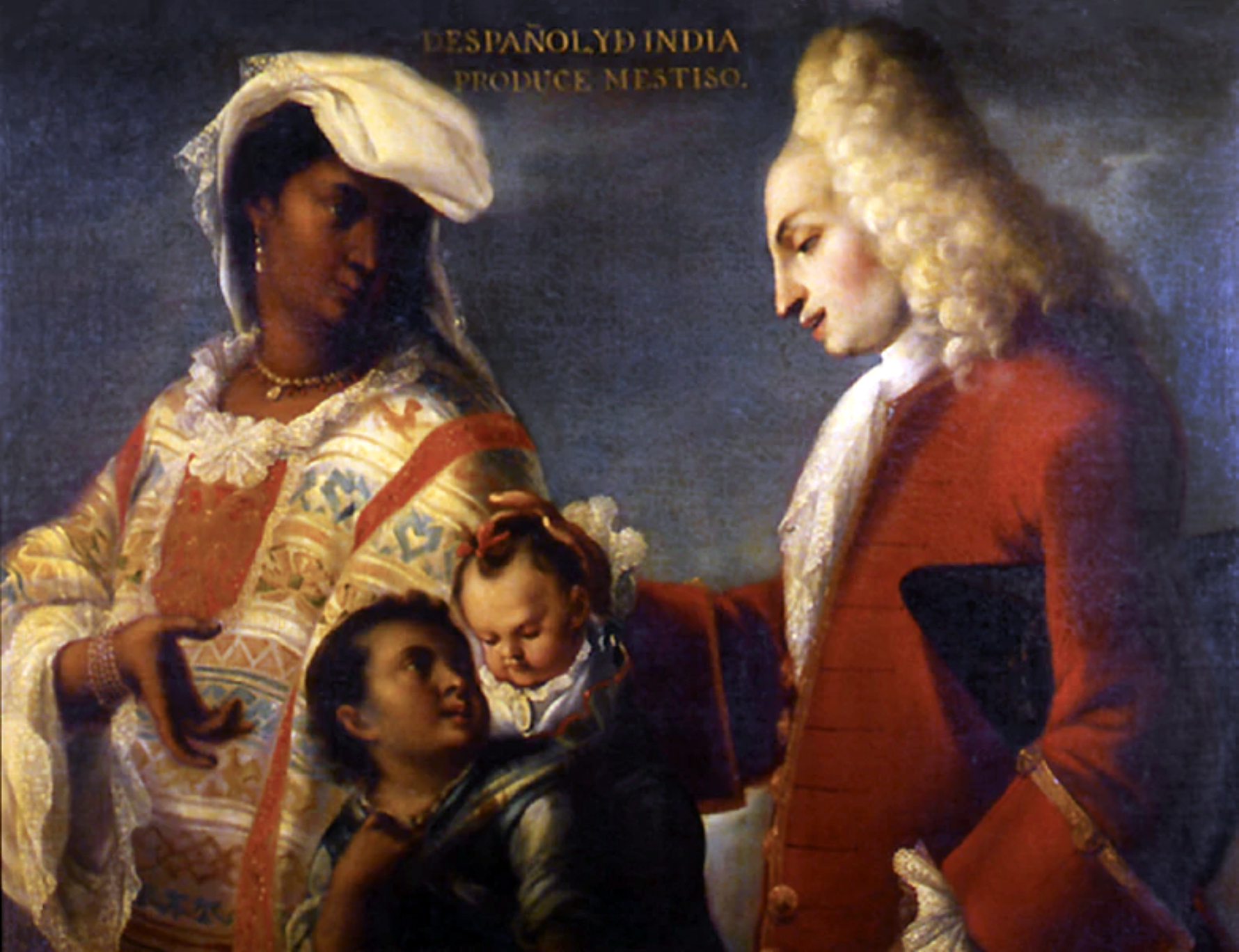
Spaniard and Indian Produce a Mestizo
1715 CE
Attributed to Juan Rodríguez Juárez
Oil on canvas
Family grouped tightly → easy to read hierarchy
Figures arranged in descending social importance
Reinforces racial hierarchy (caste system) + presents colonial society as “orderly” and controlled
Clothing → status and race
Child (mestizo) → product of colonial mixing
Visual “proof” of Spanish social control
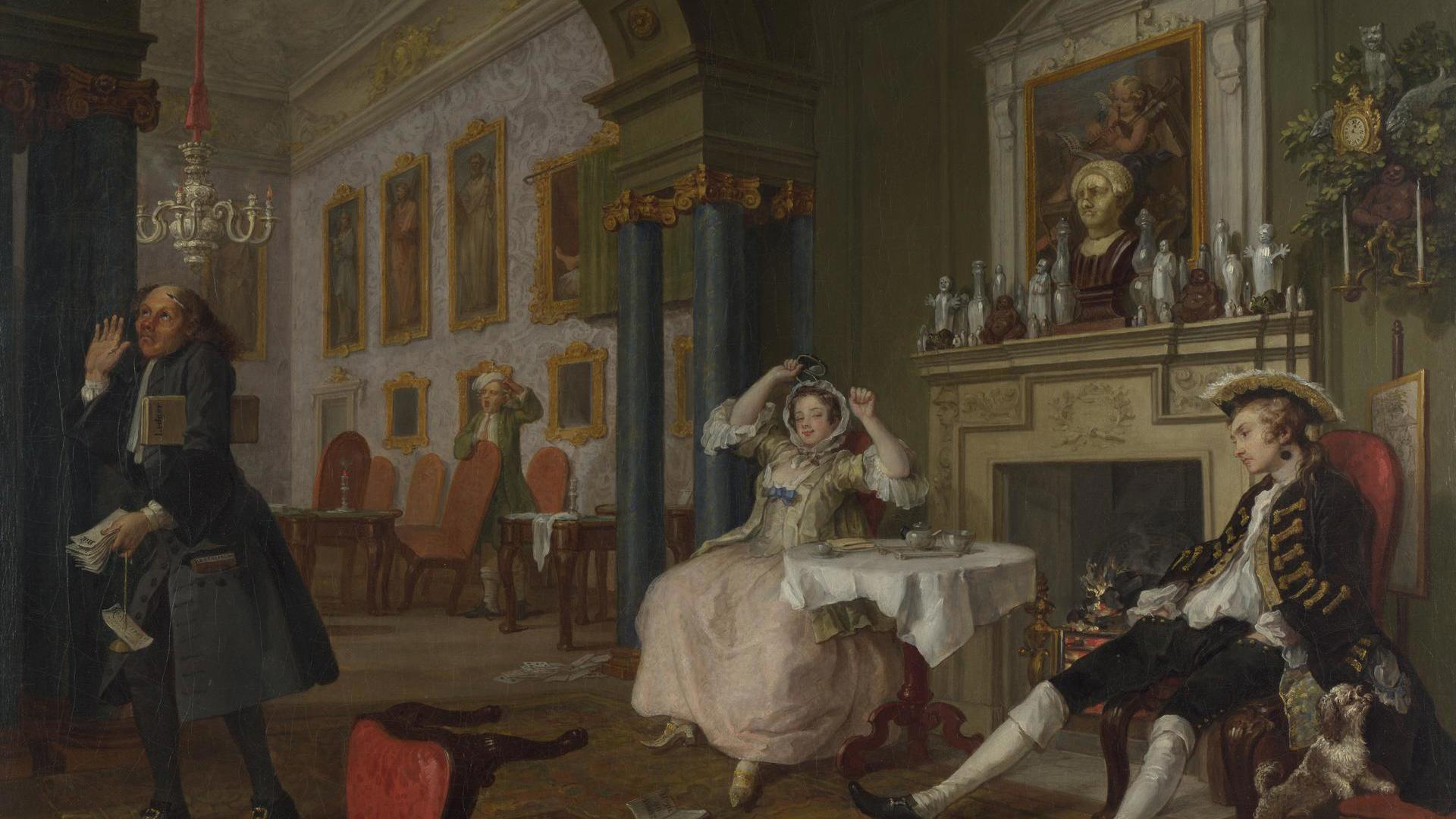
The Tête á Tête (Marriage à la Mode)
1743 CE
William Hogarth
Oil on canvas
Chaotic interior, cluttered with objects
Couple physically separated despite shared space
Function: Critique of aristocratic marriage + moral decay
Message of wealth ≠ virtue
Broken sword → failed masculinity
Dog sniffing bonnet → infidelity
Disordered room → moral collapse
Gaudy decor
Ruins of Cupid
Man came home with bonnet, presumably cheating
Music symbolic of pleasure
Flirtatious look about
Foot on painting indicates lewd painting
Illegal copies made from this, led to first example of copyright being applied to imagery
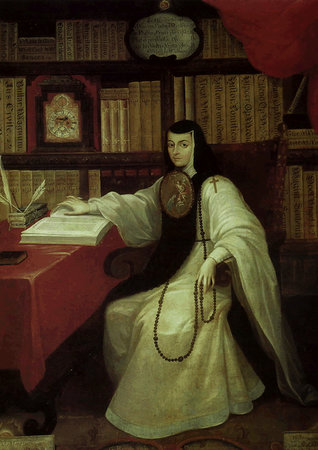
Portrait of Sor Juana Inés de la Cruz
1750 CE
Miguel Cabrera
Oil on canvas
Seated, surrounded by books
Direct gaze → intellectual authority
Became sick and died after being forced to give up her intellectual life
Nun habit + escudo (medallion) → tension between religion + intellect
Sor Juana shows that a woman can be both devout and intellectual
She wears the habit of the religious order of the Hermits of Saint Jerome nuns of Mexico City; the habit includes the escudo—a framed vellum painting.
Painting may have been inspired by the image of Saint Jerome seated at a desk.
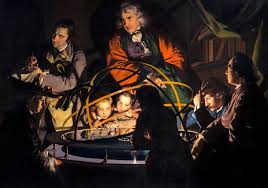
A Philosopher Giving a Lecture at the Orrery
1763–1765 CE
Joseph Wright of Derby
Oil on canvas
Circular arrangement around light source
Light replaces traditional religious illumination
Tenebrism
Light → knowledge replacing religion
Enlightenment = shift from faith → reason
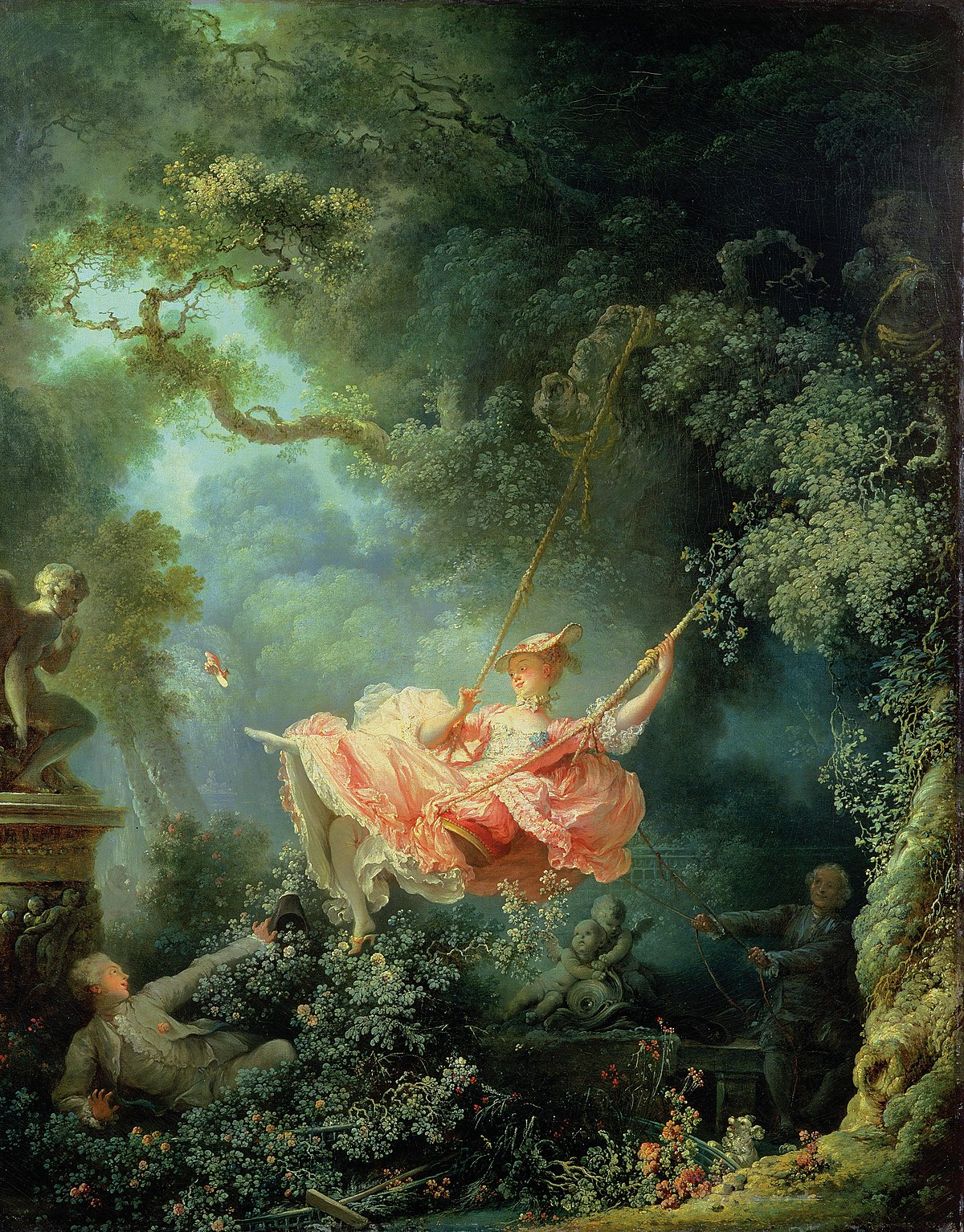
The Swing
1767 CE
Jean-Honoré Fragonard
Oil on Canvas
Pastel palette; light brushwork → contrast with later Neoclassicism.
Figures are small in a dominant garden-like setting.
Use of atmospheric perspective.
Puffy clouds; rich vegetation; abundant flowers; sinuous curves.
Symbolically a dreamlike setting.
Commissioned by an unnamed “gentleman of the Court:” a painting of his young mistress on a swing → flirtation + scandal
The patron in the lower left looks up the skirt of a young lady who swings flirtatiously, boldly kicking off her shoe at a sculpture.
The dog in the lower right corner, generally seen as a symbol of fidelity, barks in disapproval at the scene before him.
Celebrates (and subtly mocks) elite indulgence
Cupid statue (finger to lips) → secrecy
Love here is playful, secretive, and morally loose
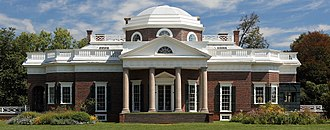
Monticello
1768–1809 CE
Thomas Jefferson
Brick, glass, stone, and wood
Symmetrical, balanced Neoclassical design
Central dome → authority and order
Reflects Enlightenment ideals (order, reason).
Symbol of American identity and democracy.
Also tied to contradiction: built by enslaved labor.
Mimics Palladio’s Villa Rotunda (secondary residence) → Jefferson scrapped his first design after going to France
Deviation in that he adds wings to “embrace the landscape”
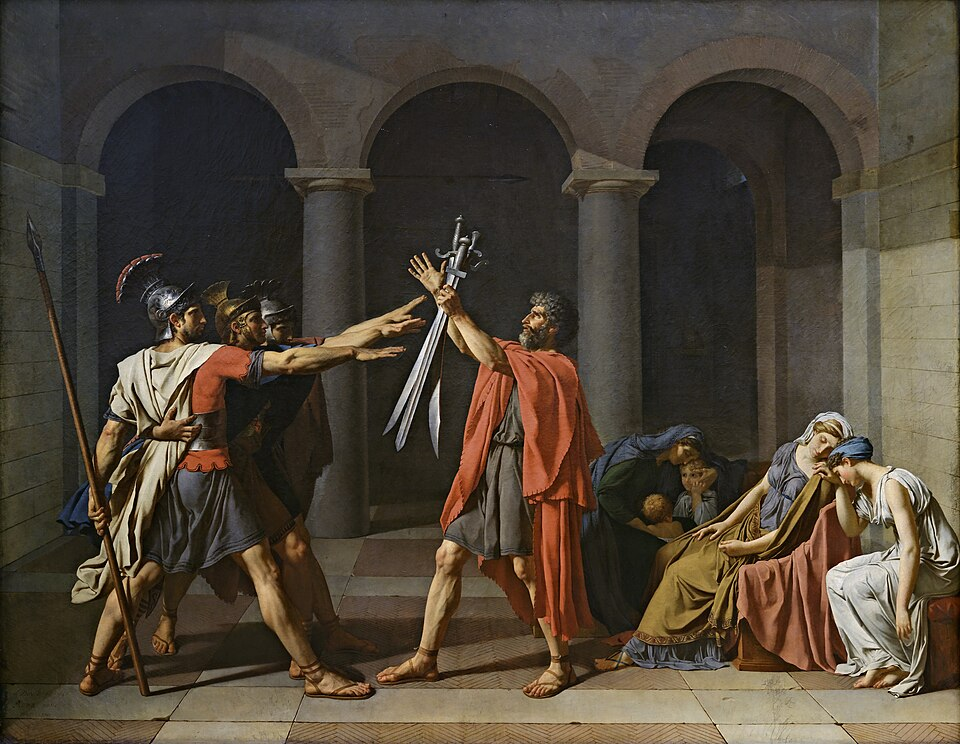
The Oath of the Horatii
1784 CE
Jacques-Louis David
Oil on Canvas
History painting
Neoclassical style → sharp lines, strong forms, organized into thirds, dramatic lighting
Vanishing point is at the oath
Promotes duty, patriotism, sacrifice.
Men = rigid, heroic; women = emotional → comment on gender roles.
Prefigures French Revolution values.
Strong horizontal + vertical lines
Men rigid, women soft and curved
Promotes duty over emotion
Outstretched arms → unity + sacrifice
Three arches → separation of groups
State > family
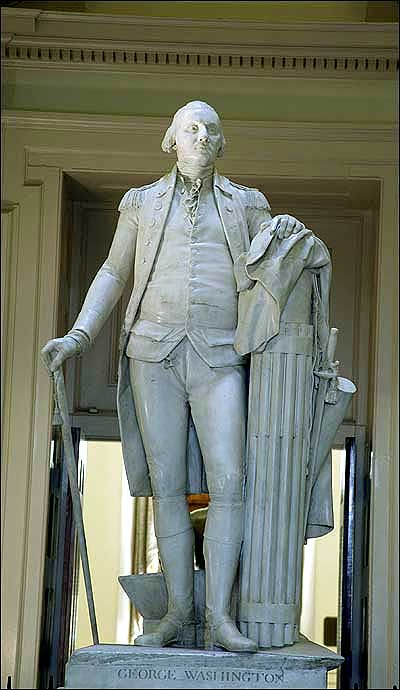
George Washington
1788–1792 CE
Jean-Antoine Houdon
Marble
Combines Roman hero imagery (contrapposto, marble, and dignity) + modern realism (life sized accuracy) → while in Virginia, Houdon made a bust idealizing Washington with ancient garb; Washington quickly made him adjust this
Fasces (bundle of rods) = authority and unity of 13 colonies
Washington shown as citizen-leader, not king.
Plow → citizen-farmer
Power should be restrained and civic-minded
Reinforces ideals of the American Republic.
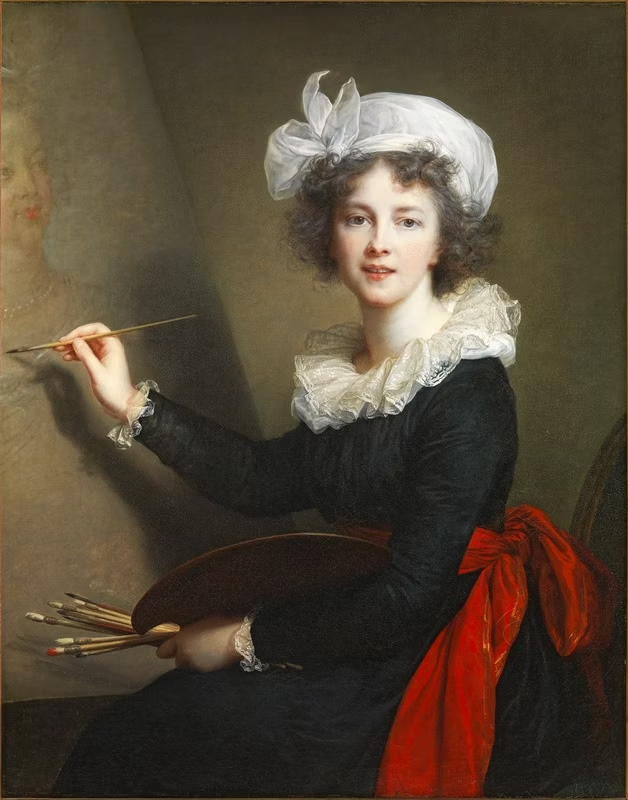
Self-Portrait
1790 CE
Elisabeth Louise Vigée Le Brun
Oil on canvas
Female artist asserting professional identity.
Soft Rococo influence but more natural.
Promotes image of respectable, skilled woman artist, asserting female artist legitimacy
Worked for Marie Antoinette → later fled Revolution. Depicts herself at work as a court painter even though Marie was executed 8 years prior
Informal pose, soft brushwork
Direct, engaging gaze
Gentle expression → counters stereotypes: Women can be both professional and feminine
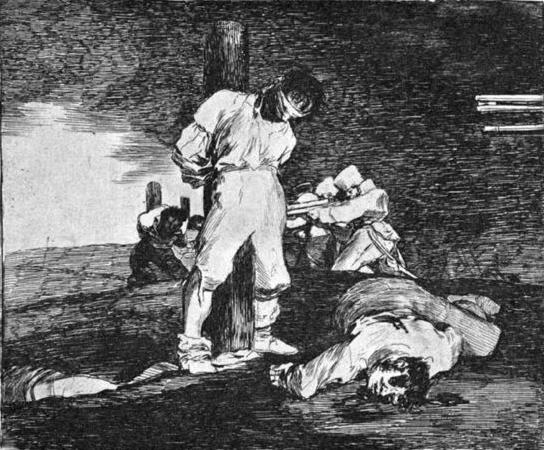
Y no hai remedio (And There’s Nothing to Be Done)
1810-1823 CE (published 1863)
Francisco de Goya
Drypoint Etching
Brutal critique of war and human suffering (context: Napoleon’s invasion of Spain)
No heroism → only violence and inevitability + human suppression.
“There’s nothing to be done” = hopelessness.
Early move toward modern, anti-war imagery.
Meant to wound and shock the viewer
Includes captions to share thoughts with the viewer
Central victim, surrounded by faceless executioners → draws parallels between the former and Jesus Christ
Stark, empty background
White color associated with purity and sacrifice
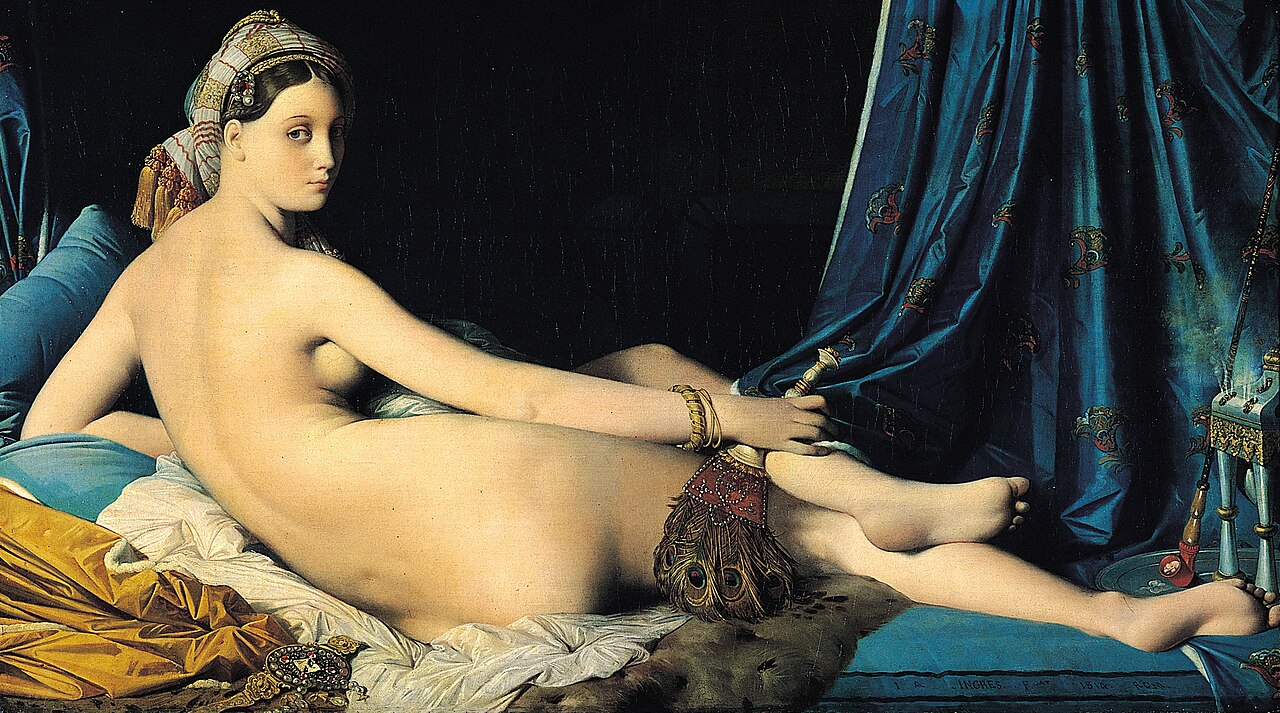
La Grande Odalisque
1814 CE
Jean-Auguste-Dominique Ingres
Oil on Canvas
Exoticized image of a harem woman → attracted white middle class men particularly
A French woman was used as the model, and the painter had never even seen a harem
Reclining pose invites viewer gaze
Elongated body = unrealistic → prioritizes beauty over anatomy.
Reflects Orientalism (Western fantasy of the East).
Mix of Neoclassicism (in method) + sensuality (in subject matter).
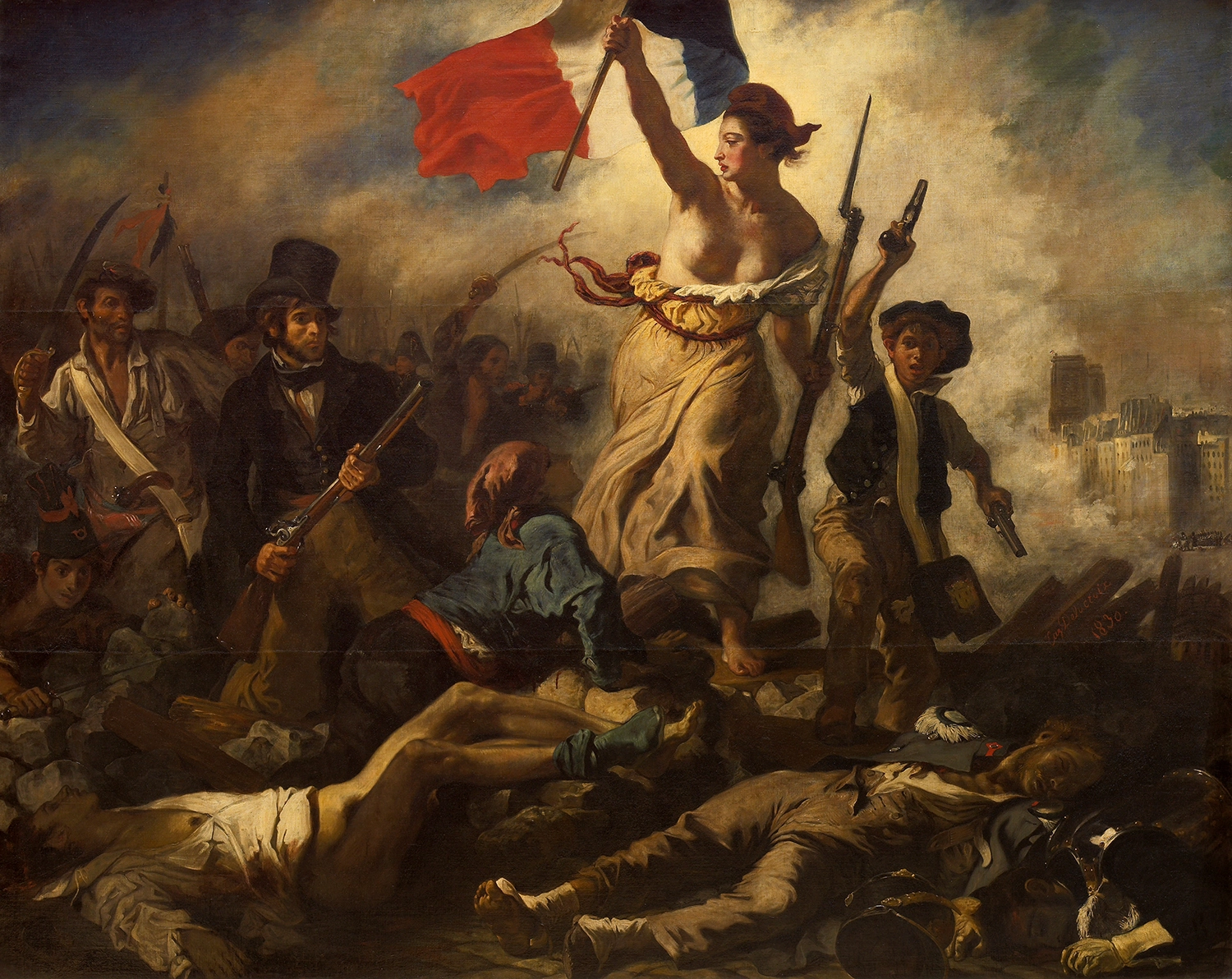
Liberty Leading the People
1830 CE
Eugéne Delacroix
Oil on Canvas
Romanticism → emotion, drama, movement.
Pyramid composition with allegorical figure = Liberty (Marianne) → visible breasts and stoic face nod to antiquity + raw, natural freedom.
Based on July Revolution (1830) in France.
Unites classes (worker, bourgeois, child fighter, all together in the composition).
Violated rules of the Academy → no regard for line, left w/o a finish, and brightly colored
Meant to inspire
The Oxbow
1836 CE
Thomas Cole
Oil on canvas
Hudson River School → American landscape painting
American Romanticism; vast landscaping (if humans are included, they’re miniscule)
Became source of national pride
Visual representation of Manifest Destiny
Contrast: wild nature vs cultivated land.
Spiritual matter too: more light (“God”) is on the “civilized” side
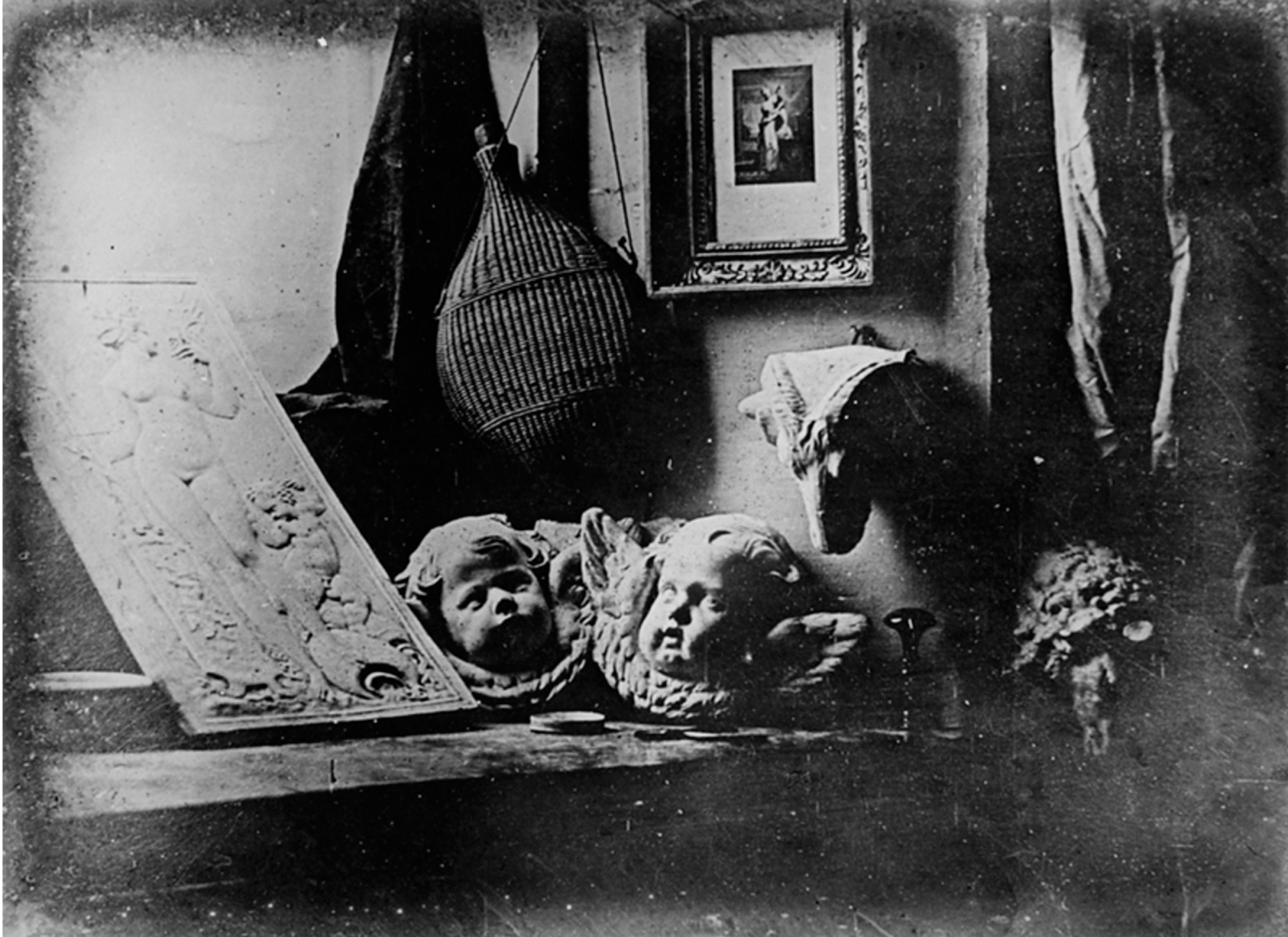
Still Life in Studio
1837 CE
Louis-Jacques-Mandé Daguerre
Daguerreotype
Early photography (daguerreotype).
Required long exposure → only still objects.
Stillness → limits of early tech
Reality can now be mechanically captured
Marks shift toward mechanical image-making.
Raises question: is photography art?
Carefully arranged objects (no movement)
Sharp detail due to long exposure
Photograph reproduces a variety of textures: fabric, wicker, plaster, framed print, etc.
Inspired by painted still lifes, such as vanitas paintings.
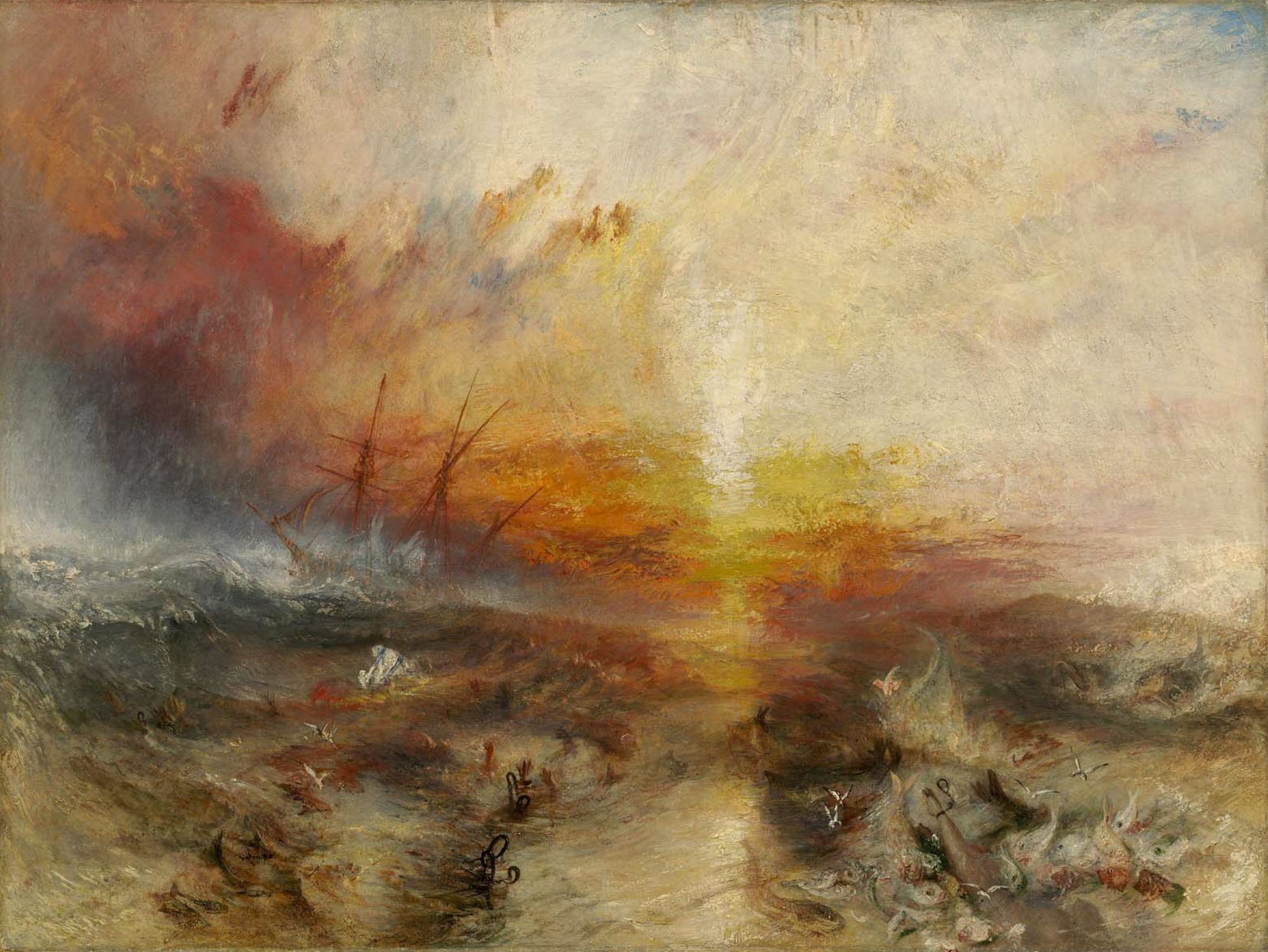
Slave Ship (Slavers Throwing Overboard the Dead and Dying)
1840 CE
Joseph Mallord William Turner
Oil on canvas
JMW had interest in human and elemental violence
Critique/condemnation of slavery and capitalism.
Chaotic brushwork → overwhelming emotion.
Nature (storm) = moral force against humans.
Slaves were thrown overboard so the colonizers could save themselves
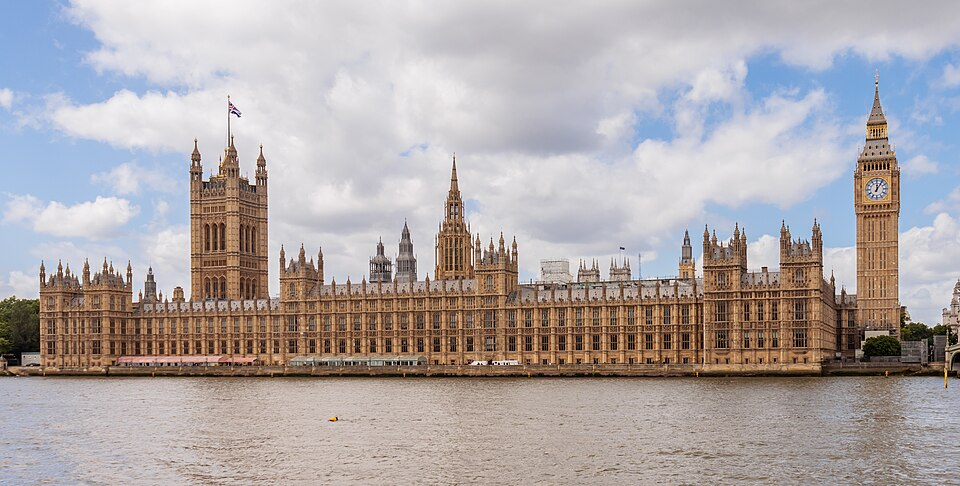
Palace of Westminster (Houses of Parliament)
1840-1870 CE
Charles Barry and Augustus W. N. Pugin (architects)
Limestone masonry and glass
Gothic Revival style → medieval inspiration (seen as the Native style + most harmonious with the original Westminster Hall).
Also aligned with Arts and Crafts movement
Gothic conventions were deviated from with the plan being axial
Symbol of British government tradition.
Combines modern function with historic look.
Reflects nationalism, specifically via distinction from American and French conventions
Central tower, ornamental exterior, spires of Westminster: directs attention up
Westminster Hall: built around 1100, the only original part to survive the 1834 fire
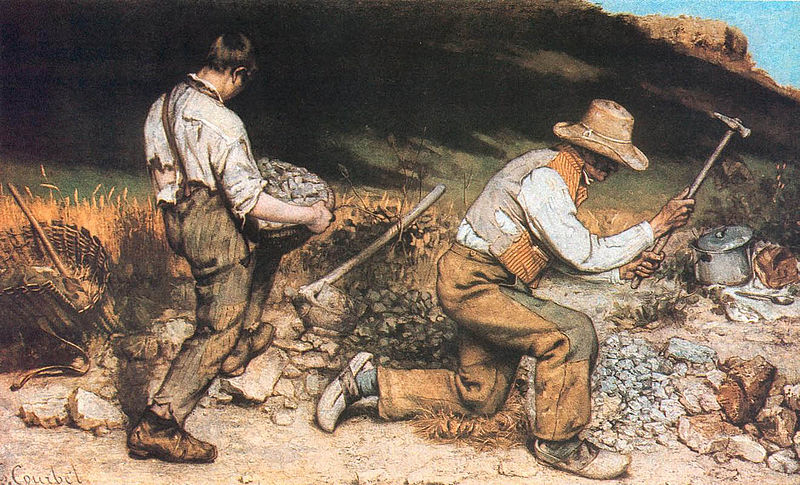
The Stone Breakers
1849 CE (destroyed in 1945)
Gustave Courbet
Oil on canvas
Realism (the first movement of modernism, develops in France under the backdrop of Scientific Revolution)/realism (opposite of idealism) → depiction of what is seen and felt (in this case, everyday laborers).
No idealization → harsh working conditions.
Political statement about class inequality.
Anti-academic, anti-elite.
Two figures, backs turned → anonymity
Earth tones → harsh realism
Exposes working-class hardship
Broken rocks → endless labor
The sky to landscape ration implies no escape from poverty
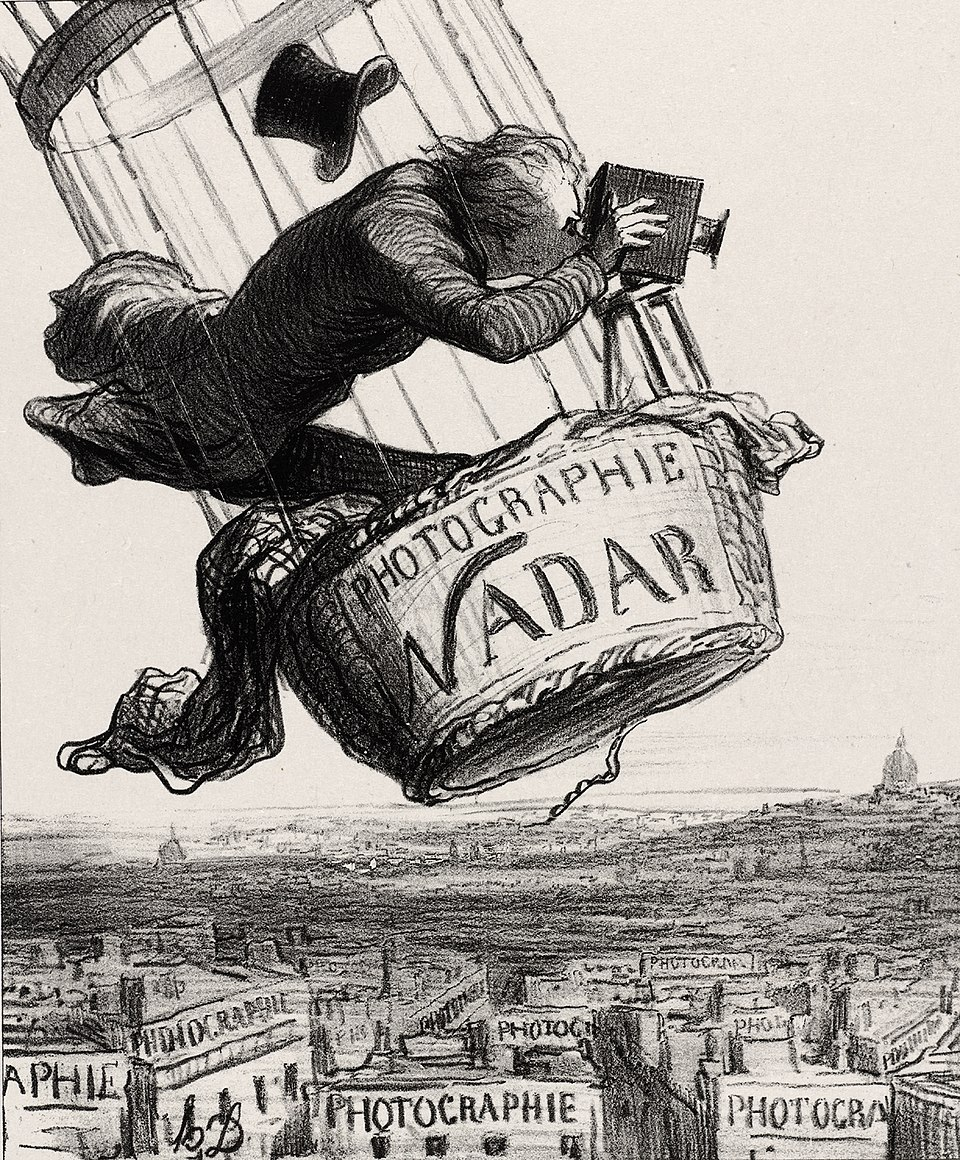
Nadar Raising Photography to the Height of Art
1862 CE
Honoré Daumier
Lithograph
Satirical lithograph w/ caricature.
Shows photographer Nadar in balloon.
Comments on photography as new art form.
Blends humor + critique of modernity.
Balloon → elevation of photography
Is it truly “high art”?
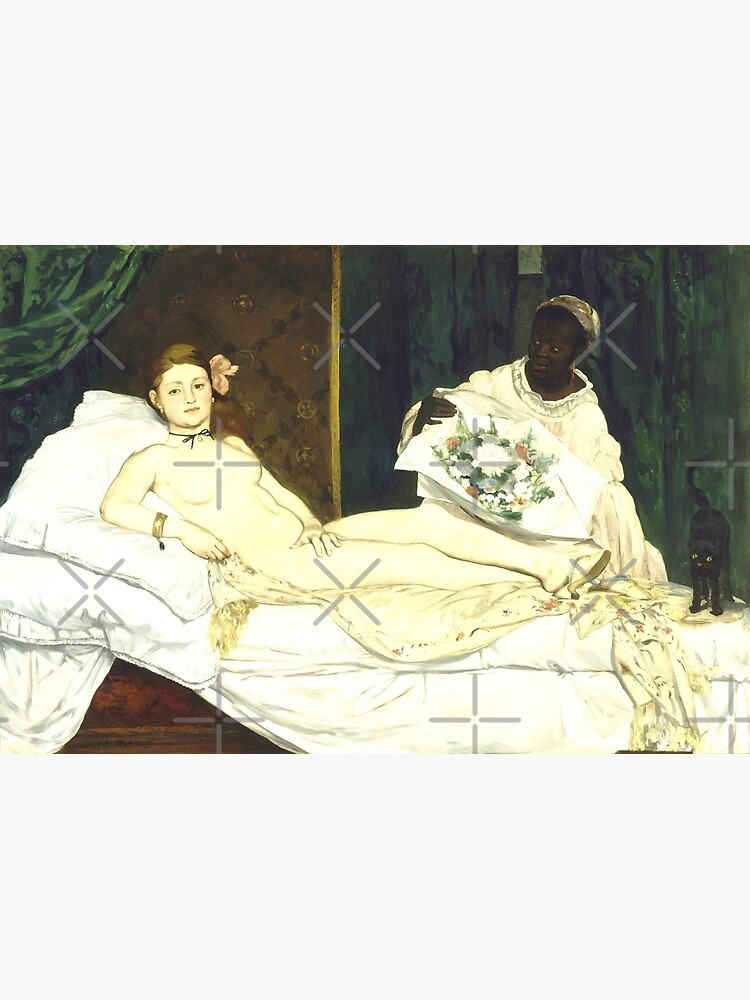
Olympia
1863 CE
Édouard Manet
Oil on canvas
Modern reinterpretation of reclining nude
Bold brush strokes, heavy paint, and simplified forms (beginning of abstraction)
Woman = prostitute, the model was a known prostitute, confrontational gaze.
Father of the Impressionists/modernism + The OG shock artist: shocked viewers and broke tradition.
Marks shift to modern art.
Black cat → sexuality, independence, sign of an omen
Servant + flowers → client relationship + acknowledgement of slavery
No illusion—this is transactional
Not set in a luxurious setting
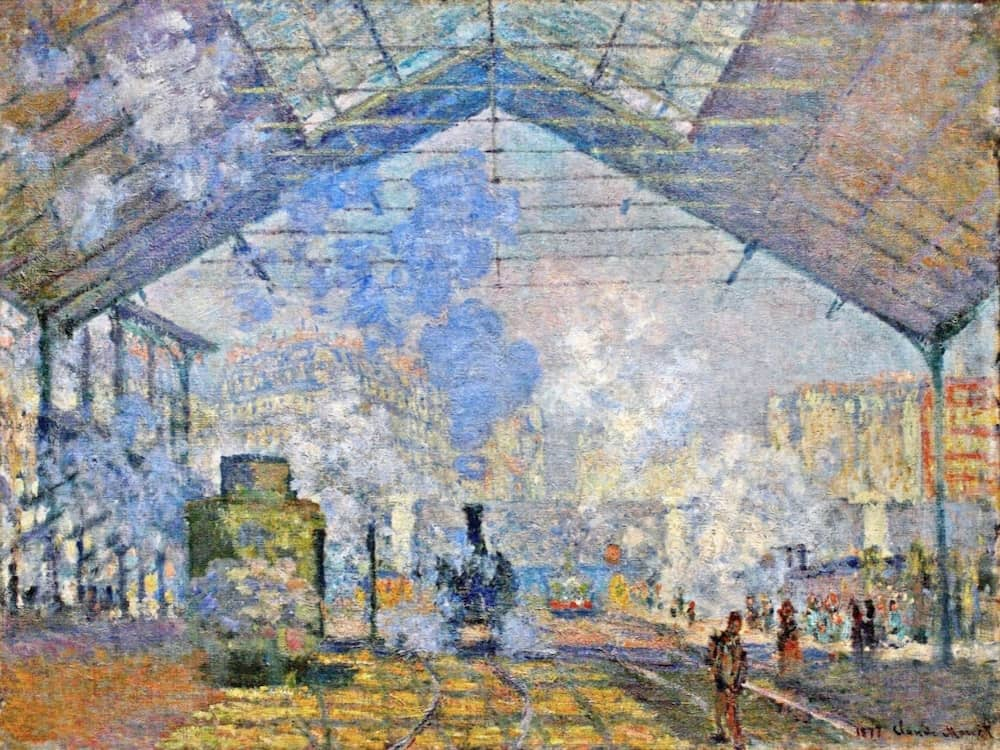
The Saint-Lazare Station
1877 CE
Claude Monet
Oil on canvas
Impressionism → light, atmosphere, movement.
Modern subject: train station.
Industrialization + urban life
Focus on momentary perception.
Loose brushstrokes, blurred forms
Light + steam dominate; no solidity, no contour lines, no layout
Plein air painting (painted on site)
Depiction of how light and color changes based on atmosphere and time
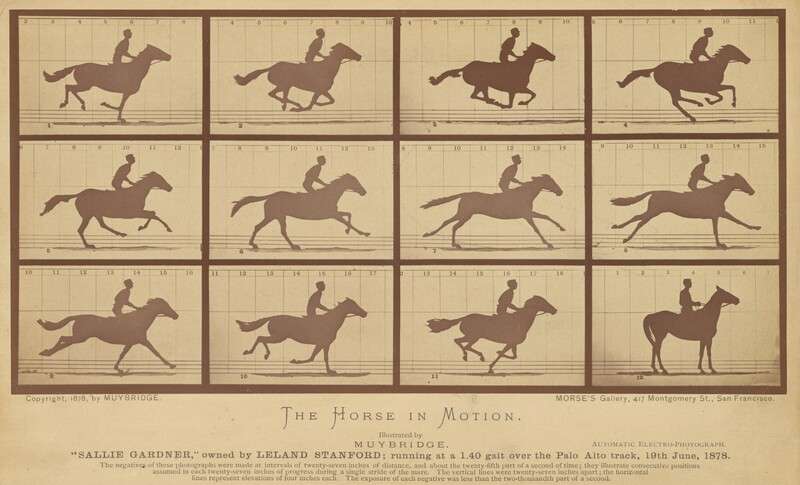
The Horse in Motion
1878 C.E
Eadweard Muybridge
Albumen print
Early motion photography.
Proved horses lift all hooves off ground.
Important for science + animation development.
Intersection of art and technology
Sequential frames
Scientific clarity > beauty
Motion broken into parts
Human perception is limited
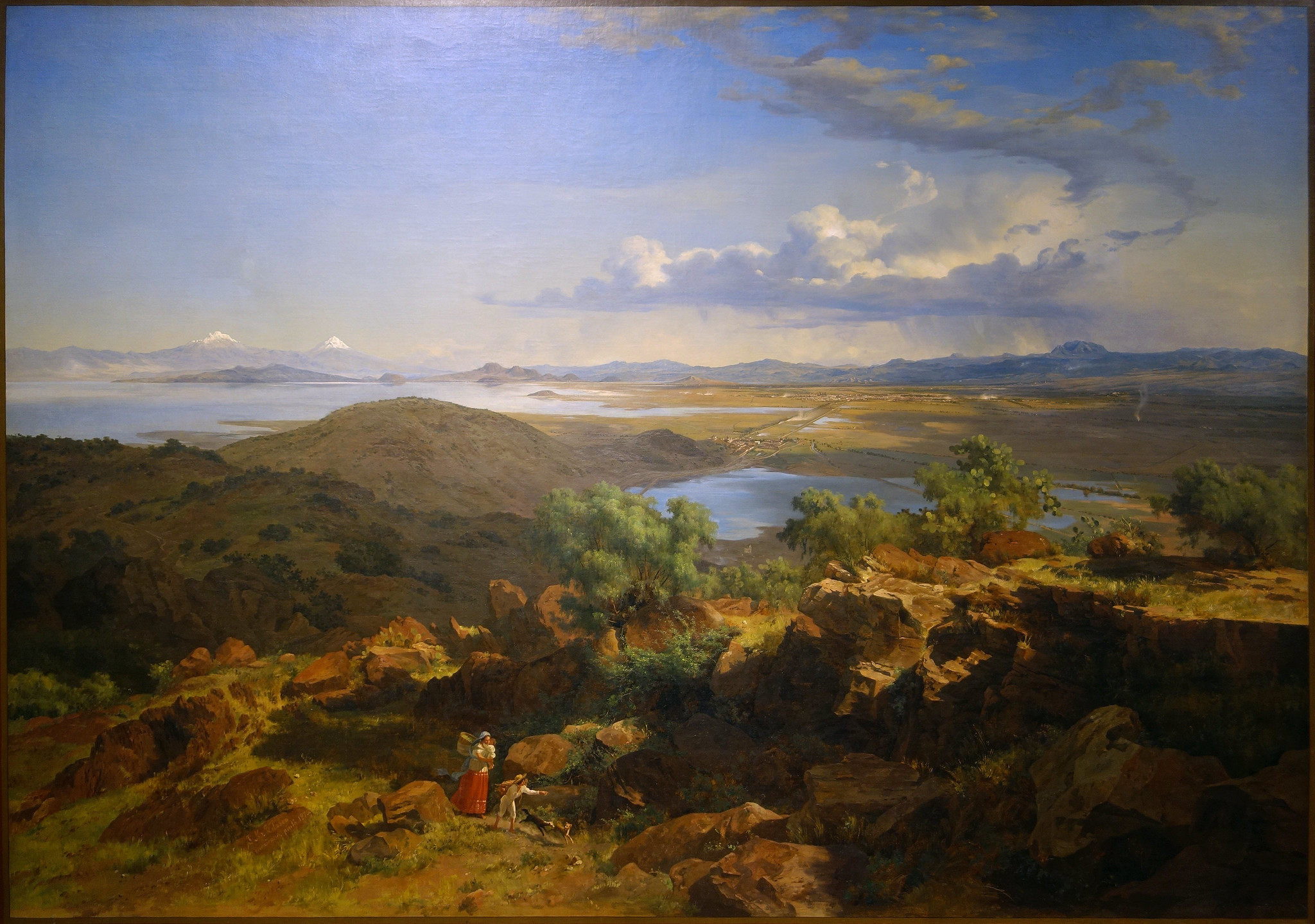
The Valley of Mexico from the Hillside of Santa Isabel
1882 CE
Jose María Velasco
Oil on canvas
National pride in Mexican landscape.
Combines scientific accuracy + beauty.
Shows modernization (railroads).
Identity-building after independence.
Expansive, panoramic view
Balanced natural + human elements
Mexico as both ancient and modern
7 different versions of this
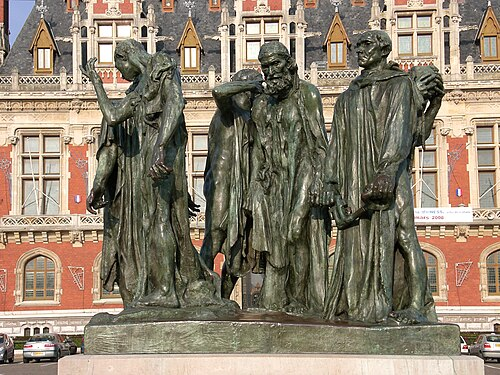
The Burghers of Calais
1884–1895 CE
Auguste Rodin
Bronze
Depicts men sacrificing themselves in war
.Figures show emotion, individuality.
Breaks tradition → not simply heroic, but human.
Viewer placed at same level → more connection.
Bare feet, ropes → humility + sacrifice
True courage includes fear
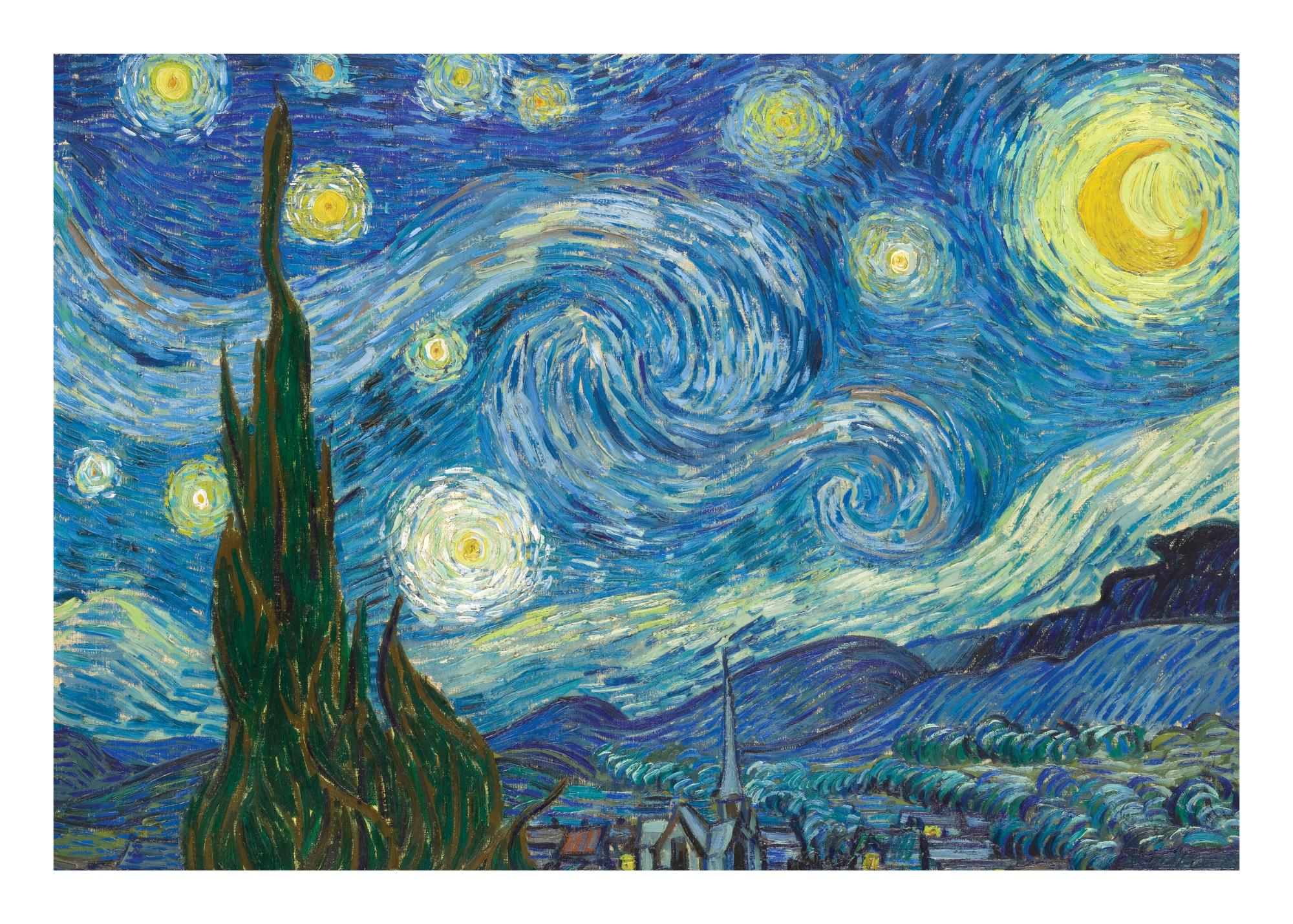
The Starry Night
1889 C.E
Vincent van Gogh
Oil on canvas
Post-Impressionism → emotional expression.
Painted from asylum → he was highly critiqued during his lifetime.
Swirling sky = inner turmoil.
Not realistic → expressive color + movement.
Small village below
Expresses inner emotional state
Cypress tree → death/spirituality
Nature mirrors emotion
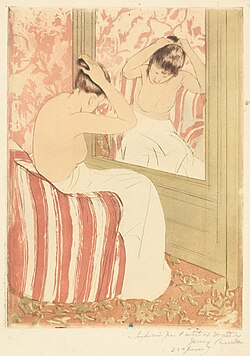
The Coiffure
1890–1891 CE
Mary Cassatt
Drypoint and aquatint
Focus on women’s private lives.
Soft lines influenced by Japanese prints.
Soft intimacy, everyday moment.
Feminine perspective in Impressionism
Centers female experience
Grooming = private ritual (nudity is not sexual here)
Everyday life has artistic value
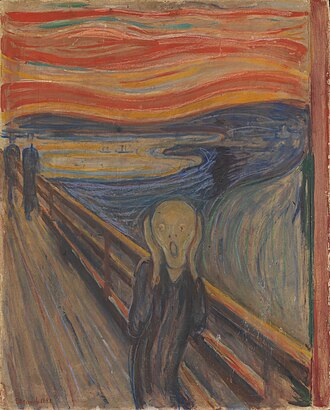
The Scream
1893 CE
Edvard Munch
Tempera and pastels on cardboard
Expressionism (a type of symbolism) → psychological anxiety.
Distorted figure + landscape.
Reflects modern existential fear.
Icon of emotional distress.
Distorted perspective
Echoing lines radiate outward
Visualizes anxiety and existential fear
Open mouth → silent scream
Emotion overwhelms reality
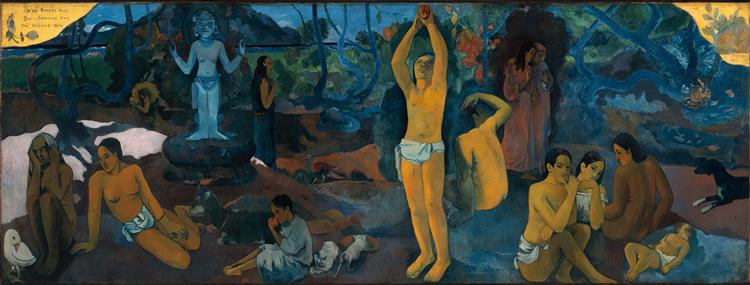
Where Do We Come From? What Are We? Where Are We Going?
1897–1898 CE
Paul Gauguin
Oil on canvas
Symbolist work → philosophical themes.
Picking fruit → allusion to Adam/Eve
Painted in Tahiti → primitivism (problematic).
Reads right to left → life cycle.
Artist’s existential crisis.
Explores life cycle + meaning → Tahitian idol represents tie to eternity
Different ages → stages of life
Existential questioning
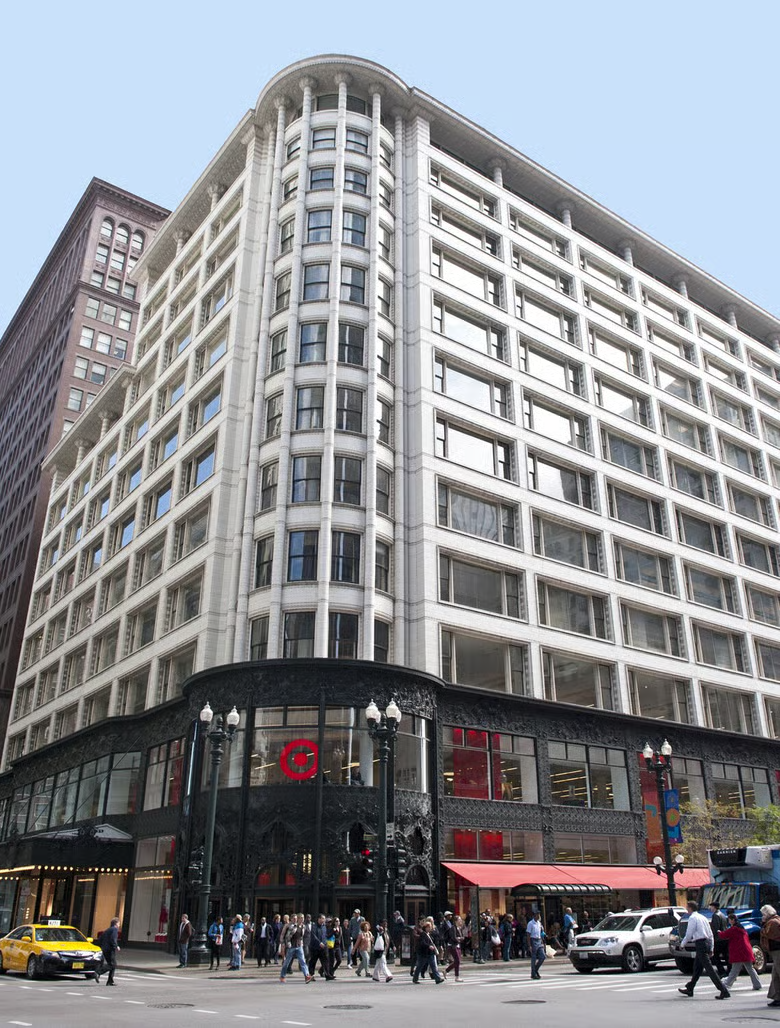
Carson, Pirie, Scott, and Company
1899–1903 CE
Louis Sullivan (architect)
Iron, steel, glass, and terra cotta
Early skyscraper → Chicago School.
“Form follows function.”
Steel frame allowed for large windows.
Decorative iron at base (cast iron door w/ vegetal motifs) → attracts shoppers.
Supports captialism
Endoskeleton frame (steel gerter framing), walls are decorative
Window strips → glazing
Elevator allowed for more stories
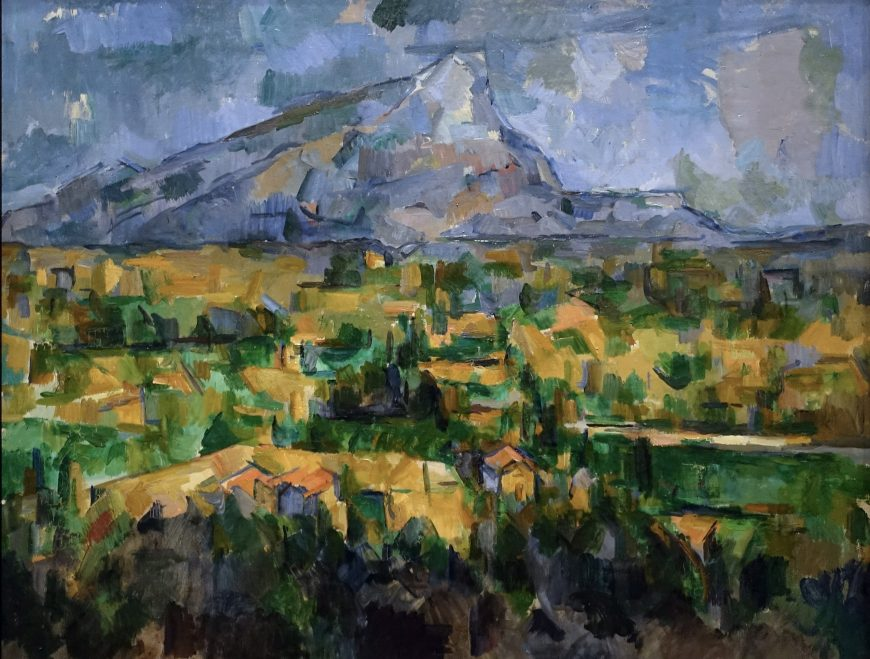
Mont Sainte-Victoire
1902–1904 CE
Paul Cézanne
Oil on canvas
Horizontally divided composition
Cool blues/greys up top
Brights in the middle
Deep greens + browns at the bottom
Post-impressionism: Bridge between Impressionism & Cubism.
Simplified/abstracted objects
Reality is constructed, not just seen
Inspires Picasso to flatten his images
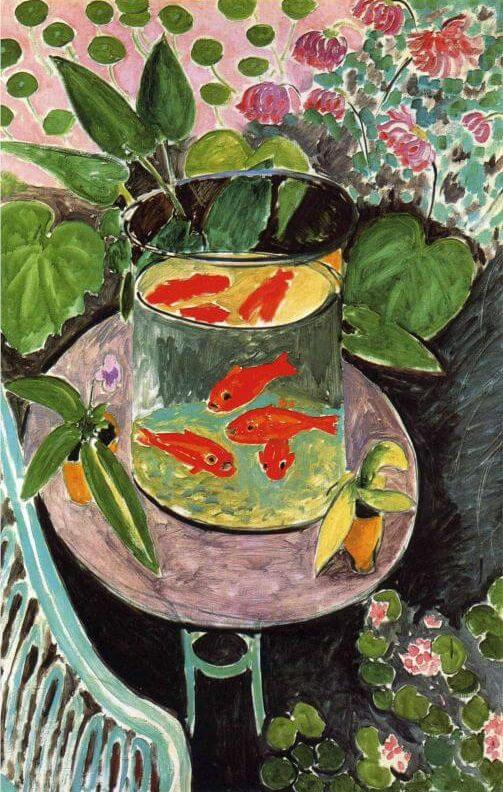
Goldfish
1912 CE
Henri Matisse
Oil on canvas
Matisse claimed that the Moroccan people would daydream/look at goldfish “for hours” → romanticized primitivism (less civilization = better life)
Matisse was Fauvist → post-Impressionist and Expressionist
Indicated by bright colors and contrast to intensify brightness
Water and vegetation present are from Islamic influence
Fish seen from two different angles, but are indistinguishable at the bird’s eye
Table provides spacial ambiguity
Color and pattern hold the composition together
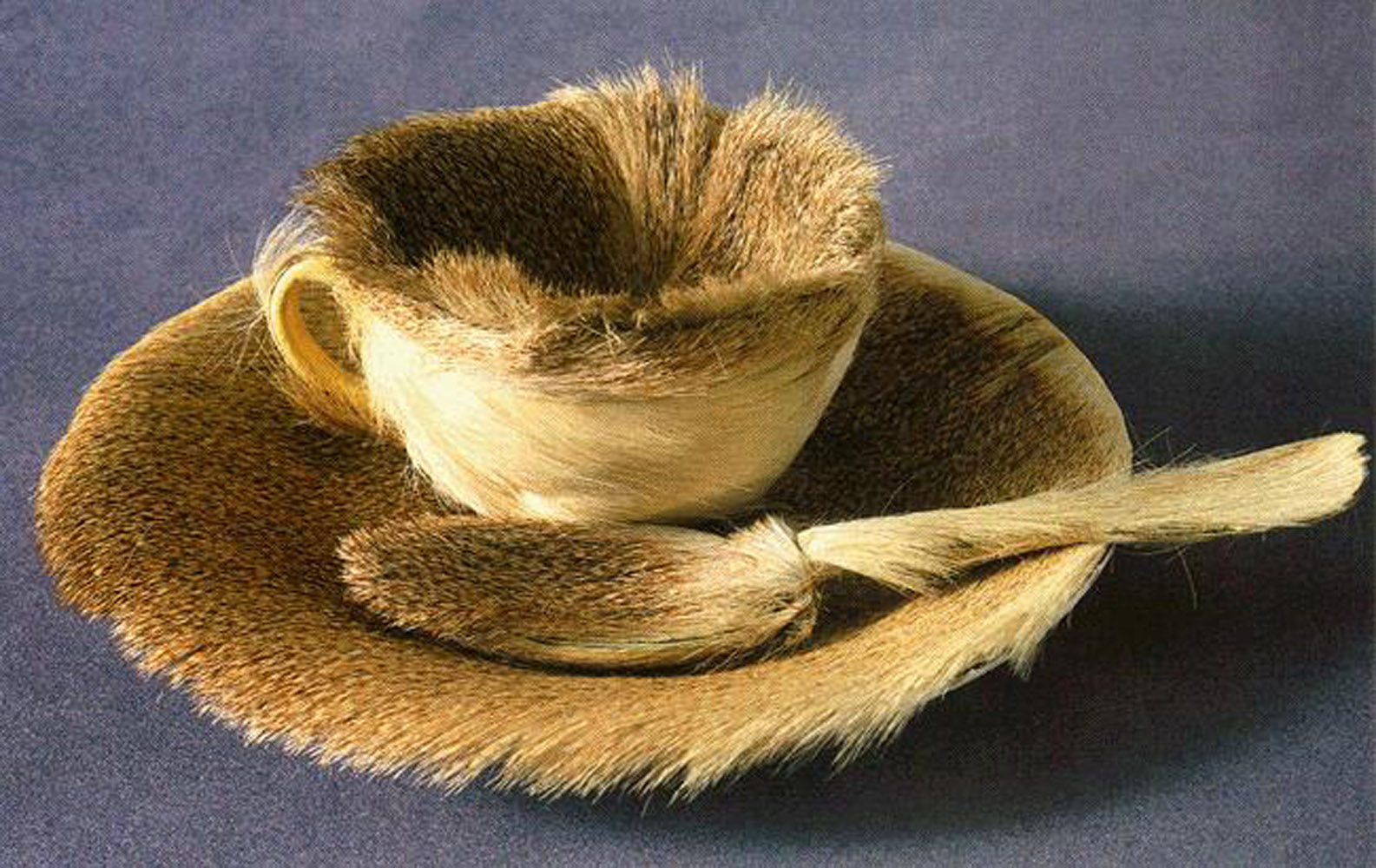
Object (Le Déjeuner en fourrure)
1936 CE
Meret Oppenheim
Fur-covered cup, saucer, and sppon
Idea was derived from the phenomenon of finding hair in food
As well as Picasso joking w/ Meret about covering anything with fur
Dada/Surrealist combo → challenging reason + strange objects
Causes weird overlap of touch and taste senses
Ordinary domestic objects made deeply uncomfortable
Texture turned something genteel into something sensual and animalistic
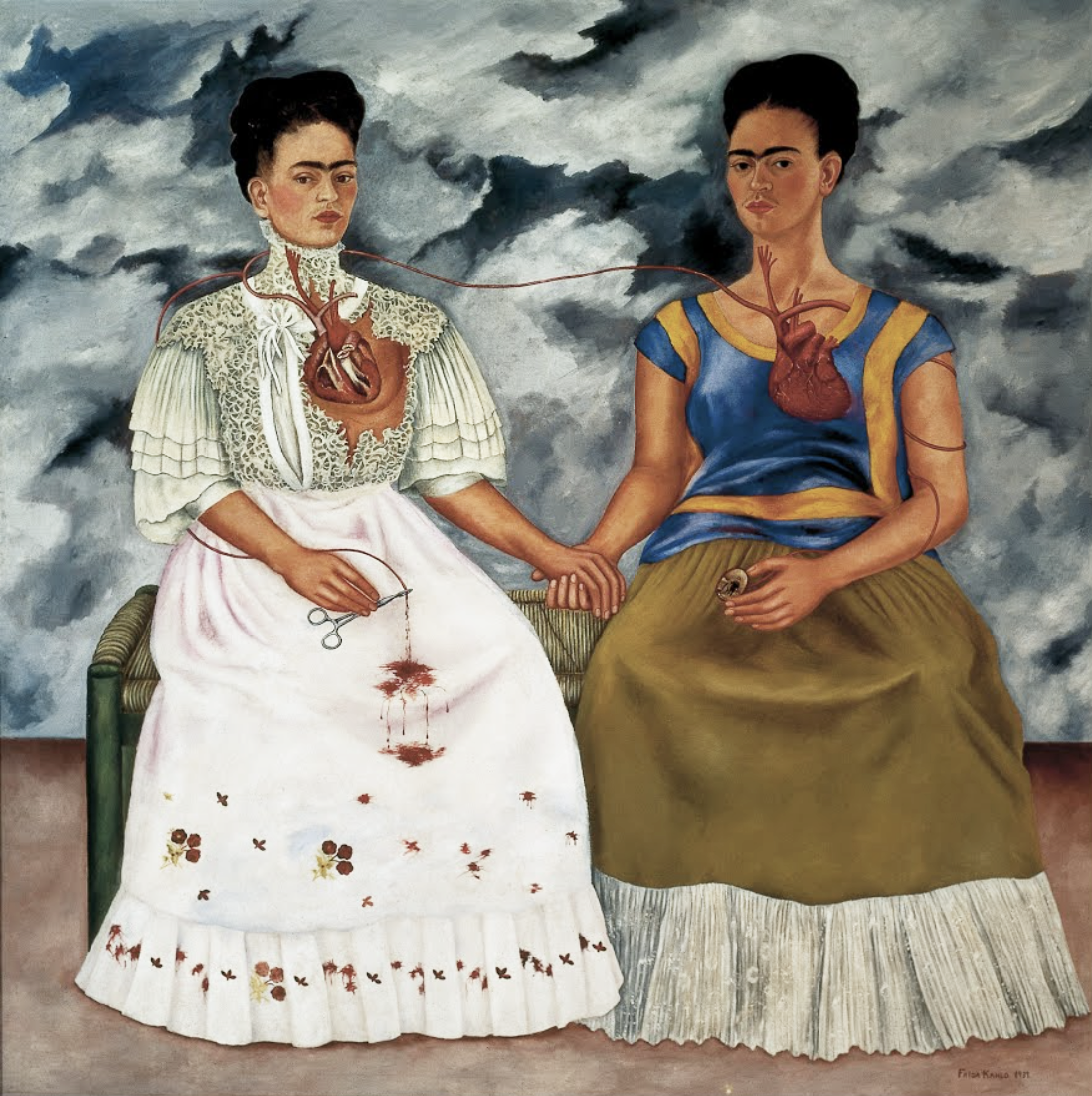
The Two Fridas
1939 CE
Frida Kahlo
Oil on canvas
She didn’t consider herself a surrealist, as she just “painted her own reality.”
Her works were created after a life-changing injury
Costuming depicts her mother and father’s heritage (indigenous Mexican mother (right), Catholic European father(left))
In the right Frida’s hand lies a portrait of her husband, Diego
The right Frida’s heart is full, while the left’s is stripped
The sky is tempestuous
Cut off artery and blood on dress is a commentary on marriage
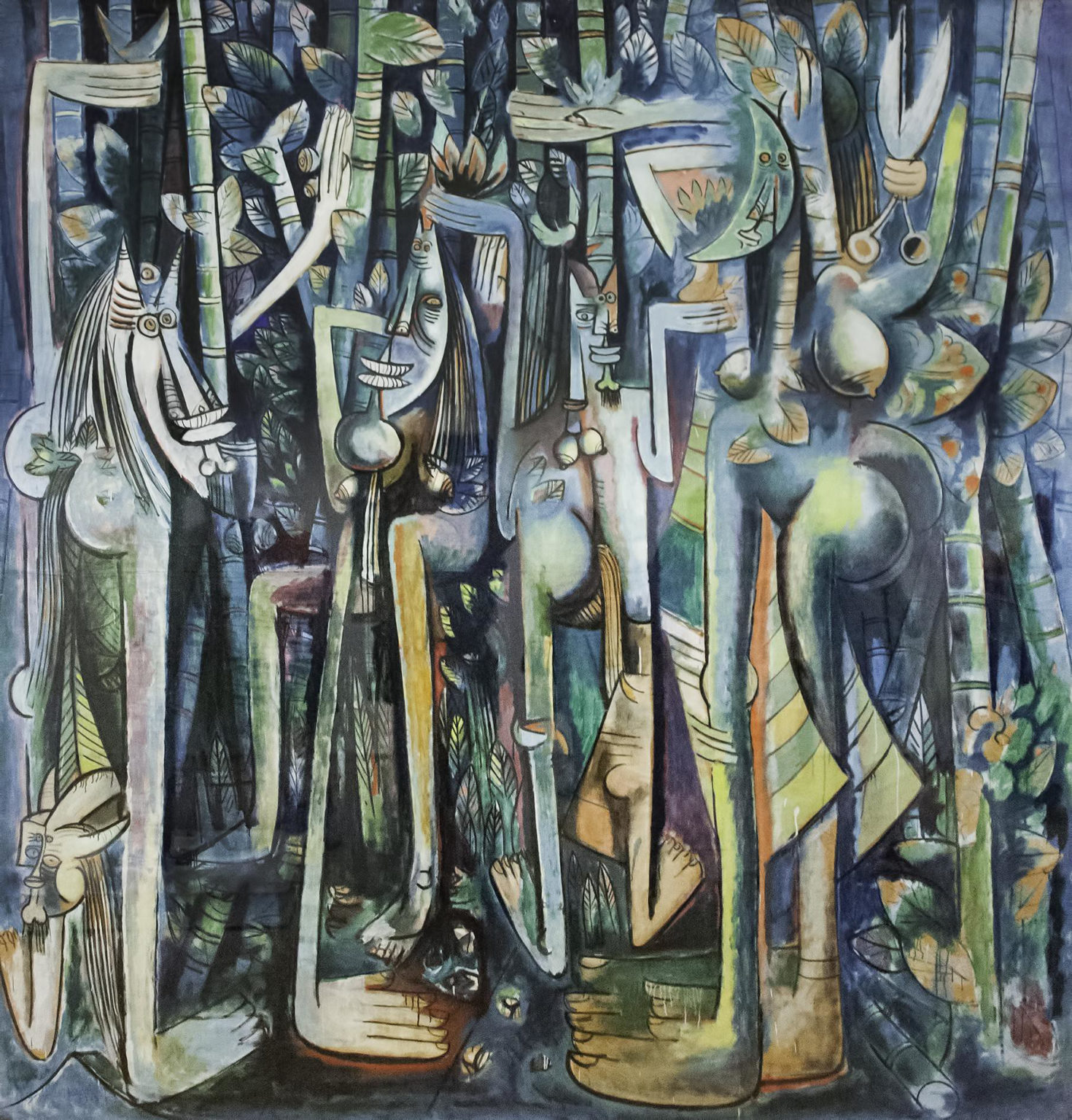
The Jungle
1943 CE
Wifredo Lam
Gouache on paper mounted on canvas
Title was not applied by Cuban native Lam but by his significant other
Depicts Afro-Cuban culture via surrealism → becomes tropical surrealism
New way of depicting vegetation
The sugarcane and coffee leaves being intertwined with the figures may act as commentary on slavery →these were cash crops were harvested by Afro-Cubans
Sexualized figures are a commentary on contemporary Havana prostitution
Work is charged with potential meaning
Human elements are completely abstracted
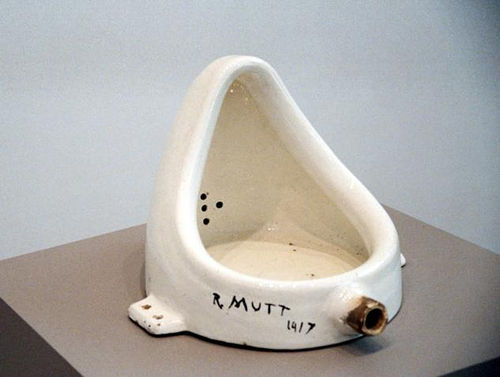
Fountain (second version)
Dada movement → international reaction of disillusionment to WWI; this work particularly functioned to show the absurdity of the post war world.
Inspired by Frued’s interpretation of “Dreams,” as well as a plumbing device showing
Intentionally offensive by rejecting conventions of art
Example of ready-made art (creating an idea but not a physical work)
Work was widely rejected, and Duchamp eventually resigned from the board of the Independent Artists
The name was changed from “Mott” to “Mutt” as a pop culture reference.